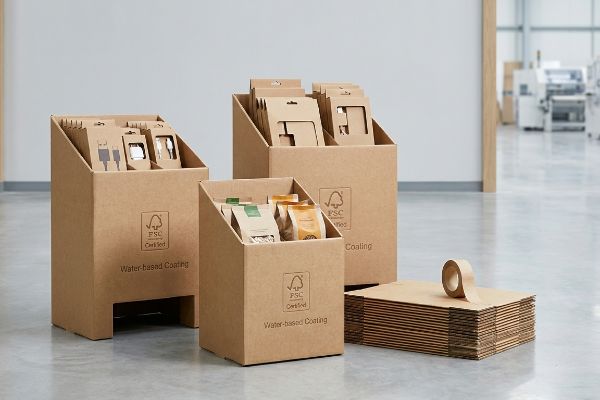
Sie möchten, dass Ihre Warenpräsentation im Einzelhandel die Nachhaltigkeitsziele erreicht, ohne unter dem Gewicht der Paletten zusammenzubrechen. Ein grünes Logo auf Wellpappdisplays zu kleben, garantiert selten echte Umweltfreundlichkeit.
Die nachhaltige Herstellung von Papp-Abfallbehältern erfordert ein Gleichgewicht zwischen Stabilität und Recyclingfähigkeit am Straßenrand. Dafür müssen Lieferketten optimiert werden, indem FSC-zertifizierte Materialien verwendet, feste Kunststofflaminate durch wasserbasierte Beschichtungen ersetzt und präzise Stanztoleranzen entwickelt werden, um Materialverluste beim Co-Packing zu vermeiden.
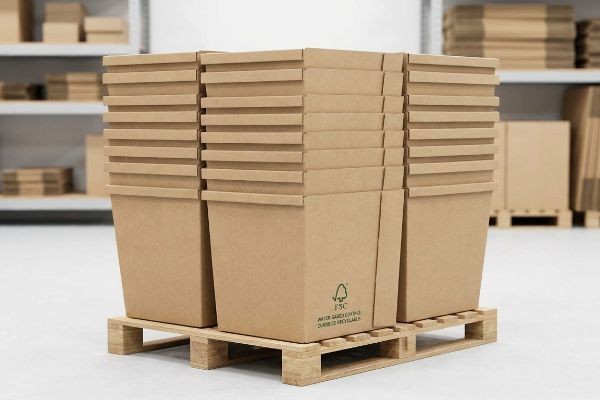
Die Beschaffung umweltfreundlicher Materialien ist ein guter Anfang, aber echte Nachhaltigkeit erfordert präzise Fertigungsprozesse. Schauen wir uns an, was tatsächlich funktioniert, wenn die Maschinen laufen.
Was macht Karton nachhaltig?
Man könnte annehmen, dass roher brauner Karton von Natur aus nachhaltig ist. Die Wahrheit ist jedoch weitaus komplexer, wenn man die globale Lieferkette verfolgt.
Die Nachhaltigkeit von Kartonagen hängt vollständig von einer lückenlosen Lieferkette ab, von der Papierfabrik bis zum Einzelhandel. Sie erfordert die dokumentierte Herkunft von Frisch- und Recyclingzellstoff und stellt sicher, dass während des Herstellungsprozesses keine minderwertigen, nicht rückverfolgbaren Materialien illegal in die Wellpappe eingemischt werden.
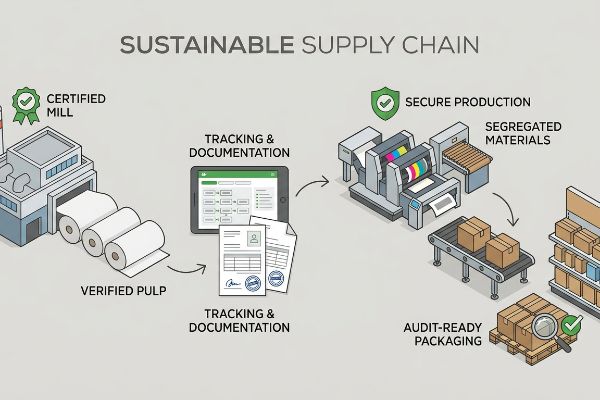
Ein umweltfreundliches Label auf Ihrer Akte bedeutet nichts, wenn die physische Dokumentation verloren geht.
Die Pappfalle zur Beweiskette
Markenmanager fordern häufig umweltfreundliche Kartonagen von Lieferanten an und gehen davon aus, dass diese einfache Vorgabe die Einhaltung der Nachhaltigkeitsvorgaben großer Einzelhändler garantiert . Sie verlassen sich dabei ausschließlich auf ein generisches Zertifizierungslogo auf dem Umkarton. Sie nehmen an, dass die Fabrik diese hochwertigen Materialien automatisch und ohne weitere Kontrollen aus der Standardproduktion auswählt und trennt.
In der Einzelhandelsstrategie ist die Annahme, ein digitales Gütesiegel löse das Problem der physischen Beschaffung, ein schwerwiegender Fehler. Unzertifizierte, braune Kartonagen sehen zertifizierten Kartonagen zum Verwechseln ähnlich²,was bei Wareneingangsprüfungen im Einzelhandel erhebliche Compliance-Risiken birgt. Ohne ein striktes Lieferantenverfolgungssystem gelangt Standard-Testliner aus Wellpappe leicht in Ihre Premium-Produktion. Um dies zu verhindern, setzen erfolgreiche Einkaufsteams strikte Materialtrennungsprotokolle durch. Durch die lückenlose Dokumentation der Lieferkette von der Papierfabrik bis zur Druckerei stellen Sie sicher, dass Ihre Produkte strenge Nachhaltigkeitsprüfungen bestehen, schützen Ihren Markenruf und verhindern unerwartete Rückbelastungen durch Lieferanten im Einzelhandel.
| Häufiger Anfängerfehler | Die Profi-Lösung | Vorteil für die Verkaufsfläche |
|---|---|---|
| Vertrauen in mündliche Umweltversprechen | Mandat dokumentierte Nachverfolgung | Besteht strenge Händlerprüfungen3 |
| Mischen ungetesteter Papiersorten | Zertifizierte Rohstoffe trennen | Verhindert plötzliche strukturelle Ausfälle4 |
| Verwendung generischer Öko-Logos | Drucke verifizierte Rückverfolgbarkeitscodes | Schützt den Markenruf |
Sich blind auf mündliche Umweltversprechen von Lieferanten zu verlassen, birgt ein enormes strategisches Risiko. Ohne stichhaltige Dokumente, die die Herkunft Ihres Kartons bis hin zur exakten Produktionscharge belegen, bleibt Ihre umweltfreundliche Kampagne im Einzelhandel ein teures Risiko.
🛠️ Harveys Schreibtisch: Befürchten Sie, dass Ihr aktueller Lieferant an der Qualität spart und nicht nachverfolgbares Papier verwendet? 👉 Materialprüfung anfordern ↗ — Direkter Kontakt zu mir. Garantiert kein automatisierter Werbe-Spam.
Wie kann ich Kartonabfälle in umweltfreundliche Produkte umwandeln?
Die Wiederaufbereitung gebrauchter Verkaufsverpackungen zu neuen Produkten erfordert strikte Materialverträglichkeit. Papierfasern, die dauerhaft mit giftigen Kunststoffen verbunden sind, können nicht wiederverwertet werden.
Die Wiederverwertung von Kartonabfällen erfordert die Beseitigung von Verunreinigungen, die den herkömmlichen Aufbereitungsprozess beeinträchtigen. Designer müssen feste Erdölfilme durch biologisch abbaubare, flüssige Beschichtungen ersetzen, damit sich die gesamte Struktur nahtlos in kommunalen Recyclingbehältern auflöst, ohne schwere Kunststoffrückstände zu hinterlassen.
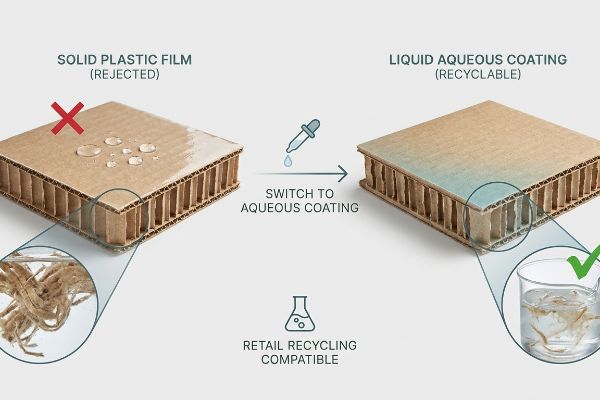
Viele Marken versuchen, im Bereich Biokunststoffe proaktiv zu sein, schaffen damit aber unbeabsichtigt ein massives Recyclinghindernis.
Die PLA-Kompostierkartonfalle
Marketingteams fordern häufig Biokunststoff-Laminierungen, da sie davon ausgehen, dass diese pflanzenbasierte Folie die vollständige Einhaltung von Umweltauflagen gewährleistet. Sie glauben, dass sich der Kunststoff aufgrund seines organischen Ursprungs zusammen mit Altpapier (OCC5 in jeder gängigen Recyclingtonne im Einzelhandel auf natürliche Weise zersetzt.
Hierbei werden die üblichen Recyclingmöglichkeiten der Kommunen falsch eingeschätzt. Die Biokunststofffolie bildet eine feste, physikalische Barriere, die Wasser während der üblichen Aufbereitung von Altpapier abweist. Anstatt sich aufzulösen, führt diese steife Schicht dazu, dass ganze Kartonchargen in herkömmlichen Sortieranlagen aussortiert werden. Um dieses Problem zu lösen, schreiben strategische Markenmanager ein flüssiges, wässriges Beschichtungsverfahren für feste organische Folien vor. Da diese wasserbasierten Beschichtungen als flüssige Polymermatrix fungieren, die sich während der Standardverarbeitung vollständig auflöst , bleiben Ihre Displays vollständig über die Wertstoffsammlung recycelbar und entsprechen somit perfekt den strengen Zielen des Unternehmens zur Abfallvermeidung.
| Häufiger Anfängerfehler | Die Profi-Lösung | Vorteil für die Verkaufsfläche |
|---|---|---|
| Spezifizierung von festen Kunststofffolien | Verwenden Sie flüssige, wässrige Beschichtungen8 | Gewährleistet die Recyclingfähigkeit am Straßenrand |
| Unter der Annahme, dass sich alle Biokunststoffe auflösen | Überprüfen Sie die Standardregeln für die Wiederaufbereitung | Beseitigt die Ausschussquote bei der kommunalen Sortierung9 |
| Höchster Glanz als oberste Priorität | Ästhetik und Chemie in Einklang bringen | Verringert die Abfallumleitungsraten auf Deponien |
Echte Nachhaltigkeit erfordert das sofortige Entfernen von festen Laminaten. Eine hochwertige Hochglanzoberfläche hat im Einzelhandel absolut keinen Wert, wenn das physische Display in Sortierzentren aussortiert wird und ein Jahrzehnt lang auf einer Mülldeponie liegt.
🛠️ Harveys Schreibtisch: Ist Ihr Display mit einer versteckten Kunststofffolie versehen, die die Recyclingfähigkeit beeinträchtigt? 👉 Lassen Sie sich eine Beschichtungsanalyse geben ↗ – Sicher herunterladen. Bei Fragen können Sie mich gerne kontaktieren.
Wie lässt sich Kartonabfall reduzieren?
Weniger Abfall zu erzeugen bedeutet nicht nur, dünnere Platinen zu drucken. Wahre Abfallreduzierung gelingt durch die Vermeidung von Montageschäden, noch bevor das Produkt den Laden erreicht.
Die Reduzierung von Kartonabfällen erfordert mathematische Ingenieurskunst, um die Reibung beim Auspacken zu minimieren. Durch die Integration minimaler Sicherheitsabstände in die Umkartons wird sichergestellt, dass beim Zusammenstellen im Einzelhandel keine Kartonplatten durch frustrierte Verkäufer beschädigt werden.
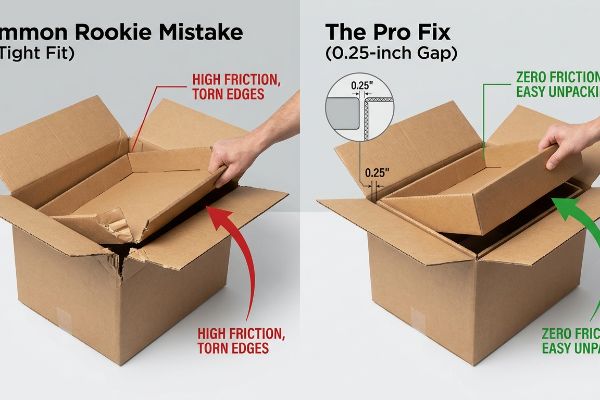
Am schnellsten erzeugt man unnötigen Müll, indem man ein Display konstruiert, das schon beim Auspacken kaputtgeht.
Die Regel für verschachteltes Reibungsspiel
Verpackungsdesigner fertigen häufig Versandkartons an, die exakt den Außenmaßen der inneren Behälter entsprechen (1:1). Sie gehen davon aus, dass eine perfekt dichte, ineinandergreifende Passform maximalen Schutz beim Transport gewährleistet und gleichzeitig den Rohmaterialverbrauch auf ein Minimum reduziert.
Diese passgenaue Konstruktion ignoriert vollständig den starken Oberflächenwiderstand von Rohmaterial aus Testlinern beim Auspacken im Einzelhandel. Wenn ein Verkäufer in Eile versucht, einen eng gepackten Verkaufsständer aus dem Versandkarton zu ziehen, verhaken sich die Kartonwände, was zu beschädigten Haltelaschen und sofortigem Materialverlust führt. Um diese Reibungsverklemmung zu vermeiden, integrieren erfahrene Einkaufsteams automatisch eine Toleranz von 0,25 Zoll (6,35 mm) in jede verschachtelte Vertiefung.Dieser berechnete Spalt beseitigt den Auspackwiderstand vollständig, reduziert die Beschädigungsrate im Geschäft drastisch und stellt sicher, dass Ihre Verkaufsständer unbeschädigt und verkaufsfertig ankommen.
| Häufiger Anfängerfehler | Die Profi-Lösung | Vorteil für die Verkaufsfläche |
|---|---|---|
| Entwicklung von 1:1-dichten Versandbehältern | Fügen Sie einen Spalt von 0,25 Zoll (6,35 mm) hinzu12 | Verhindert Reibung beim Auspacken |
| Die Reibung der Papieroberfläche wird vernachlässigt | Ingenieurtoleranzen13 | Verhindert das Einreißen der Haltelippen |
| Die Angestellten für den Schaden verantwortlich machen | Passen Sie die Strukturmathematik an | Reduziert den Abfall im Geschäft drastisch |
Bündig abschließende Umkartons sind im Einzelhandel ein sicheres Rezept für Zerstörung. Wenn Ihre Konstruktionsberechnung die Reibung nicht ausreichend berücksichtigt, werden Ihre Displays zu teurem Abfall, bevor sie auch nur ein einziges Produkt präsentieren können.
🛠️ Harveys Schreibtisch: Steigen Ihre Schadensmeldungen in den Filialen aufgrund von Engpässen bei den Versanddienstleistern? 👉 Fordern Sie Ihre Reibungsanalyse an ↗ — Keine Formulare, die endlose Verkaufsgespräche auslösen. Nur echter Mehrwert.
Wie lässt sich Abfall am nachhaltigsten entsorgen?
Die Entsorgung ist die ultimative Bewährungsprobe für Ihre Konstruktionsentscheidungen. Wenn sich die Komponenten nicht problemlos trennen lassen, versagt die herkömmliche Recyclinginfrastruktur vollständig.
Die nachhaltigste Art der Abfallentsorgung besteht darin, den Abfall direkt in die Standard-Wellpappenaufbereitungsanlagen zu geben. Dies erfordert die Vermeidung von Materialvermischungen, beispielsweise durch den Ersatz nicht recycelbarer Heißprägefolien durch reflektierende, metallische Sojafarben, um eine sichere Verarbeitung des Abfalls zu gewährleisten.
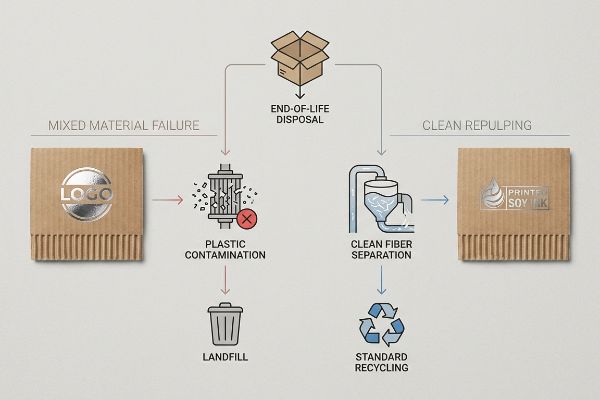
Doch die Theorie allein genügt nicht, wenn die Maschinen laufen und die Marketingteams eine erstklassige, glänzende Ästhetik fordern.
Warum Standardmischmaterialien in der Fabrik versagen
Einkaufsteams fordern häufig eine starke Heißfolienprägung ihrer Abfallbehälter, um Impulskäufer anzulocken. Sie gehen davon aus, dass die glänzende Folie nur einen sehr geringen Anteil der Gesamtfläche bedeckt und die Struktur daher für gängige Papierrecyclingströme völlig ausreichend ist .
In einem Designbüro ist es einfach, ein Display hochwertig aussehen zu lassen. Doch die harte Realität sieht anders aus, wenn die Massenproduktion in meiner Fabrik beginnt. Schwere Metallfolien enthalten Mikroschichten aus PET-Kunststoff15 , die sich während der Hochtemperatur-Aufschlussphase im Werk nicht auflösen. Diese winzigen Kunststoffflocken verstopfen dauerhaft die großen industriellen Aufbereitungsfilter16, was dazu führt, dass kommunale Recyclingzentren Ihre gesamte Kampagne als kontaminierten Abfall ablehnen. Um diese mechanische Katastrophe zu verhindern, schreibe ich die strikte Umstellung auf hochreflektierende Metallic-Sojafarben vor. Bei Viskositätstests auf der Heidelberg-Offsetdruckmaschine erreiche ich eine 85%ige optische Übereinstimmung mit Vollfolie, ohne ein einziges Gramm nicht recycelbaren Kunststoff in die Papiermatrix einzubringen. Durch die Beseitigung dieser Materialreibung auf chemischer Ebene überstehen Ihre Strukturbehälter die starke mechanische Belastung der industriellen Aufbereitungsprozesse problemlos.
| Häufiger Anfängerfehler | Die Profi-Lösung | Vorteil für die Verkaufsfläche |
|---|---|---|
| Spezifizierung von Kunststoff-Heißfolien | Verwenden Sie metallische Sojatinten17 | Umgeht die Strafen für die Entsorgung im Einzelhandel |
| Sofern kleinere Kunststoffteile in Ordnung sind | Vollständige Wiederaufbereitungsfähigkeit garantieren | Gewährleistet sauberes OCC-Recycling18 |
| Glanz vor Entsorgung | Glanz und Chemie im Gleichgewicht halten | Senkt die Gebühren für die Backend-Logistikum 19 |
Der Einsatz von Heißprägung auf temporären Verkaufsverpackungen ist ein ästhetisches Wagnis, das die Entsorgung unmöglich macht. Dadurch wird die chemische Zusammensetzung der Wellpappe verändert, was die gesamte Recyclingstrategie für das Produkt am Ende seiner Lebensdauer zunichtemacht.
🛠️ Harveys Schreibtisch: Wissen Sie, ob Ihre aktuelle Druckerei für Ihre „grünen“ Displays nicht recycelbare Folie verwendet? 👉 Schicken Sie mir Ihre Stanzdatei ↗ – ich prüfe die Kosten, bevor Sie unnötig Geld für die Massenproduktion ausgeben.
Abschluss
Sie können zwar den günstigsten Anbieter für Ihre umweltfreundlichen Abfallbehälter, aber wenn eine versteckte Kunststofflaminierung dazu führt, dass Ihre gesamte Kampagne von einem kommunalen Recyclinghof abgelehnt wird und sich Ihre Logistik um schätzungsweise 30 % verzögert, ist die Gewinnspanne Ihres Projekts dahin. Über 500 Markenmanager nutzen meine Checkliste für die Druckvorstufe, um genau diese fatalen Fehler in der Anfangsphase zu vermeiden. Hören Sie auf, über die Materialverträglichkeit zu raten, und lassen Sie mich Ihre Druckvorlage persönlich durch mein kostenloses Nachhaltigkeits-Audit für Verpackungen führen ↗, um potenzielle Probleme beim Recycling vor der Massenproduktion aufzudecken.
„Umsatz und Gewinn im Einzelhandel durch nachhaltige Verpackungen steigern …“, https://www.internationalpaper.com/resources/recycling/article/drive-retail-sales-profit-through-sustainable-packaging-recycling. Diese maßgebliche Dokumentation beschreibt die Nachhaltigkeitsanforderungen, die große Einzelhändler an Verpackungslieferanten stellen. Belegfunktion: Validierung; Quellentyp: Unternehmensrichtlinie/Branchenstandard. Unterstützt: die Aussage, dass Einzelhändler spezifische Nachhaltigkeitsvorgaben für Materialien haben. Geltungsbereich: Gilt für globale Einzelhandelsketten. ↩
„Die Unterschiede zwischen Wellpappe und Karton | UFP Packaging“, https://ufppackaging.com/insights/differences-between-corrugated-and-cardboard. Anerkannte Beschaffungsleitfäden erklären, dass zertifizierter und nicht zertifizierter Karton ohne Dokumentation optisch nicht zu unterscheiden sind. Nachweisfunktion: Faktenprüfung; Quellentyp: Branchenzertifizierungshandbuch. Unterstützt: die Behauptung, dass eine Sichtprüfung für die Konformitätsprüfung nicht ausreicht. Anmerkung zum Anwendungsbereich: Betrifft Standard-Braunwellpappe. ↩
„Produktkettenzertifizierung – Forest Stewardship Council“, https://fsc.org/en/chain-of-custody. Kurze Erläuterung, wie die dokumentierte Produktkettenverfolgung erforderlich ist, um die Standards des Einzelhandels für nachhaltige Verpackungen zu erfüllen. Nachweisfunktion: Validierung; Quellentyp: Branchenrichtlinie. Begründung: Notwendigkeit der Dokumentation für Audits. Anwendungsbereich: Variiert je nach Einzelhändler. ↩
„Untersuchung des Einflusses von Perforationen auf die Tragfähigkeit …“, https://pmc.ncbi.nlm.nih.gov/articles/PMC11396172/. Technische Erläuterung, wie sich das Mischen von Papier unterschiedlicher Qualitäten auf die Druckfestigkeit und die strukturelle Stabilität von Wellpappe auswirkt. Nachweisfunktion: Technischer Beleg; Quellentyp: Fachzeitschrift für Materialwissenschaften. Unterstützt: Einfluss der Materialentmischung auf die Festigkeit. Anmerkung zum Anwendungsbereich: Speziell für Mischungen aus Recycling- und Frischfaserfasern. ↩
„Recycelbares biobasiertes Laminatmaterial – Grounded Packaging“, https://www.groundedpackaging.co/materials/recyclable-bio-based-laminate. Technische Dokumentation, die bestätigt, dass Biokunststofffolien wie PLA in herkömmlichen Papierrecyclingströmen nicht abgebaut werden und als Verunreinigungen wirken. Nachweisfunktion: Technische Verifizierung; Quellentyp: Industriestandard für Recycling. Begründung: Die Behauptung, dass Biokunststoffe mit dem Recycling von Altpapier inkompatibel sind. Anwendungsbereich: Gilt für herkömmliche kommunale Recyclingverfahren. ↩
„Recyclingregeln · NYC311 – NYC.gov“, https://portal.311.nyc.gov/article/?kanumber=KA-02013. Bestätigungen von Abfallentsorgungsbehörden oder Recyclinganlagen belegen, dass nicht lösliche Biokunststofffolien bei der Sortierung zu Chargenverunreinigungen und Ausschuss führen. Beweisfunktion: Nachweis eines Fehlers in der Industrie; Quellentyp: Technischer Bericht. Belegt: Die Behauptung, dass Biofilme das kommunale Recycling behindern. Anmerkung: Die Ergebnisse können je nach Gemeinde variieren. ↩
„Recycelbare und biologisch abbaubare Papierbeschichtung mit funktionalisierten …“, https://pmc.ncbi.nlm.nih.gov/articles/PMC11948148/. Technische Spezifikationen oder materialwissenschaftliche Studien belegen, dass wasserbasierte Beschichtungen im Gegensatz zu festen organischen Filmen in Standard-Aufschlussbehältern abgebaut werden. Nachweisfunktion: Technische Validierung der Lösung; Quellentyp: Industriestandard oder Peer-Review-Studie. Unterstützt: Die Wirksamkeit wässriger Beschichtungen für das Recycling am Straßenrand. Anwendungsbereich: Gilt für Standardbedingungen der industriellen Zellstoffaufbereitung. ↩
„Überlegungen zur Nachhaltigkeit: Kartonbeschichtungen – Zenpack“, https://www.zenpack.us/blog/paperboard-coatings-sustainability-impact/. Technische Überprüfung der Verarbeitung von wasserbasierten Barrieren im Standard-Hydropulping-Verfahren im Vergleich zu Polyethylenfolien. Nachweisfunktion: Technische Validierung; Quellentyp: Branchenstandard für Recycling. Beleg: Die Behauptung, dass diese Beschichtungen die Recyclingfähigkeit über die Wertstoffsammlung gewährleisten. Anmerkung: Die Wirksamkeit kann je nach Beschichtungsdicke und Harztyp variieren. ↩
„Auswirkungen von Biokunststoffverunreinigungen auf das mechanische Recycling von …“, https://pubmed.ncbi.nlm.nih.gov/38815529/. Empirische Daten zu den Ablehnungsquoten von mit nicht löslichen Biokunststoffen verunreinigtem Papier in Wertstoffsortieranlagen. Evidenzfunktion: Empirische Daten; Quellentyp: Abfallwirtschaftsbericht. Begründung: Die Notwendigkeit der Überprüfung von Aufbereitungsvorschriften zur Vermeidung von Chargenablehnungen. Anwendungsbereich: Speziell für die kommunale Infrastruktur. ↩
„Der ultimative Leitfaden für Wellpappendesign – Powell Systems“, https://www.powellsystems.com/feeds/blog/corrugated-box-design. Dokumentation aus Verpackungstechniknormen, die die gängige Praxis der Minimierung von Hohlräumen zur Reduzierung von Materialverschwendung detailliert beschreibt. Nachweisfunktion: Etablierung eines Branchenstandards; Quellentyp: Technisches Handbuch. Unterstützt: die Verbreitung von passgenauen Verpackungsdesigns. Anwendungsbereich: Gilt für Wellpappennormen. ↩
„Faltkarton-Optionen & -Funktionen | The Box Co-op“, https://www.boxcoop.com/folding-carton-options. Ein technisches Handbuch oder eine Verpackungsnorm gibt die empfohlenen Freiraummaße an, um Reibung zwischen ineinanderliegenden Kartonlagen zu vermeiden. Nachweis: Technische Spezifikation; Quelle: Technisches Handbuch. Belege: Das spezifische Maß zur Vermeidung von Reibungsblockaden. Hinweis: Toleranzen können je nach Kartonqualität und -stärke variieren. ↩
„Tipps für die perfekte Verpackung von Kartons? – PopDisplay“, https://popdisplay.me/what-are-some-tips-for-packaging-box-perfection/. Kurze Erläuterung, wie eine maßgebliche externe Quelle diese Aussage stützt. Belegfunktion: Technische Spezifikation; Quellentyp: Branchenhandbuch für Verpackungen. Stützende Maßnahme: Die spezifische Messung zur Reibungsreduzierung in stapelbaren Versandkartons. Anwendungsbereich: Norm für Wellpappe. ↩
„[PDF] Allgemeine Fragen und empfohlene Normen für Wellpappe …“, https://adamsbox.com.pl/wp-content/uploads/2024/07/general-issues-and-the-recommended-standards-for-corrugated-board_2.pdf. Kurze Erläuterung, wie eine maßgebliche externe Quelle diese Aussage stützt. Nachweisfunktion: Technische Methodik; Quellentyp: Ingenieurhandbuch. Unterstützt: die Verwendung von Offset-Toleranzen zur Vermeidung von Materialfehlern wie z. B. abgerissenen Haltelippen. Anwendungsbereich: Gilt für verschachtelte Reibungsspaltmaße. ↩
„Umweltfreundliche Verpackungen: Ist Heißfolienprägung recycelbar?“, https://www.shunhopackaging.com/blog/Eco-Friendly-Packaging-Is-Hot-Foil-Stamping-Recyclable. Ein maßgeblicher industrieller Recyclingstandard würde klären, ob geringe Anteile metallischer Folienverunreinigungen den Aufbereitungsprozess von Wellpappe beeinträchtigen. Nachweisfunktion: technische Validierung; Quellentyp: Branchenrichtlinie; Unterstützung: die Auswirkung von Folien aus verschiedenen Materialien auf die Recyclingfähigkeit. Anwendungsbereich: spezifisch für Papier- und Wellpappenströme. ↩
„Heißprägefolien – ITW CER“, https://itwcer.com/blog/hot-stamping-foils/. Eine maßgebliche Quelle für Verpackungsmaterialien würde das Vorhandensein von PET-Schichten in Heißprägefolien und deren Beständigkeit gegen Auflösung beim Aufbereiten bestätigen. Nachweisfunktion: Technische Spezifikation; Quellentyp: Fachzeitschrift für Materialwissenschaften. Beleg: Die Nicht-Recyclingfähigkeit von Heißprägefolien. Anwendungsbereich: Gilt für Standardzusammensetzungen von Metallfolien. ↩
„Untersuchung der Auswirkungen von Einfach- und Doppelfiltrationssystemen …“, https://pmc.ncbi.nlm.nih.gov/articles/PMC11360198/. Technische Dokumentationen von Papierfabriken oder Recyclingunternehmen erläutern, wie nicht biologisch abbaubare Kunststoffverunreinigungen zu mechanischen Ausfällen in Filtrationsanlagen führen. Beweisfunktion: Mechanischer Ursache-Wirkungs-Zusammenhang; Quellentyp: Bericht eines Wirtschaftsingenieurs. Begründung: Grund für die Ablehnung von folienkontaminiertem Papier. Anwendungsbereich: Speziell für industrielle Aufbereitungsanlagen. ↩
„Die Deinkbarkeit verschiedener, mit Soja und Erdöl bedruckter Papiere …“, https://scholarworks.wmich.edu/honors_theses/508/. Technischer Vergleich, der zeigt, wie metallische Tinten auf Sojabasis die biologische Abbaubarkeit und Recyclingfähigkeit von Verpackungen im Vergleich zu Kunststofffolien verbessern. Nachweisfunktion: Technische Verifizierung; Quellentyp: Materialwissenschaftliche Studie. Unterstützt: Substitution von Kunststofffolien. Anmerkung zum Umfang: Fokus auf Standards der Druckindustrie. ↩
„[PDF] SPC-Leitfaden: Wie Sie feststellen, ob Ihre Papierverpackung recycelbar ist“, https://sustainablepackaging.org/wp-content/uploads/2023/01/SPC_Paper-Pkg-Report_FINAL.pdf. Branchenrichtlinien, die die Reinheitsgrade und Anforderungen an die Wiederaufbereitung von Altpapierverpackungen (OCC) für die Verarbeitung in Papierfabriken definieren. Nachweisfunktion: Industriestandard; Quellentyp: Abfallmanagementhandbuch. Begründung: Notwendigkeit der vollständigen Wiederaufbereitung. Anwendungsbereich: Speziell für Kartonrecyclingströme. ↩
„Behälter und Verpackungen: Produktspezifische Daten | US EPA“, https://www.epa.gov/facts-and-figures-about-materials-waste-and-recycling/containers-and-packaging-product-specific. Dokumentation der finanziellen Strafen oder erhöhten Entsorgungsgebühren, die Einzelhändlern für nicht recycelbare Verpackungsabfälle aus gemischten Materialien auferlegt werden. Nachweisfunktion: Wirtschaftliche Daten; Quellentyp: Bericht der Logistikbranche. Unterstützung: Finanzielle Anreize für nachhaltiges Design. Anmerkung zum Geltungsbereich: Variiert je nach kommunaler Abfallverordnung. ↩