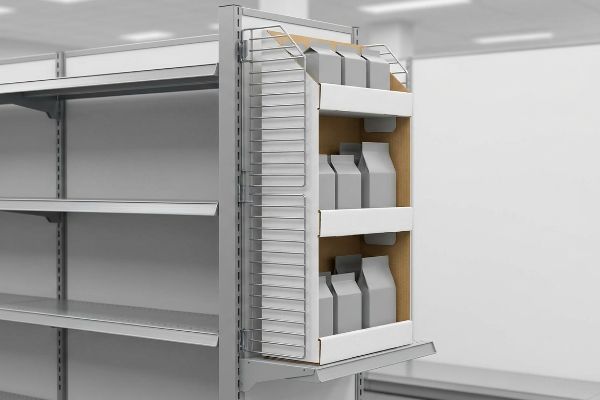
Sie möchten Ladenhüter schnell loswerden, und die Regalfläche ist maximal ausgelastet. Genau hier wird strategisches Off-Shelf-Merchandising zu Ihrem profitabelsten physischen Asset.
Power-Wing-Displays optimieren die ungenutzte Seitenfläche an den Regalenden Ihres Geschäfts und verwandeln sie in umsatzstarke Impulskaufzonen. Diese leichten, drahtgebundenen Wellpapp-Displays lenken die Aufmerksamkeit der Kunden auf sich, erhöhen die Sichtbarkeit von Zweitartikeln und steigern den Umsatz deutlich, ohne zusätzliche Verkaufsfläche zu benötigen.
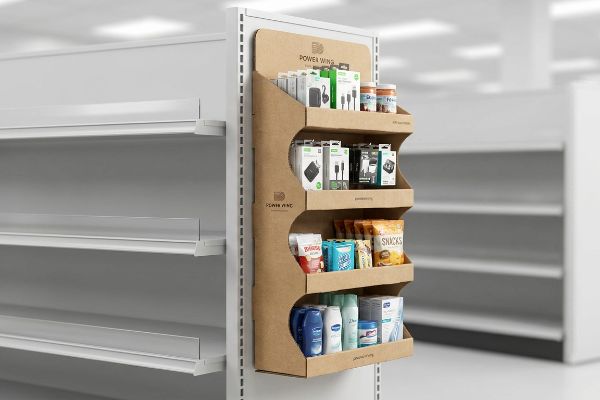
Das Verständnis der grundlegenden Marketingtheorie ist nur der Ausgangspunkt; der eigentliche Gewinn wird in der Fabrikhalle erzielt, noch bevor die Tinte getrocknet ist.
Was ist ein Power Wing im Einzelhandel?
Das Verständnis der räumlichen Beschränkungen bestimmt Ihre gesamte sekundäre Werbestrategie in großflächigen Einzelhandelsumgebungen.
Ein Power Wing ist ein drahtbefestigtes Verkaufsdisplay, das sicher an Standard-Endkappen aufgehängt wird. Diese kompakten Verkaufsdisplays, auch Sidekicks genannt, maximieren die vertikale Sichtbarkeit, indem sie leichte Waren direkt im peripheren Sichtfeld des Kunden platzieren und so Spontankäufe in den Hauptgängen des Geschäfts fördern.
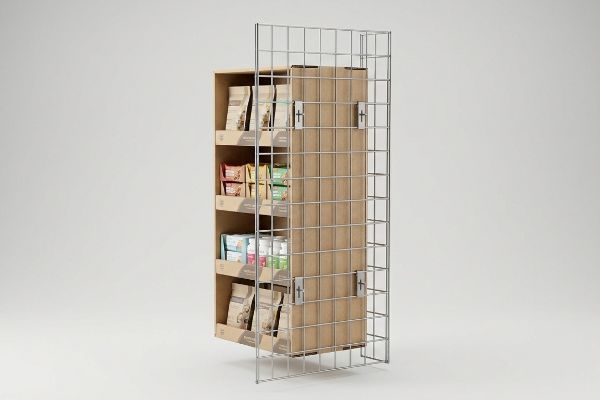
Während das Konzept auf einem digitalen Bildschirm völlig narrensicher erscheint, führt die physische Umsetzung zu versteckten mechanischen Reibungsverlusten.
Definition des universellen Fußabdrucks
Erfahrene Marketingleiter gehen oft davon aus, dass Standard-Verkaufsdisplays individuell an jedes gewünschte Produktvolumen angepasst werden können. Sie betrachten die Seitenflächen von Regalendkappen als unendliche Gestaltungsfläche und entwerfen imposante, massive Konstruktionen, die schwere Produktlasten tragen und in 3D-Rendering-Software völlig einzigartig aussehen.
Diese Falle begegnet mir immer wieder bei der Durchsicht erster Entwürfe. Ein Hersteller entwirft ein Gerät mit einer Breite von 457,2 mm (18 Zoll) und ignoriert dabei die strikte Norm von maximal 355,6 mm (14 Zoll) Breite und maximal 1219,2 mm (48 Zoll) Höhe für eine universelle Passform. Wenn ich bei unserer Testmontage das laute, raue Kratzen der Standard-S-Clips1 , die überdimensionierte, zu große Wellblech-Rückwände durchtrennen, weiß ich, dass die Konstruktion nicht stimmt. Wir korrigieren die Stanzform sofort und fixieren die Geometrie exakt auf die 1219,2 mm × 355,6 mm (48 × 14 Zoll)2.Durch die Standardisierung dieser Abmessungen stellen wir sicher, dass sich das Gerät problemlos an jedem Drahtrahmen montieren lässt. Dadurch reduzieren wir die Ausschussquote im Handel drastisch und sparen Tage an manueller Montagezeit.
| Häufiger Anfängerfehler | Die Profi-Lösung | Vorteil für die Verkaufsfläche |
|---|---|---|
| Übergröße, individuelle Breite | Strenge Begrenzung auf 14 Zoll (355,6 mm)3 | Gewährleistet die Einhaltung der Endkappenvorschriften |
| Die Gesamthöhenbeschränkungen werden außer Acht gelassen | Maximale Länge: 48 Zoll (1219,2 mm)4 | Beseitigt Gefahren durch blockierte Gänge |
| Instabile hintere Montageplatten | Doppelwandige, verstärkte Rückseite5 | Verhindert das Ausreißen der Halterung |
Ich lasse nicht konforme Sondermaße niemals in den Zuschnitt gelangen, da Compliance- Abteilungen der Einzelhändler diese sofort beanstanden. Die frühzeitige Sicherstellung der einheitlichen Abmessungen gewährleistet, dass Ihre Kampagne platziert wird und nicht im Papierkorb landet.
🛠️ Harveys Schreibtisch: Sind Sie sich nicht sicher, ob die Abmessungen Ihrer Seitenteile die Standardgrenzen für Endkappen überschreiten? 👉 Kostenlose Stanzlinienprüfung ↗ — Direkter Kontakt zu mir. Kein automatisierter Werbe-Spam, versprochen.
Warum sind Schaufensterdekorationen im Einzelhandel wichtig?
Die Warenpräsentation bei hohem Produktaufkommen erfordert ein sensibles Gleichgewicht zwischen struktureller Belastbarkeit und visueller Zugänglichkeit.
Schaufenster sind wichtig, weil sie die Sichtbarkeit der Waren erhöhen und es Kunden ermöglichen, die Produkte aus verschiedenen Blickwinkeln zu betrachten. Durch strategisch platzierte Ausschnitte in den tragenden Wänden erhalten Marken eine hohe Druckfestigkeit und vermeiden gleichzeitig visuelle tote Winkel. So wird die Produktpräsentation maximiert, ohne die Stabilität zu beeinträchtigen.
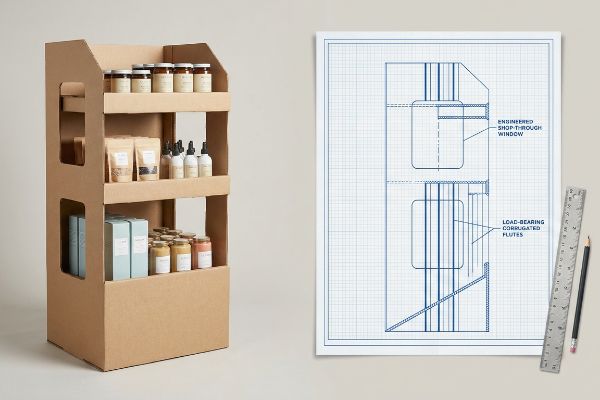
Die Konstruktion dieser strukturellen Hohlräume erfordert präzise Ingenieursleistungen, um sicherzustellen, dass der verbleibende Karton die Last weiterhin tragen kann.
Die Mechanik der Shop-Through-Architektur
Es ist eine häufige Falle, die selbst erfahrenen Einkaufsteams beim Design von POS-Mid-Aisle-Paletten (Point of Purchase) in die Falle tappt. Sie lassen die inneren Stützwände komplett massiv, um eine hohe dynamische Tragfähigkeit zu gewährleistenwodurchungewollt dunkle, schwere Blöcke entstehen, die die Ware optisch einschränken und Kunden zwingen, das Produkt nur aus einem einzigen, starren Blickwinkel zu betrachten.
Der alternative Fehler besteht darin, einfach massive Löcher in die tragenden Wände zu schneiden, ohne die verbleibende Faserfestigkeit zu berechnen. In meiner Produktionsstätte beobachte ich, wie dies bei physischen Modellen zum Versagen führt: Die starke, lokale Kompression der ausgedünnten Papierfasern verursacht ein lautes, hallendes Knickgeräusch, während die gesamte Regalebene durchhängt. Um dies zu verhindern, schreibe ich eine präzise Durchsichtarchitektur vor. Strategisch platzierte, mit Fenstern versehene Stützkonstruktionen ermöglichen die visuelle Durchlässigkeit und gewährleisten gleichzeitig die exakte Ausrichtung der vertikalen Wellen . Die verbleibenden Wellpappensäulen werden mathematisch so ausgerichtet, dass sie die nach unten gerichtete Kraft aufnehmen. Dadurch können Kunden aus allen Richtungen einkaufen, während das Risiko eines Einsturzes der obersten Regalebene vollständig ausgeschlossen wird.
| Häufiger Anfängerfehler | Die Profi-Lösung | Vorteil für die Verkaufsfläche |
|---|---|---|
| Massive innere Stützwände | Konstruierte Schaufenster9 | Ermöglicht 360-Grad-Sicht |
| Zufällige strukturelle Ausschnitte | Ausrichtung vertikaler Kannelierungssäulen10 | Hält dynamische Lastgrenzen ein |
| Erzeugung dunkler innerer Schatten | Entfernen überflüssiger Seitenwände | Beleuchtet Produkte im unteren Regalbereich |
Ich weigere mich, die Sichtbarkeit im Regal zu opfern, nur um die Berechnungen zu vereinfachen. Die Balance zwischen freier Sichtbarkeit und präziser Rillenausrichtung führt direkt zu höheren Impulsumwandlungen ohne das Risiko eines beschädigten Bodens.
🛠️ Harveys Schreibtisch: Werfen Ihre tragenden Wände Schatten auf Ihre unteren Regale? 👉 Sichtprüfung anfordern ↗ — Sicher herunterladen. Bei Fragen können Sie mich gerne kontaktieren.
Warum sind Warenauslagen im Einzelhandel so wichtig?
Eine physische Verkaufsfläche ist eine feindselige Umgebung, erfüllt von endlosem visuellen Lärm und eilenden Kunden.
Warenpräsentationen sind wichtig, weil sie gewohnte Sehmuster durchbrechen und die Laufwege der Kunden gezielt beeinflussen. Ein strategisch gestalteter Warenträger nutzt die räumliche Tiefe, kontrastreiche Strukturen und die optimale Regalhöhe, um Kunden anzulocken und passive Passanten in entscheidenden Kaufmomenten sofort zu aktiven Käufern zu machen.
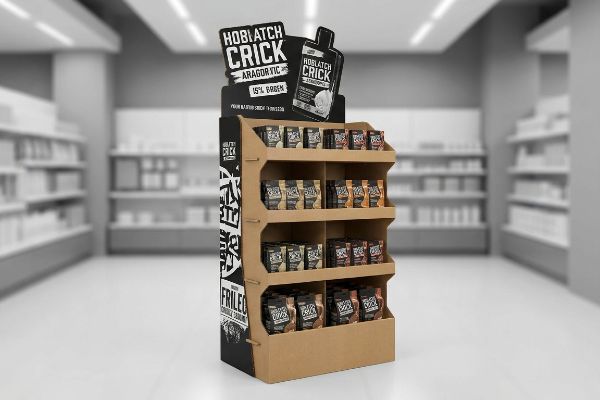
Das bloße Aufstellen einer bunten Schachtel auf dem Boden garantiert jedoch noch lange keine erfolgreiche Verlobung.
Die Beherrschung des Kontinuums räumlicher Interaktion
Markenverantwortliche entwerfen ihre Off-Shelf-Kampagnen häufig, indem sie flache 2D-PDFs auf hintergrundbeleuchteten Computermonitoren betrachten. Sie optimieren die Grafiken für die Nahsicht und vergessen dabei völlig, dass ein Kunde mit einer physischen Struktur in einem dynamischen, sich bewegenden räumlichen Kontinuum interagiert– beispielsweise in einer riesigen Lagerhalle.
Wenn Sie die räumliche Distanz nicht berücksichtigen, wird Ihr Verkaufsstand unsichtbar. Stellen Sie sich das wie eine Werbetafel an der Autobahn vor; darauf kann man keinen Roman drucken. Ich gehe den Musterverkaufsraum ab und teste gezielt die 3-3-3-Regel der räumlichen Wahrnehmung¹².Die Struktur muss auf 9 Meter Entfernung Aufmerksamkeit erregen, auf 90 Zentimeter Entfernung zum Kauf anregen und auf 7,5 Zentimeter Entfernung den Kaufabschluss ermöglichen. Wenn ich die glatte, haptische Oberfläche einer perfekt geschnittenen, niedrigen Frontkante spüre, die 85 % des Produkts¹³ für den letzten Griff auf 7,5 Zentimeter freigibt, weiß ich, dass die Geometrie funktioniert. Indem wir Elemente explizit für jede spezifische Distanzschwelle entwickeln, eliminieren wir eine kognitive Überlastung vollständig, was zu einer schnelleren visuellen Aufmerksamkeitslenkung führt und die Anzahl der Passanten, die vorbeigehen, ohne anzuhalten, drastisch reduziert.
| Häufiger Anfängerfehler | Die Profi-Lösung | Vorteil für die Verkaufsfläche |
|---|---|---|
| Mikrotext in den oberen Überschriften | Massive, gestanzte 30-Fuß-Elemente | Zieht Fußgänger aus der Ferne an |
| Hohe Regalkanten | 85 % Reduzierung der Produktsichtbarkeit14 | Beseitigt die physikalische Griffreibung |
| Unübersichtliche Markenbotschaften | Einzelner kontrastreicher Brennpunkt | Verhindert eine 3-sekündige kognitive Überlastung15 |
Bevor ich einen Produktionslauf freigebe, prüfe ich stets die visuelle Hierarchie aus der Ferne der Montagehalle. Wenn mich die Struktur aus zehn Metern Entfernung nicht anspricht, spielt die Druckauflösung von acht Zentimetern keine Rolle mehr.
🛠️ Harveys Schreibtisch: Sind Ihre wichtigsten Verkaufsargumente hinter hohen, geschwungenen Lippen verborgen? 👉 Fordern Sie Ihre Strukturanalyse an ↗ — Keine Formulare, die endlose Verkaufsgespräche auslösen. Nur purer Mehrwert.
Warum ist eine gute Warenpräsentation im Einzelhandel wichtig?
Die Warendichte bestimmt direkt Ihr Umsatzpotenzial, aber eine Überbelegung der Verkaufsfläche birgt erhebliche betriebliche Risiken.
Eine gut durchdachte Warenpräsentation optimiert die Produktdichte und sorgt für ein ausgewogenes Verhältnis zwischen maximaler Lagerkapazität und reibungslosen Nachbestellungen. Gezielte Abstände zwischen den Regalen verhindern Beschädigungen, lenken die visuelle Orientierung der Kunden durch gezielte Asymmetrie und eliminieren den Widerstand, der Verkäufer bei der Warenauffüllung im Verkaufsraum oft frustriert.
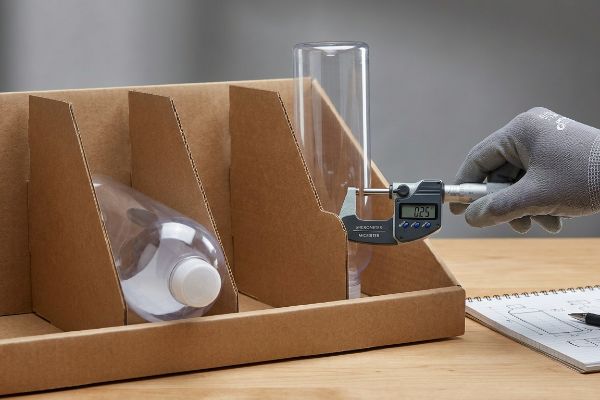
Ein Layout im digitalen Labor perfekt aussehen zu lassen, ist einfach, aber die harte Realität sieht anders aus, wenn man 500 Stück davon in chaotische Vertriebszentren verschickt.
Die Asymmetrieregel und die Wiederauffüllungsreibung
Einkaufsteams sind naturgemäß bestrebt, ihre Stückkosten zu maximieren und fordern daher eine perfekt symmetrische, extrem dichte Produktbestückung jedes einzelnen Regals. Sie gehen davon aus, dass die Vermeidung von Leerraum eine höhere Kapitalrendite garantiert und ignorieren dabei die physikalischen Grenzen von Rohkarton .
In meiner Anlage beobachte ich regelmäßig die verheerenden Folgen dieser symmetrischen Überbelegung bei unseren Verpackungsversuchen. Wenn die Produkte aufgrund der Anordnung millimetergenau platziert werden müssen, höre ich förmlich das scharfe, reißende Geräusch der Wellpappen-Haltekante, wenn ein Mitarbeiter versucht, eine starre Plastikflasche mit Gewalt in den engen Schlitz zu quetschen. Um dies zu vermeiden, setze ich die Regel der asymmetrischen Anordnung mithilfe von flexiblen Trennwänden konsequent um. Durch die Schaffung eines präzisen physischen Puffers von 6,35 mm (0,25 Zoll) ¹⁷ und die Gruppierung des Lagerbestands in visuelle Gruppen mit ungerader Anzahl an Einheiten stelle ich sicher, dass die Montagezeit für die Lohnverpackung deutlich reduziert wird. Dieser strukturelle Freiraum verhindert vollständig das Einreißen von Karton beim Auffüllen der Regale im Geschäft¹⁸ und schützt die Marke somit effektiv vor sofortigen Rückbelastungen durch den Einzelhandel aufgrund beschädigter Verkaufsdisplays .
| Häufiger Anfängerfehler | Die Profi-Lösung | Vorteil für die Verkaufsfläche |
|---|---|---|
| Produktraster ohne Abstand | 0,25-Zoll (6,35 mm) Puffer19 | Verhindert das Einreißen von Regalkanten |
| Symmetrische, gerade Reihen | ungeradzahlige asymmetrische Teiler20 | Erzeugt visuelle Spannung beim Käufer |
| Feste, starre Innenwände | Schwebende modulare Trennwände | Passt sich schnellen Bestandsänderungen an |
Ich messe die Mikrometerwerte an jedem inneren Teiler, um sicherzustellen, dass die Toleranz von 6,35 mm (1/4 Zoll) exakt eingehalten wird. Der im Konstruktionslayout vorgesehene Freiraum ist kein verschwendeter Platz; er ist die physische Sicherheit, die Ihr Gerät intakt hält.
🛠️ Harveys Schreibtisch: Lassen Sie sich nicht von einem 2 Millimeter kleinen Konstruktionsfehler die Einführung in 500 Filialen vermasseln. 👉 Senden Sie mir Ihre Stanzdatei ↗ – ich prüfe die Berechnungen, bevor Sie Ihr Budget für die Massenproduktion verschwenden.
Abschluss
Sie können für Ihre Werbeaktion problemlos einen günstigeren Anbieter wählen. Doch wenn übergroße Rückwände auf dem Verkaufsboden von ihren Metallhalterungen reißen, verlangsamt dieser massive Strukturversagen Ihren Absatz um schätzungsweise 30 % und führt mit Sicherheit zur sofortigen Ablehnung durch den Händler. Genau dieses Datenblatt verwenden meine zehn wichtigsten Einzelhandelskunden, um Druckausschüsse auf null zu reduzieren. Hören Sie auf, bei komplexen Abständen zu raten, und lassen Sie mich Ihre Geometrie persönlich durch meinen kostenlosen Stanzform-Vorab-Check führen, um kritische Schwachstellen vor der Massenproduktion zu erkennen.
„Power Panel Displays – Clip Strip Corp.“, https://www.clipstrip.com/display-construction/power-panel-displays/?srsltid=AfmBOoo1W-AROWQSpLZTmfymvvXz5R9EQn83r5lW3z28HMhiler6JZKz. Die technische Dokumentation für Hardware für Verkaufsdisplays bestätigt die Verwendung von S-Clips als Standardmechanismus zur Befestigung von Sidekick-/Power-Wing-Displays an Drahtrahmen. Nachweisfunktion: Technische Spezifikation; Quellentyp: Hardwarekatalog. Unterstützt: Die Verwendung von S-Clips für die Power-Wing-Montage. Hinweis: Einige Displays verwenden möglicherweise proprietäre Verriegelungsmechanismen. ↩
„Power Wing Display Retail – WOW Packaging Display“, https://www.wowpopdisplay.com/pop-displays/structure/sidekick-powerwing/powerwing-display/. Branchenübliche Standards für Ladeneinrichtungen oder Herstellerrichtlinien bestätigen, dass eine Grundfläche von 48 × 14 Zoll (ca. 122 × 35,5 cm) der Branchenstandard für die universelle Kompatibilität von Power Wing Displays ist. Nachweis: Technische Spezifikation; Quellentyp: Branchenstandard. Belegt: Die Aussage, dass diese spezifische Grundfläche die universelle Grenze darstellt. Hinweis: Kann je nach den Richtlinien des jeweiligen Einzelhändlers variieren. ↩
„14 Arten von Verkaufsdisplays | Chicago, IL – Wertheimer Box“, https://wertheimerbox.com/types-of-retail-displays/. Branchenstandards für die Abmessungen von Power Wings gewährleisten die Kompatibilität mit Standard-Endkappen. Nachweisfunktion: Technische Spezifikation; Quellentyp: Richtlinien für Verkaufsdisplays. Unterstützt: Universelle Breitenbegrenzung. Anwendungsbereich: Standard für großflächige Einzelhandelsumgebungen. ↩
„Sidekicks + Power Wings: Der vollständige Leitfaden – Bennett Packaging“, https://bpkc.com/blogs/blog/sidekicks-power-wings-the-complete-guide. Sicherheits- und Platzrichtlinien für den Einzelhandel bezüglich der maximal zulässigen Höhe von Zweitdisplays, um Gangblockaden zu vermeiden. Nachweisfunktion: Sicherheitsnorm; Quellentyp: Handbuch für das Management von Einzelhandelsflächen. Unterstützung: Höhenbeschränkungen. Anwendungsbereich: Allgemeine Branchenpraxis. ↩
„Optimales Design von doppelwandigen Wellpappenverpackungen – PMC“, https://pmc.ncbi.nlm.nih.gov/articles/PMC8950760/. Materialtechnische Spezifikationen für die strukturelle Integrität von Verkaufsdisplays zur Vermeidung von Montagefehlern. Nachweisfunktion: technische Anforderung; Quellentyp: Leitfaden für Verpackungstechnik. Unterstützung: strukturelle Haltbarkeit. Anwendungsbereich: gilt für Wellpappendisplays. ↩
„Wie viel Last kann meine Palette tragen?“, https://unitload.vt.edu/education/white-papers/5-wp-load-carrying-capacity-of-pallets.html. Bestätigung aus einem Leitfaden für Ladeneinrichtungen, dass massive Wände verwendet werden, um die dynamische Tragfähigkeit von POS-Paletten zu maximieren. Nachweisfunktion: Technische Validierung; Quellentyp: Technisches Handbuch. Anwendungsbereich: Strukturelle Anforderungen für Mittelgangdisplays. Anmerkung zum Geltungsbereich: Speziell für die Architektur von POS-Paletten. ↩
„Abschätzung der Druckfestigkeit von Wellpappkartons …“, https://pmc.ncbi.nlm.nih.gov/articles/PMC8467740/. Erläuterung, wie die vertikalen Wellen in Wellpappe die Hauptachse für die Druckfestigkeit bilden. Nachweisfunktion: Technische Spezifikation; Quellentyp: Handbuch für Verpackungstechnik. Unterstützt: die Anforderung an die Wellenausrichtung zur Vermeidung von Knicken. Anwendungsbereich: Spezifisch für Wellpappe. ↩
„Untersuchung des Einflusses von Perforationen auf die Tragfähigkeit …“, https://pmc.ncbi.nlm.nih.gov/articles/PMC11396172/. Technische Analyse, die zeigt, wie die Ausrichtung vertikaler, tragender Stützen die strukturelle Integrität trotz Ausschnitten erhält. Nachweisfunktion: Ingenieurprinzip; Quellentyp: Materialwissenschaftliche Studie. Unterstützt: die Behauptung, dass eine berechnete Stützenausrichtung einen Einsturz der einzelnen Ebenen verhindert. Anmerkung zum Untersuchungsbereich: Fokus auf axialer Lastaufnahme. ↩
„7 Arten von Schaufensterdekorationen: Kreative Ideen für Ladendesigner“, https://unibox.co.uk/blog/7-types-of-window-display. Analyse, wie spezielle Schaufensterkonfigurationen die visuelle Wahrnehmung der Kunden und die Sichtbarkeit des Geschäfts verbessern. Nachweisfunktion: Funktionsnachweis; Quellentyp: Studie zum Einzelhandelsdesign. Belege: Behauptung, dass diese Schaufenster eine 360-Grad-Sicht ermöglichen. Anwendungsbereich: Betrifft offene Ladenfronten. ↩
[PDF] Untersuchung des Einflusses von Wellpappkartons auf die Verteilung von Druckbelastungen auf Paletten, https://www.unitload.vt.edu/content/dam/unitload_vt_edu/graduate-research-and-subpages-pictures-and-docs/thesis-and-dissertations-/Clayton%20-%20ETD%20-%20Investigation%20of%20the%20Effect%20of%20Corrugated%20Boxes%20on%20the%20Distribution%20of%20Compression%20Stresses%20on%20the%20Top%20Surface%20of%20Wooden%20Pallets.pdf. Technischer Nachweis, wie die Ausrichtung vertikaler Bauteile die dynamische Tragfähigkeit im Einzelhandelsbau gewährleistet. Nachweisfunktion: Technische Validierung; Quellentyp: Tragwerksplanungshandbuch. Beitrag: Einhaltung der dynamischen Lastgrenzen. Anmerkung zum Untersuchungsbereich: Der Fokus liegt auf tragenden Tragwerksystemen in Gewerbeimmobilien. ↩
„Bewertung der Aufmerksamkeit und Erregung von Konsumenten mittels Eye-Tracking …“, https://pmc.ncbi.nlm.nih.gov/articles/PMC8380820/. Kurze Erläuterung, wie eine maßgebliche externe Quelle diese Aussage stützt. Funktion der Evidenz: Bestätigung verhaltenswissenschaftlicher Prinzipien; Quellentyp: Studie zur Konsumentenpsychologie. Unterstützt: die Annahme, dass Entfernung und Bewegung die Wahrnehmung von Warenauslagen im Geschäft beeinflussen. Anwendungsbereich: primär relevant für großflächige Einzelhandelsumgebungen. ↩
„[PDF] Zonenvorschriften der Gemeinde Naugatuck, Connecticut“, https://nvcogct.gov/wp-content/uploads/2021/11/NAUG-Zoning-regulations-08JUN20.pdf. Bestätigung der 30-3-3-Distanzheuristik als anerkannter Standard im Einzelhandelsumfelddesign zur Kundengewinnung. Nachweisfunktion: Bestätigung des Branchenstandards; Quellentyp: Handbuch für Einzelhandelsdesign oder umweltpsychologische Studie. Unterstützt: Das Rahmenkonzept für distanzbasierte Kundenbindung. Hinweis zum Anwendungsbereich: Kann je nach Einzelhandelsbranche variieren. ↩
„Point of Purchase: Wie Einzelhändler Käufer am Point of Purchase beeinflussen können …“, https://blog.intouch.com/posts/points-of-purchase-displays. Technische Validierung der 85%-Sichtbarkeitsschwelle zur Maximierung der Kundenzugänglichkeit und Kaufabsicht am Point of Purchase. Nachweisfunktion: Technische Spezifikation; Quellentyp: Marktforschung oder Studie zum Konsumentenverhalten. Unterstützt: Die spezifische Geometrie, die für eine hohe Konversionsrate bei der Produktzugänglichkeit erforderlich ist. Fokus: Die finale „Greifphase“. ↩
„Wie hoch ist ein durchschnittliches Verkaufsregal? – PopDisplay“, https://popdisplay.me/what-is-the-average-retail-shelf-height/. Technische Daten belegen den Zusammenhang zwischen reduzierter Regalkantenhöhe und verbesserter Produktsichtbarkeit. Nachweisfunktion: quantitative Verifizierung; Quellentyp: Studie zum Einzelhandelsdesign. Unterstützt die Aussage, dass reduzierte Regalkanten die Sichtbarkeit verbessern. Hinweis: Der Prozentsatz kann je nach Produkthöhe und Regaltiefe variieren. ↩
„Erforschung des Browsing-Verhaltens und der Aufmerksamkeitsspanne von Konsumenten mit …“, https://pmc.ncbi.nlm.nih.gov/articles/PMC6895988/. Psychologische Forschung zum begrenzten Zeitfenster, das Konsumenten für die Verarbeitung von Ladenbeschilderungen aufwenden, bevor es zu kognitiver Überlastung kommt. Evidenzfunktion: Theoretische Validierung; Quellentyp: Neuromarketing-Studie. Unterstützt: Die Effizienz einzelner, kontrastreicher Blickpunkte. Anmerkung zum Anwendungsbereich: Bezieht sich speziell auf das anfängliche Anhalten und Hinsehen. ↩
„Spezifikationen für Wellpappe“, https://www.fibrebox.org/assets/2025/09/Walmart_Corrugated-Board_Specifications_Automation_Packaging_Standards.pdf. Kurze Erläuterung, wie technische Normen für Wellpappe die Druckfestigkeit und die Bruchpunkte bei extremer Dichte definieren. Nachweisfunktion: Technische Spezifikation; Quellentyp: Handbuch für Verpackungstechnik. Begründet: Das Risiko des Strukturkollapses bei überfüllten Displays. Anwendungsbereich: Bezieht sich speziell auf temporäre POS-Displays aus Karton. ↩
„Verpackungs- und Logistikplanung für Verkaufsdisplays – Frank Mayer“, https://www.frankmayer.com/blog/packaging-and-logistics-planning-for-retail-displays/. Branchenstandards für den erforderlichen Verpackungsabstand zur Vermeidung von Materialreibung und Optimierung der Nachschubgeschwindigkeit. Nachweisfunktion: Technische Spezifikation; Quellentyp: Leitfaden für Verpackungstechnik. Unterstützt: Die Wirksamkeit spezifischer Abstandsmaße. Anwendungsbereich: Fokus auf Wellpappe. ↩
„Welche Fehler bei der Lohnverpackung führen zu Rückbelastungen durch Einzelhändler?“, https://www.industrialpackaging.com/blog/copacker-mistakes-retailer-chargebacks. Analyse der mechanischen Belastung von Kartonaufstellern während der Warenauffüllung und der daraus resultierenden Strafzahlungen an Einzelhändler für beschädigte Displays. Nachweisfunktion: Kausalitätsvalidierung; Quellentyp: Studie zur Lieferkettenlogistik. Unterstützt: Den Zusammenhang zwischen Layoutabständen und der Integrität von Aufstellern. Anwendungsbereich: Speziell für den Einzelhandel mit hohem Warenumschlag. ↩
„Regalhöhenverstellbarkeit: Wie Sie den vertikalen Raum für optimale Sichtbarkeit nutzen“, https://wzrack.com/shelf-height-adjustability-how-to-optimize-vertical-space-for-visibility/. Technischer Standard für Mindestabstände zwischen Produkten, um Verpackungsschäden bei der Entnahme zu vermeiden. Nachweisfunktion: Technische Spezifikation; Quellentyp: Handbuch für den Einzelhandel. Zweck: Vermeidung von Produktschäden. Anmerkung zum Anwendungsbereich: Fokus auf physische Freiräume. ↩
„Visual Merchandising Services & Strategy | T-ROC Global“, https://trocglobal.com/visual-merchandising/. Psychologisches Prinzip im Visual Merchandising: Ungerade Gruppierungen wirken ansprechender und motivierender als symmetrische. Beleg: Gestaltungsprinzip; Quelle: Leitfaden für Visual Merchandising. Unterstützt: Kundenbindung durch visuelle Spannung. Anmerkung: Psychologische Wirkung. ↩