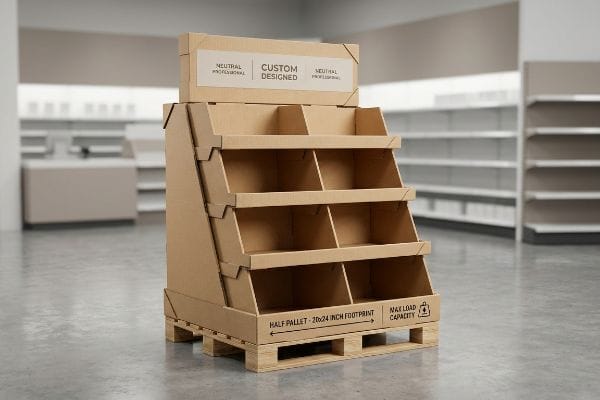
Sie benötigen Standorte in stark frequentierten Geschäften, doch Ihre großen Verkaufsdisplays werden von den Einkäufern immer wieder abgelehnt .Die beengten Regalverhältnisse in großen Kaufhäusern sind frustrierend, aber eine Verkleinerung Ihrer Verkaufsfläche löst dieses Problem sofort.
Die Bestellung eines Halbpaletten-Displays erfordert, dass Ihre physische Struktur exakt an die Standard-Verkaufsflächen für Teilpaletten angepasst wird. Sie müssen die Wellpappbasis konstruieren, die Tragfähigkeit für den Transport optimieren, die Genehmigungen des Einzelhändlers einholen und sicherstellen, dass alle Werbegrafiken exakt den strengen Richtlinien für die Warenpräsentation im Einzelhandel entsprechen.
Lassen Sie uns im Detail aufschlüsseln, wie Sie Ihre Kampagne an die beengten Platzverhältnisse im Einzelhandel anpassen können, ohne die strukturelle Integrität oder die Markenpräsenz zu beeinträchtigen.
Wie nennt man eine halbe Palette?
Das Verständnis der Fachsprache des Einzelhandels ist der erste Schritt, um Ihre Werbeaktion von den strengen Einkäufern großer Handelsketten genehmigen zu lassen.
In der Verpackungsindustrie für den Einzelhandel werden halbe Paletten auch als Halbpaletten-Displays bezeichnet. Diese Einheiten messen exakt 48 x 20 Zoll (121,9 x 50,8 cm) und stellen eine präzise mathematische Unterteilung der standardmäßigen GMA-Holzpalette (Grocery Manufacturers Association) dar, die in nordamerikanischen Lieferketten verwendet wird.
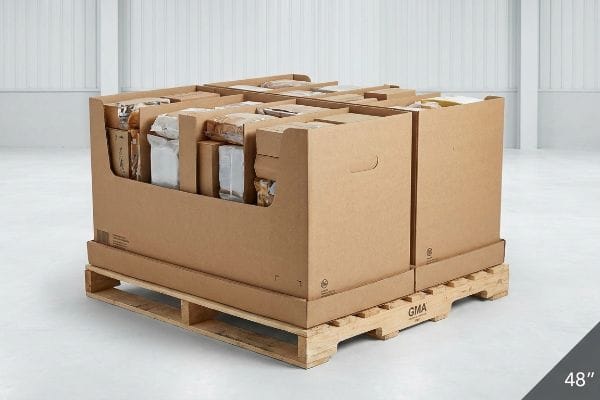
Wenn Sie die Sprache des Käufers sprechen, hören Sie auf, unstrukturierte Konzepte zu präsentieren und bieten stattdessen strategische räumliche Lösungen an.
Die strategische Macht des fraktionierten Merchandisings
Viele neue Marketingteams gehen davon aus, dass eine große Einzelhandelskampagne eine gesamte Verkaufsfläche von 121,9 x 101,6 cm (48 x 40 Zoll) beanspruchen muss . Sie entwerfen massive Werbeflächen, die zwangsläufig abgelehnt werden, da die wertvollen Regalkreuzungen von den Filialleitern streng rationiert werden.
Ich sehe diese Falle immer wieder, selbst erfahrenen Einkaufsteams. Ein Kunde hatte einmal wochenlang an einem aufwendigen, bodentiefen Display gearbeitet, nur um vom Einkäufer eine glatte Absage zu erhalten. Wir entschieden uns daraufhin für eine halbe Palettenfläche, wodurch zwei unterschiedliche Markenkampagnen perfekt auf einer einzigen Holzplattform Platz fanden. Ich erinnere mich noch gut daran, wie der Lohnverpacker die beiden 121,9 x 50,8 cm großen Wellpappplatten zusammenschob – das satte, feste Klicken der perfekt bündig abschließenden Mikrowellplatten bestätigte, dass wir die maximale Ausnutzung der Flächendichte erreicht hatten. Mit einer reduzierten Flächenfläche bieten Sie dem Einzelhändler ein flexibles Werkzeug statt einer räumlichen Belastung.
| Häufiger Anfängerfehler | Die Profi-Lösung | Vorteil für die Verkaufsfläche |
|---|---|---|
| Nur Pitching in voller Größe | Vorschlag von Bruchteil-Fußabdrücken | Sichert sich erstklassige Gangfläche |
| Die Berechnung gemeinsam genutzter Paletten wird ignoriert | Konstruierte, exakte 48×20-Basen3 | Ermöglicht geteilte Werbeaktionen |
| Verschwendung von Gangfläche | Maximierung der SKU-Dichte (Lagerhaltungseinheit)4 | Steigert den Umsatz pro Quadratmeter5 |
Ich rate meinen Kunden immer zu Teilflächenkonzepten, wenn sie in großen Kaufhäusern mit begrenzten Platzverhältnissen zu kämpfen haben. Die Hälfte der Regalfläche zu sichern ist ungleich profitabler, als komplett aus dem Verkaufsraum verdrängt zu werden, weil die geplante Flächenausnutzung schlichtweg zu groß war.
🛠️ Harveys Schreibtisch: Lehnen Einzelhändler Ihre riesigen Verkaufsflächen ab? 👉 Holen Sie sich eine Vorlage für eine Teilschnittgröße ↗ — Direkter Kontakt zu mir. Kein automatisierter Werbe-Spam, versprochen.
Was ist ein Viertelpaletten-Display?
Durch eine noch weitere Reduzierung der Präsenzfläche können Ihre Produkte in die am stärksten frequentierten Bereiche des Geschäfts gelangen.
Ein Viertelpaletten-Display ist ein kompaktes Verkaufsdisplay, das genau ein Viertel einer Standard-Versandplattform einnimmt. Diese Einheiten messen exakt 60,9 x 50,8 cm (24 x 20 Zoll) und ermöglichen es, vier verschiedene Werbekampagnen nahtlos auf einer einzigen Holzbasis zu präsentieren.
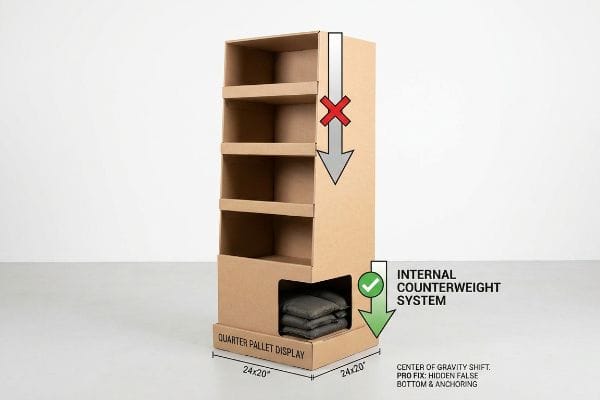
Eine kleinere Grundfläche ermöglicht zwar den Zugang zu erstklassigen Immobilien, bringt aber auch gravierende physikalische Herausforderungen mit sich, die man nicht ignorieren kann.
Kampf gegen die Schwerpunktverlagerung
Marken verkleinern ihre Standard-Verkaufsdisplays häufig auf eine kompakte Grundfläche von 60,9 x 50,8 cm (24 x 20 Zoll), um eine Platzierung direkt neben den Regalenden zu ermöglichen. Dabei versuchen sie jedoch oft, die ursprüngliche Gesamthöhe von 127 cm (50 Zoll) beizubehalten, um die Sichtbarkeit der Grafiken zu maximieren.
Dadurch entsteht eine starke Schwerpunktverlagerung, ähnlich wie bei einem Bleistift, der auf seinem Radiergummi steht. Ich führte einen Kunden durch ein Modell seines neuen, hohen und schmalen Displays. Als ich die Seitenwand mit zwei Fingern leicht anstieß, kippte die gesamte Konstruktion heftig um und gab ein lautes Knackgeräusch von sich, als die unteren Klappen einknickten. Dies stellt eine erhebliche Kippgefahr dar, die von den Filialleitern sofort zur Ablehnung der Haftungsübernahme führt . Um das Problem zu beheben, konstruierte ich einen versteckten Zwischenboden und verankerte ihn mit Sandsäcken. Dadurch wurde der Schwerpunkt nach unten verlagert und das Display sicher auf dem Verkaufsboden fixiert.
| Häufiger Anfängerfehler | Die Profi-Lösung | Vorteil für die Verkaufsfläche |
|---|---|---|
| Beibehaltung der vollen Körpergröße | Absenkung des Massenschwerpunkts | Verhindert Trinkgeldhaftung9 |
| Ignorieren der hohen SKU-Last | Verankerung der untersten Ebene | Verhindert das Verschütten von Waren im Einkaufswagen |
| Verwendung leichter, unbeschwerter Sockel | Einbau von versteckten Doppelböden10 | Hält das Display sicher geerdet |
Ich achte stets darauf, dass eine Viertelpalette ohne internes Gegengewicht den sicheren Schwerpunkt überschreitet. Eine kompakte Stellfläche ist völlig nutzlos, wenn sie bei leichten Kollisionen mit Einkaufswagen eine Kippgefahr darstellt.
🛠️ Harveys Schreibtisch: Wackelt Ihr schmaler Bildschirm unter hoher Produktlast? 👉 Stabilitätsprüfung anfordern ↗ — Sicher herunterladen. Bei Fragen können Sie mich gerne kontaktieren.
Worin besteht der Unterschied zwischen einer halben Palette und einer Viertelpalette?
Beide Formate helfen Ihnen dabei, sich begehrte Verkaufsflächen zu sichern, doch ihre unterschiedlichen Geometrien erfordern völlig unterschiedliche Logistikstrategien.
Der Unterschied zwischen einer halben und einer Viertelpalette liegt ausschließlich in ihrer Grundfläche und ihrer räumlichen Dichte. Eine halbe Palette hat eine Fläche von 48 x 20 Zoll (121,9 x 50,8 cm), während eine Viertelpalette genau 24 x 20 Zoll (60,9 x 50,8 cm) misst.
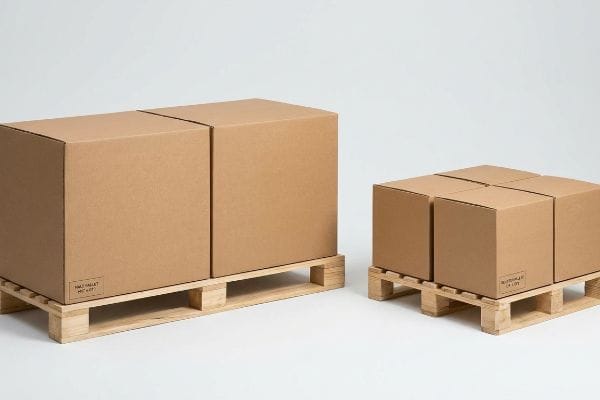
Die Wahl zwischen diesen beiden Formaten ist nicht nur eine Marketingfrage; sie verändert drastisch die Art und Weise, wie Ihre Versandkartons das dynamische Gewicht verteilen.
Beherrschung der fraktionierten Logistik und des Überhangs
Wenn Marken mehrere Viertel- oder Halbpaletten entwerfen, versuchen die Einkaufsteams, die Versandkartons optimal auszunutzen, um mehr Einheiten unterzubringen. Sie gehen fälschlicherweise davon aus, dass Standard-Wellpappe unabhängig von der Kartongeometrie problemlos kopflastige Lagerbeladungen tragen kann .
Stellen Sie sich die vertikalen Ecken Ihres Umkartons wie die tragenden Pfeiler einer Brücke vor. Ein Kunde von mir wechselte von Halb- zu Viertelpaletten. Um Platz zu sparen, vergrößerte der Designer die Kartonabmessungen, sodass ein winziger Teil über die Holzplattform hinausragte. Bei einem Lagerbesuch hörte ich das schmerzhafte Knirschen des rohen Kartons, als sich die ungestützte unterste Ebene sichtbar nach außen bog und unter dem Druck der oberen Ladung katastrophal zusammenbrach. Indem wir den Umkarton mithilfe unserer Software mathematisch um nur 12,7 mm (0,5 Zoll) verkleinerten, brachten wir diese kritischen Ecken wieder auf die massive Holzplattform und stellten so sofort ihre Druckfestigkeit gemäß dem Box Compression Test (BCT)wieder.
| Häufiger Anfängerfehler | Die Profi-Lösung | Vorteil für die Verkaufsfläche |
|---|---|---|
| Palettenüberstand zulassen | Durchsetzung strenger Begrenzungsboxen | Verhindert das vollständige Zerdrücken des Kartons13 |
| Eckausrichtung ignorieren | Verkleinerung der Grundfläche um 0,5 Zoll14 | Gewährleistet die Integrität des Transports |
| Überfüllung des Umkartons | Optimierung für fraktionale Dichte15 | Vermeidet teure Nacharbeiten |
Ich fixiere jedes Teilstückdesign mathematisch innerhalb eines exakten Begrenzungsrahmens ohne Überstand. Nur wenn die Wellblechecken vollständig von der Holzkonstruktion gestützt werden, überstehen sie den Transport im Doppelstockaufbau auf dem Meer ohne schwere Quetschschäden.
🛠️ Harveys Schreibtisch: Werden Ihre Teillieferungen von Displays auf mysteriöse Weise beim Inlandsversand beschädigt? 👉 Fordern Sie Ihre Bewertung für Überbestände an ↗ — Keine Formulare, die endlose Verkaufsgespräche auslösen. Nur echter Mehrwert.
Was ist eine Teilpalette?
Manchmal beziehen sich Käufer allgemein auf Bruchteile von Einheiten, doch der Umgang mit einer unvollständigen Plattforminfrastruktur birgt erhebliche mechanische Schwachstellen.
Eine Teilpalette ist ein branchenüblicher Begriff für Verkaufsdisplays, die nicht die gesamte 121,9 x 101,6 cm (48 x 40 Zoll) große Holzplattform abdecken. Zu dieser Kategorie gehören alle halben, viertel und individuell dimensionierten temporären Verkaufsdisplays, die für den gemeinsamen Transport mit anderen Warentransporten konzipiert sind.
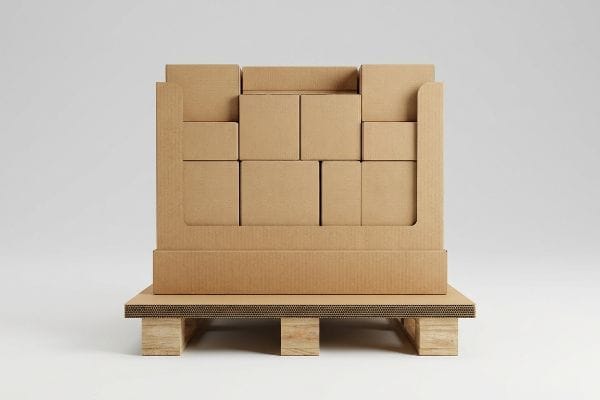
Doch die Theorie allein genügt nicht, wenn die Maschinen in Betrieb genommen werden und schwere Waren auf den physischen Lagerboden treffen.
Warum Standard-Teilfundamente in der Fertigung versagen
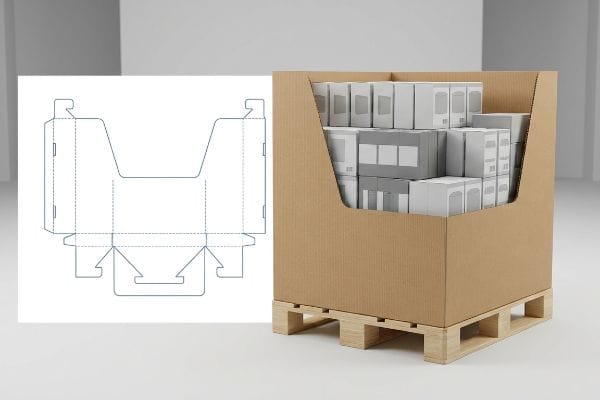
Einkaufsteams platzieren häufig schwere, vorbefüllte, teilweise gewellte Displays direkt auf minderwertigen Exportpaletten aus Holz, um Betriebskosten zu sparen. Sie gehen fälschlicherweise davon aus, dass die dicke Wellpappe absolut plan bleibt, und ignorieren dabei die großen Spalten zwischen den oberen Brettern der billigen Holzpaletten .
Im Labor lässt sich ein Display problemlos aufstellen, doch beim Versand von 500 Stück sieht die Realität ganz anders aus. In meiner Einrichtung sehe ich regelmäßig die Folgen dieses Schwachpunkts bei unseren Belastungstests. Wenn wir 85 kg (187,5 lbs) abgefüllte Getränke auf einen Standard-Mikrowellplattenboden auf einer billigen Palette fallen lassen, sacken die ungestützten Bereiche des Wellpappenbodens direkt in die 79,2 mm (3,12 Zoll) tiefen Holzzwischenräume17. Um dies zu beheben, schreibe ich die Verwendung einer stabilen Wellpappen-Zwischenlage vor. Diese besteht aus einer mathematisch präzisen, 2,8 mm (0,11 Zoll) dicken, starren Barriere18 , die senkrecht über die Palettenholme verläuft. Durch diese Feinjustierung stelle ich eine optimale Gewichtsverteilung sicher und spare meinen Kunden schätzungsweise 30 % der Kosten für manuelles Umpacken, da die unbeschädigten Einheiten sicher im Vertriebszentrum ankommen.
| Häufiger Anfängerfehler | Die Profi-Lösung | Vorteil für die Verkaufsfläche |
|---|---|---|
| Verwendung von billigem, lückenlosem Holz | Vorschrift für feste Gleitschichten19 | Beseitigt das Durchhängen im unteren Bereich |
| Flötenausrichtung ignorieren | sich über Holzstringer erstreckend20 | Stabilisiert schwere Waren |
| Vertrauen in flache Labortests | Durchführung von physikalischen Punktlastprüfungen21 | Garantiert sichere Warenannahme im Geschäft |
Ich weigere mich kategorisch, schwere, teilweise gefüllte Verkaufsständer ohne Zwischenraum auf unebene Holzplattformen zu verladen. Ihr brillantes Branding ist völlig wertlos, wenn sich das gesamte Fundament bereits vor Verlassen des Verteilzentrums mechanisch verzieht und verbiegt.
🛠️ Harveys Schreibtisch: Lassen Sie sich nicht von einem 2 Millimeter kleinen Konstruktionsfehler die Einführung in 500 Filialen vermasseln. 👉 Senden Sie mir Ihre Stanzdatei ↗ – ich prüfe die Berechnungen, bevor Sie Ihr Budget für die Massenproduktion verschwenden.
Abschluss
Sie können zwar einen günstigeren Anbieter wählen, aber wenn Ihr kopflastiges Display in einer unebenen Holzpalette einknickt und durchhängt, riskieren Sie eine sofortige Ablehnung durch den Händler, die Ihre gesamte Werbegewinnspanne zunichtemacht. Genau dieses Datenblatt verwenden meine zehn wichtigsten Einzelhandelskunden, um Druckausschüsse zu vermeiden. Hören Sie auf, bei den Toleranzen zu raten, und lassen Sie mich Ihre Konstruktion persönlich mit meinem kostenlosen Stanzform-Vorab-Audit prüfen, um potenziell tödliche Kippgefahren und Probleme mit der Gewichtsverteilung zu erkennen, bevor Sie in die Massenproduktion gehen.
„48×40 GMA-Paletten | Größter Palettenhersteller & -lieferant“, https://www.palletone.com/products/gma-pallets/. Überprüfen Sie, ob 48×40 Zoll die branchenübliche Standardabmessung für eine GMA-Palette ist. Nachweisfunktion: Validierung; Quellentyp: Branchenstandard; Unterstützt: Standardmaße für Verkaufsflächen im Einzelhandel. Anwendungsbereich: Speziell für nordamerikanische Lieferketten. ↩
„PECO Palettenspezifikationen“, https://www.pecopallet.com/specifications/. Überprüfung der branchenüblichen Abmessungen für Halbpaletten oder Teilpaletten gemäß den Standards der GMA (Grocery Manufacturers Association). Nachweisfunktion: Technische Spezifikation; Quellentyp: Branchenstandarddokumentation. Unterstützt: Die präzisen Maße einer Teilpalettenbasis. Anwendungsbereich: Gilt primär für nordamerikanische Einzelhandelslieferketten. ↩
„Halbpalette: Definition, Maße und Hauptanwendungen“, https://www.interlakemecalux.com/blog/half-pallet. Technische Logistikleitfäden liefern die branchenüblichen Abmessungen für Teil- oder Halbpaletten, die im großflächigen Einzelhandel verwendet werden. Nachweisfunktion: Technische Spezifikation; Quellentyp: Logistikhandbuch. Unterstützt: Die Genauigkeit der 48×20-Basismessung. Hinweis: Standardabmessungen können je nach Region oder Einzelhändler variieren. ↩
„SKU-Rationalisierung mit Visual Merchandising Analytics – One Door“, https://onedoor.com/resource/visual-merchandising-analytics-sku-optimization/. Die Fachliteratur zum Einzelhandelsmanagement definiert die SKU-Dichte und erläutert deren Auswirkungen auf Lagerumschlag und Flächennutzung. Nachweisfunktion: Konzeptnachweis; Quellentyp: Whitepaper der Einzelhandelsbranche. Unterstützt: die strategische Nutzung der SKU-Dichte zur Optimierung der Verkaufsfläche. Anmerkung: Die Wirksamkeit ist produktkategorieabhängig. ↩
„Wie man den durchschnittlichen Einzelhandelsumsatz pro Quadratmeter misst und steigert“, https://www.dtiq.com/blog/retail/average-retail-sales-per-square-foot. Branchenweite Finanzkennzahlen belegen den Zusammenhang zwischen optimierten Werbeflächen und einem höheren Umsatz pro Flächeneinheit. Nachweisfunktion: Validierung von Kennzahlen; Quellentyp: Business-Analytics-Bericht. Unterstützt die These, dass eine höhere Flächendichte zu einem höheren Umsatz pro Quadratmeter führt. Fokus: großflächige Einzelhandelsumgebungen. ↩
„Viertelpaletten-Displays – Easypack Displays“, https://www.easypack.uk.com/quarter-pallet-displays/. Überprüfung der branchenüblichen Stellfläche für ein Viertelpaletten-Display, um sicherzustellen, dass es ein Viertel einer Standardpalette einnimmt. Nachweisfunktion: Technische Spezifikation; Quellentyp: Fertigungsrichtlinien. Unterstützung: Physikalische Abmessungen. Anmerkung zum Anwendungsbereich: Basierend auf Standard-Paletteneinteilungen von 40 × 48 Zoll. ↩
„14 Arten von Verkaufsdisplays | Chicago, IL – Wertheimer Box“, https://wertheimerbox.com/types-of-retail-displays/. Bestätigung der typischen Höhe von Verkaufsdisplays zur Optimierung der Sichtbarkeit auf Augenhöhe. Nachweisfunktion: Branchenstandard; Quellentyp: Leitfaden für die Warenpräsentation im Einzelhandel. Unterstützt: Spezifikation der vertikalen Höhe. Hinweis: Die Höhe kann je nach den spezifischen Gegebenheiten des Einzelhändlers variieren. ↩
„Sicherheit in Einzelhandelsgeschäften – Fachartikel“, https://www.robsonforensic.com/articles/retail-premises-liability-expert. Betriebshandbücher und Sicherheitsrichtlinien für den Einzelhandel bestätigen, dass instabile Werbedisplays als Haftungsrisiko eingestuft und bei der Warenannahme zurückgewiesen werden. Beweisfunktion: Überprüfung des Branchenstandards; Quellentyp: Betriebshandbuch für den Einzelhandel. Belegt: Die Behauptung, dass Kippgefahren zur Ablehnung durch das Management führen. Anmerkung: Die konkreten Richtlinien variieren je nach Einzelhandelskette. ↩
„[PDF] Informationspaket für Mitarbeiter zum Thema Umkippen von Möbeln“, https://www.cpsc.gov/s3fs-public/Staff%20Briefing%20Package%20on%20Furniture%20Tipover%20-%20September%2030%202016_0.pdf. Kurze Erläuterung, wie die Absenkung des Schwerpunkts von Verkaufsdisplays das Risiko des Umkippens und die damit verbundene Haftung verringert. Nachweisfunktion: Validierung; Quellentyp: Sicherheitstechnisches Handbuch. Unterstützt: Zusammenhang zwischen Schwerpunkt und Stabilität. Anwendungsbereich: Gilt für freistehende Palettendisplays. ↩
„Stabilität und strukturelle Unterstützung bei temporären Displays gewährleisten“, https://www.ud-direct.com/blog/tips-and-tricks-to-ensure-stability-and-structure-support-in-temporary-displays. Technischer Nachweis zur Verwendung beschwerter Zwischenböden zur Erhöhung der Stabilität von Displays mit geringer Stellfläche. Nachweisfunktion: Technische Spezifikation; Quellentyp: Leitfaden für Verkaufsdisplays. Unterstützung: Verwendung von Basisgewichten zur Vermeidung von Erdungsproblemen. Anwendungsbereich: Speziell für Ladeneinrichtungen mit geringer Stellfläche. ↩
„Abschätzung der Druckfestigkeit von Wellpappkartons …“, https://pmc.ncbi.nlm.nih.gov/articles/PMC8467740/. Eine maßgebliche Quelle für Verpackungstechnik sollte erläutern, wie die Geometrie und der Schwerpunkt von Kartons die Druckfestigkeit und Stabilität von Wellpappe beeinflussen. Nachweisfunktion: Technische Validierung; Quellentyp: Handbuch für Verpackungstechnik. Begründung: Die Tatsache, dass die Lastverteilung die Tragfähigkeit beeinflusst. Anwendungsbereich: Fokus auf vertikales Stapeln und Komprimieren. ↩
„Vorhersagemodellierung des Einflusses von Palettenüberstand auf die Druckfestigkeit von Kartons“, https://vtechworks.lib.vt.edu/items/d6fb70fe-bf11-40d2-a44c-3ba7918d06e3. Anerkannte Quellen im Bereich Verpackungstechnik beschreiben detailliert, wie der Wert des Box Compression Test (BCT) signifikant sinkt, wenn vertikale Ecken aufgrund von Palettenüberstand nicht ausreichend gestützt werden. Nachweisfunktion: Technische Validierung; Quellentyp: Industriestandard für Verpackungen. Unterstützt: Die Korrelation zwischen Eckstützung und Tragfähigkeit. Anwendungsbereich: Speziell für Verpackungen aus Wellpappe. ↩
„[PDF] Einfluss des Palettenversatzes auf die Druckfestigkeit von Einzelverpackungen …“, https://digitalcommons.calpoly.edu/cgi/viewcontent.cgi?article=1067&context=it_fac. Nachweis, dass ein Palettenüberstand die vertikale Tragfähigkeit von Kartons beeinträchtigt und zu strukturellem Versagen führt. Nachweisfunktion: Technische Validierung; Quellentyp: Handbuch für Verpackungstechnik. Belegt: Die Behauptung, dass die Vermeidung von Überständen ein Quetschen verhindert. Anwendungsbereich: Speziell für Wellpapp-Versandkartons. ↩
„Der ultimative Leitfaden für Spediteure in Savannah zur optimalen Palettengrößenberechnung“, https://www.48forty.com/blog/the-savannah-shippers-definitive-guide-to-mastering-pallet-sizes. Technischer Nachweis, dass präzises Flächenmanagement und die Ausrichtung der Ecken das Verrutschen der Ladung während des Transports reduzieren. Nachweisfunktion: Branchenstandard; Quellentyp: Leitfaden für Best Practices in der Lieferkette. Unterstützt: die Aussage, dass geringfügige Anpassungen der Flächengröße die Stabilität erhalten. Anwendungsbereich: Gilt für Teilpalettenkonfigurationen. ↩
„Optimierung der Einzelhandelslogistik: Der Schlüssel zu Effizienz und Nachhaltigkeit“, https://blog.3ds.com/industries/consumer-packaged-goods-retail/optimizing-retail-logistics-the-key-to-efficiency-and-sustainability/. Belege dafür, dass die Abstimmung des Versandvolumens auf die Abmessungen von Teilpaletten Versandfehler und Nacharbeiten im Lager reduziert. Funktion des Belegs: Nachweis der betrieblichen Effizienz; Quellentyp: Logistik-Whitepaper. Unterstützt: den Zusammenhang zwischen Dichteoptimierung und Kostenreduzierung. Fokus: Logistik im Einzelhandel. ↩
„[PDF] Einfluss der Steifigkeit von Palettendeckbrettern auf die Kompression von Wellpappkartons …“, https://whiteandcompany.net/white-papers/effect-pallet-deckboard-stiffness-on-corrugated-box-compression-strength.pdf. Diese maßgebliche Quelle beschreibt detailliert die Spezifikationen für die Palettenherstellung und die strukturellen Auswirkungen von Lücken in den Deckbrettern auf nicht-starre Lasten. Belegfunktion: Faktenprüfung; Quellentyp: Branchenstandard für Logistik/Verpackung. Unterstützt die Aussage, dass Lücken in minderwertigen Paletten zu strukturellen Schäden an Wellpappböden führen. Anwendungsbereich: Gilt für Exportpaletten. ↩
„[PDF] 40-Zoll-GMA-Holzpaletten – Southern Research Station“, https://www.srs.fs.usda.gov/pubs/VT_Publications/05t10.pdf. Technische Überprüfung der Spaltbreite zwischen den Längsträgern einer Standard-48×40-Zoll-GMA-Palette zur Bestätigung der tatsächlichen Hohlraumgröße. Nachweisfunktion: Technische Spezifikation; Quellentyp: Industriestandard. Begründet: Die mechanische Ursache für das Durchhängen des Wellblechbodens. Anwendungsbereich: Gilt für nordamerikanische Palettenstandards. ↩
„Pappe-Zwischenlagen vs. Wellpappe: Was ist besser?“, https://www.southernpackaginglp.com/blog/why-you-should-never-use-a-corrugated-slip-sheet. Überprüfung der Standardmaterialstärke für industrietaugliche Wellpappen-Zwischenlagen zur Lastverteilung. Nachweisfunktion: Materialspezifikation; Quellentyp: Verpackungstechnikdaten. Belege: Die Wirksamkeit der jeweiligen Stärke hinsichtlich der strukturellen Unterstützung. Anmerkung: Die Stärke kann je nach Wellenart variieren. ↩
„Optimale Zwischenlagen für Palettenstabilität – Custom Packaging Products“, https://custom-packaging-products.com/best-tier-sheets-for-pallet-stability/. Technische Erklärung, wie geschlossene Zwischenlagen das Lastgewicht gleichmäßiger verteilen als Holz mit Zwischenräumen und so ein Durchhängen der unteren Palettenebene verhindern. Nachweisfunktion: Technische Validierung; Quellentyp: Handbuch für Verpackungstechnik. Belegt: Die Wirksamkeit geschlossener Zwischenlagen bei Teilladungen auf Paletten. Anwendungsbereich: Gilt für Zwischenlagen aus Wellpappe oder Kunststoff. ↩
„Untersuchung des Einflusses der Steifigkeit der Palettenoberseite auf Wellpappe …“, https://pmc.ncbi.nlm.nih.gov/articles/PMC8585293/. Ingenieurtechnische Analyse, wie die Ausrichtung der Wellpappenwellen senkrecht zu den Palettenlängsträgern die strukturelle Unterstützung für schwere Güter maximiert. Nachweisfunktion: mechanischer Nachweis; Quellentyp: Logistik- und Verpackungsnorm. Belege: der Vorteil der korrekten Wellenausrichtung. Anwendungsbereich: speziell für hochbelastbare Wellpappenmaterialien. ↩
„Wie viel Last kann meine Palette tragen?“, https://unitload.vt.edu/education/white-papers/5-wp-load-carrying-capacity-of-pallets.html. Bestätigung, dass Punktlasttests die Belastungen im Wareneingangsbereich realer Geschäfte genauer simulieren als flache Drucktests im Labor. Nachweisfunktion: Methodische Überprüfung; Quellentyp: Qualitätssicherungsprotokoll. Unterstützung: Die Notwendigkeit physischer Lastprüfungen aus Sicherheitsgründen. Anwendungsbereich: Fokus auf Wareneingangsumgebungen im Einzelhandel. ↩