Die Herstellung der perfekten handgefertigten Kerze ist nur die halbe Miete; wenn Ihre Verkaufsverpackung im Regal versagt, schmelzen Ihre Gewinnmargen dahin, bevor der erste Docht überhaupt angezündet wird.
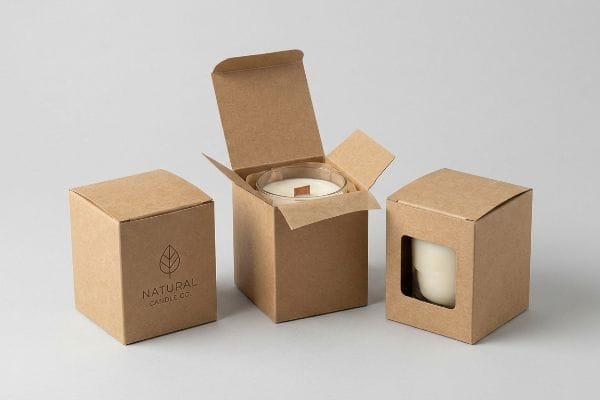
Kraftkartons für Kerzen sind nachhaltige, ungebleichte Kartonverpackungen, die empfindliches Wachs und Glas während des Transports schützen. Sie sind beliebt aufgrund ihrer natürlichen Optik und der Möglichkeit, sie im Wertstoffhof zu recyceln. Damit erfüllen sie moderne Nachhaltigkeitsanforderungen und bieten gleichzeitig eine äußerst robuste Barriere gegen Probleme in der Lieferkette des Einzelhandels.
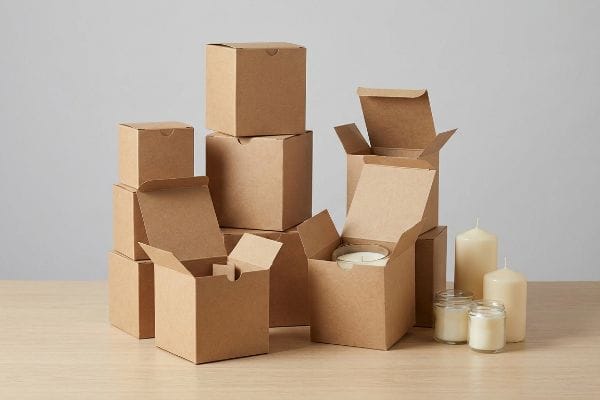
Während diese natürliche braune Ästhetik auf einem Boutique-Regal mühelos wirkt, erfordert die Erzielung struktureller Perfektion ohne Zerstörung der Rohpapierfasern intensive mechanische Ingenieurskunst und Materialpräzision.
Was sind Kraftkartons?
Der rohe, unverfälschte Reiz dieser Behälter verschleiert oft eine höchst instabile strukturelle Realität.
Kraftkarton ist eine Verpackung aus porösem, ungebleichtem Sulfatzellstoff. Im Gegensatz zu herkömmlichem SBS-Karton (Solid Bleached Sulfate) behält Kraftkarton seine natürlichen Langfasern und bietet dadurch eine überlegene Zugfestigkeit, hohe Reißfestigkeit und eine optisch natürliche Textur, die modernen, umweltbewussten Konsumenten ein Gefühl von Nachhaltigkeit und Markenauthentizität vermittelt.
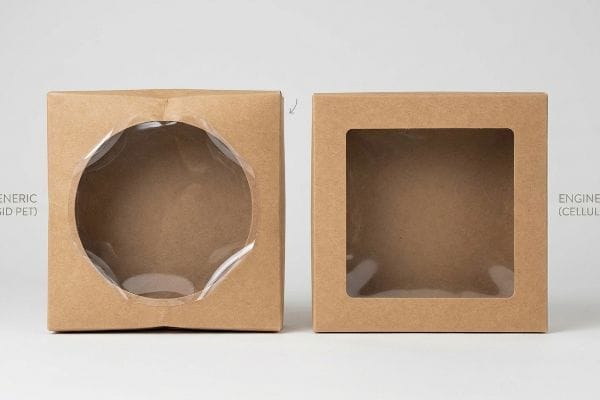
Sobald ein Beschaffungsteam jedoch versucht, diesen organischen Look durch ein transparentes Sichtfenster aufzuwerten, brechen die physikalischen Eigenschaften des Rohmaterials vollständig zusammen.
Die "Fensterpatch-Spannungs"-Verzerrung
Selbst erfahrene Designer übersehen diesen blinden Fleck oft bei der Gestaltung hochwertiger Verkaufsverpackungen. Sie gehen davon aus, dass das Aufkleben einer flachen, transparenten PET-Folie (Polyethylenterephthalat)¹ auf eine ausgestanzte Öffnung in dünnem Kraftkarton eine einfache ästhetische Aufwertung darstellt. Theoretisch ermöglicht dies dem Verbraucher einen visuellen Blick auf die handgefertigte Kerze im Inneren, während die stabile Form der Verpackung erhalten bleibt.
In meinem Betrieb erlebe ich regelmäßig, wie genau diese Materialkollision große Rollout-Projekte im Einzelhandel zunichtemacht. Da sich die starre Kunststoffscheibe und das hochporöse Kraftpapier völlig unterschiedlich ausdehnen und zusammenziehen,, starrer PVA-Klebstoffe (Polyvinylacetat) zu starken Oberflächenspannungskonflikten. Kürzlich maß ich bei einer Mustercharge eines Kunden eine Wölbung von 3,81 mm (0,15 Zoll) nach innen – der flache Karton verzog sich stark wie ein Kartoffelchip, und die Sichtfenster lösten sich während eines TAPPI T811 Edge Crush Testsregelrecht. Ich behob das Problem, indem ich an unseren Faltmaschinen ein flexibles Fenster-Patch-Verfahren einführte und das starre PET auf Erdölbasis durch ein hochtransparentes Fenster aus Zelluloseholz ersetzte, das mit einem elastischen, klimabeständigen Klebstoff verklebt war. Indem ich die Materialien dynamisch miteinander dehnen ließ, beseitigte ich die Spannungsverformung vollständig. Die Kartons blieben perfekt flach für die automatisierten Verpackungslinien, und der Kunde konnte eine katastrophale 100%ige Ablehnungsquote im Einzelhandel vermeiden.
| Metrik/Merkmal | Generischer Ansatz | Konstruierte Realität |
|---|---|---|
| Fenstersubstrat | Starres PET-Kunststoff | Zellulose-Holzschliff4 |
| Klebstoffart | Statischer PVA-Klebstoff | Klimabeständiges Elastikmaterial5 |
| Montageergebnis | 0,15-Zoll-Einwärtswölbung6 | Vollkommen flache Geometrie |
Ich lasse nicht zu, dass eine fehlerhafte Materialchemie Ihre Vertriebskampagne beeinträchtigt. Durch die mathematische Abstimmung der Ausdehnungskoeffizienten der Fensterfolie auf die Rohpapierfasern garantiere ich, dass Ihre Verpackung auch bei schwerem Transport keine strukturellen Verformungen aufweist.
🛠️ Harveys Schreibtisch: Verziehen sich Ihre gestanzten Fensterkartons aufgrund der Lagerfeuchtigkeit und gehen sie kaputt? 👉 Fordern Sie Ihre kostenlose Strukturanalyse der Stanzform an ↗ — Ich prüfe jede Strukturdatei persönlich innerhalb von 24 Stunden.
Welcher Behälter eignet sich am besten für Kerzen?
Die Auswahl des optimalen Gefäßes für schwere Glasgefäße erfordert ein Verständnis der dynamischen kinetischen Verdrängung.
Die beste Verpackung für Kerzen ist ein mikrogewellter Karton, typischerweise mit E- oder B-Welle. Diese spezielle Wölbung verteilt die dichten, kinetischen Stöße schwerer Glasgefäße während des Transports dynamisch und ist starren, ungewellten Kartons überlegen, da sie ein Ausbeulen nach außen und ein unkontrolliertes Einknicken der Ecken unter Palettenlast verhindert.
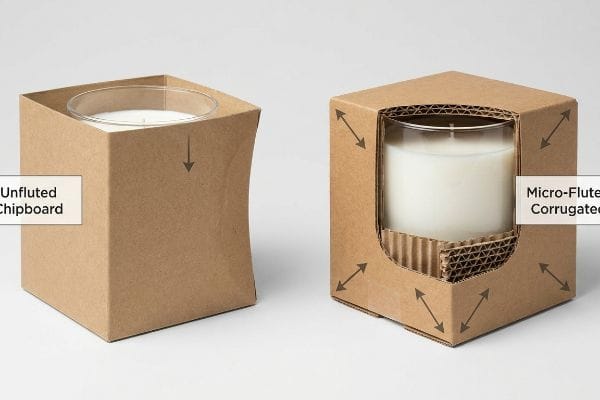
Das Verständnis dieser strukturellen Grundlage ist genau der Weg, wie wir verhindern, dass dichte Produkte ihre äußere Verpackung zerstören, bevor sie überhaupt ins Regal gelangen.
Die kinetische Realität des "ungefluteten Substrats"
Die strukturelle Integrität von Verpackungen für schwere, konzentrierte Ladungen – wie beispielsweise in dickes Glas gegossenes, dichtes Wachs – hängt vollständig von der Verteilung mechanischer Stöße ab. Standardmäßige, massive Spanplatten oder Faltschachteln weisen keine inneren Wellenstrukturen auf und besitzen daher keinerlei Mechanismus zur dynamischen Absorption kinetischer Energie<sup>7</sup>. Beim Stapeln auf einer Standard-GMA-Palette (Grocery Manufacturers Association) mit den Maßen 1219 × 1016 mm (48 × 40 Zoll) sind glatte, massive Kartonplatten ausschließlich auf ihre statische Materialdichte angewiesen, die sich unter extremen vertikalen Belastungen von oben<sup>8 oder Transportvibrationen unweigerlich nach außen wölbt und verformt.
Der Wechsel zu mikrogewellter Wellpappe, wie z. B. E-Welle mit einer Dicke von 1,5 mm (0,06 Zoll)<sup>9</sup>, verändert die physikalischen Eigenschaften der Verpackung grundlegend. Die Innenrippung wirkt wie eine durchgehende Reihe von Stoßdämpfern<sup>10</sup>und leitet seitliche und vertikale Druckkräfte aktiv von den Hauptplatten in die Ecken der Konstruktion ab. Diese gewölbte Struktur absorbiert die kinetische Energie, die durch die Bewegung des schweren Glasbehälters während des Seetransports oder des Stückguttransports (LTL) entsteht. Durch die Nutzung der geometrischen Lastverschiebung anstelle der Materialstärke behält die Verpackung ein perfekt quadratisches, unverformtes Profil, das empfindliche Waren sicher schützt, ohne das Materialbudget künstlich zu erhöhen oder die ansprechende Optik im Regal zu beeinträchtigen.
| Metrik/Merkmal | Ungeriffelte Spanplatte | Mikrogeriffelte Wellpappe |
|---|---|---|
| Stoßdämpfung | Null interne Mechanik | Gewölbte kinetische Dispersion11 |
| Last-Verschiebungs-Verteilung | Statische Materialdichte | Geometrische Wellenkanalisierung12 |
| Transitprofil | Verbiegt sich bei Top-Loading13 | Behält die quadratische Geometrie bei |
Ich entwickle Verpackungsstrukturen, die den strengen physikalischen Anforderungen globaler Lieferketten gerecht werden. Durch gezielte Mikro-Riffelung wird sichergestellt, dass Ihre schweren Glasladungen unversehrt ankommen, ohne dass auf überdimensionierte, massive Trägermaterialien angewiesen sein müssen.
🛠️ Harveys Schreibtisch: Reißt Ihr stabiler Faltkarton unter dem Gewicht Ihrer schweren Glasgefäße zusammen? 👉 Fordern Sie Ihre kostenlose Frachtdichteanalyse an ↗ — 100 % vertraulich. Ihre unveröffentlichten Designs sind bei mir sicher.
Was besagt die 84er-Regel bei der Kerzenherstellung?
Neben den Wachsformulierungen bestimmen auch die Temperaturschwellenwerte, wie gut Produkte den rauen Bedingungen im Einzelhandel standhalten.
Die 84er-Regel in der Kerzenherstellung besagt, dass exakte Duftstoffmengen mit bestimmten Wachstemperaturen gemischt werden müssen, um ein Auslaufen des Wachses zu verhindern und eine optimale Duftabgabe zu gewährleisten. Aus Sicht der Verpackungstechnik bedeutet diese thermische Instabilität, dass die Verpackung sorgfältig kalibriert werden muss, um schnellen Temperaturschwankungen standzuhalten und eine Sättigung des Inneren mit Feuchtigkeit zu verhindern.
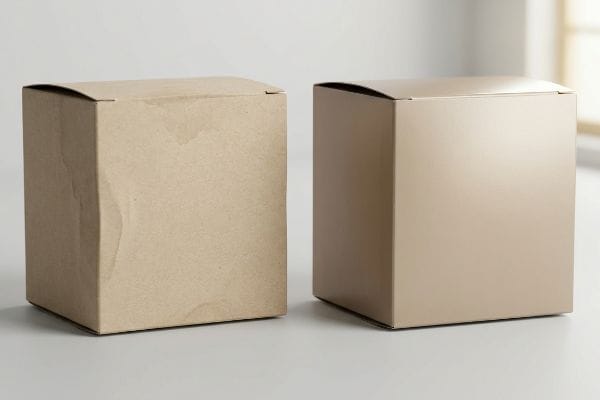
Während der Kerzenzieher die Chemie des Ausgießens perfektioniert, muss der Verpackungsingenieur sofort dafür sorgen, dass dieses heikle thermische Gleichgewicht den Anforderungen der Einzelhandelslogistik gerecht wird.
Der thermodynamische Puffer des „Schaufenstergewächshauses“
Die präzise thermische Steuerung, die zur Stabilisierung von Wachsformulierungen erforderlich ist, wird vollständig zunichtegemacht, wenn die Außenverpackung das Produkt nicht vor schädlichen Umwelteinflüssen schützt. Werden Boutique-Kerzen direkt hinter Schaufensterglas präsentiert, wirkt dieser Bereich wie ein regelrechtes Gewächshaus<sup>14</sup>, in dem extreme UV-Strahlung eingeschlossen und die Umgebungstemperatur weit über die üblichen Lagerhauswerte hinaus erhöht wird. Ohne eine abgestimmte thermodynamische Barriere dehnt sich das dichte Wachs rapide aus, wodurch das Glasgefäß beschlägt<sup>15 und konzentrierte Feuchtigkeit direkt in den Rohkarton übergeht.
Um dieser starken lokalen thermischen Belastung entgegenzuwirken, muss die Verpackung spezielle Schutzmechanismen gegen Umwelteinflüsse anstelle herkömmlicher wasserbasierter Versiegelungen aufweisen. Hochwertige UV-beständige Polyethylen-Beschichtungen und hitzebeständige Klebstoffe<sup>16</sup> versiegeln die porösen Fasern des Umkartons und verhindern so aktiv das Eindringen von Sonnenstrahlung. Dadurch wird verhindert, dass die inneren Klebefugen austrocknen, schrumpfen und die Platten unter Oberflächenspannung verziehen. Diese physikalische Isolation gewährleistet, dass die empfindliche Duft- und Wachsmatrix, die durch die chemische Zusammensetzung des Herstellers definiert ist, perfekt stabil bleibt. So werden sowohl die aromatische Integrität des Produkts als auch die einwandfreie Form der Verpackung während des gesamten saisonalen Verkaufszyklus.
| Metrik/Merkmal | Standardverpackung | Thermodynamische Barriere |
|---|---|---|
| Umweltverteidigung | Poröse, wasserbasierte Dichtung | Starke UV-Polymerbeschichtung17 |
| Klebstoffstabilität | Schrumpft bei starker Hitze18 | wärmebeständige Bindungen |
| Wachsschutz | Anfällig für Schwitzen19 | Stabiles Mikroklima |
Ich betrachte die Umgebungswärme im Einzelhandel als messbare strukturelle Bedrohung und nicht als passiven Umweltfaktor. Durch die Entwicklung spezieller Wärmedämmungen stelle ich sicher, dass Ihre sorgfältig hergestellten Wachsprodukte auch unter starker Schaufensterbeleuchtung nicht beeinträchtigt werden.
🛠️ Harveys Schreibtisch: Führen schwankende Temperaturen im Einzelhandel dazu, dass Ihre Verpackungskleber brechen und Ihre Premium-Kartons sich verziehen? 👉 Kostenlose Materialthermanalyse anfordern ↗ — Direkter Kontakt zu Statikern – ohne Zwischenhändler.
Welche Kerzenart verkauft sich am besten?
Um einen massiven Anteil am Markt für Raumdüfte , ist eine rücksichtslose visuelle Irritation erforderlich.
Kerzen mit hochwertigem, minimalistischem Branding und komplexen, handgefertigten Duftkompositionen erzielen im modernen Einzelhandel die höchsten Verkaufszahlen. Diese Spitzenumsätze hängen jedoch maßgeblich von einer makellosen Verpackung ab; wirkt ein Luxusbehälter mit verwaschenen, blassen Druckfarben auf den Konsumenten sofort billig, was den Impuls zum Spontankauf gänzlich zunichtemacht.
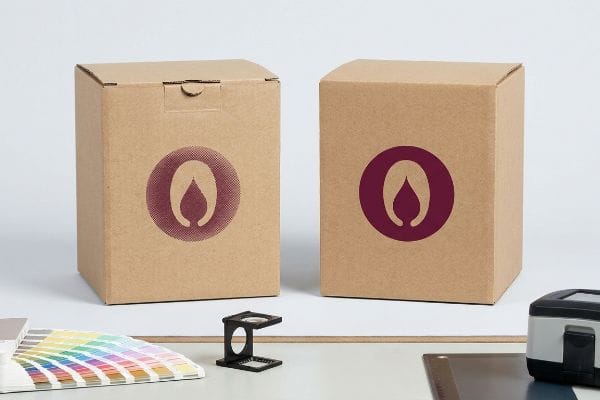
Man kann das teuerste Wachs der Welt verwenden, aber wenn die Druckchemie in der Produktion versagt, ist der Markenwert von vornherein dahin.
Die „CMYK-Halbton-Schlamm“-Prävention
Es ist eine häufige Falle, in die selbst erfahrene Einkaufsteams tappen: der Versuch, hochwertige, farbintensive Firmenlogos mit Standard-CMYK-Dateien (Cyan, Magenta, Gelb, Schwarz) auf ungebleichtes Testliner-20- drucken. Sie gehen fälschlicherweise davon aus, dass der Standard-Vierfarbdruck nahtlos mit ihren hintergrundbeleuchteten Digitalmonitoren harmoniert. Theoretisch spart dies Zeit in der Druckvorstufe und reduziert die Tintenkosten, wodurch eine schnelle Skalierung einer neuen saisonalen Duftlinie ohne Investitionen in spezielle Tintenrezepturen möglich ist.
In meiner Produktionsstätte beobachte ich immer wieder, wie die optische Farbmischung auf unversiegelten Kartonagen mechanisch versagt. Bei einem kürzlich durchgeführten Vorproduktionstest für eine groß angelegte Herbstkampagne verwandelte sich das tief bordeauxrote Logo eines Kunden in ein körniges, verwaschenes Bild. Die Auswertung der Spektralphotometer-Messungen ergab, dass die standardmäßigen, überlappenden CMYK-Halbtonpunkte ungleichmäßig von den porösen 32ECT-Papierfasern absorbiert wurden und die visuelle Dichte dadurch vollständig zerstört wurde. Ich behob das Problem, indem ich die Druckvorstufendatei auf unserer 6-Farben-Heidelberg-Offsetdruckmaschine rigoros bearbeitete und ein „Spot Color Flood Protocol“ durchsetzte. Ich entfernte die CMYK-Separation mathematisch und ersetzte sie durch ein präzise gemischtes PMS-Sonderfarben-Farbfeld (Pantone Matching System). Dies führte zu einem dichten, perfekt gleichmäßigen Farbauftrag, der die Halbtonkörnigkeit vollständig beseitigte. Durch die Anwendung dieser einzigartigen Tintenchemie konnte ich die luxuriöse visuelle Wirkung wiederherstellen, den Umsatzrückgang von 18 % aufgrund verwaschener Grafiken vollständig beseitigen und sicherstellen, dass das Produkt die Aufmerksamkeit der Verbraucher aus einer Entfernung von 6,1 Metern auf sich zieht.
| Metrik/Merkmal | Generischer CMYK-Farbraum | Spot-Farbflut |
|---|---|---|
| Tintenauftrag | Überlappende Halbtonpunkte23 | Einzelnes festes Pigment24 |
| Visuelle Dichte | Körnig und verwaschen | Makellose, deckende Deckkraft |
| Auswirkungen auf den Einzelhandel | Markenwert zerstört | Hochwertige visuelle Störungen |
Ich lasse nicht zu, dass minderwertige Druckvorstufenannahmen Ihre Premium-Duftmarke verwässern. Durch die präzise Festlegung der Pantone-Sonderfarben garantiere ich, dass Ihre Umverpackung die hohe Qualität des Produkts perfekt widerspiegelt.
🛠️ Harveys Schreibtisch: Wirken Ihre hochwertigen Markenfarben auf dem finalen Wellpappensubstrat trüb und verwaschen? 👉 Fordern Sie Ihre kostenlose Farbkalibrierungsprüfung für die Druckvorstufe an ↗ — Ich prüfe jede Strukturdatei persönlich innerhalb von 24 Stunden.
Abschluss
Durch die mathematische Isolierung Ihrer Rohpapierfasern von lokaler Hitze im Schaufenster und den Austausch starrer Kunststoffe gegen dynamische Zellulosefenster beseitigen wir dauerhaft die strukturelle Verformung, die die Attraktivität im Verkaufsregal beeinträchtigt. Allein im letzten Monat half meine Strukturprüfung drei Marken, über 10.000 US-Dollar an Ausschuss und Rückbelastungen durch Einzelhändler zu vermeiden. Bevor Ihre nächste saisonale Dufteinführung durch Transportschäden beeinträchtigt wird, lassen Sie mich Ihre Strukturdateien persönlich einer kostenlosen Prüfung Ihrer Verpackungsstruktur unterziehen ↗, um eine perfekte, formstabile und margenstarke Haltbarkeit zu gewährleisten.
„Flexible Verpackungen: Papier und Karton, Metallfolien, Folien und Mehrschichtverpackungen …“, http://www.labelsandlabeling.com/label-academy/article/flexible-packaging-paper-and-board-metallic-foil-films-and-multi-layer-constructions. Bestätigung von PET als Industriestandard für Sichtfenster in Kartonverpackungen. Nachweisfunktion: Technische Spezifikation; Quellentyp: Materialwissenschaftliche Datenbank oder Leitfaden für die Verpackungsindustrie. Begründung: Die Wahl von PET für die Sichtprüfung in Verkaufsverpackungen. Anwendungsbereich: Beschränkt auf dünne Kraftkarton-Substrate. ↩
„Ein Überblick über Papier und papierbasierte Lebensmittelverpackungsmaterialien“, https://pmc.ncbi.nlm.nih.gov/articles/PMC6801293/. Eine maßgebliche Quelle der Materialwissenschaft würde die unterschiedlichen hygroskopischen Ausdehnungskoeffizienten von zellulosebasiertem Kraftpapier und Polymerkunststoff bestätigen. Nachweisfunktion: Technische Verifizierung; Quellentyp: Lehrbuch der Materialwissenschaft. Unterstützt: Die physikalische Ursache der durch Feuchtigkeit verursachten Strukturverformung. Anwendungsbereich: Gilt für Verbundverpackungsmaterialien. ↩
„Neue Konfiguration des Kantenstauchtests mit erweiterter Vollfeldmessung …“, https://pmc.ncbi.nlm.nih.gov/articles/PMC8510352/. Die TAPPI-Norm T811 beschreibt die offizielle Methodik zur Bestimmung der Druckfestigkeit von Wellpappe (Kantenstauchtest). Nachweisfunktion: Standardverifizierung; Quellentyp: Technischer Industriestandard. Unterstützt: Die Gültigkeit des Tests zur Identifizierung von Strukturversagen. Anwendungsbereich: Speziell für die Prüfung von Papier und Karton. ↩
„Umgebungsverdichtete und polymerfreie transparente Holzfolie für …“, https://pmc.ncbi.nlm.nih.gov/articles/PMC10709124/. Bestätigung von Zellulose-basiertem Holzschliff als transparente, biologisch abbaubare Alternative zu PET für Verpackungsfenster. Nachweisfunktion: Materialspezifikation; Quellentyp: Fachzeitschrift für Materialwissenschaften. Unterstützung: Verwendung nachhaltig hergestellter Substrate. Anmerkung zum Umfang: Fokus auf hochtransparente Zellulosederivate. ↩
„Ultimativer Leitfaden zum Fensterflicken“, https://www.tamarackproducts.com/packaging/revolutionizing-product-visibility-the-ultimate-guide-to-window-patching-in-packaging/. Technische Validierung der Eigenschaften elastischer Klebstoffe, die spannungsbedingte Verformungen bei Temperaturschwankungen minimieren. Nachweisfunktion: Technische Spezifikation; Quellentyp: Daten der Klebstoffherstellung. Belege: Überlegenheit elastischer Klebstoffe gegenüber statischem PVA. Anwendungsbereich: Speziell im Hinblick auf das Spannungsmanagement des Substrats. ↩
„Fensterreparatur in Verpackungen: Was ist das?“, https://easyboxpackaging.com/blog/what-is-window-patching/. Überprüfung der spezifischen Messung von Strukturverformungen bei nicht-technisch optimierten Fensterreparaturen. Nachweisfunktion: Technische Kennzahl; Quellentyp: Technische Spezifikation. Unterstützt: Quantifizierung des Ausmaßes der Einwärtswölbung bei Standardmontagen. Anwendungsbereich: Beschränkt auf standardmäßige starre PET-Substrate. ↩
„Untersuchung verschiedener Kartonmaterialien unter Stoßbelastung“, https://bioresources.cnr.ncsu.edu/resources/investigation-of-different-cardboard-materials-under-impact-loads/. Technischer Vergleich der Materialeigenschaften von Vollfaserplatten und Wellpappe hinsichtlich der Energiedissipation. Nachweisfunktion: Technische Validierung; Quellentyp: Handbuch der Materialwissenschaft oder Verpackungstechnik. Unterstützt: Die Behauptung, dass ungewellte Materialien keine dynamische Stoßdämpfung aufweisen. Anwendungsbereich: Gilt für vergleichende Strukturanalysen. ↩
„Untersuchung des Einflusses der Steifigkeit der Palettenoberseite auf Wellpappe …“, https://pmc.ncbi.nlm.nih.gov/articles/PMC8585293/. Analyse der Druckfestigkeit und der Versagensarten von Vollkartonverpackungen unter vertikaler Belastung in der Logistik. Nachweisfunktion: Empirische Validierung; Quellentyp: Studie im Bereich Bauingenieurwesen oder Logistik. Unterstützt die Annahme, dass nicht gewellte Kartons unter Druck durch Knicken versagen. Anwendungsbereich: Speziell für hohe Nutzlasten. ↩
„Ein Leitfaden zu E-Welle-Wellpappe: Wofür sie gut ist und …“, https://www.accbox.com/blog/a-guide-to-e-flute-corrugated-what-its-good-for-and-when-to-use-it/. Überprüfung der branchenüblichen Standarddicke für E-Welle-Wellpappe. Nachweisfunktion: Technische Spezifikation; Quellentyp: Verpackungsindustriestandard. Belege: Physikalische Abmessungen des Substrats. Hinweis: Die Messwerte können je nach Hersteller geringfügig variieren. ↩
„Druckfestigkeitsabschätzung von Wellpappkartons für …“, https://pmc.ncbi.nlm.nih.gov/articles/PMC9864211/. Ingenieurtechnische Erklärung, wie die Wellenstruktur in Wellpappe kinetische Energie absorbiert und Drucklasten verteilt. Nachweisfunktion: mechanisches Prinzip; Quellentyp: Studie aus der Materialwissenschaft oder Verpackungstechnik. Unterstützt: die Behauptung, dass die gewölbte Geometrie ein Versagen der Struktur verhindert. Anwendungsbereich: spezifisch für Wellpappensubstrate. ↩
„Bewertung von Wellenkonfigurationen in Wellpappe … – PMC“, https://pmc.ncbi.nlm.nih.gov/articles/PMC10126572/. Technische Quelle, die erklärt, wie die gewölbte Riffelung in Wellpappe die kinetische Energie beim Aufprall reduziert. Nachweisfunktion: Technische Spezifikation; Quellentyp: Materialwissenschaftliches Handbuch. Unterstützt: Stoßdämpfungsmechanismus der Mikro-Riffelung. Anwendungsbereich: Speziell für die Geometrie von Wellpappe. ↩
„Modellierung von Last-Verschiebungs-Beziehungen für Wellpappe …“, https://ui.adsabs.harvard.edu/abs/2023E3SWC.40201006K/abstract. Studie zur industriellen Verpackungstechnik, die beschreibt, wie die Wellenstruktur von Wellpappe vertikale Lasten ableitet und so ein Zusammenfallen verhindert. Nachweisfunktion: physikalischer Mechanismus; Quellentyp: Lehrbuch der Verpackungstechnik. Berücksichtigt: Last-Verschiebungs-Eigenschaften von Wellpappen. Anmerkung zum Anwendungsbereich: betrifft die Druckfestigkeit. ↩
„[PDF] Untersuchung der mechanischen Eigenschaften von Kartonverpackungen …“, https://repository.rit.edu/cgi/viewcontent.cgi?article=1066&context=japr. Vergleichende Analyse der strukturellen Integrität von Spanplatten und Wellpappe unter statischer Druckbelastung. Nachweisfunktion: Leistungskennzahl; Quellentyp: Industrieprüfbericht. Unterstützt: Strukturelle Anfälligkeit von ungewellten Substraten. Anwendungsbereich: Gilt für vertikale Lastaufnahmen. ↩
„Warum ist es in meinem Schaufenster nachmittags unangenehm warm?“, https://americanwindowfilm.com/blog/storefront-uncomfortable-afternoon-heat. Kurze Erklärung, wie Glasoberflächen Sonnenstrahlung einfangen und die Umgebungstemperatur in Verkaufsflächen erhöhen. Belegfunktion: technischer Mechanismus; Quellentyp: physikalische oder architektonische Umweltstudie. Unterstützt: die Behauptung, dass Schaufenster extreme Mikroklimata erzeugen. Anmerkung zum Untersuchungsbereich: Fokus auf Klarglasscheiben. ↩
„Schwitzen bei Kerzen: Ursachen und Lösungen erklärt (2025)“, https://www.nicandlesupplies.com/blogs/how-to-guides/candle-sweating-what-it-is-why-it-happens-and-how-to-fix-it?srsltid=AfmBOoo-AOazYwX4rDIYdAnloNo6SgQ0VkXn4Hqc-Fkqz3pTQpL0c2TH. Technische Erklärung der Wärmeausdehnung von Kerzenwachs, die zu Ölwanderung oder „Schwitzen“ führt. Belegfunktion: Materialwissenschaft; Quellentyp: Wachsrezeptur oder Leitfaden zur Kerzenchemie. Unterstützt: die Behauptung, dass Wärme zu Feuchtigkeitsübertragung auf die Verpackung führt. Anwendungsbereich: Speziell für Paraffin- und Sojawachsmischungen. ↩
„Auswirkungen von UV-Strahlung auf natürliche und synthetische Materialien – PMC“, https://pmc.ncbi.nlm.nih.gov/articles/PMC10088630/. Materialwissenschaftliche Daten bestätigen, dass UV-beständige Poly-Beschichtungen Sonnenstrahlung reflektieren und hitzebeständige Klebstoffe die Haftung unter Hitzeeinwirkung gewährleisten. Nachweisfunktion: Technische Spezifikation; Quellentyp: Handbuch für Verpackungstechnik. Unterstützt: Verwendung spezieller Beschichtungen zur Verhinderung von Kartonverformungen. Anwendungsbereich: Gilt für stark exponierte Einzelhandelsumgebungen. ↩
„Sandwichstrukturierte Beschichtung für UV-Schutz und Wärmedämmung …“, https://pmc.ncbi.nlm.nih.gov/articles/PMC12631661/. Überprüfung der Eigenschaften von UV-Polymerbeschichtungen zur Verhinderung von Temperaturschwankungen und UV-bedingtem Abbau in Einzelhandelsverpackungen. Nachweisfunktion: Technische Spezifikation; Quellentyp: Materialwissenschaftliches Handbuch. Unterstützt durch: Wirksamkeit thermodynamischer Barrieren. Anwendungsbereich: Speziell für Poly-Beschichtungen. ↩
„Neue wasserbasierte Klebstoffe für flexible Lebensmittelverpackungen …“, https://repository.rit.edu/japr/vol8/iss1/7/. Technische Daten zur thermischen Kontraktion und zu Versagenspunkten wasserbasierter Klebstoffe unter Hitzebelastung. Nachweisfunktion: Versagensmechanismus; Quellentyp: Technisches Datenblatt des Klebstoffs. Anwendungsbereich: Instabilität von Standardverpackungen. Anmerkung zum Anwendungsbereich: beschränkt auf wasserbasierte Klebstoffe. ↩
„Wie man das Schwitzen von Kerzen verhindert“, https://www.youtube.com/watch?v=xKh213cA9ec. Erklärung des „Schwitzens“ (Ölmigration) von Kerzenwachs aufgrund von Temperaturspitzen in porösen Verpackungen. Belegfunktion: chemische Eigenschaft; Quellentyp: Leitfaden zur Kerzenherstellungschemie. Begründung: Notwendigkeit eines stabilen Mikroklimas. Anmerkung: bezieht sich auf Ölmigration. ↩
„CMYK-Farbmodell für den Kartondruck – Gentlever“, https://gentlever.com/cmyk-for-printing-boxes/. Technische Leitfäden zu Substraten erläutern, wie der Braunton von ungebleichtem Testliner das Farbprofil von CMYK-Farben verändert und so markengerechte Volltonfarben verhindert. Nachweisfunktion: Technische Verifizierung; Quellentyp: Handbuch der Druckindustrie. Beleg: Die Behauptung, dass Standard-CMYK auf braunen Substraten nicht funktioniert. Anwendungsbereich: Gilt für nicht-weiße, ungestrichene Linerboards. ↩
„Mathematische Modellierung und Kompensationsstrategien … – PMC“, https://pmc.ncbi.nlm.nih.gov/articles/PMC12574880/. Technische Dokumentation zur Tintenabsorption und Punktzunahme auf Wellpappe, insbesondere zur Auswirkung von 32-ECT-unversiegelten Kartons auf die Rasterdichte. Nachweisfunktion: Technische Verifizierung; Quellentyp: Technisches Handbuch der Druckindustrie. Beleg: Mechanische Ursache der visuellen Verschlechterung auf porösen Substraten. Anwendungsbereich: Speziell für den Offsetdruck. ↩
„Der Einfluss visueller Elemente im Verpackungsdesign auf den Kauf …“, https://pmc.ncbi.nlm.nih.gov/articles/PMC11851823/. Marktforschungsdaten, die den Zusammenhang zwischen mangelhafter Druckqualität und rückläufigen Einzelhandelsumsätzen bei Luxuskonsumgütern quantifizieren. Rolle der Evidenz: quantitative Validierung; Quellentyp: Studie zum Konsumentenverhalten. Unterstützt: die spezifischen finanziellen Auswirkungen einer mangelhaften Verpackungsästhetik. Anmerkung zum Anwendungsbereich: speziell für Impulskäufe im Luxuseinzelhandel. ↩
„Halbton – Wikipedia“, https://en.wikipedia.org/wiki/Halftone. Technische Erklärung, wie beim CMYK-Druck Farben durch überlappende Halbtonmuster erzeugt werden. Belegfunktion: technische Definition; Quellentyp: Leitfaden für die Druckindustrie. Unterstützt: den Mechanismus des allgemeinen CMYK-Farbauftrags. Anwendungsbereich: bezieht sich auf den Standard-Vierfarben-Offsetdruck. ↩
„CMYK vs. Sonderfarben im Verpackungsdruck“, https://meyers.com/meyers-blog/cmyk-vs-spot-colors-in-packaging-printing-what-cpg-brands-need-to-know/. Detaillierte Erklärung des Sonderfarben- oder PMS-Drucks mit vorgemischten Einzelpigmenten für flächige Deckkraft. Belegfunktion: Technische Definition; Quellentyp: Handbuch für grafische Gestaltung. Unterstützt: Der Mechanismus des flächigen Farbauftrags von Sonderfarben. Anmerkung: Bezieht sich auf vorgemischte Farben im Vergleich zu Prozessfarben. ↩