
Die meisten Marken behandeln Verkaufsverpackungen wie gewöhnliche Lieferbehälter. Doch wenn Sie Ihr Produkt in einem vollen Ladenregal platzieren, wird diese Kartonverpackung zu Ihrem stillen, rund um die Uhr aktiven Verkaufsteam.
Die Verkaufsverpackung ist die spezielle, strukturell und optisch ansprechende Außenhülle, die Produkte im Einzelhandel schützt, transportiert und präsentiert. Sie verwandelt einen herkömmlichen Transportbehälter in ein markenorientiertes Display, das aktiv die Aufmerksamkeit der Konsumenten auf sich zieht und maßgeblich zum Verkaufserfolg in den hart umkämpften Regalen physischer Geschäfte beiträgt.
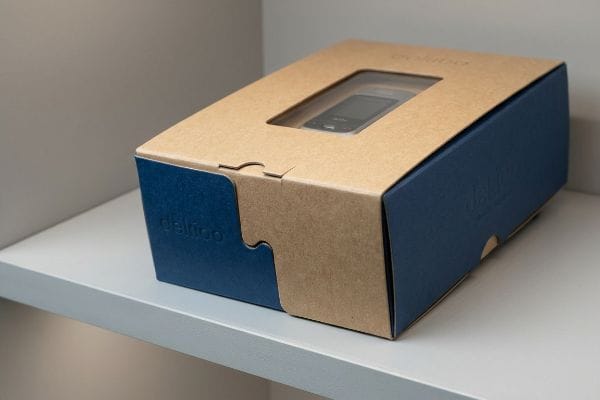
Sie können die schönsten Grafiken der Welt drucken, aber wenn die physische Verpackung im Einzelhandel nicht funktioniert, ist Ihre Kampagne von vornherein zum Scheitern verurteilt.
Was versteht man unter Einzelhandelsverpackung?
Um dieses Konzept zu verstehen, müssen Sie Ihre Denkweise von bloßem Produktschutz hin zu aktivem Einzelhandelsmarketing verändern.
Für den Einzelhandel ist eine Verpackung die Entwicklung einer multifunktionalen Struktur erforderlich, die Waren während des Transports sichert und sich gleichzeitig in ein optimales Präsentationsmedium verwandelt. Dabei gilt es, die physikalischen Prinzipien des Materials mit visueller Marketingstrategie in Einklang zu bringen, damit Ihr Produkt die Aufmerksamkeit der Verbraucher auf sich zieht, ohne unter den hohen Anforderungen des Einzelhandels zu ermüden.
Eine Box auf einem Bildschirm gut aussehen zu lassen, ist eine Sache, sie aber in einem stark frequentierten Gang einwandfrei funktionieren zu lassen, erfordert Ingenieurskunst auf Bodenniveau.
Die Balance zwischen struktureller Integrität und der Regel für die Lippenhöhe finden
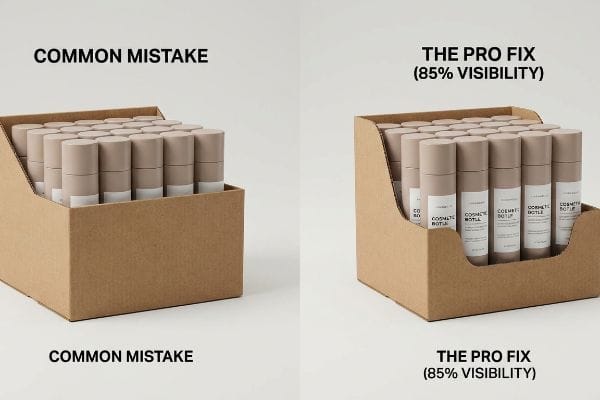
Selbst erfahrene Designer übersehen oft den grundlegenden Aspekt der Warenpräsentation bei verkaufsfertigen Verpackungen. Sie entwerfen zwar ansprechende Grafiken, lassen aber die Vorderkante der Verpackung zu hoch¹,in der Annahme, mehr Karton bedeute besseren Schutz. Sie behandeln die Verpackung wie einen Versandbehälter anstatt wie ein attraktives Verkaufsinstrument.
Ich sehe das ständig, wenn Marken versuchen, Versandsicherheit und Warenpräsentation zu vereinen. Ein Designer legt beispielsweise eine hohe Vorderwand für eine Thekenaufbewahrung, die die eigentliche Ware verdeckt. Ich weiß, Sie betrachten diese Pappkonstruktion aus Sorge um die Sicherheit, aber wenn ein Kunde das Etikett nicht sehen kann, geht er einfach vorbei. In meinem Betrieb gilt die Regel „Produkt zuerst“: Die Vorderkante muss mindestens 85 % des Hauptartikels freilegen.Lässt man zu viel Pappe übrig, greift der Verkäufer zu einem stumpfen Cuttermesser und schneidet das dicke Wellpappmaterial ab – man kann das Reißen des rohen Kartons förmlich hören, während Ihre Marke zerstört wird, um das Produkt sichtbar zu machen. Die präzise Stanzung von Anfang an verhindert dieses unschöne Problem im Verkaufsraum.
| Häufiger Anfängerfehler | Die Profi-Lösung | Vorteil für die Verkaufsfläche |
|---|---|---|
| Die vordere Kante der Schale verdeckt das Produktetikett | Die 85%-Produktsichtbarkeitsregel3 | Verhindert, dass Ladenangestellte die Box hacken |
| Die Einheit als Versandlager behandeln | Verwenden Sie ein gestanztes, konturiertes Frontprofil | Maximiert die sofortige Wiedererkennung durch den Verbraucher |
| Generisches Kastendenken | Setzen Sie geschwungene, visuell ablenkende Formenein 4 | Steigert Impulskäufe an der Kasse |
Ich lasse nicht zu, dass eine schlecht ausgemessene Frontlippe ein großartiges Produkt verdeckt. Durch das präzise Entfernen des überschüssigen Materials während der Fertigunggarantiere ich, dass Ihre Marke im Vordergrund steht und Ihren Mitarbeitern im Einzelhandel die Mühe manueller Nachbearbeitung erspart bleibt.
🛠️ Harveys Schreibtisch: Gehen Ihre Produktetiketten im Regal unter zu viel Karton unter? 👉 Kostenlose Strukturanalyse anfordern ↗ — Direkter Kontakt zu mir. Garantiert kein automatisierter Werbe-Spam.
Was ist eine Verkaufsverpackung?
Lässt man den Marketingjargon beiseite, offenbart sich ein hochentwickeltes Werkzeug, das zur Lösung eines spezifischen Problems im Einzelhandel entwickelt wurde.
Eine Verkaufsverpackung ist ein speziell für den direkten Kundenkontakt im Einzelhandel entwickelter Karton. Im Gegensatz zu herkömmlichen Versandkartons verfügen diese individuell gestalteten Einheiten über abreißbare Seitenwände oder offene Oberseiten, die einen sofortigen Zugriff auf das Produkt ermöglichen und gleichzeitig genügend Stabilität bieten, um der Stapelung im Lager und der rauen Behandlung im Einzelhandel standzuhalten.
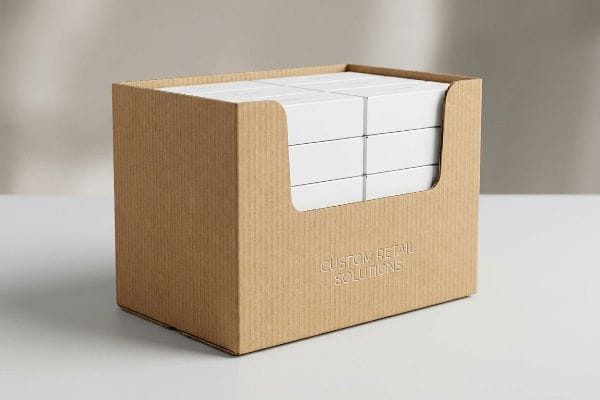
Die Entscheidung für ein verkaufsfertiges Format ist klug, doch wenn der fehlende Karton nicht kompensiert wird, führt dies zu sofortigen Problemen in der Lieferkette.
Die Schwachstelle von oben offenen Einzelhandelsverpackungen
Einkaufsteams ersetzen häufig RSC (Regular Slotted Container) durch HSC (Half Slotted Container) ⁵ , um im Handumdrehen offene Verkaufsbehälter herzustellen . Sie gehen davon aus, dass das Entfernen der oberen Klappen Rohmaterialkosten⁶ spart und gleichzeitig das Einräumen der Regale deutlich beschleunigt.
Ich weiß, es klingt verlockend, einfach den Deckel eines Kartons abzuschneiden, aber das Entfernen der durchgehenden Laschen führt zum Verlust der 360-Grad-Umschließung. Ohne einen Deckel, der die Ecken stabilisiert, verliert der Karton massiv an Stabilität bei Belastung von oben. Ich habe schon erlebt, wie Verkäufer versucht haben, diese geschwächten, oben offenen Kartons im Lager zu stapeln, nur um dann das schrille, widerliche Knirschen zu hören, als die unterste Ebene unter dem Gewicht des oberen Teils zusammenbrach. Um dies zu beheben, kompensiere ich die fehlende Stabilität von oben mathematisch, indem ich die Wellenrichtung der Wellpappe exakt vertikal ausrichte, um die Kantenstauchfestigkeit (ECT) zu maximieren. Wenn Ihr Produkt im Inneren nicht vollständig stabil ist, müssen Sie das Basismaterial verstärken, damit es die Stapelung auf Paletten unbeschadet übersteht.
| Häufiger Anfängerfehler | Die Profi-Lösung | Vorteil für die Verkaufsfläche |
|---|---|---|
| Verwendung von Standardkarton für offene Behälter | Die Wellenstruktur muss exakt vertikal ausgerichtet sein7 | Stellt die kritische Stapelfestigkeit bei Toploader-Belastung wieder her |
| Vorausgesetzt, fehlende obere Klappen sind sicher | Upgrade auf eine höhere Kantenbruchfestigkeit8 | Verhindert das Zerdrücken der unteren Lagerebene im Lager |
| Abhängigkeit von weichen internen Gütern | Konstruieren Sie eine verstärkte Doppelwandecke9 | Hält die Warenpräsentation im Einzelhandel perfekt quadratisch |
Ich lasse niemals einen Kunden auf offene Boxen umsteigen, ohne die Physik der vertikalen Belastung neu zu berechnen. Durch die Anpassung der Faserrichtung wird sichergestellt, dass Sie die Vorteile der schnellen Einlagerung nutzen können, ohne die für Ihre Lieferkette entscheidende Stapelstabilität zu beeinträchtigen.
🛠️ Harveys Schreibtisch: Verzichten Sie auf die Stapelstabilität, nur um Regale schneller einräumen zu können? 👉 Fordern Sie eine Materialfestigkeitsprüfung an ↗ – Sicher herunterladen. Bei Fragen können Sie mich gerne kontaktieren.
Was ist kundenspezifische Einzelhandelsverpackung?
Echte Individualisierung bedeutet nicht einfach nur, ein hochauflösendes Logo auf eine generische Vorlage zu klatschen; es geht um eine mathematische Passung.
Individuelle Einzelhandelsverpackungen erfordern die mathematische Entwicklung einer einzigartigen Stanzform, die exakt auf die Abmessungen, das Gewicht und die Anforderungen des jeweiligen Produkts sowie auf die Gegebenheiten im Einzelhandel zugeschnitten ist. Dieser hochpräzise Prozess berücksichtigt Materialstärke, Faltphysik und die Vorgaben des Einzelhändlers und gewährleistet so eine reibungslose Montage und eine makellose Markenpräsentation – ganz ohne die Verwendung von Standardvorlagen.
Man kann zwar die perfekte Verriegelung auf dem Bildschirm des Computers zeichnen, aber wenn man die tatsächliche Dicke des Kartons außer Acht lässt, wird die Montage zum Albtraum.
Die Reibung bei Vernachlässigung des Materialmessschiebers
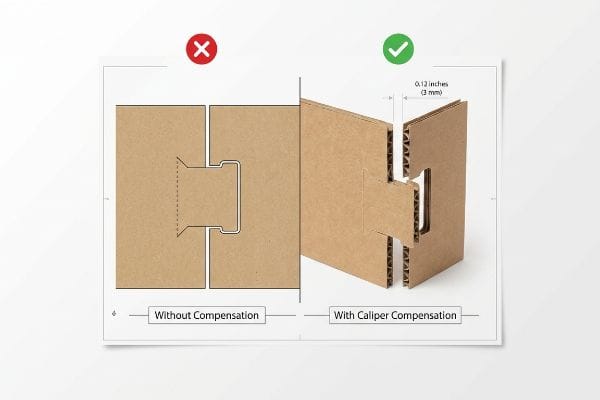
Grafikdesigner erstellen in ihrer Software oft ineinandergreifende Laschen und Faltschlitze in exakt der gleichen Breite wie die Gegenstücke. Sie behandeln individuelle Verpackungen wie das Zeichnen von Linien auf flachem Papier und vergessen dabei, dass Wellpappe ein beträchtliches Volumenbesitzt.
Stellen Sie sich vor, Sie versuchen, ein dickes Buch zu schließen, in dem ein Stift steckt; das Scharnier braucht zusätzlichen Platz, um das Hindernis zu umschließen. Wenn eine 3 mm dicke Platte um 90 Grad gefaltet wird, verbraucht sie Material(11). Ich habe schon oft erlebt, wie Teams beim Verpacken schwitzend und fluchend eine Lasche in einen Schlitz pressten, der zwar auf dem Bildschirm perfekt gezeichnet war, in Wirklichkeit aber aufgrund der Plattenstärke praktisch verklebt ist. Man spürt förmlich den Widerstand des ungebrauchten Kraftkartons, bevor die bedruckte Deckschicht schließlich reißt. Ich löse dieses Problem, indem ich die CAD-Schlitze (Computer-Aided Design) automatisch kompensiere und die Aufnahmelöcher entsprechend der Biegetoleranz(12).
| Häufiger Anfängerfehler | Die Profi-Lösung | Vorteil für die Verkaufsfläche |
|---|---|---|
| Zeichenschlitze genau in der Größe von Laschen | Mathematische Bremssattelkompensation anwenden13 | Garantiert reibungsloses Einführen der Lasche |
| Die physikalische Plattendicke außer Acht lassen | Schlitze verbreitern, um den Außenradius zu berücksichtigen14 | Verhindert das Einreißen des Deckblatts beim Falten |
| Erzwingen fester Verbindungen an der Leitung | Die Biegezugaben des Ingenieurs werden in die Datei eingearbeitet15 | Beschleunigt die manuelle Montagezeit drastisch |
Ich berechne jede eingereichte Stanzform mathematisch neu, um die Biegetoleranz des Wellpappenmaterials zu berücksichtigen. Dadurch wird sichergestellt, dass sich Ihre individuelle Verpackung mühelos am Fließband falten lässt, wodurch Beschädigungen der Grafiken und unnötige Arbeitsstunden vermieden werden.
🛠️ Harveys Schreibtisch: Hat Ihr Verpackungsteam Probleme beim Falten Ihrer individuellen Displays, weil die Schlitze zu eng sind? 👉 Fordern Sie Ihre kostenlose CAD-Analyse an ↗ — Keine Formulare, die endlose Verkaufsgespräche auslösen. Einfach nur echter Mehrwert.
Was versteht man unter Verpackung im Einzelhandelsmanagement?
Die Verwaltung von Verpackungen in großem Maßstab erfordert die Berücksichtigung unsichtbarer Umweltvariablen, die die theoretische Konstruktion zunichtemachen.
Die Verpackung im Einzelhandel bestimmt, wie ein physischer Karton reibungslos durch komplexe Lieferketten transportiert wird, den rauen Bedingungen im Lager standhält und die strengen Annahmerichtlinien des Einzelhändlers erfüllt. Sie erfordert strukturelle Schutzmechanismen, die Materialermüdung, Feuchtigkeitsschwankungen und die Belastungen der Logistik standhalten und so kostspielige Produktschäden und Rückbelastungen aufgrund von Compliance-Verstößen im Einzelhandel aktiv minimieren.
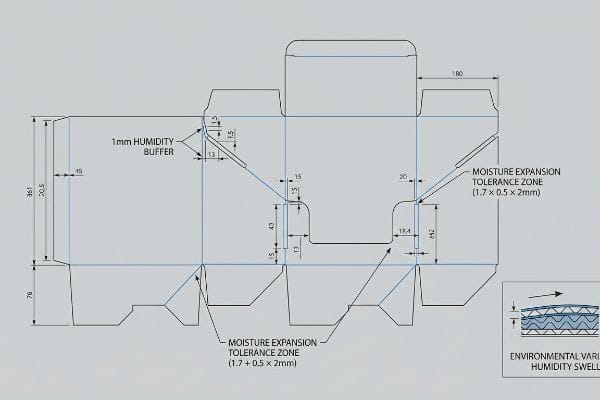
Doch die Theorie allein reicht nicht aus, wenn die Maschinen anlaufen und Ihre Pakete auf einer feuchten Laderampe landen.
Warum perfekte Trockenlaborspezifikationen in realen Lieferketten scheitern
Einkaufsteams und Einkäufer genehmigen routinemäßig Verpackungstoleranzen auf Basis der absoluten Trockendicke der in einem klimatisierten Büro getesteten Platte16. Sie gehen davon aus, dass ein Fach, das im Winter perfekt auf einen Prototyp-Schreibtisch passt, auch während eines Seetransports im Sommer die gleichen Eigenschaften aufweist.
Das ist nicht nur Theorie – ich sehe es in der Praxis, wenn die perfekte Stanzform eines Kunden auf die realen atmosphärischen Bedingungen trifft. Beim Seetransport von Wellpappkartons oder bei Lagerung in Regionen mit hoher Luftfeuchtigkeit nimmt die poröse Testliner-Schicht Feuchtigkeit auf und quillt auf<sup> 17</sup> . Ich messe die Dicke der eingehenden Kartons mit einem Mikrometer und stelle regelmäßig eine Materialausdehnung von 1 mm fest <sup>18</sup> . Wird dies nicht berücksichtigt, fühlt sich die feucht-schwammige Oberfläche der beschädigten Testliner-Schicht an, wenn das Montageteam versucht, die aufgequollenen Teile zusammenzupressen und dabei die Wellen quetscht. Ich integriere daher einen Feuchtigkeitspuffer direkt in die Verriegelungsmechanismen. Durch diese Toleranzanpassung von 1 mm reduziere ich die Montagezeit beim Co-Packing um 42 Sekunden pro Einheit und vermeide so massive Arbeitsengpässe.
| Häufiger Anfängerfehler | Die Profi-Lösung | Vorteil für die Verkaufsfläche |
|---|---|---|
| Gestaltung von Schlitzen für Trockenlaborumgebungen | Fügen Sie einen 1 mm dicken strukturellen Feuchtigkeitspuffer19 | Verhindert das Zerdrücken der Wellen bei der Montage in feuchter Umgebung |
| Die Feuchtigkeitsaufnahme des Testliners wird außer Acht gelassen 20 | Berechnung der Schwellung beim Seefrachttransport | Beseitigt massive Engpässe beim Co-Packing |
| Unter der Annahme, dass die flach verpackten Artikel stabil bleiben | Mikrospiel-Anpassungen nutzen 21 | Garantiert, dass die Teile in jedem Klima reibungslos passen |
Ich lasse keine Displayverpackung ausliefern, ohne vorher ihre Stabilität unter Berücksichtigung der Luftfeuchtigkeit in der Lieferkette zu testen. Durch die künstliche Erweiterung der Verschlussmechanismen stelle ich sicher, dass Ihre Verpackung den unsichtbaren Umwelteinflüssen standhält, die häufig große Produkteinführungen im Einzelhandel zum Scheitern bringen.
🛠️ Harveys Schreibtisch: Kennen Sie die genaue Feuchtigkeitsquelltoleranz Ihrer aktuellen Stanzteile aus Wellpappe? 👉 Senden Sie mir Ihre Stanzdatei ↗ — Ich überprüfe die Berechnungen, bevor Sie unnötig Geld für die Massenproduktion ausgeben.
Abschluss
Sie können zwar die günstigste verfügbare Wellpappe wählen, aber wenn diese poröse Testliner-Platte die Luftfeuchtigkeit im Lager aufnimmt und sich unkontrolliert ausdehnt, kommt es zu gravierenden Ausfällen der Verriegelungsmechanismen, die Ihre manuelle Montagelinie um schätzungsweise 30 % verlangsamen. Genau dieses Datenblatt verwenden meine zehn wichtigsten Einzelhandelskunden, um fehlerfreie Druckergebnisse und eine reibungslose Auftragsabwicklung zu gewährleisten. Hören Sie auf, atmosphärische Toleranzen zu erraten, und lassen Sie mich Ihre Strukturdateien persönlich durch meinen kostenlosen Stanzform-Vorab-Check führen, um diese kritischen Schwachstellen vor Beginn Ihrer Serienproduktion zu erkennen.
„Packaging Style Guide: How to Pitch to Big Box Retailers“, https://www.gprinting.com/packaging-style-guide-how-pitch-big-box-retailers. [Branchenstandards für Verpackungen und Leitfäden für den Einzelhandel legen optimale Lippenhöhen fest, um ein Gleichgewicht zwischen Stabilität während des Transports und Sichtbarkeit sowie Zugänglichkeit für den Verbraucher zu gewährleisten]. Nachweisfunktion: Technische Spezifikation; Quellentyp: Handbuch für Verpackungsdesign. Unterstützt: Die Auswirkung der Lippenhöhe auf die Zugänglichkeit im Einzelhandel. Anmerkung: Die optimale Höhe variiert je nach Produktabmessungen und -gewicht. ↩
„Marktgröße für Displayverpackungen, globaler Marktanteil, 2034“, https://www.fortunebusinessinsights.com/display-packaging-market-108355. [Branchenrichtlinien für das Merchandising legen den Mindestprozentsatz der Produktsichtbarkeit fest, der erforderlich ist, um zu verhindern, dass Kunden das Produkt übersehen, und um die Markenbekanntheit zu gewährleisten]. Nachweisfunktion: Technische Spezifikation; Quellentyp: Designhandbuch. Unterstützt: Das optimale Sichtbarkeitsverhältnis für die Höhe der Displaykante im Einzelhandel. Anmerkung zum Anwendungsbereich: Speziell für POS-Kartonverpackungen. ↩
„Verkaufsfertige Verpackungen: Umsatzsteigerung durch Fokussierung auf …“, https://www.packagingcorp.com/resource-hub/industry-insights/retail-ready-packaging-increase-sales-by-focusing-on-merchandiser-and-consumer-needs/. Ein maßgeblicher Leitfaden für das Merchandising im Einzelhandel würde spezifische Sichtbarkeitsschwellenwerte festlegen, um die Produktidentifizierung zu gewährleisten und unautorisierte Verpackungsänderungen zu verhindern. Nachweisfunktion: Technische Verifizierung; Quellentyp: Branchenstandard. Unterstützt: die Kennzahl von 85 % Sichtbarkeit. Hinweis: Die Anwendung kann je nach Einzelhandelsbranche variieren. ↩
„[PDF] Der Einfluss von Verpackungsdesign auf Impulskäufe“, https://scholarhub.ui.ac.id/context/jbb/article/1152/viewcontent/893.pdf. Akademische Forschung im Bereich Neuromarketing zeigt, dass organische oder unkonventionelle Formen die Aufmerksamkeit effektiver auf sich ziehen als rechte Winkel und so Impulskäufe fördern. Evidenzfunktion: Theoretische Unterstützung; Quellentyp: Marketingforschungsarbeit. Belege: Zusammenhang zwischen Form und Konsumentenverhalten. Anmerkung: Die Ergebnisse können je nach Produktkategorie variieren. ↩
„Custom Box: Half Slotted Container (HSC) – Express Packaging“, https://www.expresspkg.com/news/custom-box-half-slotted-container-hsc/. [Ein Branchenstandard oder eine technische Richtlinie für Wellpappenverpackungen würde die Verwendung von Half Slotted Containern für offene Verkaufsdisplays bestätigen]. Nachweisfunktion: Technische Überprüfung; Quellentyp: Handbuch der Verpackungsindustrie. Unterstützung: Die Substitution von Behältertypen. Anwendungsbereich: Speziell für Wellpappe. ↩
„RSC vs. Stanzverpackung: Welcher Karton ist der richtige für Sie? – PakFactory“, https://pakfactory.com/blog/what-is-rsc-box-vs-die-cut-boxes/?srsltid=AfmBOoqHTWImDq7hdaOomsKzE2rHP0bt5bZdsnYgLba1HnAAMfxLz2sY. [Ein Materialvergleich zwischen RSC- und HSC-Zuschnitten würde die Reduzierung des benötigten Kartons bei letzteren bestätigen]. Nachweisfunktion: Wirtschaftliche Überprüfung; Quellentyp: Fertigungsspezifikation. Begründung: Annahme von Kosteneinsparungen. Anmerkung zum Umfang: Bezogen auf das Rohmaterialgewicht. ↩
„Faserrichtung: Das Rückgrat von Kartonverpackungen – Korpack“, https://korpack.com/grain-direction-the-backbone-of-paperboard-packaging/?srsltid=AfmBOooz77v3u8ShZt1QvD1wPQESRXHIZS4Jgi5DvkmTdg7z7qgfEQZ9. [Eine maßgebliche Quelle im Bereich Verpackungstechnik würde erklären, wie die vertikale Ausrichtung der Wellen die vertikale Druckfestigkeit eines Wellpappbehälters maximiert]. Nachweisfunktion: Technische Verifizierung; Quellentyp: Handbuch für Verpackungstechnik. Unterstützt: Wiederherstellung der Festigkeit bei Belastung von oben. Anwendungsbereich: Speziell für vertikale Belastungen. ↩
„Vereinfachte Modellierung der Kantenstauchfestigkeit von mehrschichtigen …“, https://pmc.ncbi.nlm.nih.gov/articles/PMC9821909/. [Industrienormen für Kantenstauchtests (ECT) liefern empirische Daten zur erforderlichen Tragfähigkeit, um strukturelles Versagen in gestapelten Lagerhallen zu verhindern]. Nachweisfunktion: Metrische Verifizierung; Quellentyp: Industrienorm. Anwendungsbereich: Verhinderung von Quetschungen der untersten Lage. Anmerkung zum Anwendungsbereich: basiert auf ECT-Klassifizierungssystemen. ↩
„Wellpappenverpackungen mit innovativem Design für verbesserte …“, https://bioresources.cnr.ncsu.edu/resources/corrugated-board-packaging-with-innovative-design-for-enhanced-durability-during-transport/. [Technische Leitfäden zum Wellpappendesign beschreiben detailliert, wie eine Erhöhung der Wandstärke an den Ecken ein Durchbiegen verhindert und die geometrische Rechtwinkligkeit unter Belastung erhält]. Nachweisfunktion: Designverifizierung; Quellentyp: Leitfaden für strukturelle Verpackungen. Unterstützt: Erhaltung der Rechtwinkligkeit in der Verkaufspräsentation. Anwendungsbereich: Gilt für offene oder Schwerlastbehälter. ↩
„Vollständiger Leitfaden zur Maßtoleranz von Wellpappkartons – Upack“, https://www.upack.in/blog/post/complete-guide-on-corrugated-box-dimension-tolerance?srsltid=AfmBOoqkX-n0lL5BxlOTRHBeOBDoss2z9HuruQ0oX2YIk3A0zYZ-mLOI. [Ein maßgeblicher Leitfaden für Verpackungstechnik würde detailliert beschreiben, wie sich die Materialstärke auf Faltzugaben und Schlitztoleranzen auswirkt. Nachweisfunktion: Technische Validierung; Quellentyp: Handbuch der Verpackungsindustrie. Unterstützt: Die Notwendigkeit, die Materialstärke bei der Konstruktion zu berücksichtigen. Anwendungsbereich: Gilt für alle Wellengrößen.] ↩
„Was ist der K-Faktor? | Erklärung der Biegezugabe beim Blechbiegen“, https://www.youtube.com/watch?v=kUizKC1gkg0. [Ingenieurwissenschaftliche Grundlagen und Materialwissenschaftslehrbücher erklären, warum die Materialstärke zusätzliche Länge für eine Faltung erfordert]. Nachweisfunktion: Faktenprüfung; Quellentyp: Ingenieurhandbuch. Begründung: die physikalische Realität des Materialverbrauchs beim Falten. Anwendungsbereich: speziell für starre Verpackungskartons. ↩
„Blechbiegezugabe-Rechner – Firgelli Automations“, https://www.firgelliauto.com/blogs/engineering-calculators/sheet-metal-bend-allowance-calculator?srsltid=AfmBOopQH_VdGa6Mx2ZgqIQsqKZxREQPrhIGhk9FTcOczu4-VX84c3CO. [Industrienormen für die Konstruktion von Strukturverpackungen schreiben die Berechnung der Biegezugabe vor, um eine präzise Passform und Montage von Verriegelungslaschen zu gewährleisten]. Nachweisfunktion: Technische Validierung; Quellentyp: Technisches Handbuch. Unterstützt: Die Verwendung von CAD-Kompensation für Schlitze. Anwendungsbereich: Gilt für die präzise industrielle Stanzformtechnik. ↩
„Verpackungsdesign als Branding-Instrument in der Kosmetikindustrie – PMC“, https://pmc.ncbi.nlm.nih.gov/articles/PMC9123395/. [Ein maßgeblicher Leitfaden zur Verpackungstechnik erklärt, wie die Anpassung der Abmessungen an die Materialstärke eine optimale Passform und das Einsetzen der Lasche gewährleistet.] Nachweisfunktion: Technische Verifizierung; Quellentyp: Technisches Handbuch. Belege: Die Notwendigkeit der Messgenauigkeitskompensation für die Laschenpassung. Anwendungsbereich: Gilt für Wellpappe und Faltschachteln. ↩
„Aufreißkerbenverpackungen: Alles, was Sie wissen müssen“, https://epacflexibles.com/tear-notch-packaging/?srsltid=AfmBOooQ_XF0F3KdTocq7KrFuTUAEYHPFkJcSfjZTq4wyYQjL4DkudpW. [Industrienormen für die Konstruktion von Verpackungen zeigen, dass die Berücksichtigung des äußeren Biegeradius Materialspannungen und das Einreißen der Deckschicht beim Falten verhindert.] Nachweisfunktion: Technische Verifizierung; Quellentyp: Fertigungsnorm. Unterstützt: den Zusammenhang zwischen Schlitzbreite und Materialradius. Anwendungsbereich: Speziell für dickere Substrate. ↩
„Präzision durch optimale Biegezugaben in der Blechbearbeitung“, https://www.linkedin.com/posts/mechanicalcaddacademy_sheetmetaldesign-bendallowance-mechanicalengineering-activity-7307671501208469505-GJKs. [Technische Dokumentationen zur Fertigung zeigen, dass präzise Biegezugaben den Bedarf an Zwangsmontage reduzieren und somit die Effizienz der manuellen Montage verbessern.] Nachweisfunktion: Prozessoptimierung; Quellentyp: Studie im Bereich Wirtschaftsingenieurwesen. Belege: Zusammenhang zwischen Biegezugaben und Montagegeschwindigkeit. Fokus: Manuelle Montage. ↩
„Einfluss von Luftfeuchtigkeit und Temperatur auf die mechanischen Eigenschaften von …“, https://bioresources.cnr.ncsu.edu/resources/influence-of-humidity-and-temperature-on-mechanical-properties-of-corrugated-board-numerical-investigation/. [Industrienormen für Wellpappenverpackungen beschreiben detailliert, wie die Feuchtigkeitsaufnahme die Dicke und Dimensionsstabilität der Kartonagen beeinflusst]. Nachweisfunktion: Technische Spezifikation; Quellentyp: Industrienorm (z. B. TAPPI). Begründung: Die Instabilität von Messungen im Trockenlabor in der realen Logistik. Anwendungsbereich: Speziell für faserbasierte Materialien. ↩
„[PDF] Untersuchung der mechanischen Eigenschaften von Kartonverpackungen …“, https://repository.rit.edu/cgi/viewcontent.cgi?article=1066&context=japr. [Die materialwissenschaftliche Literatur zu Karton erklärt, wie Zellulosefasern in Testlinern Wasserdampf absorbieren, was zu Dimensionsinstabilität und Volumenausdehnung führt]. Nachweisfunktion: Technischer Mechanismus; Quellentyp: Fachzeitschrift. Belege: Die physikalische Ursache für Materialabbau in feuchter Umgebung. Anmerkung: Die Ausdehnungsraten variieren je nach Papiersorte und Beschichtung. ↩
„Einfluss der relativen Luftfeuchtigkeit auf die Druckfestigkeit von …“, https://open.clemson.edu/all_theses/3225/. [Verpackungstechniknormen liefern quantitative Daten zur linearen Ausdehnung der Wellpappendicke bei hoher relativer Luftfeuchtigkeit]. Nachweisfunktion: Quantitative Validierung; Quellentyp: Technische Spezifikation. Unterstützt: Die spezifische Messgröße der Materialquellung. Anmerkung: Dieser Wert stellt eine typische obere Abweichungsgrenze für Standardprüflinge dar. ↩
„[PDF] Auswirkungen der relativen Luftfeuchtigkeit auf die Kompression … – Clemson OPEN“, https://open.clemson.edu/context/all_theses/article/4232/viewcontent/Brown_clemson_0050M_15634.pdf. [Technische Spezifikationen für die Wellpappenherstellung definieren die erforderlichen Sicherheitsabstände, um Materialversagen bei hoher Luftfeuchtigkeit zu verhindern]. Nachweisfunktion: Technische Spezifikation; Quellentyp: Technisches Handbuch. Anwendungsbereich: Vermeidung von Wellenquetschungen. Anmerkung zum Anwendungsbereich: Speziell für feuchtigkeitsempfindliche Kartonmaterialien. ↩
„[PDF] NEUKARTON VERSUS RECYCELTER KARTON Von L. Lisa Zhao Eine Dissertation …“, https://vuir.vu.edu.au/18233/1/ZHAO_1993compressed.pdf. [Materialwissenschaftliche Daten zu den hygroskopischen Eigenschaften von Testlinerpapier beschreiben detailliert, wie sich Fasern bei Einwirkung von maritimer Luftfeuchtigkeit ausdehnen]. Nachweisfunktion: Materialeigenschaft; Quellentyp: Industriestandard. Begründung: Notwendigkeit von Quellberechnungen für den Transport. Anmerkung zum Untersuchungsbereich: Fokus auf Variationen des Recyclingfaseranteils. ↩
„Passungen & Toleranzen | Passungsarten erklärt & Toleranztabellen | Fractory“, https://fractory.com/limits-and-fits/. [In der Fachliteratur der Präzisionstechnik wird Mikrospiel als der bewusst gewählte minimale Spalt definiert, der Maßänderungen aufgrund von Umwelteinflüssen ausgleicht.] Nachweisfunktion: Methodik; Quellentyp: Lehrbuch für Ingenieure. Unterstützung: Gewährleistung der Passgenauigkeit unter verschiedenen klimatischen Bedingungen. Anwendungsbereich: Anwendbar auf hochpräzise mechanische Montage. ↩