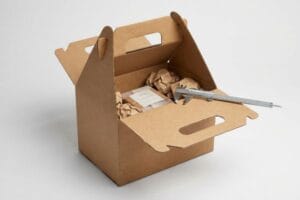
Man könnte meinen, ein unbedruckter Karton sei der einfachste Teil der Lieferkette, doch bei der Standardisierung eines solchen Rohlings schwinden die meisten Gewinnmargen unbemerkt.
Ein schlichter Verpackungskarton ist ein standardmäßiger, unbedruckter oder minimal gebrandeter Behälter, der hauptsächlich für den sicheren Transport und die interne Logistik der Lieferkette verwendet wird. Typischerweise aus braunem Kraftpapier-Wellpappkarton hergestellt, bieten diese robusten Verpackungen einen kostengünstigen dynamischen Ladungsschutz und vermeiden teure individuelle Druckverfahren für den Großhandel.

Viele Käufer gehen davon aus, dass eine leere Leinwand bedeutet, dass keinerlei technische Anforderungen gestellt werden, aber das Weglassen der kosmetischen Farbschicht zwingt einen tatsächlich dazu, sich vollständig auf die reinen physikalischen Eigenschaften des Kartons zu verlassen.
Was bedeutet „einheitliche Verpackung“?
Oft wird schlichte Verpackung fälschlicherweise als billiger Wegwerfkarton angesehen, doch im Einzelhandel mit hohem Durchsatz ist sie ein kalkulierter logistischer Vorteil.
Standardverpackungen, also unbedruckte Standard-Wellpappkartons, optimieren Ihr Produktionsbudget. Diese einfachen Kartons basieren ausschließlich auf ihrer Form und verzichten auf aufwendige Grafiken. So wird sichergestellt, dass Ihre Produkte auch unter extremen Bedingungen zuverlässig funktionieren und gleichzeitig die für schwere industrielle Stapelung erforderliche Stabilität gewährleisten.

Wenn man die farbenfrohen Marketinggrafiken entfernt, verlagert sich der Fokus sofort auf die Materialwissenschaft und die Strukturgeometrie.
Warum einfache RSC-Strukturen offenen HSC-Boxen überlegen sind
Viele Einkaufsteams bestellen standardmäßig einfache, unbedruckte Kartons, um ihre Waren effizient zu transportieren. Um die Kosten weiter zu senken, sehe ich oft, dass Einkäufer schlichte Kartons ohne Deckelklappe anfordern, in der Annahme, dass ein offener Behälter Material spart und gleichzeitig als schnelle Präsentationsfläche im Laden dient.
Es ist eine häufige Falle, in die selbst erfahrene Einkaufsteams tappen, denn die reine Kostenkalkulation sieht in der Tabelle vielversprechend aus. In meinem Betrieb erlebe ich regelmäßig, dass Kunden offene HSC-Container (Half Slotted Container) spezifizieren, um ein paar Cent pro Einheit zu sparen. Doch das Entfernen der oberen Klappen zerstört die 360-Grad-Schutzwirkung des oberen Bereichs. Wenn ein Mitarbeiter eine schwere Palette auf einen offenen HSC-Container fallen lässt, kann man das scharfe, plötzliche Knacken der Wellpappenwände an den Ecken deutlich hören. Der Karton verliert dadurch einen erheblichen Teil seiner dynamischen Tragfähigkeit .
Ich behebe dieses Problem, indem ich für alle robusten, schlichten Versandkartons einen standardisierten RSC (Regular Slotted Container) vorschreibe. Falls Sie unbedingt ein offenes Design für eine einfache Entnahme im Regal benötigen, richte ich die innere Wellenstruktur so aus, dass sie perfekt vertikal verläuft, um die Kantenstauchfestigkeit (ECT) zu maximieren . Diese einfache Materialanpassung stellt die verlorene Druckfestigkeit wieder her, verhindert Quetschungen und bewahrt meine Kunden vor frustrierenden Ablehnungsstrafen durch den Einzelhandel, die ihre erwarteten Margen zunichtemachen würden.
| Häufiger Anfängerfehler | Die Profi-Lösung | Vorteil für die Verkaufsfläche |
|---|---|---|
| Verwendung von klappenlosen, oben offenen Kartons | Upgrade auf eine Standard-RSC-Box | Verhindert das Einklemmen unter Paletten4 |
| Vertikale Papierfaserrichtung wird ignoriert | Ausrichtung der inneren Nuten vertikal | Kann 30 % mehr Gewicht bei Beladung von oben aufnehmen5 |
| Die Annahme, dass einfach bedeutet, dass schwach | Konstruktion für strenge ECT-Bewertungen6 | Verhindert kostspielige Rückbuchungen von Einzelhändlern |
Wenn Sie bei Ihren unbedruckten Versandkartons auf die statische Berechnung verzichten, wird der Karton irgendwann unter dem Gewicht Ihrer eigenen Lieferkette zusammenbrechen.
🛠️ Harveys Schreibtisch: Sind Sie sich nicht sicher, ob Ihr Standard-Versandkarton stabil genug für eine doppelt gestapelte Palette ist? 👉 Ich biete Ihnen eine kostenlose Stabilitätsprüfung an ↗ – Direkter Kontakt zu mir. Garantiert kein automatisierter Werbe-Spam.
Welche verschiedenen Arten von Verpackungskartons gibt es?
Wenn Sie Ihre Containeroptionen kennen, vermeiden Sie es, für eine ganz bestimmte logistische Aufgabe das falsche Konstruktionswerkzeug zu verwenden.
Zu den verschiedenen Verpackungsarten gehören Primärkartons für Endverbraucher, Sekundärverpackungen für den Einzelhandel und Tertiär-Versandkartons. Während einfache Versandtaschen einzelne E-Commerce-Lieferungen schützen, werden hochbelastbare Faltschachteln für den palettierten Großhandelsvertrieb eingesetzt. Dabei werden speziell entwickelte Wellpappwellen verwendet, um starke kinetische Stöße in globalen Lieferketten abzufangen.
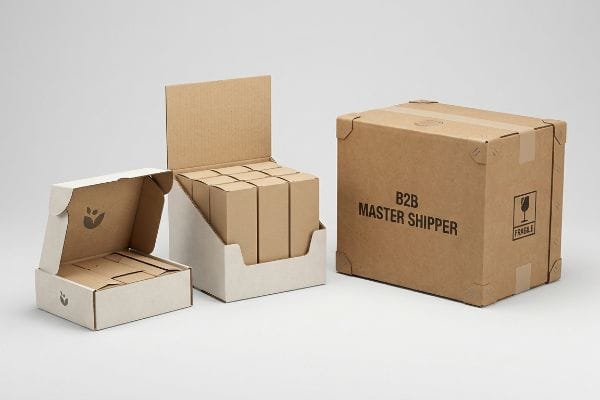
Den Unterschied zwischen einem Paketversandunternehmen und einem Speditionsunternehmen für Massengut zu kennen, ist das, was eine erfolgreiche Markteinführung von einem Berg beschädigter Ware unterscheidet.
B2C-Versender vs. B2B-Masterversender
Eine gängige Praxis für Startups, die ihre Logistik selbst aufbauen wollen,darin , für jedes mögliche Versandszenario nur einen einzigen Stil von schlichten, gestanzten Versandkartons zu bestellen. Sie gehen davon aus, dass ein stabiler Versandkarton, der für die Zustellung an eine einzelne Haustür geeignet ist, auch dann einwandfrei funktioniert, wenn er dicht verpackt in einem großen Warenkreislauf im Einzelhandel eingesetzt wird.
Die Realität im Umgang mit verschiedenen Verpackungskartons ist deutlich schwieriger. Ich beobachte häufig, wie Unternehmen versuchen, eingehende E-Commerce-Versandtaschen für den Versand an B2B-Kunden wiederzuverwenden. Sie sehen eine optisch intakte Box und gehen davon aus, dass alles in Ordnung ist, wobei sie die mikroskopische Materialermüdung der Papierfasern völlig ignorieren . Wenn ich diese wiederverwendeten Versandtaschen auf dem Boden untersuche, spüre ich den weichen, nachgiebigen Widerstand der strukturell ausgelaugten Wellen. Der Karton hat die Luftfeuchtigkeit und kinetische Stöße aufgenommen und dadurch seine gesamte Rückstellkraft verloren .
Ich setze die Verwendung von Neuware für alle ausgehenden B2B-Sendungen strikt durch und nutze dafür neue, SIOC-geprüfte (Ships In Own Container) Versandkartons.Für schwere Einzelhandelssendungen verwende ich keine strukturell beschädigten Kartons. Durch die Entwicklung eines speziellen, neuen Masterkartons für den Großhandel stelle ich sicher, dass die Wellpappenecken ihre dynamische Tragfähigkeit behalten. Dies verhindert Transportschäden vollständig, beschleunigt die Auftragsabwicklung um schätzungsweise 20 %underspart Ihrer Marke hohe Umverpackungskosten im Einzelhandelsverteilzentrum.
| Häufiger Anfängerfehler | Die Profi-Lösung | Vorteil für die Verkaufsfläche |
|---|---|---|
| Wiederverwendung abgenutzter Versandkartons | Verwendung von Kartons aus neuem Neumaterial12 | Beseitigt unsichtbare Transportschäden |
| Eine Box für alle Kanäle | Trennung von B2B- und B2C-Designs | Verhindert kostspielige Umverpackungsgebühren |
| Die Ermüdung der Papierfasern wird außer Acht gelassen | Bestehen von ISTA-Transit-Simulationen13 | Gewährleistet sicheren Wareneingang im Lager |
Man kann die Gesetze der Physik nicht überlisten, indem man einen abgenutzten Paketkarton dazu zwingt, die schwere Arbeit eines spezialisierten Großhändlers zu verrichten.
🛠️ Harveys Schreibtisch: Befürchten Sie, dass Ihre aktuellen Versandkartons für den großflächigen Einzelhandelsvertrieb zu schwach sind? 👉 Laden Sie meine Übersicht zur Kartonstärke herunter ↗ – Sicher herunterladen. Bei Fragen können Sie mich gerne kontaktieren.
Muss der Versand in einem neutralen Karton erfolgen?
Die Balance zwischen dem Schutz der Lieferkettendaten und den obligatorischen Logistikdaten zu finden, ist ein heikler Balanceakt bei der Gestaltung Ihrer Hauptversender.
Nein. Sie müssen die Ware nicht in einem komplett neutralen Karton versenden. Auch unbeschriftete Logistikbehälter benötigen wichtige aufgedruckte Daten wie Barcodes und Versandetiketten. Durch den einfachen einfarbigen Flexodruck direkt auf dem Kraftpapier kann die automatische Lagerverwaltung Ihre Bestände ohne kostspielige Verzögerungen erfassen.
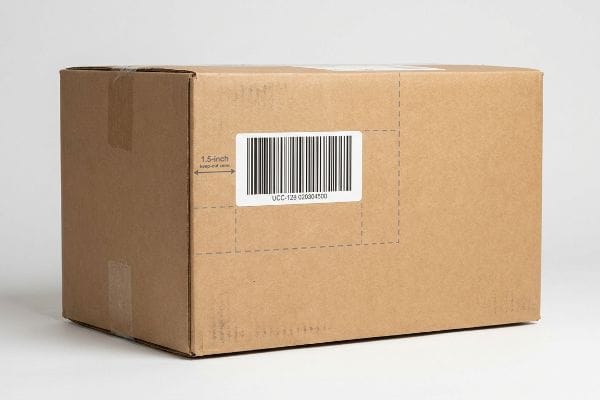
Während man aus Diebstahlgründen die Verpackung vielleicht lieber unbeschriftet lassen möchte, erfordern automatisierte Verteilzentren eine bestimmte Ebene sichtbarer Daten.
Die verborgene Datenschicht auf einfachen Masterkartons
Die meisten Marken glauben, ein Versandkarton sollte einfach ein neutraler, brauner Würfel sein, um Druckkosten zu sparen und den Inhalt vor Paketdiebstählen zu schützen. Sie gehen davon aus, dass das Logistikzentrum (3PL) lediglich einen Adressaufkleber irgendwo anbringt und den Karton weiterleitet.
Hier ist die praktische Umsetzung beim Transport dieser Kartons. Selbst erfahrene Designer übersehen oft die präzise Platzierung der obligatorischen Logistikdaten, insbesondere des UCC-128-Barcodes14.Ich sehe Layoutdateien, in denen der Barcode direkt an der Rilllinie der Stanzform platziert ist. Da dicke Wellpappe beim Falten um 90 Grad Material verbraucht, dehnt sich die äußere Papierschicht15.Wenn ich die automatische Verpackungsmaschine beim Aufbringen des Etiketts auf den Boden beobachte, kann man sehen und hören, wie sich der glänzende, klebrige Thermoaufkleber mit Gewalt von der abgerundeten Ecke ablöst.
Ich löse dieses Problem, indem ich während der Druckvorstufe eine strikte Sperrzone für Etiketten festlege. Alle wichtigen Logistik-Barcodes werden mathematisch exakt 38,1 mm (1,5 Zoll) von jeglichen Faltkanten oder Knicken entfernt platziert . Dadurch wird sichergestellt, dass die scannbaren Daten für die automatisierte Warenannahme im Lager absolut plan und reibungslos bleiben. Durch den Abstand zum Rand wird gewährleistet, dass optische Scanner den Barcode beim ersten Durchgang sofort erfassen. So wird ein Stillstand des Förderbandes verhindert und manuelle Nachbearbeitung vermieden, die das Kampagnenbudget schnell sprengen könnte.
| Häufiger Anfängerfehler | Die Profi-Lösung | Vorteil für die Verkaufsfläche |
|---|---|---|
| Platzierung von Barcodes in der Nähe von Faltlinien | Vorschreiben einer 1,5-Zoll-Sperrzone17 | Gewährleistet 100%iges Scannen im ersten Durchgang |
| Vorausgesetzt, die Etiketten haften an den Ecken | Druckdaten vollständig auf Flachbildschirmen | Verhindert das Ablösen von Etiketten |
| Versand völlig leerer Kartons | Drucken obligatorischer UCC-128-Logistikdaten18 | Vermeidet Verzögerungen durch manuelle Sortierung |
Eine Box ist niemals wirklich einfach; sie ist ein Hochgeschwindigkeits-Datenträger, der einwandfrei mit den Lagerrobotern kommunizieren muss.
🛠️ Harveys Schreibtisch: Werden Ihre Lageretiketten an den Rändern Ihrer Umkartons verzerrt? 👉 Holen Sie sich meine Barcode-Platzierungsvorlage ↗ — Keine Formulare, die endlose Verkaufsgespräche auslösen. Einfach nur purer Mehrwert.
Welche drei Arten von Schachteln gibt es?
Die genaue Abbildung Ihrer Verpackungshierarchie ist der einzige Weg, um sicherzustellen, dass Ihr Produkt den Weg vom Werk bis ins Regal tatsächlich unbeschadet übersteht.
Es gibt drei Kartonarten: Primärverpackungen für das eigentliche Produkt, Sekundärkartons für den Einzelhandel und Tertiärverpackungen für die Logistik. Jede Verpackungsebene erfordert spezifische Materialstärken und Druckfestigkeiten, um den hohen Anforderungen moderner, automatisierter Lagerumgebungen standzuhalten.
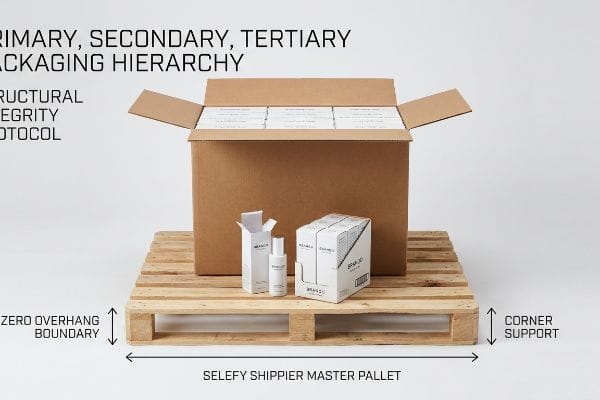
Doch die Theorie allein genügt nicht, wenn die Maschinen in Betrieb genommen werden und massive Gewichte auf Ihr sorgfältig geplantes System wirken.
Grenzen der Tertiärverpackung und das Palettenüberhang-Desaster
Bei der Gestaltung des äußeren Versandkartons – des sogenannten Masterkartons – versuchen Einkaufsteams häufig, die Innenmaße zu maximieren, um möglichst viele Sekundärverpackungen darin unterzubringen. Sie gehen davon aus, dass die Dicke des Kartons die darin befindlichen , empfindlichen Waren ausreichend schützt, solange der Masterkarton technisch auf die Holzpalette passt
Das ist nicht nur Theorie – ich sehe das in der Praxis, wenn ein Kunde die Abmessungen etwas zu weit ausreizt. Ein Wellpappkarton bezieht den Großteil seiner Druckfestigkeit ausschließlich aus der vertikalen Ausrichtung seiner vier Ecken . In meiner Einrichtung teste ich das mit einer hydraulischen Presse. Wenn ein Umkarton nur 12,7 mm (0,5 Zoll) über eine Standardpalette hinausragt , hängen diese Ecken in der Luft und tragen keinerlei Last. Ich habe die Folgen gemessen: Die ungestützte unterste Lage wölbt sich sichtbar nach außen, und man kann die gebrochenen inneren Wellen fühlen, wenn man mit der Hand über die zerdrückte Innenverpackung fährt.
Ich schreibe ein striktes Protokoll für die Begrenzungsboxen ohne Überstand bei allen Versandcontainern vor. In unserer CAD-Software (Computer-Aided Design) verkleinere ich die maximal zulässige Kartonfläche künstlich um exakt 0,5 Zoll (12,7 mm)<sup>22</sup>. Diese präzise Anpassung der Mikrotoleranz gewährleistet, dass die Ecken des Umkartons jederzeit vollständig von der Holzpalette gestützt werden. Durch die Einhaltung dieser strikten geometrischen Begrenzung vermeide ich Transportschäden beim Überseetransport in Containern vollständig und stelle sicher, dass die unbeschädigten Umverpackungen im Inneren verkaufsfertig ankommen, ohne dass eine manuelle Umverpackungsgebühr von 15 %23.
| Häufiger Anfängerfehler | Die Profi-Lösung | Vorteil für die Verkaufsfläche |
|---|---|---|
| Über den Rand der Holzpalette hinausragend | Vorschreiben einer Null-Überhanggrenze | Verhindert das Zerdrücken von Kartons der unteren Ebene24 |
| Abhängigkeit von der Rohmaterialdicke | Ecken zur vertikalen Abstützung ausrichten25 | Schützt empfindliche Sekundärverpackungen |
| Maximierung des Innenraumvolumens blindlings | Verkleinerung der Grundfläche um 0,5 Zoll26 | Verhindert kostspielige Umverpackungsgebühren im Lager |
Das stärkste Material der Welt ist nutzlos, wenn die Strukturgeometrie auch nur um einen halben Zoll abweicht.
🛠️ Harveys Schreibtisch: Lassen Sie sich nicht von einem 2 Millimeter kleinen Konstruktionsfehler die Einführung in 500 Filialen vermasseln. 👉 Senden Sie mir Ihre Stanzdatei ↗ – ich prüfe die Berechnungen, bevor Sie Ihr Budget für die Massenproduktion verschwenden.
Abschluss
Sie können zwar den günstigsten Anbieter für den Druck Ihrer Masterkartons wählen, aber wenn ein falsch positionierter Palettenüberstand dazu führt, dass die 32-ECT-Platte in einem feuchten Lager zusammenbricht und die Wareneingangslinie um schätzungsweise 30 % verlangsamt wird, ist Ihre Gewinnspanne dahin. Genau dieses Datenblatt verwenden meine zehn größten Einzelhandelskunden, um Druckfehler zu vermeiden. Hören Sie auf, bei den Toleranzen zu raten, und lassen Sie mich Ihre Dateien persönlich durch meinen kostenlosen Stanzlinien-Audit führen, um schwerwiegende Ausrichtungsfehler vor Beginn der Massenproduktion zu erkennen.
„Druckfestigkeit von Wellpappenverpackungen mit niedriger …“, https://pmc.ncbi.nlm.nih.gov/articles/PMC10054506/. Eine vergleichende Analyse der Wellpappenoberfläche von offenen Behältern gegenüber Standard-RSCs bestätigt die Reduzierung des Rohmaterialverbrauchs. Nachweisfunktion: Technischer Nachweis; Quellentyp: Handbuch für Verpackungstechnik. Unterstützt: Die Behauptung, dass der Wegfall der Deckelklappen die Materialkosten senkt. Anmerkung zum Anwendungsbereich: Die Materialeinsparungen hängen von den spezifischen Abmessungen der Schachtel und der Wellenart ab. ↩
„Kartonarten – Acme Wellpappkartons“, https://www.acmebox.com/product-offerings/box-styles/. Technischer Vergleich der Werte des Box Compression Test (BCT) zwischen oben offenen HSCs und geschlossenen RSCs zur Quantifizierung des Verlusts an vertikaler Stapelfestigkeit. Nachweisfunktion: Technische Validierung; Quellentyp: Verpackungsnorm. Begründung: Die strukturelle Unterlegenheit von oben offenen Behältern unter Last. Anmerkung: Der Kapazitätsverlust variiert je nach Wellpappenqualität. ↩
„Abschätzung der Druckfestigkeit von Wellpappe …“, https://pmc.ncbi.nlm.nih.gov/articles/PMC8467740/. Technische Validierung des Zusammenhangs zwischen der Wellenrichtung und den Werten des Kantenstauchtests (ECT). Nachweisfunktion: Technische Verifizierung; Quellentyp: Handbuch für Verpackungstechnik. Belegt: Die Behauptung, dass die vertikale Faserrichtung die Druckfestigkeit maximiert. Anwendungsbereich: Beschränkt auf Wellpappenstrukturen. ↩
„Grundlegende Kartonarten | Packaging Corporation of America“, https://www.packagingcorp.com/resource-hub/beyond-the-box/basic-box-styles/. Vergleichende Analyse der strukturellen Integrität und vertikalen Tragfähigkeit von Standard-Faltkartons (RSC) im Vergleich zu offenen Kartons. Nachweisfunktion: Strukturvergleich; Quellentyp: Logistik-Whitepaper. Belege: Überlegenheit von RSC in Palettenumgebungen. Anmerkung: Setzt ordnungsgemäßes Verschließen und Stapeln voraus. ↩
„Druckfestigkeitsbestimmung von Wellpappkartons …“, https://pmc.ncbi.nlm.nih.gov/articles/PMC9864211/. Technischer Nachweis der erhöhten Druckfestigkeit bei vertikaler im Vergleich zu horizontaler Wellenausrichtung. Nachweisfunktion: quantitative Verifizierung; Quellentyp: Handbuch für Verpackungstechnik. Unterstützt: Effizienz der vertikalen Faserausrichtung. Anmerkung: Die Ergebnisse können je nach Kartonsorte variieren. ↩
„ECT-Bewertungen erklärt: Was sie für Ihre Wellpappenverpackungen bedeuten“, https://epackagesupply.com/blogs/packaging-guide/ect-ratings-explained-what-they-mean-for-your-corrugated-packaging?srsltid=AfmBOoru-filPSVsquq2ZQPfLT_AdPftPV4E_GVkNMVZGvp1yQ_zYsgl. Erläuterung der Edge Crush Test (ECT)-Standards und wie die Einhaltung bestimmter Schwellenwerte Transportschäden und damit verbundene finanzielle Strafen von Einzelhändlern verhindert. Nachweisfunktion: Branchenstandarddefinition; Quellentyp: Technisches Datenblatt. Unterstützung: Verwendung von ECT zur Vermeidung von Rückbelastungen. Anwendungsbereich: Anwendbar auf den Einzelhandel mit hohem Verpackungsvolumen. ↩
„Bootstrapping von Unternehmensgründungen: Ein Überblick über aktuelle …“, https://www.academia.edu/32276865/BOOTSTRAPPING_BUSINESS_START_UPS_A_REVIEW_OF_CURRENT_BUSINESS_PRACTICES. Branchenanalysen von E-Commerce-Aktivitäten kleiner und mittlerer Unternehmen (KMU) dokumentieren typischerweise den Trend, eine einzige Verpackungs-SKU zu verwenden, um den anfänglichen Kapitalaufwand und die Gemeinkosten zu minimieren. Belegfunktion: unterstützend; Quellentyp: Branchenbericht. Belegt: die Verbreitung vereinfachter Verpackungsstrategien in der frühen Phase der Logistik. Anmerkung zum Untersuchungsbereich: beschränkt auf junge Direct-to-Consumer-Marken. ↩
„Wellpappenverpackungen mit innovativem Design für …“, https://bioresources.cnr.ncsu.edu/resources/corrugated-board-packaging-with-innovative-design-for-enhanced-durability-during-transport/. Technische Erklärung, wie wiederholte Belastung und Wiederverwendung zum Abbau von Zellulosefasern in Wellpappe führen. Nachweisfunktion: Technische Verifizierung; Quellentyp: Fachzeitschrift für Materialwissenschaften oder Handbuch für Verpackungstechnik. Belege: Behauptung über die innere Zersetzung wiederverwendeter Kartons. Anmerkung zum Umfang: Fokus auf die Ermüdung von Zellulosefasern. ↩
„Einfluss der relativen Luftfeuchtigkeit auf die Druckfestigkeit von …“, https://open.clemson.edu/all_theses/3225/. Dokumentation, wie hygroskopische Absorption und physikalische Einwirkung die strukturelle Steifigkeit und Druckfestigkeit von Wellpappe verringern. Nachweisfunktion: Technische Validierung; Quellentyp: Normen für Verpackungstechnik oder Branchen-Whitepaper. Belege: Behauptung über den Verlust der mechanischen Rückstellkraft aufgrund von Umwelteinflüssen und physikalischer Belastung. Anwendungsbereich: Gilt für Wellpappe. ↩
„Leitfaden zu Amazons SIOC-Verpackung (+ Wie Sie es umsetzen können …“, https://www.shipbob.com/blog/sioc-packaging/. Kurze Erläuterung der Branchenstandards und Testprotokolle für SIOC-Verpackungen, um Produktsicherheit ohne zusätzliche Umverpackung zu gewährleisten. Nachweisfunktion: Technischer Standard; Quellentyp: Branchenrichtlinie. Unterstützt: die Verwendung zertifizierter Versandbehälter. Anwendungsbereich: Hauptsächlich relevant für die Logistik im Einzelhandel und E-Commerce. ↩
„Wie Verpackungen die Auftragsabwicklungsgeschwindigkeit beeinflussen – und wie man sie optimieren kann“, https://www.pdachain.com/2025/03/16/how-packaging-affects-order-processing-speed-and-how-to-optimize-it/. Quantitative Analyse, die zeigt, wie die Verwendung einheitlicher, nicht recycelter Masterkartons die Bearbeitungszeit und Montagefehler reduziert. Nachweisfunktion: Leistungskennzahl; Quellentyp: Logistik-Fallstudie. Belege: die Behauptung der Effizienzsteigerung. Anmerkung: Der Prozentsatz kann je nach Automatisierungsgrad des Lagers variieren. ↩
„Eine vergleichende Untersuchung der physikalischen Eigenschaften von …“, https://repository.rit.edu/cgi/viewcontent.cgi?article=1299&context=theses. Kurze Erläuterung der strukturellen Überlegenheit von Neuzellulosefasern gegenüber Recyclingfasern hinsichtlich Druck- und Berstfestigkeit. Nachweisfunktion: Technische Spezifikation; Quellentyp: Materialwissenschaftlicher Bericht; Unterstützung: Reduzierung von Transportschäden durch Neumaterialien. Fokus: Wellpappe. ↩
„Prozessstandards“, https://www.ista.org/process_standards.php. Kurze Erläuterung, wie die ISTA-Protokolle (International Safe Transit Association) die Haltbarkeit von Verpackungen gegenüber physikalischer Belastung validieren, um Ausfälle zu verhindern. Nachweisfunktion: Technische Validierung; Quellentyp: Industriestandard; Unterstützung: Gewährleistung einer sicheren Warenannahme im Lager. Anwendungsbereich: Gilt für Zertifizierungen von Versandcontainern. ↩
„GS1-128-Barcodes in der Logistik“, https://www.interlakemecalux.com/blog/gs1-128-barcode-logistics. Bestätigung, dass UCC-128 der Branchenstandard für Versandbehälteretiketten und obligatorische Logistikdaten ist. Nachweisfunktion: Verifizierung; Quellentyp: Branchenstandard. Unterstützung: die Notwendigkeit spezifischer Barcode-Typen für die automatisierte Lagerverarbeitung. Anwendungsbereich: Fokus auf Logistik- und Lieferkettenstandards. ↩
„Analytische Bestimmung der Biegesteifigkeit eines Fünf-…“, https://pmc.ncbi.nlm.nih.gov/articles/PMC8777652/. Technische Erklärung des Verhaltens von Wellpappe beim Falten, wobei die äußere Deckschicht Zug und Dehnung erfährt. Nachweisfunktion: Technische Verifizierung; Quellentyp: Handbuch für Verpackungstechnik. Unterstützt die Behauptung, dass das Anbringen von Etiketten auf Falzlinien zum Versagen führt. Anwendungsbereich: Gilt speziell für dicke Wellpappensubstrate. ↩
„GS1-Standard für Verpackungs- und Produktmessung“, https://www.gs1.org/standards/gs1-package-and-product-measurement-standard/current-standard. Dieser maßgebliche Standard für Logistikverpackungen legt spezifische Abstandsvorgaben für die Barcode-Platzierung fest, um Verzerrungen beim automatisierten Scannen zu vermeiden. Nachweisfunktion: Technische Spezifikation; Quellentyp: Branchenstandard. Unterstützt: die Anforderung einer Sperrzone von 3,8 cm (1,5 Zoll). Hinweis: Die genauen Messwerte können je nach Transportunternehmen variieren. ↩
„GS1-konforme Barcodes für Produktverpackungen – AccuGraphiX“, https://bar-code.com/choosing-the-right-packaging-for-gs1-compliant-barcodes/?srsltid=AfmBOpF5q9AOl3LWcyI6eJ2YZRArZ1xZHVfzsy0BgVzQbG9I02eIFIw. Überprüfung der branchenüblichen Mindestabstände um Barcodes, um die Scansicherheit auf Wellpappenverpackungen zu gewährleisten. Nachweisfunktion: Technische Spezifikation; Quellentyp: Logistikhandbuch. Unterstützt: Der spezifische Abstand, der für Sperrzonen von Barcodes erforderlich ist. Hinweis: Die Standards können je nach Transportunternehmen oder Einzelhändler leicht variieren. ↩
„GS1-128 Versandetikett“, https://www.gs1-128.info/gs1-128-shipping-label/. Bestätigung, dass UCC-128 (GS1-128) das standardisierte Format für die Logistikkennzeichnung und Versanddaten auf Umkartons ist. Nachweisfunktion: regulatorischer Standard; Quellentyp: Branchenstandard. Unterstützt: die Anforderung an spezifische Logistikdatenformate. Anwendungsbereich: primär anwendbar auf globale Einzelhandels- und Lieferkettennetzwerke. ↩
„Understanding Shipping Box Strength – EcoEnclose“, https://www.ecoenclose.com/blog/understanding-shipping-box-strength/?srsltid=AfmBOoqN6O0-lKlHwon015PaCbRbSK5ltGE3oQOgBcXfCOgDuLr5phYG. Technische Erklärung, warum die Materialstärke (Dicke) allein nicht für ausreichenden Schutz sorgt, wenn weder Kantenstauchtests (ECT) noch Berstfestigkeitskennzahlen berücksichtigt werden. Nachweisfunktion: Technische Korrektur; Quellentyp: Verpackungsnorm. Begründung: Die Unzulänglichkeit, sich allein auf die Kartonstärke für die Produktsicherheit zu verlassen. Anwendungsbereich: Gilt für Versandkartons aus Wellpappe. ↩
„Eine vergleichende Studie zur Druckfestigkeit von …“, https://repository.rit.edu/theses/285/. Ein technisches Handbuch oder eine Verpackungsnorm erläutert die tragende Rolle der Kartonecken bei vertikaler Druckbelastung. Nachweisfunktion: Technische Verifizierung; Quellentyp: Ingenieurlehrbuch. Begründet: Die Festigkeitslehre von Wellpappkartons. Anwendungsbereich: Gilt speziell für vertikale Druckbelastung. ↩
„Auswirkungen des Palettenüberstands auf die Druckfestigkeit von Kartons“, https://admin.fibrebox.org/wp-content/uploads/2025/07/Pallet_Overhang_Phase_1.pdf. Branchendaten quantifizieren die Reduzierung der Druckfestigkeit durch bestimmte Palettenüberstandsmaße. Nachweisfunktion: quantitative Validierung; Quellentyp: Logistikforschung. Unterstützt: den Einfluss des Palettenüberstands auf die strukturelle Integrität. Anmerkung zum Untersuchungsbereich: Fokus auf den Schwellenwert von 0,5 Zoll. ↩
„Reduzierung des Risikos zusammenbrechender Palettenladungen: Teil II | Packaging World“, https://www.packworld.com/home/article/13372817/reducing-the-occurrence-of-collapsing-pallet-loads-part-ii. Überprüfung der in der Verpackungskonstruktion verwendeten technischen Toleranzen zur Vermeidung von Palettenüberstand und zur Aufrechterhaltung der Kartonkompressionsfestigkeit. Nachweisfunktion: Technische Validierung; Quellentyp: Handbuch für Verpackungstechnik. Unterstützung: Die Verwendung spezifischer Mikrotoleranzen zur Sicherstellung der Palettenauflage. Anmerkung: Toleranzen können je nach Palettenstandard variieren (z. B. GMA- vs. Europaletten). ↩
„Wie sich Verluste im Gütertransport durch Verpackung reduzieren lassen“, https://en.innovamaquinaria.com/news/how-to-reduce-losses-in-freight-transportation-caused-by-packaging-damage/. Validierung des typischen Arbeits- und Kostenaufwands, der mit dem manuellen Umpacken beschädigter Versandkartons in Lagerumgebungen verbunden ist. Nachweisfunktion: Wirtschaftliche Validierung; Quellentyp: Bericht aus der Logistikbranche. Begründung: Der finanzielle Anreiz zur Vermeidung von Transportschäden. Anmerkung: Der Prozentsatz kann je nach regionalen Lohnkosten variieren. ↩
„Auswirkung des Palettenversatzes auf die Druckfestigkeit von …“, https://digitalcommons.calpoly.edu/cgi/viewcontent.cgi?article=1067&context=it_fac. Maßgebliche Logistik- und Verpackungsstandards erläutern, wie der Palettenüberstand die Stapelfestigkeit der untersten Kartonschicht erheblich reduziert. Nachweisfunktion: Technische Validierung; Quellentyp: Industriestandard; Beleg: Kausalzusammenhang zwischen Überstand und Strukturversagen. Anwendungsbereich: Hauptsächlich relevant für Verpackungen aus Wellpappe. ↩
„Auswirkung des horizontalen Versatzes auf die vertikale Druckfestigkeit von Stapeln“ von …“, https://digitalcommons.calpoly.edu/it_fac/68/. Maschinenbautechnische Untersuchungen zur Verpackung zeigen, dass die Ausrichtung der Ecken die vertikale Tragfähigkeit von Kartons maximiert. Belegfunktion: technische Validierung; Quellentyp: Ingenieurlehrbuch; Beleg: die Behauptung, dass die Ausrichtung der Ecken den Inhalt schützt. Anmerkung zum Untersuchungsbereich: Fokus auf statische vertikale Lasten. ↩
„Palettenoptimierung 101: Wie die Kartonauswahl Auswirkungen hat …“, https://www.presidentcontainergroup.com/pallet-optimization-101-how-box-selection-impacts-shipping-costs/. In Handbüchern für die Lieferkette wird häufig ein geringes Spiel (z. B. 1,27 cm) empfohlen, um sicherzustellen, dass die Kartons in die Paletten passen und Lagergebühren vermieden werden. Beleg: Branchenpraxis; Quelle: Logistikhandbuch; Unterstützung: die Verwendung spezifischer Dimensionsreduzierungen zur Vermeidung von Umverpackungskosten. Anmerkung zum Anwendungsbereich: abhängig von regionalen Palettenstandards wie ISO oder GMA. ↩