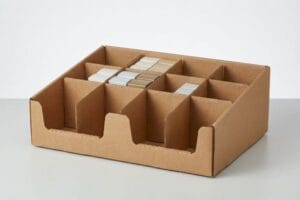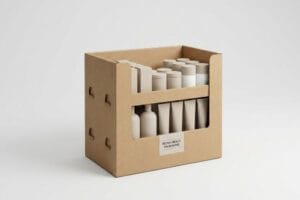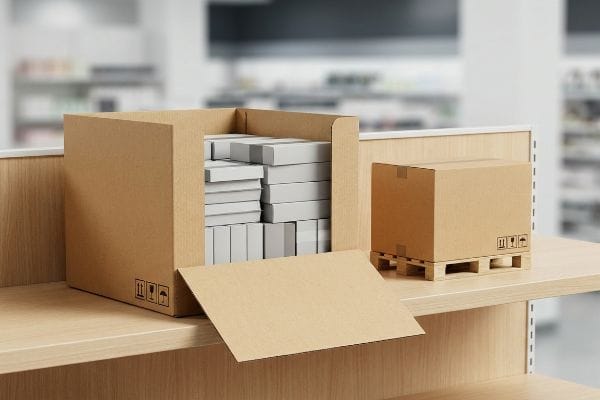
Marken verlieren Gewinn, wenn Verkäufer Produkte im Lager liegen lassen. SRP (Shelf Ready Packaging) löst dieses Problem, indem Ihre Waren ohne Auspackaufwand direkt in den Verkaufsraum gelangen.
Die Vorteile von verkaufsfertigen Verpackungen umfassen deutlich schnellere Nachschubzeiten, drastisch reduzierte manuelle Arbeitskosten, maximale Markenpräsenz und weniger Fehlbestände. Diese vorkonfigurierten Wellpappkartons ermöglichen es großen Einzelhändlern, Produkte nahtlos von der Versandpalette direkt ins Verkaufsregal zu bringen und so den Warenumschlag zu beschleunigen.
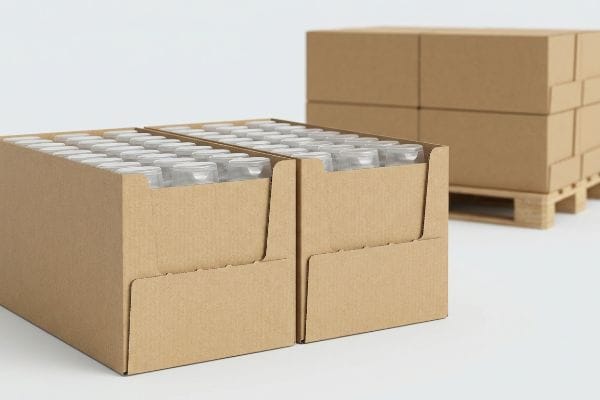
Damit Ihr Produkt auch tatsächlich gesehen wird, braucht es mehr als nur ansprechende Grafiken; es bedarf einer Struktur, die die Mitarbeiter, die nachts die Regale einräumen, auch gerne anfassen möchten.
Was ist verkaufsfertige Verpackung?
Das Verständnis dieses spezifischen Strukturformats ist Ihre allererste Verteidigungslinie gegen die Intransparenz von Lagerbeständen in stark frequentierten Geschäften.
Verkaufsfertige Verpackungen sind hochspezialisierte Kartonagen, die Konsumgüter während des weltweiten Transports sicher aufbewahren und ohne Auspacken der einzelnen Einheiten direkt in die Regale des Einzelhandels stellen. Sie verwenden perforierte Aufreißlaschen oder offene Konstruktionen, die einen sofortigen Zugriff für den Kunden ermöglichen und gleichzeitig die notwendige Kompressionsfestigkeit der Lieferkette gewährleisten.

Doch die Definition zu kennen, nützt nichts, wenn der Karton während des Überseetransports unter seinem eigenen Gewicht zusammenbricht.
Warum halbgeschlitzte Behälter als verkaufsfertige Schalen ungeeignet sind
Einkaufsteams greifen oft standardmäßig darauf zurück, Standardversandkartons durch einfaches Entfernen der oberen Laschen in offene Verkaufsbehälter umzuwandeln. Dies erscheint als logische und materialsparende Methode, um im Handumdrehen eine Verkaufsschale für die Regale zu schaffen. Man geht davon aus, dass die Dicke der Wellpappe den Inhalt genauso gut schützt wie ein vollständig geschlossener Umkarton .
Das Problem beim Entfernen der durchgehenden oberen Laschen besteht darin, dass die 360-Grad-Umschließung der oberen Struktur vollständig verloren geht. Ich beobachte dies immer wieder, wenn Hersteller diese HSC (Halbschlitzbehälter) mit 18,1 kg schweren Flüssigkeitsbeuteln befüllen und versuchen, sie auf einer Palette zu stapeln. Ohne die oberen Laschen, die die vertikalen Ecken fixieren, können die offenen Wände den Druck der oberen Last nicht mehr verteilen. Die raue, gezackte Kartonkante reißt einfach ein und wölbt sich nach außen, wenn das Lagerpersonal eine weitere Palette daraufstellt. Ich kompensiere diesen Verlust an Stabilität im oberen Bereich mathematisch, indem ich die innere Wellpappenstruktur exakt vertikal ausrichte, um die Kantenstauchfestigkeit (ECT) zu maximieren. Bei weichen Produkten im Inneren verwende ich eine doppelwandige Konstruktion, wodurch das Stabilitätsdefizit vollständig beseitigt wird und die Behälter unbeschädigt ankommen.
| Häufiger Anfängerfehler | Die Profi-Lösung | Vorteil für die Verkaufsfläche |
|---|---|---|
| Verwendung von offenen Korpussen ohne Anpassung der Flötenrichtung | Für die ECT-Behandlung muss die Maserung streng vertikal ausgerichtet werden2 | Verhindert das Zerdrücken der unteren Ebene unter Paletten |
| Bei schweren Textilien auf einwandige Platten zurückgreifen | Aufrüstung auf doppelwandige HSC-Profile3 | Verhindert das Ausbeulen nach außen im Verkaufsregal |
| Verlust der Druckfestigkeit der oberen Klappe außer Acht 4 | Mathematische Kompensation in CAD (Computer-Aided Design) | Gewährleistet die hundertprozentige Einhaltung der Vorschriften durch die Einzelhändler |
Ich weigere mich, die Qualität von Konstruktionsplatten herabzustufen, nur um ein paar Cent beim Rohmaterial zu sparen. Die strikte Einhaltung der vertikalen Faserrichtung erhält die Druckfestigkeit Ihrer Ladung, reduziert teure Rückbelastungen durch den Handel und sorgt für einen reibungslosen Warenfluss.
🛠️ Harveys Schreibtisch: Sind Ihre offenen Verkaufsbehälter durch das Gewicht beim Transport schon fast überlastet? 👉 Lassen Sie eine Strukturanalyse durchführen ↗ — Direkter Kontakt zu mir. Garantiert kein automatisierter Werbe-Spam.
Was sind die 5 Vorteile von Verpackungen?
Wenn man genau weiß, warum man in Strukturkartons investiert, verändert das grundlegend die Art und Weise, wie man mit Einzelhändlern über die Platzierung verhandelt.
Die fünf Vorteile von Verpackungen sind: Schutz des Produkts, optimierte Lieferkettenlogistik, sofortige Markenwiedererkennung, nahtlose Integration ins Verkaufsregal und erhöhter Einkaufskomfort. Strategisch entwickelte Wellpappenmaterialien verhindern Transportschäden, während hochspezifische Konstruktionen den manuellen Aufwand für die Mitarbeiter beim täglichen Auffüllen der Regale drastisch reduzieren.
Die Optimierung dieser fünf Variablen klingt in der Theorie gut, bis man tatsächlich mit den grellen Lichtverhältnissen und den räumlichen Beschränkungen eines Walmart-Regals.
Die Falle der Regalfertig-Sichtbarkeit
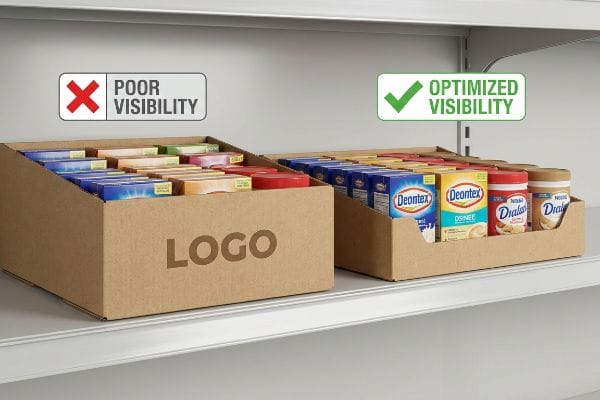
Markenmanager gestalten ihre Verkaufsverpackungen oft mit hohen vorderen Stützwänden, um maximale Stabilität und eine große Fläche für den Logodruck zu gewährleisten. Sie behandeln den Karton dabei eher als Werbefläche denn als funktionalen Ausgabemechanismus. Dieser Ansatz geht davon aus, dass Konsumenten bereitwillig über eine hohe Barriere greifen und tief in eine massive Verpackung greifen, nur um das Produkt zu entnehmen.
Wenn Sie eine hohe Vorderkante an Ihrem Tablett anbringen, verdecken Sie aktiv die Hauptware vor den Augen der Kunden. Ich beobachte dies immer wieder, wenn Verkäufer ein Tablett in ein normales unteres Regal schieben: Verdeckt die Vorderkante das Etikett, gehen die Kunden einfach daran vorbei. Die starke Reibung der dicken Wellpappe an den Knöcheln der Kunden sorgt für ein unangenehmes Einkaufserlebnis und verhindert Spontankäufe. In meinem Betrieb setze ich daher die Regel „Produkt zuerst“ konsequent um und reduziere die Haltekante so, dass mindestens 85 Prozent der Ware sichtbar sind . Indem ich die eigentliche Ware freilege und gleichzeitig die Spannung der unteren Kante gerade so belasse, dass das Tablett hält, ziehe ich sofort die Blicke der Kunden auf mich, auch aus dem hinteren Teil des Ganges .
| Häufiger Anfängerfehler | Die Profi-Lösung | Vorteil für die Verkaufsfläche |
|---|---|---|
| Hohe Frontwände versperren den Blick auf die Waren | Durchsetzung der 85-Prozent-Sichtbarkeitsregel6 | Löst sofortige Impulserkennung aus |
| Das Tablett wird dabei ausschließlich als Werbefläche genutzt | Absenken der Lippe für ergonomischen Zugang | Beseitigt die physische Reibung an den Knöcheln für Käufer7 |
| Tiefe Kartons in den unteren Regalen | Berechnung der exakten Sichtlinien vom Gangboden | Verhindert, dass Produkte zu optisch unbrauchbaren Lagerbeständen werden |
Ich opfere niemals die Produktpräsentation für mehr bedruckte Kartonfläche. Durch die Reduzierung der Vorderwandhöhe wird sichergestellt, dass Ihr Produkt selbst im Mittelpunkt steht und die Scanraten sofort steigen, ohne dass der Kunde mühsam durch den Karton wühlen muss.
🛠️ Harveys Schreibtisch: Verdecken Ihre hohen Verkaufswände genau das Produkt, das Sie verkaufen möchten? 👉 Fordern Sie eine Sichtbarkeitsanalyse an ↗ — Sicher herunterladen. Bei Fragen können Sie mich gerne kontaktieren.
Was ist ein Beispiel für eine verkaufsfertige Verpackung?
Die Entdeckung dieser speziellen Verkaufsstände im Handel zeigt genau, wie große Marken den begrenzten Platz in den Regalgängen dominieren.
Ein klassisches Beispiel für verkaufsfertige Verpackungen ist die Wellpapp-PDQ-Schale (Pretty Darn Quick), die für Kosmetikartikel oder Energy-Drinks mit hohem Umschlag verwendet wird. Diese individuell bedruckten Schalen werden komplett vorverpackt geliefert und verfügen über perforierte Aufreißlaschen, die das Verkaufspersonal sofort entfernen kann, um die Ware direkt im Regal zu präsentieren.

Die Herstellung eines hochwertigen Tablettformats erfordert jedoch strenge mechanische Disziplin in Bezug auf taktile Oberflächenbeschaffenheit und physikalische Materialwissenschaft.
Warum Premium-Prägung die Tablettwände beschädigt
Grafikdesigner verwenden häufig eine aufwendige 3D-Folienprägung für ihre verkaufsfertigen Trays , um hochwertigen Produkten eine luxuriöse Haptik zu verleihen. Sie behandeln die dicken Wellpappenwände wie eine flache, hochwertige Visitenkarte. Die Annahme ist, dass die Hervorhebung der Papierfasern die Markenbekanntheit steigert, ohne die Stabilität der Verpackung zubeeinträchtigen.
Durch das Prägen wird die obere Papierschicht stark nach außen gedehnt(9) , wodurch eine Erhebung entsteht. Dies führt zu einer gefährlichen Ausdünnung der Fasern genau dort, wo die Schale Stabilität benötigt. Wird eine schwere Ladung Glasgefäße in eine geprägte Schale gepackt, verursacht die Dehnung nach außen sofort Mikrorisse entlang der Falzlinien. Ich kann das Knacken des Rohkartons förmlich hören, wenn die Falzmaschine in der Produktion auf eine geschwächte, überdehnte Falz trifft. Wenn bei stark belasteten, stabilen Platten eine hochwertige, haptische Oberfläche erforderlich ist, verlange ich stattdessen eine Prägung nach innen. Durch das Herunterdrücken des Metallstempels verdichte ich die inneren Rillen zu einem festen Block(10) , ohne die Elastizität der äußeren Papierschicht zu beeinträchtigen. So erspare ich dem Kunden erhebliche finanzielle Verluste durch zusammengebrochene Schalen.
| Häufiger Anfängerfehler | Die Profi-Lösung | Vorteil für die Verkaufsfläche |
|---|---|---|
| Außenprägung an tragenden Wänden | Werkzeugumkehr zu einer nach innen gerichteten Prägung | Bewahrt die strenge strukturelle Druckfestigkeit11 |
| Dehnung von Papierfasern in der Nähe kritischer Faltstellen | Verdichtung der inneren Rillen durch Abwärtsdruck12 | Verhindert eingerissene Ecken an Regalböden |
| Wellpappe wie flaches Papier behandeln | Technische taktile Effekte um Belastungspunkte herum | Bietet ein luxuriöses Gefühl ohne Transportausfall |
Ich weigere mich, zuzulassen, dass unkontrollierte ästhetische Entscheidungen die physische Stabilität Ihrer Produkte gefährden. Die Umstellung auf eine komprimierte Prägung bietet Ihnen eine hochwertige, haptische Reflexion und gewährleistet gleichzeitig die absolute Unverwundbarkeit der primären Struktur gegenüber kopflastiger Fracht.
🛠️ Harveys Schreibtisch: Schwächt Ihre hochwertige Verpackungsoberfläche heimlich die Ecken Ihres Displays? 👉 Stanzlinienprüfung anfordern ↗ — Keine Formulare, die endlose Verkaufsgespräche auslösen. Einfach nur echter Mehrwert.
Was sind die 5 Ps der Verpackung?
Für den Start einer erfolgreichen Werbekampagne ist es unerlässlich, die komplexen Geschäftsmechanismen zu verstehen, die hinter dem bedruckten Karton stecken.
Die 5 Ps der Verpackung stehen für Produkt, Preis, Platzierung, Promotion und Positionierung. Dieses strategische Rahmenwerk gewährleistet, dass Ihre verkaufsfertige Präsentation die Ware optimal schützt, die Gewinnmargen des Geschäfts berücksichtigt, in schmale Gänge passt, die Vorteile für den Kunden klar kommuniziert und Ihre visuelle Identität von konkurrierenden Marken abgrenzt.

Die Theorie im Sitzungssaal richtig zu präsentieren, ist einfach, aber die harte Realität sieht anders aus, wenn man 500 Einheiten an eine nationale Handelskette liefert…
Die Realitätskrise der Einzelhandelsrahmenmatrix
Neue Marken versuchen häufig, Produkte einzuführen, ohne die Abmessungen ihrer Verpackung an das spezifische Geschäftsmodell des jeweiligen Einzelhändlers anzupassen. Sie gehen davon aus, dass sich ein universelles Tray-Design in Convenience-Stores, Apotheken und großen Großhandelsmärkten gleichermaßen gut verkauft. Dieser Einheitsansatz ignoriert die strengen logistischen Mechanismen und räumlichen Regeln, die die verschiedenen Einzelhandelsökosysteme bestimmen . <sup>13</sup>
In meiner Einrichtungsehe ich regelmäßig, wie Kunden wunderschöne Stanzformen einreichen, die den räumlichen und verkaufstechnischen Gegebenheiten des Zielgeschäfts völlig widersprechen. Wenn eine Marke versucht, eine sperrige Drogerieverpackung in ein eng gestaffeltes Regal eines Großmarktes zu zwängen, ist der Widerstand enorm, eine übergroße Schale in ein schmales Stahlregal zu quetschen. Ich vergleiche die genauen Maße mit den Vorgaben des Einzelhändlers und stelle fest, dass die Einheiten 60,9 mm (2,4 Zoll) über die Standardregaltiefe hinausragen. Diese Diskrepanz führt zu sofortigen Ablehnungen an der Laderampe und zerstört die prognostizierte Verkaufsgeschwindigkeit. Ich behebe dieses Problem, indem ich ein strenges Ausrichtungsprotokoll für das Verkaufsregal durchsetze, bevor auch nur ein Sägeblatt die Platte zuschneidet. Indem ich die Abmessungen der Einheit systematisch direkt mit den spezifischen Vorgaben des Einzelhandels abgleiche, reduziere ich den überflüssigen Millimeterabfall, stelle sicher, dass die vorbefüllte Einheit perfekt in den vorgesehenen Bereich passt und vermeide teure Retouren.
| Häufiger Anfängerfehler | Die Profi-Lösung | Vorteil für die Verkaufsfläche |
|---|---|---|
| Ignorieren spezifischer Beschränkungen der Ladenregale | Zuordnung von Designs zu exakten Einzelhandelsrichtlinien | Verhindert sofortige Dockabweisungen |
| Verwendung eines universellen Fußabdrucks für alle Ketten | Geometrieanpassung an die jeweilige Einzelhandelsumgebung | Maximiert die Rentabilität pro Quadratmeter |
| Umgehen der Regeln für die physikalische Positionierung | Durchsetzung strenger Maßtoleranzprüfungen | Eliminiert Retouren und Bußgelder |
Ich vergleiche Ihre Konstruktionsunterlagen stets mit den betrieblichen Richtlinien des jeweiligen Einzelhändlers. Die exakte Abstimmung der Tablettkonstruktion auf die Geschäftsstrategie verhindert gravierende Verzögerungen und gewährleistet eine sofortige, reibungslose Platzierung auf dem Boden.
🛠️ Harveys Schreibtisch: Lassen Sie sich nicht von einem 2 Millimeter kleinen Konstruktionsfehler die Einführung in 500 Filialen vermasseln. 👉 Senden Sie mir Ihre Stanzdatei ↗ – ich prüfe die Berechnungen, bevor Sie Ihr Budget für die Massenproduktion verschwenden.
Abschluss
Sie können zwar einen günstigeren Lieferanten wählen, doch wenn eine unverstärkte, offene Schale unter schweren Lagerpaletten zusammenbricht, führt dies zu sofortigen Reklamationen seitens des Einzelhändlers und vernichtet Ihre Quartalsgewinnmarge vollständig. Genau dieses Datenblatt verwenden meine zehn wichtigsten Einzelhandelskunden, um Reklamationen im Druckbereich zu vermeiden. Setzen Sie Ihre Lieferkettenkapazitäten nicht länger aufs Spiel und lassen Sie mich Ihre Dateien persönlich im Rahmen meines kostenlosen Stanzform-Pre-Flight-Audits prüfen, um schwerwiegende Konstruktionsfehler vor der Massenproduktion aufzudecken.
„Einfluss der relativen Luftfeuchtigkeit auf die Druckfestigkeit von …“, https://open.clemson.edu/all_theses/3225/. [Normen der Verpackungstechnik erläutern, wie das Entfernen der oberen Laschen die vertikale Druckfestigkeit und die strukturelle Stabilität eines Versandbehälters erheblich reduziert]. Nachweisfunktion: Technische Verifizierung; Quellentyp: Handbuch für Verpackungstechnik. Stützt: Die Behauptung, dass die Kartondicke allein für den strukturellen Schutz nicht ausreicht. Anmerkung zum Anwendungsbereich: Bezieht sich speziell auf die vertikale Tragfähigkeit beim Stapeln. ↩
„Leitfaden zur Festigkeit von Wellpappkartons: Wellenarten, ECT-Bewertungen & Wandstärke …“, https://anchorbox.com/corrugated-box-strength/. [Technische Normen für den Kantenstauchtest (ECT) bestätigen, dass eine vertikale Wellenausrichtung die Stapelfestigkeit von Wellpappkartons maximiert]. Nachweisfunktion: Technische Spezifikation; Quellentyp: Technisches Handbuch. Unterstützt: den Zusammenhang zwischen Wellenausrichtung und Vermeidung von Quetschungen der Basislage. Anwendungsbereich: Gilt für Verpackungen aus Wellpappe. ↩
„Optimales Design von doppelwandigen Wellpappenverpackungen – PMC“, https://pmc.ncbi.nlm.nih.gov/articles/PMC8950760/. [Materialspezifikationen für hochfeste doppelwandige Wellpappe (HSC) belegen eine überlegene Beständigkeit gegen seitliche Verformung im Vergleich zu einwandiger Wellpappe]. Nachweisfunktion: Technische Spezifikation; Quellentyp: Verpackungsindustriestandard. Beleg: Die Aussage, dass doppelwandige Profile ein Ausbeulen nach außen verhindern. Anwendungsbereich: Besonders relevant für schwere, weiche Güter. ↩
„Abschätzung der Druckfestigkeit von Wellpappkartons …“, https://pmc.ncbi.nlm.nih.gov/articles/PMC8467740/. [Statische Studien zeigen, dass das Entfernen der oberen Laschen bei halbgeschlitzten Behältern die vertikale Tragfähigkeit erheblich reduziert]. Belegfunktion: Tatsachenbehauptung; Quellentyp: Strukturanalyse. Begründung: Notwendigkeit mathematischer Kompensation in CAD-Systemen zur Gewährleistung der strukturellen Integrität. Fokus: Architektur von HSC-Behältern. ↩
„Marktgröße für verkaufsfertige Verpackungen | CAGR von 5,7 %“, https://market.us/report/retail-ready-packaging-market/. [Eine fundierte Studie zu Visual Merchandising im Einzelhandel oder Konsumentenpsychologie würde Belege für den spezifischen Sichtbarkeitsschwellenwert liefern, der erforderlich ist, um Impulskäufe auszulösen]. Funktion der Evidenz: Technischer Benchmark; Quellentyp: Branchenbericht/wissenschaftliche Studie. Unterstützt: die Wirksamkeit bestimmter Sichtbarkeitsprozentsätze für die Conversion-Rate im Einzelhandel. Anmerkung: Die optimale Sichtbarkeit kann je nach Produktkategorie variieren. ↩
„Wie Sie die Sichtbarkeit Ihrer Produkte im Einzelhandel durch POS-Displays erhöhen“, https://www.industrialpackaging.com/blog/increased-retail-visibility. [Ein maßgeblicher Leitfaden für das Warenmanagement im Einzelhandel würde den spezifischen Prozentsatz der Produktsichtbarkeit bestätigen, der erforderlich ist, um die Konversionsrate und die Impulserkennung zu optimieren.] Nachweisfunktion: Technischer Standard; Quellentyp: Branchenrichtlinie. Unterstützt: die Wirksamkeit der 85%-Sichtbarkeitsregel. Hinweis: Kann je nach Einzelhandelsbranche leicht variieren. ↩
„Ergonomisches Verpackungsdesign: Was Sie beachten sollten – Meyers Printing“, https://meyers.com/meyers-blog/ergonomic-packaging-design-what-to-keep-in-mind/. [Studien zur Ergonomie im Einzelhandel erklären, wie die Reduzierung physischer Barrieren und Reibungsverluste bei der Produktentnahme die Kaufwahrscheinlichkeit erhöht]. Evidenzfunktion: Verhaltensbezogene Evidenz; Quellentyp: Ergonomiestudie. Unterstützt: den Vorteil einer abgesenkten Tablettkante für ergonomischen Zugriff. Anmerkung zum Untersuchungsbereich: Fokus auf physische Interaktionsbarrieren. ↩
„Wellpappenverpackungen mit innovativem Design für verbesserte …“, https://bioresources.cnr.ncsu.edu/resources/corrugated-board-packaging-with-innovative-design-for-enhanced-durability-during-transport/. [Eine Quelle aus dem Bereich Verpackungstechnik würde detailliert beschreiben, wie die Prägung die vertikale Wellenstruktur und die Integrität der Decklage von Wellpappe beeinträchtigt und dadurch deren Druckfestigkeit verringert]. Nachweisfunktion: Technische Verifizierung; Quellentyp: Fachzeitschrift für Verpackungswissenschaften. Unterstützt: Die Aussage bezüglich der strukturellen Auswirkungen der Prägung. Anmerkung zum Anwendungsbereich: Betrifft speziell Wellpappenmaterialien. ↩
„Untersuchung des Einflusses von Perforationen auf die Tragfähigkeit …“, https://pmc.ncbi.nlm.nih.gov/articles/PMC11396172/. [Eine Quelle aus der Materialwissenschaft oder Verpackungstechnik würde detailliert beschreiben, wie die Dehnung der Papierfasern beim Prägen die Querschnittsdicke und Zugfestigkeit der Deckschicht verringert]. Belegfunktion: Technischer Mechanismus; Quellentyp: Fachzeitschrift für Materialwissenschaft. Unterstützt: Die Behauptung, dass Prägen die strukturelle Integrität schwächt. Anwendungsbereich: Speziell für Wellpappenmaterialien. ↩
„Prüfmethoden und Auswirkungen von Wellenknicken – BioResources“, https://bioresources.cnr.ncsu.edu/resources/overview-of-recent-studies-at-ipst-on-corrugated-board-edge-compression-strength-testing-methods-and-effects-of-interflute-buckling/. [Technische Spezifikationen für Wellpappenwerkzeuge würden bestätigen, dass die nach innen gerichtete Prägung das Wellenmaterial komprimiert, um die lokale Dichte und die vertikale Tragfähigkeit zu erhöhen]. Nachweisfunktion: technische Alternative; Quellentyp: Handbuch für Verpackungstechnik. Belege: Der Vorteil der Prägung gegenüber der Reliefprägung bei hohen Belastungen. Anwendungsbereich: Gilt für Strukturplatten in SRP. ↩
„Understanding Shipping Box Strength – EcoEnclose“, https://www.ecoenclose.com/blog/understanding-shipping-box-strength/?srsltid=AfmBOormQ5-RL6D2pT7_jQnaG86nOxRqIvLvRm0fbJoiimFWlUDQj6iF. [Ein technisches Handbuch oder eine materialwissenschaftliche Abhandlung über Wellpappe würde erklären, wie die Innenprägung die Stabilität der vertikalen Wellen im Vergleich zur Außenprägung erhält.] Nachweisfunktion: Technische Validierung; Quellentyp: Technisches Handbuch. Unterstützt: Strukturelle Integrität der Tablettwände. Anwendungsbereich: Gilt speziell für tragende Wände in SRP. ↩
„Was ist Wellpappe? – Fibre Box Association“, https://www.fibrebox.org/what-is-corrugated/. [Technische Verpackungsspezifikationen zeigen, wie die Komprimierung der inneren Wellen die Faserdehnung reduziert und strukturelle Schäden an Faltstellen verhindert]. Nachweisfunktion: Prozessvalidierung; Quellentyp: Technische Spezifikation. Unterstützt: Reduzierung von eingerissenen Ecken an Trays. Anwendungsbereich: Fokus auf stark beanspruchte Faltstellen. ↩
„Was achten Großhandelsclubs auf Verpackungen?“, https://mauserpackaging.com/mauser_news/what-do-warehouse-clubs-look-for-in-a-package/. [Branchenstandards für Logistik und Leitfäden zur Flächenplanung im Einzelhandel dokumentieren die unterschiedlichen Regaltiefen, Palettenanforderungen und räumlichen Beschränkungen verschiedener Einzelhandelsformate]. Nachweisfunktion: Technische Spezifikation; Quellentyp: Branchenhandbuch. Beleg: Die Notwendigkeit maßgeschneiderter Verpackungsabmessungen. Anmerkung zum Anwendungsbereich: Beschränkt auf physische räumliche Beschränkungen. ↩