Marken investieren enorme Budgets in maßgefertigte Wellpappdisplays, doch die meisten wirken völlig veraltet. Die Weiterentwicklung Ihrer Strukturstrategie geht über die Ästhetik hinaus; sie sichert das Überleben im modernen Einzelhandel.
Zu den wichtigsten Trends im Design von Wellpappenverpackungen zählen heute leichtere Materialien, digitaler UV-Direktdruck und innovative Reibungsverschluss-Konstruktionen. Dank dieser globalen Fortschritte in der Fertigung können Marken auf Kunststoffclips verzichten, Transportmengen reduzieren und hochgradig individualisierte Werbekampagnen schnell und ohne teure Werkzeugengpässe umsetzen.

Doch diese grundlegenden Designveränderungen zu kennen, ist nur die halbe Miete. Werden diese Trends in der Produktion nicht richtig umgesetzt, wird Ihre innovative Kampagne schnell zum logistischen Albtraum.
Was sind die neuesten Trends bei Verpackungen?
Wenn Einzelhändler einen schnelleren saisonalen Warenumschlag fordern, kann die traditionelle Fertigungsindustrie mit dem Tempo moderner Werbeaktionen einfach nicht mithalten.
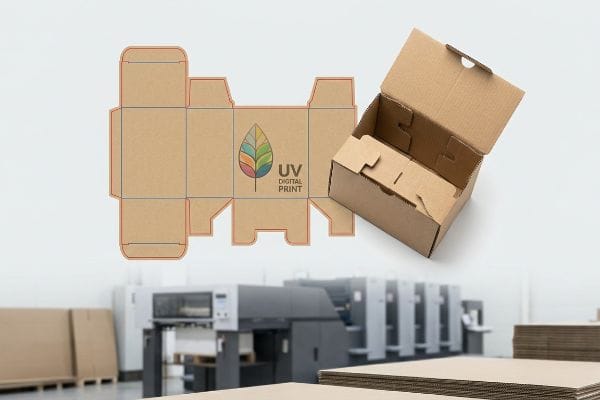
Die neuesten Trends im Verpackungsbereich setzen auf digitalen Direktdruck auf Karton und plattenlose Fertigung. Bei diesem Verfahren härten flüssige Polymerfarben unter UV-Licht sofort aus. Dadurch entfallen die üblichen Einrichtungszeiten der Litholaminierung, Feuchtigkeitsverzug wird verhindert und die Produktion von flexiblen Kleinauflagen für den Einzelhandel ohne Mindestmengenbeschränkungen ist möglich.
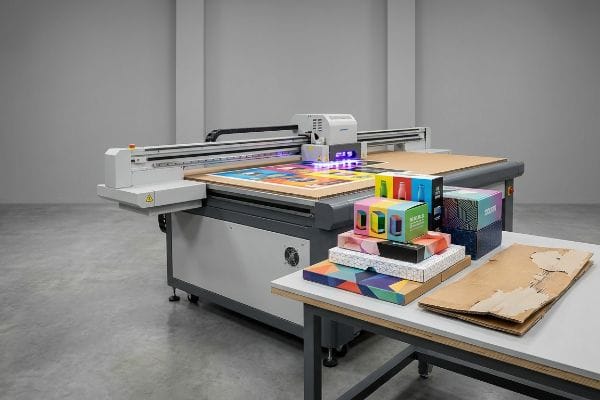
Der Abschied von teuren Metalldruckplatten ist aufregend, doch die Integration dieser Technologie erfordert eine Umstellung bei der Dateieinrichtung.
Warum der digitale Direktdruck auf Karton so dominant ist
Grafikdesigner formatieren ihre Dateien für Verkaufsdisplays üblicherweise für die Standard-Litholaminierung. Sie gehen davon aus, dass die Fabrik auf ein dünnes Deckblatt druckt und dieses später auf die stabile Wellpappe klebt. Dieses traditionelle Verfahren funktioniert zwar gut für große Auflagen, führt aber zu wochenlangen Engpässen in der Druckvorstufe, langen Aushärtungszeiten des Nassklebers¹undhohen Einrichtungskosten.
Ich erlebe immer wieder, wie Einkaufsteams in Panik geraten, wenn ein Großhändler innerhalb von nur zwei Wochen ein individuelles Werbedisplay benötigt. Sie versuchen, die Produktion durch eine herkömmliche Litho-Laminierung zu beschleunigen, doch der nasse PVA-Klebstoff (Polyvinylacetat) braucht Zeit zum Aushärten².Wird er zu früh ausgehärtet, kann ich den Geruch der feuchten Papierfasern förmlich riechen, wenn sich die großen Seitenwände auf der Palette verziehen. Die Lösung ist der Umstieg auf UV-Flachbett-Digitaldruck. Durch die sofortige Polymerisation der Tinte direkt auf dem Substrat kann der Klebstoff komplett entfallen. Das spart schätzungsweise 30 % Produktionszeit³die Druckplatten vollständig. So bleiben Ihre Margen für schnelle, lokale Markteinführungen erhalten.
| Häufiger Anfängerfehler | Die Profi-Lösung | Vorteil für die Verkaufsfläche |
|---|---|---|
| Nasslitholaminierung für kurze Auflagen | UV-Digitaldruck direkt auf Karton | Spart 30 % Produktionszeit4 |
| hohe Werkzeugkosten für Metallplatten | Plattenfreier digitaler Ausgang | Eliminiert die anfänglichen Einrichtungskosten5 |
| Das übereilte Verleimen nasser Bretter führt zu Verformungen | Sofortige Tintenpolymerisation6 | Sorgt für absolut ebene Regalböden |
Ich lasse Kunden niemals für traditionelle Druckplatten bezahlen, wenn ihr Kampagnenvolumen unter einem bestimmten Schwellenwert liegt. Durch die Umstellung auf digitale Aushärtung kann sich Ihr Budget auf die strukturelle Integrität konzentrieren, anstatt auf veraltete Vorstufenchemie.
🛠️ Harveys Schreibtisch: Sind Sie sich unsicher, ob Ihre Kleinauflagenkampagne unnötig Geld für Metalldruckplatten ausgibt? 👉 Fordern Sie eine Druckstrategie-Analyse an ↗ – Direkter Kontakt zu mir. Garantiert kein automatisierter Werbe-Spam.
Wie sieht die Zukunft von Wellpappenverpackungen aus?
Marken versuchen verzweifelt, die Aufmerksamkeit der Käufer zu gewinnen und erweitern dabei die Grenzen dessen, was ein einfacher Karton im Regal tatsächlich leisten kann.
Die Zukunft von Wellpappenverpackungen liegt in der nahtlosen Integration von Digital Signage, LCD-Bildschirmen und interaktiver Hardware, ohne Kompromisse bei der Nachhaltigkeit einzugehen. Durch den Einsatz von Reibungsverbindungen anstelle von Industrieklebstoffen können Fabriken aktive Elektronik integrieren, die eine sofortige Trennung von Elektroschrott ermöglicht.
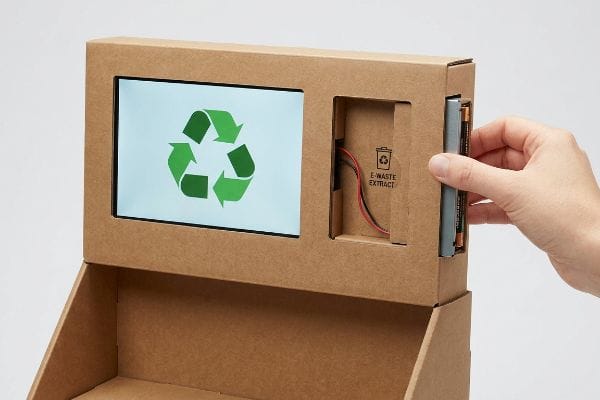
Die Verschmelzung von Technologie und Papier klingt im Konferenzraum brillant, führt aber im Einzelhandel oft zu enormen Entsorgungskosten.
Die Elektroschrotthaftung interaktiver Displays
Marketingabteilungen möchten zunehmend Videoplayer mit Endlosschleife und blinkende LED-Leuchten direkt in ihre Werbeverpackungen integrieren. Üblicherweise werden diese Kunststoff- und Metallkomponenten vom Lohnverpacker dauerhaft im Displaykopf7 , damit sie während des Transports nicht herausfallen.
Das Desaster tritt ein, wenn die Kampagne endet und der Händler versucht, das Gerät zu entsorgen. Ich habe schon oft erlebt, wie gestresste Verkäufer mit Gewalt an den verklebten Bildschirmen rissen, dabei hörbar den Karton zerrissen und manchmal sogar die internen Batterien zerbrachen, weil sie die verschiedenen Materialien nicht trennen konnten. Um dem entgegenzuwirken, verzichte ich vollständig auf Industrieklebstoffe für elektronische Bauteile. Stattdessen entwickeln wir präzise, reibschlüssige Aussparungen, die es ermöglichen, den Bildschirm mit nur einem leichten Druck sicher herauszunehmen. Dies gewährleistet eine mühelose Entsorgung des Elektroschrotts in weniger als drei Sekunden⁸undbewahrt den Händler vor Strafen wegen unsachgemäßer Entsorgung⁹, während Ihre Marke nicht auf die schwarze Liste gesetzt wird.
| Häufiger Anfängerfehler | Die Profi-Lösung | Vorteil für die Verkaufsfläche |
|---|---|---|
| Einkleben von Sieben in Kartondisplays | Aussparungen für Reibungsverriegelungen | Ermöglicht die elektronische Entfernung in 3 Sekunden10 |
| Zusammenwerfen von gemischten Materialien | Modulare Elektroschrott-Extraktion | Verhindert Bußgelder für gefährliche Abfälle11 |
| Überkomplizierte Demontageanleitung | Werkzeugloses manuelles Ausklappen | Spart Arbeitsaufwand bei der Kampagnenbeendigung |
Zwingen Sie niemals einen Verkäufer, mit einem Cuttermesser Elektronikgeräte aus Ihrem Verkaufsregal zu entfernen. Eine sichere Vorgehensweise beim Entfernen Ihrer digitalen Hardware ist genauso wichtig wie die Videoinhalte, die sie abspielt.
🛠️ Harveys Schreibtisch: Riskieren Sie hohe Rückbuchungen von Händlern, weil Ihre eingebetteten Bildschirme zu fest verklebt sind? 👉 Lassen Sie Ihre Hardwareintegration prüfen ↗ – Sicher herunterladen. Bei Fragen können Sie mich gerne kontaktieren.
Welche Verpackungstrends zeichnen sich für 2026 ab?
Die bevorstehenden Umweltauflagen zwingen uns zu einer kompletten Überarbeitung unserer Methoden zur Versiegelung und zum Schutz von schnelllebigen Konsumgütern.
Die Verpackungstrends für 2026 werden Monomaterialstrukturen strikt vorschreiben und irreführende Biokunststoffe schrittweise verdrängen. Marken ersetzen PLA-Folien (Polymilchsäure) durch flüssige, wässrige Beschichtungen, wodurch sichergestellt wird, dass Wellpappdisplays in herkömmlichen kommunalen Recyclinganlagen reibungslos weiterverarbeitet werden können und kostspielige Entsorgungen auf Gewerbedeponien vermieden werden.
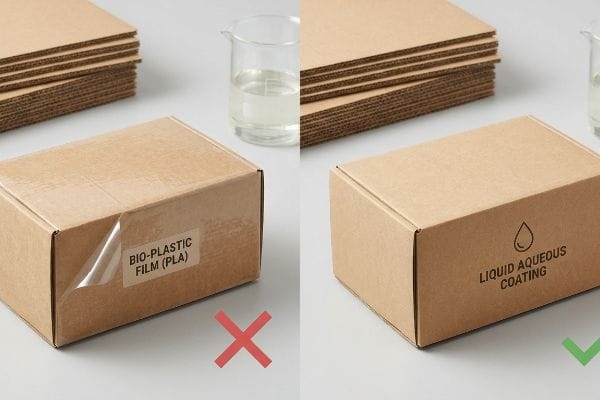
Es ist leicht zu behaupten, die eigene Verpackung sei umweltfreundlich, aber ein strenges Umwelt-Audit eines Großkonzerns erfordert eine umfassende Einhaltung der chemischen Vorschriften.
Dem Bio-Kunststoff-Kompostierungs-Fall entkommen
Angesichts verschärfter Nachhaltigkeitsauflagen gehen viele Markenmanager fälschlicherweise davon aus, dass die Beschichtung ihrer Kartonverpackungen mit einer PLA -Folie auf Maisbasis die Einhaltung von Umweltstandards garantiert. Sie behandeln diese Biokunststoff-Laminierung genauso wie herkömmliche Erdölfolien, um einen hochwertigen, wasserfesten Glanz zu erzielen, und nehmen an, dass Recyclingzentren sie problemlos annehmen.
Es ist eine häufige Falle, in die selbst erfahrene Einkaufsteams tappen, ähnlich wie wenn man eine biologisch abbaubare Plastiktüte in den heimischen Kompost wirft und erwartet, dass sie sich auflöst. Wenn eine herkömmliche Papierfabrik diese feste PLA-Folie beim Sortieren abfängt, verstopfen die Siebe des Behälters mit klebrigen Rückständen<sup>13</sup>, und die gesamte Charge wird aussortiert. Ich löse dieses Problem, indem ich feste Kunststofffolien durch flüssige, wässrige Beschichtungen ersetze. Da sich diese wasserbasierte Beschichtung rückstandsfrei auflöst, bleibt die vollständige Recyclingfähigkeit über die Altpapiersammlung erhalten<sup>14</sup>. Sie bietet den benötigten Schutzglanz und sichert Ihnen gleichzeitig die rechtliche Grundlage für die Aufnahme in das Öko-Bewertungssystem des Einzelhändlers.
| Häufiger Anfängerfehler | Die Profi-Lösung | Vorteil für die Verkaufsfläche |
|---|---|---|
| Laminieren mit massiven PLA-Folien | Flüssige wässrige Beschichtungen15 | Besteht strenge Umweltprüfungen im Einzelhandel |
| Unter der Annahme, dass Biokunststoffe leicht recycelbar sind16 | 100% Monomaterial-Technik | Vermeidet die Umleitung von kommunalem Müll auf Deponien |
| Auf Glanz verzichten, um nachhaltiger zu werden | Hochfeste, wasserbasierte Lacke17 | Gewährleistet ein hochwertiges Erscheinungsbild im Regal |
Ich lasse nicht zu, dass Kunden ihre Kampagnen versehentlich durch den Einsatz ungeeigneter Kunststofffolien grünwaschen. Wahre Nachhaltigkeit bedeutet, Karton so zu konstruieren, dass er einen Standard-Papierbottich übersteht, ohne eine chemische Katastrophe auszulösen.
🛠️ Harveys Schreibtisch: Führt Ihre aktuelle Biokunststofflaminierung im Recyclingzentrum unbemerkt zu Abfallvermeidung? 👉 Fordern Sie Ihre Materialkonformitätsprüfung an ↗ — Keine Formulare, die endlose Verkaufsgespräche nach sich ziehen. Nur echter Mehrwert.
Was sind die 5 Ps der Verpackung?
Strategische Marketingkonzepte sehen auf einem Whiteboard großartig aus, aber sie zerfallen schnell, wenn die physische Architektur fehlerhaft ist.
Die fünf Ps der Verpackung sind Produkt, Positionierung, Schutz, Promotion und Preis. In der Wellpappenherstellung ist der Schutz der wichtigste Faktor; wenn ein Umkarton nicht mathematisch so konstruiert ist, dass er dynamischen Palettenbelastungen standhält, führen Transportschäden unweigerlich zu einer Zerstörung der Werbewirkung und damit zu einem Verlust der geplanten Gewinnmargen.
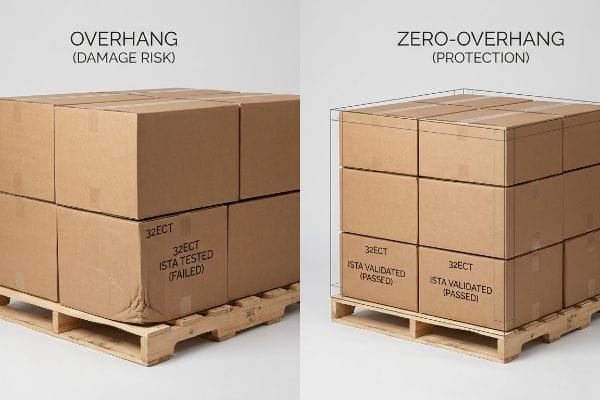
Doch die Theorie allein reicht nicht aus, wenn die Maschinen laufen, insbesondere wenn die Käufer auf maximales Versandvolumen drängen.
Warum theoretischer Schutz in der Fabrikhalle versagt
Einkaufsteams versuchen häufig, den Preis zu optimieren, indem sie die Abmessungen ihrer Umkartons vergrößern, um mehr Einheiten pro Behälter unterzubringen. Sie gehen davon aus, dass die Festigkeit des Rohmaterials die Waren im Inneren ausreichend schützt, solange sie eine hochbelastbare 32ECT-Platte (Kantenstauchtest)18spezifizieren, unabhängig davon, wie dicht sie die GMA-Palette (Grocery Manufacturers Association)19.
In meinem Betrieb beobachte ich regelmäßig, wie diese theoretische Annahme zu erheblichen logistischen Problemen führt. Wenn ein Kunde einen Versandkarton so weit ausdehnt, dass er die 1219 × 1016 mm große Palettenfläche auch nur um 6,35 mm überragt, hängen die starren Ecken des Kartons in der Luft. Bei meinen ISTA-Vibrationstests (International Safe Transit Association)<sup>20</sup>sehe ich, wie diese ungestützten Ecken der unteren Ebene unter dem Gewicht der oberen Ebene heftig einknicken, wodurch die 32-ECT-Klassifizierung völlig wertlos wird<sup>21</sup>. Ich behebe dieses Problem, indem ich in unserer CAD-Software (Computer-Aided Design) einen strikten Begrenzungsrahmen ohne Überstand erzwinge und die maximal zulässige Grundfläche innerhalb des Palettenumfangs künstlich um exakt 12,7 mm verkleinere. Indem ich sicherstelle, dass die vertikalen Ecken die Druckkraft immer direkt auf das Holz übertragen, eliminiere ich Transportschäden vollständig und verhindere so Rückbelastungen durch Händler, die die gesamte Marge einer Kampagne zunichtemachen können.
| Häufiger Anfängerfehler | Die Profi-Lösung | Vorteil für die Verkaufsfläche |
|---|---|---|
| Die Kisten dürfen über die Palette hinausragen | CAD-Begrenzungsbox ohne Überhang | Eliminiert das Zerkleinern der untersten Ebene22 |
| sich ausschließlich auf pauschale ECT-Bewertungen stützen | Dynamische ISTA-Transitvalidierung23 | Verhindert Wareneingangsablehnungen im Lager |
| Maximierung des Volumens gegenüber der strukturellen Unterstützung | Wiederherstellung der vertikalen Eckausrichtung24 | Sichert das Produkt während des LTL-Transports |
Ich lasse die Beschaffung niemals die Konstruktionsgeometrie diktieren, ohne vorher die Palettenlast zu berechnen. Ein perfekt bedruckter Karton nützt nichts, wenn die unterste Ebene vor Erreichen der Laderampe zusammengedrückt wird.
🛠️ Harveys Schreibtisch: Lassen Sie sich nicht von einem 2 Millimeter kleinen Konstruktionsfehler die Einführung in 500 Filialen vermasseln. 👉 Senden Sie mir Ihre Stanzdatei ↗ – ich prüfe die Berechnungen, bevor Sie Ihr Budget für die Massenproduktion verschwenden.
Abschluss
Sie können versuchen, jeden Millimeter aus einem Versandcontainer herauszuholen, aber wenn ein minimaler Palettenüberstand im Lager eines Logistikdienstleisters zu Verformungen der unteren Ebene führt, verursacht der daraus resultierende Transportschaden eine sofortige Ablehnung durch den Einzelhändler und schmälert Ihre Gewinnmargen. Genau dieses Datenblatt verwenden meine zehn wichtigsten Einzelhandelskunden, um Druckfehler zu vermeiden. Hören Sie auf, bei der Strukturgeometrie zu raten, und lassen Sie mich Ihre Maße persönlich im Rahmen meines kostenlosen Stanzform-Pre-Flight-Audits prüfen, um Ihre Toleranzen vor dem Produktstart festzulegen.
„Strahlungshärtende Laminierklebstoffe A. Guilleux, …“, https://www.tappi.org/content/enewsletters/eplace/2004/15-2Guilleux.pdf. Technische Leitfäden zur Verpackungsproduktion beschreiben detailliert den mehrstufigen Litholaminierungsprozess und die damit verbundenen Vorlaufzeiten für Druck und Aushärtung. Nachweisfunktion: Technische Verifizierung; Quellentyp: Fertigungshandbuch. Belege: Ineffizienzen der traditionellen Litholaminierung. Anmerkung: Die genauen Zeiträume können je nach Anlage variieren. ↩
„Auswirkungen von Feuchtigkeit im Laminierprozess – AICC Now“, https://now.aiccbox.org/effects-of-moisture-in-the-lamination-process/. Technische Dokumentation darüber, wie wasserbasierte Klebstoffe die Planheit und Stabilität des Substrats während des Aushärtungsprozesses bei der Litholaminierung beeinflussen. Nachweisfunktion: Technische Validierung; Quellentyp: Handbuch der Druckindustrie. Begründung: Die mechanische Ursache für Verzug bei traditionellen Verfahren. Anwendungsbereich: Speziell anwendbar auf feuchtigkeitsempfindliche Substrate. ↩
„Litholaminierung vs. Digitaldruck: Ein Leitfaden für industrielle Einkäufer …“, https://mdmpkg.com/litho-laminited-vs-digital-printing-premium-corrugated-packaging-2/. Branchenvergleich der Markteinführungszeit für Digitaldruck im Vergleich zu traditionellen plattenbasierten Laminierverfahren. Nachweisfunktion: quantitative Validierung; Quellentyp: Benchmark-Studie für die Fertigungsindustrie. Unterstützt: Aussagen zur Effizienz hinsichtlich der Produktionsgeschwindigkeit. Hinweis: Die durchschnittlichen Prozentsätze können je nach Auftragsvolumen variieren. ↩
„Lange Lieferzeiten bei Litholaminierung? Setzen Sie auf Digitaldruck …“, https://blog.fantastapack.com/litho-lead-times-got-you-down. Vergleich der Produktionszeiten zwischen traditioneller Litholaminierung und UV-Digitaldruck für Kleinserienverpackungen. Nachweisfunktion: quantitative Verifizierung; Quellentyp: Branchen-Benchmark-Bericht. Belege: Angaben zur Produktionsgeschwindigkeit. Anmerkung: Speziell für Kleinserien-Produktionszyklen. ↩
„Lithografisch bedruckte Verpackungen vs. digital bedruckte Verpackungen | GWP Group“, https://www.gwp.co.uk/guides/litho-printed-packaging-vs-digitally-printed-packaging/. Nachweis, dass die digitale Ausgabe die Kosten für physische Metallplattenwerkzeuge überflüssig macht. Nachweisfunktion: Technischer Nachweis; Quellentyp: Fertigungskostenanalyse. Unterstützt: Ansprüche auf Kostenreduzierung. Anmerkung: Bezieht sich speziell auf Werkzeuge für die Druckvorstufe. ↩
„Was ist UV-Druck? UV-härtende Tinten für Verpackungen“, https://www.troygroup.com/blog/what-is-uv-printing-uv-curable-inks-for-packaging. Technische Erklärung, wie die Polymerisation von UV-härtenden Tinten im Vergleich zu herkömmlichen Nassklebstoffen ein Verziehen des Substrats verhindert. Belegfunktion: Technische Erklärung; Quellentyp: Fachzeitschrift für Materialwissenschaften. Unterstützt: Aussagen zur Strukturqualität. Anmerkung zum Themenbereich: Fokus auf UV-härtender Chemie. ↩
„Marktforschungsbericht 2033: Klebstoffe für Wellpappe“, https://dataintelo.com/report/adhesives-for-corrugated-board-market. Bestätigung, dass Industrieklebstoffe der gängige Industriestandard für die Sicherung aktiver Elektronik in Einzelhandelsverpackungen sind. Nachweisfunktion: Technische Validierung; Quellentyp: Handbuch der Verpackungsindustrie. Unterstützung: Operative Grundlage für die Haftung für Elektroschrott in Wellpappendisplays. Anmerkung zum Umfang: Fokus auf die Montage durch Lohnverpacker. ↩
„Einfache Demontage von Produkten zur Unterstützung von Kreislaufwirtschaftsstrategien“, https://pmc.ncbi.nlm.nih.gov/articles/PMC5989810/. Technische Validierung der Demontagegeschwindigkeiten von mechanischen Verbindungselementen im Vergleich zu Klebstoffen in nachhaltigen Elektronikverpackungen. Nachweisfunktion: Überprüfung der Leistungskennzahl; Quellentyp: Fallstudie oder technisches Whitepaper. Unterstützt: die Effizienz des vorgeschlagenen Reibungsverschlusses. Hinweis: Die Leistung kann je nach Bauteilgröße und -material variieren. ↩
„Elektronische Sondermüllentsorgung (E-Schrott)“, https://dtsc.ca.gov/electronic-hazardous-waste/. Dokumentation von behördlichen Strafen und Bußgeldern, die gegen Unternehmen wegen unsachgemäßer Entsorgung von Elektronikschrott verhängt wurden. Beweisfunktion: faktische Bestätigung; Quellentyp: staatliche Umweltvorschriften (z. B. EPA). Beleg: die Behauptung, dass unsachgemäße Entsorgung zu finanziellen Haftungsansprüchen führt. Hinweis: Bußgelder unterliegen der lokalen und nationalen Gerichtsbarkeit. ↩
„Kartondisplays: Die kosteneffektive Lösung“, https://atlaspackaginginc.com/cardboard-displays-the-cost-effective-solution/. Technische Benchmarks oder Fallstudien, die die Effizienz von Reibverriegelungsnuten im Vergleich zu Klebeverbindungen für die Bauteilentnahme belegen. Nachweisfunktion: Leistungsvalidierung; Quellentyp: Technische Spezifikation. Unterstützt: Geschwindigkeit der Elektronikentnahme. Hinweis: Die Ergebnisse können je nach Hardwaregröße variieren. ↩
„Gefährliche Haushaltsabfälle (HHW) | US EPA“, https://www.epa.gov/hw/household-hazardous-waste-hhw. Umweltvorschriften (wie WEEE oder EPA-Richtlinien) bezüglich der Strafen für die unsachgemäße Entsorgung von Elektronikschrott, der mit recycelbaren Wellpappen vermischt ist. Nachweisfunktion: Überprüfung der Rechtslage; Quellentyp: staatliche Verordnung. Begründung: Bedarf an modularer E-Schrott-Sammlung. Hinweis: Die Strafen variieren je nach Region. ↩
„Wie recycle ich gängige Wertstoffe?“, https://www.epa.gov/recycle/how-do-i-recycle-common-recyclables. Die technische Dokumentation zu Recyclingstandards erklärt, wie PLA-Folien Papierrecyclingströme verunreinigen und nicht von herkömmlichen kommunalen Anlagen verarbeitet werden. Nachweisfunktion: Technischer Nachweis; Quellentyp: Industriestandard. Unterstützt die Behauptung, dass Biokunststofflaminate in herkömmlichen Recyclingströmen nicht umweltkonform sind. Anwendungsbereich: Fokus auf kommunaler Zellstoffaufbereitung. ↩
„Recycelbare und biologisch abbaubare Papierbeschichtung mit … – PMC“, https://pmc.ncbi.nlm.nih.gov/articles/PMC11948148/. Technische Erläuterung, wie Polylactid (PLA)-Folien den mechanischen Aufschluss in Papierfabriken beeinträchtigen. Nachweisfunktion: Technische Verifizierung; Quellentyp: Industrieller Recyclingbericht. Begründung: Inkompatibilität von PLA mit Papierströmen. Anwendungsbereich: Speziell für kommunale Aufschlussanlagen. ↩
„California PFAS Workshop Aqueous Coatings as an …“, https://dtsc.ca.gov/wp-content/uploads/sites/31/2020/01/3_1_Clay-Mayhood_CA-PFAS-Workshop-Aqueous-Coating-Overview-191219.pdf. Nachweis, dass wasserbasierte Beschichtungen ohne Kontamination mit der gängigen kommunalen Recyclinginfrastruktur kompatibel sind. Nachweisfunktion: Technischer Nachweis; Quellentyp: Umweltzertifizierungsstandard. Unterstützt: Recyclingfähigkeit von wässrigen Beschichtungen. Anwendungsbereich: Gilt für faserbasierte Substrate. ↩
„Wässrige Beschichtungen für Verpackungen – PopDisplay“, https://popdisplay.me/aqueous-coating-for-packaging/. Technischer Vergleich der Wiederverwertbarkeit und Nachhaltigkeitsprofile von wässrigen Beschichtungen im Vergleich zu PLA-Folien im Rahmen von Compliance-Audits im Einzelhandel. Nachweisfunktion: Technische Spezifikation; Quellentyp: Normen der Verpackungsindustrie. Unterstützung: Die Verwendung wässriger Beschichtungen zur erfolgreichen Durchführung von Öko-Audits. Anwendungsbereich: Speziell für papierbasierte Verpackungen. ↩
„Biologisch abbaubare und kompostierbare Alternativen zu herkömmlichen …“, https://pmc.ncbi.nlm.nih.gov/articles/PMC2873018/. Bestätigung, dass Biokunststoffe häufig herkömmliche Recyclingströme verunreinigen, was die Entwicklung von Monomaterialien erforderlich macht, um eine Umleitung auf Deponien zu vermeiden. Funktion des Belegs: Sachliche Richtigstellung; Quellentyp: Umweltstudie. Unterstützt: die Behauptung, dass Biokunststoffe in kommunalen Systemen nicht leicht recycelt werden können. Anmerkung zum Anwendungsbereich: Die Anwendbarkeit hängt von der regionalen Abfallwirtschaftsinfrastruktur ab. ↩
„Was ist eine wässrige Beschichtung? Vorteile, Anwendungen und warum sie wichtig ist für …“, https://millionpack.com/aqueous-coating/. Analyse der ästhetischen Leistung und des Glanzgrades von wasserbasierten Hochfestlacken im Vergleich zu herkömmlichen Kunststofflaminaten. Nachweisfunktion: Leistungskennzahl; Quellentyp: Fachzeitschrift für Materialwissenschaften. Unterstützt: die Möglichkeit, eine hochwertige Regalästhetik nachhaltig zu erhalten. Anmerkung zum Untersuchungsbereich: Fokus auf visuelle Qualität und Umweltauswirkungen. ↩
„Versandkartonfestigkeit verstehen – EcoEnclose“, https://www.ecoenclose.com/blog/understanding-shipping-box-strength/?srsltid=AfmBOorQhxNUuvfU3l0lo1FqAZhC7OuUeP-SZUAwE7UNKW55wBqp1XWC. Technische Definition der Edge Crush Test (ECT)-Bewertungen für Wellpappe zur Validierung des spezifischen Festigkeitsschwellenwerts von 32 ECT. Nachweisfunktion: Technische Spezifikation; Quellentyp: Industriestandard; Unterstützung: Die Definition der Plattenfestigkeit von 32 ECT. Anmerkung: ECT ist ein Maß für die Stapelfestigkeit. ↩
„GMA-Paletten: Größen und Typen – Interlake Mecalux“, https://www.interlakemecalux.com/blog/gma-pallet. Überprüfung der standardisierten Abmessungen und Anforderungen für GMA-Paletten in der Lieferkettenlogistik. Nachweisfunktion: Branchenstandard; Quellentyp: Branchenverband; Unterstützung: die Identität des GMA-Palettenstandards. Anwendungsbereich: Der Standard gilt primär für den nordamerikanischen Markt. ↩
„Testverfahren“, https://ista.org/test_procedures.php. Bestätigung der Rolle der ISTA als weltweit führende Autorität für die Simulation von Transportbedingungen zur Identifizierung von Verpackungsschwachstellen. Nachweisfunktion: Validierung der Methodik; Quellentyp: Internationaler Standard. Unterstützt: Die Anwendung von ISTA-Protokollen zur Erkennung von Strukturverformungen während des Transports. Anwendungsbereich: Bezieht sich auf Standard-Schwingungssimulationsprofile. ↩
„Untersuchung des Einflusses der Steifigkeit der Palettenoberseite auf Wellpappe …“, https://pmc.ncbi.nlm.nih.gov/articles/PMC8585293/. Technische Daten der Verpackungstechnik zeigen, wie ein Palettenüberstand die vertikale Tragfähigkeit von Wellpappkartons erheblich reduziert und somit die Bewertung des Kantenstauchtests (ECT) praktisch neutralisiert. Nachweisfunktion: Technische Verifizierung; Quellentyp: Technisches Handbuch. Belegt: Die Behauptung, dass ein Überstand unabhängig von der ECT-Bewertung zu strukturellem Versagen führt. Anwendungsbereich: Gilt speziell für Kartons der untersten Lage in einem Stapel. ↩
„[PDF] Vorhersage des Einflusses von Spalten zwischen Palettendeckbrettern auf …“, https://repository.rit.edu/cgi/viewcontent.cgi?article=1053&context=japr. Technische Erklärung, wie ein fehlender Überhang die vertikale Druckfestigkeit der unteren Verpackungsschicht aufrechterhält. Nachweisfunktion: Technische Verifizierung; Quellentyp: Handbuch für Verpackungstechnik. Belegt: den Zusammenhang zwischen Palettenüberhang und Strukturversagen. Anwendungsbereich: Gilt für Wellpapp-Versandkartons. ↩
„ISTA-Verpackungsprüfung“, https://www.intertek.com/performance-testing/packaging/ista/. Analyse, warum dynamische Prüfungen der International Safe Transit Association (ISTA) realistischere Ausfalldaten liefern als statische Kantenstauchtests (ECT). Nachweisfunktion: Validierung von Industriestandards; Quellentyp: Zertifizierungsstelle. Begründung: Notwendigkeit dynamischer Prüfungen zur Vermeidung von Versandablehnungen. Anwendungsbereich: Fokus auf ISTA-Standards. ↩
„Normale Anforderungen im LTL-Umfeld“, https://nmfta.org/standards/interpretations/packaging/normal-rigors-of-the-ltl-environment/. Statische Berechnungsdaten, die zeigen, wie die vertikale Eckausrichtung die Tragfähigkeit von Kartons beim LTL-Transport optimiert. Nachweisfunktion: Struktureller Nachweis; Quellentyp: Logistiklehrbuch. Unterstützt: den Zusammenhang zwischen Eckausrichtung und Produktsicherheit. Anwendungsbereich: Speziell für den Stückguttransport. ↩