Ihr Produkt mag noch so makellos sein, doch wenn es in einem überfüllten Regal untergeht, wird es niemand bemerken. Um diese unsichtbare Barriere zu überwinden, ist eine strategische Raumgestaltung erforderlich.
Visual Merchandising ist die strategische Optimierung von Verkaufsflächen und Warenpräsentationen, um die ästhetische Wirkung zu maximieren und den Umsatz zu steigern. Diese strategische Disziplin kombiniert Grafikdesign, Ladenbau und Käuferpsychologie, um das Kaufverhalten im stationären und Online-Handel weltweit direkt zu beeinflussen.
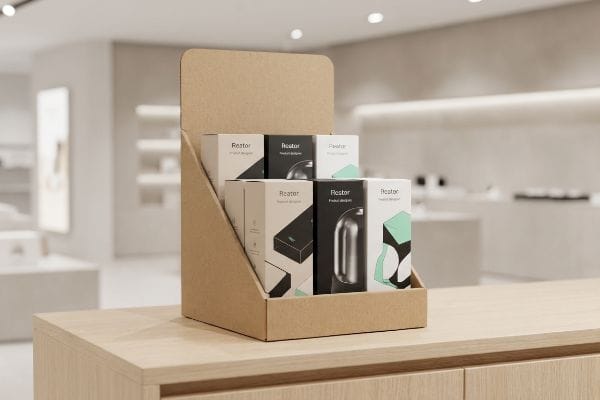
Die Definition zu kennen ist einfach, aber die Umsetzung dieses theoretischen Konzepts in eine physische Pappkonstruktion , die den Anforderungen eines Großmarktes standhält, ist der Punkt, an dem die meisten Werbekampagnen scheitern.
Was versteht man unter Visual Merchandising?
Um dieses Konzept zu verstehen, muss man seine Perspektive vom Designbildschirm auf den tatsächlichen Verkaufsgang verlagern, wo die menschliche Biologie bestimmt, was wahrgenommen wird.
Visuelles Merchandising bedeutet, ein statisches Produkt durch die Gestaltung der Verkaufsfläche in ein aktives Verkaufsinstrument zu verwandeln. Es zielt darauf ab, die Aufmerksamkeit der Käufer zu gewinnen, den Markenwert zu kommunizieren und durch präzise räumliche Anordnung, Farbpsychologie und strukturierte Verkaufsdisplays einen reibungslosen Kaufprozess zu schaffen.
Die Theorie klingt im Konferenzraum gut, aber draußen in der Halle wird die Sicht durch strenge physikalische Geometrie bestimmt.
Treffer in die Einzelhandels-Streikzone
Die meisten Marketingteams gehen bei der Gestaltung von Displays davon aus, dass ihr Logo ganz oben im Header platziert werden sollte. Sie entwerfen flache Grafiken isoliert und nehmen an, dass der Kunde das gesamte POS-Material von oben nach unten scannt.
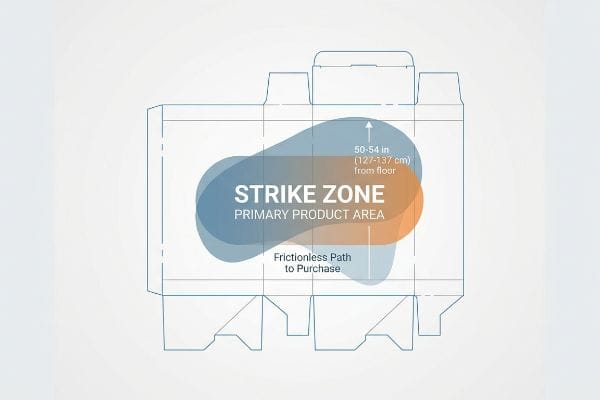
Der Kern des Merchandisings besteht darin, margenstarke Artikel genau dort zu platzieren, wo die Hand intuitiv hingreift. Selbst erfahrene Designer übersehen diesen blinden Fleck oft und platzieren wichtige Produkte zu tief im Regal. Ich erinnere mich an eine Verkäuferin, die schwer seufzte und deren Knie knackten, als sie sich bückte, um schwere Shampooflaschen auszupacken und sie mühsam auf ein unteres Regal zu quetschen, das kaum 25 cm über dem Boden war. Die Lösung: Platzieren Sie Ihre Hauptprodukte mathematisch präzise in der „Kaufzone“, die sich genau 127 bis 137 cmüber dem Boden befindet. Indem Sie die Produktablage auf menschliche Höhe anheben, reduzieren Sie die Reibung beim Bücken, erhöhen die Impulskäufe deutlich und beschleunigen den Lagerumschlag für den Einzelhändler.
| Häufiger Anfängerfehler | Die Profi-Lösung | Vorteil für die Verkaufsfläche |
|---|---|---|
| Wichtige Gegenstände in Bodennähe platzieren | Anheben des primären Produkttabletts | Erhöht die Fähigkeit zu schnellen Impulsgriffen |
| grafische Überschriften mit hohem Schwerpunkt | Logos in der Nähe des Produkts verankern | Verbindet die Marke mit dem physischen Produkt |
| Ignorieren der menschlichen Biologie | Auslegung für die 50-Zoll-Trefferzone | Erspart Angestellten unbequemes Bücken |
Lassen Sie Ihre Top-Artikel niemals in der Versenkung verschwinden. Durch die Platzierung dieser Kernprodukte im Verkaufsregal wird die Aufmerksamkeit Ihrer Kunden sofort auf sich gezogen, was die Conversion-Rate Ihrer Kampagne im Verkaufsraum deutlich steigert.
🛠️ Harveys Schreibtisch: Sind Sie sich nicht sicher, ob Ihr Hauptprodukt im Einzelhandel untergeht? 👉 Senden Sie mir Ihre Stanzdatei ↗ – Direkter Kontakt zu mir. Kein automatisierter Werbe-Spam, versprochen.
Was genau macht ein Visual Merchandiser?
Diese Fachleute fungieren als entscheidendes Bindeglied zwischen kreativem Markenauftritt und physischer Ladenarchitektur und sorgen dafür, dass schöne Kunstwerke auch tatsächlich im Regal Platz finden.
Ein Visual Merchandiser übernimmt die wichtige Aufgabe, Markenkampagnen in konforme physische Verkaufsdisplays umzusetzen. Er analysiert Ladenlayouts, setzt die Styleguides des Einzelhändlers um, optimiert die Produktplatzierung für maximale Sichtbarkeit und stellt sicher, dass jedes Bauteil strenge Maß- und Sicherheitsvorschriften erfüllt, bevor die Massenproduktion beginnt.
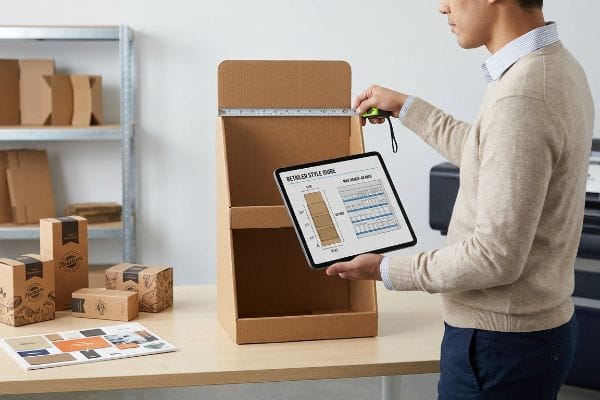
Ihre Aufgabe besteht nicht nur darin, die Dinge schön aussehen zu lassen; sie besteht auch darin, die Marke aggressiv gegen Ablehnungen seitens der Einzelhändler zu verteidigen.
Den Styleguide für Einzelhändler nutzen
Marken übergeben ihre Entwürfe häufig an Kreativagenturen und gehen davon aus, dass das resultierende 3D-Rendering für die Massenproduktion geeignet ist. Sie vertrauen darauf, dass ein optisch ansprechendes Aktionsdisplay von großen Kaufhäusern automatisch gut angenommen wird.
Tatsächlich unterliegt jeder Einzelhändler strengen, unnachgiebigen Richtlinien², die präzise Höhenbegrenzungen und Kanalabmessungen vorschreiben. Eine häufige Frage von Einkäufern ist, warum ihr aufwendig gestaltetes Display an der Laderampe abgelehnt wurde. Ich musste einmal einem verzweifelten Kunden helfen, die Wellpapp-Kopfleisten von 200 Sidekick-Displays mit einem Cuttermesser zuzuschneiden – der Karton riss bei jedem Schnitt unsauber ein –, weil er eine strikte Höhenbeschränkung von 121,9 cm (48 Zoll) ignoriert hatte. Ein professioneller Merchandiser gleicht die internen Spezifikationen des Einzelhändlers mit der internen Datenbank ab, bevor die Stanzformen überhaupt hergestellt werden. Diese präzise Ausrichtung vor dem Versand garantiert, dass Ihr Display perfekt in den vorgesehenen Gang passt und eliminiert das Risiko kostspieliger Rückbelastungen im Lager³vollständig.
| Häufiger Anfängerfehler | Die Profi-Lösung | Vorteil für die Verkaufsfläche |
|---|---|---|
| Schätzung der Displayabmessungen | Genaue Styleguides von Einzelhändlern abrufen | Eliminiert das Risiko der Dockablehnung |
| Kanalhöhenbegrenzungen werden ignoriert | Krümmer bei bestimmten Zollabständen verschließen | Gewährleistet eine perfekte Passform im Regal |
| Unter der Annahme universeller Regeln | Anpassung der Datenbanken an das jeweilige Filialformat | Hält die Filialleiter zufrieden |
Bevor Sie ein Schneidebrett belichten, stellen Sie sicher, dass die genauen Spezifikationen des Ladens korrekt sind. Das Erkennen eines Maßfehlers in der Konstruktionssoftware bewahrt Sie vor dem kompletten Scheitern Ihrer Kampagne.
🛠️ Harveys Schreibtisch: Verstoßen Ihre aktuellen Warenträger heimlich gegen die Höhenbeschränkungen großer Einzelhändler? 👉 Überprüfen Sie Ihre Spezifikationen ↗ – Sicher herunterladen. Bei Fragen können Sie mich gerne kontaktieren.
Was sind die 4 Elemente des visuellen Merchandisings?
Die optimale Gestaltung der Verkaufsfläche erfordert ein ausgewogenes Verhältnis von Raum, Farbe, Beleuchtung und Produktinformationen, um eine einladende Einkaufsatmosphäre zu schaffen.
Die vier Elemente des visuellen Merchandisings sind Ladengestaltung, Farbabstimmung, Lichtdesign und klare Produktinformationen. Durch die Harmonisierung dieser physischen und ästhetischen Komponenten können Marken den Kundenfluss effektiv steuern, Premiumprodukte hervorheben und eine ansprechende Atmosphäre schaffen, die zum Spontankauf anregt.

Während Farbe und Layout in Designbesprechungen im Mittelpunkt stehen, ist die Beleuchtung die stille Variable, die regelmäßig an sich solide Präsentationen ruiniert.
Beseitigung der Schattenzone
Bei der Gestaltung tiefer, mehrstufiger Regalsysteme nutzen Teams in der Regel das digitale 3D-Modell, um die Sichtbarkeit der Produkte einzuschätzen. Sie gehen davon aus, dass die grelle Leuchtstoffröhrenbeleuchtung in einem typischen Einzelhandelsumfeld jede Ebene ihrer Waren gleichmäßig ausleuchtet⁴ .
Stellen Sie sich ein tiefes Pappregal wie eine Höhle vor: Ohne gezielte Lichtreflexion verschwindet die hintere Hälfte vollständig. Eine Faustregel: Produkte sollten niemals hinter einer geschlossenen Wand ohne Schattenwurf eingeschlossen werden. Ich sehe es ständig: Ein Markenmanager besucht einen Testladen und muss feststellen, dass seine Premium-Kosmetikprodukte in den dunklen Ecken einer Wellpappschale völlig verborgen sind. Er spürt zwar die kalte, glatte Oberfläche der Verpackung, kann aber das Etikett nicht lesen. Die Lösung: Seitenfenster einbauen oder strahlend weiße Innenauskleidungen verwenden , um das Umgebungslicht aktiv in diese Schattenbereiche zu reflektieren. Diese einfache strukturelle Anpassung erhöht die Sichtbarkeit deutlich, sodass Kunden Ihre Verpackung gut erkennen können und Ihr Lagerbestand sich besser verkauft.
| Häufiger Anfängerfehler | Die Profi-Lösung | Vorteil für die Verkaufsfläche |
|---|---|---|
| Tiefe, dunkle Regale bauen | Seitliche Fensterhalterungen durchtrennen6 | Durchflutet das Produkt mit Licht |
| Verwendung von rohen braunen Innenräumen | Anbringen weißer Innenfutter7 | Spiegelt die Umgebungsbeleuchtung des Ladens wider |
| Gegenstände im Schatten einfangen | Technische visuelle Durchlässigkeit8 | Macht den Verpackungstext lesbar |
Hochwertige Produkte sollten niemals im Dunkeln verborgen bleiben. Die Integration spezieller Lichtkanäle in die Trägerplatte ist die kostengünstigste Methode, Ihre Waren im Regal optimal in Szene zu setzen.
🛠️ Harveys Schreibtisch: Gehen Ihre Einsteigerprodukte im Schatten unter? 👉 Ich optimiere Ihre Raumbeleuchtung ↗ — Keine Formulare, die endlose Verkaufsgespräche auslösen. Nur echter Mehrwert.
Was ist ein Beispiel für visuelles Merchandising?
Das klassische Regalende im Supermarkt oder ein riesiges Palettendisplay direkt im Mittelgang veranschaulicht diese Strategie perfekt in der Praxis.
Ein Beispiel für visuelles Merchandising ist ein voll bestücktes, freistehendes Palettendisplay an einer stark frequentierten Kreuzung eines Supermarkts. Diese physische Struktur unterbricht strategisch den natürlichen Laufweg der Kunden, nutzt auffällige Markengrafiken und präsentiert Waren in großen Mengen so, dass sie sofort Aufmerksamkeit erregt und zu Spontankäufen anregt.
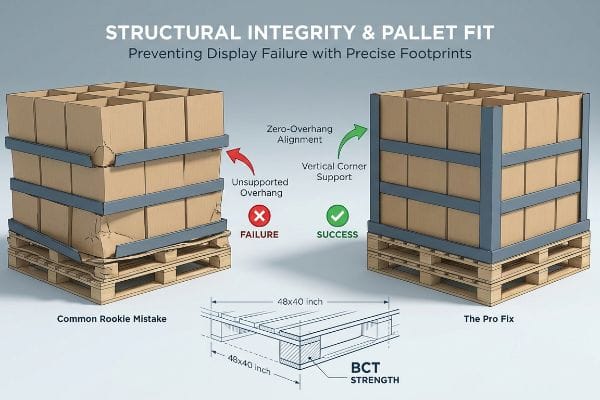
Doch die Theorie allein genügt nicht, wenn die Maschinen in Betrieb gehen, denn ein wunderschönes Palettendisplay ist völlig nutzlos, wenn es unter seinem eigenen Gewicht zusammenbricht.
Warum Standard-Palettendisplays in der Fabrikhalle scheitern
Einkaufsteams vergrößern häufig die Abmessungen der Umkartons von Großpackungen für Bodenaufsteller , um die Versanddichte zu maximieren9.Sie betrachten die Rohkompressionswerte von hochbelastbarer Wellpappe10 und gehen davon aus, dass die theoretische Festigkeit des Materials die Waren während des Transports problemlos schützen wird.
Ein einzelnes Display im Labor aufzustellen ist einfach, doch die Realität sieht anders aus, wenn man 500 Stück über den Ozean verschickt. In meinem Betrieb erlebe ich regelmäßig, dass Käufer die Standard-Holzpalette (121,9 × 101,6 cm) mit ihren Versandkartons um wenige Millimeter überragen, um mehr Einheiten unterzubringen. Tests mit einer Kompressionspresse zeigen ein erschreckendes Ergebnis: Bis zu 60 % der Festigkeit eines Wellpappkartons (BCT-Test) hängen direkt von der vertikalen Ausrichtung seiner vier Ecken ab. Schon ein Überstand von 6,35 mm entlastet die Ecken vollständig, und das gesamte Gewicht lastet auf den ungestützten Mittelteilen. Um dies zu beheben, verwende ich in unserer CAD-Software einen strikten Null-Überstand für den Rahmen, wodurch die Grundfläche künstlich um exakt 12,7 mm verkleinert wird. Durch die Gewährleistung einer vollständigen Abstützung der Ecken stelle ich sicher, dass die Co-Packing-Baugruppe den Transport in doppelt gestapelten Containern unbeschadet übersteht, wodurch ein katastrophales Einknicken vollständig verhindert und Kunden vor hohen Ablehnungsgebühren seitens der Einzelhändler bewahrt werden.
| Häufiger Anfängerfehler | Die Profi-Lösung | Vorteil für die Verkaufsfläche |
|---|---|---|
| Über die Holzpalette hinausragend | Durchsetzung von Null-Überhang-Grenzen | Verhindert das Zerdrücken der untersten Ebene |
| Ausschließlich auf Rohplatten angewiesen | Ausrichten vertikaler Ecken | Maximiert die strukturelle Festigkeit des BCT |
| Maximierung der Kartonfläche | Verkleinerung der CAD-Ränder um 0,5 Zoll | Übersteht den Transport in doppelter Stapelung |
Vermeiden Sie unnötiges Rätselraten, indem Sie die Aufstellfläche Ihres Displays mathematisch exakt innerhalb des Palettenumfangs fixieren. Nur wenige Millimeter entscheiden über Erfolg oder Misserfolg im Lager.
🛠️ Harveys Schreibtisch: Wissen Sie, ob Ihre aktuelle Displayfläche den Standardumfang einer Holzpalette leicht überschreitet? 👉 Schicken Sie mir Ihre Stanzformdatei ↗ – ich prüfe die Berechnungen, bevor Sie unnötig Geld für die Massenproduktion ausgeben.
Abschluss
Sie können ein ansprechendes Endkappendesign freigeben, doch wenn ein minimaler Palettenüberstand in einem feuchten Lager zum Einsturz der unteren Palettenebene führt, verlangsamt dies Ihre Lieferkette drastisch und verursacht eine sofortige, kostspielige Ablehnung durch den Händler. Über 500 Markenmanager nutzen meine Checkliste für die Druckvorstufe, um genau diese fatalen Fehler in der frühen Phase zu vermeiden. Hören Sie auf, über Kompressionsphysik zu raten, und lassen Sie mich Ihre Strukturdateien persönlich durch meinen kostenlosen Stanzlinien-Audit ↗ , um diese kritischen Schwachstellen aufzudecken, bevor Sie mit der Massenproduktion beginnen.
„[PDF] Richtlinien für Lebensmitteleinzelhandel – Ergonomie für … – OSHA“, https://www.osha.gov/sites/default/files/publications/OSHA3192.pdf. [Branchenstandards für visuelles Merchandising definieren die „Aufmerksamkeitszone“ als die optimale Höhe für die Produktplatzierung, um die Aufmerksamkeit und Reichweite auf Augenhöhe zu maximieren]. Nachweisfunktion: Technische Spezifikation; Quellentyp: Branchenhandbuch. Unterstützt: den spezifischen Höhenbereich der Aufmerksamkeitszone im Einzelhandel. Hinweis: Die Abmessungen können je nach Körpergröße der Zielgruppe leicht variieren. ↩
„Der ultimative Leitfaden für Point-of-Purchase-Displays (POP) – Repsly“, https://www.repsly.com/blog/the-ultimate-guide-point-of-purchase-displays. [Branchenstandards und Herstellerhandbücher großer Einzelhandelsketten bestätigen die Verwendung strenger Styleguides, um Einheitlichkeit und Sicherheit der Verkaufsdisplays zu gewährleisten]. Belegfunktion: grundlegende Tatsache; Quellentyp: Branchenhandbuch; Unterstützung: Notwendigkeit der Einhaltung von Styleguides; Anwendungsbereich: gilt primär für große, nationale Einzelhändler. ↩
„Wie Rückbuchungen im Einzelhandel funktionieren und was Sie dagegen tun können“, https://www.weberlogistics.com/blog/california-logistics-blog/how-retail-chargebacks-work-and-what-you-can-do-about-them. [Dokumentationen zu Logistik und Lieferkette erläutern, wie Einzelhändler finanzielle Strafen, sogenannte Rückbuchungen, von Lieferanten für Lieferungen erheben, die die Maß- oder Verpackungsvorgaben nicht erfüllen.] Nachweisfunktion: Finanzielle Überprüfung; Quellentyp: Logistikhandbuch; Unterstützung: Folgen der Nichteinhaltung; Anmerkung zum Geltungsbereich: Die Höhe der Strafen variiert je nach Vertrag mit dem Einzelhändler. ↩
„Beleuchtungsdesign im Einzelhandel: 7 Tipps für ein besseres Einkaufserlebnis …“, https://www.alconlighting.com/blog/lighting-design/best-retail-lighting-application-lighting-practices/?srsltid=AfmBOooO2c-cQ-ZZl6nNDXdQ6yIrtPZb3KCRuPkyaOnBR_CYdZFmbfcq. [Professionelle Standards für Einzelhandelsbeleuchtung erklären, warum Leuchtstoffröhren von oben in tiefen Regalen Schatten werfen und so eine gleichmäßige Ausleuchtung aller Ebenen verhindern]. Belegfunktion: Technische Korrektur; Quellentyp: Branchenhandbuch. Unterstützt: Die Annahme, dass Standardbeleuchtung für tiefe Auslagen unzureichend ist. Anmerkung zum Anwendungsbereich: Fokus auf Lichtverlust und -abschirmung in mehrstufigen Regalen. ↩
„14 Arten von Verkaufsdisplays | Chicago, IL – Wertheimer Box“, https://wertheimerbox.com/types-of-retail-displays/. [Eine maßgebliche Quelle für die Konstruktion von Verkaufsdisplays würde erklären, wie strukturelle Öffnungen und hochreflektierende Materialien Schattenbereiche in tiefen Regalen reduzieren und so die Sichtbarkeit verbessern. Nachweisfunktion: technische Validierung; Quellentyp: Branchenhandbuch. Unterstützt: die Wirksamkeit spezifischer struktureller Maßnahmen zur Verbesserung der Produktsichtbarkeit. Anwendungsbereich: gilt speziell für Verkaufsdisplays aus Wellpappe.] ↩
„Erfahren Sie, wie Regalbeleuchtung den Umsatz steigert“, https://lightingforimpact.com/use-shelf-lighting-to-increase-sales/. [Leitfäden zur architektonischen Einzelhandelsbeleuchtung erklären, wie das Entfernen oder Reduzieren von störenden Stützkonstruktionen die Schattenbildung minimiert und die Gesamtbeleuchtung der Produkte verbessert]. Belegfunktion: Tatsachenbehauptung; Quellentyp: Studie zur Einzelhandelsbeleuchtung. Stützkonstruktionen: Der Einfluss des Entfernens von Stützkonstruktionen auf die Lichtverteilung. Anwendungsbereich: Speziell für die Geometrie von Regalsystemen. ↩
„Verkaufsdisplay- und Regalsysteme – Seite 1 – Clip Strip Corp.“, https://www.clipstrip.com/product-merchandising/retail-display-and-shelving-systems/?srsltid=AfmBOopMVkR_HU1GLlZusF5tnEWuEqxmHUy4ni049TWo1EpOmx30yO2w. [Eine anerkannte Quelle für Verkaufsbeleuchtung oder Farbtheorie würde bestätigen, dass weiße Oberflächen den Lichtreflexionswert (LRV) erhöhen und so die Warenpräsentation verbessern.] Nachweisfunktion: Technische Überprüfung; Quellentyp: Handbuch für Verkaufsdesign. Belegt: den Vorteil weißer Auskleidungen bei der Reflexion von Umgebungslicht. Anwendungsbereich: Gilt speziell für Regalböden im Innenbereich. ↩
„Design für den Einzelhandel: Verpackungen, die im Regal überzeugen – Noramble“, https://noramble.co.uk/blog/designing-for-retail-packaging-that-sells-on-shelves. [Branchenstandards für die Gestaltung von Verkaufsdisplays belegen, dass die Reduzierung von Sichtbarrieren und störenden Stützen die Sichtbarkeit und Lesbarkeit von Produktverpackungen verbessert.] Nachweisfunktion: Technische Spezifikation; Quellentyp: Leitfaden für visuelles Merchandising. Unterstützung: Zusammenhang zwischen Durchlässigkeit und Textlesbarkeit. Anwendungsbereich: Fokus auf Sichtlinien in Regalsystemen. ↩
„Frachtkapazität, Verpackung & Klassifizierung optimieren: Best Practices für …“, https://www.exfreight.com/mastering-freight-capacity-packaging-class-best-practices-for-logistics-providers/. [Eine maßgebliche Quelle im Bereich Logistik oder Supply-Chain-Management würde die Praxis der Optimierung von Kartonabmessungen zur Steigerung der Palettenauslastung und Versanddichte bestätigen]. Belegfunktion: Faktenbasis; Quellentyp: Branchenhandbuch. Begründung: Logistische Gründe für die Kartongrößenanpassung. Anwendungsbereich: Speziell für den Massenversand im Einzelhandel. ↩
„[PDF] Spezifikationen für Wellpappe – Fibre Box Association“, https://www.fibrebox.org/assets/2025/09/Walmart_Corrugated-Board_Specifications_Automation_Packaging_Standards.pdf. [Technische Spezifikationen von Verbänden der Wellpappenindustrie definieren Standardmessgrößen zur Bestimmung der Materialfestigkeit, wie z. B. den Kantenstauchtest (ECT)]. Nachweisfunktion: Technische Spezifikation; Quellentyp: Industriestandard. Unterstützt: Bewertung der strukturellen Integrität. Anmerkung: Bezieht sich auf theoretische Festigkeitsmessungen. ↩