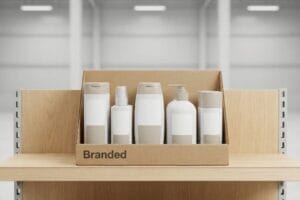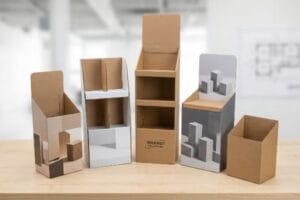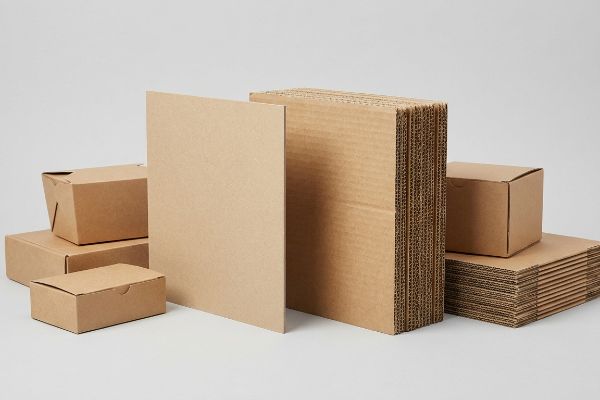
Sie starten eine groß angelegte Kampagne im Einzelhandel, doch Ihr Budget wird für Materialien verschwendet, deren Eigenschaften Sie nicht vollständig verstehen. Die Wahl des falschen Trägermaterials kann die physische Präsenz Ihrer Marke im Handumdrehen zerstören.
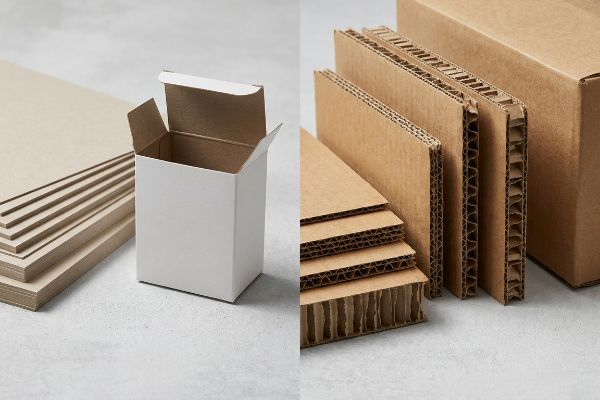
Karton ist ein robustes, papierbasiertes Material, das häufig für Einzelhandelsverpackungen und Warenträger verwendet wird. Weltweit anerkannte Industriestandards unterteilen ihn hauptsächlich in Vollkarton für leichte Faltschachteln und Wellpappe, die so konstruiert ist, dass sie massive Stöße während des weltweiten Transports und komplexer Lagerlogistik abfängt.
Doch das Verständnis der Definition aus dem Lehrbuch wird Ihnen nicht helfen, wenn die Produktionspressen in der Fabrik anlaufen.
Woraus besteht Pappe?
Jede stabile Verkaufsstruktur beginnt mit einer einfachen Mischung aus Holzschliff und Wasser, aber die genaue Rezeptur entscheidet darüber, ob Ihre Auslage hält oder zusammenbricht.
Karton wird aus komprimierten Zellulosefasern hergestellt, die entweder aus frisch geerntetem Holz oder aus wiederaufbereitetem Altpapier gewonnen werden. Für die Herstellung von hochbelastbarer Wellpappe werden flache Deckkartons mit einem gewellten Innenkarton verklebt. Dabei kommen Stärkeklebstoffe zum Einsatz, um eine stabile, stoßdämpfende Verbundstruktur für den Einzelhandel zu schaffen.
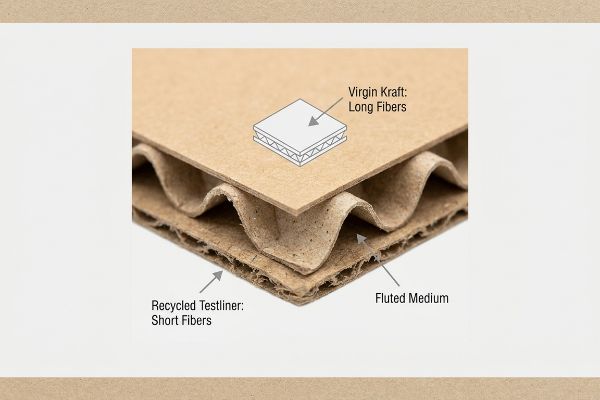
Die Kenntnis der Grundbestandteile ist hilfreich, die eigentliche Falle liegt jedoch in der Herkunft dieser Fasern.
Das Dilemma zwischen neuem Kraftpapier und recyceltem Testliner
Viele Marken schreiben instinktiv 100 % recycelte Materialien für ihre Verkaufsdisplays vor, um interne Nachhaltigkeitsvorgaben zu erfüllen. Sie gehen davon aus, dass recyceltes Testliner unter starker Belastung die gleichen Eigenschaften wie frisch geerntete Papierfasern aufweist
Ich sehe diesen Fehler immer wieder, wenn eine Marke versucht, 22,6 kg flüssige Produkte auf einem Display aus recyceltem Testliner zu präsentieren. Da die Fasern dieses Recyclingpapiers bereits mehrfach zerkleinert und verarbeitet wurden, sind sie mikroskopisch viel kürzer und strukturell erschöpft².Beim Falten einer komplexen Verschlusslasche hört man förmlich, wie der Rohkarton reißt, anstatt sich sauber zu biegen. Um dieses Reißen zu vermeiden, empfehle ich dringend, für alle Scharnierpunkte einen Außenliner aus Frischfaser-Kraftpapier zu verwenden. Dieser liefert die langen, unbeschädigten Fasern, die für scharfe Faltungen³ benötigt werden,und ermöglicht gleichzeitig die Verwendung von Recyclingmaterial für die Innenwellung.
| Häufiger Anfängerfehler | Die Profi-Lösung | Vorteil für die Verkaufsfläche |
|---|---|---|
| Verwendung von 100% recyceltem Karton für hochbelastbare Verriegelungslaschen | Für die äußere Decklage Virgin-Kraftpapier verwenden | Verhindert das Einreißen von Laschen bei der Montage im Geschäft |
| Die Papierfaserlänge in den Strukturspezifikationen wird ignoriert | Richten Sie die Flötenrichtung an der Falte aus | Verhindert das Zusammenbrechen des Displayfußes unter Last |
| Komplexe Faltungen auf sprödem Testliner erzwingen | Verwenden Sie eine Rillmatrix, um die Fasern sauber zu dehnen | Verhindert das Einreißen der gedruckten Grafiken an den Rändern |
Ich opfere niemals die strukturelle Integrität für ein Marketing-Schlagwort. Die Kombination von neuem Kraftpapier mit recycelten Innenwellpappen stellt sicher, dass Ihre Verkaufsverpackung den Anforderungen im Einzelhandel standhält, ohne dass der Lohnverpacker Zeit mit dem Zusammenkleben abgebrochener Laschen verschwenden muss.
🛠️ Harveys Schreibtisch: Sind Sie sich nicht sicher, ob Ihr Material die nötige Zugfestigkeit für eine 90-Grad-Faltung aufweist? 👉 Materialprüfung anfordern ↗ — Direkter Kontakt zu mir. Garantiert kein automatisierter Werbe-Spam.
Warum ist Karton in Krankenhäusern verboten?
Man könnte sich fragen, warum ein so vielseitiges Material in sterilen Umgebungen strengstens verboten ist, und die Antwort liegt in der mikroskopischen Verunreinigung.
Nein. Karton ist in sterilen Bereichen von Krankenhäusern nicht zugelassen, da seine poröse Struktur Feuchtigkeit speichert, schädliche Bakterien beherbergt und kontinuierlich mikroskopisch kleine Staubpartikel abgibt. Diese natürliche Materialabgabe macht unbehandelte Wellpappenverpackungen zu einem massiven Kontaminationsrisiko für hochreine Umgebungen, chirurgische Instrumente und sensible klinische Lieferketten.
Auch wenn Sie keine Displays für einen Operationssaal herstellen, hat dieses Staubproblem drastische Auswirkungen auf hochwertige Einzelhandelsverpackungen.
Kontrolle von Wellpappenstaub für Premium-Einzelhändler
Eine häufig gestellte Frage von Käufern ist, warum ihre hochwertigen Kosmetikdisplays mit einem schmutzigen, unansehnlichen Film über dem Hochglanzdruck,dass der Versandbehälter während des Transports verschmutzt wurde.
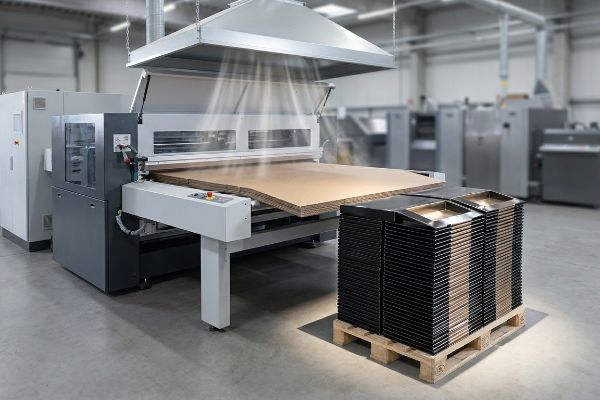
Die bittere Realität ist, dass das Stanzen dicker Wellpappe wie ein winziger Holzhäcksler wirkt und eine riesige Wolke mikroskopisch kleinen Zellulosestaubs erzeugt, der sich statisch an allem festsetzt. Wenn Ihre Fabrik dem nicht aktiv entgegenwirkt, müssen Ihre Verkäufer jedes einzelne Produkt hektisch abwischen, bevor sie es ins Regal stellen können. Ich löse dieses Problem, indem ich leistungsstarke Vakuumabsaugsysteme und Luftmesser direkt an unseren Schneidetischen installiere. Diese blasen und saugen die Papierpartikel von den Bögen ab, bevor diese verpackt werden. So stellen wir sicher, dass Ihre Kosmetikdisplays makellos und verkaufsfertig ankommen und Ihr Verkaufsteam sich stundenlange manuelle Reinigungsarbeit spart.
| Häufiger Anfängerfehler | Die Profi-Lösung | Vorteil für die Verkaufsfläche |
|---|---|---|
| Den beim Stanzen entstehenden statischen Staub6 | Installieren Sie Vakuumabsaugung und Luftmesser an den Maschinen7 | Bietet dem Einzelhändler eine makellose, hochwertige Präsentation |
| Die Seefracht für verschmutzte Displaykomponenten verantwortlich machen | Trennen Sie die Schneidemaschinen vom Montagebereich | Verkürzt die Vorbereitungs- und Reinigungszeit im Geschäft vollständig |
| Verpacken von dunkel gefärbten bedruckten Kartons ohne Abstauben | 8 Antistatische Behandlungen während der Druckphase anwenden | Verhindert, dass unansehnlicher weißer Papierstaub dunkle Tinte verunreinigt |
Ich betrachte Wellpappenstaub als schwerwiegenden Mangel, nicht als geringfügige Unannehmlichkeit. Saubere Produktionsverfahren gewährleisten, dass Ihre Displays den Premiumcharakter Ihrer Marke widerspiegeln, sobald sie den Versandkarton verlassen.
🛠️ Harveys Schreibtisch: Sind Ihre hochwertigen schwarzen Displays mit einer Schicht aus feinem Papierstaub bedeckt? 👉 Fordern Sie eine Werksprüfung an ↗ – Sicher herunterladen. Bei Fragen können Sie mich gerne kontaktieren.
Welche drei Arten von Karton gibt es?
Wenn ein Einzelhändler nach den Spezifikationen Ihres Displays fragt, ist die einfache Angabe „Karton“ so, als würde man einem Mechaniker sagen, dass Ihr Auto mit „Flüssigkeit“ fährt. Sie brauchen Präzision.
Es gibt drei Kartonarten: dicke Wellpappe für schwere Sendungen, dünne Pappe oder Faltschachteln für die Primärverpackung von Produkten und stabile Graupappe für hochwertige Verpackungskartons. Die Wahl des richtigen Materials bestimmt die Tragfähigkeit, die Druckqualität und die Wirkung im Verkaufsraum.
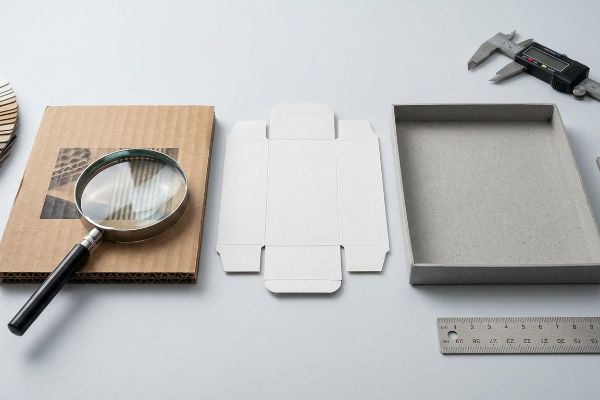
Das Mischen dieser Materialien während der Entwurfsphase ist der schnellste Weg, um von der Geschäftsleitung eine Ablehnung Ihres Displays zu riskieren.
Der Waschbretteffekt bei Verkaufsdisplays
Viele Marken verwenden fälschlicherweise dicke, versandfähige Wellpappe für kleine Thekendisplays , in der Annahme, die zusätzliche Dicke verleihe ein hochwertiges Erscheinungsbild. Sie reichen Standard-Stanzformen ein, ohne zu berücksichtigen, wie große Wellen mit dem hochwertigen Offsetdruck interagieren .
Stellen Sie sich große Wellpappe wie einen Lattenzaun vor: Wenn Sie versuchen, ein dünnes Poster darüber zu kleben, werden Sie jede einzelne vertikale Kante darunter sehen. Ich sehe immer wieder, wie Marken ihre hochwertigen Kosmetikprodukte ruinieren, weil sie direkt auf C-Welle gedruckt haben. Das Ergebnis ist ein unschöner Welleneffekt, bei dem die Grafik unter der Ladenbeleuchtung gerippt und verzerrt aussieht. Meine Faustregel: Verwenden Sie für alles, was sich in Augenhöhe befindet, immer Mikro-E-Welle oder ein Litho-Laminierungsverfahren auf SBS-Karton (Sustainable Bleached Sulfate). So erhalten Sie die Stabilität von Wellpappe, aber die spiegelglatte Druckoberfläche eines hochwertigen Faltschachtelkartons.
| Häufiger Anfängerfehler | Die Profi-Lösung | Vorteil für die Verkaufsfläche |
|---|---|---|
| Bedrucken von hochwertigen Grafiken direkt auf dickes C-Wellen-Papier | Upgrade auf eine E-Welle- oder Mikro-Wellenstruktur | Beseitigt den unschönen Waschbretteffekt bei grellem Licht |
| Verwendung dünner Faltkartons für schwere Thekendisplays | Litho-Lam auf SBS für eine Hybridstruktur spezifizieren | Verhindert ein Durchbiegen des Displays unter dem Gewicht des Produkts |
| Ignoriert wird dabei, wie sich das Flötenprofil auf die grafische Klarheit auswirkt | Führen Sie einen physischen Drawdown-Test am tatsächlichen Board durch | Gewährleistet visuelle Markenkonsistenz im gesamten Regalgang |
Ich lasse nicht zu, dass eine ungeeignete Materialwahl ein hochwertiges Grafikdesign beeinträchtigt. Der Wechsel zum richtigen Rillenprofil verwandelt eine billig wirkende Verpackung in ein verkaufsstarkes Verkaufsdisplay.
🛠️ Harveys Schreibtisch: Beeinträchtigt der Waschbretteffekt die Grafik Ihrer hochwertigen Kosmetikverpackungen? 👉 Fordern Sie eine kostenlose Substratanalyse an ↗ – Keine Formulare, die endlose Verkaufsgespräche auslösen. Nur echter Mehrwert.
Was ist Pappe?
Es klingt wie eine philosophische Frage, aber dieses Material ausschließlich als trockenes, statisches Blatt Papier zu definieren, ist ein schwerwiegender Fehler im Ingenieurwesen.
Karton ist eine dynamisch konstruierte, komprimierte Papierstruktur, die aktiv auf Umwelteinflüsse reagiert. Anstatt ein statisches, inertes Objekt zu sein, verhalten sich die Wellpappenfasern wie lebende Schwämme, die sich je nach Luftfeuchtigkeit in der Fabrik, Feuchtigkeit im Seefrachtraum und anhaltenden Temperaturschwankungen im Lager ausdehnen und zusammenziehen.
Doch die Theorie allein reicht nicht aus, wenn die Maschinen in Betrieb gehen und Ihre Displays in einem stickigen Lagerhaus an der Küste stehen.
Die Feuchtigkeitsquelle in Lieferketten mit hoher Luftfeuchtigkeit
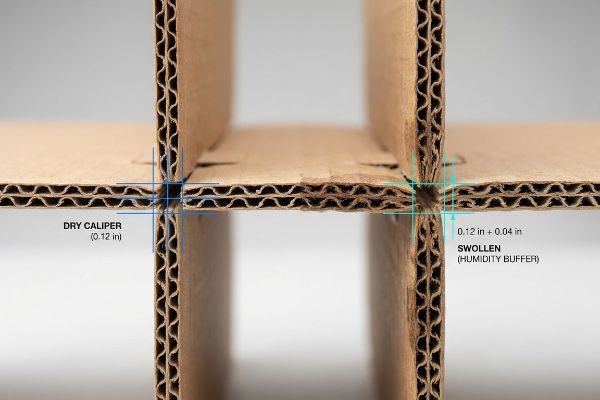
Grafikdesigner in klimatisierten Büros konstruieren die Toleranzen für Stanznuten häufig ausschließlich anhand der absoluten Dicke des trockenen Kartons. Sie gehen davon aus, dass eine exakt auf 3,04 mm (0,12 Zoll) gefräste Nut eine 3,04 mm (0,12 Zoll) breite B-Wellen-Lascheaufnimmt , wenn der Lohnverpacker das Produkt Monate später montiert.
In einem klimatisierten Labor lässt sich ein einzelnes Display problemlos aufstellen. Doch die Realität sieht anders aus, wenn man 500 Stück in ein feuchtes Distributionszentrum in Florida liefert. In meiner Einrichtung beobachte ich regelmäßig, wie poröse Testliner die Luftfeuchtigkeit des Meeres aufnehmen und die Platten weit über die ursprünglichen CAD-Spezifikationen (Computer-Aided Design) hinaus aufquellen lassen. Versucht das Verpackungsteam dann, die aufgequollene Lasche in den exakt berechneten Schlitz zu pressen, drückt die starke Reibung die inneren Rillen zusammen und reißt die bedruckte Deckschicht ein. Dadurch wird die strukturelle Festigkeit (BCT – Box Compression Test)11. Um dieses Problem zu beheben, integriere ich automatisch einen 1,01 mm (0,04 Zoll) dicken Feuchtigkeitspuffer12 in jeden Empfangsschlitz für feuchte Klimazonen. Durch diese Mikrotoleranz verkürzt sich die Montagezeit pro Einheit um bis zu 45 Sekunden, was den manuellen Arbeitsaufwand drastisch reduziert und beschädigte Displays im Einzelhandel verhindert.
| Häufiger Anfängerfehler | Die Profi-Lösung | Vorteil für die Verkaufsfläche |
|---|---|---|
| Bestimmung der Schlitzbreiten anhand eines knochentrockenen Papiermessschiebers | Integrieren Sie einen Feuchtigkeitspuffer in die CAD-Datei | Gewährleistet reibungsloses Co-Packing in feuchten Umgebungen |
| Die Quellung der Umgebungsfeuchtigkeit während des Seetransports wird vernachlässigt 13 | 14 Fügen Sie der Basis spezielle Feuchtigkeitssperrbeschichtungen hinzu | Verhindert, dass das Display unter schwerer Warenlast zusammenbricht |
| Die festen, geschwollenen Verriegelungslaschen mit der Hand aufdrücken | Vergrößern Sie den Papiereinzugsschlitz, um die Papierausdehnung zu berücksichtigen15 | Verhindert das Einreißen bedruckter Deckblätter beim Ladenaufbau |
Ich vertraue nicht auf perfekte digitale Zeichnungen; ich plane für die komplexen atmosphärischen Gegebenheiten. Die Berücksichtigung der Feuchtigkeitsausdehnung erspart Ihrem Lohnverpacker nicht nur Probleme, sondern schützt Ihre gesamte Investition in die Gebäudestruktur.
🛠️ Harveys Schreibtisch: Kennen Sie die genaue Feuchtigkeitsausdehnungstoleranz der Verriegelungslaschen Ihrer aktuellen Wellpappdisplays? 👉 Senden Sie mir Ihre Stanzdatei ↗ — Ich überprüfe die Berechnungen, bevor Sie unnötig Geld für die Massenproduktion ausgeben.
Abschluss
Sie können zwar einen günstigeren Anbieter wählen, aber wenn die Trockenmessplatte im Lager Feuchtigkeit aufnimmt und aufquillt, beeinträchtigt die entstehende Reibung die Festigkeit Ihrer BCT-Platte. Dies verlangsamt die Produktionslinie um schätzungsweise 30 % und schmälert Ihre Gewinnspanne. Genau dieses Datenblatt verwenden meine zehn wichtigsten Einzelhandelskunden, um Druckfehler zu vermeiden. Hören Sie auf, die Toleranzen für Umwelteinflüsse zu schätzen, und lassen Sie mich Ihre Strukturdateien persönlich durch meinen kostenlosen Stanzform-Vorab-Check führen, um schwerwiegende Maßfehler vor der Produktion zu erkennen.
„[PDF] NEUKARTONS VERSUS RECYCELTE KARTONS Von L. Lisa Zhao Eine Dissertation …“, https://vuir.vu.edu.au/18233/1/ZHAO_1993compressed.pdf. [Technische Daten zum Vergleich der Zugfestigkeit und Berstfestigkeit von recycelten Testliner- und Neufaser-Kraftpapierfasern zeigen einen Leistungsunterschied unter Belastung auf]. Nachweisfunktion: Technische Validierung; Quellentyp: Fachzeitschrift für Materialwissenschaften oder Verpackungsindustriestandard. Belegt: Die Behauptung, dass recycelte und Neufasern unterschiedliche strukturelle Eigenschaften aufweisen. Anwendungsbereich: Beschränkt auf Anwendungen mit hoher Belastung. ↩
„Veränderte Qualität von Recyclingfasermaterial. Teil 1. Einflussfaktoren …“, https://bioresources.cnr.ncsu.edu/resources/changing-quality-of-recycled-fiber-material-part-1-factors-affecting-the-quality-and-an-approach-for-characterisation-of-the-strength-potential/. [Technische Handbücher zum Papierrecycling bestätigen, dass wiederholte Aufschlussverfahren die Zellulosefasern mechanisch verkürzen und dadurch die Zugfestigkeit des Materials verringern]. Nachweisfunktion: Technische Spezifikation; Quellentyp: Branchenhandbuch. Beleg: Die strukturelle Schwäche von recyceltem Testliner. Anwendungsbereich: Beschränkt auf mechanische Recyclingverfahren. ↩
„Perspektiven zur Erhaltung der Festigkeit von Papier und Karton …“, https://bioresources.cnr.ncsu.edu/resources/prospects-for-maintaining-strength-of-paper-and-paperboard-products-while-using-less-forest-resources-a-review/. [Untersuchungen zur Kraftpapierherstellung zeigen, dass der chemische Aufschluss lange Zellulosefasern erhält, was die Reißfestigkeit des Kartons beim Biegen erhöht]. Nachweisfunktion: Technische Spezifikation; Quellentyp: Fachzeitschrift für Materialwissenschaften. Unterstützung: Empfehlung für Primärkraftpapier an strukturellen Gelenkpunkten. Anmerkung: Abgrenzung zu Recyclingfasern. ↩
„Leitfaden zu Oberflächenfehlern von Karton und Druckqualität von Versandkartons“, https://www.linkedin.com/pulse/paperboard-surface-defects-shipping-box-print-quality-ricky-fang-cms2e. [Fachliteratur zur Materialwissenschaft erklärt, wie Wellpappe mikroskopisch kleine Zellulosefasern und Staub abgibt, die durch statische Aufladung oder Feuchtigkeit an Hochglanzoberflächen haften bleiben]. Nachweisfunktion: Kausalzusammenhang; Quellentyp: Technischer Leitfaden der Branche. Belegt durch: Beobachtung von Partikelrückständen auf hochwertigen Verpackungen. Anwendungsbereich: Gilt speziell für Rohmaterialien aus Wellpappe. ↩
„Herstellung und Eigenschaften von regenerierten Cellulosefolien …“, https://pmc.ncbi.nlm.nih.gov/articles/PMC7513365/. [Ein arbeitsmedizinischer Bericht oder eine materialwissenschaftliche Studie würde bestätigen, dass beim mechanischen Scheren von Wellpappenfasern Cellulosepartikel in die Luft gelangen.] Nachweisfunktion: Technische Überprüfung; Quellentyp: Leitfaden für Arbeitshygiene. Stützt: Die Behauptung, dass beim Stanzen mikroskopischer Staub entsteht. Anmerkung: Die Partikelkonzentration variiert je nach Klingenschärfe und Materialstärke. ↩
„Staubfilme auf Verpackungsprodukten – IFSQN“, https://www.ifsqn.com/forum/index.php/topic/35110-films-of-dust-on-packaging-products/. [Fachliteratur zur Kartonherstellung erklärt, wie Reibung beim Stanzen elektrostatische Ladungen erzeugt, die Partikel anziehen und freisetzen]. Nachweisfunktion: Faktenbestätigung; Quellentyp: Technisches Handbuch. Belege: Kausalzusammenhang zwischen Stanzen und Staubbelastung. Anwendungsbereich: Speziell für Wellpappe. ↩
„Hersteller von Druckluftmessern in Indien | Cleantek“, https://www.cleantekindia.com/categories/air-knife?srsltid=AfmBOopWVID_B8OGtbOFYncFJkEZeetiPcR280uHszYNjvbzfeGXNv_1. [Technische Spezifikationen für Verpackungsmaschinen zeigen, wie die Kombination von Vakuumsystemen und Druckluftmessern zur Entfernung von Partikeln von Substraten eingesetzt wird]. Nachweisfunktion: Technische Spezifikation; Quellentyp: Dokumentation des Maschinenherstellers. Unterstützt: Die Wirksamkeit von Hardwarelösungen zur Staubbekämpfung. Anwendungsbereich: Gilt für die industrielle Produktion. ↩
„Antistatika für antistatische Verpackungen“, https://xray.greyb.com/packaging/antistatic-agents. [Branchenleitfäden zur Drucktechnologie beschreiben die Anwendung von Antistatika zur Reduzierung der Anziehung von Papierstaub aus der Luft auf bedruckte Oberflächen]. Nachweisfunktion: Prozessvalidierung; Quellentyp: Whitepaper der Druckindustrie. Anwendungsbereich: Das Verfahren zur Verhinderung von Staubablagerungen auf dunklen Druckfarben. Anwendungsgebiet: Gilt für hochwertige Einzelhandelsverpackungen. ↩
„Denken innerhalb und außerhalb der Wellpappe – Drucken“, https://www.agfa.com/printing/tips/corrugated-boxes/. [Technische Druckhandbücher erklären, wie die Wellen der Wellpappe beim Offsetdruck zu ungleichmäßigem Farbauftrag und visuellen Verzerrungen, dem sogenannten Wellblecheffekt, führen]. Nachweisfunktion: Technische Spezifikation; Quellentyp: Handbuch der Druckindustrie. Begründet: Zusammenhang zwischen Substratstruktur und Druckqualität. Anwendungsbereich: Speziell für den Offsetdruck auf Wellpappe. ↩
„[PDF] Spezifikationen für Wellpappe – Nationalarchiv“, https://www.archives.gov/files/preservation/storage/pdf/corrugated-board.pdf. [Industriestandards für Verpackungen geben die Nenndickenangaben für B-Welle-Wellpappe an, um die Messung von 0,12 Zoll zu überprüfen]. Nachweisfunktion: Technische Spezifikation; Quellentyp: Industriestandard; Beleg: Gültigkeit der B-Welle-Abmessungen; Anmerkung: Die tatsächliche Dicke kann je nach Hersteller und Güteklasse leicht variieren. ↩
„Abschätzung der Druckfestigkeit von Wellpappkartons für …“, https://pmc.ncbi.nlm.nih.gov/articles/PMC9864211/. [Ein Handbuch für Verpackungstechnik oder eine ASTM-Norm würde erläutern, wie feuchtigkeitsbedingtes Quellen und mechanisches Zusammenfallen der Wellen die vertikale Tragfähigkeit eines Kartons verringern]. Nachweisfunktion: Technische Validierung; Quellentyp: Technische Norm. Belegt: den ursächlichen Zusammenhang zwischen Feuchtigkeit/Reibung und strukturellem Versagen. Anmerkung zum Anwendungsbereich: Fokus auf die Kennzahl des Kartonkompressionstests. ↩
„[PDF] Auswirkungen der relativen Luftfeuchtigkeit auf die Kompression … – Clemson OPEN“, https://open.clemson.edu/context/all_theses/article/4232/viewcontent/Brown_clemson_0050M_15634.pdf. [Industrietechnische Spezifikationen für Wellpappenkonstruktionen würden bestätigen, ob ein Abstand von 0,04 Zoll ein anerkannter Standard zur Minderung hygroskopischer Ausdehnung in Bereichen mit hoher Luftfeuchtigkeit ist]. Nachweisfunktion: Spezifikationsprüfung; Quellentyp: Technisches Whitepaper. Unterstützt: die Präzision der vorgeschlagenen technischen Lösung. Anmerkung zum Anwendungsbereich: Kann je nach Papiersorte und Feuchtigkeitssättigungsgrad variieren. ↩
„Einfluss von Luftfeuchtigkeit und Temperatur auf die mechanischen Eigenschaften von …“, https://bioresources.cnr.ncsu.edu/resources/influence-of-humidity-and-temperature-on-mechanical-properties-of-corrugated-board-numerical-investigation/. [Eine maßgebliche Quelle im Bereich der maritimen Logistik oder Papierwissenschaft würde die prozentuale Dimensionsänderung von Wellpappe während des Seetransports quantifizieren]. Nachweisfunktion: Faktenbestätigung; Quellentyp: Fachartikel. Begründung: das Risiko der Materialquellung während des Transports. Anmerkung: Variiert je nach Materialgüte und Beschichtung. ↩
„Barrierebeschichtung für Papier- und Wellpappenverpackungen“, https://global.humanchem.com/resources/barrier-coating-for-paper-and-corrugated-board-packaging.html. [Materialwissenschaftliche Forschung zu hydrophoben Beschichtungen würde zeigen, wie diese die Druckfestigkeit von Kartonböden in Umgebungen mit hoher Luftfeuchtigkeit erhalten]. Nachweisfunktion: Technische Validierung; Quellentyp: Herstellerspezifikation. Unterstützt: Die Verwendung von Beschichtungen zur Verhinderung von Strukturkollaps. Anmerkung zum Umfang: Fokus auf die strukturelle Integrität des Bodens. ↩
„[PDF] Untersuchung der mechanischen Eigenschaften von Kartonverpackungen …“, https://repository.rit.edu/cgi/viewcontent.cgi?article=1066&context=japr. [Handbücher für Verpackungstechnik enthalten Richtlinien zur Berücksichtigung der Toleranzen von Schlitzen aufgrund der hygroskopischen Eigenschaften von Zellulosefasern]. Nachweisfunktion: Validierung bewährter Verfahren; Quellentyp: Ingenieurhandbuch. Unterstützt: die Notwendigkeit der Anpassung der Schlitzbreite an die Ausdehnung. Anwendungsbereich: Gilt speziell für Toleranzen von Verriegelungsmechanismen. ↩