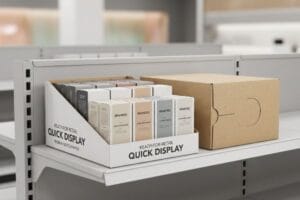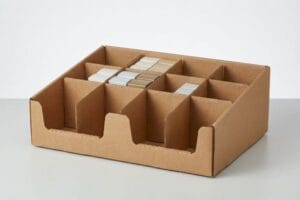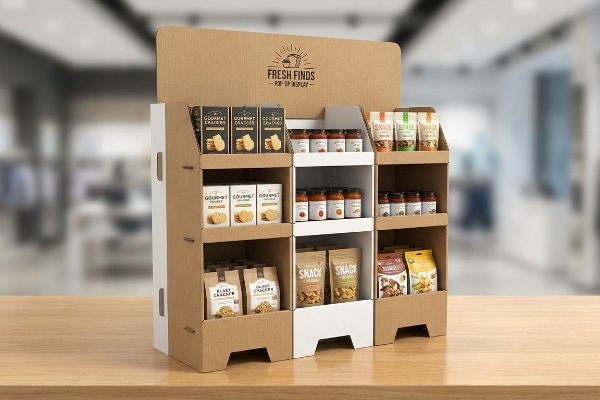
Die Einführung eines Lebensmittelprodukts ist schon schwierig genug, ohne dass die Verkaufsflächen in den Regalen untergehen. Man braucht Strukturen, die Aufmerksamkeit erregen, den Transport unbeschadet überstehen und sofortige Spontankäufe anregen.
Die Vorteile von Warenpräsentationen für Lebensmittel liegen in der optimalen Sichtbarkeit im Regal und der Anregung von Impulskäufen. Durch die strategische Anordnung des Warenbestands schützen diese modularen Wellpappkonstruktionen empfindliche Produkte während des Transports, lenken die Kundenströme und vermitteln wichtige Markenbotschaften direkt im hart umkämpften globalen Einzelhandel.

Das Verständnis der zugrundeliegenden Mechanismen dieser Strukturen ermöglicht es Ihnen, sie nicht länger als Wegwerfartikel zu betrachten, sondern sie als aktive Vertriebsinstrumente einzusetzen.
Welche Bedeutung hat die Produktpräsentation?
Eine gute Struktur besteht nicht nur aus der Aufbewahrung von Kisten; sie ist ein mathematisches Werkzeug, das dazu dient, abgelenkte Käufer abzufangen und zu einer Kaufentscheidung zu zwingen.
Die Bedeutung von Warenpräsentationen liegt darin, die Aufmerksamkeit der Kunden in vollen Regalgängen sofort zu gewinnen. Effektive Warenverräumer fangen den Kundenverkehr ab und schaffen eine physische Markenpräsenz abseits der Standardregale. Sie beeinflussen das Kaufverhalten direkt, indem sie visuelle Hürden abbauen und Konsumgüter des täglichen Bedarfs (FMCG) in großen Mengen sofort zugänglich machen.

Wenn Ihr Geschäft in der Hektik eines Supermarktes untergeht, verlieren Sie sofort den Kampf um die Gunst der Kunden.
ROI-Nachweis mit dem 3-Sekunden-Lift
Viele Marketingteams betrachten Aktionsflächen lediglich als Lagerbehälter mit aufgeklebten Logos. Sie gehen davon aus, dass die Konstruktion ihren Zweck erfüllt hat, solange sie die Waren sicher hält. Diese passive Lagermentalität ignoriert jedoch völlig die psychologischen Mechanismen des Impulskaufs .
Ich beobachte diese Falle immer wieder, wenn Marken ihre Überschriften mit winziger Schrift überladen. Kann ein Kunde, der durch den Gang geht, Ihr Kernangebot nicht innerhalb von drei Sekunden erfassen , geht er einfach daran vorbei. Um dem entgegenzuwirken, nutze ich die „3-Sekunden-Aufmerksamkeits-Formel“. Dabei verzichte ich auf komplexe Grafiken und konzentriere mich ausschließlich auf kontrastreiche Bilder und geschwungene, gestanzte Formen, die den linearen Gang aufbrechen. Wenn Sie das Rascheln hören, wenn ein Kunde sofort in die Schale greift, um sich einen Snack zu nehmen, wissen Sie, dass die visuelle Aufmerksamkeit gewirkt hat: Ihre Abverkaufsrate steigt und Ihre Verpackungskosten werden problemlos gedeckt.
| Häufiger Anfängerfehler | Die Profi-Lösung | Vorteil für die Verkaufsfläche |
|---|---|---|
| Verwendung von Absätzen mit winzigem Text | Anwendung der 3-Sekunden-Lift-Formel3 | Ergreift die Aufmerksamkeit abgelenkter Käufer |
| Gestaltung flacher, linearer Überschriften | Verwendung von geschwungenen, gestanzten Strukturformen4 | Stört den visuellen Warenfluss im Gang |
| Einheiten als passive Behälter behandeln | Konstruktion für kontrastreiche Sichtbarkeit5 | Beschleunigt den Lagerabverkauf |
Ich weigere mich, ein Regal zu konstruieren, das lediglich Kartons aufnimmt. Wenn die Kopfzeile nicht sofort die Aufmerksamkeit auf sich zieht, verfehlt das Regal seinen Hauptzweck und verschwendet sowohl Ihr Marketingbudget als auch wertvolle Verkaufsfläche.
🛠️ Harveys Schreibtisch: Sind Ihre aktuellen Überschriften zu unübersichtlich, um Laufkundschaft zum Kauf zu bewegen? 👉 Kostenlose visuelle Analyse anfordern ↗ — Direkter Kontakt zu meinem Schreibtisch. Garantiert kein automatisierter Werbe-Spam.
Welche Vorteile bietet Lebensmittelwerbung?
Visuelle Konsistenz ist bei der Markteinführung von Konsumgütern unerlässlich. Ihre physische Verpackung muss farblich perfekt mit Ihren digitalen Werbekampagnen übereinstimmen.
Die Vorteile von Lebensmittelwerbung liegen unter anderem im Aufbau sofortigen Verbrauchervertrauens und der Steigerung des messbaren Absatzvolumens. Auf Verkaufsdisplays umgesetzt, stärken präzise Werbegrafiken die Markenautorität, heben Ihr Nährwertprofil von dem der Konkurrenz ab und informieren vorbeigehende Käufer direkt im Moment des Kaufs über Geschmacksvariationen.
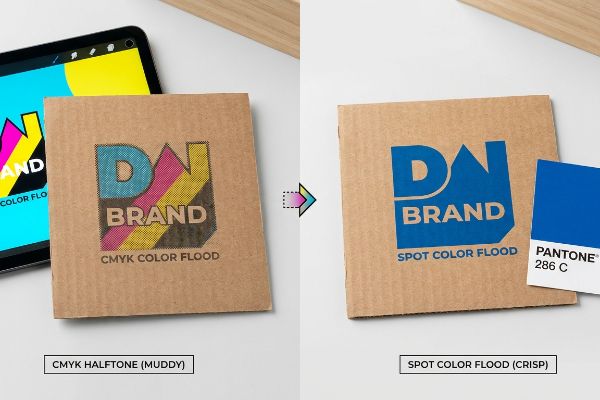
Das Drucken dieser Werbeanzeigen auf Rohkarton erfordert völlig andere chemische Prozesse als das Entwerfen von Grafiken auf einem Leuchtbildschirm.
CMYK-Halbton-Schlamm im Einzelhandel vermeiden
Grafikdesigner reichen üblicherweise Druckvorlagen in den Standardfarben CMYK (Cyan, Magenta, Gelb und Schwarz) ein . Sie gehen davon aus, dass die digitale PDF-Datei auf ihrem Monitor genauso aussieht wie auf dem gedruckten Karton. Dabei wird die mechanische Realität industrieller Druckmaschinen außer Acht gelassen.
Der Standard-Prozessdruck basiert auf überlappenden, winzigen Rasterpunkten⁷ , doch unversiegeltes Wellpappenpapier saugt flüssige Tinte ungleichmäßig auf⁸ . Ich sehe immer wieder, wie wunderschöne digitale Logos unter grellem Leuchtstoffröhrenlicht in ein körniges, verwaschenes Bild verfallen, weil die Papierfasern die überlappenden Punkte vermischen. Ich behebe dieses Problem durch die Anwendung eines Spot-Color-Flood-Protokolls, bei dem die optische Punktmischung durch eine einzige, vorgemischte PMS-Tinte (Pantone Matching System) ersetzt wird. Wenn Sie mit der Hand über eine perfekt gleichmäßige, deckende Pantone-Pigmentschicht auf der Headerkarte streichen, gewährleisten Sie maximale Kontrastsichtbarkeit aus 6,09 m Entfernung und verhindern so eine Verwässerung der Markenidentität.
| Häufiger Anfängerfehler | Die Profi-Lösung | Vorteil für die Verkaufsfläche |
|---|---|---|
| Drucken von vollflächigen Logos in CMYK | Verwendung von vorgemischten Pantone-Sonderfarben9 | Verhindert ein verblasstes Markenbild |
| Die Absorption von Papierfasern wird vernachlässigt | Durchsetzung eines Spot-Farbflut-Protokolls10 | Beseitigt körnigen Halbtonschleier |
| Abhängigkeit von den Farben eines hintergrundbeleuchteten Monitors | Abstimmung der physischen Tinte auf den Rohkarton11 | Gewährleistet kontrastreiche Sichtbarkeit |
Ich lasse niemals ein primäres Markenlogo im Standard-Vierfarbdruck auf unbeschichtetem Testliner drucken. Die Verwendung einer speziellen Sonderfarbe eliminiert das Rätselraten um die Farbaufnahme und garantiert, dass Ihre Werbekampagne im Handel gestochen scharf aussieht.
🛠️ Harveys Schreibtisch: Fragen Sie sich, warum Ihre gedruckten Kartons immer etwas blasser aussehen als auf dem Bildschirm? 👉 Fordern Sie eine Farbstrategie-Analyse an ↗ — Sicher herunterladen. Bei Fragen können Sie mich gerne kontaktieren.
Wozu dient die Präsentation von Lebensmitteln?
Der Transport großer Mengen an Lebensmitteln erfordert eine hochbelastbare Konstruktion. Diese Einheiten müssen enorme Gewichte aushalten und gleichzeitig für eilige Kunden uneingeschränkt zugänglich bleiben.
Der Einsatz von Lebensmitteldisplays unterstützt direkt den Großhandel und einen hohen Lagerumschlag. Indem sie schwere Lebensmittelprodukte von Paletten abheben, ordnen diese speziellen Konstruktionen gemischte Artikel übersichtlich an, ermöglichen ein schnelles Nachfüllen und gewährleisten eine hohe Stabilität auch unter starker Belastung in Lagerhallen.
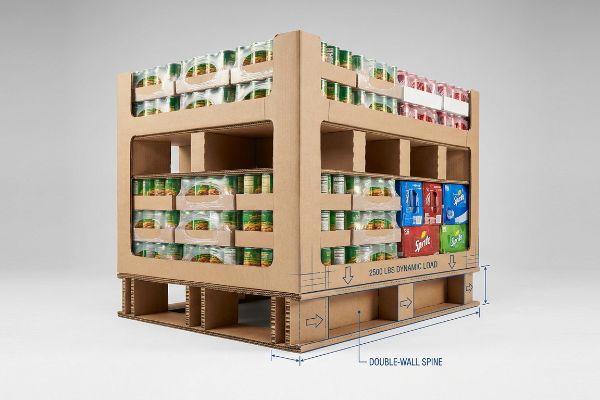
Die Konstruktion für diese enormen Lasten erfordert, dass man sich von leichten Faltkartons verabschiedet und strenge architektonische Gesetze anwendet.
Das harte Vorgehen des Club-Shops überstehen
Bei der Umstellung auf Großhandelsclubs wie Costco oder Sam's Club vergrößern Einkaufsteams häufig die Standard-Lagerflächen. Sie gehen fälschlicherweise davon aus, dass eine einfache Verbreiterung der Grundfläche auf magische Weise Großpackungen und schwere flüssige Getränke tragen kann .
Stellen Sie sich ein Standardtablett wie einen leichten Bilderrahmen vor: Es hält an der Wand, aber man kann nicht darauf stehen. Wenn Käufer 1133,9 kg Konserven auf eine einfache, zusammengeklappte Unterlage stapeln, biegt sich die unterste Ebene sofort durch und wird zerdrückt. Ich verwende daher eine spezielle Shop-Through-Konstruktion mit hochbelastbaren B-Wellen-Säulen, die die vertikale Last tragengleichzeitig die Seiten offen halten. Das satte, dumpfe Geräusch, wenn eine schwere Palette auf die verstärkte, doppelwandige Wellpappenkonstruktion fällt, beweist, dass die Konstruktion funktioniert: Sie verhindert ein verheerendes Zusammenbrechen der unteren Ebene und stellt sicher, dass Kunden die Waren von allen vier Seiten problemlos entnehmen können.
| Häufiger Anfängerfehler | Die Profi-Lösung | Vorteil für die Verkaufsfläche |
|---|---|---|
| Skalierung von standardmäßigen schwachen Basen | Konstruktion doppelwandiger Wellblechrücken | Unterstützt schwere Getränke-Multipacks |
| Blockierprodukt mit massiven Wänden | Nutzung einer offenen Shop-Through-Architektur | Ermöglicht einfaches, mehrseitiges Einkaufen |
| Gewichtsbeschränkungen von Club-Stores werden ignoriert | Auslegung für eine dynamische Last von 2.500 lbs | Verhindert strukturelle Schäden an der untersten Ebene |
Ich baue Warenpräsentationssysteme für Großhandelsgeschäfte wie Miniaturbrücken. Wenn die vertikalen Säulen nicht mathematisch so konstruiert sind, dass sie Tausende von Pfund tragen können, wird der Einzelhändler die Palette an der Laderampe ablehnen.
🛠️ Harveys Schreibtisch: Erfüllen Ihre Paletten nicht die Anforderungen an die dynamische Belastbarkeit großer Lagerhausketten? 👉 Fordern Sie Ihren Strukturplan an ↗ – Keine Formulare, die endlose Verkaufsgespräche auslösen. Nur echter Mehrwert.
Welche Vorteile bieten Verkaufsdisplays?
Der Kassenbereich ist die profitabelste Fläche in jedem Einzelhandelsgeschäft. Um diesen Bereich optimal zu nutzen, benötigen wir Merchandiser, die maximale Produktdichte mit absoluter Stabilität in Einklang bringen.
Die Vorteile von Verkaufsdisplays liegen darin, margenstarke Spontankäufe an der Kasse zu generieren. Strategisch im Kassenbereich platziert, maximieren diese kompakten Displays die begrenzte Thekenfläche, präsentieren kleine Impulsartikel auf Augenhöhe und steigern den durchschnittlichen Transaktionswert, während die Kunden auf den Bezahlvorgang warten.
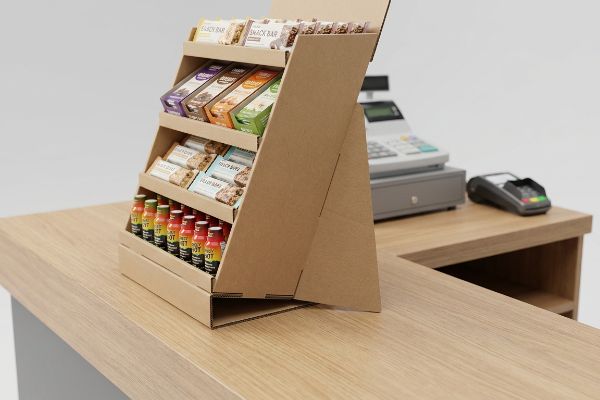
Der Bau vertikaler Einheiten für beengte Kassenbereiche birgt erhebliche Kippgefahren, wenn die Mechanik der Gewichtsverteilung außer Acht gelassen wird.
Verhinderung des Zusammenbruchs der Kasse
Markendesigner fordern häufig hohe, schmale Thekenaufsteller für schwere Müsliriegel oder Energy-Shots. Ihr Fokus liegt darauf, möglichst viel Ware auf möglichst kleiner Stellfläche unterzubringen, um die Wünsche der Ladenbesitzer zu erfüllen.
Es ist eine häufige Falle, in die selbst erfahrene Einkaufsteams tappen: die Missachtung grundlegender physikalischer Prinzipien des Schwerpunkts. Ich habe schon oft erlebt, wie Verkäufer gegen diese kopflastigen Regale gestoßen sind, wodurch das gesamte Regal nach vorne kippte und die Ware über die Kasse verstreut wurde. Ich berechne daher immer den Kipppunkt und verwende eine verlängerte Rückwand oder einen beschwerten Zwischenboden, um ein exaktes Verhältnis von 2:3 zwischen Tiefe und Höhezu. Der spürbare Widerstand der einrastenden Rückwand sorgt dafür, dass das Regal sicher steht und erspart dem Filialleiter das ständige Aufsammeln der Produkte vom Boden.
| Häufiger Anfängerfehler | Die Profi-Lösung | Vorteil für die Verkaufsfläche |
|---|---|---|
| Entwurf von kopflastigen, schmalen Einheiten | Beibehaltung eines Tiefen-Höhen-Verhältnisses von 2:317 | Verhindert das Vorwärtskippen des Geräts |
| Schwerpunktphysik ignorieren | Hinzufügen einer verlängerten hinteren Staffelei18 | Verankert das Gerät sicher an der Theke |
| Überladung dünner Kartonböden | Konstruktion eines beschwerten falschen Bodens19 | Verhindert das Verschütten von Waren im Kassenbereich |
Ich genehmige niemals eine Thekenablage, die gegen die Gesetze der Schwerkraft verstößt. Eine Vergrößerung der hinteren Standfläche um nur wenige Zentimeter garantiert Stabilität und schützt sowohl Ihre Waren als auch Ihre Geschäftsbeziehung zum Händler.
🛠️ Harveys Schreibtisch: Neigt sich Ihre Küchentheke unter dem Gewicht Ihrer Produkte nach vorne? 👉 Stabilitätscheck anfordern ↗ — Direkter Kontakt zu mir. Garantiert kein automatisierter Werbe-Spam.
Warum sind Warenauslagen in Geschäften wichtig?
Sich in einem riesigen Einzelhandelsumfeld zurechtzufinden, ist für Kunden körperlich anstrengend. Ihr Verkaufsberater vor Ort dient als Orientierungshilfe und führt sie direkt zu Ihrem Produkt.
Warenauslagen sind im Einzelhandel wichtig, weil sie die visuelle Eintönigkeit herkömmlicher Regalgänge aufbrechen. Diese freistehenden Präsentationsflächen unterbrechen die Kundenströme, heben Aktionspreise hervor und positionieren Produkte in optimalen Betrachtungswinkeln. Dadurch wird der Einkaufsprozess beschleunigt und die Kundenbindung gestärkt.
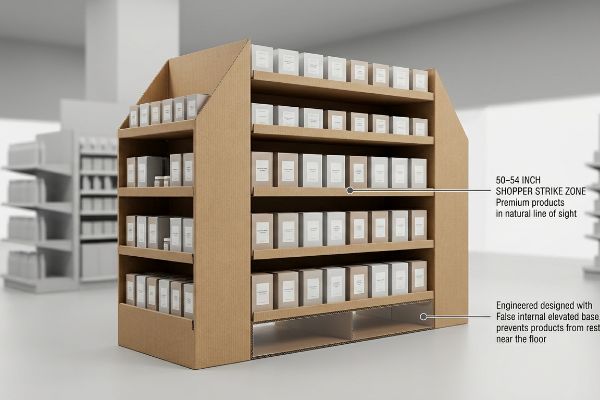
Wenn Sie Ihre besten Waren unten am Boden verstecken, wird die dadurch entstehende physische Reibung Ihre Verkaufszahlen sofort einbrechen lassen.
Die 54-Zoll-Käufer-Trefferzone treffen
Handelsunternehmen konzipieren Verkaufsflächen so, dass sie möglichst viele Regalböden aufnehmen können, wobei die Produkte vom Boden bis ganz nach oben gestapelt werden. Sie gehen davon aus, dass ein maximales Gesamtvolumen automatisch zu höheren Einzelhandelsgewinnen führt.
Das ignoriert völlig die menschliche Ergonomie. Wenn man ein hochwertiges Lebensmittelprodukt nur wenige Zentimeter über dem Boden platziert, bücken sich Kunden einfach nicht, um es zu begutachten, und die unterste Regalfläche wird zu Ladenhütern. Ich platziere margenstarke Artikel daher gezielt in der optimalen Sichtlinie des Kunden, genau 127bis 137,16 cm über dem Boden. Durch den Einbau einer zusätzlichen, innenliegenden Basis, die das unterste Regal anhebt, stelle ich sicher, dass jedes einzelne Produkt perfekt im natürlichen Blickfeld liegt und so verhindert wird, dass Ladenhüter in Knöchelhöhe verstauben.
| Häufiger Anfängerfehler | Die Profi-Lösung | Vorteil für die Verkaufsfläche |
|---|---|---|
| Lagerbestände in Knöchelhöhe stapeln | Fokus auf die 54-Zoll-Trefferzone | Platziert das Produkt im natürlichen Sichtfeld |
| Maximierung des Gesamtvolumens der Einheit blind | Verwendung einer falschen internen erhöhten Basis | Eliminiert Ladenhüter im unteren Regalbereich |
| Ignorieren grundlegender ergonomischer Aspekte des Einkaufsverhaltens | Regale an die menschliche Körpergröße anpassen | Verringert die physische Reibung für Käufer |
Ich gestalte Verkaufsflächen kundenorientiert, nicht nur produktorientiert. Einen Kunden zum Bücken zu zwingen, um ein Etikett zu lesen, ist der sicherste Weg, einen garantierten Verkauf zu verlieren.
🛠️ Harveys Schreibtisch: Verstecken sich Ihre besten Produkte im untersten Regal, wo niemand hinsieht? 👉 Planogramm-Analyse anfordern ↗ — Sicher herunterladen. Bei Fragen können Sie mich später gerne kontaktieren.
Welchen Zweck hat das Design von Lebensmittelprodukten?
Die Gestaltung von Produkten für den Lebensmitteleinzelhandel ist mit strengen Auflagen verbunden. Standardmäßige Umweltinitiativen kollidieren jedoch häufig heftig mit den physikalischen Gegebenheiten der Lieferkettenmechanik.
Ziel des Verpackungsdesigns für Lebensmittel ist die Entwicklung sicherer und normkonformer Verpackungen, die verderbliche Waren vor Verunreinigungen schützen. Dabei werden strenge physikalische Barrieren gegen Feuchtigkeit integriert, die Stabilität während des Transports gewährleistet und spezifische Umweltauflagen erfüllt, um die Materialsicherheit zu gewährleisten und gleichzeitig die Attraktivität im Einzelhandel zu maximieren.
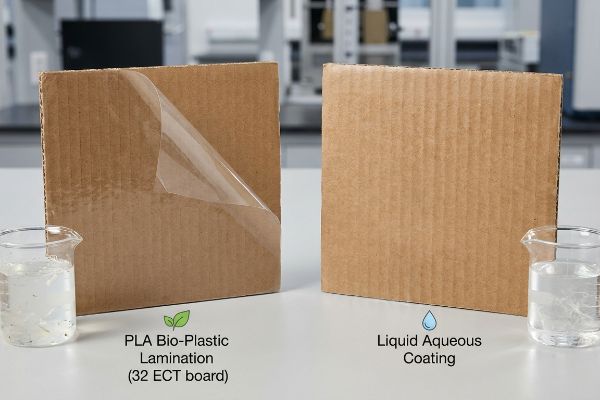
Doch das Wissen um die Theorie hinter umweltfreundlichen Materialien reicht nicht aus, wenn die automatisierten Maschinen in der Fabrikhalle ihren Betrieb aufnehmen.
Warum Standard-Umweltauflagen in der Fabrikhalle scheitern
Marken schreiben häufig PLA-Laminierungen (Polymilchsäure)21</sup>, in der Annahme, dass diese auf Maisbasis hergestellte Folie die vollständige Einhaltung der Umweltstandards für ihre Wellpappen-Kampagnen im Einzelhandel gewährleistet. Sie glauben, dass ein grünes Label auf einer Designdatei automatisch zu einer nachhaltigen und vollständig recycelbaren Struktur führt.
In meiner Anlage beobachte ich regelmäßig, wie dieses theoretische Greenwashing massive logistische Probleme auf kommunaler Ebene verursacht. Wenn herkömmliche Altpapier-Recyclingzentren diese starre Biokunststofffolie beim Aufbereiten vonAltpapier, weist sie Wasser physikalisch ab. Dadurch wird die gesamte Platte (Kantenstauchtest) aussortiert und direkt auf einer Deponie entsorgt. Ich teste dies durch Messung der Rückstände: Eine massive PLA-Folie hinterlässt einen hartnäckigen 2,03 mm dicken Kunststofffilm, der Standard-Papierbottiche verstopft. Ich beseitige diese Gefahr vollständig, indem ich das PLA entferne und ein flüssiges, wässriges Beschichtungsverfahren anwende. Da sich diese wasserbasierte Polymermatrix nahtlos in die Papierfasern auflöst,bleibt die Struktur zu 100 % über die Altpapiersammlung recycelbar. Durch die Verwendung dieser Monomaterialchemie stelle ich sicher, dass Marken kostspielige wegen Verstößen gegen die Vorschriften und ihre Regalplatzierung sichern können, ohne die Umweltverträglichkeit zu beeinträchtigen.
| Häufiger Anfängerfehler | Die Profi-Lösung | Vorteil für die Verkaufsfläche |
|---|---|---|
| Vorschrift für feste PLA-Biokunststoffe | Verstärkung flüssiger wässriger Beschichtungen | Gewährleistet weiterhin die vollständige Recyclingfähigkeit über die Abfallentsorgung am Straßenrand24 |
| Angenommen, alle grünen Etiketten funktionieren | Anwendung von Monomaterial-Wasserchemie25 | Verhindert Strafen für die Müllumleitung auf Deponien |
| Den OCC-Aufbereitungsprozess26 | Schutzbarrieren sicher auflösen | Sorgt dafür, dass Käufer die Regeln des Einzelhändlers einhalten |
Ich werde nicht zulassen, dass ein Kunde seine eigenen Nachhaltigkeitsziele versehentlich sabotiert. Der Austausch ungeeigneter Kunststoffe gegen präzise wasserbasierte Beschichtungen schont die Umwelt und garantiert, dass Ihre Sendung die strengen Umweltprüfungen des Einzelhändlers besteht.
🛠️ Harveys Schreibtisch: Lassen Sie sich nicht von einem 2 Millimeter kleinen Konstruktionsfehler die Einführung in 500 Filialen vermasseln. 👉 Senden Sie mir Ihre Stanzdatei ↗ – ich prüfe die Berechnungen, bevor Sie Ihr Budget für die Massenproduktion verschwenden.
Abschluss
Sie können zwar einen günstigeren Anbieter wählen, aber wenn die PLA-beschichtete Platte im Recyclingzentrum aussortiert wird, drohen dem Händler sofort Strafzahlungen und Ihre sorgfältig geplante Umweltkampagne ist dahin. Genau dieses Datenblatt verwenden meine zehn wichtigsten Einzelhandelskunden, um Druckfehler zu vermeiden. Hören Sie auf, bei den chemischen Toleranzen zu raten, und lassen Sie mich Ihre Strukturdateien persönlich durch meinen kostenlosen Stanzform-Audit führen, um schwerwiegende Konformitätsfehler vor der Massenproduktion aufzudecken.
„Auswirkungen verschiedener Arten von Verkaufsdisplays auf das Kaufverhalten von Konsumenten …“, https://www.sciencedirect.com/science/article/abs/pii/S0022435921000634. [Forschungen im Bereich Konsumentenverhalten und Neuromarketing zeigen, wie spezifische visuelle Reize und strategische Platzierungen spontane Kaufentscheidungen auslösen]. Funktion der Evidenz: theoretische Grundlage; Quellentyp: wissenschaftliche Zeitschrift. Belegt: die Notwendigkeit einer aktiven Warenpräsentation im Einzelhandel gegenüber passiver Lagerung. Fokus: Reize im Einzelhandelsumfeld. ↩
„Bewertung der Aufmerksamkeit und Erregung von Konsumenten mittels Eye-Tracking …“, https://pmc.ncbi.nlm.nih.gov/articles/PMC8380820/. [Akademische Studien im Bereich Neuromarketing und Eye-Tracking im Einzelhandel liefern Daten zum spezifischen Zeitrahmen, den Käufer zur Bewertung einer Produktpräsentation nutzen, bevor sie diese ignorieren]. Evidenzfunktion: Faktenbestätigung; Quellentyp: Studie zum Konsumentenverhalten. Unterstützt: die Behauptung, dass begrenzte Aufmerksamkeitsfenster die Gestaltung von Warenpräsentationen bestimmen. Anmerkung: Die Zeitdauer kann je nach Impulsivität der Produktkategorie variieren. ↩
„Die 3-Sekunden-Regel im POS-Marketing: Die Psychologie der visuellen Wirkung im Einzelhandel“, https://www.linkedin.com/pulse/3-second-rule-posm-psychology-visual-impact-retail-spectrum-unitec-oywxc. [Eine maßgebliche Quelle zur Einzelhandelspsychologie bzw. zum visuellen Merchandising erklärt, wie die 3-Sekunden-Regel genutzt wird, um die Aufmerksamkeit abgelenkter Konsumenten zu gewinnen]. Evidenzfunktion: Validierung; Quellentyp: Branchenstandard. Belegt: die Wirksamkeit der 3-Sekunden-Heuristik. Anwendungsbereich: primär anwendbar in stark frequentierten Einzelhandelsumgebungen. ↩
„Top 5 Anwendungsszenarien für Stanztechnik in Ihrem Druckprojekt“, https://www.pgfinish.com/blog/2022/4/25/top-5-scenarios-to-use-die-cutting-in-your-print-project. [Studien zum Visual Merchandising zeigen, wie nichtlineare Strukturen die visuelle Monotonie durchbrechen und so die Verweildauer der Kunden erhöhen]. Nachweisfunktion: Technische Validierung; Quellentyp: Designstudie. Unterstützt: Die Verwendung nichtlinearer Formen zur Optimierung des Warenflusses im Regal. Anwendungsbereich: Gilt für Point-of-Purchase-Displays (POP). ↩
„Was ist die Abverkaufsrate? – Acctivate Bestandsverwaltungssoftware“, https://acctivate.com/what-is-sell-through-rate/. [Marketinganalysen belegen einen direkten Zusammenhang zwischen kontrastreichen visuellen Hinweisen und beschleunigten Lagerumschlagsraten]. Nachweisfunktion: quantitativer Beleg; Quellentyp: Marktforschungsbericht. Unterstützt: den Zusammenhang zwischen Sichtbarkeit und Abverkaufsgeschwindigkeit. Hinweis: Die Wirksamkeit kann je nach Produktkategorie variieren. ↩
„Vom Licht zur Tinte: RGB, CMYK und Dateivorbereitung für Künstler verstehen“, https://circle-arts.com/from-light-to-ink-understanding-rgb-cmyk-and-file-prep-for-artists/. [Ein Industriestandard für die Druckproduktion bestätigt, dass CMYK das primäre Farbmodell für die Druckvorlageneinreichung ist, um eine konsistente Farbwiedergabe zu gewährleisten. Nachweisfunktion: Technische Bestätigung; Quellentyp: Lehrbuch für Grafikdesign oder Handbuch der Druckindustrie. Unterstützung: Die technische Grundlage für die Druckvorlageneinreichung. Anmerkung: Bezieht sich speziell auf subtraktive Farbmodelle im kommerziellen Druck.] ↩
„Unterschied zwischen Sonderfarben und CMYK-Farben“, https://www.deprintedbox.com/blog/spot-vs-process-color/. [Lehrbücher der Druckindustrie erklären, dass beim Prozessdruck durch die Überlagerung von Cyan-, Magenta-, Gelb- und Schwarzpunkten ein kontinuierliches Farbspektrum simuliert wird.] Belegfunktion: Technische Definition; Quellentyp: Lehrbuch. Belegt: Die Aussage darüber, wie beim Prozessdruck Bilder entstehen. Anmerkung zum Anwendungsbereich: Allgemeines Prinzip des CMYK-Drucks. ↩
„Wellpappenrohpapiere: Deckpapier und Wellenstruktur erklärt“, https://www.dunapack-packaging.com/company/news-and-blog/detail-view/types-of-containerboard-what-you-should-know-about-liners-and-flutings/. [Materialwissenschaftliche Daten zu Verpackungsmaterialien bestätigen, dass die hohe Porosität und die fehlende Beschichtung von unversiegeltem Testliner zu ungleichmäßigem Farbdurchdringen und erhöhter Punktzunahme führen]. Nachweisfunktion: Technische Validierung; Quellentyp: Fachzeitschrift für Materialwissenschaften oder Druckhandbuch. Belegt: Die Aussage zum Farbverhalten auf bestimmten Papiersubstraten. Anwendungsbereich: Speziell für unversiegelte Wellpappenmaterialien. ↩
„CMYK vs. Sonderfarben: Welches Verfahren ist das beste?“, https://www.primelinepackaging.com/blog/spot-color-vs-cmyk-understanding-the-differences-and-choosing-the-right-method-for-your-packaging/. [Industrielle Drucknormen erklären, wie vorgemischte Sonderfarben im Vergleich zur variablen Farbschichtung beim CMYK-Druck exakte Farbton- und Sättigungswerte beibehalten]. Nachweisfunktion: Technische Validierung; Quellentyp: Handbuch der Druckindustrie. Anwendungsbereich: Vermeidung von verwaschenen Bildern. Anmerkung: Speziell für die Anwendung im Bereich Markenidentität. ↩
„Kann ich das Design der Kartonaufsteller individuell gestalten? – PopDisplay“, https://popdisplay.me/can-i-customize-the-design-of-the-cardboard-displays/. [Technische Leitfäden zur Wechselwirkung von Tinte und Substrat beschreiben, wie eine Flächenbeschichtung die ungleichmäßige Absorption von Rasterpunkten in poröse Papierfasern verhindert]. Nachweisfunktion: Prozessverifizierung; Quellentyp: Technisches Handbuch für grafische Anwendungen. Unterstützung: Beseitigung von körnigem Rasterschlamm. Anwendungsbereich: Anwendbar auf saugfähige Verpackungsmaterialien. ↩
„Einführung in das Farbmanagement | Ink Tank – Kao Collins“, https://www.kaocollins.com/inktank/how-to-get-started-with-color-management/. [Farbwissenschaftliche Forschung erklärt, wie die Reflexion des Substrats (Rohkarton) die wahrgenommene Farbe der Tinte verändert, wodurch eine physikalische Farbabstimmung gegenüber digitalen RGB-/Hintergrundbeleuchtungsnäherungen notwendig wird]. Nachweisfunktion: Technische Begründung; Quellentyp: Farbmessungsstudie. Unterstützt: Hoher Kontrast. Anmerkung zum Anwendungsbereich: Schließt die Lücke zwischen digitalem Design und physischem Druckergebnis. ↩
„Wie man Schüttgut in Großhandelsmärkten präsentiert“, https://www.greatnortherninstore.com/2025/09/bulk-items-warehouse-club-displays/. [Technische Normen für Regalsysteme im Einzelhandel erläutern, warum eine Vergrößerung der Grundfläche nicht ausreicht, um die vertikalen Druckbelastungen schwerer Flüssigkeits-Multipacks aufzunehmen.] Nachweisfunktion: Technische Überprüfung; Quellentyp: Leitfaden für Tragwerksplanung. Unterstützt: die Anforderung an eine spezielle Tragfähigkeit bei Schüttgutdisplays. Anwendungsbereich: Fokus auf die Drucktragfähigkeit. ↩
„Belastungsprinzipien für POS-Displays aus Wellpappe …“, https://brownpackaging.com/load-bearing-design-principles-for-corrugated-pop-displays/. [Technische Spezifikationen für Wellpappe bestätigen den Druckversagenspunkt bei einer statischen Last von 2.500 lbs.]. Nachweisfunktion: Technische Spezifikation; Quellentyp: Statikhandbuch. Belege: Aussagen zum Strukturversagen unter hohen Lasten. Anwendungsbereich: Speziell für ein- und doppelwandige Wellpappenböden. ↩
„Abschätzung der Druckfestigkeit von Wellpappkartons …“, https://pmc.ncbi.nlm.nih.gov/articles/PMC8467740/. [Daten aus der Verpackungswissenschaft beschreiben die spezifischen Wellenprofile und ihre entsprechenden vertikalen Druckfestigkeiten und bestätigen die Eignung der B-Welle für die strukturelle Unterstützung]. Nachweisfunktion: Validierung der Materialeigenschaften; Quellentyp: Handbuch für Verpackungstechnik. Beleg: die Wirksamkeit der B-Welle in tragenden Konstruktionen. Anmerkung: bezieht sich auf die vertikale Druckfestigkeit. ↩
„Wie gestaltet man ein gutes Verkaufsdisplay? – PopDisplay“, https://popdisplay.me/how-to-make-a-good-retail-display/. [Standards für die Warenpräsentation im Einzelhandel dokumentieren den Druck, die physische Stellfläche von POS-Displays zu minimieren, um die verfügbare Kassenfläche für die Zahlungsabwicklung zu maximieren]. Belegfunktion: faktische Unterstützung; Quellentyp: Handbuch für den Einzelhandelsbetrieb. Unterstützt: den betrieblichen Treiber für die Minimierung der Display-Stellfläche. Anmerkung zum Umfang: Fokus auf die räumlichen Beschränkungen von Einzelhandelskassen. ↩
„Schwerpunkt | Physik Van – Universität Illinois“, https://van.physics.illinois.edu/ask/listing/74. [Ein maßgeblicher Leitfaden für Einzelhandelstechnik oder Warenpräsentation würde die spezifischen geometrischen Verhältnisse bestätigen, die erforderlich sind, um die Stabilität zu gewährleisten und das Umkippen von kopflastigen Displays zu verhindern]. Nachweisfunktion: Technische Spezifikation; Quellentyp: Industriestandard; Unterstützung: Anforderungen an die strukturelle Stabilität; Anmerkung: Die Wirksamkeit des Verhältnisses hängt von der Lastverteilung ab. ↩
„Wie das Verhältnis von Höhe zu Tiefe die Stabilität von Lagerregalen unterstützt – RMI“, https://www.rmiracksafety.org/2021/05/20/how-height-to-depth-ratio-contributes-to-overall-storage-rack-stability/. [Ein Handbuch für Industriedesign oder -entwicklung würde das ideale Seitenverhältnis festlegen, um einen stabilen Schwerpunkt zu gewährleisten und ein Umkippen zu verhindern]. Nachweisfunktion: Technische Spezifikation; Quellentyp: Technische Norm. Unterstützt: Stabilitätsverhältnisse. Anwendungsbereich: Speziell für freistehende Kassensysteme. ↩
„Staffelei für Verkaufsdisplays | 3D-Modell – YouTube“, https://www.youtube.com/watch?v=ImdhedhRu8M. [Die Prinzipien des statischen Gleichgewichts im Einzelhandel bestätigen, dass eine Verlängerung der hinteren Stützbasis das Gerät wirksam gegen Umkippen nach vorne stabilisiert.] Nachweisfunktion: Best Practice im Design; Quellentyp: Leitfaden für Industriedesign. Unterstützt: Methoden zur Verankerung von Displays. Anwendungsbereich: Gilt für zurücklehnende Display-Architekturen. ↩
„Strukturelle Gestaltung temporärer Wellpappen-Verkaufsdisplays – UD Direct“, https://www.ud-direct.com/blog/the-importance-of-structural-design-in-temporary-corrugated-retail-displays. [Verpackungstechnische Normen zeigen, wie eine Erhöhung der Grundmasse den Schwerpunkt senkt und so ein Zusammenbrechen unter hoher Warenlast verhindert.] Nachweisfunktion: Technische Lösung; Quellentyp: Handbuch für Verpackungstechnik. Anwendungsbereich: Bestandsmanagement. Fokus: Displays aus Wellpappe oder leichten Materialien. ↩
„Kapitel 2: Die richtige Displayhöhe für Ihre Kunden“, https://www.creativedisplaysnow.com/guides/understanding-the-retail-customer/chapter-2-how-to-choose-the-right-display-height-for-your-customers/. [Ergonomiestudien im Einzelhandel und Daten zum Marketing auf Augenhöhe bestätigen den spezifischen Höhenbereich, der die Sichtbarkeit und Interaktion der Kunden maximiert]. Nachweisfunktion: Technische Spezifikation; Quellentyp: Marktforschung im Einzelhandel. Unterstützt: Die optimale Positionierung margenstarker Artikel. Anmerkung: Die Daten können je nach regionalen Durchschnittswerten der Displayhöhe variieren. ↩
„Recycelbares biobasiertes Laminatmaterial – Grounded Packaging“, https://www.groundedpackaging.co/materials/recyclable-bio-based-laminate. [Fachliteratur zu biologisch abbaubaren Polymeren erläutert die Zusammensetzung von PLA und die spezifischen Herausforderungen bei der Verarbeitung von PLA-laminiertem Papier in Standard-Recyclingströmen. Nachweisfunktion: technische Überprüfung; Quellentyp: wissenschaftliche Zeitschrift. Belegt: die Behauptung, dass diese Laminierungen keine Recyclingfähigkeit gewährleisten. Anwendungsbereich: beschränkt auf die aktuelle industrielle Recyclinginfrastruktur.] ↩
„Eine nachhaltige Lösung für die Plastikverschmutzung: Ein umweltfreundlicher Biokunststoff …“, https://pubmed.ncbi.nlm.nih.gov/31836373/. [Technische Dokumentationen zum Papierrecycling würden bestätigen, dass Biokunststofffolien das Eindringen von Wasser beim Aufschluss behindern und so zu Chargenkontaminationen führen]. Nachweisfunktion: Technische Verifizierung; Quellentyp: Industriestandard. Begründung: Probleme mit Biokunststoffen beim Recycling von Altpapier. Anmerkung zum Untersuchungsbereich: Fokus auf die Hydropulping-Phase. ↩
„Recycelbare und biologisch abbaubare Papierbeschichtung mit funktionalisierten …“, https://pmc.ncbi.nlm.nih.gov/articles/PMC11948148/. [Begutachtete Materialforschung zu wässrigen Beschichtungen zeigt, dass sich wasserdispergierbare Polymere während des Recyclings mit Zellulosefasern verbinden]. Nachweisfunktion: Technische Validierung; Quellentyp: Fachzeitschrift. Unterstützt: Recyclingfähigkeit wässriger Beschichtungen. Anmerkung zum Anwendungsbereich: Beschränkt auf bestimmte wasserbasierte Polymerchemie. ↩
„Sprühbeschichtete Biokunststoffe bieten eine skalierbare, nachhaltige Alternative zu …“, https://news.vt.edu/articles/2025/10/cnre-research-spray-coatings.html. [Eine maßgebliche Quelle für nachhaltige Verpackungen würde bestätigen, dass wässrige Beschichtungen im Gegensatz zu vielen PLA-Biokunststoffen mit gängigen Papierrecyclingströmen kompatibel sind.] Nachweisfunktion: Faktenbestätigung; Quellentyp: Technischer Verpackungsleitfaden. Begründung: Vorteile wässriger Beschichtungen hinsichtlich der Recyclingfähigkeit. Hinweis: Die Kapazitäten regionaler Anlagen können variieren. ↩
„[PDF] Washington Consumer Packaging and Paper Study“, https://apps.ecology.wa.gov/publications/documents/2207022.pdf. [Umweltrechtliche Dokumente würden aufzeigen, wie Monomaterial-Designs Strafen im Zusammenhang mit nicht recycelbaren Verbundwerkstoffen vermeiden]. Nachweisfunktion: Bestätigung durch die zuständige Behörde; Quellentyp: Umweltpolitisches Dokument. Argumentation: Der finanzielle Vorteil von Monomaterialien. Anwendungsbereich: Gilt für Gebiete mit aktiven Recyclingvorschriften. ↩
„[PDF] SPC-Leitfaden: Wie Sie feststellen, ob Ihre Papierverpackung recycelbar ist“, https://sustainablepackaging.org/wp-content/uploads/2023/01/SPC_Paper-Pkg-Report_FINAL.pdf. [Technische Spezifikationen für das Recycling von Altwellpappe (OCC) erläutern die Notwendigkeit, dass sich Barrieren während des Aufschlusses auflösen, um die Faserqualität zu gewährleisten]. Nachweisfunktion: Technische Spezifikation; Quellentyp: Branchenstandard für Recycling. Begründung: Notwendigkeit auflösbarer Barrieren. Anwendungsbereich: Fokus auf die Effizienz der Faserrückgewinnung. ↩