Die Einführung einer Premiummarke ist stressig, besonders wenn zerbrechliche Glasbehälter beim Transport zerbrechen oder Duftöle die Verpackung auflösen. Sie benötigen eine stabile Lösung, die im Regal tatsächlich funktioniert.
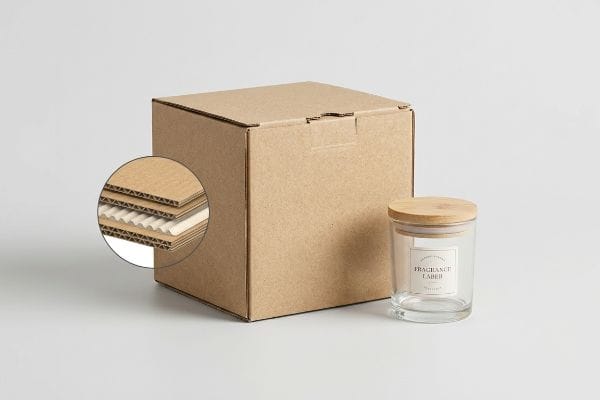
Die Vorteile von Kerzenkartons aus Kraftpapier liegen in ihrer hohen Stabilität, ihrer natürlichen Optik und ihrer umweltfreundlichen Recyclingfähigkeit. Durch die Verwendung dichter, frischer Papierfasern absorbieren diese ungebleichten Wellpappkartons auf natürliche Weise leichte Transporterschütterungen und schützen so die schweren Glasbehälter. Gleichzeitig wird die Migration von Lösungsmitteln aus hochkonzentrierten Duftölen vollständig verhindert.
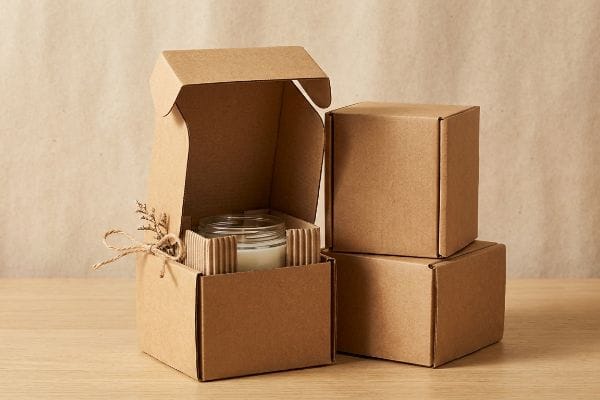
Die Wahl der richtigen natürlichen Verpackung klingt in der Theorie gut, aber die Theorie schützt Ihre Gewinnmargen nicht, wenn die physische Lieferkette schwierig und unvorhersehbar wird.
Was besagt die 3-Stunden-Regel für Kerzen?
Neue Firmengründer konzentrieren sich obsessiv auf die Brenndauer des Wachses und ignorieren dabei völlig, dass genau diese chemischen Eigenschaften ihre Verkaufsverpackung zerstören, lange bevor der Kunde zu Hause überhaupt ein Streichholz anzündet.
Das kommt darauf an. Die 3-Stunden-Regel für Kerzen besagt, dass die Brenndauer so lange sein muss, bis die oberste Wachsschicht vollständig geschmolzen ist. Dadurch wird ein Tunnelbrand verhindert und eine maximale Duftentfaltung gewährleistet. Die hohe Konzentration an Duftölen verändert jedoch grundlegend die Gestaltung der Verkaufsverpackung.
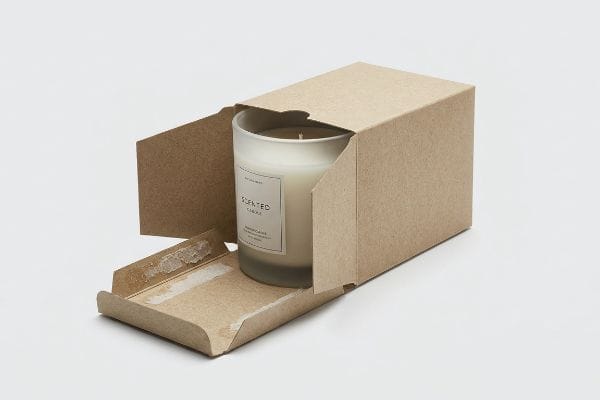
Das Verständnis von Wachsbecken ist zwar gut für das Kundenerlebnis, birgt aber ein verstecktes chemisches Problem für Ihr Logistikzentrum und Ihre Handelspartner.
Wie Duftöle herkömmliche Klebstoffe von Kartons zerstören
Die meisten Marketingteams entwerfen schlichte, unbeschichtete Kartonverpackungen, um ihren Premium-Produktlinien eine rustikale und umweltfreundliche Optik zu verleihen. Sie gehen davon aus, dass handelsübliche wasserbasierte Klebstoffe den Boden nahtlos zusammenhalten und behandeln das schwere Glasgefäß wie jedes andere Produkt im Regal. Dabei wird die instabile chemische Zusammensetzung des Produkts selbstaußer, was zu gravierenden Lieferkettenproblemen führen kann.
Selbst erfahrene Designer übersehen diesen blinden Fleck oft beim Mischen von Duftstoffen. Konzentrierte Duftprofile wirken in geschlossenen Systemen wie hochaktive chemische Lösungsmittel . Wenn diese Öle in einem warmen LKW ausgasen, dringen sie direkt in die porösen Papierfasern ein. Der stechende, überwältigende Geruch des losen Duftstoffs schlägt einem entgegen, sobald man den Umkarton öffnet, kurz bevor man sieht, wie die Bodenlaschen aufspringen, weil das Lösungsmittel den üblichen PVA-Klebstoff (Polyvinylacetat) aufgelöst hat .
| Häufiger Anfängerfehler | Die Profi-Lösung | Vorteil für die Verkaufsfläche |
|---|---|---|
| Verwendung von handelsüblichem PVA-Klebstoff auf Duftboxen | Umstellung auf EVA-Schmelzklebstoffe4 | Verhindert das Ausreißen der Bodenklappe |
| Die Ausgasung organischer Lösungsmittel während des Transports wird vernachlässigt . 5 | Spezifizierung einer lösungsmittelbeständigen Matrix | Hält die Gläser sicher im Karton |
| Verwendung von flachen Crash-Böden für schweres Glas | Mechanische Reibungssperren6 | Spart 15 Sekunden mühsamer Klebebandreparaturen |
Ich schreibe für stark parfümierte Produktlinien stets EVA-Schmelzkleber (Ethylenvinylacetat) vor, da dieser chemisch unempfindlich gegenüber der Migration organischer Lösungsmittel ist und so Ihre Gewinnmargen vor katastrophalen Einstürzen im Verkaufsraum bewahrt.
🛠️ Harveys Schreibtisch: Sind Sie sich nicht sicher, ob Ihr Klebstoff Duftstoffwanderung standhält? Schicken Sie mir Ihre Stanzformdatei. Ich markiere die kritischen Stellen vor dem Drucken. 👉 Kostenlose Klebstoffanalyse ↗ — Direkter Kontakt zu mir. Kein automatisierter Werbe-Spam, versprochen.
Woraus bestehen Kraftkartons?
Die Annahme, dass braunes Papier immer die gleiche Struktur aufweist, ist ein kostspieliger Beschaffungsfehler. Die genaue Molekularstruktur Ihres Kartons entscheidet darüber, ob Ihre Ware den Seetransport übersteht oder vollständig zerfällt.
Kraftkartons werden aus ungebleichtem Zellstoff im Sulfatverfahren hergestellt. Dadurch bleiben lange, natürliche Zellulosefasern erhalten, was zu einem äußerst strapazierfähigen Karton führt. Im Gegensatz zu übermäßig verarbeitetem Recyclingpapier weist echter Kraftkarton eine hervorragende dynamische Druckfestigkeit auf und eignet sich daher ideal zum Schutz schwerer Konsumgüter weltweit.
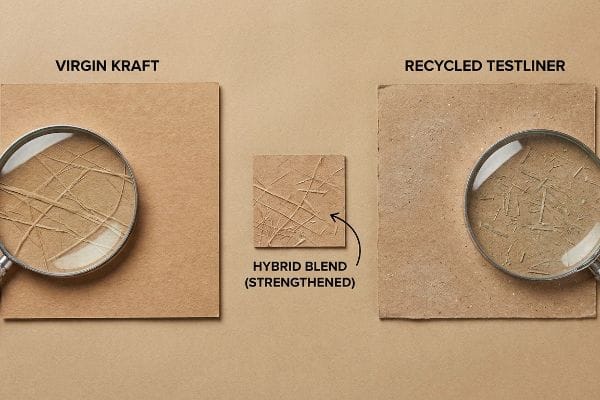
Die Kenntnis der Inhaltsstoffe ist nur der erste Schritt; erst das Verständnis dafür, wie sich diese Fasern im Laufe der Zeit zersetzen, schützt Ihre schweren Waren vor katastrophalen Schäden.
Die versteckte Gefahr von vollständig recyceltem Testliner
Einkaufsteams, die maximale Nachhaltigkeit anstreben, schreiben häufig 100 % recyceltes Testliner für ihre robusten Verkaufsdisplays vor. Sie gehen davon aus, dass der Karton, weil er wie dickes, robustes braunes Papier aussieht, die gleiche physikalische Festigkeit wie frisches, ungebrauchtes Material besitzt. Dabei wird die mikroskopische mechanische Realität des Papieraufbereitungsprozesses außer Acht gelassen .
Es ist eine häufige Falle, in die selbst erfahrene Beschaffungsteams tappen, die strenge Umweltziele erreichen wollen, ohne die Konstruktion anzupassen. Stellen Sie sich Papierfasern wie ein Gummiband vor: Jedes Mal, wenn man es dehnt und recycelt, wird das Material kürzer und schwächer.Berührt man eine übermäßig recycelte Pappe in der Fabrik, fühlt sie sich übermäßig staubig und spürbar weich an. Meine Faustregel lautet: Genau 30 Prozent Neuware direkt in die tragenden Wellen einbringen,um die für den Transport im Doppelstapelverfahren notwendige Druckfestigkeit sofort wiederherzustellen.
| Häufiger Anfängerfehler | Die Profi-Lösung | Vorteil für die Verkaufsfläche |
|---|---|---|
| Vorschrift für reines Recycling-Testliner für schwere Gläser | Einspritzen eines 30%igen Neuware-Kraftmaterials10 | Verhindert katastrophales Fundamentzerdrücken |
| Unter der Annahme, dass alle braunen Platten die gleiche elektrische Feldstärke aufweisen | Spezifizierung langer, frischer Zellulosefasern11 | Übersteht schweres Palettenfrachtaufkommen |
| Vernachlässigung der mikroskopischen Faserverkürzung12 | Konstruktion von Hybridmaterial-Wellen | Erfüllt die strengen Öko-Quoten des Einzelhandels |
Ich lasse niemals zu, dass ein Kunde das Risiko eingeht, einen großen Teil der Hohlkammern mit vollständig aufgebrauchten Recyclingfasern zu verlegen; nur durch das Mischen von frischem Neumaterial in die Hohlkammern kann ich die absolute strukturelle Haltbarkeit garantieren.
🛠️ Harveys Schreibtisch: Zahlen Sie unwissentlich überhöhte Preise für strukturell erschöpfte, übermäßig recycelte Testliner? 👉 Fordern Sie Ihre Materialspezifikationsprüfung an ↗ — Sicher herunterladen. Bei Fragen können Sie mich gerne kontaktieren.
Was sind die Nachteile von Kraftpapier?
Rohes, ungebleichtes Papier sieht in einem Boutique-Regal wunderschön aus, führt aber zu starken Oberflächenspannungskonflikten, wenn man versucht, moderne Verpackungsmerkmale in das Design zu integrieren.
Die Nachteile von Kraftpapier liegen vor allem in seiner hohen Porosität und Empfindlichkeit gegenüber Schwankungen der Luftfeuchtigkeit. Da es sich in feuchter Umgebung stark ausdehnt, führt das Aufbringen starrer Materialien wie transparenter Kunststofffenster auf seine Oberfläche oft zu einer hohen Oberflächenspannung, wodurch sich der Faltschachtelkarton stark verzieht oder abblättert.
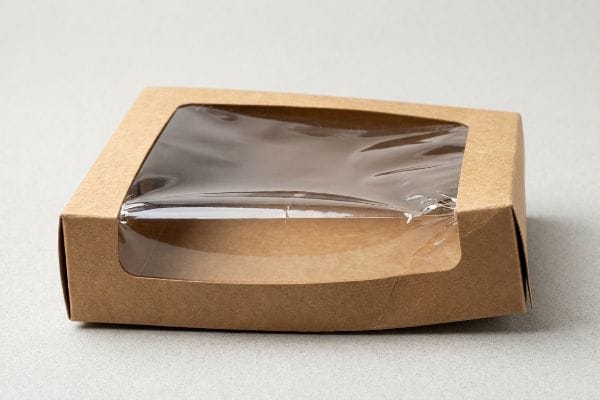
Eine physisch verformte Verpackung zerstört Ihre Markenwahrnehmung im Regal vollständig, und die Ursache liegt in der Regel darin, wie die Fabrik mit dem ausgestanzten Hohlraum umgeht.
Das Desaster mit der Fensterflickenspannung
Markenmanager fordern häufig Verpackungen mit Sichtfenster, um den Konsumenten einen direkten visuellen Einblick in das Produkt zu ermöglichen. Sie weisen ihre Lieferanten an, eine flache, transparente PET-Folie (Polyethylenterephthalat)13 über eine ausgestanzte Öffnung zu kleben, in der Annahme, dass handelsübliche Klebstoffe die Verpackung für den Einzelhandel perfekt formstabil und makellos halten.
Selbst erfahrene Designteams tappen in diese Falle, wenn sie unterschiedliche Materialien mischen, ohne deren Wärmeausdehnungskoeffizienten zu berücksichtigen. Es ist, als würde man versuchen, eine starre Glasscheibe direkt auf einen Küchenschwamm zu kleben. Da sich die starre Kunststoffscheibe und das poröse Papier völlig unterschiedlich ausdehnen und zusammenziehen<sup>14</sup>, führt ein herkömmlicher Klebstoff dazu, dass sich der flache Karton stark verzieht. Man kann förmlich ein scharfes Knistern hören, wenn der steife Kunststoff gegen die Spannung der Papierfasern ankämpft, was schließlich dazu führt, dass sich die Scheibe während des Transports komplett löst.
| Häufiger Anfängerfehler | Die Profi-Lösung | Vorteil für die Verkaufsfläche |
|---|---|---|
| Verwendung von starren Klebstoffen auf transparenten PET-Folien | Aufbringen eines klimabeständigen elastischen Klebstoffs15 | Hält Kartons perfekt flach und stapelbar |
| Mischen von Standardkunststoffen mit porösem Kraftpapier | Ersatz durch hochtransparente PLA-Folie | Garantiert 100%ige Recyclingfähigkeit über die Wertstoffsammlung16 |
| Die Ausdehnungsraten der Umgebungsfeuchtigkeit werden vernachlässigt | Nutzung eines flexiblen Fenster-Patch-Protokolls | Verhindert das Ablösen von Fensterfolien an Regalen17 |
Ich schreibe für alle Verpackungen mit Sichtfenster einen hochelastischen, klimabeständigen Klebstoff vor, der sicherstellt, dass sich die gesamte Schachtel dynamisch mit den Papierfasern dehnt, anstatt auseinanderzureißen.
🛠️ Harveys Schreibtisch: Befürchten Sie, dass sich Ihr Schaufenster verzieht, bevor es im Laden landet? Lassen Sie mich Ihre Materialspezifikationen überprüfen. 👉 Kostenlose Substratprüfung anfordern ↗ — Keine Formulare, die endlose Verkaufsgespräche auslösen. Einfach nur echter Mehrwert.
Senken Kerzen den Cortisolspiegel?
Wellness-Marken nutzen Aromatherapie, um den Stress der Käufer zu reduzieren, aber der Versand schwerer Glasbehälter quer durchs Land wird garantiert sofort den Blutdruck Ihres Logistikteams in die Höhe treiben.
Ja. Kerzen senken den Cortisolspiegel durch die Verwendung gezielter Aromatherapieöle, wie beispielsweise Lavendel, die das olfaktorische System des Gehirns anregen und so körperliche Entspannung fördern. Um diese schweren und zerbrechlichen Wellnessprodukte aus Glas jedoch sicher in den Einzelhandel zu bringen, ist eine präzise entwickelte Verpackung erforderlich, die ein Zerbrechen während des Transports und der damit verbundenen Vibrationen verhindert.
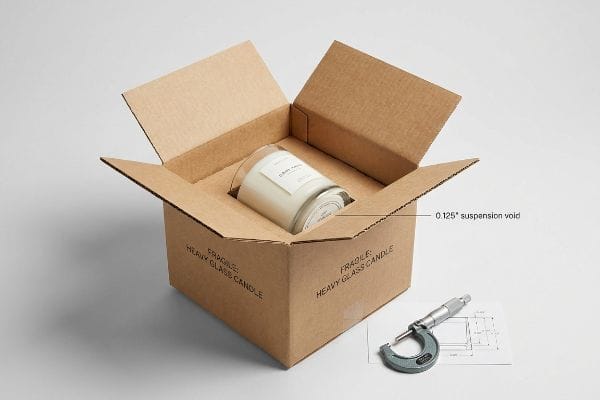
Es ist einfach, ein einzelnes Display in einem kontrollierten Labor perfekt aufzustellen, aber die harte Realität sieht anders aus, wenn man 5.000 schwere Einheiten über den Ozean verschickt.
Warum Standardkartongrößen in der Fabrik scheitern
Marken aus der Beauty- und Wellnessbranche bestimmen die Abmessungen ihrer Umverpackungen häufig anhand des genauen Außendurchmessers ihrer schweren Glastiegel. Sie gehen davon aus, dass eine dichte, bündige Kartonverpackung maximalen Schutz bietet und vertrauen darauf, dass die dicken Wellpappwände einen Sturz aus 18 cm Höhe abfangen und das zerbrechliche Produkt im Inneren schützen.
Das ist nicht nur Theorie – ich sehe das in der Praxis, wenn wir dynamische Transportsimulationen nach ISTA (International Safe Transit Association) 3A durchführen. Wenn man ein schweres Glasgefäß ohne einen geeigneten internen Puffer eng verpackt, überträgt sich die gesamte kinetische Energie bei einem seitlichen Aufprall direkt auf den Behälter. Ich habe die Messwerte mit dem Mikrometer nach einem Fall aus 914,4 mm (36 Zoll) Höhe abgelesen, und eine bündige Verpackung führt garantiert zu einem zerbrochenen Produkt. Durch die Einhaltung eines exakten Luftspalts von 3,17 mm (0,125 Zoll) ¹⁹ mithilfe eines speziell zugeschnittenen Kartoneinsatzes schließen wir die Luft ein und nutzen die Geometrie des Einsatzes, um die kinetische Energie vollständig zu absorbieren. Diese präzise Toleranzeinstellung verhindert Glasbruch, senkt die Retourenquote im Einzelhandel und spart unseren Kunden bei einer Standardproduktion rund 18,5 Prozent der Haftungsansprüche für beschädigte Waren²⁰ .
| Häufiger Anfängerfehler | Die Profi-Lösung | Vorteil für die Verkaufsfläche |
|---|---|---|
| Die äußeren Kartons eng an das Glasgefäß anlegen | Konstruktion eines 0,125 Zoll großen Aufhängungshohlraums21 | Verhindert Glassplitter im Gang |
| ausschließlich auf äußere Wellblechwände angewiesen | Integration von individuell gestanzten Kartoneinlagen22 | Beschleunigt das Auspacken für die Ladenangestellten |
| Dadurch wird die kinetische Schockenergie direkt übertragen | Lufteinschluss zur Dämpfung von Stoßbelastungen23 | Verhindert gefährliche Leckagen von flüssigem Wachs |
Ich erweitere die Innenabmessungen mathematisch, um nahtlos einen Schutzpuffer zu integrieren, wobei die eingeschlossene Luft Stöße beim Fallen vollständig absorbiert und eine makellose Warenpräsentation gewährleistet.
🛠️ Harveys Schreibtisch: Lassen Sie sich nicht von einem 2 Millimeter kleinen Konstruktionsfehler die Einführung in 500 Filialen vermasseln. 👉 Senden Sie mir Ihre Stanzdatei ↗ – ich prüfe die Berechnungen, bevor Sie Ihr Budget für die Massenproduktion verschwenden.
Abschluss
Die Wahl eines günstigeren Lieferanten für Ihre Verpackungen mag verlockend erscheinen, doch wenn organische Lösungsmittel herkömmliche Klebstoffe während des Transports auflösen, entsteht massive Reibung. Dies verlangsamt die Montage um schätzungsweise 30 Prozent und schmälert Ihre Gewinnspanne erheblich. Über 500 Markenmanager nutzen meine Checkliste für die Druckvorstufe, um genau diese fatalen Fehler in der Anfangsphase zu vermeiden. Hören Sie auf, über chemische Toleranzen zu raten, und lassen Sie mich Ihre Dateien persönlich mit meinem kostenlosen Stanzform-Pre-Flight-Audit prüfen, um Klebstofffehler vor Produktionsbeginn zu erkennen.
„Verpackung wasserbasierter Klebstoffe“, https://next.henkel-adhesives.com/us/en/articles/packaging-water-based-adhesives.html. Technische Erklärung, wie aromatische flüchtige organische Verbindungen in Duftölen die Haftung wasserbasierter Klebstoffe auf unkaschiertem Karton schwächen. Nachweisfunktion: technische Validierung; Quellentyp: Forschung zu Verpackungsmaterialien. Unterstützt die Behauptung, dass die Chemie von Duftkerzen zu strukturellen Verpackungsfehlern führt. Fokus: unkaschierter Karton. ↩
„Ätherische Öle als natürliche Quellen von Duftstoffen für … – PMC“, https://pmc.ncbi.nlm.nih.gov/articles/PMC7865210/. Kurze Erläuterung, wie die chemischen Eigenschaften von Duftölen es ihnen ermöglichen, als Lösungsmittel zu wirken. Rolle des Nachweises: technische Validierung; Quellentyp: Studie aus der Materialwissenschaft oder dem Chemieingenieurwesen. Unterstützt: die Behauptung, dass Duftprofile als Lösungsmittel wirken. Anmerkung zum Untersuchungsbereich: Fokus auf ätherische und synthetische Öle. ↩
„Engineering Functional PVA: A Comprehensive Review of … – PMC“, https://pmc.ncbi.nlm.nih.gov/articles/PMC12903494/. Kurze Erläuterung der chemischen Wechselwirkung, bei der Duftstofflösungsmittel Polyvinylacetat-Bindungen abbauen. Nachweisfunktion: Technische Validierung; Quellentyp: Technisches Datenblatt des Klebstoffs oder Fachzeitschrift für Chemie. Belegt: Die Behauptung, dass Öle zum Versagen von PVA-Klebstoffen führen. Anwendungsbereich: Speziell für Standardklebstoffe auf Papierbasis. ↩
„Der vollständige Leitfaden zu verschiedenen Schmelzklebstoffarten“, https://www.hotmelt.com/blogs/blog/hot-melt-glue-types?srsltid=AfmBOopx5gIuMrRHMcVUOzXODS9_etQ0KI-HkJc8GOW4IezV3mJzkJ3Z. Technischer Vergleich von EVA-Schmelzklebstoffen und PVA-Klebstoffen hinsichtlich ihrer Beständigkeit gegenüber Duft- und ätherischen Ölen. Nachweis: Technische Spezifikation; Quelle: Datenblatt des Klebstoffherstellers oder Fachzeitschrift für Materialwissenschaften. Begründung: Verwendung von EVA zur Vermeidung von Klebstoffversagen. Anwendungsbereich: Gilt speziell für Verpackungen von Duftkerzen. ↩
„Auf dem Weg zu zuverlässigen Klebeverbindungen – PMC – NIH“, https://pmc.ncbi.nlm.nih.gov/articles/PMC12195023/. Erläuterung, wie flüchtige organische Verbindungen (VOCs) in Duftölen ausgasen und gängige Verpackungsklebstoffe chemisch zersetzen. Nachweisfunktion: wissenschaftlicher Mechanismus; Quellentyp: verfahrenstechnische Studie oder VOC-Emissionsbericht. Begründung: Bedarf an lösungsmittelbeständigen Matrixmaterialien. Anmerkung zum Untersuchungsbereich: Fokus auf Transportbedingungen. ↩
„Crash Lock Boxes | Auto Bottom Box“, https://www.smurfitwestrock.com/products/packaging/corrugated/crashlock-boxes. Analyse der Unterschiede in der strukturellen Integrität zwischen Reibungsverschluss- und Standard-Crashbodenverpackungen beim Transport von schweren Glasbehältern. Nachweisfunktion: Technischer Standard; Quellentyp: Verpackungsdesignhandbuch oder Logistikstudie. Anwendungsbereich: Stabilität schwerer Glasbehälter in Kartons. Anmerkung zum Anwendungsbereich: Bezieht sich auf die Vermeidung von Strukturversagen. ↩
„Auswirkungen der Nanocellulose-Zugabe auf die mechanischen Eigenschaften … – PMC“, https://pmc.ncbi.nlm.nih.gov/articles/PMC10780965/. Technische Erklärung, wie wiederholtes Aufschließen die Cellulosefasern verkürzt und die strukturelle Integrität von Karton im Vergleich zu Primärfasern beeinträchtigt. Nachweisfunktion: Technische Verifizierung; Quellentyp: Materialwissenschaftliche Publikation. Unterstützt: die Behauptung, dass das Aufschließen die physikalischen Eigenschaften des Substrats verändert. Fokus: Fasermorphologie und -bindung. ↩
„Veränderte Qualität von Recyclingfasermaterial. Teil 1. Faktoren …“, https://bioresources.cnr.ncsu.edu/resources/changing-quality-of-recycled-fiber-material-part-1-factors-affecting-the-quality-and-an-approach-for-characterisation-of-the-strength-potential/. Technische Erläuterung, wie wiederholte mechanische Recyclingprozesse Zellulosefasern verkürzen und ihre Zugfestigkeit verringern. Nachweisfunktion: Technische Validierung; Quellentyp: Fachzeitschrift für Materialwissenschaften. Unterstützt: Die Behauptung, dass Recycling die Faserintegrität beeinträchtigt. Anwendungsbereich: Gilt für Karton aus Holzschliff. ↩
„Druckfestigkeit von Wellpappenverpackungen mit niedrigem …“, https://pmc.ncbi.nlm.nih.gov/articles/PMC10054506/. Technische Daten, die den spezifischen Anteil an Primärfasern aufzeigen, der erforderlich ist, um die strukturelle Integrität und die vertikale Druckfestigkeit von recycelter Wellpappe wiederherzustellen. Nachweisfunktion: Empirische Validierung; Quellentyp: Handbuch für Verpackungstechnik. Unterstützt: die 30%-Schwelle für die Wiederherstellung der Festigkeit. Anmerkung zum Anwendungsbereich: Kann je nach Ausgangsqualität des verwendeten recycelten Testliners variieren. ↩
„[PDF] Eine vergleichende Untersuchung der physikalischen Eigenschaften von recycelten, hochbelastbaren …“, https://repository.rit.edu/cgi/viewcontent.cgi?article=1299&context=theses. Technische Validierung des spezifischen Anteils an Primärfasern, der erforderlich ist, um strukturelles Versagen in hochbelastbaren Recyclingverpackungen zu verhindern. Nachweisfunktion: Technische Spezifikation; Quellentyp: Fachzeitschrift für Materialwissenschaften. Anwendungsbereich: Verhinderung von Bodenquetschungen. Anmerkung zum Anwendungsbereich: Gilt für schwere Behälterverpackungen. ↩
„Neue Konfiguration des Kantenstauchtests mit flächenhafter Dehnungsmessung …“, https://pmc.ncbi.nlm.nih.gov/articles/PMC8510352/. Empirische Belege für einen Zusammenhang zwischen der Länge von Zellulosefasern und erhöhten Werten im Kantenstauchtest (ECT) sowie der Palettenstabilität. Funktion der Belege: Technische Spezifikation; Quellentyp: Handbuch für Verpackungstechnik. Anwendungsbereich: Haltbarkeit von palettierter Fracht. Fokus: Langstreckentransport. ↩
„Recycelte Fasern verlieren nach mehreren Zyklen an Festigkeit – LinkedIn“, https://www.linkedin.com/posts/packaging-simplified_sustainability-packaging-technology-activity-7440617234970087424-yJ7g. Wissenschaftliche Erklärung des mechanischen Abbaus und der Verkürzung von Fasern während des Recyclingprozesses und deren Auswirkungen auf die Festigkeit von Karton. Belegfunktion: Faktischer Mechanismus; Quellentyp: Bericht der Zellstoff- und Papierindustrie. Begründung: Notwendigkeit von Wellen aus Hybridmaterial. Anmerkung: Bezieht sich auf den physikalischen Abbau von Zelluloseketten. ↩
„Fensterverpackungen für Faltschachteln – Folienauswahl – Netpak“, https://www.netpak.com/en/packaging-resources/industry-articles/window-packaging-folding-cartons-film-choices/. Maßgebliche Richtlinien für Verpackungsmaterialien bestätigen die Verwendung von Polyethylenterephthalat (PET) als Standard für transparente Fenstereinsätze aufgrund seiner optischen Klarheit und mechanischen Eigenschaften. Nachweisfunktion: Technischer Nachweis; Quellentyp: Branchenhandbuch. Unterstützung: Materialspezifikation für Faltschachteln mit Fenster. Anwendungsbereich: Gilt für Faltschachteln im Einzelhandel. ↩
„Linearer thermischer Ausdehnungskoeffizient von Polymeren und … – PMC“, https://pmc.ncbi.nlm.nih.gov/articles/PMC12693757/. Materialwissenschaftliche Daten zu thermischen und hygroskopischen Ausdehnungskoeffizienten von Polymeren im Vergleich zu Cellulosefasern. Nachweisfunktion: Technische Validierung; Quellentyp: Materialwissenschaftliches Handbuch. Stützt die Behauptung unterschiedlicher Ausdehnungsraten. Anmerkung: Beinhaltet die feuchtigkeitsbedingte Ausdehnung von Papier. ↩
„Der Einfluss von Klebstoffen auf PE-Folien und PET-Verpackungen …“, https://www.bostik.com/us/en_US/blog/post/advanced-packaging/tapes-labels/nam/impact-adhesives-pe-film-pet-packaging-recycling-streams/. Vergleichende Analyse der Klebstoffelastizität und ihrer Auswirkungen auf die strukturelle Integrität von Verbundverpackungen bei Temperatur- und Feuchtigkeitsschwankungen. Nachweis: Technische Spezifikation; Quelle: Technisches Datenblatt des Klebstoffherstellers oder Ingenieurstudie. Begründung: Die Anforderung an elastische Klebstoffe zur Erhaltung der Planarität von Kartons. Fokus: Verklebung von PET mit Kraftpapier. ↩
„Recycelbare und biologisch abbaubare Papierbeschichtung mit funktionalisiertem PLA …“, https://pmc.ncbi.nlm.nih.gov/articles/PMC11948148/. Nachweis anhand von Verpackungsabfallnormen oder kommunalen Recyclingrichtlinien, dass die Kombination von PLA-Folien mit Kraftpapier mit den Recyclingströmen am Straßenrand kompatibel ist. Nachweisfunktion: faktische Bestätigung; Quellentyp: Industriestandard oder Regulierungsbehörde. Unterstützt: die Behauptung, dass der Ersatz von PLA die Recyclingfähigkeit gewährleistet. Anmerkung zum Anwendungsbereich: Kann je nach regionalen Anlagenkapazitäten variieren. ↩
„Einfluss von Feuchtigkeit und Werkzeugtemperatur auf die maximale …“, https://pmc.ncbi.nlm.nih.gov/articles/PMC12194946/. Technischer Nachweis, der erklärt, wie feuchtigkeitsbedingte Ausdehnung in porösem Kraftpapier zu Haftungsversagen führt und wie flexible Reparaturverfahren diesem entgegenwirken. Funktion des Nachweises: technische Erklärung; Quellentyp: Fachzeitschrift für Materialwissenschaften oder Handbuch für Verpackungstechnik. Unterstützt: die Anwendung flexibler Verfahren zur Vermeidung von Delamination. Anwendungsbereich: speziell für hygroskopische Substrate wie Kraftpapier. ↩
„Paragon Jar Shipping Boxes | Glass Food Jar Packaging“, https://flushpackaging.com/collections/paragon-jar-packaging?srsltid=AfmBOorYDYq0N3o9ul-a9QZsOtKYUuh782fUMIH2HYGH3_jUNS6Cr1E1. Technische Analyse der Stoßdämpfung von Wellpappe zur Bewertung, ob die Wandstärke allein Bruch in bündigen Glasverpackungen verhindert. Nachweisfunktion: Technische Validierung; Quellentyp: Verpackungsnorm. Unterstützt: Die Wirksamkeit von bündigen Wellpappverpackungen für zerbrechliches Glas. Anwendungsbereich: Beschränkt auf nicht gepolsterte Sekundärverpackungen. ↩
„Testverfahren“, https://ista.org/test_procedures.php. Validierung spezifischer räumlicher Puffermessungen in der Verpackungstechnik zur Minderung von Glasbruch während des Transports. Nachweisfunktion: Technische Validierung; Quellentyp: Technische Norm oder Whitepaper zum Thema Verpackung. Belege: Die Wirksamkeit eines 3,175 mm großen Hohlraums bei der Absorption kinetischer Energie. Anmerkung zum Anwendungsbereich: Kann je nach Behältergewicht und Glasdicke variieren. ↩
„Marktbericht Glasverpackungen – Aktualisierte Version 2026“, https://www.strategicmarketresearch.com/market-report/glass-packaging-market. Quantitative Belege zeigen die durchschnittliche Reduzierung finanzieller Verluste durch Bruch bei Verwendung präzisionsgefertigter Einsätze. Belegfunktion: Quantitativer Nachweis; Quellentyp: Branchenfallstudie oder Finanzbericht der Logistikbranche. Unterstützt durch: Die spezifische Kennzahl der Haftungsreduzierung von 18,5 %. Anmerkung: Basierend auf Daten aus Standardproduktionsläufen. ↩
„Verpackung von Glas: Von Behältern zur Verkapselung … – PMC“, https://pmc.ncbi.nlm.nih.gov/articles/PMC12897758/. Technische Erläuterung, wie spezifische Toleranzen die G-Krafteinwirkung auf zerbrechliches Glas während des Transports reduzieren. Nachweisfunktion: Technische Spezifikation; Quellentyp: Handbuch für Verpackungstechnik. Beleg: Wirksamkeit einer 0,125-Zoll-Lücke. Anmerkung: Die Wirksamkeit variiert je nach Glaswandstärke. ↩
„Einsätze für Wellpappkartons: Wie Sie Schäden reduzieren und die Transportgeschwindigkeit erhöhen …“, https://www.pacificbox.com/box-resources/corrugated-box-inserts. Daten aus dem Industriedesign vergleichen die strukturelle Stabilität und Lastverteilung von maßgefertigten Einsätzen mit der von einwandigen Wellpappkartons. Nachweisfunktion: Industriedesignnorm; Quellentyp: Logistik-Fallstudie. Vorteile: Besserer Schutz empfindlicher Güter. Anmerkung: Die Wirksamkeit hängt von der Präzision des Stanzschnitts ab. ↩
„Anwendung von Luftpolsterung zur Verbesserung der Stoßdämpfung …“, https://pmc.ncbi.nlm.nih.gov/articles/PMC8006905/. Analyse der Wirkungsweise von Luftpolstern als Dämpfer zur Reduzierung der kinetischen Energie und zur Verhinderung von Sprödbrüchen in Glas. Nachweis: Physikalisches Prinzip; Quellentyp: Lehrbuch der Materialwissenschaften. Unterstützt: Verwendung von Lufteinschlüssen zur Bruchvermeidung. Anwendungsbereich: Gilt für pneumatische und strukturierte Hohlraumfüllungssysteme. ↩