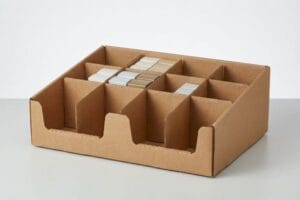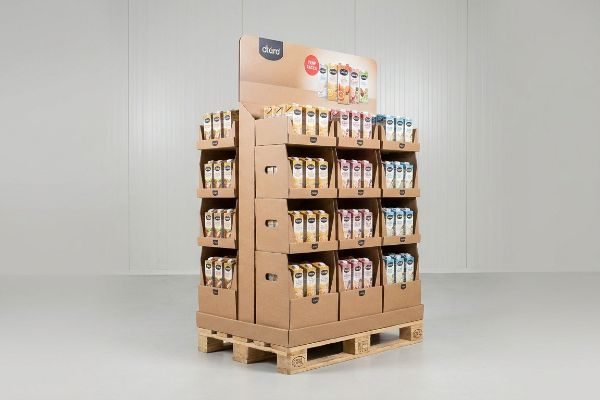
Großflächige Einzelhändler benötigen maximale Transparenz ihres Warenbestands, doch die Wahl eines vollwertigen Verkaufsregalsystems kann bei schlechter Planung zu enormen Frachtkosten führen. Sind Sie wirklich bereit für die Logistik eines Großhandelsclubs?
Das kommt darauf an. Palettendisplays maximieren die Impulswirkung und die Flächendichte bei umsatzstarken Merchandising-Kampagnen. Allerdings erfordern diese massiven Konstruktionen eine strikte Einhaltung logistischer Vorgaben, eine ausgeklügelte Tragfähigkeitskonstruktion und eine großvolumige Produktion, um die höheren Herstellungskosten im Vergleich zu Standardverpackungen auszugleichen.

Bevor Sie Ihr gesamtes Werbebudget für das vierte Quartal für eine riesige, 48×40 Zoll (121,9×101,6 cm) große Konstruktion einsetzen, müssen Sie die enormen physikalischen Einschränkungen verstehen, denen diese Konstruktionen beim Transport ausgesetzt sind.
Was sind die Nachteile von Palettenbetten?
Die Grundlage Ihrer Markteinführung im Einzelhandel ist mathematisch gesehen deren größtes logistisches Risiko.
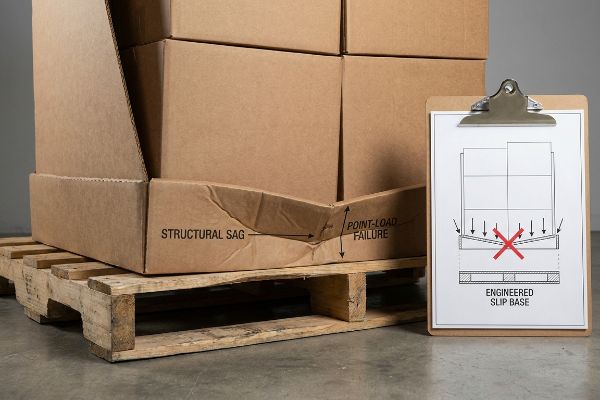
Zu den Nachteilen von Palettenbetten zählen starkes Durchhängen, punktuelles Versagen und ungleichmäßige Gewichtsverteilung der Waren bei Verwendung minderwertiger Holzplattformen. Ohne eine stabile Zwischenlage aus Wellpappe verformen sich schwere Verkaufsdisplays direkt in den Spalten des Decks und zerstören so dauerhaft die vertikale Druckfestigkeit der unteren Ebene während des Transports.
Die theoretische Tragfähigkeit mag in Ihrer Tabelle gut aussehen, aber die physikalische Realität billiger Holzgestelle wird Ihre Gewinnmargen gnadenlos zunichtemachen.
Der strukturelle Zusammenbruch der „Palettenlücke“
Bei der Prüfung von Stanzformen sehe ich immer wieder aufwendig gestaltete CAD-Mastertrays, die die Geometrie der darunterliegenden Holztransportplattform völlig außer Acht lassen. Einkaufsteams platzieren oft schwere, vorbefüllte Wellpappdisplays direkt auf minderwertigen Holzpaletten für den Export, um ein paar Cent pro Einheit zu sparen. Sie gehen fälschlicherweise davon aus, dass die starre B-Welle die breiten Spalten zwischen den oberen Deckbrettern automatisch überbrückt . Dieser gefährliche blinde Fleck ignoriert die unnachgiebige Wirkung von Punktlasten während des Transports .
In meiner Einrichtung erlebe ich regelmäßig, dass diese theoretische Annahme bei Belastungstests vor der Serienproduktion scheitert. Wenn ein Käufer auf einer Excel-Stückliste besteht, die den Verzicht auf die schützende Bodenfolie vorschreibt, stapel ich seinen voll beladenen Prototyp auf einen Standard-Lattenrost. Innerhalb von 48 Stunden in der Klimakammer verziehen sich die ungestützten Bereiche des Wellpappenbodens und hängen bis zu 16,5 mm (0,65 Zoll) direkt in die entstandenen Hohlräume durch. Die gesamte untere Ebene verformt sich, was zu einem drastischen Verlust der Festigkeit im Box-Compression-Test (BCT) führt . Um dies zu beheben, überarbeite ich die CAD-Geometrie komplett, richte die innere Wellenrichtung des Bodens exakt senkrecht zu den Längsträgern aus und verwende eine massive doppelwandige Bodenverstärkung. Durch diese präzise Ausrichtung stelle ich sicher, dass die Co-Packing-Einheit eine perfekt gleichmäßige Gewichtsverteilung beibehält, das Durchhängen der unteren Ebene verhindert und Kunden vor Rückbelastungen von bis zu 8.500 US-Dollar durch den Einzelhändler im Distributionszentrum bewahrt.
| Metrik/Merkmal | Standard-Holzpalette | Konstruierte Gleitbasis |
|---|---|---|
| Durchhang der Deckspalte | >15 mm Verformung5 | 0 mm (Vollflächig) |
| Flötenausrichtung | Zufällige Ausrichtung | Senkrechte Spannweite |
| Unterste Stufe BCT | 40% Kraftverlust6 | 100 % Kapazität erhalten7 |
Ich weigere mich, zuzulassen, dass eine billige Lattenplattform eine hochwertige Merchandising-Kampagne ruiniert. Nur wenn die strukturelle Basis so konstruiert ist, dass physische Hohlräume ausgeglichen werden, kann sichergestellt werden, dass Ihr Produkt den Transport in den Einzelhandel unbeschadet übersteht.
🛠️ Harveys Schreibtisch: Beeinträchtigen Ihre schweren Kassenbehälter Ihre Versand-ROI bereits, bevor sie überhaupt im Geschäft ankommen? 👉 Fordern Sie eine kostenlose Frachtdichteanalyse an ↗ — Ich prüfe jede Strukturdatei persönlich innerhalb von 24 Stunden.
Ziehen Paletten Termiten an?
Schädlinge sind die stillen Killer der Einhaltung internationaler Vorschriften im Einzelhandel.
Ja. Unbehandelte Holzpaletten ziehen während der Lagerung und des internationalen Transports Termiten, Schädlinge und andere Insekten an. Um einen Befall dauerhaft zu verhindern und die strengen internationalen Zollbestimmungen problemlos einzuhalten, müssen in der kommerziellen Lieferkette wärmebehandelte Holzpaletten verwendet werden, die nach dem anspruchsvollen Umweltstandard ISPM 15 zertifiziert sind.
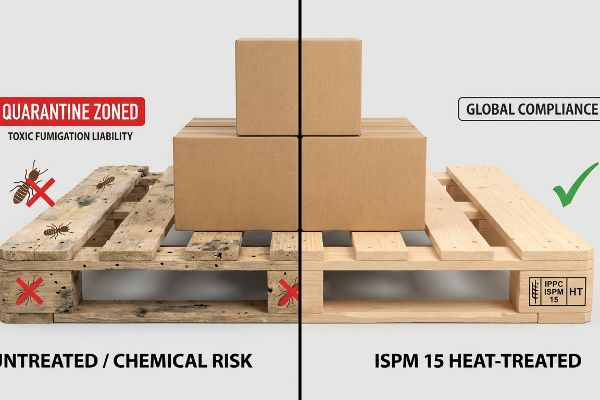
Abgesehen vom schockierenden Aspekt eines Schädlingsbefalls führt das Ignorieren von Holzbehandlungsprotokollen sofort zu einer massiven Quarantäne der Lieferkette.
Die Haftung für toxische Begasung
Bei der Prüfung von Logistikplänen für Wareneingangskampagnen stelle ich immer wieder fest, dass Marken versuchen, Kosten zu sparen, indem sie für ihre großflächigen Kampagnen billige, nicht zertifizierte Holzgestelle verwenden. Sie gehen davon aus, dass die Warenannahme im Einzelhandel das Fehlen internationaler Schädlingsbekämpfungszertifikate einfach ignoriert, solange die Kartonaufsteller selbst einwandfrei aussehen. Diese leichtsinnige Strategie missachtet sowohl internationale Biosicherheitsgesetze als auch die strengen ESG-Vorgaben (Umwelt, Soziales und Unternehmensführung), die von großen Warenhausketten durchgesetzt werden.
In meinem Betrieb erlebe ich regelmäßig die verheerenden Folgen, wenn Käufer versuchen, dies nachträglich durch die chemische Behandlung von Billigholz mit Methylbromid zu beheben. Ich teste diese toxischen Plattformen mit VOC-Emissionssensoren (Sensoren für flüchtige organische Verbindungen), und die Ausgasungen stellen eine erhebliche Gefahr für die Umwelt dar . Die Messwerte der verbleibenden chemischen Dämpfe sind oft extrem hoch, was die Sendung für die Entsorgung im Einzelhandel unzulässig macht und die Lagerarbeiter gefährdet. Meine zwanzigjährige Erfahrung im Lager hat mich gelehrt, chemische Begasungsmittel vollständig zu verbieten. Stattdessen schreibe ich für jede Schwerlastlieferung die ausschließliche Verwendung von kammergetrocknetem, wärmebehandeltem und ISPM-15-zertifiziertem Holz vor . Durch die Durchsetzung dieses strengen Wärmebehandlungsprotokolls eliminiere ich sofort das Risiko von Umweltverschmutzungen in der Lieferkette, stelle eine reibungslose Zollabfertigung sicher und bewahre den Kunden vor existenzbedrohenden Bußgeldern wegen Umweltverschmutzung im Einzelhandel.
| Metrik/Merkmal | Unbehandeltes/Chemisch behandeltes Holz | ISPM 15 wärmebehandelt |
|---|---|---|
| Schädlingsrisiko | Hohe Verwundbarkeit | Sterilisierter Kern10 |
| Zollstatus | Sofortige Quarantäne11 | Reibungsfreies Spiel |
| ESG im Einzelhandel | Schwerer Verstoß | 100% konform12 |
Ich habe schon erlebt, wie ganze Saisonprodukteinführungen im Hafen wegen einer einzigen nicht autorisierten Holzlatte zum Erliegen kamen. Die Wärmebehandlung Ihrer Plattformen ist nicht nur eine umweltfreundliche Empfehlung, sondern eine unerlässliche Versicherung für Ihre Lieferkette.
🛠️ Harveys Schreibtisch: Enthält Ihr aktuelles Display-System heimlich giftige Ausdünstungen, die zur Ablehnung im Lager führen könnten? 👉 Fordern Sie jetzt Ihre kostenlose Compliance-Prüfung an ↗ — 100 % vertraulich. Ihre noch unveröffentlichten Designs sind bei mir sicher.
Ist es legal, Paletten hinter Geschäften zu entwenden?
Das Sammeln von Materialien klingt nach improvisierter Logistik, ist aber eine massive rechtliche und strukturelle Falle.
Das kommt darauf an. Ausrangierte Paletten hinter Geschäften zu sammeln, mag zwar wie ein cleverer, kostensparender Logistiktrick erscheinen, doch das Sammeln von Materialien ohne ausdrückliche Genehmigung stellt Ladendiebstahl dar. Darüber hinaus birgt die Verwendung nicht dokumentierter Holzgestelle ein hohes Risiko der Materialermüdung und führt automatisch zum Scheitern bei den strengen Umweltprüfungen großer Einzelhandelsketten.
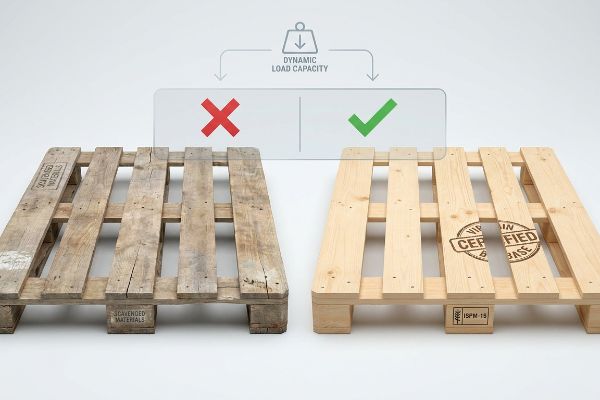
Selbst wenn Sie eine Anzeige wegen Hausfriedensbruchs vermeiden, wird die Platzierung Ihrer Premium-Ware auf strukturell erschöpftem, unbekanntem Holz Ihren Einzelhandelsstart finanziell ruinieren.
Die unsichtbare Mikrofraktur-Epidemie
Viele junge, unkonventionelle Startups glauben fälschlicherweise, dass die Wiederverwendung abgenutzter Logistikplattformen oder gebrauchter Lagerflächen ihr Engagement für Nachhaltigkeit beweist. Sie gehen davon aus, dass eine äußerlich intakte Holz- oder Wellblechkonstruktion ihre ursprüngliche Tragfähigkeit beibehält. Dabei wird die mikroskopische Physik der Materialermüdung völlig außer Acht gelassen: Vorherige Transporte haben die inneren Fasern und Befestigungselemente bereits Tausenden von Mikrostößen, Feuchtigkeitsschwankungen und der Belastung durch Gabelstapler ausgesetzt.
Das ist keine bloße Theorie – ich habe es letztes Jahr schmerzlich erfahren müssen, als ich meinen leitenden Verpackungsingenieur Mark beauftragte, die Vorgabe eines Kunden bezüglich einer „recycelten Basis“ zu testen. Der Käufer bestand darauf, dass wir einen 158,7 kg schweren Getränketräger auf eine ausrangierte, optisch einwandfreie Sekundärplattform stellten, um Materialkosten zu sparen. Während unserer internen Vibrationsprüfung hörte ich über dem Lärm des Simulators ein widerliches, dumpfes Knacken. Die inneren Holzverstrebungen, die bereits durch den vorherigen Gebrauch unsichtbar ermüdet waren, zerbrachen bei 3,2 G vollständig, wodurch das gesamte Wellpappdisplay und die Bodenschale sich sofort ablöste. Wir verwarfen die Recyclingvorgabe umgehend. Mark und ich entfernten die beschädigte Basis, kalibrierten die Rotationsschlitzmaschine und konstruierten eine neue, doppelwandige 32ECT-Wellpappe als Zwischenlage, die auf einer neuen, ISPM-zertifizierten Plattform13. Diese entscheidende Materialänderung stellte die dynamische Druckfestigkeit vollständig wieder her und überstand den 180-minütigen ISTA-Schocktest (International Safe Transit Association)14.Ich investiere Zeit und Geld in meinem Testlabor, damit Sie im Einzelhandel. Durch den Verzicht auf strukturell beeinträchtigte Recyclingmaterialien stellten wir sicher, dass die Basis ihre dynamische Tragfähigkeit beibehielt und eliminierten so das Risiko einer Rückbelastung von 12.000 US-Dollar für Transportschäden.
| Metrik/Merkmal | Gesammelte Materialien | Virgin-zertifizierter Stützpunkt |
|---|---|---|
| Interne Integrität | Unsichtbare Mikrorisse15 | 100% Werksstärke |
| CoC-Audit | Sofortiges Versagen16 | Vollständig rückverfolgbar |
| Dynamische Last | Unvorhersehbarer Zusammenbruch17 | Garantierte Kapazität |
Ich werde niemals das Überleben Ihres Produkts dem Müll anderer Leute überlassen. Präzisionstechnik erfordert eine vorhersehbare, messbare Materialfestigkeit, die nur frische, zertifizierte Lieferketten gewährleisten können.
🛠️ Harveys Schreibtisch: Beeinträchtigen undokumentierte Logistikstützpunkte heimlich Ihre dynamische Tragfähigkeit, noch bevor der LKW das Dock verlässt? 👉 Kostenlose Strukturanalyse anfordern ↗ — Keine Zwischenhändler. Sie sprechen direkt mit Statikern.
Welche fünf Displaytypen gibt es?
Die Wahl des falschen Formats führt zum sofortigen Rauswurf aus dem Laden.
Die fünf Displaytypen umfassen Bodenaufsteller, Thekenaufsteller, Aktionsflächen, Regaltabletts und große Palettenstrukturen. Jede dieser Kategorien erfordert eine hochspezifische Dimensionierung, festgelegte Materialstärken und einzigartige Raumkonzepte, um in komplexen Einzelhandelsumgebungen erfolgreich eingesetzt zu werden und die Blickrichtungen der Kunden in stark frequentierten Gängen optimal zu nutzen.
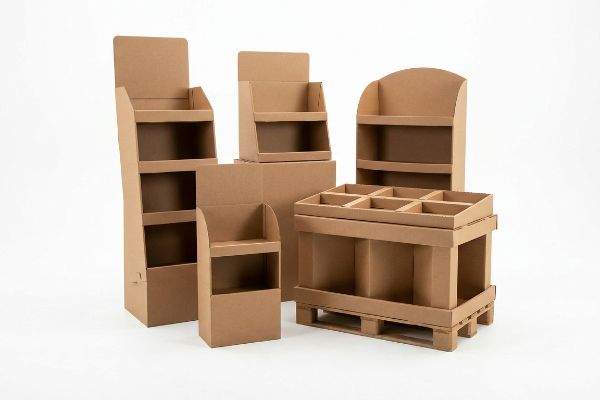
Man kann das Layout eines riesigen Lagerclubs nicht einfach auf das Format einer lokalen Apotheke verkleinern, ohne den gesamten Schwerpunkt mathematisch neu zu berechnen.
Die Falle der „Anpassung des Einzelhandelsrahmens“
Junior-Marketingteams versuchen ständig, eine einzige, standardisierte Wellpappverpackung zu entwerfen und diese dann kategorisch für alle fünf Verkaufsflächenformate einzusetzen. Sie gehen davon aus, dass eine bewährte 48×40-Zoll-Palette (121,9×101,6 cm) für Großmärkte einfach um 75 % verkleinert werden kann, um als Kassendisplay. Dabei werden die strengen ADA-Vorschriften (Americans with Disabilities Act), die spezifischen physikalischen Gegebenheiten der Schwerpunktlage und die festgelegten Regalplatzvorgaben der Einzelhändler, die für unterschiedliche Ladenumgebungen gelten, völlig außer Acht gelassen.
In meiner Einrichtung erlebe ich regelmäßig das Chaos, das entsteht, wenn bei einer Angebotsanfrage (RFQ) aus Kostengründen versucht wird, eine schwere Bodenständerplatte direkt auf ein leichtes Regaltablett aufzubringen. Beim Messen der verkleinerten, flachen Vektor-CAD-Stanzform zeigt sich, dass die 3 mm dicke Platte die winzige POS- 18- Thekenfläche (Point-of-Sale) völlig überfordert und die Verriegelungsnasen stark nach außen biegen. Nachdem mir das Einkaufsteam die Anpassung der Konstruktion erlaubt hatte, erledigte das Material selbst die Hauptarbeit. Ich nahm die Mikrometerwerte entgegen, entfernte die überdimensionierte B-Welle und stellte das Vorstufenprofil auf eine hochdichte E-Welle mit einer präzise kalibrierten, um 0,5 mm engeren Falztoleranz um . Durch die optimale Anpassung der Strukturphysik an den jeweiligen Displaytyp konnte ich die Montagezeit beim Co-Packing um 28 Sekunden pro Einheit verkürzen und dem Kunden so fast 4.100 US-Dollar an manuellen Arbeitskosten einsparen, während sich das System perfekt in die vom Einzelhändler vorgegebenen räumlichen Rahmenbedingungen einfügte.
| Metrik/Merkmal | Strategie zur Deckengrößenbestimmung | Spezifische Formatentwicklung |
|---|---|---|
| Messschieber | 3 mm B-Flöte20 überall | 1,5 mm E-Nut21 für POS |
| Einzelhandelsausrichtung | Hohe Ablehnungsrate | 100% geschäftskonform |
| Montagegeschwindigkeit | Aufgezwungene, abreißende Laschen | Reibungsloses, reißfestes Falten |
Ich entwickle Verpackungen, die die räumlichen Gegebenheiten im Einzelhandel berücksichtigen. Die Verpackung muss exakt auf die jeweilige Verkaufsfläche abgestimmt sein, sonst landet sie im Müll.
🛠️ Harveys Schreibtisch: Verursacht Ihr standardisiertes Displayformat massives Einreißen der Laschen und Reibungsverluste in der Verpackungslinie? 👉 Fordern Sie einen kostenlosen Verhältnisrechner an ↗ — Ich prüfe jede Strukturdatei persönlich innerhalb von 24 Stunden.
Abschluss
Die Verwendung billiger Latten oder minderwertiger, zusammengewürfelter Sockel beeinträchtigt die Druckfestigkeit Ihrer Produkte erheblich und zerstört Ihre Gewinnmargen. Eine solche technische Überprüfung deckte kürzlich einen fatalen Toleranzfehler von 2 mm bei einer großen nationalen Produkteinführung vor Produktionsbeginn auf. Wenn Sie sicherstellen möchten, dass Ihre Warenpräsentation den harten Realitäten der LTL-Logistik (Teilladungen) standhält, lasse ich Ihre Konstruktionsdateien persönlich einer kostenlosen Strukturanalyse , um versteckte Schwachstellen noch heute zu beseitigen.
„[PDF] Spezifikationen für Wellpappe – Fibre Box Association“, https://www.fibrebox.org/assets/2025/09/Walmart_Corrugated-Board_Specifications_Automation_Packaging_Standards.pdf. [Eine technische Verpackungsspezifikation würde die Tragfähigkeitsgrenzen und Durchbiegungsraten von B-Welle-Wellpappe beim Überbrücken von Lücken in Holzpaletten detailliert beschreiben]. Nachweisfunktion: Technische Validierung; Quellentyp: Handbuch für Verpackungstechnik. Belege: Das Versagen bestimmter Wellentypen, die strukturelle Integrität über Palettenlücken aufrechtzuerhalten. Anwendungsbereich: Variiert je nach Kartonqualität und Gesamtgewicht der Ladung. ↩
„Strukturelle Eigenschaften von rechteckigen Wellpappensandwich-Konstruktionen … – PMC“, https://pmc.ncbi.nlm.nih.gov/articles/PMC11950349/. [Ein Branchen-Whitepaper oder ein Logistik-Lehrbuch würde erläutern, wie punktueller Druck bei Vibrationen und Transport zum Strukturversagen von Wellpappenmaterialien führt]. Nachweisfunktion: Kausalitätsnachweis; Quellentyp: Branchenstandard für Logistik. Unterstützt: den Mechanismus des Strukturversagens bei palettenbasierten Displays. Anwendungsbereich: Anwendbar auf Schwerlasttransporte. ↩
„Abschätzung der Druckfestigkeit von Wellpappkartons für …“, https://pmc.ncbi.nlm.nih.gov/articles/PMC9864211/. Eine maßgebliche Quelle im Bereich Verpackungstechnik würde erläutern, wie lokale Verformungen oder Durchbiegungen in der unteren Lage eines Wellpappdisplays die Stabilität der vertikalen Säulen beeinträchtigen und zu einem überproportionalen Abfall der BCT-Werte führen. Nachweisfunktion: Technische Verifizierung; Quellentyp: Ingenieurhandbuch oder materialwissenschaftliche Studie. Unterstützt: den Zusammenhang zwischen struktureller Verformung und Druckversagen. Anwendungsbereich: Speziell für die Leistungsfähigkeit von Wellpappe. ↩
„Untersuchung des Einflusses der Steifigkeit der Palettenoberseite auf Wellpappe …“, https://pmc.ncbi.nlm.nih.gov/articles/PMC8585293/. Technische Normen für Wellpappenmaterialien legen fest, dass die Ausrichtung der Wellen senkrecht zu den Stützspalten die Tragfähigkeit optimiert und die Durchbiegung unter Gewicht minimiert. Nachweisfunktion: Technische Validierung; Quellentyp: Technischer Leitfaden der Branche oder Verpackungsnorm. Unterstützt: Die Wirksamkeit der Querausrichtung zur Vermeidung von Durchhängen. Anwendungsbereich: Gilt für strukturelle Wellpappeneinsätze. ↩
„Vorhersage des Einflusses von Spalten zwischen Palettendeckbrettern auf die …“, https://repository.rit.edu/japr/vol8/iss3/3/. [Technische Normen für palettierte Verkaufsdisplays würden die typische strukturelle Durchbiegung in Spalten zwischen Holzdeckbrettern quantifizieren]. Nachweisfunktion: Technische Kennzahl; Quellentyp: Handbuch für Verpackungstechnik. Begründet: Die strukturelle Instabilität von Holzpaletten. Anwendungsbereich: Speziell für Wellpappenladungen. ↩
„[PDF] Einfluss der Steifigkeit von Palettendeckbrettern und der Flächenlastfaktoren auf …“, https://www.unitload.vt.edu/content/dam/unitload_vt_edu/graduate-research-and-subpages-pictures-and-docs/thesis-and-dissertations-/Baker%20-%20ETD%20-%20Effect%20of%20pallet%20deckboard%20stiffness%20and%20unit%20load%20factors%20on%20corrugated%20box%20compression%20strength.pdf. [Empirische Daten aus Box Compression Tests (BCT) würden den prozentualen Tragfähigkeitsverlust bestätigen, wenn die unteren Boxen nicht durch Holzpalettenlatten gestützt werden]. Nachweisfunktion: Empirische Daten; Quellentyp: Strukturprüfbericht. Begründung: Risiko des Einsturzes der untersten Ebene. Anmerkung: Bezieht sich auf die vertikale Druckfestigkeit. ↩
„Wie viel Last kann meine Palette tragen?“, https://unitload.vt.edu/education/white-papers/5-wp-load-carrying-capacity-of-pallets.html. [Vergleichende technische Tests würden zeigen, wie eine Gleitbasis mit fester Ebene den Verlust der Tragfähigkeit im Vergleich zu spaltanfälligen Holzpaletten verhindert]. Nachweisfunktion: Vergleich der Leistung; Quellentyp: Technisches Datenblatt. Argumentation: Der Vorteil von Konstruktionsunterlagen gegenüber Holz. Anmerkung: Setzt eine korrekte Lastverteilung voraus. ↩
„Unbeabsichtigte Exposition gegenüber Gasemissionen aus Transportgütern, die für … behandelt wurden“, https://pmc.ncbi.nlm.nih.gov/articles/PMC4320564/. [Autoritative Sicherheitsdatenblätter und Arbeitsschutzrichtlinien dokumentieren die Toxizität und die Atemwegsrisiken im Zusammenhang mit Methylbromid-Rückständen in behandeltem Holz]. Nachweisfunktion: Technische Verifizierung; Quellentyp: staatliche Gesundheitsbehörde. Begründung: die Gefahr chemischer Begasungsmittel. Anwendungsbereich: spezifisch für Methylbromid-Emissionen. ↩
„Import von ISPM-15-konformem Holzverpackungsmaterial in die USA“, https://www.aphis.usda.gov/plant-imports/wood-packaging-material/import. [Das Internationale Pflanzenschutzübereinkommen (IPPC) legt den ISPM-15-Standard als globale Anforderung für die Wärmebehandlung von Holzverpackungen zur Verhinderung der Schädlingsausbreitung fest]. Nachweisfunktion: Bestätigung der Einhaltung gesetzlicher Bestimmungen; Quellentyp: internationaler Standard. Unterstützt: die Wirksamkeit und Rechtmäßigkeit der Wärmebehandlung. Anwendungsbereich: gilt für die Einhaltung internationaler Handelsbestimmungen. ↩
„[PDF] Hitzesterilisation von Holz“, https://research.fs.usda.gov/download/treesearch/62267.pdf. [Eine maßgebliche Quelle zu den ISPM-15-Standards würde erläutern, wie spezifische Kerntemperaturanforderungen Schädlinge im gesamten Holzmaterial abtöten]. Nachweisfunktion: Technische Verifizierung; Quellentyp: Internationaler Standard (IPPC). Anwendungsbereich: Reduzierung des Schädlingsrisikos bei wärmebehandelten Paletten. Anmerkung: Die Wirksamkeit hängt von der Einhaltung einer Mindestkerntemperatur über einen festgelegten Zeitraum ab. ↩
„Ein- und Ausfuhrbestimmungen für Holzverpackungsmaterialien nach …“, https://www.help.cbp.gov/s/article/Article-1200?language=en_US. [Zoll- und Grenzschutzbehörden schreiben die sofortige Quarantäne oder Zurückweisung nicht konformer Holzverpackungen vor, um die Ausbreitung invasiver Arten zu verhindern]. Nachweisfunktion: Überprüfung der gesetzlichen Bestimmungen; Quellentyp: Regierungsverordnung. Unterstützung: Zollstatus von unbehandeltem Holz. Hinweis: Die spezifischen Protokolle können je nach Einfuhrland variieren. ↩
[PDF] Erläuterungsdokument zu ISPM 15 (Verordnung über Holzverpackungen …), https://www.ippc.int/static/media/files/publication/en/2017/02/ISPM_15_ED_En_2017-02-10.pdf. [Unternehmensbezogene ESG- und Nachhaltigkeitsrahmen erfordern in der Regel die Einhaltung internationaler Pflanzenschutzstandards zur Minderung von Umweltrisiken]. Nachweisfunktion: Überprüfung der Einhaltung; Quellentyp: ESG-Berichtsstandard. Unterstützt: ESG-Status des Einzelhändlers für wärmebehandelte Paletten. Anmerkung zum Anwendungsbereich: Bezieht sich speziell auf die Einhaltung der Pflanzenschutzbestimmungen. ↩
„ISPM 15 & Exportbehandlung“, https://woodpackglobal.org/page/ISPM_15. [Das Internationale Pflanzenschutzübereinkommen (IPPC) schreibt die ISPM-15-Normen für Holzverpackungsmaterialien vor, um sicherzustellen, dass diese wärmebehandelt oder begast werden, um Schädlingsbefall zu verhindern.] Nachweisfunktion: Überprüfung der Einhaltung gesetzlicher Bestimmungen; Quellentyp: internationaler Standard; Unterstützung: Materialsicherheit und Konformität; Anwendungsbereich: hauptsächlich für internationale Versandpaletten. ↩
„Testverfahren – International Safe Transit Association“, https://ista.org/test_procedures.php. [Eine maßgebliche Quelle der International Safe Transit Association würde die spezifische Dauer und die Parameter der Schock- und Vibrationsprofile bestätigen, die zur Zertifizierung der Haltbarkeit von Verpackungen verwendet werden.] Nachweisfunktion: Technische Validierung; Quellentyp: Industriestandard; Unterstützung: Angaben zur Haltbarkeit beim Transport; Anmerkung zum Anwendungsbereich: Die Testdauern variieren je nach ISTA-Prüfserie (z. B. 3A oder 2A). ↩
„Anwendung der Mikrofrakturanalyse auf Ermüdungsbrüche in … – PMC“, https://pmc.ncbi.nlm.nih.gov/articles/PMC10890427/. [Technische Untersuchungen zur Materialermüdung in Altholz bestätigen, dass strukturelle Belastungen innere Brüche verursachen, die bei einer Oberflächeninspektion nicht sichtbar sind]. Nachweisfunktion: Technische Validierung; Quellentyp: Ingenieurstudie. Unterstützt: Risiko eines inneren Strukturversagens. Anwendungsbereich: Gilt für nicht zertifiziertes Altholz. ↩
„[PDF] Spezifische Anforderungen an Zertifizierungsstellen – Produktkettenzertifizierung“, https://connect.fsc.org/sites/default/files/2025-11/FSC-STD-20-011_V4-4_D1-0_EN_Chain-of-Custody_Evaluation_3535.pdf. [Branchenstandards für die Produktkettenzertifizierung (Chain of Custody, CoC) erfordern eine dokumentierte Herkunft und einen rechtmäßigen Eigentumsübergang, was bei wiederverwerteten Materialien nicht möglich ist.] Nachweisfunktion: Überprüfung der Einhaltung von Vorschriften; Quellentyp: Regulierungsstandard. Unterstützung: Rechts- und Prüfungsrisiko. Anwendungsbereich: Spezifisch für zertifizierte Lieferkettenaudits. ↩
„Statische vs. dynamische Last: Palettentragfähigkeitsbewertungen verständlich erklärt“, https://igps.net/static-load-vs-dynamic-load-demystifying-pallet-load-ratings/. [Materialwissenschaftliche Daten zu dynamischen Lastprüfungen zeigen, dass nicht dokumentierter Verschleiß an gebrauchten Paletten zu inkonsistenten und unzuverlässigen Tragfähigkeiten führt]. Nachweisfunktion: Sicherheitsüberprüfung; Quellentyp: Materialwissenschaftlicher Bericht. Unterstützt: Physisches Sicherheitsrisiko. Anmerkung zum Anwendungsbereich: Fokus auf dynamische Lasten im Vergleich zur statischen Tragfähigkeit. ↩
„[PDF] Dickenmessung – NIST Technical Series Publications“, https://nvlpubs.nist.gov/nistpubs/Legacy/circ/nbscircular585.pdf. [Materialwissenschaftliche Prinzipien in der Verpackungstechnik zeigen, dass eine übermäßige Dicke des Messschiebers im Verhältnis zu einer kleinen Grundfläche die Spannung an den Verriegelungslaschen erhöht und dadurch eine strukturelle Verformung verursacht]. Nachweisfunktion: Strukturprinzip; Quellentyp: Technisches Handbuch. Unterstützt: die Behauptung, dass 3 mm starker Karton für kleine POS-Einheiten strukturell ungeeignet ist. Anmerkung zum Anwendungsbereich: Die Details hängen von der Faltgeometrie ab. ↩
„[PDF] Spezifikationen für Wellpappe – Nationalarchiv“, https://www.archives.gov/files/preservation/storage/pdf/corrugated-board.pdf. [Industriestandards für Wellpappenmaterialien definieren den Standarddurchmesser von E-Welle und die Notwendigkeit präziser Falttoleranzen, um Verformungen bei kleinen Baugruppen zu vermeiden]. Belegfunktion: Technische Spezifikation; Quellentyp: Industriestandard. Belegt: Die Behauptung, dass E-Welle das richtige Material für hochauflösende Kleindisplays ist. Anmerkung: Toleranzen können je nach Hersteller variieren.] ↩
„Wellpappe und Materialqualitäten – Welle – Verpackungsstrategien“, https://www.packagingstrategies.com/articles/96269-corrugated-board-and-material-grades. [Industriestandards für Verpackungen definieren die typische Dicke von B-Wellpappe]. Nachweisfunktion: Technische Spezifikation; Quellentyp: Fertigungsnorm. Belege: Dickenmessungen der Pappe. Anmerkung: Geringfügige Abweichungen zwischen verschiedenen Herstellern weltweit sind möglich. ↩
„Leitfaden für Kartonstärke und -materialien: A-, B-, C-, D- und E-Welle“, https://105packaging.com/blogs/packaging/cardboard-thickness-guide-abcde-flutes?srsltid=AfmBOopKjbrNBSBUmamC1m6beOas_D_mRnuky41wvTNb-Em5tvrJjWgZ. [Technische Datenblätter für Mikrowellpappe bestätigen die Standardstärke der E-Welle]. Nachweisfunktion: Technische Spezifikation; Quellentyp: Leitfaden für die Verpackungsindustrie. Anwendungsbereich: Anforderungen an POS-Displays. Anmerkung: Bezieht sich speziell auf Mikrowell-Kategorien. ↩