Marken investieren Unsummen in digitale Werbung, nur um den Kunden im Endeffekt zu verlieren. Wenn Ihre Anzeige in der Masse untergeht, ist Ihre gesamte Kampagne zum Scheitern verurteilt.
POS-Werbung bezeichnet physisches Werbematerial, das im Einzelhandel direkt neben den beworbenen Produkten platziert wird. Diese Verkaufsdisplays unterbrechen das Einkaufsverhalten der Kunden, heben bestimmte Produktmerkmale hervor und regen zu Spontankäufen an, kurz bevor der Kunde seinen Einkauf an der Kasse abschließt.
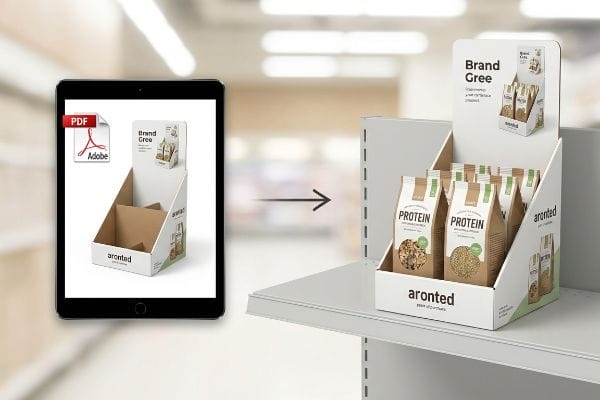
Die meisten Kampagnen scheitern daran, die Kluft zwischen einem ansprechenden PDF-Design und dem Warenangebot im Laden zu überbrücken.
Was ist POP im Einzelhandelsmarketing?
Das Verständnis des physischen Umfangs Ihrer Kampagne ist der erste Schritt, um wertvolle Verkaufsfläche zu sichern.
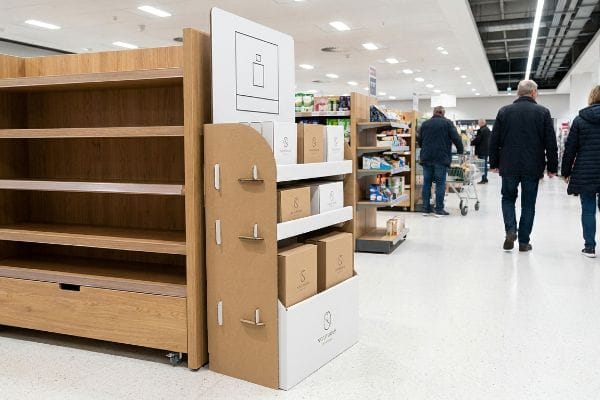
POS-Materialien im Einzelhandel umfassen den Einsatz von freistehenden, strukturierten Displays, um die Aufmerksamkeit der Kunden zu gewinnen. Verkaufsdisplays wie Palettenständer oder Wühltische fungieren als unauffällige Verkäufer, die speziell dafür entwickelt wurden, die visuelle Monotonie aufzubrechen und stöbernde Kunden auf den letzten Metern des Ganges zu aktiven Käufern zu machen.
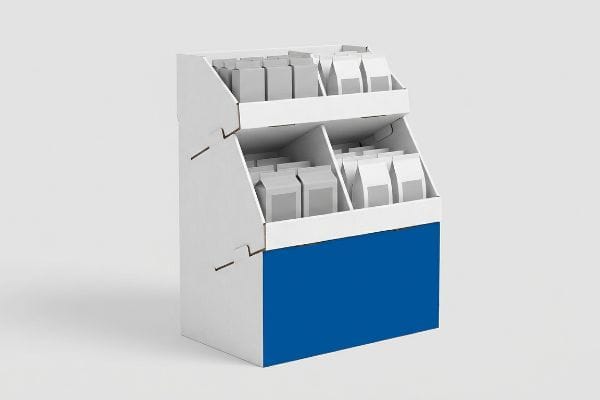
Zu wissen, was diese Einheiten leisten, ist einfach, sie so zu konstruieren, dass sie tatsächlich Aufmerksamkeit erregen, ist eine ganz andere Wissenschaft.
Die 3-3-3-Regel für Verkaufsdisplays
Viele Designteams behandeln Verkaufsdisplays wie riesige digitale Banner. Sie erstellen flache, textlastige Grafiken, die für die Betrachtung aus der Nähe auf einem hintergrundbeleuchteten Monitor konzipiert sind. Dieser Ansatz ignoriert die physische Realität, wie sich ein Mensch in einem belebten Supermarktregal bewegt¹ . Ohne strategische Raumgestaltung² wird ein bedrucktes Display schlichtweg zum Hintergrundrauschen.
Ich sehe das ständig, wenn Käufer mich bitten, seitenlange Marketingtexte auf einen Standard- Bodenbehälter zu drucken . Es ist, als würde man in einem vollen Stadion flüstern; der vorbeieilende Kunde mit seinem Einkaufswagen wird diese Information nie aufnehmen. Man muss das 3-3-3-Raumkontinuum berücksichtigen . Die Präsentation muss aus 9,1 m Entfernung durch auffällige Stanzformen optisch auffallen, aus 0,9 m Entfernung durch schräg angeordnete Regale im 1270 mm breiten Wirkungsbereich gezielt Interesse wecken und den Kaufabschluss aus 76,2 mm Entfernung fördern. Wenn ich sehe, wie ein Verkäufer ein schlecht gestaltetes Tablett auffüllt, höre ich oft das deutliche Geräusch von rohem Karton, weil die vordere Haltekante zu hoch ist und das Produkt komplett verdeckt. Indem wir diese Kante absenken, um eine Sichtbarkeit von 85 % zu gewährleisten, stellen wir sicher, dass die haptische Interaktion tatsächlich stattfindet und beschleunigen den Abverkauf, ohne auf einen Textwust angewiesen zu sein.
| Häufiger Anfängerfehler | Die Profi-Lösung | Vorteil für die Verkaufsfläche |
|---|---|---|
| Drucken von Absätzen mit kleinem Text auf der Basis. | Die Grundfläche wird mit einer einzelnen Pantone-Sonderfarbe überflutet. | Zieht aus 9,1 m Entfernung die Blicke auf sich5. |
| Flache, symmetrische Produktstapelung. | Die Regale um 15 Grad nach oben neigen6. | Trifft die natürliche Blickachse des Käufers. |
| Hochdichtende Lippen, die das Paket verbergen. | Stanzung der Vorderlippe für 85% Sichtbarkeit7. | Verhindert Reibung bei Impulsgriffen. |
Ich weigere mich, unlesbare Romane im Einzelhandel zu drucken. Durch die strikte Einhaltung dieser räumlichen Gestaltungsregeln stelle ich sicher, dass Ihre Investition in Wellpappe tatsächlich Kunden anzieht, anstatt in der Masse unterzugehen.
🛠️ Harveys Schreibtisch: Sind Ihre Displays aus zehn Metern Entfernung kaum wahrnehmbar? 👉 Überprüfen Sie Ihre Sichtbarkeit ↗ — Direkter Kontakt zu mir. Garantiert kein automatisierter Werbe-Spam.
Was konstituiert ein Einzelhandelsumfeld?
Ein Lager ist nicht einfach nur ein leerer Raum für Kisten; es ist ein streng reguliertes Logistiksystem.
Das Einzelhandelsumfeld bildet das physische und logistische Ökosystem, in dem Handel stattfindet. Es umfasst die streng regulierten räumlichen Zonen, die Sicherheitsvorschriften und die baulichen Einrichtungen innerhalb eines Geschäfts, von den Regalgängen in Großhandelsmärkten bis hin zu den Kassenbereichen in Convenience-Stores, und schreibt vor, wie Marken ihre physischen Waren rechtmäßig präsentieren dürfen.
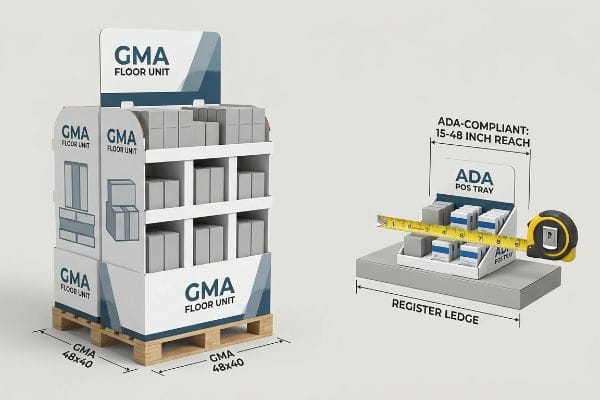
Man kann nicht einfach irgendwo eine Kiste hinstellen, wo man will; die Filialleiter setzen strenge räumliche Zonenvorschriften durch.
Die räumliche Kluft: ADA-konforme Kassensysteme vs. GMA-konforme Verkaufsflächen
Neue Marken präsentieren oft ein skalierbares Designkonzept, bei dem ein riesiges Bodendisplay einfach um 50 Prozent verkleinert werden kann, um neben der Kasse Platz zu finden. Sie gehen davon aus, dass eine einzige Stanzform für beide Bereiche ausreicht, wenn man lediglich die Abmessungen ändert. Dies ignoriert jedoch völlig die strengen rechtlichen und logistischen Vorgaben für diese beiden getrennten Bereiche . Ein solcher „Shrink-to-Fit“-Ansatz führt fast immer zur sofortigen Ablehnung durch den Filialleiter.
Kunden fragen häufig, ob sie ihre Kampagnengrafiken für den Verkaufsraum auch für die Einführung von Thekenaufstellern verwenden können. Ich muss sie immer daran hindern und die technischen Abläufe dauerhaft trennen. Verkaufsdisplays sind strikt an die Palettenbegrenzung der GMA (Grocery Manufacturers Association) von 1219 × 1016 mm (48 × 40 Zoll) gebunden, um die Lagerlogistik und die dynamische Tragfähigkeit zu gewährleisten. POS-Einheiten hingegen müssen die Anforderungen des ADA (Americans with Disabilities Act) hinsichtlich der Reichweite nach vorne erfüllen und innerhalb der vertikalen Beschränkung von 381–1219 mm (15–48 Zoll) bleiben. Ich habe einmal beobachtet, wie ein Verkäufer verzweifelt versuchte, ein übergroßes, nicht konformes Thekentablett auf einer schmalen Kassenablage zu balancieren und schließlich notdürftig Klebeband um den Boden wickelte. Das schadete dem Markenimage und blockierte den Barcode-Scanner. Indem wir diese genauen Zonengrenzen von Anfang an an Ihr Werk kommunizieren, entwickeln wir spezifische Konstruktionspläne, die die Konformitätsprüfungen problemlos bestehen und so kostspielige Nachbelastungen vermeiden.
| Häufiger Anfängerfehler | Die Profi-Lösung | Vorteil für die Verkaufsfläche |
|---|---|---|
| Verkleinerung der Bodeneinheiten für Theken. | Verwendung unterschiedlicher ADA-konformer Stanzlinien11. | Besteht strenge Prüfungen durch die Filialleiter. |
| Die Palettenbeschränkung von 48×40 Zoll(12). | Verankerung der Basis an den Standardabmessungen von GMA. | Gewährleistet die sichere Manövrierbarkeit des Gabelstaplers. |
| Über den Registerrand hinausragend. | Einhaltung eines strikten Tiefen-Höhen-Verhältnisses von 2:313. | Verhindert Trinkgelder und Haftungsansprüche. |
Ich lasse keine Überschneidungen zwischen diesen beiden Bereichen zu. Indem ich den Gang und die Kasse als völlig unterschiedliche logistische Systeme behandle, garantiere ich, dass Ihre Einheiten perfekt in die starre Struktur des Geschäfts passen.
🛠️ Harveys Schreibtisch: Sind Sie sich unsicher, ob Ihre Küchenarbeitsplatte die ADA-Richtlinien für die Barrierefreiheit verletzt? 👉 Überprüfen Sie die Maßhaltigkeit ↗ — Sicher herunterladen. Bei Fragen können Sie mich gerne kontaktieren.
Was sind die 4 Elemente des Einzelhandelsmix?
Um ein Produkt ins Regal zu bringen, muss die Strategie mit den grundlegenden Geschäftsmechanismen des Ladens in Einklang gebracht werden.
Die vier Elemente des Marketing-Mix im Einzelhandel sind Produkt, Preis, Vertrieb und Promotion. Diese Kernpfeiler bilden den operativen Rahmen, der vorgibt, wie ein Händler Kundennachfrage, Logistik, Preisstrategien und Point-of-Purchase-Marketing aufeinander abstimmt, um die Rentabilität in einem hart umkämpften Einzelhandelsumfeld zu maximieren.
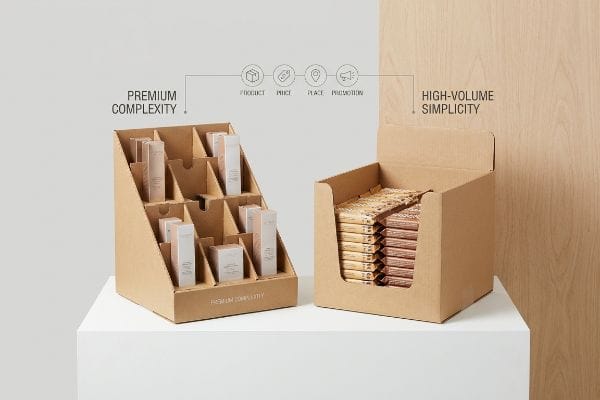
Es ist hilfreich, diese Mischung auf dem Papier zu verstehen, aber die Umsetzung dieser vier Säulen in eine Wellblechstruktur ist der Punkt, an dem Marken scheitern.
Die 4 Ps in die Praxis umsetzen – für den stationären Einzelhandel
Markenteams bringen häufig Produkte auf den Markt, ohne die Verpackung an die spezifischen Gegebenheiten des jeweiligen Einzelhändlers anzupassen. Sie gehen fälschlicherweise davon aus, dass sich eine ansprechend gestaltete Verpackung in allen sieben verschiedenen Einzelhandelstypen von selbst verkauft . Ohne die physische Einheit an das jeweilige Geschäftsmodell des Ladens anzupassen, kommt es zu Problemen in der Lieferkette. Das Produkt erweist sich letztendlich als wirtschaftlich und platztechnisch unvereinbar mit der vorgesehenen Verkaufsfläche.
Stellen Sie sich den Sortimentsmix wie die Anfertigung eines Anzugs vor: Im Großhandel, und an einem Kosmetikstand im Luxussegment sind Arbeitsschuhe unangebracht. Eine bewährte Faustregel ist, die Ladenstruktur direkt an die Nachschubgeschwindigkeit des Geschäfts anzupassen15</sup>Ein hochwertiges, komplexes modulares Trennwandsystem in einem schnelllebigen Convenience-Store ist zum Scheitern verurteilt. Ich habe schon erlebt, wie Angestellte in stark frequentierten Läden komplizierte SKU-Trennwände (Artikelnummern) herausgerissen haben, weil sie keine Zeit hatten, Flaschen sorgfältig in die engen Pappschlitze einzufädeln – die Tabletts waren danach völlig zerknittert. Indem ich die Säulen „Platz“ und „Produkt“ direkt auf die Produktionsabläufe übertrage, vereinfache ich die interne Konstruktion für stark frequentierte Bereiche. Wir ersetzen die komplexen Trennwände durch einfache Einschubtabletts<sup>16und stellen so sicher, dass die Einheit dem täglichen, intensiven Nachschub standhält.
| Häufiger Anfängerfehler | Die Profi-Lösung | Vorteil für die Verkaufsfläche |
|---|---|---|
| Die operative Geschwindigkeit des Geschäfts wird dabei außer Acht gelassen. | Anpassung der strukturellen Komplexität an die Wiederauffüllungsraten. | Verhindert das Zerreißen von Karton durch erzwungenes Beladen17. |
| Verwendung identischer Displays für alle Kanäle. | Schaffung unterschiedlicher Club- vs. Convenience-Modelle18. | Entspricht den Gewinnmargen des Einzelhändlers. |
| Überkomplizierte interne SKU-Unterteilungen. | Verwendung von modularen Einschubfächern19. | Spart den Angestellten wertvolle Zeit beim Einrichten. |
Ich baue Displays, die sich nahtlos in das jeweilige Geschäftsmodell des Einzelhändlers einfügen. Wenn Ihre physische Struktur mit deren täglichen Abläufen kollidiert, wird Ihre Kampagne abgelehnt, noch bevor sie vom LKW entladen wird.
🛠️ Harveys Schreibtisch: Verursachen Ihre Trennwände im Verkaufsraum Probleme beim Auffüllen der Regale? 👉 Optimieren Sie Ihre Einzelhandelsstrategie ↗ — Keine Formulare, die endlose Verkaufsgespräche auslösen. Nur echter Mehrwert.
Was ist ein Beispiel für Einzelhandelswerbung?
Ein massiver, markenbezogener Endaufsteller am vorderen Ende des Ganges ist die ultimative physische Werbung.
Ein Beispiel für Werbung im Einzelhandel ist ein gut sichtbares, freistehendes Wellpapp-Display an den Regalenden. Diese Displays nutzen auffällige Grafiken, strategische Produktplatzierung und dreidimensionale Strukturelemente, um die Aufmerksamkeit der Kunden an stark frequentierten Gangkreuzungen zu gewinnen und Kaufentscheidungen genau dann zu beeinflussen, wenn der Kunde zum Kauf bereit ist.
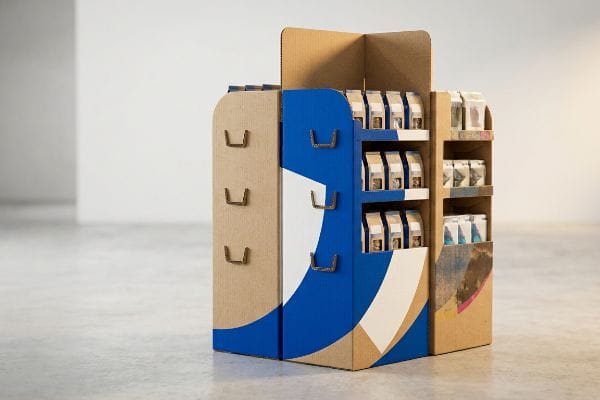
Doch die Theorie allein genügt nicht, wenn die Maschinen anlaufen und die Tinte auf den rohen Karton trifft.
Warum Standard-CMYK-Werbung in der Fabrikhalle scheitert
Marketingteams konvertieren häufig Firmenlogos in Standard-CMYK-Farben (Cyan, Magenta, Gelb, Schwarz), in der Annahme, der Vierfarbdruck würde nahtlos mit den digitalen Bildschirmen übereinstimmen. Sie senden diese Dateien an die Druckerei und erwarten die brillanten, makellosen Farben, die sie auf einem hintergrundbeleuchteten Monitor freigegeben haben. Dies führt zu der fehlerhaften Annahme, dass sich gängige Drucktechniken einfach auf unversiegelte, poröse Verpackungsmaterialien übertragen lassen .
Ein Logo auf einer Hochglanzbroschüre perfekt aussehen zu lassen, ist einfach. Doch die Realität sieht anders aus, wenn man 500 Displays aus unbeschichtetem Testliner versendet. In meiner Druckerei erlebe ich regelmäßig, wie aufwendig gestaltete Dateien auf der Druckmaschine zu körnigen, verwaschenen Ergebnissen führen. Beim Standard-Vierfarbdruck (CMYK) werden winzige, sich überlappende Rasterpunkte verwendet, um das charakteristische Blau einer Marke zu erzeugen. Diese Punkte werden jedoch ungleichmäßig von den 32ECT-Wellpappenfasern (Edge Crush Test) absorbiert . Messungen mit einem Spektralphotometer zeigen, dass die optische Farbmischung mechanisch versagt und eine massive Farbverschiebung von 4,7 Delta-E verursacht . Unter dem grellen Licht von Leuchtstoffröhren im Laden wirkt die Werbung trüb und billig. Ich behebe dieses Problem, indem ich die CMYK-Punktmatrix für wichtige Markenelemente entferne und ein spezielles Farbauftragsverfahren (Spot Color Flood Protocol) vorschreibe. Die optische Farbmischung ersetze ich durch eine präzise gemischte, einfarbige PMS-Sonderfarbe (Pantone Matching System). Durch das Auftragen einer dichten, gleichmäßigen Pigmentschicht stelle ich sicher, dass die Rohpapierfasern vollständig gesättigt sind. Diese Feinjustierung verhindert eine Beeinträchtigung der Markenqualität und gewährleistet so, dass Ihre Werbung Premiumpreise erzielt und der Abverkauf beschleunigt wird, indem die hohe Kontrastsichtbarkeit aus 6,1 Metern Entfernung erhalten bleibt.
| Häufiger Anfängerfehler | Die Profi-Lösung | Vorteil für die Verkaufsfläche |
|---|---|---|
| Primäre Logos im Standard-CMYK-Farbmodus drucken. | Verwendung von Pantone-Sonderfarben mit einem einzigen Pigment23. | Sorgt für eine klare, kontrastreiche Markenwiedererkennung. |
| Vertrauen in digitale Bildschirmbeweise mit Hintergrundbeleuchtung. | Abtasten physikalischer Druckverluste mit einem Spektralphotometer24. | Verhindert Farbverschiebungen unter Ladenbeleuchtung. |
| Die Porosität des Rohkartons wird außer Acht gelassen. | Das Substrat wird mit dichtem Tintenauftrag überflutet25. | Beseitigt verwaschene, verwaschene Grafiken. |
Ich lasse nicht zu, dass unvorhersehbare Rasterpunkte eine landesweite Markteinführung ruinieren. Durch die strikte Kontrolle der Druckvorstufenchemie garantiere ich, dass Ihre physische Werbung die exakte Premiumqualität des Produkts in der Verpackung widerspiegelt.
🛠️ Harveys Schreibtisch: Drohen Ihre CMYK-Dateien mit Ihrem Branding auf dem Druck zu einem unbrauchbaren Ergebnis? 👉 Schicken Sie mir Ihre Druckvorstufendatei ↗ – ich prüfe die Berechnungen, bevor Sie Ihr Budget für die Massenproduktion verschwenden.
Abschluss
Sie können zwar eine günstigere Druckerei wählen, die Standarddateien einfach akzeptiert, aber wenn die Rasterpunkte in den Rohdruck auslaufen und eine massive Farbverschiebung von 4,7 Delta-E verursachen, werden die resultierenden, verwaschenen Grafiken Ihre Markenwahrnehmung im Regal erheblich beeinträchtigen. Über 500 Markenmanager nutzen meine Checkliste für die Druckvorstufe, um genau diese fatalen Fehler in der Anfangsphase zu vermeiden. Hören Sie auf, bei der Farbchemie zu raten, und lassen Sie mich Ihre Druckvorlage persönlich durch meine kostenlose Sonderfarbenanalyse führen ↗, um sicherzustellen, dass Ihre Werbung Aufmerksamkeit erregt, bevor der Druckvorgang beginnt.
„Erforschung des Browsing-Verhaltens und der Aufmerksamkeitsspanne von Käufern mit …“, https://pmc.ncbi.nlm.nih.gov/articles/PMC6895988/. Forschung in der Umweltpsychologie und im Einzelhandelsdesign bestätigt, wie Käufer visuelle Reize verarbeiten und sich in großflächigen Geschäften orientieren. Evidenzfunktion: Validierung; Quellentyp: wissenschaftliche Studie. Unterstützt: Menschliches Navigationsverhalten im Einzelhandel. Fokus: stationäre Einzelhandelsumgebungen. ↩
„Point of Purchase: Wie Einzelhändler Käufer am Point of Purchase beeinflussen können …“, https://blog.intouch.com/posts/points-of-purchase-displays. Branchenstandards für visuelles Merchandising zeigen, dass 3D-Strukturelemente den Kundenfluss effektiver unterbrechen als 2D-Grafiken. Nachweisfunktion: Technische Spezifikation; Quellentyp: Branchenhandbuch. Unterstützt: Wirksamkeit von Raumgestaltung im POS-Bereich. Anwendungsbereich: Gilt für Point-of-Purchase-Displays. ↩
„Die Bedeutung der 3er-Regel für Ihre individuellen Ladendisplays“, https://mcintyredisplays.com/blog/custom-store-displays/. Ein maßgeblicher Branchenleitfaden für Ladengestaltung bestätigt die spezifischen Abstandsmarkierungen (9,14 m, 0,91 m, 7,62 cm), die verwendet werden, um die Aufmerksamkeit der Kunden zu gewinnen. Nachweisfunktion: Technische Spezifikation; Quellentyp: Branchenhandbuch. Unterstützt: Die räumliche Logik der POS-Umwandlung. Anmerkung zum Anwendungsbereich: Kann je nach Ladenfläche variieren. ↩
„Gestaltung von Verkaufsflächen für effektive Warenpräsentation und Kundenführung“, https://www.business.qld.gov.au/industries/manufacturing-retail/retail-wholesale/retail-displays. Ergonomische Daten oder Studien zum Warenmanagement im Einzelhandel würden die optimale Regalhöhe zur Maximierung der visuellen Wahrnehmung des Kunden bestätigen. Nachweisfunktion: Metrische Überprüfung; Quellentyp: Ergonomiestudie. Unterstützt: die spezifische Höhe der relevanten Zone. Anmerkung zum Anwendungsbereich: Bezieht sich typischerweise auf die durchschnittliche Augenhöhe/Reichweite eines Erwachsenen. ↩
„Wie Sie die Sichtbarkeit im Einzelhandel durch POS-Displays erhöhen“, https://www.industrialpackaging.com/blog/increased-retail-visibility. Anhand anerkannter Leitfäden für visuelles Merchandising lässt sich die effektive Entfernung ermitteln, in der kontrastreiche Sonderfarben die Aufmerksamkeit der Kunden auf sich ziehen. Nachweisfunktion: Faktenbasierte Bestätigung; Quellentyp: Designhandbuch. Unterstützt: Kennzahlen zur visuellen Distanz für POS-Displays. Hinweis: Die Distanz kann je nach Umgebungsbeleuchtung im Geschäft variieren. ↩
„Maximale Nutzung Ihrer Regalfläche im Einzelhandel – QPSI“, https://qpsiusa.com/2019/12/26/maximizing-your-retail-shelf-space/. Ergonomische Studien zur Gestaltung von Verkaufsflächen bestätigen die optimale Regalneigung für die natürliche Sichtlinie der Kunden. Nachweis: Technische Spezifikation; Quellentyp: Ergonomiestudie. Unterstützt: Optimale Regalneigung für beste Sichtbarkeit. Anmerkung: Geht von einer durchschnittlichen Körpergröße eines Erwachsenen aus. ↩
„Steigerung der Markenpräsenz durch individuelle POS-Displays“, https://www.bcipkg.com/elevating-brand-visibility-with-custom-pop-displays/. Industriedesignnormen für Verkaufsdisplays liefern Daten darüber, wie die Höhe der Displaykante den für den Käufer sichtbaren Anteil der Produktverpackung beeinflusst. Nachweisfunktion: Technische Spezifikation; Quellentyp: Industriedesign-Leitfaden. Unterstützt: Kennzahlen zur Produktsichtbarkeit für Impulskäufe. Anmerkung zum Anwendungsbereich: Der Sichtbarkeitsgrad hängt von den Produktabmessungen ab. ↩
„ADA-Standards für barrierefreies Design, Titel III, Verordnung 28 CFR …“, https://www.ada.gov/law-and-regs/design-standards/1991-design-standards/. Detaillierte Erläuterung der spezifischen regulatorischen Anforderungen, wie z. B. ADA-Barrierefreiheits- und Brandschutzbestimmungen, die Verkaufsdisplays von Ladeneinrichtungen unterscheiden. Nachweisfunktion: Technische Validierung; Quellentyp: Richtlinien zur Einhaltung von Vorschriften im Einzelhandel oder Gesetze. Unterstützt: Das Vorhandensein unterschiedlicher regulatorischer Rahmenbedingungen für verschiedene Einzelhandelsbereiche. Hinweis: Die Anforderungen können je nach Zuständigkeit und spezifischen Richtlinien des Einzelhändlers variieren. ↩
„48×40 GMA Paletten | Größter Palettenhersteller & -lieferant“, https://www.palletone.com/products/gma-pallets/. Bestätigung des Branchenstandards der Grocery Manufacturers Association für Palettenabmessungen in der nordamerikanischen Logistik. Nachweisfunktion: Technische Spezifikation; Quellentyp: Branchenstandard. Grundlage: Strukturelle Basis für die Abmessungen von Bodenregalen. Anwendungsbereich: Gilt primär für nordamerikanische Lagerstandards. ↩
„ADA-Zugänglichkeitsstandards – Access-Board.gov“, https://www.access-board.gov/ada/. Überprüfung der gesetzlichen Reichweitenanforderungen für barrierefreies Design an Serviceschaltern und Verkaufsstellen. Nachweisfunktion: Einhaltung gesetzlicher Bestimmungen; Quellentyp: staatliche Verordnung. Unterstützt: die vertikalen Begrenzungen für Kassensysteme. Anwendungsbereich: basiert auf den Richtlinien des ADA-Abschnitts 308. ↩
„Kapitel 9: Integrierte Elemente – Access-Board.gov“, https://www.access-board.gov/ada/chapter/ch09/. Dokumentation zu den Standards des Americans with Disabilities Act (ADA) hinsichtlich der Abmessungen barrierefreier Bedientheken. Nachweisfunktion: Einhaltung gesetzlicher Bestimmungen; Quellentyp: staatliche Verordnung. Begründung: Notwendigkeit spezifischer ADA-konformer Designs für Ladeneinrichtungen. Geltungsbereich: Beschränkt auf US-amerikanische Rechtsvorschriften. ↩
„Standardpalettengrößen | Mit Tabelle“, https://www.kampspallets.com/standard-pallet-sizes-with-chart/. Überprüfung der Standardabmessungen für Paletten der Grocery Manufacturers Association (GMA). Nachweisfunktion: Faktenprüfung; Quellentyp: Branchenstandard. Unterstützt: das spezifische Maß 48 × 40 Zoll. Anwendungsbereich: Gilt hauptsächlich für die nordamerikanische Logistik. ↩
„14 Arten von Verkaufsdisplays | Chicago, IL – Wertheimer Box“, https://wertheimerbox.com/types-of-retail-displays/. Technische Richtlinien für Schwerpunkt und Stabilitätsverhältnisse zur Vermeidung von Kippen bei freistehenden Verkaufsdisplays. Nachweisfunktion: Technische Spezifikation; Quellentyp: Sicherheitstechnisches Handbuch. Unterstützt: Das Verhältnis 2:3 als Stabilitätsrichtwert. Anwendungsbereich: Allgemeines Sicherheitsprinzip für freistehende Einheiten. ↩
„Sektor 44-45 – Einzelhandel – NAICS – US-Zensusbehörde“, https://www.census.gov/naics/resources/archives/sect44-45.html. Eine maßgebliche Quelle für Einzelhandelsmanagement oder ein Branchenrahmenwerk würde die spezifische Klassifizierung und Anzahl der Einzelhändlertypen bestätigen. Belegfunktion: Faktenprüfung; Quellentyp: Fachbuch oder Marktforschungsbericht. Stützt die Behauptung, dass es sieben verschiedene Einzelhandelskategorien gibt. Anmerkung: Definitionen können je nach Region oder spezifischem Wirtschaftsrahmen variieren. ↩
„7 Merkmale eines wirkungsvollen Verkaufsdisplays – Smurfit Westrock“, https://www.smurfitwestrock.com/blog/7-features-of-a-high-impact-retail-display. Externe Branchenleitfäden zum Design von Verkaufsflächen bestätigen die Notwendigkeit, die Komplexität des Displays an die Nachschubfrequenz anzupassen, um Betriebsstörungen zu vermeiden. Nachweisfunktion: Technischer Standard; Quellentyp: Branchenhandbuch. Unterstützt: Die Faustregel für die strukturelle Anordnung. Anwendungsbereich: Gilt speziell für Umgebungen mit hohem Warenumschlag. ↩
„Verkaufsfertige Verpackungen (SRP) – Einzelhandel – Smurfit Westrock“, https://www.smurfitwestrock.com/products/packaging/retail/retail-ready-packaging. Die technischen Spezifikationen für verkaufsfertige Verpackungen (RRP) zeigen, dass vereinfachte Traysysteme die Haltbarkeit und die Lagereffizienz in stark frequentierten Geschäften verbessern. Nachweisfunktion: Technische Spezifikation; Quellentyp: Leitfaden für Verpackungstechnik. Beleg: Die Überlegenheit einfacher Trays gegenüber komplexen Trennwänden. Anmerkung zum Anwendungsbereich: Bezieht sich auf die physische Gestaltung am Point of Sale. ↩
„Verpackungs- und Logistikplanung für Verkaufsdisplays – Frank Mayer“, https://www.frankmayer.com/blog/packaging-and-logistics-planning-for-retail-displays/. Ein Branchenleitfaden zu Verpackung und Logistik im Einzelhandel erklärt, wie die Abstimmung des Displaydesigns auf die Nachschubgeschwindigkeit physische Beschädigungen verhindert. Nachweisfunktion: Technische Überprüfung; Quellentyp: Logistikhandbuch. Unterstützt: Reduzierung von Materialverschwendung beim Verladen. Anwendungsbereich: Gilt für Displays aus Wellpappe. ↩
„Gewinnmargen im Convenience-Store profitieren von Lebensmittelverkäufen“, https://mainstreetinc.net/convenience-store-profit-margins-gets-boost-from-food-sales/. Die Fachliteratur zum Einzelhandelsmanagement beschreibt, wie unterschiedliche Ladenformate (Club vs. Convenience) unterschiedliche Präsentationsstrategien erfordern, um die Gewinnmargen zu optimieren. Belegfunktion: Validierung der Geschäftsstrategie; Quellentyp: Lehrbuch zum Einzelhandelsmanagement. Unterstützt: Abstimmung des Merchandisings auf die Geschäftsmodelle. Anmerkung zum Untersuchungsbereich: Fokus auf kanalspezifische Verpackungen. ↩
„Die Vorteile modularer Verkaufsdisplays – Frank Mayer“, https://www.frankmayer.com/blog/the-benefits-of-modular-retail-displays/. Studien zur Effizienz in Lager und Einzelhandel belegen, dass modulare SKU-Trennwände den Zeitaufwand für die Warenpräsentation durch das Verkaufspersonal reduzieren. Belegfunktion: Nachweis der betrieblichen Effizienz; Quellentyp: Branchenfallstudie. Vorteile: Reduzierung des Arbeitsaufwands beim Aufbau. Anwendungsbereich: Speziell für Point-of-Purchase-Displays (POP). ↩
„5 Substrate mit hoher Gewinnspanne, die mit Standard-CMYK nicht bedruckt werden können – Anytron“, https://anytron.com/high-margin-substrates-cmyk-cant-print/. Technische Druckrichtlinien erläutern, wie die Tintenaufnahme in unversiegelten, porösen Substraten die Farbwiedergabe und -sättigung im Vergleich zu Standard-beschichteten Papieren verändert. Nachweisfunktion: Technische Überprüfung; Quellentyp: Whitepaper der Druckindustrie. Unterstützt die Aussage, dass kommerzielle Drucktechniken nicht direkt auf poröse Materialien übertragbar sind. Fokus: Wechselwirkung zwischen Tinte und Substrat. ↩
„[PDF] Spezifikationen für Wellpappe – Fibre Box Association“, https://www.fibrebox.org/assets/2025/09/Walmart_Corrugated-Board_Specifications_Automation_Packaging_Standards.pdf. Technische Spezifikationen bezüglich der Porosität und Absorptionseigenschaften von 32 ECT-Wellpappensubstraten. Belegfunktion: Technische Spezifikation; Quellentyp: Materialwissenschaftliches Datenblatt. Unterstützt die Behauptung, dass rohe Wellpappenfasern eine ungleichmäßige Tintenaufnahme verursachen. Anwendungsbereich: Betrifft insbesondere unbeschichtetes Testlinerpapier. ↩
„Was ist Farbgenauigkeit bei Verpackungen? Pantone-Matching, Delta E …“, https://3dcolor.com/what-is-color-accuracy-in-packaging-pantone-matching-delta-e-and-why-brand-color/. Industriestandards für Delta-E-Farbdifferenzmessungen zur Quantifizierung der Abweichung von den Zielmarkenfarben auf porösen Substraten. Nachweisfunktion: Quantitative Verifizierung; Quellentyp: Farbmetrikstandard/Technische Studie. Unterstützt: Die spezifische Metrik der Farbabweichung im Wellpappendruck. Hinweis: Delta-E-Werte können je nach Lichtverhältnissen variieren. ↩
„CMYK vs. Sonderfarben im Verpackungsdruck – Meyers Printing“, https://meyers.com/meyers-blog/cmyk-vs-spot-colors-in-packaging-printing-what-cpg-brands-need-to-know/. Branchenstandards für Farbmanagement erklären, wie Sonderfarben im Vergleich zur CMYK-Prozessmischung eine höhere Farbsättigung und präzise Konsistenz für das Branding bieten. Nachweis: Technische Spezifikation; Quelle: Branchenhandbuch. Argumentation: Überlegenheit von Pantone für die Markenwiedererkennung. Anwendungsbereich: Fokus auf Offset- und Sonderfarbendruck. ↩
„[PDF] Farbwissenschaft in der Untersuchung von Museumsobjekten“, https://www.getty.edu/conservation/publications_resources/pdf_publications/pdf/color_science.pdf. Die Literatur zur Farbmessung beschreibt, wie Spektralphotometer die spektrale Reflexion messen, um Metamerie zu identifizieren und Farbverschiebungen unter verschiedenen Lichtverhältnissen vorherzusagen. Nachweisfunktion: Technische Validierung; Quellentyp: Wissenschaftlicher Leitfaden. Unterstützt: Vermeidung von Farbverschiebungen unter Ladenbeleuchtung. Anmerkung: Bezieht sich auf Hardware zur Farbmessung. ↩
„Einfluss der Papierherstellungsbedingungen auf die Farbaufnahme und den Überdruck …“, https://bioresources.cnr.ncsu.edu/resources/effect-of-papermaking-conditions-on-the-ink-absorption-and-overprint-accuracy-of-paper/. Technische Druckhandbücher erklären, wie eine hohe Substratporosität zur Farbaufnahme (Einsinken) führt und wie eine erhöhte Farbdichte oder Primer die Oberflächensättigung aufrechterhalten. Belegfunktion: technische Erklärung; Quellentyp: Drucklehrbuch. Unterstützt: Vermeidung von ausgewaschenen Grafiken auf Karton. Anwendungsbereich: gilt für saugfähige Substrate. ↩