Bei der Einführung einer neuen Einzelhandelskampagne befürchten Einkäufer ständig, in die Falle massiver Produktionsläufe tappen zu müssen, nur um eine anständige Verpackungseinheit zu sichern.
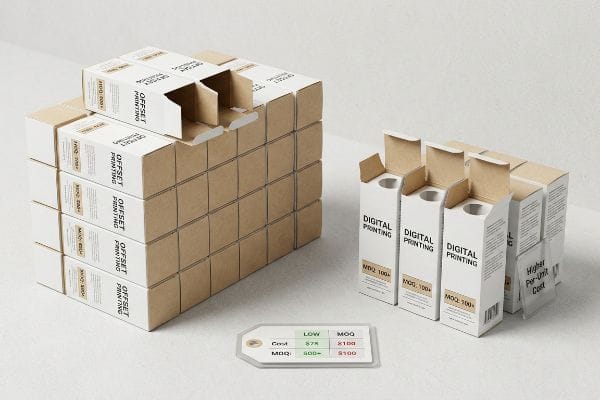
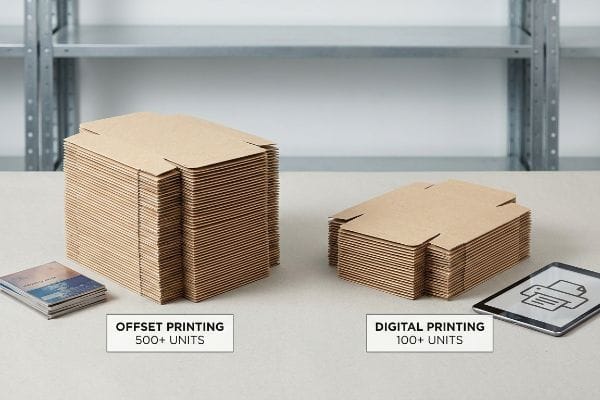
Ja. Die Mindestbestellmenge für individuell gestaltete Lotionverpackungen beginnt üblicherweise bei etwa 500 Stück im Offsetdruck, wobei spezielle Digitaldruckverfahren bereits ab 100 Stück möglich sind. Geringere Stückzahlen führen in der Regel zu höheren Kosten pro Einheit, da die Kosten für die Kalibrierung der Maschinen und die Einrichtung der Werkzeuge auf weniger Artikel verteilt werden.
Doch die Kenntnis der Lehrbuchdefinition von Bestellschwellenwerten wird Ihr Budget nicht schonen, wenn Sie tatsächlich in der Fertigungshalle ankommen.
Welche Mindestbestellmengen gelten für individuell gestaltete Verpackungen?
Die meisten Einkaufsteams gehen davon aus, dass kleine Losgrößen automatisch bedeuten, sich mit minderwertigen Digitaldrucken oder billigen digitalen Stanzteilen zufriedenzugeben, um hohe Einrichtungskosten zu vermeiden.
Die Mindestbestellmengen für individuell gestaltete Verpackungen hängen stark von der gewählten Drucktechnologie ab. Traditionelle Offsetdrucke erfordern in der Regel mindestens 500 Stück, um die Kosten für Werkzeuge und Druckplatten zu decken, während moderne digitale UV-Flachbettdruckverfahren es flexiblen Marken ermöglichen, bereits ab 50 Stück zu produzieren.
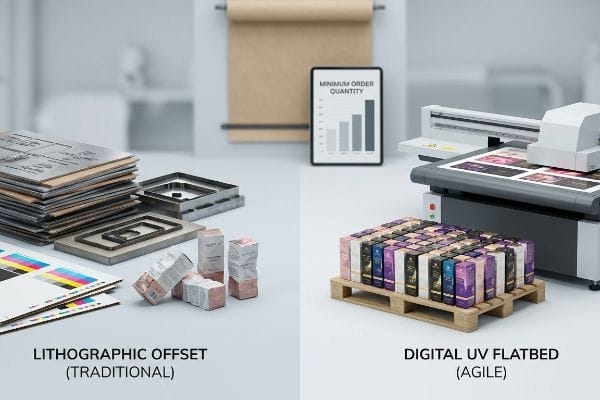
Das klingt in der Theorie gut, aber diese kleinen Zahlen mit Premiumqualität zu erreichen, führt zu einer enormen mechanischen Reibung.
Warum der Kleinseriendruck in der Fabrik scheitert
Selbst erfahrene Einkaufsteams glauben oft, sie könnten ihre Produktionsmenge von 10.000 Einheiten auf 250 Einheiten reduzieren, ohne die Fertigungskette zu verändern. Sie gehen davon aus, dass eine Fabrik die großen 6-Farben-Offsetdruckmaschinen einfach nur einen Bruchteil der Zeit laufen lässt. Tatsächlich benötigt die traditionelle Litho-Laminierung jedoch physische Metalldruckplatten¹ und speziell angefertigte Stahlstanzformen. Die fixen Einrichtungskosten machen den Stückpreis² bei kleinen Auflagen mathematisch unverhältnismäßig hoch .
Das ist nicht nur Theorie – ich erlebe das ständig in der Testumgebung. Letztes Quartal beobachtete ich, wie eine Kosmetikmarke versuchte, eine Werbeaktion mit 150 Stück im Standard-Litholaminierverfahren auf 32ECT (Edge Crush Test) Testliner³zu. Ich wies sie auf die hohen Einrichtungskosten hin, aber sie bestanden darauf. Das Ergebnis? Die Vorlaufkosten für die Werkzeuge trieben die Stückkosten um über 400 %, und die großen Druckmaschinen hatten Mühe, die Farbgenauigkeit in der kurzen Aufwärmphase zu gewährleisten. Die ersten 45 Bogen waren völlig dezentriert und wiesen eine Farbverschiebung von 3,4 Delta-E auf. Um das zu beheben, verwarf ich sofort die Offsetplatten und verlagerte den Auftrag auf unsere UV-Flachbett-Digitaldruckmaschine⁴.Durch die sofortige Polymerisation der flüssigen Farbe direkt auf dem Substrat ohne zusätzliche Werkzeuge erzielte ich eine makellose, hochpräzise Farbwiedergabe für genau die benötigten 150 Stück. Durch diese plattenlose Drehvorrichtung konnte die gesamte Rüstzeit um drei Tage verkürzt und die Produktionskosten für Kleinserien um schätzungsweise 40 % gesenkt werden, wodurch die Gewinnspanne des Projekts vollständig gerettet wurde.
| Technische Lösung | Physikalisches Ergebnis | Finanzieller/Compliance-ROI |
|---|---|---|
| UV-Direktdruck auf Karton | Eliminiert physische Metallplatten5 | Senkt die Stückkosten um 40 %6 |
| Sofortige Tintenpolymerisation | Sorgt für präzise Farbregistrierung | Verkürzt die Einrichtungszeit um 3 Tage7 |
| Werkzeugloses Flachbettschneiden | Entfernt die Anforderung an Stahlstanzformen | Eliminiert fixe Werkzeugkosten |
Wenn Sie lediglich die günstigste Wellpappverpackung für eine große Auflage suchen, bin ich nicht der richtige Partner für Sie. Ich entwickle flexible, präzise Rollout-Strategien für den Einzelhandel, die Ihren Cashflow bei zielgerichteten Kampagnen schützen.
🛠️ Harveys Schreibtisch: Wissen Sie, ob Ihr aktueller Lieferant Ihnen heimlich Kosten für permanente Stahlwerkzeuge für Ihre saisonalen Kleinserien-Displays in Rechnung stellt? 👉 Überprüfen Sie Ihre Stückliste für Konstruktionsteile ↗ — Ich prüfe jede Konstruktionsdatei persönlich innerhalb von 24 Stunden.
Was kostet die Herstellung von individuellen Verpackungen?
Marken konzentrieren sich obsessiv darauf, den niedrigstmöglichen Preis pro Einheit zu erzielen und behandeln kundenspezifische Einzelhandelsverpackungen wie eine einfache Ware, die ohne Folgen endlos rabattiert werden kann.
Die Kosten für die Herstellung individueller Kartons reichen von 0,50 $ für einfache Wellpappkartons bis über 5,00 $ für hochwertige, verkaufsfertige Verpackungen mit starker Folienkaschierung. Der endgültige Stückpreis hängt von der Materialqualität, den Abmessungen, dem Druckverfahren, dem Werkzeugaufwand und der bestellten Produktionsmenge ab.
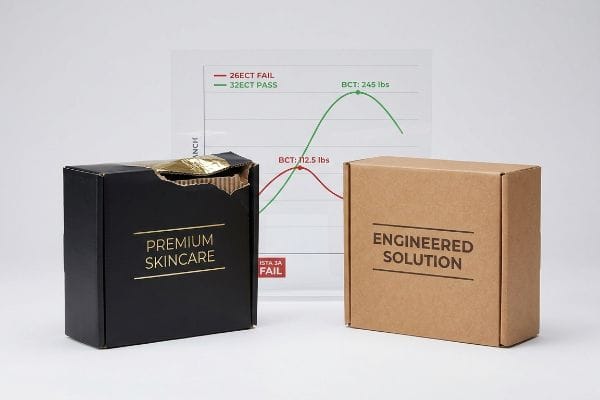
Die Berechnung theoretischer Stückpreise ist einfach, aber diese Einsparungen aus der Tabellenkalkulation verfliegen sofort, sobald Ihre billigeren Materialien in einer realen Transportsimulation zum Einsatz kommen.
Die versteckten Kosten kosmetischer ECT-Downgrades
Marketingabteilungen fordern häufig teure Oberflächenveredelungen wie vollflächige Soft-Touch-Laminierung, weigern sich aber, das Gesamtbudget des Projekts zu erhöhen. Um diese hohen Kosten auszugleichen, senken Einkaufsabteilungen heimlich die Festigkeitsklasse der Wellpappe –von robusten 32ECT auf dünne 26ECT8–, um ein paar Cent pro Einheit zu sparen. Sie gehen fälschlicherweise davon aus, dass eine glänzende Außenfolie eine hohle innere Struktur kompensieren kann.
Das ist nicht nur Theorie – ich erlebe das praxisnah in der Testumgebung. Erst letzten Monat erhielt ich einen verzweifelten Anruf von einer Hautpflegemarke, deren „budgetoptimierte“ PDQ-Trays (Pre-Packed Display Quantities) bei den ISTA-Falltests (International Safe Transit Association)durchfielen . Sie hatten einen Billiganbieter beauftragt, der die Qualität der Kernwellen heimlich reduziert hatte, um eine hochwertige Außenschicht zu finanzieren. In meinem Labor legte ich eine ihrer noch brauchbaren Proben unter die hydraulische Druckpresse. Die Kraftmessdose des BCT (Box Compression Test) schlug bei nur 51 kg (112,5 lbs) aus. Ich konnte das widerliche Knirschen förmlich hören, als die geschwächte E-Welle nachgab und die teure Folien-Deckschicht in zwei Hälften riss. Um das Problem zu beheben, verwarf ich die fehlerhafte Materialliste. Ich stellte das Substrat mathematisch auf den Standard von 32ECT-Kraftpapier (Neuware), entfernte die dicke Folienfolie und ersetzte sie durch eine hochglänzende, wasserbasierte Beschichtung. Durch diese Materialverbesserung konnte die dynamische Druckfestigkeit auf 111,1 kg (245 lbs) wiederhergestellt werden, während gleichzeitig die hochwertige Reflexion erhalten blieb. Indem ich die Transportschäden verhinderte, trug ich dazu bei, einen Gesamtverlust von 12 % des Lagerbestands zu vermeiden und den Abwärtstrend der Gewinnmarge vollständig umzukehren.
| Technische Lösung | Physikalisches Ergebnis | Finanzieller/Compliance-ROI |
|---|---|---|
| 32ECT Virgin Kraft Upgrade11 | Stellt die innere Flötendichte wieder her | Eliminiert 12 % des Transitbestandsverlusts12 |
| Ersatz von wässrigem Glanz | Ersetzt schwere Folienkaschierungen | Gleicht den Materialhaushalt sicher aus |
| Neuberechnung des BCT-Schwellenwerts | Verdoppelt die dynamische Tragfähigkeit13 | Verhindert kostspielige Rückbuchungen von Einzelhändlern |
Hören Sie auf, die Qualität Ihrer Konstruktionsplatten als eine Art Geheimfonds für Marketinggrafiken zu missbrauchen. Ich entwickle Verpackungen, bei denen die unsichtbaren inneren physikalischen Eigenschaften die hochwertige äußere Ästhetik perfekt unterstützen.
🛠️ Harveys Schreibtisch: Verzichten Sie auf die optimale Wellpappendichte, nur um Ihrer aktuellen Verkaufsverpackung eine glänzende Soft-Touch-Laminierung zu ermöglichen? 👉 Fordern Sie einen Strukturtest an ↗ — 100 % vertraulich. Ihre unveröffentlichten Designs sind bei mir sicher.
Welche Mindestbestellmengen gelten für individuell gestaltete Etiketten?
Der Kauf von bedruckten Etiketten oder laminierten Deckblättern in kleinen Mengen erscheint einfach, doch um bei kleinen Auflagen ein makelloses Erscheinungsbild zu erzielen, sind aggressive chemische Reaktionen erforderlich, die die meisten Käufer ignorieren.
Die Mindestbestellmenge für individuelle Etiketten beginnt üblicherweise bei 1.000 Stück im Flexodruck, während der digitale Etikettendruck bereits ab 100 Stück möglich ist. Digitale Verfahren machen teure Metalldruckplatten überflüssig und ermöglichen es Marken, hochgradig individualisierte Verpackungsaufkleber in Kleinauflagen ohne hohe Einrichtungskosten zu bestellen.
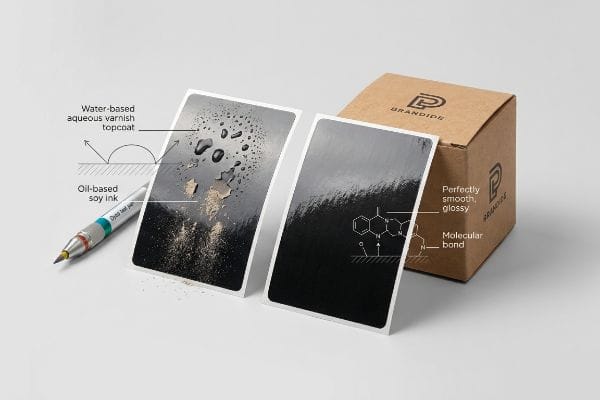
Sicher, man kann eine kleine Menge Etiketten bestellen, aber der wahre Albtraum beginnt erst, wenn man versucht, diese Beschichtungen auf rohe Wellpappe aufzubringen.
Der Albtraum der Oberflächenspannungsabweisung
Nachwuchsdesigner verwenden oft dickflüssige, ölbasierte Sojafarben, um leuchtende Markenfarben zu erzielen, und fordern gleichzeitig wasserbasierte Lacke, um die strengen Umweltrichtlinien der Einzelhändler zu erfüllen<sup>14</sup>. Sie gehen davon aus, dass sich diese beiden unterschiedlichen chemischen Schichten bei einer kleinen Produktionsserie problemlos übereinander lagern. Dabei ignorieren sie die mikroskopische Realität der Oberflächenspannung und vergessen, dass Wasser Öl von Natur aus abstößt<sup>15</sup>.
Das ist keine bloße Theorie – ich habe das in meiner eigenen Produktion schmerzlich erfahren müssen. 2021 beauftragte ich meinen leitenden Verpackungsingenieur Mark mit der Herstellung von 500 Premium-Lotion-Verpackungshüllen. Wir dachten, wir könnten Zeit sparen, indem wir den benötigten wässrigen Decklack direkt auf ein dichtes, noch nicht ausgehärtetes Ölfarbenbett sprühten, ohne die Trocknungssequenz der Maschine anzupassen. Drei Tage später musste ich in der Klimakammer mit ansehen, wie die gesamte Charge versagte. Als ich mit dem Daumen über die Oberfläche fuhr, blätterte ein pudriger, staubiger Rückstand aggressiv ab und landete auf meinen Händen. Der wasserbasierte Lack hatte sich abgelöst und keine Verbindung zum Öl hergestellt.Um das Problem sofort zu beheben, stoppte ich die Produktionslinie und passte die chemische Matrix der Beschichtungseinheit manuell an. Ich stimmte die Oberflächenenergie (Dyn-Wert) des wässrigen Decklackspräzise auf die Oxidationsrate der Ölfarbe ab und erhöhte die Infrarot-Trocknungstemperatur um 15 Grad. Diese mechanische Kalibrierung erzeugte eine dauerhafte molekulare Verbindung, die sich nicht mehr ablöste. Durch diese spezielle Anpassung konnten wir unsere Fehlerquote aufgrund von Abriebspuren vollständig eliminieren und den Kunden so vor einer hundertprozentigen Ablehnung durch den Einzelhandel sowie einer geschätzten Nachdruckstrafe von 4.500 US-Dollar bewahren.
| Technische Lösung | Physikalisches Ergebnis | Finanzieller/Compliance-ROI |
|---|---|---|
| Dyne-Niveau-Oberflächenanpassung18 | Verbindet Wasserlack mit Ölfarbe | Verhindert eine 100%ige Ablehnungsquote im Einzelhandel |
| IR-Trocknungstemperaturerhöhung19 | Beschleunigt die Oxidation des Tintenbetts | Beschleunigt die Aushärtung um 24 Stunden20 |
| Bandtest vor der Produktion | Überprüft die mikroskopische Filmhaftung | Eliminiert teure Nachdruckgebühren für Kunden |
Ich lasse nicht zu, dass ungetestete chemische Theorien eine laufende Produktion gefährden. Ich verlasse mich auf präzise mechanische Kalibrierung und dynamische Oberflächenspannungsberechnungen, um sicherzustellen, dass Ihre Marke die Lieferkette unbeschadet übersteht.
🛠️ Harveys Schreibtisch: Hat Ihr aktueller Druckpartner jemals den Dyne-Wert der wässrigen Beschichtung Ihrer Verpackung mit Ihrem spezifischen Farbprofil verglichen? 👉 Fordern Sie Ihre kostenlose Druckvorstufenanalyse an ↗ — Keine Zwischenhändler. Sie sprechen direkt mit Statikern.
Was ist die richtige Reihenfolge für die Kartonabmessungen?
Wenn die physischen Abmessungen bei einer Bestellung falsch angegeben werden, ist das der schnellste Weg, um sicherzustellen, dass Ihr Produkt während des Transports entweder herumklappert oder durch die Seitenwände bricht.
Die korrekte Reihenfolge für die Abmessungen eines Kartons ist immer Länge, Breite und Tiefe (L x B x T). In der Verpackungstechnik bezeichnet die Länge die längste Seite des geöffneten Kartons, die Breite die kürzere Seite und die Tiefe den vertikalen Innenraum von der oberen Öffnung bis zur Bodenklappe.
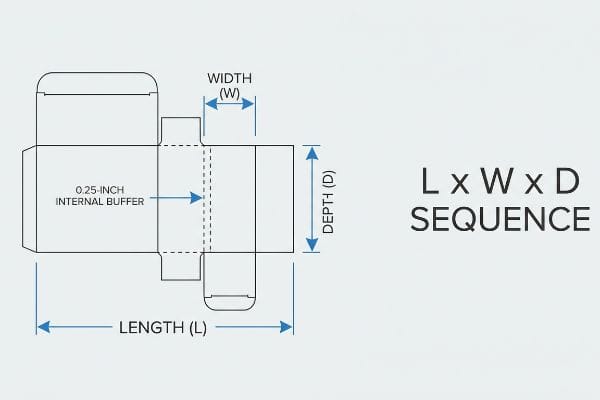
Die Kenntnis der L x B x T-Folge sorgt für übersichtliche Unterlagen, aber die Anwendung dieser Zahlen auf gefalteten Karton erfordert strenge geometrische Abweichungen.
Die ingenieurtechnischen Mechanismen hinter verschachtelter Reibung
Wenn mich Kunden fragen, wie man einen maßgefertigten Versandkarton für ihre Lotionverpackungen richtig ausmisst, erkläre ich ihnen immer den entscheidenden Unterschied zwischen den theoretischen Außenmaßen und dem nutzbaren Innenvolumen. Dicke Wellpappe benötigt beim Falten um 90 Grad Platz<sup>21</sup>. Wenn man die Außenmaße des Hauptprodukts exakt an die Innenmaße des Umkartons anpasst, entsteht ein mechanischer Vakuumverschluss<sup>22</sup>.
Wenn ein neuer Produktmanager meine Produktionshalle betritt, greife ich meist zu einem Standard-B-Wellen-Karton, um ihm genau diese Maßfalle zu demonstrieren. Ich zeige ihm, wie stark die Oberflächenreibung von unbehandeltem Wellpappen-Testliner ist<sup>23. Werden die Innenmaße (L x B x T) nicht mathematisch so erweitert, dass ein strikter Mindestabstand von 6,35 mm (0,25 Zoll) am Rand<sup>24</sup>, verhaken sich die ineinander verschachtelten Artikel wie Puzzleteile. Versucht dann ein eiliger Verkäufer, die Lotionschale aus diesem viel zu engen Umkarton zu ziehen, zwingt ihn der enorme Widerstand dazu, die bedruckte Haltelasche einzureißen, bevor sie überhaupt das Regal erreicht. Indem ich die Maßreihenfolge explizit überprüfe und diesen mikroskopisch kleinen physikalischen Puffer in die CAD-Datei (Computer-Aided Design) einbaue, stelle ich sicher, dass der Auspackprozess für die Mitarbeiter im Geschäft völlig reibungslos verläuft.
| Technische Lösung | Physikalisches Ergebnis | Finanzieller/Compliance-ROI |
|---|---|---|
| L x B x T Standardisierung | Richtet globale Fertigungspläne aus | Verhindert kostspielige Größenabweichungen |
| 0,25 Zoll interner Perimeterpuffer25 | Unterbricht die Reibungshaftung der Kartonoberfläche | Verhindert, dass Einzelhandelsangestellte beschädigte Verpackungen auspacken |
| Bremssattelkompensierte Schlitzbreite26 | Berücksichtigt eine 90-Grad-Materialfalte | Verringert den Frust bei der manuellen Montage |
Die korrekte Abfolge der Maße zu ermitteln, ist nur der erste Schritt. Ich integriere präzise physikalische Versätze in jede Konstruktionszeichnung, damit Ihre Verpackung in der Praxis einwandfrei funktioniert.
🛠️ Harveys Schreibtisch: Hat Ihr Designer die Abzüge für die Faltmaße berechnet, bevor er Ihnen die endgültigen Kartonabmessungen (L x B x T) übermittelt hat? 👉 Holen Sie sich eine präzise CAD-Prüfung ↗ — Ich prüfe jede Konstruktionsdatei persönlich innerhalb von 24 Stunden.
Abschluss
Sie können zwar den günstigsten Lieferanten für Ihre Kleinserien-Sonderanfertigungen von Kartons suchen, aber wenn dessen geheime Materialverschlechterung (26ECT) dazu führt, dass die Kartons unter dem Gewicht der Palette komplett zusammenbrechen, wird der Händler die Ware sofort ablehnen und Ihre gesamte Werbegewinnspanne vernichten. Allein im letzten Monat half meine Strukturprüfung drei Marken, über 10.000 US-Dollar an Ausschuss und Rückbelastungen durch Händler. Setzen Sie Ihr Marketingbudget nicht länger aufs Spiel mit fehlerhaften Konstruktionsberechnungen und lassen Sie mich persönlich Ihre nächste Markteinführung planen, um Transportschäden zu garantieren.
„Litholaminierung vs. Digitaldruck: Ein Blick auf die Bedürfnisse industrieller Einkäufer …“, https://mdmpkg.com/litho-laminited-vs-digital-printing-premium-corrugated-packaging-2/. Technische Erläuterung des Offsetdruckverfahrens, das physische Druckplatten für den Farbtransfer erfordert. Nachweisfunktion: Technische Spezifikation; Quellentyp: Leitfaden für die Verpackungsindustrie. Unterstützt: Werkzeuganforderungen für die Litholaminierung. Anwendungsbereich: Speziell für traditionelle Offsetverfahren. ↩
„7.2 Die Kostenstruktur kurzfristig“, https://pressbooks-dev.oer.hawaii.edu/principlesofeconomics/chapter/7-2-the-structure-of-costs-in-the-short-run/. Analyse des Zusammenhangs zwischen fixen Rüstkosten und Stückkosten in der Kleinserienfertigung. Belegfunktion: ökonomisches Prinzip; Quellentyp: Kostenrechnungshandbuch. Unterstützung: Finanzielle Auswirkungen kurzfristiger Produktion. Anwendungsbereich: Allgemeine Logik der Fertigungskostenrechnung. ↩
„Neue Konfiguration des Kantenstauchtests mit erweiterter Vollfeldmessung …“, https://pmc.ncbi.nlm.nih.gov/articles/PMC8510352/. Kurze Erläuterung, wie die ECT-Bewertung die Stapelfestigkeit von Wellpappendeckschichten misst. Nachweisfunktion: Technische Spezifikation; Quellentyp: Industriestandard. Unterstützung: Verwendung einer bestimmten Materialgüte in professionellen Verpackungen. Anmerkung: ECT ist das Standardmessverfahren für die Kartonfestigkeit in Nordamerika. ↩
„Direktdruck auf Substrate mit UV-Licht für die Metallverarbeitung | EVS“, https://evsmetal.com/2020/02/what-is-direct-to-substrate-printing/. Kurze Erklärung, wie UV-härtende Tinten sofort auf Substraten polymerisieren und so Druckplatten überflüssig machen. Nachweisfunktion: Technische Validierung; Quellentyp: Fertigungsleitfaden. Belegt: Die Behauptung, dass der Digitaldruck Rüstkosten bei Kleinserien eliminiert. Anwendungsbereich: Speziell für UV-LED- oder Quecksilberdampflampen-Härtungstechnologien. ↩
„Leitfaden: Flexodruck vs. andere Verfahren“, https://luminite.com/flexo-vs-other-printing. Technische Erläuterung, wie der digitale UV-Druck die im Offset- oder Flexodruck üblichen physischen Druckplatten überflüssig macht. Nachweisfunktion: Technische Verifizierung; Quellentyp: Leitfaden für Drucktechnologien. Vorteile: Wegfall der Plattenkosten. Anwendungsbereich: Speziell für digitale Direktdruckverfahren. ↩
„Warum wir einen UV-Drucker angeschafft haben und was Sie wissen müssen!“, https://www.youtube.com/watch?v=InpNtJl45Rs&vl=en-US. Fundierte Branchenkostenanalyse zum Vergleich von digitalem UV-Druck und traditionellem Offsetdruck für Kleinauflagen. Nachweisfunktion: quantitative Verifizierung; Quellentyp: Branchenkostenbericht. Belege: prozentuale Reduzierung der Stückkosten. Anwendungsbereich: anwendbar auf Kleinserien. ↩
„UV-Druck vs. Traditioneller Druck: Welches Verfahren ist besser für Ihr Unternehmen?“, https://www.mtutech.com/BlogforUVPrinter/UV-Printing-vs-Traditional-Printing-Which-is-Better-for-Your-Business-770.html. Technische Dokumentation zu den Unterschieden in den Durchlaufzeiten zwischen digitalen Polymerisationsverfahren und der traditionellen plattenbasierten Einrichtung. Nachweisfunktion: Betriebskennzahl; Quellentyp: Technisches Whitepaper. Vorteile: Reduzierung der Einrichtungszeit. Hinweis: Variiert je nach Betriebsgröße. ↩
„Understanding Shipping Box Strength“, https://www.ecoenclose.com/blog/understanding-shipping-box-strength/?srsltid=AfmBOoqyZ5SrccNS9QlK_Vzuu5-L3edv-JJDNtDLwwnPJf9y02MdGUTX. Technische Überprüfung der strukturellen und Kostenunterschiede zwischen Wellpappe mit Kantenstauchfestigkeitswerten von 32 und 26 (ECT). Nachweisfunktion: Technische Spezifikation; Quellentyp: Normen der Verpackungsindustrie; Beleg: Die Behauptung, dass eine Herabstufung der ECT-Werte die Stückkosten senkt, jedoch die Festigkeit beeinträchtigt. Anwendungsbereich: Gilt speziell für Wellpappen-Versandkartons. ↩
„Testverfahren – International Safe Transit Association“, https://ista.org/test_procedures.php. Überprüfung der branchenüblichen Protokolle zur Bewertung der Haltbarkeit von Verpackungen während des Transports mittels Falltests. Nachweisfunktion: Validierungsstandard; Quellentyp: Branchenorganisation. Unterstützt: die Anwendung standardisierter Transporttests zur Identifizierung von Verpackungsfehlern. Anwendungsbereich: Gilt für allgemeine Logistik- und Einzelhandelsverpackungen. ↩
„32 ECT Wellpappkarton-Spezifikationen: Ultimativer Leitfaden – Lansbox“, https://lansbox.com/32-ect-corrugated-box-specs/. Technische Spezifikationen, die die strukturellen Eigenschaften und Druckfestigkeitswerte von 32 ECT Wellpappe aus reinem Kraftpapier bestätigen. Nachweisfunktion: Technische Spezifikation; Quellentyp: Materialdatenblatt. Unterstützung: Die Wahl einer bestimmten Materialgüte zur Erhöhung der Druckfestigkeit von Kartons. Anwendungsbereich: Speziell für die Wellpappenverpackungsindustrie. ↩
„Druckfestigkeit von Wellpappenverpackungen …“, https://pmc.ncbi.nlm.nih.gov/articles/PMC10054506/. Kurze Erläuterung, wie eine maßgebliche externe Quelle diese Aussage stützt. Belegfunktion: Materialspezifikation; Quellentyp: Technisches Datenblatt. Belege: Einfluss von Primärkraft auf die innere Wellendichte. Anmerkung zum Untersuchungsbereich: Vergleich von Primär- und Recyclingfasern. ↩
„Die Umweltauswirkungen von Wellpappenverpackungen“, https://www.internationalpaper.com/resources/blog/environmental-impact-corrugated-packaging-why-balanced-fiber-approach-best. Kurze Erläuterung, wie eine maßgebliche externe Quelle diese Aussage stützt. Funktion des Nachweises: quantitative Verifizierung; Quellentyp: Branchenlogistikstudie. Belege: Auswirkungen von Materialverbesserungen auf die Verlustreduzierung. Anmerkung zum Anwendungsbereich: spezifisch für stark beanspruchte Transportumgebungen. ↩
„Eine vereinfachte dynamische Festigkeitsanalyse von Karton … – PMC“, https://pmc.ncbi.nlm.nih.gov/articles/PMC10385285/. Kurze Erläuterung, wie eine maßgebliche externe Quelle diese Aussage stützt. Nachweisfunktion: Technische Verifizierung; Quellentyp: Handbuch für Verpackungstechnik. Unterstützt: Zusammenhang zwischen BCT-Schwellenwerten und Belastbarkeit. Anwendungsbereich: Gilt für standardisierte Wellpappenprüfungen. ↩
„Arten umweltfreundlicher Kosmetikverpackungen – PopDisplay“, https://popdisplay.me/types-of-eco-friendly-packaging-for-cosmetics/. Überprüfung von Branchentrends, bei denen Einzelhändler für Nachhaltigkeitsbewertungen wasserbasierte Beschichtungen mit niedrigem VOC-Gehalt vorschreiben. Nachweisfunktion: Validierung von Branchenstandards; Quellentyp: Nachhaltigkeitsbericht des Unternehmens. Unterstützt: die Behauptung, dass wässrige Lacke zur Einhaltung von Umweltauflagen verwendet werden. Anwendungsbereich: spezifisch für die Anforderungen an Einzelhandelsverpackungen. ↩
„Verbesserung der Haftfestigkeit wasserbasierter Tinte …“, https://www.sciencedirect.com/science/article/abs/pii/S0300944023003612. Erklärung der chemischen Unmischbarkeit polarer und unpolarer Flüssigkeiten und wie die Oberflächenspannung die Haftung zwischen Öl- und Wasserschichten verhindert. Belegfunktion: technische Validierung; Quellentyp: Chemie-Lehrbuch. Stützt: die Behauptung, dass Wasser Öl abstößt. Anwendungsbereich: allgemeines chemisches Prinzip, angewendet auf den Druck. ↩
„Ich habe einige meiner alten Uni-Gemälde lackiert …“, https://www.instagram.com/reel/DVMDr4lgPSL/?hl=en. Wissenschaftliche Erklärung für Benetzungsstörungen und Tropfenbildung aufgrund von Oberflächenspannungsunterschieden zwischen polaren wasserbasierten Beschichtungen und unpolaren Ölfarben. Beweisfunktion: Kausalmechanismus; Quellentyp: Materialwissenschaftliche Referenz. Stützung: Das im Beispiel beschriebene physikalische Versagen. Anmerkung: Allgemeines Prinzip der Grenzflächenspannung. ↩
„Adhäsionsfaktoren von Oberflächenenergie und Oberflächenspannung“, https://corkindustries.com/adhesion-factors-of-surface-energy-surface-tension/. Überprüfung des Industriestandards zur Sicherstellung der Beschichtungshaftung durch Anpassung der Oberflächenenergie (Dyne-Wert) der Beschichtung an das Substrat. Nachweisfunktion: Technische Validierung; Quellentyp: Technischer Leitfaden der Druckindustrie. Unterstützt die Aussage, dass die Anpassung des Dyne-Werts Beschichtungsfehler behebt. Anwendungsbereich: Fokus auf ölbasierte Tintensubstrate. ↩
„Anwendung eines Dyne-Pens zur Oberflächenenergiemessung – Keylink Technology“, https://www.keylinktech.com/blog/dyne-test/dyne-pen-testing-after-plasma-pre-treatment/. Technische Erklärung, wie Dyne-Werte die Oberflächenenergie messen, um die optimale Benetzung von Lack über Druckfarbe sicherzustellen. Nachweisfunktion: Technische Verifizierung; Quellentyp: Handbuch der Druckindustrie. Unterstützt: Zusammenhang zwischen Oberflächenenergie und Farbhaftung. Anwendungsbereich: Gilt für flexible Verpackungen und Etiketten. ↩
„[PDF] Trocknungsverfahren für Druckfarben“, https://jged.uns.ac.rs/index.php/jged/article/download/457/1280/1205. Wissenschaftliche Grundlage für die Beschleunigung des oxidativen Trocknungsprozesses von Druckfarben durch Infrarotstrahlung. Nachweisfunktion: Validierung chemischer Prozesse; Quellentyp: Fachzeitschrift für Materialwissenschaften. Belege: Überlegenheit der IR-Trocknung gegenüber der natürlichen Oxidation. Anmerkung: Variiert je nach Farbzusammensetzung. ↩
„Wie lange braucht Siebdruckfarbe zum Trocknen: Ein umfassender Leitfaden“, https://fannoninfrared.com/feeds/blog/how-long-does-screen-printing-ink-take-dry. Vergleich der Aushärtungszeiten zwischen forcierter Infrarottrocknung und Standardoxidation bei Raumtemperatur. Nachweisfunktion: quantitative Messgröße; Quellentyp: Herstellerdatenblatt. Belege: Zeitersparnis durch Infrarottrocknung. Anmerkung: Abhängig von Farbmenge und -dicke. ↩
„Analytische Bestimmung der Biegesteifigkeit eines Fünf-Zoll-Papiers …“, https://pmc.ncbi.nlm.nih.gov/articles/PMC8777652/. Technische Erläuterung der Faltzugabe und wie die Materialstärke das nutzbare Innenvolumen beim Rillen reduziert. Nachweisfunktion: Technische Verifizierung; Quellentyp: Handbuch für Verpackungstechnik. Unterstützt: Einfluss der Materialstärke auf die Abmessungen. Anwendungsbereich: Gilt speziell für Wellpappenrohlinge. ↩
„RSC-Toleranzen für Kartonaufrichter und -verpacker – AICC Now“, https://now.aiccbox.org/rsc-tolerances-for-case-erectors-and-packers/. Erläuterung, wie Passungen ohne Toleranz in Verpackungen zu Luftverdrängungswiderstand und Reibungsblockaden führen. Nachweisfunktion: Technische Verifizierung; Quellentyp: Logistik- und Verpackungsnorm. Begründung: Die physikalischen Folgen fehlender Spieltoleranzen. Anwendungsbereich: Bezieht sich auf die Wechselwirkung zwischen Primär- und Sekundärverpackung. ↩
„Reibungskoeffizientenprüfung“, https://unitload.vt.edu/facilities/corrugated-packaging-lab/cof-testing.html. Materialwissenschaftliche Daten ermitteln den Reibungskoeffizienten von unbeschichtetem Wellpappenliner, um dessen Fähigkeit zum Verkleben ineinanderliegender Gegenstände zu bestätigen. Nachweisfunktion: Validierung physikalischer Eigenschaften; Quellentyp: materialwissenschaftliche Studie. Beleg: Erklärung der Ursache für das Verklemmen ineinanderliegender Gegenstände. Anmerkung: Die Reibungswerte können je nach Linerqualität und Feuchtigkeitsgehalt variieren. ↩
„Der ultimative Leitfaden für die Gestaltung von Wellpappkartons – Powell Systems“, https://www.powellsystems.com/feeds/blog/corrugated-box-design. Verpackungstechnische Normen legen die erforderlichen Toleranzen zwischen den Innenabmessungen des Produkts und dem Umkarton fest, um reibungsbedingte Beschädigungen zu vermeiden. Nachweis: Technische Spezifikation; Quellentyp: Technisches Handbuch. Unterstützung: Erforderlicher Puffer für reibungsloses Auspacken. Hinweis: Mindestwerte können je nach Gesamtvolumen und Materialstärke des Kartons variieren. ↩
„Wellpappenverpackungen mit innovativem Design für …“, https://bioresources.cnr.ncsu.edu/resources/corrugated-board-packaging-with-innovative-design-for-enhanced-durability-during-transport/. Überprüfung der branchenüblichen Toleranzen für interne Kartonpuffer zur Vermeidung von Materialreibung und Oberflächenverklebung. Nachweisfunktion: Technische Spezifikation; Quellentyp: Handbuch für Verpackungstechnik. Unterstützt: den 0,25-Zoll-Pufferstandard. Hinweis: Kann je nach Kartonstärke variieren. ↩
„Einfluss analoger und digitaler Falzlinien auf die Mechanik …“, https://pmc.ncbi.nlm.nih.gov/articles/PMC9268991/. Technische Erläuterung, wie mit einem Messschieber gemessene Schlitzbreiten an die Materialstärke beim 90°-Falten angepasst werden. Nachweisfunktion: Ingenieurprinzip; Quellentyp: Fertigungsnorm. Unterstützt: die Verwendung von mit dem Messschieber kompensierten Breiten für die Montage. Anwendungsbereich: Gilt für Wellpappe. ↩