
Täglich kleben Marken umweltfreundliche Siegel auf ihre Verpackungen, doch die Annahme, ein einfaches grünes Baum-Logo garantiere die Einhaltung der Vorschriften im Einzelhandel, führt schnell zu kostspieligen Ablehnungen in der Lieferkette.
FSC-Siegel (Forest Stewardship Council) dienen als verifizierbare Zertifizierungen, die belegen, dass Verpackungsmaterialien aus verantwortungsvoll bewirtschafteten Wäldern stammen. Diese weltweit eingesetzten Siegel garantieren die Einhaltung von Umweltstandards, schützen Lieferketten vor Greenwashing und erfüllen die strengen Nachhaltigkeitsvorgaben großer nordamerikanischer und europäischer Einzelhändler.
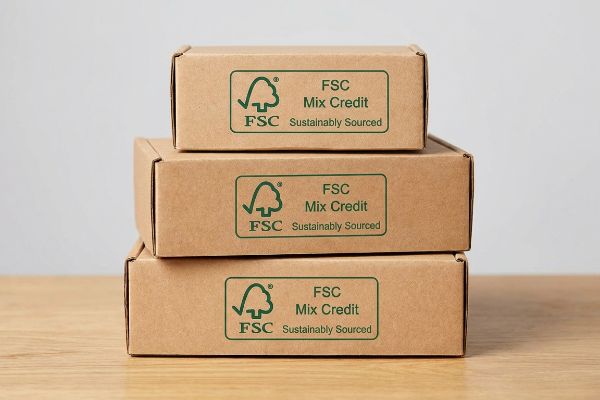
Das Verständnis der theoretischen Bedeutung dieser Nachhaltigkeitslabel ist nur die halbe Miete; die eigentliche Bewährungsprobe kommt, wenn diese zertifizierten Kartons in der Fabrik zur Massenproduktion eingesetzt werden.
Was ist ein FSC-Label?
Wer führende US-Einzelhändler beliefern will, sollte mit vagen Umweltversprechen vorsichtig sein – dann wird das Produkt schon aus dem Regal genommen, bevor es überhaupt ausgepackt wird.
Das FSC-Siegel ist ein strenges Gütesiegel, das garantiert, dass Ihre Wellpappe aus nachhaltig geerntetem Holz stammt. Diese weltweit geltende Zertifizierung verfolgt die Papierfasern vom Holzeinschlag bis zum fertigen Produkt und stellt sicher, dass die Hersteller internationale Umweltstandards für die Rohstoffbeschaffung einhalten und keine illegal geschlagenen Materialien verwenden.
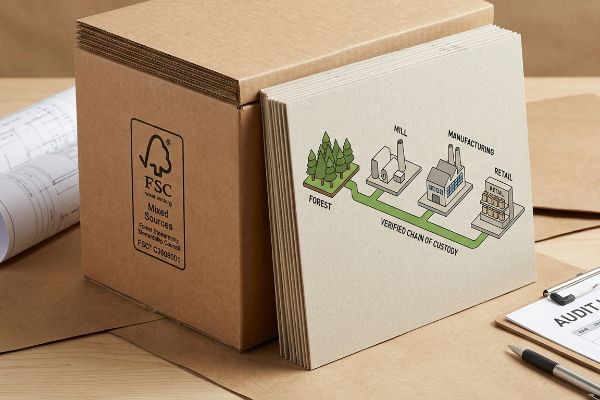
Das Anbringen des Baum-Logos auf Ihrer Stanzform ist jedoch nutzlos, wenn Sie dessen Herkunft im Falle einer Prüfung nicht rechtlich belegen können.
Das Überstehen der Lieferkettenprüfung im Einzelhandel
Marketingteams gehen oft fälschlicherweise davon aus, dass die Anforderung von zertifiziertem Karton bei einem Lieferanten automatisch die Einhaltung der Nachhaltigkeitsvorgaben großer Handelsketten garantiert. Sie gestalten ihre Verkaufsdisplays, fügen das Vektor-Baumlogo in die Druckvorlage ein und betrachten ihre Umweltverpflichtungen als erfüllt. Es scheint sich um eine einfache Aufgabe zu handeln, die man bei einem Druckauftrag erledigen muss.
Ich sehe diese Falle immer wieder, wenn neue Einkäufer auf Club-Stores umsteigen . Ein Kunde lieferte einmal eine aufwendige Werbeaktion aus, konnte aber bei einer Stichprobenprüfung der Beschaffung die offiziellen Produktionsdokumente nicht vorlegen. Ohne ein verifiziertes System zur Rückverfolgbarkeit der Produktkette (Chain of Custody, CoC) ¹ werden zertifizierte Kartons in der Produktion leicht mit nicht rückverfolgbarem, minderwertigem Karton vermischt. Die Folge war ein massiver Verstoß gegen die Compliance-Vorschriften, der zur sofortigen Ablehnung durch den Einzelhändler führte und die Marke in Bedrängnis brachte, ihre Umweltversprechen zu beweisen. Ich erinnere mich an die bedrückende Stille im Lager, als der Manager die Lieferung ablehnte. Es reicht nicht, einfach nur das Logo zu drucken; man muss eine lückenlose , nachvollziehbare Dokumentation² vom Papierhersteller bis zum fertigen Stanzprodukt aufrechterhalten.
| Häufiger Anfängerfehler | Die Profi-Lösung | Vorteil für die Verkaufsfläche |
|---|---|---|
| Vermischung von zertifizierten und nicht zertifizierten Rohplatten. | Absolute Trennung der Rohstoffe am Produktionsstandort sicherstellen. | Verhindert die vollständige Ablehnung des Lagerbestands. |
| Verwendung nicht verifizierter Stockvektor-Logos. | Verknüpfen Sie die Grafiken direkt mit dem spezifischen Konformitätscode der Fabrik. | Besteht strenge Nachhaltigkeitsprüfungen im Einzelhandel. |
| Sich auf mündliche Zusagen der Lieferanten verlassen. | Nachfrage nach zentralisierter Holzbeschaffung ab Sägewerk. | Schützt den Markenwert vor Greenwashing-Strafen. |
Ich weigere mich, Nachhaltigkeitskampagnen ohne zentrale Beschaffungsdokumentation durchzuführen. Durch die lückenlose Dokumentation schütze ich meine Kunden vor schwerwiegenden Greenwashing-Folgen und stelle gleichzeitig sicher, dass ihre Warenpräsentationen reibungslos durch die strengen Warenannahmerichtlinien des Einzelhandels gelangen.
🛠️ Harveys Schreibtisch: Sind Sie sich nicht sicher, ob Ihre aktuelle Verpackung den Anforderungen einer Nachhaltigkeitsprüfung entspricht? 👉 Fordern Sie eine Konformitätsprüfung an ↗ — Direkter Kontakt zu mir. Kein automatisierter Werbe-Spam, versprochen.
Was sind die drei FSC-Siegel?
Einkaufsteams starren oft auf ihre Papierspezifikationen und sind sich dabei völlig unbewusst, dass die Wahl des falschen Öko-Siegels die physikalischen Eigenschaften ihrer Verpackung verändert.
Die drei FSC-Siegel stehen für unterschiedliche Anteile an Primär- und Recyclingmaterialien: FSC 100% enthält ausschließlich Primärholz aus zertifizierten Wäldern, FSC Recycled verwendet ausschließlich Post-Consumer-Recyclingmaterialien und FSC Mix mischt zertifizierte Primärfasern mit Recyclingpapier und bietet so eine flexible strukturelle Integrität für schwere Einzelhandelsverpackungen.
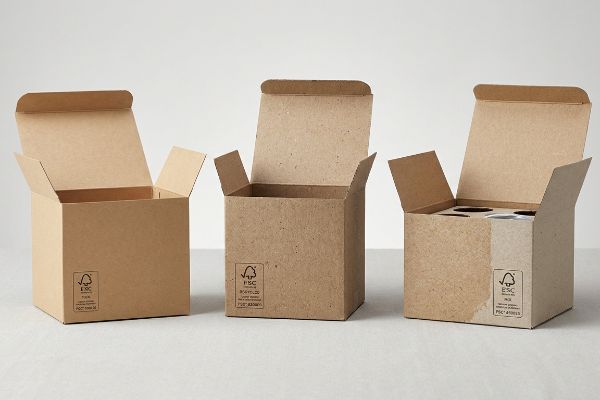
Die Kenntnis des Unterschieds zwischen diesen drei Kategorien ist von großer Bedeutung, wenn Ihre Verpackung ein tatsächliches Gewicht tragen muss.
Nachhaltigkeit und Strukturphysik im Einklang
Designer bevorzugen vollständig recycelte Etiketten, um den Umweltaspekt im Marketing optimal zu nutzen. Sie gehen davon aus, dass sich der Karton unter hoher Belastung im Einzelhandel identisch verhält, da alle drei Etiketten das gleiche , weltweit anerkannte Baumsymbol tragen
Diese Annahme erweist sich in der Praxis als falsch. Recycelte Fasern sind bereits verarbeitet und aufgeschlossen, wodurch sie von Natur aus kürzer und strukturell schwächer sind als Frischfaser-Kraftpapier⁴.Kürzlich verlangte ein Kunde für ein großes Getränkedisplay. Bei der ersten Testcharge hörte ich das typische Reißgeräusch von Rohkarton, als die Wellen unter einer statischen Belastung von 20,4 kg (45 lbs) nachgaben. Um dies zu beheben, ohne die Öko-Zertifizierung zu verlieren, stellten wir die Verpackung strategisch auf eine FSC-Mix-Spezifikation um. Dadurch konnten wir genau die richtige Menge an langfaserigem Frischfaser-Kraftpapier beifügen, um die geforderte ECT-Bewertung (Edge Crush Test) von 32 zu erreichen und gleichzeitig die vollständige Recyclingfähigkeit sowie die Einhaltung der SFI- (Sustainable Forestry Initiative) und der Standards des Einzelhandels zu gewährleisten.
| Häufiger Anfängerfehler | Die Profi-Lösung | Vorteil für die Verkaufsfläche |
|---|---|---|
| Für schwere Lasten wird 100% Recyclingmaterial gefordert. | Für die strukturelle Festigkeit FSC-Mischung spezifizieren5. | Verhindert Durchhängen und Zusammenbrechen der unteren Ebene. |
| Die Papierfaserlänge wird außer Acht gelassen. | Mischen Sie reines Kraftpapier in den tragenden Rücken ein6. | Geeignet für die sichere Aufbewahrung von schweren Getränken. |
| Stärke für Marketing opfern. | Verwenden Sie standardmäßige, für die Wertstoffsammlung geeignete Kartons. | Spart Materialkosten und erhält gleichzeitig den Umweltstandard. |
Ich weise Markenmanager stets darauf hin, dass ein zusammenklappbares Display die Umweltbilanz nicht verbessert. Eine Konstruktion aus Mischfasern garantiert, dass Sie Ihre Nachhaltigkeitsziele erreichen, ohne die für eine anspruchsvolle Lagerlogistik notwendige dynamische Tragfähigkeit einzubüßen.
🛠️ Harveys Schreibtisch: Sind Ihre umweltfreundlichen Displays unter dem Gewicht Ihrer Produkte instabil? 👉 Lassen Sie einen Strukturcheck durchführen ↗ – Sicher herunterladen. Bei Fragen können Sie mich gerne kontaktieren.
Was bedeutet FSC auf einem Kleidungsetikett?
Die Bekleidungsindustrie verabschiedet sich rasant von Einwegplastik und zwingt die Marken damit, zu überdenken, wie sie Preisschilder physisch an Kleidungsstücken anbringen.
Das FSC-Siegel auf einem Kleidungsetikett signalisiert, dass das Papieretikett aus verantwortungsvoll beschafftem Holz hergestellt wurde und nicht zur Abholzung von Wäldern beiträgt. Diese Zertifizierung garantiert, dass Bekleidungsmarken nachhaltige Monomaterialien für ihre Sekundärverpackungen verwenden und damit den modernen Initiativen des Einzelhandels zur vollständigen Vermeidung von Neuplastikmüll entsprechen.
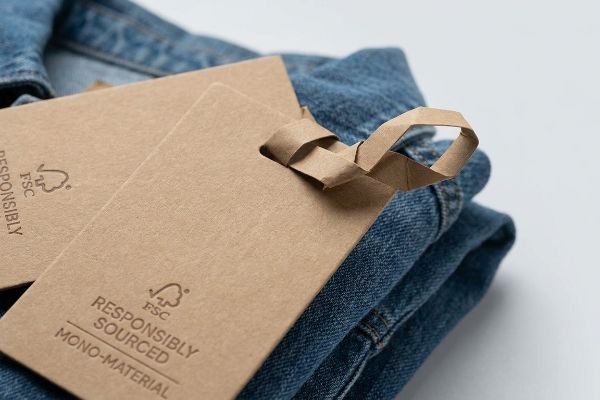
Der Austausch eines Plastiketiketts gegen ein zertifiziertes Papieretikett klingt einfach, doch die mechanische Befestigung ist der Punkt, an dem die meisten Bekleidungsmarken scheitern.
Das Monomaterial-Mandat bei Bekleidung
Bekleidungsmarken verwenden häufig hochwertige, zertifizierte Etiketten, um ihr umweltbewusstes Image zu stärken. Sie untergraben jedoch die gesamte Initiative, indem sie diese nachhaltigen Papieretiketten mit herkömmlichen Kabelbindern aus Kunststoff, Nylonschnüren oder nicht recycelbaren Sicherheitsnadelnan.
Stellen Sie sich vor, Sie servieren einen Bio-Salat auf einem Styroporteller. Ich habe miterlebt, wie eine High-End-Denim-Marke unnötig viel Geld für aufwendige, zertifizierte Etiketten verschwendete und daraufhin von einem europäischen Einzelhändler eine massive Verwarnung wegen Verstoßes gegen die neuen Recyclingvorschriften für Monomaterialien erhielt . Um dieses Problem zu lösen, haben wir den Kunststoff komplett eliminiert und einen Papierverschluss im Origami-Stil entwickelt. Ich erinnere mich noch gut an das befriedigende Klicken, als die ausgestanzte Papierlasche fest in sich einrastete und so eine sichere, komplett aus Papier bestehende Schlaufe bildete. Indem wir Etikett und Verschluss aus demselben zertifizierten Material herstellten, stellten wir eine problemlose Wiederverwertung über die Wertstofftonne sicher und bestanden die strenge Verpackungsprüfung des Einzelhändlers auf Anhieb.
| Häufiger Anfängerfehler | Die Profi-Lösung | Vorteil für die Verkaufsfläche |
|---|---|---|
| Verwendung von Kabelbindern aus Kunststoff an Papieretiketten. | Ingenieurtechnische Origami-ähnliche Papierverschlussschlaufen. | Vermeidet Einwegplastikmüll. |
| Vermischen von nicht recycelbaren Schnurmaterialien. | Einen strikten Monomaterialstandard durchsetzen. | Beschleunigt die Sortierung und das Recycling von Kleidung10. |
| Die Plastikverbote der Einzelhändler werden ignoriert. | Verwenden Sie gestanzte Reibungslaschen zur Befestigung11. | Vermeidet kostspielige Rückbelastungen aufgrund von Compliance-Verstößen12. |
Ich entwickle Verpackungen so, dass sie für die Recyclinganlage unsichtbar sind. Durch den Verzicht auf Materialmix und die ausschließliche Verwendung zertifizierter Papierverschlussmechanismen stelle ich sicher, dass Etiketten von Bekleidungsstücken im Recyclingbehälter landen und nahtlos wiederverwertet werden, ohne die Sortiermaschinen zu verstopfen.
🛠️ Harveys Schreibtisch: Gefährden Plastikclips an Ihren Etiketten die Einhaltung der Händlervorschriften? 👉 Fordern Sie ein Monomaterial-Design an ↗ – Keine Formulare, die endlose Verkaufsgespräche auslösen. Einfach nur Mehrwert.
Was bedeutet 100% FSC?
Wer absolute Reinheit seiner Rohstoffe verlangt, muss auch auf den physikalischen Widerstand von ungebrauchten Holzfasern vorbereitet sein.
100 % FSC bedeutet, dass das Material ausschließlich aus Primärholzfasern besteht, die direkt aus geprüften und zertifizierten Wäldern stammen. Es enthält keinerlei Recyclingmaterial und ist damit die stärkste verfügbare Papiersorte. Es bietet überragende Reißfestigkeit, brillante Druckoberflächen und maximale Widerstandsfähigkeit gegenüber starken Transportbelastungen.
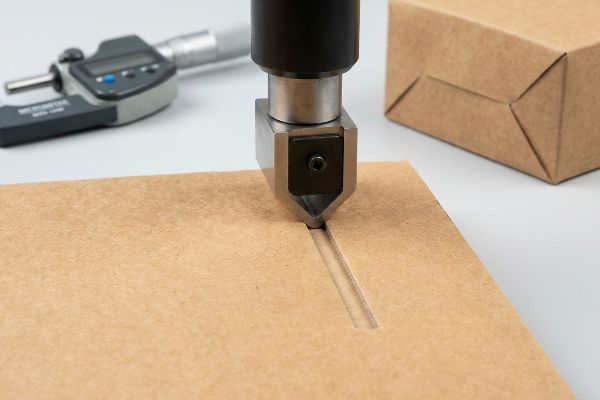
Doch die Theorie allein reicht nicht aus, wenn die schweren Fabrikmaschinen Ihre teuren, ungebrauchten Platinen bearbeiten.
Warum Virgin Kraft in der Fabrikhalle versagt
Käufer gehen logischerweise davon aus, dass die Verwendung von zertifiziertem, ungebrauchtem Kraftkarton ein makelloses, unzerstörbares Verkaufsdisplay. Sie betrachten dieses Premium-Material als Allheilmittel und nehmen an, dass seine hohe Zugfestigkeit13 automatisch all ihre Falt- und Strukturprobleme löst.
In meiner Produktionsstätte erlebe ich regelmäßig, wie genau diese Annahme beim Stanzen ganze Produktionsläufe zunichtemacht. Neuware-Fasern sind extrem steif und widerstandsfähig. Drückt man ein Standard-Stahlstanzwerkzeug in dicken Neuware-Karton, ohne diese Steifigkeit zu berücksichtigen, knicken die inneren Rillen heftig ein und reißen das bedruckte Deckblatt. Ich habe diese Ausfallrate letzten Monat gemessen: Das Standard-Rillen führte zu einem massiven Ertragsverlust von 12,4 % aufgrund von Litho-Rissen entlang der 90-Grad-Faltungen. Die Mikrometermessungen zeigten, dass wir keinen anderen Karton benötigten – ein Polymer-Rillkanal als Amboss genügte. Durch die dynamische Steuerung der Dehnung dieser steifen Fasern während des Stanzvorgangs mit einer strengen Toleranz von 0,5 mm (0,019 Zoll) konnte ich die Rissbildung vollständig eliminieren. Diese Anpassung verhindert unsaubere Risse in der Montage und spart Kunden pro Standardlauf rund 1.800 US-Dollar an verschwendetem Premium-Material.
| Häufiger Anfängerfehler | Die Profi-Lösung | Vorteil für die Verkaufsfläche |
|---|---|---|
| Verwendung von Standard-Stanzformen auf steifem, ungebrauchtem Karton. | Spezielle Faltenmatrizenkanäle für Frauen anwenden. | Beseitigt unschöne, rissige Ecken. |
| Dicke Bretter werden gezwungen, um 90 Grad zu biegen. | Faserdehnung mit Präzisionsambossen kontrollieren. | Garantiert eine saubere, quadratische Präsentationsbox. |
| Dem Vorstand die Schuld an den visuellen Tränen geben. | Passen Sie den Prägedruck der Stahllineal-Stanze an. | Schützt Premium-Marken im Einzelhandel. |
Ich lasse niemals unkalibrierte Werkzeuge an die hochwertigen Frischfaserkartons meiner Kunden gelangen. Durch die präzise Messung des Widerstands der Papierfasern gegen eine kontrollierte Rillmatrix garantiere ich absolute Stabilität und eine makellose Präsentation im Einzelhandel.
🛠️ Harveys Schreibtisch: Lassen Sie sich nicht von einem 2 Millimeter kleinen Konstruktionsfehler die Einführung in 500 Filialen vermasseln. 👉 Senden Sie mir Ihre Stanzdatei ↗ – ich prüfe die Berechnungen, bevor Sie Ihr Budget für die Massenproduktion verschwenden.
Abschluss
Sie können zwar ungeprüfte, umweltfreundliche Materialien kaufen, um zunächst Kosten zu sparen, doch wenn diese fehlende Rückverfolgbarkeit zu einem massiven Fehler bei der Beschaffungsprüfung führt, was eine plötzliche Ablehnung durch den Händler und damit den Verlust Ihrer gesamten Kampagnengewinnspanne zur Folge hat, wird die vermeintlich günstige Wahl zum Desaster. Dies ist das exakte Datenblatt, das meine zehn wichtigsten Einzelhandelskunden verwenden, um Druckausfälle zu vermeiden. Hören Sie auf, bei der Einhaltung von Umweltauflagen zu raten, und lassen Sie mich Ihre Konstruktionsdateien persönlich durch meine kostenlose Lieferkettenprüfung führen, um schwerwiegende Lücken in der Rückverfolgbarkeit aufzudecken, bevor die Produktion beginnt.
„[PDF] Gruppen-Produktketten-Zertifizierungshandbuch (CoC) des FSC“, https://cfwc.mgcafe.uky.edu/sites/cfwc.ca.uky.edu/files/cfwc_coc_group_certification_manual_revised_2_16_2018_0.pdf. [Die offiziellen FSC-Standards legen die obligatorischen Systeme fest, die zur Rückverfolgung zertifizierter Materialien und zur Vermeidung von Verunreinigungen mit nicht zertifizierten Fasern erforderlich sind]. Nachweisfunktion: Technische Spezifikation; Quellentyp: Zertifizierungsstandard. Begründung: Die Notwendigkeit eines Rückverfolgungssystems zur Vermeidung von Compliance-Verstößen. Anwendungsbereich: Betrifft die FSC-Materialrückverfolgung. ↩
„[PDF] Verfahren zur Zertifizierung der Lieferkette für Forstprodukte …“, https://www.in.gov/dnr/forestry/files/fo-FSC-chain-of-custody-group-entity-manual.pdf. [Zertifizierungsstellen benötigen dokumentierte Nachweise über den Weg des Materials durch jede Produktionsstufe, um das FSC-Siegel zu validieren]. Nachweisfunktion: gesetzliche Anforderung; Quellentyp: Branchenstandard. Unterstützt: die Behauptung, dass ein Logo ohne lückenlose Dokumentation nicht ausreicht. Geltungsbereich: gilt für die gesamte Lieferkette vom Sägewerk bis zum Endprodukt. ↩
„Was die FSC-Siegel bedeuten | Forest Stewardship Council“, https://fsc.org/en/label. [Die offiziellen FSC-Marken- und Kennzeichnungsrichtlinien bestätigen, dass das Häkchen und das Baum-Logo das einheitliche visuelle Erkennungsmerkmal für alle FSC 100%-, FSC Recycled- und FSC Mix-Siegel sind.] Nachweisfunktion: Faktenbestätigung; Quellentyp: Organisationsrichtlinie. Unterstützt: Die visuelle Einheitlichkeit der FSC-Zertifizierungszeichen. Anmerkung: Dies bezieht sich auf das Kernlogo, nicht auf die dazugehörigen Textetiketten. ↩
„Neufaser vs. Recyclingfaser – Was ist die richtige Wahl?“, https://www.resourcewise.com/blog/forest-products-blog/virgin-fiber-vs-recycled-fiber-which-should-you-choose. [Die wissenschaftliche Literatur zur Zellstoff- und Papierwissenschaft bestätigt, dass mechanisches Recycling die Länge und Bindungsfähigkeit von Zellulosefasern verringert, was zu einer geringeren strukturellen Integrität als bei Primärkraftfasern führt.] Belegfunktion: Technische Validierung; Quellentyp: Fachzeitschrift für Materialwissenschaften; Beleg: Die Behauptung, dass Recyclingfasern strukturell minderwertig sind; Anwendungsbereich: Speziell für Zellulosefasern in Karton. ↩
„Was ist der Unterschied zwischen FSC-zertifiziertem und recyceltem Papier …?“, https://www.luxurycustompackaging.com/fsc-certified-and-recycled-packaging/. Die technische Dokumentation zur Papierzertifizierung und Verpackungstechnik sollte erläutern, warum die Mischfasern in FSC Mix im Vergleich zu 100 % recycelten Materialien eine höhere strukturelle Integrität und Tragfähigkeit aufweisen. Nachweis: Technische Spezifikation; Quellentyp: Industriestandard. Unterstützung: Die Empfehlung von FSC Mix für hohe Belastungen. Hinweis: Die Wirksamkeit variiert je nach Kartonqualität und -dicke. ↩
„Ein datengestützter Vergleich: 5 Schlüsselkennzahlen zum Vergleich von Kraftpapier vs. …“, https://www.nanwangpaperbag.com/kraft-vs-recycled-packaging-performance/. Fachliteratur sollte bestätigen, dass Primärkraftfasern deutlich länger sind als Recyclingfasern, was die Zug- und Druckfestigkeit der Verpackungsstruktur direkt erhöht. Nachweisfunktion: Technische Spezifikation; Quellentyp: Fachzeitschrift für Materialwissenschaften. Begründung: Verwendung von Primärkraftpapier für die Verpackung schwerer Getränke. Anmerkung zum Umfang: Fokus liegt auf der Faserlängenmechanik. ↩
„Vielseitige Kunststoff-Etikettenschlaufen für Einzelhandel, Boutiquen und Bekleidung …“, https://luthsports.org/items/Clothing-Tag-Fasteners-Versatile-Plastic-Tag-String-Loops-For/1078293. [Nachhaltigkeitsberichte oder Abfallanalysen der Branche würden die Verbreitung nicht recycelbarer Verschlüsse in Verbindung mit ökologisch zertifizierten Papieretiketten dokumentieren]. Nachweisfunktion: Faktenprüfung; Quellentyp: Branchenbericht. Beleg: die Inkonsistenz der Verwendung synthetischer Verschlüsse bei nachhaltigen Monomaterialien. Anwendungsbereich: beschränkt auf Sekundärverpackungen von Bekleidung. ↩
„Fakten zu den neuen EU-Vorschriften für Verpackungen und Verpackungsabfälle“, https://environment.ec.europa.eu/topics/waste-and-recycling/packaging-waste/facts-about-new-eu-rules-packaging-and-packaging-waste_en. Autorisierte Dokumentationen zu EU-Verpackungsvorschriften oder Nachhaltigkeitsstandards des Einzelhandels bestätigen die Anforderung an Monomaterialkomponenten zur Reduzierung von Verunreinigungen in Recyclingströmen. Nachweisfunktion: externe Validierung; Quellentyp: Bericht einer Regulierungsbehörde oder eines Branchenverbands. Unterstützung: Bestehen von Monomaterialvorgaben im europäischen Einzelhandel. Anmerkung: Die spezifischen Anforderungen können je nach Einzelhändler oder EU-Mitgliedstaat variieren. ↩
„Monomaterialverpackungen: Vereinfachung des Recyclingprozesses“, https://www.berlinpackaging.com/insights/sustainability/mono-material-packaging-simplifies-the-recycling-process?srsltid=AfmBOoqTV2ZIvMmbfm_KPDgH0OMyOd3zSMuZQVXpjfw09m2Qio2iMtYs. Richtlinien zur Abfallwirtschaft bestätigen, dass Produkte aus einem einzigen Materialsubstrat, wie z. B. zertifiziertem Papier, mit den kommunalen Recyclingverfahren kompatibel sind. Nachweisfunktion: Technische Verifizierung; Quellentyp: Abfallwirtschaftsnorm. Beleg: Die Behauptung, dass Monomaterialien ein einfacheres Recycling gewährleisten. Anmerkung: Die tatsächliche Recyclingfähigkeit hängt von den lokalen kommunalen Verarbeitungskapazitäten ab. ↩
„Monomaterialverpackungen: Vereinfachung des Recyclingprozesses“, https://www.berlinpackaging.com/insights/sustainability/mono-material-packaging-simplifies-the-recycling-process?srsltid=AfmBOoovrZBEX5afs2oFXBiZ2lFDKjOOuK2Wk5l_fEu8hlRzD5KhJpwv. [Eine maßgebliche Quelle zur Kreislaufwirtschaft oder zum Textilrecycling würde bestätigen, dass Monomaterialkomponenten die Verunreinigung reduzieren und die Sortiergeschwindigkeit in automatisierten Anlagen erhöhen]. Nachweisfunktion: Technische Verifizierung; Quellentyp: Branchenbericht oder wissenschaftliche Publikation. Unterstützt: die Vorteile von Monomaterialstandards in der Bekleidungsindustrie. Anmerkung: Die Effizienzgewinne hängen von der spezifischen Sortiertechnologie des Recyclingunternehmens ab. ↩
„Avery Dennison Ecotach®-Verschlüsse“, https://fastener.averydennison.com/en/home/technologies/swiftach-systems/recycled.html. [Technische Verpackungsspezifikationen belegen, dass gestanzte Reibungslaschen eine mechanisch praktikable Alternative zu Kunststoffverschlüssen für die Etikettierung von Bekleidung darstellen]. Nachweisfunktion: technische Machbarkeit; Quellentyp: Handbuch für Verpackungstechnik. Unterstützt: die praktische Anwendung des „Pro Fix“ für Plastikverbote. Anmerkung: Die Wirksamkeit hängt vom Flächengewicht und der Steifigkeit des verwendeten Papiers ab. ↩
„Was gibt es Neues in der Verpackungspolitik? Überblick über die Verpackungspolitik“, https://sustainablepackaging.org/2026/05/21/packaging-policy-news/. [Handbücher und Compliance-Leitfäden für Einzelhändler beschreiben in der Regel finanzielle Strafen, sogenannte Rückbelastungen, für die Nichteinhaltung strenger Verpackungs- und Plastikfreiheitsvorgaben.] Nachweisfunktion: Überprüfung von Geschäftsprozessen; Quellentyp: Compliance-Leitfaden für Einzelhändler. Unterstützt: Der finanzielle Anreiz für die Verwendung plastikfreier Zubehörteile. Anmerkung zum Geltungsbereich: Die Rückbelastungsstrukturen variieren je nach Einzelhändler. ↩
"[PDF] NEUWERTIGE VERSUS RECYCELTE KARTONS Von L. Lisa Zhao Eine Dissertation …", https://vuir.vu.edu.au/18233/1/ZHAO_1993compressed.pdf. [Technische Datenblätter oder materialwissenschaftliche Studien zur Zellulosefaserlänge würden bestätigen, dass Neufaser-Kraftpapier eine deutlich höhere Zugfestigkeit aufweist als Recyclingfasern]. Nachweisfunktion: Technische Spezifikation; Quellentyp: Industriedatenblatt. Belege: Die physikalischen Eigenschaften von Neufaser-Kraftpapier-Substraten. Anmerkung zum Anwendungsbereich: Der Vergleich bezieht sich speziell auf die Faserlängen von Neufaser und Recyclingfaser. ↩