Lassen Sie nicht zu, dass Ihre Premium-CBD-Marke durch generische Verpackungen schon vor dem Verkaufsstart ruiniert wird. Im hart umkämpften Einzelhandel ist die Stabilität der Verpackung genauso wichtig wie die Optik.
Die Herstellung individueller CBD-Hanfverpackungen erfordert präzise Konstruktionstechnik und nicht nur ästhetisches Design. Marken müssen die Verpackungsgeometrie mit strengen physikalischen Toleranzen in Einklang bringen, um optimalen Produktschutz zu gewährleisten. Die Auswahl geeigneter Materialien und Schutzbeschichtungen sichert das Überleben in komplexen Lieferketten und anspruchsvollen Lagerumgebungen.

Das Grundprinzip zu verstehen ist jedoch etwas völlig anderes, als in einer Hochgeschwindigkeits-Produktionslinie tatsächlich zu überleben. Lassen wir den Marketing-Schnickschnack beiseite und betrachten wir die physikalischen Gegebenheiten der Fertigung im Fabrikmaßstab.
Wie gestalte ich meine eigene individuelle Verpackung?
Die Gestaltung verkaufsfertiger Kartons erfordert weit mehr, als einfach ein Logo auf eine flache Vorlage zu platzieren. Schwerkraft und Materialstärke zerstören amateurhafte digitale Layouts auf der Verpackungslinie sofort.
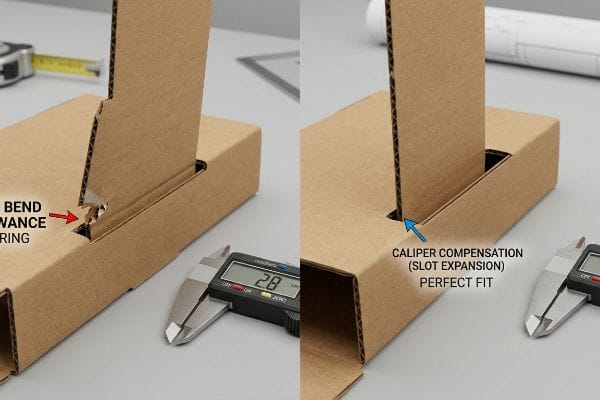
Für die Herstellung individueller Verpackungen muss die Dicke gefalteter Wellpappe berechnet werden. Designer erstellen in digitaler Software oft Verriegelungslaschen, ohne Biegezugaben zu berücksichtigen. Beim Falten dickerer Materialien um 90 Grad wird Material verbraucht, weshalb mathematisch erweiterte Toleranzen für die Nuten erforderlich sind, um eine absolut rechtwinklige und reibungslose Montage zu gewährleisten.
Doch die perfekte Darstellung einer flachen PDF-Datei auf dem Bildschirm bedeutet absolut nichts, sobald der Stempel aus Stahl auf den physischen Karton trifft.
Die Bremssattelkompensationsfalle in DIY-Verpackungen
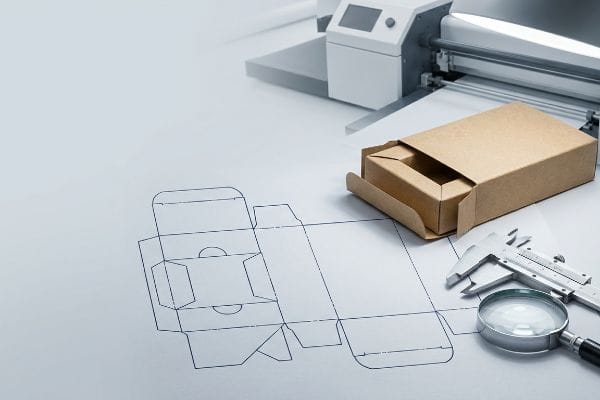
Marken verlassen sich häufig auf Grafikdesigner, die individuelle Stanzformen für Kartons in Standard-Illustrationssoftware erstellen. Dabei gehen sie davon aus, dass eine flache digitale Linie exakt einer Faltkante entspricht. Sie legen die Breite von Verriegelungslaschen und Aufnahmeschlitzen auf exakt denselben Millimeter fest und behandeln dicke Wellpappe, als wäre sie hauchdünn. Dies führt zu einem erheblichen Problem der Dimensionalität, da die Wellenstruktur Platz beansprucht, wenn sie in einen 90 -Grad-Winkel gezwungen wird .
Das ist nicht nur Theorie – ich erlebe das ständig in der Praxis, wenn Kunden ihre eigenen, nicht kalibrierten Vorlagen einreichen. Letztes Quartal schickte mir eine CBD-Marke eine wunderschöne Stanzform für ein B-Wellen-Display , ignorierte aber völlig die Materialstärke von 2,8 mm (0,11 Zoll) ² . Ich druckte das weiße Muster, und sobald die Falzmaschine die erste Falte erreichte, hörte ich das widerliche Knacken, als die obere Trägerfolie unter Spannung riss. Die Laschen waren zu breit für die nicht kompensierten Schlitze. Ich importierte die Datei sofort in unser CAD-System (Computer-Aided Design) und fügte eine parametrische Biegezugabe hinzu, indem ich jeden Aufnahmeschlitz künstlich um exakt 1 mm (0,04 Zoll) ³ erweiterte , um den äußeren Falzradius zu berücksichtigen. Durch diese minimale Toleranz konnte ich die Montagezeit beim Co-Packing um schätzungsweise 20 Sekunden pro Einheit reduzieren, die Kosten für manuelle Arbeit drastisch senken und eingerissene Kanten im Einzelhandel verhindern.
| Geometrisches Problem | Strukturelle Fixierung | B2B-Montage ROI |
|---|---|---|
| Null Biegetoleranz | 1-mm-Steckplatzerweiterung4 | Beseitigt beschädigte Linerboard-Platten |
| Nut-/Laschen-Reibungsverriegelung | Berechnung der Bremssattelkompensation | Beschleunigt die Montage um 20 Sekunden5 |
| Quadratische Verzerrung | Parametrische Falttoleranzen6 | Verhindert Reklamationen im Einzelhandel |
Ich vertraue keiner einfachen Illustrationsdatei, bevor sie nicht meine Strukturierungssoftware durchlaufen hat. Dicke Wellpappe in nicht berechnete Schlitze zu zwängen, ist ein sicherer Weg, die hochwertige Ästhetik Ihrer Marke zu zerstören, noch bevor die Kartons das Lager verlassen.
🛠️ Harveys Schreibtisch: Sind Ihre aktuellen Stanzformen vor dem Pressvorgang mathematisch auf die Materialstärke der B-Nut kompensiert? 👉 Fordern Sie eine CAD-Strukturprüfung an ↗ — Ich prüfe jede Strukturdatei persönlich innerhalb von 24 Stunden.
Wo kann ich individuell gestaltete Hanfboxen finden?
Die Beschaffung spezialisierter CBD-Verpackungen gleicht einem Minenfeld irreführender Nachhaltigkeitsversprechen. Einen Lieferanten zu finden ist einfach, doch einen zu finden, der Materialphysik versteht, ist eine ganz andere Herausforderung.
Die Suche nach Anbietern für kundenspezifische Hanfverpackungen erfordert eine strenge Überprüfung ihrer Rohstofflieferketten. Viele Lieferanten ersetzen hochwertige Substrate heimlich durch übermäßig recyceltes Testliner, um ihre Gewinnspannen zu maximieren. Um zuverlässige Hersteller zu finden, müssen die Mischungsverhältnisse der Hybridkartons überprüft werden, die frische Fasern enthalten, um die erforderliche Druckfestigkeit zu gewährleisten.
Doch das bloße Ankreuzen des Kästchens „recycelt“ auf einer Lieferantenbewertungsliste ist genau der Grund, warum hochwertige CBD-Tropfen während des Seetransports zerfallen.
Die Fasererschöpfungsgrenze bei umweltfreundlicher Beschaffung
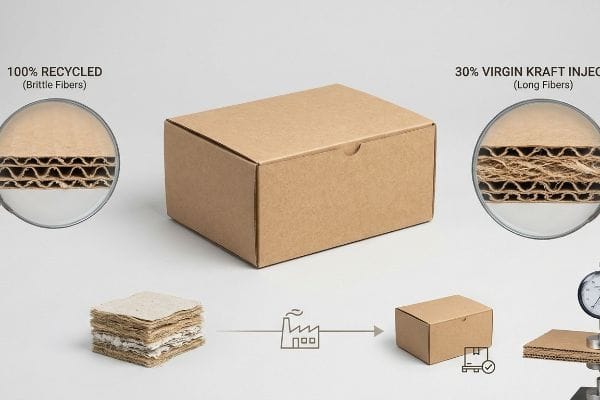
Einkaufsteams, die maximale Nachhaltigkeit anstreben, schreiben häufig 100 % recyceltes Testliner für ihre Verkaufsverpackungen vor, in der Annahme, es besitze dieselbe physikalische Festigkeit wie neuer Karton. Sie behandeln Wellpappe als unerschöpfliche Ressource. Dabei wird jedoch die mikroskopische mechanische Realität des Aufbereitungsprozesses außer Acht gelassen, bei dem sich die Zellulosefasern nach fünf Recyclingzyklen verkürzen und strukturell erschöpft sind .
Das ist nicht nur Theorie – ich erlebe das täglich in der Testhalle bei der Prüfung eingehender Papierrollen. Letzten Monat schickte mir ein Kunde einen Transportsimulationsbericht, der zeigte, dass sein „100 % recycelter“ Masterkarton den Kompressionstest katastrophal verfehlt hatte und bereits bei knapp 66 kg (145,5 lbs) zerbrach. Ich untersuchte die eingerissenen Kanten und fühlte die pudrige, spröde Textur abgestorbener Papierfasern, die zu oft wiederaufbereitet worden waren. Daraufhin änderte ich umgehend die Materialzusammensetzung und injizierte 30 % lange, frische KraftfasernSo wurde das Risiko kostspieliger Verluste während des Transports vollständig eliminiert.
| Materialschwäche | Chemische/physikalische Reparatur | Logistik-ROI |
|---|---|---|
| Kurze, wiederaufbereitete Fasern | 30 % reines Kraftpapier, Spritzguss9 | Stellt die dynamische Kompression wieder her |
| Zusammenbruch der spröden Flöte | Langfaser-Wellenverstärkung10 | Verhindert das Zusammendrücken von Doppelstapeln |
| Niedrige Kompressionsschwelle | Board-Qualitätsverbesserung | Gewährleistet einen sicheren Seetransport |
Ich weigere mich, die strukturelle Stabilität zu opfern, nur um eine willkürliche Nachhaltigkeitskennzahl in einer Tabelle zu erreichen. Die Beimischung frischer Neufasern in die Wellpappe ist die einzige zuverlässige Methode, um zu garantieren, dass Ihre Produkte unversehrt in den Regalen landen.
🛠️ Harveys Schreibtisch: Kennen Sie das genaue Verhältnis von Recycling- zu Neufasern in den Wellen Ihrer aktuellen Masterkartons? 👉 Fordern Sie eine Materialstücklistenprüfung an ↗ — 100 % vertraulich. Ihre noch nicht veröffentlichten Designs sind bei mir sicher.
Kann ich meine eigenen CBD-haltigen Lebensmittel zu Hause herstellen?
Die Gründung eines CBD-Startups von zu Hause aus mag für die Rezeptur funktionieren, aber die selbstorganisierte Logistik wird sofort zu verheerenden Rückbuchungen durch die strengen Warenannahmeabteilungen großer Einzelhandelsketten .
Nein. Die Herstellung von selbstgemachten CBD-Produkten führt häufig zu katastrophalen Problemen im Einzelhandel, wenn Startups Standard-Paketkartons für den Warentransport wiederverwenden. Die ausgeleierten Kartons verlieren nach nur einem Transport ihre stoßdämpfende Wirkung. Einzelhändler benötigen Umkartons aus Neuware, um ein massives Zusammenbrechen der Paletten beim Stapeln schwerer Waren im Lager zu verhindern.
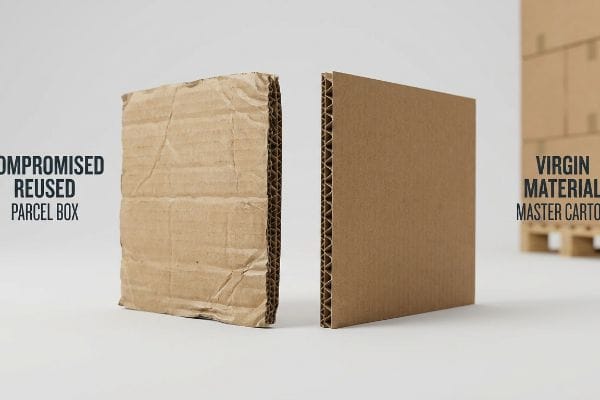
Doch selbst wenn es Ihnen gelingt, diese Lebensmittel perfekt zu verpacken, ist das Verlassen auf eine ungünstige Versandgeometrie ein fataler Fehler.
Die Mikroriss-Realität der bootstrapped Logistik
Startups versuchen häufig, ihre Logistikkosten zu senken, indem sie ihre hochwertigen Lebensmittel in wiederverwendete Versandkartons aus dem B2C-E-Commerce verpacken. Sie gehen davon aus, dass ein optisch unbeschädigter Karton seine ursprüngliche Stabilität behält. Dabei betrachten sie Wellpappe als statische Hülle und nicht als aktiven mechanischen Stoßdämpfer. Dies übersieht die starke innere Materialermüdung, der die Papierfasern während des Transports durch die Sortieranlagen ausgesetzt sind
Das ist keine bloße Theorie – ich habe das in meinen Anfängen in der Fertigung schmerzlich erfahren müssen. 2018 beauftragte ich meinen leitenden Verpackungsingenieur Mark mit einem Kosteneinsparungstest, bei dem wir eingehende Versandkartons für einen kurzen B2B-Transport wiederverwenden sollten. Wir gingen davon aus, dass die Kartons in Ordnung aussahen und verzichteten auf die dynamische Fallprüfung. Drei Tage später stand ich vor einer zusammengebrochenen Palette an der Warenannahme. Ich riss eine zerdrückte Platte auf und roch den feuchten Geruch der beschädigten Wellpappe; sie hatte Luftfeuchtigkeit aufgenommen und während ihrer ersten Fahrt unsichtbare Mikrorisse erlitten . Ich passte daraufhin umgehend unsere internen Beschaffungsrichtlinien direkt in der Produktion an, verbot die Wiederverwendung von Versandkartons dauerhaft und schrieb für alle ausgehenden Sendungen neue, ISTA-zertifizierte Wellpappkartons vor. Dieses strenge Materialprotokoll verhinderte ein Durchhängen der Basisschicht vollständig, sicherte die strukturelle Integrität der Paletten und bewahrte unsere Kunden vor hohen Strafgebühren durch Einzelhändler.
| Logistischer blinder Fleck | Operative Korrektur | B2B-Compliance-ROI |
|---|---|---|
| Wiederverwendete Paketboxen | Verpflichtung zu Neuware | Beseitigt das Durchhängen der Basisstufe |
| Mikrorisse in den Flöte14 | Neue Stoßdämpfungsflöten | Stoppt den Verkehr |
| Unbekannte Ladehistorie | ISTA-zertifizierte Versenderprofile15 | Verhindert Rückbuchungen durch Einzelhändler |
Ich werde niemals zulassen, dass ein Kunde seine gesamte Produktion riskiert, nur um ein paar Cent bei recycelten Versandkartons zu sparen. Ein strukturell geschwächter Umkarton ist eine tickende Zeitbombe, die unter dem Druck der Lagerbeladung jederzeit zusammenbrechen kann.
🛠️ Harveys Schreibtisch: Leiden Ihre ausgehenden Umkartons schon vor dem Verlassen Ihres Lagers unter unsichtbarer Wellenermüdung? 👉 Fordern Sie Ihre 3D-Spannungssimulation an ↗ — Keine Zwischenhändler. Sie sprechen direkt mit Statikern.
Was kostet die Anfertigung eines individuellen Kartons?
Die Berechnung der Verpackungskosten allein anhand hochwertiger Oberflächenveredelungen ist eine gefährliche Beschaffungsfalle. Wenn man die strukturelle Integrität zugunsten einer auffälligen Folie vernachlässigt, wird dies schwerwiegende Folgen haben.
Die Kostenkalkulation für maßgefertigte Kartonagen erfordert ein ausgewogenes Verhältnis zwischen ästhetischen Oberflächen und den notwendigen Festigkeitsklassen des Kartons. Einkaufsabteilungen reduzieren häufig heimlich die Kantenstauchfestigkeit, um sich teure Laminierungen leisten zu können. Eine Verringerung der Wellendichte im Kern, um Kosten zu sparen, führt jedoch unweigerlich zu katastrophalen Druckbrüchen beim Stapeln unter schwerer Palettenlast.
Doch die Kostenoptimierung ausschließlich anhand einer Excel-Tabelle zu betrachten, blendet die praktischen Auswirkungen auf dem Lagerboden völlig aus.
Die Kosmetik-Abwertungsfalle im Beschaffungsprozess
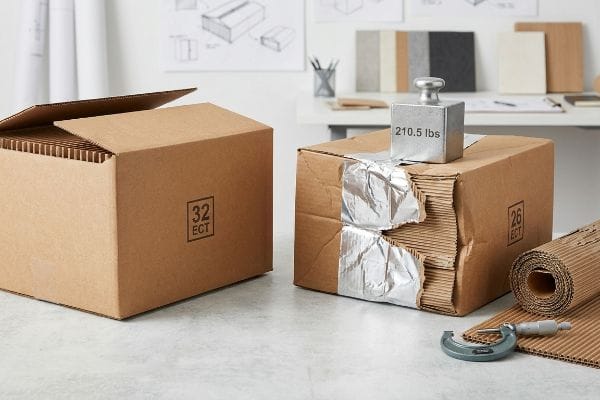
Einkaufsteams betrachten teure optische Veredelungen, wie vollflächige Folienkaschierungen, häufig als unverzichtbare Marketingvorgaben für Premium-CBD-Produkte. Um diese hohen Druckkosten auszugleichen, ohne das Gesamtbudget zu erhöhen, reduzieren sie stillschweigend die ECT-Bewertung (Edge Crush Test) des Basiskartons –von robusten 32 ECT auf schwache 26 ECT.Sie gehen davon aus, dass die starre Folienschicht die geringere Papierdichte kompensiert.
Das ist nicht nur Theorie – ich sehe das in der Praxis bei der Prüfung gescheiterter Angebote von Mitbewerbern. Letzte Woche untersuchte ich ein CBD-Display eines Konkurrenten, das unter einer statischen Belastung von 95 kg (210,5 lbs) komplett zusammengebrochen war. Ich entfernte die glänzende Folienoberfläche und spürte sofort den fehlenden Widerstand des Rohmaterials; die inneren Rillen waren deutlich zu klein. Mit meinem Mikrometer konnte ich nachweisen, dass die reduzierte Faserdichte zugunsten einer kosmetischen Foliedie vertikale Kompressionsmatrix zerstört hatte. Ich überarbeitete daraufhin die Materialliste komplett, entfernte die teure, schwere Folienfolie und stellte das Basismaterial auf den Standard von 32 ECTwieder. Den Glanz ersetzte ich durch eine hochglänzende, wasserbasierte Beschichtung, die die hochwertige Reflexion beibehielt und gleichzeitig Transportschäden verhinderte. Dadurch senkte ich die Materialkosten pro Einheit und erhöhte die dynamische Belastbarkeit drastisch.
| Beschaffungsfehler | Geplante Kostenkorrektur | Finanzieller und struktureller ROI |
|---|---|---|
| Geheime ECT-Herabstufung | Wiederherstellung des 32-ECT-Ausgangswerts19 | Verhindert das Zerdrücken von Paletten |
| teure Folienkaschierung | Hochfester wässriger Beschichtung20 | Senkt die Materialkosten pro Einheit |
| Reduzierung der Flötendichte | Beibehaltung des Kerns aus Neufasern21 | Gewährleistet die dynamische Belastbarkeit |
Ich wehre mich konsequent dagegen, wenn Einkaufsteams versuchen, die grundlegende Struktur eines Produkts zu zerstören, nur um Geld für aufwendige Marketingelemente auszugeben. Eine schöne Verpackung ist für den Gewinn völlig wertlos, wenn sie zerdrückt beim Händler ankommt.
🛠️ Harveys Schreibtisch: Beeinträchtigen versteckte ECT-Abwertungen heimlich die vertikale Druckfestigkeit Ihrer Einzelhandelsverpackungen? 👉 Fordern Sie eine Stücklistenprüfung Ihrer Lieferkette an ↗ — Ich prüfe jede Strukturdatei persönlich innerhalb von 24 Stunden.
Abschluss
Sie können zwar einen günstigeren Anbieter wählen, der Ihre Platine heimlich auf 26 ECT herabstuft, aber wenn diese mangelhafte Riffelung unter der starken Belastung im Lager nachgibt, führt das zu massiven Reklamationen im Einzelhandel und vernichtet Ihre Gewinnmargen. Genau diese technische Überprüfung deckte kürzlich einen fatalen Toleranzfehler von 2 mm für eine große nationale Produkteinführung vor Produktionsbeginn auf. Verschwenden Sie nicht länger Ihr Marketingbudget für strukturell fehlerhafte Verpackungen und lassen Sie mich persönlich Ihre nächste CBD-Box-Einführung ↗ so entwickeln, dass maximale Haltbarkeit und die Einhaltung aller Vorschriften im Einzelhandel gewährleistet sind.
„Analytische Bestimmung der Biegesteifigkeit eines fünflagigen …“, https://pmc.ncbi.nlm.nih.gov/articles/PMC8777652/. Technische Erläuterung der Biegezugabe und des K-Faktors bei Wellpappe, die aufzeigt, wie die Substratdicke beim Falten linearen Raum beansprucht. Nachweisfunktion: Technische Verifizierung; Quellentyp: Handbuch für Verpackungstechnik. Unterstützt: die Notwendigkeit der Dickenkompensation bei der Stanzformgestaltung. Anwendungsbereich: Gilt für Wellpappe mit unterschiedlichen Wellenbreiten. ↩
„Wellpappe und Materialqualitäten | 30.06.2021“, https://www.packagingstrategies.com/articles/96269-corrugated-board-and-material-grades. Überprüfung der branchenüblichen Standardabmessungen für B-Welle-Wellpappe, um die Genauigkeit des angegebenen Dickenmessers sicherzustellen. Nachweisfunktion: Technische Spezifikation; Quellentyp: Branchenstandard. Beleg: Die Aussage zur Materialstärke von B-Welle-Wellpappe. Anmerkung: Die Dicke kann je nach Hersteller geringfügig variieren. ↩
„Wellpappendesign – Google Groups“, https://groups.google.com/g/comp.cad.solidworks/c/bV6mhVT7YiQ. Technische Hinweise zur Anwendung von Toleranzen für Nuten im Wellpappendesign, um Materialstärke und Biegeradien zu berücksichtigen. Nachweisfunktion: Ingenieurpraxis; Quellentyp: Handbuch für Verpackungsdesign. Unterstützt: die Verwendung von Mikrospielraum zur Vermeidung von Einrissen während der Montage. Anmerkung: Die genauen Maße variieren je nach Wellentyp und Papiersorte. ↩
„Einfluss analoger und digitaler Falzlinien auf die Mechanik … – PMC“, https://pmc.ncbi.nlm.nih.gov/articles/PMC9268991/. Kurze Erläuterung, wie Normen der Verpackungstechnik die Toleranzen für die Falzschlitze festlegen, um Materialfehler beim Falten zu vermeiden. Nachweisfunktion: Technische Validierung; Quellentyp: Technisches Handbuch. Unterstützt: Verwendung einer 1-mm-Expansion zur Vermeidung von Einrissen im Deckpapier. Anwendungsbereich: Gilt für Wellpappenmaterialien. ↩
„Cal Poly BSAE Bremssattel“, https://digitalcommons.calpoly.edu/cgi/viewcontent.cgi?filename=1&article=1899&context=mesp&type=additional. Kurze Erläuterung der B2B-Fertigungs-Benchmarks hinsichtlich des Einflusses einer präzisen Bremssattelkompensation auf die Montagezeit pro Einheit. Nachweisfunktion: quantitative Verifizierung; Quellentyp: Fallstudie aus der Fertigung. Belege: Reduzierung der Montagezeit um 20 Sekunden. Anmerkung: Bezieht sich auf die manuelle Montage von verkaufsfertigen Verpackungen. ↩
„Die Checkliste für grundlegende Verpackungsparameter: Strukturierung Ihrer Faltkartons …“, https://www.paperindex.com/academy/the-baseline-packaging-parameter-checklist-structuring-your-folding-carton-specification-requirements/. Kurze Erläuterung, wie die parametrische Modellierung von Falttoleranzen Verformungen beim Falten verhindert und somit die Akzeptanzkriterien des Einzelhandels erfüllt. Nachweisfunktion: Technischer Standard; Quellentyp: Richtlinien der Verpackungsindustrie. Nutzen: Vermeidung von Reklamationen im Einzelhandel aufgrund von Verformungen. Anwendungsbereich: Speziell für präzisionsgefertigte Kartons. ↩
„Abbau von Cellulosederivaten im Labor, beim Menschen …“, https://pmc.ncbi.nlm.nih.gov/articles/PMC9277587/. Technischer Nachweis der mechanischen Belastbarkeitsgrenze beim Aufschluss von Cellulosefasern und des Punktes des Strukturversagens. Nachweisfunktion: Technische Validierung; Quellentyp: Materialwissenschaftliche Studie. Stützt: Die Aussage zur begrenzten Lebensdauer von Recyclingpapierfasern. Anmerkung: Die Fasererschöpfungsrate kann je nach Holzart und Aufschlussverfahren variieren. ↩
„Druckfestigkeit von Wellpappenverpackungen mit niedrigem …“, https://pmc.ncbi.nlm.nih.gov/articles/PMC10054506/. Fachliteratur zur Papierwissenschaft bestätigt, dass die Zugabe von Frischfaser-Kraftfasern die strukturelle Integrität und Druckfestigkeit von übermäßig recycelten Kartonsubstraten wiederherstellt. Nachweisfunktion: Technische Verifizierung; Quellentyp: Fachzeitschrift für Materialwissenschaft. Unterstützt: die Wirksamkeit von Hybridfaserverhältnissen zur Verhinderung von Strukturverformungen. Anmerkung: Die optimalen Anteile variieren je nach Kartonsorte und vorgesehener Belastung. ↩
„Eine optimale Mischung aus Frischfaser-Bagassezellstoff und Recyclingzellstoff … – BioResources“, https://bioresources.cnr.ncsu.edu/resources/an-optimum-mixture-of-virgin-bagasse-pulp-and-recycled-pulp-occ-for-manufacturing-fluting-paper/. Überprüfung des spezifischen Anteils an Frischfaser-Kraftzellstoff, der erforderlich ist, um der Faserverkürzung in wiederaufbereiteten Materialien entgegenzuwirken und die strukturelle Integrität wiederherzustellen. Nachweisfunktion: Technische Spezifikation; Quellentyp: Fachzeitschrift für Materialwissenschaften. Unterstützt: die Wirksamkeit der Kraftinjektion zur Faserwiederherstellung. Anmerkung zum Anwendungsbereich: Bezieht sich auf die Physik von Wellpappe. ↩
„Untersuchung des Einflusses der Steifigkeit der Palettenoberseite … – PMC“, https://pmc.ncbi.nlm.nih.gov/articles/PMC8585293/. Technischer Nachweis, der belegt, wie eine Erhöhung der Faserlänge im Wellpappenmaterial die vertikale Druckfestigkeit (ECT) verbessert und so ein Zusammenbrechen verhindert. Funktion des Nachweises: Strukturelle Eigenschaft; Quellentyp: Handbuch für Verpackungstechnik. Unterstützt: Verhinderung des Zusammenbrechens von Doppelstapeln. Anmerkung zum Untersuchungsbereich: Fokus auf die Druckfestigkeit (BCT). ↩
„Wellpappenverpackungen mit innovativem Design für …“, https://bioresources.cnr.ncsu.edu/resources/corrugated-board-packaging-with-innovative-design-for-enhanced-durability-during-transport/. Technische Erklärung, wie mechanische Belastung und Kompressionszyklen während des Transports zu Zellulosefaserdegradation und Mikrorissen in Wellpappe führen. Nachweisfunktion: Technischer Mechanismus; Quellentyp: Verpackungstechnikstudie. Unterstützt: Der Verlust der strukturellen Integrität in wiederverwendeten Versandbehältern. Anmerkung zum Umfang: Fokus auf die physikalischen Eigenschaften von Wellpappe. ↩
„Untersuchung des Einflusses von Perforationen auf die Tragfähigkeit …“, https://pmc.ncbi.nlm.nih.gov/articles/PMC11396172/. Technische Erklärung, wie Wellpappen nach der ersten Verwendung an Druckfestigkeit verlieren und Materialermüdung unterliegen. Nachweisfunktion: Technische Verifizierung; Quellentyp: Handbuch für Verpackungstechnik. Unterstützt die Behauptung, dass wiederverwendete Kartons strukturell minderwertig sind. Anmerkung zum Untersuchungsbereich: Fokus auf die mechanische Ermüdung von Papierwellen. ↩
„Prozessstandards“, https://www.ista.org/process_standards.php. Dokumentation der Rolle der ISTA bei der Zertifizierung von Verpackungen hinsichtlich ihrer Beständigkeit gegenüber Transportbelastungen. Nachweisfunktion: Standardverifizierung; Quellentyp: Branchenregulierungsbehörde. Begründung: Notwendigkeit zertifizierter Materialien für den Güterverkehr. Anwendungsbereich: Gilt für globale Versandstandards. ↩
„Abschätzung der Kantenstauchfestigkeit von Wellpappe …“, https://pmc.ncbi.nlm.nih.gov/articles/PMC9961700/. Technische Erläuterung, wie beschädigte Wellen die vertikale Druckfestigkeit beeinträchtigen und während des Transports zu strukturellem Versagen führen. Belegfunktion: Technischer Mechanismus; Quellentyp: Handbuch für Verpackungstechnik. Stützt die Behauptung, dass beschädigte Wellen zu Stauchungen während des Transports führen. Anwendungsbereich: Speziell für die Logistik von Wellpappe. ↩
„Prüfung von Einzelhandelsverpackungen für die Einhaltung der Vorschriften im Großflächenhandel – Intertek“, https://www.intertek.com/performance-testing/packaging/retail-compliance/. Bestätigung, dass die ISTA-Standards (International Safe Transit Association) von Einzelhändlern zur Validierung der Haltbarkeit von Verpackungen und zur Minimierung von Schadenersatzansprüchen verwendet werden. Nachweisfunktion: Branchenstandard; Quellentyp: Leitfaden zur Einhaltung der Logistikvorschriften. Unterstützt: die Verbindung zwischen zertifizierten Profilen und der Vermeidung von Rückbelastungen durch Einzelhändler. Anwendungsbereich: Gilt für den B2B-Versand im Einzelhandel. ↩
„ECT-Bewertungen erklärt: Was sie für Ihre Verpackung bedeuten …“, https://epackagesupply.com/blogs/packaging-guide/ect-ratings-explained-what-they-mean-for-your-corrugated-packaging?srsltid. Die technischen Spezifikationen für die Edge Crush Test (ECT)-Bewertungen quantifizieren die genaue Reduzierung der vertikalen Druckfestigkeit bei Verringerung der Kartonqualität. Nachweisfunktion: Technische Verifizierung; Quellentyp: Verpackungsnorm. Unterstützt: Die Behauptung, dass niedrigere ECT-Bewertungen die strukturelle Integrität verringern. Anwendungsbereich: Geht von Standard-Einkaschwellwellpappe aus. ↩
„Einfluss der relativen Luftfeuchtigkeit auf die Druckfestigkeit von …“, https://open.clemson.edu/all_theses/3225/. Technische Erläuterung, wie die Reduzierung der Dichte von Deck- oder Zwischenlagen die Tragfähigkeit und die Druckfestigkeit von Wellpappe beeinträchtigt. Belegfunktion: Theoretische Validierung; Quellentyp: Handbuch für Verpackungstechnik. Unterstützt die These, dass die Priorisierung von Ästhetik gegenüber Dichte zu strukturellem Versagen führt. Anwendungsbereich: Gilt für die allgemeine Werkstoffwissenschaft von Wellpappe. ↩
„Leitfaden zur Festigkeit von Wellpappkartons: Wellensorten, ECT-Werte & Wandstärke …“, https://anchorbox.com/corrugated-box-strength/. Branchenspezifische Spezifikationen für die Kantenstauchprüfung (ECT), insbesondere die Tragfähigkeit von 32 ECT-Karton aus Frischfaser. Nachweisfunktion: Technischer Maßstab; Quellentyp: Verpackungsindustriestandard. Begründung: Die Wahl von 32 ECT als geeignete strukturelle Grundlage für die Transportsicherheit. Anwendungsbereich: Gilt nur für Standard-Wellpappsorten. ↩
„ECT-Bewertungen erklärt: Was sie für Ihre Wellpappenverpackungen bedeuten“, https://epackagesupply.com/blogs/packaging-guide/ect-ratings-explained-what-they-mean-for-your-corrugated-packaging?srsltid=AfmBOooR1xeBw888qeLyj5H7UV1jiKIQdd9Z9zwnC_ya60aHyZijb-yy. Die technischen Spezifikationen für Edge Crush Test (ECT)-Werte zeigen, wie eine ECT-Bewertung von 32 die notwendige strukturelle Unterstützung bietet, um ein vertikales Zusammenfallen während der Palettierung zu verhindern. Nachweis: Technische Spezifikation; Quelle: Handbuch für Verpackungstechnik. Begründung: Die Notwendigkeit von 32 ECT für die Palettenstabilität. Hinweis: Die Leistung variiert je nach Kartonabmessungen und Stapelhöhe. ↩
„Was ist eine wässrige Beschichtung? Vorteile, Anwendungen und warum …“, https://millionpack.com/aqueous-coating/. Eine vergleichende Analyse von Oberflächenbehandlungstechniken bestätigt, dass hochfeste wässrige Beschichtungen im Vergleich zur Folienkaschierung geringere Materialkosten pro Einheit bieten und gleichzeitig eine Schutzbarriere gewährleisten. Nachweisfunktion: Kostenanalyse; Quellentyp: Fertigungsleitfaden. Unterstützung: Kostenreduzierung durch Beschichtungssubstitution. Anwendungsbereich: Abhängig vom gewünschten Glanzgrad. ↩
„Veränderte Qualität von Recyclingfasermaterialien. Teil 1. Einflussfaktoren …“, https://bioresources.cnr.ncsu.edu/resources/changing-quality-of-recycled-fiber-material-part-1-factors-affecting-the-quality-and-an-approach-for-characterisation-of-the-strength-potential/. Materialwissenschaftliche Studien zeigen, dass Primärfasern aufgrund ihrer größeren Faserlänge eine höhere strukturelle Integrität und dynamische Belastbarkeit im Vergleich zu Recyclingfasern aufweisen. Evidenzfunktion: Validierung von Materialeigenschaften; Quellentyp: Fachzeitschrift für Materialwissenschaften. Unterstützt: Strukturelle Vorteile von Primärfaserkernen. Anmerkung zum Anwendungsbereich: Besonders relevant für Transportumgebungen mit hoher Belastung. ↩