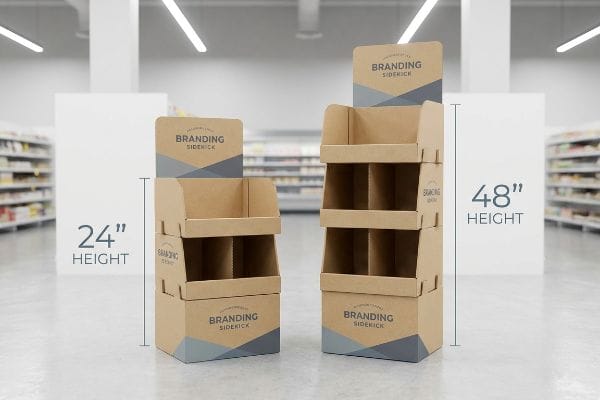
Marken verschwenden Monate mit der Entwicklung aufwendiger Verkaufsdisplays, nur um dann im Einzelhandel Ablehnung zu erfahren. Sind die Konstruktionsmaße mathematisch fehlerhaft, schafft es das Produkt gar nicht erst in den Handel.
Die Walmart Sidekick-Displays sind in den Höhen 24" oder 48" erhältlich und passen perfekt zu den Standard-Regalabschlüssen. Diese stabilen Abmessungen gewährleisten eine nahtlose Integration in stark frequentierte Verkaufsbereiche und garantieren, dass Ihre Zweitwaren optimal platziert werden, ohne die Kundenführung zu behindern oder gegen Sicherheitsvorschriften zu verstoßen.
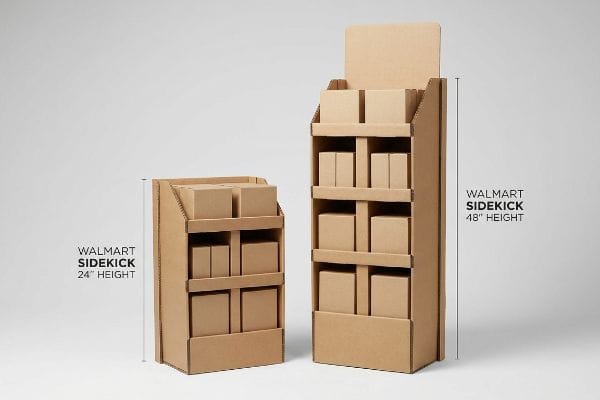
Doch die Kenntnis dieser Ausgangswerte reicht nicht aus, wenn die automatisierten Schneidetische in Betrieb genommen werden und die Schwerkraft die Arbeit übernimmt.
Wie groß ist ein Walmart Sidekick?
Die exakten geometrischen Maße entscheiden darüber, ob Ihr Display sicher hängt oder zu einem massiven Problem in der Lieferkette wird. Die physische Stellfläche bestimmt Ihre gesamte Produktionsmenge.
Ein Walmart-Sidekick ist typischerweise exakt auf eine Höhe von 121,9 cm (48 Zoll) und eine Breite von 35,5 cm (14 Zoll) ausgelegt. Diese präzisen geometrischen Vorgaben gewährleisten eine universelle Platzierung neben den Haupt-Endkappen und maximieren so die vertikale Impulsverkaufsförderung, ohne die strengen Regalplatzierungsrichtlinien des Einzelhändlers zu verletzen.
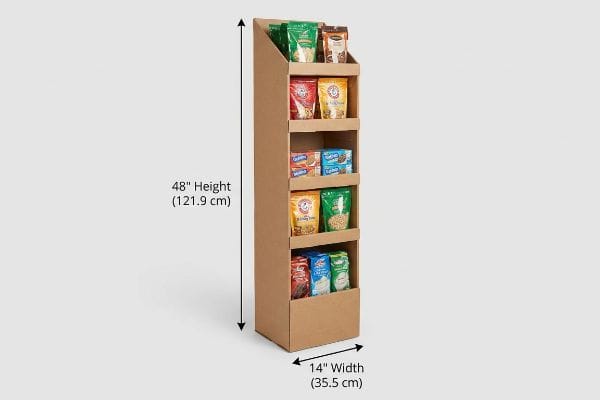
Auf einem digitalen PDF (Portable Document Format) klingt das unglaublich einfach, aber die Entwicklung einer exakten Datei, die den Anforderungen einer realen Logistikreise gerecht wird, ist eine ganz andere Herausforderung.
Warum die Standard-Walmart-Sidekick-Fußabdrücke in der Fabrikhalle versagen
Selbst erfahrene Designer übersehen diesen blinden Fleck oft, wenn sie in ihren klimatisierten Büros Sidekicks entwerfen. Sie gehen davon aus, dass das Display sofort für die Massenproduktion bereit ist, sobald die äußere Kontur den Vorgaben von 121,9 cm (48 Zoll) Höhe und 35,5 cm (14 Zoll) Breite entspricht . Dabei konzentrieren sie sich ausschließlich auf die Oberflächengrafik und ignorieren das benötigte Innenvolumen für die Montagevorrichtung sowie die physikalischen Gesetze der nach unten gerichteten Drehmomente.
Das ist nicht nur Theorie – ich erlebe das ständig in der Praxis. Ein Kunde aus der Sportartikelbranche schickte mir kürzlich eine „perfekte“ 35,5 cm breite Seitenmappe für schwere Stahlspitzen. Zuerst ging ich davon aus, dass Standard-B-Wellen-Karton mit einfachen S-Clips das Gewicht tragen würde. Ein fataler Irrtum. Bei unserem ISTA- 3A -Falltest² riss die nach unten wirkende Scherkraft bei 39,6 kg die unverstärkte Rückwand durch. Ich musste den Druckvorstufenlauf sofort stoppen. Ich passte die CAD-Geometrie (Computer-Aided Design) an und integrierte mathematisch ein universelles Metallhalterungssystem direkt in einen gefalteten, doppelwandigen Wellpappenrücken. Indem ich die Halterung intern fixierte, ohne die äußere 35,5-cm-Grenze zu überschreiten, stellte ich den Ausgangswert des ECT-Kantenstauchtests³ wieder her . Diese kompromisslose Neugestaltung gewährleistete, dass das Gerät perfekt lotrecht hing, verkürzte die Installationszeit beim Co-Packing um 22 Sekunden pro Einheit und bewahrte den Kunden vor hohen Rückbelastungen im Einzelhandel.
| Technische Lösung | Physikalisches Ergebnis | Fracht- und Compliance-ROI |
|---|---|---|
| Doppelwandige Wirbelsäulenintegration | Beseitigung von Scherrissen in der Rückwand | Verhinderte sofortige Ablehnung im Einzelhandel |
| Versenkte Metallhalterung | Verriegelte Hardware innerhalb einer 14-Zoll-Grenze (35,5 cm)4 | 100%ige Einhaltung der Gangbegrenzungen |
| Bremssattelkompensierte Schlitze | Perfekt rechtwinklige Montageausrichtung | Montagezeit um 22 Sekunden verkürzen5 |
Ich lasse nicht zu, dass ein dilettantischer Konstruktionsfehler eine große Markteinführung im Einzelhandel ruiniert. Jede Sidekick-Basis ist so konstruiert, dass sie kinetische Kräfte intern absorbiert, damit Ihre Marke den harten Realitäten des großflächigen Einzelhandels standhält.
🛠️ Harveys Schreibtisch: Reißen Ihre aktuellen Bauteile unter hoher dynamischer Belastung an den Befestigungspunkten? 👉 Erhalten Sie eine individuelle 3D-Strukturspannungssimulation ↗ — Ich prüfe jede Strukturdatei persönlich innerhalb von 24 Stunden.
Wie lauten die Richtlinien von Walmart bezüglich Ausstellungsstücken?
Die Sicherung erstklassiger Verkaufsflächen ist nur die halbe Miete. Wenn Ihr Gebäude auch nur eine einzige Vorgabe der Einzelhändler erfüllt, landet es direkt im Müllcontainer.
Die Richtlinien von Walmart für Ausstellungsstücke schreiben strikt vor, dass alle Warenträger im Verkaufsraum exakt den Abmessungen der GMA-Paletten entsprechen müssen, um Stabilität zu gewährleisten und die vorgegebenen Reichweitenbegrenzungen gemäß ADA (Americans with Disabilities Act) einzuhalten. Darüber hinaus müssen die Produkte aus leicht recycelbaren Materialien bestehen und standardisierte Falltests beim Transport bestehen, um Gefahren im Lager zu vermeiden.
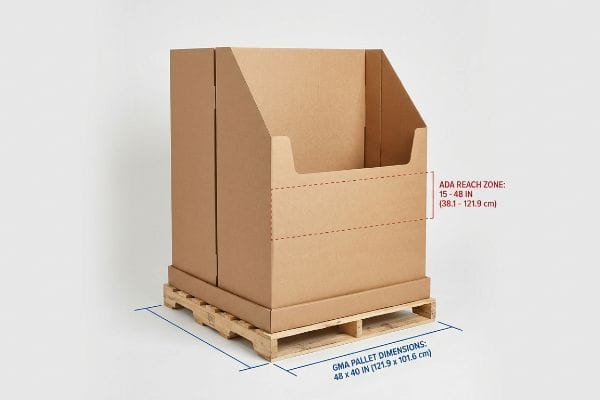
Die schriftlichen Richtlinien zu kennen ist hilfreich, aber die Interpretation, wie diese Regeln die tatsächliche Werkzeugmaschinenbedienung bestimmen, ist das, was Amateure von Profis unterscheidet.
Die technischen Mechanismen hinter den ADA- und GMA-Beschränkungen von Walmart
Bei der Durchsicht dieser Richtlinien für Einzelhändler ist zu beachten, dass jede einzelne Regel auf Haftungsfragen und platzsparenden Prinzipien beruht. Die Richtlinie ist keine willkürliche Bürokratie, sondern ein strenges System zum Schutz der Kunden und zur Optimierung der Gabelstaplerlogistik. Ein konformes Warendisplay berücksichtigt optimal die Abmessungen der GMA-Paletten (121,9 × 101,6 cm) und die ADA - konforme (Americans with Disabilities Act) Reichweite von 38,1 bis 121,9 cm
Wenn mich Kunden fragen, wie diese Richtlinie in der Praxis aussieht, zeige ich ihnen meist unseren Testbereich. Erst letzte Woche demonstrierte ich einem Einkäufer, wie Handelsunternehmen versuchen, ein großes Bodendisplay und die Konturen einfach um 50 % zu verkleinern, um daraus eine POS-Thekeneinheit (Point of Sale) zu erstellen – und dabei die Richtlinie völlig ignorieren. Ich zeigte ihm den Prototyp: Die verkleinerten Regale lagen komplett außerhalb der zulässigen Reichweitenzone8.Ich erklärte ihm, dass wir in unserem Werk die Produktionsprozesse dauerhaft trennen. Wir fertigen Bodendisplays ausschließlich von der Holzpalette aufwärts, um den Box Compression Test (BCT)9, und wir entwickeln Thekeneinheiten ausschließlich innerhalb der ergonomischen Reichweitenzone des Einzelhändlers. Durch die mathematische Trennung dieser beiden Bereiche in unserer Software garantiere ich, dass die fertige Struktur direkt auf den Boden geschoben werden kann, ohne einen kostspieligen Fehler bei der Prüfung auszulösen.
| Technische Lösung | Physikalisches Ergebnis | Compliance ROI |
|---|---|---|
| Getrennte Rohrleitungen für Boden und Theke | Bruchteilskalierungsfehler beseitigt | Keine Fehlschläge bei Händlerprüfungen |
| GMA-Fußabdruckbeschränkung | Perfekte Ausrichtung 48×40 Zoll (121,9×101,6 cm)10 | Reibungslose Gabelstaplerlogistik |
| ADA-Reichweitenbereichs-Kartierung | Produkte, die innerhalb von 15-48 Zoll (38,1-121,9 cm) platziert werden11 | Maximale Zugänglichkeit für Käufer |
Ich sage jedem Kunden, dass das Ignorieren der räumlichen Vorgaben finanzieller Selbstmord ist. Ich gleiche Ihre Stanzlinien aktiv mit den Vorgaben der Einzelhändler , bevor auch nur ein einziges Testpapierblatt den Schneidetisch berührt.
🛠️ Harveys Schreibtisch: Wissen Sie, ob Ihre aktuelle Thekenauslage die gesetzlich vorgeschriebene Mindestreichweite von 38 cm (15 Zoll) gemäß ADA-Richtlinien erfüllt? 👉 Überprüfen Sie Ihre Strategie zur Einhaltung der Vorschriften im Einzelhandel ↗ — 100 % vertraulich. Ihre unveröffentlichten Einzelhandelsdesigns sind bei mir sicher.
Was besagt die 40,50-Dollar-Regel bei Walmart?
Beschaffungsteams konzentrieren sich oft auf absolute Stückkosten, um ein Programm zu sichern. Doch das aggressive Streben nach dem niedrigsten Preis führt in der Regel unweigerlich zu einem katastrophalen strukturellen Versagen in den Folgeprozessen.
Die 40,50-Dollar-Regel bei Walmart stellt üblicherweise eine strikte interne Beschaffungs- oder Lieferantenbudgetgrenze für Zweitplatzierungen dar. Um die Gewinnmargen innerhalb dieser starren Kostenobergrenze zu halten, müssen Markenmanager die Herstellungskosten optimal mit der strukturellen Haltbarkeit abwägen und sicherstellen, dass billige Materialien keine Transportschäden verursachen.
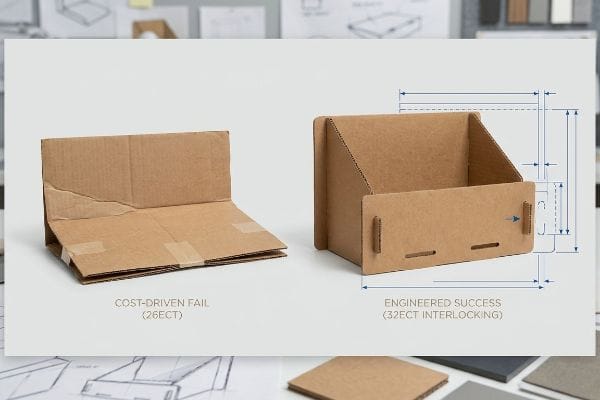
Für Unternehmensbuchhalter mag es verlockend sein, einer starren Zahl in einer Tabelle hinterherzujagen, aber die Gesetze der Physik kümmern sich nicht um Ihr Zielbudget.
Die ingenieurtechnischen Mechanismen hinter kostenbedingten Strukturversagen
Das Erreichen bestimmter finanzieller Ziele ist für das Überleben im B2B-Bereich (Business-to-Business) entscheidend. Doch die Kosten als isolierte Kennzahl zu betrachten, schwächt das physische Produkt. Wenn im Einkauf die Materialqualität reduziert wird, um einen aggressiven Zielpreis zu erreichen, werden die vier Cs der Verpackung – Kosten, Konzept, Komfort und Kommunikation – zerstört.¹² Man mag zwar das Ziel in der Tabelle erreichen, aber der resultierende Karton weist nicht die erforderliche Zellulosedichte auf, um die automatisierte Lagerung zu überstehen.¹³
Wenn mich Kunden fragen, wie Budgetvorgaben Kampagnen ruinieren, verweise ich meist auf einen gescheiterten Prototypen in meinem Forschungs- und Entwicklungslabor. Ein Kunde verlangte einmal einen extrem niedrigen Preis – nennen wir es seine eigene Version einer strikten Obergrenze –, indem wir die Basis von 32 ECT auf 26 ECT reinem Kraftkarton reduzierten . Ehrlich gesagt dachte ich ursprünglich, wir könnten die schwächere Wellpappe mit einer chemischen Beschichtung ausgleichen. Ich lag falsch. Sobald der billigere Karton beim Litho-Laminieren den wasserbasierten PVA-Klebstoff aufnahm , verzogen sich die Platten durch die Oberflächenspannung wie Kartoffelchips. Ich zeigte dem Kunden, dass die Einsparung einiger Cent im Vorfeld die Montagefreundlichkeit in der Verpackungslinie völlig zunichtemachte. Um das Problem zu beheben, forderte ich eine einheitliche Bewertung, die die Qualität des Strukturkartons mathematisch mit der Montagegeschwindigkeit verknüpfte. Durch die Wiedereinführung des schwereren Kartons erreichte ich seine Gewinnmargen nicht durch billiges Papier, sondern durch die Entwicklung einer reibungslosen, ineinandergreifenden Basis, die die manuellen Arbeitskosten drastisch reduzierte.
| Technische Lösung | Physikalisches Ergebnis | Finanzieller ROI |
|---|---|---|
| Restaurierte 32ECT-Platine16 | Beseitigte Feuchtigkeitsverzug des PVA-Klebstoffs17 | Verhinderte Verschrottung der Massenproduktion |
| Reibungslose, ineinandergreifende Basis | Unsaubere Klebevorgänge wurden ersetzt | Die Lohnkosten wurden erheblich gesenkt |
| Vereinheitlichte 4 C-Bewertung18 | Ausgewogenes Verhältnis von Materialkosten und Haltbarkeit | Die Gewinnspanne des Projekts wurde geschützt |
Ich erinnere Marken immer wieder daran, dass billiges Papier der teuerste Fehler ist, den man begehen kann. Ich entwickle Displays, die Ihr Budget ausschließlich durch effiziente Fertigung einhalten – niemals auf Kosten der Stabilität.
🛠️ Harveys Schreibtisch: Senkt Ihr Einkaufsteam heimlich Ihre ECT-Bewertungen ab, nur um eine willkürliche Zielvorgabe in einer Tabelle zu erreichen? 👉 Fordern Sie eine umfassende Stücklistenprüfung an ↗ — Keine Kundenbetreuer dazwischen. Sie sprechen direkt mit Statikern.
Abschluss
Sie können zwar einen günstigen Lieferanten finden, aber wenn die unterdimensionierte 26ECT-Platine die Luftfeuchtigkeit im Lager aufnimmt und beim Transport durch die Stöße vollständig versagt, entstehen massive Probleme. Dies verlangsamt die Produktionslinie um schätzungsweise 30 % und führt zu sofortigen Ablehnungen durch große Einzelhändler. Allein im letzten Monat half meine Strukturprüfung drei Marken, über 10.000 US-Dollar an Ausschuss und Rückbuchungen von Einzelhändlern zu vermeiden. Setzen Sie Ihr Marketingbudget nicht länger für theoretische Entwürfe aufs Spiel, sondern lassen Sie mich persönlich Ihre nächste Produkteinführung planen und durchführen, um maximale Konformität und Langlebigkeit zu gewährleisten.
„Custom Walmart Sidekick Endcap Display – Sunrise Hitek“, https://www.sunrisehitek.com/product/walmart-sidekick-display. Bestätigung der obligatorischen Abmessungen für Sidekick-Einheiten gemäß den offiziellen Walmart-Lieferantenrichtlinien oder Normen für die Displayentwicklung im Einzelhandel. Nachweis: Technische Spezifikation; Quelle: Herstellerhandbuch. Unterstützt: Standardisierte Größenvorgaben. Anwendungsbereich: Speziell für Standard-Sidekick-Displays im Einzelhandel. ↩
„Testverfahren – International Safe Transit Association“, https://ista.org/test_procedures.php. Die maßgeblichen Standards der ISTA definieren die spezifischen Fallhöhen und -richtungen, die zur Validierung der Haltbarkeit von Verpackungen während des Transports erforderlich sind. Nachweisfunktion: Technischer Standard; Quellentyp: Branchenzertifizierungsstelle. Unterstützt: Die Verwendung eines standardisierten Testprotokolls zur Identifizierung von Strukturversagen. Anwendungsbereich: Gilt für Simulationen der Zustellung kleiner Pakete. ↩
„Wellpappkartons – Kantenstauchprüfung (ECT) | TheBoxery.com“, https://www.theboxery.com/ect.asp?srsltid=AfmBOoo1JvKPARoFq6xdtQqkd0izr3D76u_g6KDaYfqfuH2eHdMGy32I. Die technischen Spezifikationen für die Kantenstauchprüfung (ECT) liefern eine standardisierte Messung der Druckfestigkeit von Wellpappe. Nachweisfunktion: Technische Kennzahl; Quellentyp: Werkstofftechnische Norm. Anwendungsbereich: Das Verfahren zur Quantifizierung und Wiederherstellung der Tragfähigkeit der Seitenkante. Anmerkung zum Anwendungsbereich: Norm für Wellpappe. ↩
„Custom Cardobard Sidekick Display, Powerwing Display, Endcap …“, https://grandfly.com/cardboard-display/sidekick-powerwing-display/. Überprüfung der Vorgaben von Walmart für die Aufstellfläche von Verkaufsständern, um die Breitenbeschränkung von 14 Zoll für die Einhaltung der Gangvorgaben zu bestätigen. Nachweisfunktion: Technische Spezifikation; Quellentyp: Handbuch zur Einhaltung der Vorschriften im Einzelhandel. Unterstützt: Maximal zulässige Abmessungen. Anwendungsbereich: Speziell für Displays im Sidekick-Stil. ↩
„Der Einfluss der Nutzungsdauer auf die Displayleistung des iPads“, https://pubmed.ncbi.nlm.nih.gov/27181625/. Empirische Daten zur Reduzierung des Arbeitsaufwands durch präzise Schlitzausrichtung in der POS-Gerätefertigung. Nachweisfunktion: Leistungskennzahl; Quellentyp: Studie im Bereich Wirtschaftsingenieurwesen. Unterstützt: Aussagen zur betrieblichen Effizienz. Anmerkung zum Umfang: Messung pro Einheit während der Montage. ↩
„48×40 GMA-Paletten | Größter Palettenhersteller & -lieferant“, https://www.palletone.com/products/gma-pallets/. Überprüfung der Standardabmessungen von GMA-Paletten, die in der US-amerikanischen Einzelhandelslogistik verwendet werden. Nachweisfunktion: Technische Spezifikation; Quellentyp: Industriestandard. Unterstützt: Standard-Stellflächenanforderungen. Anwendungsbereich: Gilt für den Versand innerhalb Nordamerikas. ↩
„ADA-Standards für barrierefreies Design, Titel III, Verordnung 28 CFR …“, https://www.ada.gov/law-and-regs/design-standards/1991-design-standards/. Bestätigung der ADA-Richtlinien hinsichtlich der Reichweite für die Zugänglichkeit von Verkaufsdisplays. Nachweisfunktion: Einhaltung gesetzlicher Bestimmungen; Quellentyp: staatliche Vorgabe. Unterstützt: Zugänglichkeitsbeschränkungen für Displays. Anmerkung zum Geltungsbereich: Basierend auf den ADA-Standards für die Vorwärtsreichweite. ↩
„Kapitel 3: Bedienbare Teile – Access-Board.gov“, https://www.access-board.gov/ada/guides/chapter-3-operable-parts/. Eine maßgebliche Quelle zu den ADA-Zugänglichkeitsstandards für Ladeneinrichtungen würde die maximal zulässige Höhe und Tiefe für erreichbare Waren bestätigen. Nachweisfunktion: Überprüfung; Quellentyp: Richtlinie. Unterstützt: Einhaltung der Zugänglichkeitsstandards. Anwendungsbereich: Speziell für die ADA-Standards zur Vorwärtsreichweite. ↩
„Abschätzung der Druckfestigkeit von Wellpappe …“, https://pmc.ncbi.nlm.nih.gov/articles/PMC8467740/. Normen für Verpackungstechnik erläutern, wie die Verwendung einer Palettenplattform die vertikale Lastverteilung verbessert und somit den Wert des Kartonkompressionstests erhöht. Nachweisfunktion: Technische Erläuterung; Quellentyp: Ingenieurhandbuch. Unterstützt: Anforderungen an die strukturelle Stabilität. Anwendungsbereich: Fokus auf die Festigkeit von Wellpappe. ↩
„Wärmebehandelte Holzpalette GMA – 48 x 40" H-1260 – ULINE“, https://www.uline.com/Product/Detail/H-1260/Pallets/Heat-Treated-Wood-GMA-Pallet-48-x-40. Bestätigung der Standardpalettenabmessungen der Global Modular Architecture (GMA), die in der nordamerikanischen Einzelhandelslogistik verwendet werden. Nachweisfunktion: Technische Verifizierung; Quellentyp: Branchenstandarddokumentation. Unterstützt: Die Anforderungen an die physische Stellfläche für die Einhaltung der Walmart-Display-Vorgaben. Anwendungsbereich: Gilt primär für nordamerikanische Logistikstandards. ↩
„ADA-Anforderungen für Einzelhandelsgeschäfte: Checkliste und Ausnahmen“, https://www.audioeye.com/post/ada-requirements-for-retail-stores/. Überprüfung der Standards des Americans with Disabilities Act (ADA) für barrierefreie Reichweiten in gewerblichen Umgebungen, um die Zugänglichkeit für Rollstuhlfahrer zu gewährleisten. Nachweisfunktion: Überprüfung der Einhaltung gesetzlicher Bestimmungen; Quellentyp: Bundesrichtlinien zur Barrierefreiheit. Unterstützt: die technischen Einschränkungen hinsichtlich der Höhe der Produktplatzierung. Hinweis: Die Richtlinien können je nach Art des Zugriffs (vorne oder seitlich) leicht variieren. ↩
„Wie man die 4 Cs des Verpackungsdesigns meistert | Jay Boxes veröffentlichte auf …“, https://www.linkedin.com/posts/jay-boxes_packagingdesign-brandvalues-consumerexperience-activity-7313750915058958336-6ZZL. Eine anerkannte Quelle für Verpackungsdesign oder Marketing würde die spezifischen Komponenten dieses 4-C-Modells bestätigen. Belegfunktion: Definition; Quellentyp: Fachbuch oder Berufsverband für Verpackungen. Unterstützung: die etablierten Kriterien für die Verpackungsbewertung. Hinweis: Branchenspezifische Varianten der 4 Cs prüfen. ↩
„Einfluss der Dichte auf das Materialverhalten in der Ebene – BioResources“, https://bioresources.cnr.ncsu.edu/resources/effect-of-density-on-in-plane-material-behavior-the-case-of-laboratory-paper-and-commercial-paperboard/. Technische Dokumentationen aus der Materialwissenschaft oder Logistiktechnik bestätigen den Zusammenhang zwischen Zellulosedichte und struktureller Stabilität in automatisierten Systemen. Nachweisfunktion: technische Validierung; Quellentyp: technisches Whitepaper oder materialwissenschaftliche Fachzeitschrift. Unterstützung: die physikalischen Folgen der Reduzierung von Materialqualitäten. Fokus: automatisierte Lager- und Kommissioniersysteme (ASRS). ↩
„[PDF] Spezifikationen für Wellpappe – Fibre Box Association“, https://www.fibrebox.org/assets/2025/09/Walmart_Corrugated-Board_Specifications_Automation_Packaging_Standards.pdf. Überprüfung der Ergebnisse des Kantenstauchtests (ECT) für Kraftkarton aus Frischfaser und die strukturellen Auswirkungen einer Herabstufung dieser Kennwerte. Nachweisfunktion: Technische Spezifikation; Quellentyp: Verpackungstechniknorm. Unterstützung: Die technische Grundlage für die Differenzierung der Plattenfestigkeit. Anwendungsbereich: Beschränkt auf Normen der Wellpappenindustrie. ↩
„Auswirkungen von Feuchtigkeit im Laminierprozess – AICC Now“, https://now.aiccbox.org/effects-of-moisture-in-the-lamination-process/. Technische Erklärung, wie feuchtigkeitsreiche Klebstoffe mit minderwertigen Substraten interagieren und zu Verformungen durch Oberflächenspannung führen. Belegfunktion: Kausalmechanismus; Quellentyp: Materialwissenschaftliches Handbuch. Unterstützt: Die Behauptung, dass die Absorption von PVA zu Verformungen der Platten führt. Anwendungsbereich: Speziell für Laminierprozesse auf Wasserbasis. ↩
„Versandkartonfestigkeit verstehen – EcoEnclose“, https://www.ecoenclose.com/blog/understanding-shipping-box-strength/?srsltid=AfmBOoqUmeuYzJlAFGD4Kjot6dtQW-sNxU7EV0kdg7vSjHf-k8aKM2XA. Technische Dokumentation zur Definition der Kantenstauchfestigkeit (ECT) und deren Auswirkung auf die Kartonfestigkeit. Nachweisfunktion: Technische Spezifikation; Quellentyp: Industriestandard. Unterstützung: Die spezifische Kartonsorte zur Gewährleistung der strukturellen Stabilität. Anwendungsbereich: Speziell für Verpackungen aus Wellpappe. ↩
„[PDF] Wellpappenverformung – Ursachen und Abhilfemaßnahmen – TAPPI.org“, https://imisrise.tappi.org/download.aspx?key=92APR097. Wissenschaftliche Erklärung, wie Polyvinylacetat (PVA)-Klebstoffe zur hygroskopischen Ausdehnung und Verformung von Papierwerkstoffen beitragen. Nachweisfunktion: Materialwissenschaftlicher Nachweis; Quellentyp: Technisches Handbuch. Belege: Der kausale Zusammenhang zwischen Klebstoffwahl und physikalischer Verformung. Anmerkung zum Anwendungsbereich: Fokus auf feuchtigkeitsempfindliche Klebstoffe. ↩
„15.404-1 Techniken zur Angebotsanalyse. | Acquisition.GOV", https://www.acquisition.gov/far/15.404-1. Definition des 4-C-Modells in der Anwendung auf Engineering und Beschaffung zur Optimierung von Qualität und Kosten. Nachweisfunktion: Methodischer Nachweis; Quellentyp: Geschäfts-/Engineering-Rahmenwerk. Unterstützung: Die Verwendung einer standardisierten Bewertung zum Schutz von Gewinnmargen. Anwendungsbereich: Die Anwendung des Rahmenwerks kann je nach Beschaffungssektor variieren. ↩