Ein einziger Transportstoß kann Ihre hochwertigen Verkaufsdisplays in zerknitterte Pappe verwandeln. Um die komplexen Logistikprozesse in der Lieferkette zu bewältigen, reichen einfache Wellpappkartons für den weltweiten Gütertransport nicht aus.
Die Schutzverpackung bewahrt empfindliche Waren während des weltweiten Transports vor Stößen, starker Feuchtigkeit und Vibrationsbelastung. Dank modernster Wellpappentechnologie erreichen die verkaufsfertigen Warenträger garantiert unversehrt ihr Ziel, wodurch Produktschäden vollständig vermieden und teure Rückbuchungen von Großhändlern drastisch reduziert werden.
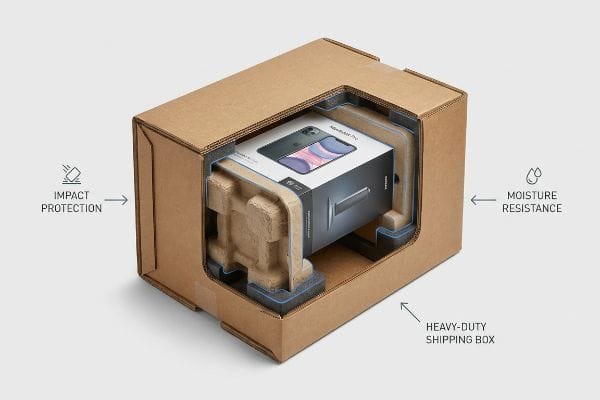
Wenn Sie verstehen, wie diese strukturellen Schutzmechanismen funktionieren, müssen Sie nicht mehr für beschädigte Waren bezahlen und können stattdessen Ihre Präsenz im Einzelhandel maximieren.
Wie schützt eine geeignete Verpackung Produkte während des Transports?
Beim Schutz Ihrer Produkte geht es nicht darum, sie in endlose Luftpolsterfolie einzuwickeln; es geht vielmehr darum, ein dynamisches Verteidigungssystem zu entwickeln, das brutale und unvorhersehbare Gewalt in der Lieferkette sicher absorbiert.
Eine sachgemäße Verpackung schützt Produkte, indem sie die kinetische Energie durch präzise konstruierte, gewölbte Innenrippen und mehrachsige Stoßdämpfung verteilt. Moderne Transportschutzvorrichtungen verteilen die starke Druckbelastung von oben gleichmäßig auf die vertikalen Wände, neutralisieren so schädliche Transportvibrationen vollständig und verhindern katastrophale Strukturschäden, bevor die Produkte den Verkaufsraum erreichen.
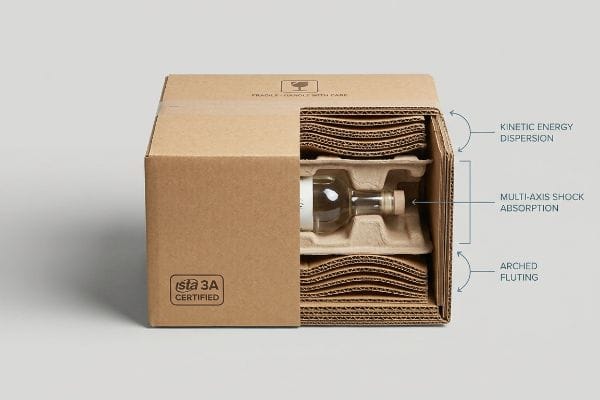
Kenntnisse der Stoßdämpfungstheorie sind hilfreich, aber die Überbrückung der Kluft zur realen Frachtphysik ist der Punkt, an dem die meisten Einzelhandelskampagnen Erfolg oder Misserfolg haben.
Die Lücke schließen: Wie Schutzverpackungen die kinetische Aufprallenergie verteilen
Viele Markenteams verlassen sich ausschließlich auf die grundlegenden ASTM-Zertifizierungen (American Society for Testing and Materials), um ihre Kartonverpackungen zu prüfen. Sie betrachten eine flache Pappe, sehen einen hohen ECT-Wert (Kantenstauchtest) von32und nehmen an, dass das fertige Display praktisch unzerstörbar ist. Diese statische Labormessung vermittelt ihnen ein trügerisches Sicherheitsgefühl und ignoriert völlig die mehrachsigen Vibrationen eines fahrendenLkw.
Ich erlebe immer wieder, wie junge Designer in Panik geraten, wenn ihre hochgelobten, flachen Kartonplatten unter dynamischer Belastung sofort brechen. Sie vergessen, dass die Kenntnis der Kompressionsgrenze flacher Fasern nutzlos ist, wenn sich die dreidimensionale Geometrie während des Transports verdreht. Ich erinnere mich an einen Kunden, dessen makelloses Display sich bei einem einfachen Kipptest mit einem lauten, widerlichen Knirschen nach außen wölbte, weil die statische Materialdichte der kinetischen Scherung nicht standhielt. Meine Faustregel? Immer Rohmaterial-Referenzwerte mit einer dynamischen ISTA-3A-Transportsimulation kombinieren, um zu beweisen, dass die fertige Konstruktion tatsächlich hält.
| Häufiger Anfängerfehler | Die Profi-Lösung | Vorteil für die Verkaufsfläche |
|---|---|---|
| Sich ausschließlich auf die ASTM-Bewertungen verlassen | Dynamische ISTA-Drops werden ausgeführt4 | Verhindert das Zerdrücken der unteren Etagen |
| Vernachlässigung mehrachsiger Schwingungen | Konstruktion mehrschichtiger Ecken5 | Verhindert das Lösen von Produkten |
| auf statischer Dichte beruhend | Aufrüstung auf gewölbte Kannelierung6 | Absorbiert kinetische Stöße von Paletten |
Ich setze dieses Validierungsprotokoll mit zwei Standards bei jeder größeren Produkteinführung strikt durch. Zuerst überprüfe ich mathematisch die Ausgangslage des Rohmaterials und unterziehe dann den befüllten Karton strengen Transportsimulationen, um die Gesamtstabilität des Systems vor Beginn der Massenproduktion zu gewährleisten.
🛠️ Harveys Schreibtisch: Sie sind sich nicht sicher, ob Ihre Flachbodenmaterialien einem dynamischen Falltest standhalten? 👉 Strukturprüfung anfordern ↗ — Direkter Kontakt zu mir. Garantiert kein automatisierter Werbe-Spam.
Welche Verpackung schützt Produkte während des Transports?
Die Wahl des genauen Trägermaterials für Ihre physische Lieferung entscheidet darüber, ob Ihre teure Ware in einwandfreiem Zustand für den Einzelhandel ankommt oder als unverkäuflicher, strukturell beschädigter Schrott.
Mikrogewellte Verpackungen bieten durch ihre gewölbte Innenstruktur, die Stöße zuverlässig abfängt, optimalen Schutz für schwere Produkte. Im Gegensatz zu starren, massiven Kartonagen verteilen die Wellen des Wellkartons die beim Transport entstehenden Kräfte dynamisch und erhalten so eine perfekt quadratische Struktur, ohne den Materialverbrauch zu erhöhen oder unnötiges Gewicht hinzuzufügen.
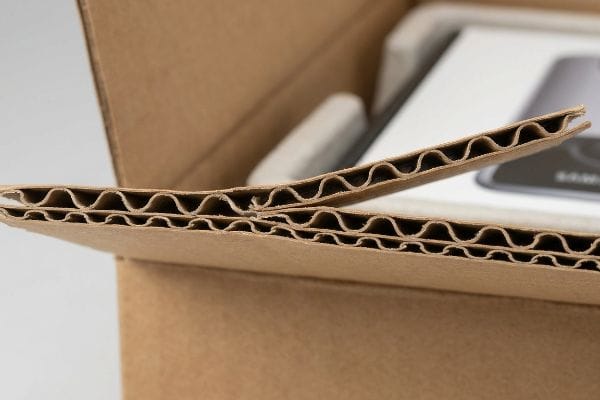
Der Übergang von der Rohmaterialauswahl zur physikalischen Anwendung erfordert ein Verständnis der unsichtbaren mechanischen Kräfte, die im Karton selbst wirken.
Die verborgene Stärke von Wellpappen-Schutzverpackungen
Einkaufsteams versuchen häufig, leichte, massive Kartonverpackungen für den Einzelhandel zu vergrößern und so schwerere, verkaufsfertige Trays herzustellen, um die Rohmaterialkosten zu senken. Sie gehen dabei davon aus, dass ein dickerer, massiver Karton von Natur aus die notwendige dynamische Belastbarkeit für den Transport über weite Strecken besitzt. Dieser Ansatz setzt fälschlicherweise die statische Materialdichte mit der tatsächlichen Stoßdämpfung gleich .
Ein häufiger Fehler, den ich beobachte, ist, dass Käufer auf schwere, nicht geriffelte Kartonagen umsteigen und sich dann wundern, warum sich die Seitenwände beim Transport im LKW so stark nach außen wölben. Ich habe einmal gesehen, wie ein Verkäufer mit dem Auspacken einer schweren Vollkarton-Schale kämpfte, nur um festzustellen, dass die starren, unnachgiebigen Ecken scharf einrissen, weil der Karton keinerlei innere Flexibilität aufwies. Wenn Sie schwere Waren versenden, sollten Sie unbedingt auf leichte, mikrogeriffelte Kartonagen wie E- oder B-Welleumsteigen. Ihre inneren, wellenförmigen Bögen wirken wie mikroskopische Stoßdämpferundleiten die kinetische Energie sicher von Ihrer Ware ab.
| Häufiger Anfängerfehler | Die Profi-Lösung | Vorteil für die Verkaufsfläche |
|---|---|---|
| Skalierung schwerer Spanplatten | Umstellung auf E-Welle10 | Verhindert das Durchbiegen der Seitenwände |
| Dicke mit Festigkeit gleichsetzen | Verwendung von innen geriffelten Bögen11 | Maximiert die Stoßdämpfung |
| Verwendung von massivem, unnachgiebigem Brett | Entwicklung flexibler Mikroflöten12 | Verhindert das Einreißen von Ecken |
Ich verbiete strikt die Verwendung von unkaschierten Kartonagen für alle Einzelhandelsverpackungen, die schwere Lasten transportieren. Stattdessen setze ich bei diesen strukturell mangelhaften Konstruktionen auf gewellte Kartonagen, um Transportschwingungen sicher zu absorbieren und gleichzeitig den gesamten Transportaufwand für den Kunden zu minimieren.
🛠️ Harveys Schreibtisch: Befürchten Sie, dass Ihre stabilen Kartonablagen unter dem Gewicht einer vollen Palette nachgeben? 👉 Testbericht anfordern ↗ – Sicher herunterladen. Bei Fragen können Sie mich gerne kontaktieren.
Welchen Zweck hat Schutzverpackung?
Über die rein physische Wirkung hinaus besteht das Hauptziel Ihrer Verpackung darin, extreme Umwelteinflüsse zu neutralisieren, die während des Transports unbemerkt Ihren Markenwert zerstören.
Die spezifische Aufgabe von Schutzverpackungen besteht darin, empfindliche Handelswaren vor Luftfeuchtigkeit, Verunreinigungen und lokalen Einwirkungen zu schützen. Speziell entwickelte Barrieren neutralisieren aktiv schädliche Umwelteinflüsse und schwankende Luftfeuchtigkeit im Lager, verhindern Materialermüdung und gewährleisten, dass die Waren im Inneren für die hochwertige Präsentation im Einzelhandel makellos bleiben.
Während der Schutz vor physischen Einwirkungen offensichtlich ist, erfordert die Abwehr unsichtbarer atmosphärischer Veränderungen präzise CAD-Konstruktion (Computer-Aided Design).
Schutz vor Umwelteinflüssen durch Schutzverpackung
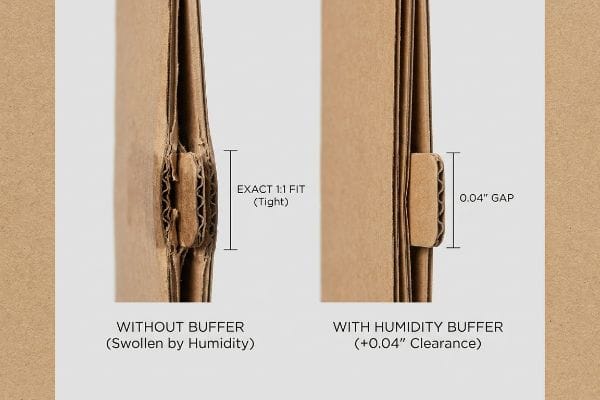
Grafikdesigner, die in klimatisierten Büros arbeiten, legen die Toleranzen für ihre Stanzformen häufig ausschließlich anhand der absoluten Dicke des trockenen Kartons fest. Sie gehen davon aus, dass ein Schlitz mit einer Breite von exakt 3 mm (0,12 Zoll)<sup>13</sup> perfekt eine passende B-Wellen-Lasche aufnimmt, wenn diese am Bestimmungsort ankommt. Diese theoretische Perfektion ignoriert jedoch völlig die chemischen und atmosphärischen Gegebenheiten des globalen Seetransports<sup>14</sup> sowie die regionale Luftfeuchtigkeit.
Wellpappe-Testliner wirkt wie ein trockener Schwamm und absorbiert aktiv Luftfeuchtigkeit während des Transports in feuchte Verkaufsräume, wodurch die Papierfasern aufquellen . Wenn die Toleranzen sehr eng bleiben, haben die Mitarbeiter im Einzelhandel oft Schwierigkeiten, die aufgequollenen Komponenten zusammenzubauen und beschädigen dabei unbeabsichtigt die Verkaufsfläche. Um dieses häufige Montageproblem zu vermeiden, sollte in den Konstruktionsplänen stets ein lokaler Feuchtigkeitspuffer vorgesehen werden. Durch Hinzufügen von nur 1 mm ( 0,04 Zoll) zusätzlichem Spielraum in den Aufnahmeschlitzen lässt sich die Papierausdehnung leicht ausgleichen.
| Häufiger Anfängerfehler | Die Profi-Lösung | Vorteil für die Verkaufsfläche |
|---|---|---|
| Konstruktion für knochentrockene Platten | Hinzufügen eines 0,04-Zoll-Puffers17 | Gewährleistet reibungslose Montage |
| Verwendung exakter 1:1-Schlitzbreiten | Technische parametrische Freigaben | Verhindert das Einreißen der Bettlaken |
| Die Luftfeuchtigkeit während des Seetransports wird vernachlässigt | Auslegung für die Feuchtigkeitsausdehnung18 | Verhindert das erzwungene Einknicken |
Die Berücksichtigung der regionalen Luftfeuchtigkeit in Ihren Konstruktionsunterlagen ist für weltweite Markteinführungen unerlässlich. Die Entwicklung eines Toleranzpuffers gewährleistet eine reibungslose Montage und schützt sowohl die Stabilität der Kartonagen als auch den Markenwert.
🛠️ Harveys Schreibtisch: Fühlen sich die Steckverbindungen Ihres neuesten Strukturprototyps verdächtig eng an? 👉 Fordern Sie Ihre Toleranzprüfung für die Stanzformen an ↗ – Keine Formulare, die endlose Verkaufsgespräche auslösen. Einfach nur echter Mehrwert.
Welchen Zweck hat Transportverpackung?
Die wahre logistische Verteidigung geht weit über die primäre Einheit hinaus; Transportverpackungen dienen einzig und allein dazu, die geometrische Stabilität der Massen während des brutalen Übersee- und länderübergreifenden Vertriebs zu gewährleisten.
Der Hauptzweck von Transportverpackungen besteht darin, die dynamische geometrische Stabilität in großen Frachtnetzwerken zu gewährleisten. Versandkartons isolieren gezielt kinetische Scherkräfte und sorgen für eine präzise Ausrichtung der Ecklasten, wodurch verhindert wird, dass ganze Palettenlagen unter dem hohen Druck von Lagerregalen einknicken oder zusammenbrechen.
Doch die Theorie allein genügt nicht, wenn die Maschinen in Betrieb genommen werden und der Betrieb eines großen Lagers die Annahmen aus dem Labor völlig außer Kraft setzt.
Warum Standard-Transportverpackungen in der Fabrikhalle versagen
Einkaufsteams vergrößern häufig die Abmessungen von Umkartons, um die Versanddichte zu maximieren und verzweifelt zu versuchen, mehr Einheiten pro Palette unterzubringen, um die Frachtkosten zu senken. Sie vertrauen darauf, dass die Kompressionswerte einer hochbelastbaren Wellpappe die darin befindlichen Waren ausreichend schützen. Sie gehen davon aus, dass die theoretische Materialfestigkeit allein die Last einer doppelt gestapelten Ladung sicher tragen kann und priorisieren dabei die Effizienz der Berechnung gegenüber den physikalischen Gegebenheiten.
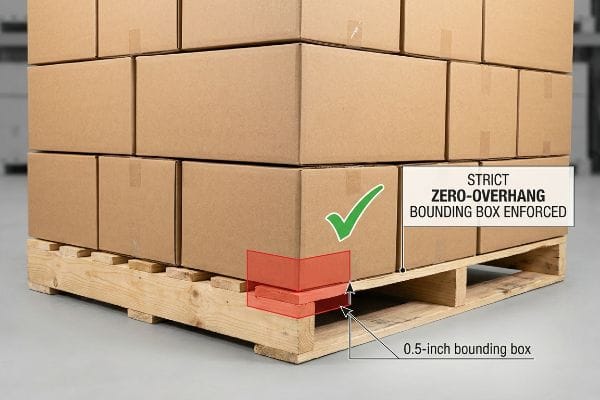
In meinem Betrieb sehe ich regelmäßig, wie wunderschön bedruckte Masterkartons unter der Belastung von oben komplett versagen, nur weil sie die 1219 × 1016 mm (48 × 40 Zoll) große GMA-Holzpalette (Grocery Manufacturers Association) um wenige Millimeter überragen. Ein Wellpappkarton bezieht bis zu 60 % seiner Druckfestigkeit<sup>21</sup> direkt aus der exakten vertikalen Ausrichtung seiner vier Ecken. Wenn diese Ecken über die Holzkante hinausragen, biegen sich die ungestützten Mittelpaneele durch, und man hört ein lautes Knacken der sich verformenden Wellpappe. Ich habe die Mikrometermessungen durchgeführt und festgestellt, dass ich keine dickere Pappe benötige – ich habe lediglich in meiner CAD-Software einen exakten 12,7 mm (0,5 Zoll) großen Begrenzungsrahmen ohne Überstand festgelegt, um die Ecken wieder auf das Holz zu ziehen. Durch die Einhaltung dieser präzisen Toleranz konnte ich die kritische Eckfestigkeit wiederherstellen, Transportschäden vermeiden und meinen Kunden geschätzte 4.500 US-Dollar an Ausschussware pro Container ersparen.
| Häufiger Anfängerfehler | Die Profi-Lösung | Vorteil für die Verkaufsfläche |
|---|---|---|
| Kartons über die Palettenkante schieben | Erzwingen eines 0,5-Zoll-Begrenzungsrahmens22 | Behält 100 % der Eckfestigkeit bei |
| Ausschließlich auf ECT-Bewertungen angewiesen23 | Ecken an Massivholz ausrichten | Verhindert das Zerdrücken der untersten Ebene |
| Die Kartongröße blindlings maximieren | Geometrische Verkleinerung der Grundfläche | Übersteht die doppelte Stapelung24 |
Durch die strikte Einhaltung eines Begrenzungsrahmens ohne Überstand wird sichergestellt, dass die tragenden Ecken exakt mit der massiven Holzkonstruktion abschließen. Diese einfache künstliche Einschränkung stellt die volle vertikale Druckfestigkeit wieder her und beseitigt somit vollständig die Gefahr von Beschädigungen durch den Transport.
🛠️ Harveys Schreibtisch: Steht Ihre aktuelle Umkarton-Grundfläche heimlich ein paar Millimeter über Ihre Holzpaletten hinaus? 👉 Schicken Sie mir Ihre Stanzformdatei ↗ – ich prüfe die Berechnungen, bevor Sie unnötig Geld für die Massenproduktion ausgeben.
Abschluss
Sie können zwar nach günstigeren Verpackungslieferanten suchen, aber wenn ein minimaler Palettenüberstand dazu führt, dass ein Umkarton der untersten Ebene während des Seetransports beschädigt wird, drohen Ihnen massive Lagerverluste und eine sofortige Ablehnung durch den Händler. Über 500 Markenmanager nutzen meine Checkliste für die Druckvorstufe, um genau diese fatalen Fehler in der Anfangsphase zu vermeiden. Setzen Sie Ihren großen Rollout nicht länger aufs Spiel, indem Sie nicht auf unbestätigte Konstruktionsberechnungen setzen. Lassen Sie mich Ihre Logistik persönlich im Rahmen einer kostenlosen Umkartonprüfung analysieren, um sicherzustellen, dass Ihre Waren die Lieferkette unbeschadet überstehen.
„Kantenstauchtest: Wichtige Erkenntnisse für Wellpappenverpackungen“, https://www.testresources.net/blog/edge-crush-test-essential-insights-for-corrugated-packaging. Eine maßgebliche Quelle erläutert den ECT-Wert von 32 als Standardmaß für die vertikale Druckfestigkeit von Wellpappe. Nachweisfunktion: Technische Spezifikation; Quellentyp: Industriestandard. Unterstützt: Die Verwendung des ECT-Tests zur Validierung von Karton. Anwendungsbereich: Gilt für flache Kartonproben. ↩
„Wellpappenverpackungen mit innovativem Design für …“, https://bioresources.cnr.ncsu.edu/wp-content/uploads/2026/01/BioRes_21_1_2229_Tworzydlo_PSMPGG_Corrugated_Packaging_Design_Durability_Transport_25399.pdf. Ingenieurwissenschaftliche Untersuchungen zeigen, wie dynamische, mehrachsige Vibrationen die tatsächliche Tragfähigkeit von Verpackungen im Vergleich zu statischen Labortests reduzieren. Nachweisfunktion: Technische Validierung; Quellentyp: Ingenieurhandbuch. Beleg: Die Unzulänglichkeit statischer Messgrößen in dynamischen Transportumgebungen. Anwendungsbereich: Speziell für die Transportkinetik. ↩
„Testverfahren – International Safe Transit Association“, https://ista.org/test_procedures.php. Überprüfung des ISTA-3A-Standards zur Simulation der Transportumgebung zur Validierung der Haltbarkeit von Verpackungen. Nachweisfunktion: Technische Validierung; Quellentyp: Industriestandard. Unterstützt: Die Notwendigkeit dynamischer Prüfungen gegenüber statischen Materialspezifikationen. Anwendungsbereich: Gilt für Paketzustellungssysteme. ↩
„Verfahrensänderungen & -entwicklung“, https://ista.org/procedure_changes_developmen.php. Die maßgeblichen Richtlinien der International Safe Transit Association (ISTA) erläutern, wie dynamische Falltests reale Belastungen im Umgang mit Gütern effektiver simulieren als statische ASTM-Bewertungen. Nachweisfunktion: Überprüfung technischer Standards; Quellentyp: Branchenzertifizierungsstelle. Belege: Die Überlegenheit dynamischer Falltests zur Vermeidung von Beschädigungen der unteren Regalebenen. Anwendungsbereich: Fokus auf die Simulation der Warenverteilung. ↩
„Welche verschiedenen Arten von Eckenschutz gibt es für …?“, https://www.intermediaecuador.com/blog/2026/07/05/what-are-the-different-types-of-corner-protectors-available-for-shipping-435c-b55c23/. Die Fachliteratur zur Verpackungstechnik beschreibt, wie verstärkte, mehrlagige Eckenschützer die Auswirkungen von mehrachsigen Vibrationen während des Transports mindern. Nachweisfunktion: Mechanische Überprüfung; Quellentyp: Fachzeitschrift. Belege: Wirksamkeit verstärkter Ecken zur Verhinderung des Lösens von Produkten durch Rütteln. Anwendungsbereich: Anwendbar auf palettierte Schwergutgüter. ↩
„Wellpappenverpackungen mit innovativem Design für …“, https://bioresources.cnr.ncsu.edu/resources/corrugated-board-packaging-with-innovative-design-for-enhanced-durability-during-transport/. Materialwissenschaftliche Untersuchungen an Wellpappe zeigen, dass gewölbte Wellen im Vergleich zu Standardplatten mit statischer Dichte eine überlegene Absorption kinetischer Energie bieten. Nachweisfunktion: Überprüfung der Materialleistung; Quellentyp: Publikation aus dem Bereich Verpackungswissenschaften. Unterstützt: Die Rolle gewölbter Wellen bei der Dämpfung von Palettenstößen. Anwendungsbereich: Speziell für Wellpappenmaterialien. ↩
„Nichtlinearität und Geometrie im Fokus: Eine Dimensionsanalyse …“, https://pmc.ncbi.nlm.nih.gov/articles/PMC12322130/. Ingenieurtechnische Analyse zur Erklärung des Unterschieds zwischen Materialdichte (Masse/Volumen) und dynamischer Energiedissipationsfähigkeit papierbasierter Substrate. Nachweisfunktion: Technische Verifizierung; Quellentyp: Fachzeitschrift für Materialwissenschaften oder Handbuch für Verpackungstechnik. Beleg: Die Ineffizienz von Vollpappe hinsichtlich der Stoßdämpfung. Anwendungsbereich: Speziell für Verpackungsmaterialien auf Zellulosebasis. ↩
„Leitfaden zum Verständnis von Wellen in Wellpappkartons – Gentlever“, https://gentlever.com/flutes-types-sizes-and-thickness-in-corrugated-boxes/. Technische Spezifikationen aus Verpackungsindustrienormen bestätigen die Tragfähigkeit und Schutzwirkung von E- und B-Wellen-Substraten. Nachweisfunktion: Technische Spezifikation; Quellentyp: Industrienorm. Belege: Eignung von Mikro-Wellen für schwere Sendungen. Anwendungsbereich: Speziell für Kennzahlen von Wellpappe. ↩
„Druckfestigkeit von Wellpappenverpackungen …“, https://pmc.ncbi.nlm.nih.gov/articles/PMC10054506/. Materialwissenschaftliche Forschung, die erklärt, wie die Geometrie von Wellpappenwellen die Aufprallkraft verteilt und kinetische Energie absorbiert. Nachweisfunktion: theoretischer Beweis; Quellentyp: wissenschaftliche Zeitschrift. Unterstützt: die Physik der Stoßdämpfung in Wellpappenverpackungen. Anwendungsbereich: anwendbar auf Standardgeometrien von Wellpappe. ↩
„Der ultimative Leitfaden für Wellpappkartons“, https://www.shorr.com/resources/blog/ultimate-guide-corrugated-boxes/. Technische Daten zur strukturellen Steifigkeit von E-Welle-Wellpappe im Vergleich zu Spanplatten hinsichtlich vertikaler Druckbelastung. Nachweisfunktion: Technische Validierung; Quellentyp: Technische Spezifikation. Argumentation: Vorteil der E-Welle bei der Vermeidung von Wandverformungen. Anwendungsbereich: Speziell für Versandmaterialien. ↩
„[PDF] Exploring the Future of Novel Flute Shapes and Their Mechanical …“, https://bioresources.cnr.ncsu.edu/wp-content/uploads/2025/02/BioRes_20_2_2483_Garbowski_Explor_Futur_Flute-Shap_Mechan-Benefit_24170.pdf. Analyse der Physik von geriffelten Bögen in Wellpappe und deren Fähigkeit, kinetische Energie beim Transport zu dissipieren. Nachweisfunktion: wissenschaftlicher Beleg; Quellentyp: materialwissenschaftliche Studie. Unterstützt: Effizienz von geriffelten Bögen bei der Stoßdämpfung. Anwendungsbereich: betrifft den Aufprallschutz. ↩
„Abschätzung der Kantenstauchfestigkeit von Wellpappe …“, https://pmc.ncbi.nlm.nih.gov/articles/PMC9961700/. Vergleichsstudie zur Spannungsverteilung von Mikrowellpappe im Vergleich zu Vollpappe an Kanten während der Handhabung. Nachweisfunktion: Leistungsverifizierung; Quellentyp: Bericht der Verpackungsindustrie. Unterstützt: Reduzierung von Kantenrissen durch Mikrowellpappe. Anmerkung zum Untersuchungsbereich: Fokus auf flexible Wellpappenvarianten. ↩
„Wellpappe und Materialqualitäten | 30.06.2021“, https://www.packagingstrategies.com/articles/96269-corrugated-board-and-material-grades. Normen der Verpackungsindustrie (z. B. TAPPI) definieren Nenndicken für B-Welle-Wellpappe und bestätigen 3 mm als gängigen Referenzwert für die Konstruktion. Nachweisfunktion: Technische Verifizierung; Quellentyp: Industrienorm. Unterstützung: Die spezifische Messbasis für Stanztoleranzen. Anmerkung: Die tatsächliche Dicke kann je nach Hersteller variieren. ↩
„Einfluss von Luftfeuchtigkeit und Temperatur auf die mechanischen Eigenschaften von …“, https://bioresources.cnr.ncsu.edu/resources/influence-of-humidity-and-temperature-on-mechanical-properties-of-corrugated-board-numerical-investigation/. Materialwissenschaftliche Untersuchungen zu den hygroskopischen Eigenschaften von Verpackungen auf Zellulosebasis bestätigen, dass hohe Luftfeuchtigkeit während des Seetransports zu Faserquellung und Dimensionsausdehnung führt. Evidenzfunktion: wissenschaftliche Validierung; Quellentyp: Fachzeitschrift mit Peer-Review. Unterstützt: die Aussage, dass Umweltvariablen die Toleranzen der Trockendickenmessung beeinträchtigen. Anmerkung: Der Effekt hängt von der Kartonqualität und dem Vorhandensein von Feuchtigkeitssperren ab. ↩
„Einfluss des Feuchtigkeitsgehalts auf die Druckfestigkeit von Kartons“, https://renewablebioproducts.gatech.edu/sites/default/files/2025-12/4effects-of-moisture-content-on-box-compression-strength.pdf. Technischer Nachweis der Absorption von Luftfeuchtigkeit durch Wellpappe und der daraus resultierenden Dimensionsausdehnung der Zellulosefasern. Nachweisfunktion: Technische Validierung; Quellentyp: Materialwissenschaftliche Studie oder Handbuch für Verpackungstechnik. Unterstützt: den Mechanismus der Quellung durch Umgebungsbedingungen. Anwendungsbereich: Speziell für Materialien auf Zellulosebasis. ↩
„Einfluss der relativen Luftfeuchtigkeit auf die Druckfestigkeit von …“, https://open.clemson.edu/all_theses/3225/. Überprüfung des branchenüblichen Toleranzmaßes (1 mm) zur Kompensation feuchtigkeitsbedingter Ausdehnung in präzisionsgefertigten Wellblechkomponenten. Nachweisfunktion: quantitative Validierung; Quellentyp: technische Spezifikation oder Branchenhandbuch. Unterstützung: die vorgeschlagene technische Lösung für die Montage. Anmerkung: Die Toleranz kann je nach Wellentyp und Linerqualität variieren. ↩
„Einfluss der relativen Luftfeuchtigkeit auf die Druckfestigkeit von …“, https://open.clemson.edu/context/all_theses/article/4232/viewcontent/Brown_clemson_0050M_15634.pdf. Überprüfung der spezifischen Toleranz von 0,04 Zoll, die in der Verpackungstechnik verwendet wird, um Reibung während der Montage aufgrund von Plattenquellung zu vermeiden. Nachweisfunktion: Technische Spezifikation; Quellentyp: Technisches Handbuch. Unterstützt: Die spezifische Messung für eine reibungslose Montage. Anwendungsbereich: Die Anwendung kann je nach Materialgüte variieren. ↩
„Vorteile von Wellpappverpackungen – PopDisplay“, https://popdisplay.me/benefits-of-corrugated-packaging-boxes. Technische Dokumentation zu den hygroskopischen Eigenschaften von Wellpappe und wie die Luftfeuchtigkeit beim Seetransport Dimensionsinstabilität verursacht. Nachweisfunktion: Kausalität; Quellentyp: Materialwissenschaftliche Forschung. Unterstützt: die Notwendigkeit einer dehnungsangepassten Konstruktion zur Vermeidung von Knicken. Anwendungsbereich: Speziell für Transportwege mit hoher Luftfeuchtigkeit. ↩
„Schätzung der Druckfestigkeit von Wellpappe …“, https://pmc.ncbi.nlm.nih.gov/articles/PMC8467740/. Erläuterung der Quantifizierung der Wellpappenfestigkeit anhand der Normen Edge Crush Test (ECT) und Box Compression Test (BCT). Nachweisfunktion: Technische Definition; Quellentyp: Industrienorm. Begründung: Die Verwendung von Rohmesswerten zur Festigkeitsbestimmung. Anwendungsbereich: Beschränkt auf statische Druckmessungen. ↩
„Studie zur Stabilität palettierter Ladung mittels dynamischer Prüfmethoden …“, https://pmc.ncbi.nlm.nih.gov/articles/PMC8348108/. Technische Analyse der Gründe, warum die theoretische Materialfestigkeit dynamische Variablen wie Feuchtigkeit und Vibrationen bei doppelt gestapelten Lasten nicht ausreichend berücksichtigt. Beweisfunktion: Technischer Widerspruch; Quellentyp: Fachzeitschrift für Bauingenieurwesen. Argumentation: Das Risiko, sich auf Materialspezifikationen anstatt auf die Strukturphysik zu verlassen. Fokus: Vertikale Lastverteilung. ↩
„Druckfestigkeitsabschätzung von Wellpappkartons für …“, https://pmc.ncbi.nlm.nih.gov/articles/PMC9864211/. Die Fachliteratur zur Verpackungstechnik und Strukturanalysen von Wellpappe bestätigen, dass die vertikale Eckausrichtung die primäre Tragfähigkeit bestimmt. Nachweisfunktion: Technische Verifizierung; Quellentyp: Industrienorm/Ingenieurhandbuch. Unterstützt: Die Aussage zum spezifischen prozentualen Anteil der Festigkeit, der auf die Eckausrichtung zurückzuführen ist. Anmerkung zum Anwendungsbereich: Kann je nach Kartonqualität und Wellenrichtung variieren. ↩
„Untersuchung des Einflusses der Steifigkeit der Palettenoberseite … – PMC“, https://pmc.ncbi.nlm.nih.gov/articles/PMC8585293/. Technischer Nachweis, der belegt, wie die Minimierung des Palettenüberstands auf eine bestimmte Begrenzungsbox die vertikale Druckfestigkeit von Wellpappkartons erhält. Nachweisfunktion: Technische Spezifikation; Quellentyp: Handbuch für Verpackungstechnik. Unterstützt: Den Zusammenhang zwischen Palettenausrichtung und Eckfestigkeit. Anwendungsbereich: Gilt primär für Wellpappe. ↩
„ECT-Bewertungen erklärt: Was sie für Ihre Wellpappenverpackungen bedeuten“, https://epackagesupply.com/blogs/packaging-guide/ect-ratings-explained-what-they-mean-for-your-corrugated-packaging?srsltid=AfmBOoov1tjzihd2RPU_4WDnpszYTunmU-okCF10X57lskzicQiS1PsQ. Vergleich der Edge Crush Test (ECT)-Standards mit der tatsächlichen Lastverteilung auf Paletten, um zu belegen, dass die Ausrichtung entscheidend für die Vermeidung von Ausfällen der unteren Palettenebene ist. Nachweisfunktion: Vergleichsanalyse; Quellentyp: Branchenstandard der Logistik. Beleg: Die Unzulänglichkeit der ECT-Bewertungen allein für die reale Stapelung. Anmerkung zum Anwendungsbereich: Fokus auf Ausfälle durch statische Lasten. ↩
„Doppeltiefen-Palettenregalsystem: Maximale Lagerkapazität“, https://mustangmh.com/double-deep-pallet-racking-system-maximize-storage-capacity/. Analyse, wie die Anpassung der Kartongrundflächengeometrie die Stabilität verringert und ein Zusammenbrechen in Hochregallagern verhindert. Nachweis: Empirische Testdaten; Quelle: Studie zum Lagermanagement. Belege: Der Vorteil kleinerer Grundflächen für die Stapelstabilität. Anwendungsbereich: Speziell für Doppelstapel-Szenarien. ↩