Man könnte meinen, die Sicherung eines riesigen Einzelhandelsvertrags sei das Ziel, aber das Überleben in deren physischer Lieferkette ist der eigentliche Kampf, auf den man sich vorbereiten muss.
Um den Begriff „Big-Box-Retailer“ zu verstehen, muss man sich riesige Einzelhandelsgeschäfte mit einer Fläche von über 50.000 Quadratfuß vorstellen, die große Warenmengen zu reduzierten Preisen anbieten. Diese globalen Einzelhandelsriesen unterliegen strengen Anforderungen an ihre Lieferkette und zwingen Markenhersteller zu außergewöhnlich haltbaren Verpackungen und einer schnellen, verkaufsfertigen Warenpräsentation.

Der Sprung in diese riesigen Einzelhandelsumgebungen erfordert mehr als nur eine gute Produktplatzierung; er verlangt eine makellose strukturelle Umsetzung und tiefgreifende logistische Voraussicht.
Ist Costco ein großflächiger Einzelhändler?
Die Aufnahme in die Verkaufsfläche eines Großhandelsclubs ist für viele Marken ein Traum, doch die dortigen Gegebenheiten verzeihen keine schwachen Verpackungen.
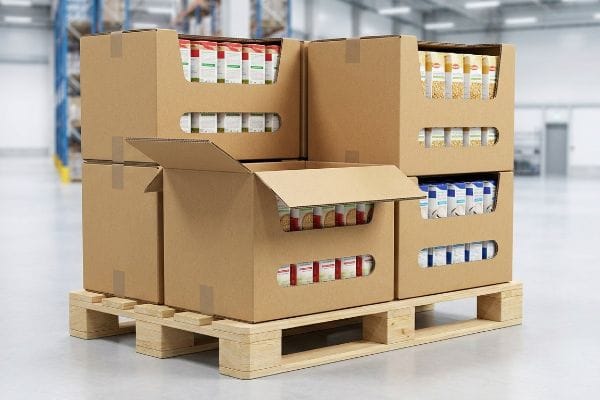
Ja. Costco ist ein bekannter Großhändler, der nach dem Lagerclub-Modell operiert. Da dort riesige Warenmengen auf blanken Betonböden umgeschlagen werden, gelten strenge Anforderungen an die Warenpräsentation. Die Verpackung muss der rauen Behandlung durch Gabelstapler und dem Transport schwerer, doppelt gestapelter Seefracht standhalten.
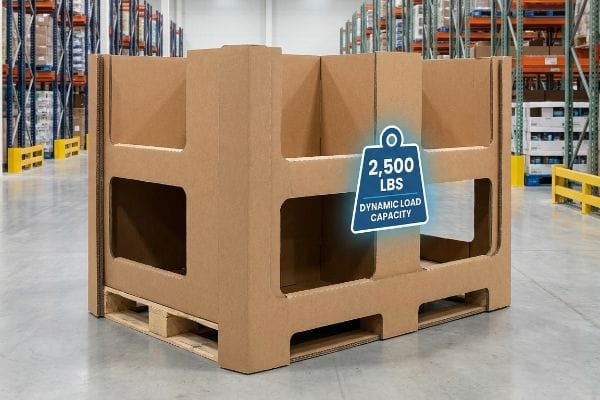
Die eigene Produktkategorie zu kennen ist einfach, aber die eigentliche Konstruktion einer Wellpapppalette, die den Belastungen im Lager standhält, ist für die meisten Marken ein Problem.
Verabschiedung der Hardline-Politik von Costco Club Store
Die meisten Marken, die den Übergang zu größeren Umsätzen vollziehen, behandeln Palettendisplays wie überdimensionale Versionen ihrer Standard-Regalflächen in Supermärkten. Sie skalieren ihre flachen Illustrator-Dateien und gehen davon aus, dass herkömmliche einwandige Kartonagen einfach mehr Produkte tragen können, ohne sich zuverformen.
Selbst erfahrene Designer übersehen diesen Schwachpunkt oft beim Bau von großen Verkaufsflächen ohne Durchladefunktion. Ich sehe diese Falle ständig: Der Verkäufer lädt die schwere Palette auf den Betonboden, und innerhalb von drei Stunden werfen Kunden achtlos schwere Waren zurück auf die Auslage. Das verursacht ein deutliches, unangenehmes Knirschen, wenn die rohe B-Welle unter dem Gewicht zusammenbricht. Man muss von Anfang an eine dynamische Tragfähigkeit von 1133,98 kg (2500 lbs) einplanen und nicht einfach darauf hoffen, dass die Kunden vorsichtig sind. Unabhängige, tragende Stützpfeiler gewährleisten, dass die Konstruktion nicht allein von den äußeren Wänden abhängt.
| Häufiger Anfängerfehler | Die Profi-Lösung | Vorteil für die Verkaufsfläche |
|---|---|---|
| Verwendung geschlossener Rückwände | Engineering "Shop-Through"-Fenster3 | Ermöglicht 360-Grad-Zugriff auf große Mengen |
| Abhängigkeit von statischen Gewichtsgrenzen | Auslegung für eine dynamische Last von 2.500 lbs (1133,98 kg)4 | Verhindert einen katastrophalen Fundamenteinsturz |
| Standard-Einwandflöten | Verwendung von doppelwandigen Eckkonstruktionen5 | Übersteht heftige Gabelstaplerkollisionen |
Ich lasse meine Kunden nicht einfach blindlings in Club-Stores liefern. Durch eine überdimensionierte dynamische Lastverteilung eliminiere ich das Risiko eines Einknickens in der Mitte des Ganges vollständig und stelle sicher, dass Ihre Marke bis zum Verkauf des letzten Artikels stabil bleibt.
🛠️ Harveys Schreibtisch: Sie sind sich nicht sicher, ob Ihre Palettenkonstruktion den Gabelstapler-Aufpralltest übersteht? 👉 Holen Sie sich einen kostenlosen 3D-Stresstest ↗ — Direkter Kontakt zu mir. Garantiert kein automatisierter Werbe-Spam.
Was ist großflächiger Einzelhandel?
Die Bewältigung der Herausforderungen riesiger Einzelhandelsumgebungen erfordert einen völlig anderen Ansatz in Bezug auf die Käuferpsychologie und die physische Warenpräsentation im Verkaufsraum.
Der Begriff „Big-Box-Einzelhandel“ bezeichnet physisch riesige Einzelhandelsgeschäfte, die sich durch ihre Lagerhallen-ähnliche Architektur, ein riesiges Produktsortiment und einen starken visuellen Wettbewerb auszeichnen. In diesen weitläufigen Gängen müssen Marken spezielle Verkaufsflächen nutzen, die den Kundenfluss sofort beeinflussen und die Aufmerksamkeit der Kunden auf ihre jeweiligen Produkte lenken.
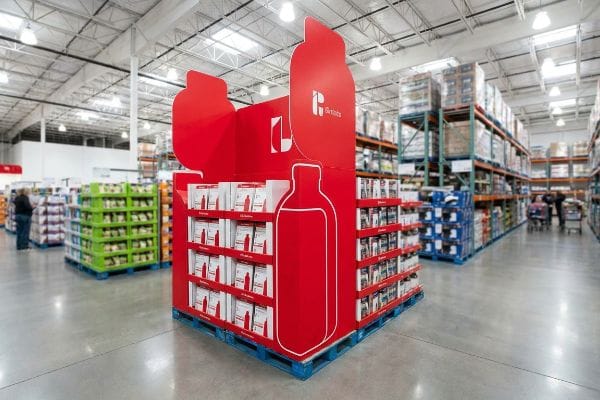
Doch das Verständnis der Definition dieser Megastores wird Ihre Kampagne nicht retten, wenn Ihr strukturelles Design im visuellen Rauschen untergeht.
Die 3-3-3-Regel für räumliches Engagement überstehen
Viele Marketingteams entwerfen Verkaufsdisplays häufig ausschließlich für die Nahansicht auf hintergrundbeleuchteten Computermonitoren. Sie genehmigen ansprechende, textreiche Grafiken und ignorieren dabei völlig die Realität, wie sich eilige Kunden in weitläufigen Gängen mit grellem Neonlicht bewegen .
Es ist eine häufige Falle, in die selbst erfahrene Einkaufsteams fast wöchentlich tappen. Eine Marke liefert ein wunderschön gestaltetes Display, doch aus 7,6 Metern Entfernung im Regal wirkt es durch die Beleuchtung so blass, dass es wie ein schlammbrauner Karton aussieht, der perfekt mit den Stahlregalen verschmilzt. Man muss die 3-3-3-Regel beachten . Wenn ein eiliger Kunde den visuellen Anreiz aus der Ferne verpasst, interessiert er sich nicht näher damit, und die Kampagne scheitert. Ich setze daher immer ein großes, dreidimensionales Stanzelement oder eine kräftige Pantone-Sonderfarbe in die Kopfzeile ein, um einen starken visuellen Kontrast zu schaffen, der das Auge förmlich zum Innehalten und Fokussieren zwingt.
| Häufiger Anfängerfehler | Die Profi-Lösung | Vorteil für die Verkaufsfläche |
|---|---|---|
| Design ausschließlich für die Bildschirmansicht | Ingenieurtechnische Umsetzung der 3-3-3-Abstandsregel9 | Zieht schon von Weitem die Blicke auf sich |
| Verwendung textlastiger Grafikfelder | Verwendung massiver 3D-Stanzkopfleisten10 | Verursacht sofortige visuelle Störungen |
| Verwendung von CMYK-Halbtonmischungen (Cyan, Magenta, Gelb) | Fluten von Überschriften mit deckenden PMS-Sonderfarben11 | Beseitigt trübe Blendung durch Einzelhandelsbeleuchtung |
Ich gestalte Displays, die als stille Verkäufer fungieren, nicht als Informationsbroschüren. Indem ich den Text konsequent entferne und den Kontrast durch Stanzstrukturen maximiere, sorge ich dafür, dass Ihre Warenpräsentation den gewohnten Laufweg des Kunden bewusst unterbricht.
🛠️ Harveys Schreibtisch: Sind Ihre individuellen Displays wirklich so gestaltet, dass sie Kunden schon von Weitem anziehen, oder gehen sie einfach nur im Hintergrund unter? 👉 Erfahren Sie, wie wir Regalgänge revolutionieren ↗ – Sicher herunterladen. Bei Fragen können Sie mich gerne kontaktieren.
Ist Walmart ein großflächiger Einzelhändler?
Die Durchführung einer groß angelegten Markteinführung in Tausenden von Supercentern klingt hochprofitabel, bis ein winziger Fehler in der Druckvorstufe die gesamte Lieferkette zum Erliegen bringt.
Ja. Walmart ist ein Großhändler, der den globalen Massenwarenmarkt dominiert. Aufgrund der enormen Frachtmengen, die in hochautomatisierten Verteilzentren verarbeitet werden, gelten dort strenge Logistikprotokolle, die von den Lieferanten ein fehlerfreies Scannen der Umkartons und einen reibungslosen automatisierten Wareneingang verlangen.
Doch die Theorie allein genügt nicht, wenn die Maschinen in ihren zentralen Logistikzentren in Betrieb genommen werden.
Warum Standard-Logistikstanzformen in der Fertigungshalle versagen
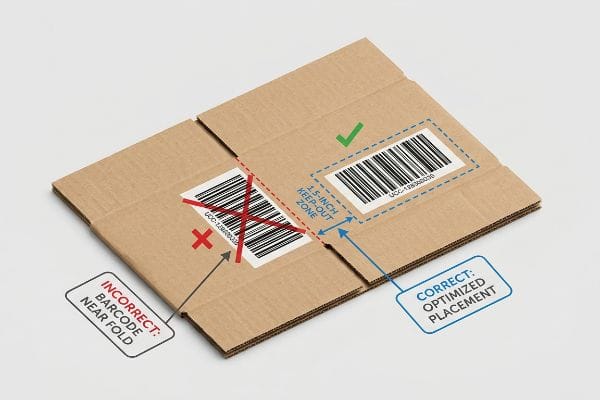
Grafikdesigner platzieren häufig die obligatorischen UCC-128-Logistik-Barcodesdirekt neben den Rilllinien ihrer Masterkartonstanzformen, um ein sauberes Erscheinungsbild zu gewährleisten. Sie gehen davon aus, dass sich ein digitaler PDF-Proof in der Realität perfekt falten lässt, ohne Material zu verbrauchen.
In meiner Einrichtung beobachte ich regelmäßig, wie diese theoretische Annahme zu massiven Engpässen in der Lieferkette führt. Wenn dicke Wellpappe um 90 Grad gefaltet wird, dehnt sich die äußere Papierschicht und legt sich um den Eckenradius. Platziert ein Designer den Barcode innerhalb von 2,79 mm (0,11 Zoll) von der Faltkante<sup>13</sup>, dehnen und verziehen sich die gedruckten Linien beim Stanzen. Treffen diese Kartons in einem großen Verteilzentrum auf einen Hochgeschwindigkeitsscanner, können die verzerrten Linien nicht gelesen werden, was zu sofortiger Ausschussware führt. Um dies zu beheben, lege ich in der CAD-Software (Computer-Aided Design) vor der Herstellung der Druckplatten manuell eine strikte „Etiketten-Sperrzone“ von 38,1 mm (1,5 Zoll)14</sup> . Durch die mathematische Festlegung dieser flachen Zone gewährleiste ich eine hundertprozentige Erfolgsquote beim optischen Scannen, reduziere Fehler in der automatisierten Verarbeitung und spare meinen Kunden Tausende von Euro an Kosten für manuelles Umpacken und verpasste Liefertermine.
| Häufiger Anfängerfehler | Die Profi-Lösung | Vorteil für die Verkaufsfläche |
|---|---|---|
| Platzierung von Barcodes in der Nähe von Faltlinien | Vorschreiben einer 1,5 Zoll (38,1 mm) breiten Sperrzone15 | Garantiert einwandfreies optisches Scannen |
| Physik der Brettstreckung ignorieren | Mathematisch versetzte Beschriftungskoordinaten16 | Verhindert Verzerrungen gedruckter Linien |
| Vertrauen in flache digitale Proofs | Vorflugberechnung von 3D-Biegetoleranzen in CAD17 | Eliminiert massive Logistik- und Umverpackungskosten |
Ich lasse nicht zu, dass ansprechende Grafiken Ihre Logistik beeinträchtigen. Indem ich diese wichtigen Barcodes fernab von strukturellen Belastungspunkten anbringe, schütze ich Ihre Margen vor Fehlern bei der automatisierten Sortierung und garantiere einen reibungslosen Wareneingang.
🛠️ Harveys Schreibtisch: Wissen Sie genau, wie nah Ihre Logistik-Barcodes am physischen Falzradius liegen? 👉 Senden Sie mir Ihre Stanzdatei ↗ – ich überprüfe die Berechnungen, bevor Sie Ihr Budget für die Massenproduktion verschwenden.
Abschluss
Sie können zwar einen günstigeren Druckvorstufenanbieter wählen, doch wenn ein gedehnter UCC-128-Barcode vom optischen Scanner nicht erkannt wird, die automatisierte Warenannahme um schätzungsweise 35 % verlangsamt wird und Ihre Marge durch Nachverpackungskosten aufgebraucht ist, sind diese Einsparungen dahin. Genau dieses Datenblatt verwenden meine zehn größten Einzelhandelskunden, um Druckfehler zu vermeiden. Hören Sie auf, bei Dehnungstoleranzen zu raten, und lassen Sie mich Ihre Dateien persönlich durch meinen kostenlosen Stanzformen-Pre-Flight-Audit führen, um kritische Barcode-Platzierungen vor der Produktion zu erkennen.
„Untersuchung des Einflusses von Perforationen auf die Tragfähigkeit …“, https://pmc.ncbi.nlm.nih.gov/articles/PMC11396172/. Technische Validierung der Druckfestigkeitsgrenzen von einwelliger Wellpappe im Vergleich zu den strukturellen Anforderungen von Palettendisplays für Lagerhallen. Nachweisfunktion: Technische Validierung; Quellentyp: Handbuch für Verpackungstechnik. Beleg: Die Behauptung, dass einwellige Wellpappe für vergrößerte Displays strukturell unzureichend ist. Anmerkung zum Untersuchungsbereich: Fokus auf vertikale Druck- und Knickstellen. ↩
„Wie viel Last kann meine Palette tragen?“, https://unitload.vt.edu/education/white-papers/5-wp-load-carrying-capacity-of-pallets.html. Überprüfung der Standardanforderungen an die Tragfähigkeit von POS-Displays in Großhandelsmärkten. Nachweisfunktion: Technische Spezifikation; Quellentyp: Branchenrichtlinien für Verpackungen. Unterstützt: Die Notwendigkeit einer Konstruktion für hohe Traglasten bei Großflächendisplays. Hinweis: Die genauen Spezifikationen können je nach Einzelhändler variieren. ↩
„Club Stores Require Different Approach to Packaging Design“, https://www.packagingstrategies.com/articles/94105-club-stores-require-different-approach-to-packaging-design. Richtlinien für die Gestaltung von Großhandelsclubs schreiben offene Verpackungen vor, damit Kunden die Produkte sehen und erreichen können, ohne sie vollständig auspacken zu müssen. Beleg: Designanforderung; Quelle: Leitfaden eines Einzelhändlers. Unterstützt: die Implementierung von Sichtfenstern für den Großhandel. Anwendungsbereich: Speziell für Hartwaren oder lose verpackte Waren. ↩
„Costco-Verpackungsleitfaden: Strukturelle Anforderungen & Best Practices“, https://greendotpackaging.com/costco-packaging-requirements/. Maßgebliche Verpackungsstandards für Großhandelsclubs legen die Mindesttragfähigkeit für dynamische Lasten fest, um die Stabilität von Paletten während Transport und Lagerung zu gewährleisten. Nachweis: Technische Spezifikation; Quelle: Branchenstandard. Unterstützung: Die spezifische Gewichtsschwelle, die erforderlich ist, um ein Zusammenbrechen der Palettenbasis zu verhindern. Anwendungsbereich: Speziell für hochdichte Palettenstapelung. ↩
„Wellpappenverpackungen mit innovativem Design für verbesserte …“, https://bioresources.cnr.ncsu.edu/resources/corrugated-board-packaging-with-innovative-design-for-enhanced-durability-during-transport/. Die technische Dokumentation zur Wellpappendicke und strukturellen Verstärkung belegt eine erhöhte Widerstandsfähigkeit gegen Durchstoßen und Druck beim Transport. Belegfunktion: Materialspezifikation; Quellentyp: technisches Handbuch. Unterstützt: die Aussage, dass verstärkte Ecken Gabelstapleraufprälle überstehen. Anwendungsbereich: Gilt für hochbelastbare Wellpappen-Versandbehälter. ↩
„Gestaltung von stationären Geschäften im digitalen Zeitalter – MBH Architects“, https://www.mbharch.com/post/designing-brick-and-mortar-for-the-digital-age. Branchenanalyse zur Diskrepanz zwischen digitalen Design-Tools und der Sichtbarkeit im stationären Einzelhandel. Belegfunktion: Bestätigung; Quellentyp: Bericht der Designbranche. Unterstützt: die These, dass Designer der Ästhetik auf Monitoren Vorrang vor der physischen Wirksamkeit einräumen. Anwendungsbereich: POS-Materialien. ↩
„Auswirkungen von Farbe und Beleuchtung auf den Eindruck und die Identität im Einzelhandel“, https://www.sciencedirect.com/science/article/abs/pii/S0272494416300342?utm_source=chatgpt.com. Studien darüber, wie Umgebungsbeleuchtung und Ladengröße die Lesbarkeit von Ladenbeschilderungen beeinflussen. Rolle der Evidenz: Technische Unterstützung; Quellentyp: Umweltpsychologische Forschung. Unterstützt: die These, dass Ladenumgebungen das Lesen textlastiger Grafiken erschweren. Anmerkung zum Untersuchungsbereich: Fokus auf den Einzelhandel im Lagerhausstil. ↩
„Die Bedeutung der 3er-Regel für Ihre individuellen Ladendisplays“, https://mcintyredisplays.com/blog/custom-store-displays/. Ein Branchenstandard bzw. Designleitfaden, der die 3-3-3-Regel für die Kundenansprache hinsichtlich Distanz und Zeitpunkt erläutert. Nachweisfunktion: Technische Spezifikation; Quellentyp: Fachpublikation oder Marketinglehrbuch. Unterstützt: die Anforderung an visuelle Attraktivität auf mehreren Ebenen in großen Einzelhandelsflächen. Hinweis: Die Definitionen der Regel können je nach Behörde leicht variieren. ↩
„AG 1091A: Warenpräsentation im Eingangsbereich“, https://www.seattle.gov/transportation/permits-and-services/permits/applicant-guides/ag-1091a. Kurze Erläuterung, wie eine maßgebliche externe Quelle die Definition und Anwendung der 3-3-3-Regel zur Verbesserung der Sichtbarkeit für Kunden unterstützt. Nachweisfunktion: Konzeptuelle Definition; Quellentyp: Leitfaden für die Warenpräsentation im Einzelhandel. Unterstützt: Strategie zur räumlichen Gestaltung. Anwendungsbereich: Speziell für großflächige Einzelhandelsumgebungen. ↩
„Der Einfluss visueller Elemente im Verpackungsdesign auf den Kauf …“, https://pmc.ncbi.nlm.nih.gov/articles/PMC11851823/. Kurze Erläuterung, wie dreidimensionale Strukturelemente in der Beschilderung visuelle Ablenkung erzeugen und so die Bewegung von Käufern unterbrechen. Evidenzrolle: psychologischer Effekt; Quellentyp: Studie zum visuellen Merchandising. Unterstützte Methoden: Aufmerksamkeitserregende Techniken. Fokus: Verkaufsdisplays (POP). ↩
„Sonderfarben vs. Prozessfarbendruck – Pantone“, https://www.pantone.com/articles/technical/spot-vs-process-color?srsltid=AfmBOorQzUNmBieL2nlSnk31PcWBYcbbQiutX9bpY6mcaRXdJJvvdNEh. Kurze Erläuterung, wie technische Drucknormen zeigen, dass Volltonfarben von Pantone im Vergleich zu CMYK-Halbtonbildern visuelles Rauschen und Blendeffekte unter Einzelhandelsbeleuchtung reduzieren. Nachweisfunktion: Technische Spezifikation; Quellentyp: Handbuch für Druck und Grafikdesign. Unterstützt: Reduzierung von Lichtblendung. Anwendungsbereich: Gilt für großformatige Einzelhandelsbeschilderung. ↩
„GS1-Etikettierung im Einzelhandel: Anforderungen für Walmart, Target & Co.“, https://getproductiv.com/gs1-labeling-retail. Eine maßgebliche Quelle wie GS1 oder das Lieferantenhandbuch von Walmart bestätigt die Anforderung von UCC-128-Barcodes (GS1-128) auf Versandbehältern. Nachweisfunktion: Verifizierung; Quellentyp: Branchenstandard/Unternehmensrichtlinie. Begründung: Die Notwendigkeit spezifischer Barcode-Standards in der Logistik von Großflächenmärkten. Hinweis: Die Anforderungen können sich mit Aktualisierungen der GS1-Standards ändern. ↩
„[PDF] Richtlinien für die Platzierung von Barcode-Symbolen | GS1 US“, https://documents.gs1us.org/adobe/assets/deliver/urn:aaid:aem:30071c02-969b-4b61-acc1-a44373c44ec1/Guideline-Bar-Code-Symbol-Placement.pdf. Technische Dokumentation zur Verpackungstechnik und zu GS1-Barcode-Standards bezüglich linearer Verzerrungen durch Substratdehnung an Faltstellen. Nachweisfunktion: Technische Spezifikation; Quellentyp: Industriestandard. Unterstützt: Der Mindestabstand, der erforderlich ist, um ein Verziehen des Barcodes zu verhindern. Anwendungsbereich: Kann je nach Wellpappenqualität variieren. ↩
„[PDF] Standards für die Lieferkette von Sekundärverpackungen“, https://p2pi.com/file/PtPI16509cf4c7b5d4070798853/Walmart%2520Supply%2520Chain%2520Packaging%2520Guide%2520August%25202023.pdf. Überprüfung der Logistikhandbücher von Einzelhändlern oder der GS1-Verpackungsrichtlinien hinsichtlich der Sicherheitsabstände für die Barcode-Platzierung auf Wellpappkartons. Nachweisfunktion: Best Practice; Quellentyp: Logistikhandbuch. Unterstützt: den Standard-Freiraum zur Gewährleistung eines erfolgreichen optischen Hochgeschwindigkeitsscans. Anwendungsbereich: Speziell für automatisierte Verteilzentren. ↩
„Anleitung zum Drucken scannbarer Barcodes auf Wellpappenverpackungen“, https://www.keyence.com/products/marker/inkjet-printers/resources/inkjet-printer-resources/how-to-print-scannable-barcodes-on-corrugated-packaging.jsp. Technische Verpackungsrichtlinien legen den Mindestabstand zwischen Barcodes und Faltstellen fest, um Scanfehler zu vermeiden. Nachweisfunktion: Technische Spezifikation; Quellentyp: Branchenstandardhandbuch. Unterstützt: Optische Zuverlässigkeit des Barcode-Scannens. Anwendungsbereich: Speziell für Wellpappenverpackungen. ↩
„Abschätzung der Druckfestigkeit von Wellpappkartons …“, https://pmc.ncbi.nlm.nih.gov/articles/PMC8467740/. Die materialwissenschaftliche Dokumentation zur Ausdehnung von Wellpappe beim Falten erklärt die Notwendigkeit von Koordinatenversätzen zur Aufrechterhaltung der Druckausrichtung. Nachweisfunktion: Technisches Prinzip; Quellentyp: Ingenieurlehrbuch. Unterstützt: Vermeidung von Drucklinienverzerrungen. Anwendungsbereich: Gilt für dickwandige Wellpappe. ↩
„Wellpappendesign – Google Groups“, https://groups.google.com/g/comp.cad.solidworks/c/bV6mhVT7YiQ. Konstruktionshandbücher für Verpackungen beschreiben detailliert, wie 3D-Biegezugaben Maßungenauigkeiten verhindern, die zu kostspieligem Nachpacken führen. Nachweisfunktion: Branchenübliche Best Practice; Quellentyp: Technisches Handbuch. Vorteile: Vermeidung von Logistik-Nachverpackungskosten. Fokus: CAD-to-Factory-Workflow. ↩