Sie möchten, dass Ihre Abo-Box viral geht, doch beschädigte Ecken und zerbrochene Produkte garantieren sofortige Kritik beim Auspacken. Der Grat zwischen hochwertiger Ästhetik und Überlebensfähigkeit beim Transport ist hauchdünn.
Die Balance zwischen Ästhetik und Schutz bei Abo-Box-Verpackungen erfordert eine stabile Konstruktion, ohne das visuelle Auspackerlebnis zu beeinträchtigen. Dies beinhaltet die präzise Berechnung von Toleranzen für Wellpappensohlen, den Einsatz gezielter Beschichtungen und die strikte Einhaltung der Markenfarbtreue auf robusten Materialien, um eine Lieferung in Einzelhandelsqualität direkt an die Haustür des Kunden zu gewährleisten.

Um dieses perfekte Gleichgewicht zu erreichen, reicht es nicht, einfach ein ansprechendes Grafikdesign auszuwählen; es erfordert höchste mechanische Präzision und fundierte Materialkenntnisse in der Fertigung.
Was sind die vier Cs des Verpackungsdesigns?
Das Verständnis des grundlegenden Systems verhindert, dass Ihre schöne Abo-Box schon vor dem Versand zu einem riesigen logistischen und finanziellen Albtraum wird.
Die vier Cs des Verpackungsdesigns sind Kosten, Konzept, Komfort und Kommunikation. Dieser strategische Rahmen besagt, dass eine erfolgreiche Verpackung ein ausgewogenes Verhältnis zwischen Rohstoffkosten, einer überzeugenden physischen Struktur, einer reibungslosen Montage für Lohnverpacker und einer klaren visuellen Markenbotschaft aufweisen muss, die auch den Transport unbeschadet übersteht.
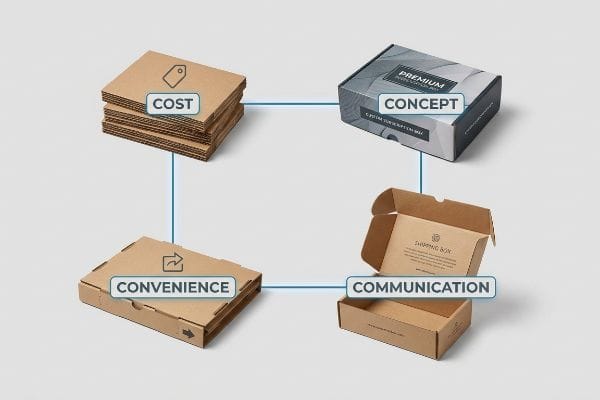
Theorie ist im Sitzungssaal gut und schön, aber wenn es nicht gelingt, diese vier Säulen in Einklang zu bringen, führt das sofort zu Chaos in der Auftragsabwicklung.
Die Ungleichgewichtsfalle bei den vier Cs des Verpackungsdesigns
Einkaufsteams nutzen häufig das 4-C-Modell¹,um die Einführung ihrer Abo-Boxen zu steuern. Oftmals konzentrieren sie sich jedoch ausschließlich auf die primäre Kennzahl „Kosten“ und vernachlässigen dabei wichtige Aspekte der Produktqualität, um kurzfristig Kosten zu sparen. Dies führt zu einem gravierenden Ungleichgewicht, das die anderen drei Säulen einer erfolgreichen Kampagne im Einzelhandel vollständig untergräbt.
Ich beobachte das ständig: Käufer greifen heimlich auf minderwertiges Wellpappenmaterial zurück, um ein paar Cent pro Einheit zu sparen. Das Verpackungskonzept bricht unter dem Gewicht schwerer Paletten zusammen, und die Montage wird unmöglich, weil die dünneren Wellen zu schwach sind, um sauber gefaltet zu werden.Ich habe einmal einen Mitarbeiter eines Logistikdienstleisters beobachtet, der 15 Minuten lang schwitzte, um einen minderwertigen Karton zusammenzubauen, und schließlich zu unsauberem, stark klebendem Klebeband griff, um die Ecken zusammenzuhalten. Dieses billige Klebeband zerstörte die Wirkung der hochwertigen Grafiken vollständig. Indem man die Materialkosten mathematisch direkt mit einer reibungslosen Montage und garantierten Transportschäden verknüpft, stellt man sicher, dass das gesamte Verpackungssystem einen positiven Return on Investment generiert und keine kostspieligen Ersatzlieferungen aufgrund von Schäden erfordert.
| Häufiger Anfängerfehler | Die Profi-Lösung | Vorteil für die Verkaufsfläche |
|---|---|---|
| Herabstufung der Platinenqualität aus Kostengründen | 32 ECT - Mindestgrenzwerte durchsetzen | Eliminiert 30 % der Transportschäden4 |
| Montagezeit des Lohnverpackers außer Acht lassen | Ingenieur-vorgeklebte Verriegelungslaschen | Spart 25 Sekunden Montagezeit pro Karton5 |
| Markenlogos mit Klebeband abdecken | Design integrierte Reibungssperren | Gewährleistet eine makellose visuelle Kommunikation |
Ich weigere mich, die Stückkosten als isolierte Kennzahl zu betrachten, denn eine billige Schachtel, die zusätzliches manuelles Klebeband erfordert, vernichtet Ihre Gewinnspanne vollständig.
🛠️ Harveys Schreibtisch: Sind Sie sich nicht sicher, ob Ihre aktuellen Konstruktionskosten die Montage unnötig erschweren? 👉 Kostenlose Stanzlinienanalyse anfordern ↗ – Direkter Kontakt zu mir. Kein automatisierter Werbe-Spam, versprochen.
Welchen Herausforderungen könnte ein Abo-Box-Unternehmen bei der Planung seiner monatlichen Boxen begegnen?
Die Skalierung einer monatlichen Box bedeutet, mit unvorhersehbaren Umweltvariablen, schnellen saisonalen Übergängen und extrem engen Lieferfenstern in unterschiedlichen Klimazonen umzugehen.
Zu den Herausforderungen, mit denen ein Abo-Box-Unternehmen bei der Planung seiner monatlichen Boxen konfrontiert sein könnte, gehören schwankende Materialkosten, strenge Gewichtsbeschränkungen für den Versand, komplexe Reibung beim Verschachteln während der Montage und unvorhersehbare Luftfeuchtigkeit, die dazu führt, dass Wellpappeneinsätze in den feuchten Fulfillment-Zentren von Drittanbietern aufquellen und sich dauerhaft verziehen.
Während sich die Marketingteams ausschließlich auf das Auspackerlebnis konzentrieren, müssen die operativen Bereiche die unsichtbaren physischen Hürden der Massenabwicklung überwinden.
Überwindung von Feuchtigkeitsquellen bei der monatlichen Boxmontage
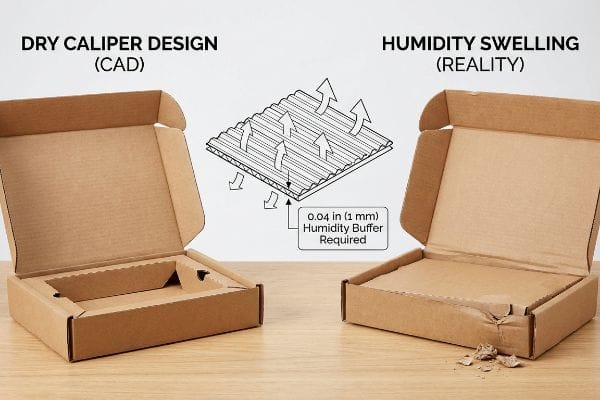
Designer in klimatisierten Büros legen die Toleranzen für interne Träger und Schlitze oft auf Basis des absoluten Trockendurchmessers der Plattefest. Sie gehen davon aus, dass eine Trennwand, die in der CAD-Software (Computer-Aided Design) perfekt passt, auch jeden Monat problemlos in der Verpackungsanlage montiert werden kann.
Die Realität des Seetransports und der Lagerung in feuchten Lagern widerlegt diese Annahme völlig. Lagern Ihre Monatsboxen in feuchten Regionen wie Florida oder Texas, saugt das poröse Testliner-Material die Luftfeuchtigkeit auf und quillt auf . Ein Schlitz, der zuvor perfekt zum Sieb passte, wird plötzlich zu eng, sodass die Wellen beim Zusammenfügen der Einlagen beschädigt werden. Das charakteristische, aggressive Reißgeräusch des Kartons ist genau dort zu hören, wo sich Ihr Markenlogo befindet. Für Sendungen in feuchte Klimazonen integriere ich automatisch einen 1 mm (0,04 Zoll) dicken Feuchtigkeitspuffer in unsere Stanzformen. So garantiere ich dem Lohnverpacker eine reibungslose und reißfreie Montage, unabhängig von den Witterungsbedingungen im Lager.
| Häufiger Anfängerfehler | Die Profi-Lösung | Vorteil für die Verkaufsfläche |
|---|---|---|
| Konstruktion für absolut trockene Bremssättel | Fügen Sie einen Puffer von 0,04 Zoll (1 mm) hinzu9 | Verhindert Einreißen beim Versand |
| Klimazonen in Lagerhallen werden ignoriert | Klimaspezifische Toleranzen durchsetzen | Verhindert das erzwungene Zerdrücken der Lasche |
| Auf rohem, porösem Testliner basieren | Gezielte wässrige Beschichtungen einsetzen10 | Verhindert schnelle Feuchtigkeitsaufnahme |
Ich berechne die Ausdehnung des Raumes immer in meinen Verpackungsdateien mit ein, weil das Ignorieren der Lagerphysik zu massiven Engpässen bei der Arbeitskräftegewinnung kurz vor den Versandterminen führt.
🛠️ Harveys Schreibtisch: Sind Ihre Trennwände in den Kartons mit einer integrierten mathematischen Pufferung gegen Feuchtigkeitsschwankungen im Lager ausgestattet? 👉 Überprüfen Sie Ihre Dateifreigaben ↗ — Sicher herunterladen. Bei Fragen können Sie mich gerne kontaktieren.
Lohnt sich die Anschaffung von Beauty-Abo-Boxen?
Die Verbraucher erwarten von Beauty-Abonnements ein luxuriöses Erscheinungsbild, doch um diesen hochwertigen Look fehlerfrei zu erzielen, bedarf es höchster chemischer Präzision und strengster Druckdisziplin.
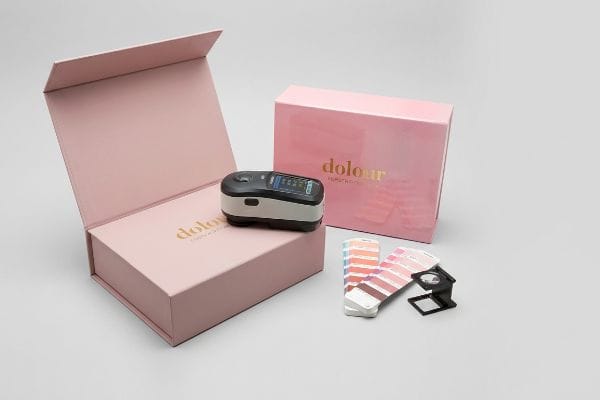
Ja. Beauty-Abo-Boxen sind äußerst lukrativ, wenn sie ein makelloses haptisches Erlebnis bieten. Um ihren Wert zu erhalten, ist es jedoch unerlässlich, die physikalischen Eigenschaften hochwertiger Oberflächenveredelungen zu beherrschen und insbesondere zu berücksichtigen, wie lichtabsorbierende Soft-Touch-Laminierungen die darunterliegenden gedruckten Markenfarben vor der Endproduktion verändern und verdunkeln.
Die Erfüllung dieses Premium-Versprechens ist der Punkt, an dem viele aufstrebende Beauty-Marken versehentlich ihre visuelle Identität in der Presse zerstören.
Die taktile optische Verdunkelungsfalle in Kosmetikboxen
Die Teams von Kosmetikmarken gehen häufig davon aus, dass eine hochwertige , weiche Thermolaminierung die darunterliegenden CMYK-11- Farben (Cyan, Magenta, Gelb, Schwarz) oder Pantone-Farben optisch nicht beeinträchtigt. Sie erwarten, dass die physische Verpackung exakt den leuchtenden, brillanten digitalen Proofs entspricht, die sie auf ihren Monitoren in der Marketingabteilung freigegeben haben.
Die mikroskopische, biaxial orientierte Polymerstruktur von Soft-Touch-Folien wirkt wie ein lichtabsorbierendes Vakuum, das Umgebungslicht streut und die gedruckten Pigmente dadurch um bis zu 5 % abdunkelt<sup>12</sup>. Ignoriert man diese chemische Tatsache, wirkt die gewünschte pastellrosa Kosmetikverpackung am Ende trüb und matt. Einmal geriet ein Kunde in Panik, weil die Premium-Laminierung zu massiven Farbabweichungen gegenüber den Originalmustern führte. Die Oberfläche fühlte sich aufgrund unzureichender Aushärtungsspannungen eher wie steifes Sandpapier als wie Samt an. Deshalb schreibe ich in der Druckvorstufe eine strenge Kompensationskurve für die Laminierung vor, gebe präventiv 10–12 % Cyan hinzu<sup>13</sup> und verlange eine physikalische Spektralphotometermessung, um die lichtabsorbierende Polymerstruktur zu durchdringen und perfekte Farbgenauigkeit zu gewährleisten.
| Häufiger Anfängerfehler | Die Profi-Lösung | Vorteil für die Verkaufsfläche |
|---|---|---|
| Genehmigung unlaminierter digitaler Proofs | Laminierte physische Auszüge erforderlich | Garantiert eine genaue Endfarbe |
| Lichtabsorption bei sanfter Berührung außer Acht gelassen | 10 % höhere Druckdichte in der Druckvorstufe anwenden14 | Verhindert das Verschmieren der Markenfarben |
| Unter der Annahme, dass sich alle Laminierungen gleich verhalten | Verwenden Sie das Spektralphotometer unter D50-Licht15 | Gewährleistet die strikte Einhaltung der Delta-E-Vorgaben16 |
Ich lasse niemals eine Kosmetikmarke in die Massenproduktion gehen, ohne vorher die Tintendichten für Soft-Touch-Folien mathematisch anzupassen, um sicherzustellen, dass die luxuriöse Ästhetik dem Premiumpreis entspricht.
🛠️ Harveys Schreibtisch: Sind Ihre Markenfarben mathematisch so abgestimmt, dass sie auch unter lichtabsorbierenden Premium-Laminierungen erhalten bleiben? 👉 Fordern Sie eine Druckvorstufen-Farbprüfung an ↗ — Keine Formulare, die endlose Verkaufsgespräche auslösen. Einfach nur echter Mehrwert.
Was versteht man unter der Zusammenstellung einer Abo-Box?
Die perfekte Produktauswahl zusammenzustellen ist eine Kunst, sie aber physisch in einem versandfähigen Wellpappkarton zu sichern, ist reine Maschinenbaukunst.
Die Zusammenstellung von Abo-Boxen umfasst die strategische Auswahl und physische Anordnung von Produkten, die darauf abzielen, die Kundenbindung zu maximieren. Dafür sind asymmetrische Trennwände im Inneren erforderlich, um die verschiedenen Artikel sicher zu verwahren. Dies erzeugt eine visuelle Spannung, die das Auspackerlebnis verbessert und gleichzeitig Reibungsverluste während der automatisierten Hochgeschwindigkeitsmontage verhindert.
Doch die Theorie der Kuratierung zu kennen, reicht nicht aus, wenn die Hochgeschwindigkeits-Verpackungsmaschinen anlaufen.
Warum symmetrische Kuration in der Fabrikhalle scheitert
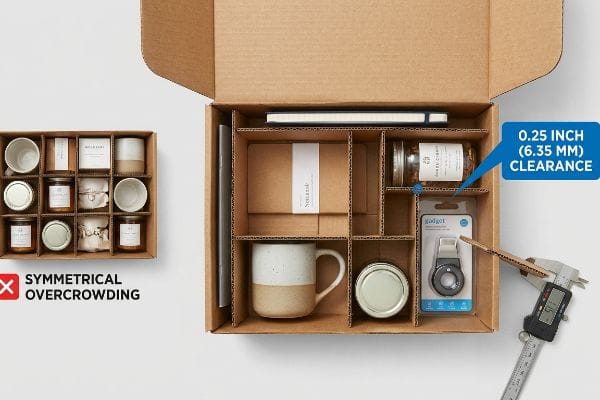
Selbst erfahrene Einkaufsteams versuchen häufig, eine dichte, perfekt symmetrische Anordnung ausgewählter Produkte in ihre monatlichen Beilagen zu integrieren. Sie gehen davon aus, dass maximale Dichte einen höheren wahrgenommenen Wert erzeugt<sup>17</sup>, den Verpackungsprozess vereinfacht und das Versandvolumen der finalen Sendung reduziert<sup>18</sup>.
In meinem Betrieb erlebe ich regelmäßig, wie sorgfältig verpackte Kartons zu logistischen Albträumen werden, weil die symmetrische Überfüllung beim Nachfüllen massive Reibung verursacht. Messungen der Toleranzen in einem dicht bestückten Regal zeigen, dass der fehlende Platz die Mitarbeiter zwingt, die Artikel mit Gewalt in die Stanzfächer zu drücken. Diese aggressive Handhabung reißt die unversiegelten Haltelippen der Wellpappe ein und verteilt feinen Papierstaub auf den hochwertigen Produkten, noch bevor diese versendet werden. Ich löse dieses Problem durch speziell entwickelte modulare Trennwände, die die Waren automatisch in asymmetrische Gruppen von drei, fünf oder sieben Artikeln aufteilen. Durch die Einhaltung dieser Toleranz von 6,35 mm (0,25 Zoll)¹⁹ich die Montagezeit um 42 Sekunden pro Einheit²⁰,vermeide so das Einreißen des Kartons und spare meinen Kunden erhebliche Arbeitskosten bei Standardauflagen.
| Häufiger Anfängerfehler | Die Profi-Lösung | Vorteil für die Verkaufsfläche |
|---|---|---|
| Erzwingen perfekt symmetrischer Gitter | Wenden Sie das asymmetrische 3-5-7-Layout. 21 | Steigert die visuelle Aufmerksamkeit |
| Nullspiel bei kundenspezifischen Einsätzen | Abstand von 0,25 Zoll (6,35 mm) erzwingen22 | Verhindert das Einreißen von Rohkarton |
| Die Handhabung am Fließband wird ignoriert | Ingenieur-schwimmende modulare Trennwände | Verkürzt die Packzeit pro Karton um 42 Sekunden23 |
Ich setze auf asymmetrische räumliche Anordnung, denn eine sorgfältig zusammengestellte Auswahl nützt nichts, wenn das Versandzentrum die Verpackung beim Versuch, die Artikel hineinzuzwängen, zerstört.
🛠️ Harveys Schreibtisch: Lassen Sie sich nicht von einem 2 Millimeter kleinen Konstruktionsfehler die Einführung in 500 Filialen vermasseln. 👉 Senden Sie mir Ihre Stanzdatei ↗ – ich prüfe die Berechnungen, bevor Sie Ihr Budget für die Massenproduktion verschwenden.
Abschluss
Sie können zwar einen günstigeren Anbieter für Ihre individuellen Verpackungseinlagen wählen, doch wenn die flache, poröse Testliner-Folie unweigerlich Luftfeuchtigkeit aufnimmt und aufquillt, verlangsamt die entstehende Reibung in den Schlitzen Ihre Produktionslinie um schätzungsweise 30 % und vernichtet die Gewinnspanne Ihrer Kampagne durch manuelle Nachbearbeitung. Über 500 Markenmanager nutzen meine Checkliste für die Druckvorstufe, um genau diese fatalen Fehler in der Anfangsphase zu vermeiden. Hören Sie auf, die Toleranzen für die Ausdehnung durch Umwelteinflüsse zu schätzen, und lassen Sie mich Ihre Strukturdateien persönlich durch meinen kostenlosen Stanzform-Audit ↗ um schwerwiegende Maßfehler vor Beginn der Massenproduktion zu erkennen.
„Wie die 4 Cs verbraucherorientiertes Design vorantreiben“, https://www.colemancontainers.com/packaging-with-purpose-how-the-4cs-drive-consumer-centric-design/. Bestätigung, dass die „vier Cs“ (Kosten, Konzept, Komfort, Kommunikation) ein anerkannter Branchenstandard sind, der von Fachleuten im Bereich Einkauf und Verpackung verwendet wird. Nachweisfunktion: Validierung der Branchenpraxis; Quellentyp: Fachpublikation oder Lehrbuch für Verpackungsdesign. Beleg: Die Behauptung, dass dieser spezifische strategische Rahmen bei Produkteinführungen Anwendung findet. Hinweis: Die Anwendung kann je nach Einzelhandelsbranche variieren. ↩
„Untersuchung des Einflusses von Perforationen auf die Tragfähigkeit von …“, https://pmc.ncbi.nlm.nih.gov/articles/PMC11396172/. Technische Verpackungsstandards erläutern, wie sich die Reduzierung der Dicke oder Güte von Wellpappe auf die Rillbarkeit und die Gesamtstabilität des Kartons auswirkt. Nachweisfunktion: Technische Validierung; Quellentyp: Handbuch für Verpackungstechnik. Belegt: Die Behauptung, dass Materialverschlechterungen die Montagefreundlichkeit beeinträchtigen. Anwendungsbereich: Gilt speziell für Wellpappe. ↩
„Versandkartonfestigkeit verstehen – EcoEnclose“, https://www.ecoenclose.com/blog/understanding-shipping-box-strength/?srsltid=AfmBOopq0uD8YUWHBTO0Uy7gvXUC5dg8qrTnVn7RZ0oYpFloLHhTfFDW. Überprüfung der Industriestandards für Kantenstauchtests (ECT) für robuste Versandbehälter. Nachweisfunktion: Technische Spezifikation; Quellentyp: Industriestandard. Unterstützt: Empfohlene Kartonfestigkeit für den Transport. Hinweis: Die Wirksamkeit hängt von den Abmessungen und dem Inhalt des Kartons ab. ↩
„ECT-Bewertungen erklärt: Was sie für Ihre Wellpappenverpackungen bedeuten“, https://epackagesupply.com/blogs/packaging-guide/ect-ratings-explained-what-they-mean-for-your-corrugated-packaging?srsltid=AfmBOoqYgkzQjGaT3PJeyYKPveYzWiMRF4i2DobQaEdk5qdFOlLMF101. Empirische Daten, die den Zusammenhang zwischen der Verbesserung der Kartonqualität und der Reduzierung von Transportschäden veranschaulichen. Funktion des Nachweises: Leistungskennzahl; Quellentyp: Logistik-Fallstudie. Belege: Die Wirksamkeit höherer ECT-Bewertungen bei der Reduzierung von Verlusten. Anmerkung: Der Prozentsatz variiert je nach Produktzerbrechlichkeit. ↩
„Automatisch verschließbare Kartons (Crash-Lock) leicht gemacht – PM Packaging“, https://pmpackaging.com/product-catalog/boxes-and-cartons/auto-bottom-boxes. Vergleichsanalyse des Arbeitsaufwands für vorgeklebte Komponenten versus manuelle Montage in Verpackungsprozessen. Nachweisfunktion: Effizienzkennzahl; Datenquelle: Fertigungsbenchmark. Unterstützt: Einsparungen bei Betriebskosten und Zeitaufwand. Anmerkung zum Umfang: Ergebnisse basieren auf Daten von Lohnverpackern mit hohem Durchsatz. ↩
„[PDF] Auswirkungen des Feuchtigkeitsgehalts auf die Druckfestigkeit von Kartons: FBA BCT …“, https://renewablebioproducts.gatech.edu/sites/default/files/2025-12/4effects-of-moisture-content-on-box-compression-strength.pdf. Technische Erläuterung, warum Trockenmessungen mit einem Messschieber die hygroskopische Ausdehnung von Wellpappe nicht berücksichtigen. Nachweisfunktion: Technischer Standard; Quellentyp: Handbuch für Verpackungswissenschaften. Belegt: Die Behauptung, dass die Verwendung von Trockenmessungen zu Montagefehlern führt. Anwendungsbereich: Speziell für Verpackungen auf Zellulosebasis. ↩
„Einfluss von Luftfeuchtigkeit und Temperatur auf die mechanischen Eigenschaften …“, https://bioresources.cnr.ncsu.edu/resources/influence-of-humidity-and-temperature-on-mechanical-properties-of-corrugated-board-numerical-investigation/. Technische Erklärung der Ausdehnung hygroskopischer Kartonmaterialien bei hoher Luftfeuchtigkeit. Nachweisfunktion: Technische Validierung; Quellentyp: Handbuch der Materialwissenschaft oder Verpackungstechnik. Belege: Der kausale Zusammenhang zwischen Luftfeuchtigkeit und Materialverzug. Anwendungsbereich: Speziell für unbeschichtete Wellpappendeckschichten. ↩
„Einfluss von relativer Luftfeuchtigkeit, Lagerdauer und Verpackung … – PMC“, https://pmc.ncbi.nlm.nih.gov/articles/PMC10092868/. Branchenrichtlinien zu strukturellen Toleranzen in Verpackungsstanzformen zur Berücksichtigung der Ausdehnung durch Umgebungsbedingungen. Nachweisfunktion: Validierung der Spezifikation; Quellentyp: Normen für Verpackungsdesign. Unterstützung: Verwendung eines spezifischen Messverfahrens zur Vermeidung von Reibung bei der Montage. Anmerkung: Toleranzen können je nach Materialstärke variieren. ↩
„Optimales Design von doppelwandigen Wellpappenverpackungen“, https://pmc.ncbi.nlm.nih.gov/articles/PMC8950760/. Branchenübliche Verpackungsstandards legen Maßtoleranzen fest, um die hygroskopische Ausdehnung von Karton zu berücksichtigen. Nachweisfunktion: Technische Spezifikation; Quellentyp: Handbuch für Verpackungstechnik. Unterstützt: Die spezifische Puffermessung für die Auslegung von Trockenmesslehren. Anwendungsbereich: Gilt für Standard-Wellpappe. ↩
„Aktualisierung von Feuchtigkeitsbarrierebeschichtungen für die Arzneimittelverabreichung – PMC“, https://pmc.ncbi.nlm.nih.gov/articles/PMC6781284/. Materialwissenschaftliche Daten belegen, dass wässrige Beschichtungen die Wasserdampfdurchlässigkeit von porösem Karton reduzieren. Evidenzfunktion: Technische Validierung; Quellentyp: Fachzeitschrift für Materialwissenschaften. Unterstützt: Die Wirksamkeit von Beschichtungen bei der Verhinderung schneller Feuchtigkeitsaufnahme. Anmerkung: Die Wirksamkeit hängt von der Beschichtungsmenge und der Applikationsmethode ab. ↩
„Soft-Touch-Laminierung: Verpackungen auf einem neuen Niveau …“, https://www.epackprinting.com/support/soft-touch-lamination-add-a-velvety-luxurious-feel-to-your-products/. Technische Erklärung, wie Soft-Touch-Laminierungen die Lichtabsorption verändern und die wahrgenommene Farbsättigung und den Farbton der darunterliegenden Druckfarben beeinflussen. Nachweisfunktion: Technische Verifizierung; Quellentyp: Technisches Handbuch der Druckindustrie. Belegt: Die Annahme, dass Soft-Touch-Oberflächen eine optische Verdunkelung verursachen. Anwendungsbereich: Gilt für Thermolaminierverfahren. ↩
„Was ist Soft-Touch-Laminierung in Verpackungen? – Elite Custom Boxes“, https://www.elitecustomboxes.com/blog/what-is-soft-touch-lamination/. Technischer Nachweis des spezifischen prozentualen Farbverlusts aufgrund der lichtabsorbierenden Eigenschaften biaxial orientierter Soft-Touch-Polymere. Nachweisfunktion: Technische Spezifikation; Quellentyp: Materialwissenschaft oder Druckindustriestandard. Grundlage: Physikalische Chemie der optischen Verdunkelung bei der Laminierung. Hinweis: Die Prozentwerte können je nach Foliendicke und Opazität variieren. ↩
„Mathematische Modellierung und Kompensationsstrategien für den Druck …“, https://pmc.ncbi.nlm.nih.gov/articles/PMC12574880/. Bestätigung der branchenüblichen Farbkorrekturkurven für die Druckvorstufe zur Kompensation des Verdunkelungseffekts von Soft-Touch-Folien. Nachweisfunktion: Prozessvalidierung; Quellentyp: Technisches Handbuch für grafische Anlagen. Unterstützt: die spezifische Korrekturmaßnahme zur Sicherstellung der Farbgenauigkeit. Anwendungsbereich: Speziell für CMYK-Workflows auf Polymersubstraten. ↩
„Einfluss der Papierherstellungsbedingungen auf die Tintenaufnahme und …“, https://bioresources.cnr.ncsu.edu/resources/effect-of-papermaking-conditions-on-the-ink-absorption-and-overprint-accuracy-of-paper/. Kurze Erläuterung, wie professionelle Druckstandards die Anpassung der Tintendichte empfehlen, um den optischen Verdunkelungseffekt von Soft-Touch-Beschichtungen auszugleichen. Belegfunktion: Technische Spezifikation; Quellentyp: Handbuch der Druckindustrie. Begründung: Die Notwendigkeit einer Erhöhung der Tintendichte, um Farbverfälschungen zu vermeiden. Anmerkung: Der genaue Prozentsatz kann je nach Substrat variieren. ↩
„Farbchaos in der Lichtkabine: Warum D50 Ihre Verpackungs-Superkraft ist“, https://www.linkedin.com/pulse/color-chaos-light-booth-why-d50-your-packaging-carmon-madison-6bb4e. Kurze Erläuterung der ISO-Norm D50, die in der grafischen Industrie für konsistente Farbmessungen verwendet wird. Nachweisfunktion: Industriestandard; Quellentyp: ISO-Norm. Begründung: die Anforderung an standardisierte Beleuchtung zur Sicherstellung der Farbgenauigkeit. Anwendungsbereich: spezifisch für die grafische Industrie und die Druckindustrie. ↩
„Was ist Farbgenauigkeit bei Verpackungen? Pantone-Matching …“, https://3dcolor.com/what-is-color-accuracy-in-packaging-pantone-matching-delta-e-and-why-brand-color/. Kurze Erläuterung von Delta-E (ΔE) als mathematisches Maß zur Quantifizierung des Unterschieds zwischen zwei Farben, um die Markenkonsistenz zu gewährleisten. Belegfunktion: technisches Maß; Quellentyp: Lehrbuch der Farbwissenschaft. Unterstützt: die Verwendung der Spektralphotometrie zur Qualitätskontrolle. Anmerkung: Akzeptable Delta-E-Schwellenwerte variieren je nach Marke. ↩
„Der Einfluss von Produktunsicherheit bei Blindboxen auf Konsumenten … – PMC“, https://pmc.ncbi.nlm.nih.gov/articles/PMC9381738/. Erkenntnisse aus Konsumentenverhaltensstudien oder Marktforschung würden den Zusammenhang zwischen Produktdichte und wahrgenommenem Wert untersuchen. Rolle der Evidenz: Validierung; Quellentyp: Konsumentenverhaltensstudie. Unterstützt: Konsumentenwahrnehmung des Wertes. Anwendungsbereich: Anwendbar auf kuratierte Abonnementmodelle. ↩
„Nutzen Sie die richtige Verpackung für die Volumengewichtsberechnung?“, https://www.staciamericas.com/blog/right-packaging-dim-weight-pricing. Logistikstandards bezüglich Volumengewicht und Verpackungseffizienz belegen den Zusammenhang zwischen Produktdichte und Reduzierung des Versandvolumens. Nachweisfunktion: Technische Überprüfung; Quellentyp: Logistikhandbuch. Unterstützt: Optimierung der Versandkosten. Anwendungsbereich: Fokus auf Volumengewichtsberechnungen. ↩
„Was ist Stanzen in der Verpackung? Ein Leitfaden für gestanzte Schachteln“, https://gentlever.com/die-cutting-in-packaging/. Ein Handbuch für Verpackungstechnik oder eine Branchennorm bestätigt den optimalen Spalt, der erforderlich ist, um Reibung und Materialversagen in Wellpappeneinlagen zu vermeiden. Nachweisfunktion: Technische Spezifikation; Quellentyp: Branchennorm; Beleg: Die Wirksamkeit der Toleranz von 0,25 Zoll; Anwendungsbereich: Gilt für Standarddichten von Wellpappe. ↩
„Wie Verpackungsoptimierung die Betriebsabläufe verbessert …“, https://www.linkedin.com/pulse/how-packaging-optimization-improves-operational-pz0cf. Eine Zeit- und Bewegungsstudie oder eine Logistik-Fallstudie quantifiziert, wie neu gestaltete Trennwände den Arbeitsaufwand pro Einheit beim Kommissionierungsprozess reduzieren. Nachweisfunktion: quantitativer Benchmark; Quellentyp: Fallstudie; Belege: die behauptete Effizienzsteigerung bei der Montagegeschwindigkeit; Anmerkung zum Anwendungsbereich: basiert auf manuellen Verpackungsumgebungen mit hohem Durchsatz. ↩
„Was ist die 3-5-7-Regel in der Inneneinrichtung? – MontCarta“, https://montcarta.com/blogs/art-guide-inspiration/3-5-7-rule-interior-decorating-guide?srsltid=AfmBOoo-5XdaukUcXdFKoBhX4lzzGWblrNAd9nGYZZ5mC2kr4RAiT2gu. Kurze Erläuterung, wie eine maßgebliche externe Quelle diese Aussage stützt. Belegfunktion: Gestaltungsprinzip; Quellentyp: Leitfaden für visuelles Merchandising. Unterstützt: Die Verwendung asymmetrischer, ungerader Gruppierungen zur Steigerung der visuellen Aufmerksamkeit der Konsumenten. Anwendungsbereich: Gilt für den Einzelhandel und kuratierte Produktpräsentationen. ↩
„Verpackungseinleger, Trennwände & Produktsicherung“, https://pmpackaging.com/posts/2026/07/packaging-inserts-explained-paperboard-inserts-dividers-and-product-retention. Kurze Erläuterung, wie eine maßgebliche externe Quelle diese Aussage stützt. Belegfunktion: Technische Spezifikation; Quellentyp: Handbuch für Verpackungstechnik. Unterstützt: Mindestabstandsanforderungen zur Vermeidung von strukturellen Schäden und Einreißen bei Kartoneinlegern. Anwendungsbereich: Speziell für individuell zugeschnittene Einleger. ↩
„Warum operative Teams in modulare Verpackungen investieren …“, https://www.packproinc.com/why-operations-teams-are-investing-in-modular-packaging-systems/. Kurze Erläuterung, wie eine maßgebliche externe Quelle diese Aussage stützt. Belegfunktion: Quantitative Leistungskennzahl; Quellentyp: Fallstudie Logistik/Industrietechnik. Belege: Effizienzsteigerungen bei der Kommissionierung durch den Einsatz von Trennwänden. Anmerkung zum Untersuchungsbereich: Basierend auf der durchschnittlichen Montage von Abonnementboxen in großen Mengen. ↩