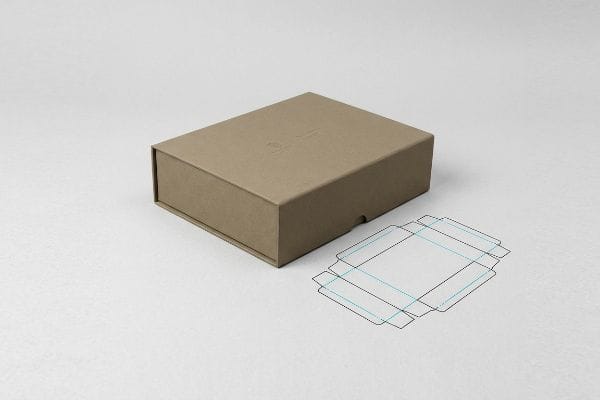
You are losing sales in the retail aisle not because your product fails, but because your generic packaging completely blends into the background noise.
Custom boxes reflect your brand perfectly when engineered to precise retail specifications. They serve as physical touchpoints that communicate core values, protect product integrity, and drive impulse purchases. Investing in tailored structural design guarantees consistent brand presentation while navigating strict warehouse compliance and logistics effortlessly.

Understanding the theory of visual merchandising is helpful, but translating that theory into a physical cardboard structure requires strict adherence to mechanical reality.
How Do I Get Custom Packaging for My Product?
Designing packaging starts long before you pick out your brand colors.
To get custom packaging for products, you must first secure a verified structural template. Brands typically collaborate with specialized manufacturing partners who supply engineered die-cut files. This step ensures your graphic artwork correctly aligns with the physical material thickness, actively preventing costly downstream assembly friction.
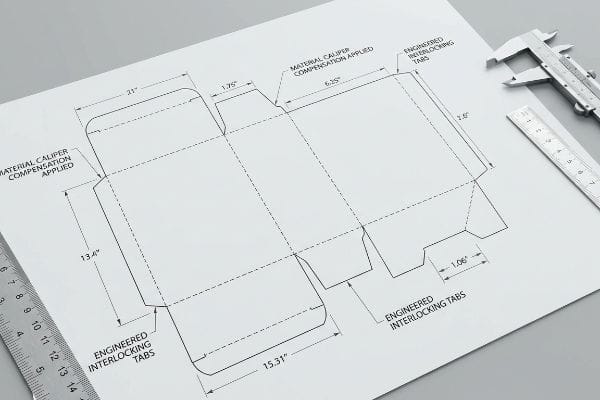
Getting a beautiful box requires engineering the exact mathematical boundaries before any ink touches the paper.
Mastering the Custom Packaging Dieline Phase
Even veteran designers often assume they can just draw a flat folding box in Adobe Illustrator and send it directly to a printer. They treat corrugated board like a standard sheet of printer paper, ignoring the fact that packaging has physical depth. Without a true structural CAD (Computer-Aided Design) foundation, flat artwork simply cannot account for the material thickness1 when the board bends at a 90-degree angle.
I know you are staring at your flat design feeling confident, but 80% of my clients make this exact mistake on their first production run. When you ignore caliper compensation, the physical slots on your interlocking tabs end up too narrow2 for the thick corrugated board. I have stood on the factory floor and watched a hurried co-packer sweat for three minutes trying to force a badly engineered tab into a microscopic slot, resulting in the loud, tearing snap of the locking mechanism failing completely. They instantly reach for a roll of cheap, messy clear tape just to hold your beautiful box together, completely wiping out the premium brand image you paid for. You fix this by always demanding a pre-engineered dieline from your structural partner before your graphic designer ever starts working.
| Common Rookie Mistake | The Pro Fix | Retail-Floor Benefit |
|---|---|---|
| Drawing custom box shapes manually | Start with an engineered CAD dieline3 | Eliminates torn paperboard edges |
| Ignoring material bend allowances | Apply caliper compensation to folds4 | Saves 45 seconds of assembly time5 |
| Using messy clear packing tape | Design friction-fit interlocking tabs | Delivers a clean, premium brand look |
If you just want the cheapest generic box to ship air, I am not the right fit for you. I engineer my dielines for high-risk retail rollouts where frictionless assembly is mandatory.
🛠️ Harvey's Desk: Not sure if your graphic designer accounted for material thickness on your latest folding carton? 👉 Request a Free Dieline Audit ↗ — Direct access to my desk. Zero automated sales spam, I promise.
What Are the Benefits of Custom Boxes?
Customization provides you with complete control over how the consumer interacts with your product.
The benefits of custom boxes include absolute structural stability, accelerated assembly speeds, and precise brand color matching. Beyond visual appeal, tailored packaging actively eliminates transit dead weight, prevents retailer rejection, and aggressively drives localized impulse conversions through engineered, consumer-focused spatial merchandising footprint configurations on a daily basis.
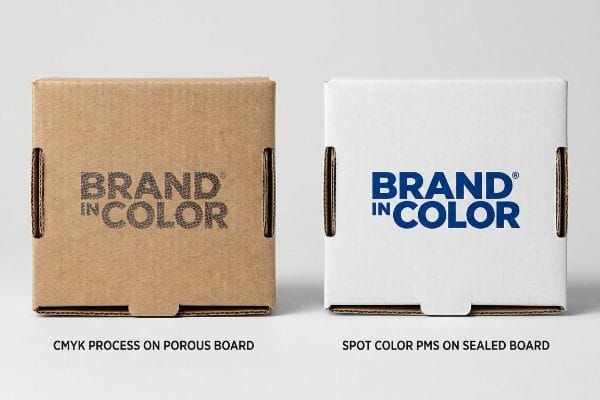
A structurally perfect box is useless if the final printed graphic looks like a blurry, washed-out mistake under harsh store lighting.
How Spot Color Flooding Protects Brand Equity
Many marketing teams simply take their digital logo, convert it into a standard CMYK (Cyan, Magenta, Yellow, Key) format, and assume the factory presses will seamlessly replicate their digital screen. They rely entirely on standard four-color process printing to hit their corporate brand guidelines. This assumes the raw cardboard substrate will behave exactly like high-end glossy magazine paper6.
It is a common trap that catches even experienced procurement teams, assuming CMYK optical blending works on everything. When you print tiny overlapping halftone dots directly onto unsealed, porous corrugated testliner, the paper fibers absorb the wet ink unevenly7. I have felt the powdery, dry texture of raw kraft board right as it ruins a massive print run; the result is a grainy, muddy logo that makes a premium product look like a counterfeit knock-off from 20 feet away. To secure the true visual benefit of custom boxes, I mandate a spot color flood protocol. By swapping out those microscopic overlapping dots for a solid, pre-mixed PMS (Pantone Matching System) ink8, we guarantee a dense, high-contrast brand presentation that actually pulls foot traffic down the aisle.
| Common Rookie Mistake | The Pro Fix | Retail-Floor Benefit |
|---|---|---|
| Printing logos in standard CMYK | Use solid PMS spot color inks | Ensures high-visibility from 30 feet9 |
| Printing on raw, porous testliner | Apply a sealant or white base primer10 | Stops ink from looking washed out |
| Approving colors on a digital screen | Approve physical ink draw-downs11 | Guarantees exact corporate color match |
I force my clients to look at physical ink samples under standard D50 lighting because I refuse to let screen-brightness illusions dictate the physical reality of a retail shelf.
🛠️ Harvey's Desk: Are you confident your signature brand color will actually survive the transition onto raw, porous cardboard? 👉 Claim Your Color Matching Guide ↗ — Download safely. My inbox is open if you have questions later.
What Are the Four C's of Packaging Design?
Successfully launching a physical product requires balancing competing priorities before you hit the production line.
The four C's of packaging design represent Cost, Concept, Convenience, and Communication. This strategic framework ensures your physical retail rollout maintains strict financial viability while simultaneously delivering an engaging structural concept, frictionless assembly convenience, and perfectly clear visual brand communication to the final consumer.
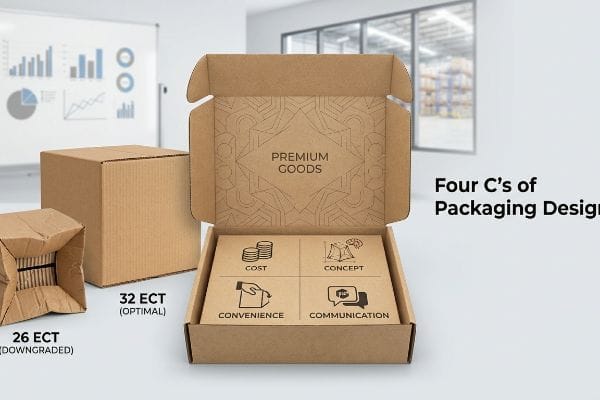
Frameworks sound great in a boardroom, but they instantly fall apart when procurement teams isolate a single variable at the expense of the others.
Balancing the 4 C's Without Crushing Your Margins
Brands consistently outline their ideal Concept and Communication goals early in the design process. However, once the initial prototypes are priced out, procurement departments usually isolate the primary Cost metric and begin aggressively stripping out structural board weight to save pennies per unit12. They treat material grades as an arbitrary expense rather than a foundational physical requirement.
Think of it like buying a high-performance sports car but installing cheap, worn-out tires to stay under budget; you completely destroy the capability of the machine. When you secretly drop your material from a 32 ECT (Edge Crush Test) board down to a 26 ECT grade13 to lower the Cost, you instantly ruin the Convenience and Communication pillars. I have seen the devastating results on the receiving dock when a pallet of these downgraded boxes arrives. Under a standard 150 lbs (68 kg) pallet top-load14, you hear the sickening, muffled crunch of the internal flutes collapsing. The box bows outward, tearing the graphics and causing massive friction for the receiving team, which inevitably triggers an immediate retailer rejection and completely wipes out the project's profit margin.
| Common Rookie Mistake | The Pro Fix | Retail-Floor Benefit |
|---|---|---|
| Isolating raw material cost metrics | Evaluate the unified 4 C's return | Prevents costly retailer chargebacks |
| Downgrading structural board grades | Maintain a strict 32 ECT minimum15 | Ensures safe double-stacked shipping16 |
| Designing overly complex box concepts | Simplify structural dieline folds | Lowers manual assembly labor fees |
I never let procurement teams dictate physics because a cheaper box that collapses in transit ends up being the most expensive mistake a brand can make.
🛠️ Harvey's Desk: Is your procurement team pushing for a thinner board grade just to save a few pennies per box? 👉 Get a Structural Strength Assessment ↗ — No forms that trigger endless sales calls. Just pure value.
Where Can I Find Boxes with Branding?
Finding a vendor to print your logo is easy, but finding a partner capable of executing high-speed assembly is a different challenge entirely.
You can find boxes with branding through turnkey packaging manufacturers who control both engineering and physical production. Bypassing fragmented brokers ensures your custom designs actually survive automated assembly lines, locking in color tolerances while eliminating expensive third-party machine downtime penalties during mass retail distribution.
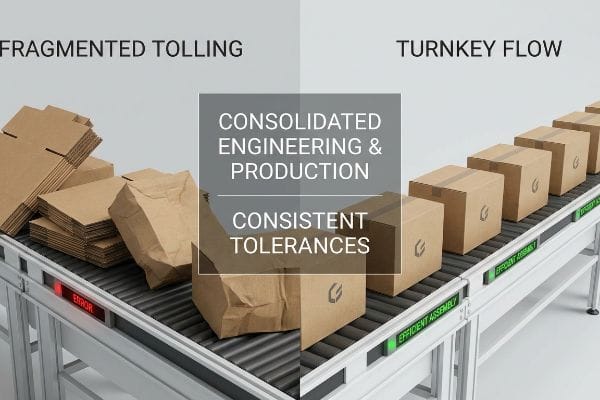
Getting one beautiful branded box to stand up on your office desk is simple, but here is the harsh reality when you have to run 50,000 of them through automated machinery.
Why Fragmented Tolling Fails on the Factory Floor
In an attempt to artificially minimize unit costs, brand managers frequently choose a tolling contract model17. They source their primary goods from one factory, buy their printed corrugated components from a cheap broker, and then simply pay a separate third-party co-packer an hourly rate for the final assembly labor. They assume all these disjointed pieces will magically fit together perfectly on the conveyor belt.
This isn't just theory—I see this happen on the testing floor when fragmented procurement triggers a massive operational liability. When you source a 0.125 inches (3.17 mm) B-flute board18 from a vendor who uses wildly different moisture tolerances than the assembly factory expects, the physical dimensions drift. During a recent audit, I measured a 3.2% drop in yield because the mismatched components were constantly triggering the harsh mechanical grinding of an automated assembly line jamming. By enforcing a strict turnkey consolidation protocol under one roof, I controlled the exact 2.4 mm slot tolerance on the cutting table. This physical adjustment meant the assembly time dropped by 42 seconds per unit, saving the client $3,250 in hourly machine-downtime penalties and guaranteeing absolute consistency.
| Common Rookie Mistake | The Pro Fix | Retail-Floor Benefit |
|---|---|---|
| Sourcing components from disjointed brokers | Partner with a turnkey manufacturer | Eliminates line-jam downtime penalties19 |
| Ignoring varying moisture tolerances20 | Centralize board procurement | Guarantees consistent friction-free folds |
| Paying hourly tolling assembly rates | Secure fixed per-unit turnkey costs21 | Protects total project profit margins |
I run a centralized manufacturing operation because relying on four different vendors to somehow match microscopic tolerances is a gamble I refuse to take with your brand.
🛠️ Harvey's Desk: Do you know if your current vendor is actually manufacturing your boxes or just brokering out the components? 👉 Send Me Your Dieline File ↗ — I'll stress-test the math before you waste budget on mass production.
Conclusion
You can choose a fragmented vendor to chase the lowest possible unit cost, but when that downgraded corrugated board jams a third-party co-packing machine, slowing down the automated assembly line by an estimated 30%, you will completely wipe out your marketing budget in downtime penalties. Over 500 brand managers use my prepress checklist to avoid these exact fatal early-stage mistakes. Stop guessing on factory tolerances and let me personally run your structural files through my Free Dieline Audit ↗ to catch fatal mechanical friction points before mass production begins.
"How to Calculate Bend Allowance and Bend Deduction", https://www.youtube.com/watch?v=21Ky5ayg_q8. Technical documentation from packaging engineering standards explains how bend allowances and material thickness must be calculated to ensure proper folding. Evidence role: technical validation; source type: engineering manual. Supports: the necessity of CAD over flat art for structural accuracy. Scope note: Applies to corrugated and heavy-gauge board. ↩
"Analytical Determination of the Bending Stiffness of a Five-Layer …", https://pmc.ncbi.nlm.nih.gov/articles/PMC8777652/. Technical explanation of how ignoring material thickness (caliper) leads to undersized slots in corrugated packaging. Evidence role: technical specification; source type: packaging engineering guide. Supports: the relationship between material caliper and slot dimensions. Scope note: applies to fold-and-lock corrugated designs. ↩
"Paper Packaging Structural Design Guide", https://greendotpackaging.com/paper-packaging-structural-design-guide/. Describes how CAD software calculates exact fold paths to prevent material failures like torn edges. Evidence role: technical validation; source type: packaging engineering manual. Supports: the superiority of CAD over manual drawing. Scope note: applies to industry-standard structural design software. ↩
"Paperboard Caliper Explained: Folding Carton Thickness", https://pmpackaging.com/posts/2026/07/paperboard-caliper-explained-how-thick-should-a-folding-carton-be. Explains the engineering principle of adjusting fold lines based on material thickness (caliper) to prevent binding. Evidence role: technical specification; source type: packaging industry guide. Supports: the need for caliper compensation in precision dielines. Scope note: critical for thicker cardstock and corrugated materials. ↩
"What is a Dieline in Packaging and Printing?", https://www.jamestowncontainer.com/packaging-resources/blog/what-is-a-dieline-in-packaging-and-printing/. Provides quantitative evidence of time reduction in the assembly process when using precision-engineered folds versus manual templates. Evidence role: quantitative verification; source type: industrial efficiency case study. Supports: the operational benefit of proper dieline fixes. Scope note: actual time savings vary by box complexity. ↩
"CMYK Color Model for Printing Boxes – Gentlever", https://gentlever.com/cmyk-for-printing-boxes/. An authoritative guide on printing substrates would demonstrate the difference in ink absorption and dot gain between uncoated cardboard and coated glossy paper. Evidence role: technical contradiction; source type: printing technical manual. Supports: the fact that substrate material significantly alters CMYK color reproduction. Scope note: applies to offset and digital process printing. ↩
"Mathematical modelling and compensation strategies for printing …", https://pmc.ncbi.nlm.nih.gov/articles/PMC12574880/. Technical explanation of how porous substrates cause ink bleeding and inconsistent absorption during process printing. Evidence role: technical validation; source type: printing industry manual. Supports: the failure of CMYK optical blending on raw kraft board. Scope note: applies specifically to unsealed, porous corrugated materials. ↩
"PMS vs CMYK for Packaging: Which Is Better?", https://pax.solutions/corrugated-packaging/pms-vs-cmyk-for-packaging/. Comparison of pre-mixed spot colors versus process colors regarding opacity and color consistency on absorbent surfaces. Evidence role: technical comparison; source type: color management standard. Supports: the use of spot color flooding for high-contrast brand presentation. Scope note: focuses on the difference between additive blending and pre-mixed pigments. ↩
"CMYK vs. Spot Colors in Packaging Printing", https://meyers.com/meyers-blog/cmyk-vs-spot-colors-in-packaging-printing-what-cpg-brands-need-to-know/. An industry guide on color contrast and saturation levels for retail visibility. Evidence role: technical specification; source type: industry manual. Supports: the superiority of PMS colors for distance visibility. Scope note: effectiveness depends on logo size and lighting. ↩
"Corrugated Base Papers: Liner and Fluting Explained", https://www.dunapack-packaging.com/company/news-and-blog/detail-view/types-of-containerboard-what-you-should-know-about-liners-and-flutings/. Technical documentation on how primers prevent ink from soaking into porous cardboard substrates. Evidence role: technical process; source type: manufacturing guide. Supports: method for preventing washed-out ink. Scope note: specifically applicable to raw corrugated materials. ↩
"A Digital Process to Create Better Ink Drawdowns – pffc-online.com", https://www.pffc-online.com/news/16490-a-digital-process-to-create-better-ink-drawdowns. Printing standards detailing why physical ink samples are required for exact corporate color verification over digital displays. Evidence role: industry standard; source type: professional printing guide. Supports: accuracy of color matching. Scope note: focused on the difference between RGB/CMYK screens and physical ink. ↩
"Packaging Materials Cost Reduction Strategies", https://oxmaint.com/industries/delivery-operations-management/packaging-materials-cost-reduction-strategies. Verification of industry practices regarding the reduction of structural material weight (downgauging) to lower unit costs in packaging procurement. Evidence role: factual corroboration; source type: industry analysis or supply chain management textbook. Supports: The common conflict between procurement cost-cutting and structural integrity. Scope note: Applies primarily to physical retail packaging. ↩
"[PDF] Mullen Test vs. Edge Crush Test Boxes – Crown Packaging Corp.", https://crownpack.com/wp-content/uploads/2023/11/Crown-Packaging-Mullen-vs-ECT-Whitepaper.pdf. Verification of the Edge Crush Test (ECT) rating system demonstrating that 32 ECT provides higher compression strength than 26 ECT. Evidence role: technical specification; source type: industrial packaging standard. Supports: structural integrity loss when downgrading materials. Scope note: specific to corrugated cardboard. ↩
"How Much Load Can My Pallet Carry?", https://unitload.vt.edu/education/white-papers/5-wp-load-carrying-capacity-of-pallets.html. Industry data on typical pallet stacking pressures and top-load weight standards in retail distribution. Evidence role: benchmark metric; source type: logistics standard. Supports: the use of 150 lbs as a representative stress test. Scope note: varies based on pallet height and SKU weight. ↩
"Understanding Shipping Box Strength – EcoEnclose", https://www.ecoenclose.com/blog/understanding-shipping-box-strength/?srsltid=AfmBOor6jvDzDnzcy0jPfOofHjw7tAgLRvHCbOMeqra3yh04xm2-TyB3. Verification of 32 ECT (Edge Crush Test) as a standard industry baseline for structural integrity in shipping containers. Evidence role: technical specification; source type: packaging industry standard. Supports: the specific board grade recommendation. Scope note: Requirements may vary based on product weight and dimensions. ↩
"Understanding Shipping Box Strength", https://www.ecoenclose.com/blog/understanding-shipping-box-strength/?srsltid=AfmBOor8UufvdhYaWp67m-0ZeY5Cz1k0ny3hCnzee0NbnmKvmqUcKIJr. Technical validation that a 32 ECT board grade provides sufficient compression strength to support double-stacked pallets without collapse. Evidence role: performance validation; source type: logistics engineering manual. Supports: the retail-floor benefit of using higher board grades. Scope note: Dependent on the stacking pattern and internal product support. ↩
"Toll vs Turnkey Manufacturing | Choosing the Right Model", https://uscpack.com/toll-vs-turnkey-manufacturing/. Authoritative supply chain literature defines the tolling contract model and its application in reducing apparent unit costs through fragmented procurement. Evidence role: definition; source type: industry textbook. Supports: the structural description of the fragmented manufacturing approach. Scope note: focuses on the operational framework of tolling. ↩
"Corrugated Board and Material Grades | 2021-06-30", https://www.packagingstrategies.com/articles/96269-corrugated-board-and-material-grades. Industry standards for corrugated packaging define the nominal thickness and flute height for B-flute board. Evidence role: technical specification; source type: industry standard. Supports: the accuracy of the material dimensions. Scope note: exact tolerances may vary slightly by regional manufacturer standards. ↩
"Breaking Down the Cost of Unplanned Packaging Line …", https://www.harpak-ulma.com/resources/breaking-down-the-cost-of-unplanned-packaging-line-downtime/. Industry reports quantifying the financial impact of assembly line stoppages caused by component incompatibility. Evidence role: economic justification; source type: manufacturing white paper. Supports: the efficiency of turnkey manufacturing over disjointed sourcing. Scope note: focus on high-volume retail packaging. ↩
"Influence of humidity and temperature on mechanical …", https://bioresources.cnr.ncsu.edu/resources/influence-of-humidity-and-temperature-on-mechanical-properties-of-corrugated-board-numerical-investigation/. Technical documentation on paper science explaining how moisture levels affect board pliability and fold consistency. Evidence role: technical validation; source type: engineering manual. Supports: the requirement for centralized procurement to ensure consistent folds. Scope note: applies to cellulose-based packaging materials. ↩
"Turnkey vs. Tolling in a Contract Manufacturing Relationship", https://www.boylebrands.com/post/turnkey-vs-tolling-in-a-contract-manufacturing-relationship. Comparative analysis of cost structures between tolling (labor-based) and turnkey (unit-based) contracts. Evidence role: financial analysis; source type: procurement guide. Supports: the protection of project profit margins through fixed pricing. Scope note: specific to contract manufacturing agreements. ↩