আপনি মাসের পর মাস ধরে উৎকৃষ্ট মানের সংগ্রহযোগ্য জিনিস ডিজাইন করেন, অথচ শেষ পর্যন্ত দেখেন সেগুলো ভিড়ে ঠাসা তাকের মধ্যে উধাও হয়ে যাচ্ছে। সঠিক উপস্থাপনা ছাড়া আপনার সেরা পণ্যগুলো কেবলই পটভূমির অদৃশ্য জঞ্জালে পরিণত হয়।.
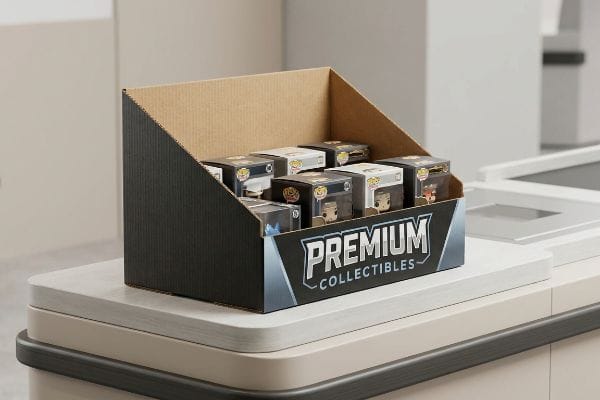
সংগ্রহযোগ্য পণ্যের জন্য ঢেউখেলানো কার্ডবোর্ডের কাউন্টার ডিসপ্লে হলো বিশেষায়িত ও ছোট আকারের পণ্য প্রদর্শন ব্যবস্থা, যা দোকানের চেকআউট জোনে রাখার জন্য তৈরি করা হয়েছে এবং এতে পণ্যের দৃশ্যমানতা বাড়াতে ঢেউখেলানো পেপারবোর্ড ব্যবহার করা হয়। এই ইউনিটগুলো নির্দিষ্ট স্থানে কাঠামোগত সহায়তা এবং উচ্চ-রেজোলিউশনের ব্র্যান্ডিং প্রদান করে, যা অধিক জনসমাগমপূর্ণ দোকানের পরিবেশে ছোট ও মূল্যবান পণ্যগুলোকে আকর্ষণীয় ও তাৎক্ষণিক ক্রয়ে রূপান্তরিত করে।.
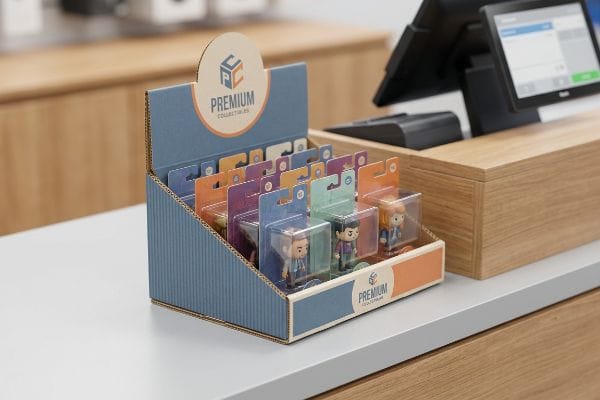
এই মার্চেন্ডাইজারগুলো কী, তা জানাটা কেবল অর্ধেক কাজ; দ্রুতগতির রিটেইল পরিবেশে উপাদানগুলো আসলে কীভাবে কাজ করে, তা বোঝাই একটি লাভজনক ক্যাম্পেইনকে লজিস্টিক বিপর্যয় থেকে আলাদা করে।.
করোগেটেড বোর্ডের সুবিধাগুলো কী কী?
ফ্লুটেড পেপারবোর্ডের প্রধান শক্তি শুধু এর কম দামই নয়—বরং এটি অতি-বাস্তবসম্মত ও ব্র্যান্ডের মানোন্নয়নকারী গ্রাফিক্সের জন্য একটি ফাঁকা ক্যানভাস হিসেবে কাজ করার ক্ষমতা রাখে।.
ঢেউখেলানো কাগজের সুবিধার মধ্যে রয়েছে উচ্চ গতিশীল সংকোচন শক্তি, অত্যন্ত হালকা ওজন এবং সম্পূর্ণরূপে পুনর্ব্যবহারযোগ্যতা। খুচরা প্যাকেজিং-এর জন্য ব্যবহার করা হলে, এর অভ্যন্তরীণ বাঁকানো খাঁজগুলো পরিবহনের সময় গতিজনিত ধাক্কা শোষণ করে এবং একই সাথে একটি দৃঢ় ও কাস্টমাইজযোগ্য ভিত্তি প্রদান করে যা উচ্চ-মানের অফসেট প্রিন্টিং সমর্থন করে।.
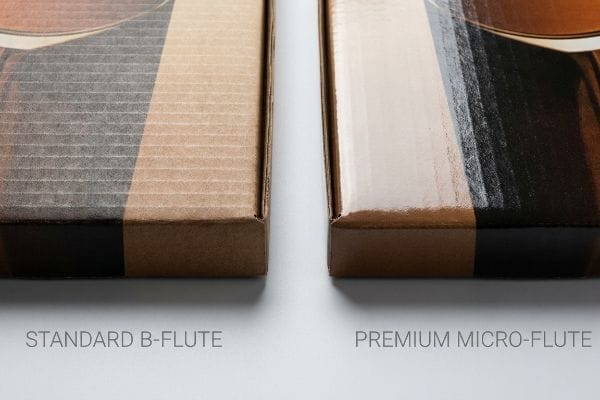
তবে, সব পেপারবোর্ড প্রিন্ট হুবহু একই রকম হয়—এমনটা ধরে নেওয়া আপনার সীমিত-সংস্করণের পণ্যের উন্মোচনকে নষ্ট করার একটি সহজ উপায়।.
প্রিমিয়াম সংগ্রহযোগ্য বস্তুর জন্য ওয়াশবোর্ড প্রভাব দূর করা
বেশিরভাগ মার্কেটিং টিম স্বাভাবিকভাবেই স্ট্যান্ডার্ড বি-ফ্লুট উপাদান ব্যবহার করে, কারণ এটি দৃঢ় এবং নির্ভরযোগ্য মনে হয়।তারা ধরে নেয় যে স্ট্যান্ডার্ড লিথোগ্রাফিক প্রিন্টিং তাদের জটিল ডিজিটাল আর্টওয়ার্ককে যেকোনো কাগজের স্তরে নির্বিঘ্নে স্থানান্তর করবে। সংগ্রাহ্য বস্তুর জন্য উচ্চমানের ডিসপ্লে তৈরি করার সময়, তারা স্ট্রাকচারাল বোর্ডটিকে ঠিক সাধারণ বাণিজ্যিক প্রিন্টার কাগজের মতোই ব্যবহার করে এবং পুরো রিটেইল ট্রে জুড়ে নিখুঁত ফটোগ্রাফিক পুনরুৎপাদন আশা করে।
কিন্তু ভেজা পিভিএ (পলিভিনাইল অ্যাসিটেট) আঠা ব্যবহার করে যখন একটি পুরু বি-ফ্লুট বোর্ডের উপর একটি পাতলা টপ-শিট লাগানো হয়, তখন যা ঘটে তা হলো: আঠা শুকিয়ে যাওয়ার সাথে সাথে কাগজটি সংকুচিত হয়ে ভেতরের খিলানগুলোর উপর শক্তভাবে চেপে বসে এবং একটি দৃশ্যমান, খাঁজকাটা ওয়াশবোর্ড টেক্সচার তৈরি করে, যা জটিল শিল্পকর্মকে সম্পূর্ণরূপে বিকৃত করে দেয়। আমি কারখানার ফ্লোরে এটা প্রতিনিয়ত দেখি: একটি ব্র্যান্ড একটি চমৎকার অফসেট প্রিন্টের জন্য অর্থ ব্যয় করে, কিন্তু তৈরি হয়ে যাওয়া হেডারটির উপর হাত বোলালে একটি অমসৃণ, সস্তা মানের পৃষ্ঠ চোখে পড়ে, যা সংগ্রাহ্য বস্তুটির প্রিমিয়াম ভাবকে সঙ্গে সঙ্গে নষ্ট করে দেয়। ই-ফ্লুটের মতো মাইক্রো-ফ্লুট সাবস্ট্রেট ব্যবহার করে অথবা এসবিএস ৩ (সলিড ব্লিচড সালফেট) -এর উপর লিথো-ল্যামিনেশন প্রয়োগ করে , আমরা সেই পৃষ্ঠটান সম্পূর্ণরূপে দূর করি, যা একটি কাঁচের মতো মসৃণ ফিনিশ প্রদান করে এবং ব্র্যান্ডের অনুভূত মূল্যকে নাটকীয়ভাবে বাড়িয়ে তোলে।
| নতুনদের সাধারণ ভুল | প্রো ফিক্স | খুচরা-ফ্লোর সুবিধা |
|---|---|---|
| কাঁচা, পুরু বি-ফ্লুটে মুদ্রণ | মাইক্রো ই-ফ্লুটে পরিবর্তন করুন4 | কাঁচের মতো মসৃণ গ্রাফিক্স প্রদান করে |
| আঠালো পৃষ্ঠটান উপেক্ষা করা | এসবিএস-এর উপর লিথো-ল্যামিনেশন5 | ঝাঁকুনিপূর্ণ ওয়াশবোর্ডিং প্রতিরোধ করে |
| সাধারণ ফ্লেক্সো কালি ব্যবহার করে | উচ্চ-মানের অফসেট প্রিন্টিং6 | প্রিমিয়াম ব্র্যান্ডের মর্যাদা বৃদ্ধি করে |
আমি ব্র্যান্ডগুলোকে কখনোই সাধারণ খাঁজকাটা বোর্ডে প্রিমিয়াম সংগ্রহযোগ্য পণ্য লঞ্চ করতে দিই না, কারণ এর দৃশ্যগত বিকৃতি স্বতঃস্ফূর্তভাবে কেনার প্রবণতা নষ্ট করে দেয়। আপনার সাবস্ট্রেট আপগ্রেড করতে শুরুতে সামান্যই খরচ হয়, কিন্তু এটি চেকআউটের সময় উচ্চ-মার্জিনের পণ্য বিক্রি করার জন্য প্রয়োজনীয় উন্নত মানের উপস্থাপনা নিশ্চিত করে।.
🛠️ হার্ভির ডেস্ক: আপনার বর্তমান মেটেরিয়াল স্পেক আপনার গ্রাফিক্সকে বাঁকিয়ে দেবে কিনা, তা নিয়ে নিশ্চিত নন? 👉 একটি মেটেরিয়াল অডিটের জন্য অনুরোধ করুন ↗ — সরাসরি আমার ডেস্কে অ্যাক্সেস। কোনো স্বয়ংক্রিয় সেলস স্প্যাম নেই, আমি কথা দিচ্ছি।
করোগেটেড ডিসপ্লে কী?
গুদাম থেকে চেকআউট কাউন্টারে যাওয়ার জন্য কাঠামোগত যুক্তিতে একটি সম্পূর্ণ পরিবর্তন প্রয়োজন, কারণ ছোট ব্যবসায়ীরা দোকানের কর্মী ও ক্রেতাদের কাছ থেকে সম্পূর্ণ ভিন্ন ধরনের শারীরিক মিথস্ক্রিয়ার সম্মুখীন হন।.
করোগেটেড ডিসপ্লে হলো একটি অস্থায়ী, ত্রিমাত্রিক খুচরা পণ্য প্রদর্শন ব্যবস্থা, যা ঢেউখেলানো পেপারবোর্ড দিয়ে তৈরি করা হয় ভোক্তাপণ্য ধারণ, সুরক্ষা এবং বিজ্ঞাপন দেওয়ার জন্য। এই মডিউলার কাঠামো স্থায়ী ধাতব তাকের বিকল্প হিসেবে কাজ করে, যা ব্র্যান্ডগুলোকে দ্রুত ও হালকা প্রচারমূলক অভিযান চালানোর সুযোগ দেয়। এর মাধ্যমে অধিক ব্যবহৃত করিডোরের জায়গার সর্বোত্তম ব্যবহার নিশ্চিত করা যায় এবং তাৎক্ষণিক ও স্বতঃস্ফূর্ত বিক্রি বাড়ানো সম্ভব হয়।.
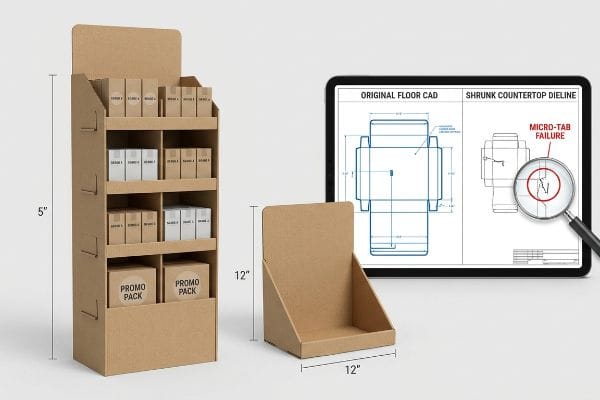
কাঠামোটি সংজ্ঞায়িত করা সহজ, কিন্তু এমন একটি সুসংহত ইউনিট তৈরি করা যা খুচরা বিক্রির সময়কার কঠোর ব্যবহারেও টিকে থাকতে পারে, তার জন্য কঠোর গাণিতিক শৃঙ্খলা প্রয়োজন।.
সঙ্কুচিত হয়ে মানানসই মাইক্রো-ট্যাব বিপর্যয়
অনেক ক্রয় দলের জন্য একটি প্রচলিত পদ্ধতি হলো, বিদ্যমান ও অত্যন্ত সফল একটি হেভি-ডিউটি ফ্লোর মার্চেন্ডাইজার নিয়ে তার CAD (কম্পিউটার-এইডেড ডিজাইন) ফাইলটিকে গাণিতিকভাবে ৫০ শতাংশ কমিয়ে একটি কাউন্টারটপ সংস্করণ তৈরি করা । তারা ধরে নেয় যে একটি সার্বজনীন কাঠামোগত টেমপ্লেট সমস্ত মাত্রায় ত্রুটিহীনভাবে কাজ করে এবং প্রকল্পটিকে একটি স্বতন্ত্র প্রকৌশলগত বিষয় হিসেবে না দেখে, কেবল আনুপাতিক মাপের একটি ব্যাপার হিসেবে বিবেচনা করে।
এই সঙ্কুচিত করে মানানসই করার কৌশলটি কো-প্যাকিংয়ের সময় সঙ্গে সঙ্গেই ব্যর্থ হয়, কারণ বস্তুর ভৌত সূত্র আর্টওয়ার্কের সাথে সামঞ্জস্যপূর্ণভাবে ছোট হয় না। যখন আপনি পুরু ফ্রিকশন লকগুলোকে অতি ক্ষুদ্র আকারে ছোট করেন, তখন এর ভেতরের ঘন খাঁজগুলো সহজে বাঁকানো যায় না8।আমি সম্প্রতি একটি অ্যাসেম্বলি দলকে এই সঙ্কুচিত ডাইলাইনগুলো নিয়ে রীতিমতো যুদ্ধ করতে দেখেছি; তারা যখন ক্ষুদ্র লকিং ট্যাবগুলোকে জোর করে একসাথে লাগানোর চেষ্টা করছিল, তখন কাঁচা পেপারবোর্ডের মটমট শব্দ আক্ষরিক অর্থেই শোনা যাচ্ছিল, এবং অবশেষে ট্রেগুলোকে অক্ষত রাখার জন্য তারা নোংরা স্বচ্ছ টেপ ব্যবহার করতে বাধ্য হয়। যখনই আমরা কোনো কাউন্টারের জন্য একটি ক্যাম্পেইনকে অভিযোজিত করি, আমি পাতলা মাইক্রো-ফ্লুটের জন্য ফ্রিকশন লকগুলোকে সম্পূর্ণরূপে নতুন করে ডিজাইন করি, যা একটি ঘর্ষণহীন ব্যবস্থা নিশ্চিত করে এবং অ্যাসেম্বলির জন্য প্রয়োজনীয় শ্রমের সময় অর্ধেক কমিয়ে দেয়9।
| নতুনদের সাধারণ ভুল | প্রো ফিক্স | খুচরা-ফ্লোর সুবিধা |
|---|---|---|
| সঙ্কুচিত মেঝে CAD টেমপ্লেট | কাস্টম কাউন্টারটপ ইঞ্জিনিয়ারিং | ট্যাব স্ন্যাপিং দূর করে |
| ছোট ইউনিটে মোটা বাঁশি ব্যবহার করা | পাতলা ই-ফ্লুটে নেমে আসুন10 | পরিষ্কার ৯০-ডিগ্রি ভাঁজ করা যায় |
| স্বচ্ছ প্যাকিং টেপের উপর নির্ভর করা | পুনঃপ্রকৌশলকৃত ঘর্ষণ লক | কো-প্যাকিং শ্রম সময় অর্ধেক করে11 |
আমি গাণিতিকভাবে পরিমাপ করা ডাইলাইন অনুমোদন করতে অস্বীকার করি, কারণ ম্যাক্রো-বোর্ডের উপর তৈরি মাইক্রো-ট্যাবগুলো চাপের মুখে সবসময় ব্যর্থ হয়। প্রকৃত কাঠামোগত প্রকৌশলের জন্য শুধু একটি ডিজিটাল লেআউটকে সংকুচিত করাই যথেষ্ট নয়, বরং নির্দিষ্ট সাবস্ট্রেটের পুরুত্বের সাথে ভাঁজের সুনির্দিষ্ট ফাঁকগুলোকে খাপ খাইয়ে নেওয়াও প্রয়োজন।.
🛠️ হার্ভির ডেস্ক: আপনার অ্যাসেম্বলি টিম কি কাউন্টার ইউনিট তৈরি করতে গিয়ে ক্রমাগত ট্যাব ছিঁড়ে ফেলছে? 👉 ডাইলাইন ফিক্স নিন ↗ — নিরাপদে ডাউনলোড করুন। পরবর্তীতে কোনো প্রশ্ন থাকলে আমার ইনবক্স খোলা আছে।
যেকোনো খুচরা বিক্রয় পরিবেশে ডিসপ্লে এত গুরুত্বপূর্ণ কেন?
ক্রেতা আকর্ষণের জন্য শুধুমাত্র গতানুগতিক প্রাথমিক মোড়কের ওপর নির্ভর করা একটি গুরুতর কৌশলগত ভুল, বিশেষ করে উচ্চমূল্যের পণ্যের ক্ষেত্রে, যা তাৎক্ষণিক আবেগীয় উদ্দীপকের ওপর নির্ভরশীল।.
খুচরা বিক্রয় পরিবেশে ডিসপ্লে গুরুত্বপূর্ণ, কারণ এগুলো দোকানের সাধারণ করিডোরের দৃশ্যগত একঘেয়েমি দূর করে ক্রেতাদেরকে আলাদা পণ্যের প্রতি আকৃষ্ট হতে বাধ্য করে। উঁচু স্থানে স্থাপন এবং ব্র্যান্ডের বিশেষ বার্তা ব্যবহারের মাধ্যমে, এই ইউনিটগুলো তাৎক্ষণিক ক্রয়ের হারকে ব্যাপকভাবে ত্বরান্বিত করে এবং উৎকৃষ্ট মানের পণ্যগুলোকে ভিড়ে ঠাসা পেছনের তাকের সাথে মিশে যাওয়া থেকে রক্ষা করে।.
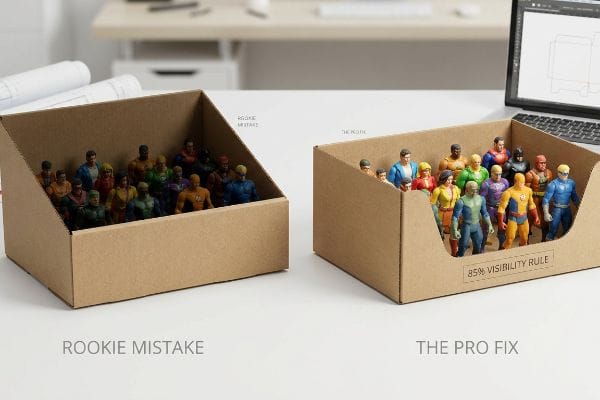
সুন্দরভাবে মুদ্রিত একটি মার্চেন্ডাইজার কম্পিউটার মনিটরে দেখতে চমৎকার লাগতে পারে, কিন্তু দোকানে এটি আপনার পণ্যটিকে বাস্তবে কীভাবে উপস্থাপন করে, তার মাধ্যমেই এর আসল মূল্য প্রমাণিত হয়।.
সংগ্রহযোগ্য বস্তুর ক্ষেত্রে ঠোঁটের উচ্চতা দৃশ্যমানতার নিয়ম প্রয়োগ করা
চেকআউট জোনের জন্য মার্চেন্ডাইজার ডিজাইন করার সময়, অনভিজ্ঞ মার্কেটিং টিমগুলো প্রায়শই তাদের প্রিমিয়াম পণ্যগুলোকে নিরাপদে যথাস্থানে আটকে রাখার জন্য বিশাল, উঁচু দেয়ালযুক্ত ট্রে তৈরি করে। তারা পণ্যের সর্বোচ্চ কাঠামোগত ধারণক্ষমতাকে অগ্রাধিকার দেয় এবং বিক্রয়ের জন্য প্রস্তুত প্যাকেজিংকে একটি গতিশীল ও বিক্রয়-চালিত উপস্থাপনা প্ল্যাটফর্মের পরিবর্তে একটি সুরক্ষামূলক শিপিং ভল্ট হিসেবে বেশি বিবেচনা করে।
পণ্যকে অতিরিক্ত সুরক্ষা দেওয়ার মারাত্মক ত্রুটি হলো, এটি ক্রেতা এবং পণ্যের মধ্যে একটি বিশাল শারীরিক প্রতিবন্ধকতা তৈরি করে। আমি দেখি ব্র্যান্ডগুলো লাইসেন্সকৃত সংগ্রহযোগ্য জিনিস, কিন্তু সেগুলোকে একটি ৪-ইঞ্চি (১০১.৬ মিমি) সামনের ধারকের আড়ালে লুকিয়ে রাখে, যা মূল লোগো এবং পণ্যের জানালাটিকে সম্পূর্ণরূপে ঢেকে দেয়। যখন কোনো তাড়াহুড়ো করা ক্রেতা চেকআউট ডেস্কের দিকে তাকায়, তখন তীব্র ফ্লুরোসেন্ট আলো সেই গভীর ট্রে-তে একটি কালো ছায়া ফেলে, যার ফলে রঙিন জিনিসগুলোকে সাধারণ জঞ্জালের মতো দেখায়। ‘পণ্যই প্রথম’ এই নিয়মটি কঠোরভাবে প্রয়োগ করার মাধ্যমে—সামনের ধারকটিকে ডাই-কাটিং করে পণ্যের অন্তত ৮৫ শতাংশ দৃশ্যমানতা নিশ্চিত করা হয়¹²—আমরা নিশ্চিত করি যে মার্চেন্ডাইজার একটি স্পটলাইটের মতো কাজ করবে, যা তাৎক্ষণিক বিক্রয় বৃদ্ধিকে ব্যাপকভাবে বাড়িয়ে তোলে।
| নতুনদের সাধারণ ভুল | প্রো ফিক্স | খুচরা-ফ্লোর সুবিধা |
|---|---|---|
| উঁচু সামনের ধরে রাখার ঠোঁট | সামনের প্যানেলে ডাই-কাট করা বাঁকানো নকশা | পণ্যের দৃশ্যমানতা সর্বাধিক করে |
| ট্রেগুলিকে শিপিং বক্সের মতো ব্যবহার করা | ৮৫% দৃশ্যমানতার নিয়ম প্রয়োগ করুন13 | হুট করে কেনার প্রবণতা তৈরি করে |
| গভীর ট্রে ছায়া ফেলছে | অগভীর শেলফ জ্যামিতি | অন্ধকার আলোর ছায়া দূর করে |
আমি ক্লায়েন্টদের সবসময় মনে করিয়ে দিই যে, ক্রেতারা যা দেখতে পায় না তা কিনতে পারে না, বিশেষ করে তাড়াহুড়োর চেকআউট জোনে। সামনের ওই উঁচু প্রান্তটি নামিয়ে দিলে দৃষ্টি আকর্ষণের কেন্দ্রবিন্দুটি আবার আসল পণ্যের দিকে চলে আসে, যা তাৎক্ষণিকভাবে আপনার রিটেইল কনভার্সন রেট বাড়িয়ে দেয়।.
🛠️ হার্ভির ডেস্ক: আপনার বর্তমান ডিসপ্লে কি পুরু কার্ডবোর্ডের দেয়ালের আড়ালে আপনার প্রধান ব্র্যান্ড লোগোটিকে ঢেকে রেখেছে? 👉 একটি স্ট্রাকচার রিভিউ দাবি করুন ↗ — এমন কোনো ফর্ম নেই যা অবিরাম সেলস কলের কারণ হয়। শুধু খাঁটি মূল্য।
কেন ঢেউখেলানো কার্ডবোর্ড এত দরকারি একটি পণ্য?
পেপারবোর্ডের প্রকৃত উপযোগিতা হলো এর দৃঢ় কাঠামোগত সহায়তার সাথে দ্রুত ও সহজে ভাঁজ করে ব্যবহারের উপযোগী পরিবহন ব্যবস্থার সমন্বয় ঘটানোর অনন্য ক্ষমতা, যা এটিকে বিশ্বব্যাপী খুচরা ব্যবসার প্রসারের মেরুদণ্ডে পরিণত করেছে।.
করোগেটেড কার্ড একটি অত্যন্ত উপযোগী পণ্য, কারণ এর অভ্যন্তরীণ খাঁজকাটা গঠন এটিকে হালকা গড়ন বজায় রেখেই অসাধারণ ভারবহন ক্ষমতা প্রদান করে। এই জ্যামিতিক কাঠামো পরিবহনের সময় সৃষ্ট যান্ত্রিক ধাক্কা শোষণ করে, দ্রুত ও বিপুল পরিমাণে উৎপাদনকে সমর্থন করে এবং অস্থায়ী খুচরা বিপণন প্রচারণার জন্য একটি সম্পূর্ণ কাস্টমাইজযোগ্য ও পুনর্ব্যবহারযোগ্য প্ল্যাটফর্ম হিসেবে কাজ করে।.
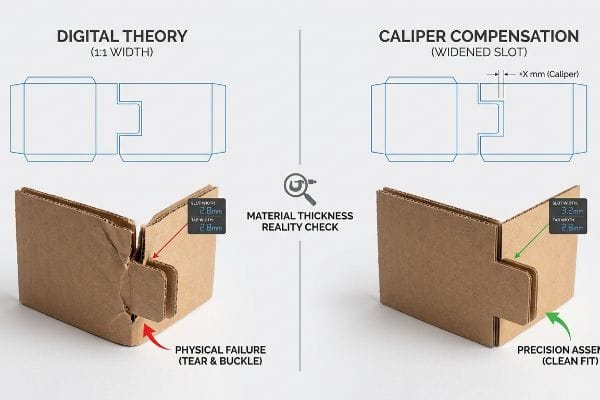
কিন্তু যখন ৫০০টি দোকানে পণ্য সরবরাহের একটি প্রচারণার অংশ হিসেবে ডাই-কাটিং মেশিনগুলো বাস্তবে চলতে শুরু করে, তখন কাঠামোগত শক্তির তত্ত্ব জানাটাই যথেষ্ট নয়।.
ক্যালিপার ক্ষতিপূরণের বাস্তবতা যাচাই
গ্রাফিক ডিজাইনাররা একটি আপাতদৃষ্টিতে যুক্তিসঙ্গত কিন্তু আসলে বিপজ্জনক ধারণা পোষণ করেন, আর তা হলো তাদের সফটওয়্যারে পরস্পর সংযুক্ত ট্যাব এবং গ্রহণকারী স্লটগুলো হুবহু একই প্রস্থে আঁকা।যেহেতু ভেক্টর লাইনগুলো তাদের ডিজিটাল স্ক্রিনে পুরোপুরি সমতলভাবে সারিবদ্ধ থাকে, তারা ধরে নেন যে আসল কার্ডবোর্ডটি অনায়াসে একসাথে স্লাইড করবে এবং দোকানের মেঝেতে একটি দৃঢ় ৯০-ডিগ্রি কোণ বজায় রাখবে।
এটা শুধু তত্ত্ব নয়—আমি টেস্টিং ফ্লোরে এর বাস্তব প্রয়োগ দেখি, যখন সুন্দর ডিজিটাল ডাইলাইনগুলো ভৌত উপাদানের পুরুত্বের কঠিন বাস্তবতার মুখোমুখি হয়। আমার কারখানায়, যখন কোনো ক্লায়েন্ট ভৌত ক্যালিপার (পুরুত্ব) গণনা না করেই একটি ডিসপ্লের জন্য ফ্ল্যাট ফাইল জমা দেয়, তখন তার ফলে তৈরি হওয়া অংশগুলো অনিবার্যভাবে ব্যর্থ হয়। যখন একটি ০.১১-ইঞ্চি (২.৮ মিমি) পুরু প্যানেল ভাঁজ করা হয়, তখন এটি যান্ত্রিকভাবে বাইরের ব্যাসার্ধ বরাবর উপাদান ক্ষয় করে। আমি যদি সেই নির্দিষ্ট বাঁকের জন্য জায়গা রেখে রিসিভিং স্লটটি চওড়া না করি, তাহলে অ্যাসেম্বলি টিম শেষ পর্যন্ত ট্যাবগুলোকে নির্মমভাবে চাপ দিয়ে বসায়, যার ফলে বাইরের কাগজের লাইনারটি বেঁকে যায়, কুঁচকে যায় এবং জোড়ার জায়গা দিয়ে ছিঁড়ে যায়। আমি মাইক্রোমিটারের রিডিং নিয়ে প্রমাণ করেছি যে আমাদের দামী প্লাস্টিকের রিইনফোর্সমেন্ট ক্লিপের প্রয়োজন নেই—আমাদের শুধু স্ট্রাকচারাল ফাইলে একটি অত্যন্ত নির্ভুল ক্যালিপার কম্পেনসেশন অ্যালগরিদম প্রোগ্রাম করতে হবে। এই কঠোর গাণিতিক ভাঁজ সহনশীলতা প্রয়োগ করার মাধ্যমে, আমি নিশ্চিত করি যে কো-প্যাকিং অ্যাসেম্বলির সময় প্রায় ৩০ শতাংশ কমে আসে, যা সেই ম্যানুয়াল ঝামেলা পুরোপুরি দূর করে দেয়, যা স্বল্প সময়ের মধ্যে কাজ শেষ করার ক্ষেত্রে লাভের মার্জিন নষ্ট করে।.
| নতুনদের সাধারণ ভুল | প্রো ফিক্স | খুচরা-ফ্লোর সুবিধা |
|---|---|---|
| ১:১ স্লট প্রস্থের অঙ্কন | ক্যালিপার ক্ষতিপূরণ অ্যালগরিদম15 | ঘর্ষণহীনভাবে ট্যাব ঢোকানোর সুযোগ দেয় |
| ভাঁজের উপকরণের ব্যবহার উপেক্ষা করা | নির্দিষ্ট বাঁকানোর জন্য অতিরিক্ত জায়গা যোগ করুন | প্যানেল বাঁকানো/ছিঁড়ে যাওয়া প্রতিরোধ করে |
| হাত দিয়ে শক্ত ট্যাবগুলো জোর করে লাগানো | নির্ভুল ডাই-কাট টলারেন্স | কো-প্যাকিংয়ের সময় ৩০% কমিয়ে দেয়16 |
আমি কখনোই আনক্যালিব্রেটেড ইলাস্ট্রেটর ফাইল সরাসরি কাটিং টেবিলে পাঠাই না, কারণ ভৌত পদার্থবিদ্যা সবসময় ডিজিটাল তত্ত্বকে হার মানাবে। ডাইলাইনে এই মাইক্রো-টলারেন্সগুলো অন্তর্ভুক্ত করে নিলে এটা নিশ্চিত হয় যে, সবচেয়ে গুরুত্বপূর্ণ মুহূর্তে কাঠামোটি সঠিকভাবে কাজ করবে।.
🛠️ হার্ভির ডেস্ক: একটি ২-মিলিমিটার কাঠামোগত ত্রুটির কারণে ৫০০টি দোকানে পণ্য সরবরাহের পরিকল্পনা যেন ভেস্তে না যায়। 👉 আপনার ডাইলাইন ফাইলটি আমাকে পাঠান ↗ — গণ-উৎপাদনে বাজেট অপচয় করার আগে আমি এর গাণিতিক হিসাব স্ট্রেস-টেস্ট করে নেব।
উপসংহার
আপনি একটি আনক্যালিব্রেটেড ডাইলাইন প্রোডাকশনে পাঠাতে পারেন, কিন্তু যখন বেমানান ট্যাবের কারণে করোগেটেড পেপার বেঁকে যায়, তখন সেই ঘর্ষণ কো-প্যাকিংয়ের গতি আনুমানিক ৩০% কমিয়ে দেয় এবং আপনার লাভের মার্জিন পুরোপুরি নষ্ট করে দেয়। আমার সেরা ১০ জন রিটেইল ক্লায়েন্ট প্রিন্ট রিজেকশন শূন্যে নামিয়ে আনার নিশ্চয়তা দিতে ঠিক এই স্পেক শিটটিই ব্যবহার করেন। বেন্ড অ্যালাউন্স নিয়ে আন্দাজ করা বন্ধ করুন এবং টুলিংয়ের আগেই মারাত্মক ভুলগুলো ধরার জন্য আমাকে ব্যক্তিগতভাবে আপনার ফাইলগুলো আমার ফ্রি ডাইলাইন অডিট ↗- এর মাধ্যমে পরীক্ষা করতে দিন।
"কোরুগেটেড বোর্ড এবং উপাদানের গ্রেড – প্যাকেজিং কৌশল", https://www.packagingstrategies.com/articles/96269-corrugated-board-and-material-grades। প্যাকেজিং ইঞ্জিনিয়ারিং স্ট্যান্ডার্ড থেকে নেওয়া প্রযুক্তিগত বিবরণ, যা বি-ফ্লুট বোর্ডের কাঠামোগত বৈশিষ্ট্য এবং সাধারণ ব্যবহার নিশ্চিত করে। প্রমাণের ভূমিকা: প্রযুক্তিগত যাচাইকরণ; উৎসের ধরণ: শিল্প মান/ইঞ্জিনিয়ারিং ম্যানুয়াল। সমর্থন করে: বি-ফ্লুটের অনুভূত দৃঢ়তা সম্পর্কিত দাবি। পরিধি নোট: উপাদানের পুরুত্ব এবং সংকোচন শক্তির উপর আলোকপাত করে। ↩
"[পিডিএফ] ঢেউখেলানো কার্ডবোর্ডের ওয়াশবোর্ডিং – আরএমআইটি রিসার্চ রিপোজিটরি।", https://research-repository.rmit.edu.au/articles/thesis/Washboarding_of_corrugated_cardboard/27576537/1/files/50744808.pdf। ভেজা পিভিএ আঠা কীভাবে ভিত্তিস্তরের সংকোচন ঘটায় এবং এর ফলে ঢেউখেলানো মাধ্যমে 'ওয়াশবোর্ডিং' প্রভাব সৃষ্টি করে, তার প্রযুক্তিগত ব্যাখ্যা। প্রমাণের ভূমিকা: কার্যপ্রণালীর বৈধতা যাচাই; উৎসের ধরন: পদার্থ বিজ্ঞান বিষয়ক জার্নাল। সমর্থন: ঢেউখেলানো বোর্ডের পৃষ্ঠ বিকৃতির ভৌত কারণ। পরিধিগত টীকা: বিশেষভাবে ছিদ্রযুক্ত কাগজের উপর জল-ভিত্তিক আঠার ক্ষেত্রে প্রযোজ্য। ↩
"টেকসই ও নজরকাড়া: করোগেটেড লিথো ল্যামিনেটেড বক্স", https://rockvalleypackaging.com/corrugated-boxes-litho-laminated-durable-and-eye-catching/। ফ্লুট প্রোফাইল এবং সাবস্ট্রেট উপাদানের তুলনা করে দেখানো হয়েছে যে কীভাবে ছোট ফ্লুট বা সলিড বোর্ড পৃষ্ঠের টেলিগ্রাফিং কমায়। প্রমাণের ভূমিকা: প্রযুক্তিগত স্পেসিফিকেশন; উৎসের ধরণ: প্যাকেজিং শিল্পের মান। সমর্থন: মসৃণ ফিনিশ অর্জনে মাইক্রো-ফ্লুট এবং এসবিএস-এর কার্যকারিতা। পরিধি নোট: উচ্চ-মানের খুচরা প্যাকেজিং অ্যাপ্লিকেশনের মধ্যে সীমাবদ্ধ। ↩
"কোরুগেটেড বক্স ফ্লুটের প্রকারভেদ ব্যাখ্যা: এ, বি, সি, ই এবং এফ", https://www.onyxpackaging.com/blog/corrugated-box-flute-types.php। ফ্লুটের আকারগুলোর প্রযুক্তিগত তুলনা, যেখানে দেখানো হয়েছে কেন বি-ফ্লুটের তুলনায় ছোট ফ্লুটিং (ই-ফ্লুট) প্রিন্টিং-এর সময় দৃশ্যমান উঁচু-নিচু ভাব কমিয়ে দেয়। প্রমাণের ভূমিকা: প্রযুক্তিগত বিবরণ; উৎসের ধরণ: প্যাকেজিং শিল্পের ম্যানুয়াল। সমর্থন: এই দাবি যে ই-ফ্লুট আরও মসৃণ গ্রাফিক্স প্রদান করে। পরিধি সংক্রান্ত টীকা: প্রিন্ট পৃষ্ঠের গুণমানের উপর দৃষ্টি নিবদ্ধ। ↩
"কোরুগেটেড বক্সের মাধ্যমে সাফল্য পরিমাপ করা যায় – বিলেরুড", https://www.billerud.com/products/packaging-materials/corrugated-materials/knowledge-center/washboarding। কোরুগেটেড বোর্ডের সাথে একটি প্রিন্টেড সলিড ব্লিচড সালফেট (এসবিএস) শিট ল্যামিনেট করলে কীভাবে 'ওয়াশবোর্ড' টেক্সচার দূর হয়, তার ব্যাখ্যা। প্রমাণের ভূমিকা: প্রক্রিয়া যাচাইকরণ; উৎসের ধরণ: উৎপাদন নির্দেশিকা। সমর্থন করে: এই দাবি যে লিথো-ল্যামিনেশন অমসৃণ ওয়াশবোর্ডিং প্রতিরোধ করে। পরিধি সংক্রান্ত টীকা: বিশেষভাবে উচ্চমানের খুচরা প্যাকেজিংয়ের ক্ষেত্রে প্রযোজ্য। ↩
"ফার্মাসিউটিক্যাল প্যাকেজিং-এ ডিজিটাল বনাম অফসেট প্রিন্টিং – প্ল্যাটিনাম প্রেস", https://platinumpress.com/digital-vs-offset-pharmaceutical-packaging/। উচ্চমানের ব্র্যান্ডিং-এর জন্য অফসেট লিথোগ্রাফি এবং ফ্লেক্সোগ্রাফিক প্রিন্টিং-এর মধ্যে কালির প্রলেপ এবং রেজোলিউশনের তুলনা। প্রমাণের ভূমিকা: প্রযুক্তিগত সক্ষমতা; উৎসের ধরণ: মুদ্রণ শিল্পের মান। সমর্থন করে: এই দাবি যে অফসেট প্রিন্টিং বিশ্বস্ততার মাধ্যমে ব্র্যান্ডের মূল্য বৃদ্ধি করে। পরিধি টীকা: মুদ্রণের গুণমানের মেট্রিকগুলোর তুলনা করে। ↩
"ভারবহন ক্ষমতার উপর ছিদ্রের প্রভাব অনুসন্ধান...", https://pmc.ncbi.nlm.nih.gov/articles/PMC11396172/। প্রযুক্তিগত প্রকৌশল নথি যা ব্যাখ্যা করে কেন ঢেউখেলানো পেপারবোর্ডের ক্ষেত্রে উপাদানের পুরুত্ব এবং ভারবহন ক্ষমতার প্রয়োজনীয়তা বিবেচনায় আনুপাতিক স্কেলিং ব্যর্থ হয়। প্রমাণের ভূমিকা: প্রযুক্তিগত যাচাইকরণ; উৎসের ধরণ: প্রকৌশল ম্যানুয়াল। সমর্থন: কাঠামোগত নকশার জন্য সরল স্কেলিংয়ের ত্রুটি। পরিধি টীকা: ফ্লুটেড পেপারবোর্ড উপকরণের ক্ষেত্রে প্রযোজ্য। ↩
"একটি পাঁচ-স্তরবিশিষ্ট কাঠামোর নমন দৃঢ়তার বিশ্লেষণাত্মক নির্ধারণ...", https://pmc.ncbi.nlm.nih.gov/articles/PMC8777652/। পেপারবোর্ডের পদার্থবিদ্যা বিষয়ক প্রযুক্তিগত নথিতে ফ্লুটের ঘনত্ব, পুরুত্ব এবং কাঠামোগত ব্যর্থতা রোধ করার জন্য প্রয়োজনীয় ন্যূনতম বাঁকের ব্যাসার্ধের মধ্যে সম্পর্ক ব্যাখ্যা করা হয়েছে। প্রমাণের ভূমিকা: প্রযুক্তিগত যাচাইকরণ; উৎসের ধরণ: ইঞ্জিনিয়ারিং ম্যানুয়াল। সমর্থন করে: করোগেটেড লকের আকার ছোট করার ভৌত সীমাবদ্ধতা। পরিধি টীকা: বিশেষভাবে ফ্লুটেড পেপারবোর্ড উপকরণের ক্ষেত্রে প্রযোজ্য। ↩
"How Packaging Shapes Retail Display Program Success", https://www.frankmayer.com/blog/how-packaging-shapes-retail-display-program-success/। রিটেইল মার্চেন্ডাইজিং লজিস্টিকসের উপর ইন্ডাস্ট্রির বেঞ্চমার্কগুলো দেখায় যে কীভাবে নতুনভাবে ডিজাইন করা লকিং মেকানিজমগুলো স্টোরের কর্মীদের জন্য সেটআপের সময় কমিয়ে আনে। প্রমাণের ভূমিকা: মেট্রিক যাচাইকরণ; উৎসের ধরণ: ইন্ডাস্ট্রি রিপোর্ট। সমর্থন করে: ফ্রিকশন লকগুলোর পুনঃপ্রকৌশলের ফলে অর্জিত কর্মদক্ষতার উন্নতি। পরিধি সংক্রান্ত টীকা: গড় রিটেইল অ্যাসেম্বলি গতির উপর ভিত্তি করে। ↩
"মাইক্রো-ফ্লুট প্যাকেজিং | ইএফ এন-ফ্লুট কার্টন – নেটপ্যাক", https://www.netpak.com/en/packaging-resources/industry-articles/micro-flute-packaging-efn-flute/। প্রযুক্তিগত যাচাইকরণ যে, ছোট আকারের ডিসপ্লের জন্য নির্ভুল ভাঁজ সহজ করতে ই-ফ্লুট ঢেউখেলানো বোর্ডই শিল্পমান। প্রমাণের ভূমিকা: প্রযুক্তিগত বিবরণ; উৎসের ধরণ: উৎপাদন নির্দেশিকা। সমর্থন: পরিষ্কার ভাঁজের জন্য ই-ফ্লুটে রূপান্তর। পরিধি টীকা: মাইক্রো-মার্চেন্ডাইজারদের জন্য প্রযোজ্য। ↩
"যান্ত্রিক ক্ষেত্রে অ্যানালগ এবং ডিজিটাল ক্রিজ লাইনের প্রভাব … – পিএমসি", https://pmc.ncbi.nlm.nih.gov/articles/PMC9268991/। খুচরা বিক্রয় পরিবেশে টেপযুক্ত কাঠামোর বিপরীতে ফ্রিকশন-লক ডিজাইনের অ্যাসেম্বলি গতির তুলনামূলক গবেষণালব্ধ তথ্য। প্রমাণের ভূমিকা: মেট্রিক যাচাইকরণ; উৎসের ধরণ: শিল্পক্ষেত্রের কেস স্টাডি। সমর্থন: শ্রম সময় হ্রাস। পরিধি টীকা: তুলনামূলক অ্যাসেম্বলি বেঞ্চমার্কের উপর ভিত্তি করে। ↩
"পয়েন্ট অফ পারচেজ: খুচরা বিক্রেতারা কীভাবে ক্রেতাদের প্রভাবিত করতে পারে...", https://blog.intouch.com/posts/points-of-purchase-displays। একটি ইন্ডাস্ট্রি স্ট্যান্ডার্ড বা রিটেইল সাইকোলজি গবেষণা যা দেখায় কীভাবে নির্দিষ্ট ভিজিবিলিটি শতাংশ বর্ধিত সেলস কনভার্সনের সাথে সম্পর্কিত। প্রমাণের ভূমিকা: প্রযুক্তিগত মেট্রিকের বৈধতা; উৎসের ধরণ: রিটেইল ডিজাইন নির্দেশিকা। সমর্থন করে: এই দাবি যে ৮৫% ভিজিবিলিটি সেলস লিফটকে অপ্টিমাইজ করে। পরিধি নোট: পণ্যের বিভাগ অনুযায়ী ভিন্ন হতে পারে। ↩
"ক্রয়-বিন্দুর অন্তর্দৃষ্টি: রিটেইল পপ-এর প্রভাব...", https://www.bcipkg.com/point-of-purchase-insights-the-impact-of-retail-pop-displays-on-consumer-behavior/। রিটেইল মার্চেন্ডাইজিং-এ তাৎক্ষণিক ক্রয়কে উৎসাহিত করার জন্য ৮৫% দৃশ্যমানতার সীমা যে একটি স্বীকৃত শিল্প মান, তার যাচাইকরণ। প্রমাণের ভূমিকা: প্রযুক্তিগত মেট্রিকের বৈধতা; উৎসের ধরণ: রিটেইল মার্চেন্ডাইজিং নির্দেশিকা। সমর্থন করে: বিক্রয় সর্বাধিক করার জন্য নির্দিষ্ট দৃশ্যমানতার শতাংশ। পরিধি সংক্রান্ত টীকা: পণ্যের বিভাগ অনুযায়ী ভিন্ন হতে পারে। ↩
"কেস ইরেক্টর এবং প্যাকারদের জন্য আরএসসি টলারেন্স – এআইসিসি নাউ", https://now.aiccbox.org/rsc-tolerances-for-case-erectors-and-packers/। ইন্টারলকিং কার্ডবোর্ড জয়েন্টের জন্য প্রয়োজনীয় উপাদানের পুরুত্ব এবং ক্যালিপার ক্ষতিপূরণের উপর প্রযুক্তিগত নির্দেশিকা। প্রমাণের ভূমিকা: প্রযুক্তিগত স্পেসিফিকেশন; উৎসের ধরণ: উৎপাদন ম্যানুয়াল। সমর্থন করে: ভৌত সমাবেশের জন্য অফসেট প্রস্থের প্রয়োজনীয়তা। পরিধি নোট: বিশেষভাবে পুরু-দেয়ালের পেপারবোর্ডের ক্ষেত্রে প্রযোজ্য। ↩
"ঢেউখেলানো বোর্ডের বাক্সের সংকোচনশীল শক্তির নিরূপণ...", https://pmc.ncbi.nlm.nih.gov/articles/PMC8467740/। সঠিক মাপ নিশ্চিত করার জন্য উপাদানের পুরুত্বের (ক্যালিপার) উপর ভিত্তি করে স্লটের প্রস্থের গাণিতিক সমন্বয় ব্যাখ্যাকারী প্রযুক্তিগত নথি। প্রমাণের ভূমিকা: প্রযুক্তিগত স্পেসিফিকেশন; উৎসের ধরণ: প্যাকেজিং ইঞ্জিনিয়ারিং ম্যানুয়াল। সহায়ক: ঘর্ষণহীনভাবে ঢোকানোর প্রক্রিয়া। পরিধি সংক্রান্ত টীকা: শুধুমাত্র ঢেউখেলানো বোর্ডের পুরুত্বের জন্য প্রযোজ্য। ↩
"ডাই কাটিং টলারেন্স এবং ডাই কাটিং খরচের মধ্যে ভারসাম্য রক্ষা করুন", https://www.interstatesp.com/blog/post/balance-die-cutting-tolerances-with-die-cutting-costs/। ম্যানুয়াল অ্যাডজাস্টমেন্টের পরিবর্তে উচ্চ-নির্ভুল ডাই-কাটিং ব্যবহার করার ফলে অ্যাসেম্বলির শ্রম সময় কতটা কমে, তা পরিমাপকারী ইন্ডাস্ট্রির বেঞ্চমার্ক বা কেস স্টাডি। প্রমাণের ভূমিকা: পরিমাণগত যাচাইকরণ; উৎসের ধরণ: ইন্ডাস্ট্রিয়াল ইঞ্জিনিয়ারিং রিপোর্ট। সমর্থন করে: নির্ভুল টলারেন্সের ফলে কর্মদক্ষতা বৃদ্ধি। পরিধি সংক্রান্ত টীকা: পণ্যের জটিলতা অনুযায়ী ভিন্ন হতে পারে। ↩