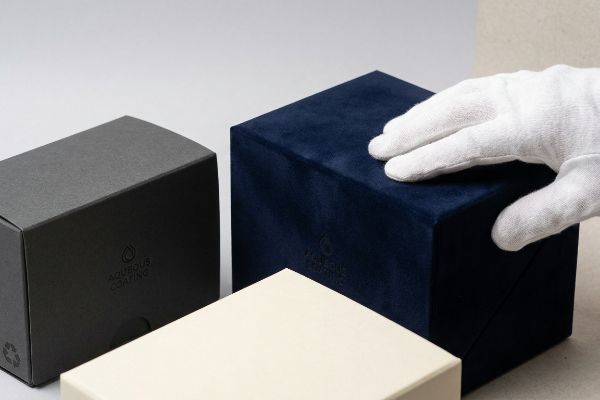
Brands demand premium tactile finishes to stand out on crowded retail floors. The secret to that velvet feel without sacrificing recyclability lies in specialized surface chemistry.
A soft touch coating is a specialized liquid aqueous finish applied to packaging substrates that creates a matte, velvet-like tactile texture. This premium coating significantly lowers glare while enhancing brand perception, typically utilizing water-based polymers to maintain full recyclability within standard corrugated board repulping processes.
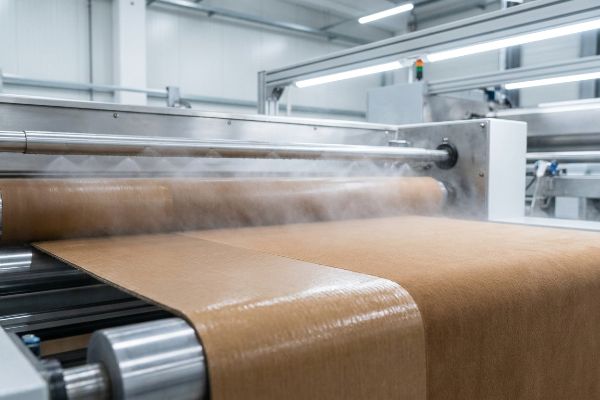
Moving from standard gloss to a velvet finish requires precise chemical application on the factory floor, fundamentally changing how consumers physically interact with your product.
What is a soft touch coating?
Achieving a luxury feel on raw corrugated board isn't magic; it requires a calculated layer of liquid chemistry to alter the physical surface friction.
A soft touch coating fundamentally modifies the substrate surface by applying a specialized liquid polymer layer. This water-based finish creates a microscopic textured barrier, transforming standard printed cardboard into a highly tactile, velvet-like surface that absorbs ambient light and strictly prevents high-glare reflections under harsh store lighting.
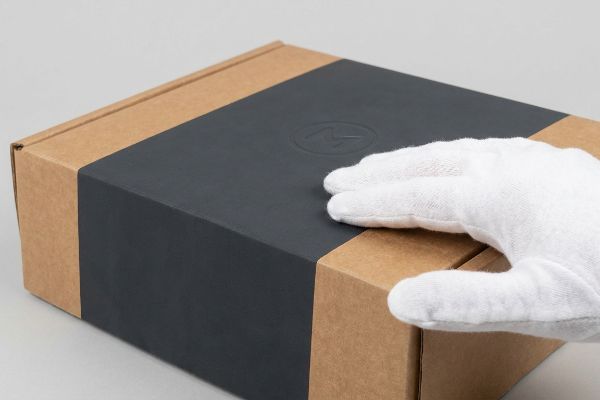
Understanding this chemical barrier is crucial before specifying premium finishes for large retail rollouts.
The Engineering Mechanics behind Velvet Tactility
Soft touch aqueous coating acts as a liquid polymer matrix that spreads evenly over the printed paperboard before curing. Unlike standard rigid varnishes that create a slick, glossy shell, this specific formula dries into a micro-textured surface that absorbs light1 rather than reflecting it. This unique physical structure reduces the coefficient of friction against human skin2, generating that signature suede sensation. As a structural engineer, I rely on this exact chemical behavior to upgrade the tactile experience of a display without adding excess structural weight to the final shipper.
The mechanical advantage of utilizing an aqueous-based soft touch finish lies in its molecular integration with the porous paper fibers3. Standard high-gloss finishes merely sit on top of the board, offering visual pop but providing zero tactile disruption. By specifying a water-based velvet coating, we engineered a surface that seamlessly integrates with standard OCC (Old Corrugated Containers) repulping machinery4. This means the POP (Point of Purchase) display retains its premium tactile equity on the retail floor while remaining 100% mono-material and completely frictionless for curbside recycling protocols once the campaign lifecycle ends.
| Tactile Finish Type | Generic Application | Engineered Reality |
|---|---|---|
| High-Gloss UV | Highly reflective surface | High glare, zero tactile friction |
| Matte Varnish | Flat light absorption | Visually flat, standard paper feel |
| Soft Touch Aqueous | Velvet tactile barrier | Suede sensation, 100% repulpable |
I always specify aqueous soft touch finishes when a client demands luxury but refuses to compromise on recyclability. It engineers a premium tactile barrier that enhances brand equity without disrupting standard OCC recovery channels.
🛠️ Harvey's Desk: Are your premium displays losing their luxury appeal due to harsh fluorescent glare on the retail floor? 👉 Get a Free Surface Finish Audit ↗ — I review every structural file personally within 24 hours.
What is soft touch material made of?
The velvet texture isn't derived from fabric; it is synthesized through precisely engineered water-based polymers designed to bond deeply with natural paper fibers.
Soft touch material is primarily formulated from water-based polyurethane dispersions and specialized polymer resins. These chemical structures dry into a flexible, micro-textured film that provides a suede-like tactile response. Crucially, modern formulations utilize PFAS-free liquid matrices to guarantee strict compliance with environmental regulations and safe food packaging standards.
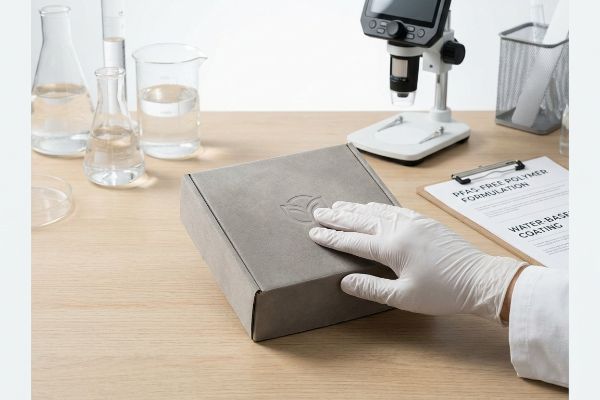
The chemical composition dictates not only the feel of the display but its regulatory compliance across global supply chains.
The Chemical Matrix of Tactile Polymers
The core chemistry relies on polyurethane dispersions suspended in a water-based solvent5, completely avoiding heavy VOC (Volatile Organic Compounds). When applied through a commercial offset printing press, the water evaporates into the factory air, leaving behind a highly elastic, continuous polymer film. This film is fundamentally different from petroleum-heavy plastics, as it remains highly breathable and flexible across large, flat cardboard panels. I constantly monitor the total ink limit beneath these coatings to ensure the water-based polymer cures uniformly without chemical rejection.
Analyzing the exact composition of this coating is highly necessary when designing for stringent consumer environments, particularly food and beverage rollouts. Historically, achieving this level of water-resistance and tactile smoothness required per- and polyfluoroalkyl substances6. Today, the engineered reality demands a strict PFAS-free mandate utilizing advanced bio-based or highly refined synthetic polymers7. By isolating these specific chemical bounds, the finish maintains its protective moisture barrier and luxury tactile friction, ensuring complete safety compliance while preserving the underlying brand colors under intense retail scrutiny.
| Chemical Component | Generic Formulation | Engineered Reality |
|---|---|---|
| Base Solvent | High-VOC petroleum | Water-based, low emission8 |
| Tactile Agent | Standard acrylics | Polyurethane micro-texture9 |
| Compliance Matrix | Legacy fluoro-chemicals | Strict PFAS-free formulation10 |
I strictly audit the chemical data sheets for all tactile finishes. Utilizing advanced PFAS-free dispersions ensures that our engineered displays meet severe global compliance standards while delivering a flawless, high-friction suede sensation to the end consumer.
🛠️ Harvey's Desk: Is your current tactile packaging secretly harboring legacy chemicals that could trigger an immediate retailer rejection during a compliance audit? 👉 Audit Your Chemical Specs ↗ — 100% confidential. Your unreleased retail designs are safe with me.
What is soft touch used for?
Tactile finishes are strategically deployed to elevate high-margin FMCG (Fast-Moving Consumer Goods) by engaging a shopper's physical sense of touch.
Soft touch is strictly used to upgrade the tactile perception of premium product packaging and interactive retail displays. By applying this velvet finish to high-contact zones, brands effectively reduce harsh light glare on dark printed designs while delivering a high-friction, luxury sensory experience that directly influences consumer purchasing behavior.
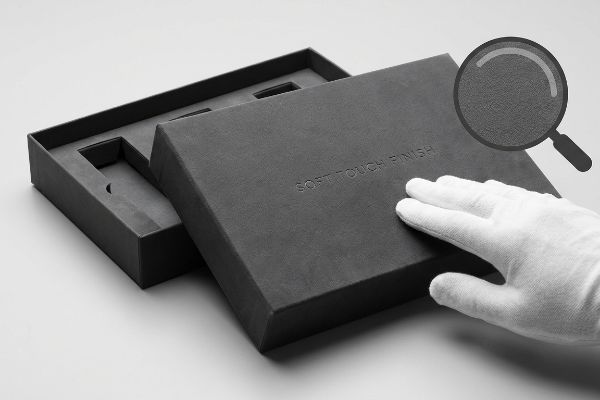
Moving beyond mere aesthetics, this functional surface treatment serves as a calculated psychological trigger on the retail floor.
The Psychology and Physics of Sensory Packaging
In a highly saturated retail environment, visual disruption only covers the first three seconds11 of a shopper's attention; the physical engagement secures the conversion. We deploy soft touch coatings specifically on high-interaction components like cosmetics trays, electronics unboxing layers, and premium display headers. The micro-textured surface fundamentally alters how light interacts with heavy, dark ink floods, eliminating the cheap, plastic-like glare12 typically associated with standard UV varnishes. As an engineer, I view this coating as a functional tool to maximize high-contrast brand visibility while providing an anti-scuff barrier for dense CMYK (Cyan, Magenta, Yellow, and Key/Black) prints.
The strategic application of this coating is deeply tied to the physical vulnerability of dark graphic profiles on porous cardboard. Standard matte finishes often suffer from severe scuffing during transit, as the friction of corrugated boards rubbing together physically degrades the unsealed ink layer. By engineering a polyurethane-based soft touch barrier over these vulnerable dark solids, we introduce a highly resilient, low-scuff surface. This ensures that when a premium technology or beauty product arrives on a big-box retailer's shelf, the display maintains absolute pristine color fidelity and a luxurious hand-feel that justifies a higher price point.
| Display Application | Generic Vulnerability | Engineered Reality |
|---|---|---|
| Heavy Black Inks | High scuffing risk13 | Anti-scuff velvet barrier14 |
| High-Contact Trays | Cheap plastic feel | Premium tactile interaction |
| Overhead Headers | Harsh glare reflection | Absolute light absorption15 |
I mandate this finish on any campaign utilizing heavy dark ink floods. It acts as an invisible structural shield, neutralizing friction scuffs during transit while upgrading the tactile architecture of the entire retail merchandiser.
🛠️ Harvey's Desk: Are transit scuffs completely ruining the premium aesthetic of your high-margin cosmetic displays before they even hit the shelf? 👉 Request a Free Surface Friction Analysis ↗ — No account managers in the middle. You talk directly to structural engineers.
What is the difference between soft touch coating and lamination?
While both techniques yield a premium velvet feel, their physical application, mechanical flexibility, and end-of-life recyclability are completely different engineering realities.
The difference between soft touch coating and lamination centers strictly on physical material composition. A coating applies a liquid aqueous polymer that dries directly onto the paper, ensuring full recyclability. Conversely, lamination physically glues a solid plastic film over the board, frequently compromising curbside recycling and structural flexibility.
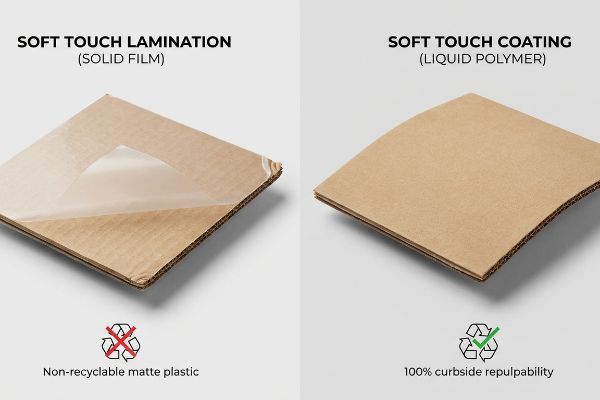
Selecting the wrong tactile application method can either elevate your brand or immediately trigger a disastrous environmental compliance rejection.
Liquid Matrix vs. Solid Film Dynamics
Soft touch aqueous coating is applied in-line during the offset printing process, rolling a wet polymer matrix that chemically bonds with the paperboard. It is thin, highly flexible, and seamlessly follows the structural scores of the dieline without resisting the fold. Lamination, however, requires a completely separate mechanical pass to thermally bond a solid sheet of BOPP (Biaxially Oriented Polypropylene) or PET16 (Polyethylene Terephthalate) plastic directly over the printed sheet. I strictly evaluate the physical caliper of the board, as adding a rigid laminated film fundamentally alters the bend allowance17 when folding thick 32ECT (Edge Crush Test) corrugated board at 0.125 inches (3.17 mm).
The critical distinction between these two processes becomes apparent during the end-of-life disposal phase of a retail campaign. Brands frequently demand solid PLA (Polylactic Acid) bio-plastic laminations, mistakenly assuming this film ensures absolute eco-compliance. However, a solid laminated film repels water during standard OCC repulping operations18, causing municipal recycling centers to divert the entire structure straight to a landfill. By strictly enforcing a liquid aqueous coating protocol, we engineer a premium tactile surface that easily dissolves in the paper mill vats19, guaranteeing the display remains 100% curbside recyclable while eliminating the heavy plastic residue associated with standard laminations.
| Process Attribute | Soft Touch Lamination | Soft Touch Coating |
|---|---|---|
| Application Method | Solid plastic film glued | Liquid polymer rolled |
| Folding Mechanics | Adds rigid resistance | Highly elastic bend |
| OCC Recyclability | High rejection risk | 100% curbside repulpable |
I refuse to let brands fall into the lamination eco-trap. Specifying an aqueous liquid coating engineers the exact same luxury suede feel without triggering catastrophic recycling rejections from strict retail compliance teams.
🛠️ Harvey's Desk: Is your current laminated packaging actively sabotaging your brand's sustainability metrics by failing standard municipal repulping tests? 👉 Claim Your Free Eco-Compliance Audit ↗ — I review every structural file personally within 24 hours.
Conclusion
Specifying the correct tactile chemistry prevents disastrous repulping rejections and ensures heavy, dark ink floods survive high-friction ocean freight without permanent scuffing. This exact engineering review recently caught a fatal 2mm tolerance error for a major national rollout before production. If you need absolute certainty that your premium finish won't trigger an environmental compliance failure, let me personally run your structural files through a Free Eco-Coating & Dieline Audit ↗ to mathematically guarantee flawless execution on the retail floor.
"Progress in Studies of Surface Nanotextures and Coatings with …", https://pmc.ncbi.nlm.nih.gov/articles/PMC9612287/. [Scientific literature on optical properties of polymers explains how microscopic surface roughness causes diffuse reflection and light absorption rather than specular reflection]. Evidence role: physical mechanism verification; source type: material science journal. Supports: the non-glare, velvet appearance. Scope note: applies specifically to matte and soft-touch aqueous finishes. ↩
"STC370HP Low friction silicone coating – Boston Industrial Solutions", https://bostonindustrialsolutions.com/silicone-soft-touch-coating/. [Tribological studies on soft-touch coatings provide quantitative data on how specific polymer matrices lower the coefficient of friction to simulate suede or velvet]. Evidence role: technical metric verification; source type: technical data sheet or engineering paper. Supports: the physical cause of the tactile suede sensation. Scope note: friction values depend on the specific polymer blend used. ↩
"Soft Touch Coating | Printing & Finishing Techniques – Sourceful", https://www.sourceful.com/explore/printing-types-and-finishes/soft-touch-coating. [An authoritative source on polymer chemistry or paper coatings would explain the specific bonding mechanisms between aqueous resins and cellulose fibers]. Evidence role: technical validation; source type: technical whitepaper or material science textbook. Supports: the mechanical advantage of aqueous finishes over surface-level coatings. Scope note: specifically focused on aqueous-based polymer interactions. ↩
"Water-based coatings from ADLER", https://www.adler-coatings.com/water-based-coatings. [Recycling industry standards or manufacturer specifications would verify if water-based soft touch coatings are compatible with OCC repulping processes without contaminating the pulp stream]. Evidence role: industry standard validation; source type: recycling certification or industrial guide. Supports: claims regarding the recyclability of the POP display. Scope note: applies specifically to OCC waste streams. ↩
"[PDF] Soft touch waterborne polyurethane coatings.", https://solutions.covestro.com/-/media/covestro/solution-center/brochures/pdf/soft-touch-waterborne-polyurethane-coatings.pdf. [Technical documentation on aqueous polymer coatings confirms the use of polyurethane dispersions to achieve soft-touch tactile effects while minimizing VOC emissions]. Evidence role: technical specification; source type: material science datasheet. Supports: chemical composition. Scope note: specifically pertains to water-borne polyurethane systems. ↩
"An overview of the uses of per- and polyfluoroalkyl substances (PFAS)", https://pmc.ncbi.nlm.nih.gov/articles/PMC7784712/. [An authoritative chemical history or technical review would document the historical reliance on PFAS to achieve specific hydrophobic and tactile properties in coatings]. Evidence role: historical context; source type: technical review. Supports: the evolution of coating chemistry. Scope note: specific to water-resistant tactile finishes. ↩
"PFAS-free Textile Coatings | Harvard Office of Technology …", https://otd.harvard.edu/explore-innovation/technologies/pfas-free-textile-coatings/. [Technical specifications or material science journals would verify the use of bio-based and refined synthetic polymers as safe, PFAS-free alternatives for tactile finishes]. Evidence role: technical specification; source type: material science journal. Supports: current composition of eco-friendly soft touch materials. Scope note: focuses on regulatory compliance in food packaging. ↩
"Innovative Water-Based Coating Technologies – Ecological Fibers", https://www.ecofibers.com/innovative-water-based-coating-technologies/. [An authoritative source on polymer chemistry or coating specifications would verify the transition to water-based, low-emission solvents in modern soft-touch finishes]. Evidence role: factual verification; source type: technical specification sheet. Supports: base solvent composition. Scope note: focuses on modern environmental standards. ↩
"MicroTouch 800F (Product) – Micro Powders", https://www.micropowders.com/microtouch-800f.html. [Academic research or material science patents would explain how polyurethane is used to engineer micro-textures for tactile sensations]. Evidence role: technical validation; source type: peer-reviewed journal. Supports: tactile agent composition. Scope note: applies specifically to synthetic velvet textures. ↩
"PFAS-Free Polyurethane Formulation for Regulatory Compliance", https://www.linkedin.com/posts/fsico_with-pfas-under-heightened-regulatory-scrutiny-activity-7442194770468352001-ouiN. [Industry standards or environmental regulations would confirm the requirement for PFAS-free formulations in compliant tactile polymers]. Evidence role: regulatory verification; source type: industry compliance document. Supports: chemical compliance. Scope note: relates to current environmental laws. ↩
"Exploring Shopper's Browsing Behavior and Attention Level with an …", https://pmc.ncbi.nlm.nih.gov/articles/PMC6895988/. [Consumer behavior studies and retail psychology research provide data on the limited window of visual attention before a consumer decides to engage with a product]. Evidence role: metric validation; source type: industry report or academic study. Supports: the need for tactile conversion. Scope note: applies to high-saturation retail environments. ↩
"The Value in Print Coatings and Varnishes: What You Need to Know", https://pax.solutions/corrugated-packaging/print-coatings/. [Technical documentation on matte finishes and light diffusion explains how micro-texturing reduces specular reflection compared to high-gloss UV varnishes]. Evidence role: technical explanation; source type: coating specification sheet. Supports: the optical advantage of soft touch. Scope note: specifically regarding dark ink backgrounds. ↩
"Why Checking Ink Abrasion Resistance Matters for Durable …", https://www.prestogroup.com/blog/why-checking-ink-abrasion-resistance-matters-for-durable-packaging-materials/. [Technical documentation on print coatings would confirm that high-pigment black inks are particularly susceptible to visible surface abrasion and scuffing.] Evidence role: factual confirmation; source type: materials science manual. Supports: the vulnerability of black inks. Scope note: specifically regarding FMCG printed displays. ↩
"Wax Coatings for Paper Packaging Applications: Study of the …", https://pmc.ncbi.nlm.nih.gov/articles/PMC11926751/. [Industry specifications for soft-touch or velvet coatings would explain the chemical mechanism by which these barriers protect underlying inks from abrasion.] Evidence role: technical specification; source type: product datasheet. Supports: the efficacy of velvet barriers. Scope note: focused on protective finishes. ↩
"Antireflective light-blocking layers using a liquid top matte coating", https://pmc.ncbi.nlm.nih.gov/articles/PMC6319949/. [Research on optical physics and matte finishes would demonstrate how specific tactile coatings minimize specular reflection to reduce glare.] Evidence role: technical verification; source type: optical physics study. Supports: the light-absorbing properties of engineered finishes. Scope note: verifies the reduction of glare through surface diffusion. ↩
"Unique Features of Thermal Lamination Film for Packaging", https://www.cosmofilms.com/blog/unique-features-of-thermal-lamination-film-for-packaging. [Material data sheets for packaging films would verify that BOPP and PET are the primary polymers used in thermal lamination for premium finishes]. Evidence role: factual verification; source type: industrial data sheet. Supports: chemical composition of lamination. Scope note: Common commercial plastics. ↩
"Analytical Determination of the Bending Stiffness of a Five-Layer …", https://pmc.ncbi.nlm.nih.gov/articles/PMC8777652/. [Technical documentation on corrugated packaging engineering would provide the calculations for how added film thickness increases the neutral axis and modifies the bend allowance]. Evidence role: technical verification; source type: engineering manual. Supports: structural impact of lamination. Scope note: Specific to 32ECT board caliper. ↩
"Manufacturing of form-molded pulp products (FMPPs) in the …", https://bioresources.cnr.ncsu.edu/resources/manufacturing-of-form-molded-pulp-products-fmpps-in-the-papermaking-industry-a-review/. [A technical source on paper recycling processes would verify how non-porous plastic films impede water penetration and fiber separation during pulping]. Evidence role: technical verification; source type: industry standard. Supports: impact of lamination on OCC recyclability. Scope note: focuses on mechanical repulping efficiency. ↩
"Is Kraft Pulping the Future of Biorefineries? A Perspective on … – PMC", https://pmc.ncbi.nlm.nih.gov/articles/PMC11644358/. [Technical documentation on aqueous-based coatings would demonstrate how these polymers break down or disperse during the pulping process]. Evidence role: technical verification; source type: material science study. Supports: recyclability of liquid aqueous coatings. Scope note: pertains to water-soluble or dispersible polymers. ↩