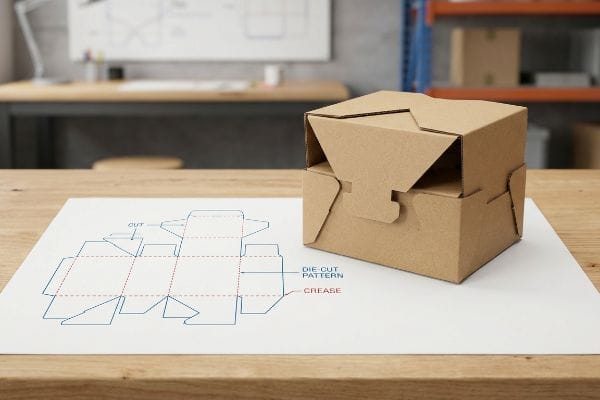
You are launching a retail product, and standard shipping boxes won't cut it. To grab attention on crowded shelves, you need custom shapes and precise structural engineering.
Die-cut packaging boxes are custom-engineered corrugated or paperboard containers manufactured using a steel rule die or digital CNC table to stamp out specific shapes, tabs, and locking mechanisms. This precision cutting process ensures flawless assembly, structural integrity, and unique visual merchandising for competitive retail environments.

But designing a custom shape on your screen is entirely different from mass-producing it to survive a brutal warehouse environment.
What Does "Die Cut Packaging" Mean?
The term sounds industrial, but it is simply the exact process of transforming a flat sheet of raw material into a functional, 3D retail structure.
Die cut packaging means a specialized manufacturing process where sharp steel blades or digital routers slice through paperboard to create exact structural outlines. This technique allows for complex folding tabs, custom window cutouts, and interlocking panels that standard slotted cartons simply cannot replicate on the factory floor.
It sounds simple enough, but the bridge between digital artwork and physical steel blades is where most campaigns quietly derail.
The Invisible Language of CAD (Computer-Aided Design) Tooling
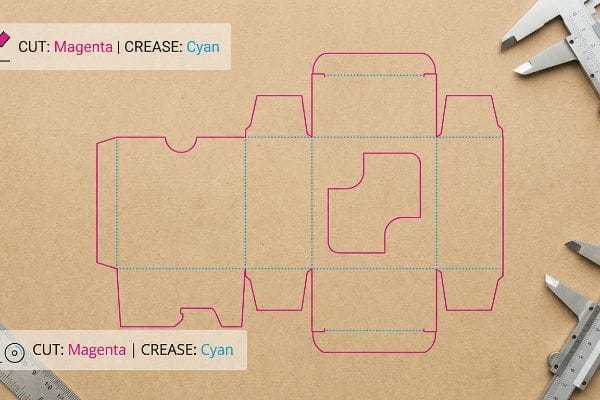
Even veteran designers often overlook the blind spot of mechanical translation. They submit beautiful structural layouts using standard CMYK (Cyan, Magenta, Yellow, Key) black lines1 to indicate where the display should be sliced or folded. They assume automated factory machinery will intuitively understand their visual artwork and execute the physical cuts perfectly.
I see this trap every single week when flat dielines hit my prepress queue. The reality is that CNC (Computer Numerical Control) routers and laser die-board burners cannot read visual colors; they only trigger when they detect absolute spot color strokes2. When a designer sends a file with standard black outlines, the machine's software merges those lines into the artwork layer. I once watched a massive printer spit out a full run of beautifully printed boards that had visible black borders but zero physical cuts, creating a massive logistical bottleneck. To fix this, I mandate a strict color mapping protocol where cut paths are assigned 100% Magenta3 and creases are 100% Cyan. This micro-adjustment prevents complete machine failure, saving clients time and ensuring the physical board sections separate with a clean, satisfying tear.
| Common Rookie Mistake | The Pro Fix | Retail-Floor Benefit |
|---|---|---|
| Using CMYK black for cut lines | Assigning absolute spot colors4 | Prevents 100% machine cut failure |
| Merging artwork and structure | Isolating cut paths in CAD5 | Saves hours of prepress delays |
| Ignoring blade thickness | Adding micro-tolerances for cuts6 | Ensures tabs lock smoothly |
I refuse to guess what a designer intended to cut. By locking down mechanical spot colors before the board ever hits the cutting table, I guarantee your structural layout translates flawlessly into physical reality.
🛠️ Harvey's Desk: Not sure if your artwork layers are actually communicating with the cutting blades? 👉 Get A Free Dieline Audit ↗ — Direct access to my desk. Zero automated sales spam, I promise.
Is Die Cut More Expensive?
Customization usually carries a premium, and structural packaging is no different. However, understanding exactly what you are paying for changes how you measure the true return on investment.
Yes. Die cut packaging carries higher initial costs due to custom structural engineering and physical tooling fees. However, this upfront investment drastically reduces downstream labor by eliminating messy packing tape and accelerating manual assembly speeds, often making it more cost-effective for high-volume retail rollouts.
The real financial danger isn't the upfront tooling fee; it is what happens to that tool after your first production run is finished.
The Hidden Cost of Degraded Tooling Boards
Procurement teams generally accept the initial setup fee for a structural die, assuming that this one-time purchase secures a permanent, indestructible asset. They plan their budgets under the assumption that this exact same tool will be reused perfectly for years of identical seasonal reorders.
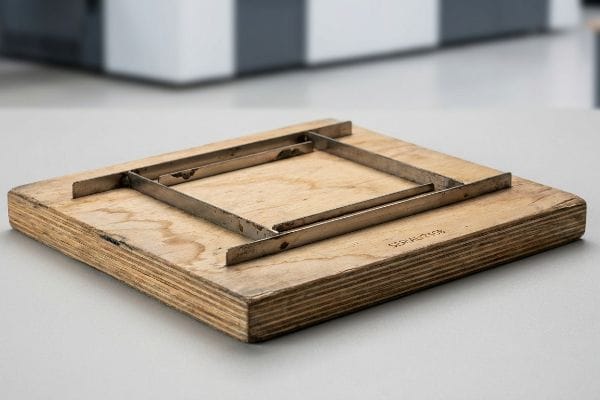
This assumption ignores the material reality of a standard steel rule die7, which consists of metal blades embedded into a raw plywood base. In my facility, I routinely see how porous wood absorbs ambient factory humidity over a few months, physically warping the base and rusting the blades8. If I try to reuse that compromised board for your reorder, the misaligned blades tear the printed top-sheet instead of slicing it cleanly, generating a powdery corrugated dust that ruins the ink finish and creates massive friction during assembly. To protect your brand equity, I enforce a strict protocol that laser-burns a brand new die for every single batch run. This completely eliminates jagged edges and assembly headaches, ultimately saving you from catastrophic retail chargebacks caused by compromised structural integrity.
| Common Rookie Mistake | The Pro Fix | Retail-Floor Benefit |
|---|---|---|
| Reusing old warped wood dies | Burning new dies for each run | Guarantees razor-sharp edges9 |
| Storing dies in humid zones | Climate-controlled staging | Prevents metal blade rusting10 |
| Chasing the cheapest tool fee | Investing in high-grade steel11 | Stops locking tabs from tearing |
I never gamble a heavy-duty retail rollout on a cheap, moisture-warped piece of wood. Burning fresh tools for every batch is the only way I can guarantee absolute structural consistency.
🛠️ Harvey's Desk: Are your seasonal reorders suddenly suffering from torn tabs and messy assembly? 👉 Request A Tooling Review ↗ — Download safely. My inbox is open if you have questions later.
Why Is It Called Die Cut?
The terminology dates back to the dawn of mass manufacturing, but the physical physics of the process remain exactly the same today across high-speed packaging lines.
It is called die cut because the process uses a physical tool known as a "die" to stamp out shapes. Much like a heavy-duty cookie cutter, this customized metal blade is pressed directly into paperboard substrates with immense force to slice out exact structural footprints.
While slicing the outer shape is straightforward, controlling how the paper bends internally is an entirely different engineering battle.
The Physics of Crease Matrix Profiling
Designers typically assume that placing a simple crease line on their digital template automatically results in a perfect 90-degree fold. They treat thick corrugated material like standard printer paper, expecting it to yield effortlessly without any mechanical resistance.
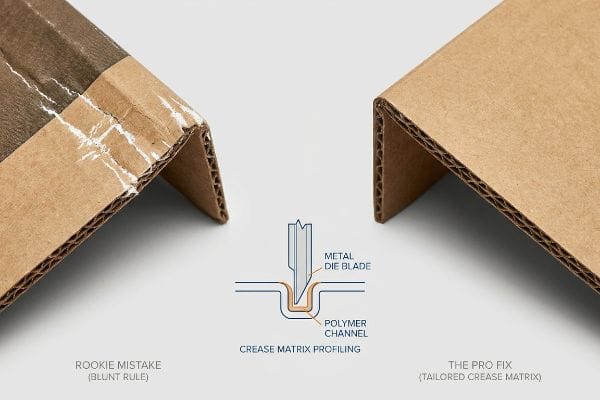
I watch this theory fall apart when a massive industrial press drives a dull steel creasing rule into heavy 32ECT virgin kraft board. The blunt impact forces the internal flutes to buckle violently, creating a loud snapping noise as the outer paper fibers stretch past their limit and crack the laminated graphic. To prevent this ugly white cracking on the fold line, I map specialized polymer matrix channels beneath the cutting plate to act as an anvil. This precisely controls how the fibers stretch during the strike, completely eliminating litho-cracking by enforcing a strict 0.04-inch (1 mm) micro-tolerance on the bend12. This micro-adjustment prevents visual defects and speeds up the co-packing line by an estimated 20 percent13 since clerks no longer have to fight stiff, unbroken scores.
| Common Rookie Mistake | The Pro Fix | Retail-Floor Benefit |
|---|---|---|
| Relying on blunt rule strikes | Using a tailored crease matrix14 | Eliminates ugly graphic cracking |
| Ignoring paper grain direction | Aligning creases with the flute15 | Ensures perfectly square folds |
| Forcing thick board to bend | Pre-crushing the score lines16 | Speeds up manual assembly |
I refuse to let raw machine pressure destroy your premium graphics. By engineering the exact tension of every single crease, I ensure your packaging looks flawless from the factory to the checkout counter.
🛠️ Harvey's Desk: Are your current display boxes showing ugly white cracks along the major folding seams? 👉 Claim Your Structural Stress Test ↗ — No forms that trigger endless sales calls. Just pure value.
What Are the Different Types of Die Cut Boxes?
From simple mailers to complex modular shelf trays, the geometric possibilities are endless when you move away from standard rectangular shipping cartons.
The different types of die cut boxes include mailer boxes, folding cartons, display-ready shelf trays, and Half Slotted Containers. These varied structural formats utilize precise interlocking tabs, custom windows, and angled retaining lips to perfectly secure merchandise while maximizing brand visibility on crowded retail shelves.
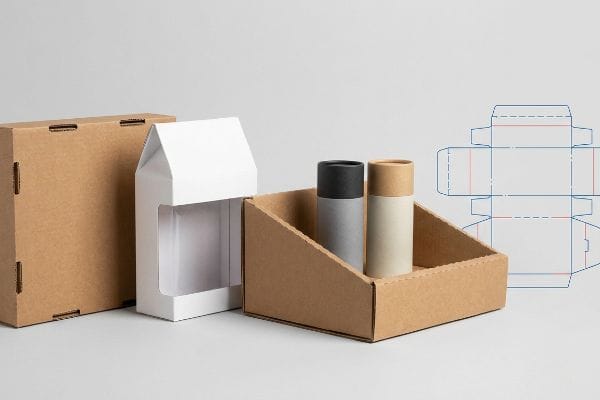
But knowing the theory isn't enough when the machines start running and massive weight is stacked on top of these custom shapes.
Why Standard HSC Modifications Fail on the Factory Floor
Procurement teams frequently attempt to create instant open-top retail bins by simply chopping the top flaps off a standard RSC17 (Regular Slotted Container). They assume that saving raw material costs on this HSC (Half Slotted Container) modification will yield a perfectly functional, budget-friendly display tray.
In my facility, I routinely see this shortcut result in devastating structural failures during pre-production load testing. When you remove the continuous top flaps, you completely eliminate the 360-degree upper enclosure, destroying the box's ability to distribute dynamic top-load pressure across its vertical walls. I test this using a TAPPI T811 Edge Crush Test18, and the unsupported corners of a standard single-wall HSC will visibly bow outward and buckle under just 187.5 lbs (85 kg) of pallet weight19. To fix this, I mathematically realign the flute grain perfectly vertical and upgrade the core to a double-wall profile specifically to replace the missing upper tension. By enforcing this material adjustment, I completely restore the compressive strength, preventing catastrophic bottom-tier crushing that would otherwise trigger massive retailer chargebacks and costly manual repacking.
| Common Rookie Mistake | The Pro Fix | Retail-Floor Benefit |
|---|---|---|
| Chopping flaps off standard boxes | Re-engineering vertical load | Prevents bottom-tier crushing20 |
| Ignoring top-lid tension loss | Upgrading to double-wall core21 | Survives heavy pallet stacking |
| Using horizontal flute grain | Forcing strictly vertical flutes | Maximizes edge crush strength22 |
I cannot let you ship heavy merchandise in structurally castrated boxes. Upgrading the board profile when you remove the lid is the only way I can guarantee your products survive the supply chain.
🛠️ Harvey's Desk: Are your open-top retail trays collapsing when the warehouse double-stacks your pallets? 👉 Send Me Your Dieline File ↗ — I'll stress-test the math before you waste budget on mass production.
Conclusion
You can choose a cheaper vendor for your packaging, but when an unsupported open-top box collapses under heavy warehouse stacking, it creates massive logistical friction that triggers immediate retailer rejections. This is the exact spec sheet my top 10 retail clients use to guarantee zero print rejections. Stop guessing on vertical load tolerances and let me personally evaluate your architecture through my Free Dieline Pre-Flight Audit ↗ to catch fatal structural flaws before you run mass production.
"What's the Difference Between Spot Colors (PMS) vs. …", https://blog.fantastapack.com/difference-between-spot-colors-vs.-cmyk-packaging. Technical documentation explaining the industry standard of using dedicated spot colors for die lines rather than CMYK to ensure machine readability. Evidence role: technical specification; source type: professional design guide. Supports: the distinction between visual artwork and mechanical instructions. Scope note: applies to commercial printing and die-cutting. ↩
"Top 10 laser issues and solutions – YouTube", https://www.youtube.com/watch?v=k_fnsQYJYm0. Technical documentation explaining how CAM software interprets spot colors to distinguish between print artwork and cutting paths. Evidence role: technical specification; source type: manufacturing manual. Supports: the necessity of spot colors for machine triggers. Scope note: specific to vector-based die-cutting workflows. ↩
"What Is the Purpose of Die Cut Display Packaging?", https://popdisplay.me/what-is-the-purpose-of-die-cut-display-packaging/. Industry guidelines for color-coding dielines to differentiate between cut, crease, and bleed lines. Evidence role: industry standard; source type: prepress production guide. Supports: the use of Magenta for cut lines. Scope note: common convention but can be customized per vendor. ↩
"Graphic Guidelines", https://www.delinebox.com/graphic-guidelines/. Technical explanation of how RIP software distinguishes spot colors from process colors to trigger cutting tools rather than printing ink. Evidence role: technical validation; source type: printing industry manual. Supports: the necessity of spot colors for machine cut accuracy. Scope note: specifically applies to digital and offset die cutting. ↩
"Exploring Packaging Prepress: A Simplified Guide – Alpha BPO", https://www.alphabpo.com/blog/exploring-packaging-prepress-a-simplified-guide/. Industry standard workflow for separating structural dielines from graphic artwork to prevent production errors and streamline prepress. Evidence role: process validation; source type: CAD/CAM software documentation. Supports: the efficiency of isolating paths to reduce prepress delays. Scope note: focused on industrial CAD tooling workflows. ↩
"Balance Die Cutting Tolerances with Die Cutting Costs", https://www.interstatesp.com/blog/post/balance-die-cutting-tolerances-with-die-cutting-costs/. Professional guidance on compensating for the width of the cutting blade (kerf) to ensure that folded tabs lock securely. Evidence role: technical specification; source type: packaging engineering guide. Supports: the impact of blade thickness on structural fit. Scope note: applicable to physical die-cutting tooling. ↩
"LCB vs CB Steel Rule for Die Cutting – Yitai Precision Machinery", https://yitaipacking.com/performance-of-die-steel-rule-on-different-materials/. Technical confirmation of the materials used in steel rule die construction, specifically the combination of metal blades and wood bases. Evidence role: technical specification; source type: manufacturing manual. Supports: physical composition of the tool. Scope note: Applies to traditional steel rule dies, not magnetic or digital alternatives. ↩
"How Humidity Affects Metal, Wood, Plastic, Cardboard", https://dehum.com/how-humidity-affects-different-materials/. Material science evidence regarding the hygroscopic nature of plywood bases and the susceptibility of carbon steel blades to oxidation in humid factory environments. Evidence role: causal mechanism; source type: tooling maintenance guide. Supports: cause of tool degradation. Scope note: Environmental impact varies based on facility climate control. ↩
"4 TYPES OF WOOD WARP (Where They Come From + How …", https://www.youtube.com/watch?v=NEHowi-_hvw. Analysis of how the degradation of wood-based tooling boards leads to edge deformation and the benefit of fresh dies for precision cuts. Evidence role: process validation; source type: industrial printing manual. Supports: the claim that new dies ensure cut quality. Scope note: refers to traditional wood-base die cutting. ↩
"TEMPERATURE AND HUMIDITY EFFECTS ON THE …", https://www.osti.gov/etdeweb/servlets/purl/20468663. Technical explanation of how climate-controlled environments mitigate oxidation and corrosion of carbon steel die blades. Evidence role: factual verification; source type: materials science guide. Supports: the necessity of climate-controlled staging for tool longevity. Scope note: applies specifically to non-stainless tooling steels. ↩
"Tool Steel Grades: A Comprehensive Guide – Ryerson", https://www.ryerson.com/metal-resources/metal-market-intelligence/tool-steel-grades-a-comprehensive-guide. Comparison of steel alloys in die-cutting tools and how hardness and wear resistance prevent material tearing in structural packaging. Evidence role: technical specification; source type: tooling manufacturing handbook. Supports: the correlation between steel quality and the integrity of locking tabs. Scope note: focuses on industrial-grade structural dies. ↩
"GURMEET SINGH – Die Cutting Process in Packaging", https://www.linkedin.com/posts/gurmeet-singh-9b539a228_die-cutting-process-in-packaging-problems-activity-7378517393884647424-GqiW. Technical validation of the specific tolerance measurement required to prevent fiber cracking in corrugated board substrates. Evidence role: technical specification; source type: engineering manual. Supports: the efficacy of precise matrix profiling in eliminating litho-cracking. Scope note: tolerance may vary based on material ECT rating. ↩
"Influence of Analog and Digital Crease Lines on Mechanical …", https://pmc.ncbi.nlm.nih.gov/articles/PMC9268991/. Empirical data or industry benchmarks correlating the reduction of score stiffness with increased assembly speed in packaging. Evidence role: performance metric; source type: industrial case study. Supports: the operational efficiency gains of professional crease matrixing. Scope note: percentage is an estimate based on specific line conditions. ↩
"Die-cutting and creasing your paperboard – Holmen Iggesund", https://www.iggesund.com/insights/paperboard-know-how/paperboard-manual/paperboard-manual-publication/printing-and-converting-performance/die-cutting-and-creasing/. Authoritative source explains how precision-profiled crease matrices manage material compression to prevent surface cracking. Evidence role: technical validation; source type: engineering manual. Supports: effectiveness of tailored matrices. Scope note: specific to high-GSM materials. ↩
"Die-cutting for Custom Paper Box", https://www.deprintedbox.com/die-cutting-creasing-scoring-for-custom-printed-paper-box.php. Technical guides on corrugated packaging detail how aligning folds with flute direction prevents distortion and ensures perpendicularity. Evidence role: mechanical principle; source type: packaging industry standard. Supports: structural integrity of folds. Scope note: applies to corrugated fiberboard. ↩
"What is Die Cutting in Packaging? A Guide to Die Cut Boxes – Gentlever", https://gentlever.com/die-cutting-in-packaging/. Manufacturing standards for heavy-duty board describe the benefit of pre-crushing to reduce resistance during folding. Evidence role: process optimization; source type: production guide. Supports: assembly speed. Scope note: focus on manual assembly of thick substrates. ↩
"Basic Box Styles", https://www.packagingcorp.com/resource-hub/beyond-the-box/basic-box-styles/. Packaging engineering standards define the structural difference between a Regular Slotted Container (RSC) and a Half Slotted Container (HSC), confirming the removal of top flaps as the primary geometric distinction. Evidence role: technical specification; source type: industry standard. Supports: the description of the RSC to HSC modification. Scope note: specific to corrugated fiberboard standards. ↩
"Edgewise compressive strength of corrugated fiberboard …", https://www.tappi.org/product_pull/09/dec/__05/edgewise-compressive-strength-of-corrugated-fiberboard-short-column-test-test-method-t-811-om-17/. Verification of the TAPPI T811 standard's application to measuring the compressive strength of corrugated board. Evidence role: methodology verification; source type: technical standard. Supports: the specific testing procedure used to identify structural failure. Scope note: focuses on the testing protocol. ↩
"How Much Weight Can a Corrugated Box Hold?", https://brownpackaging.com/how-much-weight-can-a-corrugated-box-hold/. Empirical data or engineering benchmarks confirming the load-bearing capacity and failure points of standard single-wall half slotted containers. Evidence role: factual verification; source type: engineering manual or technical study. Supports: the claim that specific weights trigger buckling. Scope note: results may vary by material grade. ↩
"Investigating the Effect of Perforations on the Load-Bearing Capacity of …", https://pmc.ncbi.nlm.nih.gov/articles/PMC11396172/. Analysis of how maintaining structural integrity of flaps or re-engineering vertical load paths prevents the collapse of the lowest boxes in a stack. Evidence role: structural analysis; source type: logistics whitepaper. Supports: the link between vertical load engineering and prevention of bottom-tier failure. Scope note: applies to standard shipping carton geometry. ↩
"Layered Corrugated Strength Options: Single-Wall vs. …", https://ufppackaging.com/insights/layered-corrugated-strength-options. Comparison of compression strength and load-bearing capacity between single-wall and double-wall corrugated boards in palletized environments. Evidence role: performance verification; source type: industrial packaging standard. Supports: the use of double-wall cores for surviving heavy stacking. Scope note: results may vary based on specific flute combinations. ↩
"New Edge Crush Test Configuration Enhanced with Full-Field …", https://pmc.ncbi.nlm.nih.gov/articles/PMC8510352/. Technical explanation of how vertical flute alignment optimizes the Edge Crush Test (ECT) value to support vertical loads. Evidence role: technical validation; source type: packaging engineering handbook. Supports: the claim that vertical flutes maximize structural strength. Scope note: specifically applies to corrugated fiberboard materials. ↩