আপনি আপনার পণ্য পাঠিয়ে দিয়েছেন, কিন্তু অতিরিক্ত কাজের চাপে থাকা দোকান কর্মচারীদের ওপর অন্ধভাবে আপনার ঢেউখেলানো কার্ডবোর্ডের বাক্সগুলো একটি বিশাল ঝুঁকি। পণ্য বিপণনের অব্যবস্থাপনা আপনার খুচরা ব্যবসার সূচনাকে সঙ্গে সঙ্গে ধ্বংস করে দেয়।
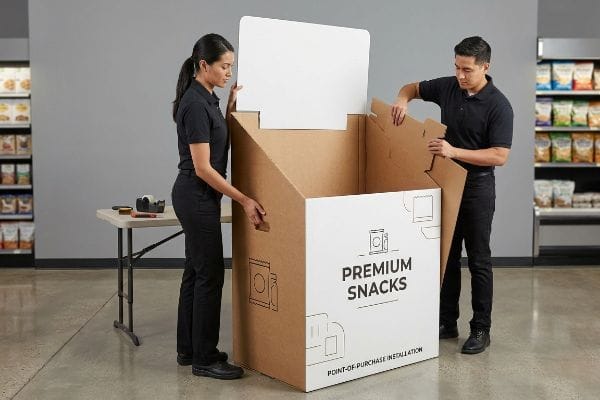
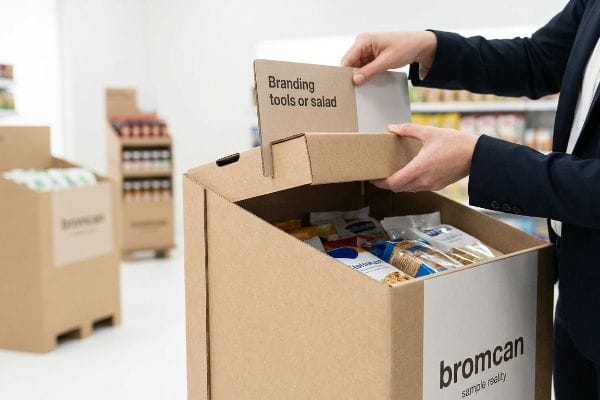
দোকানের ডিসপ্লে সাজানোকে আনুষ্ঠানিকভাবে রিটেইল মার্চেন্ডাইজিং বা পয়েন্ট-অফ-পারচেজ ইনস্টলেশন বলা হয়। এই কৌশলগত প্রক্রিয়ায় পণ্যের দৃশ্যমানতা বাড়াতে, ক্রেতাদের চলাচলকে পরিচালিত করতে এবং পরিশেষে ক্রেতাদেরকে ঘটনাস্থলেই তাৎক্ষণিক ক্রয়ের সিদ্ধান্ত নিতে উৎসাহিত করার জন্য ঢেউতোলা বাক্স বা এন্ড-ক্যাপের মতো রিটেইল ফিক্সচারগুলোকে ভৌতভাবে একত্রিত করা, নির্দিষ্ট স্থানে স্থাপন করা এবং পণ্য দিয়ে পূর্ণ করা হয়।.
কিন্তু ইন্ডাস্ট্রির পরিভাষা জানা সত্ত্বেও আপনার ক্যাম্পেইন রক্ষা পাবে না, যদি আসল কার্ডবোর্ডটি মাঠেই ব্যর্থ হয়। চলুন, এই পরিভাষাগুলোর পেছনের কার্যপ্রণালী বিশ্লেষণ করা যাক।.
স্টোর ডিসপ্লেকে কী বলা হয়?
ক্রেতারা বিভিন্ন সংক্ষিপ্ত রূপ ব্যবহার করে থাকেন, কিন্তু বিভিন্ন ধরনের ফিক্সচারের ভৌত সীমানা আলাদা করতে ব্যর্থ হলে খুচরা বিক্রেতারা তাৎক্ষণিকভাবে অর্থ ফেরতের (চার্জব্যাক)।
দোকানের ডিসপ্লেগুলোকে সাধারণত পিওপি (পয়েন্ট-অফ-পারচেজ) বা পিওএস (পয়েন্ট-অফ-সেল) ফিক্সচার বলা হয়। বিশ্বব্যাপী রিটেইল মার্চেন্ডাইজিং-এ, এই কাঠামোগুলোর মধ্যে রয়েছে স্বতন্ত্র ফ্লোর ইউনিট, প্যালেট মার্চেন্ডাইজার, কাউন্টারটপ ট্রে এবং এন্ড-ক্যাপ; এগুলোর সবই বিশেষভাবে ডিজাইন করা হয় ক্রেতাদের চলাচলে বাধা সৃষ্টি করতে, প্রচারমূলক ব্র্যান্ডিং তুলে ধরতে এবং সাধারণ রিটেইল শেল্ফের বাইরে পণ্যের জন্য দ্বিতীয় স্থান নিশ্চিত করতে।.
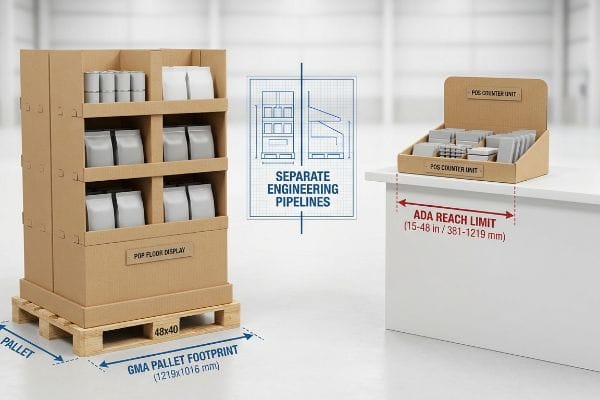
নামগুলো বোঝা এক জিনিস, কিন্তু উৎপাদন ক্ষেত্রে সেগুলোর স্থানিক নিয়মকানুন গুলিয়ে ফেলা একটি মারাত্মক ভুল।.
ADA বনাম GMA ভৌত সীমাবদ্ধতার সীমানা
এমনকি অভিজ্ঞ ক্রয় দলগুলোও প্রায়শই POP এবং POS-এর মতো শব্দগুলো অদলবদল করে ব্যবহার করে, এই ভেবে যে একটি সফল ফ্লোর ডিসপ্লেকে কেবল ৫০% ছোট করে একটি রেজিস্টার কাউন্টার ইউনিট হিসেবে ব্যবহার করা যাবে। তারা এই আকার পরিবর্তনকে একটি সাধারণ গ্রাফিক ডিজাইনের কাজ হিসেবে দেখে এবং এই দুটি পৃথক অঞ্চলের জন্য প্রযোজ্য কঠোর আইনি ও লজিস্টিক নিয়মগুলোকেউপেক্ষা । এই গতানুগতিক 'আকার অনুযায়ী ছোট করার' পদ্ধতিটি স্টোর ম্যানেজারদের দ্বারা আরোপিত ভৌত সীমানাগুলোকে পুরোপুরি উপেক্ষা করে।
আমি প্রায়শই দেখি ক্রেতারা একটি ছোট চেকআউট কাউন্টারে বিশাল আকারের ফ্লোর বিন ডিজাইন জোর করে বসানোর চেষ্টা করে। সমস্যাটা কী? পিওপি (POP) ফ্লোর ইউনিটগুলো জিএমএ (গ্রোসারি ম্যানুফ্যাকচারার্স অ্যাসোসিয়েশন)-এর নির্ধারিত ভারী কাজের জন্য প্রযোজ্য ৪৮×৪০ ইঞ্চি (১২১৯×১০১৬ মিমি)কঠোরভাবে । অন্যদিকে, পিওএস (POS) কাউন্টার ইউনিটগুলো এডিএ (আমেরিকানস উইথ ডিসএবিলিটিস অ্যাক্ট)-এর কঠোর আইনি নাগালের সীমার অধীনে পড়ে, যার জন্য ১৫ থেকে ৪৮-ইঞ্চি (৩৮১-১২১৯ মিমি) সামনের দিকে পৌঁছানোর মতো একটি জায়গাপ্রয়োজন। আপনি যদি শুধু একটি প্যালেট ডিসপ্লেকে ছোট করে ফেলেন, তাহলে এর অনুপাতটি নষ্ট হয়ে যায়। আমার মনে আছে, একবার একটি নিয়ম-বহির্ভূত ডিসপ্লে ক্লার্কের টার্মিনাল আটকে দেওয়ায় রেজিস্টার স্ক্যানারের সাথে কার্ডবোর্ডের তীব্র ঘর্ষণের অনুভূতি হয়েছিল। ইঞ্জিনিয়ারিং পাইপলাইনগুলোকে আলাদা করে এবং পিওএস ডিজাইনগুলোকে এডিএ সীমার সাথে আবদ্ধ করার মাধ্যমে, আমি স্টোর ম্যানেজারদের আপনার ইউনিটগুলো আবর্জনার স্তূপে ফেলে দেওয়া থেকে বিরত রাখি, যা আপনাকে আপনার মার্চেন্ডাইজিং খরচের ১০০% ক্ষতি থেকে বাঁচায়।
| নতুনদের সাধারণ ভুল | প্রো ফিক্স | খুচরা-ফ্লোর সুবিধা |
|---|---|---|
| কাউন্টারের জন্য সঙ্কুচিত ফ্লোর ইউনিট | ADA ফরওয়ার্ড রিচ গণিত 4 প্রয়োগ করা | স্টোর ম্যানেজারের প্রত্যাখ্যান দূর করে |
| প্যালেটের স্থানসীমা উপেক্ষা করা | জিএমএ ৪৮×৪০ ফুটপ্রিন্ট ৫- এ অ্যাঙ্করিং | গুদামের লোডের স্থিতিশীলতা রক্ষা করে |
| ওভারল্যাপিং POS/POP ফাইল ব্যবহার করে | CAD পাইপলাইনগুলিকে স্থায়ীভাবে পৃথক করা | সকল অঞ্চলে সম্মতি নিশ্চিত করে |
আমি এমন হাইব্রিড ডিসপ্লে ডিজাইন করতে অস্বীকার করি যা নিয়মকানুনের সাথে আপোস করে। আপনার ফ্লোর এবং কাউন্টার ইউনিটগুলির, আমি ব্যয়বহুল ADA বা গুদামের আয়তন সংক্রান্ত নিয়ম লঙ্ঘন না করেই আপনার ক্যাম্পেইনের জন্য সেরা স্থান নিশ্চিত করি।
🛠️ হার্ভির ডেস্ক: আপনার ছোট আকারের কাউন্টার ডিসপ্লেগুলো কি অনিচ্ছাকৃতভাবে ADA-এর নাগালের সীমা লঙ্ঘন করছে? 👉 একটি স্ট্রাকচারাল CAD অডিটের জন্য অনুরোধ করুন ↗ — আমার ডেস্কে সরাসরি অ্যাক্সেস। কোনো স্বয়ংক্রিয় সেলস স্প্যাম থাকবে না, আমি কথা দিচ্ছি।
দোকানের প্রদর্শনী কে স্থাপন করে?
আপনি হয়তো ধরে নিতে পারেন যে দোকানের কর্মচারীরাই আপনার সরঞ্জামাদি তৈরি করে, কিন্তু জটিল প্রকল্পগুলোর নির্মাণকাজ সাধারণত দোকানের বাইরেই করা হয়। আপনার সংযোজন কৌশলই আপনার কাঠামোগত প্রকৌশল নির্ধারণ করে।.
বিশেষায়িত তৃতীয়-পক্ষীয় কো-প্যাকার, নিবেদিত রিটেইল মার্চেন্ডাইজার বা দোকানের কর্মীরা স্টোরের ডিসপ্লে সাজিয়ে থাকেন। তৃতীয়-পক্ষীয় লজিস্টিকস দলগুলো সাধারণত দোকানের বাইরে বিশাল আকারের ঢেউখেলানো কার্ডবোর্ডের ইউনিটগুলো আগে থেকেই একত্রিত ও ভর্তি করে রাখে, অন্যদিকে দোকানের কর্মীরা ছোট, ফ্ল্যাট-প্যাক করা প্রচারমূলক শিপারগুলো হাতে করে খুলে সরাসরি দোকানের ব্যস্ত করিডোরের মধ্যে স্থাপন করেন।.
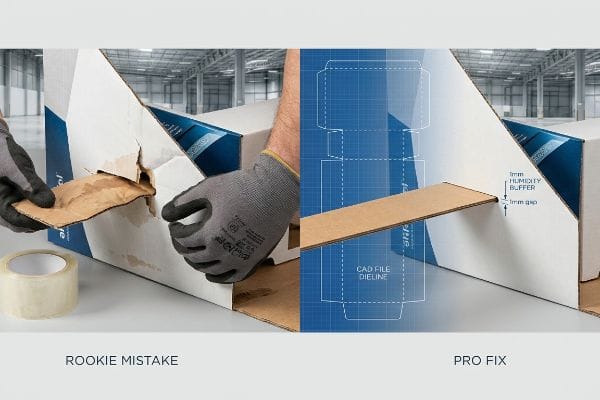
যখন আপনি ঘণ্টাপ্রতি পারিশ্রমিক দেওয়া তৃতীয় পক্ষের শ্রমের উপর নির্ভর করেন, তখন তাত্ত্বিক CAD (কম্পিউটার-এইডেড ডিজাইন) ফাইলগুলো এক কঠোর বাস্তবতার সম্মুখীন হয়।.
আর্দ্রতা স্ফীতি সমাবেশ ফাঁদ
ব্র্যান্ড ম্যানেজাররা সাধারণত একটি তাপমাত্রা-নিয়ন্ত্রিত অফিসে শুকনো, ধবধবে সাদা নমুনা পর্যালোচনা করেন এবং ধরে নেন যে গুদামকর্মীদের জন্যও সংযোজন প্রক্রিয়াটি একই রকম হবে। তাঁরা পরিবেশগত পরিবর্তনের প্রতি বিন্দুমাত্র ছাড় না দিয়ে ডাইলাইন অনুমোদন করেন, এই প্রত্যাশায় যে স্লট এবং লকিং ট্যাবগুলো অনায়াসে একসাথে জুড়ে যাবে। এই তাত্ত্বিক নির্ভুলতা বিশ্বের বিভিন্ন জলবায়ু জুড়ে ফ্ল্যাট-প্যাক করা কাগজের পণ্য পরিবহনের পরিবেশগত পদার্থবিদ্যাকে উপেক্ষা করে।
যখন আপনার ফ্ল্যাট করোগেটেড বোর্ডগুলো ফ্লোরিডার কোনো আর্দ্র থার্ড-পার্টি লজিস্টিকস গুদামে থাকে, তখন এর ছিদ্রযুক্ত ৩২ইসিটি টেস্টলাইনারটি পারিপার্শ্বিক আর্দ্রতা শোষণ করে ফুলে ওঠে। ডিজাইন সফটওয়্যারে যে ট্যাবটি নিখুঁতভাবে ফিট হতো, সেটি হঠাৎ করে এক মিলিমিটার বেশি পুরু হয়ে যায়। আমি কো-প্যাকিং লাইনে দাঁড়িয়ে কাঁচা পেপারবোর্ড ছিঁড়ে যাওয়ার বিশ্রী শব্দ শুনেছি, যখন হতাশ শ্রমিকরা ফুলে ওঠা লকিং ট্যাবগুলোকে আঁটসাঁট স্লটে জোর করে ঢোকানোর চেষ্টা করে এবং অবশেষে তাদের দৈনিক কোটা পূরণ করার জন্য বিশ্রী স্বচ্ছ টেপ ব্যবহার করতে বাধ্য হয়। এটি বন্ধ করার জন্য, আমি আমাদের ArtiosCAD ফাইলের রিসিভিং স্লটগুলোতে স্বয়ংক্রিয়ভাবে একটি ০.০৪-ইঞ্চি (১ মিমি) আর্দ্রতা বাফার যুক্ত করে দিই। এই গাণিতিক ক্ষতিপূরণ কো-প্যাকারের জন্য একটি ঘর্ষণহীন, ছেঁড়া-ফাটা ছাড়া অ্যাসেম্বলি নিশ্চিত করে, যা অ্যাসেম্বলির জন্য শ্রমিকের সময় ৩০% কমিয়ে দেয় এবং আপনার আর্টওয়ার্কে ব্র্যান্ডের ক্ষতি করতে পারে এমন টেপ ব্যবহারের ঝুঁকি দূর করে।
| নতুনদের সাধারণ ভুল | প্রো ফিক্স | খুচরা-ফ্লোর সুবিধা |
|---|---|---|
| শূন্য ক্লিয়ারেন্স সহ ট্যাব ডিজাইন করা | ১ মিমি আর্দ্রতা বাফার যোগ করা7 | কো-প্যাকার ট্যাব ছিঁড়ে যাওয়া বন্ধ করে। |
| গুদামের পারিপার্শ্বিক আর্দ্রতা উপেক্ষা করা | আর্দ্রতা-প্রতিরোধী আবরণ ব্যবহার করে8 | বোর্ড ফুলে যাওয়ার ব্যর্থতা প্রতিরোধ করে |
| অফিসে পরীক্ষিত প্রোটোটাইপের উপর নির্ভর করা | লজিস্টিক পরিবেশের জন্য প্রকৌশল | শ্রম সমাবেশের সময় হ্রাস করে |
আমি সবসময় গুদামের সবচেয়ে খারাপ পরিবেশের কথা মাথায় রেখে নকশা করি, অফিসের আদর্শ পরীক্ষার কথা নয়। গাণিতিকভাবে উপাদানের প্রসারণের পূর্বাভাস দিয়ে আমি নিশ্চিত করি যে, আপনার ইউনিটগুলো সংযোজনকারী ঘণ্টাভিত্তিক কর্মীরা যেন এমন কোনো ধ্বংসাত্মক শক্তি ব্যবহার না করে যা আপনার ব্র্যান্ডের দৃশ্যমান সৌন্দর্য নষ্ট করে দেয়।.
🛠️ হার্ভির ডেস্ক: কো-প্যাকাররা ফোলা ট্যাবগুলো ছিঁড়ে ফেলার কারণে আপনার বর্তমান ডিসপ্লেটি কি স্বচ্ছ টেপের ওপর নির্ভর করছে? 👉 আপনার ডাইলাইন পরীক্ষা করান ↗ — নিরাপদে ডাউনলোড করুন। পরবর্তীতে কোনো প্রশ্ন থাকলে আমার ইনবক্স খোলা আছে।
মার্চেন্ডাইজিং ডিসপ্লে কী?
শুধু পণ্য ধরে রাখার বাইরেও, একটি সত্যিকারের মার্চেন্ডাইজিং ইউনিট হলো একটি পরিকল্পিত বিক্রয় সরঞ্জাম। এটিকে অবশ্যই সক্রিয়ভাবে ক্রেতার মনস্তত্ত্বে পরিবর্তন আনতে হবে।.
মার্চেন্ডাইজিং ডিসপ্লে হলো একটি কৌশলগত বিপণন কাঠামো, যা পণ্য প্রদর্শন এবং ভোক্তাদের ক্রয় আচরণকে উৎসাহিত করার জন্য ডিজাইন করা হয়েছে। ঢেউখেলানো কার্ডবোর্ড, ধাতু বা প্লাস্টিক দিয়ে তৈরি এই বিশেষ কাঠামোটি মজুত পণ্যকে সুবিন্যস্ত করে, ব্র্যান্ডের বার্তাকে আরও জোরালো করে এবং দোকানের চলাচলে বাধা সৃষ্টি করে, যার ফলে তাৎক্ষণিক ক্রয় এবং ব্র্যান্ডের পরিচিতি নাটকীয়ভাবে বৃদ্ধি পায়।.
তবে, একটি সুন্দর কাঠামো নির্মাণ করাও বৃথা, যদি পণ্যটি ক্রেতার স্বাভাবিক দৃষ্টিসীমার বাইরে অবস্থিত হয়।.
"মানব উচ্চতা" হিট ম্যাপের ব্যর্থতা
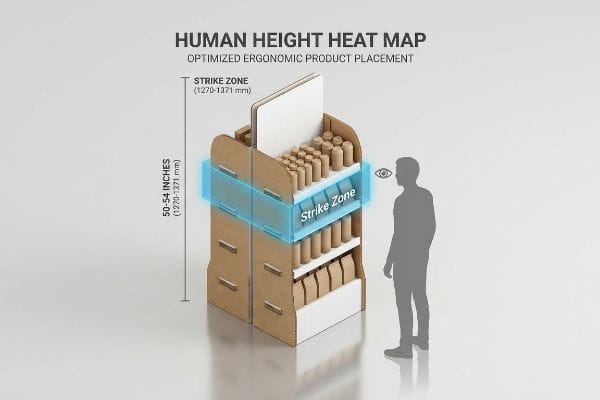
জুনিয়র মার্কেটিং টিমগুলো প্রায়শই তাকের মধ্যে প্রতিসম ব্যবধান দাবি করে, একটি স্বতন্ত্র ফ্লোর ইউনিটের উল্লম্ব উচ্চতাকে সর্বাধিক ব্যবহার করে ডিসপ্লেতে যত বেশি সম্ভব SKU (স্টক কিপিং ইউনিট) ঠাসাঠাসি করে রাখার চেষ্টা করে। তারা এই ফিক্সচারটিকে একটি সাধারণ গুদাম র্যাকের মতো ব্যবহার করে, যেখানে উচ্চ-মার্জিনের বিশেষ পণ্যগুলো মেঝে থেকে উপরের অংশ পর্যন্ত সমানভাবে সাজানো থাকে। এটি মূলত মানব শারীরস্থান এবং ক্রেতারা কীভাবে একটি জনাকীর্ণ খুচরা দোকানের করিডোরে কেনাকাটা করে, সেই বাস্তবতাকে উপেক্ষা করে ।
আপনার ডিসপ্লেকে একটি দ্রুতগতির হাইওয়ের বিলবোর্ডের মতো ভাবুন; যদি এটি খুব নিচুতে থাকে, তবে কেউ এটি দেখতে পায় না। আমাকে ক্রমাগত ব্র্যান্ডগুলোকে তাদের সেরা পণ্যগুলো মেঝে থেকে মাত্র কয়েক ইঞ্চি উঁচুতে নিচের তাকগুলোতে রাখা থেকে বিরত রাখতে হয়, যেখানে ক্রেতারা নিচু হতে একেবারেই রাজি হন না। আমার মনে আছে, একবার একটি পরীক্ষামূলক লঞ্চ দেখেছিলাম যেখানে নিচের তাকে রাখা প্রিমিয়াম ইলেকট্রনিক্স পণ্যগুলোকে পুরোপুরি উপেক্ষা করা হয়েছিল, যেগুলো ঢেউখেলানো কাগজের ধুলোর একটি সূক্ষ্ম স্তরে ঢাকা ছিল। আমি একটি কঠোর "মানুষের উচ্চতা" অনুযায়ী হিটম্যাপ লেআউট বাধ্যতামূলক করি, এবং "স্ট্রাইক জোন"—যা মেঝে থেকে ঠিক ৫০ থেকে ৫৪ ইঞ্চি (১২৭০-১৩৭১ মিমি) উপরে—শুধুমাত্র আপনার সর্বোচ্চ মুনাফার পণ্যগুলোর জন্য সংরক্ষিত রাখি। এই আরামদায়ক পণ্য বিন্যাস বাধ্যতামূলক করার মাধ্যমে, আমি ব্র্যান্ডগুলোকে একটি নথিভুক্ত ৩-সেকেন্ডের ভিজ্যুয়াল লিফট অর্জন করতে সাহায্য করি, যা উপকরণের জন্য একটি অতিরিক্ত পয়সাও খরচ না করে করিডোরে ক্রেতাদের নিষ্ক্রিয় চলাচলকে পরিমাপযোগ্য বিক্রয়ে রূপান্তরিত করে।.
| নতুনদের সাধারণ ভুল | প্রো ফিক্স | খুচরা-ফ্লোর সুবিধা |
|---|---|---|
| নিম্ন স্তরে হিরো আইটেম ঠাসাঠাসি করা | ৫০-৫৪ ইঞ্চি স্ট্রাইক জোন ব্যবহার করে ১০ | আকস্মিক ক্রয়ের রূপান্তর বৃদ্ধি |
| সমস্ত পণ্যের তাকগুলির মধ্যে সমান দূরত্ব | অসম উচ্চ-প্রান্ত স্থাপন11 | স্বাভাবিক কেনাকাটার স্বাচ্ছন্দ্য উন্নত করে |
| ডিসপ্লেগুলোকে স্টোরেজ র্যাকের মতো ব্যবহার করা | একটি দৃশ্যমান বিলবোর্ড হিসেবে প্রকৌশল | উৎকৃষ্ট মানের পণ্যের স্থবিরতা রোধ করে |
আমি গতানুগতিক কার্ডবোর্ডের স্টোরেজ র্যাক তৈরি করি না; আমি ডিজাইন করি ব্যবহার-বান্ধব রূপান্তর সরঞ্জাম। আপনার সেরা পণ্যগুলোকে সরাসরি ক্রেতার স্বাভাবিক দৃষ্টিগোচর স্থানে স্থাপন করার মাধ্যমে, আমি সেগুলোকে ক্রেতার সাথে সরাসরি সংযোগ স্থাপনে বাধ্য করি এবং আপনার দোকানের মোট জায়গার তাৎক্ষণিক বিনিয়োগের সর্বোচ্চ সুবিধা নিশ্চিত করি।.
🛠️ হার্ভিস ডেস্ক: আপনার সর্বোচ্চ মুনাফার পণ্যগুলো কি ভুলবশত ক্রেতার স্বাচ্ছন্দ্যপূর্ণ ব্যবহারের জায়গার বাইরে লুকিয়ে আছে? 👉 একটি বিনামূল্যে কাঠামোগত পর্যালোচনার জন্য আবেদন করুন ↗ — এমন কোনো ফর্ম নেই যা অবিরাম সেলস কলের কারণ হয়। শুধু খাঁটি মূল্য।
দোকানের বিন্যাসকে কী বলা হয়?
রিটেইল স্পেস সুরক্ষিত করার জন্য স্টোরের ম্যাক্রো লেআউট, যা প্ল্যানোগ্রাম নামে পরিচিত, তা আয়ত্ত করা প্রয়োজন।.
দোকানের বিন্যাসকে আনুষ্ঠানিকভাবে প্ল্যানোগ্রাম বা রিটেইল ফ্লোর প্ল্যান বলা হয়। এই অত্যন্ত বিস্তারিত নকশাটি ক্রেতাদের চলাচল প্রবাহকে অনুকূল করতে, স্থানের সর্বোচ্চ ব্যবহার নিশ্চিত করতে এবং স্বতন্ত্র মৌসুমী বা প্রচারণামূলক বিপণন উদ্দেশ্যের সাথে কৌশলগতভাবে সামঞ্জস্য রাখতে, চলাচলের পথ, স্থায়ী তাক এবং প্রচারমূলক পণ্য প্রদর্শনের সঠিক অবস্থান নির্ধারণ করে দেয়।.
কিন্তু যখন মেশিনগুলো চলতে শুরু করে এবং বড় বড় দোকানের ম্যানেজারদের সাথে জায়গা নিয়ে দর কষাকষি শুরু হয়, তখন শুধু তত্ত্ব জানাই যথেষ্ট নয়।.
"ভগ্নাংশ প্যালেট" জ্যামিতির ফাঁদ
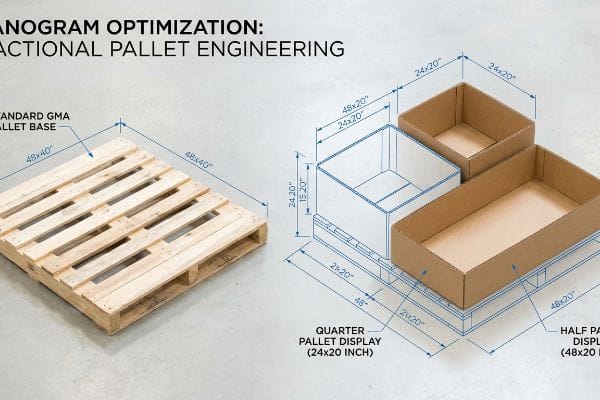
ব্র্যান্ডগুলো প্রায়শই বড় বড় রিটেইলারদের কাছে বিশাল, পূর্ণ আকারের ৪৮×৪০ ইঞ্চি (১২১৯×১০১৬ মিমি) ফ্লোর ডিসপ্লে উপস্থাপন করে একটি রিটেইল লেআউটে আধিপত্য বিস্তারের চেষ্টা করে। তারা ধরে নেয় যে একটি উচ্চ-বাজেটের প্রচারণামূলক অভিযান স্বয়ংক্রিয়ভাবে তাদেরকে দোকানের মাঝের করিডোরে একটি সম্পূর্ণ কাঠের প্যালেট বেস একচেটিয়াভাবে ব্যবহার করার অধিকার দেয় । তারা এটা বুঝতে ব্যর্থ হয় যে রিটেইল ক্রেতারা কঠোরভাবে দোকানের জায়গা ভাগাভাগি করে ব্যবহার করে, এবং একটি অতিরিক্ত বড় ও অনমনীয় কাঠামো উপস্থাপন করাই হলো একটি প্রচারণাকে সম্পূর্ণরূপে বাতিল করিয়ে দেওয়ার সবচেয়ে দ্রুততম উপায়।
আমার প্রতিষ্ঠানে, আমি নিয়মিত দেখি যে ক্লায়েন্টরা খুচরা বিক্রেতাদের কাছ থেকে ব্যাপক প্রত্যাখ্যানের শিকার হন, কারণ তাদের হয়-না হয় পূর্ণ-প্যালেট ডিজাইনগুলো দোকানের কঠোর স্থানিক গ্রিড লঙ্ঘন করে। এটি একটি সাধারণ ফাঁদ যা এমনকি অভিজ্ঞ ক্রয় দলগুলোকেও কাবু করে ফেলে। যখন কোনো ক্রেতা আমাকে বলেন যে একজন খুচরা বিক্রেতা তাদের লেআউট প্রত্যাখ্যান করেছে, আমি সাথে সাথে CAD ফাইলগুলো বের করে তার মূল কাঠামো পরিমাপ করি। আমি গাণিতিকভাবে তাদের বাল্ক মার্চেন্ডাইজারগুলোকে আদর্শ ভগ্নাংশীয় মাপে ভাগ করি: হাফ প্যালেট ৪৮×২০ ইঞ্চি (১২১৯×৫০৮ মিমি) ¹³ অথবা কোয়ার্টার প্যালেট ২৪×২০ ইঞ্চি (৬০৯×৫০৮ মিমি)। এই স্ফীত, অতিরিক্ত-পরিকল্পিত কাঠামো বাদ দিয়ে, আমি একটিমাত্র GMA কাঠের ডেকের উপর একাধিক প্রচারমূলক প্রচারাভিযানকে নিখুঁতভাবে সংযুক্ত করার সুযোগ করে দিই। এই জ্যামিতিক নির্ভুলতা নিশ্চিত করে যে আপনার ছোট আকারের কাঠামোটি প্ল্যানোগ্রাম অডিটে টিকে থাকবে, আপনার ব্র্যান্ডের জন্য সেরা সংযোগস্থলে স্থান নিশ্চিত করবে এবং একই সাথে আপনার ঢেউখেলানো কাগজের উপকরণের খরচ ৪০% পর্যন্ত কমিয়ে আনবে¹⁴ ।
| নতুনদের সাধারণ ভুল | প্রো ফিক্স | খুচরা-ফ্লোর সুবিধা |
|---|---|---|
| অতিরিক্ত বড় পূর্ণ-প্যালেট বেস পিচ করা | অর্ধেক বা এক-চতুর্থাংশ ভগ্নাংশ ডিজাইন করা | কঠোর প্ল্যানোগ্রাম অনুমোদন নিশ্চিত করে |
| করিডোরের জায়গা একচেটিয়াভাবে দখল করা | পরস্পর সংযুক্ত বহু-প্রচারণার ভিত্তি | দোকানের কেন্দ্রস্থলের মেঝের ঘনত্ব সর্বাধিক করে |
| বড় আকারের দোকানের জায়গার রেশনিং উপেক্ষা করা | সুনির্দিষ্ট জিএমএ উপবিভাগ ব্যবহার করে | ঢেউখেলানো কাগজের ব্যয় ব্যাপকভাবে হ্রাস করে |
আমি জানি যে, দোকানের জায়গা বিশ্বের সবচেয়ে দামী রিয়েল এস্টেট। দোকানের সামগ্রিক নকশার সাথে নিখুঁতভাবে মিশে যায় এমন ফ্র্যাকশনাল প্যালেট তৈরি করার মাধ্যমে, আমি খুচরা ক্রেতার পক্ষে আপনার প্রস্তাব প্রত্যাখ্যান করা গাণিতিকভাবে অসম্ভব করে তুলি।.
🛠️ হার্ভির ডেস্ক: কোনো বড় রিটেইলার কি আপনার ফ্লোর ডিসপ্লেটি করিডোরের অনেকটা জায়গা দখল করার কারণে বাতিল করে দিয়েছে? 👉 আপনার ডাইলাইন ফাইলটি আমাকে পাঠান ↗ — গণ-উৎপাদনে বাজেট অপচয় করার আগে আমি এর হিসাব-নিকাশ পুঙ্খানুপুঙ্খভাবে পরীক্ষা করে দেখব।
উপসংহার
আপনার প্রচারমূলক বিনগুলো তৈরি করার জন্য আপনি কোনো সস্তা বিক্রেতা বেছে নিতে পারেন, কিন্তু যখন ৩২ইসিটি বোর্ড গুদামের আর্দ্রতা শোষণ করে ফুলে ওঠে, তখন এর ফলে সৃষ্ট ট্যাবের ঘর্ষণ কো-প্যাকিং অ্যাসেম্বলি লাইনের গতি আনুমানিক ৩০% কমিয়ে দেবে, যা আপনার লাভের মার্জিন পুরোপুরি নষ্ট করে দেবে। আমার শীর্ষ ১০ জন রিটেইল ক্লায়েন্ট প্রিন্ট রিজেকশন শূন্যে নামিয়ে আনার নিশ্চয়তা দিতে ঠিক এই স্পেক শিটটিই ব্যবহার করেন। পরিবেশগত সহনশীলতা নিয়ে অনুমান করা বন্ধ করুন এবং ব্যাপক উৎপাদন শুরু হওয়ার আগেই মারাত্মক কাঠামোগত ত্রুটিগুলো ধরার জন্য আমাকে ব্যক্তিগতভাবে আপনার ফাইলগুলো আমার ফ্রি ডাইলাইন অডিট ↗- এর মাধ্যমে পরীক্ষা করতে দিন।
"POP বনাম POS: পার্থক্য কী? – রেপসলি", https://www.repsly.com/blog/point-of-purchase-vs-point-of-sales-difference। [খুচরা ব্যবসার নিয়মকানুন বা প্রবেশগম্যতা মানদণ্ডের উপর একটি নির্ভরযোগ্য উৎস নির্দিষ্ট আইনি বাধ্যবাধকতা, যেমন ADA নির্দেশিকা, যা ফ্লোর ডিসপ্লে এবং চেকআউট কাউন্টার ইউনিটকে পৃথক করে, সেগুলোর বিস্তারিত বিবরণ দেবে]। প্রমাণের ভূমিকা: আইনি সীমাবদ্ধতার বৈধতা; উৎসের ধরণ: নিয়ন্ত্রক নির্দেশিকা/শিল্প মান। সমর্থন করে: এই দাবি যে POS এবং POP এলাকাগুলো আইনত স্বতন্ত্র। পরিধির টীকা: উচ্চ-মানের খুচরা পরিবেশের জন্য নির্দিষ্ট। ↩
"৪৮×৪০" জিএমএ প্যালেট | বৃহত্তম প্যালেট প্রস্তুতকারক ও সরবরাহকারী", https://www.palletone.com/products/gma-pallets/। [জিএমএ-এর শিল্প সরবরাহ মান উত্তর আমেরিকার খুচরা প্যালেটের জন্য সার্বজনীন ৪৮×৪০ ইঞ্চি মাপকে যাচাই করে]। প্রমাণের ভূমিকা: প্রযুক্তিগত বিবরণ; উৎসের ধরণ: শিল্প মান। সমর্থন করে: ফ্লোর ইউনিটের ভৌত পদচিহ্ন। পরিধি টীকা: উত্তর আমেরিকার খুচরা ব্যবসার জন্য প্রাথমিক মান। ↩
"এডিএ অ্যাক্সেসিবিলিটি স্ট্যান্ডার্ডস – অ্যাক্সেস-বোর্ড.গভ", https://www.access-board.gov/ada/। [অ্যাক্সেসিবল ডিজাইনের জন্য এডিএ স্ট্যান্ডার্ডস হুইলচেয়ার ব্যবহারকারীদের জন্য অ্যাক্সেসিবিলিটি নিশ্চিত করতে, বাধাহীনভাবে সামনে পৌঁছানোর জন্য প্রয়োজনীয় উচ্চতার পরিসীমা নির্দিষ্ট করে]। প্রমাণের ভূমিকা: আইনি আবশ্যকতা; উৎসের ধরণ: সরকারি প্রবিধান। সমর্থন: কাউন্টার ইউনিটের জন্য উচ্চতার সীমাবদ্ধতা। পরিধি টীকা: মার্কিন যুক্তরাষ্ট্রের ফেডারেল অ্যাক্সেসিবিলিটি আইনের ক্ষেত্রে প্রযোজ্য। ↩
"অ্যাক্সেসযোগ্য ডিজাইনের জন্য ADA স্ট্যান্ডার্ড, টাইটেল III রেগুলেশন ২৮ CFR …", https://www.ada.gov/law-and-regs/design-standards/1991-design-standards/। [প্রামাণিক ADA অ্যাক্সেসিবিলিটি নির্দেশিকা হুইলচেয়ার ব্যবহারকারী ব্যক্তিদের জন্য ব্যবহারযোগ্যতা নিশ্চিত করতে অ্যাক্সেসযোগ্য ফিক্সচারের সর্বোচ্চ নাগালের পরিসীমা নির্দিষ্ট করে]। প্রমাণের ভূমিকা: নিয়ন্ত্রক যাচাইকরণ; উৎসের ধরণ: সরকারি মান। সমর্থন করে: দোকানের ফিক্সচারের জন্য ADA সম্মতি। পরিধি নোট: বিশেষভাবে মার্কিন যুক্তরাষ্ট্রের ফেডারেল অ্যাক্সেসিবিলিটি আইনের ক্ষেত্রে প্রযোজ্য। ↩
"তাপ-প্রক্রিয়াজাত কাঠের জিএমএ প্যালেট – ৪৮ x ৪০" এইচ-১২৬০ – ইউলাইন", https://www.uline.com/Product/Detail/H-1260/Pallets/Heat-Treated-Wood-GMA-Pallet-48-x-40। [গ্রোসারি ম্যানুফ্যাকচারার্স অ্যাসোসিয়েশন উত্তর আমেরিকার খুচরা ও লজিস্টিকসের জন্য ৪৮" x ৪০" মাপটিকে আদর্শ প্যালেটের আকার হিসেবে প্রতিষ্ঠা করে]। প্রমাণের ভূমিকা: শিল্প মান যাচাইকরণ; উৎসের ধরণ: বাণিজ্য সংস্থার স্পেসিফিকেশন। সমর্থন করে: প্যালেটের স্থান সংক্রান্ত প্রয়োজনীয়তা। পরিধি টীকা: উত্তর আমেরিকার খুচরা বিতরণের জন্য প্রাথমিক মান। ↩
"...এর সংকোচন শক্তির উপর আপেক্ষিক আর্দ্রতার প্রভাব", https://open.clemson.edu/all_theses/3225/। [পদার্থ বিজ্ঞান বা প্যাকেজিং ইঞ্জিনিয়ারিং-এর কোনো উৎস বিশদভাবে বর্ণনা করবে যে কীভাবে বিভিন্ন জলবায়ুতে পেপারবোর্ড আর্দ্রতা শোষণ করে, যার ফলে মাত্রাগত পরিবর্তন ঘটে যা স্লট-এবং-ট্যাব ফিটকে প্রভাবিত করে]। প্রমাণের ভূমিকা: প্রযুক্তিগত যাচাইকরণ; উৎসের ধরণ: প্যাকেজিং শিল্পের মান বা পদার্থ বিজ্ঞানের পাঠ্যপুস্তক। সমর্থন করে: এই দাবি যে জলবায়ু পরিবর্তন অ্যাসেম্বলির নির্ভুলতাকে প্রভাবিত করে। পরিধি টীকা: বিশেষভাবে সেলুলোজ-ভিত্তিক ঢেউখেলানো উপকরণের ক্ষেত্রে প্রযোজ্য]। ↩
"আর্দ্রতা এবং তাপমাত্রার প্রভাব … এর যান্ত্রিক বৈশিষ্ট্যের উপর", https://bioresources.cnr.ncsu.edu/resources/influence-of-humidity-and-temperature-on-mechanical-properties-of-corrugated-board-numerical-investigation/। [কোরুগেটেড প্যাকেজিং-এর জন্য ইঞ্জিনিয়ারিং স্ট্যান্ডার্ডগুলি আর্দ্রতার কারণে সাবস্ট্রেটের প্রসারণ ঘটলে উপাদান আটকে যাওয়া এবং ছিঁড়ে যাওয়া রোধ করার জন্য নির্দিষ্ট টলারেন্সের সুপারিশ করে]। প্রমাণের ভূমিকা: প্রযুক্তিগত স্পেসিফিকেশন; উৎসের ধরণ: উৎপাদন নির্দেশিকা। সমর্থন: ১ মিমি বাফারের নির্ভুলতা। পরিধি নোট: সেলুলোজ-ভিত্তিক কাঠামোগত উপকরণের জন্য নির্দিষ্ট]। ↩
"বক্স কোটিং ও ফিনিশ | অ্যাবট অ্যাকশন | ডিজাইন, টেস্ট ও ম্যানুফ্যাকচার …", https://www.abbottaction.com/packaging/box-coating/। [বস্তু বিজ্ঞানের তথ্য নিশ্চিত করে যে হাইড্রোফোবিক কোটিং করোগেটেড বোর্ডে জল শোষণ কমায়, যা হাইগ্রোস্কোপিক ফোলাভাব এবং কাঠামোগত বিকৃতি প্রশমিত করে]। প্রমাণের ভূমিকা: উপাদানের বৈশিষ্ট্য যাচাই; উৎসের ধরণ: টেকনিক্যাল ডেটা শিট। সমর্থন করে: ফোলাভাবের বিরুদ্ধে কোটিংয়ের কার্যকারিতা। পরিধির টীকা: কোটিংয়ের প্রকারভেদে ভিন্ন হয়, যেমন জলীয় বা ইউভি কোটিং]। ↩
"রিটেইলে হিট ম্যাপ: আগ্রহের অঞ্চল বোঝা – জোভিস", https://www.xovis.com/insights/detail/heat-maps-in-retail-understanding-zones-of-interest-use-case। [রিটেইল সাইকোলজি এবং এরগোনোমিক্সের গবেষণা দেখায় যে ক্রেতারা প্রাথমিকভাবে চোখের স্তরে স্ক্যান করে, যা ডিসপ্লেতে 'হট জোন' এবং 'কোল্ড জোন' তৈরি করে]। প্রমাণের ভূমিকা: প্রযুক্তিগত বৈধতা; উৎসের ধরণ: ভোক্তা আচরণ সমীক্ষা। সমর্থন করে: প্রতিসম উল্লম্ব পণ্য স্থাপনের অদক্ষতা। পরিধি নোট: স্ক্যান করার ধরণ জনসংখ্যার বয়স এবং উচ্চতা অনুসারে পরিবর্তিত হতে পারে। ↩
"খুচরা বিক্রেতারা কেন পণ্য চোখের সমান উচ্চতায় রাখেন? – পপডিসপ্লে", https://popdisplay.me/why-do-retailers-place-products-at-eye-level/। রিটেইল আর্গোনমিক্স এবং ভোক্তার চোখের স্তরের হিট ম্যাপিং-এর জন্য শিল্প মানদণ্ড এই নির্দিষ্ট উচ্চতার পরিসরটিকে দৃষ্টি আকর্ষণের জন্য সর্বোচ্চ ক্ষেত্র হিসাবে যাচাই করে। প্রমাণের ভূমিকা: প্রযুক্তিগত বিবরণ; উৎসের ধরণ: শিল্প মানদণ্ড। সমর্থন করে: তাৎক্ষণিক ক্রয়ের জন্য সর্বোত্তম উচ্চতা শনাক্তকরণ। পরিধি সংক্রান্ত টীকা: লক্ষ্য জনগোষ্ঠীর উচ্চতার উপর ভিত্তি করে সামান্য পরিবর্তিত হতে পারে। ↩
"খুচরা ব্যবসায় পণ্য স্থাপনের চূড়ান্ত নির্দেশিকা – এস-কিউব ফিক্সচারস", https://www.scubefixtures.com/blog/the-power-of-product-placement-in-retail-stores। দৃশ্যমান প্রাধান্য এবং দৃষ্টিপাতের ধরণ সম্পর্কিত ভোক্তা আচরণ গবেষণা এই দাবিকে সমর্থন করে যে, প্রতিসম বিন্যাসের চেয়ে অসম বিন্যাস বেশি মনোযোগ আকর্ষণ করে। প্রমাণের ভূমিকা: আচরণগত দাবি; উৎসের ধরণ: ভোক্তা মনোবিজ্ঞান গবেষণা। সমর্থন করে: পণ্যের দৃশ্যমানতা বৃদ্ধিতে অপ্রতিসম বিন্যাসের কার্যকারিতা। পরিধিগত টীকা: বিভিন্ন পণ্যের ক্ষেত্রে কার্যকারিতা ভিন্ন হতে পারে। ↩
"স্ট্যান্ডার্ড প্যালেট সাইজ কী? ৪৮"x৪০" – প্যালেটওয়ান ইনকর্পোরেটেড", https://www.palletone.com/what-is-the-standard-pallet-size/। [লজিস্টিকস বা রিটেইল মার্চেন্ডাইজিং-এর একটি নির্ভরযোগ্য সূত্র নিশ্চিত করবে যে উত্তর আমেরিকার রিটেইল ফ্লোর ডিসপ্লেতে ব্যবহৃত জিএমএ প্যালেটগুলির জন্য ৪৮×৪০ ইঞ্চি হলো স্ট্যান্ডার্ড মাপ]। প্রমাণের ভূমিকা: প্রযুক্তিগত স্পেসিফিকেশন; উৎসের ধরণ: শিল্প মান। সমর্থন করে: স্ট্যান্ডার্ড প্যালেটের মাপ। পরিধি নোট: প্রাথমিকভাবে উত্তর আমেরিকার লজিস্টিকস-এর জন্য। ↩
"প্যালেট ডিসপ্লের প্রকারভেদ: পূর্ণ, অর্ধ ও চতুর্থাংশ – গ্রীনডট প্যাকেজিং", https://greendotpackaging.com/understanding-pallet-display-types-full-half-and-quarter-pallet-displays/। [শিল্প লজিস্টিকস মান এবং জিএমএ নির্দেশিকা খুচরা পণ্য বিপণনে ব্যবহৃত ভগ্নাংশ প্যালেটের নির্দিষ্ট মাত্রা নির্ধারণ করে]। প্রমাণের ভূমিকা: প্রযুক্তিগত বিবরণ; উৎসের ধরণ: শিল্প মান নির্দেশিকা। সমর্থন করে: প্রমিত প্যালেট আকার নির্ধারণ। পরিধি টীকা: প্রাথমিকভাবে উত্তর আমেরিকার খুচরা মানগুলির জন্য প্রযোজ্য। ↩
"কীভাবে কার্ডবোর্ড প্যালেট বক্স লজিস্টিকস খরচ কমায় | গাইড – সিওরপ্যাক", https://surepac.co.uk/resources/cardboard-pallet-boxes-logistics-costs/। [রাইটসাইজিং-এর উপর প্যাকেজিং শিল্পের প্রতিবেদন এবং কেস স্টাডিগুলো পূর্ণ-মাপের প্রচারমূলক ডিসপ্লে থেকে আংশিক ডিসপ্লেতে স্থানান্তরের ফলে অর্জিত বস্তুগত সাশ্রয়ের পরিমাণ নির্ণয় করে]। প্রমাণের ভূমিকা: পরিমাণগত কর্মক্ষমতা মেট্রিক; উৎসের ধরণ: শিল্প প্রতিবেদন। সমর্থন করে: ব্যয় দক্ষতার দাবি। পরিধি নোট: প্রাথমিক ডিসপ্লের পরিমাণের উপর ভিত্তি করে প্রকৃত সাশ্রয় ভিন্ন হতে পারে। ↩