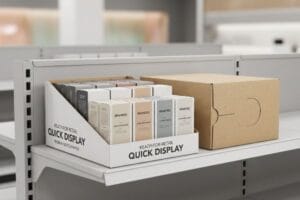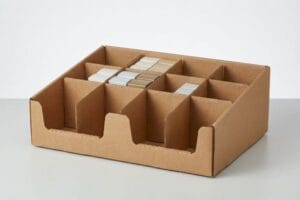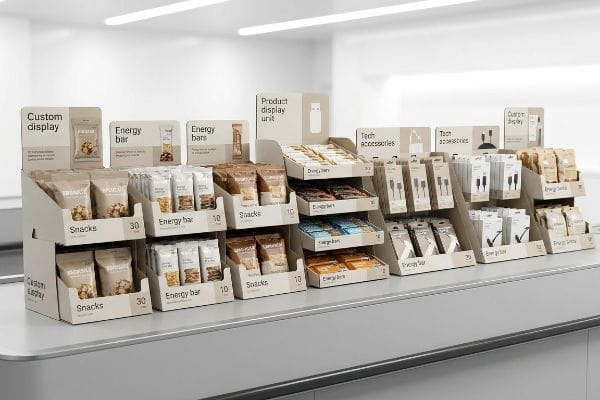
আপনার তাৎক্ষণিক বিক্রির পণ্যগুলো কি ক্যাশ কাউন্টারে হারিয়ে যাচ্ছে? ব্যস্ত রিটেইল কাউন্টারগুলো এক একটি যুদ্ধক্ষেত্র, এবং আপনার পণ্যসজ্জা যদি সেখানে সাধারণ মনে হয়, তবে আপনি তাৎক্ষণিক আয় থেকে বঞ্চিত হচ্ছেন।.
কনভেনিয়েন্স স্টোরে কাউন্টার ডিসপ্লের ৬টি সুবিধার মধ্যে রয়েছে অব্যবহৃত ক্যাশ রেজিস্টারের জায়গার সর্বোচ্চ ব্যবহার, উচ্চ-মার্জিনের তাৎক্ষণিক কেনাকাটা বৃদ্ধি, ব্র্যান্ডের সামগ্রিক পরিচিতি বাড়ানো, পণ্যের কঠোর বিন্যাস নিশ্চিত করা, ক্লার্কদের জন্য পণ্য পুনরায় সাজানোর ঝামেলা কমানো এবং চেকআউটের গতি বাড়ানোর জন্য ADA (আমেরিকানস উইথ ডিসএবিলিটিস অ্যাক্ট) অনুবর্তী অঞ্চল জুড়ে নমনীয়ভাবে স্থাপনের সুযোগ।.
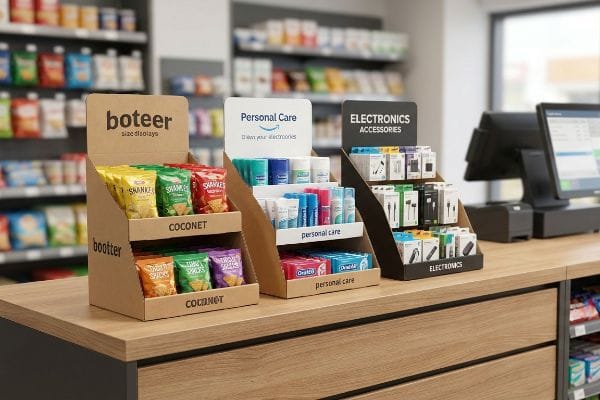
সেরা জায়গাটি দখল করা তাত্ত্বিকভাবে দারুণ শোনালেও, বিশৃঙ্খল চেকআউট জোনে টিকে থাকতে কঠোর কাঠামোগত শৃঙ্খলা প্রয়োজন। চলুন জেনে নেওয়া যাক, এই ছোট আকারের মার্চেন্ডাইজারগুলো ফ্লোরে আসলে কীভাবে কাজ করে।.
সুবিধাকেন্দ্রের দোকানগুলোর সুবিধাগুলো কী কী?
ছোট আকারের খুচরা দোকানগুলো বিক্রির পরিমাণের ওপর টিকে থাকে। ক্যাশিয়ারের কাজের জায়গা সংকীর্ণ না করে আপনাকে পণ্যের সর্বোচ্চ ঘনত্ব বজায় রাখতে হবে।.
সুবিধাকেন্দ্রের মূল সুবিধা হলো স্থানীয় দ্রুততা, যা ভোক্তাদের উচ্চ চাহিদার নিত্যপ্রয়োজনীয় জিনিসপত্রে তাৎক্ষণিক প্রবেশাধিকার দেয়। এগুলোর অত্যন্ত ছোট আকারের কারণে ব্র্যান্ডগুলো নিখুঁতভাবে ডিজাইন করা কাউন্টারটপ মার্চেন্ডাইজার ব্যবহার করতে বাধ্য হয়, যা ভিড় ও অধিক চলাচলযুক্ত ক্যাশ রেজিস্টারে পণ্যের জন্য উল্লম্ব স্থান সর্বাধিক করার পাশাপাশি কঠোর কাঠামোগত স্থিতিশীলতা বজায় রাখে।.
দ্রুতগতির সেই জায়গাটি সুরক্ষিত করাটা কেবল অর্ধেক কাজ; ইউনিটটিকে অবশ্যই গ্রাহকদের সাথে অবিরাম যোগাযোগের চাপ শারীরিকভাবে সহ্য করতে হবে।.
কাউন্টারটপের "টিপিং পয়েন্ট" পদার্থবিদ্যাকে অতিক্রম করা
পাড়ার দোকানগুলোর জন্য পয়েন্ট অফ পারচেজ (POP) ইউনিট তৈরি করার সময়, অনেক দলই একটি সাধারণ ফ্লোর বিনকে ছোট করে স্ক্যানারের পাশে রেখে দেয়। তারা ধরে নেয় যে একটি ছোট বাক্স স্বাভাবিকভাবেই ভারসাম্য বজায় রাখবে। এটি একটি দ্রুতগতির চেকআউট কাউন্টারের বিশৃঙ্খল বাস্তবতাকে উপেক্ষা করে, যেখানে গ্রাহকরা ক্রমাগত ধাক্কা দেয়, জিনিসপত্র ধরে এবং ঝুঁকে পড়ে।
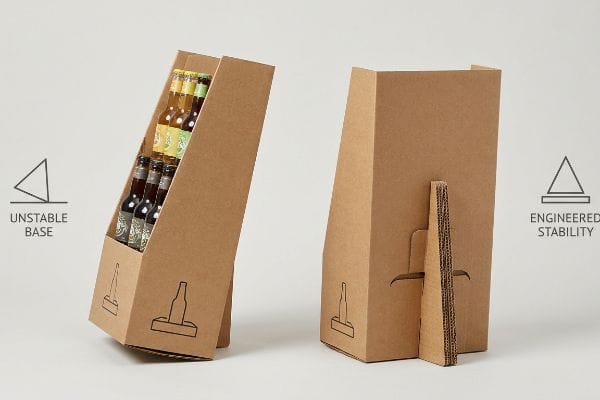
আমি প্রায়শই দেখি সুন্দরভাবে ছাপানো ট্রেগুলো মেঝেতে মুখ থুবড়ে পড়ে, কারণ এর ভরকেন্দ্রকে উপেক্ষা করা হয়েছে। যদি আপনি একটি সরু ভিত্তির মধ্যে কুড়িটি ভারী এনার্জি শট ভরে দেন, তাহলে ইউনিটটি অবিশ্বাস্যভাবে ওপরের দিকে ভারী হয়ে যায়। যখন কোনো তাড়াহুড়ো করা ক্রেতা সামনে থেকে একটি ধরে, তখন ওজনের এই আকস্মিক পরিবর্তন পুরো কার্ডবোর্ডের কাঠামোটিকে সামনের দিকে টেনে নিয়ে যায়। আমি সবসময় এই ইউনিটগুলোতে একটি বর্ধিত ইজেল ব্যাক বা একটি নকল তল যুক্ত করে দিই । নকল তলটি আটকে যাওয়ার সময় যে সন্তোষজনক কাঠামোগত 'ক্লিক' শব্দটি শোনা যায়, তার মানে হলো ভিত্তিটি নোঙর করা হয়েছে। এই সাধারণ জ্যামিতি ইউনিটটিকে উল্টে যাওয়া থেকে রক্ষা করে, যা স্টোর ম্যানেজারকে ভাঙা প্লাস্টিকের বোতল পরিষ্কার করার ঝামেলা থেকে বাঁচায় এবং আপনার ব্র্যান্ডকে ক্যাশ রেজিস্টার থেকে স্থায়ীভাবে নিষিদ্ধ হওয়া থেকে রক্ষা করে।
| নতুনদের সাধারণ ভুল | প্রো ফিক্স | খুচরা-ফ্লোর সুবিধা |
|---|---|---|
| সংকীর্ণ, উপরের অংশ ভারী ভিত্তি | বর্ধিত ঢেউখেলানো ইজেল ব্যাক3 | দুর্ঘটনাবশত উল্টে যাওয়া প্রতিরোধ করে |
| অভিন্ন সমতল তল | ওজন বাড়ানোর জন্য বিশেষভাবে তৈরি কৃত্রিম তল।4 | কাউন্টারে ইউনিট অ্যাঙ্কর করে |
| পণ্যের ওজন উপেক্ষা করা | ভরকেন্দ্রের স্থানান্তর গণনা করা5 | পণ্যের ছিটকে পড়া সম্পূর্ণরূপে বন্ধ করে। |
আমি কোনোভাবেই একটি ভারসাম্যহীন নকশাকে কাটিং টেবিলে পৌঁছাতে দিতে রাজি নই। ভিত্তির কাঠামোকে স্থিতিশীল করলে পণ্যের ক্ষতি সরাসরি কমে যায় এবং ক্যাশিয়ারও খুশি থাকেন।.
🛠️ হার্ভির ডেস্ক: আপনার নতুন চেকআউট ট্রে-টি উল্টে যাওয়ার পর টিকে থাকবে কিনা, তা নিয়ে নিশ্চিত নন? 👉 হিসাবটা করে দেখি ↗ — সরাসরি আমার ডেস্কে প্রবেশাধিকার। কোনো স্বয়ংক্রিয় সেলস স্প্যাম নেই, আমি কথা দিচ্ছি।
খুচরা দোকানে ডিসপ্লে কেন গুরুত্বপূর্ণ?
তাকের উপর একা পড়ে থাকা একটি স্থির পণ্য অদৃশ্য থাকে। একটি বিশৃঙ্খল পরিবেশে, একজন ক্রেতার স্বয়ংক্রিয় রুটিনে বাধা দেওয়ার জন্য আপনার হাতে প্রায় তিন সেকেন্ড সময় থাকে।.
একটি রিটেইল স্টোরে ডিসপ্লে গুরুত্বপূর্ণ, কারণ এটি ক্রেতাদের দৃষ্টির আড়ালে থাকা মনোযোগকে সক্রিয়ভাবে ব্যাহত করে। উচ্চ-কন্ট্রাস্টের ভৌত স্থাপত্য এবং নির্দিষ্ট লক্ষ্যভেদী রঙের ব্যবহার করে, কাস্টম মার্চেন্ডাইজাররা নিষ্ক্রিয় ইনভেন্টরিকে সক্রিয় ভিজ্যুয়াল ট্রিগারে রূপান্তরিত করেন, যা ক্রেতাদের আকর্ষণ করে এবং বিক্রয়কেন্দ্রে তাৎক্ষণিক ক্রয়ের হারকে সরাসরি ত্বরান্বিত করে।.
শুধু তাকের ওপর একটি বাক্স রাখলেই যথেষ্ট নয়; কাঠামোটিকেই ক্রেতার সাথে সক্রিয়ভাবে যোগাযোগ স্থাপন করতে হবে।.
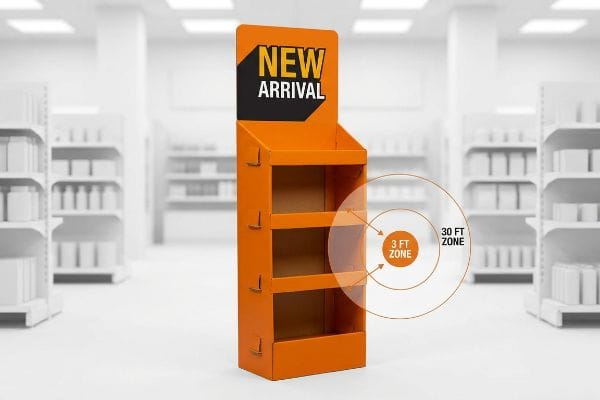
৩-৩-৩ স্থানিক সম্পৃক্ততা নিয়ম আয়ত্ত করা
এটি একটি সাধারণ ফাঁদ যা এমনকি অভিজ্ঞ ক্রয় দলগুলোকেও একটি ব্যাকলিট ২৭-ইঞ্চি (৬৮.৫৮ সেমি) কম্পিউটার মনিটরের দিকে তাকিয়ে গ্রাফিক্স ডিজাইন করতে প্ররোচিত করে। তারা হেডার কার্ডটি ছোট ছোট লেখা এবং সূক্ষ্ম গ্রেডিয়েন্ট দিয়ে ভরিয়ে দেয়, এই ভেবে যে গ্রাহক প্রতিটি শব্দ মনোযোগ দিয়ে পড়বেন। বাস্তব কোনো দোকানে, সেই সূক্ষ্ম শিল্পকর্মটি দশ ফুট (৩.০৪ মিটার) দূর থেকে দেখতে ঝাপসা6।
আমি প্রায়শই দেখি অনেক ইউনিট ব্যর্থ হয়, কারণ তারা উপেক্ষা করে যে মানুষ বাস্তবে একটি দোকানের করিডোরে কীভাবে চলাচল করে। যদি একজন ক্রেতা ত্রিশ ফুট (৯.১৪ মিটার) দূর থেকে আপনার কাঠামোটি লক্ষ্য না করে, তবে তারা আপনার সুবিধাগুলো পড়ার জন্য কখনোই তিন-ফুটের এনগেজমেন্ট জোনে পৌঁছাবে না । আমি সম্প্রতি একটি ফাইল পেয়েছি যেখানে সাধারণ টেস্টলাইনারে চারটি ভিন্ন প্যাস্টেল রঙ ব্যবহার করা হয়েছিল, এবং যখন আমি একটি বাস্তব CMYK (সায়ান, ম্যাজেন্টা, ইয়েলো, কী/ব্ল্যাক) প্রুফ চালালাম, তখন কালিটি ছিদ্রযুক্ত কাগজের তন্তুতে শোষিত হয়ে গেল এবং দেখতে পুরোপুরি বিবর্ণ লাগছিল। আমি সাথে সাথে এটি পরিবর্তন করে একটি একক, জোরালো প্যানটোন স্পট কালার ফ্লাড ব্যবহার করি। সেই মসৃণ, ঘন পিগমেন্ট ফিনিশ ইউনিটটিকে তাৎক্ষণিক দৃষ্টি আকর্ষণকারী একটি রূপ দেয়, যা সক্রিয়ভাবে ক্রেতাকে তার চলার পথে থামিয়ে দেয় এবং বাস্তবিক রূপান্তরকে ত্বরান্বিত করে।
| নতুনদের সাধারণ ভুল | প্রো ফিক্স | খুচরা-ফ্লোর সুবিধা |
|---|---|---|
| হেডার কার্ডে ছোট লেখা | উচ্চ-বৈসাদৃশ্য চাক্ষুষ ব্যাঘাত | ৩০ ফুট দূর থেকেও দৃষ্টি আকর্ষণ করে9 |
| ক্রাফট পেপারের উপর প্যাস্টেল গ্রেডিয়েন্ট | সলিড প্যানটোন স্পট কালার ফ্লাডস | বিবর্ণ ব্র্যান্ডিং প্রতিরোধ করে |
| অতিরিক্ত ভিড়ের বার্তা | একটি নির্দিষ্ট আবেগের উদ্দীপকের উপর মনোযোগ কেন্দ্রীভূত করা | ক্রয়ের সিদ্ধান্ত দ্রুত করে তোলে10 |
আমি আমার ক্লায়েন্টদের সবসময় স্ক্রিন থেকে একটু দূরে তাকাতে বলি। যদি মূল অফারটি তিন সেকেন্ডের নজরে পড়া না যায়, তাহলে বাহ্যিক কাঠামোটি কেবল জায়গা নষ্ট করছে।.
🛠️ হার্ভির ডেস্ক: দোকানের তীব্র আলোতে আপনার ব্র্যান্ডের রঙগুলো কি ঘোলাটে ও অদৃশ্য হয়ে যাচ্ছে? 👉 কালার ক্যালিব্রেশন গাইডটি নিন ↗ — নিরাপদে ডাউনলোড করুন। পরবর্তীতে কোনো প্রশ্ন থাকলে আমার ইনবক্স খোলা আছে।
একটি কনভেনিয়েন্স স্টোরে 7-11 বলতে কী বোঝায়?
ঐতিহাসিকভাবে এই নামটি সকাল ৭টা থেকে রাত ১১টা পর্যন্ত কার্যক্রমের সময়কে নির্দেশ করে, যা একটি আগ্রাসী ও উচ্চ-বিক্রয় ক্ষমতাসম্পন্ন ব্যবসায়িক মডেলকে তুলে ধরে। আপনার প্যাকেজিংকেও এই নিরলস গতির সাথে তাল মেলাতে হবে।.
৭-১১ হলো একটি কনভেনিয়েন্স স্টোরের পরিচালন মডেল, যা মূলত সকাল ৭টা থেকে রাত ১১টা পর্যন্ত খোলা থাকত। এই ঐতিহ্যটি পণ্যের দ্রুত বিক্রি, সহজলভ্যতা এবং সীমিত জায়গার পরিচায়ক, যার জন্য ব্র্যান্ডগুলোকে তাৎক্ষণিক বিক্রয়লব্ধ রাজস্ব অর্জনের লক্ষ্যে অত্যন্ত কার্যকর ও স্থান-সাশ্রয়ী পয়েন্ট অফ সেল (POS) মার্চেন্ডাইজার স্থাপন করতে হয়।.
যেহেতু এই দোকানগুলো অত্যন্ত সংকীর্ণ জায়গায় খুব দ্রুত গতিতে কাজ করে, তাই একটি বড় ডিসপ্লেকে শুধু ছোট করে ফেলাটা বিপর্যয় ডেকে আনার শামিল।.
"শ্রিন্ক-টু-ফিট" মাইক্রো-ট্যাবের ব্যর্থতা
একটি সফল প্রচারণামূলক অভিযানকে বড় গুদাম থেকে ছোট কোনো দোকানে স্থানান্তর করার সময়, অনেক দল তাদের ডিজাইনারকে কেবল CAD (কম্পিউটার-এইডেড ডিজাইন) ফাইলটিকে গাণিতিকভাবে পঞ্চাশ শতাংশ ছোট করে ফেলতে বলে। তারা ধরে নেয় যে, অনুপাত মিলে গেলেই কাঠামোগত অখণ্ডতা একই থাকবে ।
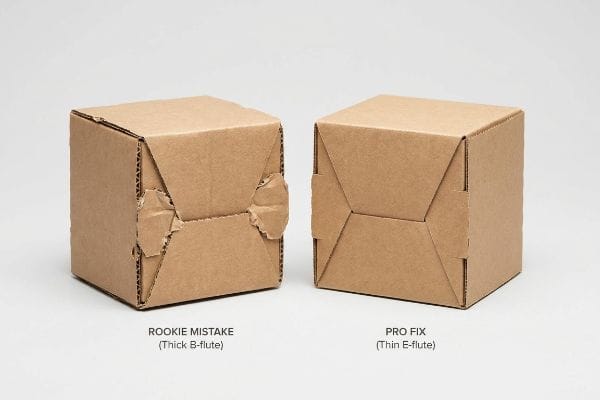
এটাকে একটা মোটা শীতের কোটকে ঠিক একটা পাতলা টি-শার্টের মতো ভাঁজ করার চেষ্টার মতো করে ভাবুন; ভারী কাপড়টি বাধা দেয়। যখন আপনি একটি মোটা বি-ফ্লুট ডাইলাইনকে সংকুচিত করে কাউন্টারটপ ফরম্যাটে, তখন সেই ছোট ছোট ইন্টারলকিং ট্যাবগুলো আর সহজে বাঁকানো যায় না। আমি সম্প্রতি একজন কো-প্যাকারকে দশ মিনিট ধরে একটি ছোট আকারের ট্রে নিয়ে ঘামতে ঘামতে ধস্তাধস্তি করতে দেখেছি, আর উপরের কাগজের লাইনারটি ছিঁড়ে যাওয়ার কর্কশ শব্দ শুনছিলাম, কারণ ভাঁজের ব্যাসার্ধগুলো খুব বেশি আঁটসাঁট ছিল। আমি সাথে সাথে হস্তক্ষেপ করে কাপড়টিকে ঘুরিয়ে একটি পাতলা ই-ফ্লুট (মাইক্রো-ফ্লুট) সাবস্ট্রেট১২-। পাতলা বোর্ডের জন্য ট্যাবের ফাঁকা জায়গাগুলো পুনরায় গণনা করার ফলে, ট্যাবগুলো মসৃণভাবে একটি পরিষ্কার শব্দ করে বসে যায়, যার ফলে প্রতি ইউনিটে অ্যাসেম্বলির সময় ত্রিশ সেকেন্ড কমে আসে এবং গ্রাফিক্সগুলো নিখুঁতভাবে অক্ষত থাকে।
| নতুনদের সাধারণ ভুল | প্রো ফিক্স | খুচরা-ফ্লোর সুবিধা |
|---|---|---|
| মোটা বি-বাঁশির আকার ছোট করা | পাতলা ই-ফ্লুট বোর্ডের দিকে ঘোরানো13 | পরিষ্কার ও নিখুঁত ভাঁজ নিশ্চিত করে |
| ভাঁজের ব্যাসার্ধ উপেক্ষা করা | মাইক্রো-ট্যাব ক্লিয়ারেন্স পুনরায় গণনা করা হচ্ছে14 | সমাবেশের সময় ব্যাপকভাবে কমিয়ে দেয় |
| স্বচ্ছ টেপের উপর নির্ভর করা | ইঞ্জিনিয়ারিং ক্লিন ফ্রিকশন লক15 | প্রিমিয়াম ব্র্যান্ডের নান্দনিকতা বজায় রাখে |
আমি কখনোই মেটেরিয়াল অ্যাডজাস্টমেন্ট ছাড়া ছোট আকারের কোনো ফাইলকে সিএনসি (কম্পিউটার নিউমেরিক্যাল কন্ট্রোল) কাটারের কাছে যেতে দিই না। ডিসপ্লে সাইজের সাথে বোর্ডের পুরুত্ব মেলানো একটি মসৃণ নির্মাণ নিশ্চিত করে।.
🛠️ হার্ভিস ডেস্ক: অ্যাসেম্বলি করার সময় আপনার কাউন্টারটপের ছোট ট্যাবগুলো কি ক্রমাগত ছিঁড়ে যাচ্ছে? 👉 আপনার ফ্রি ডাইলাইন চেকটি দাবি করুন ↗ — কোনো ফর্ম নেই যা অবিরাম সেলস কলের কারণ হয়। শুধু খাঁটি মূল্য।
সুবিধা দোকান থেকে কী কী ভালো জিনিস কেনা যায়?
ভোক্তারা নিত্যপ্রয়োজনীয় জিনিসপত্রের জন্য এই দোকানগুলোতে ভিড় করে: লিপ বাম, এনার্জি ড্রিংকস, ব্যাটারি এবং স্ন্যাকস। এই ছোট ও ঘন জিনিসগুলোই আপনার প্যাকেজিংয়ের পদার্থবিদ্যা নির্ধারণ করে।
সুবিধাজনক দোকান থেকে কেনার মতো ভালো জিনিসগুলোর মধ্যে রয়েছে বোতলজাত পানীয়, স্ন্যাকস, ব্যথানাশক ওষুধ এবং ফোন চার্জারের মতো দ্রুত বিক্রি হওয়া ভোগ্যপণ্য। যেহেতু এই তাৎক্ষণিক কেনার মতো পণ্যগুলো আকারে ছোট, তাই ব্র্যান্ডগুলোকে অবশ্যই বিশেষভাবে তৈরি ধারক প্রান্তযুক্ত কাউন্টার মার্চেন্ডাইজার ব্যবহার করতে হবে, যাতে পণ্যটি সম্পূর্ণরূপে দৃশ্যমান এবং সহজলভ্য থাকে।.
কিন্তু মেশিনগুলো চলতে শুরু করলে শুধু তত্ত্ব জানাই যথেষ্ট নয়। যদি আপনি ওই ট্রে-র কাঠামোগত কিনারাটির হিসাব ভুল করেন, আপনার সবচেয়ে বেশি বিক্রি হওয়া পণ্যটি মুহূর্তেই অদৃশ্য হয়ে যাবে।.
কারখানায় স্ট্যান্ডার্ড লিপ হাইট কেন ব্যর্থ হয়
একটি আপাতদৃষ্টিতে যুক্তিসঙ্গত কিন্তু আসলে বিপজ্জনক ধারণা হলো যে, একটি আদর্শ ২-ইঞ্চি (৫০.৮ মিমি) সামনের ধারক কিনারা১৬ প্রতিটি খুচরা বিক্রির জন্য প্রস্তুত ট্রে-এর। ডিজাইনাররা পরিবহনের সময় জিনিসপত্র যাতে পড়ে না যায়, সেজন্য একটি গভীর ট্রে তৈরি করেন, কিন্তু তারা এই বিষয়টি সম্পূর্ণ উপেক্ষা করেন যে, প্লাস্টিকের মোড়ক সরানোর পর আসল পণ্যটি কীভাবে থাকে।
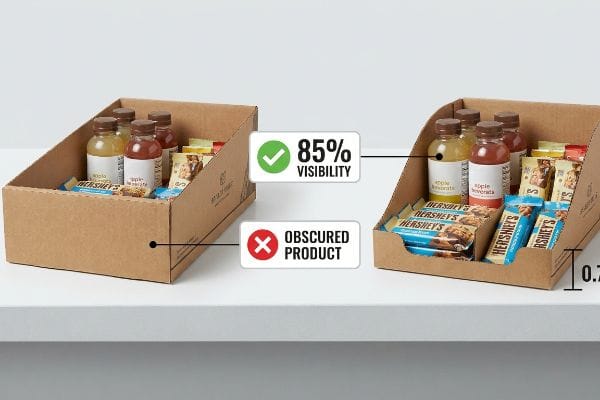
আমার প্রতিষ্ঠানে, আমি নিয়মিত দেখি সুন্দরভাবে ছাপা ট্রেগুলো পণ্যের মূল বিপণন দাবিগুলোকে পুরোপুরি ঢেকে দেয়। এটা শুধু তত্ত্ব নয়—আমি টেস্টিং ফ্লোরে এটা ঘটতে দেখি যখন আমরা ছোট ২ আউন্স (৫৬.৬৯ গ্রাম) এনার্জি শট একটি সাধারণ ট্রে-তে রাখি। উঁচু ঢেউখেলানো কিনারাটি বোতলের নিচের অর্ধেক অংশকে শারীরিকভাবে ঢেকে দেয়, ফলে গুরুত্বপূর্ণ আইনি এবং ফ্লেভারের লেখাগুলো আড়াল হয়ে যায়। আমি একটি কঠোর ভিজিবিলিটি সুইপ ব্যবহার করে এটি পরীক্ষা করি। আমি মাইক্রোমিটারের রিডিং নিয়েছি এবং প্রমাণ করেছি যে বোতলগুলোকে ধরে রাখার জন্য আমার একটি বিশাল দেয়ালের প্রয়োজন নেই; আমার শুধু একটি সুনির্দিষ্ট ডাই-কাট সুইপ দরকার ছিল। সামনের কিনারাটি কেটে ০.৭৫-ইঞ্চি (১৯.০৫ মিমি) প্রোফাইলে এনে এবং ৮৫% ভিজিবিলিটি নিয়ম17, আমি নিশ্চিত করি যে পণ্যটি সম্পূর্ণরূপে পাঠযোগ্য থাকার পাশাপাশি স্বাভাবিকভাবে নিজেকে স্থির রাখে। এই সুনির্দিষ্ট ১.২৫-ইঞ্চি (৩১.৭৫ মিমি) শারীরিক পরিবর্তন সরাসরি ইম্পালস ভিজিবিলিটিতে ১২% বৃদ্ধি18, যা চেকআউট কনভার্সনের গতি বাড়ায় এবং ক্লার্কদের হাতে করে পণ্যের দিকে মুখ করে রাখার প্রয়োজনীয়তা দূর করে।
| নতুনদের সাধারণ ভুল | প্রো ফিক্স | খুচরা-ফ্লোর সুবিধা |
|---|---|---|
| সাধারণ ২-ইঞ্চি (৫০.৮ মিমি) সামনের ঠোঁট19 | ডাই-কাট সুইপড রিটেইনিং প্রোফাইল | পণ্যের লেবেলের দৃশ্যমানতা সর্বাধিক করে তোলে |
| সমালোচনামূলক পাঠ্য লুকানো | ৮৫% দৃশ্যমানতার নিয়ম ২০ কার্যকর করা | দ্রুত আবেগপ্রবণ কেনাকাটাকে উৎসাহিত করে। |
| অতিরিক্ত প্রকৌশলগতভাবে নির্মিত সামনের দেয়াল | নির্ভুল মাইক্রো-ফ্লুট অ্যাঙ্করিং21 | উপকরণের অপচয় খরচ কমায় |
গণ-উৎপাদন শুরু হওয়ার আগে আমি নিজে প্রতিটি প্রোটোটাইপ লোড করি। যদি ঢেউখেলানো কাঠামোটি পণ্যের লেবেল ঢেকে ফেলে, তাহলে ডিসপ্লেটি তার সবচেয়ে মৌলিক কাজটি করতে ব্যর্থ হয়েছে।.
🛠️ হার্ভির ডেস্ক: আপনি কি জানেন আপনার সামনের রিটেইনিং লিপটি আপনার সেরা বৈশিষ্ট্যগুলোকে সক্রিয়ভাবে আড়াল করছে কিনা? 👉 একটি ভিজিবিলিটি অডিটের জন্য অনুরোধ করুন ↗ — গণ-উৎপাদনে বাজেট অপচয় করার আগে আমি এর গাণিতিক হিসাব পুঙ্খানুপুঙ্খভাবে পরীক্ষা করে দেখব।
উপসংহার
আপনি উপাদানের কোনো পরিবর্তন ছাড়াই ভারী ও বড় আকারের ডাইলাইন ছোট করতে পারেন, কিন্তু যখন সেই মোটা বি-ফ্লুট ট্যাবগুলো কাউন্টারে ছিঁড়ে যায়, যা অ্যাসেম্বলি লাইনের গতি আনুমানিক ৩০% কমিয়ে দেয়, তখন আপনার ক্যাম্পেইনের লাভের মার্জিন পুরোপুরি নষ্ট হয়ে যায়। আমার সেরা ১০ জন রিটেইল ক্লায়েন্ট প্রিন্ট বাতিল হওয়ার সম্ভাবনা শূন্যে নামিয়ে আনার নিশ্চয়তা দিতে ঠিক এই স্পেক শিটটিই ব্যবহার করেন। ফোল্ড রেডিয়াস নিয়ে আন্দাজ করা বন্ধ করুন এবং গণ-উৎপাদন শুরু হওয়ার আগেই মারাত্মক ত্রুটিগুলো ধরতে আমাকে ব্যক্তিগতভাবে আপনার ফাইলগুলো আমার ফ্রি ডাইলাইন প্রি-ফ্লাইট অডিট ↗- এর মাধ্যমে পরীক্ষা করতে দিন।
"অস্থায়ী ডিসপ্লেতে স্থিতিশীলতা ও কাঠামোগত সমর্থন নিশ্চিত করুন – ইউডি ডিরেক্ট", https://www.ud-direct.com/blog/tips-and-tricks-to-ensure-stability-and-structure-support-in-temporary-displays। অবলম্বনের ভিত্তির সাপেক্ষে ভরকেন্দ্র কীভাবে একটি ভৌত বস্তুর স্থিতিশীলতা নির্ধারণ করে, তার সংক্ষিপ্ত ব্যাখ্যা। প্রমাণের ভূমিকা: প্রযুক্তিগত নীতি; উৎসের ধরণ: পদার্থবিজ্ঞানের পাঠ্যপুস্তক বা ইঞ্জিনিয়ারিং ম্যানুয়াল। অবলম্বন: খুচরা ডিসপ্লে উল্টে যাওয়ার কারণ। পরিধি টীকা: সাধারণ যান্ত্রিক নীতিসমূহ। ↩
"কীভাবে কাস্টমাইজযোগ্য কার্ডবোর্ড ডিসপ্লে তৈরি করবেন? – পপডিসপ্লে", https://popdisplay.me/how-to-customizable-cardboard-display-2/। পয়েন্ট-অফ-পারচেজ ডিসপ্লের স্থায়িত্ব বৃদ্ধির জন্য প্যাকেজিং ইঞ্জিনিয়ারিং স্ট্যান্ডার্ডের ডকুমেন্টেশন। প্রমাণের ভূমিকা: প্রযুক্তিগত স্পেসিফিকেশন; উৎসের ধরণ: প্যাকেজিং শিল্প নির্দেশিকা বা ইঞ্জিনিয়ারিং হোয়াইটপেপার। সমর্থন: উল্টে যাওয়া রোধে কাঠামোগত শক্তিবৃদ্ধির কার্যকারিতা। পরিধি নোট: কার্ডবোর্ড রিটেইল ইউনিটের জন্য নির্দিষ্ট। ↩
"ইজেল ব্যাক, কার্ডবোর্ড ইজেল স্ট্যান্ড – অ্যাফোর্ডেবল ডিসপ্লে প্রোডাক্টস", https://www.affordabledisplayproducts.com/floor-and-table-top-display-easels/easel-backs?page=2&srsltid=AfmBOorjzo_t_vKMU51rGLXcn0N7qo2PISHiZUmJ1LlHkpb58BggWkMg। পয়েন্ট অফ পারচেজ (POP) ডিসপ্লের জন্য প্রযুক্তিগত নকশার মান ব্যাখ্যা করে যে কীভাবে বর্ধিত ইজেল ব্যাকগুলি উল্টে যাওয়া রোধ করতে সহায়ক ভিত্তি বৃদ্ধি করে। প্রমাণের ভূমিকা: প্রযুক্তিগত যাচাইকরণ; উৎসের ধরণ: প্যাকেজিং ইঞ্জিনিয়ারিং ম্যানুয়াল। সমর্থন: ঢেউখেলানো কার্ডবোর্ড ডিসপ্লের স্থিতিশীলতা। পরিধির টীকা: বিশেষভাবে হালকা ওজনের কার্ডবোর্ডের কাঠামোর ক্ষেত্রে প্রযোজ্য। ↩
"১৪ ধরনের রিটেইল ডিসপ্লে | শিকাগো, আইএল – ভার্টহাইমার বক্স", https://wertheimerbox.com/types-of-retail-displays/। কাউন্টার-টপ রিটেইল ইউনিটের জন্য শিল্প নকশা নির্দেশিকায় ভরকেন্দ্রকে নিচে নামানোর জন্য ভারযুক্ত ভিত্তি ব্যবহারের বিস্তারিত বিবরণ দেওয়া হয়েছে। প্রমাণের ভূমিকা: প্রযুক্তিগত যাচাইকরণ; উৎসের ধরণ: উৎপাদন স্পেসিফিকেশন। সাপোর্ট: কৃত্রিম তলের নোঙর করার প্রভাব। পরিধি নোট: শুধুমাত্র কাউন্টার-টপ রিটেইল পরিবেশের জন্য সীমাবদ্ধ। ↩
"ভারকেন্দ্র | গ্লেন রিসার্চ সেন্টার – নাসা", https://www1.grc.nasa.gov/beginners-guide-to-aeronautics/center-of-gravity/। ভরকেন্দ্র সম্পর্কিত পদার্থবিজ্ঞানের নীতিগুলি দেখায় যে কীভাবে ওজন বন্টন গণনা করা খুচরা প্রদর্শনীতে কাঠামোগত উল্টে যাওয়া এবং ছিটকে পড়া প্রতিরোধ করে। প্রমাণের ভূমিকা: তাত্ত্বিক প্রমাণ; উৎসের ধরণ: প্রকৌশল পাঠ্যপুস্তক। সমর্থন করে: স্থিতিশীলতার জন্য ভরকেন্দ্র গণনার প্রয়োজনীয়তা। পরিধি টীকা: স্থিতিশীল ভারসাম্যের সাধারণ প্রয়োগ। ↩
"সর্বাধিক দৃশ্যমানতার জন্য কীভাবে সাইনের আকার নির্বাচন করবেন – কাস্টম সাইনস টুডে", https://customsignstoday.us/how-to-select-sign-sizes-for-maximum-visibility/। খুচরা বিক্রয় পরিবেশে দৃষ্টির তীক্ষ্ণতা এবং পাঠযোগ্যতার দূরত্বের উপর প্রামাণ্য নির্দেশিকা এই দাবিকে সমর্থন করে যে, এই পরিসরে সূক্ষ্ম বিবরণ এবং ছোট লেখা অস্পষ্ট হয়ে যায়। প্রমাণের ভূমিকা: প্রযুক্তিগত যাচাইকরণ; উৎসের ধরণ: আর্গোনমিক ডিজাইন ম্যানুয়াল। সমর্থন করে: সাইনেজের পাঠযোগ্যতার উপর দূরত্বের প্রভাব। পরিধি সংক্রান্ত টীকা: কার্যকারিতা ফন্টের আকার এবং রঙের বৈসাদৃশ্যের উপর নির্ভর করে পরিবর্তিত হয়। ↩
"রিটেইল এক্সপেরিয়েন্স ডিজাইন: লেআউট, আলো এবং … দিয়ে ক্রেতাদের পথ দেখানো", https://www.rmcad.edu/blog/retail-experience-design-guiding-shoppers-with-layout-light-and-motion/। রিটেইল পরিবেশে ভোক্তার আচরণের উপর শিল্প গবেষণা সেই নির্দিষ্ট দূরত্বের সীমাগুলোকে বৈধতা দেয়, যা নিষ্ক্রিয়ভাবে পণ্য দেখা এবং সক্রিয়ভাবে পণ্যের সাথে যুক্ত হওয়ার মধ্যে পার্থক্য গড়ে দেয়। প্রমাণের ভূমিকা: তথ্যগত যাচাইকরণ; উৎসের ধরণ: রিটেইল পরিবেশগত মনোবিজ্ঞান গবেষণা। সমর্থন করে: ক্রেতাকে ক্রেতায় রূপান্তরিত করার জন্য স্থানিক প্রয়োজনীয়তা। পরিধির টীকা: এই দূরত্বটি সাধারণ রিটেইল আইলগুলোর জন্য স্বাভাবিক। ↩
"কালি শোষণ এবং ওভারপ্রিন্টের উপর কাগজ তৈরির অবস্থার প্রভাব...", https://bioresources.cnr.ncsu.edu/resources/effect-of-papermaking-conditions-on-the-ink-absorption-and-overprint-accuracy-of-paper/। আনকোটেড টেস্টলাইনার বোর্ডের প্রযুক্তিগত বিবরণ উচ্চ ছিদ্রযুক্ততা নিশ্চিত করে, যা কালি শোষণ এবং CMYK প্রিন্টে রঙের উজ্জ্বলতা হ্রাসের কারণ হয়। প্রমাণের ভূমিকা: প্রযুক্তিগত বিবরণ; উৎসের ধরণ: মুদ্রণ শিল্পের প্রযুক্তিগত ম্যানুয়াল। সমর্থন করে: এই দাবি যে টেস্টলাইনারে CMYK রঙ বিবর্ণ দেখায়। পরিধির টীকা: প্রভাব কালির সান্দ্রতা অনুসারে পরিবর্তিত হয়। ↩
"কার্যকরী ডিসপ্লে এবং গ্রাহক প্রবাহের জন্য খুচরা দোকানের নকশা", https://www.business.qld.gov.au/industries/manufacturing-retail/retail-wholesale/retail-displays। সাইনেজের আকার এবং কনট্রাস্টের জন্য খুচরা ভিজ্যুয়াল মার্চেন্ডাইজিং মানগুলো কীভাবে দৃশ্যমানতার দূরত্বের সাথে সম্পর্কিত, তার সংক্ষিপ্ত ব্যাখ্যা। প্রমাণের ভূমিকা: যাচাইকরণ; উৎসের ধরণ: শিল্প ম্যানুয়াল। সমর্থন করে: হেডার কার্ডের জন্য দৃষ্টিসীমার কার্যকারিতা। পরিধি নোট: দূরত্ব ফন্টের আকার এবং কনট্রাস্ট অনুপাতের উপর নির্ভর করে। ↩
"তথ্য আধিক্য কীভাবে ভোক্তাদের অনলাইন সিদ্ধান্তকে প্রভাবিত করে...", https://pmc.ncbi.nlm.nih.gov/articles/PMC8567038/। খুচরা পরিবেশে একক-প্রেরণামূলক বার্তার মাধ্যমে কীভাবে জ্ঞানীয় ভার কমানো হয় এবং তা কীভাবে ভোক্তার সিদ্ধান্ত গ্রহণ প্রক্রিয়াকে ত্বরান্বিত করে, তার বিশ্লেষণ। প্রমাণের ভূমিকা: তাত্ত্বিক সমর্থন; উৎসের ধরণ: আচরণগত মনোবিজ্ঞান গবেষণা। সমর্থন: সরলীকৃত খুচরা বার্তার কার্যকারিতা। পরিধি টীকা: বিশেষভাবে তাৎক্ষণিক ক্রয়ের প্রেরণার ক্ষেত্রে প্রযোজ্য। ↩
"অটোক্যাডে কীভাবে একজন পেশাদারের মতো স্কেল করবেন! – ইউটিউব", https://www.youtube.com/watch?v=QUR0f18b1c4। স্কয়ার-কিউব ল-এর মতো প্রকৌশল নীতিগুলো দেখায় যে, কোনো নকশার মাত্রা স্কেল করলে তার রৈখিক কাঠামোগত শক্তি বা ভারবহন ক্ষমতা বজায় থাকে না। প্রমাণের ভূমিকা: প্রযুক্তিগত যাচাইকরণ; উৎসের ধরণ: প্রকৌশল পাঠ্যপুস্তক। সমর্থন করে: এই ভ্রান্ত ধারণা যে আনুপাতিক স্কেলিং কাঠামোগত অখণ্ডতা রক্ষা করে। পরিধি টীকা: ভৌত পদার্থের পীড়ন এবং ভারবহনকারী কাঠামোর ক্ষেত্রে প্রযোজ্য। ↩
"মাইক্রো-ফ্লুট প্যাকেজিং | ইএফ এন-ফ্লুট কার্টন – নেটপ্যাক", https://www.netpak.com/en/packaging-resources/industry-articles/micro-flute-packaging-efn-flute/। বি-ফ্লুট বনাম ই-ফ্লুট (মাইক্রো-ফ্লুট) স্পেসিফিকেশনের তুলনা, যেখানে কম্প্যাক্ট পয়েন্ট-অফ-সেল প্যাকেজিংয়ের জন্য ই-ফ্লুটের উন্নত ভাঁজযোগ্যতা এবং প্রিন্ট কোয়ালিটির ওপর আলোকপাত করা হয়েছে। প্রমাণের ভূমিকা: প্রযুক্তিগত যাচাইকরণ; উৎসের ধরণ: উৎপাদন শিল্পের মান। সমর্থন করে: ছোট ট্যাবের জন্য পাতলা ফ্লুটিং ব্যবহারের কার্যকারিতা। পরিধি নোট: করোগেটেড কার্ডবোর্ডের গ্রেডগুলোর ওপর আলোকপাত করা হয়েছে। ↩
"কোরুগেটেড বাক্সের ফ্লুট বোঝার নির্দেশিকা – জেন্টলেভার", https://gentlever.com/flutes-types-sizes-and-thickness-in-corrugated-boxes/। কোরুগেটেড ফ্লুটের আকারের প্রযুক্তিগত তুলনা, যা প্রদর্শন করে যে বি-ফ্লুটের তুলনায় পাতলা ই-ফ্লুট আরও তীক্ষ্ণ ও পরিচ্ছন্ন ভাঁজ করতে সক্ষম। প্রমাণের ভূমিকা: তথ্যগত যাচাইকরণ; উৎসের ধরণ: প্যাকেজিং ইঞ্জিনিয়ারিং ম্যানুয়াল। সমর্থন করে: নির্ভুল ভাঁজের জন্য ই-ফ্লুটের প্রযুক্তিগত শ্রেষ্ঠত্ব। পরিধি নোট: শুধুমাত্র কোরুগেটেড ফাইবারবোর্ড উপকরণের জন্য সীমাবদ্ধ। ↩
"একটি পাঁচ-স্তরবিশিষ্ট কাঠামোর নমন দৃঢ়তার বিশ্লেষণাত্মক নির্ধারণ...", https://pmc.ncbi.nlm.nih.gov/articles/PMC8777652/। হাতে করে সংযোজনের সময় কীভাবে সুনির্দিষ্ট ট্যাব টলারেন্স এবং ভাঁজের ব্যাসার্ধের হিসাব ঘর্ষণ ও ত্রুটি কমায়, তার বিশ্লেষণ। প্রমাণের ভূমিকা: প্রযুক্তিগত যাচাইকরণ; উৎসের ধরণ: শিল্প নকশা নির্দেশিকা। সমর্থন করে: ক্লিয়ারেন্স হিসাব এবং সংযোজনের সময় হ্রাসের মধ্যে সংযোগ। পরিধি টীকা: ক্ষুদ্র পরিসরের খুচরা প্যাকেজিংয়ের জন্য প্রযোজ্য। ↩
"প্যাকেজিংয়ের প্রয়োজনে সঙ্কুচিত হাতা বনাম আঠালো টেপ", https://www.viscoseclosures.com/articles/shrink-sleeves-vs-adhesive-tape-the-smart-choice-for-beauty-and-gift-pack-packaging/। বিলাসবহুল খুচরা ব্র্যান্ডিং এবং অনুভূত মূল্যের প্রেক্ষাপটে আঠালো টেপের তুলনায় যান্ত্রিক ঘর্ষণ-ফিট বন্ধনীর মূল্যায়ন। প্রমাণের ভূমিকা: শিল্প মান; উৎসের ধরণ: খুচরা ব্র্যান্ডিং গবেষণা। সমর্থন: উৎকৃষ্ট নান্দনিকতা বজায় রাখতে ঘর্ষণ লকের ব্যবহার। পরিধি টীকা: ভোক্তার উপলব্ধি এবং কাঠামোগত নকশার উপর আলোকপাত করে। ↩
"শেলফ রেডি প্যাকেজিং (এসআরপি) – রিটেইল – স্মারফিট ওয়েস্টরক", https://www.smurfitwestrock.com/products/packaging/retail/retail-ready-packaging। একটি রিটেইল প্যাকেজিং ডিজাইন ম্যানুয়াল বা ইন্ডাস্ট্রি স্ট্যান্ডার্ড গাইড যাচাই করবে যে পিডিকিউ ট্রে-তে রিটেইনিং লিপস-এর জন্য ২ ইঞ্চি একটি সাধারণ বেসলাইন কিনা। প্রমাণের ভূমিকা: প্রযুক্তিগত স্পেসিফিকেশনের যাচাইকরণ; উৎসের ধরণ: ইন্ডাস্ট্রি ডিজাইন গাইড। সমর্থন করে: এই দাবি যে একটি নির্দিষ্ট পরিমাপকে স্ট্যান্ডার্ড হিসাবে দেখা হয়। পরিধি নোট: পণ্যের আকার বা রিটেইল চেইনের প্রয়োজনীয়তা অনুসারে স্ট্যান্ডার্ড পরিবর্তিত হতে পারে। ↩
"পণ্যের প্যাকেজিং ডিজাইনে দৃশ্যমানতা কেন গুরুত্বপূর্ণ", https://www.thepkglab.com/blog/164/why-visibility-in-product-packaging-design-is-important। খুচরা মার্চেন্ডাইজিং মানদণ্ডের একটি নির্ভরযোগ্য উৎস যাচাই করে দেখবে যে পণ্য স্থাপনের জন্য একটি মানদণ্ড হিসেবে কোনো নির্দিষ্ট '৮৫% দৃশ্যমানতার নিয়ম' বিদ্যমান আছে কিনা। প্রমাণের ভূমিকা: প্রযুক্তিগত মানদণ্ড; উৎসের ধরণ: শিল্প নির্দেশিকা। সমর্থন করে: প্যাকেজিংয়ের জন্য শতাংশ-ভিত্তিক দৃশ্যমানতার সীমা ব্যবহারের বৈধতা। পরিধি নোট: বিভিন্ন খুচরা খাতে শিল্প মানদণ্ড ভিন্ন হতে পারে। ↩
"পয়েন্ট অফ পারচেজ: খুচরা বিক্রেতারা কীভাবে ক্রেতাদের প্রভাবিত করতে পারে...", https://blog.intouch.com/posts/points-of-purchase-displays। গবেষণালব্ধ বাজার গবেষণা বা প্যাকেজিং সমীক্ষা ডিসপ্লের কিনারার নির্দিষ্ট উচ্চতা হ্রাসের সাথে ভোক্তার দৃশ্যমানতা এবং বিক্রয়ে এর ফলস্বরূপ শতাংশ বৃদ্ধির পারস্পরিক সম্পর্ককে সমর্থন করবে। প্রমাণের ভূমিকা: কার্যকারিতা পরিমাপক; উৎসের ধরণ: বাজার গবেষণা সমীক্ষা। সমর্থন করে: দৃশ্যমানতার উন্নতি সংক্রান্ত পরিমাণগত দাবি। পরিধি সংক্রান্ত টীকা: পণ্যের আকার এবং দোকানের পরিবেশের উপর ভিত্তি করে শতাংশ বৃদ্ধি ওঠানামা করতে পারে। ↩
"আপনার ব্র্যান্ডের জন্য সঠিক কার্ডবোর্ড ডিসপ্লে কীভাবে বেছে নেবেন", https://popdisplay.me/how-to-choose-the-right-cardboard-display-for-your-brand/। করোগেটেড ডিসপ্লের জন্য শিল্প নকশার মান নিশ্চিত করবে যে খুচরা প্যাকেজিংয়ে ধরে রাখার প্রান্তের জন্য ২ ইঞ্চি একটি সাধারণ ভিত্তি পরিমাপ কিনা। প্রমাণের ভূমিকা: শিল্প মানদণ্ড; উৎসের ধরণ: উৎপাদন নির্দেশিকা। সমর্থন করে: একটি মান হিসাবে এই নির্দিষ্ট পরিমাপের প্রচলন। পরিধি নোট: সাধারণ কার্ডবোর্ড ডিসপ্লের মধ্যে সীমাবদ্ধ। ↩
"২০২৬ সালে প্রতিটি ব্র্যান্ডের অনুসরণ করা উচিত এমন ৬টি রিটেইল মার্চেন্ডাইজিং নিয়ম", https://simplydepo.com/industry/retail-merchandising-rules/। রিটেইল মার্চেন্ডাইজিং-এর একটি নির্ভরযোগ্য উৎস তাৎক্ষণিক ক্রয় সর্বাধিক করার জন্য একটি নির্দিষ্ট দৃশ্যমানতার শতাংশ নির্দেশিকার অস্তিত্ব যাচাই করবে। প্রমাণের ভূমিকা: প্রযুক্তিগত মান; উৎসের ধরণ: শিল্প হ্যান্ডবুক। সমর্থন করে: এই দাবি যে ৮৫% নিয়মটি দ্রুত ক্রয়কে উৎসাহিত করে। পরিধি সংক্রান্ত টীকা: কার্যকারিতা পণ্যের বিভাগ অনুযায়ী ভিন্ন হতে পারে। ↩
"মাইক্রো ফ্লুট পেপার মার্কেট | গ্লোবাল মার্কেট অ্যানালাইসিস রিপোর্ট – ২০৩৬", https://www.futuremarketinsights.com/reports/micro-flute-paper-market। করোগেটেড কার্ডবোর্ড ইঞ্জিনিয়ারিং-এর উপর প্রযুক্তিগত ডকুমেন্টেশন প্রমাণ করবে যে কীভাবে মাইক্রো-ফ্লুট অ্যাঙ্করিং কাঠামোগত অখণ্ডতা বজায় রেখে উপকরণের ব্যবহার কমায়। প্রমাণের ভূমিকা: প্রযুক্তিগত স্পেসিফিকেশন; উৎসের ধরণ: প্যাকেজিং ইঞ্জিনিয়ারিং জার্নাল। সমর্থন করে: উপকরণের অপচয় খরচ কমানো। পরিধি নোট: পয়েন্ট-অফ-পারচেজ (POP) ডিসপ্লে-এর জন্য নির্দিষ্ট। ↩