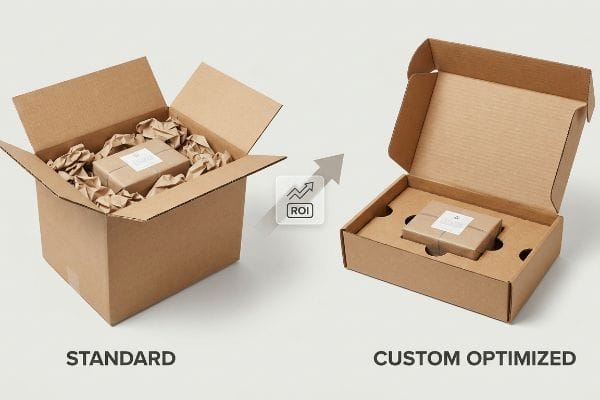
ক্রয় দলগুলো ক্রমাগত বিতর্ক করে যে, কাস্টম স্ট্রাকচারাল প্যাকেজিং-এ বিনিয়োগ করা একটি প্রকৃত আর্থিক সুবিধা, নাকি এটি কেবল একটি অতিরঞ্জিত পরিচালন ব্যয়। গণিতই বাস্তবতা নির্ধারণ করে।.
হ্যাঁ। কোনো প্যাকেজিং কোম্পানির কার্ডবোর্ডের বাক্স অত্যন্ত সাশ্রয়ী হয়, যদি সেগুলোকে পরবর্তী পর্যায়ের সরবরাহ ও সংযোজনের জটিলতা কমানোর জন্য নিখুঁতভাবে ডিজাইন করা হয়। শুধুমাত্র কাঁচামালের খরচের উপর নির্ভর করাটা এক ধরনের ভ্রান্ত সাশ্রয়; প্রকৃত বিনিয়োগের উপর রিটার্ন (ROI) পেতে হলে কাঠামোগত সহনশীলতা অপ্টিমাইজ করা, পরিবহনের ওজন কমানো এবং কারখানার ফ্লোরে হাতে করে সহ-প্যাকিংয়ের শ্রম দূর করা প্রয়োজন।.
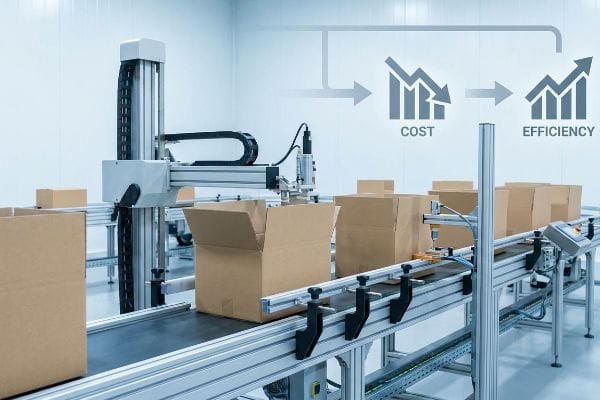
কিন্তু বিনিয়োগের তাত্ত্বিক প্রতিদান বোঝা এবং ভারী স্বয়ংক্রিয় যন্ত্রপাতি কাঁচা পেপারবোর্ড প্রক্রিয়াজাত করা শুরু করলে তা অর্জন করা—দুটো সম্পূর্ণ ভিন্ন বিষয়।.
কার্ডবোর্ডের বাক্স কেনার সবচেয়ে সস্তা জায়গা কোনটি?
সর্বনিম্ন একক মূল্যের সন্ধান প্রায়শই ব্র্যান্ডগুলোকে খণ্ডিত সরবরাহ শৃঙ্খলের দিকে ঠেলে দেয়, যা কাঁচামাল সংগ্রহকে ভৌত সমাবেশ থেকে বিচ্ছিন্ন করে ফেলে।.
কার্ডবোর্ডের বাক্স কেনার সবচেয়ে সস্তা জায়গা হলো একটি টার্নকি ম্যানুফ্যাকচারিং ফ্যাসিলিটি, যা স্ট্রাকচারাল ইঞ্জিনিয়ারিং এবং ফিজিক্যাল অ্যাসেম্বলি উভয়ই নিয়ন্ত্রণ করে। খণ্ডিত টোলিং অপারেশনগুলো প্রাথমিকভাবে সস্তা মনে হলেও, বেমানান প্যাকেজিং উপাদানগুলোর কারণে অনিবার্যভাবে স্বয়ংক্রিয় যন্ত্রপাতিতে জ্যাম সৃষ্টি হয়, যা প্রতি ঘণ্টায় বিপুল পরিমাণ ডাউনটাইমের ক্ষতি করে এবং আপনার কাঙ্ক্ষিত মুনাফার মার্জিনকে সম্পূর্ণরূপে ধ্বংস করে দেয়।.
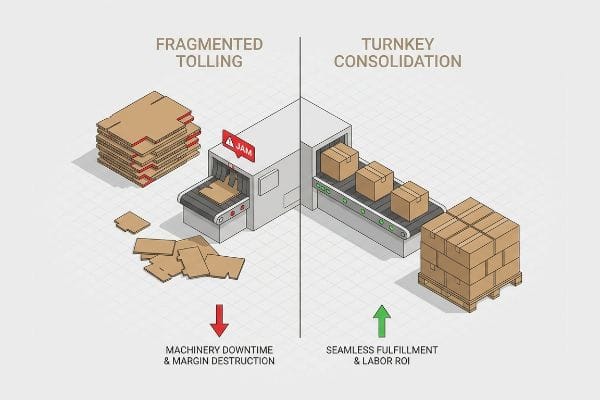
ভৌত কার্টনগুলো যদি আপনার ফুলফিলমেন্ট লাইনের সাথে সমন্বিত হতে ব্যর্থ হয়, তাহলে কম ইনভয়েস মূল্যের কোনো অর্থই থাকে না।.
খণ্ডিত টোলিংয়ের লুকানো দায়
অনেক ক্রেতা মনে করেন যে, তারা এক বিক্রেতার কাছ থেকে সস্তা ফ্ল্যাট বক্স, অন্য বিক্রেতার কাছ থেকে প্রিন্টেড ফিল্ম কিনে, এবং সবকিছু একজন তৃতীয় পক্ষের কো-প্যাকারের হাতে তুলে দিয়ে টাকা বাঁচাতে পারবেন। আমাকে আমার ক্লায়েন্টদের ক্রমাগত মনে করিয়ে দিতে হয় যে, এই খণ্ডিত টোলিং মডেলটি উচ্চ-গতির অ্যাসেম্বলির কঠোর যান্ত্রিক সহনশীলতাকে সম্পূর্ণরূপে উপেক্ষা করে। যখন আমি একটি ফুলফিলমেন্ট লাইনের দিকে তাকাই, তখন আমি আলাদা আলাদা উপাদান দেখি না; আমি একটি একীভূত গতিশীল সিস্টেম দেখি যা অবশ্যই প্রতি মিনিটে ৮০ ইউনিট গতিতে ত্রুটিহীনভাবে চলতে হবে ।
যখন ক্লায়েন্টরা আমাকে জিজ্ঞাসা করেন যে একটি সস্তা বাক্সের আসল খরচ কত, আমি সাধারণত আমার স্বয়ংক্রিয় গ্লুইং মেশিনের জ্যাম সেন্সরগুলোর দিকে ইঙ্গিত করি। গত মাসে, একটি ব্র্যান্ড আমার অ্যাসেম্বলি লাইনে চালানোর জন্য নামমাত্র মূল্যে সংগ্রহ করা সাধারণ মানের বাক্স নিয়ে এসেছিল। স্লটের মাপে মাত্র ০.০৮ বর্গ ইঞ্চি( ২.০৩ মিমি) তারতম্য থাকায়, প্রতি বিশ সেকেন্ডে ফ্লুটগুলো আটকে যাচ্ছিল এবং হপারটি জ্যাম হয়ে যাচ্ছিল। আমাকে লাইনটি বন্ধ করতে হয়েছিল, এবং প্রতি ঘণ্টায় মেশিন বন্ধ থাকার কারণে তাদের তথাকথিত সাশ্রয় পুরোপুরি নষ্ট হয়ে যায়। ইঞ্জিনিয়ারিং এবং উৎপাদন একই ছাদের নিচে রাখার মাধ্যমে, আমি ডাই-কাটের সঠিক প্যারামিটারগুলো নিয়ন্ত্রণ করি, যা নিশ্চিত করে যে যন্ত্রাংশগুলো নির্বিঘ্নে ফিড হয় এবং আপনার প্রকৃত বাজেট সুরক্ষিত থাকে।
| সোর্সিং মডেল | সমাবেশের ফলাফল | শ্রমের উপর রিটার্ন |
|---|---|---|
| খণ্ডিত টোলিং | মাইক্রো-টলারেন্সের অমিল এবং হপার জ্যাম3 | ডাউনটাইমের মাধ্যমে মুনাফা নষ্ট করে |
| টার্নকি একত্রীকরণ | যন্ত্রপাতির সাথে মেলানো নির্ভুল ডাই-কাট | পুনরায় কাজ করার ফি ১০০% মওকুফ করে4 |
| স্বয়ংক্রিয় QA চেক | ফ্লুটগুলি কনভেয়র বেল্টে মসৃণভাবে পিছলে যায়। | পূরণের গতি ৩০% বৃদ্ধি করে5 |
আমি আমার কারখানায় খণ্ডিত উপকরণ ব্যবহার করতে অস্বীকার করি, কারণ অমিলের দায়ভার সম্পূর্ণ অপ্রত্যাশিত। আপনার ক্রয় প্রক্রিয়াকে একটি একক কাঠামোগত উৎসের অধীনে আনাই হলো আপনার চূড়ান্ত ক্রয়মূল্য নিশ্চিত করার একমাত্র গাণিতিক উপায়।.
🛠️ হার্ভির ডেস্ক: আপনার বর্তমানে ব্যবহৃত বাক্সগুলো কি আপনার কো-প্যাকারের স্বয়ংক্রিয় অ্যাসেম্বলি লাইনে কোনো লুকানো প্রতিবন্ধকতা সৃষ্টি করছে? 👉 একটি BOM অডিটের জন্য অনুরোধ করুন ↗ — আমি ২৪ ঘণ্টার মধ্যে প্রতিটি স্ট্রাকচারাল ফাইল ব্যক্তিগতভাবে পর্যালোচনা করি।
কার্ডবোর্ডের বাক্স বিক্রি করা কি লাভজনক?
প্যাকেজিং-এ লাভজনকতা শুধু কাগজের দাম বাড়ানোর মধ্যেই সীমাবদ্ধ নয়; বরং এটি উচ্চমানের খুচরা নান্দনিকতার সাথে প্যালেটবন্দী পণ্যের কঠোর ভৌত চাহিদার মধ্যে ভারসাম্য রক্ষার উপর নির্ভরশীল।.
হ্যাঁ। সরবরাহকারীরা যখন কাঠামোগত দৃঢ়তার সাথে কার্যকর বাহ্যিক রূপের ভারসাম্য বজায় রাখে, তখন কার্ডবোর্ডের বাক্স বিক্রি করা অত্যন্ত লাভজনক হয়। তবে, যাচাইবিহীন বিক্রেতারা প্রায়শই অনুরোধকৃত ফয়েল ল্যামিনেশনের উচ্চ খরচ পুষিয়ে নিতে গোপনে বোর্ডের অভ্যন্তরীণ খাঁজের ঘনত্ব কমিয়ে দিয়ে নিজেদের মুনাফা বাড়িয়ে নেয়, যার ফলে চূড়ান্ত কাঠামোটি পরিবহনের সময় মারাত্মকভাবে ভেঙে পড়ার ঝুঁকিতে থাকে।.
কিন্তু যখন মেশিনগুলো চলতে শুরু করে এবং গুদামের ছাদ পর্যন্ত ভারী পণ্যসামগ্রী স্তূপ করা হয়, তখন শুধু তত্ত্ব জানাই যথেষ্ট নয়।.
গুরুত্বপূর্ণ অবনমনের মধ্যে লুকানো মার্জিন
এমনকি অভিজ্ঞ ক্রয় দলগুলোও প্রায়শই ব্যয়বহুল সম্পূর্ণ-আচ্ছাদিত ফয়েল ল্যামিনেশন বাধ্যতামূলক করে, এই ভেবে যে তারা কার্যক্ষমতার সাথে আপোস না করে প্রতি ইউনিটের দাম কমাতে পারবে। এখানে বিপজ্জনক ধারণাটি হলো যে, একটি অনমনীয় নান্দনিক ফিল্ম কোনোভাবে এর নিচের পেপারবোর্ডের কাঠামোগত মূল অংশের অভাব পূরণ করবে, যা কৃত্রিমভাবে সরবরাহকারীর মুনাফা বাড়িয়ে দেবে এবং একই সাথে ব্র্যান্ডের ভারবহন ক্ষমতাকে ক্ষতিগ্রস্ত করবে।
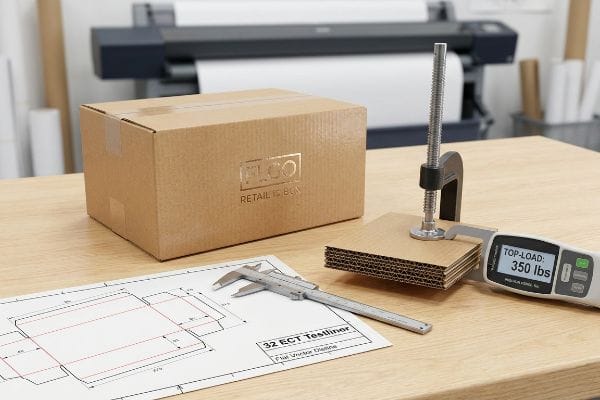
এটা শুধু তত্ত্ব নয়—তৃতীয় পক্ষের ডিজাইন অডিট করার সময় আমি টেস্টিং ফ্লোরে প্রতিনিয়ত এই সমস্যার সম্মুখীন হই। একজন ক্লায়েন্ট একটি দৃষ্টিনন্দন রিটেইল বিন যা মাঠে বারবার ব্যর্থ হচ্ছিল। আগের সরবরাহকারী গোপনে তাদের নিজেদের লাভের মার্জিন বাড়ানোর জন্য কাঁচামালের মান ভার্জিন ৩২ ইসিটি (এজ ক্রাশ টেস্ট) থেকে কমিয়ে রিসাইকেল করা ২৬ ইসিটি৭ , এই ভেবে যে পুরু ফয়েলটি দুর্বল খাঁজগুলোকে ঢেকে দেবে। প্রথমে, আমি ভেবেছিলাম যে স্ট্যান্ডার্ড ৩২ ইসিটি টেস্টলাইনার এর বিকল্প হিসেবে কাজ করবে। আমি পুরোপুরি ভুল ছিলাম। আমার ভাইব্রেশন টেবিলে ঠিক ১৮৭.৫ পাউন্ড (৮৫.০৪ কেজি) ওজনে এর ভিত্তিটি ভেঙে যায়, কারণ এর ভারী টপ-শিটের আঠা ইতিমধ্যেই কাগজের ফাইবারগুলোকে দুর্বল করে ফেলছিল৮।আমি সঙ্গে সঙ্গে ভার্জিন ক্রাফটের উপর সরাসরি একটি হাই-সলিড গ্লস অ্যাকুয়াস কোটিং ব্যবহার শুরু করি, যা ব্যয়বহুল ফয়েল ফিল্মটিকে সম্পূর্ণরূপে বাদ দিয়ে এর আসল সংকোচন শক্তি পুনরুদ্ধার করে। বাহ্যিক বাড়তি অংশটুকু বাদ দিয়ে এবং বাঁশির মূল ঘনত্ব পুনরুদ্ধার করার মাধ্যমে, আমি নিশ্চিত করেছি যে এর ভিত্তিটি ওপর থেকে ৩৫০ পাউন্ড (১৫৮.৭৫ কেজি) ভার সহ্য করতে পারবে। এর ফলে পরিবহনকালে ক্ষতির ঝুঁকি দূর হয়েছে এবং ক্লায়েন্টের অপ্রয়োজনীয় লজিস্টিকস ফি বাবদ আনুমানিক ১৫% সাশ্রয় হয়েছে।
| প্রসাধনী পছন্দ | কাঠামোগত বাস্তবতা | মালবাহী ROI |
|---|---|---|
| ভারী ফয়েল ল্যামিনেশন | কোর ফাইবার শক্তির জন্য বাজেট হ্রাস করে | ব্যাপক পরিবহন ক্ষতি ঘটায়9 |
| জলীয় গ্লস আবরণ | কম খরচে আকর্ষণীয়তা বজায় রাখে | ভার্জিন বোর্ডের জন্য বাজেট মুক্ত করে |
| ভার্জিন ক্রাফট ইনজেকশন | ডাইনামিক টপ-লোড ক্ষমতা পুনরুদ্ধার করে | পণ্য পরিবহনের ক্ষতি শূন্যে নামিয়ে আনে |
আমি কখনোই বাহ্যিক সৌন্দর্যবর্ধনকে আমার কাঠামোগত ভিত্তি নির্ধারণ করতে দিই না, কারণ একটি থেঁতলে যাওয়া চকচকে বাক্সও আসলে একটি প্রত্যাখ্যাত চালানই। প্রকৃত লাভজনকতা আসে সরবরাহ শৃঙ্খলে টিকে থাকার মাধ্যমে, শুধু একটি ক্যাড (কম্পিউটার-এইডেড ডিজাইন) ফাইলে আকর্ষণীয় দেখানোর মাধ্যমে নয়।.
🛠️ হার্ভির ডেস্ক: আপনি কি জানেন আপনার বর্তমান সরবরাহকারী ব্যয়বহুল কসমেটিক ফিল্মের খরচ জোগাতে গোপনে আপনার বোর্ডের ঘনত্ব কমিয়ে দিচ্ছে কিনা? 👉 একটি স্ট্রাকচারাল স্ট্রেস টেস্ট করান ↗ — ১০০% গোপনীয়। আপনার অপ্রকাশিত রিটেইল ডিজাইনগুলো আমার কাছে সুরক্ষিত।
প্যাকিং বাক্সগুলো এত দামী কেন?
কাস্টম প্যাকেজিংয়ের প্রাথমিক দর প্রায়শই দাম দেখে হতবাক করে দেয়, যার ফলে রিটেইল ব্র্যান্ডগুলো প্রশ্ন তোলে যে তাদের উৎপাদন বাজেট আসলে কোথায় যাচ্ছে।.
প্যাকিং বাক্সগুলো ব্যয়বহুল, কারণ উৎকৃষ্ট মানের খুচরা উপস্থাপনার জন্য বিশেষভাবে তৈরি সরঞ্জাম এবং নিখুঁত কাঠামোগত নকশার প্রয়োজন হয়। সস্তা উৎপাদন পদ্ধতিতে সাধারণ টেমপ্লেট ব্যবহার করা হয়, যা বাক্স খোলার অভিজ্ঞতাকে ব্যাহত করে; অন্যদিকে, উৎকৃষ্ট মানের প্যাকেজিংয়ে সুপরিকল্পিত প্রকৌশল ব্যবহার করা হয়, যা শেলফে নিখুঁতভাবে সাজানো এবং পণ্যের উচ্চতর অনুভূত মূল্য নিশ্চিত করে।.

কিন্তু প্রাথমিক খরচ বোঝা এবং খুচরা দোকানে সেই সরঞ্জাম বিনিয়োগের সুফল পাওয়া—দুটো সম্পূর্ণ ভিন্ন জিনিস।.
ফাইবার নিয়ন্ত্রণের লুকানো খরচ
অনেক ডিজাইনার মনে করেন যে, একটি ইলাস্ট্রেটর ফাইলে একটি সাধারণ ভেক্টর লাইন বসালেই তা স্বাভাবিকভাবেই একটি নিখুঁত, খুচরা বিক্রির জন্য প্রস্তুত বাক্সে রূপান্তরিত হবে। এটি একটি সাধারণ ফাঁদ যা এমনকি অভিজ্ঞ ক্রয় দলগুলোকেও কাবু করে ফেলে, যারা কাস্টম ক্রিজিং চ্যানেলের খরচ দেখে পিছিয়ে যায় এবং ধরে নেয় যে একটি উচ্চমানের পণ্য বাজারে আনার জন্য সাধারণ, তৈরি টেমপ্লেটই যথেষ্ট। সামান্য কিছু পয়সা বাঁচাতে গিয়ে প্রাথমিক টুলিং ফি এড়িয়ে চলার ফলে ব্র্যান্ডগুলো তাদের কাঠামোগত উপস্থাপনার মৌলিক উপাদানগুলোকেই বিসর্জন দেয়।
উৎপাদনের কঠোর বাস্তবতা হলো, এই প্রাথমিক টুলিং বিনিয়োগ সরাসরি আপনার চূড়ান্ত খুচরা ভাবমূর্তি নির্ধারণ করে। যখন আপনি নির্ভুল টুলিংয়ের জন্য অর্থ প্রদান করেন, তখন আপনি কারখানাতেই সঠিক মাত্রিক স্কেলিংয়ের জন্য অর্থায়ন করেন, যা নিশ্চিত করে যে আপনার পণ্যগুলি খুচরা বিক্রেতার ডিসপ্লেতে, এবং সস্তা সাধারণ ডাইয়ের কারণে সৃষ্ট ঢিলেঢালা, ফোলা ফাঁক দূর করে। একটি সঠিকভাবে ক্যালিব্রেটেড স্ট্রাকচারাল ডাই নিশ্চিত করে যে আপনার ব্র্যান্ডেড আর্টওয়ার্ক প্রতিটি ভাঁজে ত্রুটিহীনভাবে সারিবদ্ধ থাকে এবং অ্যাসেম্বলির সময় কালি ফেটে যায় না12, যা ক্রেতার কাছে তাৎক্ষণিকভাবে প্রিমিয়াম গুণমান প্রকাশ করে। আনক্যালিব্রেটেড স্টিলের ব্লেড ব্যবহার না করে কাস্টম ম্যাট্রিক্স চ্যানেলে13 একটি সামঞ্জস্যপূর্ণ, উচ্চ-মানের বাহ্যিক নান্দনিকতা নিশ্চিত করে যা উচ্চতর খুচরা মূল্য আকর্ষণ করে এবং দীর্ঘমেয়াদী গ্রাহক আনুগত্য তৈরি করে।
| টুলিং বিনিয়োগ | খুচরা উপস্থাপনা | ব্র্যান্ড ROI |
|---|---|---|
| স্ট্যান্ডার্ড স্টিল ডাই | তাকের অগোছালো বিন্যাস এবং কালির ফাটল14 | প্রিমিয়াম ব্র্যান্ডের ধারণা ক্ষয় করে |
| কাস্টম ম্যাট্রিক্স চ্যানেল | প্রতিটি ভাঁজে নিখুঁত শিল্পকর্মের বিন্যাস15 | উচ্চতর খুচরা মূল্য নির্ধারণ করা হয়16 |
| প্রিসিশন ইঞ্জিনিয়ারিং | ভোক্তাদের জন্য ত্রুটিহীন আনবক্সিং অভিজ্ঞতা | দীর্ঘমেয়াদী গ্রাহক আনুগত্য বৃদ্ধি করে |
কাস্টম টুলিং-এর ক্ষেত্রে কার্পণ্য করলে আপনার ব্র্যান্ডের বাহ্যিক খুচরা উপস্থাপনা ক্ষতিগ্রস্ত হয়। ব্র্যান্ডের অনুভূত মূল্য বৃদ্ধি এবং দীর্ঘমেয়াদী গ্রাহক আনুগত্য নিশ্চিত করার জন্য নির্ভুল কাঠামোগত প্রকৌশলে অগ্রিম বিনিয়োগই হলো সর্বোত্তম উপায়।.
🛠️ হার্ভিস ডেস্ক: আপনার বর্তমান সস্তা প্যাকেজিং কি গোপনে আপনার ব্র্যান্ডের প্রিমিয়াম রিটেইল উপস্থাপনাকে ক্ষুণ্ণ করছে? 👉 একটি 3D CAD স্ট্রাকচারাল অডিট দাবি করুন ↗ — মাঝখানে কোনো অ্যাকাউন্ট ম্যানেজার নেই। আপনি সরাসরি স্ট্রাকচারাল ইঞ্জিনিয়ারদের সাথে কথা বলবেন।
কার্ডবোর্ডের বাক্সের ব্যবসা কি লাভজনক?
একটি টেকসই প্যাকেজিং শিল্প গড়ে তোলা মূলত বৃহৎ পরিসরে অপ্রকাশ্য কায়িক শ্রম এবং উপকরণের অপচয় দূর করার উপরই নির্ভরশীল।.
হ্যাঁ। কার্ডবোর্ডের বাক্সের ব্যবসা তখনই লাভজনক হয়, যখন প্রকৌশলীরা সেইসব কাঠামোগত বাধা দূর করেন যা তৃতীয় পক্ষের সরবরাহ কার্যক্রমকে ধীর করে দেয়। নির্দিষ্ট খাঁজের সঠিক বাঁকের পরিমাণ গাণিতিকভাবে গণনা করার মাধ্যমে, নিখুঁত ডাইলাইনগুলো পরস্পর সংযুক্ত ট্যাবগুলোকে আটকে যাওয়া থেকে রক্ষা করে, যা শ্রমের দক্ষতা ব্যাপকভাবে বাড়ায় এবং একটি অত্যন্ত সম্প্রসারণযোগ্য ও উচ্চ-মুনাফার প্যাকেজিং সরবরাহ শৃঙ্খল নিশ্চিত করে।.
কিন্তু যখন মেশিনগুলো চলতে শুরু করে এবং হাজার হাজার ইউনিট কো-প্যাকিং ফ্লোরে পৌঁছায়, তখন শুধু তত্ত্ব জানাই যথেষ্ট নয়।.
সহ-প্যাকিং ঘর্ষণের জ্যামিতি
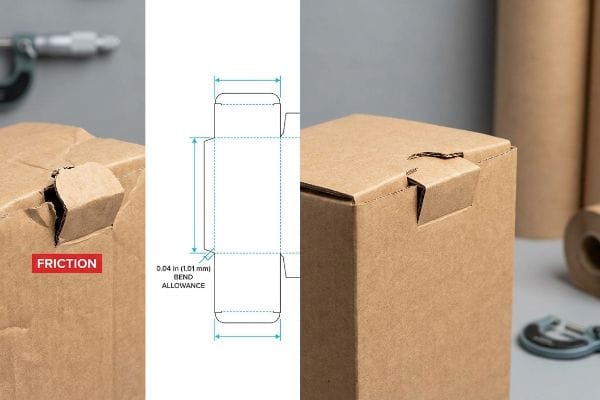
ব্র্যান্ড টিমগুলো প্রায়শই ধরে নেয় যে স্ট্যান্ডার্ড ভেক্টর সফটওয়্যারে একটি নিখুঁতভাবে প্রতিসম স্লট আঁকলে তা স্বয়ংক্রিয়ভাবে একটি ঘর্ষণহীন অ্যাসেম্বলি প্রক্রিয়া দেবে। তারা পুরু ভাঁজ করা সাবস্ট্রেটের বস্তুগত পদার্থবিদ্যাকে উপেক্ষা করে, ধরে নেয় যে সমতল পিক্সেলগুলি সরাসরি 3D পেপারবোর্ডে রূপান্তরিত হয়, হাতে ভাঁজ করার সময় বাঁকানো ফ্লুটগুলি আসলে যে ভৌত স্থান দখল করে17।
এটা শুধু তত্ত্ব নয়—যখনই কোনো ক্লায়েন্ট একটি অপরীক্ষিত ওয়েব ডিজাইন সরাসরি গণ-উৎপাদনে নিয়ে যাওয়ার চেষ্টা করে, আমি টেস্টিং ফ্লোরে এই সমস্যার সম্মুখীন হই। গত মাসে, আমি আগে থেকে ভরা একটি রিটেইল ট্রে পর্যালোচনা করছিলাম যেটি অ্যাসেম্বলি লাইনে বারবার ছিঁড়ে যাচ্ছিল। আমি ব্যর্থ প্রোটোটাইপটির উপরের শিটটি ছিঁড়ে ফেলি এবং অনুভব করি যে, যেখানে মোটা বি-ফ্লুটটি একটি ভুল আকারের স্লটের সাথে আটকে যাচ্ছিল, সেখানে প্রচণ্ড টান সৃষ্টি হয়েছে। প্রথমে, আমি ধরে নিয়েছিলাম যে ডাই-কাটিং চাপ সম্ভবত খুব কম ছিল। আমি পুরোপুরি ভুল ছিলাম; ব্লেডটি ধারালো ছিল, কিন্তু ফ্ল্যাট ডিজাইন ফাইলটিতে রিসিভিং ট্যাবগুলোর জন্য কোনো ক্যালিপার কম্পেনসেশন ইঞ্জিনিয়ারিং করা ছিল না। আমি মাইক্রোমিটারের রিডিং নিয়ে প্রমাণ করি যে আমার কোনো দামী পাতলা বোর্ডে যাওয়ার প্রয়োজন নেই—আমার শুধু প্রতিটি লকে একটি সুনির্দিষ্ট ০.০৪ ইঞ্চি (১.০১ মিমি) বেন্ড অ্যালাউন্স১৮ যোগ করার প্রয়োজন ছিল। সফটওয়্যারে এই মাইক্রো-অ্যাডজাস্টমেন্টটি প্রয়োগ করার মাধ্যমে, আমি কাঠামোগত ঘর্ষণ সম্পূর্ণরূপে ভেঙে ফেলি, যার ফলে প্রতি ইউনিটে ম্যানুয়াল কো-প্যাকিংয়ের সময় ৩৫ সেকেন্ড১৯ এবং ক্লায়েন্ট একটি মাত্র রানে তৃতীয় পক্ষের শ্রম বাবদ আনুমানিক ৪,২০০ ডলার সাশ্রয় করতে সক্ষম হন।
| ডাইলাইন গণিত | শারীরিক সমাবেশ | শ্রমের উপর রিটার্ন |
|---|---|---|
| প্রতিসম ভেক্টর স্লট | কাগজের ঘর্ষণ বলের কারণে ট্যাবগুলো ছিঁড়ে যায়।20 | স্পাইক ম্যানুয়াল অ্যাসেম্বলি ফি |
| ক্যালিপার ক্ষতিপূরণ21 | স্লটগুলো স্বয়ংক্রিয়ভাবে বাঁশির পুরুত্বের সাথে মিলে যায়। | কো-প্যাকিং লাইনের গতি বাড়ায় |
| গাণিতিক বাঁক ভাতা22 | ইন্টারলকিং মেকানিজমগুলো অনায়াসে স্লাইড করে। | সরবরাহ শৃঙ্খলের মুনাফা সর্বাধিক করে |
আমি আমার ডাইলাইনগুলোকে সবসময় সাবস্ট্রেটের গাণিতিক পুরুত্ব মেনে চলতে বাধ্য করি, কারণ গতানুগতিক অনুমানের ওপর ভিত্তি করে অ্যাসেম্বলি ফ্লোরে মুনাফা কমে যায়। বাজারে দ্রুত পণ্য আনার গতি বজায় রাখার জন্য নিখুঁত জ্যামিতিই হলো চূড়ান্ত উপায়।.
🛠️ হার্ভির ডেস্ক: আপনার করোগেটেড বোর্ডের সুনির্দিষ্ট ক্যালিপারের সাথে মিলিয়ে আপনার ইন্টারলকিং ডিসপ্লে ট্যাবগুলো কি গাণিতিকভাবে সমন্বয় করা হয়েছে? 👉 ক্যালিপার জ্যামিতি পরীক্ষা করিয়ে নিন ↗ — আমি ২৪ ঘণ্টার মধ্যে প্রতিটি স্ট্রাকচারাল ফাইল ব্যক্তিগতভাবে পর্যালোচনা করি।
উপসংহার
আপনি হয়তো সবচেয়ে সস্তা ফ্ল্যাট-ফাইল বিক্রেতার সন্ধান করতে পারেন, কিন্তু যখন একটি আনক্যালিব্রেটেড স্টিল ডাই আপনার স্ট্রাকচারাল বেসের ভাঁজগুলোতে সূক্ষ্ম ফাটল ধরিয়ে দেয়, যার ফলে আর্দ্র সমুদ্রপথে পরিবহনের সময় প্যালেটটি ভয়াবহভাবে ধসে পড়ে, তখন তা আপনার প্রকল্পের লাভের মার্জিন পুরোপুরি নষ্ট করে দেয়। শুধুমাত্র গত মাসেই, আমার স্ট্রাকচারাল অডিট ৩টি ব্র্যান্ডকে ১০,০০০ ডলারেরও বেশি মূল্যের বাতিল পণ্য এবং রিটেইলার চার্জব্যাক এড়াতে সাহায্য করেছে। ব্যর্থ ফ্ল্যাট-প্যাকের পেছনে আপনার মার্কেটিং বাজেটের অপচয় বন্ধ করুন এবং সর্বোচ্চ স্ট্রাকচারাল ROI নিশ্চিত করতে আমাকে ব্যক্তিগতভাবে আপনার পরবর্তী রোলআউটের পরিকল্পনা করতে দিন ↗ ।
"প্যাকেজিং অটোমেশন সরঞ্জাম: সম্পূর্ণ মূল্য বিভাজন", https://www.hhdesignmfg.com/feeds/blog/packaging-automation-equipment-price। প্রতি মিনিটে ৮০ ইউনিটের মানদণ্ডটি যাচাই করার জন্য উচ্চ-গতির স্বয়ংক্রিয় প্যাকেজিং সিস্টেমের সাধারণ থ্রুপুট হারের প্রমাণ দিন। প্রমাণের ভূমিকা: পরিমাণগত যাচাইকরণ; উৎসের ধরণ: ইন্ডাস্ট্রিয়াল ইঞ্জিনিয়ারিং ম্যানুয়াল বা সরঞ্জামের স্পেসিফিকেশন শিট। সমর্থন করে: স্বয়ংক্রিয় অ্যাসেম্বলি সিস্টেমের কর্মক্ষমতার প্রয়োজনীয়তা। পরিধি সংক্রান্ত টীকা: প্যাকেজের আকার এবং জটিলতার উপর ভিত্তি করে প্রকৃত গতি পরিবর্তিত হয়। ↩
"প্যাকেজিং মেশিন জ্যাম", https://wayneautomation.com/news/packaging-machine-jam/। স্বয়ংক্রিয় ফোল্ডার-গ্লুয়ার যন্ত্রপাতির প্রযুক্তিগত স্পেসিফিকেশনে স্লটিং-এর জন্য গ্রহণযোগ্য টলারেন্স পরিসীমা এবং এর বিচ্যুতি কীভাবে ফিডিং ব্যর্থতার কারণ হয়, তা বিস্তারিতভাবে বর্ণনা করা হয়েছে। প্রমাণের ভূমিকা: প্রযুক্তিগত যাচাইকরণ; উৎসের ধরণ: ইঞ্জিনিয়ারিং স্পেসিফিকেশন। সমর্থন করে: মেশিনের আপটাইমের উপর নির্দিষ্ট মাত্রাগত ভিন্নতার প্রভাব। পরিধি নোট: স্বয়ংক্রিয় করোগেটেড অ্যাসেম্বলি লাইনের ক্ষেত্রে প্রযোজ্য। ↩
"ফ্লেক্সিবল প্যাকেজিং ফিল্মের জন্য টোল স্লিটিং", https://www.pennpac.com/blog/understanding-toll-slitting-for-flexible-packaging-film/। উৎপাদন প্রকৌশলের একটি নথি যা ব্যাখ্যা করে কীভাবে খণ্ডিত সোর্সিং মাত্রাগত তারতম্যের দিকে পরিচালিত করে, যা যন্ত্রপাতির ব্যর্থতার কারণ হয়। প্রমাণের ভূমিকা: প্রযুক্তিগত ব্যাখ্যা; উৎসের ধরণ: উৎপাদন নির্দেশিকা। সমর্থন করে: খণ্ডিত টোলিংয়ের পরিচালনগত দায়বদ্ধতা। পরিধি টীকা: উচ্চ-গতির স্বয়ংক্রিয় অ্যাসেম্বলির উপর দৃষ্টি নিবদ্ধ। ↩
"টার্নকি কন্ট্রাক্ট ম্যানুফ্যাকচারিং: ব্যাখ্যা ও সুবিধাসমূহ", https://multipacksolutions.com/blog/turnkey-contract-manufacturing-for-product-launches/। সমন্বিত প্যাকেজিং সোর্সিংয়ের মাধ্যমে রিওয়ার্ক খরচ নির্মূল করার বিষয়টি প্রদর্শনকারী প্রামাণ্য লজিস্টিকস বা সাপ্লাই চেইন কেস স্টাডি। প্রমাণের ভূমিকা: পরিমাণগত যাচাইকরণ; উৎসের ধরণ: ইন্ডাস্ট্রি হোয়াইটপেপার। সমর্থন করে: টার্নকি একত্রীকরণের খরচ-সাশ্রয়ী প্রভাব। পরিধি নোট: প্রমিত যন্ত্রপাতি ইন্টিগ্রেশনের ক্ষেত্রে প্রযোজ্য। ↩
"স্বয়ংক্রিয় প্যাকেজিং লাইন: ২০২৬-এর জন্য সম্পূর্ণ নির্দেশিকা", https://automate-x.com.au/knowledge-hub/automated-packaging-line। প্রযুক্তিগত মানদণ্ড বা ওয়্যারহাউস অটোমেশন সমীক্ষা যা স্বয়ংক্রিয় গুণমান নিশ্চিতকরণের ফলে ফুলফিলমেন্ট থ্রুপুটের বৃদ্ধিকে পরিমাণগতভাবে পরিমাপ করে। প্রমাণের ভূমিকা: পরিমাণগত বৈধতা; উৎসের ধরণ: প্রযুক্তিগত সমীক্ষা। সমর্থন করে: স্বয়ংক্রিয় QA থেকে প্রাপ্ত কর্মদক্ষতা বৃদ্ধি। পরিধি সংক্রান্ত টীকা: উচ্চ-পরিমাণ কনভেয়র পরিবেশের জন্য নির্দিষ্ট। ↩
"ভারবহন ক্ষমতার উপর ছিদ্রের প্রভাব অনুসন্ধান...", https://pmc.ncbi.nlm.nih.gov/articles/PMC11396172/। প্রযুক্তিগত প্যাকেজিং মানগুলি দেখায় যে পৃষ্ঠের ল্যামিনেটগুলি বাহ্যিক সৌন্দর্য বা আর্দ্রতা-প্রতিরোধক বৈশিষ্ট্য প্রদান করে, কিন্তু ঢেউখেলানো কার্ডবোর্ডের খাঁজের প্রান্ত চূর্ণীকরণ পরীক্ষা (ECT) বা কাঠামোগত ভারবহন ক্ষমতা বৃদ্ধি করে না। প্রমাণের ভূমিকা: প্রযুক্তিগত যাচাইকরণ; উৎসের ধরণ: বস্তু বিজ্ঞান গবেষণা। সমর্থন করে: এই দাবি যে নান্দনিক ফিল্মগুলি কাঠামোগত মূল অংশের মান হ্রাসকে পূরণ করতে পারে না। পরিধি টীকা: ঢেউখেলানো কার্ডবোর্ডের উপর দৃষ্টি নিবদ্ধ। ↩
"সঠিক কাস্টম করোগেটেড বক্স নির্বাচন – বক্সের শক্তি", https://boxgeek.com/boxstrength.php। নির্দিষ্ট এজ ক্রাশ টেস্ট (ECT) রেটিং-এ ভার্জিন এবং রিসাইকেলড ফাইবারের ভারবহন ক্ষমতার তুলনা। প্রমাণের ভূমিকা: তথ্যগত যাচাইকরণ; উৎসের ধরণ: শিল্প প্রযুক্তিগত স্পেসিফিকেশন শিট। সমর্থন করে: এই দাবি যে ECT রেটিং কমালে কাঠামোগত অখণ্ডতা হ্রাস পায়। পরিধি সংক্রান্ত টীকা: বোর্ডের গ্রেড অনুযায়ী কার্যকারিতা ভিন্ন হতে পারে। ↩
"Study of Corrugated Fiberboard | DW McCready & DL …", https://press.umich.edu/Books/S/Study-of-Corrugated-Fiberboard। রাসায়নিক আঠা কীভাবে সেলুলোসিক ফাইবারকে ক্ষয় করতে পারে বা বোর্ডকে সম্পৃক্ত করে এর সামগ্রিক সংকোচন শক্তি কমিয়ে দিতে পারে, তার প্রযুক্তিগত ব্যাখ্যা। প্রমাণের ভূমিকা: প্রযুক্তিগত বৈধতা; উৎসের ধরণ: পদার্থ বিজ্ঞান জার্নাল বা প্যাকেজিং ইঞ্জিনিয়ারিং হ্যান্ডবুক। সমর্থন করে: এই দাবি যে আঠা বোর্ডের কাঠামোগত অখণ্ডতাকে দুর্বল করতে পারে। পরিধি টীকা: সম্পৃক্ততা এবং ফাইবার বন্ধনের উপর আলোকপাত করে। ↩
"উন্নত স্থায়িত্বের জন্য উদ্ভাবনী নকশার ঢেউখেলানো বোর্ড প্যাকেজিং...", https://bioresources.cnr.ncsu.edu/resources/corrugated-board-packaging-with-innovative-design-for-enhanced-durability-during-transport/। ভারী ল্যামিনেশন নির্বাচন এবং এর ফলে কাঠামোগত অখণ্ডতা হ্রাসের সাথে সম্পর্কিত প্যাকেজিং ব্যর্থতার হারের উপর শিল্প প্রতিবেদন। প্রমাণের ভূমিকা: কার্যকারণমূলক প্রমাণ; উৎসের ধরণ: লজিস্টিকস কেস স্টাডি। সমর্থন: অতিরিক্ত বাহ্যিক ল্যামিনেশন এবং মাল পরিবহনের সময় ক্ষতির মধ্যে সংযোগ। পরিধি নোট: উচ্চ-ওজনের প্যালেটাইজড লোডের ক্ষেত্রে প্রযোজ্য। ↩
"ডাই-কাটিং এবং ক্রিজিং – এমএম গ্রুপ", https://mm.group/packaging/technologies/die-cutting-creasing/। সাধারণ টেমপ্লেটের তুলনায় প্রিমিয়াম রিটেইল বক্সের জন্য বিশেষভাবে তৈরি ক্রিজিং রুল কীভাবে ফাইবারের সুনির্দিষ্ট সংকোচন এবং ভাঁজের নির্ভুলতা নিশ্চিত করে, তার ব্যাখ্যা। প্রমাণের ভূমিকা: প্রযুক্তিগত স্পেসিফিকেশন; উৎসের ধরণ: প্যাকেজিং ইঞ্জিনিয়ারিং ম্যানুয়াল। সমর্থন করে: উচ্চমানের কাঠামোগত উপস্থাপনার জন্য বিশেষায়িত টুলিংয়ের প্রয়োজনীয়তা। পরিধির টীকা: ফোল্ডিং কার্টন এবং ঢেউখেলানো বোর্ডের ক্ষেত্রে প্রযোজ্য। ↩
"প্যাকেজিং ডিজাইন ফি-এর একটি বিশদ বিবরণ", https://www.smartshieldpackaging.com/blog/custom-packaging-costs-and-design-fees। কাস্টম ডাই এবং মোল্ডের জন্য প্রাথমিক খরচ কীভাবে চূড়ান্ত প্যাকেজিংয়ের নির্ভুলতা এবং কাঠামোগত অখণ্ডতার সাথে সম্পর্কিত, তার নথি। প্রমাণের ভূমিকা: ব্যয়-সুবিধা বিশ্লেষণ; উৎসের ধরণ: উৎপাদন শিল্প প্রতিবেদন। সমর্থন করে: প্রাথমিক বিনিয়োগ এবং খুচরা-বিক্রয়ের জন্য প্রস্তুত গুণমানের মধ্যে সংযোগ। পরিধি নোট: ডাই-কাটিং এবং মোল্ড উৎপাদনের উপর আলোকপাত করে। ↩
"যান্ত্রিক ক্ষেত্রে অ্যানালগ এবং ডিজিটাল ক্রিজ লাইনের প্রভাব...", https://pmc.ncbi.nlm.nih.gov/articles/PMC9268991/। কীভাবে প্রিসিশন স্কোরিং এবং ডাই ক্যালিব্রেশন ভাঁজের উপর কালি ফেটে যাওয়া রোধ করতে উপাদানের পীড়ন কমায়, তার সংক্ষিপ্ত ব্যাখ্যা। প্রমাণের ভূমিকা: প্রযুক্তিগত যাচাইকরণ; উৎসের ধরণ: শিল্প মুদ্রণ নির্দেশিকা। সমর্থন: কাঠামোগত টুলিং এবং মুদ্রণের অখণ্ডতার মধ্যে সম্পর্ক। পরিধিগত টীকা: ভারী কাগজের প্যাকেজিং-এ ভাঁজের পীড়নের জন্য নির্দিষ্ট। ↩
"ডাই কাটিং গাইড: প্রক্রিয়া, সরঞ্জাম এবং প্রয়োগ – ইন্টারওয়েল স্টেশনারি", https://www.interwell.cn/resources/understanding-die-cutting-a-comprehensive-guide। মাত্রিক সামঞ্জস্যের ক্ষেত্রে উচ্চ-নির্ভুল ম্যাট্রিক্স ডাই-কাটিং এবং প্রচলিত স্টিল রুল ডাইয়ের মধ্যেকার প্রযুক্তিগত পার্থক্যের সংক্ষিপ্ত ব্যাখ্যা। প্রমাণের ভূমিকা: প্রযুক্তিগত স্পেসিফিকেশন; উৎসের ধরণ: ডাই-কাটিং উৎপাদন ম্যানুয়াল। সমর্থন করে: এই দাবি যে ম্যাট্রিক্স টুলিং একটি উন্নততর বাহ্যিক নান্দনিকতা প্রদান করে। পরিধিগত টীকা: নমনীয় এবং অনমনীয় টুলিংয়ের মধ্যে বৈসাদৃশ্য। ↩
"কোরুগেটেড বক্স উৎপাদনে বোর্ডের ফাটল প্রতিরোধ – লিঙ্কডইন", https://www.linkedin.com/posts/nishant-parikh_corrugated-packaging-cardboard-activity-7312512999959732225-6pwq। নিম্ন-নির্ভুলতার স্টিল রুল ডাইয়ের সাথে সম্পর্কিত কাঠামোগত ব্যর্থতা এবং প্রিন্ট রেজিস্ট্রেশন ত্রুটির প্রযুক্তিগত বিশ্লেষণ। প্রমাণের ভূমিকা: প্রযুক্তিগত সীমাবদ্ধতা; উৎসের ধরণ: মুদ্রণ শিল্পের মান। সমর্থন: স্বল্পমূল্যের প্যাকেজিংয়ে দুর্বল খুচরা উপস্থাপনার কারণ। পরিধির টীকা: সাবস্ট্রেটের স্থিতিস্থাপকতার উপর ভিত্তি করে পরিবর্তিত হয়। ↩
"প্যাকেজিং হোয়াইট পেপার #১ | ইন্ডাস্ট্রিয়াল অটোমেশন", https://matrixdesignllc.com/packaging-white-paper/। প্রযুক্তিগত নথি যা ব্যাখ্যা করে কিভাবে ম্যাট্রিক্স চ্যানেলগুলি নির্ভুল ভাঁজ নিবন্ধন নিশ্চিত করার জন্য শীটের অবস্থান বজায় রাখে। প্রমাণের ভূমিকা: প্রযুক্তিগত স্পেসিফিকেশন; উৎসের ধরণ: প্যাকেজিং ইঞ্জিনিয়ারিং ম্যানুয়াল। সমর্থন করে: অ্যালাইনমেন্টের জন্য স্ট্যান্ডার্ড ডাইয়ের তুলনায় ম্যাট্রিক্স চ্যানেলের শ্রেষ্ঠত্ব। পরিধি নোট: উচ্চ-নির্ভুল ডাই-কাটিং প্রক্রিয়ার জন্য প্রযোজ্য। ↩
"ক্রয়ের উপর প্যাকেজিং ডিজাইনের দৃশ্যমান উপাদানের প্রভাব...", https://pmc.ncbi.nlm.nih.gov/articles/PMC11851823/। ভোক্তা মনোবিজ্ঞানের উপর করা গবেষণা ইঙ্গিত দেয় যে, উচ্চ-নির্ভুল প্যাকেজিং পণ্যের অনুভূত মূল্য বৃদ্ধি করে, যা অতিরিক্ত মূল্য পাওয়ার সুযোগ করে দেয়। প্রমাণের ভূমিকা: অর্থনৈতিক বৈধতা; উৎসের ধরণ: বিপণন গবেষণা। সমর্থন করে: প্যাকেজিংয়ের জন্য নির্ভুল প্রকৌশলে বিনিয়োগের উপর রিটার্ন (ROI)। পরিধি সংক্রান্ত টীকা: প্রভাবের মাত্রা পণ্যের বিভাগ অনুযায়ী পরিবর্তিত হয়। ↩
"একটি পাঁচ-স্তরবিশিষ্ট কাঠামোর নমন দৃঢ়তার বিশ্লেষণাত্মক নির্ধারণ...", https://pmc.ncbi.nlm.nih.gov/articles/PMC8777652/। প্যাকেজিং ইঞ্জিনিয়ারিং-এর প্রযুক্তিগত ম্যানুয়ালগুলিতে উপাদানের পুরুত্ব এবং ফ্লুট কম্প্রেশন বিবেচনা করার জন্য বেন্ড অ্যালাউন্স এবং কে-ফ্যাক্টরের সূত্র দেওয়া থাকে। প্রমাণের ভূমিকা: প্রযুক্তিগত স্পেসিফিকেশন; উৎসের ধরণ: প্যাকেজিং ইঞ্জিনিয়ারিং হ্যান্ডবুক। সমর্থন করে: এই দাবি যে উপাদানের পুরুত্ব ভাঁজের জ্যামিতি পরিবর্তন করে। পরিধিগত টীকা: বিশেষত ঢেউখেলানো পেপারবোর্ডের জন্য প্রযোজ্য। ↩
"[পিডিএফ] ঢেউখেলানো পেপারবোর্ডের স্পেসিফিকেশন – ন্যাশনাল আর্কাইভস", https://www.archives.gov/files/preservation/storage/pdf/corrugated-board.pdf। কাঠামোগত উপযুক্ততা নিশ্চিত করার জন্য বি-ফ্লুট ঢেউখেলানো উপকরণের ক্ষেত্রে শিল্প-মানসম্মত বেন্ড অ্যালাউন্স এবং ক্যালিপার কম্পেনসেশন পরিমাপের যাচাইকরণ। প্রমাণের ভূমিকা: প্রযুক্তিগত স্পেসিফিকেশন; উৎসের ধরণ: প্যাকেজিং ইঞ্জিনিয়ারিং ম্যানুয়াল। সহায়ক: কাঠামোগত বাইন্ডিং নির্ণয়ের জন্য ব্যবহৃত নির্দিষ্ট পরিমাপ। পরিধি সংক্রান্ত টীকা: উপকরণের গ্রেড এবং আর্দ্রতার পরিমাণের উপর ভিত্তি করে পরিবর্তিত হতে পারে। ↩
"পণ্য উন্মোচনের সময়সীমার উপর কো-প্যাকিংয়ের প্রভাব", https://www.econo-pak.com/articles/the-impact-of-co-packing-on-product-launch-timelines/। প্যাকেজিং অ্যাসেম্বলিতে কাঠামোগত ঘর্ষণ কমানো কীভাবে থার্ড-পার্টি ফুলফিলমেন্ট কার্যক্রমে কায়িক শ্রমের সময় কমায়, তার বিশ্লেষণ। প্রমাণের ভূমিকা: পারফরম্যান্স মেট্রিক; উৎসের ধরণ: ইন্ডাস্ট্রিয়াল ইঞ্জিনিয়ারিং গবেষণা। সমর্থন করে: এই দাবি যে, প্যাকেজিং জ্যামিতিতে সূক্ষ্ম সমন্বয় শ্রমের দক্ষতা উল্লেখযোগ্যভাবে বৃদ্ধি করে। পরিধি নোট: অ্যাসেম্বলি-লাইন থ্রুপুটের উপর আলোকপাত করে। ↩
"গুণমান নিয়ন্ত্রণের জন্য ঢেউখেলানো প্যাকেজিং শিল্পের পরিভাষাকোষ...", https://epssw.com/blog/corrugated-packaging-industry-glossary। বস্তু বিজ্ঞান বা প্যাকেজিং ইঞ্জিনিয়ারিং-এর একটি নির্ভরযোগ্য উৎস ব্যাখ্যা করবে যে কীভাবে পেপারবোর্ডের ঘর্ষণ সহগ অ্যাসেম্বলির সময় উপাদানের ব্যর্থতার কারণ হয়। প্রমাণের ভূমিকা: প্রযুক্তিগত বৈধতা; উৎসের ধরণ: ইঞ্জিনিয়ারিং পাঠ্যপুস্তক। সমর্থন করে: এই দাবি যে ঘর্ষণের কারণে ট্যাব ছিঁড়ে যায়। পরিধির টীকা: কাগজের জিএসএম এবং ফ্লুটের ধরনের উপর নির্ভরশীল। ↩
"দ্বি-প্রাচীরযুক্ত ঢেউখেলানো বোর্ড প্যাকেজিংয়ের সর্বোত্তম নকশা – পিএমসি", https://pmc.ncbi.nlm.nih.gov/articles/PMC8950760/। প্যাকেজিং নকশার মানসমূহ সঠিক সমাবেশ নিশ্চিত করার জন্য বোর্ডের পুরুত্বের (ক্যালিপার) উপর ভিত্তি করে ডাইলাইনের মাত্রা সমন্বয়ের বিশদ বিবরণ দেয়। প্রমাণের ভূমিকা: প্রযুক্তিগত সংজ্ঞা; উৎসের ধরণ: শিল্প নকশা ম্যানুয়াল। সমর্থন করে: এই দাবি যে ক্যালিপার ক্ষতিপূরণ ফ্লুটের পুরুত্বের সাথে মেলে। পরিধি টীকা: ঢেউখেলানো উপকরণের জন্য নির্দিষ্ট। ↩
"কার্ডবোর্ডের নির্মাণ: বেন্ড অ্যালাউন্স গণনা ১", https://www.youtube.com/watch?v=j1n5ojAbAic। যান্ত্রিক প্রকৌশলের নীতিগুলি ভাঁজ করার সময় উপাদানের প্রসারণ বা সংকোচন রোধ করার জন্য বেন্ড অ্যালাউন্সের সূত্র প্রদান করে। প্রমাণের ভূমিকা: প্রযুক্তিগত বৈধতা; উৎসের ধরণ: প্রকৌশল হ্যান্ডবুক। সমর্থন করে: ডাইলাইন ডিজাইনে গাণিতিক বেন্ড অ্যালাউন্সের ব্যবহার। পরিধি সংক্রান্ত টীকা: উপাদানের স্থিতিস্থাপকতা অনুসারে পরিবর্তিত হয়। ↩