আপনার ভারী তরল পণ্যগুলো কি দোকানের সাধারণ তাক ভেঙে ফেলছে? সস্তা কার্ডবোর্ডের ওপর অতিরিক্ত ওজন চাপিয়ে দিলে তা পরিবহনের সময় নিশ্চিতভাবে ক্ষতিগ্রস্ত হয়, যা দোকান ব্যবস্থাপকদের হতাশ করে এবং আপনার লাভের পরিমাণ দ্রুত কমিয়ে দেয়।.
পানীয় প্রদর্শনের জন্য সেরা ব্যবস্থাটি উচ্চ-ঘনত্বের ঢেউখেলানো বোর্ড এবং নির্দিষ্ট আর্দ্রতা-প্রতিরোধী প্রতিবন্ধক ব্যবহার করে তৈরি করা হয়। যেহেতু ভারী তরল পণ্য পরিবহনের সময় ব্যাপক গতিশীল সংকোচন বল প্রয়োগ করে, তাই সফল খুচরা বিক্রেতারা দোকানের করিডোরের ভয়াবহ ধস রোধ করতে কঠোর ভৌত ভার পরীক্ষা এবং সুনির্দিষ্ট কাঠামোগত জ্যামিতি বাধ্যতামূলক করেন।.
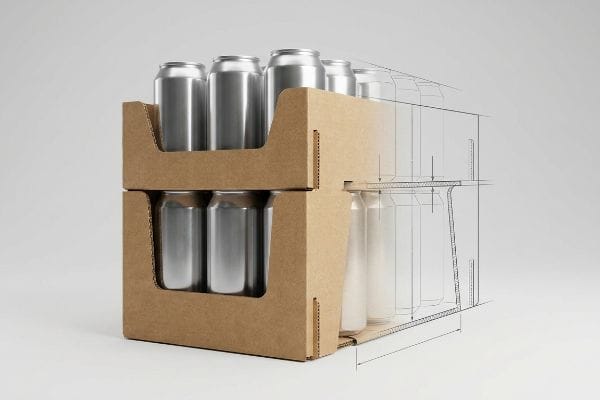
বড় আকারের খুচরা দোকানে তরল পণ্য বিক্রি করা প্যাকেজিংয়ের পদার্থবিদ্যার এক কঠিন পরীক্ষা। আপনি শত শত ভারী অ্যালুমিনিয়ামের ক্যান একটি সাধারণ পেপারবোর্ডের ট্রে- আশা করতে পারেন না যে এটি বিশ্বব্যাপী পরিবহন এবং গুদামের কঠোর পরিবেশ সহ্য করে টিকে থাকবে।
পার্টিতে পানীয় কীভাবে প্রদর্শন করবেন?
একটি লাইভ ইভেন্টের জন্য রিটেইল বেভারেজ অ্যাক্টিভেশন ডিজাইন করতে শুধু আকর্ষণীয় গ্রাফিক্সের চেয়েও অনেক বেশি কিছুর প্রয়োজন হয়। এর জন্য এমন একটি ভৌত কাঠামো প্রয়োজন যা অপ্রত্যাশিত পরিবেশগত পরিস্থিতি সহ্য করতে সক্ষম।.
কোনো অনুষ্ঠানে পানীয় প্রদর্শনের জন্য এমন অস্থায়ী কাঠামোগত মার্চেন্ডাইজার প্রয়োজন হয়, যা পরিবেশের অপ্রত্যাশিত আর্দ্রতা সহ্য করতে সক্ষম। সফল ইভেন্ট মার্চেন্ডাইজিং বিশেষায়িত স্বচ্ছ পলিমার কোটিং এবং উন্নত ভিত্তি কাঠামোর উপর নির্ভর করে, যা মেঝেতে থাকা তরলকে সক্রিয়ভাবে প্রতিহত করে এবং নিশ্চিত করে যে ভারী কার্ডবোর্ডের কাঠামোটি পুরো কার্যক্রম জুড়ে তার সর্বোচ্চ উল্লম্ব সংকোচন শক্তি বজায় রাখে।.
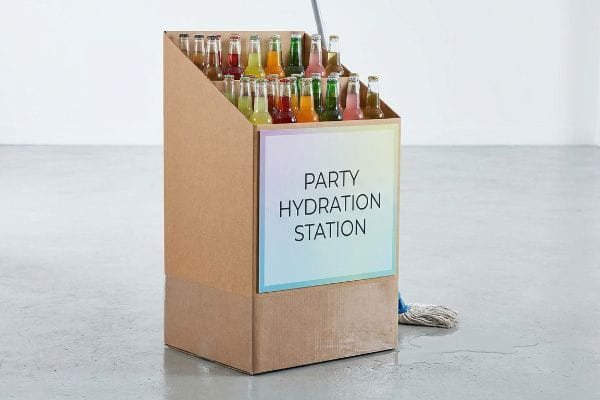
ব্র্যান্ডগুলো প্রায়শই ইভেন্ট মার্চেন্ডাইজারদের জন্য প্রিমিয়াম প্রিন্টিং-এ হাজার হাজার টাকা খরচ করে, কিন্তু তারা পুরোপুরি ভুলে যায় যে এই অস্থায়ী ইউনিটগুলো দিনের পর দিন ভেজা পৃষ্ঠের উপর থাকবে। পরিবেশগত এই উপেক্ষা আপনার বিনিয়োগের উপর প্রাপ্ত মুনাফাকে তাৎক্ষণিকভাবে শূন্য করে দেয়।.
মপ-গার্ড বেসের বাস্তবতা
যখন আমি ইভেন্ট প্রোমোশনের জন্য ক্লায়েন্টের ডাইলাইন অডিট করি , তখন আমি ক্রমাগত এমন সুন্দর 3D কনসেপ্ট দেখতে পাই যা তরল পদার্থবিদ্যাকে পুরোপুরি উপেক্ষা করে। ক্রয়কারী দলগুলো স্বাভাবিকভাবেই বাতাস পরিবহনের জন্য সবচেয়ে সস্তা বাক্স চায়, তাই তারা একেবারে মেঝের লাইন পর্যন্ত সাধারণ ছিদ্রযুক্ত পেপারবোর্ড ব্যবহারের নির্দেশ দেয় । তারা একটি অস্থায়ী রিটেইল ডিসপ্লেকে এমনভাবে বিবেচনা করে যেন এটি একটি সম্পূর্ণ শুষ্ক, তাপমাত্রা-নিয়ন্ত্রিত ভ্যাকুয়ামের মধ্যে থাকবে, যার ফলে এর সবচেয়ে গুরুত্বপূর্ণ কাঠামোগত ভিত্তিটি ছিটকে পড়া পানীয় এবং ভেজা পরিষ্কার করার মপের সংস্পর্শে অরক্ষিত থেকে যায়।
এটা শুধু তত্ত্ব নয়—আমি নিজে টেস্টিং ফ্লোরে রিটেইল এনভায়রনমেন্ট সিমুলেট করার সময় এমনটা ঘটতে দেখি। একবার একজন ক্লায়েন্ট একটি সিল না করা বেস ডিজাইন জমা দিয়েছিলেন, যা তাদের CAD (কম্পিউটার-এইডেড ডিজাইন) মনিটরে নিখুঁত দেখাচ্ছিল। আমার প্রাথমিক প্রি-প্রোডাকশন মূল্যায়নের সময়, আমি বেসটিকে মাত্র ০.১১ ইঞ্চি (২.৭৯ মিমি) স্থির জলের সংস্পর্শে এনেছিলাম। কয়েক মিনিটের মধ্যেই, ছিদ্রযুক্ত ফাইবারগুলো আর্দ্রতা উপরের দিকে শুষে নেয়, যা আমার হাইগ্রোমিটারে আর্দ্রতা শোষণের এক মারাত্মক ১৪.৭% বৃদ্ধি দেখায়। এটি উপাদানটির কাঠামোগত দৃঢ়তা সম্পূর্ণরূপে নষ্ট করে দেয় , যার ফলে বেসটি প্রচণ্ডভাবে বাইরের দিকে বেঁকে যায় এবং পুরো ইউনিটটির ডাইনামিক লোড ক্যাপাসিটি একটি বিপজ্জনক স্তরে নেমে আসে। এটি ঠিক করার জন্য, আমি তাদের কাঁচা বেসলাইন ফাইলটি সম্পূর্ণরূপে বাতিল করে দিই এবং গাণিতিকভাবে ডাই-লাইনের একেবারে নিচের ৪ ইঞ্চি (১০১.৬ মিমি) অংশে একটি বিশেষ স্বচ্ছ পলি-কোট ব্যারিয়ার প্রয়োগ করি। যেখানে ভৌত আর্দ্রতার ঘর্ষণ ঘটে, ঠিক সেই স্থানে এই অদৃশ্য তরল ঢালটি ডিজাইন করার মাধ্যমে, আমি নিশ্চিত করেছি যে কো-প্যাকিং অ্যাসেম্বলির সময় এক সেকেন্ডও কমেনি এবং একই সাথে, চুপসে যাওয়া ও ভিজে যাওয়া মার্চেন্ডাইজারের কারণে সৃষ্ট রিটেইলার চার্জব্যাকগুলোও সম্পূর্ণরূপে নির্মূল হয়েছে।
| মেট্রিক | সাধারণ পদ্ধতি | প্রকৌশলগত বাস্তবতা |
|---|---|---|
| বেস উপাদান | কাঁচা ছিদ্রযুক্ত টেস্টলাইনার4 | পলি-কোটেড আর্দ্রতা প্রতিবন্ধক5 |
| আর্দ্রতা শোষণ | দ্রুত উল্লম্ব শোষণ6 | মোট তরল বিকর্ষণ |
| ধারণক্ষমতা | আর্দ্রতার কারণে ব্যর্থ হয় | ভারী পেলোড বহন করে |
আমার প্রতিষ্ঠানে, আমি এমন ডিসপ্লে প্রিন্ট করতে অস্বীকার করি যা ভেজা মেঝেতে গলে যায়। আপনার ব্র্যান্ডের সুনাম রক্ষা করার একমাত্র উপায় হলো এর নিচের পরিধিটি সুরক্ষিত করা।.
🛠️ হার্ভিস ডেস্ক: আপনার ভারী চেকআউট ট্রেগুলো কি দোকানে পৌঁছানোর আগেই আপনার শিপিং ROI-কে ক্ষতিগ্রস্ত করছে? 👉 একটি ফ্রি স্ট্রাকচারাল ডাইলাইন অডিট করান ↗ — আমি ২৪ ঘন্টার মধ্যে প্রতিটি স্ট্রাকচারাল ফাইল ব্যক্তিগতভাবে পর্যালোচনা করি।
জেন জি প্রজন্ম অ্যালকোহলের পরিবর্তে কী পান করে?
অ্যালকোহলবিহীন বিকল্পের প্রতি ভোক্তাদের ব্যাপক ঝোঁকের ফলে দোকানের তাকগুলো অত্যন্ত ঘন ও ভারী তরল পণ্যে ভরে গেছে। সাধারণ কাগজের বোর্ড এই আধুনিক মুদিখানার প্রবণতা সামলাতে পারে না।.
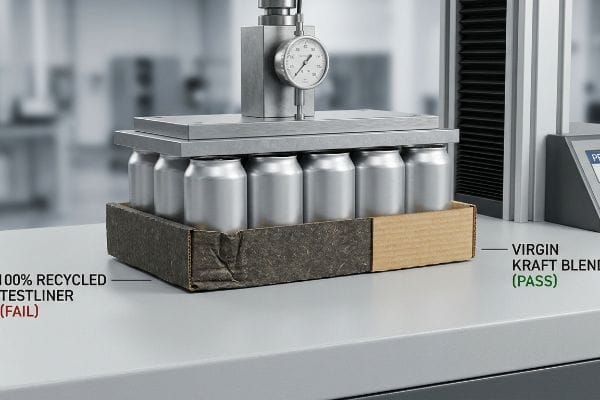
জেন জি প্রজন্ম ফাংশনাল মকটেল, কম্বুচা এবং স্পার্কলিং বোটানিক্যালসের মতো বিকল্প পানীয় পান করে। যেহেতু এই ভারী অ্যালুমিনিয়ামের ক্যানগুলো রিটেইল ডিসপ্লে ট্রে-এর উপর প্রচণ্ড চাপ সৃষ্টি করে, তাই স্ট্রাকচারাল ইঞ্জিনিয়ারদের অবশ্যই কৌশলগতভাবে ঢেউখেলানো কার্ডবোর্ডের খাঁজের মধ্যে ভার্জিন ক্রাফট পেপারের ফাইবার যুক্ত করতে হয়, যাতে এই ভৌত মার্চেন্ডাইজারগুলো সম্পূর্ণরূপে বেঁকে না যায়।.
হালকা খাবার থেকে ঘন, তরল-ভর্তি ক্যানে স্থানান্তরের ফলে আপনার প্যাকেজিংয়ের উপর গতিজনিত পীড়ন মৌলিকভাবে পরিবর্তিত হয়। পুরোনো উপাদান-সংক্রান্ত ধারণার উপর নির্ভর করা পরিবহনের সময় ব্যাপক ক্ষতি ঘটানোর একটি নিশ্চিত উপায়।.
ফাইবার নিঃশেষ পেলোড ফাঁদ
যখন আমি বিকল্প পানীয় বাজারজাতকরণের জন্য আগত সাপ্লাই চেইন স্পেসিফিকেশনগুলো পর্যালোচনা করি, তখন প্রায়শই একটি অত্যন্ত বিপজ্জনক উপাদানগত অনুমান আমার চোখে পড়ে। ব্র্যান্ডগুলো টেকসইতার চেকলিস্ট পূরণের জন্য তাদের ফ্লোর মার্চেন্ডাইজারদের জন্য ১০০% পুনর্ব্যবহৃত টেস্টলাইনার ব্যবহার কঠোরভাবে বাধ্যতামূলক করে । তারা ধরে নেয় যে, ব্যাপকভাবে পুনর্ব্যবহৃত কার্ডবোর্ডের ভৌত দৃঢ়তা নতুন বোর্ডের মতোই, এবং তারা এই বিষয়টি সম্পূর্ণ উপেক্ষা করে যে, প্রতিবার রিপাল্পিং ভ্যাটের মধ্য দিয়ে যাওয়ার সময় কাগজের তন্তুগুলো আণুবীক্ষণিকভাবে ছোট ও দুর্বল হয়ে যায় ।
কারখানায় আমার বিশ বছরের অভিজ্ঞতা আমাকে শিখিয়েছে যে, ভারী তরল পদার্থের ক্ষেত্রে অতিরিক্ত পুনর্ব্যবহৃত বোর্ডকে কখনও বিশ্বাস করা উচিত নয়। একটি বিশাল স্পার্কলিং ওয়াটার ব্র্যান্ডের জন্য প্রাথমিক প্রি-প্রোডাকশন রানের সময়, আমরা তাদের বাধ্যতামূলক ১০০% পুনর্ব্যবহৃত ডিসপ্লেটি একটি TAPPI T811 ECT (এজ ক্রাশ টেস্ট)৮ প্রেসের নিচে রাখি। ঠিক ১৮৭.৪ পাউন্ড (৮৫ কেজি) টপ-লোড চাপে, ভেতরের খাঁজগুলোতে ওজন ধরে রাখার মতো কোষীয় দৃঢ়তার অভাব দেখা দেয়, যার ফলে হঠাৎ করে একটি ভয়াবহ অভ্যন্তরীণ চাপ সৃষ্টি হয় এবং প্রিন্ট করা উপরের শীটটি ছিঁড়ে যায়। উপাদানটির কাঠামোগত শক্তি নিঃশেষ হয়ে গিয়েছিল। আমি সঙ্গে সঙ্গে লাইনটি থামিয়ে দিই এবং উপাদানের মান উন্নত করি, ঠিক ৩০% অনুপাতে ভার্জিন ক্রাফট উপাদান৯ । দীর্ঘ, স্থিতিস্থাপক কাগজের তন্তুর এই নতুন সংযোজন সঙ্গে সঙ্গে ডিসপ্লেটির সংকোচন শক্তি পুনরুদ্ধার করে, যা মার্চেন্ডাইজারকে নিরাপদে বহু-অক্ষীয় শিপিং কম্পন শোষণ করতে সক্ষম করে এবং একই সাথে খুচরা বিক্রেতার বিতরণ কেন্দ্রে ব্যয়বহুল স্বয়ংক্রিয় বাছাই জ্যাম সম্পূর্ণরূপে এড়াতে সাহায্য করে।
| উপাদান প্রোফাইল | ভৌত বাস্তবতা | ব্যবসায়িক প্রভাব |
|---|---|---|
| ১০০% পুনর্ব্যবহৃত | সংক্ষিপ্ত, দুর্বল তন্তু10 | ব্যাপক মালবাহী ক্ষতি |
| ভার্জিন ক্রাফট ব্লেন্ড | দীর্ঘ, অনমনীয় কোষীয় খিলান11 | পরম ট্রানজিট বেঁচে থাকা |
| ইসিটি পারফরম্যান্স | TAPPI মানদণ্ড পূরণে ব্যর্থ12 | ভারী পেলোড অতিক্রম করে |
আমি বিপণনের চটকদার শব্দের ওপর নয়, বরং ভৌত পদার্থের রসায়নের ওপর নির্ভর করি। সঠিক উপাদানের মিশ্রণ তৈরি করা নিশ্চিত করে যে আপনার ভারী ক্যানগুলো গুদামের দীর্ঘ যাত্রাপথটি অক্ষত অবস্থায় পার করবে।.
🛠️ হার্ভির ডেস্ক: বাস্তব রিটেইল জগতের চাপের মুখে আপনার বর্তমান কাউন্টার ডিসপ্লে ডিজাইনটি কি ভেঙে পড়ার ঝুঁকিতে আছে? 👉 একটি ফ্রি মেটেরিয়াল স্ট্রেস প্রোফাইলের জন্য অনুরোধ করুন ↗ — ১০০% গোপনীয়। আপনার অপ্রকাশিত রিটেইল ডিজাইনগুলো আমার কাছে সুরক্ষিত।
ড্রিংক ডিসপেনসারের সাধারণ সমস্যাগুলো কী কী?
তরল পদার্থের জন্য মাধ্যাকর্ষণ-চালিত বা স্তরীভূত ডিসপেনসার ডিজাইন করলে এতে বিশাল উল্লম্ব চাপের ক্ষেত্র তৈরি হয়। অভ্যন্তরীণ শক্তিবৃদ্ধি ছাড়া, ক্রমাগত স্থানীয় চাপের কারণে পেপারবোর্ড অনিবার্যভাবে বেঁকে যাবে।.
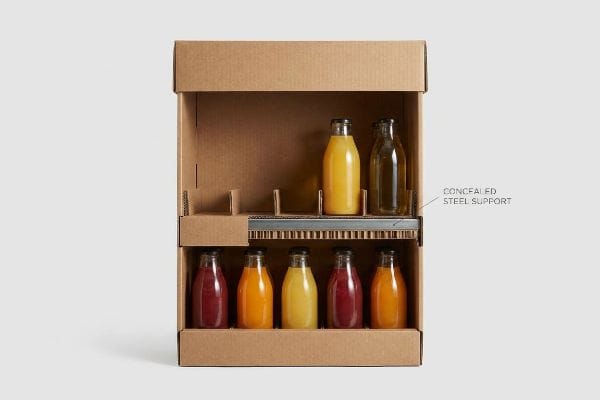
ড্রিংক ডিসপেনসারের সাধারণ সমস্যাগুলোর মধ্যে রয়েছে স্তরের মারাত্মকভাবে ঝুলে যাওয়া এবং ঘর্ষণের কারণে ফিড জ্যাম হয়ে যাওয়া। যখন একাধিক ভারী তরল পাত্র অবলম্বনহীন পেপারবোর্ডের তাকের উপর রাখা হয়, তখন তীব্র স্থানীয় মাধ্যাকর্ষণ শক্তির কারণে কাঁচা ফ্লুটগুলো ভৌতভাবে বিকৃত হয়ে যায়, যার ফলে প্রয়োজনীয় খুচরা ভারবহন ক্ষমতা কৃত্রিমভাবে পুনরুদ্ধার করার জন্য লুকানো স্টিলের সাপোর্ট বারের প্রয়োজন হয়।.
ক্রয়কারী দলগুলো প্রায়শই একক খরচ কম রাখতে সম্পূর্ণ কাগজ-ভিত্তিক কাঠামোর ওপর জোর দেয়। তবে, ফাঁপা বোর্ডের ওপর থাকা ভারী তরলের দীর্ঘমেয়াদী প্রসারণকে উপেক্ষা করলে তা ব্যয়বহুল কাঠামোগত দুঃস্বপ্নের জন্ম দেয়।.
পরজীবী স্তর অবনমন ঘটনা
যখন আমি হেভি-ডিউটি ডিসপেনসারের জন্য ক্লায়েন্টের ডাইলাইন অডিট করি, তখন আমি ক্রমাগত তরল এনার্জি শট বা জুসের পাউচের সারি ধরে রাখার জন্য ডিজাইন করা চওড়া, সমতল ধারক দেখতে পাই । এর অন্তর্নিহিত ফাঁদটি হলো নমনীয় ঢেউখেলানো বোর্ডকে এমনভাবে বিবেচনা করা যেন এটি একটি নিরেট ইস্পাতের পাত। ডিজাইনাররা পেপারবোর্ডটিকে প্রশস্ত পরিসরে প্রসারিত করেন, এই বিষয়টি উপেক্ষা করে যে ক্রমাগত নিম্নমুখী মাধ্যাকর্ষণ অনিবার্যভাবে অ-শক্তিশালীকরণকৃত খাঁজকাটা দিকে সবচেয়ে দুর্বল বিন্দুটি খুঁজে বের করবে 13 ।
এটা শুধু তত্ত্ব নয়—গত মাসে একটি নতুন গ্র্যাভিটি-ফিড ডিসপেনসার পরীক্ষা করার সময় আমি এই বিষয়টি কঠিনভাবে শিখেছি। ২০২২ সালে, আমি আমার প্রধান প্যাকেজিং ইঞ্জিনিয়ার, মার্ককে, একটি সাধারণ ঢেউখেলানো কাগজের পানীয়ের শেলফের উপর ৭২-ঘণ্টার একটি স্ট্যাটিক লোড সিমুলেশন চালাতে বলেছিলাম, যাতে এর BCT (বক্স কম্প্রেশন টেস্ট) রেটিং১৪। আমরা শেলফটির সামনের কিনারায় হুবহু পণ্যের মকআপগুলো রেখেছিলাম। মাত্র ১৪ ঘণ্টা পরেই, আমার স্পষ্টভাবে মনে আছে যে আমি শেলফটির মাঝখানটা বাঁকতে শুরু করতে দেখেছিলাম, এবং তার পরপরই কাঁচা কাগজের তন্তু ছিঁড়ে যাওয়ার একটি জোরালো, স্পষ্ট শব্দ শুনতে পাই। আমরা মূল সাপোর্ট বিমটিতে ১২.৩ মিমি-এর একটি মারাত্মক বিচ্যুতি পরিমাপ করেছিলাম, যার ফলে পণ্যগুলো আটকে যায় এবং সামনে এগোতে পারছিল না। আমি সঙ্গে সঙ্গে ফ্লোরে ছুটে যাই, ডাই-কাটিং প্রক্রিয়া থামিয়ে দিই, এবং মূল সামনের কিনারার ঠিক নিচে একটি লুকানো ধাতব সাপোর্ট বার (মেশিনে তৈরি স্টিলের টিউবিং)১৫ । আমি আমার টেস্টিং ল্যাবে সময় ও অর্থ দুটোই নষ্ট করি, যাতে আপনাকে রিটেইল ফ্লোরে লাভের অপচয় করতে না হয়। এই লুকানো যান্ত্রিক শক্তিবৃদ্ধি শুধু শেলফটিকে ভেঙে পড়া থেকে রক্ষা করেনি; এটি পণ্য পুনঃসংগ্রহের ঝামেলা সম্পূর্ণরূপে দূর করেছে, যা ক্রেতাদের অভিজ্ঞতাকে ব্যাপকভাবে উন্নত করেছে এবং ব্র্যান্ডটিকে দোকান পর্যায়ে তাৎক্ষণিক প্রত্যাখ্যানের হাত থেকে বাঁচিয়েছে।
| ডিসপেনসারের ত্রুটি | সাধারণ পরিণতি | ইঞ্জিনিয়ারড ফিক্স |
|---|---|---|
| প্রশস্ত কাগজের স্প্যান | তীব্র কেন্দ্র বিচ্যুতি16 | লুকানো ইস্পাতের নল |
| পণ্য লোড হচ্ছে | ঘর্ষণজনিত ফিড জ্যামিং17 | মসৃণ মাধ্যাকর্ষণ স্লাইড |
| দীর্ঘমেয়াদী সরণ18 | ছিঁড়ে যাওয়া তন্তুর গঠন | স্থায়ী অনমনীয়তা |
আমি কাঠামোগত অখণ্ডতাকে ভাগ্যের উপর ছেড়ে দিই না। একটি ভারী ডিসপ্লেতে শক্ত ধাতব কাঠামো জোর করে ঢুকিয়ে দেওয়াটা মাধ্যাকর্ষণের বিরুদ্ধে এক অলঙ্ঘনীয় সুরক্ষা ব্যবস্থা।.
🛠️ হার্ভির ডেস্ক: আপনার গ্র্যাভিটি-ফিড ডিসপেনসারটি কি ভারী বোতলগুলোকে মসৃণভাবে সামনের কিনারে ঠেলে দিতে পারছে না? 👉 একটি ফ্রি কাইনেটিক ফ্রিকশন অডিট দাবি করুন ↗ — মাঝখানে কোনো অ্যাকাউন্ট ম্যানেজার নেই। আপনি সরাসরি স্ট্রাকচারাল ইঞ্জিনিয়ারদের সাথে কথা বলবেন।
সেরা রেটিং প্রাপ্ত পানীয় ডিসপেনসার কোনটি?
সর্বোচ্চ কর্মক্ষম মার্চেন্ডাইজাররা শুধুমাত্র পুরু উপকরণের উপর নির্ভর করেন না; তারা লম্বা ও ওপরের দিকে ভারী তরল ভার মোকাবেলা করার জন্য নিপুণভাবে প্রয়োগ করা স্থানিক পদার্থবিদ্যার উপর নির্ভর করেন।.
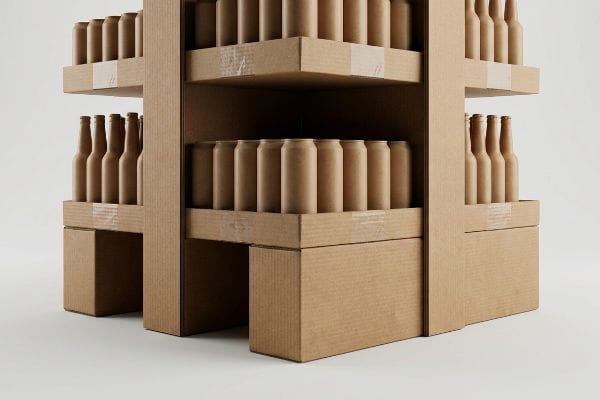
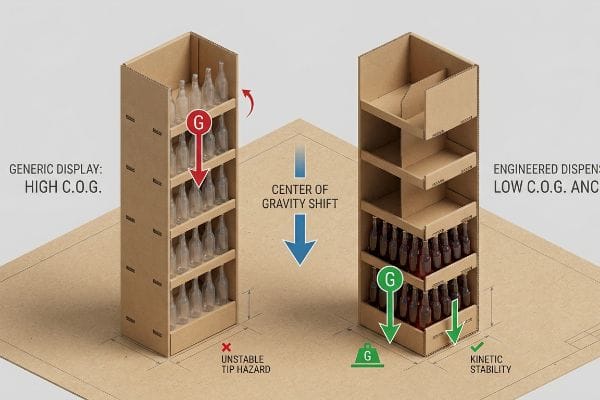
সেরা রেটিং প্রাপ্ত বেভারেজ ডিসপেনসারটি খুচরা দোকানে উল্টে যাওয়া রোধ করতে এর ভরকেন্দ্রকে অত্যন্ত নিচু করে তৈরি করা হয়। সবচেয়ে ভারী তরল পণ্যগুলোকে গাণিতিকভাবে নিচের স্তরগুলোতে আবদ্ধ করার মাধ্যমে, এই উন্নত কাঠামোগত প্যাকেজিং ঘূর্ণন অক্ষের হেলে পড়া কঠোরভাবে কমিয়ে আনে এবং অধিক জনসমাগমপূর্ণ সুপারমার্কেটের পরিবেশের জন্য প্রয়োজনীয় গতিশীল স্থিতিশীলতা নিশ্চিত করে।.
শপিং কার্টের ধাক্কায় কোনো উঁচু কাঠামো ঠিক কীভাবে আচরণ করে, তা সঠিকভাবে বুঝতে পারলেই সফল রিটেইল স্থাপনাগুলো বিপজ্জনক করিডোর-সংক্রান্ত দায়বদ্ধতা থেকে রক্ষা পায়। প্রকৃত স্থিতিশীলতার সূচনা হয় মৌলিক গণিত থেকে।.
ভগ্নাংশ প্যালেট স্থিতিশীলতার গতিবিদ্যা
সরু, মেঝেতে দাঁড়ানো পানীয় ডিসপেনসারের পেছনের কার্যপ্রণালী পরীক্ষা করার সময়, আমাদের অবশ্যই এর সামগ্রিক উচ্চতা এবং ভিত্তির প্রস্থের মধ্যেকার স্থানিক সম্পর্কটি মূল্যায়ন করতে হবে। একটি সাধারণ ফ্লোর ডিসপ্লে, যা একটি ছোট জায়গায় ৫০-ইঞ্চি (১২৭০ মিমি) উচ্চতায় স্থাপন করা হয়, তা মূলত একটি দোলকের মতো কাজ করে। যদি ভেতরের পণ্যের ভার সমস্ত তাক জুড়ে প্রতিসমভাবে বণ্টিত হয়, তবে এর ভরকেন্দ্র বিপজ্জনকভাবে উঁচুতে উঠে যায়। এই উঁচু পিভট পয়েন্টের অর্থ হলো, উপরের অংশে সামান্যতম পার্শ্বীয় বল প্রয়োগ করলেও তা ভিত্তির ঘর্ষণজনিত প্রতিরোধকে অতিক্রম করে, যার ফলে পুরো ইউনিটটি তার স্বাভাবিক অবস্থানে ফিরে আসার কোণকে অতিক্রম করে হেলে পড়ে।
এই সহজাত গতিজনিত দুর্বলতা মোকাবেলা করার জন্য, স্ট্রাকচারাল ইঞ্জিনিয়াররা একটি কঠোর ভরকেন্দ্র অ্যাঙ্কর প্রোটোকল বাধ্যতামূলক করেছেন২০।কেবল ভিত্তি প্রশস্ত করার পরিবর্তে—যা খুচরা বিক্রেতার করিডোরের সীমাবদ্ধতা লঙ্ঘন করে—আমরা গাণিতিকভাবে অভ্যন্তরীণ ভর পুনর্বন্টন করি। শক্তিশালী নিম্ন গহ্বর তৈরি করে, যা ইউনিটের একেবারে নীচে সবচেয়ে ভারী তরল SKU-গুলিকে স্পষ্টভাবে আটকে রাখে, আমরা কৃত্রিমভাবে ভরকেন্দ্রকে নীচে টেনে আনি। এই সুনির্দিষ্ট নিম্নমুখী স্থানান্তর ইউনিটটিকে অস্থিতিশীল করার জন্য প্রয়োজনীয় পার্শ্বীয় বলকে ব্যাপকভাবে বাড়িয়ে দেয়২১।এর ফলে একটি গাণিতিকভাবে সঠিক, নিখুঁতভাবে উল্লম্ব মার্চেন্ডাইজার তৈরি হয় যা সম্পূর্ণ খাড়া স্থিতিশীলতা বজায় রাখে, এবং ভৌত মেঝের স্থান না বাড়িয়ে বা কাঁচামালের বাজেট না বাড়িয়েই উল্টে যাওয়ার ঝুঁকি সম্পূর্ণরূপে প্রশমিত করে।
| ইঞ্জিনিয়ারিং মেট্রিক | জেনেরিক ডিসপ্লে | ইঞ্জিনিয়ারড ডিসপেনসার |
|---|---|---|
| মাধ্যাকর্ষণ কেন্দ্র | উঁচু এবং অস্থিতিশীল | গাণিতিকভাবে নোঙর করা22 |
| পার্শ্বীয় প্রতিরোধ | সামান্য বলের অধীনে টিপস | করিডোরের সংঘর্ষ শোষণ করে23 |
| পেলোড বিতরণ | প্রতিসম উল্লম্ব লোডিং | নিচের দিকে ভারী তালা24 |
আমি একেবারে গোড়া থেকে ভৌত স্থিতিশীলতার নকশা করি। অভ্যন্তরীণ ভরের সঠিক বণ্টন নিয়ন্ত্রণের মাধ্যমে, আমরা গাণিতিকভাবে নিশ্চিত করি যে আপনার রিটেইল পরিসর সম্পূর্ণ সুরক্ষিত থাকবে।.
🛠️ হার্ভির ডেস্ক: আপনার লম্বা কোয়ার্টার-প্যালেট ডিসপ্লেগুলো কি করিডোরে চলাচলের সময় উল্টে গিয়ে খুচরা বিক্রেতাদের নিরাপত্তা বিধি লঙ্ঘন করছে? 👉 বিনামূল্যে ভরকেন্দ্রের হিসাব করিয়ে নিন ↗ — আমি ২৪ ঘণ্টার মধ্যে প্রতিটি কাঠামোগত ফাইল ব্যক্তিগতভাবে পর্যালোচনা করি।
উপসংহার
যখন আপনি ভারী তরল পণ্যের গতিবিদ্যার মৌলিক নীতি উপেক্ষা করেন, তখন আপনি রিটেইল আইলে ডিসপ্লের ভিত্তির ভয়াবহ ধস এবং প্রতিটি স্তরের মারাত্মকভাবে দেবে যাওয়া নিশ্চিত করেন। শুধুমাত্র গত মাসেই, আমার স্ট্রাকচারাল অডিট ৩টি ব্র্যান্ডকে আর্দ্রতা শোষণ এবং ওপরের অংশের অস্থিতিশীলতার কারণে বাতিল হওয়া পণ্য এবং রিটেইলারদের চার্জব্যাক বাবদ ১০,০০০ ডলারেরও বেশি সাশ্রয় করতে সাহায্য করেছে। তাত্ত্বিক CAD ডাইলাইনকে আপনার লজিস্টিক্যাল মার্জিন নষ্ট করতে দেওয়া বন্ধ করুন; আপনার বেভারেজ ডিসপ্লেগুলো যেন মাল পরিবহনের যাত্রা সফলভাবে সম্পন্ন করে এবং সুপারমার্কেটের ফ্লোরে আধিপত্য বিস্তার করে, তা নিশ্চিত করতে আমাকে ব্যক্তিগতভাবে আপনার স্ট্রাকচারাল ফাইলগুলো একটি কঠোর ফ্রি স্ট্রাকচারাল ডাইলাইন অডিটের ↗ মধ্য দিয়ে চালাতে দিন।
"কাগজ এবং কাগজ-ভিত্তিক খাদ্য প্যাকেজিং উপকরণের একটি সংক্ষিপ্ত বিবরণ", https://pmc.ncbi.nlm.nih.gov/articles/PMC6801293/। কৈশিক ক্রিয়ার মাধ্যমে প্রলেপহীন পেপারবোর্ডে আর্দ্রতা শোষণ কীভাবে রিটেইল ডিসপ্লের উল্লম্ব সংকোচন শক্তি হ্রাস করে তার সংক্ষিপ্ত ব্যাখ্যা। প্রমাণের ভূমিকা: প্রযুক্তিগত যাচাইকরণ; উৎসের ধরণ: প্যাকেজিং ইঞ্জিনিয়ারিং ম্যানুয়াল। সমর্থন করে: এই দাবি যে, একটি ডিসপ্লের গোড়ায় ছিদ্রযুক্ত উপাদান ব্যবহার করলে এর কাঠামোগত ভিত্তি দুর্বল হয়ে পড়ে। পরিধিগত টীকা: বিশেষভাবে ভেজা অবস্থায় সেলুলোজ-ভিত্তিক ফাইবারের অবক্ষয় নিয়ে আলোচনা করে। ↩
"...এর সংকোচন শক্তির উপর আপেক্ষিক আর্দ্রতার প্রভাব", https://open.clemson.edu/all_theses/3225/। জল প্রবেশ কীভাবে ফাইবার-ভিত্তিক সাবস্ট্রেটের উল্লম্ব সংকোচন শক্তি এবং ভারবহন ক্ষমতা হ্রাস করে তার প্রযুক্তিগত ব্যাখ্যা। প্রমাণের ভূমিকা: প্রযুক্তিগত যাচাইকরণ; উৎসের ধরণ: বস্তু বিজ্ঞান জার্নাল। সমর্থন করে: এই দাবি যে আর্দ্রতা কাঠামোগত অখণ্ডতাকে নষ্ট করে। পরিধি টীকা: অপরিশোধিত ছিদ্রযুক্ত ফাইবারের ক্ষেত্রে প্রযোজ্য। ↩
"খাদ্য প্যাকেজিংয়ের জন্য প্রতিবন্ধক আবরণ | খাদ্য প্রস্তুতকারকের নির্দেশিকা", https://www.mcpolymers.com/library/barrier-coatings-food-packaging/। কৈশিক ক্রিয়া এবং আর্দ্রতা শোষণ প্রতিরোধ করার জন্য পয়েন্ট-অফ-পারচেজ (POP) ডিসপ্লেতে ব্যবহৃত পলিমার আবরণের যাচাইকরণ। প্রমাণের ভূমিকা: প্রযুক্তিগত বিবরণ; উৎসের ধরণ: শিল্প উৎপাদন নির্দেশিকা। সমর্থন করে: ডিসপ্লের স্থিতিশীলতা বজায় রাখার জন্য তরল ঢালের ব্যবহার। পরিধি টীকা: অস্থায়ী খুচরা ফিক্সচারের উপর দৃষ্টি নিবদ্ধ। ↩
"[পিডিএফ] পেপারবোর্ড প্যাকেজিংয়ের যান্ত্রিক বৈশিষ্ট্য অনুসন্ধান...", https://repository.rit.edu/cgi/viewcontent.cgi?article=1066&context=japr। স্বল্পমূল্যের কার্ডবোর্ড ডিসপ্লেতে ব্যবহৃত স্ট্যান্ডার্ড টেস্টলাইনারের গঠন এবং ভেদ্যতা বর্ণনা করে এমন শিল্প মান। প্রমাণের ভূমিকা: উপাদান শনাক্তকরণ; উৎসের ধরণ: প্যাকেজিং শিল্পের প্রযুক্তিগত শিট। সমর্থন করে: খুচরা ডিসপ্লেতে ব্যবহৃত সাধারণ ভিত্তি উপকরণের বর্ণনা। পরিধি টীকা: প্রলেপবিহীন ঢেউখেলানো লাইনারের উপর আলোকপাত করে। ↩
"কাগজ এবং ঢেউখেলানো বোর্ডের প্যাকেজিংয়ের জন্য প্রতিবন্ধক আবরণ", https://global.humanchem.com/resources/barrier-coating-for-paper-and-corrugated-board-packaging.html। প্রযুক্তিগত বিবরণ যা বিশদভাবে বর্ণনা করে কিভাবে পলিথিন (PE) আবরণ ঢেউখেলানো উপকরণে জলের প্রবেশ প্রতিরোধ করে। প্রমাণের ভূমিকা: প্রযুক্তিগত বিবরণ; উৎসের ধরণ: উপকরণ প্রকৌশল হ্যান্ডবুক। সমর্থন করে: তরল প্রবেশ প্রতিরোধে পলি-আবরণের কার্যকারিতা। পরিধি টীকা: পলিমার-আবৃত সেলুলোজ সাবস্ট্রেটের ক্ষেত্রে প্রযোজ্য। ↩
"কাগজের স্ট্রিপে তরল শোষণ: একটি পরীক্ষামূলক ও সংখ্যাসূচক গবেষণা", https://pmc.ncbi.nlm.nih.gov/articles/PMC7495729/। প্রলেপহীন ছিদ্রযুক্ত কাগজের তন্তুতে কৈশিক ক্রিয়ার ফলে উল্লম্বভাবে তরল স্থানান্তরের বৈজ্ঞানিক ব্যাখ্যা। প্রমাণের ভূমিকা: ভৌত প্রক্রিয়া; উৎসের ধরণ: বস্তু বিজ্ঞান বিষয়ক জার্নাল। সমর্থন করে: এই দাবি যে, কাঁচা টেস্টলাইনার উপরের দিকে তরল শোষণ করে। পরিধিগত টীকা: শুধুমাত্র অ-সিলকৃত ছিদ্রযুক্ত তন্তুর জন্য প্রযোজ্য। ↩
পুনর্ব্যবহৃত তন্তু উপাদানের গুণমানের পরিবর্তন। পর্ব ১। প্রভাবিতকারী উপাদানসমূহ …, https://bioresources.cnr.ncsu.edu/resources/changing-quality-of-recycled-fiber-material-part-1-factors-affecting-the-quality-and-an-approach-for-characterisation-of-the-strength-potential/। বারবার পাল্প তৈরির চক্র কীভাবে সেলুলোজ তন্তুর দৈর্ঘ্য এবং কাঠামোগত অখণ্ডতা হ্রাস করে তার প্রযুক্তিগত ব্যাখ্যা। প্রমাণের ভূমিকা: প্রযুক্তিগত বৈধতা; উৎসের ধরণ: পদার্থ বিজ্ঞান বা কাগজ তৈরির গবেষণা। সমর্থন করে: এই দাবি যে পুনর্ব্যবহৃত বোর্ডে ভার্জিন বোর্ডের মতো দৃঢ়তা থাকে না। পরিধি টীকা: বিশেষভাবে সেলুলোজ তন্তুর যান্ত্রিক অবক্ষয়ের সাথে সম্পর্কিত। ↩
"একটি ঢেউখেলানো বোর্ডের প্রান্ত চূর্ণন পরীক্ষায় পূর্ণ-ক্ষেত্র পরিমাপ...", https://pmc.ncbi.nlm.nih.gov/articles/PMC8199211/। TAPPI-এর প্রামাণ্য শিল্প মান নথি ঢেউখেলানো বোর্ডের স্তূপীকরণের শক্তি নির্ধারণের জন্য প্রান্ত চূর্ণন পরীক্ষা (ECT) পরিমাপের পদ্ধতি সংজ্ঞায়িত করে। প্রমাণের ভূমিকা: প্রযুক্তিগত বৈধতা; উৎসের ধরণ: শিল্প মান। সমর্থন করে: উপর থেকে চাপ পরিমাপের জন্য একটি মানসম্মত প্রেসের ব্যবহার। পরিধি টীকা: মানটি বিশেষভাবে ঢেউখেলানো ফাইবারবোর্ডের জন্য প্রযোজ্য। ↩
"[পিডিএফ] ভার্জিন বনাম রিসাইকেল্ড বোর্ড, লেখক: এল. লিসা ঝাও, একটি থিসিস …", https://vuir.vu.edu.au/18233/1/ZHAO_1993compressed.pdf। সেলুলোজ ফাইবারের উপর করা বস্তুবিজ্ঞান গবেষণা দেখায় যে, কীভাবে রিসাইকেল্ড ফাইবারের তুলনায় দীর্ঘ-ফাইবারের ভার্জিন ক্রাফট উপাদান করোগেটেড ফ্লুটিং-এর সংকোচন শক্তি এবং কাঠামোগত অখণ্ডতা বৃদ্ধি করে। প্রমাণের ভূমিকা: প্রযুক্তিগত ব্যাখ্যা; উৎসের ধরণ: বস্তুবিজ্ঞান জার্নাল। সমর্থন করে: এই দাবি যে ভার্জিন ক্রাফট ফাইবার যোগ করলে কাঠামোগত দৃঢ়তা পুনরুদ্ধার হয়। পরিধিগত টীকা: কর্মক্ষমতার উন্নতি ব্যবহৃত ক্রাফট ফাইবারের নির্দিষ্ট গ্রেডের উপর নির্ভর করে। ↩
"পুনর্ব্যবহৃত পদার্থের কাগজ তৈরির সম্ভাবনার উপর টুকরো করার মাত্রার প্রভাব...", https://pmc.ncbi.nlm.nih.gov/articles/PMC8410872/। পুনঃমণ্ড তৈরির প্রক্রিয়ার সময় সেলুলোজ তন্তুর অবক্ষয়ের প্রযুক্তিগত বিশ্লেষণ। প্রমাণের ভূমিকা: তথ্যগত যাচাই; উৎসের ধরণ: পদার্থ বিজ্ঞান জার্নাল। সমর্থন: এই দাবি যে বারবার পুনর্ব্যবহার তন্তুকে দুর্বল করে দেয়। পরিধি টীকা: পেপারবোর্ডের সেলুলোসিক তন্তুর ক্ষেত্রে প্রযোজ্য। ↩
"প্যাকেজিং গ্রেড কাগজের তন্তুর গঠন সম্পর্কে একটি পর্যালোচনা...", https://wfs.swst.org/index.php/wfs/article/view/2111/2111। ভার্জিন সফটউড ক্রাফট তন্তুর ভৌত কাঠামো এবং রূপতত্ত্বের বর্ণনা। প্রমাণের ভূমিকা: প্রযুক্তিগত বিবরণ; উৎসের ধরণ: পাল্প ও কাগজ শিল্প হ্যান্ডবুক। সমর্থন: ভার্জিন ক্রাফটের কাঠামোগত অখণ্ডতা সম্পর্কিত দাবি। পরিধি টীকা: ক্রাফট পাল্পিং প্রক্রিয়ার জন্য নির্দিষ্ট। ↩
"[পিডিএফ] রিং ক্রাশ এবং শর্ট স্প্যান কম্প্রেশন ফর প্রেডিক্টিং এজওয়াইজ …", https://imisrise.tappi.org/download.aspx?key=03NOV13। ঢেউখেলানো উপাদানের সংকোচন শক্তি (ECT) পরিমাপের জন্য TAPPI স্ট্যান্ডার্ডের রেফারেন্স। প্রমাণের ভূমিকা: নিয়ন্ত্রক যাচাইকরণ; উৎসের ধরণ: শিল্প মান। সমর্থন করে: এই দাবি যে পুনর্ব্যবহৃত উপাদান ভারী বোঝার অধীনে নির্দিষ্ট শক্তির মানদণ্ড পূরণে ব্যর্থ হতে পারে। পরিধি নোট: ECT কর্মক্ষমতা মেট্রিক্সের উপর আলোকপাত করে। ↩
"ঢেউখেলানো বোর্ডের বাক্সের সংকোচন শক্তির প্রাক্কলন …", https://pmc.ncbi.nlm.nih.gov/articles/PMC8467740/। ঢেউখেলানো বোর্ডের অ্যানাইসোট্রপিক বৈশিষ্ট্যের প্রযুক্তিগত বিশ্লেষণ এবং ফ্লুটের অভিমুখের সাপেক্ষে ভার প্রয়োগ কীভাবে কাঠামোগত ব্যর্থতাকে প্রভাবিত করে। প্রমাণের ভূমিকা: প্রযুক্তিগত বৈধতা; উৎসের ধরণ: বস্তু বিজ্ঞান বিষয়ক তথ্যসূত্র। সমর্থন করে: এই দাবি যে, উল্লম্ব ভারের অধীনে অ-শক্তিবর্ধিত ফ্লুটগুলোই ব্যর্থতার প্রধান কেন্দ্রবিন্দু। পরিধি টীকা: ঢেউখেলানো ফাইবারবোর্ড প্রকৌশলের জন্য নির্দিষ্ট। ↩
"আইএসও ১২০৪৮ অনুযায়ী বক্স কম্প্রেশন টেস্ট / স্ট্যাকিং টেস্ট (বিসিটি) – জুইকরোয়েল", https://www.zwickroell.com/industries/paper-cardboard-tissues/corrugated-board-and-solid-board/box-crush-tests-stacking-crush-tests/। করোগেটেড বোর্ডের উল্লম্ব ভারবহন ক্ষমতা মূল্যায়নের জন্য একটি প্রমিত পরিমাপক হিসেবে বিসিটি-র বিস্তারিত ব্যাখ্যা। প্রমাণের ভূমিকা: প্রযুক্তিগত সংজ্ঞা; উৎসের ধরণ: শিল্প মান। সমর্থন: শেলফের কাঠামোগত অখণ্ডতা যাচাই করার জন্য ব্যবহৃত পদ্ধতি। পরিধি টীকা: করোগেটেড উপকরণের ক্ষেত্রে প্রযোজ্য। ↩
"ইন্টারেক্টিভ রিটেলের জন্য ডিসপ্লের কাঠামোগত নকশা...", https://www.bcipkg.com/display-structural-design-for-interactive-retail-displays/। উচ্চ-ভার বহনকারী পেপারবোর্ড ডিসপেনসারে বেঁকে যাওয়া এবং বেঁকে যাওয়া রোধ করার জন্য ধাতব ইনসার্ট ব্যবহারের উপর প্রযুক্তিগত ডকুমেন্টেশন। প্রমাণের ভূমিকা: প্রকৌশলগত সমাধান; উৎসের ধরণ: প্যাকেজিং ইঞ্জিনিয়ারিং গাইড। সমর্থন করে: এই দাবি যে স্টিলের টিউবিং কাঠামোগত ব্যর্থতা দূর করে এবং কার্যকারিতা উন্নত করে। পরিধি সংক্রান্ত টীকা: শুধুমাত্র গ্র্যাভিটি-ফেড রিটেল ডিসপ্লের জন্য নির্দিষ্ট। ↩
"ভারবহনকারী নয় এমন সিরামিক দেয়ালের ফাটল প্রতিরোধ ক্ষমতা পরীক্ষা করা...", https://pmc.ncbi.nlm.nih.gov/articles/PMC8001233/। কাঠামোগত বলবিদ্যার উপর প্রযুক্তিগত নথিতে ব্যাখ্যা করা হয়েছে যে, উল্লম্ব ভারের অধীনে কাগজ-ভিত্তিক উপকরণের প্রশস্ত স্প্যানগুলি কীভাবে কেন্দ্র বিচ্যুতি অনুভব করে। প্রমাণের ভূমিকা: প্রযুক্তিগত যাচাইকরণ; উৎসের ধরণ: প্রকৌশল হ্যান্ডবুক। সমর্থন: স্প্যান প্রস্থ এবং কাঠামোগত ব্যর্থতার মধ্যে সম্পর্ক। পরিধি টীকা: পেপারবোর্ড উপকরণের জন্য নির্দিষ্ট। ↩
"[পিডিএফ] একটি ডিআরআই ফার্নেস পেলেট ফিডে জ্যামিং ঘটনার তদন্ত...", https://hammer.purdue.edu/articles/thesis/Investigation_of_Jamming_Phenomenon_in_a_DRI_Furnace_Pellet_Feed_System_using_the_Discrete_Element_Method_and_Computational_Fluid_Dynamics/22799189/1/files/40520504.pdf। বাল্ক উপাদান হ্যান্ডলিং-এর বিশ্লেষণে ফিড জ্যামিং-এর প্রাথমিক কারণ হিসেবে পণ্যের প্যাকেজিং এবং ডিসপেনসারের দেয়ালের মধ্যেকার ঘর্ষণ সহগকে চিহ্নিত করা হয়েছে। প্রমাণের ভূমিকা: যান্ত্রিক বিশ্লেষণ; উৎসের ধরণ: শিল্প নকশা নির্দেশিকা। সমর্থন করে: লোডিং ব্যর্থতার যান্ত্রিক কারণ। পরিধি নোট: পণ্যের পৃষ্ঠের গঠন অনুসারে পরিবর্তিত হয়। ↩
"[পিডিএফ] কাগজের ক্রিপ প্রতিক্রিয়া – বায়োরিসোর্সেস", https://bioresources.cnr.ncsu.edu/wp-content/uploads/2020/07/2005.2.651.pdf। পদার্থ বিজ্ঞান গবেষণায় ক্রিপকে একটি কঠিন পদার্থের ক্রমাগত যান্ত্রিক চাপের অধীনে ধীরে ধীরে সরে যাওয়া বা স্থায়ীভাবে বিকৃত হওয়ার প্রবণতা হিসাবে বর্ণনা করা হয়, যা ফাইবারের অবক্ষয়ের দিকে পরিচালিত করে। প্রমাণের ভূমিকা: বৈজ্ঞানিক বৈধতা; উৎসের ধরণ: পিয়ার-রিভিউড জার্নাল। সমর্থন করে: ফাইবার কাঠামোর দীর্ঘমেয়াদী অবক্ষয়। পরিধি নোট: সেলুলোজ-ভিত্তিক উপকরণগুলিতে প্রযোজ্য। ↩
"অস্থায়ী ডিসপ্লেতে স্থিতিশীলতা ও কাঠামোগত সমর্থন নিশ্চিত করুন", https://www.ud-direct.com/blog/tips-and-tricks-to-ensure-stability-and-structure-support-in-temporary-displays। স্ব-প্রতিষ্ঠিত রিটেইল ডিসপ্লেতে উচ্চতা-প্রস্থের অনুপাতের প্রযুক্তিগত যাচাইকরণ যা অস্থিতিশীলতা সৃষ্টি করে। প্রমাণের ভূমিকা: তথ্যগত বৈধতা; উৎসের ধরণ: কাঠামোগত প্রকৌশল নির্দেশিকা। সমর্থন করে: এই দাবি যে নির্দিষ্ট মাত্রা দোলকের মতো অস্থিতিশীলতা তৈরি করে। পরিধি টীকা: সংকীর্ণ ভিত্তিযুক্ত ডিসপ্লের উপর দৃষ্টি নিবদ্ধ। ↩
"অস্থায়ী ঢেউতোলা খুচরা ডিসপ্লেতে কাঠামোগত নকশা – ইউডি ডিরেক্ট", https://www.ud-direct.com/blog/the-importance-of-structural-design-in-temporary-corrugated-retail-displays। খুচরা ফিক্সচারের জন্য শিল্প নিরাপত্তা মান বা কাঠামোগত প্রকৌশল নির্দেশিকা লম্বা ডিসপ্লেতে ভরকেন্দ্রের স্থিতিশীলতার জন্য বাধ্যতামূলক প্রোটোকল নিশ্চিত করবে। প্রমাণের ভূমিকা: নিয়ন্ত্রক বৈধতা; উৎসের ধরণ: শিল্প মান। সমর্থন করে: প্রমিত স্থিতিশীলতা আদেশের অস্তিত্ব। পরিধি নোট: বাণিজ্যিক মার্চেন্ডাইজিং ইউনিটের জন্য নির্দিষ্ট। ↩
"একটি বাক্সকে উল্টে যাওয়া থেকে রক্ষা করুন: ভরকেন্দ্রের উচ্চতা?", https://physics.stackexchange.com/questions/150620/prevent-a-box-from-tipping-over-height-of-cg। একটি পদার্থবিদ্যা বা যন্ত্র প্রকৌশলের পাঠ্যপুস্তকে ভরকেন্দ্রের উচ্চতা এবং পার্শ্বীয় বলের কারণে সৃষ্ট টিপিং মোমেন্টের মধ্যে গাণিতিক সম্পর্কটি দেওয়া থাকবে। প্রমাণের ভূমিকা: তাত্ত্বিক যাচাই; উৎসের ধরণ: অ্যাকাডেমিক পাঠ্যপুস্তক। সমর্থন করে: এই দাবি যে ভরকেন্দ্র নিচে নামালে স্থিতিশীলতা বাড়ে। পরিধি টীকা: দৃঢ় বস্তুর গতিবিদ্যার ক্ষেত্রে প্রযোজ্য। ↩
ভরকেন্দ্রের অবস্থান নির্ধারণ করে কীভাবে … – ইনস্টাগ্রাম, https://www.instagram.com/reel/DYZ9miOlEDG/। ডিসপ্লের স্থিতিশীলতা নিশ্চিত করতে কীভাবে স্ট্রাকচারাল ইঞ্জিনিয়ারিং এবং ভরকেন্দ্রের গণনা ব্যবহার করা হয় তার ব্যাখ্যা। প্রমাণের ভূমিকা: প্রযুক্তিগত যাচাইকরণ; উৎসের ধরণ: ইঞ্জিনিয়ারিং স্পেসিফিকেশন। সমর্থন: ইঞ্জিনিয়ারড ডিসপেনসারের স্থিতিশীলতা। পরিধি নোট: শিল্প-মানের মার্চেন্ডাইজিং ইউনিটের ক্ষেত্রে প্রযোজ্য। ↩
"পানীয়ের জন্য সেরা ডিসপ্লে কোনটি? – পপডিসপ্লে", https://popdisplay.me/fr/what-is-the-best-display-for-beverages/। উপাদানের বৈশিষ্ট্য বা কাঠামোগত জ্যামিতির উপর প্রযুক্তিগত তথ্য যা একটি ডিসপেনসারকে পার্শ্বীয় আঘাত সহ্য করতে সক্ষম করে। প্রমাণের ভূমিকা: কার্যকারিতা যাচাই; উৎসের ধরণ: বস্তু বিজ্ঞান প্রতিবেদন। সমর্থন করে: পার্শ্বীয় প্রতিরোধের দাবি। পরিধির টীকা: উপাদানের গঠনের উপর নির্ভর করে পরিবর্তিত হয়। ↩
"হাতে বহন করা ভারের ওজন বিন্যাসের ধড়ের পেশীকলার উপর প্রভাব...", https://pmc.ncbi.nlm.nih.gov/articles/PMC5929471/। লম্বা মার্চেন্ডাইজার গাড়িতে নিম্ন-ভারকেন্দ্রযুক্ত পেলোড বন্টন কীভাবে উল্টে যাওয়া প্রতিরোধ করে তার বিশ্লেষণ। প্রমাণের ভূমিকা: ভৌত নীতির বৈধতা; উৎসের ধরণ: গতিবিদ্যার পাঠ্যপুস্তক। সমর্থন: পেলোড বন্টনের দক্ষতা। পরিধি টীকা: ভগ্নাংশ প্যালেট স্থিতিশীলতার জন্য নির্দিষ্ট। ↩