ক্রেতারা আপনার পণ্যের পাশ দিয়ে সরাসরি চলে যাওয়ায় কি আপনার খুচরা বিক্রির মুনাফা কমে যাচ্ছে? সমস্যাটি খুব কমই আপনার বিপণনে থাকে। এর মূল কারণ হলো সাধারণত একটি ব্যর্থ ভৌত পণ্য বিন্যাস কাঠামো।.
রিটেইল ডিসপ্লের মাধ্যমে ক্রেতাদের প্রভাবিত করতে হলে, তাদের স্বয়ংক্রিয় হাঁটার ধরণকে ব্যাহত করার জন্য কৌশলগতভাবে ভৌত কাঠামো, রঙ এবং অবস্থান প্রয়োগ করতে হয়। মানসিক বাধা কমিয়ে এবং পণ্যের দৃশ্যমানতা বাড়িয়ে, সঠিকভাবে ডিজাইন করা মার্চেন্ডাইজিং ইউনিটগুলো পথচারীদের সরাসরি দোকানের মেঝেতেই সক্রিয়, বাস্তব এবং তাৎক্ষণিক কেনাকাটায় রূপান্তরিত করে।.
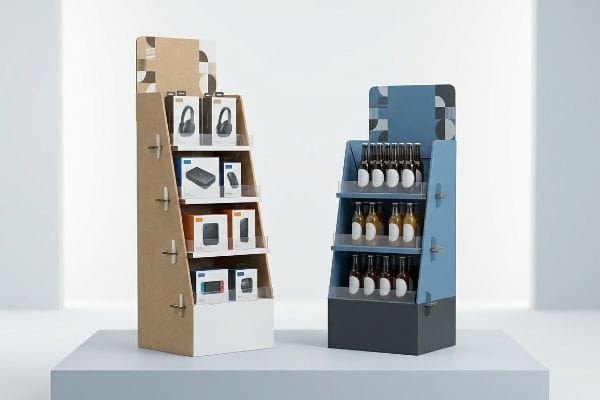
একজন ক্রেতাকে সত্যিই থমকে দাঁড় করাতে হলে, আমাদের সুন্দর থ্রিডি চিত্রকলার বাইরে গিয়ে সেই কাঠামোগত মনোবিজ্ঞানকে খতিয়ে দেখতে হবে, যা আসলে দোকানের করিডোরে মানুষের আচরণকে নিয়ন্ত্রণ করে।.
ক্রেতাদের প্রভাবিত করে এমন বিষয়গুলো কী কী?
আপনার কম্পিউটার স্ক্রিনে একটি সুন্দর গ্রাফিক ডিজাইন করার কোনো অর্থই থাকে না, যদি ক্রেতা তার কার্টটি ঠেলে নিয়ে যেতেই থাকে। আমাদেরকে দোকানের করিডোরের কঠোর বাস্তবতা মাথায় রেখেই ডিজাইন করতে হবে।.
ক্রেতাদের প্রভাবিত করে এমন বিষয়গুলোর মধ্যে রয়েছে স্থানিক মনোযোগের সীমা, দৃশ্যগত বৈসাদৃশ্য, কাঠামোগত প্রবেশগম্যতা এবং মানসিক স্বাচ্ছন্দ্য। যখন একজন ভোক্তা কোনো পণ্য ইউনিটের কাছে যান, তখন তার ক্রয়ের সিদ্ধান্তটি নির্ভর করে প্যাকেজিংয়ের বাহ্যিক জ্যামিতি দূর থেকে কতটা সাবলীলভাবে মনোযোগ আকর্ষণ করে এবং কাছ থেকে পণ্যটি সহজে বের করে আনতে কতটা সুবিধা দেয়, তার উপর।.
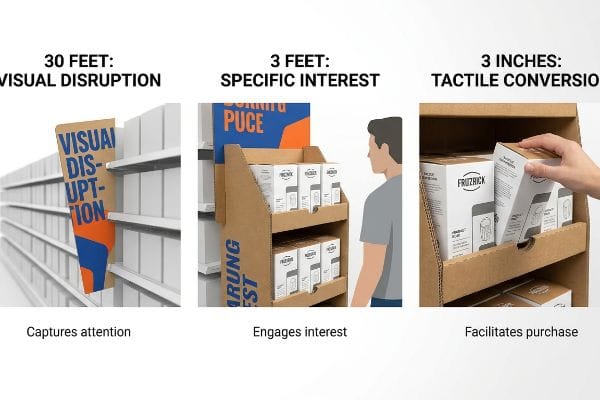
এই আচরণগত উদ্দীপকগুলো বোঝাটা কেবল প্রাথমিক ধাপ। এগুলোকে কাঁচা পেপারবোর্ডে প্রয়োগ করতে গিয়েই বেশিরভাগ ব্র্যান্ড হোঁচট খায়।.
৩-৩-৩ স্থানিক সম্পৃক্ততা ফ্যাক্টর
এমনকি অভিজ্ঞ ডিজাইনাররাও প্রায়শই এই সীমাবদ্ধতাটি উপেক্ষা করেন: তাঁরা রিটেইল মার্চেন্ডাইজার ডিজাইন করেন শুধুমাত্র ব্যাকলিট কম্পিউটার মনিটরে কাছ থেকে দেখার জন্য। তাঁরা ধরে নেন যে, ডিজাইন স্টুডিওতে ২ ফুট দূর থেকে পড়ার সময় যদি একটি লোগো স্পষ্ট দেখায়, তবে তা স্বাভাবিকভাবেই একটি বিশাল বিগ-বক্স রিটেইল পরিবেশে ভালো কাজ করবে। এই ফ্ল্যাট-স্ক্রিন পদ্ধতিটি মানুষ কীভাবে ভিড় ও উজ্জ্বল আলোয় আলোকিত দোকানে চলাচল করে, সেই বাস্তবতাকে পুরোপুরি উপেক্ষা করে।.
আমি জানি আপনি আপনার ফ্ল্যাট ডাইলাইন ফাইলের দিকে তাকিয়ে ভাবছেন কেন আপনার শেষ ক্যাম্পেইনটি ক্রেতাদের আকর্ষণ করতে ব্যর্থ হয়েছিল, কারণ আমার ৮০% ক্লায়েন্ট তাদের প্রথম চেষ্টাতেই ঠিক এই একই স্থানিক ভুলটি করে থাকেন। রিটেইল মার্চেন্ডাইজিং-এ, আপনাকে অবশ্যই ৩-৩-৩ নিয়ম১: আপনার কাঠামোটিকে অবশ্যই ৩০ ফুট দূর থেকে ক্রেতার দৃষ্টি আকর্ষণ করতে হবে, ৩ ফুট দূরত্বে তাদের নির্দিষ্ট আগ্রহ জাগিয়ে তুলতে হবে এবং ৩ ইঞ্চি (৭৬.২ মিমি) দূরত্বে স্পর্শের মাধ্যমে ক্রেতাকে আকৃষ্ট করতে হবে। আমি প্রতিদিন ব্র্যান্ডগুলোকে এই নিয়ম মানতে ব্যর্থ হতে দেখি যখন তারা ছোট CMYK (সায়ান, ম্যাজেন্টা, ইয়েলো, কী/ব্ল্যাক) হাফটোন টেক্সট ব্যবহার করে, যা তীব্র ফ্লুরোসেন্ট আলোর নিচে ঘোলাটে, অপাঠ্য গ্রে নয়েজে পরিণত হয়। আপনাকে ক্রেতার মনোযোগ আকর্ষণে বাধ্য করতে হবে। দোকানের করিডোরের শেষ প্রান্ত থেকে তাদের দৃষ্টি আকর্ষণ করার জন্য আকর্ষণীয় ডাই-কাট হেডার শেপ এবং বিশাল PMS (প্যান্টোন ম্যাচিং সিস্টেম) স্পট কালার ফ্লাড ব্যবহার করুন, তারপর আপনার শেলফের ডিজাইন এমনভাবে অপ্টিমাইজ করুন যাতে এটি ৫০-ইঞ্চি (১২৭ সেমি) হিউম্যান স্ট্রাইক জোন২-এর। একটি সহজে চোখে পড়ে এমন, কোণাকৃতির শেলফে পুরু ৩২ইসিটি (এজ ক্রাশ টেস্ট) ঢেউখেলানো বোর্ড আটকে যাওয়ার সন্তোষজনক ঘর্ষণের শব্দ শুনতে আমার খুব ভালো লাগে—এটি প্রমাণ করে যে কাঠামোটি সক্রিয়ভাবে পণ্যটিকে ক্রেতার হাতের কাছে তুলে ধরছে।
| নতুনদের সাধারণ ভুল | প্রো ফিক্স | খুচরা-ফ্লোর সুবিধা |
|---|---|---|
| ২-ফুট পড়ার দূরত্বের জন্য ডিজাইন করা | ৩-৩-৩ স্থানিক সম্পৃক্ততা নিয়ম প্রয়োগ করা | ৩০ ফুট দূর থেকে পথচারীর চলাচল শনাক্ত করে।3 |
| স্ট্যান্ডার্ড ফ্ল্যাট আয়তক্ষেত্রাকার হেডার ব্যবহার করে | আক্রমণাত্মক 3D ডাই-কাট আকারগুলির প্রকৌশল | ভিড়ে ঠাসা করিডোরে দৃশ্যগত একঘেয়েমি দূর করে |
| কোমরের উচ্চতার নিচে গুরুত্বপূর্ণ SKU স্থাপন করা | পণ্যগুলিকে ৫০-ইঞ্চি স্ট্রাইক জোনে৪ | বেন্ডিং দূর করে, ইম্পালস পিকআপ বুস্ট করে |
আমি ওয়ালপেপারের মতো কাজ করে এমন সমতল, নিষ্ক্রিয় কাঠামো প্রিন্ট করতে অস্বীকার করি। আপনার মার্চেন্ডাইজারের একেবারে মূলে জোরালো দৃশ্যগত বিঘ্ন এবং ব্যবহার-বান্ধব প্রবেশগম্যতা যুক্ত করার মাধ্যমে, আমরা নিশ্চিত করি যে আপনার পণ্যটি সত্যিই কার্টে স্থান পাবে।.
🛠️ হার্ভির ডেস্ক: দোকানের তীব্র আলোয় আপনার ব্র্যান্ডের রঙগুলো কি ঘোলাটে ধূসর হয়ে যাচ্ছে? 👉 একটি ফ্রি স্পেশাল ফাইল রিভিউ নিন ↗ — সরাসরি আমার ডেস্কে অ্যাক্সেস। কোনো স্বয়ংক্রিয় সেলস স্প্যাম থাকবে না, আমি কথা দিচ্ছি।
খুচরা দোকানে ডিসপ্লে কেন গুরুত্বপূর্ণ?
একজন তাড়াহুড়ো করা ক্রেতার কাছে আপনার পণ্যের মূল্যকে ন্যায্য প্রমাণ করার জন্য আপনার হাতে মাত্র কয়েক সেকেন্ড সময় থাকে। চারপাশের কোলাহলের বিরুদ্ধে আপনার একমাত্র রক্ষাকবচ হলো আপনার পণ্য বিক্রেতা।.
একটি খুচরা দোকানে ডিসপ্লের গুরুত্ব নিহিত রয়েছে এর চারপাশের করিডোরের বিশৃঙ্খলা থেকে পণ্যের মূল্যকে আলাদা করার নিখুঁত ক্ষমতায়। একটি সুপরিকল্পিত কাঠামো একজন নীরব বিক্রয়কর্মীর মতো কাজ করে, যা গাণিতিকভাবে ভোক্তার দৃষ্টিকে মূল পণ্যের দিকে পরিচালিত করে এবং একই সাথে তাকে প্রতিযোগীদের বিপুল কোলাহল থেকে আড়াল করে।.
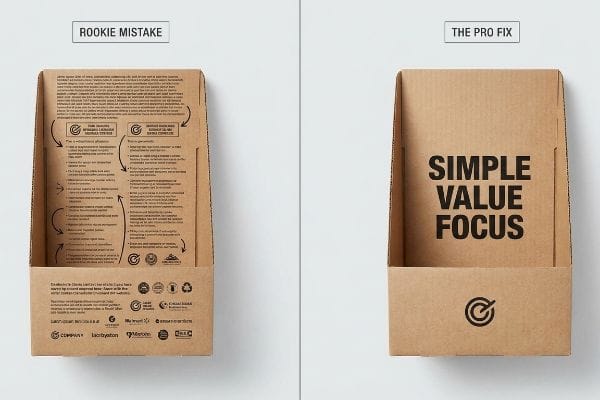
তবে, সেই সুরক্ষা বেষ্টনীটিকে একটি ভাঁজ করা কার্টনে রূপান্তরিত করার জন্য আপনার সৃজনশীল প্রয়োগে কঠোর শৃঙ্খলার প্রয়োজন।.
৭টি 'ও' এর জ্ঞানীয় জঞ্জাল দূর করা
মার্কেটিং দলগুলো প্রায়শই তাদের ভোক্তা আচরণ গবেষণার প্রতিটি স্তর সরাসরি পণ্যের গায়ে ছাপানোর চেষ্টা করে । যেহেতু তারা একটি বিশদ কৌশল তৈরিতে সপ্তাহখানেক সময় ব্যয় করেছে, তাই তারা পণ্যের উৎপত্তির গল্প, পাঁচটি বুলেট পয়েন্টে এর বৈশিষ্ট্য এবং জটিল ব্যবহারবিধি পণ্যের ভিত্তির দুই পাশের প্যানেলে ঠেসে দিতে বাধ্য বোধ করে।
আপনার রিটেইল কাঠামোকে একটি হাইওয়ে বিলবোর্ডের মতো ভাবুন, কোনো পাঠ্যপুস্তকের মতো নয়। একটি ভারী কার্ট ঠেলে নিয়ে যাওয়া একজন তাড়াহুড়ো করা ক্রেতা ভিড়ে ঠাসা পথ দিয়ে যাওয়ার সময় বিস্তারিত মনস্তাত্ত্বিক বার্তা গ্রহণ করতে পারে না। আমি যখন রিটেইল ফ্লোরে হাঁটি, তখন একজন ক্লার্ককে এমন একটি ইউনিট একত্রিত করতে হিমশিম খেতে দেখাটা কষ্টকর, যা একেবারে ক্ষুদ্রাতিক্ষুদ্র অক্ষরে ছেয়ে গেছে—আপনি প্রায় অনুভব করতে পারেন যে এই জঞ্জালের শ্বাসরুদ্ধকর দৃশ্যগত ভার ব্র্যান্ডের অনুভূত মূল্যকে টেনে নামিয়ে দিচ্ছে। আপনার সম্পূর্ণ ভোক্তা প্রোফাইল বোর্ডে ঢেলে দেওয়ার পরিবর্তে, আপনাকে একটি উদ্দেশ্য-বিচ্ছিন্নকরণ প্রোটোকল প্রয়োগ করতে হবে। সমস্ত গৌণ বিপণন কপি সরিয়ে ফেলুন এবং কাঠামোগত স্থানটি ব্যবহার করে ঠিক একটি প্রধান ক্রয়ের উপলক্ষকে তুলে ধরুন। গ্রাফিক কোলাহলকে নির্মমভাবে সীমিত করার মাধ্যমে, আপনি জ্ঞানীয় ভারাক্রান্ততা দূর করেন 6 এবং সেই কঠোর তিন-সেকেন্ডের শারীরিক মিথস্ক্রিয়ার সময়সীমার মধ্যে ভোক্তার মনস্তাত্ত্বিক উদ্দীপকটিকে সক্রিয় করেন 7 ।
| নতুনদের সাধারণ ভুল | প্রো ফিক্স | খুচরা-ফ্লোর সুবিধা |
|---|---|---|
| পাশের প্যানেলে পণ্যের সম্পূর্ণ ম্যানুয়াল প্রিন্ট করা | একটিমাত্র ক্রয়ের ঘটনাকে বিচ্ছিন্ন করা | ক্রেতাদের মানসিক চাপ দূর করে8 |
| হেডারে পাঁচটি ফিচার বুলেট দিয়ে ঘিঞ্জি করা | একটি একক, উচ্চ-বৈসাদৃশ্যপূর্ণ শিরোনাম ব্যবহার করে | তাৎক্ষণিক আবেগ শনাক্তকরণকে উদ্দীপিত করে।9 |
| অতিরিক্ত গ্রাফিক্স দিয়ে ব্র্যান্ডের মান ক্ষুণ্ণ করা | লোগোর চারপাশে প্রচুর নেগেটিভ স্পেস ব্যবহার করা | প্রিমিয়াম অনুভূত মূল্য তাৎক্ষণিকভাবে বাড়িয়ে তোলে10 |
আমি সবসময় আমার ক্লায়েন্টদের একটিও বোর্ড কাটার আগে তাদের আর্টওয়ার্ক সম্পাদনা করতে বাধ্য করি। যদি আপনার ডিসপ্লে দেখার জন্য ক্রেতাকে ত্রিশ সেকেন্ড স্থির হয়ে দাঁড়িয়ে পড়তে হয়, তবে সেটি ইতিমধ্যেই একটি ব্যর্থ ক্যাম্পেইন।.
🛠️ হার্ভির ডেস্ক: আপনার বর্তমান মার্চেন্ডাইজার কি অতিরিক্ত লেখার আড়ালে আপনার মূল পণ্যের অফারটিকে দৃষ্টিকটুভাবে ঢেকে ফেলছে? 👉 আপনার স্ট্রাকচারাল অডিটটি সংগ্রহ করুন ↗ — নিরাপদে ডাউনলোড করুন। পরবর্তীতে কোনো প্রশ্ন থাকলে আমার ইনবক্স খোলা আছে।
মার্চেন্ডাইজিং-এ ৮০-২০ নিয়মটি কী?
আপনি যদি আপনার ক্যাটালগের প্রতিটি আইটেমকে সমানভাবে তুলে ধরতে চেষ্টা করেন, তাহলে শেষ পর্যন্ত আপনি আসলে কিছুই তুলে ধরতে পারবেন না।.
পণ্য বিপণনের ৮০-২০ নিয়মটি অনুযায়ী, আপনার খুচরা লাভের প্রায় আশি শতাংশই আসবে আপনার মাত্র বিশ শতাংশ পণ্য সম্ভার থেকে। ফলস্বরূপ, দোকানের মেঝেতে থাকা সজ্জাসামগ্রী অবশ্যই কাঠামোগতভাবে এই দ্রুত বিক্রি হওয়া পণ্যগুলোকে প্রাধান্য দেবে এবং আপনার সবচেয়ে লাভজনক পণ্যগুলোর জন্য সর্বোচ্চ দৃশ্যমানতা ও সহজগম্য স্থান নিশ্চিত করবে।.

এই নিয়মটিকে বাস্তবে রূপ দিতে হলে, কার্ডবোর্ডে কালি প্রয়োগের পদ্ধতির উপর আমাদের কঠোর গাণিতিক সীমা আরোপ করতে হবে।.
৮০/২০ ফোকাসকে ৪০-৪০-২০ সৃজনশীল সীমায় রূপান্তর করা
ব্র্যান্ড ম্যানেজাররা প্রায়শই করোগেটেড ডিসপ্লেগুলোকে একটি খালি তথ্যমূলক ক্যানভাস হিসেবে বিবেচনা করেন, এই বিশ্বাসে যে যত বেশি গ্রাফিক্স, তত বেশি বিক্রয় মূল্য। তারা সরাসরি বিজ্ঞাপনের মৌলিক নিয়মটিকে সম্পূর্ণরূপে উপেক্ষা করেন, যা বলে যে একটি ক্যাম্পেইনের সাফল্য ৪০% অডিয়েন্স টার্গেটিং, ৪০% পণ্যের অফার11এবং মাত্র ২০% সৃজনশীল বাস্তবায়নের উপর নির্ভরশীল।
আমি দেখি, এমনকি অভিজ্ঞ ক্রয় দলগুলোও এই ফাঁদে পা দেয় যখন তারা একটি সাধারণ ফ্লোর বিনকে অতিরিক্ত জটিল করে তুলতে যায় । তারা তাদের পুরো বাজেট ব্যয় করে ২০% সৃজনশীল বরাদ্দকে পুরোপুরি কাজে লাগাতে, যেখানে থাকে সম্পূর্ণ কভারেজের CMYK প্রিন্টিং এবং জটিল ফয়েল স্ট্যাম্পিং, যা ভেতরে থাকা ৮০/২০ অনুপাতের মূল আকর্ষণগুলোকে পুরোপুরি আড়াল করে দেয়। এটা অনেকটা এলোমেলোভাবে জামাকাপড় ছুড়ে স্যুটকেস গোছানোর মতো; একসময় সেলাইগুলো ফেটে যায়। CAD (কম্পিউটার-এইডেড ডিজাইন) ইঞ্জিনিয়ারিং পর্যায়ে আপনাকে কাঠামোগতভাবে ৪০-৪০-২০ নিয়মটি প্রয়োগ করতে হবে । আমি সবসময় জটিল ব্যাকগ্রাউন্ড প্যাটার্ন বাদ দিয়ে একটি নিরেট স্পট-কালার ফ্লাডের মসৃণ ও উন্নত মানের স্থায়িত্বের উপর নির্ভর করার পরামর্শ দিই। যখন আপনি একটি নিখুঁতভাবে সিল করা, জলীয় প্রলেপযুক্ত ম্যাট ব্যাকগ্রাউন্ডের উপর হাত বোলাবেন, তখনই আপনি বুঝতে পারবেন যে ডিসপ্লেটি আসলে একটি নীরব মঞ্চ মাত্র, যা আসল পণ্যটিকে মনোযোগ আকর্ষণের জন্য বিশেষভাবে তৈরি করা হয়েছে।
| নতুনদের সাধারণ ভুল | প্রো ফিক্স | খুচরা-ফ্লোর সুবিধা |
|---|---|---|
| জটিল ব্যাকগ্রাউন্ড গ্রাফিক্সে অতিরিক্ত বিনিয়োগ | ৪০-৪০-২০ সৃজনশীল বরাদ্দের সীমা প্রয়োগ করা ১৩ | কেন্দ্রগুলির ক্রেতারা কঠোরভাবে পণ্যের উপর মনোযোগ দেয় |
| কম মুনাফার পণ্যগুলোকে সমান শেলফ স্পেস দেওয়া | কাঠামোগতভাবে ইনভেন্টরির শীর্ষ ২০% কে প্রাধান্য দেওয়া১৪ | মোট ফ্লোর লাভজনকতা সর্বাধিক করে |
| পণ্য লুকানোর জন্য বিশৃঙ্খল নকশা ব্যবহার করা | কঠিন, উচ্চ-বৈসাদৃশ্যপূর্ণ স্পট রঙ প্রয়োগ করা | তিন সেকেন্ডের মধ্যে ক্রয়ের সিদ্ধান্তকে ত্বরান্বিত করে ১৫ |
আমি আমার সাথে কাজ করা প্রত্যেক ব্র্যান্ড প্রতিষ্ঠাতাকে বলি: আপনার কার্ডবোর্ডটি অনুষ্ঠানের প্রধান আকর্ষণ নয়। আপনার সৃজনশীল জটিলতাকে কঠোরভাবে সীমিত করার মাধ্যমে, আমরা ভোক্তাকে সেই সেরা মানের পণ্যটির দিকে দৃষ্টি নিবদ্ধ করতে বাধ্য করি, যা প্রকৃতপক্ষে আপনার খরচ মেটায়।.
🛠️ হার্ভির ডেস্ক: আপনার উচ্চ-লাভজনক পণ্যগুলো কি একটি বিশৃঙ্খল, অতিরিক্ত ডিজাইন করা ফ্লোর বিনের মধ্যে হারিয়ে যাচ্ছে? 👉 একটি ক্লিন-লাইন ডাইলাইন টেমপ্লেটের জন্য অনুরোধ করুন ↗ — কোনো ফর্ম নয় যা অবিরাম সেলস কলের কারণ হয়। শুধু খাঁটি মূল্য।
পণ্য বিপণন ও প্রদর্শন কৌশল কীভাবে ক্রেতাদের ক্রয়ে প্রভাবিত করে?
একটি ডিসপ্লের কাঠামোগত কৌশলগুলো হলো সেই অদৃশ্য হাত, যা পণ্যটিকে ভোক্তার হাতে তুলে দেয় অথবা তাদের দূরে ঠেলে দেয়।.
পণ্যসজ্জা এবং প্রদর্শন কৌশল ক্রেতা ও পণ্যের মধ্যেকার কাঠামোগত বাধা দূর করার মাধ্যমে ক্রেতাদের প্রভাবিত করে। কৌণিক তাক, ডাইনামিক ডাই-কাট উইন্ডো এবং অপ্টিমাইজড রিটেইনিং লিপের মতো কৌশলগুলো পণ্যের সুস্পষ্ট দৃশ্যমানতা নিশ্চিত করে, যা অবচেতনভাবে ক্রয়ের প্রতিরোধ কমিয়ে দেয় এবং ক্যাশ কাউন্টারে স্পর্শের মাধ্যমে ক্রয়ের প্রক্রিয়াকে ত্বরান্বিত করে।.
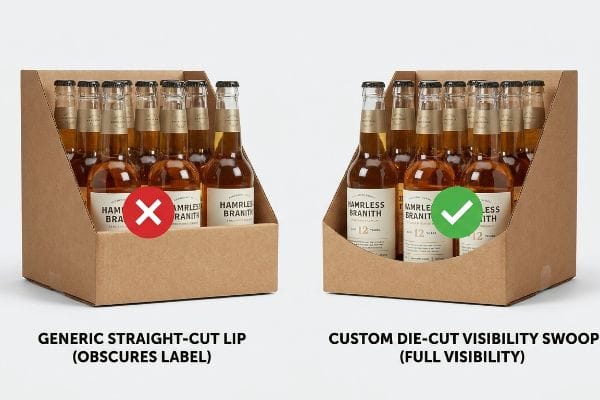
কিন্তু যখন মেশিনগুলো চলতে শুরু করে এবং ভৌত সীমাবদ্ধতাগুলো আপনার কার্যক্রমের ভাগ্য নির্ধারণ করতে শুরু করে, তখন শুধু তত্ত্ব জানাই যথেষ্ট নয়।.
কারখানাতেই কেন সাধারণ রিটেইনিং লিপগুলো ব্যর্থ হয়
স্ট্রাকচারাল প্যাকেজিং ডিজাইনে প্রায়শই ধরে নেওয়া হয় যে, শেলফে ভারী পণ্য সুরক্ষিত রাখার জন্য একটি সাধারণ, সোজা-কাটা সামনের ধারকই সার্বিকভাবে যথেষ্ট। ডিজাইনাররা তাদের সফটওয়্যারে দ্রুত একটি ৩-ইঞ্চি (৭৬.২ মিমি) উল্লম্ব দেয়াল১৬ , এই ভেবে যে এই সাধারণ প্রতিবন্ধকটি পরিবহনের নিরাপত্তা এবং দোকানে দৃশ্যমানতার মধ্যে নিখুঁত ভারসাম্য প্রদান করে।
এটা শুধু তত্ত্ব নয়—আমি নিজে টেস্টিং ফ্লোরে এটা ঘটতে দেখি, যখন প্রিমিয়াম বেভারেজ এবং সিজি (কনজিউমার প্যাকেজড গুডস) ব্র্যান্ডগুলো তাদের লোড করা মাস্টার কার্টনগুলো আমার কারখানায় পাঠায়। ডিজাইনার সর্বোচ্চ পরিবহন স্থিতিশীলতার জন্য একটি উঁচু সামনের কিনারা তৈরি করেছেন, যা পণ্যের নিচের অংশে মুদ্রিত কঠোর টিটিবি (অ্যালকোহল অ্যান্ড টোব্যাকো ট্যাক্স অ্যান্ড ট্রেড ব্যুরো) ফেডারেল লেবেলিং নিয়ম১৭ বা মূল বিপণন কৌশলকে সম্পূর্ণ উপেক্ষা করে। যখন আমি আসল বোতলগুলো অ্যাসেম্বল করা ট্রে- এবং দেখার সীমা পরিমাপ করি, তখন সেই সাধারণ কিনারাটি "৭৫% ভ্যারাইটাল" দাবি এবং মূল লোগোটিকে পুরোপুরি ঢেকে দেয়। আমার কংসবার্গ কাটিং টেবিলে স্টিলের রুল ডাইয়ের জোরালো, ছন্দময় আঘাত অর্থহীন হয়ে যায়, যদি তা এমন একটি আকৃতি কাটে যা ভোক্তার চোখ ধাঁধিয়ে দেয়। আমরা মূল পণ্যের সঠিক মাইক্রোমিটার রিডিং নিই এবং সেগুলোকে ক্যাড (CAD) পরিবেশের সাথে মিলিয়ে দেখি। সেই কিনারাটির ঠিক মাঝখানে কৃত্রিমভাবে একটি সুনির্দিষ্ট ১.৬৫-ইঞ্চি (৪১.৯ মিমি) ডাই-কাট বাঁক বসিয়ে আমি দৃশ্যগত বাধাটি পুরোপুরি দূর করে দিই।
ডাইলাইনের এই সূক্ষ্ম সমন্বয় পণ্যের প্রধান আইনি এবং বিপণনমূলক লেখা১৮- । এই কাস্টম সুইপ জ্যামিতি প্রয়োগের মাধ্যমে, আমি নিশ্চিত করি যে ব্র্যান্ডটি মারাত্মক রিটেইল কমপ্লায়েন্স হোল্ড১৯, যা একটি বিশাল মৌসুমী লঞ্চকে সুরক্ষিত করে এবং ক্লায়েন্টের ম্যানুয়াল রিপ্যাকিং ফি বাবদ হাজার হাজার টাকা বাঁচায়।
| নতুনদের সাধারণ ভুল | প্রো ফিক্স | খুচরা-ফ্লোর সুবিধা |
|---|---|---|
| জেনেরিক সোজা-কাটা রিটেইনিং লিপ ব্যবহার করে | কাস্টম ডাই-কাট ভিজিবিলিটি সুইপের ইঞ্জিনিয়ারিং | ক্রেতাদের জন্য মূল লেবেলের শতভাগ দৃশ্যমানতা নিশ্চিত করে।20 |
| পণ্যের উপর আইনগত সম্মতি সংক্রান্ত লেখা অস্পষ্ট করা | 3D CAD-এ বোতলটির সঠিক ডাইলাইন ম্যাপ করা | খুচরা বিক্রেতাদের বিপুল পরিমাণ কমপ্লায়েন্স চার্জব্যাক প্রতিরোধ করে21 |
| যাতায়াতের জন্য সামনের দেয়াল অতিরিক্ত নির্মাণ করা | দৃশ্যমান প্রবেশাধিকারের সাথে কোণার স্থিতিশীলতার ভারসাম্য রক্ষা করা | পরিবহন খরচ ছাড়াই তাৎক্ষণিক কেনাকাটা ত্বরান্বিত করে |
আমি গতানুগতিক টেমপ্লেটের উপর নির্ভর করি না, কারণ বড় বড় প্রতিষ্ঠানের পণ্য গ্রহণকারী ব্যবস্থাপকরা গতানুগতিক টেমপ্লেট প্রত্যাখ্যান করেন। আপনার পণ্যের নির্দিষ্ট দৃশ্যগত আকর্ষণের সাথে কাঠামোগত বিভাজন রেখাগুলোকে গাণিতিকভাবে মিলিয়ে আমরা ক্রয়ের জন্য একটি বাধাহীন পথ নিশ্চিত করি।.
🛠️ হার্ভির ডেস্ক: একটি ২-মিলিমিটার কাঠামোগত ত্রুটির কারণে ৫০০টি দোকানে পণ্য সরবরাহের পরিকল্পনা যেন ভেস্তে না যায়। 👉 আপনার ডাইলাইন ফাইলটি আমাকে পাঠান ↗ — গণ-উৎপাদনে বাজেট অপচয় করার আগে আমি এর গাণিতিক হিসাব স্ট্রেস-টেস্ট করে নেব।
উপসংহার
আপনি বাজার গবেষণায় প্রচুর অর্থ ব্যয় করতে পারেন, কিন্তু যখন একটি সাধারণ মানের রিটেইনিং লিপ শেলফে থাকা অবস্থায় আপনার মূল লেবেলটিকে ঢেকে দেয়, যার ফলে খুচরা বিক্রেতারা তা সঙ্গে সঙ্গে প্রত্যাখ্যান করে এবং কয়েক সপ্তাহ ধরে ব্যয়বহুল ম্যানুয়াল রিওয়ার্ক করতে হয়, তখন আপনার পুরো ক্যাম্পেইনের ROI (বিনিয়োগের উপর রিটার্ন) নষ্ট হয়ে যায়। ৫০০-এর বেশি ব্র্যান্ড ম্যানেজার ঠিক এই মারাত্মক প্রাথমিক পর্যায়ের ভুলগুলো এড়াতে আমার প্রিপ্রেস চেকলিস্ট ব্যবহার করেন। কাঠামোগত সহনশীলতা নিয়ে অনুমান করা বন্ধ করুন এবং ব্যাপক উৎপাদন শুরু হওয়ার আগেই দৃশ্যমানতার সীমাবদ্ধতা ও যান্ত্রিক ঘর্ষণ ধরতে আমাকে ব্যক্তিগতভাবে আপনার ফাইলগুলো আমার ফ্রি ডাইলাইন অডিট ↗- এর মাধ্যমে পরীক্ষা করতে দিন।
"ভিজ্যুয়াল মার্চেন্ডাইজিং-এর মূল নীতিসমূহ – পপডিসপ্লে", https://popdisplay.me/key-principles-of-visual-merchandising/। স্থানিক সম্পৃক্ততার জন্য একটি শিল্প-কাঠামো, যা ৩০ ফুট দূরত্বে দৃশ্যগত বিঘ্ন, ৩ ফুট দূরত্বে আগ্রহ এবং ৩ ইঞ্চি দূরত্বে রূপান্তর পরিমাপ করে। প্রমাণের ভূমিকা: প্রযুক্তিগত কাঠামো; উৎসের ধরণ: খুচরা নকশার নির্দেশিকা। সমর্থন করে: স্তরভিত্তিক স্থানিক সম্পৃক্ততার পদ্ধতি। পরিধি সংক্রান্ত টীকা: দোকানের ধরন অনুযায়ী প্রয়োগ ভিন্ন হতে পারে। ↩
"...তে শেলফে পণ্য রাখা কর্মীদের মধ্যে হাতে করে ভার উত্তোলনের মূল্যায়ন", https://pmc.ncbi.nlm.nih.gov/articles/PMC11324367/। ভোক্তা পণ্যের সহজলভ্যতার জন্য সর্বোত্তম উল্লম্ব নাগাল এবং চোখের স্তরের অঞ্চল নির্ধারণকারী একটি নৃতাত্ত্বিক মানদণ্ড। প্রমাণের ভূমিকা: আর্গোনমিক মেট্রিক; উৎসের ধরণ: নৃতাত্ত্বিক গবেষণা। সমর্থন করে: এই দাবি যে শেলফের উচ্চতা পণ্য বের করাকে প্রভাবিত করে। পরিধি টীকা: গড় প্রাপ্তবয়স্ক মানুষের উচ্চতার বিন্যাসের উপর ভিত্তি করে। ↩
"[পিডিএফ] রিটেইল কমার্শিয়াল ডিজাইন গাইডলাইনস – ওয়েস্টমিনস্টার, কলোরাডো", https://www.westminsterco.gov/DocumentCenter/View/4258। রিটেইল পরিবেশে ৩-৩-৩ নিয়মটি কীভাবে নির্দিষ্ট দূরত্ব থেকে ভোক্তাদের আকর্ষণ করে তার যাচাইকরণ। প্রমাণের ভূমিকা: অভিজ্ঞতালব্ধ যাচাইকরণ; উৎসের ধরণ: রিটেইল ডিজাইন গাইড। সমর্থন করে: ৩০-ফুট এনগেজমেন্টের দাবি। পরিধি সংক্রান্ত টীকা: কার্যকারিতা আইলের প্রস্থ এবং আলোর উপর নির্ভরশীল। ↩
"খুচরা দোকানের শেলফে অঞ্চল অনুযায়ী পণ্যের সাধারণ অবস্থান এবং এর প্রভাব...", https://www.bpc.works/en/news/typical-product-placement-by-zone-on-the-retail-shelf-and-its-impact-on-packaging-design/। তাৎক্ষণিক বিক্রয়ের জন্য পণ্যের দৃশ্যমানতা সর্বাধিক করতে এবং শারীরিক পরিশ্রম কমাতে চোখের সর্বোত্তম উচ্চতার উপর প্রযুক্তিগত গবেষণা। প্রমাণের ভূমিকা: প্রযুক্তিগত বিবরণ; উৎসের ধরণ: ভোক্তা আর্গোনমিক্স সমীক্ষা। সমর্থন করে: ৫০-ইঞ্চি অবস্থানে পণ্যের কার্যকারিতা। পরিধি সংক্রান্ত টীকা: গড় প্রাপ্তবয়স্ক উচ্চতার জনসংখ্যার তথ্যের উপর ভিত্তি করে। ↩
"পয়েন্ট অফ পারচেজ: খুচরা বিক্রেতারা কীভাবে ক্রেতাদের প্রভাবিত করতে পারে...", https://blog.intouch.com/posts/points-of-purchase-displays। পরিবেশগত মনোবিজ্ঞান এবং খুচরা বিপণনের গবেষণা পয়েন্ট-অফ-পারচেজ ডিসপ্লেতে অতিরিক্ত তথ্য দিয়ে ভরিয়ে ফেলার প্রচলিত শিল্প অনুশীলনকে বৈধতা দেয়। প্রমাণের ভূমিকা: আচরণগত বৈধতা; উৎসের ধরণ: শিল্প প্রতিবেদন। সমর্থন করে: এই দাবি যে বিপণন দলগুলো প্রায়শই ডিসপ্লেতে অতিরিক্ত তথ্য দিয়ে বোঝাই করে ফেলে। পরিধি টীকা: ব্যাপক কৌশল এবং ভোক্তার মনোযোগের মধ্যেকার টানাপোড়েনের উপর আলোকপাত করে। ↩
"আবেগপ্রবণ আচরণের উপর চাক্ষুষ জটিলতার প্রভাব – রিসার্চগেট", https://www.researchgate.net/publication/343813108_THE_EFFECT_OF_VISUAL_COMPLEXITY_ON_IMPULSIVE_BEHAVIOUR_A_LOOK_INSIDE_THE_RETAIL_STORE_ENVIRONMENT। খুচরা বিক্রয় পরিবেশে চাক্ষুষ কোলাহল কমানো কীভাবে জ্ঞানীয় ভারাক্রান্ততা প্রতিরোধ করে এবং সিদ্ধান্ত গ্রহণকে উন্নত করে, সে বিষয়ে পাণ্ডিত্যপূর্ণ গবেষণা। প্রমাণের ভূমিকা: তাত্ত্বিক ভিত্তি; উৎসের ধরণ: মনস্তাত্ত্বিক গবেষণা। সমর্থন: গ্রাফিক কোলাহল কমানোর কার্যকারিতা। পরিধি টীকা: অধিক জনসমাগমপূর্ণ খুচরা বিক্রয় পরিবেশের উপর দৃষ্টি নিবদ্ধ করে। ↩
"একটি … এর মাধ্যমে ক্রেতাদের ব্রাউজিং আচরণ এবং মনোযোগের স্তর অন্বেষণ", https://pmc.ncbi.nlm.nih.gov/articles/PMC6895988/। খুচরা দোকানের করিডোরে থামার বা চালিয়ে যাওয়ার সিদ্ধান্ত নেওয়ার আগে ভোক্তারা দৃশ্যমান তথ্য প্রক্রিয়াকরণে যে সময় ব্যয় করেন, সে সম্পর্কিত গবেষণালব্ধ তথ্য। প্রমাণের ভূমিকা: পরিমাণগত পরিমাপ; উৎসের ধরণ: ভোক্তা আচরণ সমীক্ষা। সমর্থন করে: দ্রুত মূল্য যোগাযোগের প্রয়োজনীয়তা। পরিধির টীকা: পণ্যের বিভাগ অনুযায়ী ভিন্ন হতে পারে। ↩
"খুচরা পপ-আপ ডিসপ্লের মনোবিজ্ঞান", https://www.bcipkg.com/crafting-consumer-experiences-the-psychology-of-retail-pop-displays/। কগনিটিভ লোড তত্ত্বের উপর একাডেমিক গবেষণা ব্যাখ্যা করে যে কীভাবে অতিরিক্ত তথ্য হ্রাস করা খুচরা পরিবেশে সিদ্ধান্তহীনতা প্রতিরোধ করে। প্রমাণের ভূমিকা: তাত্ত্বিক ভিত্তি; উৎসের ধরণ: একাডেমিক জার্নাল। সমর্থন: ডিসপ্লেতে পণ্যের তথ্য সরলীকরণের সুবিধা। পরিধি টীকা: জ্ঞানীয় প্রক্রিয়াকরণের সীমাবদ্ধতার উপর দৃষ্টি নিবদ্ধ। ↩
"ভিজ্যুয়াল হায়ারার্কি: ফলাফল-বর্ধক মূল ইউএক্স নীতিসমূহ", https://www.sessions.edu/notes-on-design/visual-hierarchy-key-ux-principles-that-drive-results/। ভোক্তা মনোবিজ্ঞানের গবেষণা থেকে দেখা যায় যে, একটি একক, উচ্চ-কন্ট্রাস্টের ভিজ্যুয়াল ফোকাল পয়েন্ট পণ্য শনাক্তকরণের গতি এবং তাৎক্ষণিক প্রতিক্রিয়া বাড়িয়ে দেয়। প্রমাণের ভূমিকা: গবেষণালব্ধ প্রমাণ; উৎসের ধরণ: বিপণন গবেষণা। সমর্থন করে: বুলেটযুক্ত তালিকার চেয়ে উচ্চ-কন্ট্রাস্টের শিরোনামের কার্যকারিতা। পরিধি সংক্রান্ত টীকা: শিরোনামের ভিজ্যুয়াল সুস্পষ্টতার উপর নির্ভরশীল। ↩
"পণ্যের অনুভূত মূল্যের উপর নকশার নান্দনিকতার প্রভাব", https://pmc.ncbi.nlm.nih.gov/articles/PMC8359925/। নকশার নীতিমালা নির্দেশ করে যে, ব্র্যান্ডিংয়ের চারপাশে সাদা স্থান বা নেগেটিভ স্পেসের ব্যবহার বিলাসবহুল এবং প্রিমিয়াম বাজারে অবস্থানের সাথে দৃঢ়ভাবে সম্পর্কিত। প্রমাণের ভূমিকা: নকশার মানদণ্ড; উৎসের ধরণ: ব্র্যান্ডিং হ্যান্ডবুক। সমর্থন: নেগেটিভ স্পেস এবং অনুভূত মূল্যের মধ্যে সংযোগ। পরিধি সংক্রান্ত টীকা: প্রধানত বিলাসবহুল এবং উচ্চ-মানের সেগমেন্টের জন্য প্রযোজ্য। ↩
"সরাসরি বিপণনের ৪০/৪০/২০ নিয়ম | Metadata.io", https://metadata.io/resources/blog/the-40-40-20-rule-of-direct-marketing/। এটি একটি শিল্প-মানসম্মত বিপণন নীতি যা সরাসরি সাড়ার সাফল্যের উপর টার্গেটিং, অফার এবং ক্রিয়েটিভের আনুপাতিক প্রভাব চিহ্নিত করে। প্রমাণের ভূমিকা: প্রযুক্তিগত বিবরণ; উৎসের ধরণ: শিল্প-মানসম্মত। সমর্থন করে: ৪০-৪০-২০ নিয়মের বিশ্লেষণ। পরিধি সংক্রান্ত টীকা: বিশেষভাবে সরাসরি সাড়ামূলক বিজ্ঞাপনের ক্ষেত্রে প্রযোজ্য। ↩
"সরাসরি বিপণন ও বিজ্ঞাপনের জন্য ৪০/৪০/২০ নিয়ম – ইউটিউব", https://www.youtube.com/watch?v=aXQGin-GjI8। একটি প্রামাণ্য বাহ্যিক উৎস কীভাবে এই দাবিকে সমর্থন করে তার সংক্ষিপ্ত ব্যাখ্যা। প্রমাণের ভূমিকা: সংজ্ঞা; উৎসের ধরণ: শিল্পক্ষেত্রের ডিজাইন স্ট্যান্ডার্ড। সমর্থন করে: রিটেইল ডিসপ্লে ইঞ্জিনিয়ারিং-এ সৃজনশীল প্রচেষ্টা বণ্টনের নির্দিষ্ট অনুপাত। পরিধি সংক্রান্ত টীকা: ভিজ্যুয়াল মার্চেন্ডাইজিং এবং পিওপি ডিসপ্লে ডিজাইনের জন্য নির্দিষ্ট। ↩
"ডিজিটাল যুগের জন্য মার্কেটিং-এর নতুন ৪০/৪০/২০ নিয়ম", https://tendocom.com/thought-leadership/new-40-40-20-rule-of-marketing-for-the-digital-age/। ভিজ্যুয়াল মার্চেন্ডাইজিং বা ডিজাইন ফ্রেমওয়ার্কের উপর একটি প্রামাণ্য নির্দেশিকা লেআউট উপাদান বরাদ্দের জন্য এই নির্দিষ্ট অনুপাতটিকে বৈধতা দেবে। প্রমাণের ভূমিকা: প্রযুক্তিগত বিবরণ; উৎসের ধরণ: শিল্প হ্যান্ডবুক। সমর্থন করে: ভিজ্যুয়াল ফোকাসের কার্যকারিতা। পরিধি নোট: খুচরা ব্যবসার সৃজনশীল ডিজাইনের জন্য নির্দিষ্ট। ↩
"৮০/২০ ইনভেন্টরি নিয়ম বোঝা – সার্কুলার এজ", https://www.circularedge.com/blog/what-is-the-80-20-inventory-rule/। খুচরা ব্যবসায় প্যারেটো নীতির উপর ব্যবসায়িক সাহিত্য দেখায় যে, সাধারণত অল্প সংখ্যক SKU-ই মোট রাজস্বের সিংহভাগ তৈরি করে। প্রমাণের ভূমিকা: অর্থনৈতিক নীতি; উৎসের ধরণ: ব্যবসায়িক পাঠ্যপুস্তক। সমর্থন: ফ্লোর লাভজনকতা সর্বাধিকীকরণ। পরিধি টীকা: ইনভেন্টরি ব্যবস্থাপনায় সাধারণ প্রয়োগ। ↩
"পিওএসএম-এর ৩ সেকেন্ডের নিয়ম: খুচরা ব্যবসায় দৃশ্যগত প্রভাবের মনস্তত্ত্ব", https://www.linkedin.com/pulse/3-second-rule-posm-psychology-visual-impact-retail-spectrum-unitec-oywxc। খুচরা পরিবেশে ভোক্তাদের দৃষ্টি-অনুসরণ এবং সিদ্ধান্ত গ্রহণের উপর মনস্তাত্ত্বিক গবেষণা পণ্যের প্রতি প্রাথমিক আকর্ষণের দ্রুত সময়কালকে নিশ্চিত করে। প্রমাণের ভূমিকা: অভিজ্ঞতামূলক পরিমাপ; উৎসের ধরণ: ভোক্তা মনোবিজ্ঞান গবেষণা। সমর্থন: উচ্চ-বৈসাদৃশ্যপূর্ণ রঙের কার্যকারিতা। পরিধি টীকা: প্রাথমিক মনোযোগ আকর্ষণকারী পর্যায়কে বোঝায়। ↩
"[পিডিএফ] স্ট্রাকচারাল ডিজাইন গাইডেন্স ম্যানুয়াল – কেওয়াইটিসি", https://transportation.ky.gov/StructuralDesign/Structure%20Guidance%20Manuals/2024%20SD%20Manual.pdf। খুচরা প্যাকেজিং ডিজাইনে লিপের উচ্চতা বজায় রাখার জন্য প্রচলিত শিল্প মান যাচাইকরণ। প্রমাণের ভূমিকা: তথ্যগত বৈধতা; উৎসের ধরণ: প্যাকেজিং ইঞ্জিনিয়ারিং হ্যান্ডবুক। সমর্থন করে: ডিজাইন সফটওয়্যারে ব্যবহৃত নির্দিষ্ট জেনেরিক মাপের ব্যাপকতা। পরিধি নোট: পণ্যের ওজন এবং বিভাগের উপর ভিত্তি করে প্রকৃত মান ভিন্ন হতে পারে। ↩
"লেবেলিং রিসোর্স | টিটিবি: অ্যালকোহল ও তামাক কর এবং বাণিজ্য …", https://www.ttb.gov/regulated-commodities/labeling/labeling-resources। নিয়ন্ত্রক সম্মতি নিশ্চিত করার জন্য অ্যালকোহল পণ্যের উপর প্রয়োজনীয় লেবেলিং-এর দৃশ্যমানতা, অবস্থান এবং পাঠযোগ্যতা সম্পর্কিত ফেডারেল নির্দেশনার নথি। প্রমাণের ভূমিকা: আইনি বাধ্যবাধকতা; উৎসের ধরণ: সরকারি প্রবিধান। সমর্থন করে: এই দাবি যে, ঠোঁটের চিহ্ন (রিটেইনিং লিপস) আইনত প্রয়োজনীয় পণ্যের তথ্য প্রদর্শনে বাধা সৃষ্টি করতে পারে। পরিধি নোট: বিশেষভাবে অ্যালকোহল এবং তামাকের জন্য মার্কিন যুক্তরাষ্ট্রের ফেডারেল আইনের ক্ষেত্রে প্রযোজ্য। ↩
"ক্যান-স্প্যাম আইন: ব্যবসার জন্য একটি পরিপালন নির্দেশিকা", https://www.ftc.gov/business-guidance/resources/can-spam-act-compliance-guide-business। নিয়ন্ত্রক সংস্থা বা খুচরা বিক্রেতার প্রত্যাখ্যান এড়ানোর জন্য প্যাকেজিং-এর উপর বাধ্যতামূলক আইনি এবং বিপণন তথ্যের দৃশ্যমানতা সংক্রান্ত শিল্প মানদণ্ডের বৈধতা যাচাই। প্রমাণের ভূমিকা: তথ্যগত যাচাইকরণ; উৎসের ধরণ: শিল্প নির্দেশিকা। সমর্থন করে: খুচরা গ্রহণযোগ্যতার জন্য বাধাহীন পাঠ্যের প্রয়োজনীয়তা। পরিধি সংক্রান্ত টীকা: প্রয়োজনীয়তা এখতিয়ার এবং পণ্যের বিভাগ অনুসারে পরিবর্তিত হয়। ↩
"কন্ট্রাক্ট প্যাকেজিং-এর কোন ভুলগুলো রিটেইলার চার্জব্যাকের কারণ হয়?", https://www.industrialpackaging.com/blog/copacker-mistakes-retailer-chargebacks। প্যাকেজিং-এর নিয়ম না মানার কারণে কীভাবে রিটেইল শিপমেন্ট আটকে যায় এবং এর সাথে ম্যানুয়াল রিপ্যাকিং-এর আর্থিক প্রভাব কী, তার ডকুমেন্টেশন। প্রমাণের ভূমিকা: প্রযুক্তিগত যৌক্তিকতা; উৎসের ধরণ: সাপ্লাই চেইন ম্যানেজমেন্ট কেস স্টাডি। সমর্থন করে: ত্রুটিপূর্ণ ডাইলাইন ডিজাইনের সাথে সম্পর্কিত আর্থিক ঝুঁকি। পরিধি নোট: প্রধানত বড় আকারের মৌসুমী লঞ্চের ক্ষেত্রে প্রযোজ্য। ↩
"কাস্টম ডাই কাট লেবেল যা শেলফের আকর্ষণ এবং ব্র্যান্ডের পরিচিতি বাড়ায়", https://inovarpackaging.com/custom-die-cut-labels-that-elevate-shelf-appeal-and-brand-identity/। পয়েন্ট-অফ-পারচেজ (POP) ডিজাইন স্ট্যান্ডার্ডের উপর প্রযুক্তিগত ডকুমেন্টেশন, যা দেখায় কীভাবে নির্দিষ্ট কাটআউট আকৃতি পণ্যের দৃশ্যমানতা বাড়ায়। প্রমাণের ভূমিকা: প্রযুক্তিগত যাচাইকরণ; উৎসের ধরণ: শিল্প ডিজাইন স্ট্যান্ডার্ড। সমর্থন করে: দৃশ্যমানতার জন্য বাঁকানো আকৃতির কার্যকারিতা। পরিধি সংক্রান্ত নোট: পণ্যের জ্যামিতির উপর ভিত্তি করে ফলাফল ভিন্ন হতে পারে। ↩
"এসবি ৪৭৮ – গোপন ফি | ক্যালিফোর্নিয়া রাজ্য – বিচার বিভাগ", https://oag.ca.gov/hiddenfees। খুচরা বিক্রেতাদের চুক্তির বিশ্লেষণ, যেখানে খুচরা প্রদর্শনীতে নিয়মবহির্ভূত পণ্যের লেবেলিং এবং দৃশ্যমানতার জন্য আর্থিক জরিমানার বিস্তারিত বিবরণ রয়েছে। প্রমাণের ভূমিকা: আর্থিক যাচাইকরণ; উৎসের ধরণ: খুচরা নীতি নির্দেশিকা। সমর্থন করে: নিয়ম প্রতিপালন সংক্রান্ত লেখা অস্পষ্ট থাকার কারণে চার্জব্যাকের ঝুঁকি। পরিধি সংক্রান্ত টীকা: বিশেষত প্রধান বিগ-বক্স খুচরা বিক্রেতাদের চুক্তির ক্ষেত্রে প্রযোজ্য। ↩