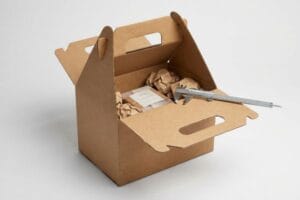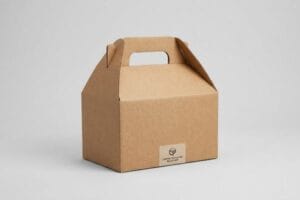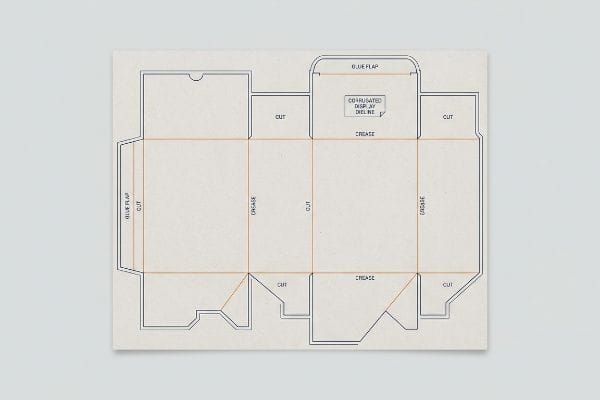
আপনি সপ্তাহ ধরে শিল্পকর্মটি নিখুঁত করতে পরিশ্রম করেছেন, কিন্তু যখন ঢেউখেলানো কার্ডবোর্ডের ডিসপ্লেগুলো এসে পৌঁছায়, তখন দেখা যায় ট্যাবগুলো ঠিকমতো লাগছে না এবং কিনারাগুলো ছিঁড়ে যাচ্ছে। আপনার ডিজাইনটি নীরবে আপনার খুচরা বিক্রির উদ্যোগকে ব্যাহত করছে।
প্যাকেজিং ডাইলাইন ডিজাইন করার জন্য একটি সুনির্দিষ্ট দ্বি-মাত্রিক ভেক্টর টেমপ্লেট তৈরি করতে হয়, যা নির্দেশ করে ঠিক কীভাবে ভৌত উপাদানগুলোকে কেটে, ভাঁজ করে একটি ত্রি-মাত্রিক কাঠামোতে রূপ দেওয়া হবে। এই প্রযুক্তিগত নকশাটি উচ্চ-গতির ঢেউখেলানো প্যাকেজিং উৎপাদন লাইন জুড়ে কাঠামোগত অখণ্ডতা, নিখুঁত আর্টওয়ার্ক রেজিস্ট্রেশন এবং নির্বিঘ্ন স্বয়ংক্রিয় উৎপাদন নিশ্চিত করে।.
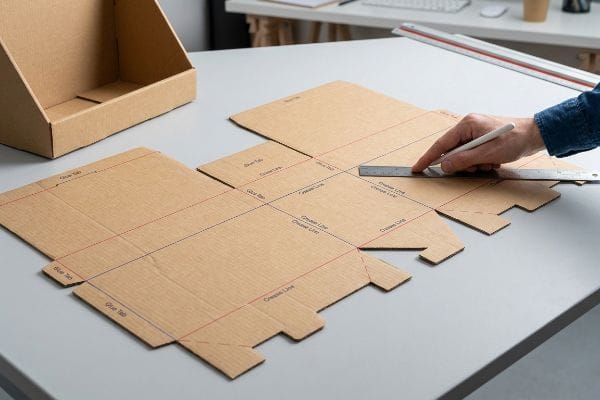
কিন্তু আপনার স্ক্রিনের সুন্দর টেমপ্লেটের কোনো মূল্যই থাকে না, যদি কারখানার মেঝেতে পদার্থবিদ্যার নিয়মই ব্যর্থ হয়। চলুন জেনে নেওয়া যাক, কীভাবে এমন প্যাকেজিং তৈরি করা যায় যা সরবরাহ শৃঙ্খলে টিকে থাকতে পারে।.
প্যাকেজিং ডাইলাইন কীভাবে ডিজাইন করবেন?
একটি খালি ডিজিটাল ক্যানভাসের দিকে তাকিয়ে থাকলে আপনার রিটেইল ক্যাম্পেইন রক্ষা পাবে না। একটি টেমপ্লেট ডিজাইন শুরু হয় কাঠামোগত গণিত দিয়ে, গ্রাফিক আর্ট দিয়ে নয়, যাতে একটি মসৃণ বাস্তব নির্মাণ নিশ্চিত করা যায়।.
প্যাকেজিং ডাইলাইন ডিজাইন করার জন্য বেন্ড অ্যালাউন্স, লক ক্লিয়ারেন্স এবং উপাদানের পুরুত্বকে গাণিতিকভাবে সরাসরি বিশেষায়িত ভেক্টর সফটওয়্যারে ম্যাপ করতে হয়। এই স্ট্রাকচারাল ইঞ্জিনিয়ারিং পর্যায়টি অবশ্যই যেকোনো ব্র্যান্ড গ্রাফিক্স প্রয়োগ করার আগে সম্পন্ন করতে হবে, যা নিশ্চিত করে যে চূড়ান্ত ঢেউখেলানো কার্ডবোর্ডের ডিসপ্লেটি নিখুঁতভাবে সমতলভাবে ভাঁজ হয় এবং কোনো যান্ত্রিক বাধা ছাড়াই জোড়া লাগে।.
সরাসরি সাধারণ ইলাস্ট্রেশন সফটওয়্যারে বাক্স আঁকতে শুরু করা হলো সম্পূর্ণ উৎপাদন ব্যর্থতা ডেকে আনার সবচেয়ে দ্রুততম উপায়।.
ক্যালিপার কম্পেনসেশন: কেন স্ট্যান্ডার্ড ক্যাড (কম্পিউটার-এইডেড ডিজাইন) ব্যর্থ হয়
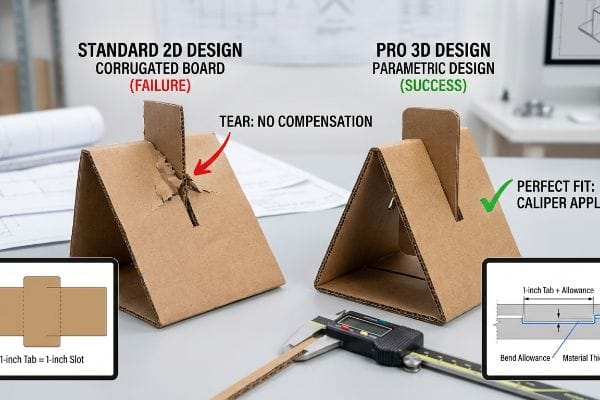
গ্রাফিক ডিজাইনারদের জন্য প্রচলিত রীতি হলো, ভেক্টর প্রোগ্রামে প্রায়শই ইন্টারলকিং ট্যাব এবং ফোল্ডিং স্লটগুলোকে ঠিক তার সংলগ্ন প্যানেলের সমান প্রস্থেতৈরি। তারা ধরে নেন যে, একটি এক-ইঞ্চি (২৫.৪ মিমি) ট্যাব একটি ফ্ল্যাট ডিজিটাল স্ক্রিনের এক-ইঞ্চি স্লটে নিখুঁতভাবে ফিট করে। এই দ্বিমাত্রিক পদ্ধতিটি যে ভিত্তির জন্য তারা নকশা তৈরি করছেন, তার বাস্তবতাকে পুরোপুরি উপেক্ষা করে।
এমনকি অভিজ্ঞ ডিজাইনাররাও প্রায়শই এই ত্রুটিটি উপেক্ষা করেন, যখন তাঁরা ভাঁজ করা ঢেউখেলানো বোর্ডের প্রকৃত পুরুত্ব গণনা করতে ভুলে যান। আমি প্রায়শই দেখি ক্লায়েন্টরা একটি ০.১১-ইঞ্চি (৩ মিমি) বি-ফ্লুট ডিসপ্লের জন্য একটি ফ্ল্যাট আর্টওয়ার্ক ফাইল জমা দেন , এটা না বুঝেই যে, যখন পুরু পেপারবোর্ড ৯০ ডিগ্রিতে ভাঁজ করা হয়, তখন এটি প্রকৃত অর্থেই উপাদান ব্যবহার করে । যদি ভাঁজের বাইরের ব্যাসার্ধের জন্য ক্ষতিপূরণ দিতে সেই খাঁজটি গাণিতিকভাবে প্রশস্ত না করা হয়, তবে কো-প্যাকিং দলকে অংশগুলোকে প্রচণ্ড জোর করে একসাথে জুড়তে হবে। আমি অ্যাসেম্বলি লাইনে দাঁড়িয়ে কাঁচা পেপারবোর্ডের কর্কশ, ভোঁতা ছেঁড়ার শব্দ শুনেছি, যখন কেরানিরা ক্ষতিপূরণহীন একটি ট্যাবকে একটি সরু খাঁজে জোর করে ঢোকানোর চেষ্টা করে এবং অবশেষে এটিকে ধরে রাখার জন্য বিশ্রী স্বচ্ছ টেপ ব্যবহার করে। আমি প্যারামেট্রিক ডিজাইন সফটওয়্যার ব্যবহার করে এর সমাধান করি, যা প্রতিটি ভাঁজে স্বয়ংক্রিয়ভাবে একটি বেন্ড অ্যালাউন্স প্রয়োগ করে, এবং নিশ্চিত করে যে আপনার ডিসপ্লেগুলো কোনো ঘর্ষণ ছাড়াই একত্রিত হবে এবং শেলফে নিখুঁতভাবে সোজা হয়ে বসবে।
| নতুনদের সাধারণ ভুল | প্রো ফিক্স | খুচরা-ফ্লোর সুবিধা |
|---|---|---|
| সঠিক ট্যাব প্রস্থে স্লট আঁকা | স্বয়ংক্রিয় বাঁক ভাতা প্রয়োগ করা4 | শূন্য ঘর্ষণে একত্রিত হয় |
| বোর্ডের পুরুত্ব উপেক্ষা করে | গাণিতিকভাবে গ্রহণকারী স্লট প্রশস্ত করা5 | উপরের চাদর ছিঁড়ে যাওয়া প্রতিরোধ করে |
| টাইট উপাদান জোর করে | প্যারামেট্রিক CAD সফটওয়্যার ব্যবহার করে6 | স্বচ্ছ টেপের প্রয়োজনীয়তা দূর করে |
আমি আগে ক্যালিপার দিয়ে হিসাব না করে কোনো সাধারণ ড্রয়িং বিশ্বাস করি না। একটি স্ক্রিনে বেন্ড অ্যালাউন্স ঠিক করতে দুই মিনিট সময় লাগে; কিন্তু সরাসরি রিটেইল রোলআউটের সময় ছেঁড়া ঢেউতোলা বোর্ড ঠিক করতে গেলে আপনার অ্যাসেম্বলি লাইনের গতি আনুমানিক ৩০% কমে যায়।.
🛠️ হার্ভির ডেস্ক: আপনার আর্টওয়ার্ক ট্যাবগুলোতে বাঁকানোর জন্য সঠিক জায়গা আছে কিনা, তা নিয়ে নিশ্চিত নন? 👉 আমাকে আপনার হিসাবটা মিলিয়ে দেখতে দিন ↗ — সরাসরি আমার ডেস্কে প্রবেশের সুযোগ। কোনো স্বয়ংক্রিয় বিক্রয় স্প্যাম নেই, আমি কথা দিচ্ছি।
প্যাকেজিং ডিজাইনের ৭টি মৌলিক ধাপ কী কী?
একটি অসংগঠিত নকশা প্রক্রিয়া কারখানায় অবিরাম সংশোধনের মাধ্যমে আপনার বাজেট নিঃশেষ করে দেয়। একটি কঠোর অনুক্রম অনুসরণ করলে পরবর্তীতে ব্যয়বহুল কাঠামোগত পুনঃপ্রকৌশলের খরচ এড়ানো যায়।.
প্যাকেজিং ডিজাইনের ৭টি মৌলিক ধাপের মধ্যে রয়েছে খুচরা বিক্রেতার স্পেসিফিকেশন নির্ধারণ করা, সর্বোত্তম ঢেউখেলানো কার্ডবোর্ডের উপাদান নির্বাচন করা, একটি কাঠামোগত টেমপ্লেট তৈরি করা, গ্রাফিক আর্টওয়ার্ক প্রয়োগ করা, ত্রিমাত্রিক রেন্ডারিং তৈরি করা, ভৌত পরিবহন পরীক্ষা পরিচালনা করা এবং প্রিপ্রেস ফাইল চূড়ান্ত করা। এই সুনির্দিষ্ট ক্রম অনুসরণ করলে ব্যাপক উৎপাদন এবং পরিবহনের সময় মারাত্মক যান্ত্রিক ব্যর্থতা প্রতিরোধ করা যায়।.
অনেক ব্র্যান্ড কাঠামোগত ভিত্তি এড়িয়ে সৃজনশীল গ্রাফিক্সের কাজে দ্রুত চলে যায়, ফলে ফাইলগুলো কারখানায় পৌঁছানোর পর একটি বিশাল প্রতিবন্ধকতা তৈরি হয়।.
সপ্তম ধাপ: প্রিপ্রেস টুলিং কমান্ড
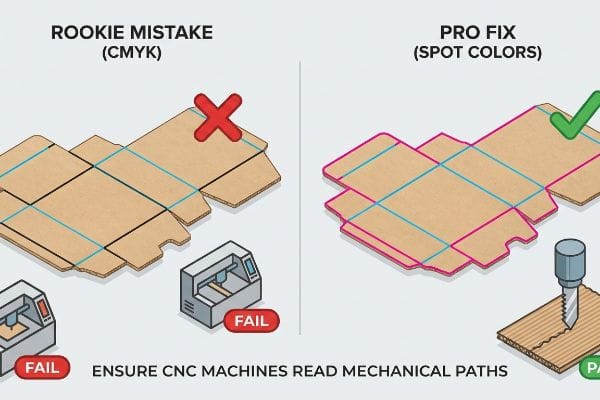
ক্রেতারা প্রায়শই জিজ্ঞাসা করেন, কেন তাদের আপাতদৃষ্টিতে নিখুঁত আর্টওয়ার্ক ফাইলটি প্রিন্টিং প্রতিষ্ঠান কর্তৃক প্রত্যাখ্যাত হয়েছে। তারা ধরে নেন যে, একটি স্বয়ংক্রিয় মেশিনকে কোথায় কাটতে ও ভাঁজ করতে হবে তা জানানোর জন্য সাধারণ চার-রঙা ভিজ্যুয়াল লাইনই যথেষ্ট। দুর্ভাগ্যবশত, যান্ত্রিক কাটার লাইনগুলোকে একটি সাধারণ ভিজ্যুয়াল গ্রাফিক লেয়ারের মতো বিবেচনা করাএকটি মৌলিক ভুল।
প্যাকেজিং ডিজাইনের ৭টি প্রাথমিক ধাপের মধ্যে সবচেয়ে বড় ফাঁদটি তখনই তৈরি হয়, যখন দলগুলো ভাঁজ বোঝানোর জন্য সাধারণ CMYK (সায়ান, ম্যাজেন্টা, ইয়েলো, কী/ব্ল্যাক) লাইন ব্যবহার করে একটি স্ট্রাকচারাল টেমপ্লেট জমা দেয়। স্বয়ংক্রিয় CNC (কম্পিউটার নিউমেরিক্যাল কন্ট্রোল) কাটিং টেবিলগুলো ভিজ্যুয়াল গ্রাফিক্স পড়তে পারে না; এগুলো ভেক্টর পাথে এমবেড করা নির্দিষ্ট স্পট কালারের নামের উপর নির্ভর করে । আপনি যদি একটি সাধারণ ভিজ্যুয়াল ব্ল্যাক ব্যবহার করেন, তাহলে মেশিনের সফটওয়্যারটি কেবল কাটার লাইনগুলোকে আর্টওয়ার্ক লেয়ারের সাথে মিশিয়ে দেয় । আমাকে একবার উৎপাদন বন্ধ করতে হয়েছিল কারণ এরকম একটি ফাইল এসেছিল, এবং কোনো হস্তক্ষেপ ছাড়া, মেশিনটি দৃশ্যমান কালো আউটলাইন প্রিন্ট করত কিন্তু কোনো ফিজিক্যাল কাট দিত না, ফলে পুরু টেস্টলাইনারটি সম্পূর্ণ অনমনীয় থেকে যেত। আমি কঠোরভাবে সমস্ত ইনকামিং পিডিএফ ফাইল প্রি-ফ্লাইট করি যাতে স্ট্রাকচারাল পাথগুলো অ্যাবসোলিউট স্পট কালারে অ্যাসাইন করা হয়, এবং স্টিলের ব্লেডগুলো যেন বোর্ডের সাথে সত্যিই যুক্ত হয় তা নিশ্চিত করতে যান্ত্রিক স্ট্রোকগুলোকে মূল আর্টওয়ার্ক থেকে আলাদা করি।
| নতুনদের সাধারণ ভুল | প্রো ফিক্স | খুচরা-ফ্লোর সুবিধা |
|---|---|---|
| কাট লাইনের জন্য CMYK কালো ব্যবহার করা | পরম স্পট রঙ নির্ধারণ করা10 | মেশিনগুলো আসলেই কাটে তা নিশ্চিত করে |
| কাঠামোগত এবং শৈল্পিক স্তরগুলির একত্রীকরণ | যান্ত্রিক ভেক্টর পথ পৃথক করা11 | মুদ্রিত শিল্পকর্মকে নিখুঁত রাখে |
| প্রিপ্রেস ফাইল অডিট এড়িয়ে যাওয়া | স্বয়ংক্রিয় কারখানা পরীক্ষা চালানো12 | ব্যয়বহুল উৎপাদন বিলম্ব প্রতিরোধ করে |
প্রতি মাসে আমাকে কয়েক ডজন ত্রুটিপূর্ণ ফাইল আটকাতে হয়, কারণ একজন ডিজাইনার প্রিপ্রেসের এই কারিগরি ধাপটি ভুলে যান। আপনার মেকানিক্যাল স্পট কালারগুলো আলাদা করে রাখলে তা নিশ্চিত করে যে আপনার ক্যাম্পেইনটি ঘণ্টাপ্রতি মেশিন বন্ধ থাকার জরিমানা ছাড়াই সরাসরি ফিজিক্যাল কাটিং টেবিলে চলে যাবে।.
🛠️ হার্ভির ডেস্ক: আপনি কি নিশ্চিত যে আপনার স্বয়ংক্রিয় CNC টেবিলগুলো আপনার ভেক্টর কাট লাইনগুলো পড়তে পারে? 👉 প্রিপ্রেস গাইডটি ডাউনলোড করুন ↗ — নিরাপদে ডাউনলোড করুন। পরবর্তীতে কোনো প্রশ্ন থাকলে আমার ইনবক্স খোলা আছে।
প্যাকেজিং ডিজাইনের চারটি 'সি' কী কী?
বিপণনের আকাঙ্ক্ষা এবং সরবরাহ শৃঙ্খলের বাস্তবতার মধ্যে ভারসাম্য রক্ষা করা অত্যন্ত কঠিন। শুধুমাত্র একটি একক পরিমাপের উপর নির্ভর করলে তা আপনার চূড়ান্ত পণ্য বিপণন পরিকল্পনাকে সরাসরি ধ্বংস করে দেবে।.
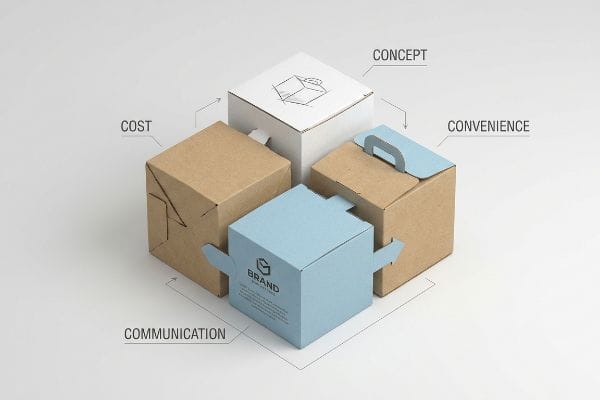
প্যাকেজিং ডিজাইনের চারটি 'সি' হলো ব্যয় (Cost), ধারণা (Concept), সুবিধা (Convenience), এবং যোগাযোগ (Communication)। এই কৌশলগত রিটেইল কাঠামোটি নিশ্চিত করে যে স্ট্রাকচারাল ইঞ্জিনিয়ারিং বাজেট যেন সাপ্লাই চেইন লজিস্টিকস, ফিজিক্যাল মার্চেন্ডাইজিং ভিজিবিলিটি এবং এন্ড-ইউজার অ্যাসেম্বলি রিকোয়ারমেন্টের সাথে সামঞ্জস্যপূর্ণ থাকে। এর ফলে এমন একটি সমন্বিত কৌশল তৈরি হয় যা লজিস্টিক্যাল জটিলতা ছাড়াই লাভজনক পয়েন্ট-অফ-পারচেজ কনজিউমার এনগেজমেন্টকে চালিত করে।.
চারটি স্তম্ভ সম্পর্কে জানা এক জিনিস, কিন্তু ক্রয় দলগুলো কীভাবে ভুলবশত সেগুলোকে অস্ত্র হিসেবে ব্যবহার করে, তা জানাই একটি বাস্তবায়নকে রক্ষা করার উপায়।.
ক্রয় ভারসাম্যহীনতা: চারটি স্তম্ভের ধ্বংস
ব্র্যান্ড টিমগুলো প্রায়শই এই চারটি কৌশলগত স্তম্ভ ব্যবহার করে তাদের নিখুঁত ক্যাম্পেইনের পরিকল্পনা করে, কিন্তু তারপর প্রকল্পটি একটি ক্রয় বিভাগের হাতে তুলে দেয়। ক্রয় বিভাগের প্রচলিত রীতি হলো মূল খরচের মাপকাঠিটিকে আলাদা করে সেটির ওপর কঠোরভাবে মনোযোগ দেওয়া। তারা প্রায়শই প্রতি ইউনিটে শুরুতে কিছু পয়সা বাঁচানোর জন্য স্ট্রাকচারাল বোর্ড গ্রেড ১৩- এর ভেতরের অংশ ফাঁপা করে ফেলে ।
বিষয়টাকে এভাবে ভাবুন, যেন আপনি দামী রঙ দিয়ে একটা বাড়ি বানাচ্ছেন কিন্তু টাকা বাঁচাতে কাঠামোর জন্য পচা কাঠ ব্যবহার করছেন। মূল উপকরণের মান কমিয়ে আনার ফলে এমন এক মারাত্মক ভারসাম্যহীনতা তৈরি হয় যা কাঠামোর বাকি তিনটি স্তম্ভকে পুরোপুরি ধ্বংস করে দেয়। আমি সম্প্রতি এমন একটি ক্যাম্পেইন নিরীক্ষা করেছি যেখানে ব্র্যান্ডটি ভিত্তির ব্যাপারে কার্পণ্য করায় ভারী প্যালেটের ওজনে পণ্যটির বাহ্যিক রূপটি বেঁকে গিয়েছিল। দোকানের কর্মচারী যখন এটি হাতে তুলে নেন, তখন ভেঙে যাওয়া ঢেউখেলানো পাতের কর্কশ ও ধুলোময় ঘর্ষণের ফলে পুরো ইউনিটটিই নুয়ে পড়ে, যা এটিকে জোড়া লাগানোর সুবিধা নষ্ট করে দেয় এবং শেলফে থাকা ব্র্যান্ডটির পরিচিতি পুরোপুরি মুছে ফেলে। আমি একটি সমন্বিত মূল্যায়নের নির্দেশ দিই যেখানে আমরা গাণিতিকভাবে কাঠামোগত খরচের সাথে সরাসরি সরবরাহ শৃঙ্খলের টিকে থাকার বিষয়টিকে যুক্ত করব, যাতে আপনার বিনিয়োগ বিপর্যয়কর খুচরা বিক্রেতার চার্জব্যাকের কারণ না হয়ে একটি ইতিবাচক রিটার্ন তৈরি করে ।
| নতুনদের সাধারণ ভুল | প্রো ফিক্স | খুচরা-ফ্লোর সুবিধা |
|---|---|---|
| একক খরচ নিয়ে কঠোরভাবে আচ্ছন্ন থাকা | সকল স্তম্ভ জুড়ে বাজেটের ভারসাম্য রক্ষা করা | খুচরা বিক্রেতার বিপর্যয়কর চার্জব্যাক প্রতিরোধ করে15 |
| কাঠামোগত বোর্ডের গ্রেড অবনমন | উপাদানের সঠিক ঘনত্ব বজায় রাখা16 | ভারী পরিবহন ভার সহ্য করে |
| সমাবেশের প্রয়োজনীয়তা উপেক্ষা করা | ঘর্ষণহীন সেটআপের প্রকৌশল | দ্রুত ক্লার্ক ইনস্টলেশন নিশ্চিত করে |
আমি একক মূল্যের সরাসরি হিসাবকে একটি বিচ্ছিন্ন পরিমাপক হিসেবে বিবেচনা করা কঠোরভাবে নিষেধ করি। কাঠামোগত সুবিধা এবং বাস্তব যোগাযোগের ক্ষেত্রে যথাযথ বিনিয়োগের মাধ্যমে আমি নিশ্চিত করি যে আপনার ক্যাম্পেইনটি সরবরাহ শৃঙ্খল পেরিয়েও টিকে থাকে এবং দোকানের করিডোরেই ক্রেতাদেরকে প্রকৃতপক্ষে ক্রেতায় রূপান্তরিত করে।.
🛠️ হার্ভির ডেস্ক: আপনার ক্রয় খরচ কমানোর নীতি কি নীরবে আপনার কাঠামোগত অখণ্ডতাকে নষ্ট করে দিচ্ছে? 👉 একটি মেটেরিয়াল অডিট-এর জন্য অনুরোধ করুন ↗ — কোনো ফর্ম নেই যা অবিরাম সেলস কলের কারণ হয়। শুধু খাঁটি মূল্য।
প্যাকেজিং-এ ডাইলাইন বলতে কী বোঝায়?
একটি শীতাতপ নিয়ন্ত্রিত ডিজাইন এজেন্সিতে একটি দ্বি-মাত্রিক ভেক্টর ফাইল নিখুঁত দেখায়। কিন্তু গুদামের আর্দ্রতা শোষণ করার সাথে সাথেই আপনার নিখুঁত টেমপ্লেটটি একটি লজিস্টিক দুঃস্বপ্নে পরিণত হয়।.
প্যাকেজিং-এর ডাইলাইন হলো মৌলিক ইঞ্জিনিয়ারিং টেমপ্লেট, যা কাঠামোগত কন্টেইনার তৈরির জন্য সঠিক কাটিং, ক্রিজিং এবং ফোল্ডিং পথকে দৃশ্যত নির্দেশ করে। এই গুরুত্বপূর্ণ ডিজিটাল ব্লুপ্রিন্টগুলো স্বয়ংক্রিয় যন্ত্রপাতিকে পথ দেখায়, আর্টওয়ার্কের নির্ভুল রেজিস্ট্রেশন নিশ্চিত করে এবং উচ্চ-পরিমাণ খুচরা সরবরাহ শৃঙ্খল লজিস্টিকসের সময় ভৌত উপকরণগুলোর সঠিক সংযোজনের নিশ্চয়তা দেয়।.
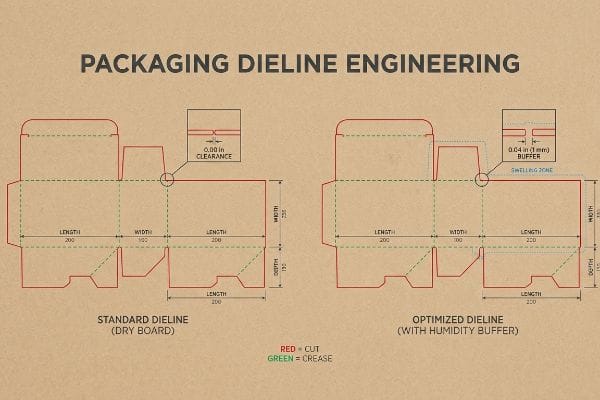
কিন্তু যখন মেশিনগুলো চলতে শুরু করে এবং পারিপার্শ্বিক পদার্থবিদ্যা আপনার উপকরণগুলোকে আক্রমণ করে, তখন শুধু তত্ত্ব জানাই যথেষ্ট নয়।.
আর্দ্রতা স্ফীতির ফাঁদ: কেন প্রচলিত CAD টেমপ্লেটগুলো ব্যর্থ হয়
ক্রয়কারী দলগুলো প্রায়শই ধরে নেয় যে একবার একটি টেমপ্লেট চূড়ান্ত হয়ে গেলে, এর কাঠামোগত মাত্রা চিরকালের জন্য সম্পূর্ণ অপরিবর্তিত থাকে। তারা টেস্টলাইনার বোর্ড ১৭- এর সম্পূর্ণ শুষ্ক ক্যালিপারের উপর কঠোরভাবে ভিত্তি করে সংকীর্ণ গ্রহণ স্লট অনুমোদন করে , এই বিশ্বাসে যে পরিবহনের সময় কাগজের তন্তুগুলো ঠিক অনমনীয় প্লাস্টিকের মতো আচরণ করবে।
আমার প্রতিষ্ঠানে, আমি নিয়মিত দেখি যে প্যাকেজিং-এর মধ্যে থাকা এই নিখুঁতভাবে তৈরি ডাইলাইনগুলো উচ্চ-আর্দ্রতার মধ্যে পরিবহনের সময় মারাত্মকভাবে বিকল হয়ে যায়। যখন ঢেউখেলানো ফ্ল্যাট-প্যাকগুলো সমুদ্রপথে পাঠানো হয় বা ফ্লোরিডার মতো আর্দ্র অঞ্চলে সংরক্ষণ করা হয়, তখন ছিদ্রযুক্ত 32ECT (এজ ক্রাশ টেস্ট) টেস্টলাইনারটি পারিপার্শ্বিক আর্দ্রতা শোষণ করে ফুলে ওঠে১৮।সফটওয়্যারে যে স্লটটির মাপ ঠিক ০.১২ ইঞ্চি (৩.১৭ মিমি) ছিল, সেটি হঠাৎ প্রসারিত হয়ে যায়। আমি দেখেছি ক্লার্করা এই ফুলে ওঠা অংশগুলোকে জোর করে একসাথে জোড়া লাগানোর চেষ্টা করে, যার ফলে মারাত্মক ঘর্ষণ তৈরি হয় যা ফ্লুটগুলোকে পিষে ফেলে এবং উপরের শিটটিকে হিংস্রভাবে ছিঁড়ে দেয়। এটি ঠিক করার জন্য, আমি ফুলে ওঠা বোর্ডগুলোর মাইক্রোমিটার রিডিং নিই এবং সরাসরি ইন্টারলকিং মেকানিজমের মধ্যে স্বয়ংক্রিয়ভাবে একটি ০.০৪-ইঞ্চি (১ মিমি) আর্দ্রতা বাফার১৯ । এই সুনির্দিষ্ট টলারেন্স অফসেট প্রয়োগ করার মাধ্যমে, আমি নিশ্চিত করি যে প্রতি ইউনিটে কো-প্যাকিং অ্যাসেম্বলির সময় ৪৫ সেকেন্ড কমে আসে, যা ম্যানুয়াল শ্রমের খরচ ব্যাপকভাবে হ্রাস করে এবং রিটেইল ফ্লোরে ভিজ্যুয়াল গ্রাফিক্স ছিঁড়ে যাওয়া প্রতিরোধ করে।
| নতুনদের সাধারণ ভুল | প্রো ফিক্স | খুচরা-ফ্লোর সুবিধা |
|---|---|---|
| শুকনো বোর্ডের মাত্রা ব্যবহার করে | ১ মিমি আর্দ্রতা বাফার ডিজাইন করা20 | ট্যাবের ঘর্ষণ দূর করে |
| পারিপার্শ্বিক আর্দ্রতার স্ফীতি উপেক্ষা করা | পরিবেশগত কাগজের সম্প্রসারণ গণনা করা21 | উপরের চাদর ছিঁড়ে যাওয়া প্রতিরোধ করে |
| স্ফীত আন্তঃসংযুক্ত স্লটগুলিকে জোর করে | CAD ক্লিয়ারেন্স অফসেট সমন্বয় করা22 | শারীরিক সমাবেশকে ত্বরান্বিত করে |
চূড়ান্ত গন্তব্যের পারিপার্শ্বিক পদার্থবিদ্যা গণনা না করে আমি কখনোই কোনো ফাইল কাটিং টেবিলে পাঠাই না। প্রিপ্রেসে সামান্যতম ক্লিয়ারেন্স অ্যাডজাস্টমেন্টই একটি মসৃণ অ্যাসেম্বলি এবং একটি পুরোপুরি ব্যর্থ রিটেইল রোলআউটের মধ্যে একমাত্র বাধা।.
🛠️ হার্ভির ডেস্ক: একটি ২-মিলিমিটার কাঠামোগত ত্রুটির কারণে ৫০০টি দোকানে পণ্য সরবরাহের পরিকল্পনা যেন ভেস্তে না যায়। 👉 আপনার ডাইলাইন ফাইলটি আমাকে পাঠান ↗ — গণ-উৎপাদনে বাজেট অপচয় করার আগে আমি এর গাণিতিক হিসাব স্ট্রেস-টেস্ট করে নেব।
উপসংহার
আপনি হয়তো সবচেয়ে সস্তা ভেক্টর টেমপ্লেটটি অনুমোদন করতে পারেন, কিন্তু যখন একটি আর্দ্র গুদামে সেই সরু গ্রহণকারী স্লটগুলো ফুলে ওঠে এবং আপনার প্রিন্ট করা গ্রাফিক্স ছিঁড়ে ফেলে, তখন আপনাকে খুচরা বিক্রেতাদের কাছ থেকে তাৎক্ষণিক প্রত্যাখ্যানের সম্মুখীন হতে হবে, যা অ্যাসেম্বলি লাইনের গতি আনুমানিক ৩০% কমিয়ে দেবে। ৫০০-এরও বেশি ব্র্যান্ড ম্যানেজার ঠিক এই মারাত্মক প্রাথমিক পর্যায়ের ভুলগুলো এড়ানোর জন্য আমার প্রিপ্রেস চেকলিস্ট ব্যবহার করেন। পরিবেশগত পদার্থবিদ্যার উপর জুয়া খেলা বন্ধ করুন এবং ব্যাপক উৎপাদনের আগে লুকানো ঘর্ষণের স্থানগুলো ধরার জন্য আমাকে ব্যক্তিগতভাবে আপনার স্ট্রাকচারাল ফাইলগুলো আমার ফ্রি ডাইলাইন অডিট ↗- এর মাধ্যমে পরীক্ষা করতে দিন।
"শীট মেটালের জন্য ট্যাব এবং স্লট ক্লিয়ারেন্স – কাটিং কর্নারস পর্ব ১৫", https://www.youtube.com/watch?v=WTDtj8vAJuE। প্রযুক্তিগত প্যাকেজিং ডিজাইন গাইড ব্যাখ্যা করে যে, ট্যাব এবং স্লটের প্রস্থ হুবহু মেলানো বাস্তব উৎপাদনে ব্যর্থ হয়, কারণ এটি উপাদানের পুরুত্ব (ক্যালিপার) উপেক্ষা করে। প্রমাণের ভূমিকা: প্রযুক্তিগত যাচাইকরণ; উৎসের ধরণ: কাঠামোগত ডিজাইন ম্যানুয়াল। সমর্থন করে: ডাইলাইনে ক্যালিপার ক্ষতিপূরণের প্রয়োজনীয়তা। পরিধি নোট: অনমনীয় এবং আধা-অনমনীয় সাবস্ট্রেটের ক্ষেত্রে প্রযোজ্য। ↩
"কোরুগেটেড বোর্ড এবং উপাদানের গ্রেড | ২০২১-০৬-৩০", https://www.packagingstrategies.com/articles/96269-corrugated-board-and-material-grades। ইঞ্চি এবং মিলিমিটারে বি-ফ্লুট কোরুগেটেড কার্ডবোর্ডের জন্য শিল্প-মানসম্মত পুরুত্বের যাচাইকরণ। প্রমাণের ভূমিকা: প্রযুক্তিগত স্পেসিফিকেশন; উৎসের ধরণ: শিল্প-মানসম্মত ম্যানুয়াল। সমর্থন করে: উপাদানের পুরুত্বের নির্ভুলতা। পরিধির টীকা: আদর্শ বি-ফ্লুট মাত্রা। ↩
"একটি পাঁচ-স্তরীয় বস্তুর নমন দৃঢ়তার বিশ্লেষণাত্মক নির্ধারণ...", https://pmc.ncbi.nlm.nih.gov/articles/PMC8777652/। পুরু ঢেউখেলানো উপাদানের ভাঁজের বাইরের ব্যাসার্ধে কাঠামোগত প্রতিবন্ধকতা রোধ করার জন্য কেন একটি নমন ছাড়ের প্রয়োজন হয়, তার প্রযুক্তিগত ব্যাখ্যা। প্রমাণের ভূমিকা: ভৌত নীতি; উৎসের ধরণ: কাঠামোগত প্রকৌশল নির্দেশিকা। সমর্থন: ডাইলাইনে ক্যালিপার ক্ষতিপূরণের প্রয়োজনীয়তা। পরিধি টীকা: পুরু পেপারবোর্ড/ঢেউখেলানো উপাদানের ক্ষেত্রে প্রযোজ্য। ↩
"ফ্রি শিট মেটাল বেন্ড অ্যালাউন্স ক্যালকুলেটর | ফিরগেলি ইঞ্জিনিয়ারিং", https://www.firgelliauto.com/blogs/engineering-calculators/sheet-metal-bend-allowance-calculator?srsltid=AfmBOorjlPZADFfG_Hqssde2Fxzg0wYCht4InperpP6rhbidfgur3gZd। প্যাকেজিং ইঞ্জিনিয়ারিং-এর উপর একটি প্রযুক্তিগত নির্দেশিকা ব্যাখ্যা করে যে, অ্যাসেম্বলি নিশ্চিত করার জন্য ভাঁজ করার সময় উপাদানের পুরুত্বের সাথে বেন্ড অ্যালাউন্স কীভাবে সামঞ্জস্য করা হয়। প্রমাণের ভূমিকা: প্রযুক্তিগত স্পেসিফিকেশন; উৎসের ধরণ: ইঞ্জিনিয়ারিং ম্যানুয়াল। সমর্থন করে: শূন্য-ঘর্ষণ অ্যাসেম্বলি অর্জনের জন্য বেন্ড অ্যালাউন্সের ব্যবহার। পরিধি নোট: বিশেষভাবে ফোল্ডিং কার্টন উপকরণের জন্য। ↩
"দ্বি-প্রাচীরযুক্ত ঢেউখেলানো বোর্ড প্যাকেজিংয়ের সর্বোত্তম নকশা – পিএমসি", https://pmc.ncbi.nlm.nih.gov/articles/PMC8950760/। কাঠামোগত প্যাকেজিং নকশার জন্য শিল্প মানগুলি, চাপ প্রতিরোধ করার জন্য বোর্ডের ক্যালিপারের উপর ভিত্তি করে স্লট প্রশস্ত করার গাণিতিক গণনার বিস্তারিত বিবরণ দেয়। প্রমাণের ভূমিকা: প্রযুক্তিগত পদ্ধতি; উৎসের ধরণ: প্যাকেজিং নকশার মান। সমর্থন: স্লট প্রশস্ত করার মাধ্যমে উপরের শীট ছিঁড়ে যাওয়া প্রতিরোধ। পরিধি সংক্রান্ত টীকা: বোর্ডের গ্রেডের উপর ভিত্তি করে গণনা ভিন্ন হতে পারে। ↩
"কাস্টম প্যাকেজিং ডিজাইনে CAD-এর ভূমিকা", https://xpress-360.com/precision-and-perfection-the-role-of-cad-in-custom-packaging-design/। প্যারামেট্রিক ডিজাইনের উপর ডকুমেন্টেশনটি দেখায় কিভাবে ভেরিয়েবল-চালিত মডেলগুলো আঠা ছাড়াই ইন্টারলকিং উপাদানগুলোর জন্য সুনির্দিষ্ট টলারেন্স বজায় রাখে। প্রমাণের ভূমিকা: টুলের সক্ষমতা; উৎসের ধরণ: সফটওয়্যার ডকুমেন্টেশন। সমর্থন করে: নির্ভুল ফিটের মাধ্যমে স্বচ্ছ টেপের ব্যবহার দূর করা। পরিধি সংক্রান্ত নোট: উপাদানের সঠিক পুরুত্ব ইনপুট করা প্রয়োজন। ↩
"সম্পূর্ণ প্যাকেজিং প্রিপ্রেস প্রক্রিয়ার একটি নির্দেশিকা – এসকো", https://www.esko.com/en/blog/a-guide-to-the-full-packaging-prepress-process। প্রযুক্তিগত মুদ্রণ মান ব্যাখ্যা করে যে স্বয়ংক্রিয় কাটিং মেশিনের জন্য ডাই-লাইনগুলিকে সাধারণ CMYK ভিজ্যুয়াল গ্রাফিক্সের পরিবর্তে নন-প্রিন্টিং স্পট কালার বা পৃথক স্তর হিসাবে মনোনীত করতে হয়। প্রমাণের ভূমিকা: প্রযুক্তিগত যাচাইকরণ; উৎসের ধরণ: প্রিপ্রেস শিল্প ম্যানুয়াল। সমর্থন করে: স্বতন্ত্র যান্ত্রিক স্তরের জন্য প্রযুক্তিগত প্রয়োজনীয়তা। পরিধি নোট: স্বয়ংক্রিয় ডাই-কাটিং ওয়ার্কফ্লোর জন্য নির্দিষ্ট। ↩
"লেজার কাটার – ভেক্টর বনাম রাস্টার লেজার কাটিং – এনসি স্টেট কলেজ অফ ডিজাইন", https://design.ncsu.edu/operations/510/laser-cutter-vector-vs-raster-laser-cutting/। ডিজিটাল কাটিং প্লটারের জন্য শিল্প মান অনুযায়ী, ডাই-লাইনকে মুদ্রণযোগ্য গ্রাফিক্স থেকে আলাদা করার জন্য স্বতন্ত্র স্পট কালার নির্ধারণের প্রয়োজন হয়। প্রমাণের ভূমিকা: প্রযুক্তিগত যাচাইকরণ; উৎসের ধরণ: শিল্প প্রযুক্তিগত ম্যানুয়াল। সমর্থন করে: সিএনসি প্রিপ্রেসে স্পট কালারের প্রয়োজনীয়তা। পরিধি নোট: স্বয়ংক্রিয় কাটিং টেবিল সফটওয়্যারের জন্য নির্দিষ্ট। ↩
"স্পট কালার বনাম সিএমওয়াইকে কালার: অপরিহার্য পার্থক্য ব্যাখ্যা", https://unicopacking.com/en/new/spot-color-vs-process-color.html। প্রিপ্রেস টেকনিক্যাল স্পেসিফিকেশন ব্যাখ্যা করে যে, সিএমওয়াইকে ভ্যালুগুলো মেকানিক্যাল টুলিংয়ের জন্য কমান্ড পাথ হিসেবে নয়, বরং প্রিন্টিংয়ের জন্য ইমেজ ডেটা হিসেবে প্রসেস করা হয়। প্রমাণের ভূমিকা: প্রযুক্তিগত ব্যাখ্যা; উৎসের ধরণ: প্রিপ্রেস গাইড। সমর্থন করে: স্ট্রাকচারাল টেমপ্লেটের জন্য সিএমওয়াইকে ব্যবহারের ঝুঁকি। পরিধি নোট: সেইসব আরআইপি (RIP) সফটওয়্যারের ক্ষেত্রে প্রযোজ্য যা সিএমওয়াইকে-কে প্রিন্টযোগ্য কালি হিসেবে গণ্য করে। ↩
"CMYK বনাম স্পট কালার: কোন প্রক্রিয়াটি সেরা", https://www.primelinepackaging.com/blog/cmyk-spot-color/। প্রিপ্রেস স্ট্যান্ডার্ডের উপর প্রযুক্তিগত ডকুমেন্টেশন, যেখানে ব্যাখ্যা করা হয়েছে কেন ডাই-কাটিং মেশিনে কাটিং পাথকে প্রিন্ট এলিমেন্ট থেকে আলাদা করার জন্য স্পট কালারের প্রয়োজন হয়। প্রমাণের ভূমিকা: প্রযুক্তিগত স্পেসিফিকেশন; উৎসের ধরণ: ইন্ডাস্ট্রি ম্যানুয়াল। সমর্থন করে: নির্ভুল মেশিন কাটিংয়ের জন্য স্পট কালারের প্রয়োজনীয়তা। পরিধি নোট: স্ট্যান্ডার্ড অফসেট এবং ডিজিটাল ডাই-কাটিং ওয়ার্কফ্লোতে প্রযোজ্য। ↩
"প্যাকেজিং ডিজাইন প্রস্তুতি নির্দেশিকা: আর্ট ফাইল, ডাই-লাইন...", https://www.printingblue.com/knowledge-center/posts/packaging-design-preparation-guide। শিল্পক্ষেত্রের ডিজাইন নির্দেশিকা যা কাট লাইনের আকস্মিক মুদ্রণ রোধ করার জন্য ভিজ্যুয়াল আর্টওয়ার্ক থেকে স্ট্রাকচারাল ডাইলাইনগুলিকে আলাদা করার প্রয়োজনীয়তা তুলে ধরে। প্রমাণের ভূমিকা: সর্বোত্তম অনুশীলন; উৎসের ধরণ: পেশাদার ডিজাইন নির্দেশিকা। সমর্থন করে: এই দাবি যে পাথগুলিকে আলাদা রাখলে মুদ্রিত আর্টওয়ার্ক নিখুঁত থাকে। পরিধি সংক্রান্ত টীকা: ভেক্টর-ভিত্তিক প্যাকেজিং ফাইলের জন্য নির্দিষ্ট। ↩
"প্রিপ্রেস প্যাকেজিং কী? একটি ধাপে ধাপে নির্দেশিকা", https://www.millergraphics.com/blog/prepress-packaging-step-by-step-guide। প্রিপ্রেস কর্মপ্রবাহের বিশ্লেষণ, যা দেখায় কীভাবে স্বয়ংক্রিয় ফাইল যাচাইকরণ কাঠামোগত ত্রুটি কমায় এবং ব্যয়বহুল উৎপাদন বন্ধ হওয়া প্রতিরোধ করে। প্রমাণের ভূমিকা: অভিজ্ঞতালব্ধ প্রমাণ; উৎসের ধরণ: শিল্প শ্বেতপত্র। সমর্থন করে: এই দাবি যে নিরীক্ষা উৎপাদন বিলম্ব প্রতিরোধ করে। পরিধি টীকা: বাণিজ্যিক-স্তরের প্যাকেজিং উৎপাদনের উপর আলোকপাত করে। ↩
"প্যাকেজিং উপকরণের খরচ কমানোর কৌশল", https://oxmaint.com/industries/delivery-operations-management/packaging-materials-cost-reduction-strategies। প্যাকেজিং সংগ্রহে একক খরচ কমানোর জন্য উপকরণের স্পেসিফিকেশন হ্রাস করা কীভাবে কাঠামোগত অখণ্ডতাকে প্রভাবিত করে তার সংক্ষিপ্ত ব্যাখ্যা। প্রমাণের ভূমিকা: শিল্প অনুশীলনের যাচাইকরণ; উৎসের ধরণ: প্যাকেজিং ইঞ্জিনিয়ারিং ম্যানুয়াল বা সাপ্লাই চেইন বিশ্লেষণ। সমর্থন করে: উপকরণের গুণমানের চেয়ে একক খরচকে অগ্রাধিকার দেওয়ার সংগ্রহ প্রবণতাকে। পরিধি নোট: ঢেউখেলানো কার্ডবোর্ড বা পেপারবোর্ড প্যাকেজিংয়ের জন্য নির্দিষ্ট। ↩
"কন্ট্রাক্ট প্যাকেজিং-এর কোন ভুলগুলো রিটেইলার চার্জব্যাকের কারণ হয়?", https://www.industrialpackaging.com/blog/copacker-mistakes-retailer-chargebacks। রিটেইল ডিসপ্লে-এর কাঠামোগত ব্যর্থতা কীভাবে রিটেইলার চার্জব্যাকের মাধ্যমে আর্থিক জরিমানার কারণ হয়, তার সংক্ষিপ্ত ব্যাখ্যা। প্রমাণের ভূমিকা: তথ্যগত সমর্থন; উৎসের ধরণ: সাপ্লাই চেইন ম্যানেজমেন্ট গাইড। সমর্থন করে: ক্রয় প্রক্রিয়ার ভারসাম্যহীনতার সাথে সম্পর্কিত আর্থিক ঝুঁকি। পরিধি নোট: বিশেষভাবে B2B ভেন্ডর কমপ্লায়েন্সকে নির্দেশ করে। ↩
"ভেন্ডর কমপ্লায়েন্স: কীভাবে রিটেইল চার্জব্যাক কমানো যায় – কুইকবক্স", https://www.quickbox.com/blog/vendor-compliance-retail-chargebacks। রিটেইল লজিস্টিকসের উপর একটি প্রামাণ্য নির্দেশিকায় ব্যাখ্যা করা হবে যে, কীভাবে প্যাকেজিং ব্যর্থতার ফলে পণ্য ক্ষতিগ্রস্ত হলে রিটেইলারদের কাছ থেকে আর্থিক জরিমানা বা চার্জব্যাক আসে। প্রমাণের ভূমিকা: কার্যকারণ সম্পর্ক; উৎসের ধরণ: ইন্ডাস্ট্রি স্ট্যান্ডার্ড। সমর্থন করে: খরচ কমানো এবং আর্থিক জরিমানার মধ্যে সংযোগ। পরিধি নোট: রিটেইলারের চুক্তি অনুযায়ী শর্তাবলী ভিন্ন হতে পারে। ↩
"ঢেউখেলানো বোর্ডের সংকোচন শক্তির প্রাক্কলন …", https://pmc.ncbi.nlm.nih.gov/articles/PMC8467740/। বোর্ডের গ্রেড এবং উপাদানের ঘনত্ব সম্পর্কিত প্রযুক্তিগত বিবরণ পরিবহনের সময় কাঠামোগত অখণ্ডতা নিশ্চিত করার ক্ষেত্রে তাদের ভূমিকার প্রমাণ দেয়। প্রমাণের ভূমিকা: প্রযুক্তিগত বিবরণ; উৎসের ধরণ: ইঞ্জিনিয়ারিং ম্যানুয়াল। সমর্থন: বোর্ডের গ্রেড এবং ভারবহন ক্ষমতার মধ্যে সম্পর্ক। পরিধিগত টীকা: বিশেষভাবে ঢেউখেলানো উপকরণের ক্ষেত্রে প্রযোজ্য। ↩
"[পিডিএফ] ব্ল্যাঙ্কের আর্দ্রতার পরিমাণের গঠন আচরণ এবং যান্ত্রিকতার উপর প্রভাব...", https://repository.rit.edu/cgi/viewcontent.cgi?article=1219&context=japr। প্রযুক্তিগত নথি যা ব্যাখ্যা করে যে কীভাবে শিপিং পরিবেশে হাইগ্রোস্কোপিক প্রসারণকে টেস্টলাইনার বোর্ডের শুষ্ক ক্যালিপার পরিমাপ বিবেচনা করতে ব্যর্থ হয়। প্রমাণের ভূমিকা: প্রযুক্তিগত যাচাইকরণ; উৎসের ধরণ: পদার্থ বিজ্ঞান হ্যান্ডবুক বা প্যাকেজিং ইঞ্জিনিয়ারিং স্ট্যান্ডার্ড। সমর্থন করে: এই দাবি যে শুষ্ক পরিমাপের উপর নির্ভর করা কাঠামোগত ব্যর্থতার দিকে নিয়ে যায়। পরিধি নোট: বিশেষভাবে সেলুলোজ-ভিত্তিক লাইনারের ক্ষেত্রে প্রযোজ্য। ↩
"আর্দ্রতা এবং তাপমাত্রার প্রভাব …এর যান্ত্রিক বৈশিষ্ট্যের উপর", https://bioresources.cnr.ncsu.edu/resources/influence-of-humidity-and-temperature-on-mechanical-properties-of-corrugated-board-numerical-investigation/। একটি প্রামাণিক বাহ্যিক উৎস কীভাবে এই দাবিকে সমর্থন করে তার সংক্ষিপ্ত ব্যাখ্যা। প্রমাণের ভূমিকা: প্রযুক্তিগত যাচাইকরণ; উৎসের ধরণ: বস্তু বিজ্ঞান হ্যান্ডবুক। সমর্থন করে: 32ECT লাইনারবোর্ডের বস্তু স্ফীতি বৈশিষ্ট্য। পরিধি টীকা: ঢেউখেলানো কার্ডবোর্ডের আর্দ্রতা শোষণকারী আচরণের উপর আলোকপাত করে। ↩
"বিতরণ ব্যবস্থায় আপেক্ষিক আর্দ্রতার জন্য ইঞ্জিনিয়ারিং বক্স...", https://www.packagingstrategies.com/articles/91064-engineering-boxes-for-relative-humidity-in-the-distribution-environment। একটি প্রামাণ্য বাহ্যিক উৎস কীভাবে এই দাবিকে সমর্থন করে তার সংক্ষিপ্ত ব্যাখ্যা। প্রমাণের ভূমিকা: শিল্পক্ষেত্রের প্রচলিত পদ্ধতির বৈধতা যাচাই; উৎসের ধরন: প্যাকেজিং ইঞ্জিনিয়ারিং নির্দেশিকা। সমর্থন করে: আর্দ্রতার জন্য আদর্শ টলারেন্স অফসেট। পরিধিগত টীকা: CAD টেমপ্লেটে সাধারণ বাফার ডাইমেনশনের তুলনা। ↩
"...এর সংকোচন শক্তির উপর আপেক্ষিক আর্দ্রতার প্রভাব", https://open.clemson.edu/all_theses/3225/। করোগেটেড প্যাকেজিংয়ের জন্য শিল্প মানগুলি আর্দ্রতার কারণে উপাদানের প্রসারণের জন্য নির্দিষ্ট সহনশীলতা প্রদান করে। প্রমাণের ভূমিকা: প্রযুক্তিগত স্পেসিফিকেশন; উৎসের ধরণ: শিল্প হ্যান্ডবুক। সমর্থন: একটি আদর্শ পেশাদার সমাধান হিসাবে নির্দিষ্ট ১ মিমি বাফার। পরিধি নোট: বোর্ডের গ্রেডের উপর ভিত্তি করে বাফারের আকার পরিবর্তিত হতে পারে। ↩
"[পিডিএফ] পেপারবোর্ড প্যাকেজিং-এর যান্ত্রিক বৈশিষ্ট্য অনুসন্ধান...", https://repository.rit.edu/cgi/viewcontent.cgi?article=1066&context=japr। সেলুলোজ তন্তুর আর্দ্রতাগ্রাহী বৈশিষ্ট্যের উপর পদার্থ বিজ্ঞানের তথ্য ব্যাখ্যা করে যে পারিপার্শ্বিক আর্দ্রতার প্রতিক্রিয়ায় পেপারবোর্ড কীভাবে প্রসারিত হয়। প্রমাণের ভূমিকা: বৈজ্ঞানিক নীতি; উৎসের ধরণ: পদার্থ বিজ্ঞান জার্নাল। সমর্থন করে: কাঠামোগত ব্যর্থতা রোধ করার জন্য প্রসারণ গণনা করার প্রয়োজনীয়তা। পরিধি টীকা: প্রসারণ সাধারণত তন্তুর সমান্তরালের চেয়ে আড়াআড়িভাবে বেশি হয়। ↩
"উন্নত স্থায়িত্বের জন্য উদ্ভাবনী নকশার ঢেউখেলানো বোর্ডের প্যাকেজিং...", https://bioresources.cnr.ncsu.edu/resources/corrugated-board-packaging-with-innovative-design-for-enhanced-durability-during-transport/। প্যাকেজিং ইঞ্জিনিয়ারিং ম্যানুয়ালগুলিতে ইন্টারলকিং ট্যাবগুলির কার্যকরী সমাবেশ নিশ্চিত করার জন্য CAD সফটওয়্যারে ক্লিয়ারেন্স অফসেটের ব্যবহার বিস্তারিতভাবে বর্ণনা করা হয়েছে। প্রমাণের ভূমিকা: ইঞ্জিনিয়ারিংয়ের সর্বোত্তম অনুশীলন; উৎসের ধরণ: প্রযুক্তিগত ম্যানুয়াল। সমর্থন করে: স্ফীত উপাদানে ঘর্ষণ প্রতিরোধ করার জন্য অফসেটের ব্যবহার। পরিধির টীকা: ইন্টারলকিং স্লট ডিজাইনের ক্ষেত্রে প্রযোজ্য। ↩