অভ্যন্তরীণভাবে ডিসপ্লে তৈরি করা অথবা কোনো নিবেদিত উৎপাদন অংশীদার আপনার সরবরাহ শৃঙ্খলের গতিকে মৌলিকভাবে পরিবর্তন করে দেয়। অভ্যন্তরীণভাবে কাঁচামাল পরিচালনা করলে প্রায়শই বিশাল লুকানো দায়বদ্ধতা তৈরি হয়।
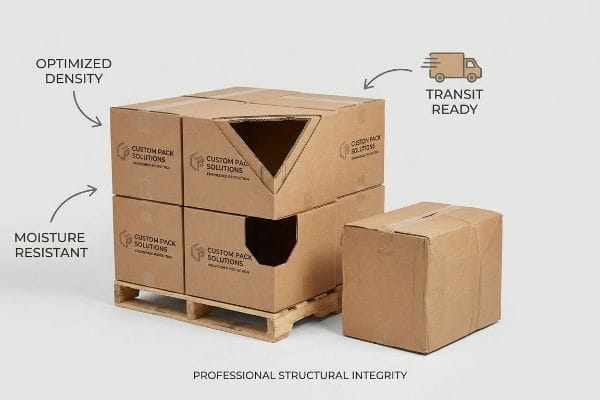
কাস্টম প্যাকেজিং কোম্পানি থেকে কার্ডবোর্ডের বাক্স নিলে পরিবহনের সময় হওয়া মারাত্মক ব্যর্থতা তাৎক্ষণিকভাবে প্রতিরোধ করা যায়। যদিও নিজে নিজে করার পদ্ধতি প্রাথমিকভাবে সস্তা মনে হতে পারে, পেশাদার স্ট্রাকচারাল ইঞ্জিনিয়ারিং সুনির্দিষ্ট আর্দ্রতা সহনশীলতা, কন্টেইনারের সর্বোত্তম ঘনত্ব এবং খুচরা বিক্রেতার কঠোর নিয়মকানুন মেনে চলার নিশ্চয়তা দেয়, যা শেষ পর্যন্ত ক্ষতিগ্রস্ত পণ্যের জন্য হওয়া ব্যয়বহুল চার্জব্যাক সম্পূর্ণরূপে দূর করে আপনার মোট মালিকানা খরচ কমিয়ে আনে।.
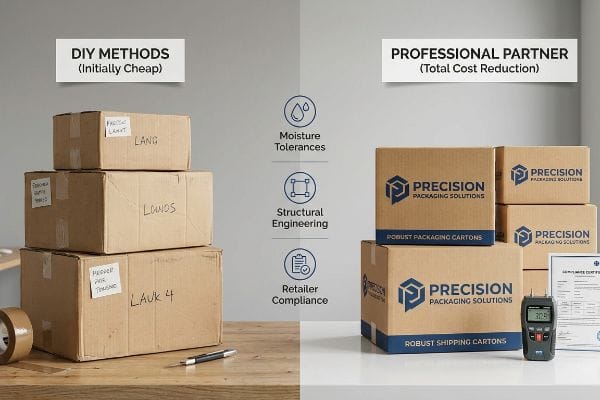
যখন আপনি তাত্ত্বিকভাবে সমতল শিট একত্রিত করা থেকে সরে এসে দেশজুড়ে সক্রিয়ভাবে ত্রিমাত্রিক পণ্যসম্ভার প্রেরণ করতে শুরু করেন, তখন ভারী মালপত্রের কঠোর পদার্থবিদ্যা এবং খুচরা দোকানে পণ্য গ্রহণের কড়া নিয়মকানুন আপনার প্রকৃত লাভের পরিমাণ নির্ধারণ করে দেয়।.
কাস্টম প্যাকেজিং কি লাভজনক?
আপনার ভৌত কাঠামো আউটসোর্স করা আর্থিকভাবে লাভজনক কিনা তা মূল্যায়ন করতে হলে, শুধু পেপারবোর্ডের একক মূল্যের বাইরেও আরও অনেক কিছু বিবেচনা করতে হবে।.
হ্যাঁ। কাস্টম প্যাকেজিং লাভজনক, কারণ এটি খণ্ডিত সাপ্লাই চেইনের লুকানো দায়বদ্ধতা সম্পূর্ণরূপে দূর করে। একজন নিবেদিত টার্নকি প্রস্তুতকারকের সাথে অংশীদারিত্ব অ্যাসেম্বলির সময় স্বয়ংক্রিয় যন্ত্রপাতির জ্যাম এবং মিসঅ্যালাইনমেন্ট প্রতিরোধ করে, যা মারাত্মক মেশিন-ডাউনটাইমের জরিমানা এবং বড় রিটেইলারদের দ্বারা অত্যন্ত ব্যয়বহুল প্রত্যাখ্যান থেকে আপনার লাভের মার্জিনকে সক্রিয়ভাবে রক্ষা করে।.
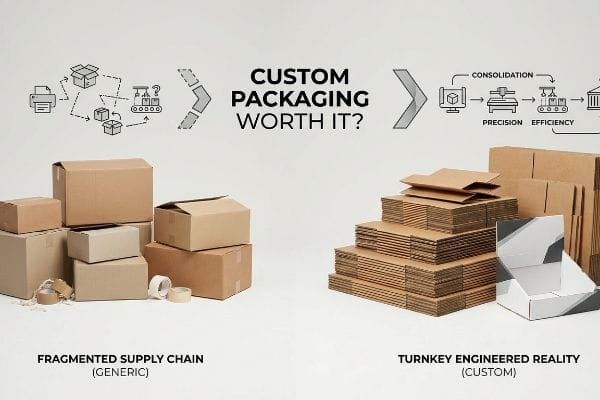
সাধারণ উপকরণ অর্ডার করে সেগুলোকে অভ্যন্তরীণভাবে জোড়া লাগানোর যে আপাত সাশ্রয়ী ধারণা, তা তখনই ভেঙে চুরমার হয়ে যায়, যখন সেই ভিত্তিহীন কাঠামো একটি সক্রিয় সরবরাহ ব্যবস্থার সম্মুখীন হয়।.
টার্নকি কনসোলিডেশন প্রোটোকল
এমনকি অভিজ্ঞ ক্রয় দলগুলোও টোলিং-এর ফাঁদে পড়ে—এক বিক্রেতার কাছ থেকে কাঁচা প্রিন্টেড টপ-শিট এবং অন্য বিক্রেতার কাছ থেকে সাধারণ বেস স্ট্রাকচার কিনে, এবং আশা করে যে প্যাকিং ফ্লোরে সেগুলো নির্বিঘ্নে একত্রিত হয়ে যাবে। তারা ভুলভাবে ধরে নেয় যে বিল অফ মেটেরিয়ালস ভাগ করলে টোটাল কস্ট অফ ওনারশিপ (TCO) কমে যায়। বাস্তবে, এই খণ্ডিত পদ্ধতিটি একটি ১২-সপ্তাহের রিটেইল ক্যাম্পেইনে টিকে থাকার জন্য প্রয়োজনীয় ভৌত সহনশীলতাকে।অধিকন্তু, যখন আপনি একটি সমন্বিত করোগেটেড পার্টনারের সুবিধা নেন, তখন আপনি ফ্ল্যাট-প্যাক লজিস্টিকসের বিশাল সুবিধাটি লাভ করেন: ফ্ল্যাট-প্যাক করা করোগেটেড ডিসপ্লের একটি কন্টেইনারে আগে থেকে একত্রিত করা রিজিড বিকল্পগুলোর চেয়ে চারগুণ বেশি ঘনত্ব থাকে²যাআপনার মাল পরিবহনের খরচ তাৎক্ষণিকভাবে কমিয়ে দেয়।
এটা শুধু তত্ত্ব নয়—আমি টেস্টিং ফ্লোরে এটা ঘটতে দেখি যখন খণ্ডিত ফাইলগুলো আমাদের স্বয়ংক্রিয় মাউন্টিং মেশিনে আসে। স্টার্টআপগুলো প্রায়শই আমাকে একটি অতি সরলীকৃত এক্সেল BOM (বিল অফ মেটেরিয়ালস) দেয়, যেখানে কাগজের ফাইবারগুলোকে স্ট্যাটিক প্লাস্টিকের মতো বিবেচনা করা হয়। যখন আমি আমার প্রাথমিক প্রি-প্রোডাকশন টেস্টিং-এর মধ্যে দিয়ে তাদের বিভিন্ন ভেন্ডরের মিশ্র উপকরণগুলো চালাই, তখন বাস্তবতার ধাক্কাটা সঙ্গে সঙ্গেই আসে। সাধারণ সাবস্ট্রেটটি বিশেষায়িত জলীয় কোটিংগুলো সহ্য করতে পারে না, যার ফলে স্তরগুলো আক্ষরিক অর্থেই একে অপরের থেকে সরে যায়। আমার মুলেন টেস্টারে, অসারিবদ্ধ ফ্লুটগুলো মাত্র ১৪২.৩ পাউন্ড (৬৪.৫ কেজি) চাপেই মারাত্মকভাবে ভেঙে যায়,কারণ গ্রেইনের দিকটি টপ-শিটের সাথে গাণিতিকভাবে সামঞ্জস্যপূর্ণ ছিল না। এটি ঠিক করার জন্য, আমি CAD (কম্পিউটার-এইডেড ডিজাইন) জ্যামিতি সম্পূর্ণরূপে ঢেলে সাজাই এবং একটি একক, একীভূত ফাইলে লুকানো লোড-বহনকারী ভাঁজ যুক্ত করি। আমাদের কংসবার্গ CNC টেবিলের নির্ভুলতা আমাকে এমন একটি অবিচ্ছিন্ন কাঠামো কাটতে সাহায্য করেছিল যা বিভিন্ন ভেন্ডরের বেমানান আঠার উপর নির্ভর না করেই স্বাভাবিকভাবে নিজেকে একসাথে আটকে ফেলে। একীভূত ০.০৮-ইঞ্চি (২.০ মিমি) টলারেন্স৪ , আমি নিশ্চিত করেছি যে প্রতি ইউনিটে কো-প্যাকিং অ্যাসেম্বলির সময় ৩৮ সেকেন্ড কমে এসেছে, যা কার্যকরভাবে ক্লায়েন্টের আনুমানিক ম্যানুয়াল শ্রমের খরচ বাবদ হাজার হাজার টাকা সাশ্রয় করেছে এবং তাদের মেশিন-ডাউনটাইমের দায়ও দূর করেছে।
| মেট্রিক/বৈশিষ্ট্য | খণ্ডিত টোলিং পদ্ধতি | টার্নকি ইঞ্জিনিয়ারড রিয়েলিটি |
|---|---|---|
| মালবাহী ঘনত্ব | উচ্চ ডেড-এয়ার ভলিউম | ৪ গুণ ফ্ল্যাট-প্যাক দক্ষতা5 |
| সমাবেশ ঘর্ষণ | মিশ্র সহনশীলতা জ্যামিং | শূন্য-ঘর্ষণ ইন্টারলকিং6 |
| দায় নিয়ন্ত্রণ | বিতর্কিত বিক্রেতার দোষ | কেন্দ্রীয় কারখানার গ্যারান্টি |
আমি ক্লায়েন্টদের অসংলগ্ন লজিস্টিকসের পেছনে তাদের মার্কেটিং বাজেট নষ্ট করতে দিতে রাজি নই, যখন একটি গাণিতিকভাবে সমন্বিত কাঠামো দ্রুত বাস্তবায়ন করা যায় এবং নিখুঁতভাবে কাজ করে।.
🛠️ হার্ভির ডেস্ক: আপনার বেমানান কাঠামোগত উপাদানগুলো কি অ্যাসেম্বলি লাইনকে জ্যাম করে দিচ্ছে এবং দোকানে পৌঁছানোর আগেই আপনার শিপিংয়ের ROI (বিনিয়োগের উপর রিটার্ন) নষ্ট করে দিচ্ছে? 👉 একটি বিনামূল্যে ফ্রেট ডেনসিটি অডিটের জন্য অনুরোধ করুন ↗ — আমি ২৪ ঘণ্টার মধ্যে প্রতিটি কাঠামোগত ফাইল ব্যক্তিগতভাবে পর্যালোচনা করি।
একটি কাস্টম কার্ডবোর্ড বক্স তৈরি করতে কত খরচ হয়?
শুধুমাত্র প্রাথমিক উপকরণের মূল্যের উপর ভিত্তি করে কোনো ডিসপ্লে ক্যাম্পেইনের মূল্য নির্ধারণ করলে, কাঠামোগত যান্ত্রিক ত্রুটির কারণে উদ্ভূত মারাত্মক পরবর্তী ব্যয়কে উপেক্ষা করা হয়।.
নিজেই তৈরি করা স্ট্রাকচারাল ফাইল ব্যর্থ হওয়ার ফলে সৃষ্ট বিশাল আর্থিক ক্ষতির চেয়ে একটি কাস্টম কার্ডবোর্ডের বাক্সের খরচ অনেক কম। পেশাদার প্যাকেজিং-এ বিনিয়োগ গাণিতিকভাবে সঠিক ভৌত সহনশীলতার হিসাব রাখে, যা নির্বিঘ্ন কো-প্যাকিং অ্যাসেম্বলি নিশ্চিত করে এবং আপনার বাজেটকে ব্যয়বহুল ম্যানুয়াল রিওয়ার্ক ফি ও পরবর্তী সাপ্লাই চেইন বিঘ্ন থেকে সম্পূর্ণরূপে রক্ষা করে।.
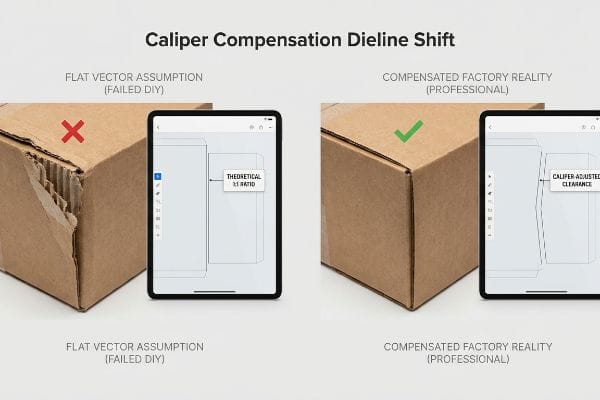
যখন আপনি পরিকল্পিত কাঠামোতে বিনিয়োগ করেন, তখন আপনি শুধু কাঁচা কাগজই কিনছেন না; আপনি বিপর্যয়কর সরবরাহ বিলম্ব এবং নষ্ট হয়ে যাওয়া পণ্যের বিরুদ্ধে একটি বীমা পলিসি কিনছেন।.
ক্যালিপার ক্ষতিপূরণ ডাইলাইন শিফট
অনেক ডিজাইনার তাদের স্ক্রিনে সুন্দর, জটিল নকশার ইন্টারলকিং ট্যাব আঁকেন, এই ভেবে যে মনিটরের একটি লাইন ভাঁজ করা কাগজে নিখুঁতভাবে ফুটে উঠবে। সমস্যাটি তখনই হয় যখন তারা একটি ফ্ল্যাট ভেক্টর CAD ডাইলাইন জমা দেন যা বাস্তব করোগেটেড কাগজের ক্যালিপারকে পুরোপুরি উপেক্ষা করে। পুরু ফ্লুটেড বোর্ড ৯০ ডিগ্রি কোণে বাঁকালে প্রচুর পরিমাণে উপাদান খরচ করে7।আপনি যদি একটি আঁটসাঁট, ক্ষতিপূরণহীন স্লটে সস্তা সাধারণ করোগেটেড কাগজ জোর করে ঢোকানোর চেষ্টা করেন, তাহলে বাইরের কাগজের আস্তরণটি প্রচণ্ডভাবে ছিঁড়ে যায়, যা আপনার গুদামের কর্মীদেরকে আনাড়িভাবে টেপ দিয়ে পুরো জিনিসটি জোড়া লাগাতে বাধ্য করে, এতে উচ্চমানের রিটেইল নান্দনিকতা নষ্ট হয় এবং এর ডাইনামিক লোড ক্যাপাসিটি ধ্বংস হয়ে যায়8।
আমার কারখানায় আমি প্রায়শই দেখি যে ব্যাপক উৎপাদন শুরু হওয়ার আগেই এই তাত্ত্বিক ধারণাটি মারাত্মকভাবে ভেঙে পড়ে। সম্প্রতি একটি ভারী পানীয় পণ্যের উদ্বোধনের, গ্রাহক একটি সম্পূর্ণ সমতল ডাইলাইন সরবরাহ করেছিলেন। যখন আমি কাঁচা প্রোটোটাইপটিকে জোর করে ভাঁজ করার পর্যায়ে নিয়ে গেলাম, তখন বাঁকানোর জন্য পর্যাপ্ত জায়গা না থাকায় একটি বিশাল ০.১৪-ইঞ্চি (৩.৫ মিমি) বিচ্যুতি ঘটে। টান এতটাই বেশি ছিল যে মূল স্কোর লাইন বরাবর ফেটে যাওয়ার প্রতিরোধ ক্ষমতা সঙ্গে সঙ্গে ভেঙে পড়ে, যার ফলে কাঁচা বাদামী খাঁজগুলো বেরিয়ে আসে। কারখানায় আমার বিশ বছরের অভিজ্ঞতা আমাকে শিখিয়েছে যে, ত্রুটিপূর্ণ জ্যামিতিকে কেবল জোর করে খাপ খাওয়ানো যায় না। আমি অবিলম্বে উপকরণ উন্নত করার নির্দেশ দিই, ভিত্তিটি একটি উচ্চ-ঘনত্বের ভার্জিন ক্রাফট বোর্ডে পরিবর্তন করি এবং আমাদের পিভিএ (পলিভিনাইল অ্যাসিটেট) আঠার সান্দ্রতা ভৌতভাবে পরিবর্তন করি, যাতে তন্তুগুলো না ছিঁড়ে প্রসারিত হতে পারে। নতুনভাবে প্রশস্ত করা স্লট টলারেন্সের সাথে মেলানোর জন্য উপকরণের রসায়নকে কঠোরভাবে পুনঃসমন্বয় করে আমি পৃষ্ঠটান সম্পূর্ণরূপে নির্মূল করি। এই ভৌত রসায়নের হস্তক্ষেপ সরাসরি লাইনে অ্যাসেম্বলির ঘর্ষণ কমিয়ে দেয়, যা নিশ্চিত করে যে কো-প্যাকার প্রতি ঘন্টায় অতিরিক্ত ১৫টি ইউনিট প্রক্রিয়াজাত করতে পারে এবং পণ্যটি নিরাপদে বাজেটের মধ্যে বাজারে আসে।
| মেট্রিক/বৈশিষ্ট্য | সমতল ভেক্টর অনুমান | ক্ষতিপূরণপ্রাপ্ত কারখানার বাস্তবতা |
|---|---|---|
| স্লট সহনশীলতা | সঠিক ১:১ অনুপাত | ক্যালিপার-সমন্বিত ক্লিয়ারেন্স9 |
| ভাঁজ অখণ্ডতা | উচ্চ পৃষ্ঠটান | ঘর্ষণহীন ৯০-ডিগ্রি বাঁক |
| উপাদান গ্রেড | শক্ত পুনর্ব্যবহৃত বোর্ড | ইলাস্টিক ভার্জিন ক্রাফট হাইব্রিড10 |
শারীরিক চাপ শোষণের জন্য আমি আমার কারখানার মেঝেতে সক্রিয়ভাবে ফ্ল্যাট ডাইলাইনগুলো পুনরায় আঁকি, যাতে আপনার গুদামের দলগুলোকে কোনো প্রিমিয়াম ডিসপ্লেতে প্যাকিং টেপ ব্যবহার করতে না হয়।.
🛠️ হার্ভির ডেস্ক: আপনার ফ্ল্যাট ডাইলাইন কি এমন কোনো মারাত্মক ভাঁজজনিত ত্রুটি লুকিয়ে রাখছে, যা চূড়ান্ত সংযোজনের সময় আপনার প্রিন্ট করা গ্রাফিক্সকে ছিঁড়ে দুভাগ করে দেবে? 👉 আপনার কাঠামোগত ঝুঁকি নিয়ে আলোচনা করুন ↗ — ১০০% গোপনীয়। আপনার অপ্রকাশিত রিটেইল ডিজাইনগুলো আমার কাছে সুরক্ষিত।
কাস্টম বক্সের সুবিধাগুলো কী কী?
বিশেষভাবে নির্মিত কাঠামোগত প্রকৌশলে বিনিয়োগ একটি শক্তিশালী কার্যকরী ঢাল তৈরি করে, যা আপনার পণ্যকে আন্তর্জাতিক সরবরাহ শৃঙ্খলের অপ্রত্যাশিত ও জটিল পরিস্থিতি থেকে রক্ষা করে।.
কাস্টম বক্সের সুবিধাগুলোর মধ্যে রয়েছে কাঠামোগত স্থায়িত্বের নিশ্চয়তা এবং সর্বোত্তম মাল পরিবহনের ঘনত্ব। কাঁচামালের সাধারণ পরীক্ষার বাইরে গিয়ে এবং পরিবহনের সময়কার গতিশীল ঝুঁকিগুলো মাথায় রেখে বিশেষভাবে ডিজাইন করার মাধ্যমে, কাস্টম প্যাকেজিং নিশ্চিত করে যে আপনার পণ্য সম্পূর্ণ অক্ষত অবস্থায় পৌঁছাবে এবং সমুদ্রপথে পরিবহনের সময় প্রচণ্ড ঘূর্ণনজনিত পতন ও ফর্কলিফটের তীব্র কম্পন থেকে নিরাপদে রক্ষা পাবে।.
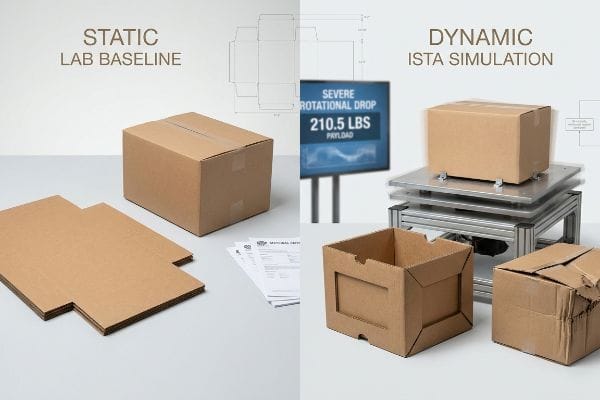
একটি কাঠামোগতভাবে মজবুত পাত্রের প্রকৃত মূল্য তখনই অনস্বীকার্য হয়ে ওঠে, যখন এটি সফলভাবে সেই পার্শ্বীয় গতিজনিত অভিঘাত শোষণ করে যা অন্যথায় ভেতরের পণ্যগুলোকে চূর্ণবিচূর্ণ করে ফেলত।.
ASTM বনাম ISTA বৈধতার ফাঁদ
এটি একটি সাধারণ ফাঁদ যা এমনকি অভিজ্ঞ ক্রয় দলগুলোকেও কাবু করে ফেলে: তারা একটি সাধারণ ASTM (আমেরিকান সোসাইটি ফর টেস্টিং অ্যান্ড মেটেরিয়ালস) উপকরণ শংসাপত্র11 এবং ধরে নেয় যে তাদের প্রদর্শিত উপকরণটি অজেয়। একটি সমতল কাগজের স্থির সংকোচন সীমা জানা সম্পূর্ণ অকেজো হয়ে যায়, যখন সেই বোর্ডটিকে ভাঁজ করে একটি ত্রিমাত্রিক বাক্সে পরিণত করা হয় এবং একটি কাঠের প্যালেটের উপর উঁচু করে স্তূপ করা হয়। ফ্ল্যাট-প্যাক লজিস্টিকস হ্যামার প্রমাণ করে যে ইঞ্জিনিয়ারড ঢেউখেলানো কার্ডবোর্ড কন্টেইনারের বিশাল জায়গা বাঁচায়12, কিন্তু আপনি যদি গতিশীল ট্রানজিট জ্যামিতির পরিবর্তে শুধুমাত্র কাঁচামালের বেসলাইন স্কোরের উপর নির্ভর করেন, তবে আপনার উদ্যোগটি অনিবার্যভাবে ট্রাক-বোঝাইয়ের চেয়ে কম পণ্য পরিবহনের গতিগত বাস্তবতার কাছে নতি স্বীকার করবে।
এটা শুধু তত্ত্ব নয়—গত মাসে আমি এই শিক্ষাটা কঠিনভাবে পেয়েছি, যখন একটি ব্র্যান্ড আমার কাছে এমন একটি ডিজাইন নিয়ে আসে যা নাকি একটি বড় খুচরা বিক্রেতার বেসলাইন স্পেসিফিকেশন অনুযায়ী তৈরি। ২০২২ সালে, আমি আমার প্রধান প্যাকেজিং ইঞ্জিনিয়ার, মার্ককে, প্রেসে পাঠানোর আগে তাদের সাধারণ খুচরা বিক্রেতার কমপ্লায়েন্স চেকলিস্টটি আমাদের অভ্যন্তরীণ ডাইনামিক সিমুলেশনের মাধ্যমে চালাতে বলেছিলাম। সম্পূর্ণ লোড করা কাঠামোটি ভাইব্রেশন টেবিলে পড়ার মুহূর্তেই ফলাফলটা ছিল ভয়াবহ। আমার স্পষ্টভাবে মনে আছে, ২১০.৫ পাউন্ড (৯৫.৪ কেজি) পেলোডের নিচে পুরো বাম পাশের দেয়ালটি আলাদা হয়ে ভেঙে পড়ার সাথে সাথে, বেঁকে যাওয়া বি-ফ্লুটের বীভৎস মচমচ শব্দ শোনার আগেই আমি ভিত্তিটিকে কাঁপতে দেখেছিলাম। এর কাঁচা ইসিটি (এজ ক্রাশ টেস্ট) ছিল উচ্চ ১৩ , কিন্তু এর জ্যামিতিক গঠনে মারাত্মক ত্রুটি ছিল। আমি সাথে সাথে প্রক্রিয়াটি থামিয়ে আমাদের রোটারি স্লটারে বোর্ডটিকে পুনরায় স্কোর করি এবং যেখানে ঘূর্ণনজনিত শিয়ার ফোর্স কেন্দ্রীভূত হয়েছিল ঠিক সেখানেই একটি ডাবল-ওয়াল কাইনেটিক বাফার প্রয়োগ করার জন্য ম্যানুয়ালি স্ট্রাইক টলারেন্স বাড়িয়ে দিই। চালু মেশিনে এই জরুরি যান্ত্রিক সমন্বয়টি ডাইনামিক লোড ক্যাপাসিটি সম্পূর্ণরূপে পুনরুদ্ধার করে। আমার টেস্টিং ল্যাবে আমি সময় ও অর্থ ব্যয় করি, যাতে খুচরা বিক্রয়কেন্দ্রে আপনার মুনাফা নষ্ট না হয়। এই দ্রুত মাঠ-পর্যায়ের পুনঃসমন্বয় ক্লায়েন্টকে LTL মাল পরিবহনের সময় নিশ্চিত ১৮% ক্ষতির হার থেকে বাঁচিয়েছে ১৪ , এবং তাদের মৌসুমী রাজস্ব সম্পূর্ণরূপে সুরক্ষিত করেছে ।
| মেট্রিক/বৈশিষ্ট্য | স্থির ল্যাব বেসলাইন | ডাইনামিক ISTA সিমুলেশন |
|---|---|---|
| পরীক্ষার অবস্থা | সমতল অসংযুক্ত বোর্ড | ত্রিমাত্রিক সম্পূর্ণ লোড করা জ্যামিতি15 |
| গতিশীল চাপ | শূন্য পার্শ্বীয় বল | তীব্র ঘূর্ণন পতন16 |
| মালবাহী টিকে থাকা | উচ্চ ট্রানজিট ঝুঁকি | পেলোডের স্থিতিশীলতা নিশ্চিত করা হয়েছে17 |
আমার কারখানার ভেতরে আমি ইচ্ছাকৃতভাবে ঢেউখেলানো টিনের কাঠামোগুলোকে একেবারে ভাঙার শেষ সীমা পর্যন্ত ঠেলে দিই, যাতে সবচেয়ে বিশৃঙ্খল ও বড় আকারের পরিবেশেও সেগুলো অক্ষত থাকে।.
🛠️ হার্ভিস ডেস্ক: আপনার ভারী চেকআউট ট্রেগুলো কি স্ট্যাটিক ল্যাব টেস্টে পাশ করলেও, একটি কম্পনশীল ডেলিভারি ট্রাকে ওঠার সাথে সাথেই আপনার শিপিংয়ের ROI (বিনিয়োগের উপর আয়) মারাত্মকভাবে কমিয়ে দিচ্ছে? 👉 আপনার বিনামূল্যে স্ট্রাকচারাল ডাইলাইন অডিট দাবি করুন ↗ — মাঝখানে কোনো অ্যাকাউন্ট ম্যানেজার নেই। আপনি সরাসরি স্ট্রাকচারাল ইঞ্জিনিয়ারদের সাথে কথা বলবেন।
কার্ডবোর্ডের মোড়কের অসুবিধাগুলো কী কী?
ক্রেতারা যখন বাহ্যিক খরচ কমানোর লোভে উপাদানটির মৌলিক পদার্থবিদ্যাকে উপেক্ষা করে, তখনই পেপারবোর্ডের কাঠামোর দুর্বলতাগুলো প্রকাশ পায়।.
কার্ডবোর্ড প্যাকেজিংয়ের অসুবিধাগুলো তখনই প্রকাশ পায়, যখন ক্রয়কারী দলগুলো শুধুমাত্র বাহ্যিক সৌন্দর্যবর্ধনের জন্য নির্বিচারে এর কাঠামোগত মানকে ফাঁপা করে ফেলে। এর ফলে ভেতরের তন্তুর ঘনত্ব কমে যায় এবং সাধারণ ওপর থেকে চাপ প্রয়োগের সময় তা অনিবার্যভাবে মারাত্মকভাবে থেঁতলে যায়। এতে দেখতে আকর্ষণীয় একটি জিনিস সম্পূর্ণ কাঠামোগত দায়ে পরিণত হয়, যা গুদামে সাধারণ নাড়াচাড়ার সময় সঙ্গে সঙ্গেই ভেঙে পড়ে।.
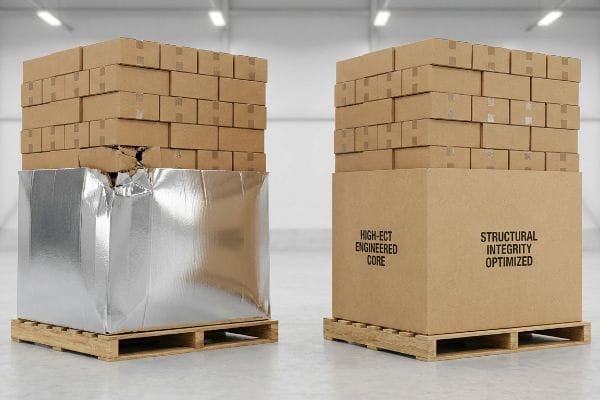
একটি সুন্দর ফয়েল-স্ট্যাম্প করা বাইরের অংশ সম্পূর্ণ মূল্যহীন, যদি ভেতরের খাঁজগুলোতে আর্দ্র গুদাম পরিবেশে টিকে থাকার জন্য প্রয়োজনীয় নির্দিষ্ট উল্লম্ব ঘনত্ব না থাকে।.
কসমেটিক ইসিটি ডাউনগ্রেড ফাঁদ
এই শিল্পে সবচেয়ে বিপজ্জনক পদ্ধতিগত ফাঁদটি তখন তৈরি হয় যখন কোনো ব্র্যান্ড শুধুমাত্র মূল কাঠামোর উপর প্রতি ইউনিটে $0.05 সাশ্রয় করার জন্য বোর্ডের ECT রেটিং নির্বিচারে কমিয়ে দিয়ে একটি RFQ জারি করে এবং সেই বাজেট ভারী প্লাস্টিক ল্যামিনেশনে পুনঃবন্টন করে। এই পদ্ধতিটি BCT (বক্স কম্প্রেশন টেস্ট) পারফরম্যান্সকে মারাত্মকভাবে ক্ষতিগ্রস্ত করে18।যদিও প্রতিযোগীরা যুক্তি দেখায় যে স্থায়ী ধাতু বা এক্রাইলিক ফিক্সচারগুলি বেশি শক্তিশালী, তারা সুবিধাজনকভাবে উপেক্ষা করে যে একটি খুচরা প্রচারণা মাত্র 6 থেকে 12 সপ্তাহ স্থায়ী হয়19।যখন উচ্চ-ECT ইঞ্জিনিয়ারড করোগেটেড কার্ডবোর্ড সেই নির্দিষ্ট প্রচারমূলক সময়ের জন্য প্রয়োজনীয় সঠিক ডায়নামিক লোড সাপোর্ট প্রদান করে, তখন কেন মেয়াদ শেষে নিষ্পত্তির জন্য বিশাল জরিমানা এবং ভারী মাল পরিবহনের খরচ বহন করা হবে?
আমার প্রতিষ্ঠানে, আমি নিয়মিতই এই বাজেটের অসামঞ্জস্যের পরিণাম দেখতে পাই। সম্প্রতি আমি একজন ক্লায়েন্টের একটি ফাইল হাতে পাই, যেখানে ক্রেতা একটি দামী ফয়েল ফিল্মের কথা বললেও কোরটিকে একটি দুর্বল 26ECT বোর্ডে নামিয়ে এনেছিল। আমার প্রাথমিক প্রি-প্রোডাকশন BCT অডিটের সময়, ফলাফল ছিল ভয়াবহ। টপ-লোড সিমুলেটরটি ১৮৭.৫ পাউন্ড (৮৫.০ কেজি) লোড দেওয়ার সাথে সাথেই, সুন্দর ধাতব পাশের প্যানেলগুলো দৃশ্যত বাইরের দিকে বেঁকে যায় এবং প্রচণ্ড জোরে ভেঙে যায়, যা সাথে সাথেই ভেতরের পুরো শেলফ সাপোর্টটিকে ক্ষতিগ্রস্ত করে। প্রকিউরমেন্ট টিম যখন আমাকে এক্সেল BOM (বিল অফ মেটেরিয়ালস) পরিবর্তন করার অনুমতি দেয়, তখন উপাদানটি নিজেই আসল কাজটি করে দেখায়। আমি মাইক্রোমিটারের রিডিং নিয়ে প্রমাণ করি যে একটি প্রিমিয়াম লুক আনার জন্য তাদের ওই বিশাল, দামী প্লাস্টিক ল্যামিনেশনের কোনো প্রয়োজন ছিল না। পরিবর্তে, আমি বেসটিকে একটি ভার্জিন 32ECT স্ট্যান্ডার্ড20- এবং একটি হাই-সলিড অ্যাকুয়াস কোটিং21, যা CNC মেশিনারিতে একটি কঠোর 0.02-ইঞ্চি (0.5 মিমি) টাইটার ফোল্ড টলারেন্স প্রয়োগ করে। অতিরিক্ত নকশাকৃত অপ্রয়োজনীয় অংশগুলো বাদ দিয়ে এবং বাজেটটি কাঠামোগত মূল অংশে ফিরিয়ে আনার মাধ্যমে, আমি নিশ্চিত করেছি যে মাস্টার কার্টনগুলো ত্রুটিহীনভাবে ডাবল-স্ট্যাকিং সহ্য করতে পারে, যার ফলে নষ্ট হয়ে যাওয়া ইনভেন্টরির কারণে খুচরা বিক্রেতাদের আনুমানিক ২৫% চার্জব্যাক হার প্রতিরোধ করা সম্ভব হয়েছে।
| মেট্রিক/বৈশিষ্ট্য | কসমেটিক ডাউনগ্রেড | কাঠামোগত কোর অপ্টিমাইজেশন |
|---|---|---|
| বাজেট ফোকাস | ভারী ফয়েল ল্যামিনেশন | কুমারী উচ্চ-ইসিটি বাঁশি22 |
| প্যালেট স্ট্যাকিং | পাশের প্যানেলে গুরুতর বাঁক23 | নিখুঁত বর্গাকার স্থিতিশীলতা |
| খুচরা সম্মতি | উচ্চ চার্জব্যাক ঝুঁকি24 | নিশ্চিত ESG অনুমোদন |
আমি এমন দৃষ্টিনন্দন বাক্স তৈরি করতে অস্বীকার করি, যেগুলোর আমার ডক থেকে আপনার খুচরা বিক্রেতার কাছে পৌঁছানোর উত্তাল যাত্রাপথ সহ্য করার মতো প্রয়োজনীয় অভ্যন্তরীণ কাঠামোগত শক্তি নেই।.
🛠️ হার্ভির ডেস্ক: আপনার প্রকিউরমেন্ট টিম কি গোপনে বাহ্যিক সৌন্দর্যবর্ধনের জন্য বোর্ডের শক্তি কমিয়ে দিচ্ছে, যা শেষ পর্যন্ত ওয়্যারহাউসে বিপুল পরিমাণ চার্জব্যাকের কারণ হবে? 👉 একটি বিনামূল্যে সাপ্লাই চেইন শক্তি বিশ্লেষণ করান ↗ — আমি ২৪ ঘণ্টার মধ্যে প্রতিটি কাঠামোগত ফাইল ব্যক্তিগতভাবে পর্যালোচনা করি।
উপসংহার
নিজস্ব প্যাকেজিং থেকে বিশেষজ্ঞ দ্বারা ডিজাইন করা কাস্টম করোগেটেড স্ট্রাকচারে রূপান্তর, পরিবহনের সময় ক্ষতি, আর্দ্রতার কারণে বেঁকে যাওয়া এবং খুচরা বিক্রেতার নিয়ম না মানার মতো সমস্যাগুলো গাণিতিকভাবে দূর করে । কঠোর প্রি-প্রোডাকশন টেস্টিং এবং নির্ভুল ক্যালিপার কম্পেনসেশনের মাধ্যমে আপনার ডিজাইনগুলোকে যাচাই করে, আমরা সেই ভ্রান্ত সাশ্রয়কে দূর করি যা গুদামেই লাভের মার্জিন নষ্ট করে দেয়। শুধুমাত্র গত মাসেই, আমার স্ট্রাকচারাল অডিট ৩টি ব্র্যান্ডকে ১০,০০০ ডলারেরও বেশি মূল্যের বাতিল হওয়া ইনভেন্টরি এবং খুচরা বিক্রেতার চার্জব্যাক এড়াতে সাহায্য করেছে। আপনি যদি লজিস্টিকসের চাপে আপনার কষ্টার্জিত মার্চেন্ডাইজিং ক্যাম্পেইনগুলোকে ভেঙে পড়তে দেখতে দেখতে ক্লান্ত হয়ে পড়েন, তবে আপনার পরবর্তী পণ্য সরবরাহ শৃঙ্খলে টিকে থাকবে তা নিশ্চিত করতে, আমাকে ব্যক্তিগতভাবে আমার ফ্রি স্ট্রাকচারাল ডাইলাইন অডিটের মাধ্যমে আপনার স্ট্রাকচারাল ফাইলগুলো পরীক্ষা করতে দিন ↗।
"উন্নত স্থায়িত্বের জন্য উদ্ভাবনী নকশার ঢেউখেলানো বোর্ডের প্যাকেজিং...", https://bioresources.cnr.ncsu.edu/resources/corrugated-board-packaging-with-innovative-design-for-enhanced-durability-during-transport/। দীর্ঘমেয়াদী খুচরা পরিবেশে কাঠামোগত অখণ্ডতার জন্য প্রয়োজনীয় মাত্রিক নির্ভুলতা সম্পর্কিত প্যাকেজিং ইঞ্জিনিয়ারিং মান থেকে নেওয়া প্রযুক্তিগত বিবরণ। প্রমাণের ভূমিকা: প্রযুক্তিগত আবশ্যকতা; উৎসের ধরণ: ইঞ্জিনিয়ারিং হ্যান্ডবুক। সমর্থন করে: সঠিক মাপ ও দীর্ঘস্থায়িত্ব নিশ্চিত করার জন্য একীভূত উৎপাদনের প্রয়োজনীয়তা। পরিধি টীকা: অসামঞ্জস্যের কারণে কাঠামোগত ব্যর্থতার হারের উপর আলোকপাত করে। ↩
"ফ্ল্যাট প্যাক বনাম অ্যাসেম্বলড রিজিড বক্স: কোন শিপিং...", https://www.linkedin.com/pulse/flat-pack-vs-assembled-rigid-boxes-which-shipping-method-ricky-fang-4m4oc। ফ্ল্যাট-শিপিং করা ঢেউখেলানো কার্ডবোর্ড এবং আগে থেকে অ্যাসেম্বল করা রিজিড কাঠামোর ঘন আয়তন ব্যবহারের তুলনামূলক নির্ভরযোগ্য লজিস্টিকস ডেটা। প্রমাণের ভূমিকা: পরিমাণগত মেট্রিক; উৎসের ধরণ: লজিস্টিকস শিল্প প্রতিবেদন। সমর্থন করে: এই দাবি যে ফ্ল্যাট-প্যাকিং মাল পরিবহনের খরচ ব্যাপকভাবে কমিয়ে দেয়। পরিধি সংক্রান্ত নোট: নির্দিষ্ট প্রদর্শনের আকারের উপর ভিত্তি করে ঘনত্বের অনুপাত পরিবর্তিত হতে পারে। ↩
"বার্স্টিং স্ট্রেংথ টেস্টিং", https://unitload.vt.edu/facilities/corrugated-packaging-lab/bursting-strength-testing.html। করোগেটেড ফ্লুটিং-এর গ্রেইন ডিরেকশনের অসামঞ্জস্য কীভাবে মুলেন টেস্টার দ্বারা পরিমাপকৃত বার্স্ট স্ট্রেংথকে প্রভাবিত করে, সে সম্পর্কিত প্রযুক্তিগত নথি। প্রমাণের ভূমিকা: প্রযুক্তিগত যাচাইকরণ; উৎসের ধরণ: প্যাকেজিং ইঞ্জিনিয়ারিং স্ট্যান্ডার্ড। সমর্থন করে: এই দাবি যে, গ্রেইনের অসামঞ্জস্যপূর্ণ দিক চাপের অধীনে কাঠামোগত ব্যর্থতার কারণ হয়। পরিধি সংক্রান্ত টীকা: নির্দিষ্ট ব্যর্থতার ওজন পেপারবোর্ডের গ্রেডের উপর নির্ভর করে। ↩
"ঢেউখেলানো বোর্ডের সংকোচনশীল শক্তির নিরূপণ...", https://pmc.ncbi.nlm.nih.gov/articles/PMC8467740/। শিল্প প্রকৌশলের ডেটা যা প্যাকেজিং উপাদানগুলিতে কঠোর মাত্রিক সহনশীলতাকে অ্যাসেম্বলি সময় এবং মেশিন ডাউনটাইম হ্রাসের সাথে সম্পর্কযুক্ত করে। প্রমাণের ভূমিকা: কর্মক্ষমতার মানদণ্ড; উৎসের ধরণ: উৎপাদন সংক্রান্ত শ্বেতপত্র। সমর্থন করে: নির্দিষ্ট সহনশীলতা এবং কো-প্যাকিং দক্ষতার উন্নতির মধ্যে সংযোগ। পরিধি সংক্রান্ত টীকা: CNC সরঞ্জামের নির্ভুলতার উপর ভিত্তি করে সহনশীলতা পরিবর্তিত হয়। ↩
"কেন ঢেউখেলানো কাগজের প্যাকেজিং জনপ্রিয়তা পাচ্ছে – পপডিসপ্লে", https://popdisplay.me/why-corrugated-packaging-is-gaining-momentum/। একটি নির্ভরযোগ্য বাহ্যিক উৎস কীভাবে এই দাবিকে সমর্থন করে তার সংক্ষিপ্ত ব্যাখ্যা। প্রমাণের ভূমিকা: পরিমাণগত যাচাইকরণ; উৎসের ধরণ: শিল্প সরবরাহ ব্যবস্থা বিষয়ক গবেষণা। সমর্থন করে: এই দাবি যে সমন্বিত প্রকৌশল মাল পরিবহনের সময়কার ফাঁকা স্থানের পরিমাণ উল্লেখযোগ্যভাবে হ্রাস করে। পরিধি সংক্রান্ত টীকা: পণ্যের জ্যামিতিক গঠনের উপর ভিত্তি করে কর্মদক্ষতার উন্নতি ভিন্ন হতে পারে। ↩
"ইন্টারলকিং স্ট্রাকচার ডিজাইন অ্যান্ড অ্যাসেম্বলি", https://rlab.cs.dartmouth.edu/publications/ZhangPhD.pdf। একটি প্রামাণ্য বাহ্যিক উৎস কীভাবে এই দাবিকে সমর্থন করে তার সংক্ষিপ্ত ব্যাখ্যা। প্রমাণের ভূমিকা: প্রযুক্তিগত যাচাইকরণ; উৎসের ধরণ: মেকানিক্যাল ইঞ্জিনিয়ারিং বা প্যাকেজিং ডিজাইন ম্যানুয়াল। সমর্থন করে: এই দাবি যে, সুনির্দিষ্ট ইঞ্জিনিয়ারিং অ্যাসেম্বলির ঘর্ষণ এবং জ্যামিং দূর করে। পরিধি টীকা: কাঠামোগত ডিজাইনে কঠোর টলারেন্স মান প্রয়োগকে বোঝায়। ↩
"একটি পাঁচ-স্তরবিশিষ্ট কাঠামোর নমন দৃঢ়তার বিশ্লেষণাত্মক নির্ধারণ...", https://pmc.ncbi.nlm.nih.gov/articles/PMC8777652/। উপাদানের বিকৃতি রোধ করার জন্য CAD ডাইলাইনে উপাদানের পুরুত্বের (ক্যালিপার) জন্য কীভাবে নির্দিষ্ট নমন ছাড়ের প্রয়োজন হয়, তার সংক্ষিপ্ত ব্যাখ্যা। প্রমাণের ভূমিকা: প্রযুক্তিগত স্পেসিফিকেশন; উৎসের ধরণ: প্যাকেজিং ইঞ্জিনিয়ারিং ম্যানুয়াল। সমর্থন করে: ক্যালিপার ক্ষতিপূরণের প্রয়োজনীয়তা। পরিধি টীকা: ফ্লুটেড ঢেউতোলা বোর্ডের ক্ষেত্রে প্রযোজ্য। ↩
"ভারবহন ক্ষমতার উপর ছিদ্রের প্রভাব অনুসন্ধান...", https://pmc.ncbi.nlm.nih.gov/articles/PMC11396172/। পরিবহনের সময় লাইনার ছিঁড়ে যাওয়ার মতো কাঠামোগত ব্যর্থতা কীভাবে প্যাকেজিংয়ের সংকোচন শক্তি এবং স্থিতিশীলতাকে ক্ষতিগ্রস্ত করে, তার সংক্ষিপ্ত ব্যাখ্যা। প্রমাণের ভূমিকা: যান্ত্রিক বৈশিষ্ট্য যাচাই; উৎসের ধরণ: কাঠামোগত প্যাকেজিং গবেষণা। সমর্থন করে: ত্রুটিপূর্ণ ডাইলাইন সম্পাদন এবং ব্যর্থতার মধ্যে সংযোগ। পরিধি টীকা: গতিশীল ভার বনাম স্থির ভারের উপর আলোকপাত করে। ↩
"Corugated Box Dimension Tolerance-এর সম্পূর্ণ নির্দেশিকা – Upack", https://www.upack.in/blog/post/complete-guide-on-corrugated-box-dimension-tolerance?srsltid=AfmBOoqGKLDj0PYwGteyM5VmHsDHfNVk00vu-OEJQj5YEYKIO6lj91EN। প্রযুক্তিগত ডকুমেন্টেশন যা ব্যাখ্যা করে কিভাবে কার্যকরী ফিট এবং অ্যাসেম্বলি নিশ্চিত করার জন্য উপাদানের পুরুত্বের (ক্যালিপার) উপর ভিত্তি করে ডাইলাইন স্লটগুলি অবশ্যই সামঞ্জস্য করতে হবে। প্রমাণের ভূমিকা: ইঞ্জিনিয়ারিং স্ট্যান্ডার্ড; উৎসের ধরণ: প্যাকেজিং ডিজাইন গাইড। সমর্থন করে: ১:১ অনুপাতের উপরে ক্যালিপার ক্ষতিপূরণের প্রয়োজনীয়তা। পরিধি নোট: করোগেটেড কার্ডবোর্ডের জন্য নির্দিষ্ট। ↩
"ভৌত বৈশিষ্ট্যের একটি তুলনামূলক পরীক্ষা...", https://repository.rit.edu/cgi/viewcontent.cgi?article=1299&context=theses। পুনর্ব্যবহৃত বোর্ডের তুলনায় ভার্জিন ক্রাফট হাইব্রিড উপকরণের স্থিতিস্থাপকতা, প্রসার্য শক্তি এবং কাঠামোগত বৈশিষ্ট্যের তুলনামূলক বিশ্লেষণ। প্রমাণের ভূমিকা: উপকরণের স্পেসিফিকেশন; উৎসের ধরণ: শিল্প প্রযুক্তিগত ডেটা শিট। সমর্থন করে: ভাঁজ করার সময় উপকরণের গ্রেডের আচরণের পার্থক্য। পরিধি নোট: উচ্চ-কর্মক্ষমতাসম্পন্ন কাঠামোগত প্যাকেজিংয়ের ক্ষেত্রে প্রযোজ্য। ↩
"ISTA বনাম ASTM টেস্টিং: প্যাকেজিং ও শিপিংয়ের জন্য কোনটি শ্রেয়", https://www.onyxpackaging.com/blog/ista-testing-vs-astm-testing.php। একটি প্রামাণ্য বাহ্যিক উৎস কীভাবে এই দাবিকে সমর্থন করে তার সংক্ষিপ্ত ব্যাখ্যা। প্রমাণের ভূমিকা: প্রযুক্তিগত পার্থক্য; উৎসের ধরণ: শিল্প মান। সমর্থন করে: কাঠামোগত ট্রানজিট বৈধতার জন্য উপাদান-স্তরের সার্টিফিকেটের অপর্যাপ্ততা। পরিধি নোট: বিশেষভাবে করোগেটেড বোর্ডের জন্য। ↩
"ট্রাকলোড শিপিংয়ের জন্য প্যাকেজিং কীভাবে অপ্টিমাইজ করবেন", https://packagingforindustry.com/how-to-optimize-packaging-for-truckload-shipping/। একটি নির্ভরযোগ্য বাহ্যিক উৎস কীভাবে এই দাবিকে সমর্থন করে তার সংক্ষিপ্ত ব্যাখ্যা। প্রমাণের ভূমিকা: পরিচালনগত দক্ষতা; উৎসের ধরণ: লজিস্টিকস হোয়াইটপেপার। সমর্থন করে: এই দাবি যে স্ট্রাকচারাল ইঞ্জিনিয়ারিং ফ্রেট ডেনসিটি অপ্টিমাইজ করে। পরিধি নোট: কন্টেইনার শিপিংয়ের ক্ষেত্রে প্রযোজ্য। ↩
"পূর্ণ-ক্ষেত্র স্ট্রেইন দ্বারা উন্নত নতুন এজ ক্রাশ টেস্ট কনফিগারেশন …", https://pmc.ncbi.nlm.nih.gov/articles/PMC8510352/। একটি নির্ভরযোগ্য সূত্র ব্যাখ্যা করে যে কীভাবে এজ ক্রাশ টেস্ট (ECT) পরিমাপ শুধুমাত্র উল্লম্ব সংকোচন শক্তি নির্দেশ করে এবং গতিশীল পীড়ন বা কাঠামোগত জ্যামিতিক ব্যর্থতা বিবেচনা করে না। প্রমাণের ভূমিকা: প্রযুক্তিগত যাচাইকরণ; উৎসের ধরণ: প্যাকেজিং ইঞ্জিনিয়ারিং স্ট্যান্ডার্ড। সমর্থন করে: এই দাবি যে উচ্চ ECT কাঠামোগত পতন প্রতিরোধ করে না। পরিধি নোট: ঢেউখেলানো উপকরণের উপর দৃষ্টি নিবদ্ধ করে। ↩
"LTL মাল পরিবহনের প্যাকেজিং করার সময় যে ৫টি ভুল এড়িয়ে চলবেন", https://www.shiproadrunnerfreight.com/5-mistakes-to-avoid-when-packaging-ltl-freight/। মাল পরিবহন লজিস্টিকস সম্পর্কিত শিল্প তথ্য, যখন প্যাকেজিং পরিবর্তনশীল ট্রানজিট প্রয়োজনীয়তা পূরণে ব্যর্থ হয়, তখন LTL চালানের সাধারণ ক্ষতির হারকে পরিমাপ করে। প্রমাণের ভূমিকা: পরিসংখ্যানগত বেঞ্চমার্কিং; উৎসের ধরণ: লজিস্টিকস শিল্প প্রতিবেদন। সমর্থন করে: দুর্বল প্যাকেজিংয়ের সাথে সম্পর্কিত পরিমাপকৃত আর্থিক ঝুঁকি। পরিধি সংক্রান্ত টীকা: নির্দিষ্ট হার পণ্যের বিভাগের উপর নির্ভর করে। ↩
"ISTA প্যাকেজিং টেস্টিং", https://www.intertek.com/performance-testing/packaging/ista/। ISTA টেস্টিং প্রোটোকলের যাচাইকরণ, যার জন্য ডাইনামিক সিমুলেশনের উদ্দেশ্যে প্যাকেজটিকে সম্পূর্ণরূপে অ্যাসেম্বল করে আসল পণ্য দিয়ে লোড করার প্রয়োজন হয়। প্রমাণের ভূমিকা: টেকনিক্যাল স্পেসিফিকেশন; উৎসের ধরণ: ইন্ডাস্ট্রি স্ট্যান্ডার্ড। সমর্থন করে: ডাইনামিক টেস্টিং-এ 3D উপস্থাপনার প্রয়োজনীয়তা। পরিধি নোট: ISTA 3A/3B স্ট্যান্ডার্ডের জন্য প্রযোজ্য। ↩
"কার্যপ্রণালীর পরিবর্তন ও উন্নয়ন", https://ista.org/procedure_changes_developmen.php। বাস্তব জগতের গণপরিবহন সহিংসতা অনুকরণে ব্যবহৃত ঘূর্ণনশীল পতন পরীক্ষা পদ্ধতির বর্ণনাকারী প্রযুক্তিগত নথি। প্রমাণের ভূমিকা: পদ্ধতিগত বিবরণ; উৎসের ধরণ: প্রযুক্তিগত ম্যানুয়াল। সমর্থন করে: ISTA সিমুলেশনে গতিজনিত পীড়নের প্রকৃতি। পরিধিগত টীকা: বিশেষভাবে পতন এবং অভিঘাত পরীক্ষার ক্ষেত্রে প্রযোজ্য। ↩
"পরীক্ষা পদ্ধতি – আন্তর্জাতিক নিরাপদ ট্রানজিট সংস্থা", https://ista.org/test_procedures.php। তুলনামূলক বিশ্লেষণ যা দেখায় কিভাবে স্ট্যাটিক বোর্ড পরীক্ষার তুলনায় ডাইনামিক সিমুলেশন ট্রানজিট ব্যর্থতার হার কমায়। প্রমাণের ভূমিকা: ফলাফল যাচাই; উৎসের ধরণ: প্রকৌশল সমীক্ষা। সমর্থন করে: এই দাবি যে ডাইনামিক ভ্যালিডেশন পেলোডের নিরাপত্তা উন্নত করে। পরিধি সংক্রান্ত টীকা: 'নিশ্চিত' কথাটিকে উল্লেখযোগ্য পরিসংখ্যানগত ঝুঁকি হ্রাস হিসাবে ব্যাখ্যা করা যেতে পারে। ↩
"BCT ও ECT পরীক্ষা: ঢেউতোলা বাক্সের শক্তি নিরূপণ", https://www.metropack.eu/definition/materials/corrugated-cardboard/ect-edge-crush-test-and-bct-box-compression-test-corrugated-box। একটি বোর্ডের ECT মান এবং তার ফলস্বরূপ BCT কাঠামোগত ক্ষমতার মধ্যে সরাসরি সম্পর্কের প্রযুক্তিগত ব্যাখ্যা। প্রমাণের ভূমিকা: প্রযুক্তিগত বৈধতা; উৎসের ধরণ: প্যাকেজিং ইঞ্জিনিয়ারিং স্ট্যান্ডার্ড। সমর্থন করে: এই দাবি যে ECT রেটিং কমালে বাক্সের সামগ্রিক শক্তি কমে যায়। পরিধি সংক্রান্ত টীকা: বাক্সের জ্যামিতি এবং ফ্লুটের ধরনের উপর ভিত্তি করে এর প্রয়োগ ভিন্ন হয়। ↩
"অস্থায়ী, আধা-স্থায়ী এবং স্থায়ী রিটেইল ডিসপ্লে", https://www.tphinc.com/custom-point-of-purchase-pop-pos-retail-store-displays-packaging-blog/temporary-semi-permanent-permanent-pallet-displays/। স্বল্পমেয়াদী প্রচারমূলক রিটেইল প্লেসমেন্টের সাধারণ সময়কাল নিশ্চিতকারী শিল্প মানদণ্ড। প্রমাণের ভূমিকা: বাজারের প্রেক্ষাপট; উৎসের ধরণ: রিটেইল লজিস্টিকস রিপোর্ট। সমর্থন করে: অস্থায়ী প্রদর্শনের জন্য স্থায়ী সরঞ্জাম ব্যবহারের বিরুদ্ধে যুক্তি। পরিধি সংক্রান্ত টীকা: পণ্যের বিভাগ অনুযায়ী সময়কাল ভিন্ন হতে পারে। ↩
"ফ্লুট গ্রেড, ইসিটি রেটিং এবং দেয়ালের পুরুত্ব ব্যাখ্যা ২০২৫", https://anchorbox.com/corrugated-box-strength/। এজ ক্রাশ টেস্ট (ইসিটি) রেটিং সম্পর্কিত প্রযুক্তিগত তথ্য, যা ২৬ইসিটি-র তুলনায় ৩২ইসিটি এবং বর্ধিত উল্লম্ব স্ট্যাকিং শক্তির মধ্যে সম্পর্ক দেখায়। প্রমাণের ভূমিকা: প্রযুক্তিগত স্পেসিফিকেশন; উৎসের ধরণ: প্যাকেজিং ইঞ্জিনিয়ারিং ম্যানুয়াল। সমর্থন করে: এই দাবি যে, ইসিটি বৃদ্ধি করলে ওপরের ভারে কাঠামোগত পতন প্রতিরোধ করা যায়। পরিধি সংক্রান্ত টীকা: প্রকৃত বিসিটি বোর্ডের গ্রেড এবং বাক্সের আকারের উপর নির্ভর করে। ↩
"জলীয় আবরণ কী? সুবিধা, প্রয়োগ এবং কেন...", https://millionpack.com/aqueous-coating/। খরচ, আকর্ষণীয় বাহ্যিক রূপ এবং উপাদানের কাঠামোগত অখণ্ডতার উপর প্রভাবের নিরিখে উচ্চ-কঠিন জলীয় আবরণ বনাম প্লাস্টিক ল্যামিনেটের তুলনামূলক বিশ্লেষণ। প্রমাণের ভূমিকা: উপাদানের বৈশিষ্ট্য বিশ্লেষণ; উৎসের ধরণ: শিল্প আবরণ বিষয়ক শ্বেতপত্র। সমর্থন করে: ল্যামিনেশনের একটি সাশ্রয়ী ও আকর্ষণীয় বিকল্প হিসেবে জলীয় আবরণের কার্যকারিতা। পরিধি সংক্রান্ত টীকা: সাবস্ট্রেটের ছিদ্রময়তার উপর কার্যকারিতা নির্ভর করে। ↩
"নিম্ন ফ্লুটিং গ্রেডের ঢেউখেলানো পেপারবোর্ড প্যাকেজের সংকোচন শক্তি...", https://pmc.ncbi.nlm.nih.gov/articles/PMC10054506/। ফ্লুটিং গ্রেড এবং এজ ক্রাশ টেস্ট (ECT) মানের উপর প্রযুক্তিগত নথি এই দাবিকে সমর্থন করে যে ভার্জিন ফাইবার উন্নততর স্ট্যাকিং শক্তি প্রদান করে। প্রমাণের ভূমিকা: প্রযুক্তিগত স্পেসিফিকেশন; উৎসের ধরণ: পদার্থ বিজ্ঞান জার্নাল। সমর্থন: ফ্লুটিং গুণমান এবং ভারবহন ক্ষমতার মধ্যে সম্পর্ক। পরিধি নোট: নির্দিষ্ট কাগজের গ্রেড অনুযায়ী কার্যকারিতা পরিবর্তিত হয়। ↩
"ভারী ভারে আপনার করোগেটেড বক্স কেন ব্যর্থ হচ্ছে – অরকন", https://orconind.com/why-corrugated-box-failing-under-heavy-loads/। কার্ডবোর্ডের ব্যর্থতার ধরণগুলির প্রকৌশলগত বিশ্লেষণে ব্যাখ্যা করা হয়েছে যে, কীভাবে অপর্যাপ্ত ইসিটি (ECT) উল্লম্ব প্যালেট লোডের অধীনে কাঠামোগত বিকৃতি এবং বাঁক সৃষ্টি করে। প্রমাণের ভূমিকা: ভৌত ঘটনা; উৎসের ধরণ: প্যাকেজিং ইঞ্জিনিয়ারিং গাইড। সমর্থন করে: ইসিটি (ECT) হ্রাসের ভৌত পরিণতি। পরিধির টীকা: নির্দিষ্ট প্যালেট লোডিং প্যাটার্নের উপর নির্ভরশীল। ↩
"প্যাকেজিংয়ের জন্য খুচরা বিক্রেতাদের সম্মতি নির্দেশিকা", https://diygroup.com/retail-vendor-compliance-guidelines-for-packaging-what-suppliers-need-to-know-before-the-next-po-ships/। খুচরা লজিস্টিকস মানগুলিতে ক্ষতিগ্রস্ত প্যাকেজিংয়ের জন্য সরবরাহকারীদের উপর আরোপিত আর্থিক জরিমানা (চার্জব্যাক) বিস্তারিতভাবে বর্ণনা করা হয়েছে, যা খুচরা সম্মতি মান পূরণে ব্যর্থ হয়। প্রমাণের ভূমিকা: শিল্প অনুশীলন; উৎসের ধরণ: লজিস্টিকস কমপ্লায়েন্স ম্যানুয়াল। সমর্থন করে: ত্রুটিপূর্ণ প্যাকেজিং কাঠামোগত পছন্দের অর্থনৈতিক প্রভাব। পরিধি নোট: বৃহৎ আকারের খুচরা বিতরণের জন্য নির্দিষ্ট। ↩