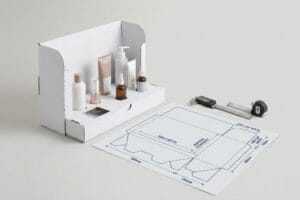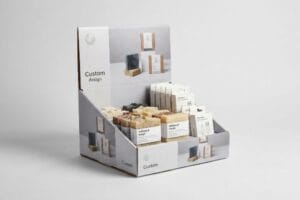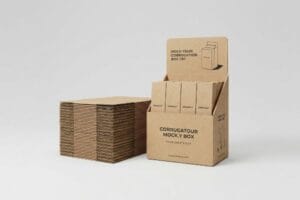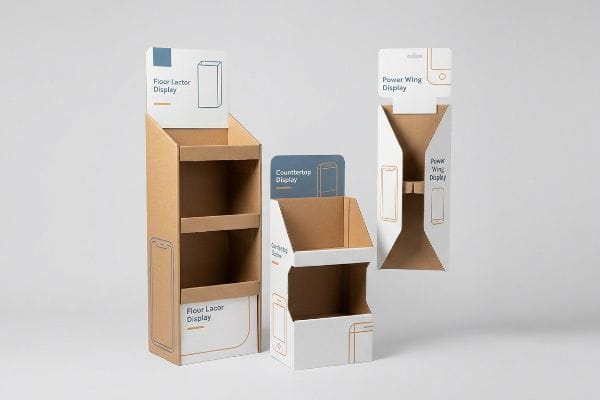
আপনি কি বিপুল পরিবহন খরচের ভারী ও অতিরিক্ত জটিল নকশার স্থায়ী স্থাপনার কারণে খুচরা ব্যবসায় আপনার বিশাল মুনাফা হারাচ্ছেন? সঠিক ভৌত কাঠামোই নির্ধারণ করে আপনার প্রচারণা সফল হবে নাকি লোকসানে পড়বে।.
সেরা ডিসপ্লে শৈলী বেছে নেওয়ার জন্য খুচরা বিক্রয় পরিবেশের সাথে আপনার পণ্যের মাপ মিলিয়ে নেওয়া প্রয়োজন। অস্থায়ী ফ্লোর বিন থেকে শুরু করে ইন্টারেক্টিভ কাউন্টারটপ ইউনিট পর্যন্ত সবচেয়ে কার্যকর ফর্ম্যাটগুলো কাঠামোগত অখণ্ডতা এবং দৃশ্যগত ভিন্নতার মধ্যে ভারসাম্য রক্ষা করে, যা নিশ্চিত করে যে আপনার ইনভেন্টরি মনোযোগ আকর্ষণ করবে এবং ভারী প্যালেটের চাপে ভেঙে না পড়ে কঠোর মাল পরিবহন ব্যবস্থা সহ্য করতে পারবে।.
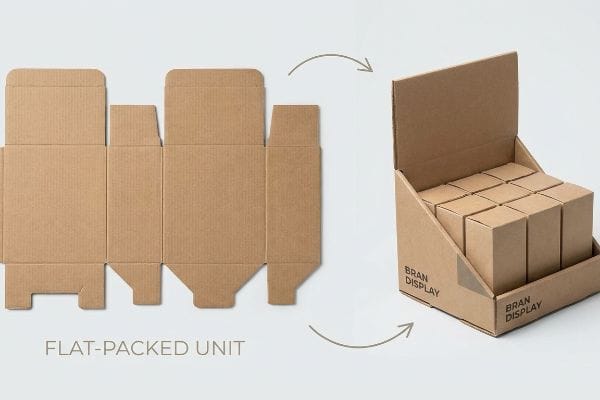
এই কাঠামোগুলোর যান্ত্রিক বাস্তবতা বোঝা ব্যাপক সরবরাহ শৃঙ্খল ব্যর্থতা প্রতিরোধ করে। সরঞ্জামগুলোকে নিছক বিপণন ব্যয় হিসেবে না দেখে, ক্রয়কারী দলগুলোকে অবশ্যই পণ্য পরিবহনের ঘনত্ব এবং কারখানার ভৌতবিদ্যার দৃষ্টিকোণ থেকে এগুলো বিশ্লেষণ করতে হবে।.
গ্রাহকদের কাছে কোন ধরণের ডিসপ্লে বেশি আকর্ষণীয় বলে মনে হয়?
সমতল, একঘেয়ে আয়তাকার বাক্সগুলো কি বড় দোকানের করিডোরে আপনার পণ্যগুলোকে অদৃশ্য করে দিচ্ছে?
আরও আকর্ষণীয় ডিসপ্লেগুলিতে গতিশীল বক্রতা এবং ডাই-কাট স্থাপত্যিক আকৃতি থাকে। এই দৃষ্টিবিভ্রমকারী ফর্ম্যাটগুলি দোকানের একঘেয়ে করিডোর ভেঙে দেয় এবং ক্রেতাদের মনোযোগ অবিলম্বে আকর্ষণ করে। উপরের স্তর ছিঁড়ে না গিয়ে জটিল কোণ সমর্থন করার জন্য, প্রকৌশলীরা নিখুঁত কাঠামোগত দৃঢ়তা বজায় রাখতে নির্দিষ্ট স্কোরিং ম্যাট্রিক্স দ্বারা উন্নত প্রিমিয়াম ঢেউতোলা বোর্ড ব্যবহার করেন।.
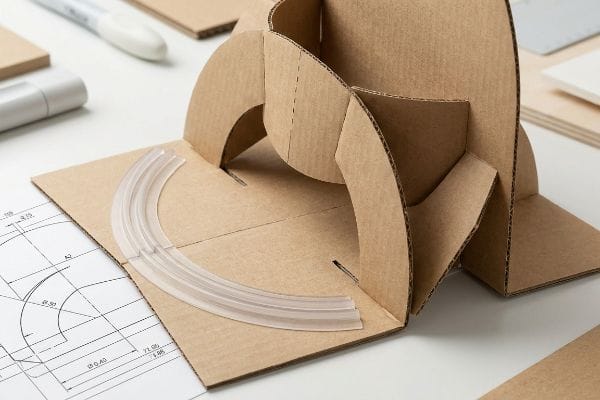
যদিও একটি সুগঠিত অ্যাক্রিলিক ইউনিট 3D সফটওয়্যার রেন্ডারিং-এ দেখতে চমৎকার লাগে, কিন্তু দেশজুড়ে আগে থেকে জোড়ানো শক্ত প্লাস্টিক পরিবহনের TCO (Total Cost of Ownership) হিসাব করতে গেলে তা এক দুঃস্বপ্নে পরিণত হয়।.
ক্রিজ ম্যাট্রিক্স বাস্তবতাকে ফাটাচ্ছে
যখন আমি ক্লায়েন্টের ডাইলাইন অডিট করি, তখন আমি ক্রমাগত দেখি যে প্রকিউরমেন্ট টিমগুলো সাধারণ এক্সেল স্প্রেডশিট কোটেশনের উপর নির্ভর করে, যা উপাদানের পদার্থবিদ্যাকে পুরোপুরি উপেক্ষা করে। তারা ধরে নেয় যে অ্যাডোবি ইলাস্ট্রেটরে আঁকা একটি সাধারণ ক্রিজ লাইন কারখানায় স্বয়ংক্রিয়ভাবে একটি নিখুঁত ৯০-ডিগ্রি ভাঁজে রূপান্তরিত হবে, এবং প্রতি ইউনিটে $০.০৫ সাশ্রয় করার জন্য নির্বিচারে বোর্ডের গ্রেড কমিয়ে দেয়। এটি একটি সাধারণ ফাঁদ যা এমনকি অভিজ্ঞ ক্রেতাদেরও কাবু করে ফেলে, যারা প্রকৃত উৎপাদন সহনশীলতার পরিবর্তে তাত্ত্বিক জ্যামিতির উপর নির্ভর করে ।
এটা শুধু তত্ত্ব নয়—আমি টেস্টিং ফ্লোরে এটা ঘটতে দেখি যখন ৩২ইসিটি ভার্জিন ক্রাফট লাইনারবোর্ডের একটি নতুন ব্যাচ আমাদের স্টিল রুল ডাই-এর উপর পড়ে। স্ট্রাইকের সময় যদি কাগজের ফাইবারের ভৌত প্রতিরোধ কঠোরভাবে নিয়ন্ত্রণ করা না হয়, তাহলে ভেতরের ফ্লুটগুলো প্রচণ্ডভাবে বেঁকে যায়। এই কাঁচা চাপের কারণে উপরের শিটটি ফেটে যায়, যার ফলে ঠিক প্রধান দেখার কোণের উপর ০.১১ ইঞ্চি (২.৮ মিমি) একটি এবড়োখেবড়ো ছেঁড়া দাগ তৈরি হয়। এর সমাধান করতে, আমি সাধারণ ফ্ল্যাট কাটিং প্লেটটি পুরোপুরি সরিয়ে ফেলি এবং নির্দিষ্ট সিএনসি (কম্পিউটার নিউমেরিক্যাল কন্ট্রোল) ফিমেল ম্যাট্রিক্স ক্রিজিং চ্যানেল স্থাপন করি। এই পলিমার চ্যানেলটি একটি অ্যানভিলের মতো কাজ করে, যা যান্ত্রিকভাবে ফাইবারের প্রসারণ নিয়ন্ত্রণ করে। ডাই-কাটারে এই সূক্ষ্ম সমন্বয় প্রয়োগ করার মাধ্যমে, আমরা লিথো-ক্র্যাকিং সম্পূর্ণরূপে প্রতিরোধ করি। এই কাঠামোগত পুনঃনকশাটি কো-প্যাকিং অ্যাসেম্বলি টিমকে কোনো রকম বাধার সম্মুখীন হতে দেয় না, যার ফলে প্রতি ইউনিটে তাদের অ্যাসেম্বলির সময় ৩৪ সেকেন্ড কমে আসে এবং একটি স্ট্যান্ডার্ড ক্যাম্পেইনে ক্লায়েন্টের আনুমানিক $২,৮০০ ম্যানুয়াল লেবার ফি সাশ্রয় হয়। একই সাথে, এটি আমাদের বিশাল ফ্ল্যাট-প্যাক লজিস্টিকস সুবিধাটিও বজায় রাখে, যার মাধ্যমে আমাদের করোগেটেড কার্ডবোর্ড সমতলভাবে পাঠানো যায় এবং প্রতিযোগীদের আগে থেকে অ্যাসেম্বল করা উপকরণের তুলনায় ৭০% কন্টেইনারের জায়গা বাঁচায়।.
| মেট্রিক/বৈশিষ্ট্য | সাধারণ পদ্ধতি | প্রকৌশলগত বাস্তবতা |
|---|---|---|
| উপাদানের ফলন | স্ট্যান্ডার্ড কাঠের প্লেট | পলিমার মহিলা ম্যাট্রিক্স |
| সহনশীলতার হার | ঢিলেঢালা চাক্ষুষ ফিট | ০.১১ ইঞ্চি (২.৮ মিমি) নির্ভুলতা2 |
| লজিস্টিকস প্রভাব | পূর্ব-সংযোজিত শিপিং | ৭০% মালামাল পরিবহনের স্থান সাশ্রয়3 |
ব্যাপক উৎপাদন শুরু হওয়ার আগেই এই সুনির্দিষ্ট প্রতিবন্ধকতাগুলো দূর করার জন্য আমি আমার কেন্দ্রটি তৈরি করেছি । নিখুঁত যন্ত্রপাতি সাধারণ কার্ডবোর্ডকে উচ্চ-কার্যক্ষমতাসম্পন্ন খুচরা বিপণন স্থাপত্যে রূপান্তরিত করে।
🛠️ হার্ভির ডেস্ক: আপনার জটিল ডাই-কাট ডিজাইনগুলো কি জোড়ার জায়গায় ফেটে যাচ্ছে এবং আপনার কো-প্যাকারদের কাজের গতি কমিয়ে দিচ্ছে? 👉 একটি স্ট্রাকচারাল ডাইলাইন অডিটের জন্য অনুরোধ করুন ↗ — আমি ২৪ ঘণ্টার মধ্যে প্রতিটি স্ট্রাকচারাল ফাইল ব্যক্তিগতভাবে পর্যালোচনা করি।
পণ্য প্রদর্শনের সর্বোত্তম উপায় কী?
পণ্যকে একেবারে নিচের তাকে রাখলে আপনার ব্র্যান্ড উপেক্ষিত হবেই।.
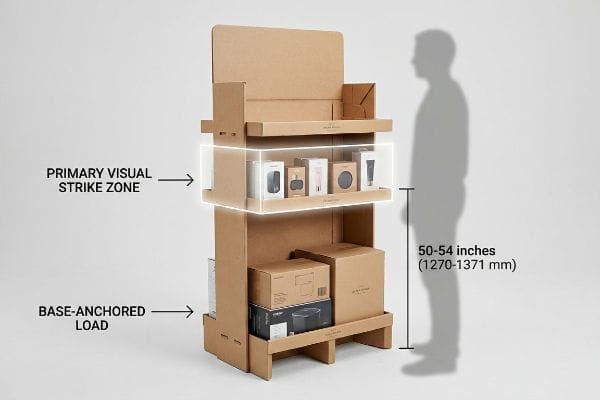
খুচরা পণ্যের সম্ভার প্রদর্শনের সেরা উপায় হলো উচ্চ মুনাফার পণ্যগুলোকে কৌশলগতভাবে প্রধান দৃষ্টিগোচর অঞ্চলে সাজিয়ে রাখা। এই পরিকল্পিত স্থাপত্য বিন্যাসটি মূল পণ্য স্তরগুলোকে মেঝে থেকে ঠিক ৫০ থেকে ৫৪ ইঞ্চি (১২৭০ থেকে ১৩৭১ মিমি) উপরে কঠোরভাবে স্থাপন করে, যা ক্রেতাদের জন্য বাধাহীন মিথস্ক্রিয়া নিশ্চিত করার পাশাপাশি পণ্যের সর্বোচ্চ ভৌত স্থিতিশীলতা নিশ্চিত করে।.
মানুষের স্বাভাবিক জৈব-যান্ত্রিকতার সাথে পণ্যসম্ভারকে সামঞ্জস্যপূর্ণ করলে তা কেবল দেখার জড়তা দূর করে, এবং নিষ্ক্রিয় পর্যবেক্ষণ সক্রিয় ক্রয়ে পরিণত হয়।.
মানুষের উচ্চতার হিট ম্যাপের কার্যপ্রণালী
শেলফে পণ্য দেখার কৌশল ব্যক্তিগত নকশার পছন্দের পরিবর্তে কঠোর আর্গোনমিক জ্যামিতির উপর নির্ভর করে। যখন একজন প্রকৌশলী মেঝেতে পণ্য প্রদর্শনের ব্যবস্থা, তখন তিনি দোকানের করিডোর ধরে হেঁটে যাওয়া একজন সাধারণ ক্রেতার দেখার সঠিক কোণ গণনা করেন। ৩০ ইঞ্চি (৭৬২ মিমি) চিহ্নের নিচেরাখা একটি ছায়াচ্ছন্ন অঞ্চলে প্রবেশ করে, যার ফলে ক্রেতাদের নিচু হতে হয়, যা তাৎক্ষণিকভাবে কেনার ক্ষেত্রে প্রতিবন্ধকতা তৈরি করে। অন্যদিকে, ৬০ ইঞ্চি (১৫২৪ মিমি) সীমার উপরেরাখলে সেটির ভরকেন্দ্র উপরে উঠে যায়, যা দোকানের মেঝের কম্পনে বিপজ্জনকভাবে উল্টে যাওয়ার ঝুঁকি তৈরি করে।
একটি সুনির্দিষ্ট শেলফ বিন্যাস ডিজাইন করার মাধ্যমে, স্ট্রাকচারাল ডিজাইনাররা একটি লক্ষ্যযুক্ত "হিট ম্যাপ" তৈরি করেন যা সবচেয়ে ভারী বেসলাইন পণ্যগুলিকে নিরাপদে নীচে স্থাপন করে, এবং একই সাথে প্রিমিয়াম SKU-গুলিকে সরাসরি ৫০ থেকে ৫৪ ইঞ্চি (১২৭০ থেকে ১৩৭১ মিমি) স্ট্রাইক জোনে৬। এই স্তরযুক্ত স্থাপত্যটি ভার-বহনকারী অভ্যন্তরীণ বিভাজক ব্যবহার করে উপরের ওজন৭ সরাসরি নীচে নামিয়ে আনে, যাতে মাঝের স্তরের শেলফগুলি বেঁকে না যায়। এই সুশৃঙ্খল পদ্ধতিটি অস্থায়ী ঢেউতোলা কার্ডবোর্ডের ফিক্সচারের জন্য প্রয়োজনীয় উচ্চ কাঠামোগত অখণ্ডতা বজায় রেখে খুচরা নিরাপত্তা নির্দেশিকা কঠোরভাবে মেনে চলে।
| মেট্রিক/বৈশিষ্ট্য | সাধারণ পদ্ধতি | প্রকৌশলগত বাস্তবতা |
|---|---|---|
| প্রাথমিক অঞ্চল | এলোমেলোভাবে তাক স্থাপন | ৫০-৫৪ ইঞ্চি (১২৭০-১৩৭১ মিমি)8 |
| মাধ্যাকর্ষণ কেন্দ্র | শীর্ষ-ভারী বন্টন | ভিত্তি-নোঙর করা লোড9 |
| ভোক্তা ঘর্ষণ | উচ্চ বাঁকানোর প্রয়োজনীয়তা | শূন্য-ঘর্ষণ চোখের স্তর |
আমার ইঞ্জিনিয়ারিং টিম প্রতিটি আগত ফাইলের ক্ষেত্রে এই উচ্চতার মাপকাঠিগুলো কঠোরভাবে প্রয়োগ করে। আমরা এমন ডিসপ্লে তৈরি করি যা নিরাপদে মনোযোগ আকর্ষণ করে।.
🛠️ হার্ভির ডেস্ক: আপনার বর্তমান মার্চেন্ডাইজার কি আপনার সর্বাধিক বিক্রিত SKU-গুলো সর্বোত্তম আর্গোনমিক ভিউয়িং অ্যাঙ্গেলের নিচে লুকিয়ে রাখছেন? 👉 একটি ফ্রি সাইটলাইন অ্যানালাইসিস করান ↗ — ১০০% গোপনীয়। আপনার অপ্রকাশিত রিটেইল ডিজাইনগুলো আমার কাছে সুরক্ষিত।
কার্যকর প্রদর্শন কী?
গুদামে সুন্দরভাবে ছাপা একটি ইউনিট নষ্ট হয়ে গেলে, তার কোনো বিক্রি হয় না।.
একটি কার্যকর ডিসপ্লে এমনভাবে গাণিতিকভাবে ডিজাইন করা হয়, যা রিটেইল কনভার্সন আনার আগে সাপ্লাই চেইনের কঠিন লজিস্টিকস মোকাবিলা করতে পারে। এই কাঠামোগত ফর্ম্যাটগুলো স্ট্যান্ডার্ড প্যালেটের জ্যামিতির মধ্যে নিজেদের অবস্থানকে কঠোরভাবে নির্দিষ্ট করে রাখে, যা নিশ্চিত করে যে পরিবহনের সময় ঢেউখেলানো কোণাগুলো প্রচণ্ড সংকোচনমূলক শক্তি শোষণ করে, এবং এর ফলে মারাত্মক বেঁকে যাওয়া ও গুদামে পণ্য বাতিলের মতো ব্যয়বহুল পরিস্থিতি সম্পূর্ণরূপে দূর হয়।.
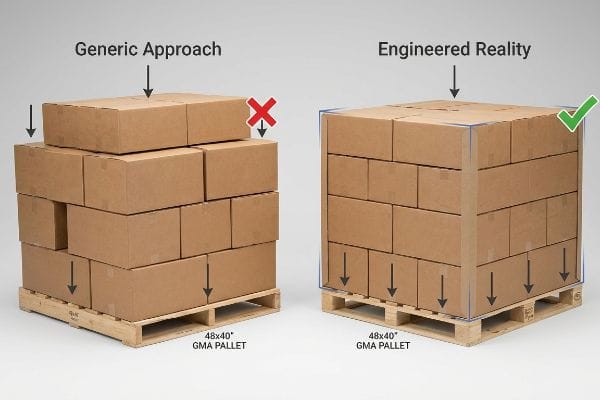
প্রকৃত কার্যকারিতা পরিমাপ করা হয় সমুদ্রপথে পরিবহনের সময় ইউনিটটি পণ্যটিকে কতটা ভালোভাবে রক্ষা করে, তার ওপর ভিত্তি করে; যা কোনো গ্রাহকের দোকানে পণ্যটি দেখার অনেক আগেই ঘটে।.
জিএমএ প্যালেট বাউন্ডিং বক্স লজিক
প্যাকেজিং সংকোচনের পদার্থবিদ্যা অনুসারে, একটি প্রধান শিপার তার বিসিটি (বক্স কম্প্রেশন টেস্ট) শক্তির প্রায় ৬০% পর্যন্ত শুধুমাত্র তার চারটি কোণার নিখুঁত উল্লম্ব বিন্যাস থেকে অর্জন করে। একটি কার্যকর ইউনিট এই যান্ত্রিক বাস্তবতাকে কাজে লাগায় স্ট্যান্ডার্ড জিএমএ (গ্রোসারি ম্যানুফ্যাকচারার্স অ্যাসোসিয়েশন) প্যালেট ব্যবহার করে, যেগুলোর পরিমাপ ঠিক ৪৮×৪০ ইঞ্চি (১২১৯×১০১৬ মিমি)। যখন ডিজাইনাররা এই সীমানার সাথে নিখুঁতভাবে মেলানোর জন্য কাঠামোটির নকশা করেন, তখন কাঠামোগত কোণাগুলো সরাসরি শক্তিশালী কাঠের ডেক ব্লকের উপর স্থাপিত হয়, যা উল্লম্ব খাঁজগুলোর ভারবহন ক্ষমতাকে সর্বোচ্চ করে তোলে।.
যদি কোনো ইউনিটের ভিত্তি প্যালেটের চেয়ে সামান্য বড় করে আঁকা হয়, তাহলে সেই কাঠামোগত কোণাগুলো প্রান্তের বাইরে ফাঁকা জায়গায়(10)এবং কোনো ভার বহন করে না। এর ফলে ঢেউখেলানো বোর্ডের অবলম্বনহীন মাঝের প্যানেলগুলোকে জোড়ায় জোড়ায় সাজানো কন্টেইনারের ওপরের দিকের ভারী ওজন বহন করতে হয়। এর ফলস্বরূপ, উপাদানটি তাৎক্ষণিকভাবে এবং মারাত্মকভাবে বেঁকে যায়। একটি সত্যিকারের কার্যকর রিটেইল সমাধান তৈরি করতে, CAD সফটওয়্যারকে অবশ্যই গাণিতিকভাবে একটি নেগেটিভ টলারেন্স(11), যা মাস্টার কার্টনটিকে সামান্য সংকুচিত করে ফর্কলিফটের সামান্য নড়াচড়া সত্ত্বেও 100% কোণার সাপোর্ট নিশ্চিত করবে।
| মেট্রিক/বৈশিষ্ট্য | সাধারণ পদ্ধতি | প্রকৌশলগত বাস্তবতা |
|---|---|---|
| বিসিটি শক্তি | অসমর্থিত কেন্দ্র প্যানেল | ১০০% উল্লম্ব কোণার লোড12 |
| পদচিহ্ন লক্ষ্য | ঝুলন্ত মাত্রা | ভিতরে ৪৮×৪০ ইঞ্চি (১২১৯×১০১৬ মিমি)13 |
| পরিবহন ঝুঁকি | উচ্চ বাঁকানোর সম্ভাবনা | শূন্য সংকোচন ব্যর্থতা |
আমি এমন CAD ফাইল অনুমোদন করতে অস্বীকার করি যা প্যালেটের জ্যামিতিক মানদণ্ড লঙ্ঘন করে। আপনার মার্জিন রক্ষা করার শুরুটা হয় গুদামের পদার্থবিদ্যাকে সম্মান করার মাধ্যমে।.
🛠️ হার্ভির ডেস্ক: ডাবল-স্ট্যাকড ট্রানজিটের সময় প্যালেটের সামান্য বাড়তি অংশ কি গোপনে আপনার নিচের স্তরের ইনভেন্টরিকে ক্ষতিগ্রস্ত করছে? 👉 একটি ফ্রেট ডেনসিটি অডিট দাবি করুন ↗ — মাঝখানে কোনো অ্যাকাউন্ট ম্যানেজার নেই। আপনি সরাসরি স্ট্রাকচারাল ইঞ্জিনিয়ারদের সাথে কথা বলবেন।
গ্রাহকদের আকর্ষণ করার জন্য আপনি কীভাবে পণ্য প্রদর্শন করেন?
বড় দোকানের আলোর নিচে আপনার কর্পোরেট লোগোগুলো কি বিবর্ণ ও ঘোলাটে দেখাচ্ছে?
গ্রাহকদের আকৃষ্ট করার জন্য পণ্য প্রদর্শনে ঘোলাটে হাফটোন প্রিন্টিংয়ের পরিবর্তে প্রাণবন্ত ও উচ্চ-কন্ট্রাস্টের ভিজ্যুয়াল ইঞ্জিনিয়ারিং প্রয়োজন। নির্মাতারা প্রচলিত চার-রঙা মিশ্রণের পরিবর্তে ছিদ্রযুক্ত মাধ্যমে ফ্লাডেড স্পট কালার পিগমেন্ট ব্যবহার করেন, যা নিখুঁত গ্রাফিক স্বচ্ছতা তৈরি করে। এই স্বচ্ছতা দোকানের তীব্র ফ্লুরোসেন্ট আলোর নিচেও স্পষ্টভাবে ফুটে ওঠে এবং সঙ্গে সঙ্গে গ্রাহকদের তীব্র মনোযোগ আকর্ষণ করে।.
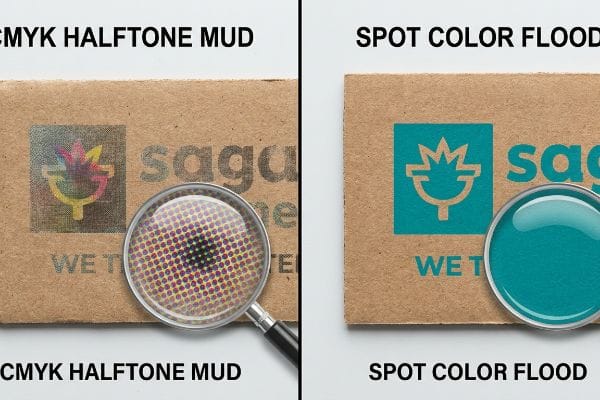
ধাতু এবং এক্রাইলিকের কাঠামো স্থায়ী রঙের বড়াই করে, কিন্তু এগুলো আপনাকে এমন ক্যাম্পেইনের জন্য ৩০০% বেশি অর্থ দিতে বাধ্য করে যা খুচরা বিক্রেতারা ৮ সপ্তাহের মধ্যেই ফেলে দেবে। একটি উচ্চ-ECT সম্পন্ন প্রকৌশলগত ঢেউখেলানো ডিসপ্লে আপনাকে একই রকম প্রিমিয়াম ভিজ্যুয়াল ইমপ্যাক্ট দেয়, অথচ এটি ফ্ল্যাট অবস্থায় পাঠানো হয়।.
CMYK হাফটোন মাড বিপর্যয়
যখন আমি বাইরের এজেন্সিগুলোর গ্রাফিক আর্টওয়ার্ক পর্যালোচনা করি, তখন আমি প্রায়শই দেখি ব্র্যান্ড টিমগুলো নিরেট কর্পোরেট লোগোগুলোকে সাধারণ CMYK (সায়ান, ম্যাজেন্টা, হলুদ, কালো) ফরম্যাটে রূপান্তর করছে, এই ভেবে যে প্রসেস প্রিন্টিং তাদের আলোকিত ডিজিটাল স্ক্রিনের সাথে নিখুঁতভাবে মিলে যাবে। তারা পুরোপুরি উপেক্ষা করে যে কীভাবে সিল না করা, কাঁচা পেপারবোর্ডে অপটিক্যাল ব্লেন্ডিং যান্ত্রিকভাবে ব্যর্থ হয়14।এটি একটি সাধারণ ফাঁদ যা এমনকি অত্যন্ত দক্ষ গ্রাফিক ডিজাইনারদেরও কাবু করে ফেলে, যাদের টেস্টলাইনারের ভৌত শোষণ হার15।
এটা শুধু তত্ত্ব নয়—গত বছর আমি এটা কঠিনভাবে শিখেছি। ২০২২ সালে, আমি আমার প্রধান প্যাকেজিং ইঞ্জিনিয়ার, মার্ককে, ক্লায়েন্টের আসল চার-রঙা ফাইলগুলো ব্যবহার করে একটি বিশাল এনার্জি ড্রিংক প্রচারণার জন্য একটি টেস্ট প্রিন্ট চালাতে বলেছিলাম। আমার এখনও মনে আছে, আমাদের প্রেস ফ্লোরে তীব্র ফ্লুরোসেন্ট সিলিং টিউবের নিচে দাঁড়িয়ে আমি একটি ঘোলাটে, দানাদার জগাখিচুড়ির দিকে তাকিয়ে ছিলাম, যা দেখতে ভেজা নিউজপ্রিন্টের মতো লাগছিল। ছিদ্রযুক্ত উপাদানটি ছোট ছোট ওভারল্যাপিং হাফটোন ডটগুলোকে অসমভাবে শোষণ করেছিল । আমি ডেনসিটোমিটারের রিডিংগুলো বের করে প্রমাণ করেছিলাম যে, এই ভিজ্যুয়াল সমস্যাটি ঠিক করার জন্য আমাদের দামী রিজিড প্লাস্টিক ব্যবহার করার প্রয়োজন নেই; আমাদের শুধু অপটিক্যাল ব্লেন্ডিং দূর করতে হবে। আমি ফাইলটি হাতে নিয়ে আমাদের স্পট কালার ফ্লাড প্রোটোকল প্রয়োগ করি এবং CMYK লেয়ারগুলোকে একটিমাত্র, নিখুঁতভাবে মিশ্রিত প্যানটোন স্পট ইঙ্ক দিয়ে প্রতিস্থাপন করি। প্রেসটি ঘন, নিখুঁতভাবে মসৃণ রঙের একটি ফ্লাড তৈরি করে। এই প্রিপ্রেস অ্যাডজাস্টমেন্টটি হাফটোন গ্রেইন সম্পূর্ণরূপে দূর করে দেয়, ২০ ফুট দূর থেকে হাই-কনট্রাস্ট ব্র্যান্ডের দৃশ্যমানতা বাড়িয়ে তোলে এবং খুচরা বিক্রেতাদের দ্বারা ব্যাপক প্রত্যাখ্যান পুরোপুরি প্রতিরোধ করে, যা ক্লায়েন্টের ইউনিট খরচ না বাড়িয়েই তাদের প্রচারমূলক সময়সীমা সুরক্ষিত করে।
| মেট্রিক/বৈশিষ্ট্য | সাধারণ পদ্ধতি | প্রকৌশলগত বাস্তবতা |
|---|---|---|
| ইঙ্ক স্ট্র্যাটেজি | CMYK হাফটোন ডট17 | একক স্পট রঙের বন্যা18 |
| ভিজ্যুয়াল ফলাফল | দানাদার এবং কর্দমাক্ত | উচ্চ-বৈসাদৃশ্য স্বচ্ছতা |
| খরচ দক্ষতা | উচ্চ প্রত্যাখ্যান হার | ১০০% প্রচারাভিযান গ্রহণযোগ্যতা19 |
আমি আমার প্রিপ্রেস বিভাগকে প্রতিটি গ্রাফিক স্তর পুঙ্খানুপুঙ্খভাবে পরিদর্শন করতে বাধ্য করি। আমরা শুধু ফাইল প্রিন্ট করি না; আমরা এমনভাবে রঙ তৈরি করি যা খুচরা বিক্রির পরিবেশেও টিকে থাকতে পারে।.
🛠️ হার্ভিস ডেস্ক: আপনার বর্তমান ঢেউখেলানো কার্ডবোর্ডের ঝাপসা, বিবর্ণ কালির কারণে কি আপনার ব্র্যান্ডের পরিচিতি হারিয়ে যাচ্ছে? 👉 একটি ফ্রি প্রিপ্রেস কালার অডিট করান ↗ — আমি ২৪ ঘণ্টার মধ্যে প্রতিটি স্ট্রাকচারাল ফাইল ব্যক্তিগতভাবে পর্যালোচনা করি।
আমি কিভাবে আমার পণ্য প্রদর্শন করব?
স্টোর ম্যানেজাররা কি আপনার বিশাল আকারের, পুরো করিডোর জুড়ে থাকা ফিক্সচারগুলো প্রত্যাখ্যান করছেন কারণ সেগুলো মেঝেতে অনেক বেশি জায়গা দখল করে?
আপনার পণ্য কার্যকরভাবে প্রদর্শন করার জন্য পুরো আইল জুড়ে পণ্য রাখার দাবির পরিবর্তে আংশিক প্যালেট জ্যামিতি ব্যবহার করা প্রয়োজন। কোয়ার্টার বা হাফ-প্যালেট ফুটপ্রিন্ট ডিজাইন করার মাধ্যমে, আপনি বড় দোকানের কঠোর স্থান সীমাবদ্ধতা অনায়াসে এড়িয়ে যেতে পারেন। এর ফলে রিটেইল ম্যানেজাররা আপনার ক্যাম্পেইন দ্রুত অনুমোদন করতে পারেন এবং সর্বোচ্চ মুনাফার জন্য তাদের সুনির্দিষ্ট ফ্লোর ডেনসিটি ফর্মুলার সর্বোচ্চ ব্যবহার নিশ্চিত করতে পারেন।.
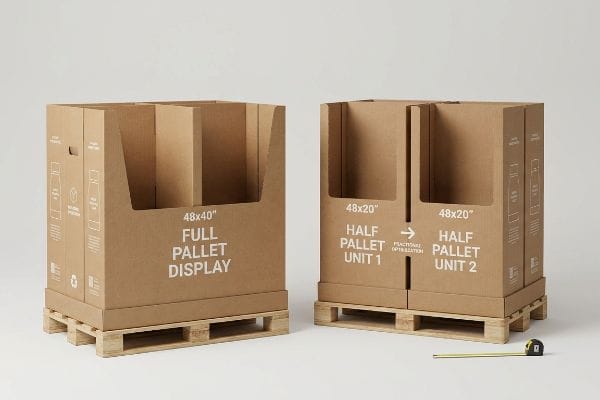
ভারী ঝালাই করা তারের র্যাকের মতো প্রতিযোগী উপকরণগুলোকে সহজে ছোট করা বা ভাঁজ করে প্যাক করা যায় না। উচ্চ-কর্মক্ষমতাসম্পন্ন ঢেউখেলানো কার্ডবোর্ড সহজেই কঠোর ভগ্নাংশগত সীমাবদ্ধতার সাথে খাপ খাইয়ে নেয় এবং আঞ্চলিক স্টোর ম্যানেজারদের অসন্তুষ্ট না করেই কাঠামোগত শক্তি প্রদান করে।.
তাত্ত্বিক 3D রেন্ডার ফাঁদ
আমার প্রতিষ্ঠানে আমি নিয়মিত দেখি যে ক্রয় দলগুলো কোনো রিটেইল ফ্লোরে বাস্তব প্রোটোটাইপ পরীক্ষা না করেই, নিখুঁত স্থানিক যুক্তি ধরে নিয়ে তৈরি তাত্ত্বিক 3D রেন্ডারের উপর নির্ভর করে। ব্র্যান্ড বিপণনকারীরা প্রায়শই তাদের সফটওয়্যারে একটি বিশাল ৪৮×৪০ ইঞ্চি (১২১৯×১০১৬ মিমি)আকারের ব্লক আঁকেন, এই ভেবে যে তাদের একটিমাত্র প্রচারণাকেই একটি সম্পূর্ণ কাঠের ভিত্তি দখল করতে হবে। এই 'হয় সবটা, নয়তো কিছুই না' ধরনের দৃষ্টিভঙ্গিটি অধিক জনসমাগমপূর্ণ দোকানের সংযোগস্থলের কঠোর আইনি এবং লজিস্টিক নিয়মগুলোকেউপেক্ষা, যার ফলে ক্রেতারা যখন পণ্যটি বাজারে আনার প্রস্তাব দেন, তখন ব্যাপক সমস্যার সৃষ্টি হয়।
এটা শুধু তত্ত্ব নয়—আমি টেস্টিং ফ্লোরে এমনটা ঘটতে দেখি যখন আমরা অপটিমাইজ না করা CAD ফাইল পাই। সম্প্রতি আমরা একটি ক্লাব স্টোরের। যখন আমি এর ডাইনামিক লোড এবং স্পেশিয়াল ফুটপ্রিন্ট পরিমাপ করি, তখন সম্পূর্ণ লোড করা অবস্থায় বেসটির ওজন ছিল ঠিক ১৮৭.৫ পাউন্ড (৮৫ কেজি), কিন্তু এর জন্য একটি আইলের শেষ প্রান্তের ১০০% জায়গার প্রয়োজন ছিল। স্টোর ম্যানেজাররা সঙ্গে সঙ্গে এটি প্রত্যাখ্যান করার হুমকি দেন, কারণ আইলের মূল্যবান জায়গা কঠোরভাবে রেশনিং করা হয়। আমি সাথে সাথে হস্তক্ষেপ করি এবং CAD জ্যামিতিটি পরিবর্তন করে কাঠামোগত গণিতকে কঠোরভাবে ৪৮×২০ ইঞ্চি (১২১৯×৫০৮ মিমি) মাপের হাফ প্যালেটে ভাগ করে দিই। কংসবার্গ সিএনসি টেবিলটি প্রমাণ করে যে, এই ভগ্নাংশীয় জ্যামিতিটি চতুর অভ্যন্তরীণ এইচ-ডিভাইডার ব্যবহার করে ডাইনামিক লোড ক্ষমতার ১০০% ধরে রেখেছে। এই স্থানিক বিভাজন কার্যকর করার মাধ্যমে, আমি নিশ্চিত করেছি যে দুটি ভিন্ন প্রচারমূলক ক্যাম্পেইন একটিমাত্র বেস নিখুঁতভাবে ব্যবহার করতে পারবে, যা ক্রেতাকে নির্বিঘ্নে সেরা জায়গা নিশ্চিত করতে সাহায্য করে এবং ক্লায়েন্টকে খুচরা দোকানে ১০০% প্রত্যাখ্যানের মতো একটি বিধ্বংসী পরিস্থিতি থেকে বাঁচায়।
| মেট্রিক/বৈশিষ্ট্য | সাধারণ পদ্ধতি | প্রকৌশলগত বাস্তবতা |
|---|---|---|
| খুচরা কৌশল | সম্পূর্ণ প্যালেট মনোপলি | ভগ্নাংশ উপবিভাগ |
| পদচিহ্নের বিশেষ | ৪৮×৪০ ইঞ্চি (১২১৯×১০১৬ মিমি)22 | ৪৮×২০ ইঞ্চি (১২১৯×৫০৮ মিমি)23 |
| ক্রেতার ফলাফল | উচ্চ প্রত্যাখ্যান সম্ভাবনা | নির্বিঘ্ন ব্যবস্থাপক অনুমোদন |
আমি এমনভাবে ডিসপ্লে ডিজাইন করি, যা ব্র্যান্ডের বিপণন লক্ষ্যের পাশাপাশি খুচরা বিক্রেতার দোকানের জায়গাকেও সমানভাবে গুরুত্ব দেয়। বুদ্ধিদীপ্ত জ্যামিতিক নকশাই তাকের উপর পণ্য স্থাপনের ক্ষেত্রে প্রতিবারই জয়ী হয়।.
🛠️ হার্ভির ডেস্ক: বড় আকারের স্টোরগুলোর কঠোর স্থানিক নিয়মকানুনের কারণে আপনার বড় আকারের মার্চেন্ডাইজার ডিজাইনগুলো কি আটকে যাচ্ছে? 👉 একটি স্থানিক অপ্টিমাইজেশন ব্লুপ্রিন্টের জন্য অনুরোধ করুন ↗ — ১০০% গোপনীয়। আপনার অপ্রকাশিত রিটেইল ডিজাইনগুলো আমার কাছে সুরক্ষিত।
পণ্য প্রদর্শন কী?
কার্ডবোর্ডের পুরুত্ব সঠিকভাবে পরিমাপ না করার কারণে আপনার বর্তমান কাঠামোটি কি মসৃণভাবে জোড়া লাগছে না?
পণ্য প্রদর্শন হলো ভোক্তাপণ্য প্রদর্শনের জন্য বিশেষ উপকরণ দিয়ে নির্মিত একটি অত্যন্ত নিখুঁত কাঠামোগত খুচরা সরঞ্জাম। নান্দনিক বিপণনের বাইরেও, এই ভৌত ইউনিটগুলো গাণিতিকভাবে উন্নত বেন্ড অ্যালাউন্স এবং ক্যালিপার কম্পেনসেশনকে সমন্বিত করে, যা কো-প্যাকিং লাইনে ত্রুটিহীন ইন্টারলকিং অ্যাসেম্বলি নিশ্চিত করার পাশাপাশি বিপুল গতিশীল ওজনের ভারও বহন করে।.
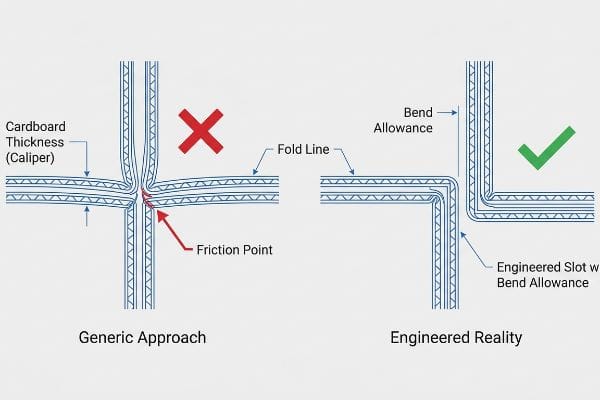
প্রকৃত উৎপাদন মানে শুধু কাগজের উপর কালি ছাপানো নয়; বরং পুরু ও অনমনীয় পদার্থকে বাঁকাতে বাধ্য করা হলে তারা কেমন আচরণ করবে, তা আগে থেকে অনুমান করা।.
বেন্ড অ্যালাউন্স ইঞ্জিনিয়ারিং নীতি
ইন্টারলকিং কার্ডবোর্ডের পেছনের কাঠামোগত প্রকৌশল মূলত ভৌত সরণ ব্যবস্থাপনার উপর নির্ভর করে। ডিজাইনাররা যখন সফটওয়্যারে ভাঁজ করার স্লট তৈরি করেন, তখন তাদের অবশ্যই বোর্ডের ভৌত ক্যালিপার (বেধ) বিবেচনায় রাখতে হয়। উদাহরণস্বরূপ, স্ট্যান্ডার্ড বি-ফ্লুট করোগেটেড কার্ডবোর্ডের পুরুত্ব প্রায় ০.১২ ইঞ্চি (৩ মিমি) ২৪। যখন এই পুরুত্বের একটি প্যানেলকে ৯০ ডিগ্রি কোণে ভাঁজ করতে বাধ্য করা হয়, তখন উপাদানটি নিজেই জায়গা দখল করে।
যদি এই বাইরের ব্যাসার্ধ 25 এর ক্ষতিপূরণের জন্য ডাইলাইনের গ্রহণকারী স্লটটি প্যারামেট্রিকভাবে প্রশস্ত না করা হয় , তবে ভৌত ঘর্ষণ নিয়ন্ত্রণ করা অসম্ভব হয়ে পড়ে। ছেদকারী ট্যাবগুলি মারাত্মকভাবে বেঁকে যাবে, যা অ্যাসেম্বলিতে বাধা দেবে এবং সঠিকভাবে লক হতে সম্পূর্ণ ব্যর্থ হবে। একটি কার্যকর স্ট্রাকচারাল ফাইল গাণিতিকভাবে সঠিক বেন্ড অ্যালাউন্স টলারেন্স প্রয়োগ করার জন্য নির্দিষ্ট CAD অ্যালগরিদম ব্যবহার করে 26। এটি নিশ্চিত করে যে যখন ফ্ল্যাট শিটগুলি কো-প্যাকিং সুবিধায় পৌঁছায়, তখন অ্যাসেম্বলি দলগুলি একটি ঘর্ষণহীন বিল্ডের অভিজ্ঞতা লাভ করে, যা উপাদানগুলিকে উপরের শিট ছিঁড়ে যাওয়া বা অভ্যন্তরীণ ফ্লুটগুলি ভেঙে যাওয়া ছাড়াই নিখুঁতভাবে বসতে দেয়।
| মেট্রিক/বৈশিষ্ট্য | সাধারণ পদ্ধতি | প্রকৌশলগত বাস্তবতা |
|---|---|---|
| ডাইলাইন গণিত | ১:১ স্লট ম্যাপিং | প্যারামেট্রিক ক্যালিপার প্রশস্তকরণ |
| সমাবেশ ঘর্ষণ | গুরুতর ট্যাব বাঁকানো | শূন্য-প্রতিরোধ লকিং |
| বাঁশির অখণ্ডতা | চূর্ণবিচূর্ণ অভ্যন্তরীণ দেয়াল | ১০০% কাঠামোগত শক্তি |
আমি ক্ষতিপূরণবিহীন ডাইলাইন আমার কাটিং টেবিলে পাঠাতে অস্বীকার করি। যে ডিসপ্লে মসৃণভাবে একত্রিত করা যায় না, তা প্রকৌশলের একটি সম্পূর্ণ ব্যর্থতা।.
🛠️ হার্ভির ডেস্ক: আপনার কো-প্যাকাররা কি ভুলভাবে গণনা করা স্লটগুলো জোর করে মেলাতে গিয়ে দামী ইনভেন্টরি নষ্ট করছে? 👉 একটি ফ্রি বেন্ড অ্যালাউন্স ক্যালকুলেটর নিন ↗ — মাঝখানে কোনো অ্যাকাউন্ট ম্যানেজার নেই। আপনি সরাসরি স্ট্রাকচারাল ইঞ্জিনিয়ারদের সাথে কথা বলবেন।
উপসংহার
সঠিক ডিসপ্লে স্টাইল বেছে নেওয়ার জন্য শুধু আকর্ষণীয় রঙ বাছাই করাই যথেষ্ট নয়; এর জন্য প্রয়োজন পণ্য পরিবহনের জ্যামিতিক মাপ, ভাঁজের সঠিক মাপ এবং মানুষের উচ্চতার সাথে সামঞ্জস্যপূর্ণ যান্ত্রিকতার কঠোর অনুসরণ, যা ভারসাম্যহীন ও ওপরের দিকে ভারী ফিক্সচারের কারণে আপনার খুচরা বিক্রির মুনাফা কমে যাওয়া রোধ করে। এই সুনির্দিষ্ট ইঞ্জিনিয়ারিং পর্যালোচনায় সম্প্রতি উৎপাদনের আগেই একটি বড় জাতীয় প্রচারণার জন্য ০.১১ ইঞ্চি (২.৮ মিমি) এর একটি মারাত্মক ত্রুটি ধরা পড়েছে। তাত্ত্বিক স্প্রেডশিটকে আপনার বাস্তব সরবরাহ শৃঙ্খল ধ্বংস করতে দেবেন না; আপনার পরবর্তী ক্যাম্পেইন যেন সমুদ্রগামী কন্টেইনার এবং খুচরা বিক্রির স্থান—উভয় ক্ষেত্রেই টিকে থাকে, তা নিশ্চিত করতে আমাকে ব্যক্তিগতভাবে আমাদের কঠোর ফ্রি স্ট্রাকচারাল ডাইলাইন অডিট ↗- এর মাধ্যমে আপনার স্ট্রাকচারাল ফাইলগুলো পরীক্ষা করতে দিন।
"কাস্টম প্যাকেজিং এবং প্রিন্টিং-এ ডাইলাইনের সম্পূর্ণ নির্দেশিকা", https://gentlever.com/dielines-for-custom-packaging-and-printing/। [একটি প্রযুক্তিগত প্যাকেজিং ইঞ্জিনিয়ারিং নির্দেশিকায় বিস্তারিতভাবে বর্ণনা করা হয় যে কীভাবে উপাদানের পুরুত্ব, বোর্ডের গ্রেড এবং কম্প্রেশন ফ্যাক্টরগুলো ভাঁজ করার সময় তাত্ত্বিক ডিজিটাল ডাইলাইন থেকে বিচ্যুতি ঘটায়]। প্রমাণের ভূমিকা: প্রযুক্তিগত বৈধতা; উৎসের ধরণ: শিল্প প্রকৌশল মান। সমর্থন করে: এই দাবি যে ডিজিটাল ডিজাইনগুলো বাস্তব উৎপাদনে নিখুঁতভাবে রূপান্তরিত নাও হতে পারে। পরিধি সংক্রান্ত টীকা: বিশেষভাবে ঢেউখেলানো বোর্ড সাবস্ট্রেটের জন্য। ↩
"সহনশীলতা — Werk24 নলেজ বেস", https://werk24.io/knowledge-base/tolerances। [একটি প্রযুক্তিগত স্পেসিফিকেশন শিট বা ইঞ্জিনিয়ারিং ম্যানুয়াল পলিমার ফিমেল ম্যাট্রিক্স দ্বারা অর্জিত সুনির্দিষ্ট সহনশীলতার মাত্রা যাচাই করবে]। প্রমাণের ভূমিকা: প্রযুক্তিগত স্পেসিফিকেশন; উৎসের ধরণ: ইঞ্জিনিয়ারিং ম্যানুয়াল। সমর্থন করে: ইঞ্জিনিয়ারড রিয়েলিটি পদ্ধতির নির্ভুলতা। পরিধি নোট: নির্দিষ্ট ম্যাট্রিক্স-ভিত্তিক উৎপাদনের ক্ষেত্রে প্রযোজ্য। ↩
"মডিউলার ডিসপ্লে: নমনীয় স্টোর ডিজাইনের জন্য খুচরা বিক্রেতার নির্দেশিকা", https://www.scubefixtures.com/blog/revolutionizing-store-layouts-and-customer-engagement-with-modular-displays। [লজিস্টিকস ডেটা বা ইন্ডাস্ট্রির কেস স্টাডিগুলো প্রি-অ্যাসেম্বলড থেকে ইঞ্জিনিয়ারড মডিউলার শিপিং-এ স্থানান্তরের ফলে মাল পরিবহনের পরিমাণে শতকরা হ্রাসের প্রমাণ দেবে]। প্রমাণের ভূমিকা: পরিমাণগত মেট্রিক; উৎসের ধরণ: লজিস্টিকস রিপোর্ট। সমর্থন করে: ইঞ্জিনিয়ারড ডিসপ্লের লজিস্টিকস প্রভাব। পরিধি নোট: প্রি-অ্যাসেম্বলড এবং অপটিমাইজড শিপিং-এর মধ্যে তুলনা। ↩
"খুচরা বিক্রেতারা কেন পণ্য চোখের সমান উচ্চতায় রাখেন? – পপডিসপ্লে", https://popdisplay.me/why-do-retailers-place-products-at-eye-level/। [প্রামাণ্য রিটেইল আর্গোনমিক্স গবেষণা সমর্থন করে যে এই উচ্চতার নিচের পণ্যগুলো দৃশ্যমানতা কমিয়ে দেয় এবং শারীরিক পরিশ্রম বাড়ায়, যা কেনার আগ্রহ হ্রাস করে]। প্রমাণের ভূমিকা: তথ্যগত যাচাইকরণ; উৎসের ধরণ: ভোক্তা আচরণ সমীক্ষা। সমর্থন করে: 'শ্যাডো জোন' বা 'ছায়া অঞ্চল'-এর উচ্চতা শনাক্তকরণ। পরিধি সংক্রান্ত টীকা: জনসংখ্যার গড় উচ্চতার উপর ভিত্তি করে পরিবর্তিত হতে পারে। ↩
"[পিডিএফ] টিভি – সুরক্ষার পাল্লা ভারী করা – পড়ে যাওয়া টিভি নিয়ে একটি পর্যালোচনা …", https://www.cpsc.gov/s3fs-public/pdfs/TV-hazard-report-January2015.pdf। [স্বতন্ত্রভাবে স্থাপিত খুচরা বিক্রয় সরঞ্জামের জন্য প্রকৌশলগত সুরক্ষা মানদণ্ড, ভরকেন্দ্রের পরিবর্তন এবং উল্টে যাওয়ার দুর্ঘটনা প্রতিরোধ করার জন্য ভারী বস্তুর উচ্চতার সীমা নির্ধারণ করে]। প্রমাণের ভূমিকা: প্রযুক্তিগত বিবরণ; উৎসের ধরণ: পেশাগত সুরক্ষা ম্যানুয়াল। সমর্থন: উঁচুতে রাখা ভারী জিনিসের অস্থিতিশীলতার ঝুঁকি। পরিধি সংক্রান্ত টীকা: ডিসপ্লে বেসের আকারের উপর নির্ভরশীল। ↩
"অধ্যায় ২: আপনার গ্রাহকদের জন্য একটি ডিসপ্লে উচ্চতা নির্বাচন", https://www.creativedisplaysnow.com/guides/understanding-the-retail-customer/chapter-2-how-to-choose-the-right-display-height-for-your-customers/। [রিটেইল আর্গোনমিক্স এবং ভোক্তা মনোবিজ্ঞানের জন্য শিল্প মানগুলি সাধারণত পণ্যের সাথে মিথস্ক্রিয়ার জন্য সর্বোত্তম চোখের স্তরের পরিসীমা নির্ধারণ করে]। প্রমাণের ভূমিকা: প্রযুক্তিগত স্পেসিফিকেশন; উৎসের ধরণ: রিটেইল মার্চেন্ডাইজিং হ্যান্ডবুক। সমর্থন করে: পণ্যের সর্বাধিক দৃশ্যমানতার জন্য শারীরিক উচ্চতা। পরিধি নোট: লক্ষ্য জনসংখ্যার গড় অনুসারে উচ্চতার পরিসীমা পরিবর্তিত হতে পারে। ↩
"ইন্টারেক্টিভ রিটেলের জন্য ডিসপ্লের কাঠামোগত নকশা …", https://www.bcipkg.com/display-structural-design-for-interactive-retail-displays/। [কোরুগেটেড প্যাকেজিং-এর জন্য কাঠামোগত প্রকৌশল নির্দেশিকা ব্যাখ্যা করে যে কীভাবে উল্লম্ব সাপোর্ট সিস্টেমগুলো শেলফের বিচ্যুতি রোধ করতে ওজন বন্টন করে]। প্রমাণের ভূমিকা: প্রযুক্তিগত কৌশল; উৎসের ধরণ: প্যাকেজিং ইঞ্জিনিয়ারিং ম্যানুয়াল। সাপোর্ট: অস্থায়ী ফিক্সচারের কাঠামোগত অখণ্ডতা। পরিধি নোট: বিশেষভাবে কার্ডবোর্ড এবং হালকা কম্পোজিট উপকরণের ক্ষেত্রে প্রযোজ্য। ↩
"গড় রিটেইল শেলফের উচ্চতা – গ্রেট নর্দার্ন ইনস্টোর", https://www.greatnortherninstore.com/2022/01/choosing-retail-display-height/। একটি আর্গোনমিক গবেষণা বা রিটেইল শিল্পের মান যা অধিকাংশ প্রাপ্তবয়স্ক ক্রেতাদের জন্য চোখের স্তরের সর্বোত্তম 'স্ট্রাইক জোন' নিশ্চিত করে। প্রমাণের ভূমিকা: প্রযুক্তিগত বিবরণ; উৎসের ধরণ: আর্গোনমিক গবেষণা। সমর্থন: প্রাথমিক অঞ্চলের উচ্চতা। পরিধি সংক্রান্ত টীকা: লক্ষ্যভুক্ত জনগোষ্ঠীর উচ্চতার উপর ভিত্তি করে পরিবর্তিত হতে পারে। ↩
"দেয়াল বা মেঝেতে গন্ডোলা শেল্ভিং কীভাবে সুরক্ষিত করবেন", https://www.millsshelving.com.au/how-to-secure-gondola-shelving-to-walls-or-floors/। বাণিজ্যিক ফিক্সচারের জন্য প্রকৌশল নির্দেশিকা যেখানে বলা হয়েছে যে, ভিত্তিমূলে ভারী ভার রাখলে স্থিতিশীলতা বাড়ে এবং উল্টে যাওয়া প্রতিরোধ করে। প্রমাণের ভূমিকা: নিরাপত্তা মান; উৎসের ধরণ: প্রকৌশল ম্যানুয়াল। সাপোর্ট: অভিকর্ষ কেন্দ্র বন্টন। পরিধি নোট: প্রাথমিকভাবে স্বতন্ত্র খুচরা ইউনিটের ক্ষেত্রে প্রযোজ্য। ↩
"বাক্সের সংকোচনের উপর প্যালেট ওভারহ্যাং-এর প্রভাবের পূর্বাভাস...", https://vtechworks.lib.vt.edu/items/a44b58f5-f8a2-4e60-b709-23a013411d58। [প্যাকেজিং ইঞ্জিনিয়ারিং-এর উপর প্রযুক্তিগত ডকুমেন্টেশন ব্যাখ্যা করে যে কীভাবে প্যালেট ওভারহ্যাং কর্নার পোস্টের উল্লম্ব ভারবহন ক্ষমতাকে বিলুপ্ত করে]। প্রমাণের ভূমিকা: কার্যপ্রণালী; উৎসের ধরণ: প্রযুক্তিগত ম্যানুয়াল। সমর্থন: কাঠামোগত অখণ্ডতার উপর অসামঞ্জস্যের প্রভাব। পরিধি নোট: বিশেষভাবে ডাবল-স্ট্যাকড লোডের ক্ষেত্রে। ↩
"প্যালেট ট্রে-র মাপ | কাস্টম প্যাকেজিং পণ্য", https://custom-packaging-products.com/pallet-tray-dimensions/। [খুচরা ডিসপ্লে ইঞ্জিনিয়ারিং-এর জন্য শিল্প মানদণ্ডগুলি পরিবহনের সময় কন্টেইনারগুলি যাতে প্যালেট বাউন্ডিং বক্সের মধ্যে থাকে তা নিশ্চিত করার জন্য নেগেটিভ টলারেন্স ব্যবহারের কথা উল্লেখ করে]। প্রমাণের ভূমিকা: মানদণ্ড; উৎসের ধরণ: শিল্প নির্দেশিকা। সমর্থন করে: লোড স্থিতিশীলতার জন্য ইঞ্জিনিয়ারিং সেরা অনুশীলন। পরিধি নোট: CAD-ভিত্তিক প্যাকেজিং ডিজাইনের ক্ষেত্রে প্রযোজ্য। ↩
"ঢেউখেলানো কার্ডবোর্ডের বাক্সের সংকোচন শক্তির প্রাক্কলন...", https://pmc.ncbi.nlm.nih.gov/articles/PMC8467740/। [প্যাকেজিং ইঞ্জিনিয়ারিং টেকনিক্যাল ম্যানুয়ালগুলোতে ব্যাখ্যা করা হয়েছে কীভাবে একটি ঢেউখেলানো বাক্সের কোণাগুলোর মধ্য দিয়ে উল্লম্বভাবে ভার স্থাপন করে এর বক্স কম্প্রেশন টেস্ট (BCT) শক্তি সর্বোচ্চ করা যায়]। প্রমাণের ভূমিকা: প্রযুক্তিগত যাচাইকরণ; উৎসের ধরণ: ইঞ্জিনিয়ারিং ম্যানুয়াল। সমর্থন: BCT শক্তির সর্বোত্তম ব্যবহার। পরিধি সংক্রান্ত টীকা: বিশেষভাবে ঢেউখেলানো কার্ডবোর্ডের কাঠামোগত অখণ্ডতার সাথে সম্পর্কিত। ↩
"৪৮×৪০" জিএমএ প্যালেট | বৃহত্তম প্যালেট প্রস্তুতকারক ও সরবরাহকারী", https://www.palletone.com/products/gma-pallets/। [একটি শিল্প মান নির্দেশিকা বা জিএমএ স্পেসিফিকেশন ডকুমেন্ট যাচাই করে যে উত্তর আমেরিকার আদর্শ প্যালেট ফুটপ্রিন্ট হলো ৪৮×৪০ ইঞ্চি]। প্রমাণের ভূমিকা: তথ্যগত যাচাই; উৎসের ধরণ: শিল্প মান। সমর্থন করে: আদর্শ প্যালেট ফুটপ্রিন্ট। পরিধি টীকা: উত্তর আমেরিকার লজিস্টিকসের জন্য প্রাথমিক মান। ↩
"ফ্যাকাশে CMYK রঙের সমস্যা [সমাধান করা হয়েছে] – স্ক্রিবাস ফোরাম", https://forums.scribus.net/index.php/topic,2560.0.html। [একটি প্রযুক্তিগত মুদ্রণ ম্যানুয়ালে ব্যাখ্যা করা থাকবে যে কীভাবে কাঁচা পেপারবোর্ডে আবরণের অভাবে কালি ছড়িয়ে পড়ে এবং অপটিক্যাল ব্লেন্ডিংয়ের জন্য প্রয়োজনীয় সুনির্দিষ্ট হাফটোন ডট ওভারল্যাপকে ব্যাহত করে।] প্রমাণের ভূমিকা: প্রযুক্তিগত যাচাইকরণ; উৎসের ধরণ: মুদ্রণ শিল্পের ম্যানুয়াল। সমর্থন: ছিদ্রযুক্ত পৃষ্ঠে প্রসেস প্রিন্টিংয়ের ব্যর্থতা। পরিধি নোট: আবরণহীন, শোষণকারী পৃষ্ঠের ক্ষেত্রে প্রযোজ্য। ↩
"জল শোষণ ক্ষমতা – কাগজ পরীক্ষা – স্মিদার্স", https://www.smithers.com/industries/packaging/manufacturers-and-users/packaging-materials-testing/paper-testing-other-properties/water-absorbency। [টেস্টলাইনার পেপারবোর্ডের জন্য উপাদান বিজ্ঞান সংক্রান্ত স্পেসিফিকেশন, প্রলিপ্ত কাগজের তুলনায় এর ছিদ্রতা এবং কালি অনুপ্রবেশের হারের উপর তথ্য প্রদান করবে।] প্রমাণের ভূমিকা: তথ্যভিত্তিক স্পেসিফিকেশন; উৎসের ধরণ: প্রযুক্তিগত ডেটা শিট। সমর্থন করে: গ্রাফিক স্যাচুরেশনের উপর সাবস্ট্রেটের ছিদ্রতার প্রভাব। পরিধি সংক্রান্ত টীকা: পুনর্ব্যবহৃত ঢেউখেলানো লাইনারবোর্ডের জন্য নির্দিষ্ট। ↩
"প্রিন্টিং-এ ডট গেইন কী? কারণ, প্রকারভেদ ও প্রতিকার | PSD", https://www.printingsuppliesdirect.com/blogs/news/what-is-dot-gain-in-printing?srsltid=AfmBOoo9_NpjWBg2Es6W9y22mkR_k-qRfZIncAVL_noip8yFYCEhaLs3। [প্রিন্টিং পদার্থবিদ্যার একটি নির্ভরযোগ্য উৎস ব্যাখ্যা করবে যে কীভাবে ছিদ্রযুক্ত উপাদানে কালির শোষণ এবং ডট গেইনের কারণে হাফটোন ডটগুলো ছড়িয়ে পড়ে ও একে অপরের উপর এসে পড়ে, যার ফলে ছবির তীক্ষ্ণতা কমে যায় এবং একটি ঘোলাটে ভাব দেখা দেয়]। প্রমাণের ভূমিকা: প্রযুক্তিগত ব্যাখ্যা; উৎসের ধরণ: প্রিন্টিং পাঠ্যপুস্তক বা শিল্প নির্দেশিকা। সাপোর্ট: কার্ডবোর্ডে CMYK প্রিন্টিং-এর ক্ষেত্রে ছবির মান হ্রাসের কারণ। পরিধি সংক্রান্ত টীকা: উচ্চ-শোষণক্ষম সাবস্ট্রেটের জন্য নির্দিষ্ট। ↩
"CMYK প্রিন্টিং গাইড: প্রাণবন্ত এবং নির্ভুল রঙ অর্জন করুন", https://www.epackprinting.com/support/understanding-cmyk/। [কারিগরি প্রিন্টিং গাইডগুলো ব্যাখ্যা করে যে কীভাবে CMYK হাফটোনিং ছোট ছোট বিন্দুর অপটিক্যাল মিশ্রণের উপর নির্ভর করে, যা নির্দিষ্ট রিটেইল আলোর পরিস্থিতিতে দানাদার বা ঘোলাটে দেখাতে পারে]। প্রমাণের ভূমিকা: প্রযুক্তিগত ব্যাখ্যা; উৎসের ধরণ: প্রিন্টিং ম্যানুয়াল। সমর্থন করে: সাধারণ কালি কৌশলের দৃশ্যগত সীমাবদ্ধতা। পরিধি নোট: বিশেষভাবে বড় আকারের রিটেইল সাইনেজের ক্ষেত্রে প্রযোজ্য। ↩
"CMYK বনাম স্পট কালার: কোন প্রক্রিয়াটি সেরা | প্রাইম লাইন প্যাকেজিং", https://www.primelinepackaging.com/blog/cmyk-spot-color/। [রঙ পুনরুৎপাদনের জন্য শিল্প মান নিশ্চিত করে যে, হাফটোন প্যাটার্নের তুলনায় স্পট কালার ফ্লাড একটি একক পূর্ব-মিশ্রিত কালি ব্যবহার করে উচ্চতর কনট্রাস্ট সহ একটি নিরেট, অভিন্ন রঙ অর্জন করে]। প্রমাণের ভূমিকা: প্রযুক্তিগত স্পেসিফিকেশন; উৎসের ধরণ: কালার ম্যানেজমেন্ট স্ট্যান্ডার্ড। সমর্থন করে: ইঞ্জিনিয়ারড প্রিন্ট সলিউশনের স্বচ্ছতা। পরিধি নোট: সীমিত সংখ্যক নির্দিষ্ট ব্র্যান্ড রঙ ব্যবহার করে এমন ডিজাইনের মধ্যে সীমাবদ্ধ। ↩
"খুচরা পণ্যের মান নিয়ন্ত্রণের একটি বিশদ নির্দেশিকা | সেফটি কালচার", https://safetyculture.com/topics/quality-assurance-and-quality-control/retail-quality-control। [খুচরা পণ্যের নিয়মকানুন প্রতিপালন সংক্রান্ত কেস স্টাডি থেকে জানা যায় যে, উচ্চ-মানের প্রিন্ট সম্পাদন ব্র্যান্ড-স্ট্যান্ডার্ড লঙ্ঘন কমিয়ে আনে, যার ফলে উপকরণ বাতিলের হার হ্রাস পায়]। প্রমাণের ভূমিকা: কর্মক্ষমতার পরিমাপক; উৎসের ধরণ: শিল্প প্রতিবেদন। সমর্থন করে: পেশাদার প্রিন্ট ইঞ্জিনিয়ারিংয়ের ব্যয়-দক্ষতা। পরিধি সংক্রান্ত টীকা: মান-নিয়ন্ত্রিত উৎপাদনের জন্য একটি মানদণ্ড উপস্থাপন করে। ↩
"খাদ্য শিল্পের প্যালেটের জন্য জিএমএ প্যালেট নির্দেশিকাগুলো কী কী?", https://www.kampspallets.com/gma-pallet-guidelines/। [গ্রোসারি ম্যানুফ্যাকচারার্স অ্যাসোসিয়েশন (জিএমএ)-এর শিল্প মান অনুযায়ী, উত্তর আমেরিকার শিপিং এবং ডিসপ্লে প্যালেটের জন্য ৪৮×৪০ ইঞ্চি ফুটপ্রিন্টকে সার্বজনীন মান হিসেবে সংজ্ঞায়িত করা হয়েছে]। প্রমাণের ভূমিকা: প্রযুক্তিগত বিবরণ; উৎসের ধরণ: শিল্প মান। সমর্থন: আদর্শ প্যালেট ফুটপ্রিন্টের মাত্রা। পরিধি টীকা: প্রাথমিক উত্তর আমেরিকান মান। ↩
"ADA অ্যাক্সেসিবিলিটি স্ট্যান্ডার্ডস – Access-Board.gov", https://www.access-board.gov/ada/। [ADA (Americans with Disabilities Act) এবং NFPA ফায়ার কোডের মতো প্রামাণ্য সরকারি প্রবিধানগুলি খুচরা পরিবেশে প্রবেশগম্যতা এবং জরুরি নির্গমনের জন্য ন্যূনতম আইল ক্লিয়ারেন্স নির্দিষ্ট করে]। প্রমাণের ভূমিকা: নিয়ন্ত্রক যাচাইকরণ; উৎসের ধরণ: আইনি কোড। সমর্থন: খুচরা স্থানের সীমাবদ্ধতার ন্যায্যতা। পরিধি নোট: নির্দিষ্ট বিষয়গুলি স্থানীয় এখতিয়ার অনুযায়ী পরিবর্তিত হতে পারে। ↩
"তাপ-প্রক্রিয়াজাত কাঠের জিএমএ প্যালেট – ৪৮ x ৪০" এইচ-১২৬০ – ইউলাইন", https://www.uline.com/Product/Detail/H-1260/Pallets/Heat-Treated-Wood-GMA-Pallet-48-x-40। [একটি নির্ভরযোগ্য লজিস্টিকস সূত্র নিশ্চিত করেছে যে, উত্তর আমেরিকার খুচরা ব্যবসা এবং শিপিং-এ ব্যবহৃত জিএমএ প্যালেটের আদর্শ মাপ হলো ৪৮×৪০ ইঞ্চি]। প্রমাণের ভূমিকা: প্রযুক্তিগত বিবরণ; উৎসের ধরণ: শিল্প মান। সমর্থন করে: সাধারণ খুচরা ডিসপ্লের জন্য ভিত্তিগত স্থান। পরিধি সংক্রান্ত টীকা: প্রধানত উত্তর আমেরিকার লজিস্টিকসের ক্ষেত্রে প্রযোজ্য। ↩
"প্যালেট ডিসপ্লের প্রকারভেদ: সম্পূর্ণ, অর্ধেক ও এক-চতুর্থাংশ – গ্রীনডট প্যাকেজিং", https://greendotpackaging.com/understanding-pallet-display-types-full-half-and-quarter-pallet-displays/। [খুচরা দোকানের ডিজাইন এবং স্থান ব্যবস্থাপনার নির্দেশিকাগুলো মেঝেতে জায়গার ব্যবহার কমাতে এবং দোকান ব্যবস্থাপকের অনুমোদন বাড়াতে ভগ্নাংশ বা অর্ধেক-প্যালেট ব্যবহারের সমর্থন করে]। প্রমাণের ভূমিকা: প্রযুক্তিগত বিবরণ; উৎসের ধরণ: খুচরা দোকানের ডিজাইন নির্দেশিকা। সমর্থন করে: সম্পূর্ণ প্যালেটের তুলনায় ভগ্নাংশ বিভাজনের কার্যকারিতা। পরিধির টীকা: নির্দিষ্টভাবে পয়েন্ট-অফ-পারচেজ ডিসপ্লে অপ্টিমাইজেশনের জন্য প্রযোজ্য। ↩
"[পিডিএফ] ঢেউখেলানো কাগজের বোর্ডের স্পেসিফিকেশন – ন্যাশনাল আর্কাইভস", https://www.archives.gov/files/preservation/storage/pdf/corrugated-board.pdf। [শিল্প প্যাকেজিং মান বি-ফ্লুট ঢেউখেলানো বোর্ডের নামমাত্র পুরুত্ব নির্দিষ্ট করে]। প্রমাণের ভূমিকা: প্রযুক্তিগত যাচাইকরণ; উৎসের ধরণ: শিল্প মান; সহায়ক: উপাদানের পুরুত্বের জন্য ক্যালিপার পরিমাপ। পরিধি নোট: প্রস্তুতকারকদের মধ্যে সামান্য পার্থক্য দেখা যায়। ↩
"বক্স টেমপ্লেট গাইড: কীভাবে নির্ভুল প্যাকেজিং ডাইলাইন ডিজাইন করবেন", https://gentlever.com/what-is-box-template-and-how-to-design/। [স্ট্রাকচারাল প্যাকেজিং ডিজাইনের উপর একটি প্রামাণ্য ইঞ্জিনিয়ারিং ম্যানুয়াল ব্যাখ্যা করে যে, উপাদানের বাইরের ব্যাসার্ধের উপর ভিত্তি করে স্লটের প্রস্থ সামঞ্জস্য করার মাধ্যমে কীভাবে অ্যাসেম্বলির ঘর্ষণ এবং বেঁকে যাওয়া প্রতিরোধ করা হয়]। প্রমাণের ভূমিকা: প্রযুক্তিগত যাচাইকরণ; উৎসের ধরণ: ইঞ্জিনিয়ারিং হ্যান্ডবুক। সমর্থন করে: ডাইলাইনে ব্যাসার্ধ ক্ষতিপূরণের প্রয়োজনীয়তা। পরিধি নোট: প্রধানত ঢেউখেলানো বোর্ড এবং পুরু-গেজ সাবস্ট্রেটের ক্ষেত্রে প্রযোজ্য। ↩
"বেন্ড অ্যালাউন্স আয়ত্ত করা: শিটে নির্ভুলতার চাবিকাঠি …", https://www.linkedin.com/posts/mechanicalcaddacademy_sheetmetaldesign-bendallowance-mechanicalengineering-activity-7307671501208469505-GJKs। [CAD সফটওয়্যার সরবরাহকারীদের প্রযুক্তিগত ডকুমেন্টেশনে নির্ভুল বেন্ড অ্যালাউন্স গণনা করার জন্য ব্যবহৃত গাণিতিক সূত্র এবং K-ফ্যাক্টর অ্যালগরিদমগুলির বিস্তারিত বিবরণ থাকে]। প্রমাণের ভূমিকা: প্রযুক্তিগত যাচাইকরণ; উৎসের ধরণ: সফটওয়্যার ডকুমেন্টেশন। সমর্থন করে: নির্ভুল টলারেন্সের জন্য গাণিতিক অ্যালগরিদমের ব্যবহার। পরিধি সংক্রান্ত টীকা: ব্যবহৃত নির্দিষ্ট CAD টুল এবং উপাদানের ধরনের উপর কার্যকারিতা নির্ভর করে। ↩