You spend weeks designing a beautiful retail campaign, only to find out your chosen materials end up in a landfill. The wrong finish completely ruins your brand's sustainability claims.
Yes. Standard cardboard counter displays are highly recyclable. However, their actual recyclability heavily depends on the specific surface laminations, chemical inks, and structural plastic fasteners used during manufacturing. Removing hidden plastics and synthetic coatings ensures your retail packaging meets strict curbside recycling standards.
But knowing the theory isn't enough when the factory machines start running and material chemistry comes into play.
What kind of cardboard cannot be recycled?
Not every piece of paperboard makes it through the recycling facility. Some decorative choices secretly turn your eco-friendly campaign into permanent waste.
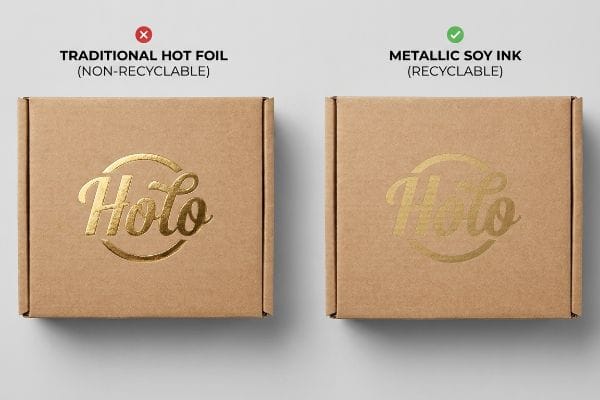
Cardboard cannot be recycled if it is heavily bonded with petroleum-based plastic laminates, metallic foils, or thick wax coatings. These mixed-material layers prevent the recycling pulper from separating the paper fibers, forcing the entire display unit to be rejected and sent straight to a landfill.
It is incredibly frustrating to see a massive retail rollout fail its sustainability audit over a simple aesthetic choice.
The Hidden Cost of Metallic Finishes
Many brand teams want their countertop units to pop under harsh retail lighting. The standard approach is applying traditional hot foil stamping to the headers and base lips. It looks premium on a computer screen and certainly catches the eye, but this standard practice creates a massive environmental blind spot1.
Even veteran marketing teams often fall into this mixed-material trap, assuming a little bit of foil will not hurt. I see this reality crash on the floor when clients request heavy gold stamping on a 32 ECT (Edge Crush Test) testliner. The physical reality is that traditional hot stamping permanently bonds a micro-layer of plastic and metal to the porous paper fibers. If you try to tear it, you hear the sharp, unnatural rip of the plastic film fighting the paper. Recycling facilities cannot separate this efficiently. Instead of using non-recyclable hot foil, I switch my clients to metallic soy inks or cold foil transfer processes that wash away cleanly during repulping. This micro-adjustment keeps the premium metallic shine but ensures the unit remains fully recyclable, saving brands from costly greenwashing backlash and preventing retailer rejection.
| Common Rookie Mistake | The Pro Fix | Retail-Floor Benefit |
|---|---|---|
| Hot foil stamping on headers | Switch to metallic soy inks | Eliminates recycling facility rejection2 |
| Heavy wax moisture barriers | Use water-based clear coatings | Maintains full repulpability3 |
| Adding plastic edge protectors | Engineered corrugated buffer zones | Saves 12s breakdown time4 |
I refuse to let a shiny logo ruin your environmental compliance. Swapping to eco-friendly metallic inks gives you the exact same visual disruption without poisoning the recycling batch.
🛠️ Harvey's Desk: Not sure if your current print finishes are ruining your sustainability claims? 👉 Send Me Your Artwork File ↗ — Direct access to my desk. Zero automated sales spam, I promise.
What is surprisingly not recyclable?
Sometimes the most luxurious finishes hide the worst environmental offenders. You might think you are ordering premium paper, but you are actually buying hidden plastic.
Surprisingly, soft touch cardboard is not recyclable. While it gives the board a premium, velvet-like texture, this standard finish requires a thin layer of polyurethane plastic film glued across the entire surface. This hidden plastic barrier makes the underlying corrugated board completely impossible to repulp and reuse.
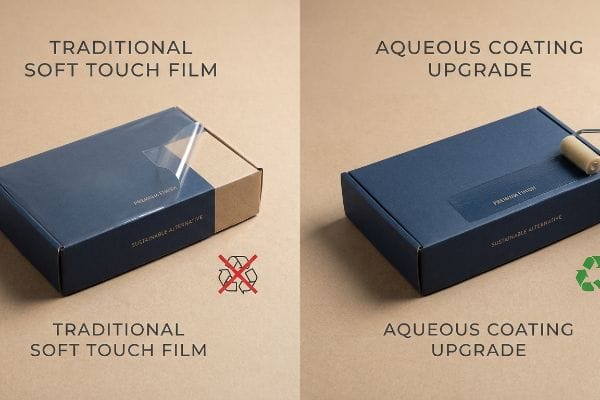
Discovering that your expensive, high-end packaging is actually destined for the trash is a harsh reality check.
The Velvet Texture Trap
Cosmetic and electronics brands love a matte, velvety texture for their POS (Point of Sale) registers. The industry default is to apply a traditional soft touch lamination5 over the printed top sheet. This provides a beautiful tactile experience that feels expensive and protects the ink from physical scuffing.
It is a common trap that catches even experienced procurement teams who just specify "soft touch" on their design brief. I see this issue constantly when brands try to push these units into eco-conscious chains. The physical problem is that traditional lamination uses an imperceptible plastic film. When I run my thumb across it on the factory floor, it feels beautifully smooth, but it creates immense surface tension that curls the board and completely kills recyclability. To fix this, I strictly swap the plastic film for a Soft Touch Aqueous Coating. This water-based liquid varnish cures instantly under UV (Ultraviolet) light, delivering the exact same velvet friction coefficient while remaining entirely curbside recyclable. This simple chemical swap prevents a massive sustainability downgrade and cuts out the raw material cost of plastic film, reducing your unit price by an estimated 8%.
| Common Rookie Mistake | The Pro Fix | Retail-Floor Benefit |
|---|---|---|
| Polyurethane soft touch film | Soft Touch Aqueous Coating | 100% curbside recyclable6 |
| Oil-based protective varnishes | Plant-based barrier coatings | Prevents toxic ink runoff7 |
| Thick plastic lamination | High-viscosity screen printing | Reduces raw material costs |
I always check the chemistry behind the texture. Upgrading to water-based aqueous coatings ensures your brand feels premium in the shopper's hand without failing the retailer's environmental audit.
🛠️ Harvey's Desk: Are your premium finishes secretly turning your displays into permanent landfill waste? 👉 Request A Material Audit ↗ — Download safely. My inbox is open if you have questions later.
Can cardboard go in a recycling bin?
Tossing a display away should be effortless for store staff. If it requires tools or specialized sorting, it is going straight into the standard dumpster.
Yes. Cardboard can safely go into a recycling bin, provided the display structure utilizes a mono-material design. If the unit relies on plastic clips, metal brackets, or heavy magnets for assembly, those non-paper components must be physically removed before the corrugated board can be recycled.
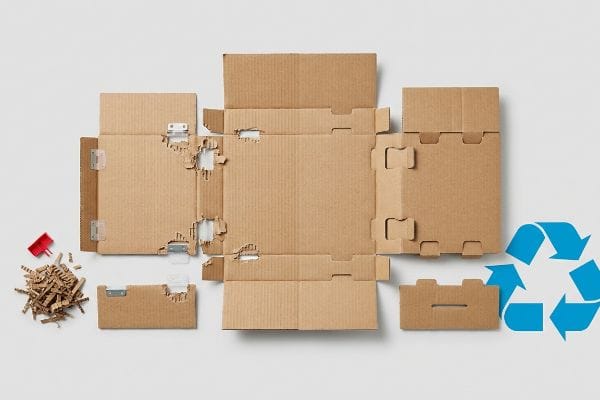
Relying on busy store clerks to dismantle complex mixed-material structures is a guaranteed path to failure.
The Mono-Material Mandate
When designing heavy-duty merchandising units, engineers often default to using plastic 'S-clips'or metal joiners to secure the shelves to the side panels. This approach guarantees structural stability for heavy CPG (Consumer Packaged Goods) products8. However, it creates a massive logistical headache at the end of the campaign's life cycle.
Even highly experienced structural teams often overlook the end-of-life breakdown process. Think of it like trying to separate a complex piece of heavy furniture before throwing it away. On the testing floor, I watch people struggle to pry standard plastic clips out of a C-flute board. You can literally hear the loud, messy tear of raw paper fibers as the plastic barb rips through the wall. If a clerk has to spend 5 minutes dismantling a unit, they will just throw the whole thing in the trash. I engineer around this by enforcing a strict mono-material mandate, replacing all plastic clips with origami-style interlocking paper tabs. By carefully calculating the 0.06 inches (1.5 mm) fold caliper9, these paper locks provide the exact same dynamic load strength. This eliminates the need for spare plastic hardware, saving you roughly $0.45 per unit10, and drops the teardown time to just 15 seconds so the entire structure drops right into the blue bin.
| Common Rookie Mistake | The Pro Fix | Retail-Floor Benefit |
|---|---|---|
| Using plastic S-clips | Origami-style paper locks11 | Zero teardown sorting required |
| Metal support bars | Double-layer corrugated spines12 | Eliminates hardware costs |
| Clear tape reinforcements | Friction-fit locking tabs13 | Prevents messy adhesive removal |
I design for the dump just as much as I design for the retail floor. If a clerk cannot crush the display flat and recycle it instantly, the engineering failed.
🛠️ Harvey's Desk: Does your current structural design rely on expensive plastic clips that ruin recyclability? 👉 Get A Structural Redesign ↗ — No forms that trigger endless sales calls. Just pure value.
Does cardboard are recyclable?
The core material might be natural, but the industrial processes applied to it dictate its final fate. True recyclability is engineered in the prepress department.
Yes. Cardboard materials are highly recyclable, but only if the manufacturing process utilizes eco-friendly consumables. Utilizing heavy metal-based inks or non-soluble glues contaminates the paper fibers during the pulping process, which physically prevents the structural board from being properly broken down and reused.

This isn't just a philosophical debate about being green—I see this happen on the testing floor when chemical interactions literally destroy the board's structural integrity.
The Chemical Ink Contamination Crash
Many procurement teams assume that as long as they order standard corrugated board, the final product is inherently green. They focus heavily on the FSC (Forest Stewardship Council) certification of the raw paper14 but completely ignore the chemistry of the CMYK (Cyan, Magenta, Yellow, Key/Black) inks15 applied to the top sheet.
In my facility, I routinely see beautifully designed flat-packs fail secondary compliance tests because of toxic ink limits. A common trap is using heavy, solvent-based inks to achieve maximum color density on unsealed board. When I measure the TIL (Total Ink Limit) on these jobs, they often push past 300%. The harsh physical reality is that these heavy solvent inks seep deeply into the porous E-flute material16. When this board eventually hits a recycling pulper, the toxic heavy metals contaminate the water bath17, turning the entire 1,500 lbs (680.3 kg) batch of pulp into hazardous waste. I fix this by strictly enforcing a Baby Safe Ink Standard, transitioning all graphics to soy-based inks and water-based varnishes. I pull the micrometer readings on the offset press to ensure we maintain a strict 260% TIL. By enforcing this tight prepress tolerance, I guarantee the ink washes away cleanly during recycling, preventing costly retailer compliance chargebacks and saving clients the headache of failing environmental audits.
| Common Rookie Mistake | The Pro Fix | Retail-Floor Benefit |
|---|---|---|
| Heavy solvent-based inks | Soy-based eco inks | Passes strict retail audits |
| Exceeding 300% ink limits | Capping TIL at 260% max18 | Prevents paper fiber saturation |
| Non-soluble chemical glues | Water-based PVA adhesives19 | Repulps cleanly in facilities |
I monitor chemical tolerances just as closely as structural ones. Shifting to plant-based inks guarantees your beautiful graphics will not secretly sabotage the recycling infrastructure.
🛠️ Harvey's Desk: Do you know the exact chemical makeup of the inks your current supplier is using on your retail campaigns? 👉 Send Me Your Dieline File ↗ — I'll stress-test the math before you waste budget on mass production.
Conclusion
You can ignore the chemistry of your finishes, but when toxic solvent inks and hidden plastic films force a recycling facility to reject your entire 5,000-unit campaign, triggering a devastating sustainability audit from major chains, it completely wipes out your project's profit margin. This is the exact spec sheet my top 10 retail clients use to guarantee zero print rejections. Stop guessing on chemical tolerances and let me personally audit your prepress artwork through my Free Dieline Audit ↗ to catch fatal environmental errors before mass production.
"Eco-Friendly Packaging: Is Hot Foil Stamping Recyclable?", https://www.shunhopackaging.com/blog/Eco-Friendly-Packaging-Is-Hot-Foil-Stamping-Recyclable. [Authoritative guides on paper recycling explain that metallic foils used in stamping contaminate the pulp and prevent fiber recovery]. Evidence role: technical verification; source type: recycling industry standard. Supports: the claim that foil stamping is an environmental blind spot. Scope note: Refers specifically to non-biodegradable, petroleum-based foils. ↩
"Cold Foil Printing: Stunning Metallic Finishes & Eco-Friendly", https://www.epackprinting.com/support/cold-foil-printing/. [An industry standard for paper recycling would confirm that soy-based metallic inks are compatible with repulping whereas plastic-based foils are contaminants. Evidence role: Technical validation; source type: Industry Standard. Supports: The recyclability of metallic soy inks. Scope note: Applies to standard municipal paper recycling streams.] ↩
"Wax Coatings for Paper Packaging Applications: Study of the … – PMC", https://pmc.ncbi.nlm.nih.gov/articles/PMC11926751/. [Technical documentation on pulp processing would demonstrate that water-based coatings dissolve during the repulping process unlike wax-based barriers. Evidence role: Technical validation; source type: Scientific Study. Supports: The efficiency of water-based coatings in recycling. Scope note: Effectiveness may vary by coating thickness.] ↩
"Boosting Product Protection During Transit with Edge Protectors", https://brownpackaging.com/boosting-product-protection-during-transit-with-edge-protectors/. [A logistics time-and-motion study would provide quantitative data on the time required to dismantle displays with plastic versus corrugated components. Evidence role: Quantitative proof; source type: Logistics Report. Supports: Operational efficiency of engineered buffers. Scope note: Average time based on standard display dimensions.] ↩
"Soft Touch Lamination: A Guide to Luxury Finishing", https://boxprintify.com/soft-touch-lamination/?srsltid=AfmBOoq6Kav-7vVZWuSBFfbwx6y0C94n2yGl5DcwWPgHBOk1-3QfChR5. [An industry printing or packaging guide should verify that soft touch lamination is the standard method for achieving velvet textures on retail displays]. Evidence role: industry standard confirmation; source type: trade publication. Supports: prevalence of non-recyclable finishes in retail displays. Scope note: focus on premium POS cardboard materials. ↩
"Soft Touch Lamination vs Aqueous Coating – Rigid Boxes", https://customrigidboxes.io/blog/soft-touch-lamination-vs-aqueous-coating/. [Authoritative recycling guidelines and pulping standards would verify if aqueous coatings can be completely removed during the de-inking process without contaminating the recycled fiber stream.] Evidence role: technical verification; source type: industry certification. Supports: recyclability of aqueous coatings. Scope note: depends on local municipality facility capabilities. ↩
"The influence of barrier pigments in waterborne barrier coatings on …", https://research.fs.usda.gov/treesearch/68194. [Environmental toxicology reports would demonstrate how plant-based resins sequester pigments and prevent the leaching of volatile organic compounds (VOCs) compared to oil-based varnishes.] Evidence role: technical validation; source type: peer-reviewed environmental study. Supports: reduction of chemical runoff. Scope note: effectiveness varies based on the specific ink chemistry used. ↩
"DISPLAY STRUCTURAL DESIGN FOR INTERACTIVE …", https://www.bcipkg.com/display-structural-design-for-interactive-retail-displays/. [An authoritative source on retail display engineering or material science would verify that metal or plastic fasteners provide the load-bearing capacity required for heavy consumer packaged goods that exceeds the limits of corrugated board alone]. Evidence role: Technical verification; source type: Engineering manual or industry standard. Supports: The technical justification for using non-recyclable fasteners in heavy-duty units. Scope note: Specific to high-weight capacity merchandising displays. ↩
"A Simplified Dynamic Strength Analysis of Cardboard Packaging …", https://pmc.ncbi.nlm.nih.gov/articles/PMC10385285/. [Packaging engineering standards for corrugated board provide the calculated load-bearing capacity associated with specific fold calipers]. Evidence role: technical validation; source type: engineering manual. Supports: the efficacy of paper locks as a structural alternative to plastic. Scope note: specific to C-flute dimensions. ↩
"Plastic Corrugated Display Bracket Clips – Pack of 100", https://www.harrisonproducts.com/products/plastic-corrugated-display-bracket-clips-pack-of-100/?srsltid=AfmBOoogmvps0XcA0Gz5-IrZrqovQEEcWOXmEc_C67hqqTmI6l2nYc4C. [Industry cost benchmarks for display components provide an average price point for plastic fastening hardware]. Evidence role: financial verification; source type: procurement report. Supports: the estimated cost savings per unit. Scope note: values fluctuate based on material grade and volume. ↩
"This piece of paper could revolutionize human waste", https://www.youtube.com/watch?v=BxVGLdMR_8A. [An authoritative source on sustainable packaging would explain how foldable paper locking mechanisms enable mono-material construction, removing the need for sorting. Evidence role: technical validation; source type: industry white paper. Supports: mono-material efficiency. Scope note: applicable to cardboard retail displays.] ↩
"Bending stiffness of unsymmetrical multilayered corrugated board", https://bioresources.cnr.ncsu.edu/resources/bending-stiffness-of-unsymmetrical-multilayered-corrugated-board-influence-of-boundary-conditions/. [Structural engineering data for packaging would confirm if reinforced corrugated cardboard provides sufficient load-bearing capacity to replace metal hardware. Evidence role: structural verification; source type: materials science handbook. Supports: hardware elimination. Scope note: limited by maximum load specifications.] ↩
"The Ultimate Guide to Eco-Friendly Packaging Tape – EcoEnclose", https://www.ecoenclose.com/blog/the-ultimate-guide-to-eco-friendly-packaging-tape?srsltid=AfmBOoqswRNMDj0yC4tw5gFNiPGwzoofsicJnqQtM4jL5-rcOSZRe9TR. [Recycling industry guidelines would specify how friction-fit designs reduce adhesive contamination during the paper pulping process. Evidence role: environmental impact verification; source type: recycling industry standard. Supports: ease of recycling. Scope note: focuses on elimination of tape.] ↩
"What the FSC Labels Mean | Forest Stewardship Council", https://fsc.org/en/label. [An authoritative source on sustainable forestry defines the standards for FSC certification and how it verifies the sustainable origin of raw paper fibers]. Evidence role: definition; source type: industry standard. Supports: the premise that procurement teams use FSC as a primary indicator of green materials. Scope note: FSC focuses on harvesting and sourcing, not the chemical processing of the final board. ↩
"Removal of fillers and chemical reagents from waste paper for its …", https://pmc.ncbi.nlm.nih.gov/articles/PMC12662857/. [Technical research on papermaking explains how specific pigments and binders in CMYK ink sets can contaminate paper fibers or interfere with the de-inking process during pulping]. Evidence role: technical mechanism; source type: peer-reviewed study. Supports: the claim that ink chemistry determines the actual recyclability of corrugated board. Scope note: effects vary between petroleum-based and soy-based ink formulations]. ↩
"Corrugated Box Printing Evolution with Aqueous Inks", https://splashjet-ink.com/evolution-of-aqueous-packaging-inks-a-smarter-approach-to-corrugated-box-printing/. [Material science data on corrugated board porosity explains the penetration depth of solvent-based inks compared to water-based alternatives]. Evidence role: technical specification; source type: industrial packaging guide. Supports: the physical mechanism of ink seepage into E-flute. Scope note: assumes unsealed board. ↩
"Food packaging from recycled papers: chemical, physical …", https://pmc.ncbi.nlm.nih.gov/articles/PMC9576889/. [Scientific studies on paper pulping demonstrate how heavy metal pigments from industrial inks can contaminate recycled water and sludge]. Evidence role: factual support; source type: environmental science journal. Supports: the impact of toxic inks on recycling batches. Scope note: refers specifically to non-biodegradable heavy metal inks. ↩
"Total Area Coverage for Uncoated Papers | PrintPlanet.com", https://printplanet.com/threads/total-area-coverage-for-uncoated-papers.3349/. [Technical printing guides define the Total Ink Limit (TIL) threshold to prevent ink from over-saturating the substrate and impeding drying or recycling]. Evidence role: technical specification; source type: printing industry manual. Supports: limits for preventing fiber saturation. Scope note: Specific to absorbent cardboard stocks. ↩
"Repulpable Silicone Release Liner Paper with Dissolvable Layer", https://wmich.edu/research/repulpable-silicone-release. [Material science and waste management studies confirm that water-based Polyvinyl Acetate (PVA) glues are more easily broken down during the hydropulping process than non-soluble chemical glues]. Evidence role: technical specification; source type: waste management research. Supports: clean repulping in recycling facilities. Scope note: Applicable to standard industrial pulping processes. ↩