
تستنزف العلامات التجارية ميزانياتها عندما تتجاهل خططها التسويقية آليات البيع بالتجزئة الأساسية. فالمنتج الرائع لا قيمة له إن تعارض مع عمليات المتجر وفشل في جذب الزبائن.
تُعدّ استراتيجية التسويق في قطاع التجزئة مخططًا شاملاً يُحدد كيفية عرض المنتجات وتسعيرها والترويج لها داخل المتاجر الفعلية. وهي تُنسق بين لوجستيات سلسلة التوريد وتنفيذ عمليات البيع، مما يضمن اندماج الحملات بسلاسة في مختلف أنظمة التجزئة لتحقيق أقصى قدر من التحويلات العفوية، وكفاءة استخدام المساحات، وقيمة العلامة التجارية بشكل عام.

لكن معرفة تعريفات الكتب الدراسية لن تنقذك عندما يصطدم عرضك بالواقع القاسي لأرضية متجر كبير.
ما هي خمس استراتيجيات تسويقية يستخدمها تجار التجزئة؟
لا يقتصر التسويق على الأعمال الفنية الجميلة فحسب، بل يتعلق الأمر بالبقاء في النظام البيئي التجاري.
تتضمن خمس استراتيجيات تسويقية يستخدمها تجار التجزئة تحسين عرض المنتجات، والتسعير الترويجي الديناميكي، والتأثير البصري في نقاط البيع، وإدارة المخزون المكانية، والتسويق المتبادل المحلي. تضمن هذه الأطر الأساسية توافق المنتجات المادية تمامًا مع الخدمات اللوجستية للمستودعات، وتصميمات المتاجر، وأنماط تنقل المتسوقين في الواقع العملي، وذلك لتحقيق أقصى قدر من المبيعات اليومية.

إن الانتقال من عرض تسويقي نظري إلى هيكل مادي يتطلب توافقاً تجارياً صارماً.
مواءمة عناصر المزيج التسويقي الأربعة مع الترويج المادي
كثيراً ما تُطلق العلامات التجارية الجديدة منتجاتها مُفترضةً أن العبوة الجذابة بصرياً ستبيع نفسها تلقائياً. تتجاهل هذه العلامات تماماً آليات العمل الأساسية لعناصر المزيج التسويقي الأربعة - المنتج، السعر، التوزيع، الترويج - وكيفية تطبيقها على مختلف أنواع المتاجر. بدون هذا التوافق الأساسي، تنهار سلاسل التوريدقبل حتى وصول المنتج إلى رصيف التحميل.
أرى هذا الفخ باستمرار عندما يحاول المؤسسون فرض تصميم ترويجي ضخم لمتجر كبير في مساحة متجر صغير. ينسون قاعدة "المكان المناسب" ، فأجد نفسي أشاهد مدير متجر مُرهَق وهو يسحب بقوة حامل عرض كرتوني ضخم على أرضية خرسانية خشنة، ويتردد صدى صوت احتكاكه الشديد مع تمزق قاعدته، فقط ليُخرجه من ممر مخصص للطوارئ. لتجنب ذلك، احرص دائمًا على ربط حملتك التسويقية بنموذج التشغيل الخاص بالمتجر قبل البدء بالتصميم الهندسي. إن تخصيص الوقت لبناء مصفوفة إطار عمل يضمن سلاسة دمج إطلاقك الفعلي، مما يمنع الرفض الفوري ويحافظ على ربحية حملتك.
| أخطاء شائعة للمبتدئين | الحل الاحترافي | فوائد أرضية البيع بالتجزئة |
|---|---|---|
| تجاهل قيود ممرات البيع بالتجزئة | التخطيط المسبق لإطار عمل العناصر الأربعة4 | يمنع الرفض الفوري من قبل المتجر |
| فرض مقاس واحد في جميع المتاجر | تكييف البصمة المادية | يوفر تكاليف النقل اليدوي الباهظة5 |
| بافتراض أن الرسومات تمثل استراتيجية متساوية | هندسة التدفق التشغيلي | يزيد من ربحية نقاط البيع6 |
أحرص دائمًا على طلب مصفوفة إطار عمل البيع بالتجزئة قبل البدء في أي تصميم فعلي. إنّ مواءمة تصميمك الهيكلي مع استراتيجية المشتري الفعلية في المتجر تضمن تحقيق عروضك للإيرادات بدلًا من أن ينتهي بها المطاف في سلة المهملات.
🛠️ مكتب هارفي: هل أنت غير متأكد من مدى ملاءمة خطتك التسويقية الجديدة لمساحة المتجر المستهدف؟ 👉 اطلب تدقيقًا لاستراتيجية المساحة ↗ — تواصل مباشر معي. أضمن لك عدم تلقي أي رسائل تسويقية آلية مزعجة.
ما هي استراتيجيات التسويق الخمس الرئيسية؟
عند تحسين أسلوبك، يجب عليك الموازنة بين التكلفة والتنفيذ العملي.
تشمل استراتيجيات التسويق الخمس الرئيسية عادةً الريادة في خفض التكاليف، والتميز المفاهيمي، وتوفير الراحة للمستهلك، والتواصل الواضح، وتحسين قنوات التوزيع. وعند تطبيقها على إطلاق المنتجات المادية، تضمن هذه الركائز استمرار جدوى التغليف الهيكلي من الناحية المالية، مع تجاوز صعوبات سلسلة التوريد بنجاح، لتقديم رسالة علامة تجارية مؤثرة.

إن موازنة هذه العناصر على الورق أمر سهل، لكن عزل مقياس واحد فقط سيدمر بقية حملتك.
اختلال التوازن في عناصر التغليف الأربعة
تعتمد العديد من فرق المشتريات على معايير التغليف الأربعة - التكلفة، والفكرة، والراحة، والتواصل-لتوجيه عمليات طرح منتجاتها. ومع ذلك، غالبًا ما يركزون بشكل أساسي على معيار التكلفة، مطالبين بألواح كرتونية هيكلية أرخص لتوفير مبالغ زهيدة في البداية. هذا يخلق خللًا كبيرًا يُفسد تمامًا المعايير الثلاثة الأخرى بمجرد خروج المنتج من المستودع.
ألاحظ بانتظام ملفاتٍ تُظهر علامات تجارية تُقلل من جودة موادها إلى ألواح رقيقة أحادية الجدار لتلبية متطلبات الميزانية، متجاهلةً ركائز الراحة والتواصل. عندما تصل هذه الصناديق الهشة إلى حاوية شحن رطبة، أشعر حرفيًا بانحناء الورق المقوى الرطب والإسفنجي تحت إبهامي، حيث يتقوس الجزء السفلي بالكامل بشكل واضح. ينهار التصميم المادي تحت وزن المنصة، وتُمحى المعلومات المطبوعة بفعل ضغط النقل. من خلال ربط تكلفة الهيكل مباشرةً بسلامة سلسلة التوريد،تحافظ على القوة اللازمة لمنع الأضرار الكارثية واسترداد الأموال من تجار التجزئة.
| أخطاء شائعة للمبتدئين | الحل الاحترافي | فوائد أرضية البيع بالتجزئة |
|---|---|---|
| التركيز الشديد على تكلفة الوحدة | تقييم موحد للمهارات الأربع (الحرف C، والحرف C، والحرف C)9 | يحافظ على عائد الاستثمار الإجمالي للحملة |
| تخفيض درجات ألواح الهيكل | الهندسة من أجل بقاء سلسلة التوريد | يمنع تلف النقل الناتج عن السحق10 |
| التضحية بسهولة التجميع | الحفاظ على دقة عالية في عمليات الطي11 | يمنع إحباط موظفي المتجر |
أرفض السماح للمشترين بالتضحية بجودة منتجاتهم لمجرد توفير جزء بسيط من السعر. التقييم الموحد يحمي قيمة علامتك التجارية المادية ويضمن وصول رسائلك التسويقية إلى رفوف المتاجر.
🛠️ مكتب هارفي: هل أنت قلق من أن إجراءات خفض التكاليف الحالية تُعرّض سلامة هيكل شاشتك للخطر؟ 👉 احصل على فحص أساسي للمواد ↗ — حمّل الملف بأمان. صندوق بريدي مفتوح إذا كانت لديك أي أسئلة لاحقًا.
ما هي بعض الأمثلة على استراتيجيات البيع بالتجزئة؟
يتطلب تنفيذ استراتيجية على أرض الملعب تخطيطاً بصرياً نفسياً.
تتضمن بعض الأمثلة على استراتيجيات البيع بالتجزئة استخدام منصات عرض جزئية معيارية، وتوظيف أساليب عرض بصرية غير متماثلة، وتنفيذ عروض ألوان موضعية عالية التباين، وتطبيق عروض بيع متقاطع موجهة. تعمل هذه الأساليب الهيكلية والبصرية على تغيير سلوكيات التسوق الروتينية، وتوجيه حركة المتسوقين، وزيادة متوسط قيمة المعاملة لكل عميل بشكل طبيعي.
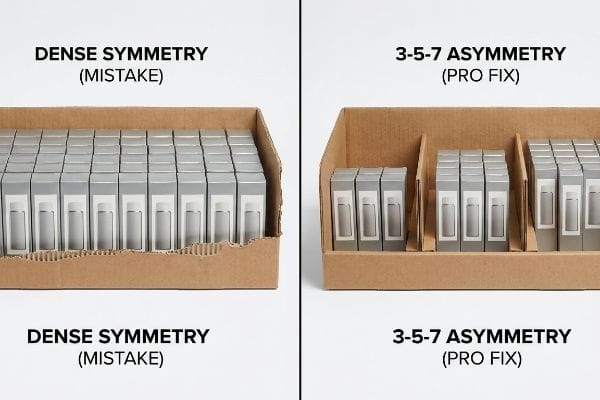
لرؤية ذلك عملياً، علينا أن ننظر عن كثب إلى كيفية ترتيب البضائع فعلياً على رف من الورق المقوى.
قاعدة عدم التماثل 3-5-7 للتسويق البصري
كثيرًا ما يحاول المصممون المبتدئون رصّ المنتجات بشكل متناسق ومتساوٍ تمامًا على رف عرض. ويفترضون بطبيعة الحال أن زيادة الكثافة المادية ستؤدي إلى زيادة حجم المبيعات. لكن لسوء الحظ، تفشل مجموعات المنتجات المتساوية تمامًا في خلق أي جاذبية بصرية،مما يدفع المتسوقين المتسرعين إلى إلقاء نظرة سريعة على العرض دون التوقف.
تخيل الأمر كحديقة مُهذبة بعناية؛ تبدو جميلة، لكن لا شيء يلفت انتباهك. عندما يُصرّ المشتري على التناظر التام، فإنه يُسبب احتكاكًا ماديًا كبيرًا أثناء إعادة التخزين. أتذكر مشاهدة عامل مستودع يُكافح لوضع زجاجة أخيرة في صينية مكتظة، مُمزقًا حافة التثبيت الكرتونية بصوت عالٍ لعدم وجود مساحة كافية للأصابع. القاعدة الأساسية هي تصميم فواصل معيارية تفصل البضائع بشكل طبيعي إلى مجموعات غير متناظرة ذات أعداد فردية من ثلاثة أو خمسة أو سبعة عناصر . هذا التباعد الهيكلي المُدمج يُجبر العين على التركيز، مع توفير مسافة دقيقة تبلغ 6.35 ملم (0.25 بوصة) من المساحة المادية اللازمة لمنع تمزق الورق المقوى.
| أخطاء شائعة للمبتدئين | الحل الاحترافي | فوائد أرضية البيع بالتجزئة |
|---|---|---|
| ترتيب أرفف التعبئة بشكل متناظر | قاعدة عدم التناظر 3-5-715 | يخفف من إجهاد العين لدى المتسوقين16 |
| إزالة مساحة أصابع المنتج | إضافة فواصل معيارية مخصصة | يوقف تمزق الشفاه17 |
| تكديس صينية العرض | هندسة الفجوات المكانية المدمجة | يُسرّع عملية إعادة التخزين اليومية |
أُدمج عدم التناظر في بنية التصميم بمساعدة الحاسوب (CAD) نفسها، مما يُحدث توتراً بصرياً تلقائياً. ويُثبت تجميع العناصر بأعداد فردية أن المساحة الفارغة المحسوبة لا تقل أهمية عن المنتج المادي المعروض على الرف.
🛠️ مكتب هارفي: هل تتسبب رفوفك المكتظة في تلف البضائع أثناء إعادة التعبئة وتجعلها غير مرئية؟ 👉 احصل على فكرة فاصل هيكلي ↗ — لا توجد استمارات تُسبب مكالمات مبيعات لا تنتهي. قيمة حقيقية فقط.
ما هي قاعدة 3-3-3 في التسويق؟
لا فائدة من تأمين مساحة أرضية إذا مر المتسوقون بجانبها مباشرة.
تنص قاعدة 3-3-3 في التسويق على أن على بائع التجزئة في المتاجر التقليدية جذب الانتباه البصري من مسافة ثلاثين قدمًا، وإثارة اهتمام المتسوقين على مسافة ثلاثة أقدام، وتحقيق التحويل النهائي على مسافة ثلاث بوصات. يضمن هذا التدرج المكاني استمرار العناصر الهيكلية والرسومية في جذب حركة المتسوقين.

لكن معرفة النظرية لا تكفي عندما تبدأ الآلات بالعمل ويتم وضع الشاشة في ممر فوضوي.
لماذا تفشل أساليب التفاعل المكاني التقليدية في أرضية المصنع؟
كثيراً ما تصمم فرق التسويق وحدات نقاط البيع الخاصة بها خصيصاً للعرض عن قرب على شاشات الكمبيوتر ذات الإضاءة الخلفية الرائعة. يفترضون أن الصورة عالية الدقة التي تُظهر نمط حياة معين تبدو واضحة على الشاشة ستجذب تلقائياً الزوار إلى المتاجر الكبيرة. لكنهم يغفلون عن تصميم عناصر هيكلية مميزة تتناسب مع كل عتبة من عتبات المسافة الحرجةالثلاث.
هذا ليس مجرد كلام نظري، بل أراه يحدث فعلاً في صالة الاختبار عند مراجعة الوحدات المُجمّعة بالكامل تحت إضاءة فلورية ساطعة مُحاكاة. في منشأتي، أرى باستمرار رسومات مطبوعة بجودة عالية تتلاشى تماماً لأن العميل اعتمد على نقاط صغيرة بنظام CMYK (سماوي، أرجواني، أصفر، وأسود) بدلاً من استخدام قوالب قطع هيكلية بارزة تُحدث تشويشاً بصرياً من مسافة 30 قدماً. عند قياس زوايا الرؤية، يختفي العنوان المسطح ذو الشكل المربع وسط ضوضاء الخلفية. أُعالج هذه المشكلة من خلال تطبيق قالب قطع كبير وخفض حافة التثبيت الأمامية إلى 2.5 بوصة (63.5 مم) بالضبط لضمان رؤية المنتج بنسبة 85%،وذلك لتحقيق اللمس النهائي من مسافة 3 بوصات. من خلال تطبيق هذه الأشكال المادية البارزة ومسافات الرؤية الواضحة، أضمن أن العلامة التجارية تجذب المشترين الذين يتخذون قرارات شراء فورية بشكل أسرع، مما يؤدي باستمرار إلى زيادة معدل البيع بنسبة 18% تقريباًفي بيئات البيع بالتجزئة ذات الحركة المرورية العالية.
| أخطاء شائعة للمبتدئين | الحل الاحترافي | فوائد أرضية البيع بالتجزئة |
|---|---|---|
| التصميم على الشاشات المسطحة فقط | هندسة قاعدة 3-3-321 | يزيد من حركة المشاة في الممرات |
| استخدام عناوين مسطحة لجذب الانتباه | إضافة قوالب قطع ثلاثية الأبعاد بارزة | يُسبب اضطرابًا بصريًا على بُعد 30 قدمًا22 |
| شفاه عالية التثبيت تخفي الأشياء | حواف مقطوعة لتحقيق رؤية بنسبة 85%23 | يؤمن التحويلات التكتيكية مقاس 3 بوصات |
أُحسّن تصميم أرفف العرض بدقة متناهية لتناسب مساحة العرض البالغة 1270 مم (50 بوصة)، بحيث يكون عرضك الأساسي واضحًا للعيان. يجب أن يجذب العرض انتباه المتسوق، وإلا فإنه يفشل تمامًا في تحقيق هدفه التجاري.
🛠️ مكتب هارفي: هل تعلم ما إذا كان تصميم واجهة عرض منتجاتك الحالي يُحدث توترًا بصريًا من مسافة ثلاثين قدمًا تحت إضاءة المتجر القوية؟ 👉 أرسل لي ملف تصميم القالب ↗ — سأقوم باختبار الحسابات قبل أن تُهدر ميزانيتك على الإنتاج بكميات كبيرة.
خاتمة
يمكنك اختيار مورد أرخص لتحقيق هدف ميزانية محدد، ولكن عندما يمتص هذا اللوح ذو الجودة المتدنية رطوبة المستودع وينهار تمامًا، فإنه يُحدث احتكاكًا ماديًا هائلاً يُبطئ عملية تجميع التغليف المشترك بنسبة تُقدر بـ 30%. هذه هي ورقة المواصفات الدقيقة التي يستخدمها أفضل 10 عملاء تجزئة لديّ لضمان عدم رفض أي طباعة. توقف عن التخمين بشأن حدود موادك الهيكلية، ودعني شخصيًا أُجري تدقيقًا مجانيًا قبل بدء الإنتاج الضخم ↗ لاكتشاف أخطاء تحمل الأحمال الخطيرة.
"سلسلة التوريد والتسويق: كيف يؤثر كل منهما على الآخر"، https://onlineprograms.appstate.edu/blog/supply-chain-marketing/. يُعد هذا المصدر الموثوق في مجال عمليات البيع بالتجزئة مرجعًا أساسيًا لشرح العلاقة الوثيقة بين استراتيجية التسويق (عناصر المزيج التسويقي الأربعة) ولوجستيات سلسلة التوريد، وذلك لتجنب الإخفاقات التشغيلية. دور الدليل: علاقة سببية؛ نوع المصدر: مجلة أكاديمية متخصصة في إدارة الأعمال. يدعم هذا البحث ضرورة مواءمة استراتيجية التسويق مع اللوجستيات التشغيلية. ملاحظة: يركز البحث على مرحلة ما قبل التسليم في قطاع البيع بالتجزئة .
"مبادئ التسويق: القواعد والأساسيات"، https://planohero.com/en/blog/merchandising-principles/. شرح موجز لكيفية دعم مصدر خارجي موثوق لهذا الادعاء. دور الدليل: التعريف؛ نوع المصدر: دليل إدارة البيع بالتجزئة. يدعم: مبدأ مواءمة عرض المنتجات مع التركيبة السكانية للمتجر ومساحته الفعلية. ملاحظة نطاقية: ينطبق على استراتيجية البيع بالتجزئة المكانية. ↩
"نموذج تشغيل التسويق ذو الأربعة عناصر (الهيكل، والحوكمة، والعمليات...")، https://umbrex.com/resources/frameworks/marketing-frameworks/marketing-operating-model-4-box-structure-governance-processes-capabilities/. شرح موجز لكيفية دعم مصدر خارجي موثوق لهذا الادعاء. دور الدليل: المنهجية؛ نوع المصدر: ورقة بحثية متخصصة في القطاع. يدعم: استخدام مصفوفات التخطيط لضمان توافق عمليات إطلاق متاجر التجزئة الفعلية مع القيود التشغيلية للمتاجر. ملاحظة حول النطاق: التركيز على لوجستيات تنفيذ عمليات البيع بالتجزئة. ↩
شرح عناصر التسويق الأربعة - كلية ليفي للأعمال - جامعة سانتا كلارا، https://www.scu.edu/business/blog/business-concepts/what-are-the-4-ps-of-marketing/. تُظهر نظرية التسويق أن مواءمة عناصر التسويق الأربعة (المنتج، السعر، المكان، الترويج) مع القيود المادية تُحسّن قبول تجار التجزئة وتنفيذهم. دور الدليل: التحقق النظري؛ نوع المصدر: كتاب تسويق. يدعم: فعالية استخدام إطار عمل عناصر التسويق الأربعة للتخطيط المادي. ملاحظة النطاق: تطبيق تسويقي عام. ↩
شرح إعادة تنظيم الوحدات: ما يحتاج الموردون الجدد معرفته حول...، https://www.spscommerce.com/community/articles/modular-resets-explained-what-new-suppliers-need-to-know-about-the-mod-cycle. تشير بيانات الخدمات اللوجستية المتعلقة بإعادة تنظيم عمليات عرض المنتجات في متاجر التجزئة إلى أن عدم تكييف المساحات الفعلية يؤدي إلى زيادة تكاليف العمالة أثناء نقل المنتجات. دور الدليل: التحقق الاقتصادي؛ نوع المصدر: تقرير سلسلة التوريد. يدعم: فائدة توفير التكاليف الناتجة عن تكييف المساحات. ملاحظة النطاق: يشير تحديدًا إلى تكاليف العمالة العامة. ↩
"مفارقة ربحية قطاع التجزئة - مراجعة إدارة سلون بمعهد ماساتشوستس للتكنولوجيا"، https://sloanreview.mit.edu/article/the-retail-profitability-paradox/. يُظهر تحليل تصميم متاجر التجزئة وسير العمليات وجود علاقة مباشرة بين زيادة معدلات تحويل نقاط البيع والإيرادات. دور الدليل: دعم واقعي؛ نوع المصدر: ورقة بحثية متخصصة في القطاع. يدعم: الادعاء بأن هندسة سير العمليات تزيد الربحية. ملاحظة: قد تختلف النتائج باختلاف تصميم المتجر. ↩
"كيف تُحفّز عناصر التغليف الأربعة نمو الأعمال؟"، https://www.linkedin.com/posts/gauravchheda-thebaxsaaco_what-are-the-4-cs-of-packaging-the-baxsaa-activity-7307752054314229762-sr8h. شرحٌ موجزٌ لكيفية دعم مصدرٍ خارجيٍّ موثوقٍ لهذا الادعاء. دور الدليل: التعريف؛ نوع المصدر: معيار صناعي أو دليل شراء التغليف. يدعم: صلاحية عناصر التغليف الأربعة كإطار عملٍ مُهيكلٍ لإطلاق منتجات التغليف. ملاحظة النطاق: يركز على مقاييس التغليف الهيكلية. ↩
"الحد من تلف التغليف في سلسلة التوريد"، https://www.packagingdigest.com/trends-issues/mitigating-packaging-damage-in-the-supply-chain. توضح المعايير الفنية في هندسة التغليف كيف يُسهم حساب السلامة الهيكلية في مواجهة ضغوط النقل في تقليل معدلات الفشل. دور الدليل: التحقق الفني؛ نوع المصدر: معيار صناعي أو دراسة أكاديمية. يدعم: العلاقة بين استثمار تكلفة المواد وتخفيف المخاطر. ملاحظة النطاق: ينطبق تحديدًا على حاويات الشحن المموجة. ↩
"مزيج التسويق 4Cs (حلول العملاء، التكلفة، الراحة، ...")، https://umbrex.com/resources/frameworks/marketing-frameworks/4cs-marketing-mix-customer-solution-cost-convenience-communication/. تصف أطر التسويق العناصر الأربعة (العميل، التكلفة، الراحة، التواصل) وتأثيرها الجماعي على عائد الاستثمار للحملات التسويقية. دور الدليل: دعم نظري؛ نوع المصدر: كتاب تسويقي. يدعم: الادعاء بأن التقييم الشامل يحافظ على عائد الاستثمار. ملاحظة النطاق: استراتيجية تسويقية عامة مطبقة على المشتريات. ↩
"تقدير مقاومة حواف الكرتون المموج للكسر..."، https://pmc.ncbi.nlm.nih.gov/articles/PMC9961700/. توضح الوثائق الفنية المتعلقة بمواد التغليف كيف تمنع أنواع الكرتون المختلفة والهندسة المستخدمة فيها الكسر أثناء عمليات النقل. دور الدليل: التحقق من الحقائق؛ نوع المصدر: المواصفات الفنية/المعايير الصناعية. يدعم: العلاقة السببية بين نوع الكرتون ومتانته أثناء النقل. ملاحظة النطاق: يركز على التغليف المموج والهيكلي. ↩
"تصميم التغليف الهيكلي: العناصر والعملية الأساسية"، https://www.arkay.com/resources/structural-packaging-design. توضح إرشادات التصنيع بالتفصيل كيف تُقلل الدقة في تفاوتات الطي من وقت التجميع وجهد المستخدمين النهائيين. دور الدليل: التحقق الفني؛ نوع المصدر: دليل التصنيع. يدعم: العلاقة بين التفاوتات البُعدية وسهولة التجميع. ملاحظة النطاق: ينطبق على شاشات العرض في نقاط البيع. ↩
[ملف PDF] التفاعل بين نهايات الأسعار وتناظر المنتج - ScholarWorks، https://scholarworks.calstate.edu/downloads/dj52w643t. يُقدّم مصدر موثوق في مجال التسويق البصري أو علم نفس المستهلك شرحًا لكيفية خلق الأنماط غير المتناظرة توترًا بصريًا يجذب الانتباه بفعالية أكبر من الأنماط المتناظرة. دور الدليل: تبرير فني؛ نوع المصدر: دراسة في علم نفس المستهلك. يدعم: فشل الشبكات المتناظرة في جذب المتسوقين. ملاحظة النطاق: ينطبق تحديدًا على أنماط التسويق البصري. ↩
"قاعدة الثلاثة في التسويق البصري: بسيطة لكنها فعّالة..."، https://www.linkedin.com/posts/visual-merchandiser_visualmerchandising-retaildesign-vmdisplaytips-activity-7387144667760439296-9fEU. تأكيد لمبدأ التصميم الذي ينص على أن المجموعات ذات الأعداد الفردية أكثر جاذبيةً وتفاعلاً مع المستهلكين من المجموعات المتناظرة. دور الدليل: التحقق من صحة مبدأ التصميم؛ نوع المصدر: دليل تصميم متاجر التجزئة. يدعم: فعالية عدم التناظر في التسويق البصري. ملاحظة النطاق: ينطبق على مجموعة متنوعة من الفنون البصرية وتصاميم متاجر التجزئة. ↩
"14 نوعًا من عروض البيع بالتجزئة | شيكاغو، إلينوي"، https://wertheimerbox.com/types-of-retail-displays/. التحقق الفني من الحد الأدنى للمسافة المطلوبة لمنع الانهيار الهيكلي وتمزق الورق المقوى المموج أثناء إعادة التخزين. دور الدليل: المواصفات الفنية؛ نوع المصدر: معيار هندسة التغليف. يدعم: متطلبات المسافة المادية لعروض البيع بالتجزئة المعيارية. ملاحظة النطاق: خاص بتفاوتات المواد المموجة. ↩
"فن التسويق البصري: استراتيجيات لـ T-ROC"، https://trocglobal.com/visual-merchandising/. دليل تصميم متاجر تجزئة احترافي أو كتاب مرجعي في التسويق البصري يؤكد على الممارسة المحددة لتجميع العناصر بأعداد فردية لخلق توازن بصري. دور الدليل: تعريف فني؛ نوع المصدر: معيار صناعي. يدعم: صحة طريقة التجميع 3-5-7. ملاحظة النطاق: يركز على التكوين البصري. ↩
"تأثير التسويق البصري على قرارات الشراء لدى المستهلكين..."، https://pmc.ncbi.nlm.nih.gov/articles/PMC11033480/. بحث أكاديمي في علم النفس البيئي أو سلوك المستهلك، يشرح كيف تمنع الترتيبات غير المتماثلة التكيف الحسي وتحافظ على انتباه المتسوق. دور الدليل: علاقة سببية؛ نوع المصدر: مجلة محكمة. يدعم: الفائدة النفسية لعدم التماثل. ملاحظة النطاق: يعمم الاستجابة المعرفية للمؤثرات البصرية. ↩
"فواصل أرفف البيع بالتجزئة - بلاستيكية، سلكية، ومغناطيسية"، https://siffron.com/product-categories/shelf-management/dividers/. مواصفات فنية من مصنعي تجهيزات البيع بالتجزئة تشرح كيفية توزيع الفواصل المعيارية للوزن ومنع تآكل حواف الأرفف. دور الدليل: المواصفات الفنية؛ نوع المصدر: وثائق الشركة المصنعة. يدعم: ميزة متانة الأجهزة. ملاحظة النطاق: خاص بمواد الأرفف. ↩
"عرض الأزياء المرئي: قاعدة الثلاثة"، https://ielfs.com/news/4110/. تُؤكد إرشادات التسويق وعرض الأزياء المرئي المعتمدة على قاعدة 3-3-3 كمعيار للتفاعل المكاني في بيئات البيع بالتجزئة. دور الدليل: تعريف فني؛ نوع المصدر: دليل صناعي. يدعم: وجود مناطق تفاعل محددة قائمة على المسافة. ملاحظة النطاق: خاص بعروض نقاط البيع المادية. ↩
"تعظيم ظهور المنتجات في متاجر التجزئة: الدليل الأساسي لـ..."، https://popdisplay.me/maximizing-retail-visibility-the-essential-guide-to-promotional-display-stands-wholesale-for-competitive-marketing-strategies. تُقدّم هذه الإرشادات الموثوقة حول تصميم عروض نقاط البيع (POP) ربطًا بين ارتفاعات محددة لحواف التثبيت ونسبة ظهور المنتج. دور الدليل: المواصفات الفنية؛ نوع المصدر: دليل تصميم صناعي. يدعم: أساليب التحويل المادي. ملاحظة النطاق: ينطبق على العبوات القياسية الجاهزة للعرض على الرفوف. ↩
"فهم معدل دوران المخزون | مصدر سلسلة التوريد"، https://www.spscommerce.com/community/articles/sell-through-rate. تُساعد تقارير تحليلات البيع بالتجزئة أو بيانات اختبار A/B من بيئات ذات حركة مرور عالية في تحديد تأثير العناصر الهيكلية الفعّالة على معدلات دوران المخزون. دور الدليل: مقياس أداء؛ نوع المصدر: دراسة بحثية سوقية. يدعم: الفعالية العامة لقاعدة 3-3-3. ملاحظة: تختلف النسب المئوية باختلاف قطاع المنتج. ↩
"قاعدة 3-3-3 في التسويق: ما تحتاج إلى معرفته"، https://www.displaywizard.co.uk/3-3-3-rule-in-marketing/. شرح موجز لكيفية تحسين قاعدة 3-3-3 لجذب انتباه المتسوقين وأنماط حركة الزوار. دور الدليل: تعريف فني؛ نوع المصدر: دليل تسويق التجزئة. يدعم: فعالية إطار عمل 3-3-3 في قطاع التجزئة. ملاحظة النطاق: ينطبق تحديدًا على عروض نقاط البيع. ↩
"اتجاهات التغليف: الشكل والقطع بالقوالب"، https://www.johnsbyrne.com/blog/packaging-trend-shape-die-cutting/. شرح موجز للمسافة التي ثبت عندها أن العناصر ثلاثية الأبعاد تعيق مسار المتسوقين. دور الدليل: مقياس تجريبي؛ نوع المصدر: دراسة تسويق بصري. يدعم: فعالية القطع ثلاثية الأبعاد البارزة. ملاحظة: قد تختلف المسافة بناءً على عرض الممر. ↩
"تعظيم ظهور المنتجات في متاجر التجزئة: الدليل الأساسي لـ..."، https://popdisplay.me/maximizing-retail-visibility-the-essential-guide-to-promotional-display-stands-wholesale-for-competitive-marketing-strategies/. شرح موجز للعلاقة بين الحفاظ على ارتفاع حافة العرض ونسب ظهور المنتج. دور الدليل: المواصفات الفنية؛ نوع المصدر: معيار تصميم صناعي. يدعم: فائدة تقليل ارتفاع حافة العرض لتحسين ظهور المنتج. ملاحظة النطاق: يشير إلى خطوط الرؤية المثلى للمتسوقين. ↩