أنت تريد عبوة مميزة على رفوف البيع بالتجزئة، لكن اختيار المادة الهيكلية المناسبة يمثل معضلة تقع فيها العديد من العلامات التجارية الناشئة.
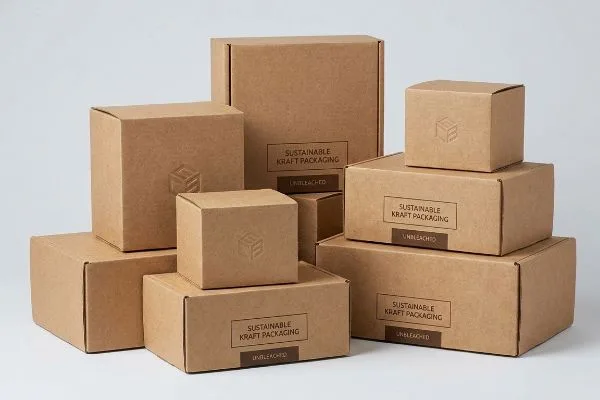
إن اختيار صناديق كرافت المصممة خصيصًا يعني اختيار حل تغليف عالي المتانة وصديق للبيئة، مصنوع من لب الخشب البكر غير المبيض. توفر هذه الهياكل المتينة مقاومة فائقة للتمزق وقوة ضغط ديناميكية أعلى مقارنةً بورق التغليف المعاد تدويره القياسي، مما يجعلها المعيار الأمثل لبيئات البيع بالتجزئة الصارمة في أمريكا الشمالية.
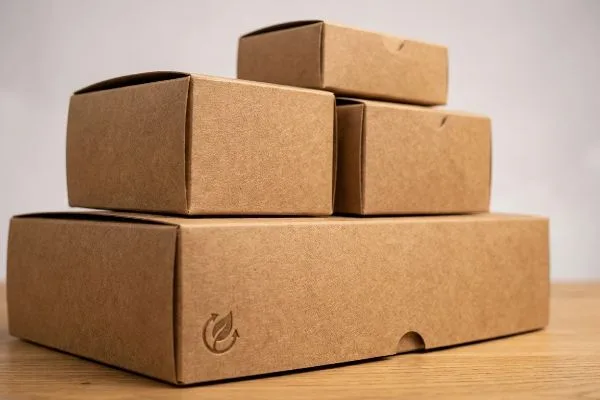
لكن معرفة فوائد المواد الخام ليست سوى نصف المعركة عندما تبدأ في توسيع نطاق الإنتاج.
ما هي فوائد استخدام الصناديق المصممة حسب الطلب؟
تُجبر العبوات الجاهزة القياسية منتجك على التنازل عن الكفاءة المكانية.
تشمل مزايا استخدام الصناديق المصممة خصيصًا الاستغلال الأمثل للمساحة، وتقليل احتكاك النقل، وتعزيز ظهور المنتجات في متاجر البيع بالتجزئة. من خلال تصميم الأبعاد الهيكلية بدقة لتناسب حمولتك المحددة، يمكنك تقليل وزن الشحن الزائد بشكل كبير ومنع حركة المنتجات الداخلية أثناء عمليات الشحن الجزئي المكثفة.
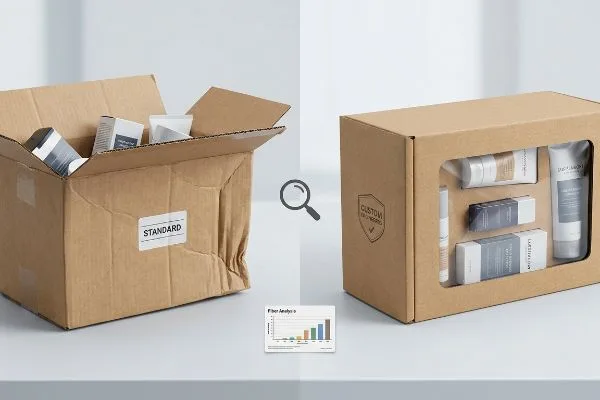
دعونا نلقي نظرة على ما يحدث عندما تعتمد على مواد عامة بدلاً من تصميمها خصيصاً لحملك المحدد.
التكلفة الخفية للإفراط في إعادة تدوير المواد الأساسية
حتى المصممون المخضرمون غالباً ما يتجاهلون الجوانب العلمية للمواد المستخدمة في تصميم العبوات، مفترضين أن أي كرتون بني اللون يتمتع بقوة طبيعية. وتسعى العلامات التجارية جاهدةً لاستخدام ورق مقوى معاد تدويره بكثافة لتلبية متطلبات الاستدامة الداخلية، ظناً منها أنها تضمن نفس المتانة المادية للكرتون الجديد.إنهم يتعاملون مع الغلاف الخارجي كلوحة بصرية لشعارهم فقط، متجاهلين تماماً الخصائص الميكانيكية الدقيقة لألياف الورق.
ألاحظ هذه المشكلة باستمرار عندما تشحن العلامات التجارية سلعًا استهلاكية ثقيلة في صناديق معاد تدويرها. تتقلص ألياف السليلوز المجهرية وتتلف بعد عدة دورات إعادة تدوير. عندما يكدس موظف المتجر هذه الصناديق الرئيسية الضعيفة على منصة نقالة قياسية تابعة لجمعية مصنعي البقالة (GMA)، يمكنك سماع صوت طقطقة خفيفة ناتجة عن انهيار التجاويف الداخلية تحت وزن الحمولة العلوية. لمنع ذلك، أفرض استخدام مواد هجينة - حقن 30 % من ورق الكرافت الخام مباشرة في التجاويف الحاملة للوزن . هذا التعديل الهيكلي البسيط والمخصص يعيد قوة الضغط الديناميكية، مما يضمن بقاء صناديقك سليمة أثناء الشحن البحري دون زيادة تكلفة المواد الخام.
| أخطاء شائعة للمبتدئين | الحل الاحترافي | فوائد أرضية البيع بالتجزئة |
|---|---|---|
| باستخدام بطانة اختبار معاد تدويرها بنسبة 100% | حقن 30% من ألياف الكرافت البكر4 | يوقف سحق الطبقة الدنيا |
| تجاهل قوة الفلوت المحددة | أقواس هندسية خاصة لتحمل الأحمال5 | يتحمل أحمال المنصات الثقيلة من الأعلى |
| الاعتماد على درجات المجلس العامة | تخصيص وحدة التحكم الإلكترونية (ECT) للحمولة المحددة6 | يمنع عمليات استرداد تكاليف النقل الباهظة |
أحرص دائمًا على التحقق رياضيًا من سلامة ألياف الورق الخام قبل الموافقة على أي إنتاجية كبيرة . فالصندوق المصمم خصيصًا يصبح عديم الفائدة تمامًا إذا كانت المادة الأساسية تفتقر إلى المتانة الكافية لتحمل تقلبات سلسلة التوريد.
🛠️ مكتب هارفي: هل أنت غير متأكد من كثافة الألياف في عبواتك الحالية لتحمل التكديس المزدوج؟ 👉 اطلب تدقيقًا مجانيًا للمواد ↗ — تواصل مباشر مع مكتبي. أعدك بعدم تلقي أي رسائل تسويقية آلية مزعجة.
هل صناديق الشحن المصممة حسب الطلب تستحق العناء؟
من السهل النظر إلى تكلفة الوحدة لشاحن مخصص والتردد.
نعم. صناديق الشحن المصممة خصيصًا تستحق العناء بلا شك، لأنها تُحسّن الوزن الحجمي ومحاذاة المنصات بشكل مثالي. تصميم كرتونة رئيسية لتناسب تمامًا سطحًا خشبيًا قياسيًا بأبعاد 48×40 بوصة (1219×1016 مم) يمنع بروز الزوايا، مما يحافظ على قوة الضغط الرأسي اللازمة لتحمل الشحن البحري الدولي.
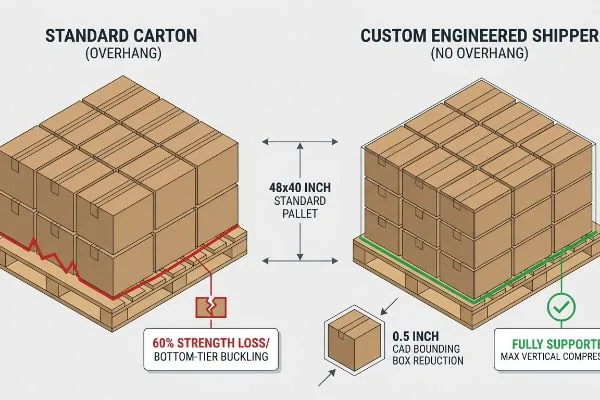
يصبح العائد المالي الحقيقي واضحاً بمجرد وصول مخزونك إلى مستودع ذي حركة مرور عالية.
منع كارثة بروز المنصات
غالباً ما تقوم فرق المشتريات بتوسيع أبعاد الكرتون الرئيسي لحشر المزيد من الوحدات بداخله، على افتراض أن خصائص الضغط الخام للكرتون المموج عالي التحمل ستحمي البضائع. ويحسبون عائد استثمارهم بناءً على الحجم الداخلي فقط، متجاهلين تماماً قوانين الفيزياء المكانية الدقيقة لتكديس المنصاتالقياسية.
إنه فخ شائع يقع فيه حتى فرق المشتريات ذات الخبرة: ترك صندوق بارزًا عن المنصة بمقدار ضئيل جدًا. يستمد الكرتون الرئيسي 60% من قوة اختبار ضغط الصندوق (BCT)من المحاذاة الرأسية لزواياه الأربع. لقد شاهدتُ طبقات سفلية كاملة تنهار بعنف - محدثةً صوتًا مكتومًا كصوت طلقة بندقية عند قص الزوايا الهيكلية - لمجرد أنها كانت بارزة عن سطح المنصة الخشبي. أحل هذه المشكلة بتقليص حجم صندوق التصميم بمساعدة الحاسوب (CAD) بمقدار 12.7 ملم بالضبط. هذا التعديل الدقيق يحافظ على دعم الحمولة بالكامل، مما يمنع تمامًا أي تلفيات أثناء النقل في الحاويات.
| أخطاء شائعة للمبتدئين | الحل الاحترافي | فوائد أرضية البيع بالتجزئة |
|---|---|---|
| بارزة فوق حافة المنصة الخشبية | تقليص حجم صندوق التحديد في برنامج التصميم بمساعدة الحاسوب بمقدار 0.5 بوصة9 | يزيل انبعاج الطبقة السفلية |
| تقدير قوة ضغط النقل | هندسة المحاذاة الرأسية الدقيقة | يضمن قوة زاوية بنسبة 60%10 |
| زيادة حجم الكرتون الداخلي بشكل أعمى | مقاسات دقيقة تناسب منصات التحميل 48×4011 | يمنع رفض المستودع |
أرفض السماح للعملاء بالتضحية بالتصميم الهندسي لمجرد إضافة وحدة أخرى إلى الصندوق. حماية هامش الربح تعني تصميم نظام الشحن بما يتوافق مع شبكة الخدمات اللوجستية.
🛠️ مكتب هارفي: هل تفقد كراتينك الرئيسية 60% من قوتها سرًا بسبب بروز غير مرئي؟ 👉 تحقق من ملاءمة منصات التحميل ↗ — حمّل الملف بأمان. صندوق رسائلي مفتوح إذا كانت لديك أي أسئلة لاحقًا.
ماذا تعني عبارة "صندوق مخصص"؟
يخلط العديد من المشترين بين وضع شعار على قالب قياسي وبين التغليف المخصص.
يعني تصميم صندوق مخصص هندسة البنية الفيزيائية والتفاوتات الرياضية بدقة لتناسب وزن منتجك وأبعاده وبيئة سلسلة التوريد الخاصة به. ويتجاوز الأمر مجرد الرسومات السطحية، ليشمل تعديلات هيكلية دقيقة مثل ضبط السماكة وتوجيه الأخاديد لضمان تركيب سلس وأقصى قدر من المتانة على الرفوف.
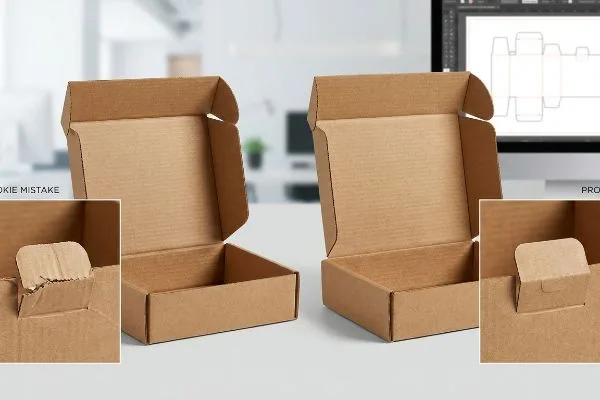
دعونا نلقي نظرة على الفجوة الميكانيكية بين الرسم المسطح والجسم ثلاثي الأبعاد المادي.
حقيقة تعويض الفرجار
عادةً ما يقوم مصممو الجرافيك بإنشاء ألسنة متشابكة وفتحات قابلة للطي في البرامج الرقمية بنفس عرض اللوحة المقابلة تمامًا. إنهم يتعاملون مع التصميم كما لو كان قطعة ورق مسطحة، متجاهلين حساب السماكة الفعلية للكرتون المموج عند انحنائه.
تخيل الأمر كمحاولة إغلاق كتاب سميك مع وجود قلم رصاص عالق في غلافه؛ إذ يجب أن يتمدد الورق ليستوعب حجمه. فعند طي لوحة من الورق المقوى بسمك 3 مم بزاوية 90 درجة،فإنها تستهلك كمية من الورق. أرى باستمرار موظفي المتاجر يتعرقون على الأرض، وهم يحاولون جاهدين إغلاق الفتحات الضيقة حتى تتمزق الورقة العلوية المطبوعة بشكل غير منتظم. أتجنب هذا الأمر بتطبيق خوارزميات تعويض السماكة التلقائية في مرحلة ما قبل الطباعة. من خلال توسيع فتحة الاستقبال لمراعاة مقدار الانحناء المسموح به بدقة،يحصل عامل التعبئة والتغليف على عملية تجميع سلسة وخالية من التمزق، مما يوفر حوالي 25 ثانية لكل وحدة.
| أخطاء شائعة للمبتدئين | الحل الاحترافي | فوائد أرضية البيع بالتجزئة |
|---|---|---|
| علامات الرسم بنسبة 1:1 مع فتحات التزاوج | تطبيق خوارزميات تعويض الفرجار14 | يضمن التجميع السلس |
| تجاهل سمك اللوح الفعلي | حساب بدلات الانحناء الدقيقة15 | يمنع تمزق الطبقة العلوية |
| إجبار الألسنة أثناء التعبئة المشتركة | توسيع فتحات الاستقبال رياضياً | يوفر 25 دولارًا لكل وحدة مبنية16 |
أقوم دائمًا بإعادة تصميم قوالب القطع المسطحة للعملاء لتضمين التفاوتات الميكانيكية المحددة قبل إرسال أي شيء إلى طاولات القطع. يتم تجميع الصندوق المصمم خصيصًا بسلاسة تامة لأن الحسابات دقيقة للغاية.
🛠️ مكتب هارفي: هل تتسبب ألسنة التثبيت المتشابكة في تمزيق الورق المقوى أثناء التجميع النهائي؟ 👉 احصل على حل مجاني لمشكلة خطوط القطع ↗ — لا نماذج تُسبب مكالمات مبيعات لا تنتهي. قيمة خالصة فقط.
ماذا تعني علب كرافت؟
إن استخدام الورق المقوى الخام غير المبيض يشير إلى جمالية راقية وصديقة للبيئة بالنسبة للمستهلكين.
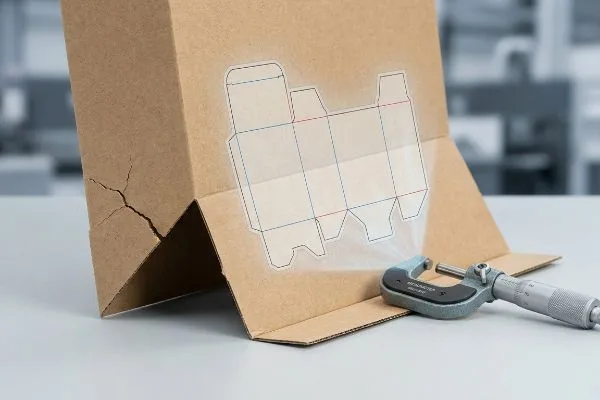
يتطلب فهم مغزى علب الكرافت إدراك أساسها المصنوع من لب الخشب الخام عالي المسامية. وعلى عكس الألواح البيضاء المطلية بكثافة، تعتمد مادة الكرافت على السليلوز الخام ذي الألياف الطويلة، مما يتطلب آلات طي وتشكيل متخصصة للغاية لمنع التصدع الهيكلي أثناء عملية التصنيع الشاقة.
لكن معرفة نظرية الألياف الخام البكر لا تكفي عندما تبدأ الآلات الصناعية الثقيلة بالعمل.
لماذا تفشل عملية الطي القياسية في أرضية المصنع؟
كثيراً ما يفترض المشترون أن خط الطي البسيط المرسوم على قالب القطع يُترجم تلقائياً إلى طية مثالية بزاوية 90 درجة في الواقع. ويتوقعون أن يتصرف ورق الكرافت السميك الخام تماماً مثل علب الكرتون الرقيقة القابلة للطي، متجاهلين تماماً المقاومة الفيزيائية الشديدة لألياف الورق الخام .
في منشأتي، أشهد بشكل روتيني النتائج الكارثية لاستخدام أدوات عامة على ورق الكرافت السميك. فعندما تضرب قالبة فولاذية قياسية لوحًا صلبًا من ورق الكرافت الخام (ECT) ذي 32 حافةدون تحكم دقيق في الشد، تنثني الأخاديد الداخلية بشكل غير متساوٍ، مما يُسبب صوت طقطقة حاد ومزعج نتيجة انكسار الألياف الخارجية بعنف. أختبر ذلك باستخدام مصفوفات تجريد ديناميكية. وقد قمت بقياسات الميكرومتر وأثبتت أننا لسنا بحاجة إلى تقليل جودة المادة لإيقاف التشقق - كل ما احتجت إليه هو تركيب قنوات طي أنثوية بوليمرية محددة على لوحة القطع. ومن خلال تطبيق هذا التفاوت البالغ 1.2 مم في زاوية القطع،أتحكم بدقة في كيفية تمدد ألياف الورق أثناء الضربة، مما يقلل وقت تجميع التعبئة المشتركة بمقدار 42 ثانية لكل وحدة، ويوفر على العملاء آلاف الدولارات من المخزون المهدر والمكسور.
| أخطاء شائعة للمبتدئين | الحل الاحترافي | فوائد أرضية البيع بالتجزئة |
|---|---|---|
| استخدام قوالب القطع الفولاذية العامة | مصفوفة تجعيد أنثوية من البوليمر للتثبيت20 | يمنع تشقق الألياف الخام |
| تجاهل مقاومة ألياف كرافت | التحكم في قوة ضرب السندان21 | يضمن طيات نظيفة بزاوية 90 درجة |
| قبول هوامش هدر عالية | تطبيق تفاوتات الماكينة البالغة 1.2 مم22 | يقلل وقت التجميع |
لا أستخدم أبدًا ورق كرافت خام ثقيلًا بدون استخدام قوالب طي مخصصة تتناسب تمامًا مع نوع الورق. الهندسة الدقيقة في المصنع هي ما يحوّل ورقة خشنة إلى هيكل متين.
🛠️ مكتب هارفي: لا تدع عيبًا هيكليًا بحجم 2 مليمتر يُفسد إطلاقًا ضخمًا لـ 500 متجر. 👉 أرسل لي ملف تصميم القالب ↗ — سأُجري اختبارات دقيقة للحسابات قبل أن تُهدر ميزانيتك على الإنتاج الضخم.
خاتمة
يمكنك اختيار مورد أرخص لتغليف منتجاتك، ولكن عندما يتجاوز الكرتون الرئيسي غير المدعوم منصة نقالة GMA القياسية، مما يؤدي إلى انبعاج شديد في القاعدة يتسبب في رفض فوري من قبل تجار التجزئة وأسابيع من إعادة العمل اليدوي المكلف، فإن تلك المدخرات الأولية تتلاشى. يستخدم أكثر من 500 مدير علامة تجارية قائمة التحقق الخاصة بي قبل الطباعة لتجنب هذه الأخطاء القاتلة في المراحل المبكرة. توقف عن التخمين بشأن التفاوتات المكانية ودعني شخصيًا أراجع ملفاتك الهيكلية من خلال تدقيق ما قبل الطباعة المجاني الخاص بي ↗ لاكتشاف نقاط الاحتكاك المدمرة هذه قبل إطلاق حملتك.
[ملف PDF] دراسة مقارنة للخصائص الفيزيائية للألياف المعاد تدويرها عالية الجودة...، https://repository.rit.edu/cgi/viewcontent.cgi?article=1299&context=theses. مقارنة فنية لقوة الشد والضغط بين الألياف المعاد تدويرها والألياف البكر في عبوات الكرتون المموج. دور الدليل: التحقق الفني؛ نوع المصدر: دراسة في علم المواد. يدعم: الادعاء بأن الركائز المعاد تدويرها قد تفتقر إلى السلامة الهيكلية للكرتون الجديد. ملاحظة النطاق: خاص بدرجات Testliner. ↩
"تأثير إعادة التدوير الميكانيكي على ألياف اللجنين السليلوزية... - PMC"، https://pmc.ncbi.nlm.nih.gov/articles/PMC11945113/. شرح لكيفية تدهور ألياف السليلوز في الطول والتبلور من خلال دورات إعادة التدوير المتكررة. دور الدليل: التحقق التقني؛ نوع المصدر: مجلة علوم المواد. يدعم: الادعاء بأن الإفراط في إعادة تدوير الألياف يقلل من قوة الصندوق. ملاحظة النطاق: يتعلق بإعادة التدوير الميكانيكي. ↩
"قوة الضغط لعبوات الورق المقوى المموج..."، https://pmc.ncbi.nlm.nih.gov/articles/PMC10054506/. بيانات تجريبية حول كيفية تعزيز إضافة ألياف الكرافت البكر لقوة الضغط واستقرار التموجات. دور الدليل: التحقق الفني؛ نوع المصدر: دليل هندسة التغليف. يدعم: الادعاء بأن المواد الهجينة تمنع الانهيار. ملاحظة النطاق: خاص بالتغليف المموج. ↩
"تأثير محتوى الألياف البكر على القوة والصلابة..."، https://bioresources.cnr.ncsu.edu/resources/effect-of-virgin-fiber-content-on-strength-and-stiffness-characteristics-of-a-three-layer-testliner/. التحقق التقني من كيفية زيادة قوة الانفجار ومنع انهيار الطبقة السفلية عند مزج ألياف الكرافت البكر مع الركائز المعاد تدويرها. دور الدليل: التحقق التقني؛ نوع المصدر: مجلة علوم المواد. يدعم: الادعاء بأن حقن 30% من الألياف البكر يوقف السحق. ملاحظة: تختلف الفعالية باختلاف طول الألياف. ↩
"تقدير قوة الضغط للكرتون المموج..."، https://pmc.ncbi.nlm.nih.gov/articles/PMC8467740/. بيانات هندسية توضح كيف تعمل هندسة التموجات وهياكل الأقواس المحددة على تحسين قوة الضغط الرأسي للبضائع المعبأة على منصات نقالة. دور الدليل: برهان هندسي؛ نوع المصدر: دليل هندسة التغليف. يدعم: القدرة على تحمل الأحمال العلوية الثقيلة. ملاحظة النطاق: التركيز على تحسين شكل التموجات. ↩
"تقدير مقاومة سحق حواف الكرتون المموج..."، https://pmc.ncbi.nlm.nih.gov/articles/PMC9961700/. بيانات صناعية تربط بين توافق تصنيفات اختبار سحق الحواف (ECT) مع الوزن الفعلي للمنتج وتقليل أضرار الشحن وتكاليف رد الأموال لتجار التجزئة. دور الدليل: التحقق التشغيلي؛ نوع المصدر: معيار الخدمات اللوجستية وسلسلة التوريد. يدعم: العلاقة بين تخصيص اختبار سحق الحواف (ECT) وتجنب التكاليف. ملاحظة النطاق: ينطبق على شحن التجزئة الموحد. ↩
[ملف PDF] تأثير إزاحة الصناديق الموضوعة على المنصات على قوة الضغط للوحدات...، https://digitalcommons.calpoly.edu/cgi/viewcontent.cgi?article=1067&context=it_fac. يشرح مصدر موثوق في هندسة التغليف كيف يؤدي بروز المنصات إلى انخفاض كبير في قوة التكديس الفعالة للصناديق الكرتونية المموجة. دور الدليل: التحقق الفني؛ نوع المصدر: دليل هندسي. يدعم: الادعاء بأن المحاذاة المكانية أمر بالغ الأهمية للحفاظ على قدرة تحمل الأحمال. ملاحظة النطاق: يتعلق تحديدًا بقوة الضغط الرأسي في مجال الخدمات اللوجستية. ↩
"التنبؤ بتأثير الفجوات بين ألواح سطح المنصات..."، https://repository.rit.edu/cgi/viewcontent.cgi?article=1053&context=japr. تحدد المعايير الفنية للتغليف المموج مقدار فقدان قوة الضغط عند عدم محاذاة دعامات الزوايا عموديًا. دور الدليل: التحقق الفني؛ نوع المصدر: دليل هندسي. الدعامات: التأثير الحاسم لمحاذاة الزوايا على قدرة التحميل. ملاحظة: قد تختلف النسب المئوية الدقيقة باختلاف درجة اللوح ونوع التموج. ↩
"تأثير بروز المنصة على قوة ضغط الصندوق"، https://admin.fibrebox.org/wp-content/uploads/2025/07/Pallet_Overhang_Phase_1.pdf. شرح موجز لكيفية منع حاجز أبعاد محدد بروز الصندوق وما ينتج عنه من فشل في ضغط الطبقة السفلية. دور الدليل: التحقق الفني؛ نوع المصدر: دليل هندسة التغليف. يدعم: منع الانبعاج. ملاحظة النطاق: خاص بتصميم CAD للخدمات اللوجستية. ↩
"تقدير قوة الضغط لصناديق الكرتون المموج..."، https://pmc.ncbi.nlm.nih.gov/articles/PMC9864211/. دليل فني يدعم الادعاء بأن المحاذاة الرأسية لزوايا الصندوق تحافظ على نسبة محددة من قوة تكديس العبوة. دور الدليل: برهان كمي؛ نوع المصدر: تقرير هندسة إنشائية. يدعم: ادعاءات قوة الضغط. ملاحظة النطاق: يتعلق بالكرتون المموج. ↩
دليل أحجام وأوزان المنصات القياسية | أبعاد 48×40، https://www.skidmanagementservices.com/feeds/blog/48×40-pallet-weight. التحقق من أبعاد منصات GMA القياسية وسياسة قطاع الخدمات اللوجستية بشأن رفض الشحنات كبيرة الحجم. دور الدليل: معيار صناعي؛ نوع المصدر: دليل الشحن. يدعم: الامتثال لأحجام المنصات. ملاحظة النطاق: معايير أمريكا الشمالية. ↩
"الدليل الشامل لصناديق الكرتون المضلع - شور باكيدجينج"، https://www.shorr.com/resources/blog/ultimate-guide-corrugated-boxes/. توضح معايير الصناعة للكرتون المضلع مقدار إزاحة المواد وبدل الانحناء المطلوب عند طي أنواع معينة من التموجات. دور الدليل: التحقق الفني؛ نوع المصدر: دليل هندسي. يدعم: استهلاك المواد الفعلي أثناء الطي. ملاحظة النطاق: ينطبق على مواصفات التموجات القياسية من النوع B. ↩
"التحليل التحليلي لتحديد صلابة الانحناء لخمس طبقات..."، https://pmc.ncbi.nlm.nih.gov/articles/PMC8777652/. تصف الإرشادات الفنية لتصميم التغليف الهيكلي حساب بدلات الانحناء لضمان التجميع السلس ومنع تلف المواد. دور الدليل: التحقق من المنهجية؛ نوع المصدر: دليل فني. يدعم: آلية تعويض الفرجار. ملاحظة النطاق: ممارسة قياسية في التغليف الدقيق. ↩
"منصة فحص متعددة المعايير لعبوات التغليف الشفافة"، https://pmc.ncbi.nlm.nih.gov/articles/PMC12736620/. شرح تقني لكيفية ضمان التعديلات الرياضية لسمك المادة (باستخدام الفرجار) ملاءمة الأجزاء دون احتكاك. دور الدليل: التحقق التقني؛ نوع المصدر: دليل هندسة التغليف. يدعم: استخدام خوارزميات للتجميع بدون احتكاك. ملاحظة النطاق: ينطبق بشكل أساسي على مواد الكرتون المموج والكرتون القابل للطي. ↩
"كيفية حساب بدل الانحناء وخصم الانحناء باستخدام..."، https://www.youtube.com/watch?v=0mGG4ZtC2a4. شرح فني لكيفية مراعاة تشوه المادة أثناء الانحناء لمنع إجهاد وتمزق السطح الخارجي. دور الدليل: التحقق الفني؛ نوع المصدر: معيار التصنيع. يدعم: العلاقة بين بدل الانحناء وسلامة المادة. ملاحظة النطاق: يعتمد على درجة اللوح وسمكه. ↩
"7 استراتيجيات لزيادة طاقة الآلات في التعبئة والتغليف إلى أقصى حد..."، https://epssw.com/blog/unlocking-potential-strategies-for-maximizing-machine-capacity-in-packaging-manufacturing. بيانات تجريبية أو معايير صناعية تُظهر تقليل الوقت في التعبئة المشتركة عند تحسين دقة فتحات التغليف رياضيًا. دور الدليل: برهان كمي؛ نوع المصدر: دراسة هندسية صناعية. يدعم: مكاسب إنتاجية محددة من دقة فتحات التغليف. ملاحظة: 25 ثانية هو مقياس محدد يتطلب التحقق من خلال معايير صناعية. ↩
"الخواص الميكانيكية والاسترطابية لللب المقولب..."، https://pmc.ncbi.nlm.nih.gov/articles/PMC8512325/. من شأن مصدر موثوق في هندسة الورق أن يؤكد المقاومة الميكانيكية وقوة الشد المرتبطة بالسليلوز طويل الألياف في ورق الكرافت الخام. دور الدليل: المواصفات الفنية؛ نوع المصدر: مجلة علوم المواد أو دليل هندسة التغليف. يدعم: الادعاء بأن ألياف الكرافت الخام توفر مقاومة أعلى للتجعد من علب الكرتون الرقيقة القابلة للطي. ملاحظة النطاق: ينطبق تحديدًا على ركائز الكرافت الخام غير المبيضة. ↩
«نظرة عامة على الدراسات الحديثة في معهد IPST حول حواف الكرتون المموج...»، https://bioresources.cnr.ncsu.edu/resources/overview-of-recent-studies-at-ipst-on-corrugated-board-edge-compression-strength-testing-methods-and-effects-of-interflute-buckling/. توفر المعايير الفنية لقيم اختبار قوة ضغط الحواف (ECT) الأساس لفهم قوة الضغط وصلابة ورق الكرافت الخام. دور الدليل: التحقق الفني؛ نوع المصدر: معيار صناعي. يدعم: العلاقة بين صلابة الورق والتشقق الهيكلي. ملاحظة النطاق: ينطبق على معايير تغليف الكرتون المموج. ↩
"القطع والتجعيد - مجموعة MM"، https://mm.group/packaging/technologies/die-cutting-creasing/. تحدد أدلة هندسة التغليف العلاقة بين فجوات السندان ومنع تمزق الألياف أثناء عملية التجعيد. دور الدليل: التحقق الفني؛ نوع المصدر: دليل هندسي. يدعم: استخدام هوامش تفاوت محددة للتحكم في تمدد ألياف الورق. ملاحظة النطاق: التركيز على دقة القطع. ↩
"تأثير خطوط الطي التناظرية والرقمية على الخصائص الميكانيكية... - PMC"، https://pmc.ncbi.nlm.nih.gov/articles/PMC9268991/. وثيقة فنية تشرح كيفية توزيع مصفوفات البوليمر للضغط لمنع تمزق الألياف في الورق المقوى غير المبيض مقارنةً بقوالب القطع الفولاذية. دور الدليل: التحقق الفني؛ نوع المصدر: ورقة بحثية هندسية. يدعم: استخدام مصفوفات البوليمر لمنع تشقق الألياف. ملاحظة النطاق: التركيز على ورق الكرافت عالي الكثافة. ↩
"شركة C&T تضيف مصفوفة طي السندان - ThePackagingPortal.com"، https://www.thepackagingportal.com/industry-news/ct-adds-anvil-crease-matrix/. دليل فني حول ضبط شد ضربة السندان لضمان دقة عمق الطي وزوايا الطي في الألياف المقاومة. دور الدليل: التحقق من صحة العملية؛ نوع المصدر: دليل فني. يدعم: الربط بين التحكم في الشد وجودة الطي بزاوية 90 درجة. ملاحظة النطاق: ينطبق على معدات القطع بالقوالب الدوارة. ↩
"موازنة دقة القطع بالقوالب مع تكاليفها"، https://www.interstatesp.com/blog/post/balance-die-cutting-tolerances-with-die-cutting-costs/. معايير صناعية توضح بالتفصيل كيف تقلل دقة القطع (مثل 1.2 مم) من أخطاء المحاذاة اليدوية وتسرّع عملية التجميع. دور الدليل: معيار كمي؛ نوع المصدر: معيار تصنيع. يدعم: العلاقة بين دقة الماكينة ووقت التجميع. ملاحظة: قد تختلف المعايير بناءً على أبعاد الصندوق. ↩