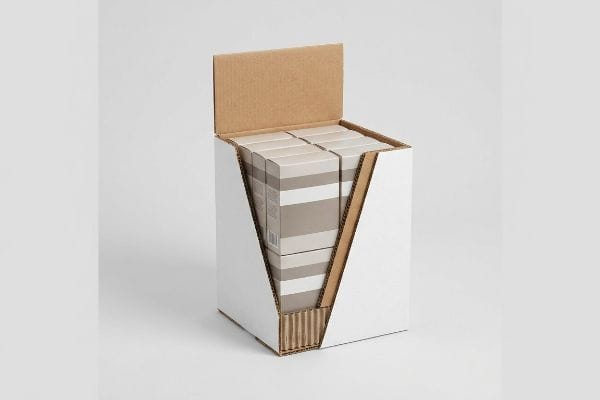
إطلاق حملة تسويقية في متاجر التجزئة أمرٌ مرهقٌ بما فيه الكفاية، دون الحاجة إلى القلق بشأن انهيار مستودعات البضائع. إن فهم الخصائص الميكانيكية الدقيقة لموادك يضمن بقاء علامتك التجارية في رفوف المتاجر.
تتميز صناديق العرض الكرتونية بمرونة هيكلية فائقة، وشحن اقتصادي، وإمكانية إعادة تدويرها بالكامل. تستخدم هذه الهياكل خفيفة الوزن أقواسًا داخلية مخددة لامتصاص الصدمات، مما يسمح للعلامات التجارية بنقل البضائع الثقيلة بأمان مع الحفاظ على وضوح رسوماتها الجذابة والقابلة للتخصيص في المتجر.

لكن فهم التعريفات الأساسية على الشاشة لن ينقذك عندما تصل المنصات إلى أرضية المستودع. دعونا نحلل كيف تُترجم هذه الخصائص المادية إلى ضمان استمرارية سلسلة التوريد على أرض الواقع.
ما هي مزايا صناديق الكرتون؟
كل علامة تجارية تريد أن يبرز منتجها، لكن توسيع نطاق هذا الظهور على الصعيد الوطني يمكن أن يستنزف ميزانية عملياتك بسرعة.
تتمحور المزايا الرئيسية لصناديق الكرتون حول سهولة تعبئتها بشكل مسطح وإمكانية تخصيص هيكلها. فعلى عكس رفوف الأسلاك المعدنية الدائمة، تُشحن منصات العرض المؤقتة المصنوعة من الكرتون المموج بشكل مسطح تمامًا، مما يزيد بشكل كبير من كثافة الحاويات ويُلغي تكاليف الشحن الباهظة المرتبطة بنقل المساحات الفارغة عبر سلسلة التوريد العالمية.
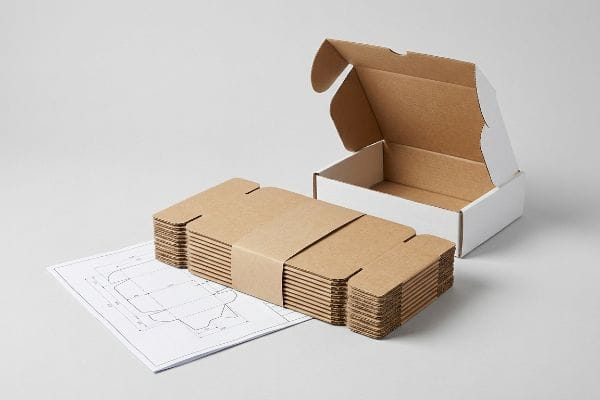
إن الميزة الحقيقية لا تقتصر على المواد الخام الرخيصة فحسب، بل تتعلق أيضاً بالتخلص بلا هوادة من الفراغ في بصمتك اللوجستية.
لماذا تُحقق صناديق الكرتون المُعبأة بشكل مسطح أقصى عائد على الاستثمار في الخدمات اللوجستية؟
غالباً ما تفترض فرق التسويق أن التركيبات المعدنية الملحومة الدائمة تضمن عائداً أعلى على الاستثمارذات الإقبال الكبير. لذا، يلجؤون إلى الهياكل الفولاذية الثقيلة لاعتقادهم أن الصلابة المطلقة هي الطريقة الوحيدة الآمنة لدعم السلع الاستهلاكية سريعة التداول الثقيلة خلال فترات عرض طويلة في المتاجر.
في منشأتي، أرى باستمرار فرق المشتريات مصدومة من صعوبة نقل المعدات الثابتة. حاوية واحدة بطول 40 قدمًا تتسع لحوالي 250 رفًا سلكيًا ملحومًا، ما يعني دفع تكلفة شحن باهظة لمجرد نقل هذه المعدات. أقنعتُ أحد العملاء بالتحول إلى استخدام عبوات مسطحة من الكرتون المموج المُصنّع هندسيًا لحملة ترويجية مدتها 12 أسبوعًا. كان الفرق واضحًا جدًا - بمجرد تمرير يدك على كومة ألواح الكرتون المسطحة ذات السطح الأملس والمتراص على منصة نقالة، ستدرك الفرق الهائل في الكفاءة. وضعنا 1500 وحدة مسطحة في نفس الحاوية. هذا وفّر علينا تكلفة شحن إضافية بنسبة 300%، مما قلل بشكل كبير من تكلفة الوحدة مع الحفاظ على سلامة بضائعهم الثقيلة.
| أخطاء شائعة للمبتدئين | الحل الاحترافي | فوائد أرضية البيع بالتجزئة |
|---|---|---|
| شحن شاشات عرض معدنية ملحومة بالكامل | أنظمة التعبئة المسطحة المموجة الهندسية | يلغي العقوبات المكانية الهائلة المتعلقة بنقل البضائع |
| تجاهل كثافة حجم الحاوية | حساب ارتفاعات رص المنصات بدقة | يزيد من عائد الاستثمار لكل حاوية شحن |
| الإفراط في الهندسة من أجل العروض الترويجية القصيرة | باستخدام مزمار مؤقت عالي الأداء | يقلل من تكاليف تصنيع المواد الأولية |
أُذكّر عملائي دائمًا بأنّ شحن مساحات فارغة هو أسرع طريقة لإهدار ميزانية الحملة. من خلال التحوّل إلى العبوات المسطحة المصنوعة من الكرتون، يُمكنني مضاعفة كثافة شحنتك فورًا وحماية هوامش ربحك الحقيقية.
🛠️ مكتب هارفي: هل تدفع مبالغ زائدة مقابل شحن بضائع غير مستخدمة مع تجهيزات متاجر ثابتة؟ 👉 احصل على تقييم عائد الاستثمار لمنتجاتك الجاهزة للتجميع ↗ — تواصل مباشر مع مكتبي. أضمن لك عدم تلقي أي رسائل تسويقية آلية مزعجة.
ما هي استخدامات صناديق العرض؟
يُعدّ تأمين مساحة أرضية فعلية في المتاجر الكبيرة منافسة شرسة تعتمد على الحسابات الرياضية.
تُستخدم صناديق العرض في التسويق الاستراتيجي لمتاجر التجزئة، وتحديداً لتسليط الضوء على إطلاق المنتجات الجديدة، وتعزيز عمليات الشراء العفوية، وتحسين استخدام مساحة الممرات. فهي تُنظم السلع الاستهلاكية بشكل فعلي، وتعمل أيضاً كوسائل ترويجية مستقلة، حيث توضع بشكل استراتيجي في تقاطعات المتاجر ذات الحركة المرورية العالية أو مناطق الدفع لزيادة مبيعات التجزئة اليومية إلى أقصى حد.
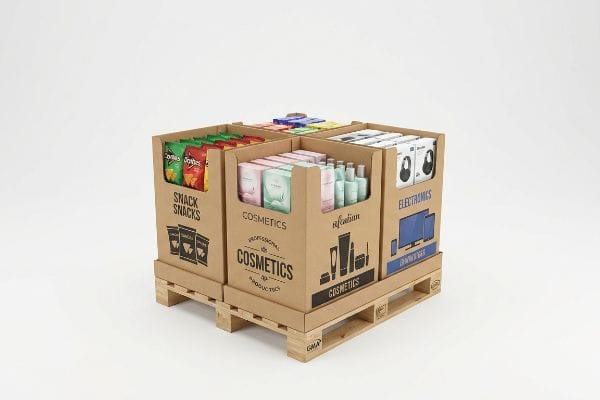
ومع ذلك، فإن تصميم وحدة مذهلة بصريًا يصبح عديم الفائدة تمامًا إذا رفض بائع التجزئة وضعها في طابقه الخاضع لرقابة صارمة.
إتقان صناديق العرض ذات هندسة المنصات الجزئية
كثيراً ما تُسوّق العلامات التجارية منصات عرض أرضية ضخمة بحجم 48×40 بوصة (1219×1016 مم)لكبرى متاجر التجزئة، مُفترضةً أن المساحة الكبيرة تضمن تلقائياً مبيعات أفضل. وتصمم هذه الوحدات على شكل كتل متجانسة لا تقبل القسمة على واحد، تتطلب مساحة كاملة في نهاية أو في ممر القيادة الرئيسي لكي تعمل، متجاهلةً تماماً القواعد المكانية الصارمة للتسويق الحديث.
كثيرًا ما يسألني المشترون عن سبب رفض مديري المتاجر فورًا لعروضهم الرائعة التي تشغل منصات نقالة كاملة. والجواب بسيط: مساحة العرض القيّمة في المتاجر محدودة للغاية. عندما أستشيرهم بشأن هذه الرفض، أسمع صوت ركل قواعد خشبية ضخمة إلى المخزن لأنها ببساطة لا تتناسب مع خطة المتجر الترويجية الحالية. بدلًا من ذلك، أصمم منصات عرض باستخدام أبعاد دقيقة لأجزاء المنصات النقالة، وتحديدًا منصات ربعية بقياس 24×20 بوصة (609×508 مم)الدقيقإمكانية مشاركة أربع حملات تسويقية مختلفة قاعدة منصة نقالة واحدة وفقًا لمعايير جمعية مصنعي البقالة (GMA). يتيح هذا التعديل الدقيق لمشتري التجزئة زيادة كثافة عرض منتجاتهم في المتجر بسلاسة، مما يضمن عمليًا موافقتهم على المساحة المصغّرة.
| أخطاء شائعة للمبتدئين | الحل الاحترافي | فوائد أرضية البيع بالتجزئة |
|---|---|---|
| يتم وضع 4 منصات نقالة كاملة فقط بحجم 48×40 | بصمات ربع المنصة الهندسية | يضمن الحصول على موافقة سريعة من المشتري |
| إغلاق ممرات المتجر الرئيسية | الالتزام بالحدود المكانية الجزئية5 | يمنع الرفض الفوري من قبل تجار التجزئة |
| التعامل مع العروض على أنها إما كل شيء أو لا شيء | استخدام تقسيم الحملات المعيارية | يُحسّن وضع التقاطعات ذات الحركة المرورية العالية |
لا أسمح أبدًا لعملائي بعرض وحدات عرض كبيرة الحجم دون دراسة كافية. من خلال تصميم وحدات عرض تناسب المساحات الصغيرة، أضمن توافقها التام مع التوزيع المكاني للمتجر، مما يزيد بشكل كبير من فرص الموافقة على عرضها في المتجر.
🛠️ مكتب هارفي: هل ما زلت تواجه رفضًا من مشتري التجزئة المتشددين لعرض منتجاتك الكبيرة على أرضيات المتاجر؟ 👉 اطلب تحليلًا مكانيًا ↗ — حمّل الملف بأمان. صندوق رسائلي مفتوح إذا كانت لديك أي أسئلة لاحقًا.
ما هي خصائص الكرتون؟
الكرتون ليس مجرد ورق مسطح؛ إنه مادة نشطة ومسامية تتفاعل مادياً مع بيئتها المباشرة.
تتمحور الخصائص الفيزيائية للكرتون حول طبيعته المسامية الخلوية، حيث تستخدم تموجات داخلية مقوسة لتوزيع الوزن الحركي. ولأن ألياف الورق المقوى الخام تمتص الرطوبة المحيطة بنشاط، فإن المادة تتمدد وتنكمش تبعًا للرطوبة الإقليمية، مما يؤثر بشكل مباشر على سلامة هيكلها أثناء النقل الثقيل.
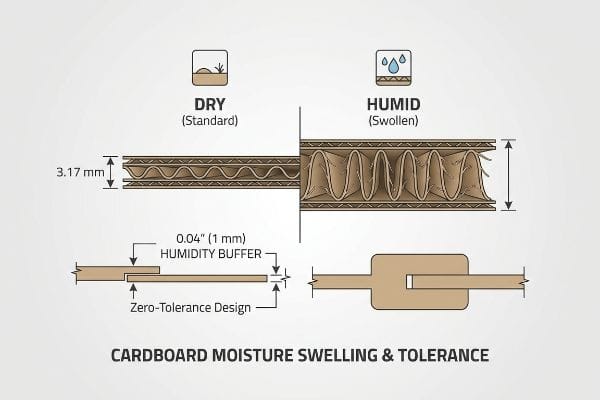
إن التعامل مع هذه المادة كما لو كانت بلاستيكًا ثابتًا على شاشة الكمبيوتر هو طريقة مؤكدة لإفساد خط تجميع التعبئة والتغليف المشترك الخاص بك.
الخاصية الخفية لانتفاخ الكرتون بالرطوبة
غالباً ما يحدد مصممو الجرافيك العاملون في مكاتب مكيفة الهواء هوامش التفاوت المسموح بها في فتحات القوالب بناءً على السماكة الجافة المطلقةللوحة . فهم يفترضون أن فتحة مقطوعة بدقة 3.17 مم (0.125 بوصة) ستستقبل تماماً لساناً مطابقاً لها في الحجم، ويتعاملون مع الألياف المموجة تماماً كما لو كانوا يبنون باستخدام قوالب بلاستيكية صلبة وثابتة.
الواقع في قسم التعبئة والتغليف مختلف تمامًا. تخيّل الكرتون الخام كإسفنجة كثيفة للغاية. عندما أشحن العبوات المسطحة إلى بيئات عالية الرطوبة مثل فلوريدا، تمتص بطانة اختبار 32ECT (اختبار مقاومة الحواف) المسامية الرطوبة المحيطة وتتمدد. شاهدتُ ذات مرة فريق تجميع مُحبطًا يتصبب عرقًا وهو يحاول إدخال الألسنة المتمددة في فتحات ضيقة جدًا، مما أدى إلى صوت مزعج لسحق التجاويف الداخلية وتمزق الألواح العلوية. قاعدتي بسيطة: أُضيف تلقائيًا مسافة "فاصلة للرطوبة" مقدارها 1 مم (0.04 بوصة) في فتحات الاستقبال لجميع آليات التعشيق. هذه الإضافة المكانية الصغيرة تُعادل تمامًا تمدد الورق، مما يضمن تجميعًا سلسًا بغض النظر عن حالة الطقس في المستودع.
| أخطاء شائعة للمبتدئين | الحل الاحترافي | فوائد أرضية البيع بالتجزئة |
|---|---|---|
| تصميم فتحات ذات هامش خطأ صفري | مخازن رطوبة هندسية بسماكة 1 مم7 | يمنع تحطم المزامير أثناء التجميع |
| تجاهل مناخات مستودعات الوجهة | تعديل ملفات التصميم بمساعدة الحاسوب (CAD) وفقًا لنسبة الرطوبة الإقليمية | يزيل الاحتكاك الناتج عن عملية تجميع شركة التعبئة والتغليف |
| معاملة الورق المقوى مثل البلاستيك الصلب | التكيف مع تمدد الألياف المسامية8 | يوفر ذلك تأخيرات هائلة في العمل اليدوي |
أصمم اللوحة دائمًا لتناسب البيئة المادية التي ستُستخدم فيها، وليس الشاشة الرقمية التي صُممت من أجلها. إن مراعاة تأثير الرطوبة يمنع مشاكل اللصق غير الضرورية والتأخيرات الكبيرة في خط التجميع.
🛠️ مكتب هارفي: هل تتمزق شاشات العرض لديك من الزوايا أثناء تجميعها في مستودع رطب؟ 👉 اطلب مراجعة التفاوتات ↗ — لا توجد استمارات تُسبب مكالمات مبيعات لا تنتهي. قيمة حقيقية فقط.
ما هي خصائص الصندوق؟
لا تكون قوة صندوق الشحن الرئيسي إلا بقدر دقة هندسته الرأسية.
تتضمن الخصائص المميزة للصندوق المُجمَّع بالكامل شكله الهندسي ثلاثي الأبعاد الصلب وزواياه الأربع الحاملة للوزن. ويستمد الكرتون الرئيسي المموج القياسي ما يصل إلى 60% من قوة ضغطه الديناميكية من المحاذاة الرأسية المثالية لهذه الحواف الهيكلية أثناء تكديس المنصات.
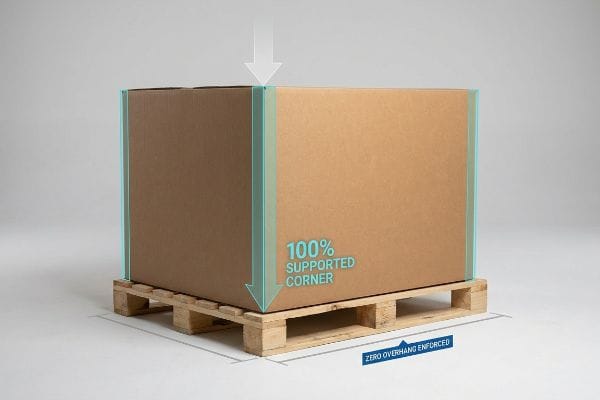
لكن معرفة قوة المادة النظرية لا تكفي عندما تبدأ آلات المصنع بالعمل ويحاول قسم المشتريات إضافة بضع وحدات إضافية فقط.
لماذا تفشل خصائص الصناديق القياسية في أرضية المصنع؟
كثيراً ما تحاول فرق المشتريات زيادة أبعاد الكرتون الرئيسي إلى أقصى حد ممكن لاستيعاب بضع وحدات إضافية، ظناً منها أن استخدام مواد شديدة التحمل سيحمي البضائع بشكل طبيعي. ويعتقدون أن قدرة تحمل الكرتون المموج السميك(9) ستعوض بسهولة عن بروز الصندوق قليلاً عن سطح المنصة الخشبية.
هذا ليس مجرد كلام نظري، بل أراه يحدث فعلاً في مختبرات الاختبار عندما يصرّ العملاء على تحقيق أقصى كثافة شحن. في منشأتي، أقيس العواقب الميكانيكية الوخيمة لبروز المنصات. ولأن الصندوق يستمد قوته من زواياه، فإن بروزًا بمقدار 12.7 ملم فقطيعني أن تلك الحواف الهيكلية الحساسة معلقة في الهواء دون أي حمل. عندما أشغل مكبس الضغط الهيدروليكي، أرى الطبقة السفلية غير المدعومة تنحني للخارج بوضوح، وأسمع صوت فرقعة حادة للجدران المضلعة وهي تنهار قبل حدوث التواء كارثي. لذلك، أفرض حدًا صارمًا لحجم الصندوق المحيط بالمنصة في برنامج التصميم بمساعدة الحاسوب (CAD)، مما يقلل حسابيًا أقصى مساحة للكرتون بمقدار 12.7 ملم بالضبط داخل محيط المنصة. من خلال تطبيق هذا التعديل الدقيق، أضمن بقاء الزوايا الهيكلية مدعومة بالكامل بالقاعدة الخشبية، مما يمنع تمامًا تلفيات النقل ويحول دون تكبّد تجار التجزئة تكاليف باهظة.
| أخطاء شائعة للمبتدئين | الحل الاحترافي | فوائد أرضية البيع بالتجزئة |
|---|---|---|
| السماح للكرتون الرئيسي بالبروز فوق المنصات | تقليص المساحة بمقدار 0.5 بوصة | يعيد 60% من قوة ضغط الزوايا11 |
| الاعتماد بشكل صارم على درجات المواد المسطحة | ضمان دعم الخشب العمودي | يقضي على الانهيار الكارثي للطبقة السفلية12 |
| زيادة حجم الصندوق إلى أقصى حد ممكن مقارنةً بالهندسة | تطبيق حدود بدون بروز | يمنع فرض رسوم إضافية على الأضرار التي تلحق بالشحنات الثقيلة |
لا أسمح أبدًا للجشع المكاني بالتأثير على الهندسة الهيكلية. من خلال ضمان الدعم الدقيق للزوايا في كل منصة نقالة، أحمي المنتج المادي وأحافظ على أرباحك من خسائر الشحن التي يمكن تجنبها تمامًا.
🛠️ مكتب هارفي: لا تدع عيبًا هيكليًا بحجم 2 مليمتر يُفسد إطلاقًا ضخمًا لـ 500 متجر. 👉 أرسل لي ملف تصميم القالب ↗ — سأُجري اختبارات دقيقة للحسابات قبل أن تُهدر ميزانيتك على الإنتاج الضخم.
خاتمة
يمكنك اختيار مورد أرخص وغير موثوق، ولكن عندما تتجاوز علبة الكرتون الرئيسية المحملة فوق المنصة وتنهار في مستودع رطب، مما يؤدي إلى انبعاج شديد في القاعدة يتسبب في رفض فوري من قبل بائع التجزئة وأسابيع من إعادة العمل اليدوي المكلف. هذه هي ورقة المواصفات الدقيقة التي يستخدمها أفضل 10 عملاء تجزئة لدي لضمان عدم رفض أي طباعة. توقف عن التخمين بشأن التفاوتات الهيكلية ودعني شخصيًا أقوم بفحص ملفاتك من خلال تدقيق القوالب المجاني ↗ لاكتشاف أخطاء الهندسة الفادحة قبل بدء الإنتاج الضخم.
"العروض المؤقتة مقابل العروض الدائمة - PopDisplay"، https://popdisplay.me/temporary-vs-permanent-displays/. بيانات تجريبية تقارن التكلفة الإجمالية للملكية والعائد على الاستثمار للتركيبات المعدنية الدائمة مقابل الحلول المؤقتة المصنوعة من الكرتون المموج في قطاع التجزئة. دور الدليل: التحقق من صحة الادعاءات المضادة؛ نوع المصدر: تقرير تحليل السوق. يدعم: افتراض تفوق المعدن من حيث العائد على الاستثمار. ملاحظة النطاق: التركيز على بيئات الترويج ذات الحركة المرورية العالية. ↩
"أنواع عرض المنصات: كاملة، نصف، وربع - GreenDot Packaging"، https://greendotpackaging.com/understanding-pallet-display-types-full-half-and-quarter-pallet-displays/. التحقق من أبعاد معايير الصناعة لعرض المنتجات في متاجر التجزئة بالحجم الكامل، بما يتوافق مع أحجام منصات GMA. دور الدليل: المواصفات الفنية؛ نوع المصدر: دليل الخدمات اللوجستية/التجزئة. يدعم: الادعاء بأن 48×40 بوصة هي مساحة قياسية للعرض بالحجم الكامل. ملاحظة النطاق: ينطبق بشكل أساسي على معايير التجزئة في أمريكا الشمالية. ↩
"ما هي أحجام المنصات القياسية ولماذا هي مهمة؟"، https://crateandpack.com/what-are-standard-pallet-sizes-and-why-does-it-matter/. التحقق من الأبعاد القياسية للتعبئة الجزئية على المنصات في الخدمات اللوجستية لتجارة التجزئة. دور الدليل: التحقق الفني؛ نوع المصدر: معيار صناعي/دليل لوجستي. يدعم: دقة قياسات محددة. ملاحظة النطاق: ينطبق على معايير GMA في أمريكا الشمالية. ↩
منصات GMA "48×40" | أكبر مصنّع ومورّد للمنصات، https://www.palletone.com/products/gma-pallets/. التحقق من أبعاد منصات GMA القياسية المستخدمة في الخدمات اللوجستية لمتاجر التجزئة الكبيرة. دور الدليل: المواصفات الفنية؛ نوع المصدر: معيار لوجستي. يدعم: القياس الأساسي للعروض القائمة على المنصات. ملاحظة النطاق: معايير أمريكا الشمالية تحديدًا. ↩
"متى يُستخدم استخدام المنصات الجزئية وأغطية العرض - حلول TPH العالمية"، https://www.tphinc.com/custom-point-of-purchase-pop-pos-retail-store-displays-packaging-blog/when-to-use-partial-pallets-display-skirts/. دليل على إرشادات الامتثال لمعايير البيع بالتجزئة فيما يتعلق بمساحات العرض غير القياسية أو الجزئية لتجنب إعاقة الممرات. دور الدليل: أفضل الممارسات في هذا المجال؛ نوع المصدر: دليل إدارة البيع بالتجزئة. يدعم: الادعاء بأن الالتزام بالحدود المكانية يمنع رفض المنتجات. ملاحظة النطاق: التركيز على الامتثال لمعايير متاجر البيع بالتجزئة الكبيرة. ↩
"تأثيرات الرطوبة النسبية على قوة الضغط لـ..."، https://open.clemson.edu/all_theses/3225/. تحدد المعايير الفنية لتصميم التغليف عادةً هوامش التفاوت المسموح بها للسمك الجاف، والتي قد لا تأخذ في الحسبان التمدد الناتج عن امتصاص الرطوبة. دور الدليل: التحقق الفني؛ نوع المصدر: معيار صناعي/دليل هندسي. يدعم: التباين بين افتراضات التصميم وسلوك المادة. ملاحظة النطاق: يركز على معايير الورق المقوى المموج. ↩
[ملف PDF] تخزين ومناولة مواد التغليف الكرتونية المموجة، https://www.fibrebox.org/assets/2025/07/B155_TR2-3_Storage_and_Handling_2018_Edition.pdf. التحقق الفني من الإزاحة القياسية 1 مم المستخدمة في تصميم التغليف الهيكلي لمراعاة التمدد الناتج عن امتصاص الرطوبة. دور الدليل: المواصفات الفنية؛ نوع المصدر: دليل هندسة التغليف. يدعم: ضرورة وجود هوامش سماحية لمنع تشوه المادة. ملاحظة النطاق: ينطبق تحديدًا على الكرتون المموج. ↩
[ملف PDF] تأثير محتوى الرطوبة على قوة ضغط الصناديق: FBA BCT …، https://renewablebioproducts.gatech.edu/sites/default/files/2025-12/4effects-of-moisture-content-on-box-compression-strength.pdf. بيانات علمية توضح كيفية تمدد ألياف السليلوز في الورق المقوى عند امتصاص بخار الماء من الهواء. دور الدليل: التحقق من الخصائص الفيزيائية؛ نوع المصدر: مجلة علوم المواد. يدعم: الادعاء بأن الورق المقوى يتصرف كمادة مسامية قابلة للتمدد بدلاً من كونه مادة صلبة. ملاحظة النطاق: يختلف باختلاف نوع البطانة والوسط. ↩
"دراسة تأثير صلابة سطح المنصة على الكرتون المموج..."، https://pmc.ncbi.nlm.nih.gov/articles/PMC8585293/. وثائق فنية حول معايير تكديس ASTM أو ISO تشرح كيف أن سُمك المادة لا يُعوض عن عدم الاستقرار الهيكلي الناتج عن بروز المنصة. دور الدليل: التحقق الفني؛ نوع المصدر: معيار هندسي. يدعم: عدم كفاءة الاعتماد على درجة المادة بدلاً من الهندسة. ملاحظة النطاق: ينطبق على الكراتين الرئيسية المموجة. ↩
[ملف PDF] التنبؤ بتأثير الفجوات بين ألواح سطح المنصة على...، https://repository.rit.edu/cgi/viewcontent.cgi?article=1053&context=japr. بيانات فنية من معايير هندسة التغليف تُظهر انخفاض قدرة تحمل الأحمال عندما لا تدعم المنصة زوايا الصندوق. دور الدليل: التحقق الفني؛ نوع المصدر: معيار صناعي/دليل هندسي. يدعم: التأثير الكمي المحدد لبروز 0.5 بوصة على الانهيار الهيكلي. ملاحظة النطاق: ينطبق على الكراتين الرئيسية المموجة. ↩
[ملف PDF] تأثير إزاحة الصناديق الموضوعة على المنصات على قوة الضغط للوحدات...، https://digitalcommons.calpoly.edu/cgi/viewcontent.cgi?article=1067&context=it_fac. بيانات فنية من معايير هندسة التغليف توضح نسبة فقدان القوة عندما تتجاوز الكراتين الرئيسية حواف المنصات. دور الدليل: التحقق الكمي؛ نوع المصدر: دراسة هندسية. يدعم: تأثير البروز على قوة الضغط. ملاحظة النطاق: خاص بالكرتون المموج. ↩
"خمس طرق لتثبيت أحمال المنصات - عالم التغليف"، https://www.packworld.com/leaders-new/machinery/stretch-wrapping-load-stabilization/video/22924253/five-ways-to-stabilize-pallet-loads. تحليل آليات الدعم الهيكلي التي توزع الحمل لمنع انهيار الكراتين في المستويات السفلية أثناء الشحن على المنصات. دور الدليل: التحقق الفني؛ نوع المصدر: دليل لوجستي. الدعامات: فعالية الدعامات الرأسية. ملاحظة النطاق: التركيز على الشحن الثقيل. ↩