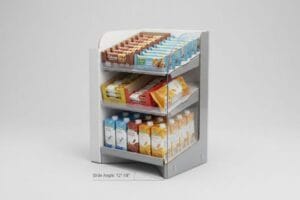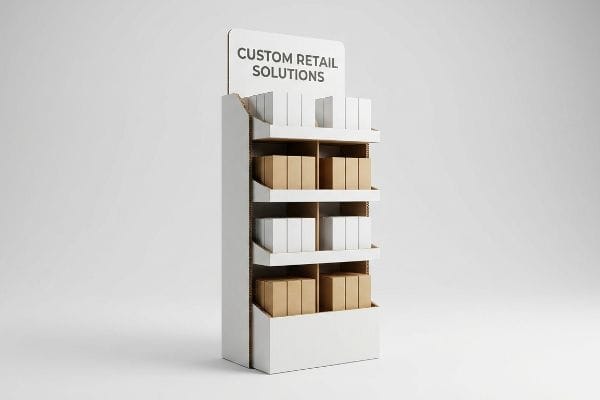
Investing heavily in product development means nothing if your brand gets overlooked in crowded aisles. Point of purchase merchandising stops rushed shoppers and forces an immediate buying decision.
To use POP merchandising effectively means deploying physical retail structures that strategically disrupt shopper traffic, isolate brand messaging, and trigger immediate impulse purchases. This targeted spatial engagement drastically increases product visibility, bypasses standard shelf clutter, and drives measurable sales lift during critical promotional campaigns and new item rollouts.

But knowing the theory behind these displays isn't enough when the factory machines start running.
What Are the 4 P's of Merchandising?
Launching a great product without a solid commercial framework is a guaranteed way to fail at the store level.
The 4 P's of merchandising are Product, Price, Place, and Promotion. These foundational business mechanics ensure retail campaigns align perfectly with consumer expectations, store layouts, and supply chain logistics, ultimately guaranteeing that the physical rollout integrates seamlessly into a specific retailer's distinct operational ecosystem.
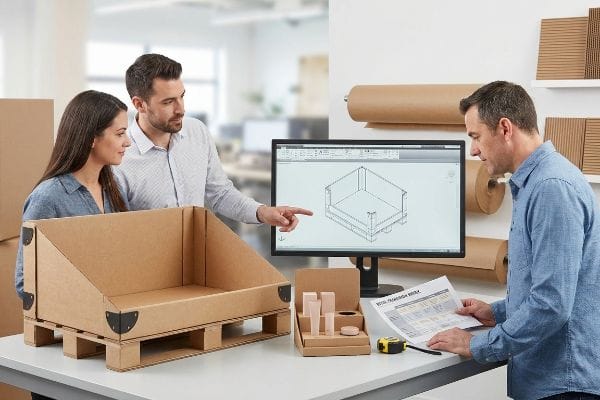
Bridging this textbook strategy to actual factory execution requires a precise reality check.
Aligning the 4 P's of Merchandising with Retail Frameworks
New brands frequently attempt to launch physical campaigns without mastering these foundational frameworks, assuming a good item will naturally sell itself. They try to design a universal display, completely ignoring the strict business mechanics1 required to adapt their strategies across different retailer categories. Without this fundamental alignment, supply chains break down2.
Even experienced marketing teams often fall into the trap of designing a beautiful unit that physically contradicts the "Place" and "Price" constraints of their target store. I see this constantly when teams try to force a delicate cosmetic design into a harsh warehouse club environment. When the forklift operators start moving these units, the raw corrugated board tears with a loud rip, and the store manager immediately rejects the damaged freight. To fix this, I mandate a strict retail framework matrix before engineering any CAD (Computer-Aided Design) file, mathematically mapping the logistical strategy directly against the specific retailer's operational model to prevent these costly, margin-killing chargebacks3.
| Common Rookie Mistake | The Pro Fix | Retail-Floor Benefit |
|---|---|---|
| Ignoring warehouse club logistics | Map CAD files to retail matrix4 | Eliminates forklift damage |
| Universal display sizing | Design specific store footprints | Prevents manager rejections |
| Weak corrugated board grades | Specify structural paper fiber5 | Ensures safe stacking |
I refuse to engineer a display until we verify the exact retail environment it will live in. Matching your structural packaging directly to the store's logistics is the only way to protect your profit margin.
🛠️ Harvey's Desk: Are you struggling to adapt your brand's display strategy to different big-box retailer formats? Send me your target store list, and I'll flag the logistical hurdles before you design. 👉 Request A Structural Assessment ↗ — Direct access to my desk. Zero automated sales spam, I promise.
What Is the Point of a POP-up Shop?
A temporary installation isn't just about aesthetic branding; it is a calculated physical disruption designed to break a shopper's routine and capture immediate foot traffic.
The primary point of a POP-up shop is to create an immersive, temporary retail environment that drives intense brand engagement, tests new product lines, and capitalizes on impulse purchasing behavior without the long-term logistical liabilities or heavy financial commitments of permanent brick-and-mortar storefront leases.
While the marketing goal is clear, building these temporary structures introduces unique spatial challenges.
The 3-3-3 Spatial Engagement Rule for POP-up Shops
Junior marketing teams frequently design these temporary retail displays strictly for up-close viewing on backlit computer monitors. They focus heavily on complex graphic details, completely ignoring the physical reality of how rushed shoppers navigate wide store aisles. This causes the installation to blend into the background, failing to pull the necessary foot traffic to justify the investment6.
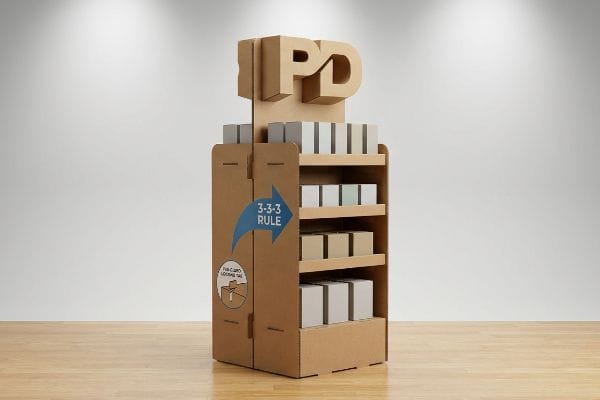
Think of a pop-up shop like a highway billboard; if you cannot read it at high speed, it fails entirely. A frequent question buyers ask is how to make their temporary footprint stand out in a crowded space. The answer lies in the "3-3-3 Rule" of retail engagement, which dictates capturing attention from thirty feet away, engaging interest at three feet, and driving the tactile conversion at three inches (76.2 mm). I have watched store clerks struggle for fifteen minutes trying to assemble overly complex, text-heavy units, eventually resorting to sticky clear tape just to hold the wobbly structure together. By ruthlessly stripping away visual clutter and using aggressive die-cut shapes, we force the human eye to engage with the display immediately.
| Common Rookie Mistake | The Pro Fix | Retail-Floor Benefit |
|---|---|---|
| Text-heavy display panels | Implement the 3-3-3 spatial rule | Captures 30-foot attention7 |
| Complex structural assembly | Use pre-glued modular locking tabs | Saves 15 minutes of labor8 |
| Flat, boring silhouettes | Add 3D die-cut header shapes | Triggers impulse conversions |
I engineer every temporary installation to aggressively grab attention from thirty feet away. If your display doesn't structurally disrupt the shopper's visual path, you are just paying to ship empty cardboard across the country.
🛠️ Harvey's Desk: Are your temporary retail structures failing to stop foot traffic in those crucial three seconds? 👉 Download The Spatial Strategy Guide ↗ — Download safely. My inbox is open if you have questions later.
What Is the Difference Between POP and POS?
Understanding spatial zoning in retail prevents catastrophic chargebacks. Mixing up aisle footprints with checkout counter limitations is a fast way to get your entire campaign rejected.
The difference between POP and POS lies in retail placement. Point of Purchase (POP) merchandising targets the broader store aisles to influence early buying decisions, while Point of Sale (POS) focuses strictly on the checkout zone to trigger last-minute impulse purchases right before the final transaction.
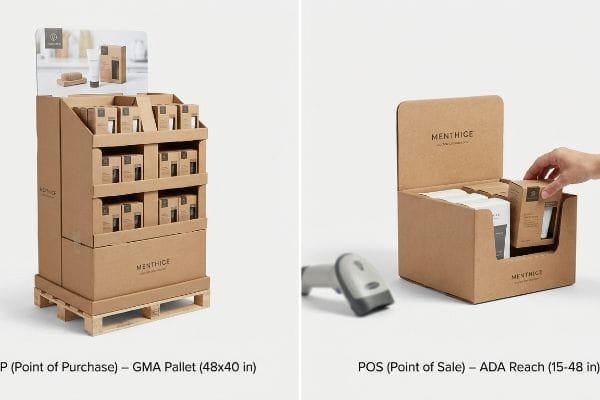
But these distinct zones aren't just marketing terms; they are dictated by strict, unforgiving physical regulations.
Navigating the ADA vs. GMA Spatial Constraints
Trading companies frequently pitch a scalable design where a large floor merchandiser can simply be reduced by 50% to serve as a checkout counter display. They assume a single structural file can effortlessly float between the aisles and the registers to save tooling costs. This completely ignores the strict legal and logistical rules dictating these two separate zones9.
A good rule of thumb is to treat aisle displays like heavy freight vehicles and checkout displays like precision instruments. You cannot shrink a tractor-trailer to drive it on a sidewalk. I constantly see brands try to force a heavy, shrink-to-fit corrugated base into a register zone, only to have the store manager physically toss it in the trash because it blocks the checkout scanner. POP files must be strictly anchored to the GMA (Grocery Manufacturers Association) 48×40 inch (1219×1016 mm) pallet limit for warehouse load bearing. Conversely, POS files must strictly comply with the ADA (Americans with Disabilities Act) 15-48 inch (381-1219 mm) forward reach compliance window. I permanently separate these engineering pipelines because crossing them always results in heavy friction and complete retail rejection.
| Common Rookie Mistake | The Pro Fix | Retail-Floor Benefit |
|---|---|---|
| Shrink-to-fit scaling | Separate structural engineering paths | Prevents manager rejection |
| Ignoring pallet dimensions | Anchor strictly to GMA standards10 | Ensures safe freight handling |
| Blocking the register zone | Apply ADA reach compliance limits11 | Guarantees checkout placement |
I refuse to blindly shrink a floor display into a counter tray. Designing for the register requires entirely different structural math than designing for the pallet, and ignoring this reality destroys your brand's retail credibility.
🛠️ Harvey's Desk: Are you unsure if your checkout tray violates the ADA reach range limits? Send me your flat dieline file, and I'll flag the compliance risks before production. 👉 Get Your File Audited ↗ — No forms that trigger endless sales calls. Just pure value.
What Are the Benefits of POP-Ups?
Maximizing agility and visual impact without crippling your logistics budget is critical. Strategic temporary merchandising gives brands a high-visibility footprint without locking them into rigid infrastructure.
The core benefits of POP-ups include rapid market entry, aggressive physical brand disruption, and highly flexible footprint scaling. These temporary retail installations allow marketing teams to test consumer demand in real-time, bypass permanent listing fees, and quickly swap out seasonal messaging without sustaining massive long-term overhead costs.
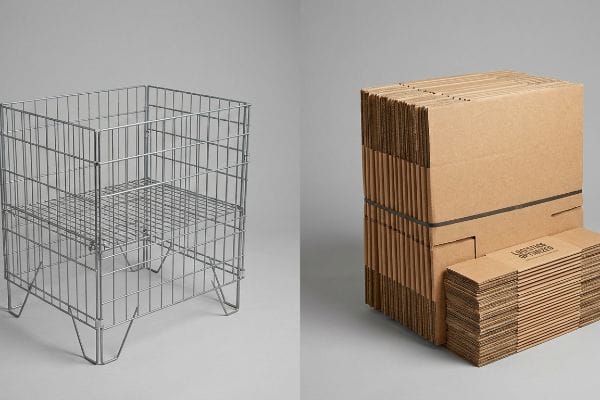
But knowing the theory isn't enough when the machines start running and freight bills start piling up.
Why Permanent Hardware Fails on the Factory Floor
Procurement teams frequently default to permanent welded metal fixtures for short-term retail campaigns, assuming heavy-duty steel automatically guarantees a higher return on investment and better durability. They believe that a rigid, permanent structure is the only way to safely merchandise heavy payloads on the floor.
In my facility, I routinely see brands burn their entire logistics budget simply shipping dead air. A single 40HQ container only holds roughly 250 fully welded wire racks, meaning you pay a massive freight premium just to move empty spatial volume. When I pull the BCT (Box Compression Test) readings on high-performance fluted boards, I prove that we don't need permanent metal for a twelve-week run. By shifting to an engineered flat-pack temporary corrugated architecture, I can fit up to 1,500 units into that exact same 40HQ container. By enforcing this material pivot, I drastically cut the shipping footprint, slashing inbound logistics costs by an estimated 80% while still perfectly supporting their heavy product payloads without the structure buckling.
| Common Rookie Mistake | The Pro Fix | Retail-Floor Benefit |
|---|---|---|
| Shipping empty spatial volume | Engineer flat-pack corrugated designs | Fits 1,500 units per container12 |
| Defaulting to heavy steel | Utilize high-performance fluted boards13 | Slashes inbound logistics costs |
| Over-engineering short campaigns | Match material lifespan to promotion | Improves campaign profit margins |
I always advise brands to stop paying premium freight rates for permanent metal on short-term campaigns. Upgrading to engineered flat-pack corrugated board protects your logistics budget and keeps your capital focused entirely on actual product sales.
🛠️ Harvey's Desk: Do you know exactly how much dead volume you are paying to ship with your current pre-assembled display units? 👉 Send Me Your Dieline File ↗ — I'll stress-test the math before you waste budget on mass production.
Conclusion
You can rely on a universal shrink-to-fit display template, but when a non-compliant register unit blocks the checkout scanner, it triggers an immediate manager rejection that instantly wipes out your campaign's profit margin. Over 500 brand managers use my prepress checklist to avoid these exact fatal early-stage mistakes. Stop guessing on spatial tolerances and let me personally audit your layouts through my Free Dieline Pre-Flight Audit ↗ to catch these structural blind spots before mass production.
"A Comprehensive Guide to Display Compliance | SafetyCulture", https://safetyculture.com/topics/visual-merchandising/display-compliance. Academic or industry analysis demonstrating why standardized displays fail across diverse retail categories due to operational constraints. Evidence role: validation of failure mechanism; source type: industry whitepaper. Supports: the necessity of adapting merchandising to specific retailer frameworks. Scope note: focuses on physical retail environments. ↩
"Retail Success Depends on Organizational Alignment – LinkedIn", https://www.linkedin.com/posts/scottrbenedict_where-retail-revenue-is-won-aligning-operations-activity-7442180600150515712-QF44. Technical explanation of how misalignment between merchandising strategy and retail operations leads to stockouts or logistics failure. Evidence role: causal link; source type: supply chain management journal. Supports: the claim that alignment prevents supply chain breakdown. Scope note: applicable to physical product rollouts. ↩
"How to Prevent Retail Chargebacks: A 3PL Operations Guide", https://getproductiv.com/retail-chargeback-compliance. An industry standard explanation of how retail compliance penalties (chargebacks) are levied against vendors for damaged shipments ornon-compliant displays. Evidence role: technical validation; source type: retail logistics manual. Supports: the financial impact of damaged freight. Scope note: focused on North American Big Box retail standards. ↩
"Warehouse 3D Documentation: Map Any Facility Fast – SkyeBrowse", https://www.skyebrowse.com/news/posts/warehouse-and-logistics-mapping. Technical documentation explaining the process of aligning Computer-Aided Design files with retail inventory and spatial matrices to optimize warehouse distribution. Evidence role: technical process verification; source type: industry manual. Supports: the correlation between CAD mapping and logistics efficiency. Scope note: specific to large-scale retail environments. ↩
"Compressive Strength of Corrugated Paperboard Packages with …", https://pmc.ncbi.nlm.nih.gov/articles/PMC10054506/. Engineering data regarding how specific paper fiber types and grades increase the crush resistance and load-bearing capacity of corrugated cardboard. Evidence role: material science validation; source type: technical specification. Supports: the link between fiber specification and stacking safety. Scope note: applies to industrial packaging standards. ↩
"The Power of Pop-Up Branding: Driving Foot Traffic, Sales, and …", https://www.drglobal.com/insights/the-power-of-pop-up-branding-driving-foot-traffic-sales-and-brand-loyalty/. An authoritative source on retail design or spatial marketing would provide data on how visibility and visual cues directly correlate to foot traffic capture and the subsequent return on investment for temporary installations. Evidence role: validation of a causal relationship; source type: industry research report or academic study on consumer behavior. Supports: the claim that poor visual design leads to financial failure in pop-up retail. Scope note: focusing on physical retail environments. ↩
"Visual Engagement Tactics That Drive Sales In Big-Box Retail", https://thelookcompany.com/blog/visual-engagement-tactics-that-drive-sales-for-big-box-retail/. An authoritative guide on retail psychology or visual merchandising would validate the distance at which specific signage catches a shopper's eye. Evidence role: technical specification; source type: industry standard. Supports: the effectiveness of the 3-3-3 spatial rule. Scope note: applies to open-floor retail environments. ↩
"DISPLAY STRUCTURAL DESIGN FOR INTERACTIVE RETAIL …", https://www.bcipkg.com/display-structural-design-for-interactive-retail-displays/. A comparative analysis of display assembly methods would provide data on labor time reduction. Evidence role: quantitative metric; source type: trade publication. Supports: the efficiency of pre-glued modular components. Scope note: based on average installation times. ↩
"ADA Accessibility Standards – Access-Board.gov", https://www.access-board.gov/ada/. Verification of specific legal regulations (such as ADA accessibility guidelines) and GMA standards that differentiate allowable footprints for aisle displays versus checkout zones. Evidence role: legal verification; source type: regulatory guidelines. Supports: The claim that distinct rules prevent the simple scaling of displays across zones. Scope note: Focus on US retail accessibility and safety standards. ↩
"GMA American Pallet. Dimensions, types and much more.", https://acrosslogistics.com/blog/en/american-pallet-gma. Verification of Grocery Manufacturers Association (GMA) standard pallet dimensions and their role in retail freight safety. Evidence role: Technical Specification; source type: Industrial Standard. Supports: Necessity of adhering to standard pallet sizing for retail footprints. Scope note: Focuses on North American freight standards. ↩
"Chapter 9: Built-In Elements – Access-Board.gov", https://www.access-board.gov/ada/chapter/ch09/. Confirmation of Americans with Disabilities Act (ADA) reach range and clear floor space requirements for point-of-sale areas. Evidence role: Legal Requirement; source type: Government Regulation. Supports: The requirement to maintain accessible zones in checkout placements. Scope note: Applies specifically to US accessibility laws. ↩
"Flat Pack vs Assembled Cardboard Displays: Cost, Shipping …", https://leader-display.com/flat-pack-vs-assembled-cardboard-display/. Technical verification of shipping volume efficiency for flat-pack corrugated retail displays compared to pre-assembled units. Evidence role: quantitative verification; source type: logistics industry standard. Supports: container capacity claim. Scope note: depends on unit size. ↩
"Choosing the Right Corrugated Board for Structural Integrity", https://www.ud-direct.com/blog/choosing-the-right-corrugated-board-for-enhanced-structural-integrity. Comparison of load-bearing capacity and weight of structural fluted boards versus steel for temporary retail installations. Evidence role: material specification; source type: engineering datasheet. Supports: material substitution claim. Scope note: refers to temporary merchandising. ↩