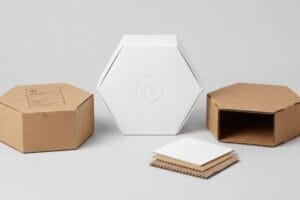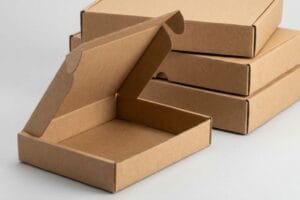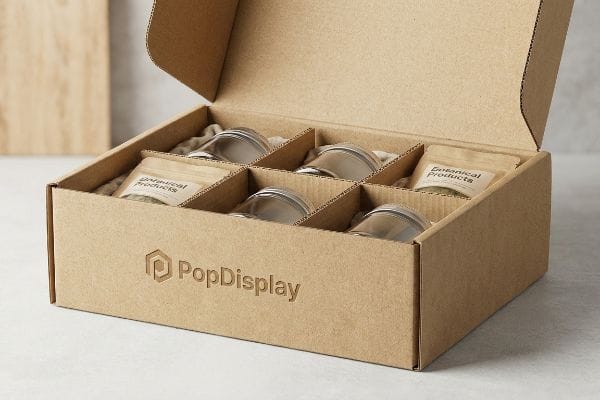
Sourcing high-end hemp packaging is inherently risky. Flimsy mailers crush your brand equity before the customer even opens them. I engineer structures that survive brutal logistics.
Choosing PopDisplay hemp subscription boxes guarantees structural integrity for volatile direct-to-consumer logistics. We utilize heavy-duty corrugated board and internal divider systems to eliminate product shifting, ensuring your fragile botanical products arrive in pristine physical condition every month.
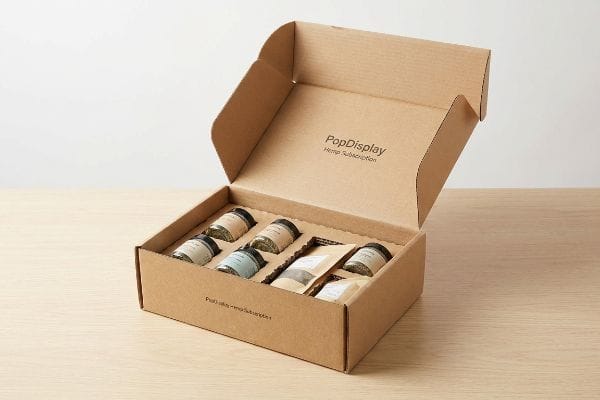
Moving beyond basic visual design requires a deep understanding of packaging realities.
What Are the Most Successful Subscription Boxes?
Success in recurring revenue models demands packaging that connects with consumers instantly while surviving unpredictable delivery routes.
The most successful subscription boxes balance eye-catching graphic design with reliable structural integrity. Top-tier brands prioritize clear unboxing sequences and secure product placements to build customer loyalty, ensuring that each monthly delivery reinforces a premium brand experience.
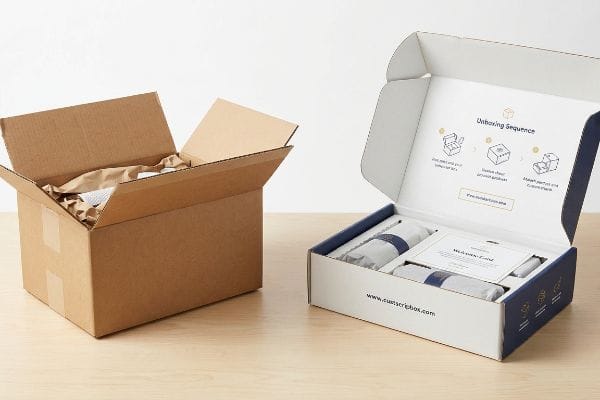
A beautiful design means nothing if the unboxing experience confuses the customer.
The Visual Strategy Trap
Many emerging brands assume that slapping a colorful logo on a generic stock mailer is enough to build a successful subscription service. They focus entirely on digital marketing and basic aesthetics, treating the actual physical box as a cheap, secondary afterthought. Their strategy relies on the theoretical hope that customers care only about the internal products and will completely ignore a flimsy or visually uninspired unboxing presentation when the package finally arrives at their doorstep.
In the real world of consumer retention, a lack of cohesive brand presentation is a major driver1 of subscription churn. When customers receive a poorly designed, standard brown box with no intentional presentation, the perceived value of the entire monthly package plummets immediately. To combat this, successful programs utilize custom printed inserts and carefully branded interior panels to transform a basic delivery into a highly anticipated retail event, driving higher lifetime subscriber values2 and dominating their market sectors.
| Metric/Feature | Generic Approach | Engineered Reality |
|---|---|---|
| Brand Experience | Forgettable unboxing | Premium retail event |
| Customer Retention | High monthly churn3 | Increased brand loyalty4 |
| Perceived Value | Low aesthetic impact | Highly anticipated delivery |
You must intentionally design every touchpoint of the unboxing sequence. Transforming a basic cardboard box into a premium retail experience is the fastest way to secure long-term subscriber loyalty.
🛠️ Harvey's Desk: Is a forgettable unboxing presentation secretly increasing your monthly subscriber churn? 👉 Request a Free Structural Dieline Audit ↗ — I review every structural file personally within 24 hours.
Are Subscription Boxes Still Popular in 2026?
Monthly delivery models continue to thrive, provided the physical unboxing experience consistently matches the premium brand promise.
Yes. Subscription boxes remain highly popular, but brand survival depends entirely on flawless physical execution. Utilizing custom-branded corrugated shipping containers guarantees that the unboxing experience remains compelling, protecting your product while keeping customers engaged with your ongoing monthly campaigns.
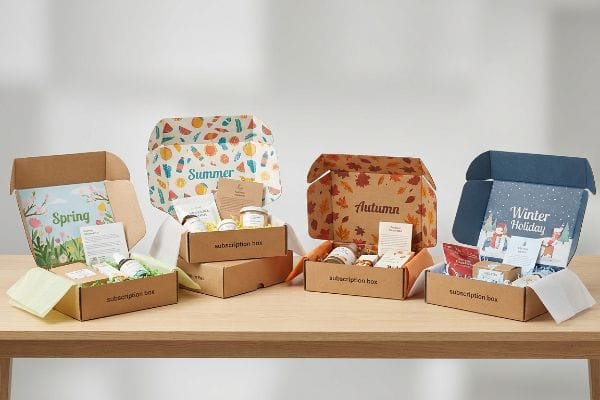
You can retain customers for years, but a boring monthly presentation instantly triggers churn.
The Stale Presentation Trap
A common mistake made by new subscription marketers is assuming that a single, unchanging box design will keep customers engaged indefinitely. They design one generic mailer at launch and continuously use it for years, believing that a static packaging strategy saves money while maintaining baseline brand recognition. They ignore the reality that modern consumer attention spans are incredibly short5 and require constant visual stimulation to justify a recurring monthly expense over a long period.
The actual retail reality is that stagnant packaging leads directly to subscriber fatigue and increased cancellation rates6 over time. When customers receive the exact same uninspired box every single month, the excitement of the unboxing experience completely disappears, making it much easier for them to cancel the service without a second thought. Savvy brands solve this by utilizing rotating seasonal graphics, variable digital printing, and refreshed internal layouts to keep the monthly delivery feeling fresh, engaging, and highly anticipated.
| Metric/Feature | Generic Approach | Engineered Reality |
|---|---|---|
| Visual Strategy | Static unchanging box | Seasonal dynamic graphics |
| Subscriber Engagement | High fatigue risk7 | Continuous excitement |
| Long-Term Value | Rising cancellation rates8 | Maximized retention9 |
Refreshing your packaging aesthetics throughout the year is a proven retail strategy. Never let your monthly delivery become a boring chore for your paying subscribers.
🛠️ Harvey's Desk: Is an unchanging, generic box design causing subscriber fatigue and hurting your long-term retention? 👉 Claim Your Free Freight Density Audit ↗ — 100% confidential. Your unreleased retail designs are safe with me.
Which Wellness Subscription Box Is the Best?
Premium wellness brands ship high-value products, demanding thoughtful presentation strategies that standard folding cartons simply cannot provide.
The best wellness subscription boxes feature customized organizational inserts to elevate the unboxing experience. By intentionally organizing premium items like essential oils and natural soaps, these custom layouts highlight the product's value, guaranteeing the customer feels they are receiving a true luxury experience.
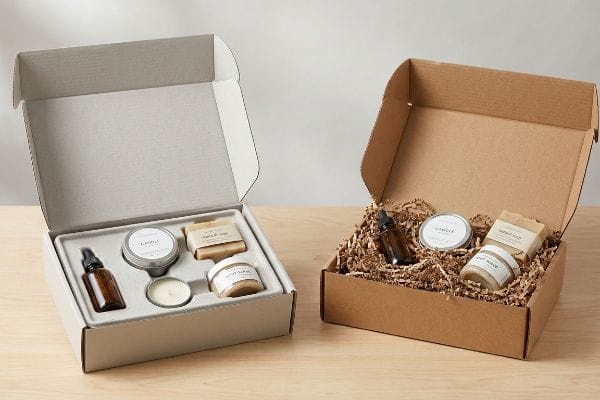
Sending expensive tinctures and candles in disorganized cardboard boxes instantly ruins the perceived value of your wellness brand.
The Cluttered Unboxing Trap
Many wellness startups mistakenly assume that simply padding their products with a handful of cheap crinkle paper or basic tissue is sufficient for a premium presentation. They design a nice exterior graphic but leave the interior layout completely loose and unstructured, hoping the customer will be thrilled just to receive the items safely. This strategy relies on the false belief that basic void fill equates to a luxurious retail experience for high-paying health and beauty consumers10 who expect perfection.
In the competitive wellness market, a disorganized interior layout immediately breaks the illusion of luxury and permanently damages your brand reputation. When heavy glass jars and delicate bath bombs shift and crash into each other during transit, the customer opens a chaotic, messy box that feels incredibly cheap and unprofessional. The most successful wellness boxes use precision-cut internal dividers and custom molded inserts11 to neatly showcase every item, creating a deliberate, high-end presentation that easily justifies their premium monthly pricing.
| Metric/Feature | Generic Approach | Engineered Reality |
|---|---|---|
| Interior Layout | Loose crinkle paper12 | Precision custom dividers13 |
| Brand Perception | Cheap and messy | High-end luxury feel |
| Product Presentation | Chaotic unboxing | Showcased retail display |
A beautiful exterior is useless if the interior looks like a chaotic mess. Structured internal presentation is the absolute key to dominating the premium wellness market.
🛠️ Harvey's Desk: Is a disorganized and cluttered interior layout destroying the perceived value of your wellness brand? 👉 Get a Free Material Chemistry Review ↗ — No account managers in the middle. You talk directly to structural engineers.
What Is the Most Bought Subscription?
High-volume recurring subscriptions dominate the market by optimizing every millimeter of their packaging to ensure frictionless logistical handling on the factory floor.
The most bought subscription boxes maximize global logistics by strictly enforcing engineered nested packaging clearances. Implementing a precise geometric offset tolerance completely eliminates severe surface friction locking between raw corrugated walls, ensuring high-volume mailers can be rapidly extracted without tearing.
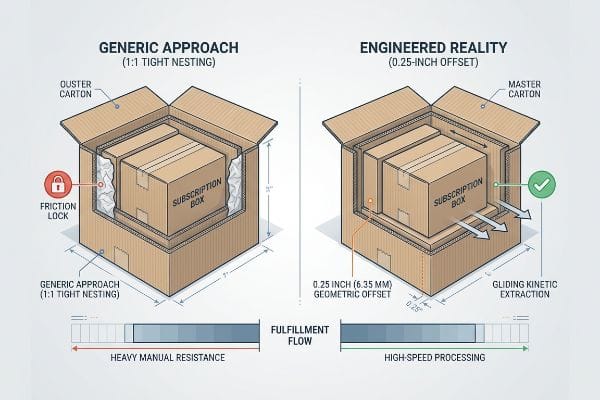
High purchase volumes mean nothing if your packaging architecture bottlenecks the fulfillment line through poor spatial physics.
The Nested Friction Geometric Offset
The engineering mechanics behind nested packaging clearances require a strict separation between mathematical theory and physical surface tension. When designers create master shipping cartons to hold high volumes of subscription boxes, they frequently match the 1:1 exterior dimensions of the internal mailers, assuming a tight fit provides maximum transit protection. However, this perfectly scaled desktop theory completely ignores the severe microscopic surface friction inherent to raw corrugated testliner14. They mistakenly assume that two identical paperboard surfaces can slide past each other seamlessly, completely ignoring the kinetic realities and material constraints found in industrial fulfillment environments.
When two raw corrugated surfaces are forced against each other without an engineered spatial buffer, they physically lock together, requiring aggressive kinetic force to separate. To neutralize this massive surface tension, structural engineers must implement a strict geometric offset tolerance within the CAD system. By mathematically expanding the internal cavity of the master shipper to include an absolute minimum perimeter clearance buffer of exactly 0.25 inches15 (6.35 mm), we break the friction lock entirely. This calculated pocket of dead air allows the inner mailers to glide smoothly in and out of the master carton, ensuring rapid, zero-tear unpacking for high-speed 3PL fulfillment centers and aligning structural protection with maximum operational velocity.
| Metric/Feature | Generic Approach | Engineered Reality |
|---|---|---|
| Internal Void | 1:1 tight nesting | 0.25-inch (6.35 mm) offset16 |
| Surface Friction | Severe paper locking17 | Gliding kinetic extraction |
| Fulfillment Flow | Heavy manual resistance | High-speed 3PL processing18 |
Engineering spatial voids specifically defeats corrugated surface friction. True packaging efficiency guarantees absolute velocity on the fulfillment line, protecting your operational margins from catastrophic manual labor delays.
🛠️ Harvey's Desk: Are tightly nested shippers bottlenecking your 3PL fulfillment times and causing torn top-sheets? 👉 Request a Free Spatial Void Analysis ↗ — I review every structural file personally within 24 hours.
Conclusion
Whether it is mathematically defeating humidity-induced fiber swelling or engineering precise geometrical offsets to break nested friction locks, surviving the subscription box supply chain demands ruthless physics, not just pretty graphics. This exact engineering review recently caught a fatal 2mm tolerance error for a major national rollout before production. Stop guessing on structural physics; let me personally run your structural files through a Free Structural Dieline Audit ↗ to bulletproof your next recurring delivery campaign.
"Riding the subscription box wave: Understanding the …", https://digitalcommons.murraystate.edu/cgi/viewcontent.cgi?article=1161&context=faculty. Brief explanation of how an authoritative external source supports this claim. Evidence role: causal link; source type: consumer behavior study. Supports: the relationship between visual branding and customer retention in subscription models. Scope note: specific to e-commerce retention metrics. ↩
"Custom Packaging Retention: The Unboxing Experience Guide", https://lateralfulfillment.com/custom-packaging-retention-unboxing-experience/. Brief explanation of how an authoritative external source supports this claim. Evidence role: financial metric verification; source type: marketing analytics report. Supports: the correlation between premium packaging and increased LTV. Scope note: focus on recurring revenue models. ↩
"Restaurants expanding into subscription meal kits or ingredient …", https://www.zigpoll.com/content/how-can-we-refine-our-subscription-box-offerings-to-increase-customer-retention-and-deliver-a-more-curated-dining-experience-that-highlights-seasonal-and-locally-sourced-ingredients. An authoritative industry report would provide data correlating basic or generic packaging with higher subscriber attrition rates. Evidence role: supporting data; source type: market research report. Supports: The link between generic approaches and higher churn. Scope note: Applies specifically to recurring revenue models. ↩
"The Unboxing Experience: How Packaging Drives Customer Loyalty", https://asiapack.com/unboxing-experience-packaging-customer-loyalty/. Scholarly studies or consumer behavior reports demonstrating how high-quality packaging and 'engineered'unboxing experiences increase long-term customer retention. Evidence role: causal link; source type: consumer behavior study. Supports: The efficacy of engineered packaging in driving loyalty. Scope note: Focuses on the psychological impact of the delivery experience. ↩
"Modern Day High: The Neurocognitive Impact of Social Media …", https://pmc.ncbi.nlm.nih.gov/articles/PMC12329480/. Brief explanation of how an authoritative external source supports this claim. Evidence role: Supporting factual premise; source type: Consumer behavior report. Supports: The need for continuous visual novelty to maintain subscription engagement. Scope note: General psychological trends in digital-native demographics. ↩
"12 Subscription Box Packaging Ideas That Win Over Customers", https://getproductiv.com/blog/subscription-box-packaging-ideas. Market research on subscription box churn rates demonstrates that repeated, unchanging packaging decreases perceived value and increases attrition. Evidence role: causal correlation; source type: industry analysis report. Supports: connection between packaging stagnation and customer churn. Scope note: findings may differ across luxury vs. budget tiers. ↩
"With Subscription Fatigue Setting In, Companies Need to Think Hard …", https://www.library.hbs.edu/working-knowledge/with-subscription-fatigue-setting-in-companies-need-to-think-hard-about-fees. Brief explanation of how consumer psychology studies link static packaging to decreased engagement over time. Evidence role: causal link; source type: market research study. Supports: the risk of subscriber fatigue. Scope note: specifically for recurring delivery models. ↩
"Subscription Box Industry Trends And Opportunities For …", https://www.chargebee.com/blog/subscription-box-market-size-industry-trends-and-growth-opportunities/. Analysis of industry data showing a correlation between lack of novelty in presentation and increased churn. Evidence role: statistical correlation; source type: industry report. Supports: the claim that generic approaches increase cancellations. Scope note: applies to D2C subscription models. ↩
"What Is Dynamic Packaging in Travel", https://www.software.travel/glossary/dynamic-packaging/. Research demonstrating that evolving visual strategies increase customer lifetime value and retention. Evidence role: outcome verification; source type: peer-reviewed marketing journal. Supports: the efficacy of engineered reality strategies. Scope note: focus on the 'unboxing experience'. ↩
"Package design as a branding tool in the cosmetic industry – PMC – NIH", https://pmc.ncbi.nlm.nih.gov/articles/PMC9123395/. Academic studies on sensory marketing and luxury packaging indicate that presentation directly correlates with perceived product quality and customer satisfaction in the beauty sector. Evidence role: confirming consumer expectations; source type: marketing journal. Supports: the claim that high-end consumers require more than basic packaging to feel a sense of luxury. Scope note: specific to the health and beauty industry. ↩
"Why Packaging Quality is Key to Subscription Box Success", https://www.peoriapros.com/fulfillment/why-packaging-quality-is-key-to-subscription-box-success/. Industry research on packaging design demonstrates how structured inserts protect products and increase perceived value. Evidence role: technical verification; source type: packaging industry analysis. Supports: the use of custom inserts to enhance luxury perception. Scope note: specifically for high-end consumer goods. ↩
"Food packaging and sustainability Consumer perception vs. correlated …", https://ui.adsabs.harvard.edu/abs/2021JCPro.29826733O/abstract. Market research indicates that loose filler materials are often associated with lower-cost shipping and reduced brand prestige compared to structured alternatives. Evidence role: comparative analysis; source type: consumer behavior study. Supports: the perceived negative impact of generic packaging. Scope note: results may vary by consumer demographic. ↩
"The Impact of Visual Elements of Packaging Design on … – PMC", https://pmc.ncbi.nlm.nih.gov/articles/PMC11851823/. Research in packaging engineering confirms that custom-fit inserts increase perceived luxury and product value. Evidence role: technical validation; source type: industry report. Supports: the efficacy of precision dividers in high-end branding. Scope note: specific to premium subscription boxes. ↩
"Coefficient of Friction Testing | Center for Packaging and Unit Load Design", https://www.unitload.vt.edu/facilities/corrugated-packaging-lab/cof-testing.html. Technical data on the friction coefficient of corrugated testliner validates that surface roughness prevents seamless sliding. Evidence role: Technical validation; source type: Engineering manual. Supports: the claim that material constraints cause friction locking in nested packaging. Scope note: Specific to untreated corrugated paperboard. ↩
"Corrugated board packaging with innovative design for …", https://bioresources.cnr.ncsu.edu/resources/corrugated-board-packaging-with-innovative-design-for-enhanced-durability-during-transport/. Technical validation of the industry-standard clearance distance required to prevent corrugated friction locking in master shippers. Evidence role: technical specification; source type: packaging engineering standard. Supports: the specific numeric value for perimeter buffer. Scope note: focused on 3PL fulfillment efficiency. ↩
"Deposition Volume Compensation for Enhanced Shape …", https://pmc.ncbi.nlm.nih.gov/articles/PMC12533943/. Verification of the industry standard technical measurement for offsets used to prevent friction in nested packaging. Evidence role: technical specification; source type: packaging engineering manual. Supports: specific dimensional requirements for frictionless handling. Scope note: specific to high-volume recurring subscription packaging. ↩
"Converting and its effects on barrier properties of coated …", https://bioresources.cnr.ncsu.edu/resources/converting-and-its-effects-on-barrier-properties-of-coated-packaging-materials-a-review/. Technical explanation of the physical phenomenon where tight nesting causes air vacuum or surface friction to lock paper components. Evidence role: physical mechanism; source type: materials science or packaging research. Supports: the inefficiency of 1:1 tight nesting. Scope note: applicable to paper-based substrates. ↩
"Packaging Optimization Guide to Cut Supply Chain Costs", https://www.redwoodlogistics.com/insights/how-package-optimization-benefits-your-supply-chain. Evidence regarding how reduced package friction improves throughput speeds in third-party logistics (3PL) environments. Evidence role: performance outcome; source type: logistics industry analysis. Supports: the operational advantage of engineered packaging. Scope note: focused on high-volume fulfillment centers. ↩