Struggling to make your e-commerce deliveries stand out in a sea of brown cardboard? Generic packaging kills your brand's unboxing experience. Let's fix that with engineered personalization.
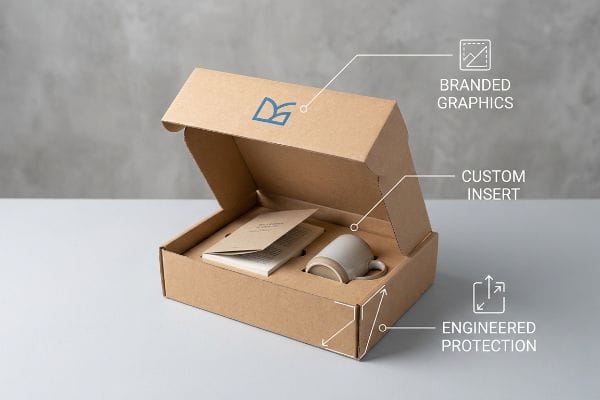
Personalization of e-commerce packaging boxes involves modifying standard corrugated shippers with brand-specific structural adjustments, custom graphic printing, and internal product-retention inserts. This engineered approach transforms generic mailers into tailored marketing assets, significantly increasing consumer engagement while physically protecting specific merchandise profiles during high-friction transit operations.
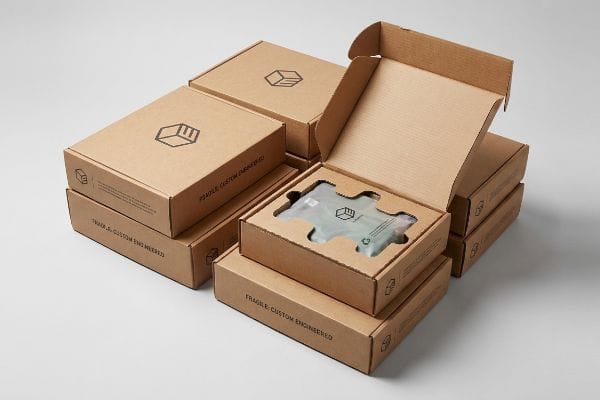
But simply slapping a logo on a standard mailer isn't enough when you're shipping thousands of units across the country. Let's dive into the structural reality of true packaging customization.
Where Can I Find Custom E-Commerce Boxes?
Finding a vendor is easy, but finding a reliable manufacturing partner who won't derail your supply chain is where most brand managers get stuck.
Finding custom e-commerce boxes demands sourcing unified turnkey manufacturers rather than fragmented tolling co-packers. A centralized structural engineering and printing partner physically guarantees absolute cross-component compatibility, completely eliminating automated machinery jams, severe assembly-line downtime, and costly logistics delays that frequently plague disjointed supply chain sourcing.
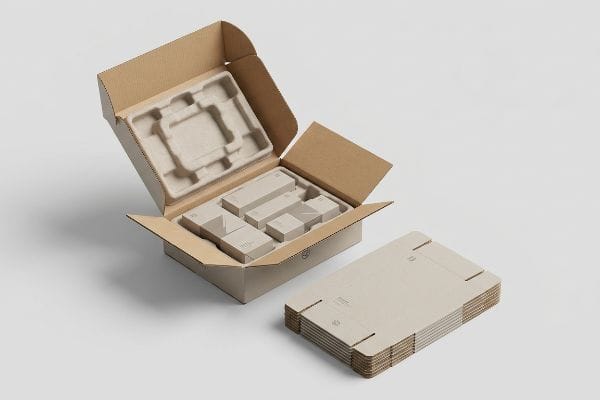
Before you sign a contract with the cheapest online supplier, you need to understand the hidden mechanics of contract packaging.
The Turnkey Trap When Finding Custom E-Commerce Boxes
Most beginner marketing directors try to artificially lower their unit costs by using a fragmented tolling model1. They buy printed boxes from one vendor, custom inserts from another, and hire a separate local co-packer to assemble the final kits. On paper, sourcing these individual custom components seems like a smart way to stretch a startup budget.
In my facility, I constantly see the fallout of this fragmented sourcing when parts don't perfectly align. I once watched a stressed co-packing crew try to force an oversized custom insert into a structurally mismatched outer shipper. You could hear the harsh tearing sound of the raw paperboard as the corrugated corners blew out under pressure. When your custom boxes arrive with even a 0.125-inch (3.17 mm) variance between vendors, automated machinery jams instantly2. Instead of saving money, you get hit with massive hourly machine-downtime penalties. I always tell my clients to use a turnkey manufacturer who controls the material procurement and final physical assembly under one roof. This physically transfers the cross-component compatibility liability away from your brand, completely eliminating those frustrating downtime fees.
| Common Rookie Mistake | The Pro Fix | Retail-Floor Benefit |
|---|---|---|
| Sourcing fragmented box parts | Unified turnkey manufacturing | Zero machine downtime penalties3 |
| Ignoring insert tolerances | Single-source CAD engineering4 | Eliminates manual assembly friction |
| Chasing lowest component cost | Centralized assembly liability5 | Guarantees fixed per-unit ROI |
I refuse to let clients run fragmented tolling setups because the mathematical risks always outweigh the theoretical savings. Centralizing your supply chain is the only way I can guarantee a frictionless, on-time execution that protects your profit margin.
🛠️ Harvey's Desk: Are you worried your separate packaging components won't physically fit together on the assembly line? 👉 Request a Turnkey Tolerance Review ↗ — Direct access to my desk. Zero automated sales spam, I promise.
How to Customize Your Packaging?
Customizing your box graphics feels exciting on a digital screen, but translating that vibrant artwork onto physical cardboard requires strict control over ink chemistry.
Customizing your packaging effectively requires replacing standard CMYK process printing with precisely mixed Pantone spot color ink floods. Because raw corrugated testliner is highly porous, standard optical halftone dot blending absorbs unevenly, creating muddy, washed-out brand logos that fail to capture consumer attention during the physical unboxing experience.
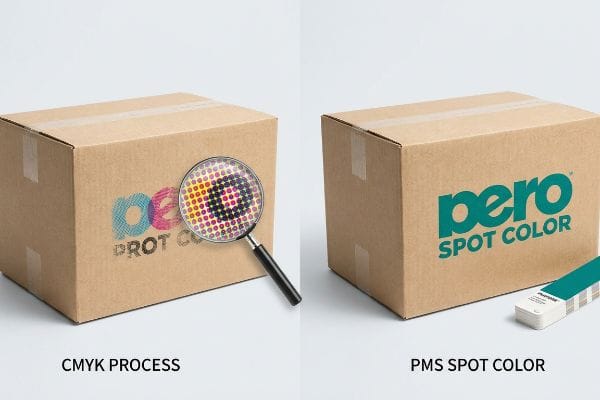
Getting your brand colors right is the foundation of customization, but optical illusions on a computer monitor rarely survive the printing press.
Beating CMYK Halftone Mud to Customize Your Packaging
Designers usually submit their custom packaging artwork in standard CMYK6 (Cyan, Magenta, Yellow, Key) formats, expecting the factory to effortlessly replicate their digital PDF. They assume the process printing that works beautifully on glossy magazine paper7 will behave the exact same way on a thick, industrial shipping box.
The reality of how to customize your packaging changes drastically the moment liquid ink hits raw testliner. I frequently see designers panic when their vibrant digital gradients turn into a grainy, washed-out mess under harsh warehouse lighting. I remember rubbing my thumb across a freshly printed CMYK logo and feeling the gritty, uneven texture of the halftone dots that had absorbed aggressively into the porous paper fibers8. To prevent this halftone mud, I strictly mandate a spot color flood protocol for primary logos. By replacing those overlapping dots with a single, perfectly mixed PMS (Pantone Matching System) ink9, we force a dense, completely smooth layer of pigment onto the board. This chemical adjustment eliminates the grainy aesthetic entirely, ensuring your custom boxes arrive looking incredibly sharp and premium.
| Common Rookie Mistake | The Pro Fix | Retail-Floor Benefit |
|---|---|---|
| Printing logos in CMYK | Mandating PMS spot colors10 | Eliminates washed-out branding |
| Ignoring fiber porosity | High-density ink flooding11 | Delivers sharp, premium unboxing |
| Trusting uncalibrated screens | Physical draw-down matching12 | Prevents costly color rejections |
I always intercept CMYK logo files before they hit my presses because unsealed corrugated board is unforgiving. Flooding a true spot color is the only mechanical way I can guarantee your customized branding survives the physical substrate.
🛠️ Harvey's Desk: Is your graphic designer blindly applying CMYK settings to your new corrugated mailer artwork? 👉 Get a Free Prepress Color Audit ↗ — Download safely. My inbox is open if you have questions later.
What Is E-Commerce Personalization and How Does It Work?
Personalization is about agility. If you're tied to massive, slow manufacturing runs, you can't dynamically adjust your unboxing experience to match rapid market trends.
E-commerce personalization operates by utilizing direct-to-board UV flatbed digital printing to dynamically customize short-run corrugated packaging. This plate-free manufacturing process instantly polymerizes liquid ink onto the substrate, bypassing traditional litho-lamination prepress bottlenecks and enabling brands to execute hyper-targeted, localized marketing campaigns with zero structural moisture warp.
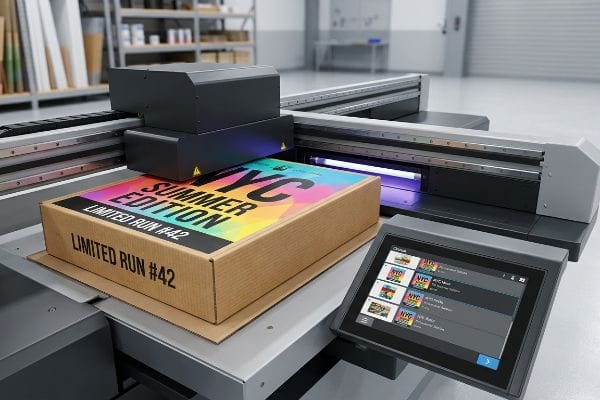
Understanding the concept of targeted campaigns is easy, but actually executing rapid artwork changes requires bypassing old-school machinery.
How E-Commerce Personalization Works Through Instant Polymerization
Many marketing teams try to launch highly personalized, region-specific e-commerce boxes using traditional litho-lamination techniques. They lock themselves into expensive metal printing plates and wet PVA (Polyvinyl Acetate) adhesive setups13, assuming this is the only way to achieve high-quality graphics on heavy cardboard.
Think of traditional printing like a massive freight train—it takes forever to start, and you can't easily change directions to execute a nimble personalization strategy. I see brands waste weeks waiting for metal plates to be etched, only to realize their seasonal promotion has already passed. The harsh, chemical smell of wet PVA adhesive curing14 in the factory is a reminder of how slow the old way is. To fix this, I utilize direct-to-board UV (Ultraviolet) flatbed printing. The moment the print head passes over the board, a blast of light instantly cures the liquid ink into a solid, dry polymer film15. There are no plates, no wet glue, and no drying time. This mechanical agility allows you to run a uniquely personalized graphic for 500 boxes in New York and completely swap the artwork for 500 boxes in California the very same afternoon.
| Common Rookie Mistake | The Pro Fix | Retail-Floor Benefit |
|---|---|---|
| Using slow litho-plates | UV flatbed digital printing16 | Enables rapid artwork swapping |
| Ignoring PVA drying time | Instant ink polymerization17 | Cuts production bottlenecks entirely |
| Ordering massive bulk runs | Plate-free short runs | Prevents dead seasonal inventory |
I tell every startup that agility is their biggest weapon against retail giants. Bypassing wet adhesives and metal plates entirely is how I help brands execute hyper-targeted unboxing experiences without crushing their cash flow.
🛠️ Harvey's Desk: Are high tooling fees and long setup times preventing you from launching that seasonal box design? 👉 Claim Your Free Digital Feasibility Check ↗ — No forms that trigger endless sales calls. Just pure value.
How to Customize a Box for Shipping?
Designing a custom shipper requires balancing beautiful aesthetics with strict logistical compliance. A stunning box is completely useless if the logistics carrier can't read it.
Customizing a box for shipping demands mathematically anchoring critical logistics barcodes precisely 1.5 inches (38.1 mm) away from all structural score lines. This strict prepress keep-out zone prevents outer paperboard stretching during folding, ensuring optical scanners can frictionlessly read the UCC-128 labels on high-speed automated sorting conveyors.
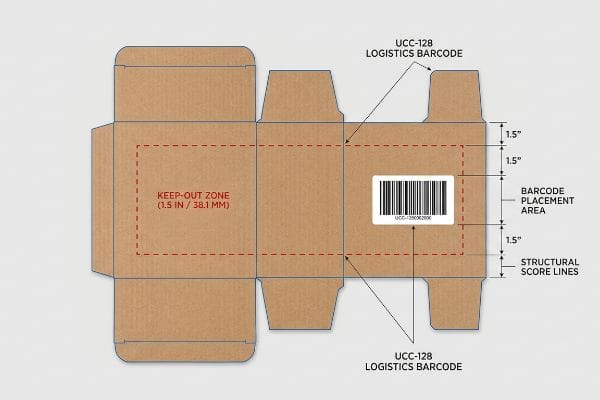
But knowing the theory of barcode placement isn't enough when the automated sorting machines start running at full speed…
Why Standard Shipping Customization Fails on the Factory Floor
Graphic designers consistently place mandatory UCC-128 logistics barcodes18 right up against the folded edges of their custom shippers, trying to hide the ugly black lines away from the main branding. They assume that as long as the barcode exists somewhere on the dieline, the 3PL (Third-Party Logistics) warehouse scanners will easily pick it up.
Getting a clean barcode scan on a flat computer monitor is easy, but here is the harsh reality when you ship 500 of them through an automated facility. In my facility, I routinely test how thick corrugated board behaves when forced into a tight 90-degree angle. Because a B-flute board consumes material as it bends19, the outer paper liner physically stretches. When I run a test box with a barcode placed too close to that crease, I can visibly see the printed black bars distort and wrap aggressively around the edge radius. When this warped code hits a 3PL optical scanner traveling at high speed, it fails instantly, throwing a loud, frustrating error code alarm on the sorting line. To fix this, I mathematically enforce a strict 1.5-inch (38.1 mm) label keep-out zone20 during the prepress phase. By locking the scannable data completely away from the physical tension zone, I ensure 100% read rates, completely eliminating the $1.50 per unit manual repacking fees that 3PLs charge when automated scanning fails.
| Common Rookie Mistake | The Pro Fix | Retail-Floor Benefit |
|---|---|---|
| Barcodes on structural folds | 1.5-inch (38.1 mm) keep-out zone21 | Guarantees automated scanner reads |
| Ignoring paperboard stretch | Prepress edge clearance logic22 | Prevents costly 3PL repacking fees |
| Hiding labels in corners | Flat-panel barcode anchoring | Accelerates warehouse receiving times |
I refuse to let pretty artwork compromise supply chain survival. Pushing a barcode a few millimeters away from a crease is the easiest structural fix I use to protect my clients from massive logistics chargebacks.
🛠️ Harvey's Desk: Do you know if your designer mathematically cleared your UCC-128 labels from the high-tension fold radiuses? 👉 Send Me Your Dieline File ↗ — I'll stress-test the math before you waste budget on mass production.
Conclusion
You can design the most visually stunning e-commerce shipper on the market, but if you ignore the microscopic paper stretch on your structural folds, distorted barcodes will trigger automated scanner failures, slowing down 3PL receiving by an estimated 30% and incurring massive manual repacking penalties. Over 500 brand managers use my prepress checklist to avoid these exact fatal early-stage mistakes. Stop guessing on your structural tolerances and let me personally run your artwork through my Free Dieline Pre-Flight Audit ↗ to catch these hidden friction points before mass production begins.
"Fragmentation of production amplifies systemic risks … – PMC", https://pmc.ncbi.nlm.nih.gov/articles/PMC7769560/. Industry procurement guides explain how fragmented tolling distributes production across multiple vendors to minimize individual component costs. Evidence role: technical definition; source type: procurement guide. Supports: the use of fragmented tolling for cost reduction. Scope note: applies to custom packaging. ↩
"Packaging Machine Jam", https://wayneautomation.com/news/packaging-machine-jam/. Industry engineering standards for automated packaging lines establish that precise dimensional tolerances are critical and that minimal variances cause mechanical failures. Evidence role: technical validation; source type: engineering manual. Supports: the correlation between dimensional variance and machinery jams. Scope note: specific tolerances may vary by machine. ↩
"Breaking Down the Cost of Unplanned Packaging Line …", https://www.harpak-ulma.com/resources/breaking-down-the-cost-of-unplanned-packaging-line-downtime/. An authoritative source on supply chain management would explain how consolidating manufacturing reduces compatibility errors that cause production halts. Evidence role: validation; source type: industry whitepaper. Supports: efficiency of turnkey solutions. Scope note: Applies primarily to automated assembly environments. ↩
"Packaging Supplier That Offers 3D CAD Models", https://packagingforindustry.com/packaging-supplier-that-offers-3d-cad-models-the-industrial-buyers-guide/. Technical standards for packaging design describe how centralized CAD engineering ensures precision tolerances to reduce assembly friction. Evidence role: technical verification; source type: engineering manual. Supports: reduction of manual assembly errors. Scope note: Limited to precision-engineered custom inserts. ↩
"PCB Manufacturing Cost Comparison: Pre-Assembly vs. …", https://www.jycircuitboard.com/news/pcb-manufacturing-cost-comparison-pre-assembly-vs-self-sourced-assembly-which-is-more-cost-effective–662.html. Financial analysis of manufacturing procurement demonstrates how consolidating liability to a single partner stabilizes per-unit costs. Evidence role: financial validation; source type: business case study. Supports: ROI predictability via liability centralization. Scope note: Focuses on cost-predictability in high-volume procurement. ↩
"CMYK Color Model for Printing Boxes", https://gentlever.com/cmyk-for-printing-boxes/. Confirmation that CMYK is the industry standard color model for submitting print-ready packaging artwork. Evidence role: industry practice verification; source type: graphic design standard. Supports: the claim regarding common designer submission formats. Scope note: general commercial print standards. ↩
"UV-curable coating process on CMYK-printed duplex …", https://bioresources.cnr.ncsu.edu/resources/uv-curable-coating-process-on-cmyk-printed-duplex-paperboard-part-1-mechanical-and-optical-properties/. Technical explanation of how coated glossy paper minimizes ink absorption to maintain color vibrancy and dot sharpness in CMYK process printing. Evidence role: technical specification; source type: printing industry manual. Supports: the efficacy of process printing on glossy substrates. Scope note: contrasted with porous, uncoated substrates. ↩
"Halochromic Inks Applied on Cardboard for Food Spoilage …", https://pmc.ncbi.nlm.nih.gov/articles/PMC9502810/. Materials science on corrugated board explains how the high porosity of raw testliner increases ink absorption and dot gain, leading to image blurring. Evidence role: causal mechanism; source type: paper manufacturing specification. Supports: the claim that porous fibers degrade halftone quality. Scope note: limited to raw, uncoated testliner. ↩
"PMS vs CMYK for Packaging: Which Is Better?", https://pax.solutions/corrugated-packaging/pms-vs-cmyk-for-packaging/. Technical printing guides describe how spot colors use a single pigment layer to avoid the dot-gain and transparency issues associated with CMYK halftone blending. Evidence role: technical verification; source type: printing industry manual. Supports: the use of PMS for dense pigment coverage. Scope note: applies to uncoated stocks. ↩
"Pantone vs. CMYK for Custom Branded Packaging – EcoEnclose", https://www.ecoenclose.com/blog/pantone-vs-cmyk-for-custom-branded-packaging?srsltid=AfmBOooPq076C4jF_vqDmcVKyV0dKxXzSlerymRx1blK20sEP4m5lsWM. Technical printing guides explain why the Pantone Matching System (PMS) ensures brand color consistency and prevents the 'washing out'common in CMYK process printing on cardboard. Evidence role: technical validation; source type: industry standard; Supports: the superiority of spot colors for branding. Scope note: applies to offset and flexographic printing. ↩
"Emulsion Inks for 3D Printing of High Porosity Materials", https://pubmed.ncbi.nlm.nih.gov/27305061/. Ink chemistry documentation describes how high-density flooding prevents ink absorption into porous cardboard fibers to maintain image sharpness. Evidence role: mechanism explanation; source type: technical specification; Supports: the use of ink flooding to counter fiber porosity. Scope note: varies by ink viscosity and substrate grade. ↩
"Virtual Proofing in the Packaging Industry", https://digitalcommons.calpoly.edu/cgi/viewcontent.cgi?article. Color management standards define draw-down samples as the industry-standard method for verifying actual ink color on a substrate against digital proofs. Evidence role: procedural proof; source type: professional standard; Supports: the claim that physical matching prevents color rejections. Scope note: specifically used for final substrate approval. ↩
"Understanding Litho-Laminated Packaging", https://pmpackaging.com/blog/understanding-litho-laminated-packaging. Technical verification of the materials used in the litho-lamination process, specifically the use of offset plates and PVA glue for bonding printed sheets to corrugated board. Evidence role: Technical verification; source type: Industrial manufacturing guide. Supports: The reliance on physical plates and adhesives in traditional workflows. Scope note: Applies to traditional offset lithography. ↩
"Effects of Moisture in the Lamination Process – AICC Now", https://now.aiccbox.org/effects-of-moisture-in-the-lamination-process/. Verification of the drying and curing requirements for Polyvinyl Acetate (PVA) used in traditional litho-lamination. Evidence role: comparative baseline; source type: industrial manufacturing guide. Supports: the claim that traditional glue-based methods introduce production delays. Scope note: limited to adhesive-based mounting. ↩
"Photopolymerization in 3D Printing – ACS Publications", https://pubs.acs.org/aapmcd/article/1/4/593/605913/Photopolymerization-in-3D-Printing. Technical verification of the photo-polymerization process where UV light triggers an instant chemical reaction in the ink. Evidence role: technical verification; source type: printing industry handbook. Supports: the claim that UV curing creates a solid polymer film instantly. Scope note: specific to UV-curable inks. ↩
"Litho Printing vs Digital Printing In Plain English", https://www.bbpress.co.uk/news/what-is-litho-printing-vs-digital-printing-in-plain-english. Technical explanation of how digital UV printing removes the need for physical plates, enabling immediate design iterations. Evidence role: technical validation; source type: industry whitepaper. Supports: agility in artwork swapping. Scope note: focuses on short-run customization. ↩
"UV Ink Basics: What You Need to Know – eufymake US", https://www.eufymake.com/blogs/buying-guides/what-is-uv-ink. Scientific explanation of how UV-curable inks undergo near-instant polymerization to eliminate traditional drying times. Evidence role: scientific validation; source type: technical manual. Supports: removal of production bottlenecks. Scope note: applies specifically to UV-LED and mercury lamp curing systems. ↩
"What is a UCC 128 (GS1 128) Label? An EDI Guide – SPS Commerce", https://www.spscommerce.com/edi-document/ucc-128-label/. Verification of UCC-128 (GS1-128) as the required industry standard for shipping and logistics barcodes to ensure global interoperability. Evidence role: verification; source type: industry standard; Supports: the claim that this specific barcode format is mandatory for logistics. Scope note: applies to commercial 3PL and retail distribution. ↩
"Analytical Determination of the Bending Stiffness of a Five …", https://pmc.ncbi.nlm.nih.gov/articles/PMC8777652/. Technical explanation of the physical deformation and stretching of the outer liner in B-flute corrugated board during folding. Evidence role: physical principle; source type: packaging engineering manual. Supports: The claim that barcodes distort when placed near creases. Scope note: Specifically pertains to fluted corrugated materials. ↩
"The Dos and Don'ts of Labeling Your Packages for Shipment – Ucanpack", https://www.ucanpack.com/blog/post/dos-and-donts-of-labeling-your-packages-for-shipment. Verification of the industry-standard safety margin required between scannable barcodes and structural score lines to avoid optical distortion. Evidence role: technical specification; source type: logistics compliance guide. Supports: The specific measurement for the keep-out zone. Scope note: Standards may vary slightly by carrier (e.g., UPS, FedEx). ↩
"How to Print Scannable Barcodes on Corrugated Packaging", https://www.keyence.com/products/marker/inkjet-printers/resources/inkjet-printer-resources/how-to-print-scannable-barcodes-on-corrugated-packaging.jsp. An authoritative logistics or packaging guide provides standard minimum clear zones for barcode scanning to avoid distortion on folds. Evidence role: technical specification; source type: industry standard. Supports: barcode keep-out zone dimensions. Scope note: requirements may vary by carrier. ↩
"A Guide To The Full Packaging Prepress Process", https://www.esko.com/en/blog/a-guide-to-the-full-packaging-prepress-process. Technical documentation on prepress packaging design explains how edge clearance accounts for material stretch during folding. Evidence role: technical methodology; source type: professional packaging manual. Supports: use of edge clearance for paperboard stretch. Scope note: specific to corrugated or paperboard materials. ↩