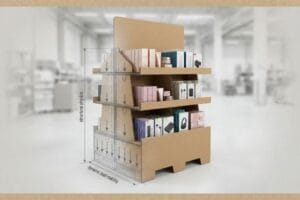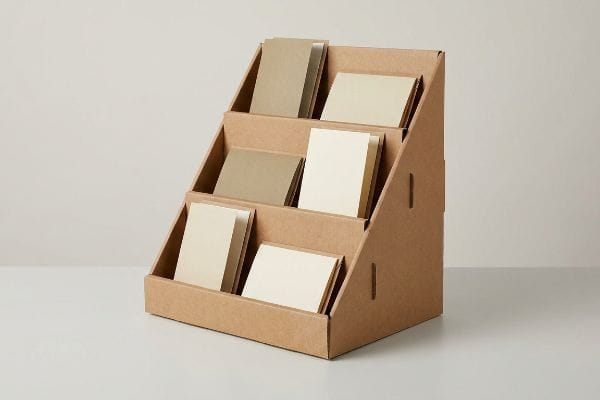
لديك بطاقات تهنئة جميلة للبيع، لكن تكديسها بشكل مسطح على رفوف المتاجر يضمن تجاهلها من قبل المتسوقين المتسرعين. أنت بحاجة إلى حل هيكلي رأسي.
تتطلب حوامل بطاقات المعايدة المصنوعة من الورق المقوى تصميم أرفف متدرجة ذات ارتفاعات دقيقة، ومساند ظهر مائلة، وقاعدة ثابتة. يضمن هذا التصميم الهندسي الهيكلي بقاء المنتجات الورقية خفيفة الوزن مرئية تمامًا ومنظمة بشكل آمن في ممرات البيع بالتجزئة ذات الحركة المرورية العالية دون أن تنحني بشدة أو تسقط على الأرض.
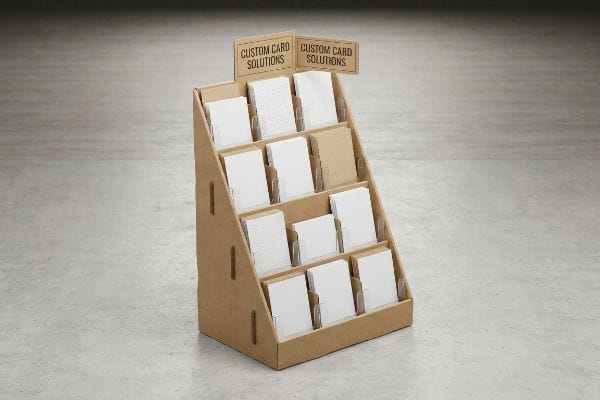
إن فهم المكونات الأساسية لعرض ورقي متعدد المستويات أمر سهل، لكن ترجمة تلك النظرية إلى جسم مادي يصمد في بيئة البيع بالتجزئة الفوضوية يتطلب حسابات هيكلية دقيقة.
كيف تصنع حامل عرض خاص بك؟
غالباً ما يبدأ تصميم وحدة الترويج الأولى على شاشة الكمبيوتر، لكن وحدات البكسل تتصرف بشكل مختلف تماماً عن المواد الخام المادية المموجة.
يتطلب صنع حامل عرض خاص بك تصميم قالب هيكلي دقيق، واختيار السماكة المناسبة للورق المقوى المموج، وقص ألسنة متشابكة. يضمن برنامج التصميم بمساعدة الحاسوب (CAD) المناسب، من الناحية الرياضية، طي الشكل الهندسي المصنوع من الورق المقوى بشكل مستقيم دون تمزيق ألياف الورق الخارجية أثناء التجميع.
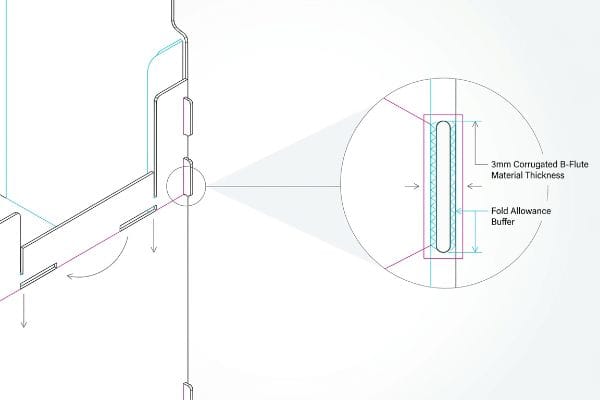
إن سد الفجوة بين الرسم الرقمي المسطح وجهاز عرض البضائع ثلاثي الأبعاد كامل الوظائف يعني أنه يجب عليك مراعاة فيزياء المواد في العالم الحقيقي.
فخ تعويض الفرجار في تصميم حامل العرض
يتعامل معظم مصممي الجرافيك مع شاشات العرض المخصصة بنفس الطريقة التي يتعاملون بها مع بطاقات العمل. فهم يرسمون خطوط قطع مسطحة ثنائية الأبعاد في برامج الرسومات المتجهة، على افتراض أن فتحة مقطوعة بدقة بعرض لسان الإدخال1 ستؤدي إلى تركيب مثالي. ويبنون قوالبهم الرقمية على أساس بيئة ذات سماكة صفرية مطلقة2.
ألاحظ هذا الخطأ الشائع بين المبتدئين عند محاولة العلامات التجارية تصميم منصات عرض خاصة بها. فهم ينسون حساب سُمك اللوح المطوي. فإذا كنت تستخدم لوحًا قياسيًا من نوع B-flute بسُمك 3 مم (0.12 بوصة)، فإن طيه بزاوية90درجة يُهدر جزءًا من المادة. لقد شاهدتُ موظفي المتاجر يتصببون عرقًا من الإحباط، وهم يسمعون صوت طقطقة الأجزاء الداخلية الممزقة وهم يحاولون إدخال لسان سميك 3 مم في فتحة عرضها 3 مم بالضبط. يتقوس اللوح الورقي للخارج بشكل واضح، وتتمزق الطبقة العلوية المطبوعة عند الزوايا، ويتوقف خط التجميع بالكامل، مما يُقلل من كفاءة التعبئة والتغليف بنسبة 35%تقريبًا.
| أخطاء شائعة للمبتدئين | الحل الاحترافي | فوائد أرضية البيع بالتجزئة |
|---|---|---|
| فتحات الرسم بعرض علامة تبويب 1:1 بالضبط | إضافة سماحية الانحناء في التصميم بمساعدة الحاسوب | يوفر 45 ثانية لكل عملية تجميع وحدة5 |
| تجاهل سمك المادة عند الطيات | خوارزميات تعويض الفرجار6 | يمنع التقوس والتمزق الهيكلي |
| باستخدام برامج المتجهات ثنائية الأبعاد الأساسية | الهندسة المسبقة باستخدام برامج التصميم بمساعدة الحاسوب ثلاثية الأبعاد المتخصصة7 | يضمن محاذاة مربعة وثابتة للرفوف |
لا أسمح أبدًا لملف متجه مسطح بالوصول إلى طاولات القطع الخاصة بي دون إدخال مخزن مؤقت رياضي للرطوبة والسماكة في كل فتحة استقبال.
🛠️ مكتب هارفي: هل أنتِ غير متأكدة من وجود مساحة كافية لطي ألسنة التثبيت المتشابكة دون تمزق؟ 👉 دعيني أراجع ملف قوالب القطع الخاص بكِ ↗ — وصول مباشر إلى مكتبي. أعدكِ بعدم تلقي أي رسائل تسويقية آلية مزعجة.
كيفية صنع حامل بسيط من الكرتون؟
لا تحتاج إلى ميزانية ضخمة أو مواد بلاستيكية معقدة مصبوبة بالحقن لبناء منصة عرض منتجات عالية الأداء في متاجر.
يعتمد حامل الكرتون البسيط على تقنيات الطي الاستراتيجية بدلاً من الأدوات الخارجية. باستخدام أقفال ورقية مصممة على غرار فن الأوريغامي وعلامات احتكاك، يمكنك تجميع هيكل صلب من مادة واحدة يدعم بضائع البيع بالتجزئة بأمان دون الحاجة إلى مواد لاصقة سائلة فوضوية أو شريط تغليف ضعيف.
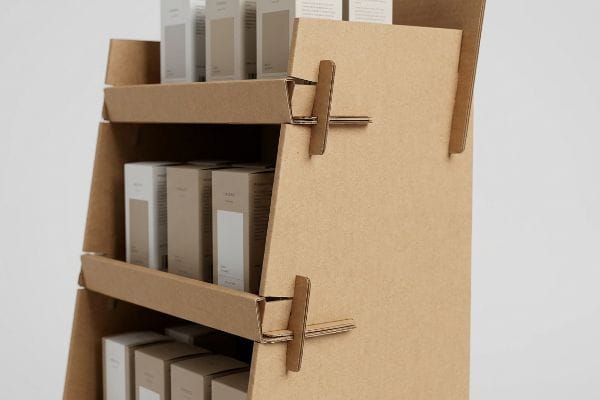
عندما تقوم بإزالة المواد الغريبة من قائمة المواد الخاصة بك، فإنك تزيد بشكل كبير من قابلية إعادة التدوير وسرعة تجميع حملتك.
شريط لاصق لأقفال الورق المصممة على طراز الأوريغامي
عندما يحاول أصحاب العلامات التجارية ابتكار حامل بسيط من الكرتون، غالباً ما يكون أول ما يخطر ببالهم هو تثبيت الزوايا المطوية باستخدام كميات كبيرة من شريط التغليف الشفاف أو مشابك بلاستيكية رخيصة. يفترضون أن الكرتون الخام لا يمكنه تحمل الوزن المتغير لعدة طبقات من بطاقات المعايدة بمفرده.
تتضح مشكلة هذا النهج فورًا في متاجر البيع بالتجزئة. يكره مديرو المتاجر المتعجلون التعامل مع المشابك البلاستيكية السائبة التي تضيع أثناء الشحن. والأسوأ من ذلك هو الصوت اللزج والمزعج لفك الشريط اللاصق الشفاف الرخيص الذي يتجعد حتمًا فوق الرسومات المطبوعة عالية الجودة. لقد رأيت حملات موسمية تُدمر تمامًا لأن أحد البائعين لف طبقات سميكة من الشريط اللاصق حول القاعدة بشكل عشوائي لمنعها من الانهيار. الحل الأمثل هو استخدام مادة واحدة مصممة هندسيًا. من خلال تصميم ألسنة ورقية متشابكة قابلة للطي على نفسها،يتم تثبيت الهيكل بإحكام باستخدام توتره الداخلي. هذا يلغي المواد اللاصقة القبيحة تمامًا ويقلل تكاليف العمالة اليدوية بشكل كبير أثناء عملية التعبئةوالتغليف.
| أخطاء شائعة للمبتدئين | الحل الاحترافي | فوائد أرضية البيع بالتجزئة |
|---|---|---|
| بالاعتماد على شريط تغليف شفاف | أقفال ورقية داخلية على طراز الأوريغامي10 | يحمي الرسومات المطبوعة المميزة للعلامة التجارية |
| توفير مشابك بلاستيكية منفصلة | ألسنة متشابكة من مادة واحدة11 | يزيل الاختناقات الناتجة عن نقص الأجهزة |
| لصق الهياكل المؤقتة | التوتر الهيكلي الناتج عن الاحتكاك12 | يسمح بتفكيك سريع وبدون أدوات |
من خلال فرض تصميم أحادي المادة بشكل صارم، أضمن لعملائي التوقف عن إهدار ميزانيتهم على أجهزة ثانوية غير ضرورية ينتهي بها المطاف في مكب النفايات.
🛠️ مكتب هارفي: هل أنت قلق من أن عرض منتجاتك الحالي على المنضدة يعتمد بشكل كبير على شريط التغليف القبيح ليتحمل ظروف العرض؟ 👉 اطلب ترقية إلى مادة واحدة ↗ — حمّل بأمان. صندوق رسائلي مفتوح إذا كانت لديك أي أسئلة لاحقًا.
كيفية صنع حامل من الكرتون بنفسك؟
يتطلب تصميم تخطيط عرض البضائع بنفسك أكثر من مجرد إنشاء صندوق؛ يجب عليك تحقيق التوازن بعناية بين الحمولة المادية لمخزونك.
يتطلب صنع حامل كرتوني بنفسك حسابًا دقيقًا لخصائص نقطة التوازن لقاعدته الهيكلية. يجب استخدام مسند خلفي ممتد أو قاعدة وهمية مثقلة لموازنة مركز الثقل الأمامي، مما يضمن بقاء الوحدة عمودية تمامًا تحت أوزان المنتجات الثقيلة.
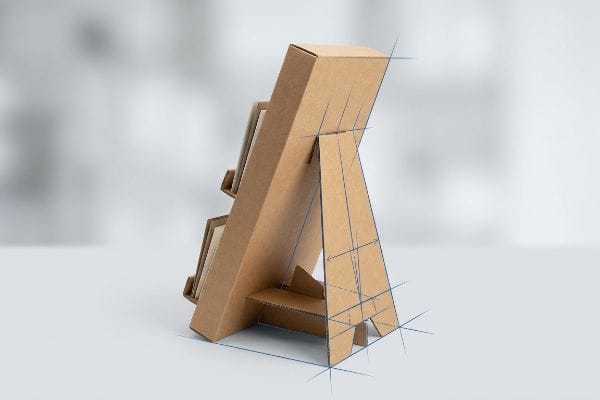
بدون أساس محسوب بشكل صحيح، حتى أجمل تصميم لبطاقات المعايدة يصبح عبئاً ينتظر السقوط على أرضية المتجر.
إتقان فيزياء نقطة التحول لحوامل العرض
عند محاولة صنع حامل كرتوني بنفسك، عادةً ما يصمم المبتدئون صندوقًا مستطيلًا رأسيًا تمامًا مع عدد قليل من الرفوف المتداخلة. ويتعاملون مع الحامل كما لو كان رف كتب ثابتًا مثبتًا في الحائط، متجاهلين تمامًا حقيقة أن وحدة الكرتون القائمة بذاتها تشغل مساحة صغيرة جدًا مقارنةً بارتفاعها الكلي.
تخيل الأمر كأنك تحاول تثبيت كتاب ثقيل ذي غلاف مقوى على حافته السفلية مع موازنة أوزان على غلافه. عند وضع 2.26 كيلوغرام من بطاقات المعايدة الورقية الكثيفة على الرفوف الأمامية، ينتقل مركز الثقل بشكل كبير متجاوزًا الجزء الأماميمن القاعدة. لقد شاهدتُ عروضًا منزلية الصنع غير مثبتة بشكل صحيح تتعرض لانقلاب مفاجئ وحاد، مُحدثةً صوتًا عاليًا عند سقوطها مباشرةً على طاولة الدفع الزجاجية في المتجر. لحل هذه المشكلة، يجب تصميم نظام موازنة رياضي. نستخدم حاملًا خلفيًا ممتدًا بشكل قطري خلف الوحدة،مما يزيد من مساحة القاعدة وينقل مركز الثقل إلى الخلف بأمان للقضاء تمامًا على خطر الانقلاب.
| أخطاء شائعة للمبتدئين | الحل الاحترافي | فوائد أرضية البيع بالتجزئة |
|---|---|---|
| بناء قاعدة عمودية مستوية | نشر حامل رسم ممتد15 | يقضي تماماً على الانقلابات الأمامية |
| مع تجاهل مركز الثقل المحمل | بنية القاع الزائف الموزون16 | يعمل على تثبيت حمولات منتجات الورق الكثيفة |
| مساحات بيع بالتجزئة ضيقة | توسيع البصمة الهندسية17 | يمنع سقوط عربات التسوق عن طريق الخطأ |
أرفض الموافقة على أي منتج ذي هيكل علوي غير متوازن حتى أتأكد من أن الشكل الهندسي الأساسي يمكنه تحمل اختبارات الدفع القوية دون أن يفقد استقامته الرأسية.
🛠️ مكتب هارفي: هل تشعر بأن عرض منتجاتك على المنضدة غير ثابت عند تحميله بالكامل بالبضائع الثقيلة؟ 👉 اطلب تقييم ثبات قاعدتك ↗ — لا توجد استمارات تُسبب مكالمات مبيعات لا تنتهي. قيمة حقيقية فقط.
كيفية صنع حامل بطاقات منزلي الصنع؟
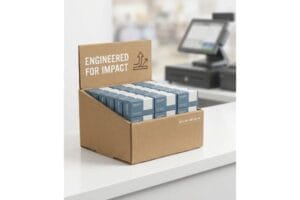
إن الانتقال من مساحة أرضية ضخمة إلى عرض دقيق على منضدة الدفع يتطلب تحولاً جذرياً في علم المواد.
يتطلب صنع حامل بطاقات منزلي استخدام ورق مقوى مموج ذي ثنيات دقيقة. ولأن بطاقات المعايدة الصغيرة تتطلب جيوبًا ضحلة وثنيات معقدة، فإن ألواح الشحن القياسية شديدة التحمل ستنكسر بقوة عند ثنيها بزوايا حادة، مما يجعل استخدام مواد أرق ضروريًا لضمان متانة الهيكل ومظهر أنيق.
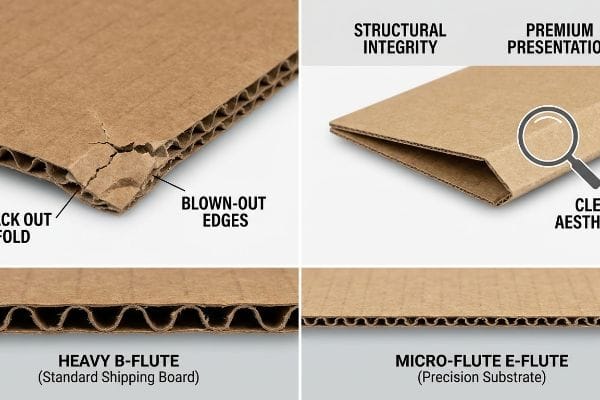
إن جعل العرض المصغر يبدو فاخرًا على طاولة الدفع يعني أنه يجب عليك احترام حدود الانحناء المادية للمواد الخام الخاصة بك.
فشل علامة التبويب الصغيرة في حاملات البطاقات المخصصة
من الشائع، بل والخطير، الاعتقاد بإمكانية أخذ ملف تصميم ثلاثي الأبعاد ناجح لعرض أرضي متين، وتصغيره بنسبة 50% لإنشاء وحدة دفع محلية. تعتقد فرق المشتريات أنها توفر تكاليف الهندسة بإعادة استخدام التصميم، مفترضةً أن لوحة الاختبار السميكة ستتكيف تلقائيًامع الأبعاد الأصغر.
في مصنعي، أرى باستمرار هذا الاختصار النظري يتسبب في فشل ذريع في قسم التعبئة والتغليف. فعندما تُجبر لوحًا سميكًا من نوع B-flute على الطي داخل جيب صغير لبطاقة تهنئة بعمق 25.4 مم (بوصة واحدة) ، لا تجد الأقواس الداخلية للكرتون أي مساحة للتمدد. أختبر هذا مباشرةً على خط الإنتاج، والنتيجة الحسية دائمًا واحدة: صوت تمزق حاد ومزعج، حيث تنفجر الطبقة العلوية المطبوعة عالية الجودة بقوة على طول خط الطي. ومن خلال قياسات دقيقة بالميكرومتر، أثبتُ أن استبدال الركيزة المنتفخة بمادة E-flute دقيقة يحل مشكلة الشد فورًا. تصغير الحجم إلى 1.5 مم (ميكرو-flute) بتثبيت أنصاف أقطار الطي الضيقة بسلاسة، مما يقلل من معدل الهدر في التجميع اليدوي بنسبة 12% تقريبًا، ويضمن بقاء عرض العلامة التجارية مثاليًا.
| أخطاء شائعة للمبتدئين | الحل الاحترافي | فوائد أرضية البيع بالتجزئة |
|---|---|---|
| تقليص خطوط القطع القياسية للأرضيات | إعادة هندسة تفاوتات اللسان21 | يمنع التمزق غير المنتظم عند الطيات الصغيرة |
| استخدام ألواح فولاذية سميكة من النوع B لصنع الصواني الصغيرة | التحول إلى الفلوت الصغير (الفلوت E)22 | يضمن حواف مطبوعة ممتازة ونظيفة |
| إجبار طيات الجيب الضيقة التي يبلغ عرضها بوصة واحدة | مصفوفة معايرة للتجاعيد الدقيقة23 | يقلل بشكل كبير من معدلات الخردة الناتجة عن التعبئة المشتركة |
أحظر بشكل دائم التوسيع المباشر بنسبة 1:1 للتجار الكبار لأن الألياف الورقية ستكشف دائمًا عن الحسابات الهيكلية الكسولة.
🛠️ مكتب هارفي: هل تعاني صواني سطح الطاولة الصغيرة لديك من تشقق الحبر أو تلف الزوايا أثناء التجميع؟ 👉 أرسل لي ملف تصميم القالب ↗ — سأقوم باختبار الحسابات قبل أن تُهدر ميزانيتك على الإنتاج بالجملة.
خاتمة
يمكنك محاولة اختصار الوقت والجهد باستخدام قالب غير مُعاير في الإنتاج الضخم، ولكن عندما تتمزق تلك الأجزاء الصغيرة جدًا وتتسبب في تلف الطبقة العلوية المطبوعة، فإن نسبة الهدر الناتجة التي تصل إلى 12% ستقضي تمامًا على هامش ربح حملتك. يستخدم أكثر من 500 مدير علامة تجارية قائمة التحقق الخاصة بي قبل الطباعة لتجنب هذه الأخطاء القاتلة في المراحل المبكرة. توقف عن التخمين بشأن خصائص المواد، ودعني أقوم شخصيًا بفحص ملفاتك الهيكلية من خلال خدمة التدقيق المجاني قبل الطباعة ↗ لاكتشاف هذه العيوب المدمرة في الشد قبل وصولها إلى طاولة القص.
"الدليل الشامل لصناديق الكرتون المموج - شور باكيدجينج"، https://www.shorr.com/resources/blog/ultimate-guide-corrugated-boxes/. توضح كتيبات هندسة التغليف أن الفتحات يجب أن تكون أعرض من الألسنة بمقدار سماحية محددة بناءً على سُمك المادة لضمان ملاءمة وظيفية. دور الدليل: المواصفات الفنية؛ نوع المصدر: دليل تصميم التغليف. يدعم: الحاجة إلى تعويض السُمك في خطوط القطع الهيكلية. ملاحظة النطاق: يختلف باختلاف حجم التموج. ↩
"تصميم التغليف باستخدام برامج التصميم بمساعدة الحاسوب: دليل خطوة بخطوة - إيسكو"، https://www.esko.com/en/blog/packaging-design-with-cad-software. توضح وثائق التصميم بمساعدة الحاسوب للتصميم الهيكلي أن بيئات السماكة الصفرية تتجاهل حجم المادة، مما يؤدي إلى فشل التجميع في النماذج الأولية المادية المموجة. دور الدليل: تعريف تقني؛ نوع المصدر: دليل التصميم بمساعدة الحاسوب. يدعم: التمييز بين المسارات الرقمية والمواد المادية. ملاحظة النطاق: خاص بالبرامج القائمة على المتجهات. ↩
[ملف PDF] مواصفات الكرتون المموج - رابطة صناديق الألياف، https://www.fibrebox.org/assets/2025/09/Walmart_Corrugated-Board_Specifications_Automation_Packaging_Standards.pdf. مواصفات فنية تُثبت سُمك الكرتون المموج من النوع B القياسي. دور الدليل: التحقق من الحقائق؛ نوع المصدر: ورقة مواصفات المواد. يدعم: أبعاد المواد للتصميم. ملاحظة: قد تختلف المعايير قليلاً باختلاف الشركة المصنعة. ↩
"المخاطر الخفية لتجميع شاشات نقاط البيع بشكل سيئ (وكيفية تجنبها...)"، https://www.eliteprintingandpackaging.com/blog/the-hidden-risks-of-poor-pos-display-assembly-and-how-to-avoid-them/. بيانات تجريبية أو دراسة صناعية تُحدد كميًا الخسائر في إنتاجية العمل أثناء التعبئة المشتركة نتيجةً لأعطال التجميع الهيكلي. دور الدليل: دعم كمي؛ نوع المصدر: تقرير صناعي عن قطاع الخدمات اللوجستية أو سلسلة التوريد. يدعم: الأثر الاقتصادي لتصميم القوالب الرديء. ملاحظة: قد تختلف النسبة المئوية باختلاف تعقيد التجميع. ↩
"التحليل التحليلي لصلابة الانحناء لخمس طبقات..."، https://pmc.ncbi.nlm.nih.gov/articles/PMC8777652/. دراسة فنية أو معيار صناعي يوضح انخفاض وقت التجميع عند دمج سماحية الانحناء في تصاميم CAD للوحدات المموجة. دور الدليل: التحقق الكمي؛ نوع المصدر: ورقة بحثية فنية. يدعم: زيادة الكفاءة الناتجة عن استخدام سماحية الانحناء. ملاحظة: قد تختلف النتائج بناءً على نوع المادة. ↩
"التصميم الأمثل لتغليف الكرتون المموج ذي الجدار المزدوج - PMC"، https://pmc.ncbi.nlm.nih.gov/articles/PMC8950760/. وثائق هندسية تشرح كيفية مراعاة خوارزميات البرمجيات لسمك المادة (الفرجار) لمنع التقوس والتمزق الناتجين عن الإجهاد أثناء الطي. دور الدليل: تعريف تقني؛ نوع المصدر: دليل هندسي. يدعم: منع الفشل الهيكلي في شاشات العرض المموجة المطوية. ملاحظة النطاق: ينطبق تحديدًا على المواد المموجة ذات الجدران السميكة. ↩
"5 أدوات تصميم بمساعدة الحاسوب مجانية لتصميم أي مشروع - يوتيوب"، https://www.youtube.com/watch?v=b1hDx3aCssU. مقارنة بين منهجيات التصميم في تصنيع شاشات نقاط البيع، تُظهر تفوق النمذجة ثلاثية الأبعاد في تحقيق محاذاة عمودية للأرفف. دور الدليل: التحقق التقني؛ نوع المصدر: مجلة متخصصة. يدعم: ضمان محاذاة مربعة وثابتة للأرفف. ملاحظة: يركز على الانتقال من مسارات المتجهات ثنائية الأبعاد إلى نمذجة الحجم ثلاثية الأبعاد. ↩
"دراسة تأثير الثقوب على قدرة تحمل الأحمال..."، https://pmc.ncbi.nlm.nih.gov/articles/PMC11396172/. شرح تقني لكيفية تحقيق الألسنة المتشابكة للاستقرار الهيكلي من خلال الاحتكاك والشد الداخلي دون استخدام مواد لاصقة. دور الدليل: التحقق التقني؛ نوع المصدر: دليل هندسة التغليف. يدعم: جدوى أقفال الكرتون أحادية المادة. ملاحظة النطاق: التركيز على قدرة تحمل الأحمال. ↩
"منصة عرض تجارية من الكرتون يمكنك صنعها بنفسك: وفر المال والوقت | تيك توك"، https://www.tiktok.com/@ebuild_cardboardbooth/video/7624042698181283102. تحليل مقارن لوقت التجميع وتكاليف العمالة بين منصات العرض الكرتونية اللاصقة وتلك التي تُركّب بدون أدوات. دور الدليل: التبرير الاقتصادي؛ نوع المصدر: ورقة بحثية صناعية. يدعم: الكفاءة التشغيلية للتصميم أحادي المادة. ملاحظة النطاق: قابل للتطبيق على النشر بكميات كبيرة في قطاع التجزئة. ↩
[ملف PDF] هياكل الأوريغامي ذاتية القفل والقطع المتداخلة الناتجة عن القفل...، https://par.nsf.gov/servlets/purl/10197968. شرح تقني لكيفية إنشاء أنماط الطي الهندسية أقفالًا ميكانيكية في الكرتون المموج كبديل للمواد اللاصقة الكيميائية. دور الدليل: التحقق التقني؛ نوع المصدر: دليل هندسة إنشائية أو تصميم تغليف. يدعم: استقرار هياكل الكرتون الخالية من الشريط اللاصق. ملاحظة النطاق: ينطبق على شاشات العرض في نقاط البيع بالتجزئة. ↩
"كيف تُتيح الأحبار والطلاءات التغليف أحادي المادة"، https://www.inxinternational.com/blog/inks-coatings-enable-mono-material-packaging. تحليل لكيفية إلغاء الحاجة إلى أدوات التثبيت الثانوية وتحسين إمكانية إعادة التدوير من خلال استخدام مادة واحدة في التغليف. دور الدليل: التحقق من الاستدامة؛ نوع المصدر: معيار صناعة التغليف. يدعم: تقليل اختناقات المعدات. ملاحظة النطاق: يركز على تجانس المواد في عروض البيع بالتجزئة. ↩
"تجميع التداخل وتحليل تآكل الاحتكاك في عمود مجوف"، https://pmc.ncbi.nlm.nih.gov/articles/PMC4052619/. وصف ميكانيكي لاستخدام مرونة المواد والتداخل لتثبيت الوصلات الهيكلية بدون غراء. دور الدليل: التحقق الميكانيكي؛ نوع المصدر: كتاب في التصميم الصناعي. يدعم: فك سريع وسهل لحوامل من الورق المقوى بدون أدوات. ملاحظة النطاق: يعتمد على نوع الورق المقوى وسماكته. ↩
[ملف PDF] القوى، مركز الثقل، ردود الفعل والاستقرار، https://raeng.org.uk/media/phckgici/5-forces-centre-of-gravity-reactions-and-stability.pdf. شرح لكيفية تسبب إزاحة مركز الثقل خارج قاعدة الدعم في عدم استقرار الهيكل. دور الدليل: مبدأ تقني؛ نوع المصدر: كتاب فيزياء. الدعامات: سبب الانقلاب. ملاحظة النطاق: التوازن السكوني العام. ↩
حامل عرض من الورق المقوى "8.5 × 11 بوصة: كرافت مزدوج الجناح"، https://www.affordabledisplayproducts.com/ED11DWK-Cardboard-Easel-Displays-Kraft?srsltid=AfmBOopAeyXEjoxxPYbSddmgq8VQmzSF3jHVyx9NCeUfyZXKYuwzRamy. تم التحقق من أن توسيع قاعدة الحامل باستخدام مسند خلفي يمنع الانقلاب عن طريق نقل مركز الثقل للخلف. دور الدليل: حل هيكلي؛ نوع المصدر: دليل هندسة التغليف. يدعم: طريقة الثبات. ملاحظة النطاق: هيكل من الورق المقوى. ↩
"كيفية تصميم شاشة عرض كرتونية قابلة للتخصيص؟ - PopDisplay"، https://popdisplay.me/how-to-customizable-cardboard-display-2/. شرح فني لكيفية تغيير مركز الثقل لمنع الانقلاب الأمامي عن طريق زيادة عمق القاعدة باستخدام حامل خلفي. دور الدليل: التحقق الفني؛ نوع المصدر: دليل هندسي إنشائي. يدعم: فعالية الحوامل الخلفية في منع الانقلاب. ملاحظة النطاق: خاص بالمواد الكرتونية المموجة خفيفة الوزن. ↩
"قدرات تحمل الأحمال لعروض البيع بالتجزئة المؤقتة - يو دي دايركت"، https://www.ud-direct.com/blog/temporary-retail-display-load-bearing-capabilities. مبدأ هندسي يشرح كيف أن إضافة كتلة إلى القاعدة تُخفض مركز الثقل الكلي لتحقيق استقرار الأحمال الكثيفة. دور الدليل: مبدأ فيزيائي؛ نوع المصدر: دليل تصميم المنتج. يدعم: استقرار أحمال المنتجات الورقية الكثيفة. ملاحظة النطاق: يفترض أن الوزن مُمركز ومثبت. ↩
"14 نوعًا من عروض البيع بالتجزئة | شيكاغو، إلينوي - ويرثيمر بوكس"، https://wertheimerbox.com/types-of-retail-displays/. تحليل لكيفية تحسين زيادة مساحة سطح القاعدة للثبات ضد القوى الجانبية مثل اصطدام عربات التسوق. دور الدليل: معيار السلامة؛ نوع المصدر: دليل تجهيزات البيع بالتجزئة. يدعم: منع السقوط العرضي. ملاحظة النطاق: تعتمد الفعالية على نسبة الارتفاع إلى العرض. ↩
"تأثير خطوط الطي التناظرية والرقمية على الخصائص الميكانيكية... - PMC"، https://pmc.ncbi.nlm.nih.gov/articles/PMC9268991/. توضح أدلة التصميم الهيكلي للتغليف المموج أن سُمك طبقة الاختبار (الفرجار) لا يتناسب طرديًا مع هندسة التصميم بمساعدة الحاسوب، مما يؤدي إلى فشل في التركيب والطي. دور الدليل: التحقق الفني؛ نوع المصدر: دليل تصميم التغليف. يدعم: الادعاء بأن سُمك المادة يمنع التناسب الهندسي البسيط. ملاحظة النطاق: ينطبق تحديدًا على الورق المقوى المموج. ↩
[ملف PDF] مواصفات الورق المقوى المموج - الأرشيف الوطني، https://www.archives.gov/files/preservation/storage/pdf/corrugated-board.pdf. تحدد معايير الصناعة لتغليف الورق المقوى المموج الحد الأدنى لنصف قطر الانحناء لمختلف أشكال التموجات لمنع تشقق البطانة. دور الدليل: التحقق الفني؛ نوع المصدر: دليل هندسة التغليف. يدعم: الفشل الهيكلي للتموجات من النوع B في الجيوب ذات نصف القطر الصغير. ملاحظة النطاق: يعتمد على درجة الورق المقوى ووزن البطانة. ↩
"تغليف الميكرو-فلوت | علب كرتون EF N-Flute - نتباك"، https://www.netpak.com/en/packaging-resources/industry-articles/micro-flute-packaging-efn-flute/. عادةً ما تُدرج مواصفات المواد لركائز E-flute والميكرو-فلوت سُمكًا يتراوح بين 1.1 مم و1.5 مم. دور الدليل: التحقق من المواصفات؛ نوع المصدر: ورقة بيانات المواد. يدعم: السُمك الفعلي لمادة الميكرو-فلوت. ملاحظة: قد تختلف الأبعاد قليلاً حسب الشركة المصنعة. ↩
[ملف PDF] الطي والتجعيد - BioResources، https://bioresources.cnr.ncsu.edu/wp-content/uploads/2019/01/2017.1.69.pdf. إرشادات هندسية حول كيفية منع إجهاد المواد والتمزق غير المنتظم في قوالب التشكيل الصغيرة عن طريق ضبط أبعاد وتفاوتات علامات التبويب. دور الدليل: المبدأ الميكانيكي؛ نوع المصدر: دليل التصميم الهيكلي. يدعم: التخلص من التمزق غير المنتظم في الطيات الصغيرة. ملاحظة النطاق: خاص بطي ركائز الكرتون. ↩
شرح أنواع تموجات الكرتون المضلع: A، B، C، E، وF، https://www.onyxpackaging.com/blog/corrugated-box-flute-types.php. مقارنة فنية لأحجام تموجات الكرتون المضلع توضح سبب توفير تموج E سطحًا أكثر نعومةً للطباعة عالية الجودة على الصواني الصغيرة مقارنةً بتموج B. المصدر: مواصفات فنية؛ نوع المصدر: معيار صناعة التغليف. يدعم: استخدام التموجات الدقيقة للحصول على حواف ممتازة. ملاحظة: يركز على خصائص مادة الكرتون المضلع. ↩
مصفوفة طي XTC - ThePackagingPortal.com، https://www.thepackagingportal.com/industry-news/xtc-creasing-matrix/. بيانات تصنيعية توضح كيف تقلل أدوات الطي الدقيقة من التلف الهيكلي والنفايات أثناء طي الجيوب الضيقة. دور الدليل: تحسين العملية؛ نوع المصدر: دليل هندسة التصنيع. يدعم: تقليل معدلات الهدر في التعبئة والتغليف المشتركة. ملاحظة النطاق: ينطبق على عمليات الطي الآلية واليدوية. ↩