لقد استثمرت بكثافة في منتجك، لكن إرسال أعمال فنية غير موثقة مباشرة إلى المصنع يمثل مخاطرة مالية هائلة غالباً ما تؤدي إلى رفض كارثي من قبل متاجر التجزئة.
نعم. يُعدّ عرض تصميم علبكم قبل التصنيع إجراءً قياسياً. تستخدم مرحلة التحقق قبل الإنتاج هذه نماذج أولية مادية دقيقة ورسومات رقمية للتخلص من العيوب الهيكلية المكلفة، مما يضمن بقاء عبواتكم النهائية سليمة في ظل ظروف سلسلة التوريد القاسية وعمليات التدقيق الصارمة من قبل التجار.
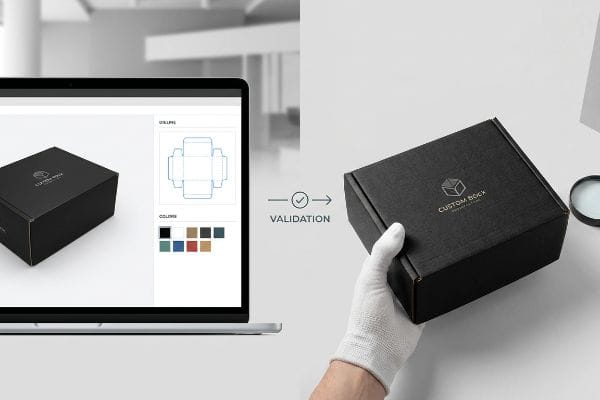
إن الحصول على دليل مرئي لا يقتصر على الجماليات فحسب؛ بل هو الحاجز الأخير بين طرح مربح ومستودع مليء بالكرتون غير القابل للاستخدام.
كيفية تصميم عبوات كرتونية؟
إن بناء هيكل ناجح يبدأ قبل وقت طويل من ملامسة الحبر للورقة.
يتطلب تصميم عبوات الصناديق دمج الهندسة الإنشائية مباشرةً مع التصاميم الرسومية. تحسب هذه العملية الأساسية سماكات المواد بدقة، وبدلات الانحناء، وقدرات التحميل الديناميكي، مما يضمن تحويل القوالب المسطحة بنجاح إلى مجسمات عرض ثلاثية الأبعاد صلبة قادرة على تحمل الشحن الثقيل وبيئات البيع بالتجزئة التنافسية.
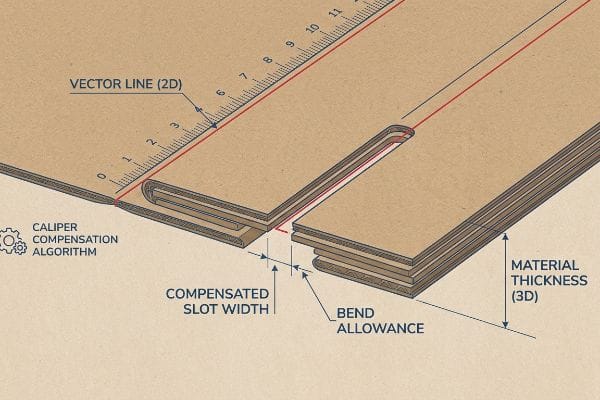
قد يبدو الرسم المسطح مثالياً على الشاشة، لكن الواقع المادي لطي الورق المقوى السميك يتطلب انضباطاً رياضياً صارماً.
الرياضيات الخفية لتعويض الفرجار
حتى المصممون المخضرمون غالباً ما يتجاهلون السماكة الفعلية للركيزة التي يختارونها. فهم يصممون ألسنة متشابكة وفتحات قابلة للطي في برامج ثنائية الأبعاد بنفس عرض اللوحة المقابلة تماماً.ويفترضون أن خطاً متجهياً بسيطاً سينطوي بسلاسة على أرضية التجميع.
ألاحظ هذا الخطأ باستمرار عندما يُرسل العملاء ملفات AI (أدوبي إليستريتور) ثنائية الأبعاد لحملات كرتونية مموجة من النوع B. ينسون أن لوحًا بسمك 3.17 مم (0.125 بوصة)كمية من المواد عند طيه بزاوية 90 درجة. إذا لم يتم توسيع فتحة الاستقبال على خط القطع لتعويض هذا الانحناء الخارجي، فسوف ينحني المنتج النهائي بشدة. لقد شاهدت عمال التعبئة والتغليف يبذلون جهدًا كبيرًا على خط التجميع، يدفعون الألسنة معًا بقوة حتى تسمع صوت تمزق الورق المقوى الخام. نتغلب على هذه المشكلة باستخدام برامج التصميم بمساعدة الحاسوب (CAD) لتطبيق خوارزمية سماحية الانحناء تلقائيًا على كل فتحة. من خلال توسيع الفتحات بجزء بسيط من المليمتر، نضمن انزلاق القطع معًا بسلاسة، مما يقلل من جهد التجميع بنسبة 20% تقريبًا،ويمنع تمزق الألواح.
| أخطاء شائعة للمبتدئين | الحل الاحترافي | فوائد أرضية البيع بالتجزئة |
|---|---|---|
| علامات التبويب والفتحات للرسم بنفس العرض تمامًا 1:1 | تطبيق خوارزميات تعويض الفرجار في برامج التصميم بمساعدة الحاسوب4 | يوفر 20 ثانية من وقت التجميع لكل وحدة5 |
| تجاهل سمك اللوح أثناء الطي بزاوية 90 درجة | توسيع فتحات الاستقبال لنصف قطر الانحناء6 | يمنع تمزق الطبقة العلوية وانبعاجها |
| إجبار الأجزاء غير المتطابقة على العمل معًا على الخط | هندسة الخلوصات الدقيقة لانزلاق سلس | يقلل بشكل كبير من تكاليف العمالة في التعبئة والتغليف المشترك |
أرفض إرسال ملفات المتجهات غير المُعدّلة إلى طاولة القطع. إن ضبط عرض الفتحة وفقًا لسمك اللوح المحدد هو الطريقة الوحيدة لضمان هيكل مربع وثابت تحت ضغط حمولة ثقيلة.
🛠️ مكتب هارفي: هل أنت غير متأكد من أن ألسنة التثبيت المتشابكة لديك تحتوي على مساحة الانحناء المناسبة؟ 👉 أرسل لي مخطط القطع المسطح ↗ — وصول مباشر إلى مكتبي. أعدك بعدم تلقي أي رسائل تسويقية آلية مزعجة.
ما هي اتجاهات تصميم التغليف لعام 2026؟
تتجه الموجة التالية من الابتكار الهيكلي بقوة نحو الاستدامة الخالية من الاحتكاك.
تُولي اتجاهات تصميم التغليف لعام 2026 أهمية بالغة للتصنيع من مادة واحدة فقط، مع إمكانية إعادة التدوير بسهولة. وبدافع من متطلبات التجار الصارمة، يستبدل المصنّعون المواد البلاستيكية المختلطة والقطع المعدنية الثابتة بورق مقوى مموج مُصمّم هندسيًا، مستخدمين طلاءات مائية للحفاظ على قدرة تحمل عالية للأحمال الديناميكية، مع ضمان الامتثال التام للمعايير البيئية.
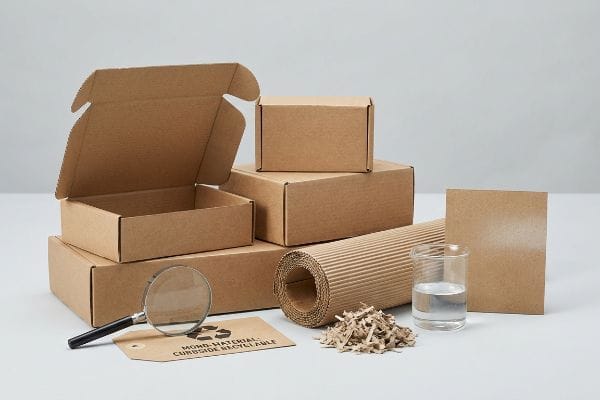
ترغب العلامات التجارية في إظهار صديقة للبيئة ، لكن اختيار المواد الخاطئة غالباً ما يؤدي إلى حالات فشل غير متوقعة في الامتثال.
فخ إعادة تدوير البلاستيك الحيوي
تُلزم العديد من فرق التسويق باستخدام أغلفة بلاستيكية حيوية من حمض البوليلاكتيك (PLA) لعرض منتجاتها في متاجر البيع بالتجزئة. ويفترضون أن استخدام غلاف نباتي يضمن تلقائيًا الامتثال للمعايير البيئية. قد يبدو هذا مثاليًا في عروض مجالس الإدارة، ولكنه يفشل تمامًا في الواقع العملي.
أضطر في كثير من الأحيان إلى مراجعة هذه المواصفات قبل وصولها إلى خط الإنتاج. فعندما تقوم منشأة إعادة تدوير الكرتون المموج القديم (OCC) بمعالجة شاشة عرض مغلفة بغشاء PLA صلب، فإن المادة تصد الماء وتتسبب في تعطل الآلات . يمكنك أن تشعر بوضوح بلزوجة الغشاء البلاستيكي وعدم مرونته، حيث يرفض التحلل في حوض إعادة التدوير. وبدلاً من إعادة تدويره، تقوم المنشآت بتحويل الهيكل بأكمله مباشرةً إلى مكب النفايات، مما يؤدي إلى تكاليف باهظة على تجار التجزئة. أتجاوز هذه المشكلة تمامًا من خلال تطبيق بروتوكول طلاء مائي سائل على بطانة الاختبار الخام . يوفر هذا الطلاء حاجز الرطوبة المطلوب، ولكنه يذوب بسلاسة أثناء إعادة التدوير، مما يضمن امتثال حملتك بنسبة 100% ويجنبك غرامات بيئية باهظة.
| أخطاء شائعة للمبتدئين | الحل الاحترافي | فوائد أرضية البيع بالتجزئة |
|---|---|---|
| استخدام البلاستيك الحيوي PLA في الادعاءات الصديقة للبيئة | الترقية إلى طبقات عازلة مائية سائلة10 | يجتاز عمليات التدقيق الصارمة للاستدامة لدى تجار التجزئة |
| بافتراض أن جميع الأغشية النباتية قابلة لإعادة التدوير11 | ضمان هياكل ورقية أحادية المادة بنسبة 100%12 | يمنع فرض رسوم إضافية على تحويل النفايات إلى مكبات النفايات |
| إضافة مواد مختلطة إلى شاشات العرض المموجة | إزالة الأغشية الدائمة غير القابلة لإعادة التدوير | يُسهّل فرز النفايات على مستوى المتجر |
لا أضحي أبدًا بإمكانية إعادة تدوير الورق ميكانيكيًا من أجل ادعاء تسويقي سطحي. الاستدامة الحقيقية تعني تصميم بنية يمكن لمصانع الورق البلدية القياسية معالجتها دون تدخلات كيميائية متخصصة.
🛠️ مكتب هارفي: هل تتسبب حواجز الرطوبة الحالية لديكم في قيود خفية تتعلق بالامتثال البيئي؟ 👉 اطلبوا تدقيقًا للمواد ↗ — حمّلوا الملف بأمان. صندوق بريدي مفتوح إذا كانت لديكم أي أسئلة لاحقًا.
كيفية تصميم العبوات خطوة بخطوة؟
يتطلب تنفيذ عملية إنتاج خالية من العيوب سير عمل منهجي وقابل للتنبؤ.
يتطلب تصميم العبوات خطوة بخطوة تسلسلًا دقيقًا لما قبل الطباعة يركز على التفاوتات الميكانيكية. تشمل هذه العملية الهندسة الهيكلية، وتوسيع هامش التسييل المحدد، واختيار نوعية المواد، ومعايرة الآلة، مما يضمن تطابق التصميم الرقمي بسلاسة مع الركيزة الكرتونية المموجة أثناء عمليات التصنيع الآلية عالية السرعة.
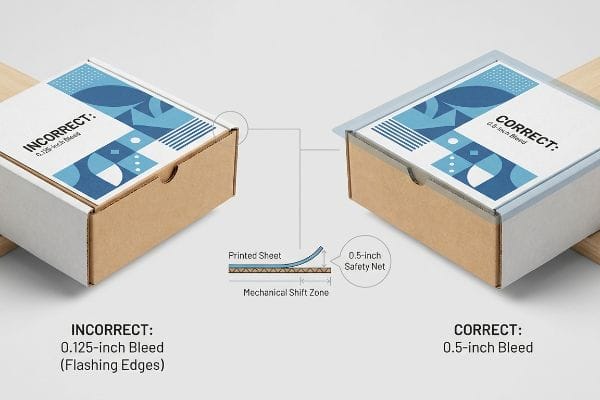
تحدث نقطة الضعف الأكثر شيوعًا في هذه السلسلة عندما يتعامل مصممو الجرافيك مع العبوات السميكة كما لو كانت مجلة تجارية مسطحة.
عامل إزاحة الطباعة الحجرية والترقيق
تُطبّق أقسام التصميم الجرافيكي بشكل روتيني هوامش الطباعة التجارية القياسية، والتي تبلغ عادةً حوالي 3.17 مم (0.125 بوصة)13، على ملفات العرض النهائية. ويتوقعون من آلات القطع الآلية أن تصل إلى الحافة الدقيقة للتصميم بدقة الليزر في كل مرة.
ألاحظ هذا القصور في الجودة، مما يُفسد عمليات الإنتاج الضخم أسبوعيًا تقريبًا. عند إجراء عملية التغليف بالطباعة الحجرية - وهي عملية لصق الأوراق المطبوعة على ألواح كرتونية سميكة مموجة - يتسبب لاصق PVA (أسيتات البولي فينيل) الرطب والأسطوانات الثقيلة في حدوث انزلاق ميكانيكي طبيعي . لقد وقفتُ بجوار آلة التغليف وشاهدتُ الألواح تنزلق قليلًا بفعل قوة الشفط العالية. إذا تركتَ هامشًا صغيرًا جدًا، فإن هذا الانزلاق الميكانيكي البسيط يُعرّض حواف الكرتون البني الخام في الوحدة المطوية النهائية، مما ينتج عنه منتج معيب ظاهريًا. لذلك، أفرض هامشًا صارمًا يبلغ 12.7 مم (0.5 بوصة) بعد خط القطع الفعلي كإجراء وقائي ضد هذا الانزلاق. تضمن هذه القاعدة البسيطة والمُطبقة قبل الطباعة حوافًا مثالية، مما يمنع رفض دفعات كاملة من قِبل قسم مراقبة الجودة.
| أخطاء شائعة للمبتدئين | الحل الاحترافي | فوائد أرضية البيع بالتجزئة |
|---|---|---|
| باستخدام هوامش الطباعة التجارية القياسية | فرض هامش أمان بمقدار 0.5 بوصة بعد خطوط القطع16 | يزيل ظهور حواف بنية خامة |
| تجاهل التحول الميكانيكي للتغليف الرطب | مراعاة شريحة الركيزة اللاصقة PVA17 | يضمن قيمة العلامة التجارية البصرية على الرفوف |
| بافتراض دقة الليزر على البكرات الآلية18 | بناء شبكة أمان رسومية مصممة هندسيًا | يمنع رفض كميات كبيرة من المنتجات بسبب الجودة |
أرفض دائمًا الملفات في مرحلة ما قبل الطباعة إذا لم تستوفِ الحد الأدنى للهوامش. لا يستغرق توسيع خلفية العمل الفني من المصمم سوى دقيقتين، ولكنه يوفر آلاف الدولارات من هدر المواد.
🛠️ مكتب هارفي: هل أنت غير متأكد من إمكانية تمديد تصميمك الفني بأمان إلى ما بعد منطقة التحول في الطباعة الحجرية والتغليف؟ 👉 احصل على فحص ملف ما قبل الطباعة ↗ — لا توجد استمارات تُسبب مكالمات مبيعات لا نهاية لها. فقط قيمة خالصة.
كيفية تصميم صندوق مخصص؟
إن تطوير بنية فريدة يمنح منتجك ميزة واضحة على رفوف المتاجر.
يتطلب تصميم صندوق مخصص هندسةً رياضيةً دقيقةً للركيزة المادية لدعم حمولة منتجك المحددة. يشمل هذا التخصيص التقني حساب إزاحات مركز الثقل بدقة، واستخدام دعامات مزدوجة الجدار موجهة، وتحديد مسافات تداخل مخصصة لضمان تجميع سلس ومتانة هيكلية طويلة الأمد.
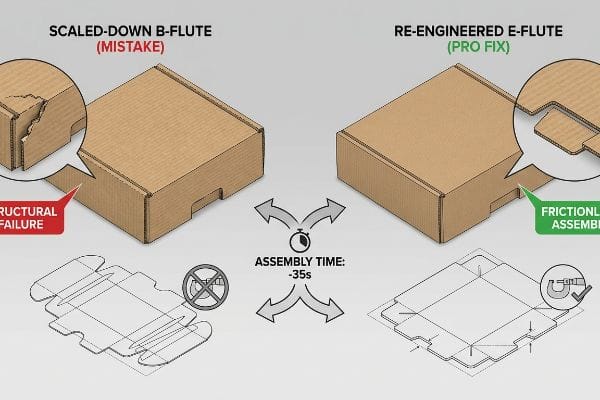
لكن معرفة النظرية لا تكفي عندما تبدأ الآلات بالعمل وتصطدم الأبعاد المخصصة بحدود المواد الفيزيائية.
لماذا تفشل عملية التصغير القياسية لتناسب المقاسات في أرضية المصنع؟
غالباً ما تحاول فرق المشتريات توفير تكاليف الهندسة عن طريق أخذ قالب عرض أرضي متين وتقليصه رياضياً بنسبة 50% ليصبح وحدة سطح طاولة مخصصة. ويفترضون أن ملف المتجهات العالمي يعمل بسلاسة تامة على جميع الأبعاد والمواد .
في منشأتي، أشهد بشكل روتيني النتائج الكارثية لهذا الفخ الناتج عن التصغير المباشر أثناء اختبارات ما قبل الإنتاج. فعند تصغير أنصاف أقطار الطي وعلامات التعشيق إلى أبعاد متناهية الصغر على لوح من الورق المقوى ذي الثنيات الكثيفة من النوع B، لا يمكن ضغط الثنيات الورقية الداخلية بشكل كامل.أختبر ذلك باستخدام ميكرومتر، وعندما يتم إدخال علامة تعشيق مصغرة بحجم 10.1 مم (0.4 بوصة) في فتحة مصغرة بنفس النسبة، تنكسر الورقة العلوية ببساطة تحت الضغط. وينتهي الأمر برف متذبذب، ويضطر عمال التعبئة والتغليف إلى استخدام شريط لاصق شفاف بشكل فوضوي لمجرد تثبيت الهيكل المخصص. من خلال التحول إلى ركيزة من الورق المقوى ذي الثنيات الرقيقة من النوع E (الثنيات الدقيقة) وإعادة هندسة مسافات علامات التعشيق رياضياً خصيصاً لهذا الحجم الأصغر، أتغلب على هذا العائق. يقلل هذا التعديل وقت تجميع التعبئة والتغليف بما يصل إلى 35 ثانية لكل وحدة،مما يضمن هامش ربح المشروع دون المساس بجمالية العلامة التجارية.
| أخطاء شائعة للمبتدئين | الحل الاحترافي | فوائد أرضية البيع بالتجزئة |
|---|---|---|
| تقليص خطوط العرض الكبيرة رياضياً | إعادة تصميم الأقفال وفقًا للتنسيق المحدد | يمنع الانهيار الهيكلي على المنضدة |
| إدخال ألسنة الشفرات السميكة من نوع B في فتحات دقيقة | الترقية إلى ركائز ذات قنوات دقيقة22 | يغني عن الحاجة إلى الشريط اللاصق الشفاف الفوضوي |
| استخدام نفس ملف CAD لجميع الأحجام | تحديد المسافات المخصصة للعلامات القابلة للتوسيع | يقلل وقت التجميع بمقدار 35 ثانية لكل وحدة23 |
لا أسمح أبدًا بالقياس الرياضي المباشر بين درجات المواد المختلفة. الصندوق المصمم خصيصًا خصائص فيزيائية خاصة، مما يعني أن كل قفل احتكاك يجب أن يُصمم بشكل مستقل لبيئة البيع بالتجزئة المخصصة له.
🛠️ مكتب هارفي: لا تدع عيبًا هيكليًا بحجم 2 مليمتر يُفسد إطلاقًا ضخمًا لـ 500 متجر. 👉 أرسل لي ملف تصميم القالب ↗ — سأُجري اختبارات دقيقة للحسابات قبل أن تُهدر ميزانيتك على الإنتاج الضخم.
خاتمة
يمكنك اختيار مورد أرخص لتغليف منتجاتك المخصصة، ولكن عندما تنكسر تلك الألسنة المصنوعة من ورق B-flute المصغر رياضيًا أثناء عملية التغليف المشترك، فإن الاحتكاك الناتج يُبطئ خط التجميع بنسبة تُقدر بـ 30%، مما يُفقدك هامش ربحك تمامًا. هذه هي ورقة المواصفات الدقيقة التي يستخدمها أفضل 10 عملاء تجزئة لديّ لضمان عدم رفض أي منتج. توقف عن التخمين بشأن دقة المواد، ودعني أُجري شخصيًا تدقيقًا أوليًا مجانيًا لملفاتك الهيكلية ↗ لاكتشاف أخطاء القياس الجسيمة قبل بدء الإنتاج الضخم.
"إتقان تصميم اللسان والفتحة لتصنيع المعادن بكفاءة"، https://sendcutsend.com/blog/mastering-tab-and-slot-design-for-efficient-metal-fabrication/?srsltid=AfmBOoof5_leCqMImoGcyTwkBXcBLznJf8PfRsycYq5x696DK0YQzf1Y. تنص معايير هندسة التغليف على أن تكون الفتحات أعرض من اللسان المقابل لها لمراعاة سُمك المادة ونصف قطر الطي لضمان التجميع. دور الدليل: المواصفات الفنية؛ نوع المصدر: دليل التغليف الهيكلي. يدعم: الادعاء بأن نسب العرض 1:1 تؤدي إلى فشل التركيب. ملاحظة النطاق: ينطبق على ركائز الكرتون المموج والكرتون القابل للطي. ↩
"درجات الورق المقوى المموج والمواد | 30-06-2021"، https://www.packagingstrategies.com/articles/96269-corrugated-board-and-material-grades. التحقق الفني من السماكة القياسية للورق المقوى المموج من النوع B. دور الدليل: المواصفات الفنية؛ نوع المصدر: معيار المواد الصناعي. يدعم: دقة بيانات سماكة المواد. ملاحظة: قد تختلف القياسات قليلاً حسب الشركة المصنعة الإقليمية. ↩
"التحليل التحليلي لصلابة الانحناء لخمس طبقات..."، https://pmc.ncbi.nlm.nih.gov/articles/PMC8777652/. دليل كمي على تحسينات الكفاءة الناتجة عن تطبيق خوارزميات بدل الانحناء في تصميم التغليف الهيكلي. دور الدليل: مقياس أداء؛ نوع المصدر: دراسة حالة تصنيعية. يدعم: خفض تكاليف التشغيل. ملاحظة: قد تختلف النسبة المئوية تبعًا لمدى تعقيد التصميم. ↩
"التصميم الأمثل لتغليف الكرتون المموج ذي الجدار المزدوج - PMC"، https://pmc.ncbi.nlm.nih.gov/articles/PMC8950760/. وثائق فنية من برنامج هندسة التغليف تشرح استخدام الخوارزميات لضبط سُمك المادة (الفرجار). دور الدليل: التحقق الفني؛ نوع المصدر: دليل هندسة البرمجيات. يدعم: استخدام التعويض الآلي لتحقيق ملاءمة دقيقة. ملاحظة النطاق: ينطبق بشكل أساسي على سير عمل CAD/CAM الآلي. ↩
"تحسين الإنتاجية من خلال موازنة خط التجميع بواسطة..."، https://pmc.ncbi.nlm.nih.gov/articles/PMC10788436/. دراسات حالة في الهندسة الصناعية تُحدد كميًا مقدار تقليل الوقت في التجميع اليدوي عند تصميم الأجزاء بتفاوتات دقيقة. دور الدليل: مقياس كمي؛ نوع المصدر: دراسة كفاءة تشغيلية. يدعم: الادعاء بتحقيق وفورات كبيرة في وقت العمل. ملاحظة: تختلف الوفورات الزمنية بناءً على تعقيد الصندوق ومهارة العامل. ↩
«نظرة عامة على الدراسات الحديثة في معهد IPST حول حواف الكرتون المموج...»، https://bioresources.cnr.ncsu.edu/resources/overview-of-recent-studies-at-ipst-on-corrugated-board-edge-compression-strength-testing-methods-and-effects-of-interflute-buckling/. معايير التغليف الهيكلي التي توضح بالتفصيل كيفية زيادة حجم فتحات الاستقبال لاستيعاب نصف قطر انحناء المادة أثناء الطي. دور الدليل: معيار فني؛ نوع المصدر: دليل صناعي. يدعم: منع تمزق المادة وانبعاجها. ملاحظة النطاق: يعتمد على درجة وسمك الكرتون. ↩
"تقييم دورة حياة حمض البوليلاكتيك (PLA) لجعله..."، https://pmc.ncbi.nlm.nih.gov/articles/PMC8199738/. وثائق فنية أو دراسات لإدارة النفايات تُظهر أن رقائق PLA تُلوث مسارات إعادة التدوير التقليدية، وغالبًا ما تفتقر إلى البنية التحتية الصناعية اللازمة للتحلل الفعلي. دور الدليل: التحقق الفني؛ نوع المصدر: تقرير صناعي أو دراسة أكاديمية. يدعم: الادعاء بأن أغشية PLA لا تتوافق مع المعايير البيئية في المراحل اللاحقة. ملاحظة النطاق: يركز تحديدًا على التباين بين قابلية التحلل النظرية ومعالجة النفايات العملية. ↩
"ما هو تلوث إعادة التدوير؟ | في طبيعتنا - قسم الاستدامة بجامعة واشنطن"، https://sustainability.uw.edu/blog/recycling-contamination. وثائق فنية تشرح سبب عدم إمكانية إعادة تدوير أغشية حمض البوليلاكتيك (PLA) في تيارات OCC القياسية، وتسببها في أعطال ميكانيكية. دور الدليل: التحقق الفني؛ نوع المصدر: ورقة بيضاء حول إعادة التدوير الصناعية. يدعم: الادعاء بأن أغشية البلاستيك الحيوي تعيق إعادة تدوير الورق. ملاحظة النطاق: ينطبق تحديدًا على مصانع معالجة OCC القياسية. ↩
"طلاء ورقي قابل لإعادة التدوير والتحلل الحيوي باستخدام حمض البولي لاكتيك المُعدَّل وظيفيًا..."، https://pmc.ncbi.nlm.nih.gov/articles/PMC11948148/. معايير صناعية تؤكد أن الطلاءات المائية تحافظ على حواجز الرطوبة الهيكلية مع بقائها متوافقة تمامًا مع عمليات إعادة التدوير. دور الدليل: التحقق التقني؛ نوع المصدر: دراسة في علم المواد. يدعم: فعالية الطلاءات المائية كبديل مستدام للأغشية البلاستيكية. ملاحظة النطاق: يركز على مقاييس قابلية إعادة التدوير. ↩
"مُشتتات مائية حيوية أساسها حمض البولي لاكتيك غير المشبع... - PMC"، https://pmc.ncbi.nlm.nih.gov/articles/PMC12473213/. مقارنة فنية بين الطلاءات المائية والبلاستيك الحيوي من حيث توافقها مع عمليات إعادة التدوير ومعايير الاستدامة لدى تجار التجزئة. دور الدليل: التحقق الفني؛ نوع المصدر: ورقة بحثية صناعية. يدعم: استخدام الطلاءات المائية كبديل أفضل لحمض البولي لاكتيك في الادعاءات البيئية. ملاحظة: تعتمد الفعالية على متطلبات الحاجز المحددة للمنتج. ↩
شرح الفرق بين التغليف القابل لإعادة التدوير والتغليف القابل لإعادة التدوير بالكامل، https://papertrays.com/decoding-sustainability-understanding-recyclable-and-repulpable-food-packaging/. تحليل علمي لكيفية تفاعل مختلف البوليمرات النباتية مع معدات صناعة اللب، وما إذا كانت تُنتج ملوثات. دور الدليل: تصحيح الحقائق؛ نوع المصدر: دراسة في علم المواد. يدعم: الادعاء بأن الأصل النباتي لا يضمن إمكانية إعادة التدوير بالكامل. ملاحظة النطاق: يركز على البنية التحتية لإعادة التدوير على نطاق صناعي. ↩
"ما الجديد في سياسات التغليف؟ ملخص سياسات التغليف"، https://sustainablepackaging.org/2026/07/29/packaging-policy-news/. إرشادات تجار التجزئة بشأن إدارة نفايات التغليف والعقوبات المالية المرتبطة بالمواد المختلطة غير القابلة لإعادة التدوير. دور الدليل: التحقق الاقتصادي؛ نوع المصدر: دليل استدامة تجارة التجزئة. يدعم: العلاقة بين تصميم المواد الأحادية وتجنب رسوم تحويل النفايات إلى مكبات النفايات. ملاحظة النطاق: ينطبق بشكل أساسي على بيئات تجارة التجزئة الكبيرة. ↩
كيف يمكنني تحديد مقدار الهوامش الزائدة المطلوبة؟، https://graphicdesign.stackexchange.com/questions/55905/how-can-i-determine-how-much-bleed-to-use. التحقق من مواصفات الهوامش الزائدة القياسية المستخدمة في الطباعة التجارية وسير عمل التصميم الجرافيكي. دور الدليل: التحقق الفني؛ نوع المصدر: دليل صناعة الطباعة. يدعم: الادعاء بأن 0.125 بوصة هو هامش زائد قياسي. ملاحظة: قد تختلف المتطلبات المحددة بناءً على مورد الطباعة أو الركيزة. ↩
"فهم التغليف المصفح بتقنية الطباعة الحجرية والتغليف أحادي الوجه"، https://pmpackaging.com/posts/2025/03/understanding-litho-laminated-packaging. تشرح المراجع التقنية المتعلقة بعمليات ربط الكرتون المموج كيف تتسبب الرطوبة الناتجة عن مادة PVA وضغط الأسطوانة في حركة الركيزة أثناء عملية التغليف. دور الدليل: التحقق التقني؛ نوع المصدر: دليل هندسي صناعي. يدعم: السبب المادي لعدم محاذاة اللوحة. ملاحظة النطاق: ينطبق تحديدًا على عمليات التغليف بالغراء الرطب. ↩
"الطباعة الليثوغرافية المصفحة مقابل الطباعة الرقمية: دليل المشتري الصناعي لـ..."، https://mdmpkg.com/litho-laminited-vs-digital-printing-premium-corrugated-packaging-2/. تحدد المواصفات الفنية من معايير تصميم التغليف أو أدلة إنتاج الطباعة مقدار الهامش المطلوب لمراعاة تغيرات التسجيل في عملية التغليف. دور الدليل: التحقق من المواصفات؛ نوع المصدر: دليل الإنتاج الفني. الدعامات: البعد المحدد المستخدم لمنع ظهور الحواف. ملاحظة: قد تختلف القيم بناءً على سمك الركيزة. ↩
"التغليف الليثوغرافي"، https://packlane.com/support/lithographic-lamination?srsltid=AfmBOopHPeyQDZOHrn1xP7pnYoayuNXOFGUeyw2RedT_ZH_8m7otBKCo. تحدد معايير صناعة الطباعة هوامش التسييل اللازمة لمنع ظهور حواف الركيزة الخام بعد القص. دور الدليل: المواصفات الفنية؛ نوع المصدر: دليل صناعة الطباعة. يدعم: متطلبات التسييل المحددة 0.5 بوصة. ملاحظة النطاق: ينطبق على التغليف الليثوغرافي المموج. ↩
"تأثيرات الرطوبة في عملية التغليف - AICC Now"، https://now.aiccbox.org/effects-of-moisture-in-the-lamination-process/. توضح الوثائق الفنية الخاصة بمواد لاصقة PVA كيف تتسبب طبيعة المادة اللاصقة السائلة في انزياح المادة أثناء التغليف. دور الدليل: حقيقة علمية في مجال المواد؛ نوع المصدر: ورقة بيانات الشركة المصنعة للمادة اللاصقة. يدعم: وجود انزياح ميكانيكي في التغليف الرطب. ملاحظة النطاق: يركز على المواد اللاصقة المائية. ↩
"دليل حول أتمتة التغليف - رولون المملكة المتحدة"، https://www.rollon.com/gbr/en/educationals/guide-to-packaging-automation/. تُفصّل معايير الهندسة الصناعية تباينات التفاوت وأخطاء التسجيل المتأصلة في أنظمة البكرات عالية الإنتاجية. دور الدليل: قيد تقني؛ نوع المصدر: دليل الهندسة الصناعية. يدعم: الحاجة إلى شبكات أمان رسومية مُصممة هندسيًا. ملاحظة النطاق: يقارن بين البكرات الآلية والدقة الموجهة بالليزر. ↩
"كيفية إعداد قالب القطع لتصميم التغليف: دليل خطوة بخطوة"، https://packccp.com/how-to-prepare-dieline-for-packaging-design/. توضح الوثائق الفنية الخاصة بهندسة التغليف سبب فشل التحجيم الخطي لملفات المتجهات في مراعاة سُمك المادة وبدلات الطي. دور الدليل: تناقض فني؛ نوع المصدر: دليل هندسة التغليف. يدعم: فشل التحجيم بالانكماش ليناسب الحجم في الإنتاج الفعلي. ملاحظة النطاق: خاص بالركائز المموجة والثقيلة. ↩
"الدليل الشامل لصناديق الكرتون المموج"، https://www.shorr.com/resources/blog/ultimate-guide-corrugated-boxes/. وثائق فنية حول علم مواد الكرتون المموج فيما يتعلق بانهيار التموجات وحدود الانضغاط أثناء الطي ذي نصف القطر الضيق. دور الدليل: التحقق الفني؛ نوع المصدر: دليل علم المواد. يدعم: الفشل الميكانيكي للتموجات من النوع B على المقاييس الميكروية. ملاحظة النطاق: ينطبق تحديدًا على مقاطع التموجات الكثيفة. ↩
"مقارنة بين أنواع التموج F و E و B في تغليف الكرتون المموج"، https://blog.fantastapack.com/comparing-fe-and-b-flute-in-corrugated-packaging. معايير هندسية صناعية تقارن سرعات التجميع اليدوي لأحجام مختلفة من تموجات الكرتون المموج وفجوات الألسنة. دور الدليل: التحقق الكمي؛ نوع المصدر: تقرير هندسي صناعي. يدعم: مكاسب الكفاءة الناتجة عن التحول إلى ركائز التموجات الدقيقة. ملاحظة نطاق البحث: تعتمد النتائج على مدى تعقيد الصندوق بشكل عام. ↩
"تغليف بتقنية الميكرو-فلوت | علب كرتون EF N-Flute"، https://www.netpak.com/en/packaging-resources/industry-articles/micro-flute-packaging-efn-flute/. شرح موجز لكيفية دعم مصدر خارجي موثوق لهذا الادعاء. دور الدليل: المواصفات الفنية؛ نوع المصدر: دليل علوم المواد. يدعم: استخدام الميكرو-فلوت لملاءمة أفضل في الفتحات الصغيرة مقارنةً بالفلوت B. ملاحظة: قد تختلف النتائج بناءً على نوع الفلوت المستخدم. ↩
[ملف PDF] المقاييس الرئيسية لقياس أداء وتأثير...، https://dspace.mit.edu/bitstream/handle/1721.1/147189/frsus-03-910215.pdf?sequence=1&isAllowed=y. شرح موجز لكيفية دعم مصدر خارجي موثوق لهذا الادعاء. دور الدليل: التحقق؛ نوع المصدر: دراسة حالة في الهندسة الصناعية. يدعم: تقليل كمي في وقت التجميع من خلال تحسين مسافات التصميم بمساعدة الحاسوب (CAD). ملاحظة النطاق: ينطبق المقياس على شاشات العرض التجارية المصغرة. ↩