تُهدر العلامات التجارية هوامش ربحها، مما يُجبرها على وضع منتجات ضخمة في ممرات المتاجر الجامدة. إن فهم قواعد التوزيع المكاني في متاجر التجزئة يحمي استثمارك في الترويج من الرفض الفوري ويضمن وضع المنتجات في أماكنها المناسبة داخل المتجر.
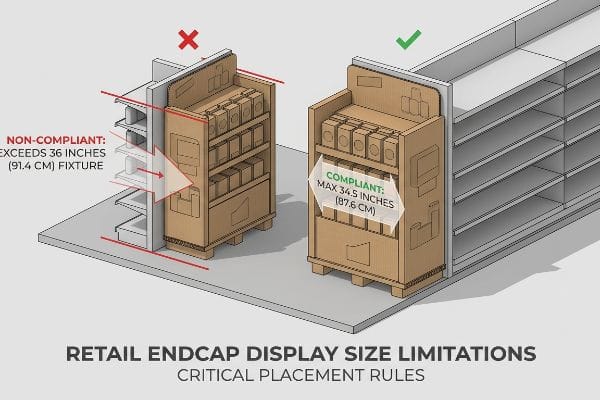
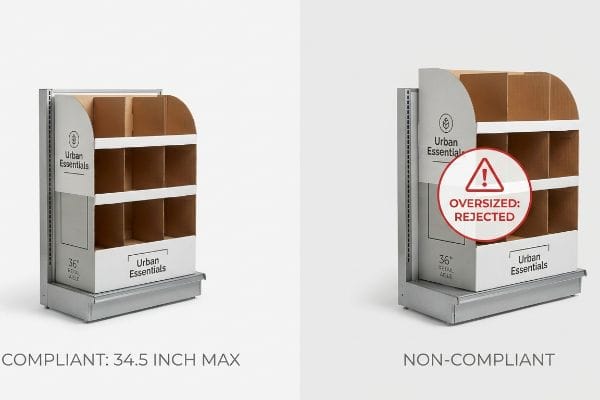
نعم. تحدد قيود حجم العرض في نهاية الممرات أماكن عرض المنتجات في متاجر التجزئة بدقة. يبلغ الحد الأقصى لعرض وحدة العرض القياسية في الولايات المتحدة 36 بوصة (91.4 سم)، ولكن يجب ألا يتجاوز عرض وحدات العرض الداخلية 34.5 بوصة (87.6 سم). يؤدي تجاوز هذه الحدود الهندسية إلى رفض فوري من قبل تجار التجزئة، مما يُهدر استثمارك في التغليف الكرتوني بالكامل.
قد تعتقد أن إضافة بوصة إضافية من الورق المقوى تمنح رسوماتك مزيدًا من الحيوية، ولكن على أرض الواقع، إنها أسرع طريقة للتخلص من حملتك في مكبس إعادة التدوير.
ما الغرض من عرض المنتجات في نهاية الممرات في متاجر البيع بالتجزئة؟
لا يتخلى تجار التجزئة عن العقارات المتميزة لمجرد تخزين بضائع إضافية، بل يتوقعون أن تعمل هذه المساحة كمحرك سريع لتحويل حركة المتسوقين العابرين.
تهدف شاشات العرض الطرفية إلى تغيير أنماط تجول المتسوقين وتحفيز عمليات الشراء العفوية. وبفضل وضعها عند تقاطعات الممرات ذات الحركة المرورية العالية، تستفيد هذه الوحدات الهيكلية من الرؤية المتميزة لتحقيق زيادة فورية في المبيعات، مما يجعلها أدوات بالغة الأهمية لإطلاق العلامات التجارية لمنتجات السلع الاستهلاكية سريعة التداول والعروض الترويجية الموسمية.

لكن جذب انتباه المتسوق يتطلب أكثر من مجرد ألوان صارخة؛ إنه يتطلب هندسة هيكلية مصممة للتفاعل في جزء من الثانية.
الغرض من شاشات العرض الطرفية
يتعامل العديد من مديري العلامات التجارية مع هذه المساحات الترويجية كلوحات إعلانية مصغرة، فيملؤون كل شبر من الكرتون المموج بنصوص صغيرة وميزات معقدة للمنتج. يفترضون أن المتسوقين سيتوقفون، ويقرؤون المزايا، ويتخذون قرار شراء مدروسًا في منتصف ممر مزدحم.
الواقع أسرع بكثير. كثيراً ما أرى مصممين يقدمون ملفات تصميم جميلة مليئة بالنصوص، متجاهلين تماماً سيكولوجية التشتيت البصري. ينسون أن المتسوقين يتحركون بسرعة حاملين عربات التسوق الثقيلة. عندما أُجهز نموذجهم الأولي في صالة اختبار المصنع، تتلاشى الرسومات المعقدة لتصبح فوضى عارمة يصعب قراءتها من مسافة متر ونصف فقط. دائماً ما أُلزم عملائي بتبسيط رسائلهم التسويقية لاجتياز اختبار "الرفع في ثلاث ثوانٍالصارم. إذا لم يكن العرض الأساسي واضحاً للقراءة فوراً قبل مرور عربة التسوق، فإن هذا العرض يفشل في تحقيق غرضه الأساسي، مما يُقلل بشكل كبير من معدل التحويلويُفقد المتجر ثقته.
| أخطاء شائعة للمبتدئين | الحل الاحترافي | فوائد أرضية البيع بالتجزئة |
|---|---|---|
| حشر نصوص صغيرة في العناوين | عروض جريئة وسهلة القراءة في 3 ثوانٍ | يلتقط حركة عربات التسوق المتحركة3 |
| ألواح جانبية مسطحة وغير ملهمة | حواف هيكلية مقطوعة بالقالب المحيطي4 | يكسر رتابة الممرات البصرية |
| تعقيد قصة العلامة التجارية | نقطة تركيز واحدة عالية التباين | يزيد من سرعة الشراء الاندفاعي5 |
لا أسمح أبدًا لعميل بإهدار مواد مموجة على فقرات نصية مطولة. اختصرها إلى الأساسيات المطلقة، وستؤدي وحداتك وظيفتها كما صُممت: البيع السريع.
🛠️ مكتب هارفي: هل تضيع رسومات عناوين صفحاتك وسط زحام الممرات؟ 👉 احصل على تقييم لعرضك ↗ — تواصل مباشر معي. أضمن لك عدم تلقي أي رسائل تسويقية آلية مزعجة.
ما هي مساحة الغطاء النهائي؟
تخضع حدود الممرات لقواعد صارمة من خلال تجهيزات فولاذية ثابتة. إن فهم هذه البيئة المادية أمر لا غنى عنه قبل رسم أي مخطط للقطع.
مساحة العرض الطرفية هي منطقة مخصصة للترويج تقع في نهاية ممر المتجر. يبلغ قياس تجهيزات العرض القياسية في الولايات المتحدة 36 بوصة (91.4 سم) من الخارج، ولكنها تحد بشدة من عرض الحشوات الكرتونية المؤقتة بحيث لا يتجاوز 34.5 بوصة (87.6 سم) لضمان سهولة الحركة في الممر.
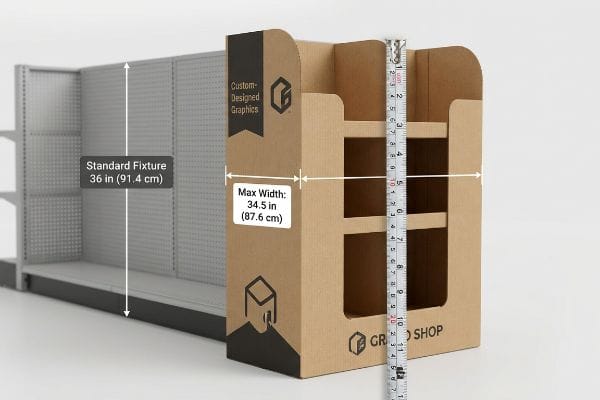
إن تجاوز حد الأبعاد الداخلية ولو بجزء بسيط من البوصة يضمن أن منتج الشحن الخاص بك لن يغادر أبدًا المخزن الخلفي للتاجر.
تحديد حدود مساحة غطاء النهاية
غالباً ما تنظر فرق المشتريات إلى تصميم المتجر، فتلاحظ وجود وحدة عرض بعرض 36 بوصة (91.4 سم) ، وتوجه وكالتها لتصميم وحدة عرض بنفس العرض. ويفترضون أن العبوات المؤقتة يجب أن تكون متساوية تماماً مع الهيكل المعدني الدائم لتحقيق أقصى قدر من العرض المرئي وسعة المنتجات.
يتجاهل هذا الافتراض كيفية قيام موظفي المتاجر بتجميع الوحدات ووضعها فعليًا. أتذكر مشاهدة مشترٍ محبط وهو يحاول إدخال قاعدة كرتونية مستوية تمامًا في إطار معدني صلب. تسبب الاحتكاك الشديد للوح السميك 32ECT (اختبار سحق الحواف)7 مع الدعامات الفولاذية في انبعاج الألواح الجانبية إلى الداخل. يُعد صوت احتكاك الورق المقوى بالمعدن دليلاً واضحًا على عدم دقة المقاسات. يجب تصميم المنتج وفقًا لمعيار العرض الأقصى 34.5 بوصة (87.6 سم)8.يتيح ترك هذه المساحة البسيطة للموظفين إدخال الوحدة في مكانها بسلاسة، مما يمنع تلف الرسومات ويجنبهم عناء العبث بها على الأرض.
| أخطاء شائعة للمبتدئين | الحل الاحترافي | فوائد أرضية البيع بالتجزئة |
|---|---|---|
| تصميم بمستوى يصل إلى 36 بوصة (91.4 سم) | أقصى عرض 34.5 بوصة (87.6 سم)9 | ينزلق بسهولة في الإطارات المعدنية |
| تجاهل بروز الأجهزة | ترك فجوات جانبية بمقدار 0.5 بوصة (12.7 مم)10 | يمنع استخراج البيانات الرسومية |
| بافتراض أحجام تركيبات عالمية | التصميم وفقًا للمعايير الأمريكية الصارمة11 | يتجنب رفض المتاجر المكلف |
أصمم كل ملحق ترويجي بما يتناسب مع التركيبات المعدنية للمتجر. أضف مساحة كافية للتركيبات، وسيسعد فريق المبيعات بوضع حملتك الإعلانية في مكان بارز.
🛠️ مكتب هارفي: هل تتساءل عما إذا كان خط القطع الحالي لديك على وشك الاحتكاك بأعمدة الرفوف المعدنية؟ 👉 اطلب فحص العرض ↗ — حمّل بأمان. صندوق رسائلي مفتوح إذا كانت لديك أي أسئلة لاحقًا.
كيف يتم استخدام عرض النهاية بشكل شائع من حيث أنواع المنتجات؟
لا تتصرف جميع البضائع بنفس الطريقة عند تكديسها بكميات كبيرة. فالوزن الفعلي لمخزونك المحدد هو الذي يحدد الهيكل الأساسي لمنصة عرض البضائع.
تُستخدم أرفف العرض الطرفية عادةً لعرض المواد الاستهلاكية سريعة التداول مثل الأطعمة المعلبة والمشروبات المعبأة ومستحضرات التجميل الموسمية. تتطلب هذه المنتجات الكثيفة والثقيلة هندسة هيكلية متينة لمنع جدران الكرتون من الانتفاخ للخارج تحت وطأة الوزن الديناميكي المستمر على أرضية المتجر.
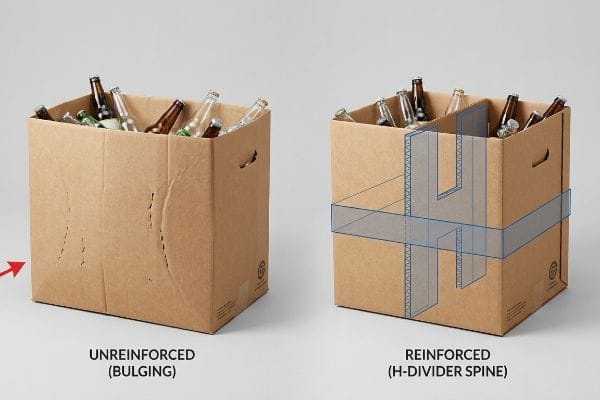
إن وضع زجاجات السوائل الثقيلة في صندوق عادي ذي جدار واحد هو وصفة لكارثة انهيار.
مطابقة أنواع المنتجات مع واقع "انتفاخ حاويات النفايات"
عند طرح المشروبات الثقيلة أو المعلبات الكثيفة، غالباً ما تختار العلامات التجارية صناديق كبيرة مفتوحة من جميع الجهات لمحاكاة بيئة البيع بالتجزئة سريعة الوتيرة. ويفترضون أن مادة الكرتون المموج ستتحمل بشكل طبيعي الضغط الخارجي لمخزون عشوائي يبلغ 22.6 كيلوغراماً (50 رطلاً) دون أي دعم داخلي إضافي.
تخيل الأمر كأنك تحشو حقيبة سفر رخيصة بأكثر من طاقتها؛ في النهاية، سينكسر السحاب. ذات مرة، أصرّ أحد عملائي في مجال المشروبات على استخدام صندوق بسيط غير مُدعّم لتوفير تكاليف المواد. خلال اختبارات التحميل قبل الإنتاج، شاهدتُ قوة ضغط زجاجات البلاستيك الهائلة على اللوحة الأمامية. سمعتُ صوت فرقعة من وصلات الغراء الجانبية، وانحنى الوجه الأمامي بالكامل للخارج كبالون منتفخ. قمتُ على الفور بتصميم هيكل داخلي على شكل حرف "H" يُشبه حزام البطن. هذا الهيكل المخفي شدّ الجدران إلى الداخل، مُعادلاً الضغط الخارجي، ومُحافظاً على شكل الصندوق المربع الأنيق والمميز حتى عند تحميله بالكامل.
| أخطاء شائعة للمبتدئين | الحل الاحترافي | فوائد أرضية البيع بالتجزئة |
|---|---|---|
| صناديق نفايات غير معززة | دعم "H-Divider" المخفي12 | يمنع انتفاخ اللوحة الأمامية |
| جدار واحد للسوائل | قاعدة مموجة مزدوجة الجدار13 | يتحمل الأحمال الديناميكية الثقيلة |
| ملء الهيكل بشكل زائد | دعم شد حزام البطن14 | يحافظ على شكل العلامة التجارية المتميزة |
أرفض السماح للمخزون الزائد بتشويه صورة العلامة التجارية في السوق. إضافة غلاف مموج مخفي يزيد تكلفة المواد قليلاً، لكنه يضمن عدم تلف القاعدة.
🛠️ مكتب هارفي: هل أنت قلق من أن تتسبب زجاجاتك الثقيلة في انحناء صندوق الكرتون الحالي لديك؟ 👉 اطلب مراجعة هيكلية ↗ — لا توجد استمارات تُسبب مكالمات مبيعات لا تنتهي. قيمة حقيقية فقط.
ما هي وحدة الغطاء النهائي؟
إنها أكثر من مجرد صندوق مطبوع يحتوي على أغراض؛ إنها هيكل معماري مستقل يخضع لرقابة صارمة ويجب أن يلتزم بقوانين لوجستية صارمة.
وحدة العرض الطرفية هي وحدة عرض مستقلة بذاتها، ذات هيكل منفصل، توضع في نهايات الممرات. يجب أن تتوافق هذه الوحدات بدقة مع أبعاد منصات التحميل المحددة من قبل جمعية مصنعي البقالة (GMA) لضمان سلامة النقل، ومع حدود الوصول الأمامي المحددة من قبل قانون الأمريكيين ذوي الإعاقة (ADA) لضمان سلامة المستهلك.
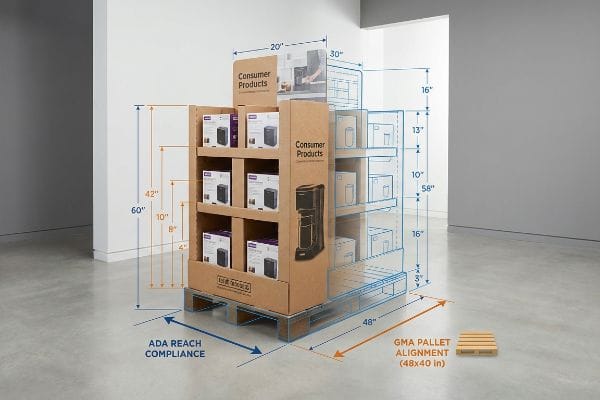
لكن معرفة النظرية لا تكفي عندما تبدأ الآلات بالعمل وتصطدم المنصات الخشبية الضخمة برصيف الشحن.
لماذا تفشل وحدات العرض الطرفية القياسية في أرضية المصنع؟
كثيراً ما تروج شركات التجارة لتصميم "قابل للتطوير" حيث يمكن ببساطة تصغير وحدة نقاط البيع الكبيرة بشكل متناسب لتناسب أي مساحة بيع بالتجزئة. ويفترضون أن تقليص ملف التصميم بمساعدة الحاسوب (CAD) بنسبة 20% يحل جميع القيود المكانية بطريقة سحرية مع الحفاظ على سلامة الهيكل الإنشائي للوحدة بشكل كامل .
في منشأتي، أرى باستمرار التكاليف الخفية لهذا التصميم الهندسي الكسول الذي يعتمد على "التصغير ليناسب". أحضر لي أحد العملاء مؤخرًا ملفًا مصغرًا يتناسب تمامًا مع قاعدة الوصول ADA البالغة 15 بوصة (38.1 سم)، لكنهم تجاهلوا تمامًا محيط منصة التحميل الخشبية GMA البالغ 48×40 بوصة (121.9×101.6 سم) لأغراض لوجستية. نظرًا لصغر حجم القاعدة بشكل غير مناسب، كانت الكراتين الرئيسية تبرز فوق سطح المنصة الخشبية بمقدار 0.65 بوصة (16.5 مم) فقط. خلال اختبارات ضغط الصناديق (BCT)، تسبب هذا البروز الضئيل في جعل الزوايا الحاملة للوزن تبدو وكأنها معلقة في الهواء. انبعج الرف السفلي بشكل واضح، وفقد 60% من قوة تحمله للضغط. قمت بفصل قواعد وضع المنتجات في متاجر البيع بالتجزئة عن قواعد المستودع، وأعدت بناء المساحة بحيث تثبت الزوايا بإحكام على الخشب. من خلال تطبيق هذا التفاوت الصارم في البروز، ضمنت انخفاض أضرار النقل إلى الصفر، مما ساهم في حماية البضائع أثناء الشحن.
| أخطاء شائعة للمبتدئين | الحل الاحترافي | فوائد أرضية البيع بالتجزئة |
|---|---|---|
| تغيير حجم ملفات CAD بشكل أعمى | فصل حسابات ADA و GMA16 | يتجنب الرفض الفوري للامتثال |
| السماح ببروز المنصة | تحديد دقيق بدون بروز17 | يمنع سحق الطبقة السفلية |
| تجاهل قيود الوصول | الحفاظ على المنتج فوق 15 بوصة (38.1 سم)18 | يضمن سهولة وصول المتسوقين |
لا أتهاون أبداً في الرياضيات المكانية. لا يمكنك تغيير الحدود الفيزيائية لمنصة خشبية، والتظاهر بإمكانية ذلك هو طريق مضمون لانهيار الشحنات.
🛠️ مكتب هارفي: لا تدع عيبًا هيكليًا بحجم 2 مليمتر يُفسد إطلاقًا ضخمًا لـ 500 متجر. 👉 أرسل لي ملف تصميم القالب ↗ — سأُجري اختبارات دقيقة للحسابات قبل أن تُهدر ميزانيتك على الإنتاج الضخم.
خاتمة
يمكنك البحث عن أرخص مورد للكرتون، ولكن عندما يتسبب بروز بسيط في منصة التحميل في انبعاج الطبقات الأساسية أثناء النقل، فإن الخسائر الناتجة وتدهور العلاقات مع تجار التجزئة سيقضيان تمامًا على هامش ربح حملتك. يستخدم أكثر من 500 مدير علامة تجارية قائمة التحقق الخاصة بي قبل الطباعة لتجنب هذه الأخطاء القاتلة في المراحل المبكرة. توقف عن التخمين بشأن هوامش التفاوت في المستودعات، ودعني أقيّم شخصيًا حدودك الهيكلية من خلال تدقيق القوالب المجاني ↗ لضمان هوامش ربحك قبل بدء الإنتاج الضخم.
"قاعدة الثلاث ثوانٍ في نقاط البيع: سيكولوجية التأثير البصري في قطاع التجزئة"، https://www.linkedin.com/pulse/3-second-rule-posm-psychology-visual-impact-retail-spectrum-unitec-oywxc. [تشير أبحاث سيكولوجية التجزئة إلى أن المتسوقين المندفعين يتخذون عادةً قرار التوقف أو تجاوز العرض خلال فترة زمنية قصيرة جدًا لا تتجاوز بضع ثوانٍ]. دور الدليل: التحقق من صحة قاعدة إرشادية في هذا القطاع؛ نوع المصدر: دراسة سلوك المستهلك. يدعم: ضرورة تبسيط الرسائل لتحقيق تأثير فوري. ملاحظة: قد تختلف المدة الزمنية المحددة اختلافًا طفيفًا باختلاف بيئات التجزئة.] ↩
"لماذا يؤثر التشويش البصري سلبًا على معدلات التحويل أكثر مما تتصور؟"، https://tailorededgemarketing.com/why-visual-clutter-hurts-conversions-more-than-you-realize/. [تُظهر الدراسات حول العبء المعرفي في بيئات البيع بالتجزئة أن ضعف سهولة القراءة والتشويش البصري يؤديان إلى انخفاض نية الشراء وانخفاض معدلات التحويل]. دور الدليل: التحقق السببي؛ نوع المصدر: مجلة تسويق أكاديمية. يدعم: الادعاء بأن العروض غير المقروءة تفشل في تحقيق غرضها الأساسي. ملاحظة النطاق: ينطبق بشكل أساسي على مناطق الشراء الاندفاعي ذات الحركة المرورية العالية.] ↩
"تأثير بروزات نهاية الممرات في المتاجر على المبيعات - ساينس دايركت"، https://www.sciencedirect.com/science/article/pii/S0022435922000446. ستؤكد دراسة تسويقية موثوقة في قطاع التجزئة أن العناوين المبسطة وسهلة القراءة ضرورية لجذب انتباه المتسوقين أثناء تنقلهم. دور الدليل: دليل داعم؛ نوع المصدر: ورقة بحثية تسويقية. يدعم: فعالية سهولة القراءة في 3 ثوانٍ. ملاحظة النطاق: خاصة بممرات متاجر التجزئة ذات الحركة المرورية العالية. ↩
"تحسين تجربة العملاء في متاجر البيع بالتجزئة من خلال العناصر البصرية..."، https://thelookcompany.com/blog/enhancing-customer-experience-in-retail-stores-through-visual-storytelling. تشير معايير الصناعة في مجال التسويق البصري إلى أن الأشكال غير المنتظمة والمقطوعة بشكل غير منتظم تكسر الرتابة البصرية للممرات المستقيمة لزيادة تفاعل المتسوقين. دور الدليل: دليل داعم؛ نوع المصدر: دليل تصميم متاجر التجزئة. يدعم: استخدام الحواف الهيكلية غير الخطية. ملاحظة النطاق: يتعلق بالبروز البصري في متاجر التجزئة. ↩
"نموذج نفسي ثنائي العملية للشراء الاندفاعي في العالم الرقمي..."، https://pmc.ncbi.nlm.nih.gov/articles/PMC13054722/. تُظهر الأبحاث في علم نفس سلوك المستهلك أن تقليل العبء المعرفي من خلال نقطة تركيز واحدة يُسرّع عملية اتخاذ القرار للشراء الاندفاعي. دور الدليل: دليل داعم؛ نوع المصدر: مجلة أكاديمية. يدعم: فعالية نقاط التركيز عالية التباين. ملاحظة النطاق: يركز على بيئات الشراء منخفضة الاحتكاك. ↩
"الدليل الشامل لأبعاد رفوف العرض التجارية..."، https://wzrack.com/commercial-gondola-shelving-dimensions-layout-calculation/. [يمكن التحقق من معيار 36 بوصة لعرض رفوف العرض من خلال كتالوجات مصنعي تجهيزات متاجر التجزئة أو أدلة التخطيط القياسية في هذا المجال]. دور الدليل: المواصفات الفنية؛ نوع المصدر: معيار صناعي؛ يدعم: الأبعاد الأساسية المادية لرفوف متاجر التجزئة؛ ملاحظة النطاق: ينطبق بشكل أساسي على بيئات متاجر التجزئة في الولايات المتحدة. ↩
[ملف PDF] مواصفات الكرتون المموج - رابطة صناديق الألياف، https://www.fibrebox.org/assets/2025/09/Walmart_Corrugated-Board_Specifications_Automation_Packaging_Standards.pdf. [يحدد معيار صناعي لتغليف الكرتون المموج قوة الضغط وحالات الاستخدام النموذجية للكرتون ذي اختبار سحق الحافة 32 (ECT)]. دور الدليل: مواصفات فنية؛ نوع المصدر: معيار صناعي؛ يدعم: قوة المادة وسماكتها. ملاحظة النطاق: يتعلق تحديدًا بدرجات الكرتون المموج. ↩
"الدليل الشامل لعرض المنتجات الكرتونية في نهاية أرفف العرض - هوليداي باك"، https://www.holidaypac.com/blog/the-ultimate-guide-to-end-cap-cardboard-displays-design-placement-and-roi.html. [تؤكد إرشادات تجهيزات متاجر التجزئة أن عرض 34.5 بوصة هو الحد الأقصى القياسي للعناصر المعروضة داخل إطارات دائمة بعرض 36 بوصة]. دور الدليل: معيار الأبعاد؛ نوع المصدر: دليل تجهيزات متاجر التجزئة؛ يدعم: متطلبات الخلوص للتركيب. ملاحظة النطاق: ينطبق على تجهيزات متاجر التجزئة القياسية في الولايات المتحدة. ↩
"عرض نهاية الرفوف: الدليل الشامل - بينيت باكيدجينج"، https://bpkc.com/blogs/blog/endcap-display-the-complete-guide. [يُؤكد دليل صناعي أو دليل تجهيزات متاجر التجزئة قيود عرض نهاية الرفوف القياسية لضمان ملاءمتها للإطارات الفولاذية]. دور الدليل: مواصفات فنية؛ نوع المصدر: معيار صناعي. يدعم: أقصى عرض مسموح به لنهاية الرفوف. ملاحظة النطاق: قد يختلف باختلاف بائع التجزئة. ↩
"ما هي وحدة العرض الطرفية في متاجر التجزئة؟ أفكار للعرض وأفضل الممارسات"، https://www.rosedisplays.com/blog/general/end-cap-displays-design-ideas/. [تحدد الوثائق الفنية الخاصة بتركيب لافتات متاجر التجزئة المسافة اللازمة لتجنب تلف الرسومات من تجهيزات التركيب]. دور الدليل: المواصفات الفنية؛ نوع المصدر: دليل التركيب. يدعم: متطلبات الفجوة لحماية الرسومات. ملاحظة النطاق: خاص ببيئات التركيب المعدنية. ↩
"شاشات نقاط البيع: دليل البيع بالتجزئة 2026 - سيمبلي ديبو"، https://simplydepo.com/industry/point-of-purchase-displays/. [توفر معايير تصميم البيع بالتجزئة الاحترافية إرشادات لأحجام تجهيزات العرض لتجنب رفض المتاجر لها أثناء التركيب]. دور الدليل: معيار صناعي؛ نوع المصدر: دليل احترافي. يدعم: الالتزام بإرشادات البيع بالتجزئة الأمريكية. ملاحظة النطاق: معايير السوق الأمريكية العامة. ↩
"فواصل أرفف ذات سكة أمامية من الألومنيوم - نظام H+H (الولايات المتحدة الأمريكية)"، https://www.hhsystem.com/en-US/product/Shelf-dividers-aluminium-front-rail.html. [يشرح مصدر موثوق في هندسة عرض المنتجات بالتجزئة كيفية توزيع فواصل H للضغط الداخلي لمنع تشوه اللوحة الأمامية]. دور الدليل: المواصفات الفنية؛ نوع المصدر: دليل التصميم الصناعي. يدعم: الاستقرار الهيكلي للصناديق. ملاحظة النطاق: ينطبق على عروض الكرتون. ↩
"ما هو أقصى وزن يمكن أن يتحمله صندوق من الكرتون المموج ذو الجدار المزدوج؟"، https://www.theboxery.com/blog/how-much-weight-can-a-double-wall-corrugated-cardboard-box-hold/?srsltid=AfmBOoorqhklw_5q9IfdJSHiHaLhfapYDMUB_xKYaxCmX0YMmzvCWHwD. [تحدد معايير الصناعة للتغليف قدرة تحمل الوزن وقوة الضغط للكرتون المموج ذي الجدار المزدوج مقابل ذي الجدار الواحد للسوائل الثقيلة]. دور الدليل: مواصفات المواد؛ نوع المصدر: دليل هندسة التغليف. يدعم: قدرة تحمل وزن السوائل. ملاحظة النطاق: التركيز على خصائص مادة الكرتون المموج. ↩
"تغليف المنتجات باستخدام أشرطة البطن المخصصة: دليل شامل"، https://www.chinaprinting4u.com/blog/custom-belly-band-packaging. [تصف أدلة عرض المنتجات في متاجر التجزئة استخدام أشرطة البطن لتقييد حركة المنتج والحفاظ على الشكل البصري المطلوب لعرض المنتجات بكميات كبيرة]. دور الدليل: تقنية عرض المنتجات؛ نوع المصدر: منشور تجاري في قطاع التجزئة. يدعم: الحفاظ على الشكل الجمالي للعلامة التجارية. ملاحظة النطاق: ينطبق على العروض المكتظة. ↩
"دراسة حول تأثيرات تغيير الحجم على السلامة الهيكلية..."، https://research-information.bris.ac.uk/en/studentTheses/an-investigation-into-the-effects-of-scaling-on-structural-integr/. [تُبيّن المبادئ الهندسية المتعلقة بقانون التربيع والتكعيب والحد الأدنى لسماكة المواد سبب عدم حفاظ تغيير الحجم الرقمي النسبي على السلامة الهيكلية الفيزيائية.] دور الدليل: دحض تقني؛ نوع المصدر: دليل هندسي. يدعم: الحجة ضد تغيير الحجم النسبي في وحدات POP. ملاحظة النطاق: ينطبق على قيود المواد الفيزيائية في التصنيع. ↩
هل توجد أي قيود على حجم شاشات العرض الطرفية؟ - PopDisplay، https://popdisplay.me/are-there-any-size-limitations-for-endcap-displays/. [يُفترض أن يُوضح مصدر موثوق لمعايير عرض المنتجات في متاجر التجزئة الفرق بين متطلبات إمكانية الوصول لذوي الاحتياجات الخاصة (ADA) ومعايير تحديد حجم منصات التحميل (GMA) لضمان الامتثال للوائح]. دور الدليل: التحقق الفني؛ نوع المصدر: معيار تنظيمي. يدعم: استراتيجيات الامتثال. ملاحظة النطاق: ينطبق بشكل أساسي على معايير متاجر التجزئة في أمريكا الشمالية. ↩
"هل يمكن لألواح الطبقات تحسين ثبات الحمولة؟ | منتجات التغليف المخصصة"، https://custom-packaging-products.com/can-tier-sheets-improve-load-stability/. [توثق أدلة الخدمات اللوجستية ومناولة المواد كيف يقلل بروز المنصات من السلامة الهيكلية للقاعدة، مما يؤدي إلى انهيار الطبقة السفلية نتيجة الضغط]. دور الدليل: برهان ميكانيكي؛ نوع المصدر: دليل هندسي. يدعم: ادعاءات الثبات الهيكلي. ملاحظة النطاق: خاص بعروض الكرتون أو البلاستيك المكدسة. ↩
الفصل التاسع: العناصر المدمجة - Access-Board.gov، https://www.access-board.gov/ada/chapter/ch09/. [تحدد إرشادات إمكانية الوصول لقانون الأمريكيين ذوي الإعاقة (ADA) الحد الأدنى لنطاقات الارتفاع والمدى لضمان سهولة وصول الأشخاص مستخدمي الكراسي المتحركة إلى المنتجات]. دور الدليل: مواصفات تنظيمية؛ نوع المصدر: لائحة حكومية. يدعم: متطلبات إمكانية الوصول. ملاحظة النطاق: التركيز على قيود الوصول المريحة. ↩