توقف عن إهدار المال على عروض أرضية يرفضها مديرو المتاجر لأنها تعيق الممرات. إن إتقان وضع المنتجات بشكل عمودي جانبي هو السبيل الذي تمكّن العلامات التجارية الذكية من السيطرة على مناطق الدفع ذات الحركة الكثيفة.
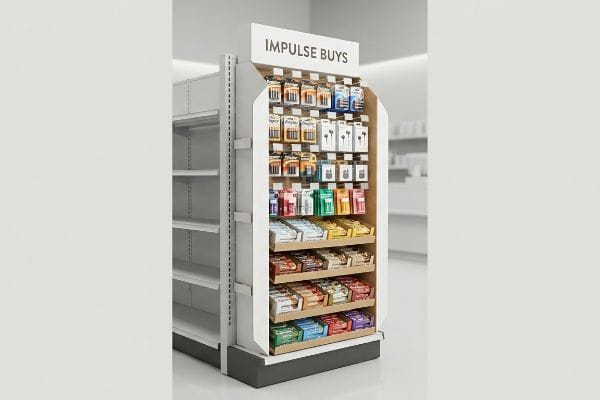
تُستخدم وحدات العرض الجانبية لعرض منتجات خفيفة الوزن ذات تأثير فوري، مثل مستحضرات التجميل والوجبات الخفيفة والبطاريات وملحقات الأجهزة الإلكترونية الصغيرة. وبفضل استغلالها للمساحة الرأسية غير المُستغلة على جانبي العرض، تُعزز هذه الوحدات المدمجة رؤية المنتجات في ممرات البيع بالتجزئة المزدحمة، مما يجعلها مثالية لتحقيق مبيعات سريعة دون الحاجة إلى مساحات عرض مُخصصة.
قبل أن تبدأ في تصميم رسومات جريئة، عليك أن تفهم كيف تستطيع هذه المنتجات العمودية البقاء في بيئة البيع بالتجزئة المادية.
ما هي شاشة عرض الطاقة؟
قد تعرفهم بشكل غير رسمي على أنهم مساعدون، لكن فرق المشتريات الصارمة تنظر إليهم على أنهم حلول هندسية مكانية بحتة.
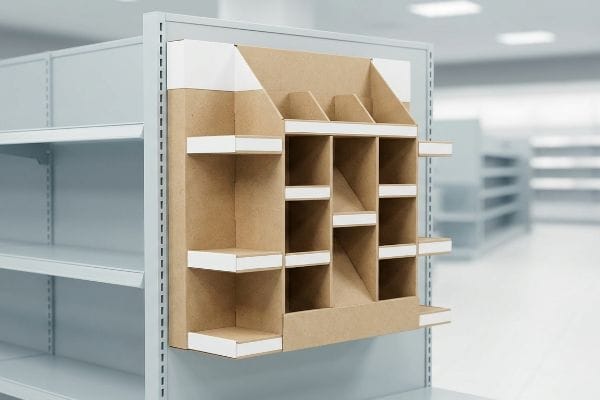
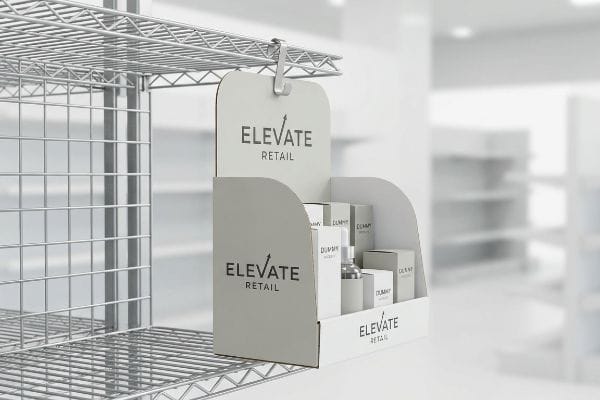
وحدة عرض باور وينغ هي وحدة عرض عمودية متخصصة مصممة للتعليق مباشرة على جانب أرفف العرض القياسية في متاجر التجزئة أو تثبيتها في رفوف سلكية. تستهدف هذه الوحدات تحديدًا سلوك المتسوقين ذوي الشراء الاندفاعي من خلال عرض البضائع بشكل بارز في الممر دون ملامسة أرضية المتجر الرئيسية.
إن فهم التعريف الأساسي أمر بسيط، لكن الحصول على موافقة مدير متجر كبير على الهيكل المادي يمثل تحديًا مختلفًا تمامًا.
الرياضيات الخفية وراء توحيد أجنحة الطائرات
تعتبر معظم فرق العلامات التجارية المنتجات الجانبية بمثابة لوحة بيضاء، إذ تفترض إمكانية تصميمها بأي أبعاد تناسب عبوات منتجاتها. ويركزون بشكل كامل على التصميم الجمالي والرسومات، ويتعاملون مع العرض كلوحة إعلانية عائمة بدلاً من كونه عنصرًا لوجستيًا أساسيًا يجب أن ينسجم مع البنية التحتية الحاليةللمتجر.
هذه هي الحقيقة. أرى مصممين عديمي الخبرة يحاولون باستمرار جعل وحداتهم بارتفاع 1397 ملم (55 بوصة) لمجرد وضع المزيد من المنتجات عليها. يتجاهلون القاعدة الثانية الصارمة التي تنص على أن ارتفاع الوحدة 1219.2 ملم (48 بوصة) وعرضها 355.6 ملم (14 بوصة)، وهي القاعدة المطلوبة لتناسب جميع متاجر التجزئة. شاهدت مؤخرًا بائعًا في متجر يحاول يائسًا حشر وحدة عرض جانبية ضخمة في نهاية رف عرض في متجر بقالة . صوت احتكاك لوحة التثبيت المعدنية بالورق المقوى المموج جعلني أشعر بالاشمئزاز. ولأن الوحدة كانت عريضة جدًا، فقد أعاقت حركة المرور في الممر المجاور. قام مدير المتجر على الفور برمي المجموعة بأكملها في مكبس النفايات، مما أدى إلى رفضها من قبل المتجر مباشرةً، وتسبب في ضياع هامش ربح المشروع بالكامل. يجب عليك تثبيت ملفات التصميم بمساعدة الحاسوب (CAD) على هذه الأبعاد الدقيقة قبل البدء في تصميم أي رسم.
| أخطاء شائعة للمبتدئين | الحل الاحترافي | فوائد أرضية البيع بالتجزئة |
|---|---|---|
| تخصيص العرض بشكل عشوائي | عرض القفل يصل إلى 14 بوصة بالضبط (355.6 مم)3 | يمنع انسداد الممرات |
| تجاهل حدود الارتفاع الإجمالية | يبلغ الحد الأقصى للارتفاع الإجمالي 48 بوصة (1219.2 مم)4 | يضمن ملاءمة غطاء النهاية العالمي |
| استخدام مشابك تعليق ورق رخيصة | دمج مشابك معدنية عالمية على شكل حرف S5 | توقف عن التمزق في منتصف الحملة |
لا أسمح أبدًا بتصميمات ثانوية بالوصول إلى طاولات القطع إلا إذا كانت حدودها الخارجية محددة رياضيًا. إن تضخيم حجم المنتج لا يجذب انتباه المستهلكين، بل يضمن فقط أن ينتهي به المطاف في سلة المهملات.
🛠️ مكتب هارفي: لست متأكدًا مما إذا كانت أبعاد جهازك الجديد ستجتاز تدقيقًا صارمًا في المتاجر الكبرى؟ 👉 أرسل لي ملف تصميم القالب ↗ — وصول مباشر إلى مكتبي. أعدك بعدم تلقي أي رسائل تسويقية آلية مزعجة.
كيف يستخدم تجار التجزئة واجهات العرض؟
تعتبر مواقع عرض المنتجات في واجهات المتاجر عقارات مرغوبة للغاية، لكنها تعمل وفق قوانين فيزيائية مختلفة تمامًا عن الممرات الداخلية.
يستخدم تجار التجزئة واجهات العرض لجذب المتسوقين من الخارج إلى الداخل، وذلك من خلال عرض حملات موسمية مميزة أو حملات ترويجية جذابة للعلامات التجارية مباشرةً خلف واجهة المتجر الزجاجية. ويعتمد هؤلاء المتخصصون في عرض المنتجات على تصاميم هيكلية لافتة للنظر وألوان جريئة لجذب انتباه المستهلك حتى قبل دخوله المتجر.
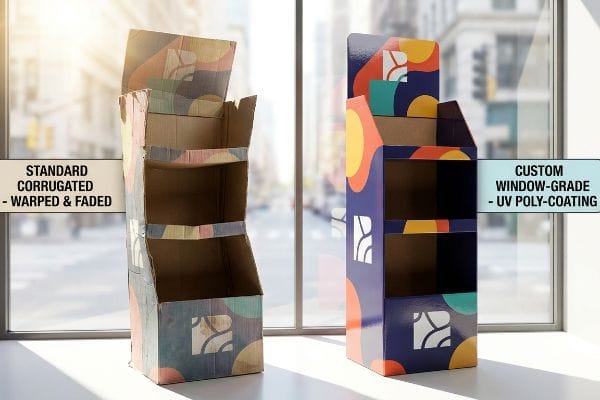
إن الحصول على تلك المساحة المميزة في النافذة يبدو وكأنه فوز ترويجي هائل، إلى أن تبدأ البيئة نفسها في تدمير موادك التسويقية بشكل مادي.
لماذا يفشل الكرتون المموج القياسي في الدفيئة التجارية؟
كثيراً ما يعيد مديرو العلامات التجارية استخدام شاشات العرض الكرتونية القياسية المخصصة لنقاط البيع الداخلية لعرضها في واجهات المتاجر الفاخرة. ويفترضون خطأً أنه نظراً لبقاء شاشة العرض داخل المتجر، فإن الورق المقوى القياسي وأحبار الطباعة الأساسية ستؤدي نفس الأداء تماماً كما في الممرات الوسطى المكيفة.
يتجاهل هذا الافتراض مبادئ الديناميكا الحرارية الأساسية. فالمساحة خلف الزجاج التجاري مباشرةً تعمل كدفيئة حقيقية، تحبس الأشعة فوق البنفسجية والحرارة الشديدة. أرى باستمرار علامات تجارية تشحن ألواحًا قياسية ملصقة بمادة PVA (أسيتات البولي فينيل) المائية إلى هذه المناطق من النوافذ. في غضون ثلاثة أيام، تنتشر رائحة غراء الخبز النفاذة في الهواء، ويتسبب التوتر السطحي الهائل في انحناء الألواح المموجة الكبيرة إلى الداخل بشدة مثل رقاقة البطاطس. لقد شاهدت أحبار CMYK (السماوي، الأرجواني، الأصفر، الأبيض) القياسية تتلاشىإلى لون أصفر باهت في أقل من أسبوع، مما يؤدي إلى إبطاء حركة المشاة الخارجية بنسبة 30% تقريبًايجباستخدام مواد لاصقة مقاومة للحرارة وتطبيق طبقات سميكة من البولي إيثيلين المقاوم للأشعة فوق البنفسجية لحجب هذا المناخ المحلي الدقيق.
| أخطاء شائعة للمبتدئين | الحل الاحترافي | فوائد أرضية البيع بالتجزئة |
|---|---|---|
| إعادة استخدام شاشات العرض القياسية في الممرات | تحديد إصدار مخصص من فئة النوافذ9 | يمنع التشوه الهيكلي |
| باستخدام غراء مائي قياسي | الترقية إلى مواد لاصقة مقاومة للحرارة10 | يحافظ على الألواح الكبيرة مسطحة تمامًا |
| الاعتماد على الأحبار غير المحمية | تطبيق طبقة سميكة من البولي إيثيلين المقاوم للأشعة فوق البنفسجية11 | يمنع بهتان اللون السريع |
يُعدّ تصميم واجهة المتجر بما يتناسب مع مناخها المحلي الدقيق أمرًا لا غنى عنه. فإذا وضعتَ ملفات كرتونية عادية في نافذة معرضة لأشعة الشمس المباشرة، فإن الحرارة الشديدة ستُلحق ضررًا بالغًا بسمعة علامتك التجارية في غضون أيام قليلة.
🛠️ مكتب هارفي: هل تخطط لوضع عروضك المعتادة في واجهة متجر ساخنة؟ 👉 تعرّف على الطلاءات المقاومة للأشعة فوق البنفسجية ↗ — حمّل الملف بأمان. صندوق رسائلي مفتوح إذا كانت لديك أي أسئلة لاحقًا.
هل أجنحة الطاقة فعالة من حيث التكلفة؟
تحب فرق المشتريات مناقشة سعر الوحدة للمساعدين، لكنهم عادة ما ينظرون إلى الجانب الخطأ من الدفتر.
نعم. تتميز وحدات العرض المتحركة بفعاليتها من حيث التكلفة، إذ تعتمد على هيكل مموج عالي الكثافة يُعبأ بشكل مسطح، مما يقلل تكاليف النقل بشكل كبير. فمن خلال استبدال الهياكل المعدنية الثقيلة الدائمة بهياكل مؤقتة من الورق المقوى، تتجنب العلامات التجارية تكاليف الشحن الباهظة وتضمن مساحة عرض بارزة دون الحاجة إلى دفع تكاليف مساحات تخزين مخصصة.
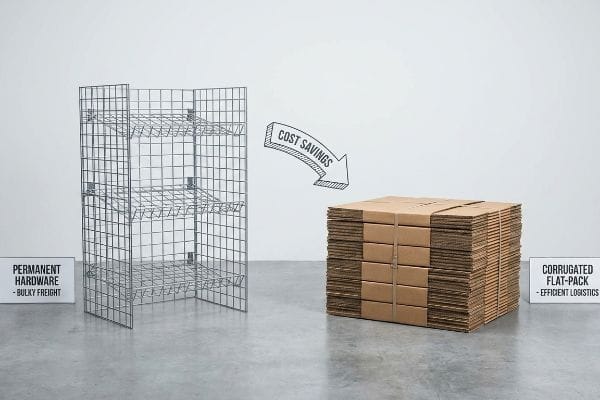
إن ضمان تكلفة الوحدة الرخيصة على الورق لا يعني شيئاً إذا وافقت عن طريق الخطأ على هيكل ينزف المال أثناء النقل.
غرامة الشحن الدائمة للأجهزة
تلجأ العديد من فرق المشتريات إلى استخدام رفوف الأسلاك المعدنية الملحومة الدائمة في حملات التوريد الجانبية،ظنًا منها أن الفولاذ عالي التحمل يضمن تلقائيًا عائدًا أعلى على الاستثمار مع مرور الوقت. ويركزون بشكل كامل على المتانة المادية للمكون المعدني، معتبرين الخيارات المؤقتة المصنوعة من الكرتون المموج بدائل ضعيفة لا تليق بمنتجاتهم.
تخيل الأمر وكأنك تدفع مبلغًا إضافيًا لشحن هواء فارغ. عندما أتجول في مستودع التخزين الخاص بي، أرى الفرق المالي الهائل على الفور. أصرّ أحد العملاء ذات مرة على وحدات عرض معدنية ملحومة مسبقًا (FSDUs) لعرض ترويجي قصير مدته ثمانية أسابيع. شاهدت فريق الخدمات اللوجستية يكافح لتحميل 250 رفًا سلكيًا ضخمًا فقط في حاوية واحدة سعة 40 قدمًا، مما أدى إلى إهدار آلاف الدولارات على مساحة فارغة. كان صوت اصطدام الإطارات المعدنية المزعج في الحاوية شبه الفارغة دليلًا قاطعًا على خسارة الأرباح. قمت بتغيير طريقة الشحن إلى عبوات مسطحة من الكرتون المموج في الدفعة التالية. قمنا بتعبئة 1500 وحدة في نفس الحاوية،مما ألغى تمامًا تكلفة شحن المعدات الثابتة ووفر لهم حوالي 8000 دولار من رسوم الشحن لكلدفعة.
| أخطاء شائعة للمبتدئين | الحل الاحترافي | فوائد أرضية البيع بالتجزئة |
|---|---|---|
| شحن إطارات معدنية ملحومة فارغة | وحدات كرتونية مموجة قابلة للطي | يزيد كثافة الحاويات 6 أضعاف15 |
| الإفراط في الاستثمار في العروض الترويجية القصيرة | مطابقة عمر المواد مع مدة الحملة | تحقيق أقصى قدر من كفاءة الميزانية |
| دفع أسعار شحن البضائع الثقيلة (LTL) | تقليل الوزن الحجمي الإجمالي16 | يخفض تكاليف الشحن بشكل كبير |
أنصح عملائي دائمًا بتجنب استخدام القطع المعدنية الثابتة إذا كانت فترة البيع بالتجزئة أقل من اثني عشر أسبوعًا. توفر العبوات الكرتونية المسطحة نفس مستوى وضوح المنتجات مع التخلص التام من التكاليف الباهظة للشحن الدولي.
🛠️ مكتب هارفي: هل تدفع رسوم شحن باهظة لمجرد شحن رفوف الأسلاك المعدنية المُجمّعة بالكامل؟ 👉 احصل على تصميم جديد مُفكّك ↗ — لا مزيد من الاستمارات التي تُسبب مكالمات مبيعات لا تنتهي. قيمة حقيقية فقط.
ما هي أنواع الشاشات الخمسة؟
لا يقتصر تصنيف العروض على اختيار شكل جميل فحسب؛ بل يتعلق الأمر بالتنقل في حقل ألغام صارم من قواعد امتثال تجار التجزئة.
تشمل الأنواع الخمسة الرئيسية لعروض البيع بالتجزئة: وحدات العرض الأرضية، ووحدات العرض على الطاولات، وصناديق التخزين، والصواني الجاهزة للعرض على الرفوف، ووحدات العرض الجانبية المتحركة. تتطلب كل فئة منها تصميمًا هندسيًا دقيقًا للغاية للامتثال للقيود المكانية الفريدة، وحدود تحمل الوزن، ومتطلبات الوصول القانونية التي تفرضها بيئات البيع بالتجزئة التقليدية.
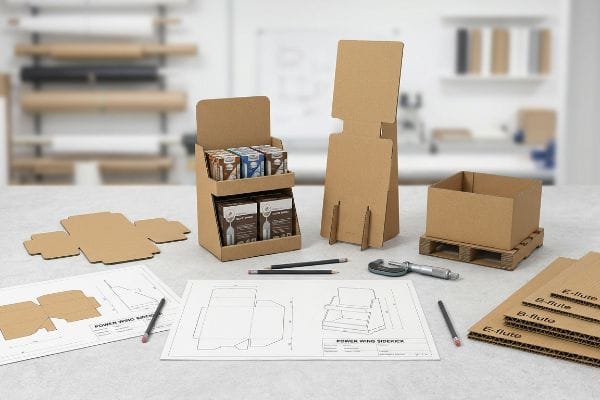
إن معرفة الفئات الخمس على السبورة البيضاء أمر بسيط، لكن تقليص نوع واحد قسراً إلى نوع آخر هو بالضبط المكان الذي تنهار فيه سلاسل التوريد.
لماذا تفشل تقنية "التقليص ليناسب" في أرضية المصنع؟
كثيراً ما تقترح وكالات العلامات التجارية حملات قابلة للتوسع، حيث يمكن ببساطة تقليص مساحة عرض أرضية كبيرة بنسبة 50% لتصبح بمثابة شاشة عرض في نقاط البيع. ويفترضون أن الشكل الهندسي الرقمي يتناسب تماماً مع الشاشة، متجاهلين القواعد القانونية والتقنية الصارمةالتي تحدد هاتين المنطقتين الماديتين المتميزتين.
هذا ليس مجرد كلام نظري، بل أراه يحدث فعلاً في قسم الاختبار عندما يحاول العملاء الانتقال من قاعدة المنصة مباشرةً إلى منضدة الدفع. في منشأتي، أرى باستمرار النتائج المادية الكارثية لهذا التضارب المكاني بين قانون الأمريكيين ذوي الإعاقة (ADA) ومعيار جمعية مصنعي البقالة (GMA) . عندما أقيس سماكة الملفات المسطحة المصغرة التي تقدمها فرق غير متمرسة، أجدها تفشل دائماً في ضبط سماكة اللوح. محاولة طي لوح كثيف من نوع B-flute بسماكة 32ECT إلى ألسنة صغيرة بنصف الحجم 19 تُسبب احتكاكاً هيكلياً هائلاً. مقاومة لوح الكرافت الخام الصلبة تنكسر ببساطة، مما يؤدي إلى تمزق الطبقة العلوية المطبوعة بالطباعة الحجرية فوراً أثناء التجميع. من خلال فرض معيار صارم للمواد على لوح رقيق من نوع E-flute بسماكة 1.5 مم وإعادة هندسة هوامش الطي بالكامل، أضمن انخفاض وقت تجميع التعبئة المشتركة بمقدار 42 ثانية لكل وحدة، مما يوفر على العملاء تكاليف عمالة كبيرة في عمليات الإنتاج الضخمة القياسية.
| أخطاء شائعة للمبتدئين | الحل الاحترافي | فوائد أرضية البيع بالتجزئة |
|---|---|---|
| تقليص خطوط القطع الأرضية للعدادات | هندسة ملف هيكلي مخصص لنقاط البيع | يمنع تمزق الطيات |
| تجاهل حدود الوصول القانوني | ربط نقاط البيع بمعايير قانون الأمريكيين ذوي الإعاقة (ADA) المتعلقة بالارتفاع20 | يتجنب رفض مدير المتجر |
| إدخال الفلوت السميك من النوع B في ألسنة صغيرة | التحول إلى استخدام أنابيب E-flute الرقيقة للصواني الصغيرة21 | يضمن التجميع السلس |
لا أسمح أبدًا لآلاتي المؤتمتة بقص ملف مصغر رياضيًا. كل نوع من أنواع الشاشات يعمل وفقًا لواقعه المادي الخاص، ويجب عليك تصميمه من الصفر ليتناسب مع سمك الركيزة المحدد.
🛠️ مكتب هارفي: هل قامت وكالتكم بتقليص حجم عرضكم الأرضي بنسبة ٥٠٪ وأطلقتم عليه اسم صينية عرض؟ 👉 أرسلوا لي ملف تصميم القالب ↗ — سأقوم بمراجعة الحسابات قبل أن تهدروا ميزانيتكم على الإنتاج الضخم.
خاتمة
يؤدي تصغير قوالب الطباعة الأرضية الضخمة لتناسب منصات العرض إلى تمزق ألسنة التغليف السميكة، مما يُبطئ خط التعبئة والتغليف بنسبة 30% تقريبًا، ويُعيق إطلاق منتجك في متاجر التجزئة. هذه هي المواصفات الدقيقة التي يستخدمها أفضل 10 عملاء لديّ في قطاع التجزئة لضمان عدم وجود أي رفض للطباعة. توقف عن التخمين بشأن سُمك الورق المقوى، ودعني أُجري شخصيًا تدقيقًا مجانيًا لقوالب الطباعة على ملفاتك الهيكلية ↗ لتحديد نقاط الضعف الحرجة قبل بدء الإنتاج الضخم.
"كيفية تصميم عروض جانبية تُعجب العملاء وتجار التجزئة"، https://www.tphinc.com/custom-point-of-purchase-pop-pos-retail-store-displays-packaging-blog/why-are-sidekicks-power-wings-so-popular-with-retailers/. التحقق من معايير الصناعة لأبعاد تجهيزات متاجر التجزئة ومتطلبات التوافق مع العروض الجانبية. دور الدليل: التحقق الفني؛ نوع المصدر: إرشادات الشراء في قطاع التجزئة. يدعم: ضرورة توحيد الأبعاد لضمان التوافق مع رفوف المتاجر. ملاحظة النطاق: ينطبق على رفوف التجزئة الأمريكية القياسية. ↩
"عرض جانبي مخصص من Cardobard، عرض Powerwing، عرض طرفي..."، https://grandfly.com/cardboard-display/sidekick-powerwing-display/. التحقق من أبعاد قطاع التجزئة القياسية لعروض Sidekick/Powerwing لضمان التوافق مع رفوف العرض الطرفية العالمية. دور الدليل: المواصفات الفنية؛ نوع المصدر: دليل تسويق التجزئة. يدعم: وجود معيار صناعي 48×14 بوصة للملاءمة العالمية. ملاحظة: قد تختلف الأبعاد حسب متطلبات بائع التجزئة. ↩
"كيفية تركيب وحدة عرض باور وينج؟"، https://popdisplay.me/pt/como-faco-para-instalar-um-display-power-wing-/. يؤكد دليل شراء المنتجات الصناعية أو دليل تجهيزات متاجر التجزئة أن عرض 14 بوصة هو المعيار القياسي لخلوص الممرات. دور الدليل: المواصفات الفنية؛ نوع المصدر: معيار صناعي؛ يدعم: توحيد العرض لسلامة الممرات. ملاحظة النطاق: قد يختلف حسب متطلبات متاجر التجزئة المحددة. ↩
"14 نوعًا من عروض البيع بالتجزئة | شيكاغو، إلينوي - ويرثيمر بوكس"، https://wertheimerbox.com/types-of-retail-displays/. تحدد إرشادات المساحة في متاجر البيع بالتجزئة حدًا أقصى للارتفاع يبلغ 48 بوصة لضمان التوافق التام مع وحدات الرفوف الطرفية القياسية. دور الدليل: المواصفات الفنية؛ نوع المصدر: دليل تخطيط متاجر البيع بالتجزئة؛ يدعم: توحيد الارتفاع للملاءمة الشاملة. ملاحظة النطاق: ينطبق على تجهيزات متاجر البيع بالتجزئة القياسية في أمريكا الشمالية. ↩
شاشات عرض الطاقة - شركة كليب ستريب، https://www.clipstrip.com/display-construction/power-panel-displays/?srsltid=AfmBOoqRCxs02Kk6Ii2RcSA47W9qpz6_fgHB5iwB02JkrKKvOQHIQgQZ. تُظهر بيانات الشركة المصنعة الفنية قوة الشد الفائقة لمشابك S المعدنية مقارنةً بعلامات التبويب الورقية في بيئات البيع بالتجزئة ذات الحركة المرورية العالية. دور الدليل: مواصفات المواد؛ نوع المصدر: بيانات الشركة المصنعة؛ يدعم: المتانة الهيكلية. ملاحظة النطاق: يركز على قدرة تحمل الأحمال. ↩
"عملية طلاء قابلة للتصلب بالأشعة فوق البنفسجية على ورق مقوى مزدوج الطبقات مطبوع بنظام CMYK..."، https://bioresources.cnr.ncsu.edu/resources/uv-curable-coating-process-on-cmyk-printed-duplex-paperboard-part-1-mechanical-and-optical-properties/. شرح تقني لكيفية تسبب الأشعة فوق البنفسجية وتقلبات درجات الحرارة في واجهات المتاجر في بهتان وتشوه هيكلي للورق المقوى القياسي والأحبار غير المقاومة للأشعة فوق البنفسجية. دور الدليل: مواصفات فنية؛ نوع المصدر: دليل علوم المواد أو صناعة الطباعة. يدعم: فشل مواد نقاط البيع القياسية في بيئات ذات تعرض عالٍ. ملاحظة النطاق: يركز على المواد غير المطلية بطبقات واقية من الأشعة فوق البنفسجية. ↩
"فهم دور تفاعلات الحبر مع الورق في... – PMC – NIH"، https://pmc.ncbi.nlm.nih.gov/articles/PMC10145729/. المواصفات الفنية المتعلقة بثبات ألوان أحبار CMYK القياسية عند تعرضها لأشعة فوق بنفسجية مكثفة خلف الزجاج. دور الدليل: التحقق الفني؛ نوع المصدر: معيار صناعة الطباعة. يدعم: التلاشي السريع للأحبار القياسية. ملاحظة النطاق: يتناول تحديدًا الأصباغ غير المثبتة بالأشعة فوق البنفسجية. ↩
دراسة حول تأثير عروض واجهات المتاجر ذات الطابع الخاص على زيادة...، https://eudl.eu/doi/10.4108/eai.7-12-2021.2314522. بحث سوقي أو بيانات تجريبية تُحدد العلاقة بين الجودة البصرية لعروض واجهات المتاجر ومعدلات دخول المستهلكين. دور الدليل: التحقق الكمي؛ نوع المصدر: دراسة تحليلية لقطاع التجزئة. يدعمها: مقياس خسارة التحويل. ملاحظة النطاق: قد يختلف باختلاف قطاع التجزئة. ↩
[ملف PDF] مواصفات الكرتون المموج - رابطة صناديق الألياف، https://www.fibrebox.org/assets/2025/09/Walmart_Corrugated-Board_Specifications_Automation_Packaging_Standards.pdf. مقارنة بين الكرتون المموج القياسي والركائز المستخدمة في صناعة النوافذ من حيث التشوّه الناتج عن الرطوبة والحرارة. دور الدليل: تحليل مقارن؛ نوع المصدر: دليل هندسة التغليف. يدعم: التفوق الهيكلي للركائز المستخدمة في صناعة النوافذ. ملاحظة: تعتمد الفعالية على نوع مادة الركيزة المستخدمة. ↩
"تحليل تأثير شفافية واجهات عرض المتاجر على..."، https://dail.human.cornell.edu/projectsdail/analyzing-the-effects-of-storefront-window-display-transparency-on-perceived-store-attractiveness-and-approach-behavior. التحقق من أن المواد اللاصقة المصممة لتحمل تقلبات درجات الحرارة تمنع تقوس الألواح أو انفصالها في بيئات النوافذ ذات درجات الحرارة العالية. دور الدليل: التحقق التقني؛ نوع المصدر: دليل علوم المواد. يدعم: استخدام مواد لاصقة مقاومة للحرارة لضمان ثبات الألواح. ملاحظة النطاق: خاص بواجهات المتاجر المعرضة لدرجات حرارة عالية. ↩
"كيف يمكنني الحد من بهتان الألوان في واجهات العرض التجارية؟ | American Window Film"، https://americanwindowfilm.com/blog/how-to-reduce-fading-in-retail-displays. دليل تقني على أن طبقات البوليمر المانعة للأشعة فوق البنفسجية تُخفف من تدهور الحبر الناتج عن التعرض المباشر لأشعة الشمس. دور الدليل: التحقق من الأداء؛ نوع المصدر: معيار صناعة الطباعة. يدعم: ضرورة استخدام طلاء مقاوم للأشعة فوق البنفسجية لضمان ديمومة واجهات المتاجر. ملاحظة: تختلف الفعالية باختلاف سُمك الطلاء. ↩
"سبعة أنماط لعرض المنتجات في متاجر التجزئة تعتمد عليها الشركات"، https://www.packagingcorp.com/resource-hub/industry-insights/7-retail-display-styles-companies-rely-on/. تحليلٌ صناعيٌّ يوثّق انتشار رفوف الأسلاك المعدنية في تجارة التجزئة لتحديد خط الأساس الحالي للمشتريات. دور الدليل: خط أساس سياقي؛ نوع المصدر: تقرير صناعي. يدعم: الادعاء بأن فرق المشتريات تلجأ تلقائيًا إلى استخدام الأجهزة المعدنية. ملاحظة النطاق: ينطبق بشكل أساسي على بيئات تجارة التجزئة ذات الحجم الكبير. ↩
بين منصات العرض الكرتونية المُجمّعة والمُعبأة بشكل مسطح: التكلفة والشحن والتركيب، https://leader-display.com/flat-pack-vs-assembled-cardboard-display/. مقارنة لكثافة الشحن بين منصات العرض الكرتونية المُعبأة بشكل مسطح ومنصات العرض المعدنية المُجمّعة مسبقًا في حاويات 40HQ القياسية. دور الدليل: التحقق الكمي؛ نوع المصدر: بيانات لوجستية أو دراسة حالة صناعية. يدعم: كفاءة شحن المواد المموجة. ملاحظة: تختلف الأرقام الفعلية باختلاف أبعاد الوحدة. ↩
"تخطيط التغليف والخدمات اللوجستية لعروض البيع بالتجزئة - فرانك ماير"، https://www.frankmayer.com/blog/packaging-and-logistics-planning-for-retail-displays/. حساب انخفاض تكلفة الشحن عند الانتقال من الأجهزة الثابتة إلى هياكل التغليف المسطح. دور الدليل: التحقق المالي؛ نوع المصدر: تحليل تكلفة سلسلة التوريد. يدعم: فعالية تكلفة وحدات الطاقة. ملاحظة النطاق: تعتمد الوفورات على الحجم والمسافة. ↩
"التعبئة المسطحة مقابل حاويات الشحن التقليدية - بريفابكس"، https://www.prefabex.com/our_galleries/flat-pack-vs-traditional-shipping-containers. تحليل مقارن للخدمات اللوجستية لعروض الكرتون المموجة المعبأة بشكل مسطح مقابل الإطارات المعدنية المجمعة مسبقًا للتحقق من مكاسب كفاءة الحجم. دور الدليل: التحقق الكمي؛ نوع المصدر: ورقة عمل لوجستية. يدعم: الادعاء بأن كثافة الحاويات تزداد ستة أضعاف. ملاحظة النطاق: قد تختلف الكفاءة باختلاف أبعاد العرض المحددة. ↩
"الوزن الحجمي: ما هو وكيف يُسهم في توفير تكاليف الشحن؟"، https://shipperhq.com/blog/volumetric-weight. معايير صناعة الخدمات اللوجستية التي توضح كيفية تأثير حسابات الوزن الحجمي على تسعير شحنات النقل الجزئي (LTL). دور الدليل: التحقق من صحة العملية؛ نوع المصدر: دليل تسعير شركات النقل. يدعم: الادعاء بأن تقليل الوزن الحجمي يُخفض تكاليف الشحن. ملاحظة النطاق: خاص بنماذج شحن النقل الجزئي (LTL). ↩
"معايير قانون الأمريكيين ذوي الإعاقة للتصميم المُيسّر، الباب الثالث، اللائحة 28 CFR..."، https://www.ada.gov/law-and-regs/design-standards/1991-design-standards/. يُفصّل مصدرٌ موثوق معايير السلامة، وإمكانية الوصول (مثل متطلبات قانون الأمريكيين ذوي الإعاقة)، ومعايير تحمل الأحمال الهيكلية التي تختلف بين وحدات البيع بالتجزئة الأرضية والوحدات التي توضع على الطاولات. دور الدليل: التحقق؛ نوع المصدر: دليل امتثال صناعي أو دليل تنظيمي. يدعم: الادعاء بأن المناطق المادية المتميزة في متاجر البيع بالتجزئة تخضع لقيود قانونية وميكانيكية منفصلة. ملاحظة النطاق: يركز على المعايير المادية لمتاجر البيع بالتجزئة في الولايات المتحدة أو على المستوى الدولي. ↩
معايير إمكانية الوصول وفقًا لقانون الأمريكيين ذوي الإعاقة (ADA) - Access-Board.gov، https://www.access-board.gov/ada/. توضح أدلة تصميم متاجر التجزئة المعتمدة التعارض بين أبعاد منصات التحميل وفقًا لمعايير GMA ومساحات الوصول وفقًا لقانون الأمريكيين ذوي الإعاقة. دور الدليل: التحقق الفني؛ نوع المصدر: دليل معايير الصناعة. يدعم: ادعاء التعارض المكاني. ملاحظة النطاق: التركيز على تخطيطات أرضيات متاجر التجزئة. ↩
"تقدير قوة الضغط لصناديق الكرتون المموج..."، https://pmc.ncbi.nlm.nih.gov/articles/PMC8467740/. توضح بيانات هندسة التغليف المتعلقة بقيم اختبار سحق الحواف (ECT) وملامح التموجات المقاومة الهيكلية للكرتون المموج من النوع B أثناء الطيات ذات نصف القطر الصغير. دور الدليل: التحقق من صحة علم المواد؛ نوع المصدر: دليل هندسة التغليف. يدعم: ادعاء الاحتكاك الهيكلي. ملاحظة النطاق: خاص بسماكة الكرتون المموج من النوع B. ↩
"عدادات المبيعات والخدمة - Access-Board.gov"، https://www.access-board.gov/ada/guides/animations/sales-and-service-counters.html. تحدد إرشادات قانون الأمريكيين ذوي الإعاقة (ADA) المعتمدة الحدين الأقصى والأدنى لنطاق الوصول لضمان سهولة الوصول في بيئات البيع بالتجزئة. دور الدليل: معيار قانوني؛ نوع المصدر: لائحة حكومية. يدعم: ضرورة الالتزام بمعايير الارتفاع لتجنب رفض المتجر. ملاحظة النطاق: ينطبق تحديدًا على معايير قانون الأمريكيين ذوي الإعاقة (ADA) في الولايات المتحدة. ↩
"الورق المموج E مقابل الورق المموج B: أيهما الأنسب لصناديقك المخصصة؟"، https://custompackaginghouse.com/e-flute-vs-b-flute-which-one-is-right-for-your-custom-boxes/?srsltid=AfmBOooO9Z1UOeMTsWxINOGCVW5OilABT0DI8Ei42tfesm4rdn-W8bUB. توضح المواصفات الفنية لتمويج الورق المقوى المموج سبب تفوق الورق المموج E، بفضل سمكه الأقل، في صناعة الألسنة المعقدة والتجميع على نطاق صغير مقارنةً بالورق المموج B. المصدر: دليل إرشادي لصناعة التغليف. يدعم: اختيار الورق المموج E لتجميع سلس. ملاحظة: يركز على خصائص مادة الورق المموج. ↩