تُقرّ نموذجًا أوليًا مثاليًا في اجتماع مجلس الإدارة، لكن الوحدات المُشحونة للبيع بالتجزئة تصل مُشوّهة ومعيبة. والسبب هو الفجوة الخفية بين ظروف المختبر المثالية وظروف المصنع.
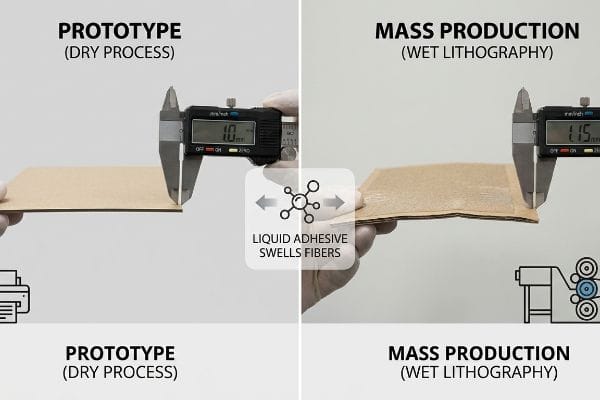
تحدث اختلافات في سُمك الكرتون بين العينات والإنتاج الكمي لأن النماذج الأولية تعتمد على الطباعة الرقمية الجافة، بينما يتطلب الإنتاج الكمي التغليف بالطباعة الحجرية الرطبة. يعمل اللاصق السائل على تضخيم ألياف الورق المسامية، مما يُغير قليلاً من سُمك المادة النهائي مقارنةً بالنماذج الأولية المُصنّعة في المختبر والمُحكمة مناخياً.
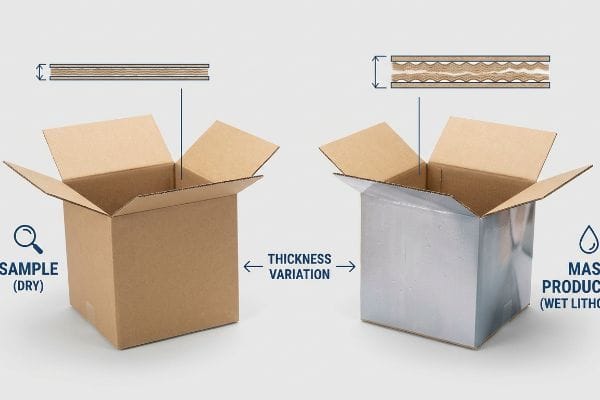
لفهم سبب اختلاف سلوك النموذج الأولي الأبيض النقي عن المنتج النهائي المطبوع، يتطلب الأمر الخروج من أرضية المكتب المفروشة بالسجاد إلى أرضية المصنع الصاخبة والرطبة. عند هذه الفجوة بين النظرية والتطبيق، تتلاشى هوامش الربح.
ما هي سماكات الكرتون المختلفة؟
حتى فرق المشتريات المخضرمة غالباً ما تفترض أن درجة الورق المقوى المحددة تتصرف بشكل متطابق عبر جميع سلاسل التوريد العالمية. إنهم يتعاملون مع أبعاد الورق الخام كثوابت رياضية ثابتة.
تتراوح سماكة الكرتون عادةً من الكرتون الرقيق للغاية ذي التموجات الدقيقة المصمم خصيصًا لعلب البيع بالتجزئة الفاخرة، إلى الكرتون المتين ذي الجدار المزدوج المصمم لتحمل أقصى قدر من تكديس الشحنات. ويحدد سمك المادة بدقة مقدار الصدمات الحركية التي يمكن أن يتحملها الكرتون النهائي أثناء النقل قبل أن يتعرض للتلف الهيكلي.
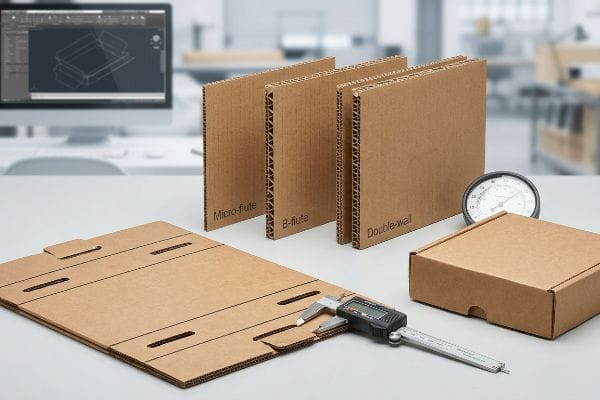
لكن معرفة الأبعاد النظرية لشكل الأخاديد لا تكفي عندما تتعرض حاويات الشحن الخاصة بك للنقل البحري في ظروف رطوبة عالية. وهنا تنهار الافتراضات القياسية تمامًا.
مصيدة انتفاخ الرطوبة في أرضية المصنع
كثيراً ما يحدد المصممون في المكاتب المكيفة معايير دقة خطوط قوالب التغليف بناءً على سُمك الكرتون الجاف المطلق. يفترضون أنه إذا كان أحد الفتحات يتناسب تماماً مع أحد الألسنة في برنامج التصميم بمساعدة الحاسوب (CAD)، فسيتم تجميعه بسلاسة مماثلة على خط تعبئة سريع تابع لشركة لوجستية خارجية. يتجاهلون تماماً العوامل البيئية المتعلقة بشحن مادة مسامية عبر المحيط أو تخزينها في مراكز توزيع إقليمية رطبة.
هذا ليس مجرد كلام نظري، فأنا أتعامل مع هذا التشوه البيئي في بيئة الاختبار. في إحدى المرات، زودني أحد العملاء بتصميم عبوة مسطحة، وقد عمل بشكل مثالي كعينة جافة في المختبر. ولكن عندما أخرجت وحدات الإنتاج الضخم من غرفة التكييف البيئي، لوحة 32ECT1 الرطوبة المحيطة وتمددت للخارج بمقدار أجزاء من المليمتر. وعندما حاولت طي القاعدة، تسببت المقاومة الشديدة للورق المتمدد في انحشار ألسنة التعشيق تمامًا، مما أدى إلى تمزق الطبقة العلوية المطبوعة. قمت على الفور بإعادة بناء الملفات الهيكلية لحقن طبقة عازلة للرطوبة بسمك 1 مم (0.04 بوصة)2 في كل فتحة استقبال. من خلال التكيف الديناميكي مع هذا التمدد البيئي، تخلصت من الاحتكاك الهائل على خط التعبئة، مما أدى إلى تسريع عملية التعبئة المشتركة بنسبة 20% تقريبًا، ومنع تمامًا حدوث تمزقات هيكلية أثناء تجميع المنتجات في المتاجر.
| حل هندسي | النتيجة المادية | العائد المالي على الاستثمار |
|---|---|---|
| حقن طبقة عازلة بسمك 1 مم3 | يمتص تمدد الرطوبة | يقضي على المخزون الممزق |
| فتحات متشابكة مستهدفة | يمنع انغلاق الاحتكاك | خفض تكاليف العمالة في التعبئة والتغليف بنسبة 20%4 |
| الاختبارات البيئية | يحاكي عبور المحيط | يضمن امتثال تجار التجزئة |
أرفض الاعتماد بشكل أعمى على أبعاد المختبرات الجافة، في حين أن رطوبة العالم الحقيقي هي التي تحدد مدى التفاوت المسموح به في التجميع النهائي. تتطلب البيئات القاسية وسائل حماية هيكلية استباقية.
🛠️ مكتب هارفي: هل تعلم بدقة مقدار تمدد ركيزة B-flute الحالية لديك خلال رحلة بحرية مدتها 30 يومًا؟ 👉 راجع التفاوتات الهيكلية ↗ — أقوم بمراجعة كل ملف هيكلي شخصيًا خلال 24 ساعة.
ما هي وحدة قياس سمك الكرتون؟
الاعتماد على برامج التصميم الجرافيكي القياسية لتحديد أبعاد المنتجات في متاجر البيع بالتجزئة يخلق ثغرة خطيرة. فالبكسلات لا تعكس بدقة العمق الفعلي للورق المقوى الخام.
يُقاس سُمك الكرتون عادةً باستخدام ميكرومتر صناعي لتحديد سماكته الفعلية بدقة. تُعدّ هذه الأسس الرياضية الدقيقة بالغة الأهمية لحساب بدلات الانحناء الهيكلي، مما يضمن الحفاظ على تفاوتات احتكاك مثالية بين الفتحات المقطوعة بالقالب أثناء عمليات التجميع الآلية عالية السرعة في جميع أنحاء العالم.
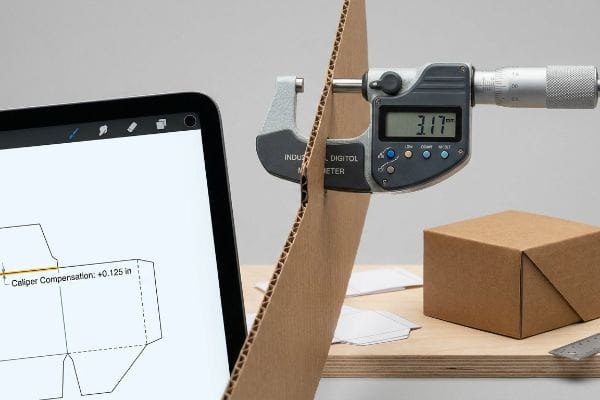
يتطلب الانتقال من شاشة ثنائية الأبعاد إلى بنية مادية ثلاثية الأبعاد تحولاً جذرياً في كيفية حسابنا للهندسة المكانية. فقياس السماكة يتعلق بحساب حجم الزوايا المطوية.
الميكانيكا الهندسية وراء تعويض الفرجار
عندما يصمم مصممو الرسومات صواني متشابكة باستخدام برامج الرسومات المتجهة الأساسية، فإنهم عادةً ما يرسمون فتحة طي بنفس عرض اللوحة المقابلة تمامًا. لكنهم يغفلون عن حساب أن طي مادة سميكة مموجة بزاوية 90 درجة يشغل حيزًا ماديًا على طول نصف القطر الخارجي. وإذا لم يتم توسيع فتحة الاستقبال رياضيًا لتعويض سمك هذه المادة، فإن الصندوق الناتج سيتعرض لانحناء شديد أو سيفشل في الإغلاق تمامًا.
عندما يسألني العملاء عن سبب فشل القوالب التي توفرها وكالتهم في خط الإنتاج، أشير عادةً إلى صوت طقطقة قالب القطع الفولاذي عند اصطدامه بسطح المكبس. صحيح أن القالب يقطع ما رسمه المصمم بدقة، لكن التصميم الهندسي معيبٌ بطبيعته. لذا، أقوم دائمًا بمعالجة هذه الملفات المسطحة باستخدام برامج بارامترية لتطبيق خوارزميات تعويض السماكة الآلية. من خلال قياس السماكة الفعلية الدقيقة للوحة وتمديد عرض الفتحات لتتوافق مع بدل الانحناء الخارجي،أضمن طي الألواح الصلبة بشكل مستقيم. عندما صينية البضائع بشكل مسطح تمامًا دون الحاجة إلى شريط لاصق شفاف، يتوزع ضغط التحميل العلوي الديناميكي بالتساوي،مما يزيل تمامًا خطر سحق الطبقة السفلية تحت ضغط التكديس الثقيل في المستودع.
| حل هندسي | النتيجة المادية | العائد على الاستثمار في الخدمات اللوجستية |
|---|---|---|
| تعويض الفرجار | يوسع نصف قطر الطية الخارجية | يمنع تقوس الصندوق |
| إزاحة التصميم بمساعدة الحاسوب البارامتري | يتطابق تمامًا مع عمق اللوح | يضمن تكديس المنصات بشكل مسطح |
| عرض الفتحة بدون احتكاك | يسمح بطي نظيف بزاوية 90 درجة | يُسرّع عملية تجهيز متاجر البيع بالتجزئة |
لا أسمح أبدًا لملف تصميم ثنائي الأبعاد بأن يملي الواقع المادي دون معايرة هندسة الطي أولاً وفقًا لقراءة الميكرومتر الدقيقة للركيزة الخام.
🛠️ مكتب هارفي: هل يقوم مصممو الجرافيك لديكم بإنشاء قوالب التغليف دون حساب دقيق لنسبة انحناء مادة الكرتون المموج الخام؟ 👉 اطلب مراجعة دقيقة لنسبة الانحناء ↗ — سرية تامة. تصاميمكم غير المنشورة في مجال البيع بالتجزئة في أمان تام معي.
ما هو اسم الكرتون السميك جداً؟
غالباً ما يطلب المشترون ألواحاً سميكة قدر الإمكان لحماية بضائعهم، ظناً منهم أن سمكها الخام يعني مناعة تامة. لكن التركيب الكيميائي لهذا السمك أهم بكثير من عمقه الظاهري.
يُطلق على الكرتون السميك جدًا اسم الكرتون المموج ذي الجدار المزدوج أو الثلاثي في صناعة التصنيع العالمية. تستخدم هذه الطبقة المقواة طبقات متعددة متناوبة من الأقواس الداخلية المموجة وبطانة مسطحة لزيادة قوة الضغط الإجمالية بشكل كبير، مما يوفر حماية آمنة للبضائع الثقيلة أثناء النقل.
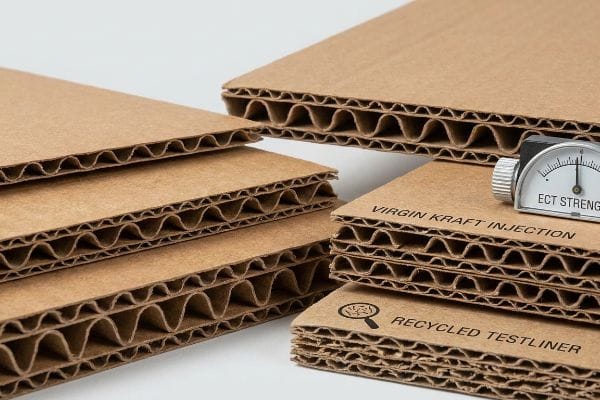
يبدو أن الترقية إلى شكل مادة أكثر سمكًا بمثابة حل سهل للشحنات المتضررة، لكنها تقدم طبقة جديدة تمامًا من علم المواد الهيكلية.
الآليات الهندسية وراء استنزاف الألياف
تطلب العديد من العلامات التجارية المهتمة بالاستدامة شاشات عرض متينة مزدوجة الجدران مصنوعة بالكامل من ورق اختبار معاد تدويره بنسبة 100%. ويفترضون أن السماكة الخام للطبقات B و C مجتمعة ستدعم بسهولة حمولات البيع بالتجزئة الكثيفة. إلا أنهم يتجاهلون تمامًا الواقع الميكانيكي الدقيق لعملية إعادة تدوير الورق، حيث تقصر ألياف السليلوز فعليًا وتفقد بنيتها بعد خمس إلى سبع دورات إعادة تدوير .
عندما يطلب العملاء هذه الألواح المتينة المصنوعة بالكامل من مواد معاد تدويرها، أصطحبهم إلى مكبسنا الهيدروليكي وأعرض عليهم اختبار TAPPI T811 لاختبار مقاومة السحق (ECT). أوضح لهم كيف تنثني الألواح السميكة المصنوعة بالكامل من مواد معاد تدويرها فورًا عند تطبيق قوة ضغط لأسفل مقدارها 85 كيلوغرامًا (187.5 رطلًا) لأن الألياف القصيرة تفتقر إلى الصلابة. ولحل هذه المشكلة، أفرض مواصفات مواد هجينة، حيث أحقن نسبة دقيقة تبلغ 30% من ورق الكرافت الخام مباشرةً في الألواح التسعة الأساسيةالحاملة للأحمال. هذا الإدخال الموجه لألياف الورق الطويلة والجديدة يعيد فورًا قوة الضغط الحركي، مما يضمن بقاء القاعدة السميكة ذات الجدار المزدوج حتى بعد النقل البحري الشاق بطبقتين دون المساس بمعايير الامتثال البيئي الأساسية للعلامة التجارية.
| حل هندسي | النتيجة المادية | العائد المالي على الاستثمار |
|---|---|---|
| حقن كرافت بكر | يطيل ألياف السليلوز | يعيد قوة العلاج بالصدمات الكهربائية |
| جدار مزدوج مستهدف | يعزز المزامير الأساسية | يوقف انهيار المنصات |
| مزيج المواد الهجينة | يوازن بين القوة والأهداف البيئية | يمنع تلف الشحنات |
أعتمد على تركيبات الألياف الدقيقة بدلاً من إضافة طبقات من الورق المعاد تدويره الضعيف بشكل أعمى، مما يضمن عدم تراجع المتانة الهيكلية أبدًا لصالح الاستدامة التجميلية.
🛠️ مكتب هارفي: هل تعلم ما إذا كانت شاشات العرض الثقيلة لديك تعاني من استنزاف خفي للألياف تحت ضغط الأحمال الديناميكية القصوى في المستودع؟ 👉 احصل على تدقيق لكثافة المواد ↗ — لا يوجد وسطاء. تتحدث مباشرةً مع مهندسي الإنشاءات.
ما هو سمك ورق الكرتون؟
غالباً ما توافق فرق التسويق على نموذج أولي أبيض غير مطبوع، على افتراض أن وحدة البيع بالتجزئة النهائية المنتجة بكميات كبيرة ستطابق سمكه وسطحه تماماً. ويتجاهلون بذلك المتغيرات الكيميائية الهائلة التي تحدث أثناء الطباعة عالية السرعة.
يُحدد سُمك ورق الكرتون فعليًا بقياس سُمك الورق المقوى الخام وارتفاع الأقواس الداخلية المضلعة. عادةً ما يبلغ سُمك شاشات العرض القياسية ذات الجدار الواحد حوالي ثُمن بوصة، مما يوفر توازنًا مثاليًا بين الصلابة الهيكلية وكثافة الشحن العالية.
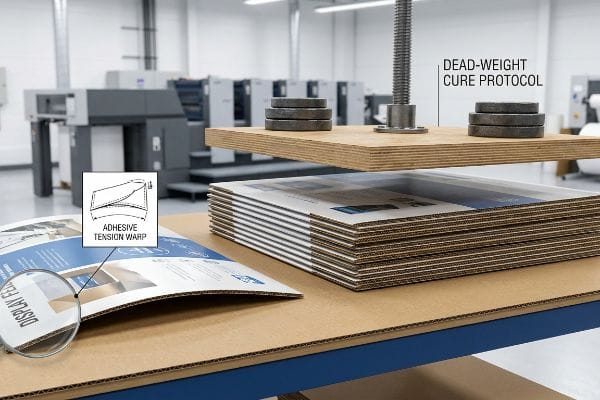
لكن فهم السماكة الخام الأولية يصبح غير ذي صلة تمامًا بمجرد إدخال المواد اللاصقة السائلة والضغط الشديد على أرضية المصنع.
تأثير تشوه رطوبة مادة PVA
كثيرًا ما يفترض العملاء أن تثبيت طبقة علوية مطبوعة عالية الجودة على لوح كرتوني مموج صلب ينتج عنه لوحة عرض مسطحة تمامًا. يوافقون على عينة جافة مطبوعة رقميًا ويتوقعون أن يعكسها الإنتاج الضخم بدقة متناهية. يتجاهلون التركيب الكيميائي الفيزيائي لعملية التصنيع الفعلية، حيث تُوزع المواد اللاصقة المائية على مساحات سطحية هائلة، مما يُغير بشكل جذري التوتر الهيكلي للمادةوسماكتها النهائية.
أدركتُ هذا الأمر سريعًا خلال مرحلة إنتاج مبكرة لألواح جانبية كبيرة . نزعتُ الغطاء العلوي لوحدة عرض مشوهة بشدة، وشعرتُ برطوبة الألياف الخام تحته. كنا نستخدم لاصق PVA (أسيتات البولي فينيل) القياسي في عملية الطباعة الحجرية . عندما جفّ اللاصق الرطب في هواء المصنع، انكمش، مما أدى إلى توتر سطحي هائل تسبب في انحناء اللوح الهيكلي بالكامل، بطول 152 سم (60 بوصة)، إلى الداخل بشدة. أوقفتُ خط الإنتاج فورًا، ووضعتُ بروتوكولًا صارمًا للمعالجة بالضغط. من خلال تكديس الألواح الرطبة تحت ضغط دقيق لمدة 24 ساعة كاملة لضمان استواء السطح، تمكنتُ من تحييد التوتر، مما ضمن وقوف الألواح بشكل عمودي تمامًا على أرضية المتجر، وأنقذتُ العميل من رفضها بشكل كبير في المتجر.
| حل هندسي | النتيجة المادية | العائد على الاستثمار في الخدمات اللوجستية |
|---|---|---|
| بروتوكول علاج الوزن الميت13 | يُعادل انكماش المادة اللاصقة | يمنع تقوس الألواح |
| تغليف PVA المتحكم به14 | يعمل على تثبيت شد الورق | يضمن جمالية نقية |
| تجهيز الشقق على مدار 24 ساعة | هندسة الأقفال الهيكلية | يمنع عمليات رد المبالغ المدفوعة من قبل تجار التجزئة |
لا أسمح أبدًا للسرعة الخام لآلة التغليف بالتأثير على الشكل الهندسي النهائي؛ فالمعالجة المسطحة القسرية أمر لا غنى عنه من أجل رؤية مميزة في متاجر التجزئة.
🛠️ مكتب هارفي: هل تنحني ألواح العرض الكبيرة لديكم إلى الداخل على أرضية المتجر بسبب شد مادة التغليف غير المنضبط؟ 👉 اطلب مراجعة لعملية التغليف ↗ — أقوم بمراجعة كل ملف هيكلي شخصيًا خلال 24 ساعة.
خاتمة
يمكنك الاستمرار في التعامل مع العينات الجافة غير المطبوعة على أنها الحقيقة المطلقة، ولكن عندما تنكمش الطبقة العلوية المغلفة بالطباعة الحجرية وتتشوه الألواح الجانبية في ممر مزدحم، سيؤدي التواء الهيكل الناتج إلى رفض فوري من قبل تجار التجزئة، مما يقضي تمامًا على هامش ربح حملتك. وقد كشفت مراجعة هندسية دقيقة مؤخرًا عن خطأ فادح في التفاوت المسموح به بمقدار 2 مم في عملية طرح وطنية واسعة النطاق قبل بدء الإنتاج. توقف عن إهدار ميزانية التسويق على نماذج أولية نظرية تفشل في الواقع، ودعني أصمم شخصيًا عملية الطرح التالية لضمان أقصى قدر من استدامة سلسلة التوريد.
[ملف PDF] مواصفات الكرتون المموج - رابطة صناديق الألياف، https://www.fibrebox.org/assets/2025/09/Walmart_Corrugated-Board_Specifications_Automation_Packaging_Standards.pdf. تؤكد البيانات الفنية المتعلقة بتقييمات اختبار مقاومة الحواف للضغط (ECT) الخصائص الفيزيائية والتفاوتات الهيكلية للكرتون المموج 32ECT. دور الدليل: المواصفات الفنية؛ نوع المصدر: معيار صناعي. يدعم: قابلية المادة للتورم الناتج عن الرطوبة. ملاحظة النطاق: يركز على فيزياء الكرتون المموج. ↩
"الدليل الشامل لتصميم الصناديق الكرتونية المموجة - أنظمة باول"، https://www.powellsystems.com/feeds/blog/corrugated-box-design. توفر أدلة هندسة التغليف الموثوقة هوامش التفاوت الموصى بها لتمدد المواد نتيجة الرطوبة. دور الدليل: معيار فني؛ نوع المصدر: دليل هندسي. يدعم: صلاحية هامش أمان 1 مم لتمدد الرطوبة. ملاحظة النطاق: ينطبق على البيئات عالية الرطوبة. ↩
"تأثيرات معامل التمدد الحراري وامتصاص الرطوبة..."، https://pmc.ncbi.nlm.nih.gov/articles/PMC8587952/. تتحقق المعايير الهندسية الفنية للتغليف المموج مما إذا كان 1 مم معيارًا معترفًا به لتعويض انتفاخ الرطوبة. دور الدليل: المواصفات الفنية؛ نوع المصدر: دليل هندسي. يدعم: النتيجة المادية لتغييرات التصميم. ملاحظة النطاق: يعتمد على درجة الورق المقوى. ↩
"دراسة تأثير الثقوب على قدرة تحمل الأحمال..."، https://pmc.ncbi.nlm.nih.gov/articles/PMC11396172/. من شأن دراسة حالة صناعية أو معيار لوجستي أن يحدد كميًا مقدار خفض العمالة الذي يتحقق من خلال تصميم الفتحات الأمثل. دور الدليل: التحقق الإحصائي؛ نوع المصدر: تقرير صناعي. يدعم: العائد المالي على الاستثمار للتصميم التقني. ملاحظة النطاق: قد يختلف باختلاف حجم المنتج. ↩
"التحليل التحليلي لصلابة الانحناء لخمس طبقات..."، https://pmc.ncbi.nlm.nih.gov/articles/PMC8777652/. دليل هندسي ميكانيكي تقني يشرح كيفية تعديل عرض الفتحات بناءً على سُمك المادة (باستخدام الفرجار) للحفاظ على طيات مربعة. دور الدليل: التحقق التقني؛ نوع المصدر: دليل هندسي. يدعم: ضرورة مراعاة بدل الانحناء في القطع بالقوالب. ملاحظة النطاق: يركز على مواد الكرتون المموج والورق المقوى. ↩
"تقدير قوة الضغط لصناديق الكرتون المموج..."، https://pmc.ncbi.nlm.nih.gov/articles/PMC8467740/. دراسة هيكلية توضح كيف يمنع المحاذاة والطي الدقيق نقاط الإجهاد الموضعية وسحق الطبقة السفلية في العبوات المكدسة. دور الدليل: إثبات هيكلي؛ نوع المصدر: ورقة عمل في صناعة التغليف. يدعم: العلاقة بين الهندسة وتحمل الأحمال. ملاحظة النطاق: ينطبق على عبوات البيع بالتجزئة الجاهزة. ↩
[ملف PDF] ماذا يحدث للألياف السليلوزية أثناء صناعة الورق وإعادة تدويرها؟...، https://bioresources.cnr.ncsu.edu/BioRes_02/BioRes_02_4_739_788_Hubbe_VR_Recycling_Cellulosic_Fibers_Review.pdf. التحقق التقني من عدد دورات إعادة التدوير التي تؤدي إلى استنفاد الألياف الهيكلية في ورق السليلوز. دور الدليل: المواصفات الفنية؛ نوع المصدر: مجلة علوم المواد. يدعم: الادعاء المتعلق بالحدود الفيزيائية للورق المعاد تدويره. ملاحظة: قد يختلف النطاق قليلاً باختلاف نوع اللب. ↩
"قياسات المجال الكامل في اختبار سحق الحافة للكرتون المموج..."، https://pmc.ncbi.nlm.nih.gov/articles/PMC8199211/. التحقق من المعيار الفني الرسمي لـ TAPPI لقياس قوة ضغط الكرتون المموج. دور الدليل: المواصفات الفنية؛ نوع المصدر: معيار صناعي. يدعم: صحة طريقة الاختبار المستخدمة لقياس نقاط الانبعاج. ملاحظة النطاق: ينطبق تحديدًا على ألواح الألياف المموجة. ↩
"قوة الضغط لعبوات الورق المقوى المموج مع..."، https://pmc.ncbi.nlm.nih.gov/articles/PMC10054506/. أدلة علمية حول تأثير نسب ألياف الكرافت البكر الطويلة على اختبار مقاومة السحق للحواف (ECT) والصلابة الهيكلية للألواح المعاد تدويرها. دور الدليل: معيار تقني؛ نوع المصدر: دراسة في علم المواد. يدعم: الادعاء بأن مزيجًا من الألياف البكر بنسبة 30% يعيد قوة الضغط الحركي. ملاحظة: قد تختلف النتائج باختلاف مصدر الألياف. ↩
"تأثير الرطوبة ودرجة الحرارة على الخواص الميكانيكية لـ..."، https://bioresources.cnr.ncsu.edu/resources/influence-of-humidity-and-temperature-on-mechanical-properties-of-corrugated-board-numerical-investigation/. شرح تقني لكيفية تسبب الرطوبة الناتجة عن المواد اللاصقة المائية في انتفاخ الألياف وانكماشها التفاضلي في الورق المقوى. دور الدليل: آلية تقنية؛ نوع المصدر: مجلة علوم المواد/دليل التصنيع. يدعم: الادعاء بأن المواد اللاصقة تُغير التوتر الهيكلي. ملاحظة النطاق: يتعلق تحديدًا بالمواد المسترطبة في الطباعة. ↩
"تأثيرات الرطوبة في عملية التغليف - AICC Now"، https://now.aiccbox.org/effects-of-moisture-in-the-lamination-process/. تؤكد الوثائق الفنية المتعلقة بمواد لاصقة PVA في صناعة الورق أن التجفيف التبخيري يُسبب شدًا ناتجًا عن الانكماش والتواء الركيزة. دور الدليل: التحقق الفني؛ نوع المصدر: دليل علوم المواد. يدعم: العلاقة السببية بين تجفيف PVA وتشوه اللوحة. ملاحظة النطاق: خاص بالمواد اللاصقة المائية. ↩
"تقليل التشوّه الناتج عن المعالجة - منتدى فورم لابس"، https://forum.formlabs.com/t/minimizing-warping-from-curing/33912. تصف معايير الصناعة لمعالجة التغليف استخدام الضغط أو "الوزن الميت" لمقاومة انكماش المادة اللاصقة والحفاظ على استواء السطح. دور الدليل: التحقق من صحة الإجراءات؛ نوع المصدر: دليل التصنيع. يدعم: فعالية المعالجة بالضغط في تحييد التشوّه. ملاحظة النطاق: ينطبق على الركائز الصلبة كبيرة الحجم. ↩
"أفضل أنواع الغراء للكرتون: أفضل الخيارات لروابط قوية - مضخات ARO"، https://www.arozone.com/en/tools/blog/best-glues-for-cardboard-top-choices/. وثائق فنية تصف عملية استخدام الأوزان لمقاومة انكماش المادة اللاصقة أثناء التصلب. دور الدليل: تعريف فني؛ نوع المصدر: دليل التصنيع. يدعم: طريقة تحييد انكماش المادة اللاصقة. ملاحظة النطاق: ينطبق على تغليف الورق شديد التحمل. ↩
"العوامل المؤثرة على ثبات أبعاد الأوراق الزخرفية..."، https://bioresources.cnr.ncsu.edu/resources/factors-affecting-the-dimensional-stability-of-decorative-papers-under-moistening/. تحليل كيميائي وبنيوي لتأثير لاصق بولي فينيل أسيتات (PVA) على شد ركيزة الورق. دور الدليل: برهان علمي في مجال المواد؛ نوع المصدر: ورقة بحثية أكاديمية. يدعم: الادعاء بأن تطبيق PVA بشكل مُتحكم فيه يُثبّت الشد. ملاحظة النطاق: يركز على الركائز الحساسة للرطوبة. ↩