الوقوف في ممر متجر كبير لا يتعلق بالحظ؛ بل هو لعبة محسوبة من الهندسة المكانية والتصميم الهيكلي عالي التباين.
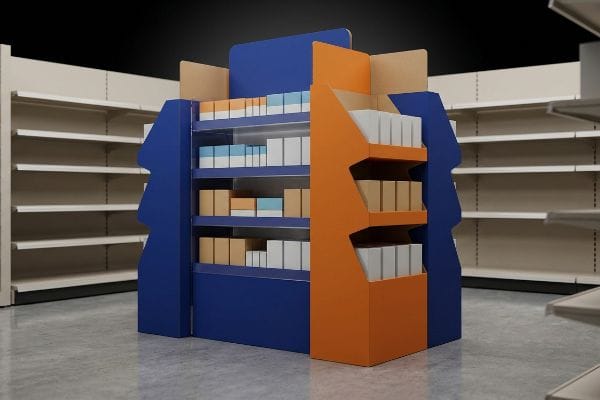
يتطلب تعزيز رؤية المنتجات المعروضة على الأرض تصميم قوالب قطع دقيقة، وتحسين مناطق جذب الانتباه للمنتجات بين 50 و54 بوصة، واستخدام ألوان موضعية زاهية. هذه الأساليب الهيكلية تكسر الرتابة البصرية، وتجذب انتباه المستهلكين من مسافة تصل إلى ثلاثين قدمًا.
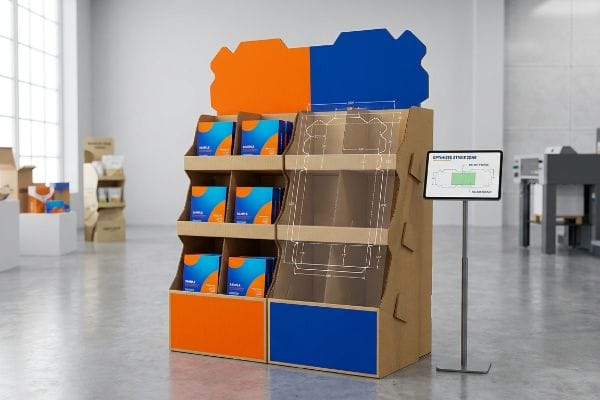
تُعد نظرية التسويق بداية رائعة، لكن جعل ملفات التصميم بمساعدة الحاسوب المسطحة تجذب الانتباه فعليًا في أرضية مزدحمة يتطلب تنفيذًا هيكليًا دقيقًا.
كيفية زيادة ظهور المتجر؟
للسيطرة الحقيقية على ممر في المتجر، يجب عليك تجاوز الرسومات الأساسية وفهم كيفية تنقل المتسوقين فعلياً في بيئات البيع بالتجزئة الضخمة.
يتطلب تعزيز ظهور المتجر تطبيق قاعدة التفاعل المكاني 3-3-3. يجذب مصمم المتاجر الناجح الانتباه البصري من مسافة ثلاثين قدمًا، ويثير اهتمام المتسوقين على مسافة ثلاثة أقدام، ويحفز التفاعل المادي النهائي على مسافة ثلاث بوصات باستخدام تصميمات هيكلية مريحة.
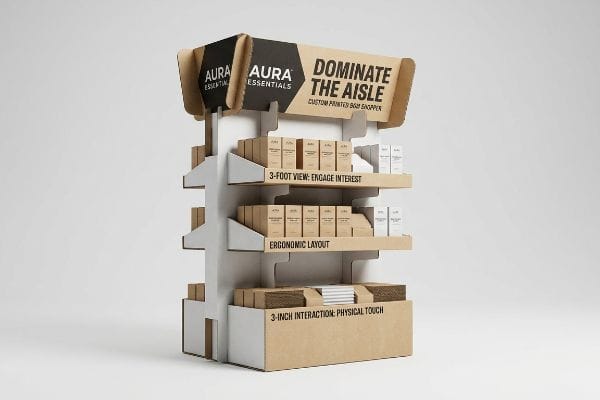
يتطلب الوصول إلى عتبات المسافة المحددة تلك تجاوز قوالب الصناديق القياسية وهندسة تعطيل بصري متعمد لتأمين حركة المشاة.
استراتيجية المشاركة المكانية 3-3-3
تتمثل الممارسة الشائعة في تصميم عروض البيع بالتجزئة بحيث تُعرض عن قرب على شاشات الكمبيوتر ذات الإضاءة الخلفية. غالبًا ما تفترض فرق التسويق المبتدئة أن التصميم المتناسق على الشاشة سيجذب المتسوقين تلقائيًا إلى متاجر الجملة. لكنهم يغفلون حقيقة أن المتسوقين أثناء تجولهم في الممرات يكونون في حالة من الإرهاق الذهني،حيث يتجاهلون بصريًا أي شيء يفتقر إلى تمييز مكاني واضح.
يتطلب الانتقال من التصميم الرقمي إلى مساحات البيع بالتجزئة التقليدية تغييرًا جذريًا في الاستراتيجية. تكتشف العديد من العلامات التجارية أن رسوماتها المعقدة في أعلى الصفحة تصبح غير قابلة للقراءة تمامًا عند وضعها في ممرات المتاجر الواسعة. من خلال رسم مسار المتسوق استراتيجيًا من مسافة 9 أمتار تقريبًا،يستطيع المسوقون تصميم إشارات بصرية واضحة وعالية التباين توجه العملاء مباشرةً إلى المنتج. يساهم تطبيق استراتيجية التفاعل المكاني هذه في خفض معدلات تجاوز المنتجات بشكل كبير، ويساعد على ضمان عمليات شراء فورية وعفوية.
| أخطاء شائعة للمبتدئين | الحل الاحترافي | فوائد أرضية البيع بالتجزئة |
|---|---|---|
| مصمم خصيصًا للعرض على شاشة بحجم 3 أقدام | رسم الخرائط المكانية وفقًا لقاعدة 3-3-34 | يلفت الانتباه من الممرات الرئيسية |
| هياكل صندوقية مسطحة ومتماثلة | رؤوس ثلاثية الأبعاد مقطوعة بشكل جريء | يكسر الرتابة البصرية على الفور |
| نص صغير في الطبقة السفلية | نقل النص إلى منطقة الضرب 50 بوصة5 | يمنع انحناء المتسوق |
لا توافق أبدًا على ملف هيكلي يبدو جميلًا على الشاشة فحسب. يجب أن يجذب تصميم المتجر انتباه المتسوقين بشكل واضح من جميع أنحاء المتجر، وإلا فأنت ببساطة تموّل منتجًا كرتونيًا يندمج مع الخلفية.
🛠️ مكتب هارفي: هل أنت غير متأكد من إمكانية رؤية عنوان صفحتك من مسافة ثلاثين قدمًا؟ 👉 اطلب مراجعة تصميم الصفحة ↗ — تواصل مباشر مع مكتبي. أعدك بعدم تلقي أي رسائل تسويقية آلية مزعجة.
ما الذي يجعل عرض المنتج جيدًا؟
لا يقتصر التصميم الرائع على الاستقرار الهيكلي فحسب، بل يتعلق أيضاً بإزالة الحواجز البصرية بين العميل المار وبضائعك الأساسية.
يُعطي عرض المنتجات الجيد الأولوية لرؤية البضائع بوضوح تام من خلال استخدام حواف تثبيت مصممة هندسيًا وشبكات فاصلة غير متماثلة. ويضمن تحقيق هذا التوازن بقاء المنتجات آمنة أثناء النقل مع الحفاظ على وضوح الملصق بنسبة 85% على الأقل، مما يسمح للمتسوقين بالتعرف على بيانات العلامة التجارية المهمة على الفور.
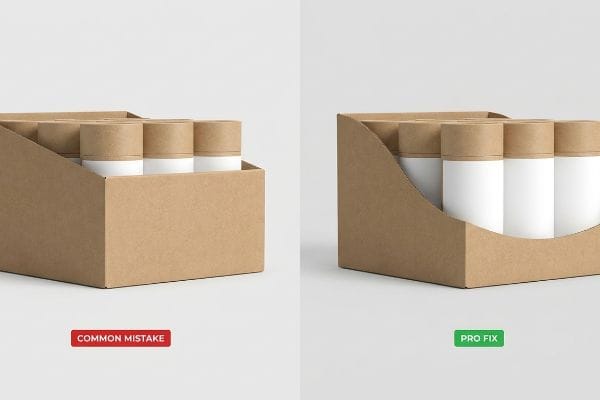
يمكن للهيكل أن يتحمل بسهولة وزناً هائلاً، ولكن إذا أخفى المنتج بصرياً في الداخل، فإن الحملة التسويقية بأكملها تفشل.
التغلب على نقطة العمى المتعلقة بالشفة الخلفية
غالباً ما تلجأ فرق المشتريات إلى استخدام صواني التغليف القياسية الجاهزة للبيع بالتجزئة ، ذات الحواف الأمامية المرتفعة بشكل موحد، لضمان عدم تحرك المنتجات الثقيلة. ورغم أن هذا يوفر حماية أساسية، إلا أنه يُحدث فراغاً تسويقياً كبيراً على الرفوف. فالحافة المستقيمة القياسية تُغطي الثلث السفليمن المنتج، مما يحجب تماماً النصوص القانونية الهامة وشعارات العلامة التجارية الرئيسية.
يُقلل إخفاء تفاصيل المنتج الرئيسية بشكل كبير من فعالية العرض في بيئة التسوق السريعة. فعندما لا يستطيع المستهلكون قراءة معلومات النكهات أو أسماء العلامات التجارية بسهولة، فإنهم ينتقلون ببساطة إلى منتج منافس واضح تمامًا. ومن خلال دمج تصميم انسيابي مدروس بعناية على الحافة الأمامية ، يمكن للعلامات التجارية عرض أكبر مساحة ممكنة من الملصق مع الحفاظ على تنظيم البضائع بشكل مثالي. تضمن استراتيجية التصميم البسيطة هذه أن تكون القيمة الأساسية للمنتج واضحة فورًا لكل متسوق.
| أخطاء شائعة للمبتدئين | الحل الاحترافي | فوائد أرضية البيع بالتجزئة |
|---|---|---|
| شفاه أمامية طويلة ومستقيمة | تخفيضات على ملصقات مقطوعة بشكل انسيابي | يضمن رؤية المنتج بنسبة 85%9 |
| شبكات SKU متناظرة ومتقاربة | فواصل غير متماثلة 3-5-710 | يمنع تمزق الكرتون عند إعادة التخزين |
| إخفاء نص الامتثال القانوني | استيراد ملف CAD الخاص بالملصقات إلى ملف الدرج | يمنع الرفض الصارم من قبل تجار التجزئة |
لا ينبغي أبدًا أن تُعيق القيود الهيكلية قيمة العلامة التجارية. يضمن استخدام حافة تثبيت ذكية بقاء منتجك سليمًا تمامًا، مما يزيد من جاذبيته ويحفز عمليات الشراء الفورية ويرفع معدلات التحويل في متاجر التجزئة.
🛠️ مكتب هارفي: هل تُخفي أغطية الرفوف الحالية شعار علامتك التجارية الرئيسي عن غير قصد؟ 👉 اطلب تقرير التدقيق الهيكلي ↗ — حمّله بأمان. صندوق بريدي مفتوح إذا كانت لديك أي أسئلة لاحقًا.
ما هي بعض الميزات الجاذبة للانتباه التي تجعل الشاشات أكثر فعالية؟
لكي تبرز حقًا في بيئات البيع بالتجزئة الصعبة، يجب عليك الاستفادة من تقنيات طباعة محددة تخترق الضوضاء البصرية للعلامات التجارية المنافسة.
تتضمن ميزات العرض الجذابة استخدام ألوان حبر مركزة، ونقوش بارزة عالية التباين، وطلاءات مائية لامعة مدمجة. تضمن هذه العناصر البصرية وضوحًا فائقًا للشعار، وتخلق انعكاسات ملموسة مميزة تجذب انتباه المستهلكين بقوة تحت إضاءة الفلورسنت القوية في المتاجر.
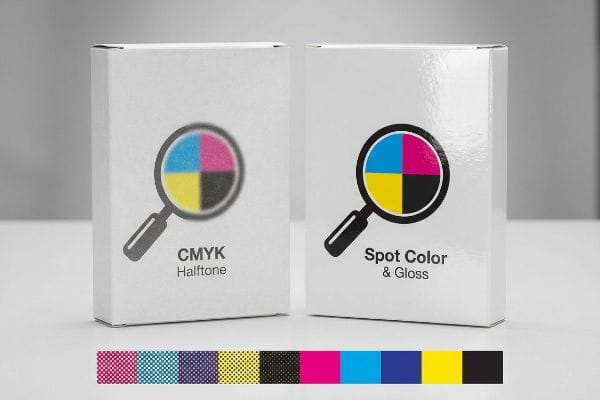
يتطلب تطبيق هذه الميزات الابتعاد عن الطباعة التجارية القياسية على الورق وإعطاء الأولوية لتنفيذ الألوان النابضة بالحياة وعالية التباين.
إزالة حبيبات التنقيط اللوني CMYK
كثيراً ما يُرسل مصممو الجرافيك ملفات رقمية باستخدام تقنيات الطباعة القياسية بأربعة ألوان لشعارات الشركات الكبيرة. يفترضون أن عملية الطباعة التجارية ستُطابق بسلاسة الألوان الزاهية المعروضة على شاشات حواسيبهم. لكن عند طباعة هذه النقاط المتداخلة على مواد مموجة، غالباً ما تمتزج بشكل غير متساوٍ، مما ينتج عنه مظهر باهت ومحبب،يبدو غير احترافي تماماً على الرفوف.
يُعدّ الاعتماد على مزج الألوان القياسي خطأً شائعًا يُضعف بشكلٍ كبيرٍ جاذبية المنتج على الرفوف. ولمعالجة هذا الخطأ، تستخدم الحملات التسويقية الناجحة طباعةً مخصصةً بلونٍ محدد،مما يضمن تطبيق لون العلامة التجارية بدقةٍ كطبقةٍ صلبةٍ ونابضةٍ بالحياة. وبالإضافة إلى طبقةٍ لامعةٍ واقية، تُعزز هذه التقنية انعكاس الضوء إلىأقصى حد، وتضمن بروز الشعار من جميع زوايا الرؤية. كما يُؤمّن استخدام أحبارٍ متخصصةٍ حضورًا مميزًا للعلامة التجارية، وهو ما يتوقعه المستهلكون المميزون.
| أخطاء شائعة للمبتدئين | الحل الاحترافي | فوائد أرضية البيع بالتجزئة |
|---|---|---|
| طباعة الشعارات بنظام الألوان CMYK القياسي | ألوان بانتون (PMS) الموضعية14 | يزيل حبيبات الطباعة النصفية الباهتة |
| الاعتماد على تباين اللوحة الخام | طلاءات مائية عالية اللمعان15 | يعكس الإضاءة الفلورية القاسية |
| نقش بارز على مناطق التحميل | نقش داخلي على قلب الناي16 | يُضفي إحساسًا ملموسًا دون أن يسحق |
لا تعتمد على الخدع البصرية لبيع المنتجات. إن تحديد كثافة الصبغة بدقة يضمن أن تجذب ألوان علامتك التجارية الأساسية الأنظار فور وصولها إلى رفوف المتاجر.
🛠️ مكتب هارفي: هل تُحوّل عملية الطباعة الحالية شعارك الرقمي الواضح إلى صورة ضبابية باهتة؟ 👉 احصل على فحص معايرة الألوان ↗ — لا نماذج تُسبب مكالمات مبيعات لا تنتهي. قيمة حقيقية فقط.
لماذا تعتبر شاشات العرض مهمة؟
إلى جانب مجرد تخزين المنتجات، تعمل هذه المستودعات التجارية كجسر هيكلي بالغ الأهمية بين الخدمات اللوجستية للمستودعات وعملية البيع بالتجزئة النهائية.
تُعدّ منصات العرض مهمة لأنها تُشكّل الهيكل الأساسي الحامل للأحمال، ما يحمي البضائع الثقيلة أثناء النقل. وبفضل استخدام زوايا مموجة مُصممة بدقة هندسية وأبعاد بدون بروز، تمنع هذه الهياكل المتينة تلف الكرتون بشكل كارثي، وتضمن وصول المنتجات سليمة وآمنة.
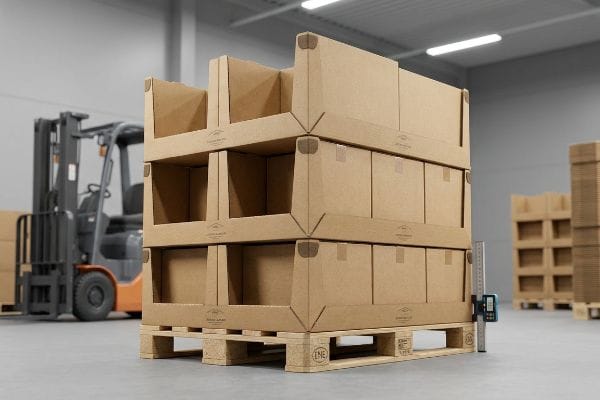
إن جعل شاشة واحدة تقف في المختبر أمر سهل، ولكن إليك الحقيقة القاسية عند شحن 500 وحدة عبر المحيط.
نقطة الضعف الكارثية "بروز المنصات"
غالباً ما تقوم فرق المشتريات بتوسيع أبعاد الكرتون الرئيسي لحشر أكبر حجم ممكن من المنتجات، معتقدةً خطأً أن لوحاً سميكاً من الدرجة17 ) سيتحمل وزن حاوية مزدوجة الطبقات. إنهم ينظرون إلى الكرتون المموج كأداة تسويقية وحاوية أساسية فحسب، متجاهلين تماماً ديناميكيات سلسلة التوريد العالمية.
هذا ليس مجرد كلام نظري، بل أراه يحدث فعلاً في مختبرات الاختبار عندما تحاول العلامات التجارية تجاوز أبعاد منصات التحميل الصارمة التي تحددها جمعية مصنعي البقالة (GMA). فعندما يتجاوز حجم الكرتونة الرئيسية سطحًا خشبيًا قياسيًا بأبعاد 48×40 بوصة (1219×1016 مم) ولو بجزء بسيط من البوصة، فإن الزوايا الرأسية المحاذية هيكليًا لا تتحمل أي حمل.في منشأتي، عندما أضع كرتونة شحن بارزة على مكبس الضغط الهيدروليكي، ينحني الجزء السفلي غير المدعوم للخارج بقوة مصحوبًا بصوت طقطقة مزعج. ولحل هذه المشكلة، أفرض بصرامة حدًا أقصى للبروز في برنامج التصميم بمساعدة الحاسوب (CAD)، مما يقلل المساحة القصوى المسموح بها بمقدار 0.5 بوصة (12.7 مم) بالضبط. من خلال الحفاظ على قوة اختبار ضغط الصندوق (BCT) بنسبة 60%في الزوايا، أضمن سلامة الوحدة أثناء النقل البحري، مما يمنع تمامًا أضرار النقل ويحول دون تكبد آلاف الدولارات من عمليات رد الأموال الباهظة.
| أخطاء شائعة للمبتدئين | الحل الاحترافي | فوائد أرضية البيع بالتجزئة |
|---|---|---|
| دفع الكراتين إلى ما بعد حافة المنصة | تقليص حجم صندوق التحديد في برنامج التصميم بمساعدة الحاسوب (CAD) بمقدار 0.5 بوصة | يعيد 60% من قوة زاوية BCT20 |
| التعامل مع العروض الفنية تماماً كما لو كانت أعمالاً فنية | هندسة حمولات حاويات 40HQ21 | يمنع انبعاج النقل في الطبقة الدنيا |
| تجاهل الفجوات بين ألواح سطح السفينة | توجيه عمودي للناي22 | يمنع ترهل القاعدة تحت الوزن |
أصمم شاشات عرض تتحمل قوى التحميل الهائلة التي تتعرض لها الرافعات الشوكية. إذا لم يكن هيكل شاشتك قادراً على تحمل قوى التحميل العلوية الديناميكية للشحنات العالمية، فلن تصل رسوماتك الجميلة إلى المستهلك أبداً.
🛠️ مكتب هارفي: لا تدع عيبًا هيكليًا بحجم 2 مليمتر يُفسد إطلاقًا ضخمًا لـ 500 متجر. 👉 أرسل لي ملف تصميم القالب ↗ — سأُجري اختبارات دقيقة للحسابات قبل أن تُهدر ميزانيتك على الإنتاج الضخم.
خاتمة
يمكنك زيادة حجم الكرتون الرئيسي لتوفير المساحة، ولكن عندما ينضغط ذلك الركن البارز داخل حاوية مزدوجة الطبقات، فإن انبعاج الطبقة السفلية الناتج يؤدي إلى رفض فوري من قِبل بائع التجزئة، مما يقضي تمامًا على هامش ربحك. هذه هي ورقة المواصفات الدقيقة التي يستخدمها أفضل 10 عملاء تجزئة لديّ لضمان عدم رفض أي منتج. توقف عن التخمين بشأن التفاوتات الحركية، ودعني شخصيًا أراجع ملفاتك من خلال خدمة تدقيق القوالب المجانية ↗ لاكتشاف الأخطاء الهيكلية الجسيمة قبل الإنتاج.
"استكشاف سلوك التصفح ومستوى انتباه المتسوقين باستخدام..."، https://pmc.ncbi.nlm.nih.gov/articles/PMC6895988/. من شأن دراسة في علم النفس البيئي أو سلوك المستهلك أن تؤكد كيف يؤدي التحميل الحسي الزائد في بيئات البيع بالتجزئة عالية التحفيز إلى الانتباه الانتقائي وتصفية الإشارات البصرية غير الواضحة. دور الدليل: آلية سلوكية؛ نوع المصدر: مجلة أكاديمية. يدعم: ضرورة التمايز المكاني للرؤية. ملاحظة النطاق: ينطبق تحديدًا على بيئات البيع بالتجزئة عالية الكثافة مثل متاجر المستودعات. ↩
[ملف PDF] غير متوفر - قرية غرافتون، https://www.villageofgraftonwi.gov/DocumentCenter/View/11151. شرح موجز لمعايير العرض المرئي للمنتجات فيما يتعلق بمسافة 30 قدمًا لجذب انتباه المتسوقين الأولي وضمان وضوح المنتجات. دور الدليل: مواصفات فنية؛ نوع المصدر: دليل تصميم متاجر التجزئة. يدعم: الخطوة الأساسية لاستراتيجية التفاعل المكاني. ملاحظة النطاق: ينطبق بشكل أساسي على بيئات متاجر التجزئة ذات المساحات الكبيرة. ↩
"تأثير العوامل السلوكية والتنظيمية والمكانية على... - PMC"، https://pmc.ncbi.nlm.nih.gov/articles/PMC11064859/. شرح موجز لكيفية إثبات تحليلات قطاع التجزئة ودراسات سلوك المستهلك أن التفاعل البصري المنظم يقلل من معدل تجاهل المتسوقين للعروض. دور الدليل: التحقق من الفعالية؛ نوع المصدر: ورقة بحثية صناعية أو بحث تسويقي. يدعم: الادعاء بأن الاستراتيجيات المكانية تقلل من معدلات التجاوز. ملاحظة: قد تختلف النتائج باختلاف فئة المنتج. ↩
"نقطة الشراء: كيف يمكن لتجار التجزئة التأثير على المتسوقين عند..."، https://blog.intouch.com/posts/points-of-purchase-displays. شرح موجز لكيفية استخدام معايير التصميم المكاني لمتاجر التجزئة لقواعد الرؤية المتدرجة لجذب المتسوقين من مسافات متفاوتة. دور الدليل: منهجية فنية؛ نوع المصدر: دليل تصميم متاجر التجزئة. يدعم: فعالية قاعدة 3-3-3 في جذب المتسوقين إلى الممرات. ملاحظة: قد يختلف النطاق باختلاف تصميم المتجر. ↩
"14 نوعًا من عروض البيع بالتجزئة | شيكاغو، إلينوي - ويرثيمر بوكس"، https://wertheimerbox.com/types-of-retail-displays/. شرح موجز للبيانات المريحة التي تدعم اعتبار 50 بوصة ارتفاعًا مثاليًا للتفاعل البصري في بيئات البيع بالتجزئة. دور الدليل: القياسات الحيوية؛ نوع المصدر: دراسة سلوك المستهلك. يدعم: الادعاء بأن هذا الارتفاع يُغني المتسوق عن الانحناء. ملاحظة: بناءً على متوسط طول البالغين. ↩
"فهم تغليف PDQ في قطاع التجزئة - لينكدإن"، https://www.linkedin.com/pulse/understanding-pdq-packaging-retail-moss-tvthc. تؤكد معايير الصناعة لتصميم عبوات التجزئة الجاهزة الارتفاع النموذجي للحواف المستقيمة وتأثيرها على وضوح المنتج. دور الدليل: التحقق الفني؛ نوع المصدر: دليل تصميم عبوات التجزئة. يدعم: الادعاء بأن الحواف القياسية تحجب جزءًا محددًا من المنتج. ملاحظة النطاق: ينطبق على أبعاد صواني PDQ القياسية. ↩
[ملف PDF] أثر الإشارات البصرية وسلوك الخدمة على المستهلك...، https://digitalcommons.usu.edu/cgi/viewcontent.cgi?article=1210&context=honors. تؤكد الأبحاث المُحكّمة في علم نفس البيع بالتجزئة والتسويق البصري وجود علاقة بين وضوح معلومات المنتج الفورية ومعدلات تحويل المستهلك. دور الدليل: مبدأ أساسي؛ نوع المصدر: مجلة أكاديمية. يدعم: الادعاء بأن إخفاء التفاصيل يقلل من فعالية العرض. ملاحظة النطاق: خاص ببيئات البيع بالتجزئة ذات الحركة المرورية العالية والوتيرة السريعة. ↩
"رفع مستوى ظهور العلامة التجارية باستخدام شاشات عرض مخصصة لنقاط البيع"، https://www.bcipkg.com/elevating-brand-visibility-with-custom-pop-displays/. توثق معايير الصناعة لهندسة نقاط البيع استخدام حواف تثبيت منحنية أو "مقوسة" لزيادة ظهور العلامة التجارية إلى أقصى حد مع الحفاظ على الثبات الهيكلي. دور الدليل: المواصفات الفنية؛ نوع المصدر: دليل تصميم صناعي. يدعم: فعالية استراتيجية التصميم هذه لزيادة الظهور. ملاحظة النطاق: ينطبق على شاشات العرض المصنوعة من الكرتون والبلاستيك. ↩
"رؤى نقاط البيع: تأثير نقاط البيع في متاجر التجزئة..."، https://www.bcipkg.com/point-of-purchase-insights-the-impact-of-retail-pop-displays-on-consumer-behavior/. التحقق من الزيادة المحددة في نسبة وضوح المنتج الناتجة عن تطبيق تقنية القطع المنحنية للملصقات في عروض متاجر التجزئة. دور الدليل: التحقق الكمي؛ نوع المصدر: بحث في تصميم متاجر التجزئة. يدعم: فعالية القطع المنحنية مقارنةً بالحواف المستقيمة. ملاحظة النطاق: خاص بتوجيه المنتج نحو الواجهة الأمامية. ↩
"شبكة وحدات التخزين - لقد تطورنا"، https://skugrid.com/. وثائق فنية توضح بالتفصيل استخدام التكوينات غير المتماثلة 3-5-7 لتحسين استخدام المساحة وتقليل الضغط على التغليف أثناء إعادة التخزين. دور الدليل: معيار صناعي؛ نوع المصدر: دليل هندسة التغليف. يدعم: فائدة الفواصل غير المتماثلة في منع تمزق الكرتون. ملاحظة النطاق: يعتمد على أبعاد الكرتون. ↩
شرح الطباعة النصفية: رؤى أساسية للمحترفين - مجموعة KETE، https://www.ketegroup.com/halftone-printing/. شرح تقني لكيفية تفاعل نقاط الطباعة النصفية في عملية الطباعة رباعية الألوان مع الركائز المموجة المسامية، مما يؤدي إلى زيادة حجم النقاط وتدهور المظهر. دور الدليل: التحقق التقني؛ نوع المصدر: دليل تقني لصناعة الطباعة. يدعم: الادعاء بأن مطبوعات CMYK على المواد المموجة غالبًا ما تبدو محببة. ملاحظة النطاق: ينطبق تحديدًا على الأسطح المموجة غير المطلية. ↩
"مقارنة بين نظام CMYK والألوان الموضعية في طباعة التغليف"، https://meyers.com/meyers-blog/cmyk-vs-spot-colors-in-packaging-printing-what-cpg-brands-need-to-know/. توضح المواصفات الفنية للطباعة كيف تُزيل الألوان الموضعية تشويش الطباعة النصفية لضمان دقة الألوان وحيويتها المطلقة. دور الدليل: التحقق الفني؛ نوع المصدر: دليل صناعة الطباعة. يدعم: فعالية الألوان الموضعية مقارنةً بمزج CMYK للحصول على لون العلامة التجارية. ملاحظة النطاق: يركز على إنتاج شاشات العرض في متاجر البيع بالتجزئة. ↩
"اللمسة الأخيرة: لماذا يتميز الطلاء المائي؟"، https://oxopackaging.com/blog/aqueous-coating.html?srsltid=AfmBOopGWxt6DmhXOze2NXnYC-WR8E5kEhSwzOMCjw4jydwSQugPjz2N. يشرح علم البصريات وعلوم المواد كيف تزيد التشطيبات شديدة اللمعان من الانعكاس المرآوي لتعزيز التباين البصري تحت الإضاءة الاصطناعية. دور الدليل: التحقق من الخصائص الفيزيائية؛ نوع المصدر: مجلة علوم المواد. يدعم: الادعاء بأن الطلاءات اللامعة تزيد من انعكاس الضوء. ملاحظة النطاق: خاصة بإضاءة بيئة البيع بالتجزئة. ↩
"الطباعة بالألوان الموضعية مقابل الطباعة بالألوان المعالجة"، https://www.pantone.com/articles/technical/spot-vs-process-color?srsltid=AfmBOoqTeVwEn2iD0VTvwsjhCaxSjKxhIp6-4nE6uj4W4VKzqWpRhbmc. يشرح مصدر موثوق في مجال الطباعة التجارية كيف توفر الألوان الموضعية تغطية صلبة معتمة للتخلص من نمط النقاط المرتبط بتدرجات CMYK. دور الدليل: التحقق الفني؛ نوع المصدر: دليل صناعة الطباعة. الفوائد: التخلص من تشويش التدرجات اللونية. ملاحظة النطاق: خاص بشاشات العرض الكبيرة في متاجر البيع بالتجزئة. ↩
"ما هو الطلاء اللامع؟ أنواعه، ومزاياه، وتقنية التطبيق الاحترافية"، https://www.cppboxes.com/what-is-glossy-coating/?srsltid=AfmBOor0J6FpAzAwjYSkSw4T8er55N9owuIqbnyPpCCIhsrqMAbPH1ka. تُفصّل المواصفات الفنية للطلاءات المائية كيفية زيادة التشطيبات شديدة اللمعان لانعكاس الضوء واللمعان تحت إضاءة متاجر التجزئة. دور الدليل: التحقق من الخصائص؛ نوع المصدر: دليل علوم المواد. يدعم: القدرة على عكس الإضاءة الفلورية القوية. ملاحظة النطاق: يركز على انعكاسية التشطيب. ↩
"النقش البارز مقابل النقش الغائر: تعرف على الفرق وأيهما أفضل؟"، https://www.wecustomboxes.com/blog/embossing-vs-debossing/. توضح وثائق هندسة التغليف سبب حفاظ النقش الغائر (الضغط للداخل) على السلامة الهيكلية للكرتون المموج بشكل أفضل من النقش البارز في المناطق الحاملة للأحمال. دور الدليل: التحقق الهيكلي؛ نوع المصدر: دليل هندسة التغليف. يدعم: إضافة ملمس مميز دون إتلاف اللب. ملاحظة النطاق: خاص بالكرتون المموج. ↩
[ملف PDF] مواصفات الكرتون المموج - رابطة صناديق الألياف، https://www.fibrebox.org/assets/2025/09/Walmart_Corrugated-Board_Specifications_Automation_Packaging_Standards.pdf. توفر المواصفات الفنية لاختبار مقاومة الكسر للحواف (ECT) القدرة الكمية لتحمل الأحمال للكرتون المموج 32ECT وكيفية أدائه تحت ضغط التكديس. دور الدليل: المواصفات الفنية؛ نوع المصدر: معيار هندسة التغليف. يدعم: الصلاحية الفنية لدرجة الكرتون المذكورة. ملاحظة النطاق: تعتمد القوة الفعلية على تصميم الصندوق والعوامل البيئية. ↩
[ملف PDF] تأثير إزاحة الصندوق الموضوع على المنصة على قوة الضغط للوحدات...، https://digitalcommons.calpoly.edu/cgi/viewcontent.cgi?article=1067&context=it_fac. تشرح مبادئ هندسة التغليف كيف يؤدي بروز المنصة إلى إزالة الدعم الرأسي من زوايا الكرتون المموج، مما ينقل الحمل إلى الجدران الجانبية. دور الدليل: التحقق الفني؛ نوع المصدر: دليل هندسة التغليف. يدعم: آلية الانهيار الهيكلي أثناء البروز. ملاحظة النطاق: ينطبق على صناديق الشحن القياسية المصنوعة من الألياف المموجة. ↩
"تأثير بروز المنصة على قوة ضغط الصندوق"، https://admin.fibrebox.org/wp-content/uploads/2025/07/Pallet_Overhang_Phase_2.pdf. تُحدد البيانات التجريبية من اختبارات ضغط الصناديق (BCT) الفقدان الكبير في قوة الضغط عندما تتجاوز الصناديق أبعاد المنصة. دور الدليل: التحقق الكمي؛ نوع المصدر: تقرير فني صناعي. يدعم: النسبة المئوية المحددة للاحتفاظ بالقوة الكامنة. ملاحظة: تختلف النسب المئوية الفعلية باختلاف نوع المادة ونوع التموج. ↩
"نمذجة تنبؤية لتأثير بروز حواف المنصات على ضغط الصناديق..."، https://vtechworks.lib.vt.edu/items/d6fb70fe-bf11-40d2-a44c-3ba7918d06e3. يُعدّ هذا المصدر مرجعًا موثوقًا في هندسة التغليف، حيث يُحدد كميًا مقدار فقدان قوة الضغط الرأسي عند بروز الكراتين عن حواف المنصات. دور الدليل: التحقق الكمي؛ نوع المصدر: دليل هندسي. يدعم: تأثير البروز على قوة ضغط الصناديق. ملاحظة النطاق: خاص بتغليف الكرتون المموج. ↩
"قائمة كاملة بأبعاد وأحجام حاويات الشحن"، https://scf.com.au/news-articles/shipping-container-sizes-dimensions/?srsltid=AfmBOoqKdpoma6hwI3RWHF549P3aRn8cdk6xwhdlTwbuMxIRiY-ljeUH. توفر معايير الخدمات اللوجستية للحاويات المكعبة العالية (HQ) بيانات محددة حول ضغوط التكديس وإجهادات النقل. دور الدليل: معيار فني؛ نوع المصدر: دليل إرشادي لصناعة الشحن. يدعم: متطلبات الهندسة المتخصصة للنقل لمسافات طويلة. ملاحظة النطاق: يركز على أبعاد الحاويات المكعبة العالية بطول 40 قدمًا. ↩
"تقدير قوة الضغط لصناديق الكرتون المموج..."، https://pmc.ncbi.nlm.nih.gov/articles/PMC8467740/. توضح وثائق علم المواد المتعلقة بالكرتون المموج كيف يؤثر اتجاه التموج على السلامة الهيكلية وقدرة تحمل القاعدة. دور الدليل: شرح تقني؛ نوع المصدر: علم مواد التغليف. يدعم: الادعاء بأن التوجيه المحدد يمنع الترهل. ملاحظة النطاق: ينطبق على الركائز المموجة. ↩