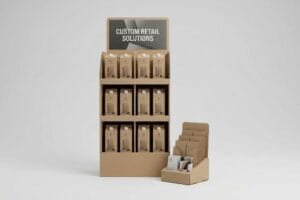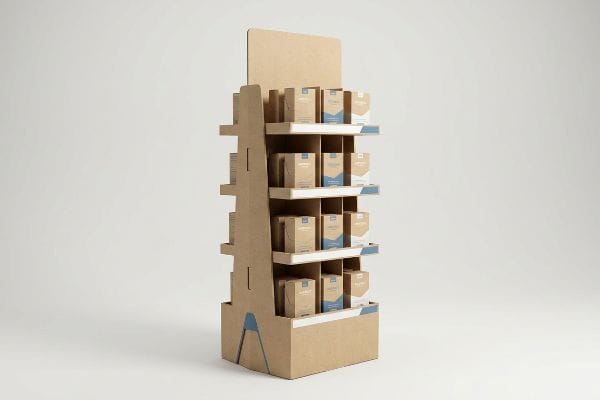
يُسهم التسويق البصري في سد الفجوة بين التصفح السلبي والشراء الفعلي. فإذا عروض الانتباه فورًا، سيصبح منتجك غير مرئي على الرفوف المزدحمة.
تشمل عناصر التصميم في التسويق البصري الاستخدام الاستراتيجي للألوان والإضاءة والتخطيط المكاني والهندسة الهيكلية لإبراز المنتجات. تعمل الترتيبات الفعالة على توجيه حركة المتسوقين، وتعظيم نقاط التركيز، وترجمة هوية العلامة التجارية إلى مساحات البيع بالتجزئة الفعلية، مما يضمن تفاعلاً أكبر ويحفز عمليات الشراء العفوية في المتجر.
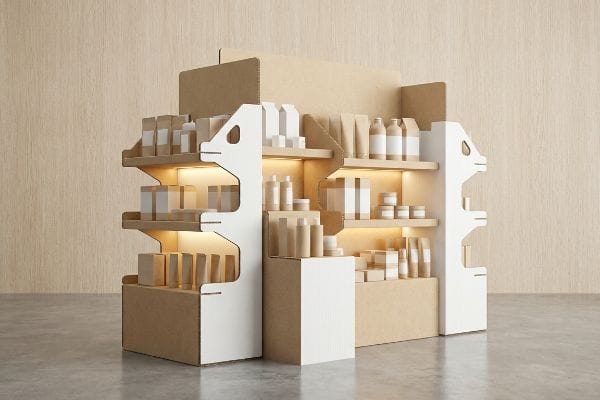
إن ترجمة هذه المبادئ الجمالية إلى هيكل مادي من الورق المقوى تتطلب هندسة دقيقة وفهمًا عميقًا لسلوك المتسوقين.
ما هي عناصر التسويق البصري؟
يعتمد كل عرض ناجح على الحدود المادية لتوجيه انتباه المتسوقين. يجب أن تفهم أين تقع عين الإنسان بشكل طبيعي قبل حتى أن تبدأ في رسم أي فكرة.
تشمل عناصر العرض المرئي للمنتجات التصميم المعماري، ونقاط التركيز، واللافتات، ومواقع عرض المنتجات. ويضمن تنظيم هذه العناصر حول منطقة التفاعل البشري القياسية بقاء المنتجات الرئيسية مرئية على الفور، مما يقلل من احتكاك المتسوقين ويزيد من احتمالية التفاعل التلقائي مع المنتجات في صالة البيع.
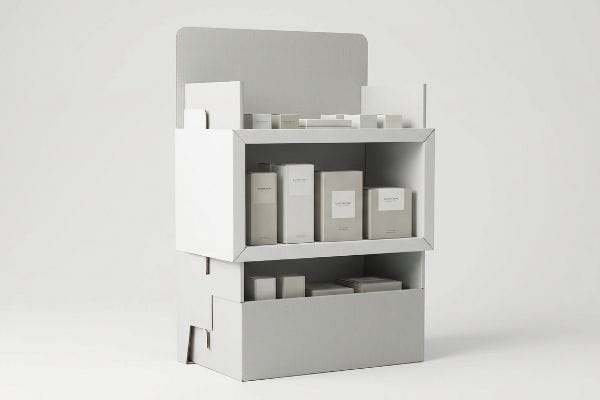
لكن فهم هذه المناطق المكانية على الشاشة يختلف تمامًا عن تنفيذها في ممر تجاري مزدحم.
الواقع الهيكلي لمنطقة "ضربة" المتسوق
تعتمد العديد من فرق العلامات التجارية في تصميم واجهات العرض على الجانب الجمالي فقط، حيث تركز على العناوين الرئيسية الضخمة لجذب الانتباه من جميع أنحاء المتجر. وغالبًا ما يضعون منتجاتهم الرئيسية ذات هامش الربح المرتفع في أي مكان يناسبها هندسيًا على لوحة التصميم ثنائية الأبعاد. يتجاهل هذا النهج تمامًا الجوانب المريحة للمستهلك أثناء المشي ودفع عربةالتسوق.
حتى مديرو التسويق المخضرمون غالبًا ما يتجاهلون القيود المادية لأرضية المتجر، ظنًا منهم أن المتسوقين سينحنيون أو يرفعون أيديهم للوصول إلى المنتج. أرى باستمرار تصاميمًا رائعة تُظهر المنتج الرئيسي مدفونًا في رف سفلي على ارتفاع 30.48 سم فقط عن الأرض. عندما تصل ألواح الكرتون الثقيلة إلى المتجر، يقوم البائع بتركيبها، لكن المتسوقين يمرون بجانبها دون أن يلاحظوها لأن المنتج يقع أسفل مستوى نظرهم الطبيعي. أحل هذه المشكلة بتطبيق "خريطة ارتفاع الإنسان" بدقة، بنقل الرفوف الرئيسية إلى الارتفاع الأمثل رأسيًا بين 127 و137.16 سمالتجاريةمن ركود الحملات التسويقية.
| أخطاء شائعة للمبتدئين | الحل الاحترافي | فوائد أرضية البيع بالتجزئة |
|---|---|---|
| وضع وحدات SKU الرئيسية بالقرب من الأرض | رفع العناصر الرئيسية إلى منطقة الضرب التي يتراوح طولها بين 50 و 54 بوصة3 | يزيد من عمليات الشراء الاندفاعية بنسبة تقدر بنحو 25%4 |
| الاعتماد فقط على العناوين الرئيسية | إنشاء نقاط تركيز بصرية متوسطة المستوى | يقلل من إجهاد رقبة المتسوق والاحتكاك |
| تباعد متساوٍ بين الرفوف | ارتفاعات متفاوتة بناءً على أولوية المنتج | يحفز حركة بيع السلع الفاخرة بشكل أكبر |
أولي دائماً الأولوية لارتفاعات الرفوف المريحة على حساب حجم المخزون. فإجبار المستهلك على الانحناء يضمن خسارة المبيعات، لذا أصمم المنتجات الأكثر ربحية في المكان الذي تستقر فيه اليد بشكل طبيعي، مما يسرّع عملية الشراء.
🛠️ مكتب هارفي: هل منتجاتك الأفضل مخفية عن غير قصد عن أنظار المتسوقين؟ 👉 احصل على تقييم مجاني لتصميم مكتبك المريح ↗ — وصول مباشر إلى مكتبي. أعدك بعدم تلقي أي رسائل تسويقية آلية مزعجة.
ما هي العناصر الأربعة الرئيسية في الآلة الافتراضية؟
يجب أن تعمل الركائز الأساسية للاستراتيجية البصرية - تصميم المتجر، والعروض، واللافتات، والإضاءة - معًا بتناغم. إذا فشل أحد هذه الركائز، فإن تجربة العلامة التجارية بأكملها ستنهار.
تتألف عناصر التسويق المرئي الرئيسية الأربعة من تصميم المتجر الداخلي، وعرض البضائع، والإضاءة المميزة، واللافتات الاستراتيجية. وتُحدد هذه العناصر مجتمعةً جماليات البيئة، وتُوجه حركة الزبائن بكفاءة، مع ضمان تميز منتجات معينة وسط الزحام البصري في متاجر التجزئة ذات الإقبال الكبير.
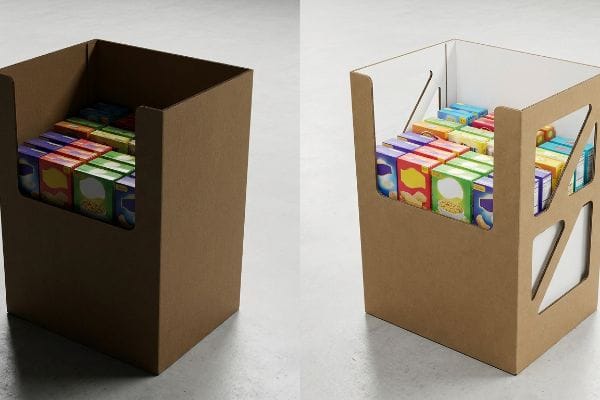
الإضاءة، على وجه الخصوص، هي المكان الذي غالباً ما تخلق فيه تصميمات العرض حسنة النية أسوأ أعدائها.
إزالة "منطقة الظل" في تصميم الرفوف
كثيراً ما يصمم مصممو الجرافيك وحدات رفوف عميقة ومغلقة لزيادة مساحة الطباعة على الألواح الجانبية. ويفترضون أن الإضاءة الفلورية القوية في المتاجر الكبيرة ستضيء الصواني الداخلية بسهولة. ولكن لسوء الحظ، تحجب الجدران الصلبة العميقة بطبيعتها الإضاءة الطبيعية العلوية،مما يحول مساحة عرض البضائع إلى كهف مظلم.
يسألني المشترون باستمرار عن سبب بهتان عبوات منتجاتهم الزاهية بعد وضعها في منصات العرض الأرضية الجديدة. والسبب هو أن الجدران الجانبية السميكة المصنوعة من الفولاذ المموج تحجب إضاءة المتجر العلويةممايُلقي بظلال كثيفة على البضائع. أتذكر أنني شاهدت مدير متجر يُحاول جاهدًا إمالة منصة عرض مغلقة للأمام لقراءة ملصقات المنتجات، مما أدى إلى احتكاك قاعدتها بالأرضية الخرسانية. الحل الأمثل هو التواصل مع المصنع وإلزامه باستخدام "نوافذ جانبية" أو تحديد بطانة داخلية بيضاء ساطعة.من خلال قص فجوات هندسية استراتيجية في الدعامات الهيكلية، أسمح للضوء المحيط بالمرور عبر المنصات، مما يُعيد فورًا الحيوية البصرية لمنتجاتك الاستهلاكية سريعة التداول دون الحاجة إلى تركيبات إضاءة LED باهظة الثمن.
| أخطاء شائعة للمبتدئين | الحل الاحترافي | فوائد أرضية البيع بالتجزئة |
|---|---|---|
| ألواح جانبية متينة وعميقة مموجة | نوافذ جانبية مقطوعة بالقالب لدخول الضوء | يزيل منطقة الظل الداكنة للمنتج8 |
| باستخدام ورق كرافت بني خام في الداخل | تحديد البطانات الداخلية البيضاء الساطعة | يعكس ضوء المتجر المحيط على المنتجات9 |
| تجاهل زوايا إضاءة المتجر | أرفف مائلة قليلاً للأعلى | يزيد من وضوح العلامة من مسافة بعيدة10 |
أرفض السماح للتصميمات الهيكلية الرديئة بإغراق منتجاتكم في الظلام. إن فتح الجوانب لا يقلل فقط من وزن المواد للشحن، بل يُغير تمامًا كيفية تفاعل إضاءة المتجر مع عبواتكم الأساسية.
🛠️ مكتب هارفي: هل تُلقي الألواح الجانبية الصلبة بظلالها على تصميم عبواتك الأغلى ثمناً؟ 👉 تحقق من زوايا إضاءة العرض ↗ — حمّل الملف بأمان. صندوق رسائلي مفتوح إذا كانت لديك أي أسئلة لاحقاً.
ما هي العناصر الأربعة الرئيسية في التسويق البصري التي تجذب العملاء وتحافظ عليهم؟
يتطلب جذب عربة تسوق عابرة والحفاظ على تركيز المتسوق مزيجًا من علم النفس والهندسة. لديك ثوانٍ معدودة فقط لكسر روتينه البصري.
تتمثل العناصر الأربعة التي تجذب العملاء في تباين الألوان، والأشكال الهندسية المبتكرة، والإضاءة الديناميكية، والرسائل التسويقية الواضحة. إن استخدام التصاميم المنحنية وغير التقليدية يكسر رتابة الممرات في المتاجر، مما يدفع المتسوقين إلى التوقف والتأمل في المنتجات، وبالتالي قضاء وقت أطول في التفاعل معها.
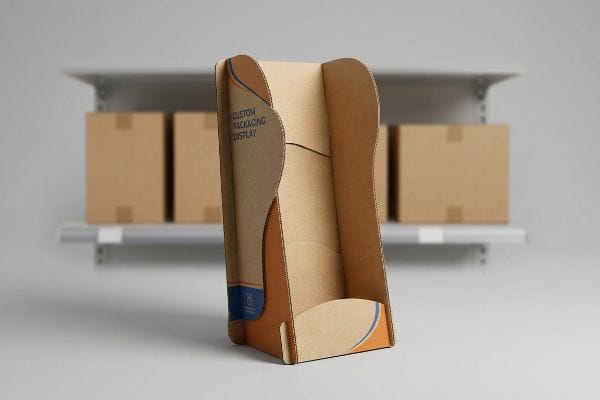
إن تحقيق هذا التغيير البصري يتطلب تجاوز المربع القياسي.
سيكولوجية "التشويش البصري" والشكل
تتميز شاشات العرض المستطيلة القياسية بانخفاض تكلفة تصنيعها، وسهولة تعبئتها، وسهولة تجاهلها. ولأن ممرات متاجر البقالة عبارة عن جدران لا نهاية لها من الخطوط المستقيمة والزوايا القائمة، فقد اعتاد المستهلكون لا شعوريًا على الشاشات المربعة البسيطة.نادرًا ما تُحدث بطاقة رأسية مسطحة بسيطة الاحتكاك اللازم لإيقاف عربة التسوق المتحركة.
تخيّل ممرًا في متجر كطريق سريع مزدحم؛ إذا كانت جميع اللوحات الإعلانية مربعة الشكل، ستتوقف عن النظر إليها، لكن شكلًا ثلاثي الأبعاد ضخمًا سيجذب انتباهك فورًا. حتى المتسوقون المتمرسون يقعون في فخ طلب صناديق مربعة الشكل تمامًا لتوفير بضعة دولارات على عملية القص. لقد رأيتُ بائعي المتاجر يحاولون لصق بطاقات رأسية مربعة رقيقة بشكل عمودي، ليسمعوا صوت ارتطام مكتوم عند سقوطها، مما يُفسد تمامًا التأثير المقصود. القاعدة الأساسية هنا هي إدخال منحنيات لكسر النمط الشبكي. من خلال دمج أشكال ناعمة مقطوعة بشكل انسيابي على الألواح الجانبية أو الرؤوس، أُقاطع فعليًا التصميم الخطي للمتجر. هذا النوع من علم نفس الشكل يُجبر العين البشرية على معالجة هذا التباين ، مما يُحسّن بشكل كبير من مدة بقاء المتسوقين.
| أخطاء شائعة للمبتدئين | الحل الاحترافي | فوائد أرضية البيع بالتجزئة |
|---|---|---|
| رؤوس مستطيلة قياسية | باستخدام أشكال منحنية مقطوعة حسب الطلب13 | يكسر الرتابة البصرية في الممر |
| لوحات رسومية مسطحة ثنائية الأبعاد | إضافة عناصر مموجة ثلاثية الأبعاد متعددة الطبقات14 | يخلق عمقًا يجذب انتباه المتسوق |
| يندمج مع رفوف المتاجر | استخدام ألوان موضعية عالية التباين15 | يُحدث تشويشًا بصريًا فوريًا |
أصمم شاشات عرض تجذب الأنظار، لا أن تندمج مع الخلفية. إن إدخال منحنيات غير متوقعة في التصميم الهيكلي هو أسرع طريقة لجذب انتباه المستهلك المشتت وإخراجه من روتينه اليومي وتوجيهه مباشرة نحو منتجاتك.
🛠️ مكتب هارفي: هل عرض منتجاتك الحالي مجرد صندوق مستطيل غير مرئي على الأرض؟ 👉 اطلب تحليلًا مخصصًا للشكل ↗ — لا توجد استمارات تُسبب مكالمات مبيعات لا تنتهي. قيمة حقيقية فقط.
ما هي مبادئ التسويق الخمسة؟
إتقان اختيار البضائع المناسبة، في المكان والزمان والكميات والسعر المناسبين، هو أساس الخدمات اللوجستية في قطاع التجزئة. والمرونة هي أفضل ما تملكه.
تتضمن مبادئ التسويق الخمسة تقديم البضائع المناسبة، في المكان المناسب، والوقت المناسب، وبالكميات المناسبة، وبالسعر المناسب. وفي تصميم العرض المادي، يتطلب ذلك بنية هيكلية قابلة للتعديل، مما يسمح لتجار التجزئة بتعديل حجم المخزون ومواقع عرضه بسلاسة دون الحاجة إلى تجهيزات كرتونية جديدة بالكامل.

غالباً ما يعني توفير الكميات المناسبة أن عرضك الإعلاني يحتاج إلى التغيير مع تطور الحملة.
استراتيجية "التقسيم المعياري" للمخزون الديناميكي
كثيراً ما تطلب العلامات التجارية منصات عرض أرضية مُعبأة مسبقاً، مزودة بأقسام ثابتة مُلصقة،مصممة خصيصاً لإطلاق منتج واحد محدد. ولكن، عندما تتغير العروض الترويجية أو عندما تطلب سلاسل البيع بالتجزئة المختلفة تشكيلات منتجات فريدة، تصبح هذه المنصات الجامدة غير عملية. ويؤدي عدم القدرة على تعديل مساحة الرفوف الداخلية إلى صناديق نصف فارغة أو إهدار كامل لعمليات الإنتاج.
تفترض العديد من فرق المشتريات أن الصواني الثابتة والملصقة هي الطريقة الوحيدة لتحقيق أقصى سعة وزن. أرى بانتظام علامات تجارية في حالة ذعر عندما يطلب أحد تجار التجزئة فجأة تشكيلة نكهات مختلفة، مما يتركهم مع صناديق لا تتسع فعليًا للزجاجات الجديدة. لقد شعرتُ بالمقاومة الشديدة لمحاولة إدخال كرتونة كبيرة الحجم في فتحة ثابتة، مما يؤدي إلى تمزق الطبقة العلوية المغلفة بالطباعة الحجرية. الحل البسيط يكمن في تحديد نظام فواصل "عائمة" أو معيارية. من خلال تصميم فواصل مموجة متشابكة وغير ملصقة تنزلق في فتحات عالمية،أسمح لفريق التوزيع بتعديل عرض الخلايا بسهولة. هذه المرونة تحمي استثمارك تمامًا، مما يتيح لك الحصول على الكميات المناسبة لأي تصميم متجر.
| أخطاء شائعة للمبتدئين | الحل الاحترافي | فوائد أرضية البيع بالتجزئة |
|---|---|---|
| حجيرات داخلية ملصقة بشكل دائم | تنفيذ فواصل معيارية عائمة18 | يتكيف فوراً مع أحجام وحدات التخزين الجديدة |
| الإفراط في إنتاج الصواني الصلبة ذات الاستخدام الواحد | توحيد غلاف خارجي عالمي19 | يقلل من هدر المخزون في جميع الحملات |
| فرض أحجام مختلطة في فتحات ثابتة | استخدام فواصل مموجة قابلة للتعديل20 | يمنع تمزق العبوة أثناء إعادة التخزين |
أصمم حلولاً عملية تراعي الواقع، حيث تتغير تشكيلات المنتجات في متاجر التجزئة في اللحظات الأخيرة. تمنح الفواصل المعيارية فريق الخدمات اللوجستية لديك القدرة على تعديل كثافة المخزون دون الحاجة إلى إعادة تجهيز أو طباعة الهيكل الرئيسي بالكامل.
🛠️ مكتب هارفي: هل تُعيقك الصواني الصلبة المُلصقة عن إجراء تغييرات في تشكيلة منتجاتك في اللحظات الأخيرة؟ 👉 احصل على تقييم هيكلي معياري ↗ — وصول مباشر إلى مكتبي. أعدك بعدم تلقي أي رسائل تسويقية آلية مزعجة.
كيف تصممون عروض المنتجات المرئية؟
إن الانتقال من الفكرة الرقمية إلى منصة عرض هو نقطة ضعف معظم خطط التسويق. فالرسومات الجميلة لا قيمة لها إن لم تكن الهندسة سليمة أثناء التجميع.
يتضمن تصميم العرض المرئي للمنتجات ترجمة جماليات العلامة التجارية إلى هندسة هيكلية دقيقة. ويتطلب ذلك معايرة قوالب الأعمال الفنية ثنائية الأبعاد بسماكات المواد الدقيقة، وتطبيق بدلات الانحناء الصحيحة للألواح المموجة، وضمان قدرة العرض المادي على تحمل الأحمال الديناميكية مع عكسه التام للغرض التصميمي الرقمي.
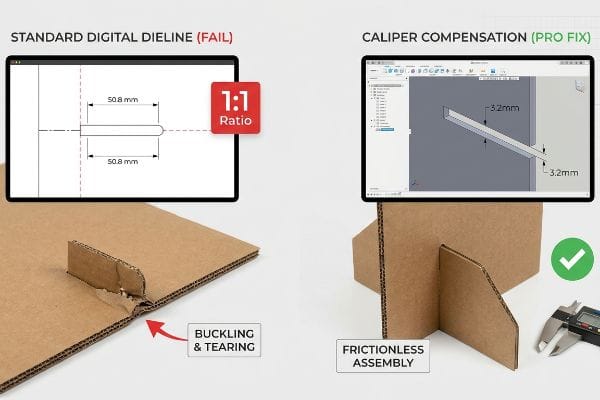
لكن معرفة النظرية لا تكفي عندما تبدأ الآلات بالعمل وتبدأ المواد الخام بالانطواء.
لماذا تفشل قوالب القطع الرقمية القياسية في أرضية المصنع؟
كثيراً ما تصمم فرق التصميم الجرافيكي ألسنة متشابكة وفتحات قابلة للطي باستخدام برامج الرسومات المتجهة الأساسية، بنفس عرض اللوحة المقابلة تماماً. يفترضون أنه إذا كان عرض اللسان 50.8 مم (بوصتين) على الشاشة الرقمية، فيجب أن يكون عرض الفتحة المقابلة له 50.8 مم (بوصتين) أيضاً. تتجاهل هذه العقلية ثنائية الأبعاد تماماً المساحة الفعلية التي يشغلها الورق المقوى السميك عند ثنيه بزاوية 90درجة.
في منشأتي، ألاحظ بشكل متكرر فشل عمليات طباعة عالية الجودة على خط التعبئة والتغليف المشترك بسبب هذه النقطة العمياء تحديدًا. فعندما يُرسل العميل ملفًا مسطحًا لشاشة عرض من نوع B-flute، ينسى أن سمك المادة يبلغ حوالي 3 مم (0.12 بوصة).وعندما أقيس النماذج الأولية المطوية، فإن إدخال هذه اللوحة بسمك 3 مم في فتحة غير مُعايرة يُسبب احتكاكًا هائلاً، مما يؤدي إلى انبعاج جدار الدعم الرئيسي وتمزق السطح المطبوع. ولحل هذه المشكلة، أستخدم بدقة برنامج التصميم بمساعدة الحاسوب (CAD) البارامتري لتطبيق خوارزميات "تعويض السمك"، مما يُوسع فتحات خط القالب بتفاوتات دقيقة جدًا لمراعاة نصف قطر الانحناء الخارجي. ومن خلال تطبيق هذا التعديل على الخلوص بمقدار 3.2 مم، أضمن انخفاض وقت تجميع التعبئة والتغليف المشترك بحوالي 45 ثانية لكل وحدة، مما يمنع تمامًا حدوث أي اختناقات ويوفر على العملاء آلاف الدولارات من تكاليف العمالة اليدوية.
| أخطاء شائعة للمبتدئين | الحل الاحترافي | فوائد أرضية البيع بالتجزئة |
|---|---|---|
| رسم نسب 1:1 بين اللسان والفتحة | تطبيق تعويض دقيق للفرجار23 | يضمن إدخال اللسان بسلاسة تامة |
| مع تجاهل سمك المادة المموجة | إضافة حسابات محددة لبدل الانحناء24 | يمنع الانبعاج والتمزق الهيكلي |
| باستخدام برنامج متجه ثنائي الأبعاد مسطح | الهندسة باستخدام برامج التصميم بمساعدة الحاسوب ثلاثية الأبعاد البارامترية25 | يقلل وقت التجميع اليدوي بشكل كبير |
أرفض السماح للحسابات الرقمية الخاطئة بإفساد عملية طرح ضخمة للمنتجات. إن هندسة مقدار الانحناء الدقيق مباشرةً في قالب القطع تضمن تجميع كل وحدة معبأة مسبقًا بسهولة تامة، واستقرارها بشكل مثالي تحت الأحمال الثقيلة.
🛠️ مكتب هارفي: لا تدع عيبًا هيكليًا بحجم 2 مليمتر يُفسد إطلاقًا ضخمًا لـ 500 متجر. 👉 أرسل لي ملف تصميم القالب ↗ — سأُجري اختبارات دقيقة للحسابات قبل أن تُهدر ميزانيتك على الإنتاج الضخم.
خاتمة
يمكنك اختيار عدم إجراء الحسابات الهيكلية، ولكن عند تمزق ألسنة الثني غير المعوضة أثناء التعبئة المشتركة، سيؤدي الاحتكاك الهائل إلى إبطاء خط التجميع بنسبة 30% تقريبًا، مما يتسبب في تأخيرات كبيرة لدى تجار التجزئة. هذه هي ورقة المواصفات الدقيقة التي يستخدمها أفضل 10 عملاء تجزئة لديّ لضمان عدم رفض أي منتج. توقف عن الاعتماد على القوالب الرقمية، ودعني أراجع شخصيًا بدلات الثني الخاصة بك بدقة من خلال مراجعة ما قبل الطباعة المجانية ↗ لاكتشاف الأخطاء الهندسية الجسيمة قبل وصولها إلى طاولة القطع.
[ملف PDF] إرشادات لمحلات البقالة بالتجزئة - بيئة العمل المريحة لـ... - إدارة السلامة والصحة المهنية (OSHA)، https://www.osha.gov/sites/default/files/publications/OSHA3192.pdf. [توفر معايير تصميم متاجر التجزئة المعتمدة بيانات محددة حول خطوط الرؤية ومدى وصول المتسوقين الذين يستخدمون عربات التسوق لتحديد المنطقة المثلى لوضع المنتجات]. دور الدليل: مواصفات فنية؛ نوع المصدر: دليل صناعي أو دراسة بيئة عمل مريحة. يدعم: ضرورة ربط تصميم عرض المنتجات بالأبعاد البشرية المادية. ملاحظة النطاق: يقتصر على بيئات متاجر التجزئة التقليدية. ↩
"لماذا يضع تجار التجزئة المنتجات على مستوى النظر؟ - PopDisplay"، https://popdisplay.me/why-do-retailers-place-products-at-eye-level/. [يُمكن لمصدر موثوق في تصميم متاجر التجزئة أو هندسة العوامل البشرية أن يُقدّم بيانات حول متوسط مستوى نظر البالغين و"منطقة الرؤية المثلى" لتحقيق أقصى قدر من الوضوح. دور الدليل: التحقق الفني؛ نوع المصدر: دليل تصميم متاجر التجزئة أو دراسة بيئة العمل. يدعم: النطاق الرأسي المحدد للتفاعل الأمثل مع المنتج. ملاحظة: قد تختلف الارتفاعات المثلى باختلاف الفئة المستهدفة.] ↩
"تصميم متاجر التجزئة لعرض المنتجات بشكل فعّال وتسهيل حركة العملاء"، https://www.business.qld.gov.au/industries/manufacturing-retail/retail-wholesale/retail-displays. [يمكن لدراسة هندسة العوامل البشرية في القطاع أو دليل تصميم متاجر التجزئة تأكيد نطاق الارتفاع القياسي لخط نظر المتسوق الرئيسي]. دور الدليل: المواصفات الفنية؛ نوع المصدر: دليل قطاع التجزئة. يدعم: الوضع الرأسي الأمثل للمنتجات الرئيسية. ملاحظة: قد تختلف القياسات قليلاً بناءً على متوسطات الطول الديموغرافية الإقليمية. ↩
[ملف PDF] تحليل تأثير وضع المنتج على مستوى النظر على المبيعات - ijrpr، https://ijrpr.com/uploads/V6ISSUE4/IJRPR43345.pdf. [ستوفر دراسة تحويل كمية في قطاع التجزئة بيانات تجريبية تدعم النسبة المئوية للزيادة في المبيعات عند نقل المنتجات إلى منطقة العرض الأمثل]. دور الدليل: مقياس إحصائي؛ نوع المصدر: تقرير بحث تسويقي. يدعم: الفائدة المالية لوضع المنتج الأمثل. ملاحظة: قد تختلف النسبة المئوية المقدرة حسب فئة المنتج. ↩
"أفضل طريقة لتخطيط إضاءة المتاجر (وداعًا للظلال) - يوتيوب"، https://www.youtube.com/watch?v=9pXSo5g1bKY. [يؤكد مصدر موثوق في تصميم إضاءة متاجر التجزئة أو الفيزياء المعمارية أن الأسطح الرأسية العميقة والمعتمة تعيق توزيع الضوء من مصادر الإضاءة العلوية، مما يخلق مناطق مظللة]. دور الدليل: دعم واقعي؛ نوع المصدر: دليل تصميم متاجر التجزئة. يدعم: وجود "منطقة الظل" في الرفوف العميقة. ملاحظة النطاق: خاص بإضاءة الفلورسنت أو شبكة LED العلوية. ↩
"كيفية تصميم عروض ترويجية فعّالة من الكرتون المضلّع - بلينغ باكيدجينغ"، https://blingblingpackaging.com/blog/how-to-design-effective-corrugated-pop-display/. [تؤكد معايير هندسة التغليف كيف يُسهم سُمك الكرتون المضلّع من نوع C في حجب الضوء في عروض البيع بالتجزئة ذات الرفوف العميقة]. دور الدليل: المواصفات الفنية؛ نوع المصدر: دليل صناعة التغليف. يدعم: السبب المادي لـ "منطقة الظل" في منصات العرض الترويجية. ملاحظة النطاق: يتعلق تحديدًا بسُمك مادة الكرتون المضلّع. ↩
"اعتبارات أساسية في تصميم عرض نقاط البيع - بلينغ باكيدجينغ"، https://blingblingpackaging.com/about-us/key-considerations-in-designing-your-pop-display/. [توصي أدلة تصميم العرض المرئي باستخدام بطانات عالية الانعكاس وفتحات هيكلية لتحسين توزيع الإضاءة المحيطة في العروض غير المضاءة]. دور الدليل: أفضل الممارسات؛ نوع المصدر: دليل تصميم متاجر التجزئة. يدعم: حلول هيكلية لتحسين رؤية المنتج. ملاحظة النطاق: ينطبق على عروض الأرضيات غير الإلكترونية. ↩
"صناديق عرض نوافذ مقطوعة بالقالب ومطبوعة حسب الطلب - رواد التغليف"، https://packagingleaders.com/product/custom-printed-die-cut-window-display-boxes/. [تُظهر معايير الصناعة لتصميم عبوات البيع بالتجزئة كيف تُزيد الفتحات الجانبية من نفاذية الضوء لتقليل تظليل المنتجات]. دور الدليل: التحقق الفني؛ نوع المصدر: دليل تصميم البيع بالتجزئة. يدعم: فعالية قطع النوافذ الجانبية بالقالب. ملاحظة النطاق: يتعلق تحديدًا بأرفف الكرتون المموجة العميقة. ↩
"الورق الأساسي المموج: شرح البطانة والتموجات"، https://www.dunapack-packaging.com/company/news-and-blog/detail-view/types-of-containerboard-what-you-should-know-about-liners-and-flutings/. [تشير بيانات علم المواد المتعلقة بقيم انعكاس الضوء (LRV) إلى أن البطانات البيضاء الساطعة تزيد بشكل ملحوظ من انعكاس الضوء المحيط مقارنةً بورق الكرافت البني]. دور الدليل: التحقق من الخصائص الفيزيائية؛ نوع المصدر: دليل مواصفات المواد. يدعم: فائدة البطانات الداخلية البيضاء. ملاحظة النطاق: بناءً على خصائص انعكاس السطح. ↩
"تعزيز جاذبية المنتجات على الرفوف: استراتيجيات لعرض ملصقات المنتجات بشكل مميز"، https://mammothpackaging.com/maximizing-label-shelf-appeal/. [تشير الدراسات المريحة حول خطوط الرؤية في متاجر البيع بالتجزئة إلى أن الميل الطفيف للرفوف لأعلى يُحسّن زاوية رؤية الملصقات من مسافة بعيدة]. دور الدليل: التحقق من صحة التصميم المريح؛ نوع المصدر: كتاب في مجال عرض المنتجات. يدعم: فائدة الرفوف المائلة. ملاحظة: تختلف الفعالية بناءً على متوسط طول العميل وموقع الرف. ↩
دراسة فيزيولوجية عصبية لردود فعل المستهلكين العاطفية في ... – PMC، https://pmc.ncbi.nlm.nih.gov/articles/PMC12592159/. [ستُظهر دراسة حول التكيف الحسي أو التعود في بيئات البيع بالتجزئة كيف تؤدي الأنماط الهندسية المتكررة إلى انخفاض الانتباه الإدراكي]. دور الدليل: دعم واقعي؛ نوع المصدر: مجلة أكاديمية في علم النفس. يدعم: ادعاء العمى اللاواعي عن الأشكال القياسية في متاجر البيع بالتجزئة. ملاحظة النطاق: خاص بتصميمات متاجر البيع بالتجزئة الخطية عالية الكثافة. ↩
"فهم الإدراك البصري للمستهلكين داخل المتاجر: التأثير..."، https://www.academia.edu/16724679/Understanding_consumers_in_store_visual_perception_The_influence_of_package_design_features_on_visual_attention. [تُظهر الأبحاث في علم النفس المعرفي والبروز البصري أن الأشكال غير المألوفة تُعطّل التعرف على الأنماط لتحفيز جذب الانتباه التلقائي]. دور الدليل: التحقق التقني؛ نوع المصدر: مجلة مُحكّمة. يدعم: الادعاء بأن الأشكال غير المألوفة تزيد من التفاعل البصري. ملاحظة: تختلف الفعالية بناءً على درجة التباين مع البيئة المحيطة. ↩
"علم النفس وراء عروض البيع بالتجزئة"، https://www.theglobaldisplaysolution.com/blog/the-psychology-behind-retail-displays/?srsltid=AfmBOorAFALhhJcO2kwadczwZX7a_Kw8hC3EKYBeoJErZE_H3DVqljMg. [تشرح مصادر موثوقة في علم النفس البصري كيف تُخلّ الأشكال العضوية أو غير المنتظمة بالأنماط الخطية لجذب الانتباه]. دور الدليل: مبدأ داعم؛ نوع المصدر: دليل تصميم متاجر التجزئة. يدعم: الادعاء بأن الأشكال غير المستطيلة تكسر الرتابة البصرية. ملاحظة: يختلف التأثير باختلاف كثافة الممرات. ↩
"تأثير تجربة التسوق الإلكتروني بتقنية الواقع المعزز على العملاء... - PMC"، https://pmc.ncbi.nlm.nih.gov/articles/PMC11346642/. [أظهرت الأبحاث في علم النفس البيئي أن الشاشات ثلاثية الأبعاد تزيد من جاذبية المنتج ووقت بقاء المتسوقين مقارنةً بالرسومات ثنائية الأبعاد]. دور الدليل: التحقق التقني؛ نوع المصدر: دراسة تسويقية. يدعم: الادعاء بأن العناصر ثلاثية الأبعاد تخلق عمقًا لجذب الانتباه. ملاحظة النطاق: ينطبق تحديدًا على شاشات نقاط البيع. ↩
"كيف يؤثر تباين سطوع المنتج مع البيئة على المنتج..."، https://www.sciencedirect.com/science/article/abs/pii/S0022435917300295. [تُظهر الدراسات في نظرية الألوان والانتباه البصري أن الألوان عالية التباين تُحفز حركات العين السريعة الفورية، مما يُحدث اضطرابًا بصريًا]. نوع الدليل: برهان علمي؛ نوع المصدر: ورقة بحثية في علم النفس المعرفي. يدعم: استخدام ألوان محددة لإحداث اضطراب فوري. ملاحظة: تعتمد الفعالية على لوحة ألوان المتجر المحيطة. ↩
"قائمة الكلمات الأبجدية لصناعة منصات العرض المخصصة"، https://www.solid-displays.com/alphabetical-word-list-of-the-custom-display-stand-industry/. [سيؤكد تقرير صناعي حول تصنيع منصات العرض في متاجر التجزئة مدى انتشار منصات العرض ذات الأقسام الثابتة لإطلاق منتجات محددة]. دور الدليل: التحقق من الحقائق؛ نوع المصدر: منشور تجاري صناعي. يدعم: معايير الصناعة الحالية لتجهيزات الترويج. ملاحظة النطاق: خاص بشاشات العرض الكرتونية المؤقتة أو شاشات نقاط البيع. ↩
"صناديق عرض مخصصة مع فواصل لمنتجات البيع بالتجزئة - Print247"، https://print247.us/display-boxes-with-divider?srsltid=AfmBOoq3VWlJB9ECPfvqun1mQA_4Jp5YdCrj0tikCx_DARoSR0WG1M-G. [تشرح الوثائق الفنية المتعلقة بتصميم عبوات الكرتون المموج كيف تُمكّن الفواصل المتشابكة غير المُلصقة من تعديل عرض الخلايا لاستيعاب أبعاد المنتجات المختلفة]. دور الدليل: مواصفات فنية؛ نوع المصدر: ورقة عمل صناعية. يدعم: وظائف أنظمة الفواصل المعيارية. ملاحظة النطاق: ينطبق تحديدًا على شاشات عرض نقاط البيع المصنوعة من الكرتون المموج. ↩
"كيف تُقلل العبوات المعيارية من ازدحام وحدات التخزين - مجموعة VPK"، https://vpkgroup.com/da/news/vpk-uki—modular-packaging-reduces-sku-overload. [يُمكن لمعيار صناعي في مجال الخدمات اللوجستية للبيع بالتجزئة أن يُوضح كيف تُتيح الفواصل المعيارية التكيف السريع مع أبعاد وحدات التخزين المختلفة]. دور الدليل: التحقق الفني؛ نوع المصدر: دليل الخدمات اللوجستية للبيع بالتجزئة. يدعم: التكيف مع أحجام وحدات التخزين الجديدة. ملاحظة النطاق: يركز على مرونة الحجيرات الداخلية. ↩
"كيف يؤثر اختيار عبوات البيع بالتجزئة على إدارة المخزون"، https://packagingrevolution.net/retail-packaging-selection-impact-inventory-management/. [تُظهر الأبحاث في إدارة سلاسل التوريد المستدامة أن الأغلفة الخارجية الموحدة تُقلل من إنتاج الصواني ذات الاستخدام الواحد وما يترتب عليها من نفايات]. دور الدليل: دعم واقعي؛ نوع المصدر: تقرير استدامة سلسلة التوريد. يدعم: تقليل نفايات المخزون. ملاحظة النطاق: يقتصر على دورات حملات متعددة. ↩
"فواصل الصناديق | فواصل التغليف - سمورفيت ويستروك"، https://www.smurfitwestrock.com/products/packaging/protective/box-partitions. [تؤكد إرشادات هندسة التغليف أن الفواصل الكرتونية المموجة القابلة للتعديل تُخفف الضغط على عبوات المنتجات أثناء إعادة التخزين لمنع التمزق]. دور الدليل: المواصفات الفنية؛ نوع المصدر: دليل تصميم التغليف. يدعم: منع تمزق التغليف. ملاحظة النطاق: خاص بالمواد الكرتونية المموجة. ↩
"صلابة انحناء الورق المقوى ذي البنية الخلوية - PMC - NIH"، https://pmc.ncbi.nlm.nih.gov/articles/PMC9821995/. [يشرح دليل هندسي لتصميم التغليف كيف يُنشئ سُمك المادة نصف قطر انحناء يستهلك مساحة مادية، مما يتطلب هوامش خطأ في ألسنة التعشيق]. دور الدليل: التحقق الفني؛ نوع المصدر: دليل صناعي. يدعم: ضرورة حساب هوامش الانحناء لتجنب فشل التجميع. ملاحظة النطاق: ينطبق تحديدًا على الورق المقوى المموج والسميك. ↩
"الكرتون المموج ودرجات المواد - التمويج - استراتيجيات التغليف"، https://www.packagingstrategies.com/articles/96269-corrugated-board-and-material-grades. [تؤكد معايير الصناعة لمواصفات الكرتون المموج السماكة الاسمية لمادة التمويج من النوع B]. دور الدليل: المواصفات الفنية؛ نوع المصدر: معيار التصنيع. يدعم: دقة ادعاء سماكة المادة. ملاحظة: قد تختلف السماكة الفعلية قليلاً حسب الشركة المصنعة. ↩
«أهم النصائح لتصميم ألسنة وفتحات تجميع أجزاء الصفائح المعدنية»، https://www.youtube.com/watch?v=DHcrX_ZnByA. [يشرح دليل هندسة صناعية خاص بالتغليف كيفية ضمان دقة التركيب والتفاوتات في تجميع الألسنة والفتحات، وذلك من خلال مراعاة سُمك المادة]. دور الدليل: التحقق الفني؛ نوع المصدر: دليل هندسة صناعية. يدعم: دقة إدخال الألسنة. ملاحظة النطاق: ينطبق تحديدًا على مواد الكرتون المموج. ↩
"التحليل التحليلي لصلابة الانحناء لخمس طبقات..."، https://pmc.ncbi.nlm.nih.gov/articles/PMC8777652/. [توفر وثائق علم المواد الخاصة بالتغليف المموج صيغًا لحساب بدل الانحناء لمنع تلف المادة عند الطي]. دور الدليل: التحقق الفني؛ نوع المصدر: كتاب مدرسي في علم التغليف. يدعم: منع التواء وتمزق الكرتون. ملاحظة النطاق: يقتصر على الهياكل المموجة القابلة للطي. ↩
"5 أدوات CAD مجانية لتصميم أي مشروع - يوتيوب"، https://www.youtube.com/watch?v=b1hDx3aCssU. [تُظهر الدراسات المقارنة في التصميم الصناعي أن النمذجة البارامترية تُقلل من أخطاء النماذج الأولية ووقت التجميع اليدوي اللاحق مقارنةً بالنماذج ثنائية الأبعاد]. نوع الدليل: دليل تجريبي؛ نوع المصدر: ورقة بيضاء لبرنامج تصميم. يدعم: تقليل وقت التجميع. ملاحظة النطاق: يشير إلى التصاميم الهيكلية المادية المعقدة. ↩