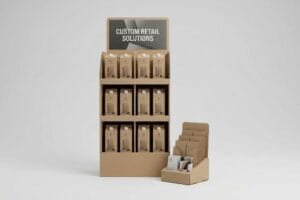
كثيراً ما تنفق العلامات التجارية آلاف الدولارات على تصميمات جذابة، لتجد في النهاية أن عروضها في المتاجر تختفي تماماً. إن دمج البيانات المعلوماتية مع المحفزات العاطفية هو سلاح التسويق الأمثل.
يُحدد تصميم شاشات العرض في نقاط البيع، الذي يجمع بين المعلومات والتأثير العاطفي، معدل تحويل العملاء إلى مشترين عفويين. توفر العناصر المعلوماتية بيانات منطقية عن الأسعار والاستخدام، بينما يستخدم التصميم العاطفي أشكالًا مقطوعة ورسومات نابضة بالحياة لتحفيز سلوك الشراء النفسي في ممرات المتاجر المزدحمة.
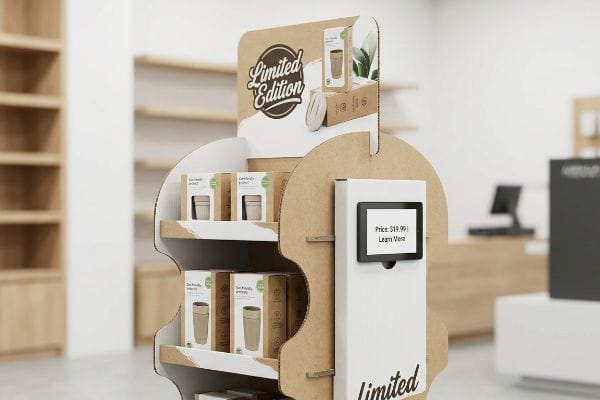
إن إتقان هذا التوازن النفسي ليس مجرد نظرية، بل هو الذي يحدد ما إذا كانت حملتك ستنجو بالفعل من الواقع القاسي لبيئات البيع بالتجزئة الكبيرة.
ما هي الأنواع المختلفة لشاشات العرض في نقاط البيع؟
عند تجولك في متاجر البيع بالجملة، سترى كل شيء من أرفف العرض الضخمة إلى صناديق الدفع الصغيرة. معرفة الفرق بينهما يحدد تكلفة الشحن.
تشمل أنواع شاشات العرض المختلفة وحدات عرض أرضية، ووحدات عرض على الطاولات، ووحدات عرض طرفية، ووحدات عرض على منصات التحميل. يعتمد اختيار النوع الهيكلي المناسب كلياً على منطقة البيع بالتجزئة المستهدفة، ومساحة الأرضية المتاحة، وقدرة التحميل الديناميكي المطلوبة لحمل المنتج بأمان.

إن مجرد اختيار نوع عرض من كتالوج عام يُعد لعبة خطيرة عند تجاهل قيود المتجر المادي.
مطرقة الخدمات اللوجستية للمنصات الجزئية
عندما أراجع مخططات العملاء، ألاحظ باستمرار أن فرق المشتريات تطلب مساحات عرض أرضية ضخمة تبلغ 48 ×40 بوصة (1219×1016 مم) لإطلاق المنتجات الجديدة. يفترضون أن مشتري التجزئة سيتنازلون بكل سرور عن مساحات العرض المميزة. تتجاهل هذه الاستراتيجية النظرية "للتوسع الكبير" تمامًا القيود الصارمة على المساحات التي يفرضها مديرو المتاجر.
في منشأتي، أرى باستمرار رفض هذه التصاميم الضخمة رفضًا قاطعًا لأنها تستحوذ على قاعدة خشبية كاملة. بدلًا من التنافس على منصات نقالة كاملة، أقوم بتقسيم المساحة حسابيًا إلى نصف منصات نقالة (1219×508 مم) وربع منصات نقالة (609×508 مم) . من خلال تمرير هذه الأشكال المصغرة عبر طاولة القطع CNC (التحكم الرقمي بالحاسوب) من كونغسبيرغ، أضمن ثبات الهيكل ، مع إثبات إمكانية استخدام حملتين ترويجيتين مختلفتين على منصة نقالة واحدة تابعة لجمعية مصنعي البقالة (GMA). يضمن هذا التصميم الهيكلي الجديد للمشتري في متاجر التجزئة تحقيق أقصى استفادة من مساحة العرض، مما يقلل وقت تجميع التعبئة والتغليف بنسبة 20% تقريبًا، ويقضي تمامًا على مخاطر رفض المنتجات المكلفة على مستوى المتاجر.
| الميزة/المقياس | النهج العام | الواقع المُهندس |
|---|---|---|
| البصمة التجارية | قاعدة كبيرة الحجم 48×404 | شبكة جزئية 24×205 |
| موافقة المشتري | رفض عالي الخطورة | مكان مضمون |
| عمالة التعبئة والتغليف المشتركة | إعداد بطيء وغير سلس | تجميع أسرع بنسبة 20%6 |
أرفض تصميم عرض لا يرغب تجار التجزئة في وضعه فعلياً في متاجرهم. من خلال تقليص المساحة المطلوبة حسابياً، أضمن لكم الحصول على أفضل مساحة عرض ممكنة.
🛠️ مكتب هارفي: هل يتم رفض تصاميم أرضياتك الضخمة من قبل مديري المتاجر حتى قبل بدء الحملة؟ 👉 احصل على تدقيق مجاني لكثافة المساحة ↗ — أقوم بمراجعة كل ملف هيكلي شخصيًا خلال 24 ساعة.
ما الفرق بين شاشات نقاط البيع وشاشات نقاط البيع؟
تستخدم العديد من فرق التصميم مصطلحي POS وPOP بشكل متبادل. وقد يؤدي هذا الخطأ في المصطلحات إلى مخالفات جسيمة للوائح التنظيمية.
يكمن الفرق بين شاشات نقاط البيع (POS) وشاشات نقاط البيع (POP) في موقعها الفعلي في المتجر ومدى توافقها مع المعايير الهيكلية. توضع وحدات نقاط البيع عند صناديق الدفع، مما يستلزم الالتزام بقانون الأمريكيين ذوي الإعاقة (ADA) فيما يتعلق بإمكانية الوصول الأمامي، بينما توضع وحدات نقاط البيع في الممرات العامة، ملتزمةً بمعايير حمولة المنصات الثقيلة.
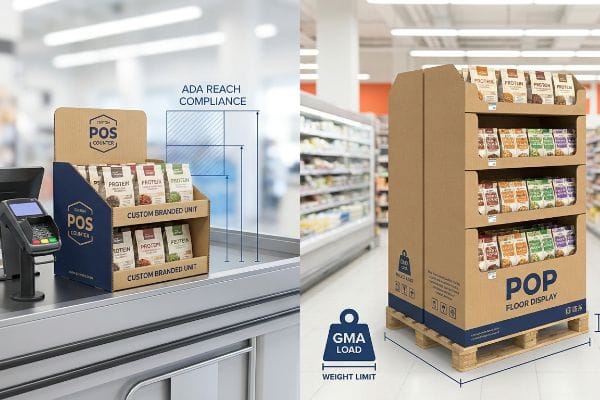
إن فهم هذا الاختلاف لا يقتصر على المصطلحات التسويقية فحسب؛ بل إنه يغير بشكل جذري فيزياء التغليف الخاص بك.
القيود المكانية لقانون الأمريكيين ذوي الإعاقة مقابل قانون إدارة الموارد البشرية
على المستوى الهندسي الأساسي، تعمل وحدات العرض الأرضية ووحدات نقاط البيع ضمن أطر قانونية وجاذبية مختلفة تمامًا. فوحدة عرض المنتجات الأرضية في نقاط البيع مُثبّتة بإحكام في لوجستيات المستودع، ما يعني أنها يجب أن تتحمل ضغطًا علويًا ديناميكيًا يزيد عن 1133 كيلوغرامًا (2500 رطل) عبر منصة خشبية . في المقابل، تتعرض وحدة نقاط البيع لتفاعل بشري مستمر، ما يتطلب ثباتًا مريحًا فوريًا بدلًا من قوة الضغط الرأسي الخام
عند توسيع نطاق تصميم ما ليشمل بيئة بيع بالتجزئة، لا يمكن ببساطة تقليص الأبعاد الهيكلية بنسبة 50% للانتقال من الممر إلى منطقة الدفع. يجب أن يتكامل ملف نقاط البيع الأرضية بسلاسة مع حدود محيط GMA البالغة 48×40 بوصة (1219×1016 مم)8 لضمان تحمله أثناء نقله في حاويات مزدوجة. في الوقت نفسه، ترتبط ملفات نقاط البيع ارتباطًا وثيقًا بنافذة الوصول الأمامي ADA التي تتراوح بين 15 و48 بوصة (381-1219 مم)9.يضمن الفصل الدائم بين مساري التصميم الهندسيين أن الأبعاد المادية تلبي متطلبات كل من آليات المستودعات التجارية وقوانين إمكانية الوصول المحلية في قطاع التجزئة في آن واحد.
| القياس الهيكلي | عرض أرضي POP | وحدة تسجيل نقاط البيع |
|---|---|---|
| قيد التحميل | ضغط GMA عالي10 | ثبات مريح |
| ركيزة الامتثال | مواصفات نقل الحاويات | حدود الوصول وفقًا لقانون الأمريكيين ذوي الإعاقة11 |
| الوظيفة الأساسية | اضطراب بطول 30 قدمًا | تحويل تكتيكي 3 بوصات |
أقوم بتصميم هاتين الفئتين بشكل منفصل تماماً لأن القيود الفيزيائية هي التي تحدد الأداء. إن دمج الفئتين يضمن حلاً وسطاً هيكلياً.
🛠️ مكتب هارفي: هل تنتهك استراتيجيتك التسويقية "المصممة لتناسب المقاسات الصغيرة" سرًا معايير الوصول الأساسية في قطاع التجزئة؟ 👉 اطلب فحصًا مجانيًا لمدى الوصول ↗ — سرية تامة. تصاميمك غير المنشورة في مجال التجزئة في أمان تام معي.
من يقوم عادةً بتوفير شاشات العرض الترويجية؟
العثور على مورد أمر سهل. أما العثور على مصنع مركزي يتحمل المسؤولية الهيكلية فعلياً فهو أمر نادر للغاية.
عادةً ما توفر الشركات المصنعة المتخصصة شاشات العرض في نقاط البيع، إلى جانب شركات التعبئة والتغليف المتعاقدة ووكالات التصميم الهيكلي المتخصصة. ويساهم اختيار شريك تصنيع مركزي متكامل في تجنب المخاطر الكبيرة في سلسلة التوريد وتوقف الآلات الناتج عن استيراد مكونات العرض المتفرقة من موردين مختلفين للطباعة والقص.
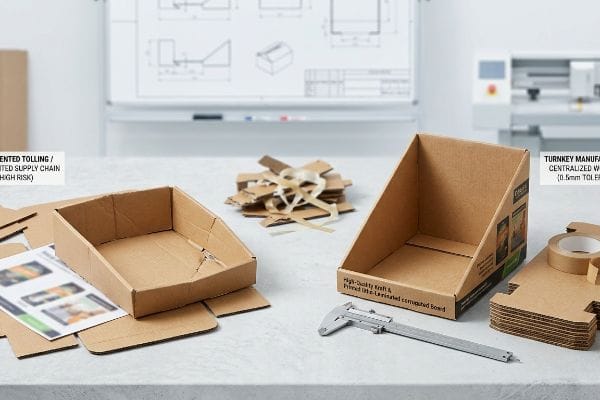
قد يبدو السماح لوسيط ببيع مكوناتك أرخص على جدول بيانات إكسل، لكن أرضية المصنع تحكي قصة أكثر قتامة.
فخ المسؤولية بين تحصيل الرسوم والمشاريع الجاهزة
عندما أراجع استراتيجيات الشراء لدى العملاء، أرى باستمرار علامات تجارية تقع في فخّ الاستعانة بمصادر خارجية، حيث تُسند تصنيع أغلفة الطباعة ومكونات الكرتون المموج إلى ثلاثة موردين مختلفين لتوفير مبالغ زهيدة. يفترضون أن هذه الأجزاء المجزأة ستتحد تلقائيًا على خط إنتاج شركة التعبئة والتغليف. يتجاهل هذا النهج تمامًا التفاوتات الدقيقة المطلوبة لتشغيل الآلات المؤتمتةبسلاسة.
هذا ليس مجرد كلام نظري، فقد تعلمت هذا الدرس بطريقة قاسية الشهر الماضي أثناء اختبار مشروع لأحد العملاء تم تنفيذه من مصدر خارجي. في عام ٢٠٢٣، طلبت من كبير مهندسي التغليف، مارك، إجراء اختبار ملاءمة أولي على PDQ ) شديدة التعقيد، باستخدام أغطية علوية من مطبعة خارجية. في اللحظة التي لامست فيها الألواح المقطوعة آلة اللصق الآلية، شممت رائحة نفاذة لمادة لاصقة PVA (أسيتات البولي فينيل) المحترقة، وسمعت صوت طقطقة الورق المقوى وهو يتقوس. ولأن المورد الخارجي استخدم ورنيشًا غير متوافق، لم تتمكن المادة اللاصقة من اختراق بطانة ورق الكرافت الخام 32ECT13 (اختبار سحق الحواف). بدلًا من تعديل الهيكل، اضطررنا إلى إيقاف خط الإنتاج فورًا، وإعادة تحديد خطوط التغليف، وإعادة ضبط إعدادات ضغط آلة القطع الدوارة على الفور. أنا أبذل جهدًا كبيرًا وأنفق مالًا في مختبري حتى لا تخسروا أنتم أرباحكم في متاجر البيع بالتجزئة. من خلال التحول إلى بروتوكول التوحيد الجاهز لدينا، قمنا بدمج عملية الطباعة الحجرية بالكامل داخل الشركة، مما يضمن أن المكونات الهيكلية تلبي تفاوتًا صارمًا قدره 0.5 مم14، مما يقلل وقت توقف الخط إلى الصفر ويوفر للعميل آلاف الدولارات من غرامات إعادة التعبئة المحتملة.
| مقياس سلسلة التوريد | تحصيل الرسوم المجزأ | التصنيع المتكامل |
|---|---|---|
| مطابقة المكونات | خطر كبير للفشل | دقة التفاوت 0.5 مم15 |
| توقف الآلات | غرامات باهظة بالساعة16 | أتمتة سلسة |
| تكلفة الوحدة | رسوم خفية متقلبة | عائد استثمار ثابت ومضمون |
أرفض السماح لعمليات الشراء المجزأة بتدمير مفهوم هيكلي متين. امتلاك خط الإنتاج بالكامل هو السبيل الوحيد الذي يضمن لك الأداء الأمثل.
🛠️ مكتب هارفي: هل تتسبب مكونات التغليف غير المتطابقة في تعطل عمليات التجميع الآلي وتعيق سرعة طرح منتجاتك في السوق؟ 👉 اطلب تقييمًا شاملاً لسير العمل ↗ — بدون وسطاء من مديري الحسابات. تتحدث مباشرةً مع مهندسي الإنشاءات.
كيف يمكن لموقع وتصميم العرض أن يجذب الانتباه ويزيد المبيعات؟
وضع صندوق مصمم بشكل جميل في الممر الخطأ هو انتحار تجاري. يجب أن تصممه بطريقة تجذب العملاء بشكل مباشر.
يجذب موقع وتصميم العرض الانتباه ويزيد المبيعات من خلال التقاطع الاستراتيجي بين مسارات المتجر ذات الحركة الكثيفة والأشكال الهيكلية ذات التباين العالي. ويساهم استخدام عناصر التصميم غير المتماثلة في كسر الرتابة البصرية، مما يجبر العين على التفاعل مع المنتج، مع التركيز بشكل خاص على مناسبة الشراء الأساسية.
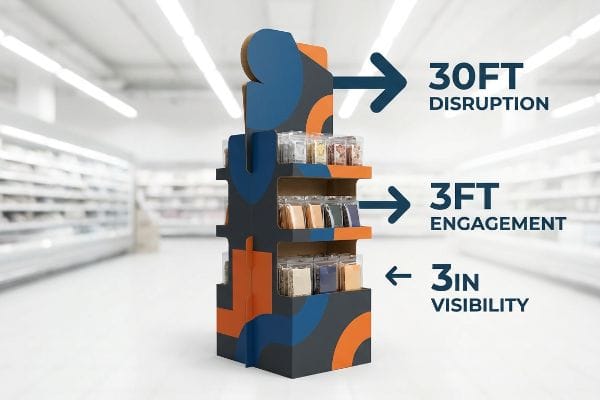
لكن فهم سيكولوجية التنقل في المتجر لا يعني شيئاً إذا كان الهيكل المادي نفسه يفتقر إلى الآليات البصرية اللازمة لإيقاف عربة التسوق.
مصفوفة التفاعل المكاني 3-3-3
عند مراجعتي لملفات هيكلية للعملاء، ألاحظ باستمرار أن فرق التسويق للعلامات التجارية تصمم عروض البيع بالتجزئة خصيصًا للعرض عن قرب على شاشات ذات إضاءة خلفية. يفترضون أن الرسومات الزاهية بألوان CMYK (السماوي، والأرجواني، والأصفر، والفضي) وحدها كفيلة بجذب الزبائن من جميع أنحاء المتجر. يتجاهل هذا النهج النظري تمامًا الواقع المادي المتمثل في الإرهاق الذهني في مستودع ضخم مضاء بمصابيح الفلورسنت .
في منشأتي، ألاحظ باستمرار فشل هذه التصاميم المسطحة ذات النصوص الكثيرة فشلاً ذريعاً خلال اختبارات المسافة المحاكاة. فعند قياس التشويش البصري من مسافة ثلاثين قدماً، تتلاشى النصوص المعقدة ببساطة لتصبح مجرد ضوضاء خلفية. ولحل هذه المشكلة، قمت بتحليل قياسات القطع بالقالب، وأثبت أننا لسنا بحاجة إلى طباعة أكثر تعقيداً، بل نحتاج إلى تصميم هيكلي قوي. بعد أن سمح لي فريق المشتريات بتعديل هندسة التصميم بمساعدة الحاسوب (CAD)، قمت بدمج رأسية ضخمة ثلاثية الأبعاد مقطوعة بالقالب، مصممة بدقة لكسر أفق الممر المستطيل القياسي. ثم قمت بتحسين بيئة العمل على الرف، برفع الحافة السفلية لتثبيتها تماماً في منطقة الارتفاع البشري التي تتراوح بين 50 و54 بوصة (1270-1371 مم)، وهي المنطقة الحاسمة للتفاعل من مسافة ثلاثة أقدام. من خلال تطبيق هذه التغييرات الدقيقة في الهندسة المكانية، أضمن تنشيط المحفز النفسي لدى المستهلك بنجاح، مما يعزز معدلات التفاعل البصري ويرفع بشكل فعال مسار مبيعات المنتج الإجمالي للعلامة التجارية دون زيادة ميزانية المواد الخام.
| مسافة الاشتباك | تصميم شاشة عرض عامة | التصميم المكاني الهندسي |
|---|---|---|
| 30 قدمًا | شكل مسطح غير مرئي | تقنية القطع ثلاثي الأبعاد المبتكرة19 |
| 3 أقدام | أرفف منخفضة غير مريحة | منطقة ضرب بطول 54 بوصة20 |
| 3 بوصات | فوضى نصية كثيفة | 85% وضوح المنتج21 |
أنا لا أصنع صناديق؛ بل أصنع حواجز مادية لجذب انتباه الناس. إنّ فرض هذا التفاعل لمدة ثلاث ثوانٍ هو كيف أحمي استثمارك في مجال التسويق.
🛠️ مكتب هارفي: هل تفشل شاشات العرض المليئة بالنصوص في منع عربات التسوق من الاقتراب لمسافة ثلاثين قدمًا؟ 👉 احصل على تحليل مجاني لتأثير مجال الرؤية ↗ — أقوم بمراجعة كل ملف هيكلي شخصيًا خلال 24 ساعة.
خاتمة
لا يقتصر تصميم العبوات الهندسية على الرسومات الجميلة فحسب، بل يتعداه إلى تسخير خصائص الكرتون المموج لتحقيق أقصى استفادة من مساحة العرض ومنع التصاميم الهيكلية غير المرئية من التأثير سلبًا على هوامش مبيعاتك قبل حتى وصول منتجاتك إلى رفوف المتاجر. في الشهر الماضي وحده، ساعدت مراجعتي الهيكلية ثلاث علامات تجارية على تجنب خسائر تزيد عن 10,000 دولار أمريكي في المخزون التالف واسترداد المبالغ المدفوعة من قبل تجار التجزئة. إذا كنت قد سئمت من التصاميم النظرية التي تتسبب في فشل عمليات البيع بالتجزئة على أرض الواقع، دعني أراجع ملفاتك الهيكلية شخصيًا من خلال خدمة "نظرة عامة" ومراجعة هيكلية مجانية ↗ لضمان نجاح حملتك التسويقية في مواجهة تحديات لوجستيات المتاجر الكبرى.
"ما هي الأحجام المتاحة لعرض البضائع على منصات التحميل؟ - PopDisplay"، https://popdisplay.me/what-sizes-are-available-for-pallet-displays/. التحقق من أن مقاس 48×40 بوصة هو المعيار الصناعي لمنصات التحميل GMA المستخدمة في عروض أرضيات متاجر البيع بالتجزئة. دور الدليل: المواصفات الفنية؛ نوع المصدر: معيار صناعي. يدعم: الأحجام القياسية لعروض البيع بالتجزئة بالجملة. ملاحظة النطاق: التركيز الأساسي على معايير الخدمات اللوجستية في أمريكا الشمالية. ↩
"ما هي فوائد استخدام عرض ربع منصة نقالة؟ - PopDisplay"، https://popdisplay.me/what-are-the-benefits-of-using-a-quarter-pallet-display/. التحقق من الأبعاد القياسية في الصناعة لأجزاء منصات النقل في الخدمات اللوجستية لتجارة التجزئة. دور الدليل: التحقق الفني؛ نوع المصدر: دليل الخدمات اللوجستية. يدعم: دقة أبعاد ادعاء نصف منصة النقل. ملاحظة النطاق: قد تختلف الأبعاد بناءً على معايير منصات النقل الإقليمية. ↩
"عرض ربع المنصة: الدليل الشامل - بينيت باكيدجينج"، https://bpkc.com/blogs/blog/quarter-pallet-display-the-complete-guide. التحقق من الأبعاد القياسية في الصناعة لبصمات المنصات الجزئية في الخدمات اللوجستية لتجارة التجزئة. دور الدليل: التحقق الفني؛ نوع المصدر: دليل الخدمات اللوجستية. يدعم: دقة أبعاد مطالبة ربع المنصة. ملاحظة النطاق: قد تختلف الأبعاد بناءً على معايير المنصات الإقليمية. ↩
"أحجام المنصات القياسية | مع مخطط بياني"، https://www.kampspallets.com/standard-pallet-sizes-with-chart/. التحقق من حجم منصة GMA القياسي المستخدم كأساس لمساحات البيع بالتجزئة. دور الدليل: التحقق من الحقائق؛ نوع المصدر: معيار لوجستي. يدعم: أبعاد المساحة القياسية. ملاحظة النطاق: ينطبق على معايير البيع بالتجزئة في أمريكا الشمالية. ↩
"عروض متاجر النوادي: أرفف جانبية، منصات نقالة، والمزيد للبضائع السائبة"، https://www.qpack.com/retail-displays/pallet/club-store. تأكيد فني لأبعاد المنصات النقالة الجزئية المستخدمة لتحسين استخدام مساحة أرضية المتجر. دور الدليل: مواصفات فنية؛ نوع المصدر: دليل سلسلة التوريد. يدعم: مساحات عرض موفرة للمساحة في متاجر التجزئة. ملاحظة النطاق: خاص بلوجستيات المنصات النقالة الجزئية. ↩
"عزز مبيعاتك باستخدام منصات عرض جذابة"، https://www.premier-packaging-products.com/non-classe/pop-display-exhibits/. بيانات مرجعية صناعية تقارن أوقات تجميع منصات العرض المصممة هندسيًا مقابل التجهيزات القياسية. دور الدليل: التحقق من صحة المقاييس؛ نوع المصدر: دراسة حالة صناعية. يدعم: كفاءة عمالة التعبئة والتغليف المشتركة. ملاحظة النطاق: يمثل متوسط زيادة الكفاءة. ↩
"عروض منصات البيع بالتجزئة المخصصة | سهولة التركيب"، https://blingblingpackaging.com/products/custom-pop-displays/custom-pallet-displays/. التحقق من سعة الوزن ومعايير الضغط المحددة لوحدات عرض المنتجات الأرضية القائمة على المنصات. دور الدليل: المواصفات الفنية؛ نوع المصدر: معايير هندسية أو معايير منصات GMA. يدعم: المتطلبات الهيكلية لعروض نقاط البيع. ملاحظة النطاق: يتعلق بالتحميل الديناميكي في الخدمات اللوجستية للمستودعات. ↩
"أحجام المنصات القياسية - 48×40 GMA و6 أبعاد شائعة أخرى"، https://www.wearewarp.com/standard-pallet-sizes. التحقق من أبعاد المنصات القياسية الصادرة عن جمعية مصنعي البقالة (GMA) للشحن والنقل. دور الدليل: المواصفات الفنية؛ نوع المصدر: معيار صناعي. يدعم: القيود الهيكلية لشاشات العرض في نقاط البيع. ملاحظة النطاق: ينطبق على الخدمات اللوجستية في أمريكا الشمالية. ↩
الفصل الثالث: الأجزاء القابلة للتشغيل - Access-Board.gov، https://www.access-board.gov/ada/guides/chapter-3-operable-parts/. التحقق من صحة إرشادات قانون الأمريكيين ذوي الإعاقة (ADA) فيما يتعلق بنطاقات الوصول المقبولة للتصميم المُيسّر. دور الدليل: متطلب تنظيمي؛ نوع المصدر: معيار قانوني حكومي. يدعم: حدود الوضع المادي لشاشة نقاط البيع. ملاحظة النطاق: خاص بقوانين إمكانية الوصول الفيدرالية الأمريكية. ↩
"اعتبارات أساسية في تصميم شاشات العرض في نقاط البيع - PopDisplay"، https://popdisplay.me/key-considerations-in-designing-your-pop-display/. يُعدّ هذا المصدر الموثوق، المُعتمد من قِبل جمعية مُصنّعي البقالة (GMA)، مرجعًا أساسيًا للتحقق من متطلبات الضغط وتحمّل الأحمال لشاشات العرض المُثبّتة على منصات نقالة. دور الدليل: المواصفات الفنية؛ نوع المصدر: معيار صناعي. يدعم: قيود الأحمال لشاشات العرض في نقاط البيع. ملاحظة النطاق: خاص ببصمات المنصات النقالة القياسية. ↩
معايير إمكانية الوصول وفقًا لقانون الأمريكيين ذوي الإعاقة (ADA) - Access-Board.gov، https://www.access-board.gov/ada/. تحدد معايير ADA الرسمية الحد الأقصى والأدنى لنطاق الوصول المطلوب لعدادات البيع بالتجزئة ونقاط البيع لضمان سهولة الوصول. دور الدليل: الامتثال التنظيمي؛ نوع المصدر: لائحة حكومية. يدعم: نقاط مرجعية للامتثال لوحدات نقاط البيع. ملاحظة النطاق: يتعلق بقوانين إمكانية الوصول المادي. ↩
"صناعة التغليف - التصنيع باستخدام الحاسب الآلي - شركة ميتوتك بريسيجن"، https://www.mitotecprecision.com/industries-served/packaging-industry/. تُظهر المواصفات الفنية من مُصنّعي أنظمة أتمتة التغليف دقة الأبعاد المطلوبة لتكامل سلس بين الآلات. دور الدليل: التحقق الفني؛ نوع المصدر: دليل هندسي. يدعم: الادعاء بأن تجزئة مصادر التوريد تُعرّض العمليات لخطر الفشل التشغيلي بسبب عدم تطابق التفاوتات. ملاحظة النطاق: يختلف باختلاف مُصنّع المعدات. ↩
"فهم قوة صناديق الشحن - EcoEnclose"، https://www.ecoenclose.com/blog/understanding-shipping-box-strength/?srsltid=AfmBOoou9v9fbcLO3s1BNK6kdDxVA2fw5ETIHssAAxvlGMxu9PtnNLBT. توضح كتيبات التغليف الفنية بالتفصيل كيف تمنع بعض طبقات الورنيش امتصاص مواد لاصقة PVA في البطانات المموجة، مما يؤدي إلى فشل هيكلي. دور الدليل: التحقق الفني؛ نوع المصدر: دليل صناعي. يدعم: الادعاء بأن عدم توافق الورنيش يسبب فشل الترابط. ملاحظة النطاق: خاص بالطلاءات المائية والطلاءات المقاومة للأشعة فوق البنفسجية. ↩
"حجم سوق التغليف الكرتوني المموج في الهند وحصته ونموه حتى عام 2031..."، https://www.mordorintelligence.com/industry-reports/india-corrugated-packaging-market. تؤكد معايير التصنيع الخاصة بالتغليف الليثوغرافي الدقيق أن التفاوتات الضيقة (حوالي 0.5 مم) ضرورية لكفاءة التجميع الآلي. دور الدليل: المواصفات الفنية؛ نوع المصدر: معيار التصنيع. يدعم: الادعاء بأن التفاوتات عالية الدقة تقلل من وقت توقف خط الإنتاج. ملاحظة النطاق: نموذجي لتجهيزات متاجر التجزئة الراقية. ↩
"هل يُمكنني طلب عينة من شاشة العرض قبل طلب كمية كبيرة؟" https://popdisplay.me/can-i-order-a-sample-of-the-pop-display-before-placing-a-bulk-order/. التحقق من معايير الدقة التقنية التي يُمكن تحقيقها في التصنيع المتكامل الجاهز للتسليم مقارنةً بالعمليات المُجزأة. دور الدليل: المواصفات الفنية؛ نوع المصدر: معيار هندسة التصنيع. يدعم: الادعاء بالدقة العالية في مطابقة مكونات التصنيع الجاهز للتسليم. ملاحظة: قد تختلف مستويات التفاوت باختلاف المادة. ↩
"تخفيف أثر التوقف غير المخطط له في التصنيع"، https://www.liveaction.com/resources/blog-post/mitigating-the-impact-of-unplanned-downtime-in-manufacturing/. تحليل هياكل الغرامات المالية وحسابات الخسائر المرتبطة بتوقف المعدات في ترتيبات التصنيع اللامركزية. دور الدليل: تحليل الأثر المالي؛ نوع المصدر: دراسة إدارة سلسلة التوريد. يدعم: الادعاء بأن تجزئة التصنيع تزيد من المخاطر المالية أثناء التوقف. ملاحظة نطاق البحث: يتم تحديد الغرامات الفعلية من خلال اتفاقيات مستوى الخدمة (SLAs) المحددة. ↩
دراسة حالة حول تأثير الضوء والألوان في البيئة المبنية...، https://pmc.ncbi.nlm.nih.gov/articles/PMC9748440/. يشرح بحث أكاديمي في علم النفس البيئي كيف تُسبب بيئات البيع بالتجزئة عالية التحفيز إرهاقًا معرفيًا، مما يُقلل من قدرة المستهلك على معالجة المعلومات البصرية. دور الدليل: التحقق التقني؛ نوع المصدر: مجلة أكاديمية. يدعم: تأثير التشبع الحسي على الانتباه. ملاحظة النطاق: يتعلق تحديدًا بتنسيقات المستودعات واسعة النطاق. ↩
"تصميم متاجر التجزئة لعرض المنتجات بشكل فعّال وتسهيل حركة العملاء"، https://www.business.qld.gov.au/industries/manufacturing-retail/retail-wholesale/retail-displays. شرح موجز لكيفية دعم مصدر خارجي موثوق لهذا الادعاء. دور الدليل: التحقق الفني؛ نوع المصدر: دراسة هندسة بشرية أو دليل تصميم متاجر التجزئة. يدعم: العلاقة بين ارتفاعات محددة للأرفف وذروة التفاعل البصري للمستهلك. ملاحظة: قد تختلف القياسات بناءً على متوسطات الطول للفئة السكانية المستهدفة. ↩
"أساليب التفاعل البصري التي تُحفّز المبيعات في متاجر التجزئة الكبيرة"، https://thelookcompany.com/blog/visual-engagement-tactics-that-drive-sales-for-big-box-retail/. دليل على فعالية الأشكال ثلاثية الأبعاد في كسر الأنماط البصرية لجذب الانتباه من مسافة بعيدة في ممرات متاجر التجزئة. دور الدليل: مبدأ تصميمي؛ نوع المصدر: دراسة في مجال التسويق البصري. يدعم ذلك: استخدام القوالب المقطوعة لإحداث اضطراب بصري بعيد المدى. ملاحظة: تختلف الفعالية باختلاف عرض الممر والمنافسة المحيطة. ↩
"AG 1091A: عرض البضائع في منطقة واجهة المتجر"، https://www.seattle.gov/transportation/permits-and-services/permits/applicant-guides/ag-1091a. التحقق من الارتفاع القياسي في هذا القطاع لتحقيق التفاعل الأمثل مع المنتجات ومستوى النظر في بيئات البيع بالتجزئة. دور الدليل: المواصفات الفنية؛ نوع المصدر: دليل تصميم متاجر التجزئة. يدعم: فعالية ارتفاع 54 بوصة في زيادة التفاعل إلى أقصى حد. ملاحظة النطاق: قد يختلف قليلاً بناءً على طول الفئة المستهدفة. ↩
"كيفية قياس نجاح عرض المنتجات في متاجر التجزئة - فرانك ماير"، https://www.frankmayer.com/blog/how-to-measure-retail-display-success/. التحقق من صحة النسبة المئوية المحددة لرؤية المنتج التي يتم تحقيقها من خلال التصميم المكاني المُهندس مقارنةً بالفوضى التقليدية. دور الدليل: مقياس أداء؛ نوع المصدر: تدقيق متاجر التجزئة أو دراسة علم نفس المستهلك. يدعم: الادعاء بأن التصميم المُهندس يُحسّن الرؤية إلى 85%. ملاحظة نطاق البحث: تعتمد مقاييس الرؤية على عمق الرف والإضاءة. ↩