هل تواجه صعوبة في لفت الأنظار إلى منتجاتك في نهاية الممر؟ تصميم رديء لوحدات العرض في المتاجر يهدر مساحة قيّمة. إليك كيفية تصميمها بشكل صحيح.
تتضمن المهارات الأساسية لتصميم عروض فعّالة في نهاية الممرات إتقان قواعد التفاعل المكاني، والهندسة الإنشائية الدقيقة، والامتثال لمعايير المواد، وتخطيطات عرض المنتجات الاستراتيجية. ويضمن إتقان هذه القدرات معدلات تحويل عالية للمشتريات العفوية مع الالتزام التام بحدود مساحة المتجر ومتطلبات الأحمال الديناميكية في نهايات ممرات البيع بالتجزئة.
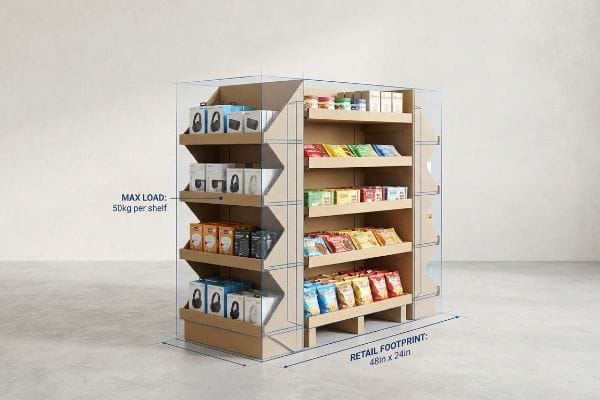
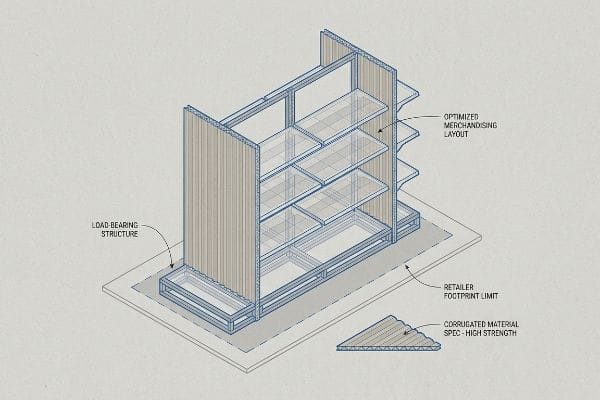
إن تصميم هيكل مؤقت ناجح يتجاوز مجرد الرسومات الجميلة؛ فهو يتطلب فهمًا عميقًا لفيزياء الهياكل والواقع اللوجستي على مستوى المتجر. دعونا نحلل بدقة ما يميز الحملة الناجحة عن المشروع الفاشل.
ما الذي يجعل شاشة العرض الطرفية جيدة؟
لكي تبرز في بيئة المتاجر الكبيرة المزدحمة، يجب أن يجذب هيكلك المموج الانتباه على الفور من مسافة بعيدة.
صُممت عروض نهاية الممرات الجيدة لزيادة المبيعات العفوية إلى أقصى حد من خلال تطبيق قاعدة التفاعل المكاني 3-3-3 بنجاح. فهي تستخدم فتحات هيكلية بارزة من مسافة ثلاثين قدمًا، وتضع المنتجات ذات هامش الربح العالي في منطقة جذب مثالية، وتضمن ثباتًا هيكليًا تامًا للبضائع الثقيلة.

إن لفت الانتباه هو العقبة الأولى، لكن الحفاظ على تفاعل المتسوق المتسرع يتطلب تصميمًا بصريًا مبسطًا ومقصودًا للغاية.
تطبيق استراتيجية المشاركة المكانية 3-3-3
تُصمّم العديد من فرق التسويق هياكل متاجر التجزئة خصيصاً للعرض عن قرب على شاشات الكمبيوتر ذات الإضاءة الخلفية، متجاهلةً الواقع المادي لكيفية تنقل المتسوقين بين أرفف المتاجر. وغالباً ما تُغطّي هذه الفرق المتجر بنصوص كثيفة، مُفترضةً أن المتسوقين سيتوقفون تلقائياً، ويقرؤون كل التفاصيل، ويستوعبون قصة العلامة التجارية كاملةً منطقياً قبل اتخاذ قرار الشراء.
أرى هذا الفخ باستمرار عندما تحاول العلامات التجارية حشر تاريخها الترويجي بالكامل في بطاقة رأسية واحدة. لا تستطيع العين البشرية استيعاب كم هائل من النصوص أثناء دفع عربة التسوق بسرعة المشي. أتذكر أنني شاهدت بائعًا يتنهد بشدة وهو يُرتب وحدة كرتونية مليئة بالنصوص؛ كانت الرسومات مزدحمة للغاية لدرجة أنها بدت كلوحة إعلانية، مما جعل المتسوقين المارين يتجاهلونها تمامًا. لحل هذه المشكلة، أُلزم عملائي بتطبيق قاعدة 3-3-3 . نستخدم شكلًا ضخمًا مقطوعًا خصيصًا ولونًا قويًا من ألوان بانتون لجذب الانتباه من مسافة 9 أمتار، ونضع العرض الرئيسي على بُعد متر واحد، ونقطع الحافة الأمامية لضمان رؤية 85 % من المنتج على بُعد 76.2 ملم. يُثبت طي البطاقة الرأسية المقطوعة بدقة ووضوحها فعاليتها من الناحية الهيكلية، ويُزيل هذا التبسيط الشديد العبء المعرفي، مما يُعزز عمليات الشراء الفورية.
| أخطاء شائعة للمبتدئين | الحل الاحترافي | فوائد أرضية البيع بالتجزئة |
|---|---|---|
| طباعة الفقرات ذات النصوص الكثيرة على العناوين | استخدام ألوان بانتون الجريئة | يجذب انتباه المتسوقين من مسافة 30 قدمًا3 |
| تصميم مخصص للعرض عن قرب فقط | باستخدام قاعدة المشاركة المكانية 3-3-3 | يمنع الإرهاق المعرفي في الممرات |
| إخفاء المنتجات خلف الشفاه الأمامية المرتفعة | حافة مقطوعة لضمان رؤية بنسبة 85%4 | يزيد من معدلات الشراء الفوري الاندفاعي |
لا أسمح أبدًا للعلامات التجارية بإهدار المال في طباعة الروايات على ورق مقوى مؤقت، لأنه إذا لم يعطل تصميمك الممر بصريًا في ثلاث ثوانٍ، فلن يذهب أحد لقراءة الأحرف الصغيرة.
🛠️ مكتب هارفي: هل أنت غير متأكد من أن تصميم رأس صفحتك مزدحم للغاية بالنسبة لبيئة عمل سريعة الوتيرة؟ 👉 احصل على مراجعة مجانية لتصميمك ↗ — تواصل مباشر مع مكتبي. أعدك بعدم تلقي أي رسائل تسويقية آلية مزعجة.
ما هي الخطوات الخمس لإنشاء شاشة عرض؟
إن تحويل فكرة من مجرد رسم تخطيطي أولي إلى أرضية متجر مجهزة بالكامل يتطلب دقة تصنيع على مستوى عسكري.
تتضمن الخطوات الخمس لإنشاء شاشة عرض: التخطيط المفاهيمي، والتصميم الهندسي الدقيق باستخدام برامج التصميم بمساعدة الحاسوب (CAD) مع مراعاة دقة القياسات، واختيار المواد، والنمذجة المادية، والتصنيع النهائي بكميات كبيرة. يضمن تنفيذ هذه المراحل المتسلسلة تحقيق توازن مثالي بين الرسالة الجمالية للعلامة التجارية وقدرات التحميل الديناميكية العالية.
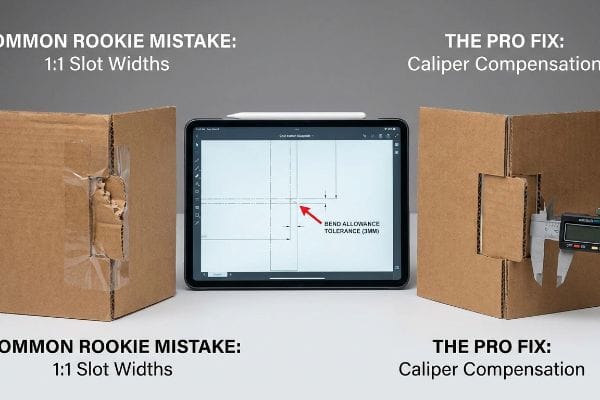
بينما يحظى التصميم الجرافيكي بكل المجد البصري، فإن مرحلة الهندسة الهيكلية هي التي يتم فيها إنقاذ الحملات أو تدميرها بشكل دائم.
أهمية تعويض الفرجار في الهندسة الإنشائية
تفترض معظم فرق العلامات التجارية أن الخطوات الخمس بسيطة، وتركز بشكل كبير على الموافقة على التصميم الفني، بينما تعتبر الهندسة الهيكلية أمراً ثانوياً. وغالباً ما يقدمون رسومات تخطيطية مسطحة مرسومة ببرامج متجهة أساسية، مفترضين أن الألسنة والفتحات المتشابكة ستتلاءم بسلاسةدون أي تعديلات رياضية متقدمة.
تكمن المشكلة الأكبر في الخطوة الثانية: الهندسة. حتى المصممون المخضرمون غالبًا ما يتجاهلون سُمك الورق المقوى المطوي. إذا أرسلتَ لي مخططًا لقالب لوح من نوع B-flute بفتحات مرسومة بنفس عرض ألسنة التثبيت، فسنواجه مشكلة لوجستية ضخمة. عندما يُطوى لوح بسُمك 3 مم (0.12 بوصة) بزاوية 90 درجة،فإنه يستهلك كمية من الورق. لقد شاهدتُ عمال التعبئة والتغليف وهم يُجهدون أنفسهم على خط التجميع، يُدخلون ألسنة التثبيت غير المتطابقة بقوة في الفتحات الضيقة حتى يتمزق الورق المقوى الخام بصوت تمزق عالٍ. ينتهي بهم الأمر بلف الزوايا التالفة بشريط لاصق شفاف فوضوي لمجرد تثبيت القاعدة، مما يُبطئ خط التجميع بنسبة 30% تقريبًا.أحل هذه المشكلة بتطبيق خوارزميات تعويض دقيقة في برنامج التصميم الخاص بنا، حيث أقوم بتوسيع فتحات الاستقبال رياضيًا بجزء من البوصة لمراعاة مقدار الانحناء، مما يضمن تركيبًا سلسًا وخاليًا من التمزق.
| أخطاء شائعة للمبتدئين | الحل الاحترافي | فوائد أرضية البيع بالتجزئة |
|---|---|---|
| رسم عرض الفتحات بنسبة 1:1 في فن المتجهات | تطبيق حسابات تعويض الفرجار في برامج التصميم بمساعدة الحاسوب | يوفر 45 ثانية لكل عملية تجميع وحدة8 |
| مع تجاهل سمك المادة المموجة | إضافة سماحية انحناء محددة9 | يزيل الشريط اللاصق الفوضوي واللوح الممزق |
| تخطي الاختبارات المادية قبل الإنتاج | اشتراط وجود عينة بيضاء مجمعة بالكامل10 | يمنع توقف آلات التعبئة والتغليف بشكل كبير |
أرفض التغاضي عن حسابات التعويض الهيكلي، لأن الملف الرقمي الذي يبدو خالياً من العيوب على شاشة الكمبيوتر سيتحول حتماً إلى كارثة ممزقة وملصقة بشريط لاصق على خط التعبئة والتغليف المادي.
🛠️ مكتب هارفي: هل صُممت ألسنة التثبيت المتشابكة لديكم لتناسب السماكة الدقيقة للورق المطوي من نوع B؟ 👉 اطلبوا تدقيقًا للتفاوتات الهيكلية ↗ — حمّلوا الملف بأمان. صندوق بريدي مفتوح إذا كانت لديكم أي أسئلة لاحقًا.
ما هي الممارسة المهمة التي ستضمن أن تحقق أرفف العرض الطرفية أكبر قدر ممكن من المبيعات؟
يتطلب تحقيق حجم مبيعات كبير أكثر من مجرد تحميل رف من الورق المقوى بأكبر قدر ممكن من البضائع المادية التي يمكن أن يستوعبها الهيكل.
من الممارسات المهمة التي تضمن تحقيق أقصى قدر من المبيعات في أرفف العرض الجانبية تطبيق قاعدة عدم التناظر 3-5-7. يُضفي تجميع البضائع في مجموعات فردية العدد توتراً بصرياً ضرورياً، مما يمنع إرهاق المتسوقين ذهنياً، ويوفر في الوقت نفسه المساحة المادية اللازمة لإعادة تعبئة المنتجات بسلاسة داخل المتجر يومياً.
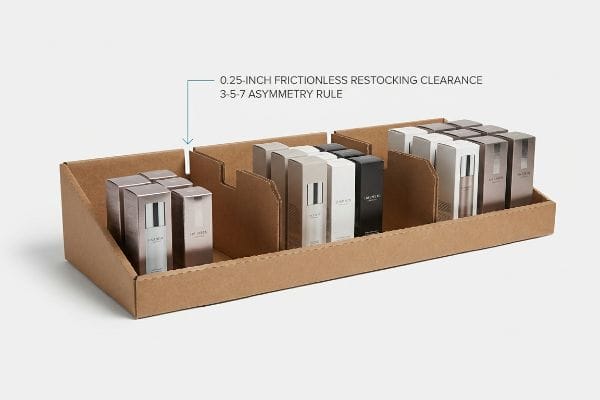
قد يبدو جدار متماثل تمامًا من المنتجات الموحدة رائعًا في مستودع التجهيز، ولكنه يخلق احتكاكًا تشغيليًا شديدًا في بيئة البيع بالتجزئة الحية.
إتقان التسويق غير المتماثل لإعادة التخزين بسلاسة
كثيراً ما يحاول المصممون المبتدئون ترتيب المنتجات بشكل متناسق ومتساوٍ تماماً على صينية. وينطلقون من افتراض خاطئ مفاده أن تكثيف المنتجات إلى أقصى حد ممكن في مساحة عرض صغيرة يؤدي بطبيعة الحال إلى زيادة العائد على الاستثمار،تماماً طوال الوقت.
تخيل الأمر كأنك تحزم حقيبة سفر حتى ينفجر سحابها. عندما تملأ رفًا بشكل متماثل دون أي فواصل، يبدو كجدار من الطوب رتيب، مما يدفع المتسوقين المتسرعين إلى تجاهله. لكن الكارثة الحقيقية تحدث أثناء عمليات إعادة التعبئة. لقد رأيتُ موظفي المتاجر يسحبون منتجًا مكتظًا من صينية مليئة بعنف، فيعلق طرف الكرتون ويمزق اللوحة الأمامية المموجة. مقاومة البضائع المتكدسة تحول الصيانة الروتينية إلى مهمة مُدمرة. أطبق قاعدة 3-5-7 من خلال تصميم فواصل معيارية مخصصة تفصل المنتجات إلى مجموعات غير متماثلة من ثلاثة أو خمسة أو سبعة. هذا التصميم يُجبر العين على التفاعل مع التوتر البصري، والأهم من ذلك، أنه يوفر مساحة مادية حاسمة تبلغ 6.35 ملم، مما يضمن سهولة إعادة التعبئة ويحافظ على عمر الصينية.
| أخطاء شائعة للمبتدئين | الحل الاحترافي | فوائد أرضية البيع بالتجزئة |
|---|---|---|
| تعبئة العناصر في شبكة كثيفة ومحكمة | مقسمات المنتجات المعيارية الهندسية | يمنع الموظفين من تمزيق الشفة الأمامية |
| إنشاء جدران متناظرة رتيبة | التجميع حسب الأعداد الفردية (قاعدة 3-5-7)14 | يخلق توتراً بصرياً لجذب المتسوقين |
| ترك مساحة تخزين مؤقتة فيزيائية صفرية | إضافة خلوص بمقدار 0.25 بوصة (6.35 مم)15 | يجعل إعادة التخزين اليومية سريعة وسلسة |
أقول لعملائي إنه إذا اضطر موظف المتجر إلى بذل جهد كبير لإزالة التغليف المحكم لمجرد إعادة تخزين وحدة واحدة، فإن حملتك التسويقية تخسر المال فعلياً في المتجر.
🛠️ مكتب هارفي: هل منتجاتك معبأة بإحكام شديد لدرجة أنها تُعرّض حافة التثبيت المموجة للتلف؟ 👉 احصل على تصميم CAD مخصص لفواصلك المعيارية ↗ — لا استمارات تُسبب مكالمات مبيعات لا تنتهي. قيمة حقيقية فقط.
ما هي شاشات العرض الطرفية؟
إن فهم التعريف النظري لهذا الجهاز أمر سهل، لكن التغلب على قيوده المادية الصارمة هو ما يؤدي إلى انهيار الحملات.
تُعدّ منصات العرض الطرفية هياكل ترويجية بارزة تُوضع في نهاية ممرات المتاجر. وهي تستغلّ ميزة الرؤية المباشرة بين المارة لتحفيز عمليات الشراء العفوية، ولكن يجب أن تلتزم هذه المنصات التزامًا صارمًا بأبعاد مكانية محددة وقيود على الأحمال الثقيلة تفرضها إرشادات الامتثال الخاصة بمتاجر التجزئة الكبرى.
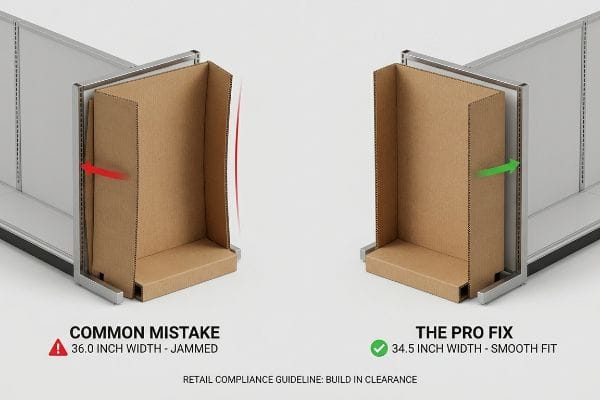
إن معرفة النظرية التسويقية الكامنة وراء هذه المواقع المتميزة لا تكفي عندما تبدأ الآلات الآلية بالعمل وتبدأ عمليات التدقيق الصارمة لتجار التجزئة.
المأزق المكاني: لماذا تفشل أغطية الأطراف القياسية في أرضية المصنع؟
غالباً ما تنظر فرق المشتريات إلى إرشادات الامتثال الخاصة بتجارة التجزئة ، وتجد أن وحدة عرض يبلغ 36 بوصة (914.4 ملم) بالضبط. وبطبيعة الحال، يفترضون أن هيكلهم المموج يجب أن يتطابق مع هذا البعد المادي بدقة، وذلك لزيادة مساحة العلامة التجارية المتاحة وحجم المنتجات إلى أقصى حد.
من السهل ضبط وحدة واحدة لتثبت بشكل مثالي في مختبر تصميم مُتحكم في مناخه، لكن إليك الواقع المرير عند شحن 500 وحدة منها إلى بيئات بيع بالتجزئة صارمة. في منشأتي، أرى باستمرار عملاءً يُرسلون ملفات مُحددة حسابيًا بدقة عند 36.0 بوصة (914.4 مم). عندما أستخدم شريط القياس الصناعي على الهيكل المطوي والمُحمّل بالكامل في منطقة مراقبة الجودة، أجد أن انتفاخ ورق الكرتون المموج ( B-flute 16) بسبب الرطوبة، بالإضافة إلى اختلافات التجميع الطفيفة، يُضيف جزءًا كبيرًا من البوصة إلى الجدران الخارجية. إذا حاول بائع في متجر إدخال وحدة من الورق المقوى بعرض 36.15 بوصة (918.2 مم) في رف معدني صلب (17 ) ، فإنها تنحشر بشدة، مما يؤدي إلى انحناء الجوانب الهيكلية إلى الداخل. من خلال تقليص الحد الأقصى للعرض الهيكلي حسابيًا إلى 34.5 بوصة (876.3 مم)، أضمن انزلاق الوحدة بسلاسة في الهيكل الفولاذي في كل مرة، مما يُلغي تمامًا أي تكاليف إضافية على تجار التجزئة ويمنع أسابيع من إعادة العمل اليدوي المكلف.
| أخطاء شائعة للمبتدئين | الحل الاحترافي | فوائد أرضية البيع بالتجزئة |
|---|---|---|
| عرض هندسي يصل بالضبط إلى 36.0 بوصة18 (914.4 مم) | هيكل التغطية عند 34.5 بوصة19 (876.3 مم) | يمنع انحشاره في رفوف المتاجر المعدنية |
| مع تجاهل تمدد اللوحة المطوية20 | مع الأخذ في الاعتبار تورم الطيات الهيكلية | يضمن عملية تركيب سلسة |
| بافتراض أن جميع تجهيزات المتجر موحدة | إنشاء منطقة عازلة للتخليص المكاني | يمنع عمليات رد المبالغ المدفوعة من قبل تجار التجزئة بشكل فوري |
أصمم وفقًا للواقع المادي غير المتوقع لممرات المتاجر الكبيرة، لأن الملف المثالي رياضيًا يصبح عديم الفائدة تمامًا إذا تم إلقاؤه في حاوية القمامة من قبل مدير متجر محبط.
🛠️ مكتب هارفي: لا تدع عيبًا هيكليًا بحجم 2 مليمتر يُفسد إطلاقًا ضخمًا لـ 500 متجر. 👉 أرسل لي ملف تصميم القالب ↗ — سأُجري اختبارات دقيقة للحسابات قبل أن تُهدر ميزانيتك على الإنتاج الضخم.
خاتمة
يمكنك اختيار مورد أرخص يصمم بدقة ضمن الحدود النظرية، ولكن عندما تصطدم ألواح الكرتون المموجة كبيرة الحجم برفوف العرض المعدنية، مما يؤدي إلى رفض فوري من قِبل تجار التجزئة وأسابيع من إعادة العمل اليدوي المكلف، فإن عائد استثمار حملتك بالكامل يتبخر. يستخدم أكثر من 500 مدير علامة تجارية قائمة التحقق الخاصة بي قبل الطباعة لتجنب هذه الأخطاء القاتلة في المراحل المبكرة. توقف عن التخمين بشأن التفاوتات المكانية ودعني شخصيًا أراجع ملفاتك من خلال خدمة التدقيق المجاني قبل الطباعة ↗ لاكتشاف هذه الأخطاء في الأبعاد المادية قبل بدء الإنتاج الضخم.
"كيف يُؤثر التغليف على نجاح برامج عرض المنتجات في متاجر التجزئة"، https://www.frankmayer.com/blog/how-packaging-shapes-retail-display-program-success/. التحقق من قاعدة 3-3-3 كمعيار معترف به للتفاعل المكاني في عرض المنتجات المرئية في متاجر التجزئة. دور الدليل: التحقق المفاهيمي؛ نوع المصدر: دليل تصميم صناعي. يدعم: التباعد الاستراتيجي بين العناصر البصرية الرئيسية. ملاحظة: قد تختلف القاعدة باختلاف قطاع التجزئة. ↩
"لماذا نستخدم شاشات العرض الطرفية؟ - PopDisplay"، https://popdisplay.me/why-use-an-endcap-display/. بيانات فنية تؤكد أن ارتفاعًا محددًا لحافة التثبيت يرتبط بمعدل رؤية 85% للسلع الاستهلاكية. دور الدليل: المواصفات الفنية؛ نوع المصدر: دراسة بيئة العمل أو دليل هندسة البيع بالتجزئة. يدعم: فعالية القطع عند الحافة بطول 3 بوصات. ملاحظة النطاق: ينطبق تحديدًا على شاشات العرض المموجة. ↩
"أساليب التفاعل البصري التي تُحفّز المبيعات في متاجر التجزئة الكبيرة"، https://thelookcompany.com/blog/visual-engagement-tactics-that-drive-sales-for-big-box-retail/. تُشير الأبحاث في علم النفس البيئي لمتاجر التجزئة إلى المسافة التي تجذب عندها اللافتات البارزة الانتباه. دور الدليل: معيار مرجعي؛ نوع المصدر: دراسة قطاعية. يدعم: فعالية استخدام الألوان الموضعية لتحقيق رؤية بعيدة المدى. ملاحظة: قد تختلف المسافة باختلاف عرض الممر. ↩
"15 نصيحة لعرض منتجات جذابة في متاجر التجزئة لزيادة المبيعات"، https://wertheimerbox.com/15-tips-for-attractive-retail-product-displays-that-sell-more-products/. تحدد الإرشادات الفنية لتصميم مخططات عرض المنتجات النسبة المثالية لظهور المنتج لتجنب إعاقته. دور الدليل: المواصفات الفنية؛ نوع المصدر: دليل الترويج. يدعم: معيار 85% للرؤية في عمليات الشراء الاندفاعية. ملاحظة النطاق: ينطبق تحديدًا على أغطية العرض الكرتونية المموجة. ↩
«أهم النصائح لتصميم وصلات اللسان والفتحة لتجميع أجزاء الصفائح المعدنية»، https://www.youtube.com/watch?v=DHcrX_ZnByA. وثائق فنية حول التفاوتات المسموح بها في تصنيع الوصلات المتشابكة للتحقق من سبب فشل خطوط القطع المتجهة الأساسية غالبًا دون تعديلات هيكلية. دور الدليل: التحقق الفني؛ نوع المصدر: دليل هندسي. يدعم: ضرورة إجراء تعديلات رياضية متقدمة للتجميع. ملاحظة النطاق: يتعلق تحديدًا بشاشات العرض الكرتونية أو البلاستيكية في متاجر البيع بالتجزئة. ↩
"التحليل التحليلي لتحديد صلابة الانحناء لخمس طبقات..."، https://pmc.ncbi.nlm.nih.gov/articles/PMC8777652/. التحقق من سُمك مادة الورق المقوى المموج القياسي من النوع B والتأثير المادي للطي بزاوية 90 درجة على استهلاك المواد. دور الدليل: المواصفات الفنية؛ نوع المصدر: معيار التصنيع. يدعم: الحاجة إلى تعويض السماكة. ملاحظة النطاق: ينطبق على الورق المقوى المموج القياسي. ↩
"تحسين الإنتاجية من خلال موازنة خط التجميع باستخدام..."، https://pmc.ncbi.nlm.nih.gov/articles/PMC10788436/. بيانات تجريبية أو معايير صناعية توضح كيف تؤدي المكونات غير المتطابقة إلى زيادة وقت التجميع وتقليل الإنتاجية. دور الدليل: مقياس الأداء؛ نوع المصدر: دراسة هندسية صناعية. يدعم: التكلفة الاقتصادية للهندسة غير السليمة. ملاحظة النطاق: التأثير المُقدَّر بناءً على إنتاجية شركة التعبئة والتغليف. ↩
"التخطيط للتغليف والخدمات اللوجستية لعروض البيع بالتجزئة - فرانك ماير"، https://www.frankmayer.com/blog/packaging-and-logistics-planning-for-retail-displays/. بيانات مرجعية صناعية حول كيفية تقليل دقة التفاوتات في التصميم بمساعدة الحاسوب (CAD) لوقت التعديل اليدوي أثناء التجميع. دور الدليل: قياس الكفاءة؛ نوع المصدر: دراسة حالة تصنيعية. يدعم: زيادة الإنتاجية الناتجة عن تعويض الفرجار. ملاحظة: قد يختلف التوقيت حسب تعقيد العرض. ↩
[ملف PDF] مواصفات الكرتون المموج - رابطة صناديق الألياف، https://www.fibrebox.org/assets/2025/09/Walmart_Corrugated-Board_Specifications_Automation_Packaging_Standards.pdf. معيار هندسي تقني لحساب إزاحة المواد أثناء الطي لضمان التوافق الهيكلي. دور الدليل: التحقق التقني؛ نوع المصدر: دليل هندسي. يدعم: ضرورة مراعاة بدلات الانحناء في تصميم الكرتون المموج. ملاحظة النطاق: خاص بالركائز المموجة. ↩
"العينات البيضاء، نماذج أولية لصناعة التغليف - كارل كناور"، https://www.karlknauer.com/en/innovation-and-trends/smart-packaging/white-samples. إجراء تشغيلي قياسي في التصميم الهيكلي للتحقق من صحة التجميع قبل أدوات الإنتاج الضخم. دور الدليل: التحقق من العملية؛ نوع المصدر: أفضل الممارسات الصناعية. يدعم: دور اختبار ما قبل الإنتاج في منع توقف الإنتاج. ملاحظة النطاق: ممارسة قياسية للتعبئة المشتركة على نطاق واسع. ↩
"كيفية زيادة معدلات التحويل في متاجر التجزئة - برنامج MRI"، https://www.mrisoftware.com/blog/how-to-increase-conversions-in-retail/. تحليل بيانات علم نفس التجزئة والتسويق للتحقق مما إذا كانت الكثافة القصوى للمنتجات مرتبطة بعائد استثمار أعلى أم أنها تؤدي إلى إرهاق المستهلكين بكثرة الخيارات. دور الدليل: التحقق من صحة الادعاءات المضادة؛ نوع المصدر: دراسة في قطاع التجزئة. يدعم: عدم كفاءة تكديس المنتجات على الرفوف. ملاحظة النطاق: يركز على سلوك المستهلك في بيئات التجزئة التقليدية. ↩
"خدمات واستراتيجيات التسويق البصري | تي-روك جلوبال"، https://trocglobal.com/visual-merchandising/. التحقق من قاعدة 3-5-7 كمبدأ معترف به في التسويق البصري لخلق تفاعل من خلال التجميع غير المتماثل. دور الدليل: التحقق النظري؛ نوع المصدر: دليل تصميم متاجر التجزئة. يدعم: فعالية تجميع المنتجات ذات الأرقام الفردية. ملاحظة النطاق: قد يكون أسلوبًا استدلاليًا خاصًا أو خاصًا بصناعة معينة. ↩
"خمس خطوات لتحسين كفاءة تخزين البضائع في متاجر التجزئة - إنتاتش إنسايت"، https://www.intouchinsight.com/blog/retail-stocking-steps. التحقق الفني من قياس الخلوص المحدد المطلوب لمنع الاحتكاك والتلف الهيكلي أثناء إعادة التخزين. دور الدليل: المواصفات الفنية؛ نوع المصدر: دليل عمليات المستودعات/متاجر التجزئة. يدعم: المتطلبات المادية لإعادة التخزين السلسة. ملاحظة النطاق: ينطبق تحديدًا على صواني الأغطية الطرفية المموجة. ↩
"قاعدة الأعداد الفردية في التصميم الداخلي: لماذا تنجح مجموعات الثلاثة والخمسة والسبعة؟"، https://www.tidbitsandtwine.com/rule-of-odds-interior-design/. شرح لقاعدة الأعداد الفردية في التسويق البصري، وكيف يُسهم تجميع المنتجات بأعداد فردية في زيادة تفاعل المستهلك. دور الدليل: إطار نظري؛ نوع المصدر: دليل تصميم متاجر التجزئة. يدعم: الادعاء بأن التجميع بأعداد فردية يُولّد توترًا بصريًا. ملاحظة نطاق البحث: ينطبق على علم النفس البصري في تصميم متاجر التجزئة. ↩
"ما هو متوسط ارتفاع رفوف متاجر التجزئة؟ - PopDisplay"، https://popdisplay.me/what-is-the-average-retail-shelf-height/. معايير الصناعة للمساحة الفاصلة المادية بين المنتجات وقيود الرفوف لتحسين كفاءة إعادة التخزين. دور الدليل: المواصفات الفنية؛ نوع المصدر: دليل التشغيل. يدعم: القياس المحدد للمساحة الفاصلة لضمان إعادة تخزين سلسة. ملاحظة النطاق: قد يختلف حسب فئة المنتج. ↩
"تأثيرات الرطوبة النسبية على قوة الضغط لـ..."، https://open.clemson.edu/all_theses/3225/. وثائق فنية حول كيفية تسبب الخصائص الاسترطابية للورق المقوى المموج في انتفاخ أبعاد مادة B-flute. دور الدليل: التحقق الفني؛ نوع المصدر: دليل علوم المواد. يدعم: الادعاء بأن الرطوبة تزيد من الأبعاد الفيزيائية للورق المقوى. ملاحظة النطاق: يركز على معايير الورق المقوى المموج. ↩
دليل أبعاد رفوف الجندول، https://rackleaders.com/gondola-shelving-dimensions-guide/. مواصفات صناعية لوحدات رفوف معدنية قياسية في متاجر التجزئة للتحقق من القيود المكانية الصارمة وتفاوتات العرض الشائعة. دور الدليل: التحقق من الحقائق؛ نوع المصدر: ورقة مواصفات تجهيزات متاجر التجزئة. يدعم: الادعاء بأن زيادة الحجم الطفيفة تسبب انحشارًا في التجهيزات المعدنية. ملاحظة النطاق: ينطبق على تصميمات متاجر التجزئة الكبيرة القياسية في أمريكا الشمالية. ↩
"أرفف عرض خشبية للمتاجر - وحدات عرض طرفية للبيع"، https://www.dgsretail.com/P2542/Gondola-Retail-Shelving-Wood-End-Cap-Display-With-4-Shelves-36W-54H?srsltid=AfmBOoqCHEGWVReK7MUQGhMc1Zd6xL-qtRfiJC4Rr4ljxCCQed5xRGKn. التحقق من العرض القياسي لوحدات أرفف العرض في متاجر التجزئة لتأكيد سبب تسبب عرض 36 بوصة تحديدًا في مشاكل في التركيب. دور الدليل: أساس واقعي؛ نوع المصدر: دليل مواصفات تجهيزات متاجر التجزئة. يدعم: أحجام التجهيزات القياسية. ملاحظة النطاق: قد يختلف باختلاف متاجر التجزئة. ↩
وحدة عرض طرفية من رفوف لوزير، بلاتينيوم 36 عرض × 54 ارتفاع × 16 عمق، https://www.dgsretail.com/P356U-EC/lozier-shelving-end-cap-display-unit-platinum-36w-54h-16d?srsltid=AfmBOooyqCFTmTpwTbu4VgpkEc7Eeo9HEuDaKy2_3XghPzeLTF6lOpF7. التحقق الفني من مسافة الخلوص الموصى بها 1.5 بوصة للتركيب السلس في وحدات العرض المعدنية. دور الدليل: أفضل الممارسات الصناعية؛ نوع المصدر: دليل تجاري/دليل هندسي. يدعم: هامش التفاوت في التركيب. ملاحظة النطاق: خاص بالتركيبات المعدنية الدائمة. ↩
"الدليل الشامل لصناديق الكرتون المموج - شور للتغليف"، https://www.shorr.com/resources/blog/ultimate-guide-corrugated-boxes/. شرح علمي لتمدد مادة الكرتون المموج (فقدان الطي/الانتفاخ) أثناء عملية الطي. دور الدليل: المواصفات الفنية؛ نوع المصدر: معيار هندسة التغليف. يدعم: تعديل الأبعاد الهيكلية. ملاحظة النطاق: ينطبق على مواد الكرتون المموج متعددة الطبقات. ↩