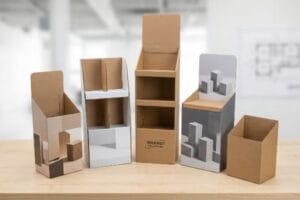
When retail buyers demand premium visual disruption, standard raw cardboard fails. You need a structural solution that merges high-fidelity graphics with heavy-duty dynamic load capacity.
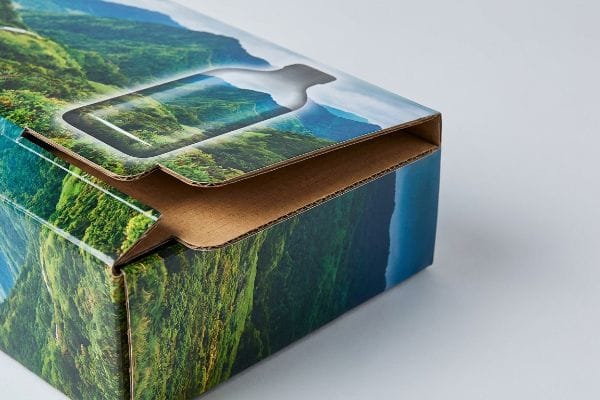
The primary advantages of litho-laminated packaging include photographic-quality resolution, vibrant spot colors, and extreme structural durability. This process bonds a custom-printed top sheet to robust corrugated flutes, delivering superior edge crush resistance and preventing visual degradation during grueling global logistics cycles.
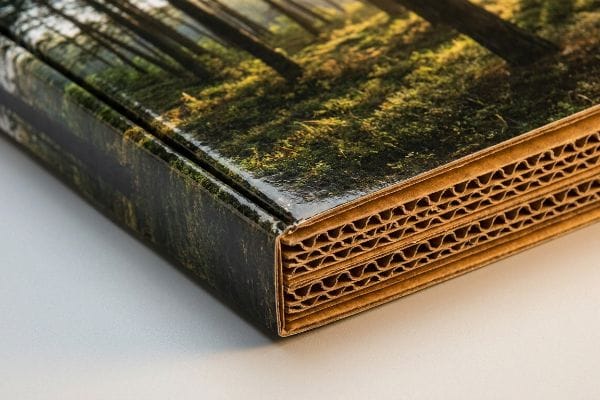
Getting a crisp graphic onto a heavy-duty master carton isn't just about ink; it's a physical collision of paper fibers, wet adhesives, and warehouse physics.
What Are the Advantages and Disadvantages of Lithography?
Evaluating this printing method means balancing premium retail shelf appeal against production timelines. The true value lies in catching the shopper's eye before they walk past.
The advantages and disadvantages of lithography center on visual impact versus production speed. Lithography offers vibrant, magazine-quality graphics that elevate brand perception, but the process takes longer and costs more for small batches compared to basic digital alternatives.
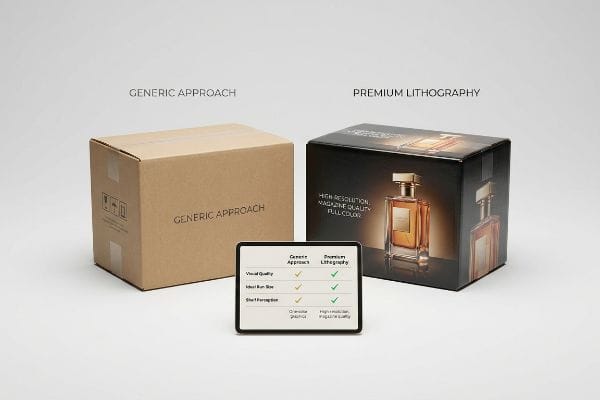
Making that investment requires understanding how premium packaging influences retail buying behavior.
Balancing Premium Branding with Budget Constraints
Many emerging brands assume they need the absolute highest quality printing for every single corrugated shipper or basic floor display. They often default to lithography because it is the industry standard for premium consumer packaged goods1. In theory, applying a beautifully printed, glossy top sheet to your packaging guarantees that your product will look like a luxury item on the shelf, instantly commanding a higher price point in the minds of passing shoppers.
In retail reality, deciding to use lithography requires a strategic look at your target market and promotional lifespan. If you are launching a long-term, high-volume retail display where vibrant, precise brand colors2 are non-negotiable, the advantages of this premium print method easily justify the investment. However, for a quick two-week seasonal promotion or a small test run, the setup time and higher initial costs3 become a disadvantage. You have to match the packaging execution to the specific retail strategy, ensuring you only pay for premium shelf disruption when the campaign truly demands it.
| Metric/Feature | Generic Approach | Engineered Reality |
|---|---|---|
| Visual Quality | Standard graphics | Magazine-quality impact4 |
| Ideal Run Size | Short promotional tests | High-volume rollouts5 |
| Shelf Perception | Functional transport | Premium brand experience |
Retail success is about deploying the right visual strategy at the exact right moment. Stop wasting premium printing budgets on temporary shippers and start investing in graphics that genuinely drive foot traffic.
🛠️ Harvey's Desk: Are exposed cardboard edges actively ruining your premium visual branding in the retail aisle? 👉 Request a Free Dieline Audit ↗ — I review every structural file personally within 24 hours.
What Is Better, a Print or Lithograph?
Deciding between basic direct printing and a premium lithograph dictates how consumers perceive your brand's value. Your packaging is often your only silent salesperson in a crowded store.
A lithograph is better than a standard direct print for achieving unmatched brand color consistency and high-end retail presentation. While direct printing works for basic shipping boxes, lithography utilizes dedicated spot colors to deliver flawless graphics that instantly grab shopper attention.
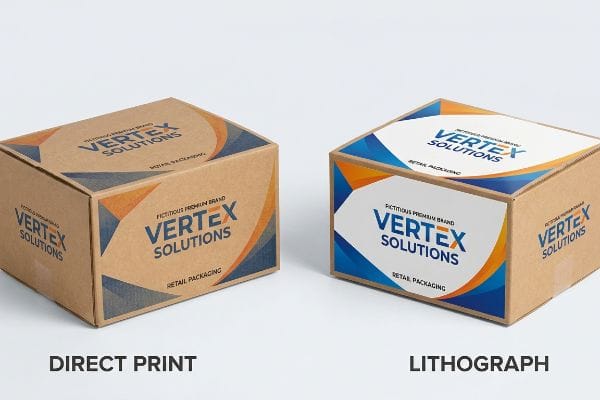
Knowing when to upgrade your visual presentation can make or break a new product launch.
Upgrading Your Retail Shelf Presence
When planning a new retail display, brand managers often assume standard commercial printing will be perfectly adequate to recreate their intricate packaging designs. They look at a PDF proof on a glowing computer monitor and expect those exact vibrant colors to magically appear on a standard corrugated box. The common theory is that all modern printing methods are relatively equal, leading teams to choose the cheapest direct print option to save on their quarterly marketing budget.
The reality of the retail aisle is much less forgiving than a digital screen. Standard direct prints can often look slightly muted or faded because the ink sinks directly into the raw corrugated material6, which diminishes the impact of your branding. A lithograph solves this problem entirely by printing onto a specialized, smooth paper sheet that is later mounted7 to the box, ensuring the colors remain brilliantly saturated. If your brand relies on a highly recognizable signature color to stand out from competitors, investing in a high-end lithograph ensures your packaging looks premium under harsh store lighting.
| Metric/Feature | Standard Print | Lithograph Process |
|---|---|---|
| Color Consistency | Can appear muted | Perfectly vibrant8 |
| Brand Presentation | Standard value | Luxury retail feel |
| Shopper Impact | Blends in | High-contrast disruption |
Shoppers make buying decisions in fractions of a second based entirely on packaging aesthetics. Elevate your brand perception with vibrant lithography and watch your retail sell-through rates climb.
🛠️ Harvey's Desk: Is your current retail logo looking washed out and grainy under big-box fluorescent lighting? 👉 Claim a Free Sightline Analysis ↗ — 100% confidential. Your unreleased retail designs are safe with me.
What Are the Advantages of Lamination?
Fusing a beautifully printed sheet to a sturdy corrugated base gives you the best of both worlds. This combination is the secret to building displays that sell.
The advantages of lamination include combining premium visual graphics with the extreme durability of heavy corrugated board. This process creates a thick, structurally sound retail display that supports heavy merchandise while presenting shoppers with a flawless, high-end branded finish.
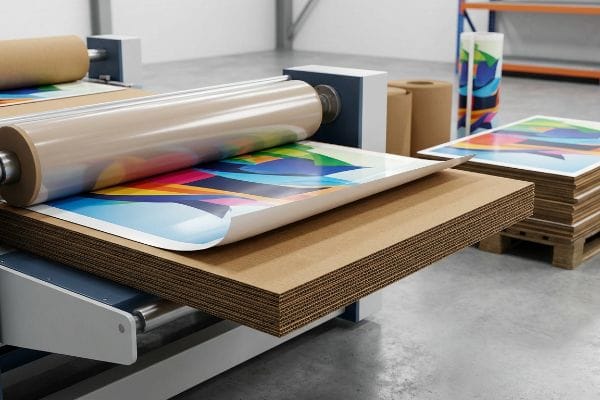
Creating this unified packaging material is essential for standing out in competitive big-box environments.
Building Strong and Attractive Retail Displays
Many marketing teams assume they have to compromise between having a beautiful retail display and a highly durable one. They often believe that heavy-duty corrugated board is only meant for ugly brown shipping boxes, while high-quality printing belongs exclusively on flimsy folding cartons. The initial theory is that you must choose either visual appeal or structural support when launching a new club store pallet program.
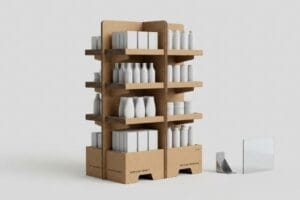
Lamination bridges that gap, giving your brand the ultimate advantage on the retail floor. By laminating a premium, pre-printed sheet directly onto a rigid corrugated flute, you instantly create a packaging hybrid that protects heavy products without sacrificing aesthetic quality. This allows brands to build massive, freestanding floor displays that easily hold fifty pounds of merchandise9 while still looking like a high-end cosmetic counter. It is a fundamental strategy for brands that want to command premium floor space in major retailers while keeping their valuable products completely secure.
| Metric/Feature | Generic Setup | Engineered Reality |
|---|---|---|
| Visual Appeal | Basic and plain | Premium and glossy10 |
| Structural Use | Shipping boxes only | Heavy-duty floor displays11 |
| Brand Experience | Utilitarian function | High-end presentation |
Never sacrifice your structural integrity just to get a prettier box. Lamination delivers the perfect marriage of heavy-duty product protection and premium visual merchandising.
🛠️ Harvey's Desk: Are your large floor displays secretly warping in the warehouse before they even reach the retail aisle? 👉 Get a Structural Dieline Audit ↗ — No account managers in the middle. You talk directly to structural engineers.
Is Litho Better Than Digital?
Balancing graphic quality against rapid retail timelines often forces brands to choose between heavy tooling costs and digital agility.
It depends. Litho is better for massive retail runs requiring solid spot colors, but UV digital printing is vastly superior for agile campaigns. Digital printing eliminates expensive metal plates, prevents moisture warp with instant polymerizing inks, and drastically accelerates speed-to-market.
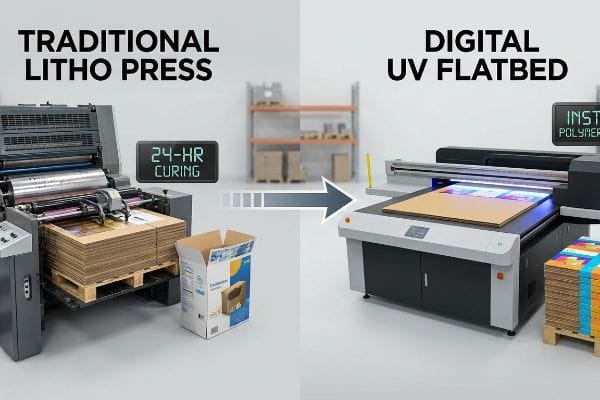
Knowing when to deploy a traditional litho press versus a high-speed digital flatbed can salvage a shrinking supply chain window.
The Instant Polymerization Advantage in Agile Rollouts
When I review an RFQ (Request for Quote) for a short-term promotional rollout, I constantly see buyers blindly mandate traditional litho-lamination because it's listed on an outdated retailer compliance checklist. They assume traditional wet-ink processes are the only way to achieve acceptable visual density on a heavy-duty floor display. They entirely ignore the brutal upfront timeline penalties and mechanical limitations associated with this legacy method. Litho requires expensive metal printing plates12, wet PVA glue application, and a mandatory 24-hour moisture curing phase13 just to prep the boards, tying up the factory floor with massive setup times.
The brutal reality of the factory floor exposes the flaws in these rigid specifications. Last quarter, a client insisted on full lithography for a 500-unit trial, which would have triggered massive plate costs and days of moisture-induced warping risks. Instead, I tested their structural dieline on my direct-to-board UV (Ultraviolet) flatbed printer. Rather than letting wet ink absorb into the raw testliner, the high-intensity UV light array instantly cured the ink into a solid, crisp polymer film in exactly 0.4 seconds14. There was zero moisture warp15, zero tooling waste, and absolute dimensional stability. By bypassing the litho bottlenecks with instant UV polymerization, I shaved five days off their production calendar and entirely eliminated a rush-freight logistics penalty.
| Metric/Feature | Litho Approach | Digital UV Flatbed |
|---|---|---|
| Tooling Setup | Expensive metal plates16 | Zero physical tooling17 |
| Moisture Risk | High PVA wet glue18 | Zero instant cure |
| Production Speed | Slow moisture cure | Rapid agile deployment |
Outdated manufacturing habits should never bottleneck a critical product launch window. Leveraging instant UV curing guarantees high-end structural displays at a fraction of the traditional setup time.
🛠️ Harvey's Desk: Are massive printing plate fees and slow curing times actively choking your agile product launch calendar? 👉 Request a Freight Density Audit ↗ — I review every structural file personally within 24 hours.
Conclusion
Surviving grueling supply chain physics demands more than just slapping glossy graphics onto raw cardboard; it requires engineering massive prepress bleeds and counteracting aggressive PVA moisture warp. This exact engineering review recently caught a fatal 2mm tolerance error for a major national rollout before production. To stop chemical bowing and edge flashing from destroying your margins, let me personally run your structural files through my Free Cardboard Moisture & Tolerance Audit ↗ to guarantee perfectly flat, frictionless displays.
"The Importance of Color Accuracy for CPG Packaging Brands | X-Rite", https://www.xrite.com/page/cpg-packaging-brands. Verification that lithography is the recognized standard for high-end consumer packaged goods. Evidence role: factual verification; source type: industry report or printing manual. Supports: the claim that lithography is the benchmark for premium retail aesthetics. Scope note: specific to CPG industry. ↩
"Comparing Lithographic Printing with Other Techniques", https://www.motivatingraphics.com/post/comparing-lithographic-printing-with-other-techniques. Comparison of ink saturation and color consistency (Pantone matching) in lithography versus digital printing. Evidence role: technical specification; source type: graphic arts manual. Supports: the superior visual quality of lithographic print. Scope note: specifically refers to high-volume retail graphics. ↩
"Offset vs Digital Printing Explained – Greenerprinter Blog", https://www.greenerprinter.com/blog/offset-vs-digital-printing-explained/?srsltid=AfmBOopanw3wfavlKittLRJWA1SyAWyhJyIHuNTeC8TQUfAAbe15j-xd. Detailed breakdown of plate creation and press setup costs in offset lithography compared to digital alternatives. Evidence role: cost-benefit analysis; source type: industry technical guide. Supports: the disadvantage of high initial overhead for short runs. Scope note: focuses on offset lithography. ↩
"Offset Printing versus Digital Printing – Mixam", https://mixam.com/support/offset-printing-vs-digital-printing. Technical documentation on printing resolutions would confirm lithography's capability for high-fidelity, consistent color reproduction typical of high-end magazines. Evidence role: quality benchmark; source type: technical specification. Supports: visual quality claims. Scope note: refers specifically to offset lithography. ↩
"Offset vs Digital Printing Explained – Greenerprinter Blog", https://www.greenerprinter.com/blog/offset-vs-digital-printing-explained/?srsltid=AfmBOooEverTPRiLjjsh81i1HrUq6vblPZtFYanLvIFTGgV-qQ2fIeIy. Industry printing guides would verify that the high initial setup costs of lithography are offset by low per-unit costs during large print runs. Evidence role: technical validation; source type: industry handbook. Supports: economic viability at scale. Scope note: contrasted with digital printing short-runs. ↩
"Corrugated Box Printing Evolution with Aqueous Inks", https://splashjet-ink.com/evolution-of-aqueous-packaging-inks-a-smarter-approach-to-corrugated-box-printing/. An authoritative source on packaging engineering would explain the porosity of corrugated fiberboard and how ink absorption affects color saturation. Evidence role: technical explanation; source type: material science handbook. Supports: the cause of muted colors in direct printing. Scope note: applies to uncoated corrugated substrates. ↩
"Litho-Laminated Packaging – Accurate Box Company, Inc", https://accuratebox.com/our-packaging/litho-laminated-packaging/. Industry standards for litho-lamination describe the process of offset printing on a paper liner which is then adhered to a corrugated medium. Evidence role: process verification; source type: printing industry guide. Supports: the structural method of lithographic packaging. Scope note: specifically refers to the litho-lamination technique. ↩
"Lithographic Printing Explained for Packaging & Printing – Print247", https://print247.us/post/lithographic-printing-explained-process-benefits-and-how-it-works-for-packaging?srsltid=AfmBOoqrd4jAKf_tgTRM8NXbjKQktE4EzV31fTIMuE-1F2Qjai8gu3Ru. Technical printing guides explain how lithography uses precise ink-to-substrate transfer to ensure high color saturation and consistency. Evidence role: Technical specification; source type: printing industry manual. Supports: superior color output of lithographs. Scope note: Depends on ink quality and substrate. ↩
"Temporary Retail Display Load-Bearing Capabilities – UD Direct", https://www.ud-direct.com/blog/temporary-retail-display-load-bearing-capabilities. Technical data from packaging engineering sources to verify the load-bearing capacity of laminated corrugated board displays. Evidence role: performance validation; source type: technical specification sheet. Supports: the claim that these displays can support significant weight. Scope note: Load capacity depends on specific flute thickness and lamination material. ↩
"wisconsin corrugated retail displays – Quality Packaging Inc", https://www.qpack.com/retail-displays/corrugated. Print finishing guidelines detail how lamination processes create high-gloss, premium surface finishes compared to basic printing. Evidence role: visual characteristic proof; source type: printing standard. Supports: the aesthetic superiority of engineered reality setups. Scope note: depends on the specific type of laminate film used. ↩
"Benefits of Our Corrugated Cardboard Floor Displays? – PopDisplay", https://popdisplay.me/benefits-of-our-corrugated-cardboard-floor-displays/. Industry standards for corrugated packaging explain how lamination increases the structural integrity and load-bearing capacity of materials for retail use. Evidence role: technical validation; source type: industry manual. Supports: the claim that engineered corrugated setups are suitable for heavy-duty displays. Scope note: specific to high-grade corrugated substrates. ↩
"Digital vs Offset Printing for Packaging: Which One is Right For Your …", https://packwire.com/blog/digital-vs-offset-printing-for-packaging?srsltid=AfmBOor8ufawG6UyDBFwN5_4sEQWuHfVxDP-c8oZKryInY95JqMo73AG. Industry data on the fixed tooling costs associated with offset plate production compared to plate-less digital printing. Evidence role: economic comparison; source type: printing industry analysis. Supports: the financial inefficiency of litho for short runs. Scope note: Costs vary by plate material and size. ↩
"Effects of Moisture in the Lamination Process – AICC Now", https://now.aiccbox.org/effects-of-moisture-in-the-lamination-process/. Technical specifications regarding the evaporation rate of water-based PVA glues used in litho-lamination. Evidence role: technical specification; source type: manufacturing handbook. Supports: the timeline penalties of legacy lithographic processes. Scope note: Curing time may vary based on humidity and temperature. ↩
"UV Printing 101: Why We Got a UV Printer & What You Need to Know!", https://www.youtube.com/watch?v=InpNtJl45Rs&vl=en-US. Manufacturer technical specifications for UV-LED curing arrays confirming near-instantaneous polymerization times. Evidence role: metric verification; source type: technical datasheet. Supports: the claim of 0.4 second curing. Scope note: specific to high-intensity industrial hardware. ↩
"Common UV Printing Problems and How to Avoid Them – TruFlat", https://truflatplywood.com/blogs/news/common-uv-printing-problems-and-how-to-avoid-them?srsltid=AfmBOooFvmIOzUebRfIziYNqyCLAYmz0y-Ztz_iuJoLY-N795dcZgX1S. Materials science research comparing solvent-based ink absorption versus UV surface curing on board substrates. Evidence role: technical validation; source type: industry whitepaper. Supports: the elimination of substrate warping. Scope note: specific to non-absorbent UV ink application. ↩
"Pros And Cons of Litho vs Digital Printing | Bennett", https://bpkc.com/blogs/blog/pros-and-cons-of-litho-vs-digital-printing. Comparison of pre-press tooling expenses between traditional offset lithography and digital printing. Evidence role: cost-analysis; source type: industry technical manual. Supports: high entry costs of litho setup. Scope note: specific to plate-based printing. ↩
"The Ultimate Guide to UV Inkjet Printing – Inkcups", https://www.inkcups.com/uv-inkjet-printer-guide/. Technical specification of the direct-to-substrate nature of UV flatbed inkjet printing. Evidence role: technical characteristic; source type: equipment specification. Supports: digital agility in retail rollouts. Scope note: excludes software prepress time. ↩
"Bookbinding Adhesives Q&A // Adventures in Bookbinding – YouTube", https://www.youtube.com/watch?v=T7WeDyhnP90. Technical explanation of how polyvinyl acetate (PVA) adhesives introduce moisture into substrates, causing warping. Evidence role: risk assessment; source type: materials science study. Supports: moisture risk in traditional litho workflows. Scope note: applies to binding and assembly stages. ↩